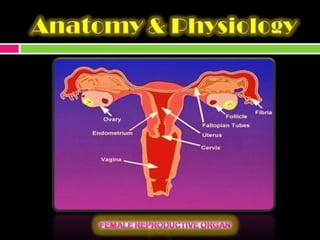
Female Reproductive System To produce offspring and thereby ensure continuity of genetic code. Produce eggs or female gametes which each may unite with a male gamete to form the first cell of an offspring. Classified as Essential or Accessory A.  Essential Organs - gonads are the paired ovaries; gametes are ova produce by the ovaries  B.  Accessory Organs Internal Genitals -uterine tubes, uterus and vagina; ducts or duct structure that extend from the ovaries to the exterior. External Genitals-  the vulva
 
Ovaries Are nodular glands located on each side of uterus below and behind the uterine tubes. Ovarian follicle contain the developing female sex cells. Produce ova or female gametes. Ovaries are endocrine organs that secrete the female sex hormones Uterus Pear shaped and has 2 main parts; cervix and body Cavities of the uterus are small because of the thickness of the uterine wall The blood of the uterus is supplied by uterine arteries. Located in the pelvic cavity between the urinary bladder and rectum. Permits sperm to ascend toward the uterine tubes. If conception occurs an offspring develops in the uterus
Uterine/ Fallopian Tubes Attached to the uterus at its upper outer angles and extend upward and outward toward the sides of the pelvis. Each uterine tube has 3 divisions: isthmus ampulla infundibulum Serves as transport channels for ova and as the site of fertilization. Vagina A tubular organ located between the rectum, urethra, and bladder. Hymen- a mucous membrane that typically forms a border around the vagina. Transports tissue and bloodshed during menstruation.
Vulva Consist of the female external genitals. mons Pubis urinary meatus labia Majora vaginal orifice labia Minora greater vestibular glands clitoris Mons pubis and labia protects the clitoris and vestibule. Clitoris contains sensory receptors that send information to the sexual response area of the brain. Vaginal orifice is a boundary between internal and external genitals
Physical examination may  reveal palpable nodules or tenderness in the pelvic region, enlarged ovaries, a uterus that is retroverted and fixed due to adhesions. Laparoscopy  visual examination of the pelvic region Pre-procedure Care Informed consent NPO 8 hours prior Enema if ordered Remove all jewelries Vital signs General anesthesia Assess coagulation studies Post-procedure Care Vital signs Monitor for bleeding Analgesic as prescribed Elevate feet higher than shoulders after procedure to relieve abdominal or shoulder discomfort  Encourage ambulation and fluids  Patient can go home once stable, someone else should drive
Pelvic Ultrasound  pelvic ultrasound is most often used to examine the uterus and ovaries and, during pregnancy, to monitor the health and development of the embryo or fetus. Pre-procedure Care Should wear comfortable, loose-fitting clothing for your ultrasound exam.  May be asked to drink up to 2 glasses of water  prior to your exam Withhold voiding Post-procedure Care Wipe off ultrasound gel from abdomen Allow patient to empty bladder
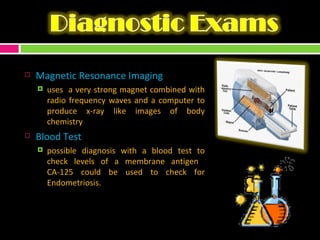
Magnetic Resonance Imaging uses  a very strong magnet combined with radio frequency waves and a computer to produce x-ray like images of body chemistry Blood Test possible diagnosis with a blood test to check levels of a membrane antigen  CA-125 could be used to check for Endometriosis.
Pelvic Examination examine your vulva, vagina, uterus, rectum and pelvis, including your ovaries, for masses or growths Cystoscopy direct visualization of urethra, bladder wall, trigone, urethral opening Pre-procedure Care Secure written consent Force fluids Inform that desire to void is felt Done under local/general anesthesia Place in lithotomy position Post-procedure Care Bed rest until V/S are stable Pink-tinged  urine is normal (24-48 hours) Dysuria, frequency, hematuria due to tissue irritation observe: urine retention, signs of infection and prolong/excessive hematuria
Dye Test Methylene blue Test Indigo carmine Test Retrogade  Pyelogram outline renal pelvis and ureters contrast medium to cytoscope Pre-procedure Care Written consent Check for allergy to the dye ( Iodine) Inform on discomfort of the procedure Prepare Epinephrine. Anaphylactic shock is the most life-threatening complication. Post-procedure Care Monitor V/S Observe: urinary retention, infection and prolong/excessive hematuria
Anorectal examination Sufficient for diagnosis when the rectum protrudes out of the anus Video Defecogram  This X-ray test is taken while the patient is having a bowel movement to help determine whether the prolapsed is internal and if surgery is necessary Anorectal Manometry test  Measures how well the muscles around the rectum are functioning.  A small tube is placed into the rectum, and the pressures inside the anus and rectum are measured.
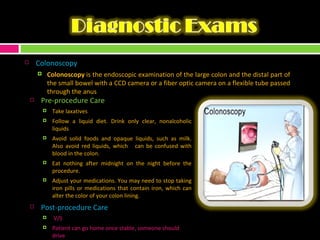
Colonoscopy Colonoscopy  is the endoscopic examination of the large colon and the distal part of the small bowel with a CCD camera or a fiber optic camera on a flexible tube passed through the anus  Pre-procedure Care Take laxatives Follow a liquid diet. Drink only clear, nonalcoholic liquids Avoid solid foods and opaque liquids, such as milk. Also avoid red liquids, which  can be confused with blood in the colon. Eat nothing after midnight on the night before the procedure.  Adjust your medications. You may need to stop taking iron pills or medications that contain iron, which can alter the color of your colon lining. Post-procedure Care V/S Patient can go home once stable, someone should drive
Hysteroscopy A procedure that allows a physician to look through the vagina and neck of the uterus (cervix) to inspect the cavity of the uterus. Pre-procedure Care Written consent Mild pain reliever  V/S General anesthesia NPO after midnight Post-procedure Care Vital signs Monitor for bleeding Analgesic as prescribed Elevate feet higher than shoulders after procedure to relieve abdominal or shoulder discomfort  Encourage ambulation and fluids  Patient can go home once stable, someone else should drive
Hysterectomy Surgery to remove the uterus and ovaries considered for women who fail medical therapy and no longer wish to have additional children  Laparotomy Determine the cause of a patient's symptoms or to establish the extent of a disease. Oophorectomy The surgical removal of one or both ovaries
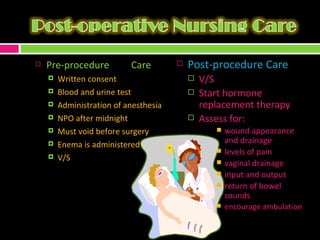
Post-procedure Care V/S Start hormone replacement therapy Assess for: wound appearance and drainage levels of pain vaginal drainage input and output return of bowel sounds encourage ambulation  Pre-procedure Care Written consent Blood and urine test Administration of anesthesia NPO after midnight Must void before surgery Enema is administered V/S
 
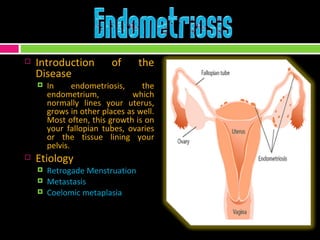
Introduction of the Disease In endometriosis, the endometrium, which normally lines your uterus, grows in other places as well. Most often, this growth is on your fallopian tubes, ovaries or the tissue lining your pelvis.  Etiology Retrogade Menstruation Metastasis Coelomic metaplasia
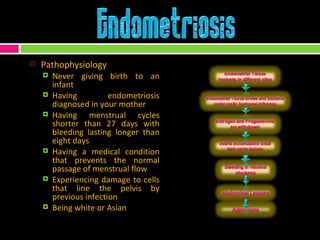
Pathophysiology Never giving birth to an infant  Having endometriosis diagnosed in your mother  Having menstrual cycles shorter than 27 days with bleeding lasting longer than eight days  Having a medical condition that prevents the normal passage of menstrual flow  Experiencing damage to cells that line the pelvis by previous infection  Being white or Asian
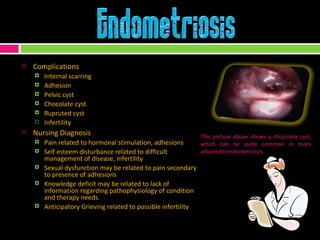
Assessment Pelvic Pain Menorrhagia Menometrorrhagia Infertility 4 D’s of Endometriosis: Dysmenorrhea Dyschezia Dyspareunia Dysuria Diagnostics Physical examination  Laparoscopy  Imaging tests (e.g. pelvic ultrasound, magnetic resonance imaging) Pelvic Ultrasound Magnetic Resonance Imaging Blood Test
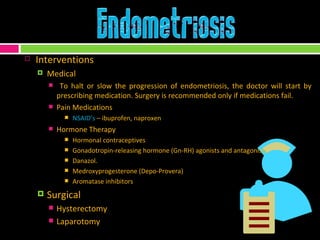
Complications Internal scarring Adhesion Pelvic cyst Chocolate cyst Rupruted cyst Infertility  Nursing Diagnosis Pain related to hormonal stimulation, adhesions Self esteem disturbance related to difficult management of disease, infertility Sexual dysfunction may be related to pain secondary to presence of adhesions  Knowledge deficit may be related to lack of information regarding pathophysiology of condition and therapy needs. Anticipatory Grieving related to possible infertility This picture above shows a chocolate cyst, which can be quite common in more advanced endometriosis.
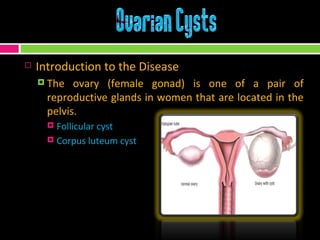
Interventions Medical To halt or slow the progression of endometriosis, the doctor will start by prescribing medication. Surgery is recommended only if medications fail. Pain Medications NSAID’s  – ibuprofen, naproxen Hormone Therapy Hormonal contraceptives Gonadotropin-releasing hormone (Gn-RH) agonists and antagonists. Danazol.  Medroxyprogesterone (Depo-Provera) Aromatase inhibitors Surgical Hysterectomy Laparotomy
Nursing Care Promotive daily exercise rest and nutrition good personal hygiene maintain ideal body weight Preventive have a regular physical exam; Pelvic exam use of oral contraceptives] Curative warm baths heating pad can help relax pelvic muscles, reducing cramping and pain teach patient relaxation techniques to control pain encourage patient to try position changes for sexual intercourse if experiencing dyspareunia Rehabilitative follow up check ups consider joining a support group for women with endometriosis or fertility problems.
Introduction to the Disease The ovary (female gonad) is one of a pair of reproductive glands in women that are located in the pelvis. Follicular cyst Corpus luteum cyst
Corpus luteum cyst The escape opening of the egg seals off and fluid accumulates inside the follicle,  Causing the corpus luteum to expand into a cyst, Has the potential to bleed into itself or twist the ovary, causing pelvic or  Abdominal pain. If it fills with blood, the cyst may rupture, causing internal bleeding and sudden, sharp pain
Etiology Early menarche (11 years or younger)  Infertility (4-fold increase) Hypothyroidism Patients undergoing ovulation induction therapy for infertility with gonadotropins,  Neonatal cysts (increased frequency in babies of mothers with diabetes, toxemia, and Rh immunization) Family history, history of breast cancer, advancing age and nulliparity. Tamoxifen treatment of breast cancer  Smoking is a controversial risk factor History of previous ovarian cysts  Irregular menstrual cycles  Increased upper body fat distribution Pathophysiology Ovarian cysts may be simple enlargements of the ovarian corpus luteal and follicular cysts, or they may arise from abnormal growth of the ovarian epithelium.
Assessment Lower abdominal or pelvic pain that radiate to lower back and thighs Irregular menstrual periods Feeling of lower abdominal or pelvic pressure ,fullness or heaviness Long-term pelvic pain during menstrual period that may also be felt in the lower back Pelvic pain after strenuous exercise or sexual intercourse  Pain or pressure with urination or bowel movements Difficulty of emptying bladder completely Nausea and vomiting Vaginal pain or spots of blood from vagina  Infertility Breast tenderness Diagnostics Pelvic Exam Pregnancy test Pelvic ultrasound Laparoscopy
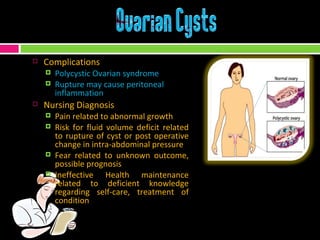
Complications Polycystic Ovarian syndrome   Rupture may cause peritoneal inflammation Nursing Diagnosis Pain related to abnormal growth Risk for fluid volume deficit related to rupture of cyst or post operative change in intra-abdominal pressure Fear related to unknown outcome, possible prognosis Ineffective Health maintenance related to deficient knowledge regarding self-care, treatment of condition
Intervention Medical Pain relievers: acetaminophen (Tylenol), NSAID’s such as ibuprofen (Motrin, Advil)  Oral contraceptive pill -- the hormones in the pills may regulate the menstrual cycle, prevent the formation of follicles that can turn into cysts, and possibly shrink an existing cyst Surgical Laparoscopic Surgery Laparotomy Oophorectomy
Nursing Care Promotive daily exercise rest and nutrition good personal hygiene maintain ideal body weight Preventive regular pelvic examinations limiting strenuous activity may reduce the risk of cyst rupture  urinating as soon as the urge presents itself avoiding constipation birth control pills Curative: a warm bath, or heating pad,  Bags of ice covered with towels can be used alternately as cold treatments to increase local circulation chamomile herbal tea can reduce ovarian cyst pain and soothe tense muscles teach patient right diet like eliminating caffeine and alcohol,  Rehabilitative follow up pelvic ultrasounds at periodic intervals low calorie diet
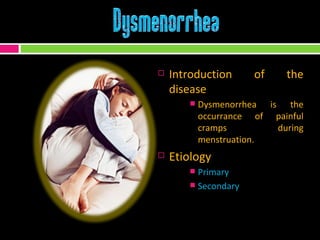
Introduction of the disease Dysmenorrhea is the occurrance of painful cramps during menstruation. Etiology Primary Secondary
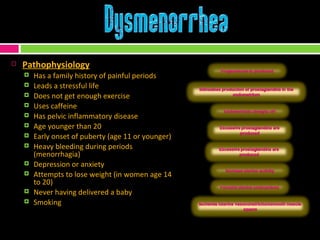
Pathophysiology Has a family history of painful periods Leads a stressful life Does not get enough exercise Uses caffeine Has pelvic inflammatory disease Age younger than 20  Early onset of puberty (age 11 or younger)  Heavy bleeding during periods (menorrhagia)  Depression or anxiety  Attempts to lose weight (in women age 14 to 20)  Never having delivered a baby  Smoking
Assessment A dull, throbbing cramping in the lower abdomen that may radiate to the lower back and thighs Nausea and vomiting Diarrhea Irritability Sweating, Dizziness Diagnostics Pelvic exam  Patient history  Ultrasound MRI Laparoscopy Hysteroscopy
Diagnostics Pelvic exam  Patient history  Ultrasound MRI Laparoscopy Hysteroscopy
Complications Pelvic inflammatory disease can scar your fallopian tubes and compromise reproductive health The scarring can lead to an ectopic pregnancy Endometriosis Nursing Diagnosis Pain may be related to exaggerated uterine contractility possibly evidenced by guarding behaviors Mobility impaired, physical may be related to severity of pain  Coping ineffective, individual may be related to chronic, recurrent nature of problem Ineffective Health maintenance related to deficient knowledge regarding prevention and treatment of painful menstruation Fluid volume deficit related to excessive loss of fluid in the body
Interventions Medical NSAID such as aspirin, ibuprofen (Advil, Motrin, others) or naproxen (Aleve). oral contraceptives Nursing Care Promotive Daily exercise Adequate rest and  good nutrition Good personal hygiene Maintain normal body weight Prevention Do not smoke.  Do not drink excessively NSAIDs taken a day before the period begins Exercise prior to start of period Low-fat vegetarian diet  Calcium 1200 mg daily Curative Change position of patient to help ease cramps Assuming the fetal position,  Dietary recommendations include increasing fiber, calcium, and complex CHO Cutting fat, red meat, dairy products, caffeine, salt, and sugar Vitamin B supplements Fish oil supplements (omega-3 fatty acids) also may help relieve cramps. Encourage deep breathing exercises, visualization and guided imagery
Introduction of disease PMDD is premenstrual syndrome (PMS) that is so severe it can be debilitating due to physical, mental or emotional symptoms. Like PMS, PMDD occurs the week before the onset of menstruation and disappears a few days after. Etiology Currently, there is no consensus on the cause of PMDD. Biologic, psychologic, environmental and social factors all seem to play a part. Genetic factors are also pertinent.
Pathophysiology The cause of PMS is considered be multifactorial. Fluctuating estrogen and progesterone levels may trigger this biologic response but are not sufficient alone to cause PMS. Risk Factors The following factors increase your chance of developing PMDD: Family history of PMDD Family history of severe PMS Stress Suffering from major depression Suffering from seasonal affective disorder (SAD)
 
Diagnostics Your doctor will ask about your symptoms and medical history.  A physical exam will done You may also be asked to keep a chart or record of your symptoms.  Record when they occur and the severity of each. Complications Risk for Major Depression Substance Abuse Studies also have found a higher incidence of smoking in women with premenstrual dysphoric disorder than in women without PMDD. Magnification of Other Medical Conditions Migraines Asthma Other Disorders
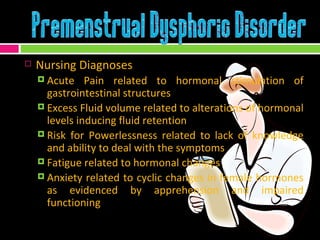
Nursing Diagnoses Acute Pain related to hormonal stimulation of gastrointestinal structures Excess Fluid volume related to alterations of hormonal levels inducing fluid retention Risk for Powerlessness related to lack of knowledge and ability to deal with the symptoms Fatigue related to hormonal changes Anxiety related to cyclic changes in female hormones as evidenced by apprehension and impaired functioning
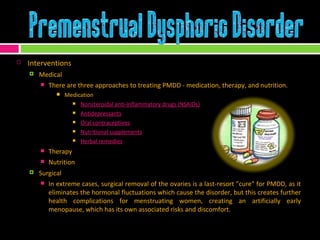
Interventions Medical There are three approaches to treating PMDD - medication, therapy, and nutrition. Medication Nonsteroidal anti-inflammatory drugs (NSAIDs) Antidepressants Oral contraceptives Nutritional supplements Herbal remedies Therapy Nutrition Surgical  In extreme cases, surgical removal of the ovaries is a last-resort "cure" for PMDD, as it eliminates the hormonal fluctuations which cause the disorder, but this creates further health complications for menstruating women, creating an artificially early menopause, which has its own associated risks and discomfort.
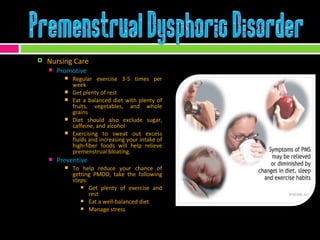
Nursing Care Promotive Regular exercise 3-5 times per week Get plenty of rest Eat a balanced diet with plenty of fruits, vegetables, and whole grains Diet should also exclude sugar, caffeine, and alcohol Exercising to sweat out excess fluids and increasing your intake of high-fiber foods will help relieve premenstrual bloating. Preventive To help reduce your chance of getting PMDD, take the following steps:  Get plenty of exercise and rest Eat a well-balanced diet Manage stress
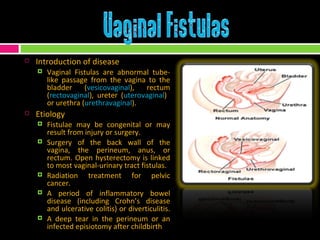
Introduction of disease Vaginal Fistulas are abnormal tube-like passage from the vagina to the bladder ( vesicovaginal ), rectum ( rectovaginal ), ureter ( uterovaginal )  or urethra ( urethravaginal ). Etiology Fistulae may be congenital or may result from injury or surgery. Surgery of the back wall of the vagina, the perineum, anus, or rectum. Open hysterectomy is linked to most vaginal-urinary tract fistulas.  Radiation treatment for pelvic cancer.  A period of inflammatory bowel disease (including Crohn’s disease and ulcerative colitis) or diverticulitis.  A deep tear in the perineum or an infected episiotomy after childbirth
Pathophysiology Primary risk factors are early and/or closely-spaced pregnancies and lack of access to emergency obstetric care. Early marriage, domestic violence, female genital mutilation, malnutrition which is linked to under-development of the female body, and lack of education/illiteracy.
 
Diagnostics Dye test  Cytoscopy  Retrograde pyelogram  Fistulagram  Anoscopy/flexible sigmoidoscopy  Complication Hydronephrosis Pyelonephritis, Possible renal failure with ureterovaginal fistula Nursing diagnoses  Risk for infection related to contamination of urinary  tract by vaginal flora or contamination of the vagina by rectal organisms Altered urinary elimination related to fistula Knowledge deficit may be related to lack of information regarding pathophysiology of condition and therapy needs.   Ineffective individual coping related to physiologic or psychologic alteration or impairment
Interventions Medical Antibiotic for infection Infliximab (Remicade Surgical Transanal Advancement Flap Transabdominal Repair Fibrin Glue Nursing Care Promotive  exercise daily adequate rest and good nutririon practice good hygiene Prevention  access to family planning safe caesarean sections for women in obstructed labour Curative  Wash with  warm water Avoid rubbing with dry toilet paper Dry thoroughly Avoid irritants Use a cold compress Apply a cream or powder Wear cotton underwear and loose clothing Rehabilitative Attending to the patient’s social and psychological needs in an essential aspect of  care improve the patient’s self concept and self care abilities medical follow-up continues for at least 2 years to monitor for a possible recurrence
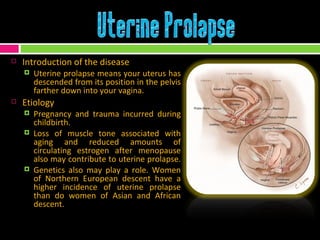
Introduction of the disease  Uterine prolapse means your uterus has descended from its position in the pelvis farther down into your vagina.  Etiology  Pregnancy and trauma incurred during childbirth.  Loss of muscle tone associated with aging and reduced amounts of circulating estrogen after menopause also may contribute to uterine prolapse.  Genetics also may play a role. Women of Northern European descent have a higher incidence of uterine prolapse than do women of Asian and African descent.
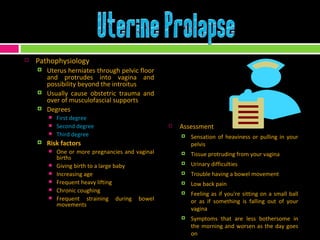
Pathophysiology  Uterus herniates through pelvic floor and protrudes into vagina and possibility beyond the introitus  Usually cause obstetric trauma and over of musculofascial supports  Degrees  First degree Second degree Third degree Risk factors One or more pregnancies and vaginal births  Giving birth to a large baby  Increasing age  Frequent heavy lifting  Chronic coughing  Frequent straining during bowel movements  Assessment Sensation of heaviness or pulling in your pelvis  Tissue protruding from your vagina  Urinary difficulties Trouble having a bowel movement  Low back pain  Feeling as if you're sitting on a small ball or as if something is falling out of your vagina  Symptoms that are less bothersome in the morning and worsen as the day goes on
Diagnostic  Pelvic Examination Ultrasound or magnetic resonance imaging (MRI), Vaginal hysterectomy Complication Necrosis of cervix, uterus Infection  Nursing Diagnoses Pain related to downward pressure and exposed tissue  Impaired tissue integrity related to exposed cervix and uterus Sexual dysfunction related to loss of vaginal cavity
Interventions Surgical Hysterectomy Uterine suspension through laparoscopy Nursing Care Promotive Maintain a healthy body weight.  Exercise regularly (for 20 to 30 minutes, three to five times per week Eat a healthy diet balanced.  Maintain healthy lifestyle Preventive Maintain a healthy weight.  Practice Kegel’s exercises Control coughing.  Consider estrogen replacement therapy after menopause.  Use correct lifting techniques.  Stop smoking Curative instruct patient to avoid heavy lifting or straining.
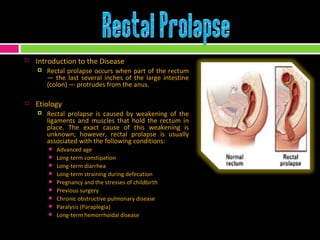
Introduction to the Disease Rectal prolapse occurs when part of the rectum — the last several inches of the large intestine (colon) — protrudes from the anus. Etiology Rectal prolapse is caused by weakening of the ligaments and muscles that hold the rectum in place. The exact cause of this weakening is unknown; however, rectal prolapse is usually associated with the following conditions:  Advanced age Long-term constipation Long-term diarrhea Long-term straining during defecation Pregnancy and the stresses of childbirth Previous surgery Chronic obstructive pulmonary disease  Paralysis (Paraplegia)  Long-term hemorrhoidal disease
Pathophysiology Various factors, such as age, long-term constipation, and the stress of childbirth, may cause these ligaments and muscles to weaken, which means that the rectum's attachment to the body also weakens. This causes the rectum to prolapse, meaning it slips or falls out of place. Occasionally, large hemorrhoids (large, swollen veins inside the rectum) may predispose the rectum to prolapse.
Assessment The symptoms of a prolapsed rectum are similar to those of hemorrhoids; however, rectal prolapse originates higher in the body than hemorrhoids do. A person with a prolapsed rectum may feel tissue protruding from the anus and experience the following symptoms:  Pain during bowel movements Mucus or blood discharge from the protruding tissue Fecal incontinence (inability to control bowel movements) Loss of urge to defecate (mostly with larger prolapses) Awareness of something protruding upon wiping  A feeling of having full bowels and an urgent need to have a bowel movement. Passage of many very small stools. The feeling of not being able to empty the bowels completely Bright red tissue that sticks out of the anus. Diagnostics Phosphate Enema Defecogram
Complications Fecal incontinence may become worse The rectum can become damaged from the tissues rubbing together, which can result in a sore (ulcer) that may bleed. Normal blood flow to tissue in the rectum may be cut off, causing the tissue to die (gangrene). If a prolapsed rectum swells, it may prevent the passage of stools. Rarely, a loop of the large intestine is pinched off (strangulated), causing blockage of the intestine (bowel obstruction) Nursing Diagnoses Fecal incontinence(inability to control bowel movement) Impaired tissue/skin integrity
Interventions Medical Stool softeners, such as sodium docusate (Colace) or calcium docusate (Surfak) Bulk agents, such as psyllium (Metamucil or Fiberall) or methylcellulose (Citrucel)  Surgical The goal of all of the surgical techniques involved in correcting a prolapsed rectum is to attach or secure the rectum to a backside (or posterior) part of the inner pelvis. Surgery is performed through either the abdomen or the perineum.
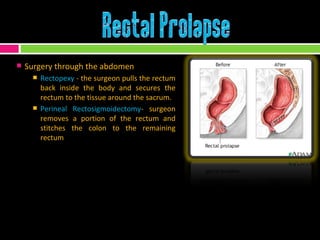
Surgery through the abdomen  Rectopexy  - the surgeon pulls the rectum back inside the body and secures the rectum to the tissue around the sacrum. Perineal Rectosigmoidectomy - surgeon removes a portion of the rectum and stitches the colon to the remaining rectum
Nursing Care Promotive Adequate rest and sleep Balanced diet Exercise  Preventive Use of  stool softeners  Bulking agents (such as bran or psyllium) and suppositories or enemas A high-fiber diet and a daily intake of plenty of fluids c Straining during bowel movements should be avoided.  A person with long-term diarrhea, constipation, or hemorrhoids should seek medical attention Curative encourage fluid intake encourage high fiber diet, fruits and vegetables do kegel’s exercises Rehabilitative After surgery, 1-2 visits are typically scheduled within the first month to check that the incisions are healing well and to make sure that the person's bowel movements are normal.
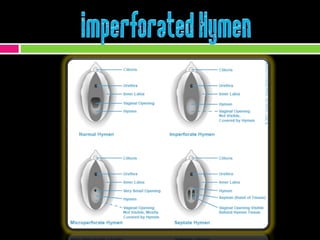
Introduction of the Disease The hymen is the thin tissue around the entry of the vagina that usually has an opening for menstrual blood to pass through. Imperforate hymen means that the hymen does not have an opening, so the entry of the vagina is completely closed off by the hymen.  Etiology Imperforate hymen and related genital tract anomalies result from abnormal or incomplete embryologic development. Pathophysiology The genital tract develops during embryogenesis, from 3 weeks' gestation to the second trimester. The initial development of both the male and female genital tracts occurs concurrently and is referred to as the indifferent stage of development.
 
Assessment No menstrual bleeding  Enlarged uterus Intermittent abdominal pelvic pain Urinary retention Constipation Abdominal Pain – crampy, chronic, recurrent Hypogastric Pain Bulging dark hymen/exam  Suprapubic Pain Diagnostic Ultrasonography  Physical Exam
Complications Haematocolpos-  An accumulation of menstrual blood in the vagina Amenorrhoea  - Absence of menstrual periods Haematometra  Dyspareunia  Hydrometrocolpos  Hematosalpinx  Female infertility  Cryptomenorrhea Nursing Diagnosis Pain related to increase pressure in the vagina and uterus Knowledge deficit related to lack of information regarding pathophysiology of condition
Interventions Medical appilication of foley catheter Ceftriaxon (Rocephin, Roche, Istanbul) Surgical hymen incision Nursing Care Preventive early genitourinary examination is essential in girls of all ages from birth through the onset of menarche. Curative administer analgesia, acetaminophen or nonsteroidal anti-inflammatory drugs (NSAIDs), such as ibuprofen for post operative Uterine and/or vaginal cramping should also be anticipated and treated with NSAIDs Rehabilitative Postoperative follow-up is deferred for 6-8 weeks to allow the patient to reestablish a menstrual cycle.
Introduction to the Disease Toxic shock syndrome is a rare, life-threatening bacterial infection that has been most often associated with the use of superabsorbent tampons and occasionally with the use of  diaphragm or contraceptive sponges. Etiology The cause  seemed to be toxins produced by Staphylococcus aureus (staph) bacteria. Toxic shock syndrome can also result from toxins produced by group A streptococcus (strep) bacteria. While the infection often occurs in menstruating women, it can also affect men, children and postmenopausal women. Other risk factors for toxic shock syndrome include skin wounds and surgery. Some believe that when superabsorbent tampons are left in place for a long time, the tampons become a breeding ground for bacteria. Others have suggested that the superabsorbent fibers in the tampons can scratch the surface of the vagina.
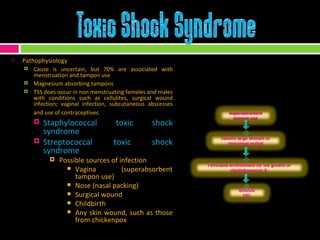
Pathophysiology Cause is uncertain, but 70% are associated with menstruation and tampon use  Magnesium absorbing tampons TSS does occur in non menstruating females and males with conditions such as cellulites, surgical wound infection; vaginal infection, subcutaneous abscesses and use of contraceptives.   Staphylococcal toxic shock syndrome Streptococcal toxic shock syndrome Possible sources of infection  Vagina (superabsorbent tampon use)  Nose (nasal packing)  Surgical wound  Childbirth  Any skin wound, such as those from chickenpox
 
Diagnostics Blood test Pelvic exam Chest x-ray film may reveal abnormalities, such as fluid in the lungs. Electrocardiogram (ECG)  Complications Toxemia  Shock  Death  Diarrhea  Myalgia  Creatine kinase levels raised (plasma or serum)  Thrombocytopenia  Pyrexia  Renal failure, acute  Rash
Nursing Diagnoses Hyperthermia may be related to inflammatory process/hypermetabolic state and dehydration possibly evidenced by increased body temperature Fluid volume deficit may be related to increased gastric losses (diarrhea, vomiting) possibly evidenced by increased pulse, dry mucous membrane, hypotension Pain may be related to inflammatory process, effects of circulating toxins, and skin disruption  Skin/Tissue integrity, impaired may be related to effects of circulating toxins and dehydration possibly evidenced by desquamating rash
Interventions Medical Monitor kidney and liver functions  Provide oxygen if needed for breathing difficulty  Start IV antibiotics –  nafcillin ,  oxacillin ,  penicillin  or  clindamycin Provide IV fluids and medications ( dopamine or epinephrine )to raise the blood pressure Correct electrolytes Surgical Debridement Nursing Care Promotive Eat well balanced diet Adequate rest and sleep Preventive changing your tampon frequently, at least every four to eight hours Consider using the lowest absorbency tampon you can and try to alternate using tampons and sanitary napkins whenever possible by not using tampons instead use sanitary pads  All wounds should be kept clean and monitored for signs of infection  Curative encourage fluid intake Rehabilitative dialysis follow up check ups for skin effects and recurrence
 

REPRODUCTIVE DISORDERS OF FENWICK, FILAMER

  • 1.
  • 2.
    Female Reproductive SystemTo produce offspring and thereby ensure continuity of genetic code. Produce eggs or female gametes which each may unite with a male gamete to form the first cell of an offspring. Classified as Essential or Accessory A. Essential Organs - gonads are the paired ovaries; gametes are ova produce by the ovaries B. Accessory Organs Internal Genitals -uterine tubes, uterus and vagina; ducts or duct structure that extend from the ovaries to the exterior. External Genitals- the vulva
  • 3.
  • 4.
    Ovaries Are nodularglands located on each side of uterus below and behind the uterine tubes. Ovarian follicle contain the developing female sex cells. Produce ova or female gametes. Ovaries are endocrine organs that secrete the female sex hormones Uterus Pear shaped and has 2 main parts; cervix and body Cavities of the uterus are small because of the thickness of the uterine wall The blood of the uterus is supplied by uterine arteries. Located in the pelvic cavity between the urinary bladder and rectum. Permits sperm to ascend toward the uterine tubes. If conception occurs an offspring develops in the uterus
  • 5.
    Uterine/ Fallopian TubesAttached to the uterus at its upper outer angles and extend upward and outward toward the sides of the pelvis. Each uterine tube has 3 divisions: isthmus ampulla infundibulum Serves as transport channels for ova and as the site of fertilization. Vagina A tubular organ located between the rectum, urethra, and bladder. Hymen- a mucous membrane that typically forms a border around the vagina. Transports tissue and bloodshed during menstruation.
  • 6.
    Vulva Consist ofthe female external genitals. mons Pubis urinary meatus labia Majora vaginal orifice labia Minora greater vestibular glands clitoris Mons pubis and labia protects the clitoris and vestibule. Clitoris contains sensory receptors that send information to the sexual response area of the brain. Vaginal orifice is a boundary between internal and external genitals
  • 7.
    Physical examination may reveal palpable nodules or tenderness in the pelvic region, enlarged ovaries, a uterus that is retroverted and fixed due to adhesions. Laparoscopy visual examination of the pelvic region Pre-procedure Care Informed consent NPO 8 hours prior Enema if ordered Remove all jewelries Vital signs General anesthesia Assess coagulation studies Post-procedure Care Vital signs Monitor for bleeding Analgesic as prescribed Elevate feet higher than shoulders after procedure to relieve abdominal or shoulder discomfort Encourage ambulation and fluids Patient can go home once stable, someone else should drive
  • 8.
    Pelvic Ultrasound  pelvicultrasound is most often used to examine the uterus and ovaries and, during pregnancy, to monitor the health and development of the embryo or fetus. Pre-procedure Care Should wear comfortable, loose-fitting clothing for your ultrasound exam. May be asked to drink up to 2 glasses of water prior to your exam Withhold voiding Post-procedure Care Wipe off ultrasound gel from abdomen Allow patient to empty bladder
  • 9.
    Magnetic Resonance Imaginguses a very strong magnet combined with radio frequency waves and a computer to produce x-ray like images of body chemistry Blood Test possible diagnosis with a blood test to check levels of a membrane antigen CA-125 could be used to check for Endometriosis.
  • 10.
    Pelvic Examination examineyour vulva, vagina, uterus, rectum and pelvis, including your ovaries, for masses or growths Cystoscopy direct visualization of urethra, bladder wall, trigone, urethral opening Pre-procedure Care Secure written consent Force fluids Inform that desire to void is felt Done under local/general anesthesia Place in lithotomy position Post-procedure Care Bed rest until V/S are stable Pink-tinged urine is normal (24-48 hours) Dysuria, frequency, hematuria due to tissue irritation observe: urine retention, signs of infection and prolong/excessive hematuria
  • 11.
    Dye Test Methyleneblue Test Indigo carmine Test Retrogade Pyelogram outline renal pelvis and ureters contrast medium to cytoscope Pre-procedure Care Written consent Check for allergy to the dye ( Iodine) Inform on discomfort of the procedure Prepare Epinephrine. Anaphylactic shock is the most life-threatening complication. Post-procedure Care Monitor V/S Observe: urinary retention, infection and prolong/excessive hematuria
  • 12.
    Anorectal examination Sufficientfor diagnosis when the rectum protrudes out of the anus Video Defecogram This X-ray test is taken while the patient is having a bowel movement to help determine whether the prolapsed is internal and if surgery is necessary Anorectal Manometry test Measures how well the muscles around the rectum are functioning. A small tube is placed into the rectum, and the pressures inside the anus and rectum are measured.
  • 13.
    Colonoscopy Colonoscopy  isthe endoscopic examination of the large colon and the distal part of the small bowel with a CCD camera or a fiber optic camera on a flexible tube passed through the anus Pre-procedure Care Take laxatives Follow a liquid diet. Drink only clear, nonalcoholic liquids Avoid solid foods and opaque liquids, such as milk. Also avoid red liquids, which can be confused with blood in the colon. Eat nothing after midnight on the night before the procedure. Adjust your medications. You may need to stop taking iron pills or medications that contain iron, which can alter the color of your colon lining. Post-procedure Care V/S Patient can go home once stable, someone should drive
  • 14.
    Hysteroscopy A procedurethat allows a physician to look through the vagina and neck of the uterus (cervix) to inspect the cavity of the uterus. Pre-procedure Care Written consent Mild pain reliever V/S General anesthesia NPO after midnight Post-procedure Care Vital signs Monitor for bleeding Analgesic as prescribed Elevate feet higher than shoulders after procedure to relieve abdominal or shoulder discomfort Encourage ambulation and fluids Patient can go home once stable, someone else should drive
  • 15.
    Hysterectomy Surgery toremove the uterus and ovaries considered for women who fail medical therapy and no longer wish to have additional children Laparotomy Determine the cause of a patient's symptoms or to establish the extent of a disease. Oophorectomy The surgical removal of one or both ovaries
  • 16.
    Post-procedure Care V/SStart hormone replacement therapy Assess for: wound appearance and drainage levels of pain vaginal drainage input and output return of bowel sounds encourage ambulation Pre-procedure Care Written consent Blood and urine test Administration of anesthesia NPO after midnight Must void before surgery Enema is administered V/S
  • 17.
  • 18.
    Introduction of theDisease In endometriosis, the endometrium, which normally lines your uterus, grows in other places as well. Most often, this growth is on your fallopian tubes, ovaries or the tissue lining your pelvis. Etiology Retrogade Menstruation Metastasis Coelomic metaplasia
  • 19.
    Pathophysiology Never givingbirth to an infant Having endometriosis diagnosed in your mother Having menstrual cycles shorter than 27 days with bleeding lasting longer than eight days Having a medical condition that prevents the normal passage of menstrual flow Experiencing damage to cells that line the pelvis by previous infection Being white or Asian
  • 20.
    Assessment Pelvic PainMenorrhagia Menometrorrhagia Infertility 4 D’s of Endometriosis: Dysmenorrhea Dyschezia Dyspareunia Dysuria Diagnostics Physical examination Laparoscopy Imaging tests (e.g. pelvic ultrasound, magnetic resonance imaging) Pelvic Ultrasound Magnetic Resonance Imaging Blood Test
  • 21.
    Complications Internal scarringAdhesion Pelvic cyst Chocolate cyst Rupruted cyst Infertility Nursing Diagnosis Pain related to hormonal stimulation, adhesions Self esteem disturbance related to difficult management of disease, infertility Sexual dysfunction may be related to pain secondary to presence of adhesions Knowledge deficit may be related to lack of information regarding pathophysiology of condition and therapy needs. Anticipatory Grieving related to possible infertility This picture above shows a chocolate cyst, which can be quite common in more advanced endometriosis.
  • 22.
    Interventions Medical Tohalt or slow the progression of endometriosis, the doctor will start by prescribing medication. Surgery is recommended only if medications fail. Pain Medications NSAID’s – ibuprofen, naproxen Hormone Therapy Hormonal contraceptives Gonadotropin-releasing hormone (Gn-RH) agonists and antagonists. Danazol. Medroxyprogesterone (Depo-Provera) Aromatase inhibitors Surgical Hysterectomy Laparotomy
  • 23.
    Nursing Care Promotivedaily exercise rest and nutrition good personal hygiene maintain ideal body weight Preventive have a regular physical exam; Pelvic exam use of oral contraceptives] Curative warm baths heating pad can help relax pelvic muscles, reducing cramping and pain teach patient relaxation techniques to control pain encourage patient to try position changes for sexual intercourse if experiencing dyspareunia Rehabilitative follow up check ups consider joining a support group for women with endometriosis or fertility problems.
  • 24.
    Introduction to theDisease The ovary (female gonad) is one of a pair of reproductive glands in women that are located in the pelvis. Follicular cyst Corpus luteum cyst
  • 25.
    Corpus luteum cystThe escape opening of the egg seals off and fluid accumulates inside the follicle, Causing the corpus luteum to expand into a cyst, Has the potential to bleed into itself or twist the ovary, causing pelvic or Abdominal pain. If it fills with blood, the cyst may rupture, causing internal bleeding and sudden, sharp pain
  • 26.
    Etiology Early menarche(11 years or younger)  Infertility (4-fold increase) Hypothyroidism Patients undergoing ovulation induction therapy for infertility with gonadotropins, Neonatal cysts (increased frequency in babies of mothers with diabetes, toxemia, and Rh immunization) Family history, history of breast cancer, advancing age and nulliparity. Tamoxifen treatment of breast cancer Smoking is a controversial risk factor History of previous ovarian cysts Irregular menstrual cycles Increased upper body fat distribution Pathophysiology Ovarian cysts may be simple enlargements of the ovarian corpus luteal and follicular cysts, or they may arise from abnormal growth of the ovarian epithelium.
  • 27.
    Assessment Lower abdominalor pelvic pain that radiate to lower back and thighs Irregular menstrual periods Feeling of lower abdominal or pelvic pressure ,fullness or heaviness Long-term pelvic pain during menstrual period that may also be felt in the lower back Pelvic pain after strenuous exercise or sexual intercourse Pain or pressure with urination or bowel movements Difficulty of emptying bladder completely Nausea and vomiting Vaginal pain or spots of blood from vagina Infertility Breast tenderness Diagnostics Pelvic Exam Pregnancy test Pelvic ultrasound Laparoscopy
  • 28.
    Complications Polycystic Ovariansyndrome   Rupture may cause peritoneal inflammation Nursing Diagnosis Pain related to abnormal growth Risk for fluid volume deficit related to rupture of cyst or post operative change in intra-abdominal pressure Fear related to unknown outcome, possible prognosis Ineffective Health maintenance related to deficient knowledge regarding self-care, treatment of condition
  • 29.
    Intervention Medical Painrelievers: acetaminophen (Tylenol), NSAID’s such as ibuprofen (Motrin, Advil) Oral contraceptive pill -- the hormones in the pills may regulate the menstrual cycle, prevent the formation of follicles that can turn into cysts, and possibly shrink an existing cyst Surgical Laparoscopic Surgery Laparotomy Oophorectomy
  • 30.
    Nursing Care Promotivedaily exercise rest and nutrition good personal hygiene maintain ideal body weight Preventive regular pelvic examinations limiting strenuous activity may reduce the risk of cyst rupture urinating as soon as the urge presents itself avoiding constipation birth control pills Curative: a warm bath, or heating pad, Bags of ice covered with towels can be used alternately as cold treatments to increase local circulation chamomile herbal tea can reduce ovarian cyst pain and soothe tense muscles teach patient right diet like eliminating caffeine and alcohol, Rehabilitative follow up pelvic ultrasounds at periodic intervals low calorie diet
  • 31.
    Introduction of thedisease Dysmenorrhea is the occurrance of painful cramps during menstruation. Etiology Primary Secondary
  • 32.
    Pathophysiology Has afamily history of painful periods Leads a stressful life Does not get enough exercise Uses caffeine Has pelvic inflammatory disease Age younger than 20 Early onset of puberty (age 11 or younger) Heavy bleeding during periods (menorrhagia) Depression or anxiety Attempts to lose weight (in women age 14 to 20) Never having delivered a baby Smoking
  • 33.
    Assessment A dull,throbbing cramping in the lower abdomen that may radiate to the lower back and thighs Nausea and vomiting Diarrhea Irritability Sweating, Dizziness Diagnostics Pelvic exam Patient history Ultrasound MRI Laparoscopy Hysteroscopy
  • 34.
    Diagnostics Pelvic exam Patient history Ultrasound MRI Laparoscopy Hysteroscopy
  • 35.
    Complications Pelvic inflammatorydisease can scar your fallopian tubes and compromise reproductive health The scarring can lead to an ectopic pregnancy Endometriosis Nursing Diagnosis Pain may be related to exaggerated uterine contractility possibly evidenced by guarding behaviors Mobility impaired, physical may be related to severity of pain Coping ineffective, individual may be related to chronic, recurrent nature of problem Ineffective Health maintenance related to deficient knowledge regarding prevention and treatment of painful menstruation Fluid volume deficit related to excessive loss of fluid in the body
  • 36.
    Interventions Medical NSAIDsuch as aspirin, ibuprofen (Advil, Motrin, others) or naproxen (Aleve). oral contraceptives Nursing Care Promotive Daily exercise Adequate rest and good nutrition Good personal hygiene Maintain normal body weight Prevention Do not smoke. Do not drink excessively NSAIDs taken a day before the period begins Exercise prior to start of period Low-fat vegetarian diet Calcium 1200 mg daily Curative Change position of patient to help ease cramps Assuming the fetal position, Dietary recommendations include increasing fiber, calcium, and complex CHO Cutting fat, red meat, dairy products, caffeine, salt, and sugar Vitamin B supplements Fish oil supplements (omega-3 fatty acids) also may help relieve cramps. Encourage deep breathing exercises, visualization and guided imagery
  • 37.
    Introduction of diseasePMDD is premenstrual syndrome (PMS) that is so severe it can be debilitating due to physical, mental or emotional symptoms. Like PMS, PMDD occurs the week before the onset of menstruation and disappears a few days after. Etiology Currently, there is no consensus on the cause of PMDD. Biologic, psychologic, environmental and social factors all seem to play a part. Genetic factors are also pertinent.
  • 38.
    Pathophysiology The causeof PMS is considered be multifactorial. Fluctuating estrogen and progesterone levels may trigger this biologic response but are not sufficient alone to cause PMS. Risk Factors The following factors increase your chance of developing PMDD: Family history of PMDD Family history of severe PMS Stress Suffering from major depression Suffering from seasonal affective disorder (SAD)
  • 39.
  • 40.
    Diagnostics Your doctorwill ask about your symptoms and medical history. A physical exam will done You may also be asked to keep a chart or record of your symptoms. Record when they occur and the severity of each. Complications Risk for Major Depression Substance Abuse Studies also have found a higher incidence of smoking in women with premenstrual dysphoric disorder than in women without PMDD. Magnification of Other Medical Conditions Migraines Asthma Other Disorders
  • 41.
    Nursing Diagnoses AcutePain related to hormonal stimulation of gastrointestinal structures Excess Fluid volume related to alterations of hormonal levels inducing fluid retention Risk for Powerlessness related to lack of knowledge and ability to deal with the symptoms Fatigue related to hormonal changes Anxiety related to cyclic changes in female hormones as evidenced by apprehension and impaired functioning
  • 42.
    Interventions Medical Thereare three approaches to treating PMDD - medication, therapy, and nutrition. Medication Nonsteroidal anti-inflammatory drugs (NSAIDs) Antidepressants Oral contraceptives Nutritional supplements Herbal remedies Therapy Nutrition Surgical In extreme cases, surgical removal of the ovaries is a last-resort "cure" for PMDD, as it eliminates the hormonal fluctuations which cause the disorder, but this creates further health complications for menstruating women, creating an artificially early menopause, which has its own associated risks and discomfort.
  • 43.
    Nursing Care PromotiveRegular exercise 3-5 times per week Get plenty of rest Eat a balanced diet with plenty of fruits, vegetables, and whole grains Diet should also exclude sugar, caffeine, and alcohol Exercising to sweat out excess fluids and increasing your intake of high-fiber foods will help relieve premenstrual bloating. Preventive To help reduce your chance of getting PMDD, take the following steps: Get plenty of exercise and rest Eat a well-balanced diet Manage stress
  • 44.
    Introduction of diseaseVaginal Fistulas are abnormal tube-like passage from the vagina to the bladder ( vesicovaginal ), rectum ( rectovaginal ), ureter ( uterovaginal ) or urethra ( urethravaginal ). Etiology Fistulae may be congenital or may result from injury or surgery. Surgery of the back wall of the vagina, the perineum, anus, or rectum. Open hysterectomy is linked to most vaginal-urinary tract fistulas. Radiation treatment for pelvic cancer. A period of inflammatory bowel disease (including Crohn’s disease and ulcerative colitis) or diverticulitis. A deep tear in the perineum or an infected episiotomy after childbirth
  • 45.
    Pathophysiology Primary riskfactors are early and/or closely-spaced pregnancies and lack of access to emergency obstetric care. Early marriage, domestic violence, female genital mutilation, malnutrition which is linked to under-development of the female body, and lack of education/illiteracy.
  • 46.
  • 47.
    Diagnostics Dye test Cytoscopy Retrograde pyelogram Fistulagram Anoscopy/flexible sigmoidoscopy Complication Hydronephrosis Pyelonephritis, Possible renal failure with ureterovaginal fistula Nursing diagnoses  Risk for infection related to contamination of urinary tract by vaginal flora or contamination of the vagina by rectal organisms Altered urinary elimination related to fistula Knowledge deficit may be related to lack of information regarding pathophysiology of condition and therapy needs. Ineffective individual coping related to physiologic or psychologic alteration or impairment
  • 48.
    Interventions Medical Antibioticfor infection Infliximab (Remicade Surgical Transanal Advancement Flap Transabdominal Repair Fibrin Glue Nursing Care Promotive exercise daily adequate rest and good nutririon practice good hygiene Prevention access to family planning safe caesarean sections for women in obstructed labour Curative  Wash with warm water Avoid rubbing with dry toilet paper Dry thoroughly Avoid irritants Use a cold compress Apply a cream or powder Wear cotton underwear and loose clothing Rehabilitative Attending to the patient’s social and psychological needs in an essential aspect of care improve the patient’s self concept and self care abilities medical follow-up continues for at least 2 years to monitor for a possible recurrence
  • 49.
    Introduction of thedisease Uterine prolapse means your uterus has descended from its position in the pelvis farther down into your vagina. Etiology Pregnancy and trauma incurred during childbirth. Loss of muscle tone associated with aging and reduced amounts of circulating estrogen after menopause also may contribute to uterine prolapse. Genetics also may play a role. Women of Northern European descent have a higher incidence of uterine prolapse than do women of Asian and African descent.
  • 50.
    Pathophysiology Uterusherniates through pelvic floor and protrudes into vagina and possibility beyond the introitus Usually cause obstetric trauma and over of musculofascial supports Degrees First degree Second degree Third degree Risk factors One or more pregnancies and vaginal births Giving birth to a large baby Increasing age Frequent heavy lifting Chronic coughing Frequent straining during bowel movements Assessment Sensation of heaviness or pulling in your pelvis Tissue protruding from your vagina Urinary difficulties Trouble having a bowel movement Low back pain Feeling as if you're sitting on a small ball or as if something is falling out of your vagina Symptoms that are less bothersome in the morning and worsen as the day goes on
  • 51.
    Diagnostic PelvicExamination Ultrasound or magnetic resonance imaging (MRI), Vaginal hysterectomy Complication Necrosis of cervix, uterus Infection  Nursing Diagnoses Pain related to downward pressure and exposed tissue Impaired tissue integrity related to exposed cervix and uterus Sexual dysfunction related to loss of vaginal cavity
  • 52.
    Interventions Surgical HysterectomyUterine suspension through laparoscopy Nursing Care Promotive Maintain a healthy body weight. Exercise regularly (for 20 to 30 minutes, three to five times per week Eat a healthy diet balanced. Maintain healthy lifestyle Preventive Maintain a healthy weight. Practice Kegel’s exercises Control coughing. Consider estrogen replacement therapy after menopause. Use correct lifting techniques. Stop smoking Curative instruct patient to avoid heavy lifting or straining.
  • 53.
    Introduction to theDisease Rectal prolapse occurs when part of the rectum — the last several inches of the large intestine (colon) — protrudes from the anus. Etiology Rectal prolapse is caused by weakening of the ligaments and muscles that hold the rectum in place. The exact cause of this weakening is unknown; however, rectal prolapse is usually associated with the following conditions: Advanced age Long-term constipation Long-term diarrhea Long-term straining during defecation Pregnancy and the stresses of childbirth Previous surgery Chronic obstructive pulmonary disease Paralysis (Paraplegia) Long-term hemorrhoidal disease
  • 54.
    Pathophysiology Various factors,such as age, long-term constipation, and the stress of childbirth, may cause these ligaments and muscles to weaken, which means that the rectum's attachment to the body also weakens. This causes the rectum to prolapse, meaning it slips or falls out of place. Occasionally, large hemorrhoids (large, swollen veins inside the rectum) may predispose the rectum to prolapse.
  • 55.
    Assessment The symptomsof a prolapsed rectum are similar to those of hemorrhoids; however, rectal prolapse originates higher in the body than hemorrhoids do. A person with a prolapsed rectum may feel tissue protruding from the anus and experience the following symptoms: Pain during bowel movements Mucus or blood discharge from the protruding tissue Fecal incontinence (inability to control bowel movements) Loss of urge to defecate (mostly with larger prolapses) Awareness of something protruding upon wiping A feeling of having full bowels and an urgent need to have a bowel movement. Passage of many very small stools. The feeling of not being able to empty the bowels completely Bright red tissue that sticks out of the anus. Diagnostics Phosphate Enema Defecogram
  • 56.
    Complications Fecal incontinencemay become worse The rectum can become damaged from the tissues rubbing together, which can result in a sore (ulcer) that may bleed. Normal blood flow to tissue in the rectum may be cut off, causing the tissue to die (gangrene). If a prolapsed rectum swells, it may prevent the passage of stools. Rarely, a loop of the large intestine is pinched off (strangulated), causing blockage of the intestine (bowel obstruction) Nursing Diagnoses Fecal incontinence(inability to control bowel movement) Impaired tissue/skin integrity
  • 57.
    Interventions Medical Stoolsofteners, such as sodium docusate (Colace) or calcium docusate (Surfak) Bulk agents, such as psyllium (Metamucil or Fiberall) or methylcellulose (Citrucel) Surgical The goal of all of the surgical techniques involved in correcting a prolapsed rectum is to attach or secure the rectum to a backside (or posterior) part of the inner pelvis. Surgery is performed through either the abdomen or the perineum.
  • 58.
    Surgery through theabdomen Rectopexy - the surgeon pulls the rectum back inside the body and secures the rectum to the tissue around the sacrum. Perineal Rectosigmoidectomy - surgeon removes a portion of the rectum and stitches the colon to the remaining rectum
  • 59.
    Nursing Care PromotiveAdequate rest and sleep Balanced diet Exercise Preventive Use of stool softeners Bulking agents (such as bran or psyllium) and suppositories or enemas A high-fiber diet and a daily intake of plenty of fluids c Straining during bowel movements should be avoided. A person with long-term diarrhea, constipation, or hemorrhoids should seek medical attention Curative encourage fluid intake encourage high fiber diet, fruits and vegetables do kegel’s exercises Rehabilitative After surgery, 1-2 visits are typically scheduled within the first month to check that the incisions are healing well and to make sure that the person's bowel movements are normal.
  • 60.
    Introduction of theDisease The hymen is the thin tissue around the entry of the vagina that usually has an opening for menstrual blood to pass through. Imperforate hymen means that the hymen does not have an opening, so the entry of the vagina is completely closed off by the hymen. Etiology Imperforate hymen and related genital tract anomalies result from abnormal or incomplete embryologic development. Pathophysiology The genital tract develops during embryogenesis, from 3 weeks' gestation to the second trimester. The initial development of both the male and female genital tracts occurs concurrently and is referred to as the indifferent stage of development.
  • 61.
  • 62.
    Assessment No menstrualbleeding Enlarged uterus Intermittent abdominal pelvic pain Urinary retention Constipation Abdominal Pain – crampy, chronic, recurrent Hypogastric Pain Bulging dark hymen/exam Suprapubic Pain Diagnostic Ultrasonography Physical Exam
  • 63.
    Complications Haematocolpos- An accumulation of menstrual blood in the vagina Amenorrhoea - Absence of menstrual periods Haematometra Dyspareunia Hydrometrocolpos Hematosalpinx Female infertility Cryptomenorrhea Nursing Diagnosis Pain related to increase pressure in the vagina and uterus Knowledge deficit related to lack of information regarding pathophysiology of condition
  • 64.
    Interventions Medical appilicationof foley catheter Ceftriaxon (Rocephin, Roche, Istanbul) Surgical hymen incision Nursing Care Preventive early genitourinary examination is essential in girls of all ages from birth through the onset of menarche. Curative administer analgesia, acetaminophen or nonsteroidal anti-inflammatory drugs (NSAIDs), such as ibuprofen for post operative Uterine and/or vaginal cramping should also be anticipated and treated with NSAIDs Rehabilitative Postoperative follow-up is deferred for 6-8 weeks to allow the patient to reestablish a menstrual cycle.
  • 65.
    Introduction to theDisease Toxic shock syndrome is a rare, life-threatening bacterial infection that has been most often associated with the use of superabsorbent tampons and occasionally with the use of diaphragm or contraceptive sponges. Etiology The cause seemed to be toxins produced by Staphylococcus aureus (staph) bacteria. Toxic shock syndrome can also result from toxins produced by group A streptococcus (strep) bacteria. While the infection often occurs in menstruating women, it can also affect men, children and postmenopausal women. Other risk factors for toxic shock syndrome include skin wounds and surgery. Some believe that when superabsorbent tampons are left in place for a long time, the tampons become a breeding ground for bacteria. Others have suggested that the superabsorbent fibers in the tampons can scratch the surface of the vagina.
  • 66.
    Pathophysiology Cause isuncertain, but 70% are associated with menstruation and tampon use Magnesium absorbing tampons TSS does occur in non menstruating females and males with conditions such as cellulites, surgical wound infection; vaginal infection, subcutaneous abscesses and use of contraceptives. Staphylococcal toxic shock syndrome Streptococcal toxic shock syndrome Possible sources of infection Vagina (superabsorbent tampon use) Nose (nasal packing) Surgical wound Childbirth Any skin wound, such as those from chickenpox
  • 67.
  • 68.
    Diagnostics Blood testPelvic exam Chest x-ray film may reveal abnormalities, such as fluid in the lungs. Electrocardiogram (ECG) Complications Toxemia Shock Death Diarrhea Myalgia Creatine kinase levels raised (plasma or serum) Thrombocytopenia Pyrexia Renal failure, acute Rash
  • 69.
    Nursing Diagnoses Hyperthermiamay be related to inflammatory process/hypermetabolic state and dehydration possibly evidenced by increased body temperature Fluid volume deficit may be related to increased gastric losses (diarrhea, vomiting) possibly evidenced by increased pulse, dry mucous membrane, hypotension Pain may be related to inflammatory process, effects of circulating toxins, and skin disruption Skin/Tissue integrity, impaired may be related to effects of circulating toxins and dehydration possibly evidenced by desquamating rash
  • 70.
    Interventions Medical Monitorkidney and liver functions Provide oxygen if needed for breathing difficulty Start IV antibiotics – nafcillin , oxacillin , penicillin or clindamycin Provide IV fluids and medications ( dopamine or epinephrine )to raise the blood pressure Correct electrolytes Surgical Debridement Nursing Care Promotive Eat well balanced diet Adequate rest and sleep Preventive changing your tampon frequently, at least every four to eight hours Consider using the lowest absorbency tampon you can and try to alternate using tampons and sanitary napkins whenever possible by not using tampons instead use sanitary pads All wounds should be kept clean and monitored for signs of infection  Curative encourage fluid intake Rehabilitative dialysis follow up check ups for skin effects and recurrence
  • 71.