GYNAECOLOGIC SURGERIES
DATO DR ARUKU NAIDU
MD(UKM), FRCOG(UK), CU (JCU)
CONSULTANT O & G AND
UROGYNAECOLOGIST
www.aruku.naidu.blogspot.com
CONTENT
 Anatomy of Pelvis
 Type of surgery based on Pelvic Organ that is
involved
 Mode of surgery- open/lap/vaginal/ Robotics
Anatomy of the pelvis
 Bony pelvis
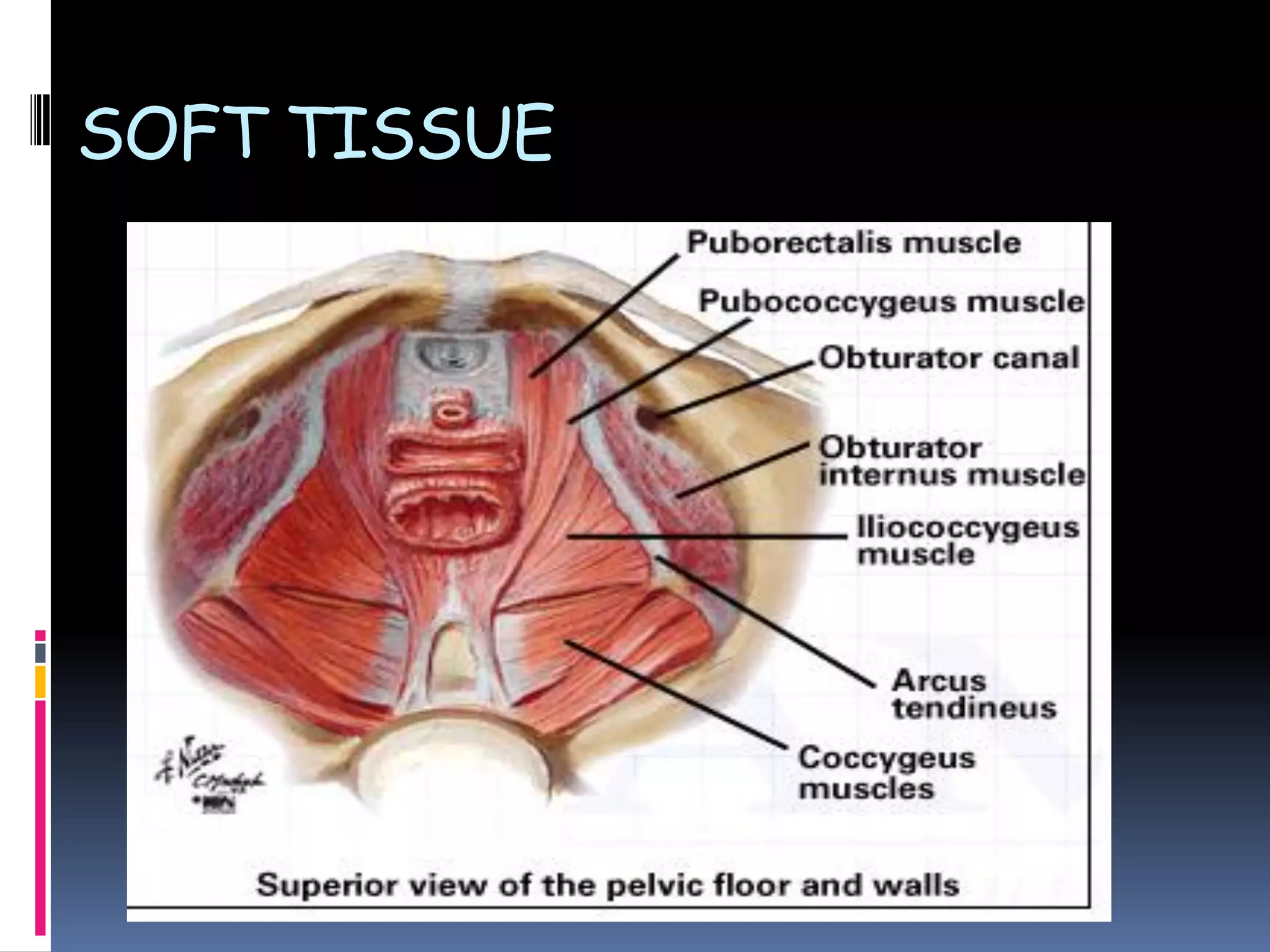
 Soft tissue
 Organs
BONY PELVIS
SOFT TISSUE
Soft Tissue
Perineal membrane Pelvic diaphragm
Internal organs
Gynaecologic surgeries
 Vulva
 Vagina
 Cervix
 Uterus
 Fallopian tubes
 Adnexa
 Pelvic region/area
 Incontinence
 POProlapse
TYPE OF DISEASE
 BENIGN AND MALIGNANCY
TYPE OF OPERATION
OPEN METHOD
LAPAROSCOPY
VAGINAL ROUTE
VULVA
 BARTHOLIN GLAND
CYST/ABSCESS
 BIOPIES
 HYMENECTOMY
 VULVECTOMY
Vulva
Bartholin abscess
Hymenectomy
Imperforated hymen
Rigid Hymen
Vaginal surgeries
 Anterior proplase
surgery
 Posterior prolapse
surgery
 Vault support surgery
 Vaginal hysterectomy
 Manchester repair
LARGE U-V PROLAPSE
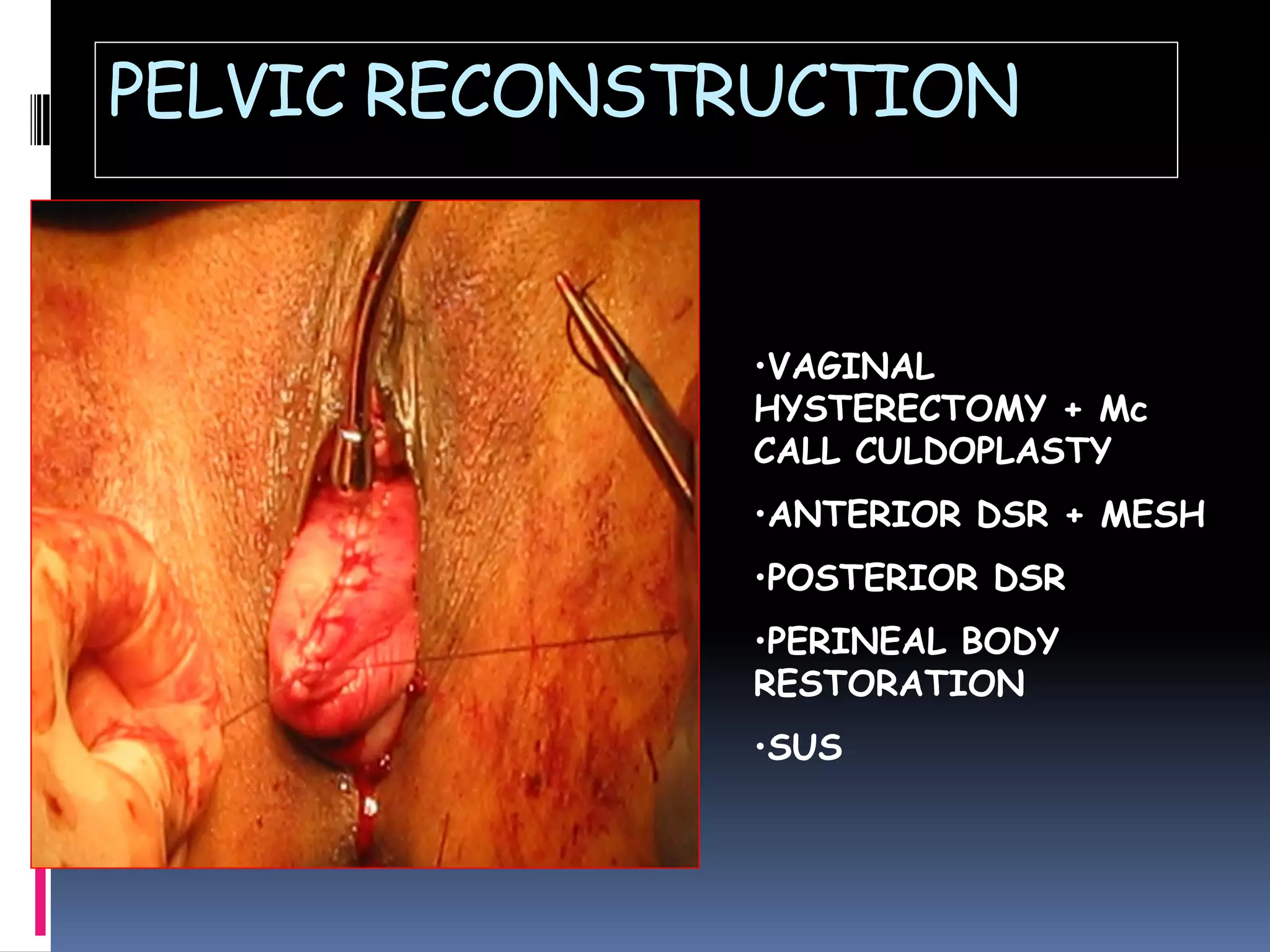
PELVIC RECONSTRUCTION
•VAGINAL
HYSTERECTOMY + Mc
CALL CULDOPLASTY
•ANTERIOR DSR + MESH
•POSTERIOR DSR
•PERINEAL BODY
RESTORATION
•SUS
cervix
 Biposy
 Colposcopy and
LEEP
 cervical cerclage
Uterus
• Fibroid
• Endometriosis
• Adenomyiosis
• Endometrial ca
• PID
• Others
EPROC/molar
GESTATIONAL
TROPHOBLASTIC DISEASE
GESTATIONAL
TROPHOBLASTIC DISEASE
Symptoms/signs
 Uterus > dates (50%)
 Increased pregnancy symptoms – hyperemesis,
severe PE, hyperthroidism
 PV bleeding
 Passing vesicles vaginally
GESTATIONAL
TROPHOBLASTIC DISEASE
GESTATIONAL
TROPHOBLASTIC DISEASE
 Managements
 General Assessment
 Suction evacuatn under GA
 Suction currettage to evacuate all molar tissue
 Transfuse blood if necessary
 Oxytocin drip 20 lU
 In older patients- Hystrectomy is an option
 Before Discharge
 Counsel on contraception ( Barrier method, OCP)
FIBROIDS
 Symptoms (50% - asymptomatic )
 Menorrhagia or intermenstrual bleed
 Rarely pain – due to red degeneratn
 Urinary symptoms – frequency or retention
 P/E
 Solid mass – unable to go below
 Mulitple fibroids cause irregular knobbly
enlargement
 Pallor – due to severe bleeding
FIBROIDS
FIBROIDS
Management
 Conservative – small,
asymptomatic fibroids
 Medical
 Tranexamic acids
 GnRH
 Surgical
 Hysteroscopic
 Myomectomy
 Hysterectomy
SURGICAL TECNIQUES FOR
Urodynamic Stress Incontinence
PROCEDURE MEAN ( % )
FIRST
PROCEDURE
MEAN ( % )
RECURRENT
INCONTINENCE
BLADDER BUTTRESS 67.8 NA
MARSHALL-
MARCHETTI KRANTZ
89.5 NA
BURCH
COLPOSUSPENSION
89.8 82.5
BLADDER
NECK SUSPENSION
86.7 86.4
SLINGS 93.9 86.1
INJECTABLES 45.5 57.8
Jarvis meta-analysis 1994
Retropubic & transobturator
pathways
SPARC AND MONARC
PLACEMENTS IN A CADAVER
RETROPUBIC
TOT
Laparoscopic Gynaecological surgery
Robotic gynaecological surgeries
Conclusion
 Many gynaecological surgeries
 Benign vs canser surgeries
 Simple to difficult
 Knowledge on surgery important
 Preparation for surgery important
 All for good of patients
 Need to master new tecnology
 Reduce morbidity and mortality
THANK YOU

Gynae surgeries