3rd Week of development and 
derivatives of germ layers 
By 
Dr. Abdul Waheed Ansari 
Chairperson & Prof. Anatomy, 
RAKCODS.RAKMHSU. 
9/24/2014 1
Learning outcomes of the topic 
• What are the embryonic changes occurring 
during 3rd week of intrauterine life ( I.U.L.)? 
• Formation of primitive streak with the cranial end 
of future embryo and caudal end defined 
• Gastrulation and creation of the third germ layer 
from the epiblast cells. 
• Neurulation is the formation of neural tube from 
the epiblast cells. 
• Formation of neural crest cells (N.C.C.) 
• Derivatives of all germ layers. 
9/24/2014 2
The bilaminar germ disk changes into 
trilaminar germ disk 
• The primitive streak is formed on the surface of 
the embryonic disk. 
• The ectoblast cells migrate through the primitive 
streak and form the mesoblast. 
• At this stage the embryonic disk is oval -shaped 
and the ectoblast is bathed in amniotic fluid. 
• From the 17th day a thickening of the embryonic 
disk begins around the median line along the 
rostro-caudal axis. 
• This median structure (primitive streak) lengthens 
until it occupies roughly half the embryo. 
9/24/2014 3
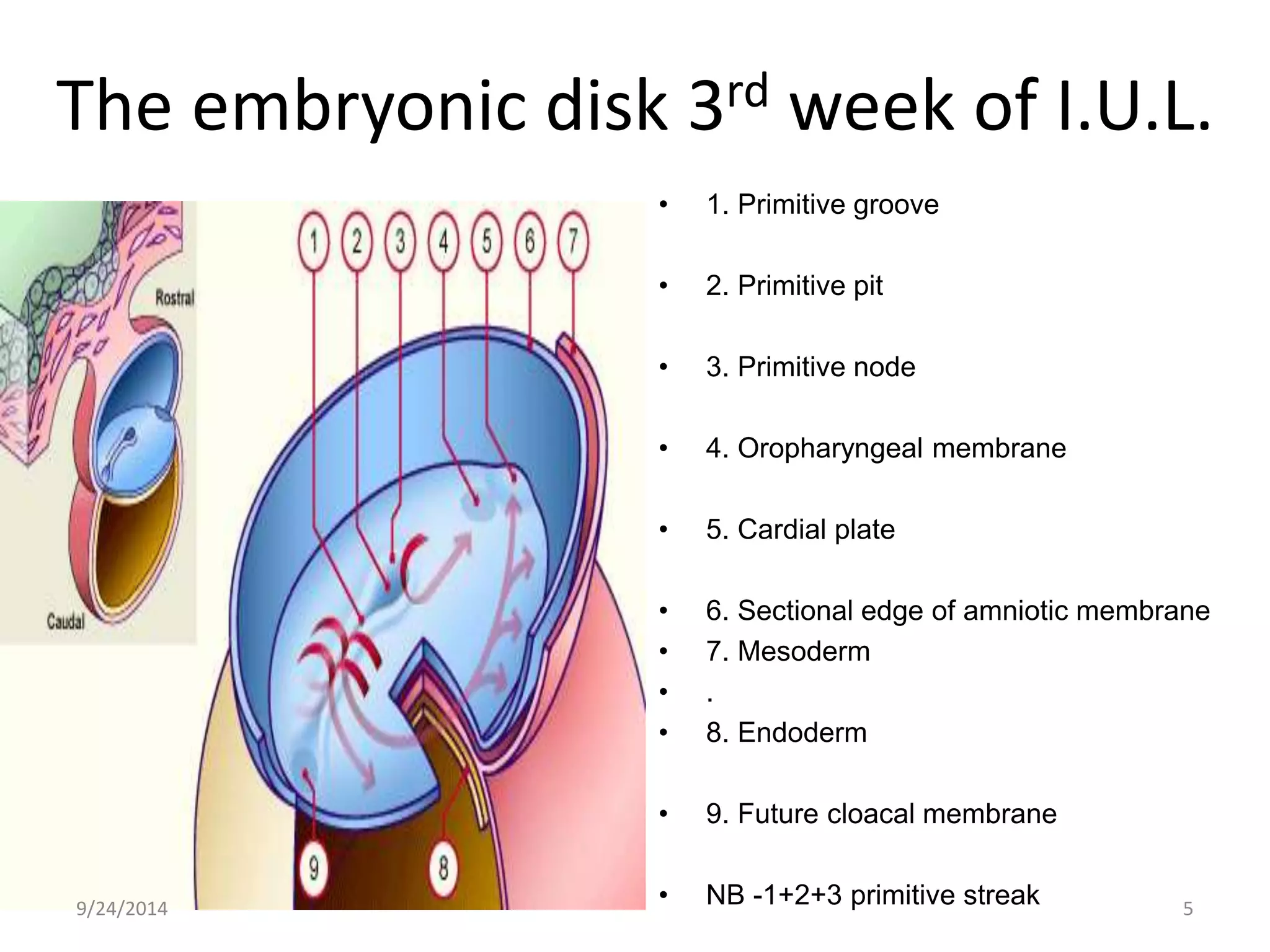
At the anterior end, a groove forms in the ectoblast (primitive groove). 
The cranial region is strengthened by the epiblast cells and so forms the 
primitive pit with the primitive node (Hensen's node in birds). 
• The head of the embryo will form at the extremity of the 
embryonic disk near the primitive pit. 
• The dorsal germinal layer becomes the ectoblast/-derm. 
• The middle germinal layer (3rd germinal layer) becomes the 
mesoblast/-derm. 
• The ventral germinal layer receives the name endoblast/- 
derm. 
• The epiblast cells form the ectoblast, the mesoblast and the 
intraembryonic endoblast. 
• The hypoblast cells give rise to the extra embryonic 
endoblast (the umbilical vesicle and the allantois). 
9/24/2014 4
The embryonic disk 3rd week of I.U.L. 
• 1. Primitive groove 
• 2. Primitive pit 
• 3. Primitive node 
• 4. Oropharyngeal membrane 
• 5. Cardial plate 
• 6. Sectional edge of amniotic membrane 
• 7. Mesoderm 
• . 
• 8. Endoderm 
• 9. Future cloacal membrane 
• NB -1+2+3 primitive streak 9/24/2014 5
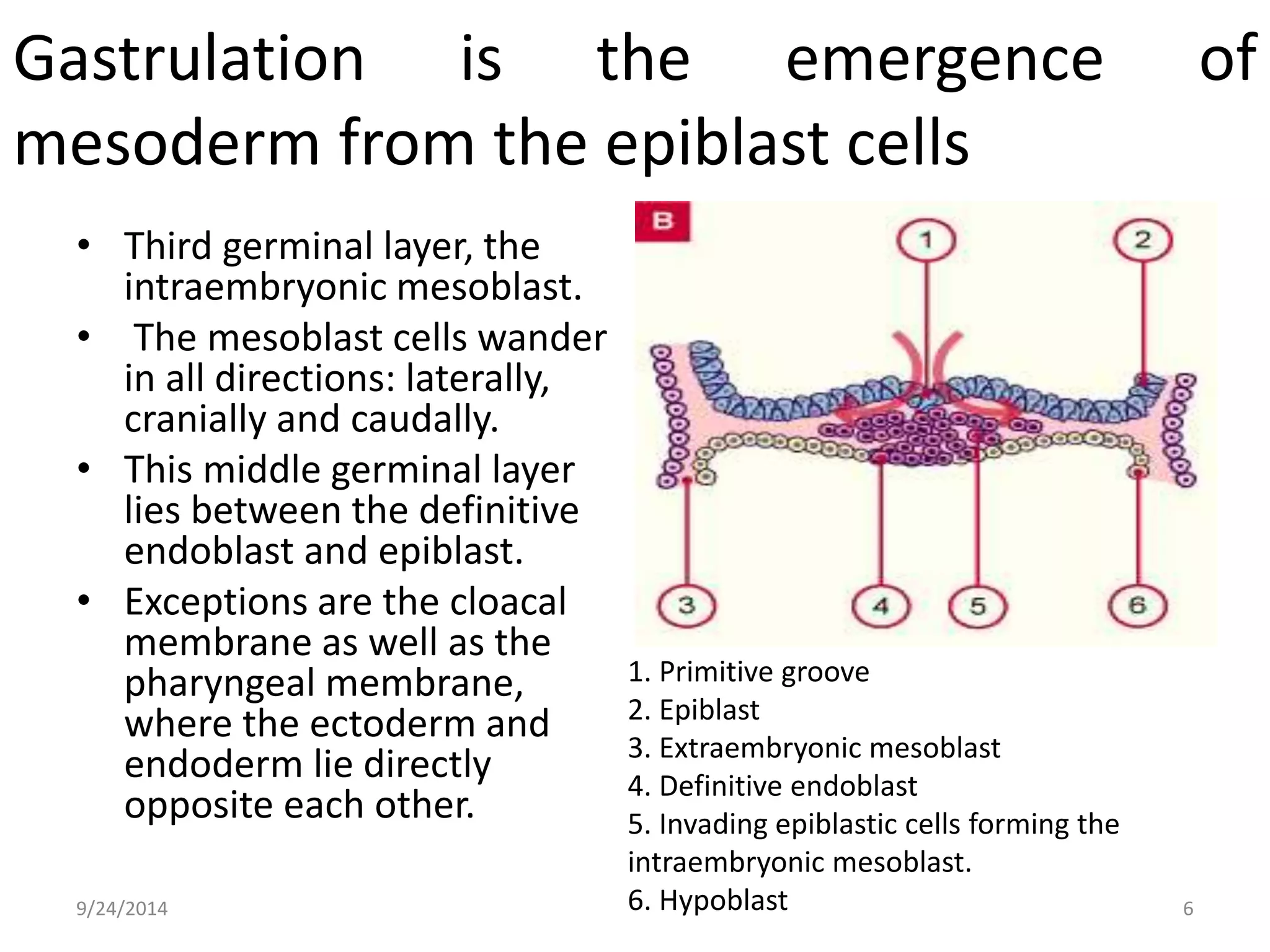
Gastrulation is the emergence of 
mesoderm from the epiblast cells 
• Third germinal layer, the 
intraembryonic mesoblast. 
• The mesoblast cells wander 
in all directions: laterally, 
cranially and caudally. 
• This middle germinal layer 
lies between the definitive 
endoblast and epiblast. 
• Exceptions are the cloacal 
membrane as well as the 
pharyngeal membrane, 
where the ectoderm and 
endoderm lie directly 
opposite each other. 
1. Primitive groove 
2. Epiblast 
3. Extraembryonic mesoblast 
4. Definitive endoblast 
5. Invading epiblastic cells forming the 
intraembryonic mesoblast. 
6. Hypoblast 
9/24/2014 6
9/24/2014 7
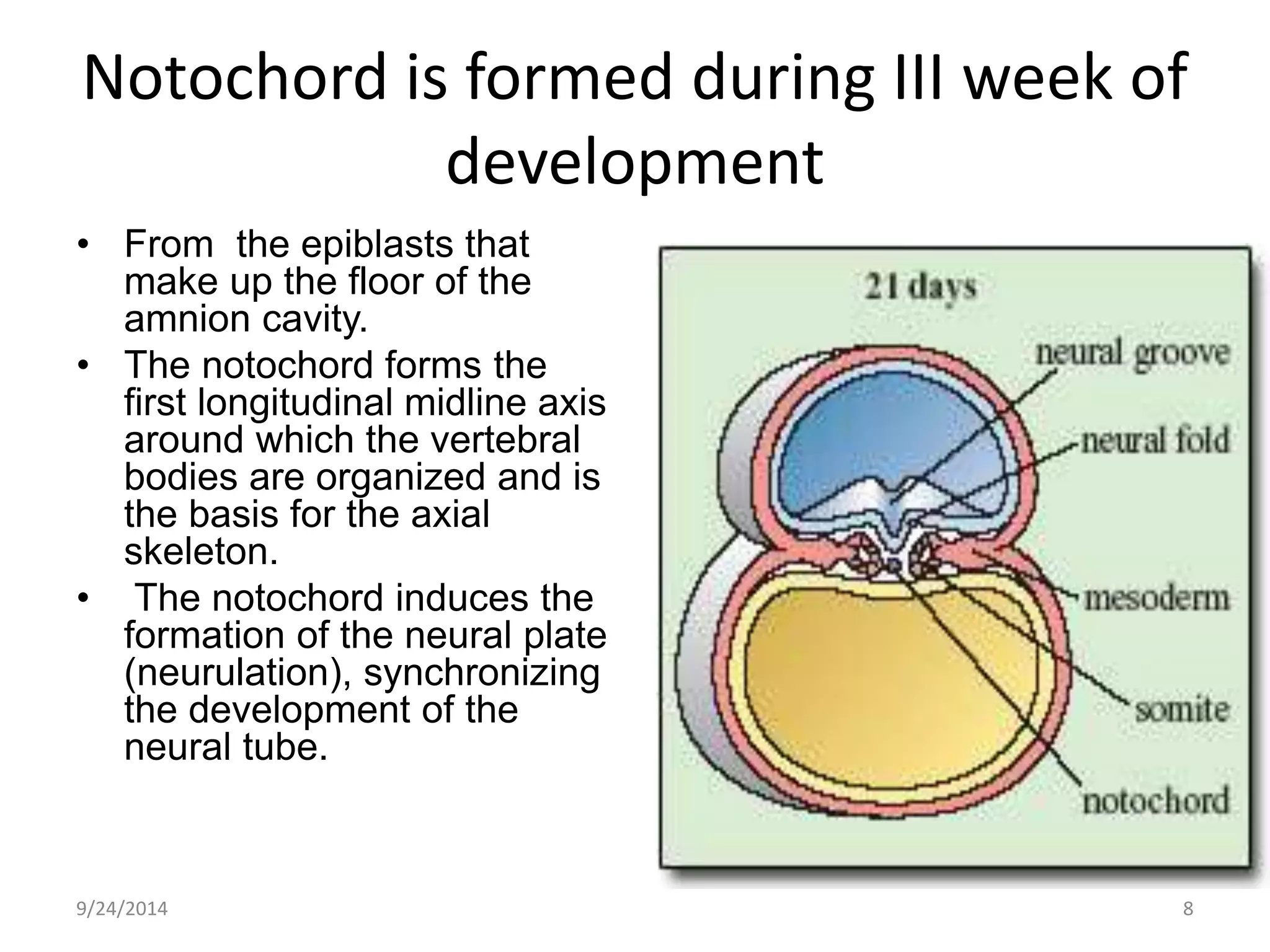
Notochord is formed during III week of 
development 
• From the epiblasts that 
make up the floor of the 
amnion cavity. 
• The notochord forms the 
first longitudinal midline axis 
around which the vertebral 
bodies are organized and is 
the basis for the axial 
skeleton. 
• The notochord induces the 
formation of the neural plate 
(neurulation), synchronizing 
the development of the 
neural tube. 
9/24/2014 8
Neurulation 
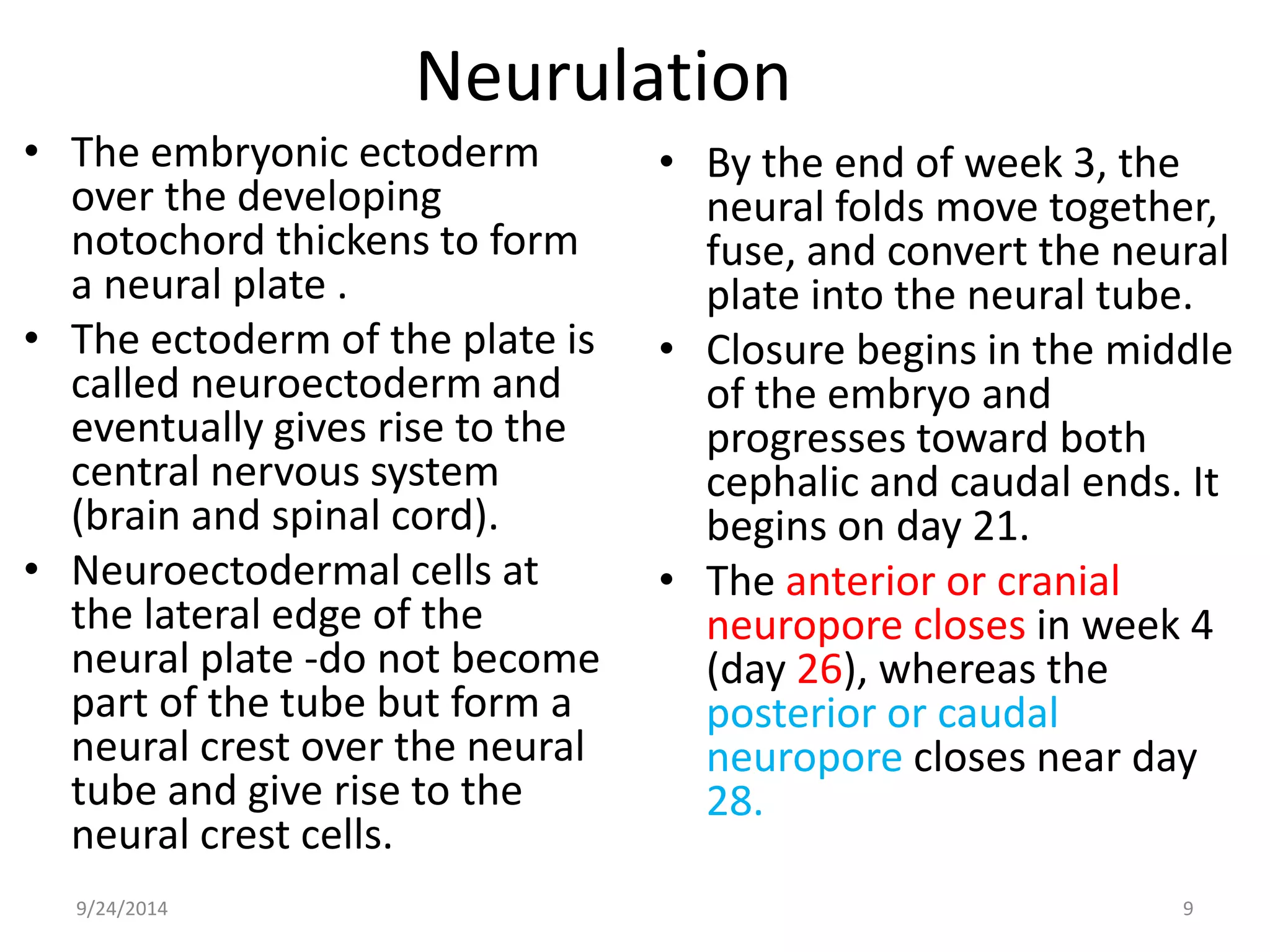
• The embryonic ectoderm 
over the developing 
notochord thickens to form 
a neural plate . 
• The ectoderm of the plate is 
called neuroectoderm and 
eventually gives rise to the 
central nervous system 
(brain and spinal cord). 
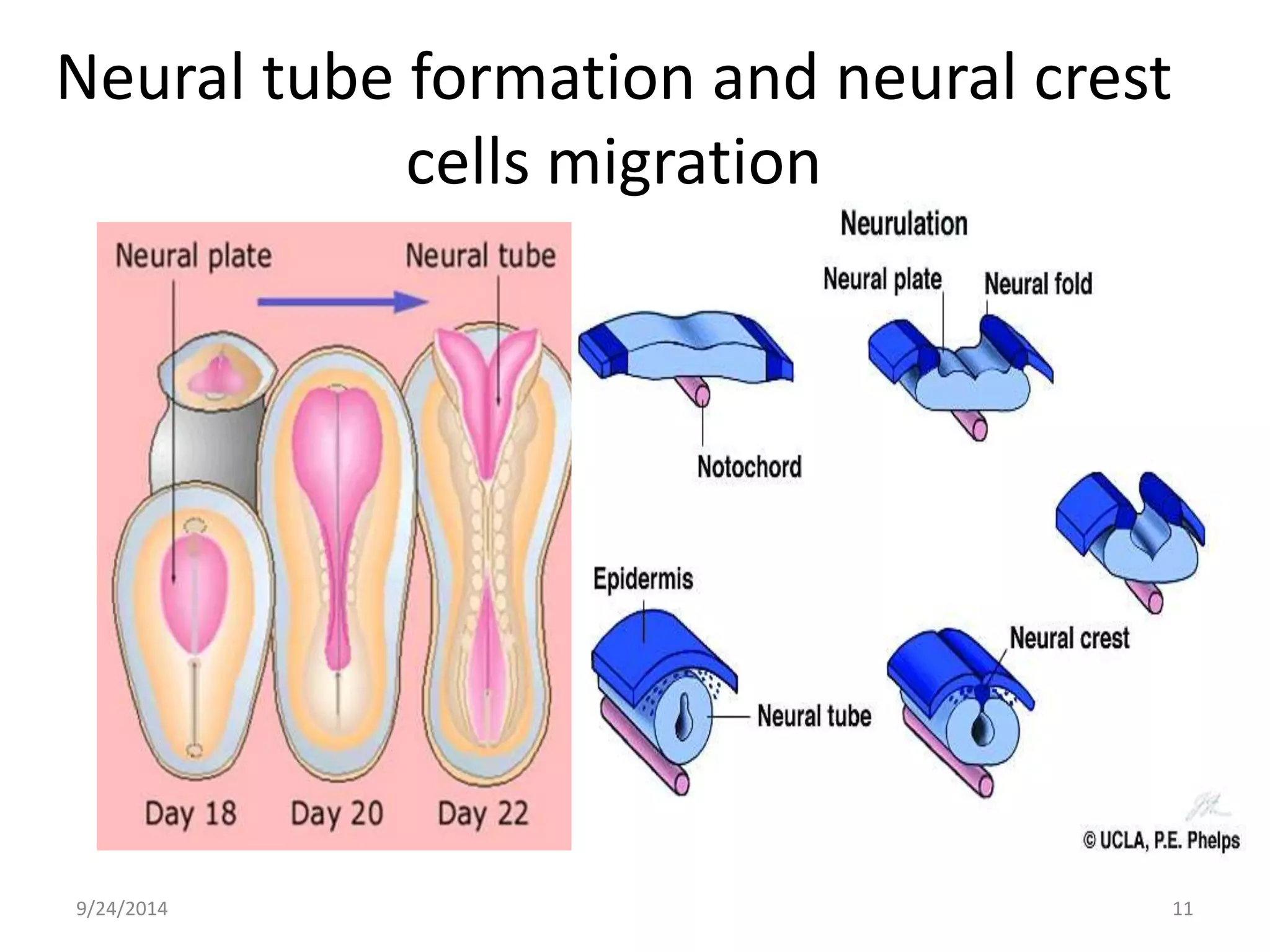
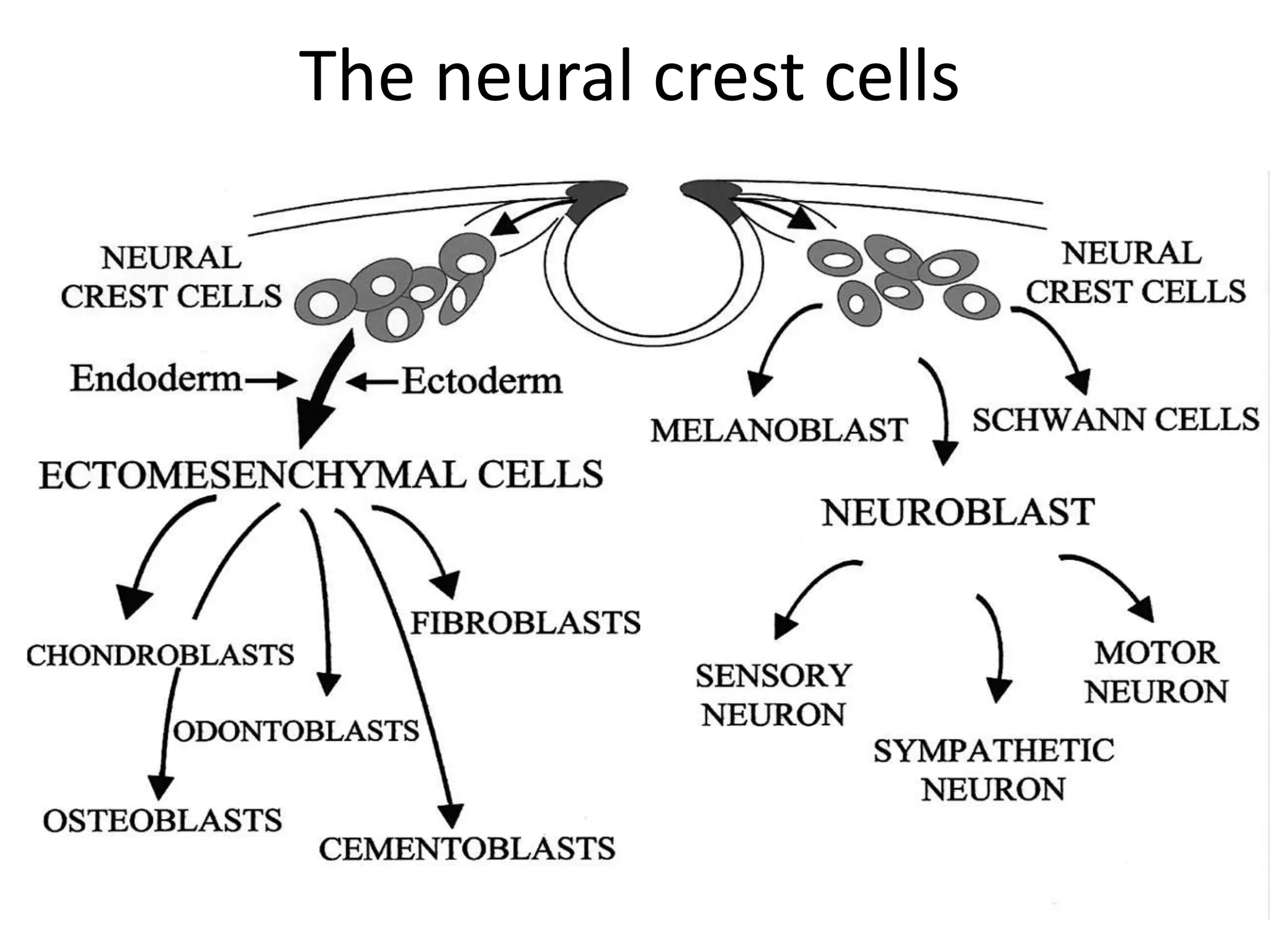
• Neuroectodermal cells at 
the lateral edge of the 
neural plate -do not become 
part of the tube but form a 
neural crest over the neural 
tube and give rise to the 
neural crest cells. 
• By the end of week 3, the 
neural folds move together, 
fuse, and convert the neural 
plate into the neural tube. 
• Closure begins in the middle 
of the embryo and 
progresses toward both 
cephalic and caudal ends. It 
begins on day 21. 
• The anterior or cranial 
neuropore closes in week 4 
(day 26), whereas the 
posterior or caudal 
neuropore closes near day 
28. 
9/24/2014 9
Defects in the closure of neural pore 
will give rise to 
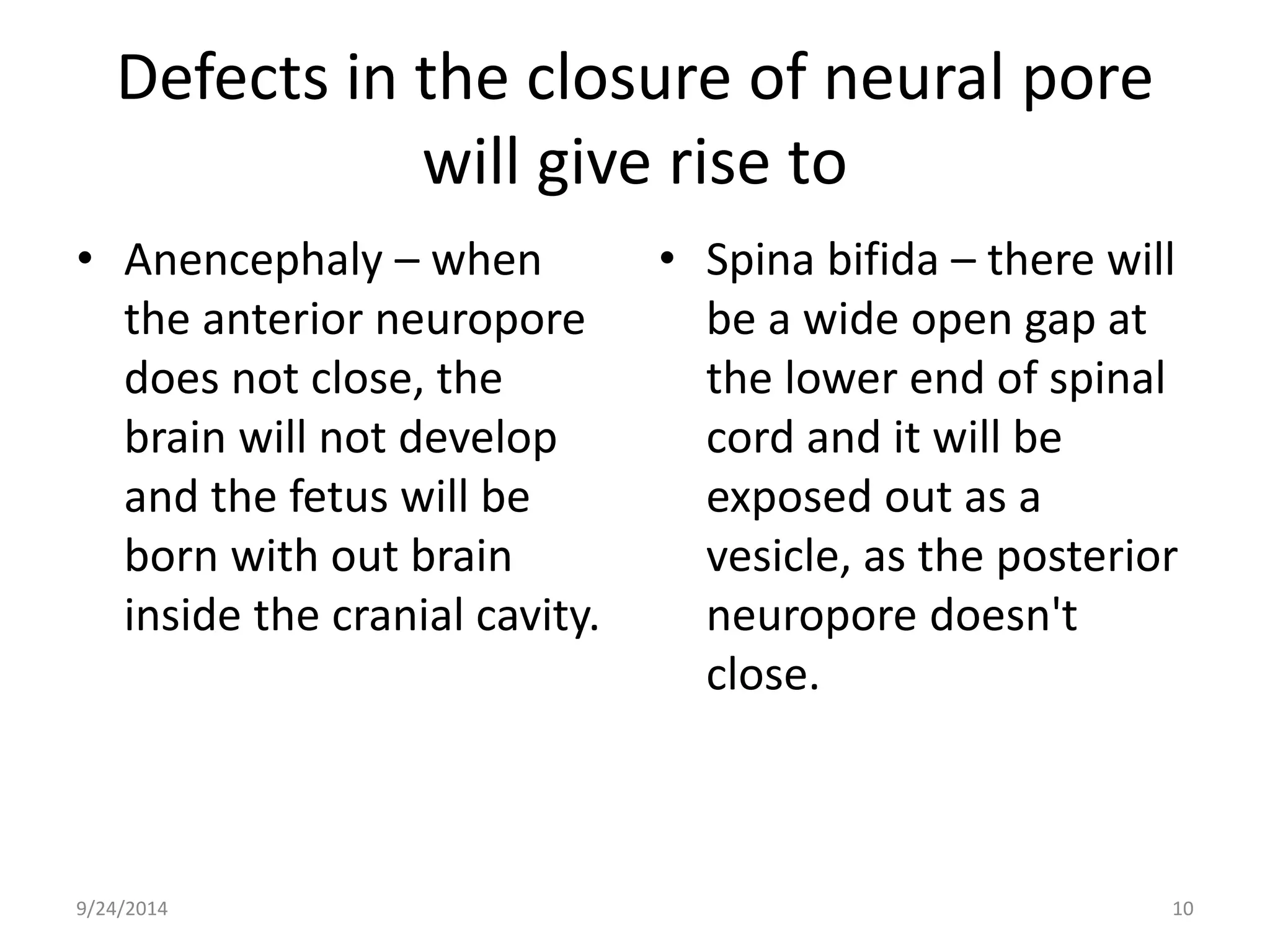
• Anencephaly – when 
the anterior neuropore 
does not close, the 
brain will not develop 
and the fetus will be 
born with out brain 
inside the cranial cavity. 
• Spina bifida – there will 
be a wide open gap at 
the lower end of spinal 
cord and it will be 
exposed out as a 
vesicle, as the posterior 
neuropore doesn't 
close. 
9/24/2014 10
Neural tube formation and neural crest 
cells migration 
9/24/2014 11
The allantois 
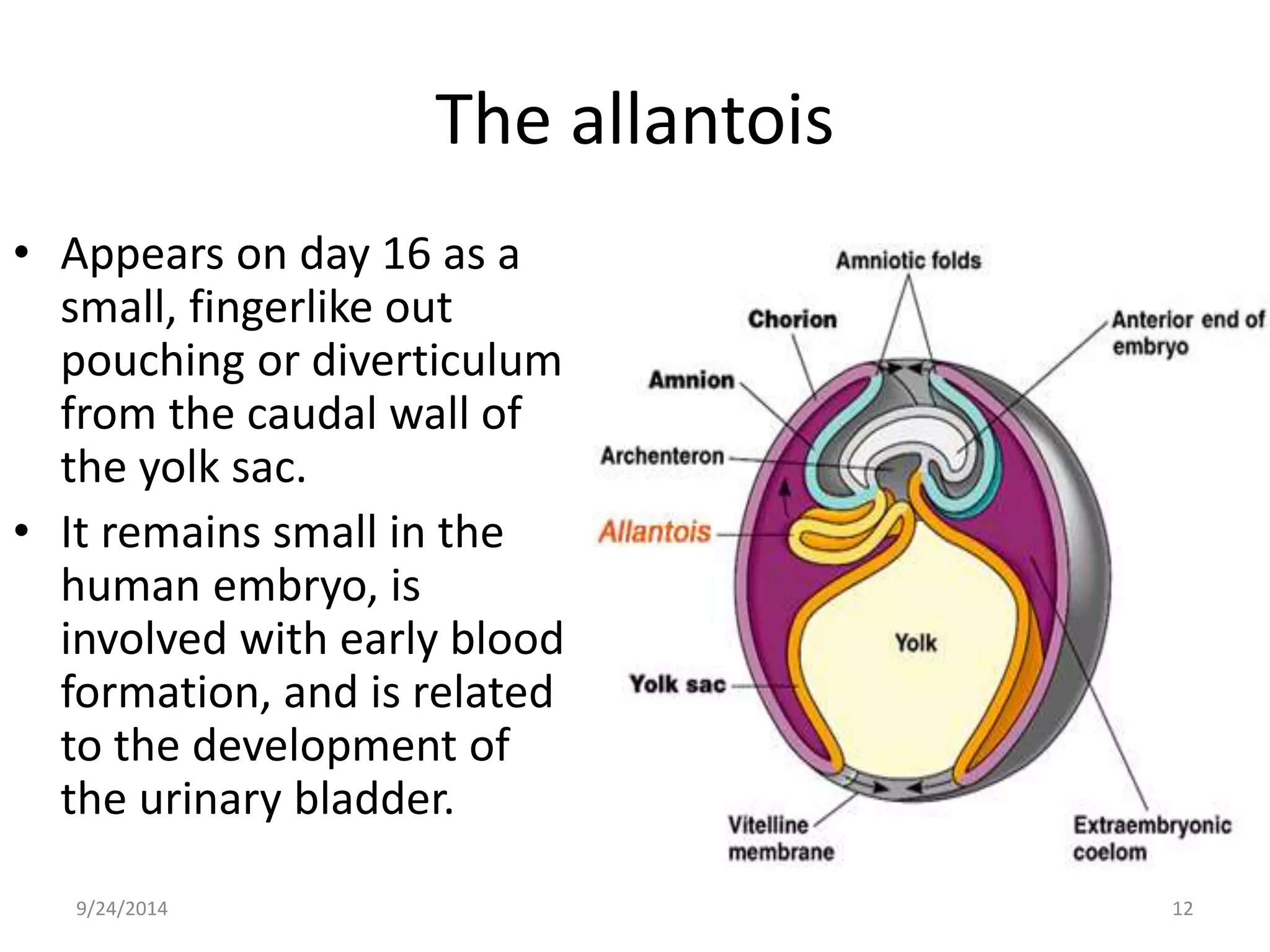
• Appears on day 16 as a 
small, fingerlike out 
pouching or diverticulum 
from the caudal wall of 
the yolk sac. 
• It remains small in the 
human embryo, is 
involved with early blood 
formation, and is related 
to the development of 
the urinary bladder. 
9/24/2014 12
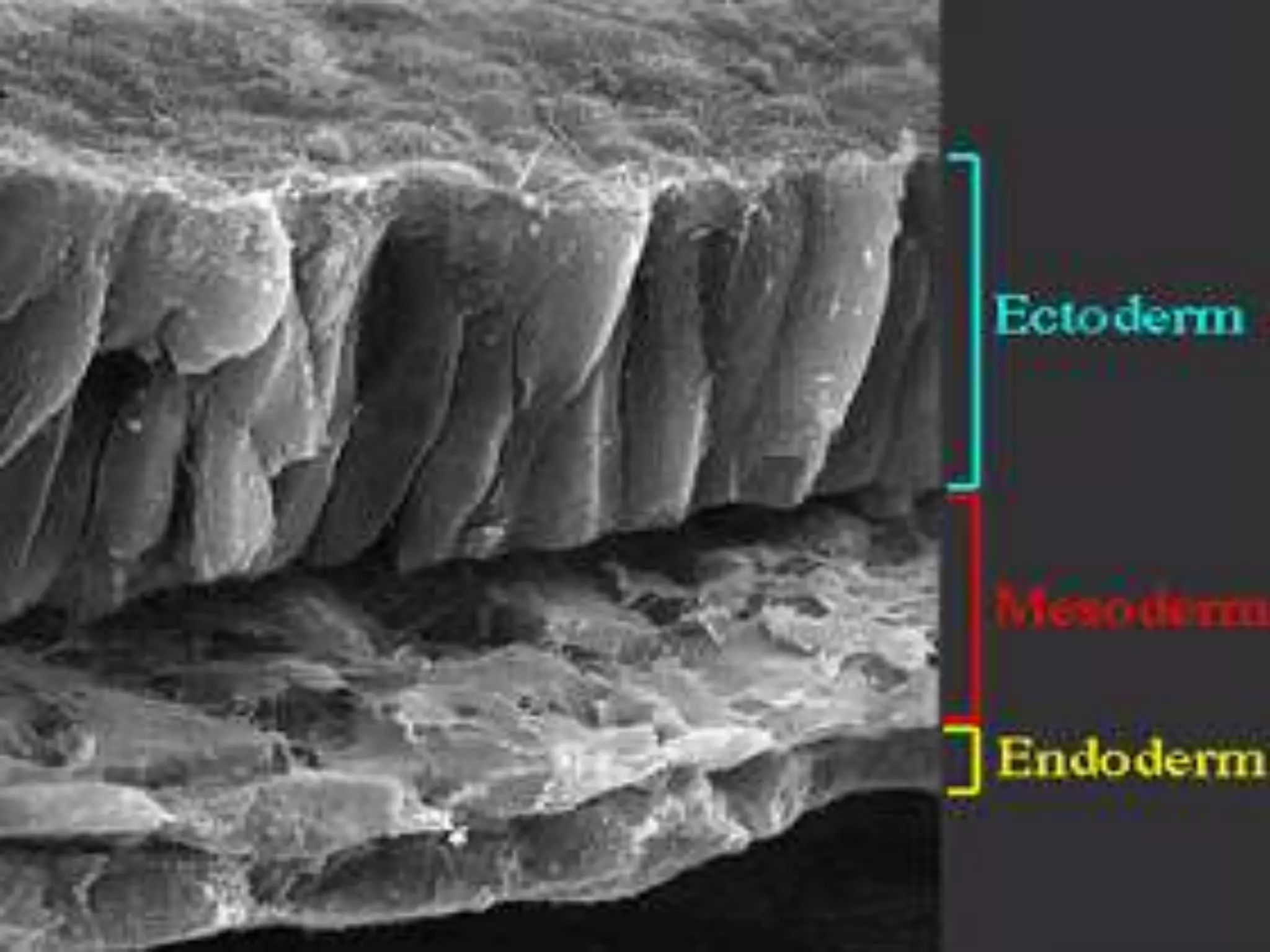
The primary germ layers 
• endoderm, mesoderm, and ectoderm are formed 
and organized in their proper locations during 
gastrulation. 
• Endoderm, the most internal germ layer, forms 
the lining of the gut and other internal organs. 
• Ectoderm, the most exterior germ layer, forms 
skin, brain, the nervous system, and other 
external tissues. 
• Mesoderm, the middle germ layer, forms muscle, 
the skeletal system, and the circulatory system. 
9/24/2014 13
The neural crest cells 
9/24/2014 14
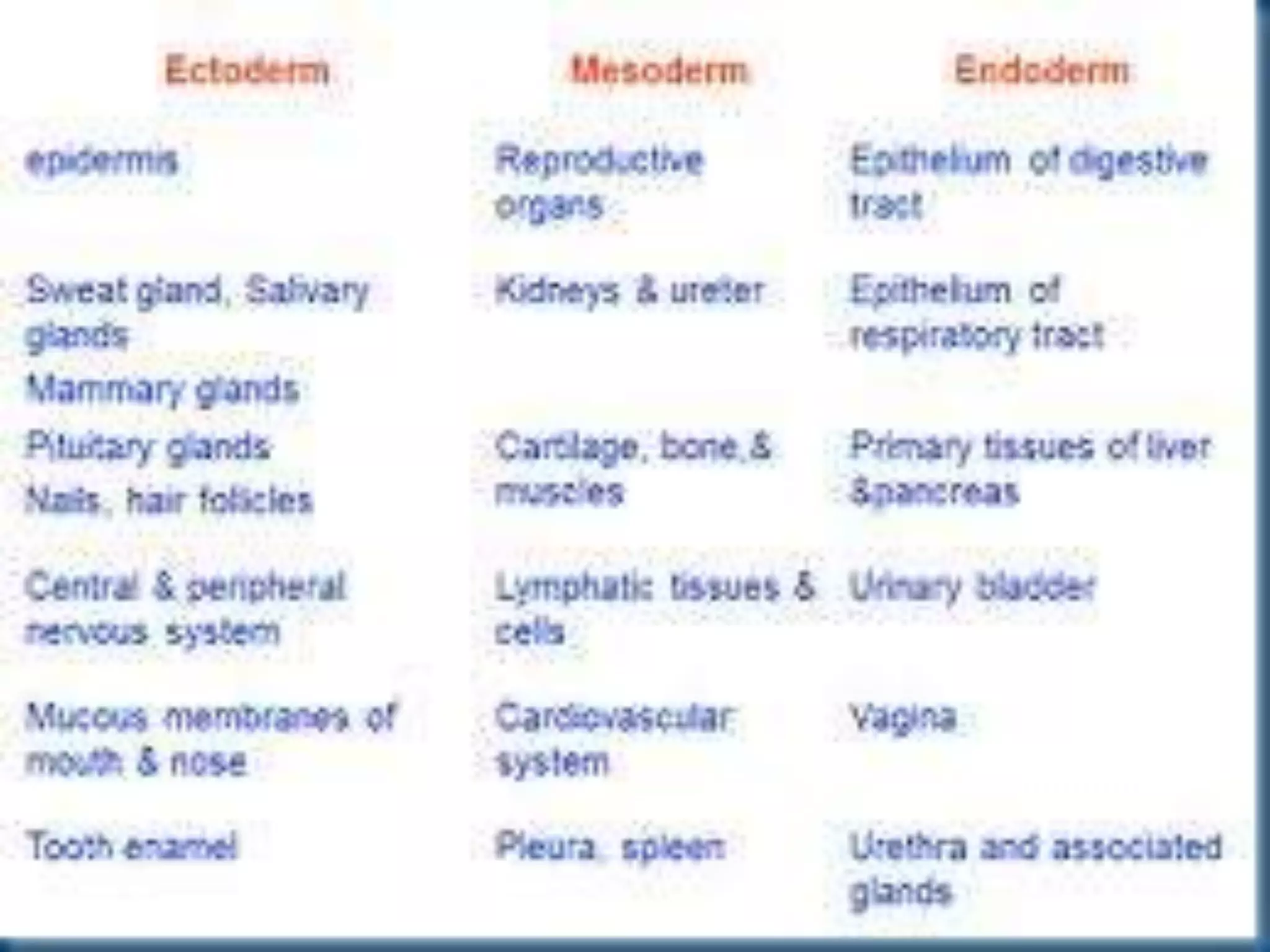
Ectoderm derivatives 
• The central nervous system; 
• The peripheral nervous system; 
• The sensory epithelium of the ear, nose and eye; 
• The epidermis, hair and nails; and 
• The subcutaneous, mammary and pituitary gland; 
• The enamel of teeth. 
9/24/2014 15
9/24/2014 16
References 
• http://labspace.open.ac.uk/mod/resource/vie 
w.php?id=285192 
• http://cro.sagepub.com/content/14/2/78.figu 
res-only 
• http://www.embryology.ch/anglais/hdisquee 
mbry/triderm01.html 
9/24/2014 17

3rd week of development and derivatives of germ

  • 1.
    3rd Week ofdevelopment and derivatives of germ layers By Dr. Abdul Waheed Ansari Chairperson & Prof. Anatomy, RAKCODS.RAKMHSU. 9/24/2014 1
  • 2.
    Learning outcomes ofthe topic • What are the embryonic changes occurring during 3rd week of intrauterine life ( I.U.L.)? • Formation of primitive streak with the cranial end of future embryo and caudal end defined • Gastrulation and creation of the third germ layer from the epiblast cells. • Neurulation is the formation of neural tube from the epiblast cells. • Formation of neural crest cells (N.C.C.) • Derivatives of all germ layers. 9/24/2014 2
  • 3.
    The bilaminar germdisk changes into trilaminar germ disk • The primitive streak is formed on the surface of the embryonic disk. • The ectoblast cells migrate through the primitive streak and form the mesoblast. • At this stage the embryonic disk is oval -shaped and the ectoblast is bathed in amniotic fluid. • From the 17th day a thickening of the embryonic disk begins around the median line along the rostro-caudal axis. • This median structure (primitive streak) lengthens until it occupies roughly half the embryo. 9/24/2014 3
  • 4.
    At the anteriorend, a groove forms in the ectoblast (primitive groove). The cranial region is strengthened by the epiblast cells and so forms the primitive pit with the primitive node (Hensen's node in birds). • The head of the embryo will form at the extremity of the embryonic disk near the primitive pit. • The dorsal germinal layer becomes the ectoblast/-derm. • The middle germinal layer (3rd germinal layer) becomes the mesoblast/-derm. • The ventral germinal layer receives the name endoblast/- derm. • The epiblast cells form the ectoblast, the mesoblast and the intraembryonic endoblast. • The hypoblast cells give rise to the extra embryonic endoblast (the umbilical vesicle and the allantois). 9/24/2014 4
  • 5.
    The embryonic disk3rd week of I.U.L. • 1. Primitive groove • 2. Primitive pit • 3. Primitive node • 4. Oropharyngeal membrane • 5. Cardial plate • 6. Sectional edge of amniotic membrane • 7. Mesoderm • . • 8. Endoderm • 9. Future cloacal membrane • NB -1+2+3 primitive streak 9/24/2014 5
  • 6.
    Gastrulation is theemergence of mesoderm from the epiblast cells • Third germinal layer, the intraembryonic mesoblast. • The mesoblast cells wander in all directions: laterally, cranially and caudally. • This middle germinal layer lies between the definitive endoblast and epiblast. • Exceptions are the cloacal membrane as well as the pharyngeal membrane, where the ectoderm and endoderm lie directly opposite each other. 1. Primitive groove 2. Epiblast 3. Extraembryonic mesoblast 4. Definitive endoblast 5. Invading epiblastic cells forming the intraembryonic mesoblast. 6. Hypoblast 9/24/2014 6
  • 7.
  • 8.
    Notochord is formedduring III week of development • From the epiblasts that make up the floor of the amnion cavity. • The notochord forms the first longitudinal midline axis around which the vertebral bodies are organized and is the basis for the axial skeleton. • The notochord induces the formation of the neural plate (neurulation), synchronizing the development of the neural tube. 9/24/2014 8
  • 9.
    Neurulation • Theembryonic ectoderm over the developing notochord thickens to form a neural plate . • The ectoderm of the plate is called neuroectoderm and eventually gives rise to the central nervous system (brain and spinal cord). • Neuroectodermal cells at the lateral edge of the neural plate -do not become part of the tube but form a neural crest over the neural tube and give rise to the neural crest cells. • By the end of week 3, the neural folds move together, fuse, and convert the neural plate into the neural tube. • Closure begins in the middle of the embryo and progresses toward both cephalic and caudal ends. It begins on day 21. • The anterior or cranial neuropore closes in week 4 (day 26), whereas the posterior or caudal neuropore closes near day 28. 9/24/2014 9
  • 10.
    Defects in theclosure of neural pore will give rise to • Anencephaly – when the anterior neuropore does not close, the brain will not develop and the fetus will be born with out brain inside the cranial cavity. • Spina bifida – there will be a wide open gap at the lower end of spinal cord and it will be exposed out as a vesicle, as the posterior neuropore doesn't close. 9/24/2014 10
  • 11.
    Neural tube formationand neural crest cells migration 9/24/2014 11
  • 12.
    The allantois •Appears on day 16 as a small, fingerlike out pouching or diverticulum from the caudal wall of the yolk sac. • It remains small in the human embryo, is involved with early blood formation, and is related to the development of the urinary bladder. 9/24/2014 12
  • 13.
    The primary germlayers • endoderm, mesoderm, and ectoderm are formed and organized in their proper locations during gastrulation. • Endoderm, the most internal germ layer, forms the lining of the gut and other internal organs. • Ectoderm, the most exterior germ layer, forms skin, brain, the nervous system, and other external tissues. • Mesoderm, the middle germ layer, forms muscle, the skeletal system, and the circulatory system. 9/24/2014 13
  • 14.
    The neural crestcells 9/24/2014 14
  • 15.
    Ectoderm derivatives •The central nervous system; • The peripheral nervous system; • The sensory epithelium of the ear, nose and eye; • The epidermis, hair and nails; and • The subcutaneous, mammary and pituitary gland; • The enamel of teeth. 9/24/2014 15
  • 16.
  • 17.
    References • http://labspace.open.ac.uk/mod/resource/vie w.php?id=285192 • http://cro.sagepub.com/content/14/2/78.figu res-only • http://www.embryology.ch/anglais/hdisquee mbry/triderm01.html 9/24/2014 17