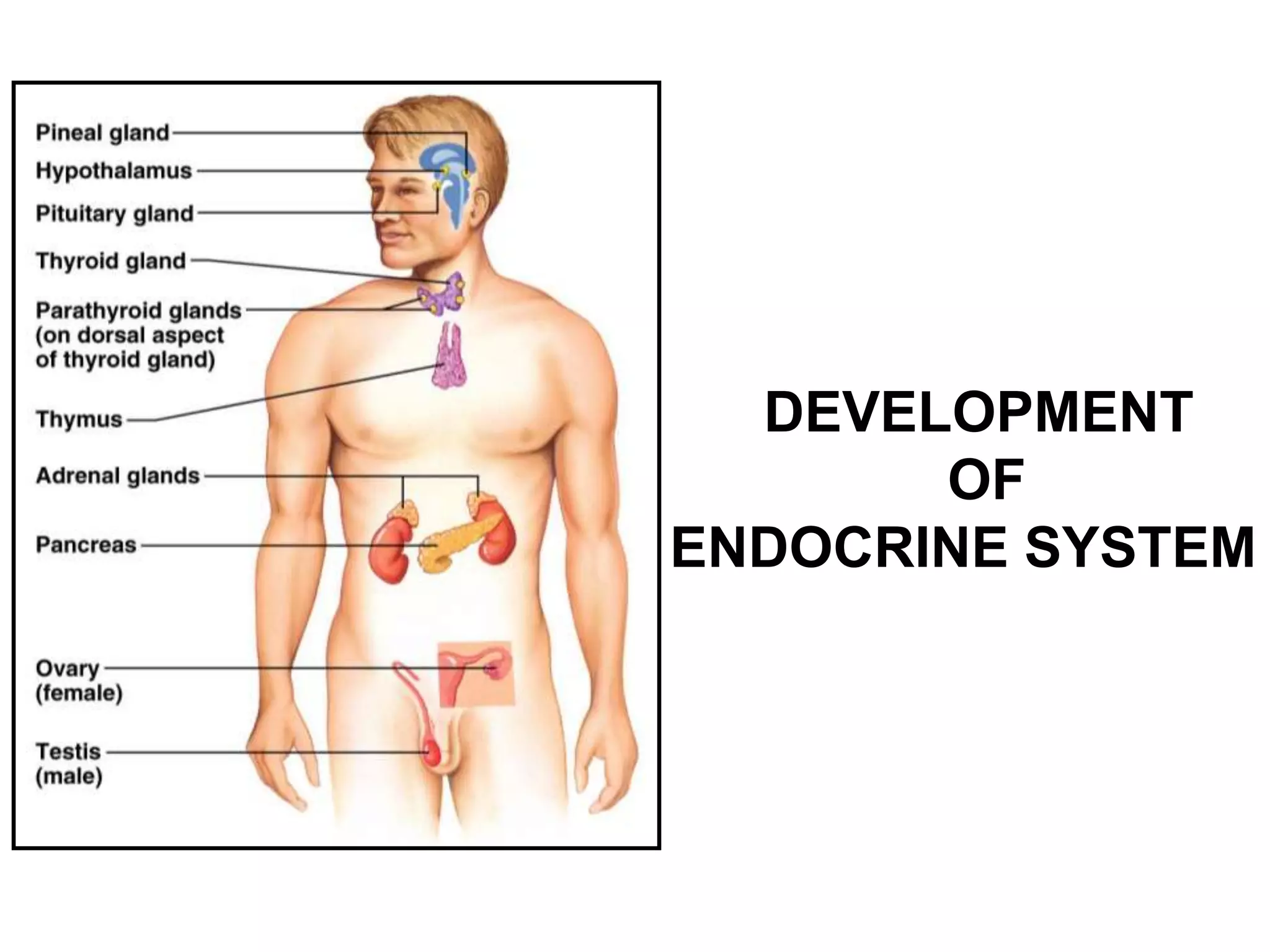
DEVELOPMENT
OF
ENDOCRINE SYSTEM
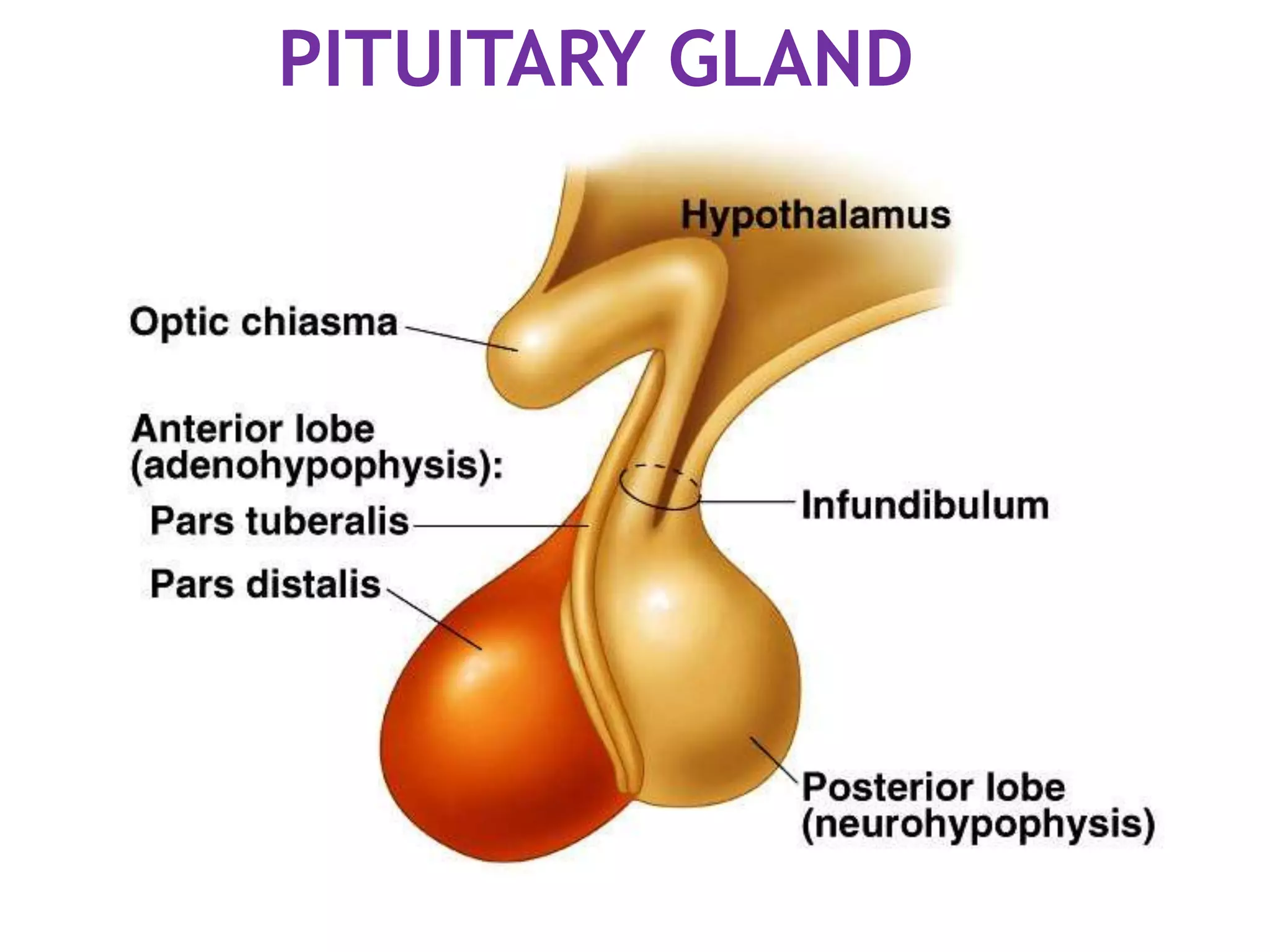
PITUITARY GLAND
PITUITARY GLAND
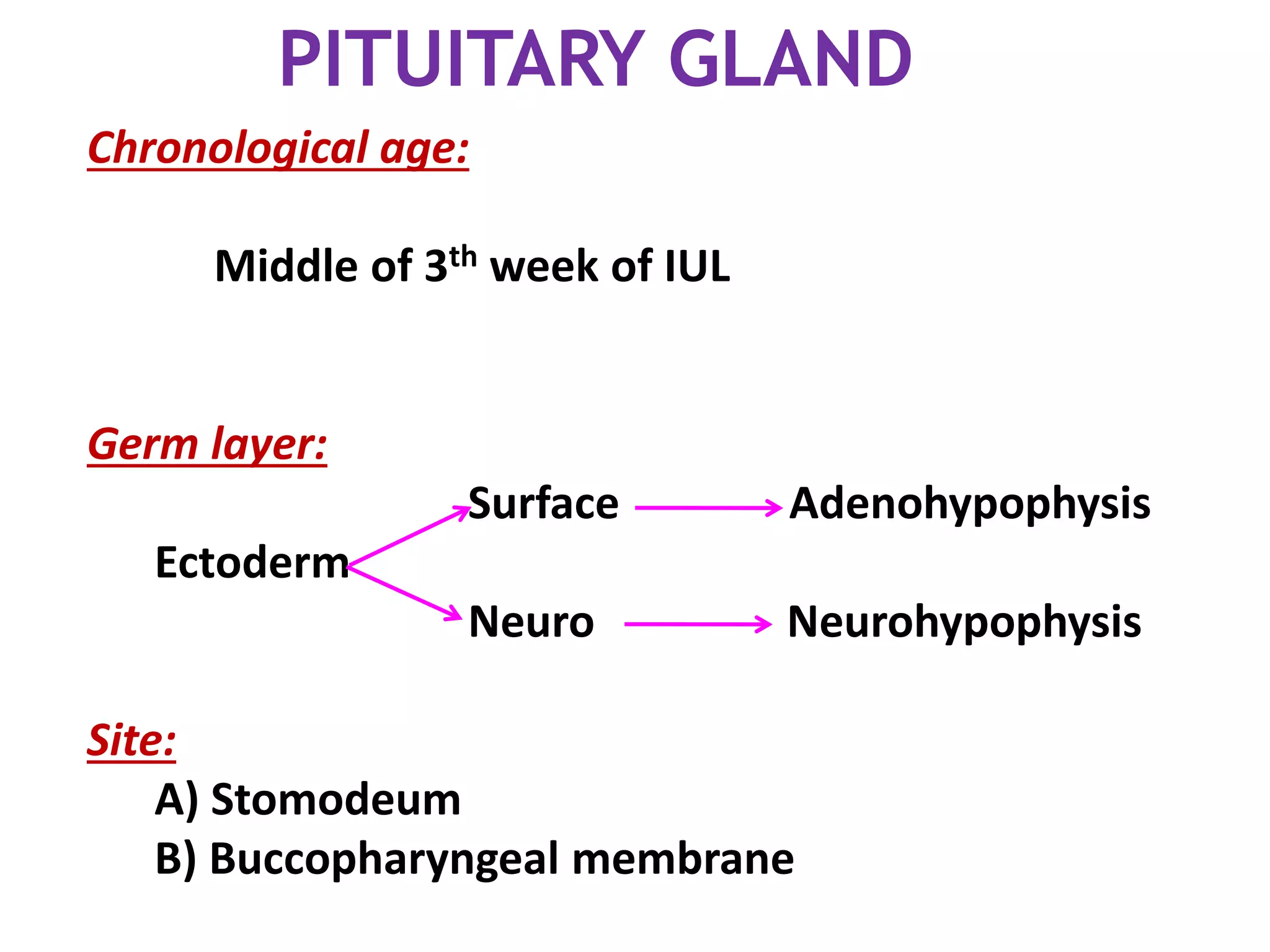
Chronological age:
Middle of 3th week of IUL
Germ layer:
Surface Adenohypophysis
Ectoderm
Neuro Neurohypophysis
Site:
A) Stomodeum
B) Buccopharyngeal membrane
PITUITARY GLAND
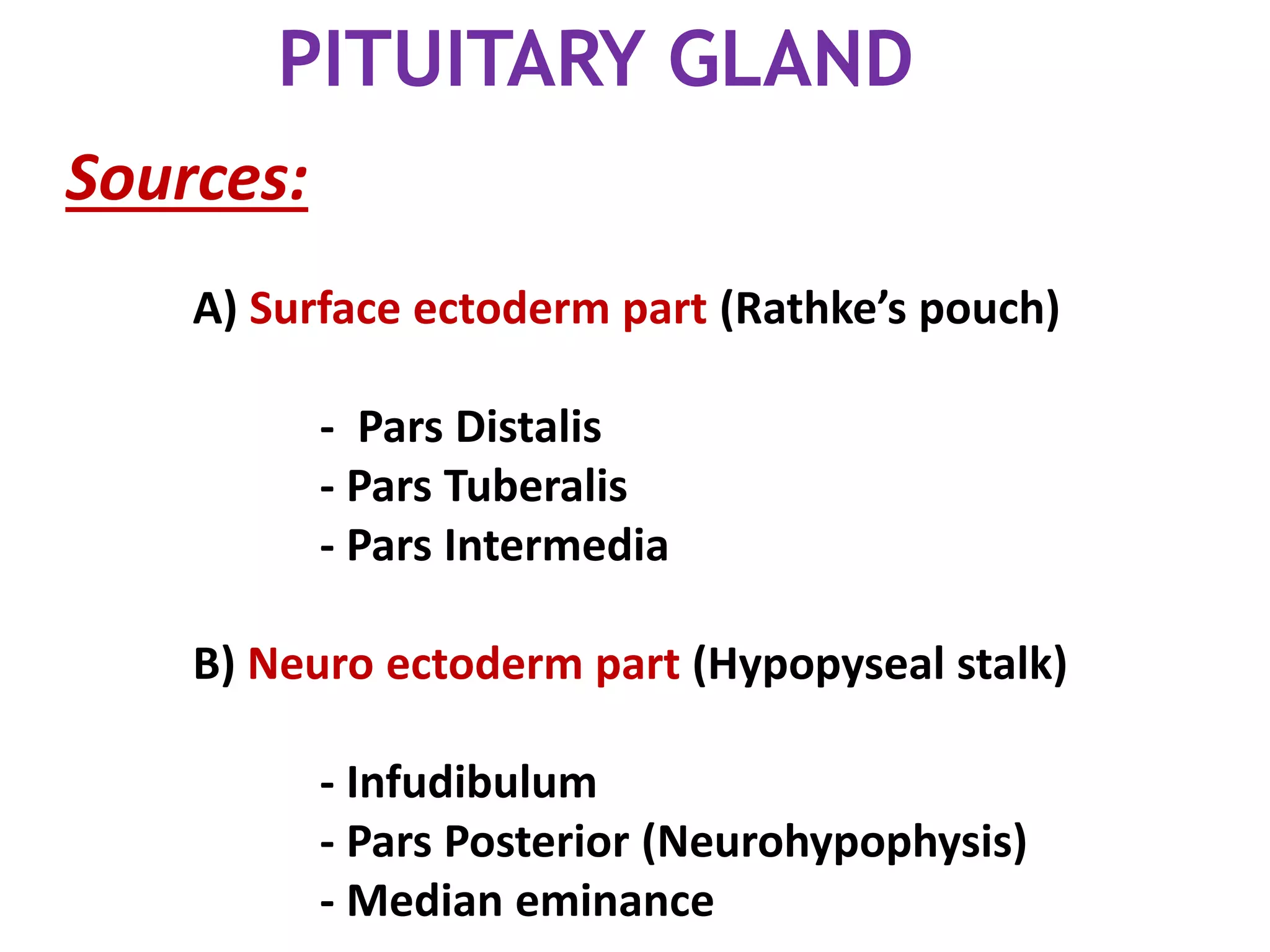
Sources:
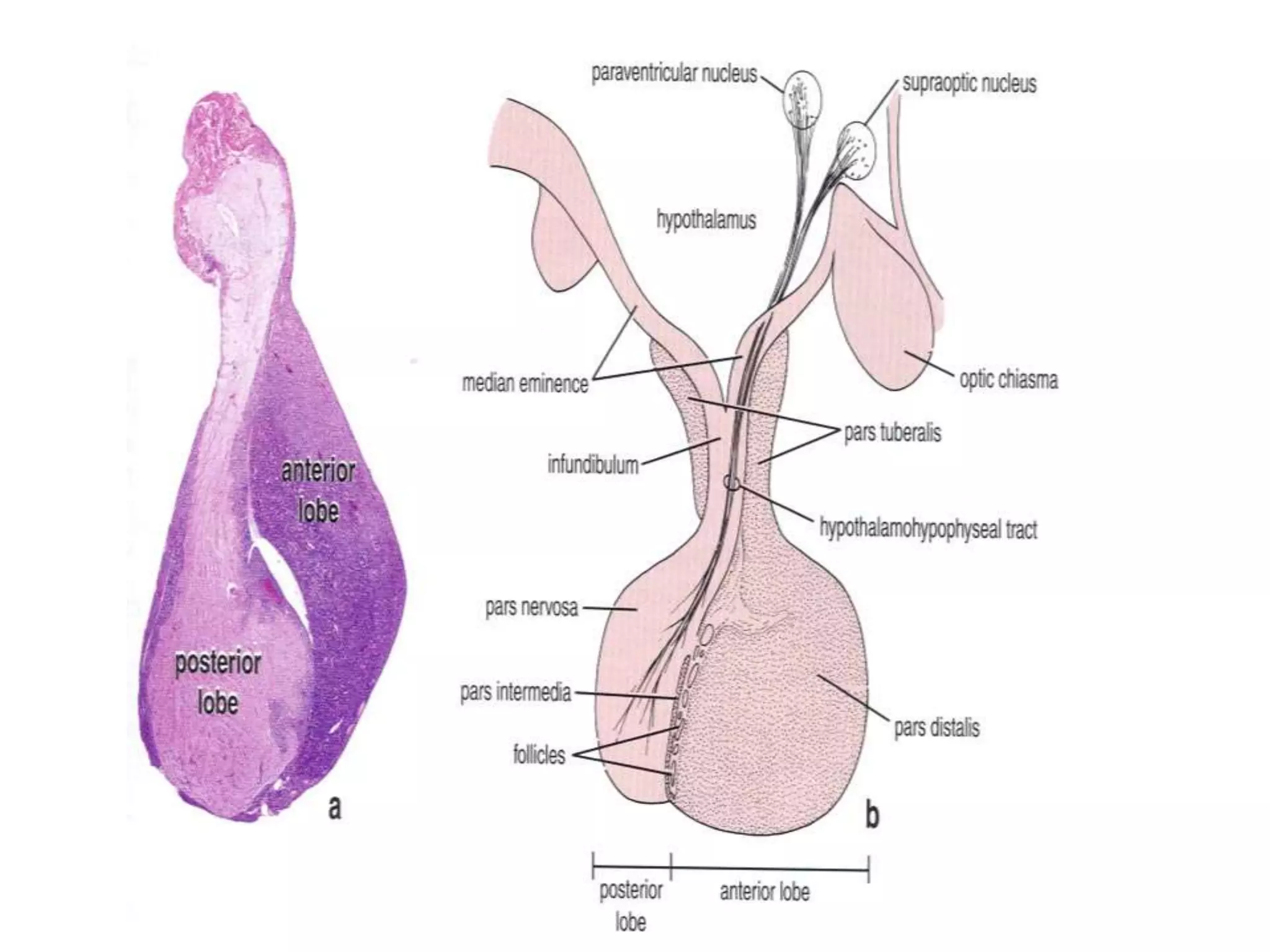
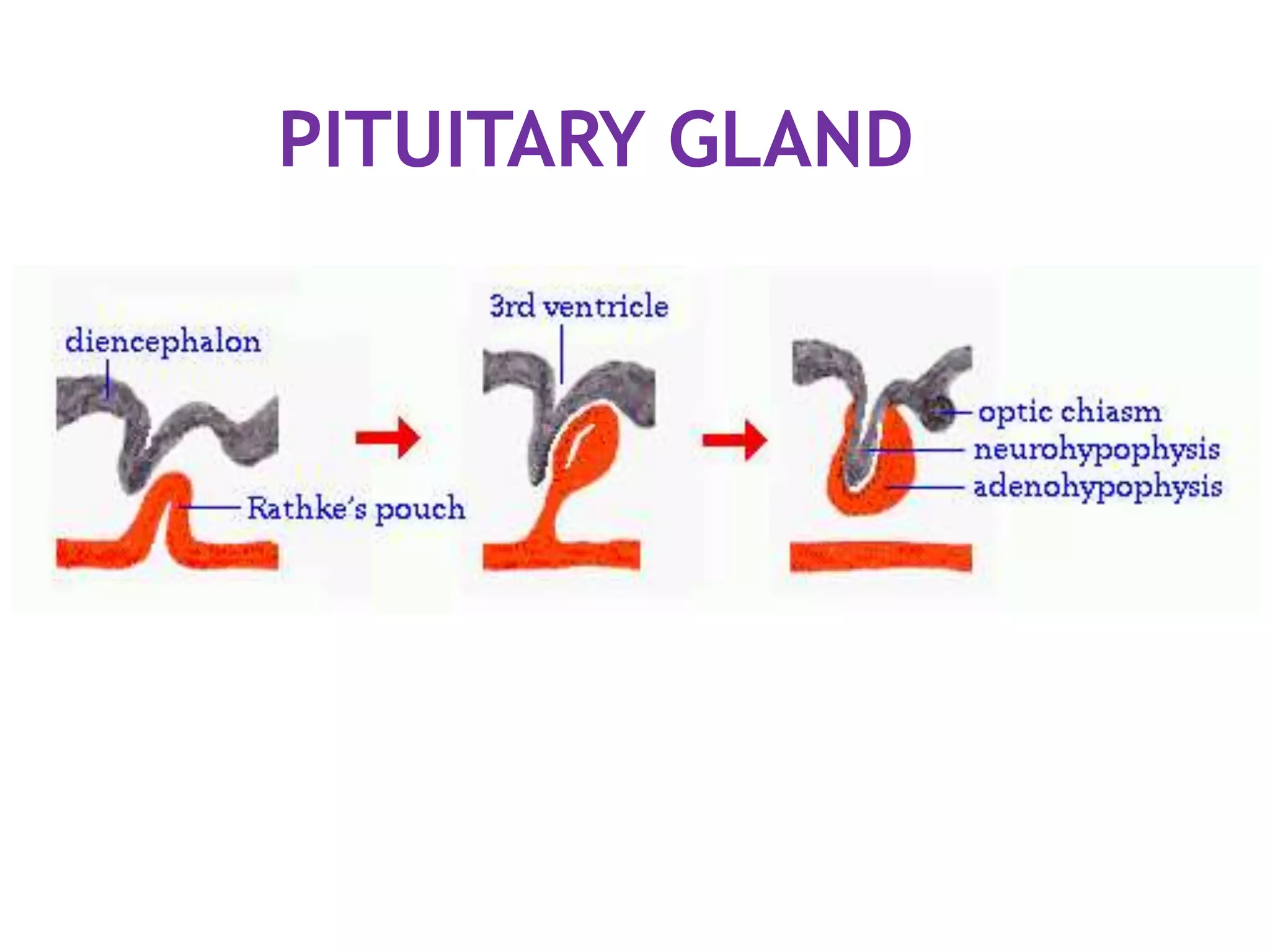
A) Surface ectoderm part (Rathke’s pouch)
- Pars Distalis
- Pars Tuberalis
- Pars Intermedia
B) Neuro ectoderm part (Hypopyseal stalk)
- Infudibulum
- Pars Posterior (Neurohypophysis)
- Median eminance
Adenohypophysis
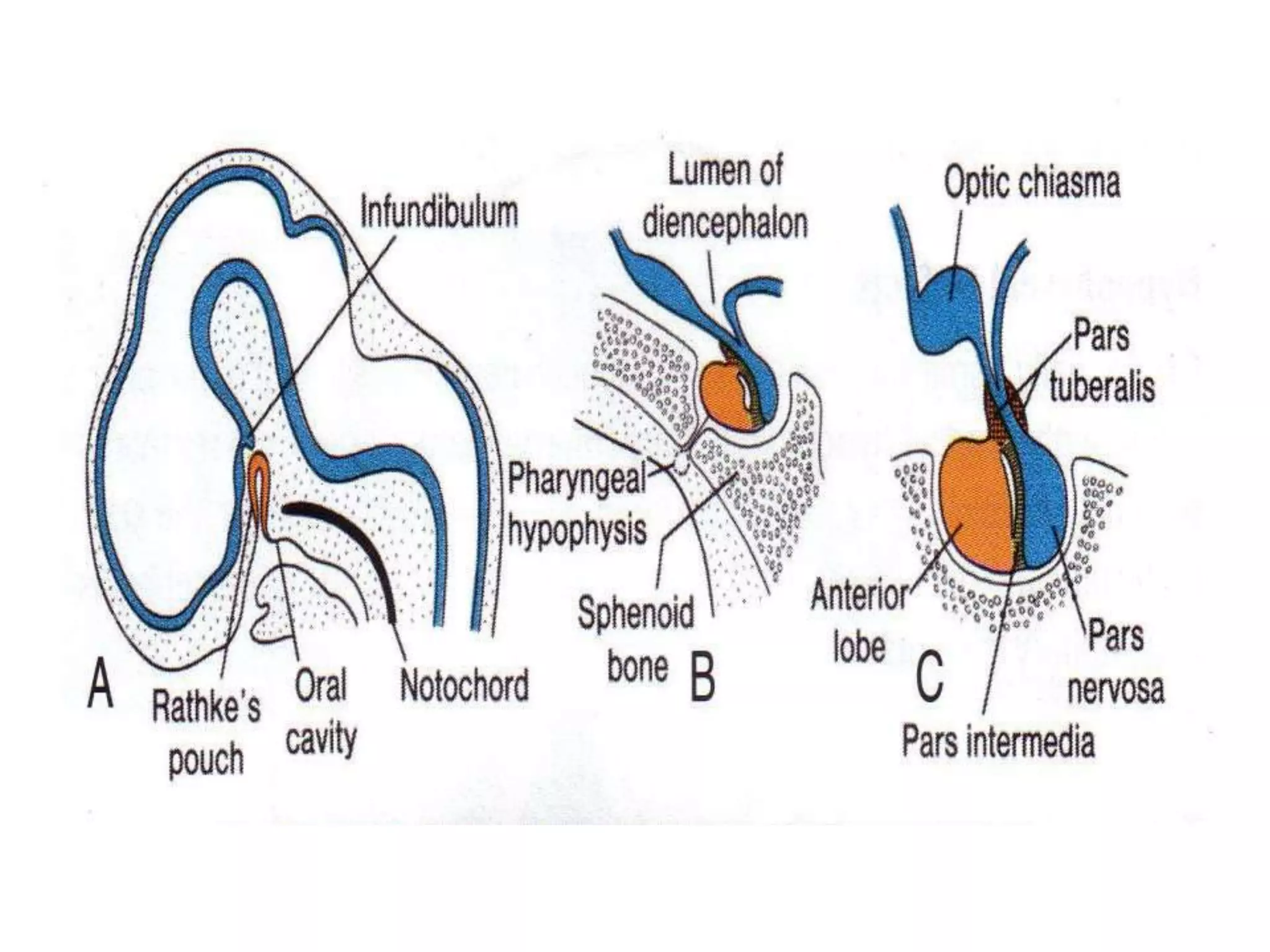
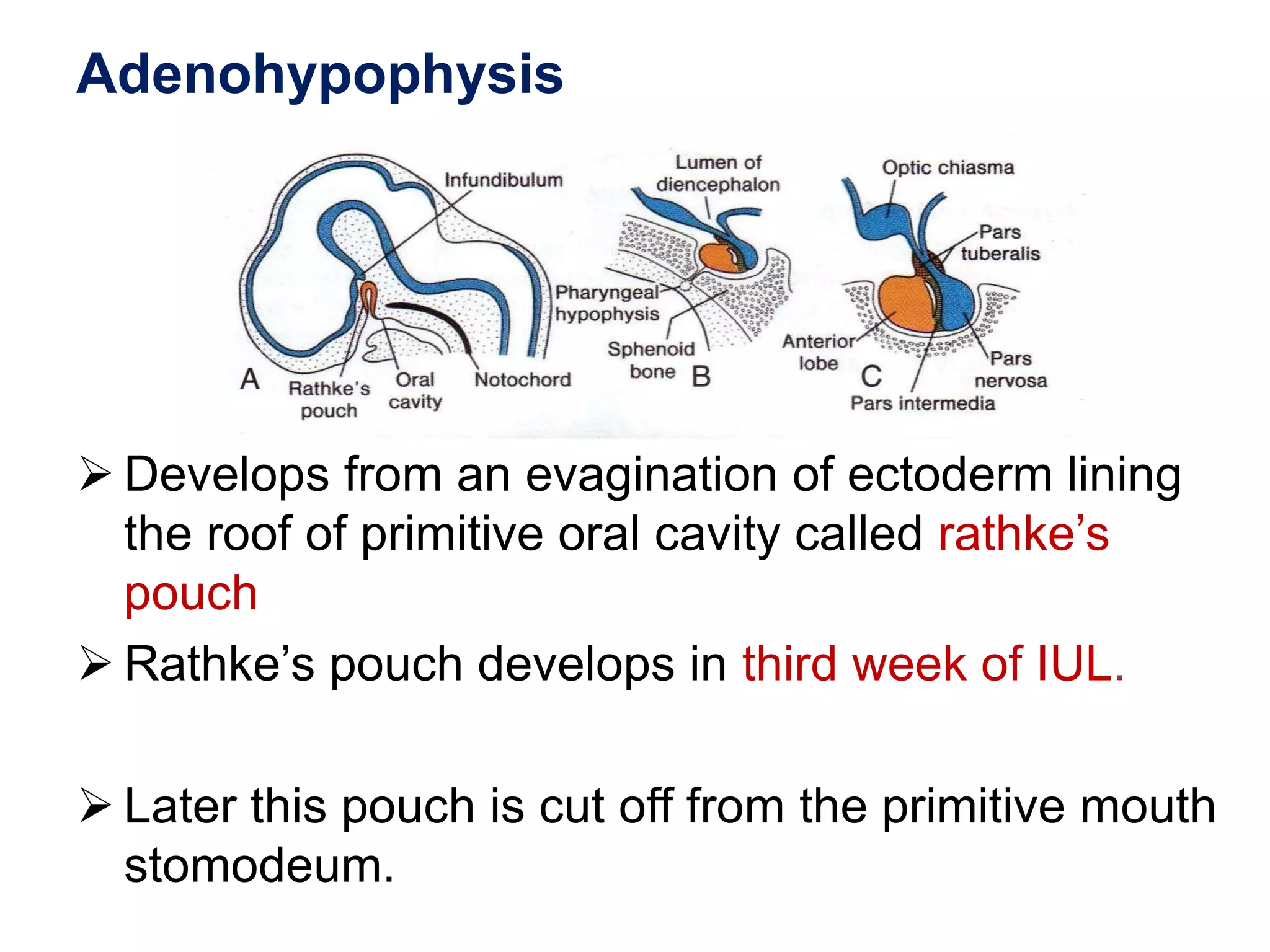
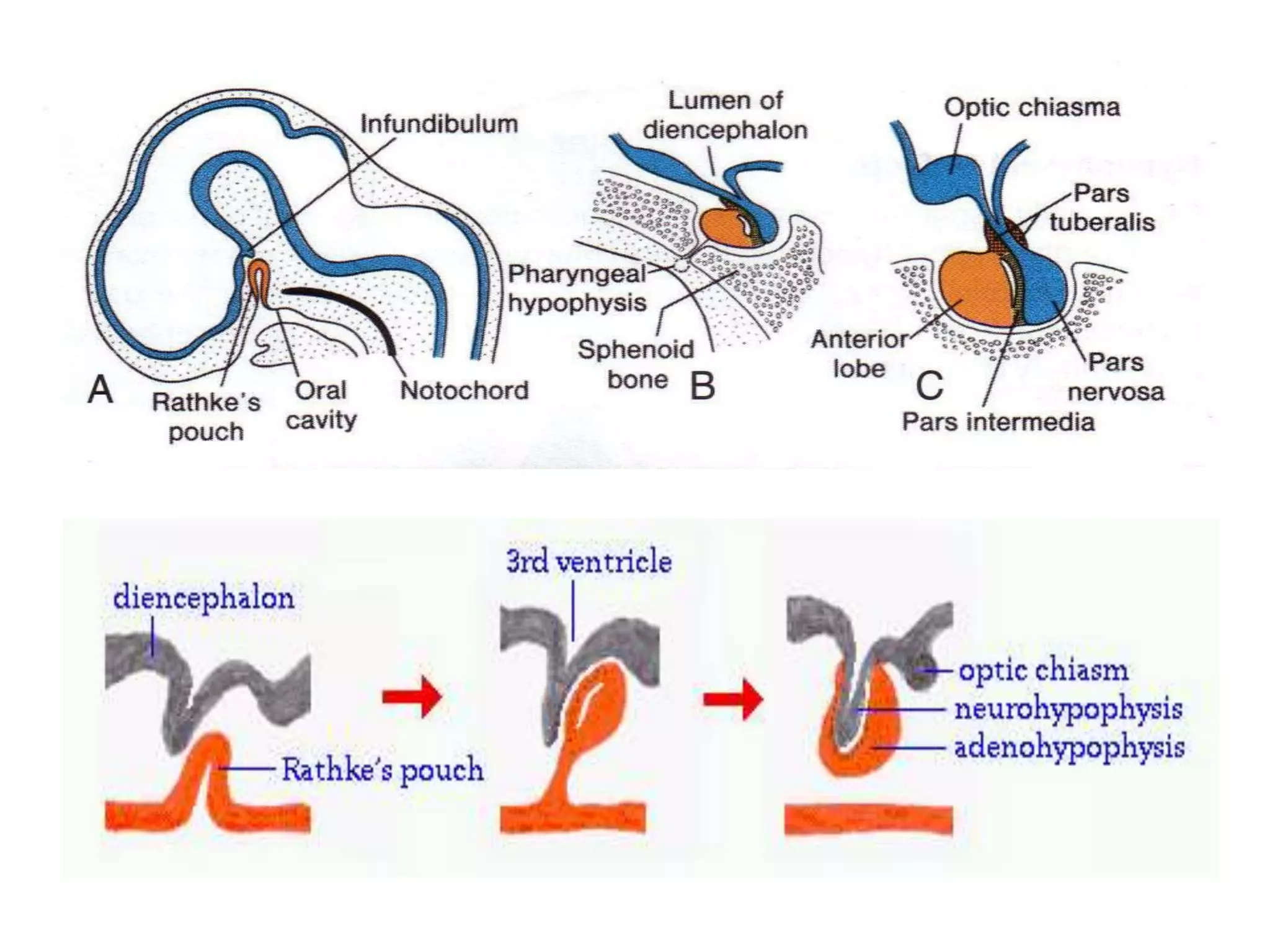
 Develops from an evagination of ectoderm lining
the roof of primitive oral cavity called rathke’s
pouch
 Rathke’s pouch develops in third week of IUL.
 Later this pouch is cut off from the primitive mouth
stomodeum.
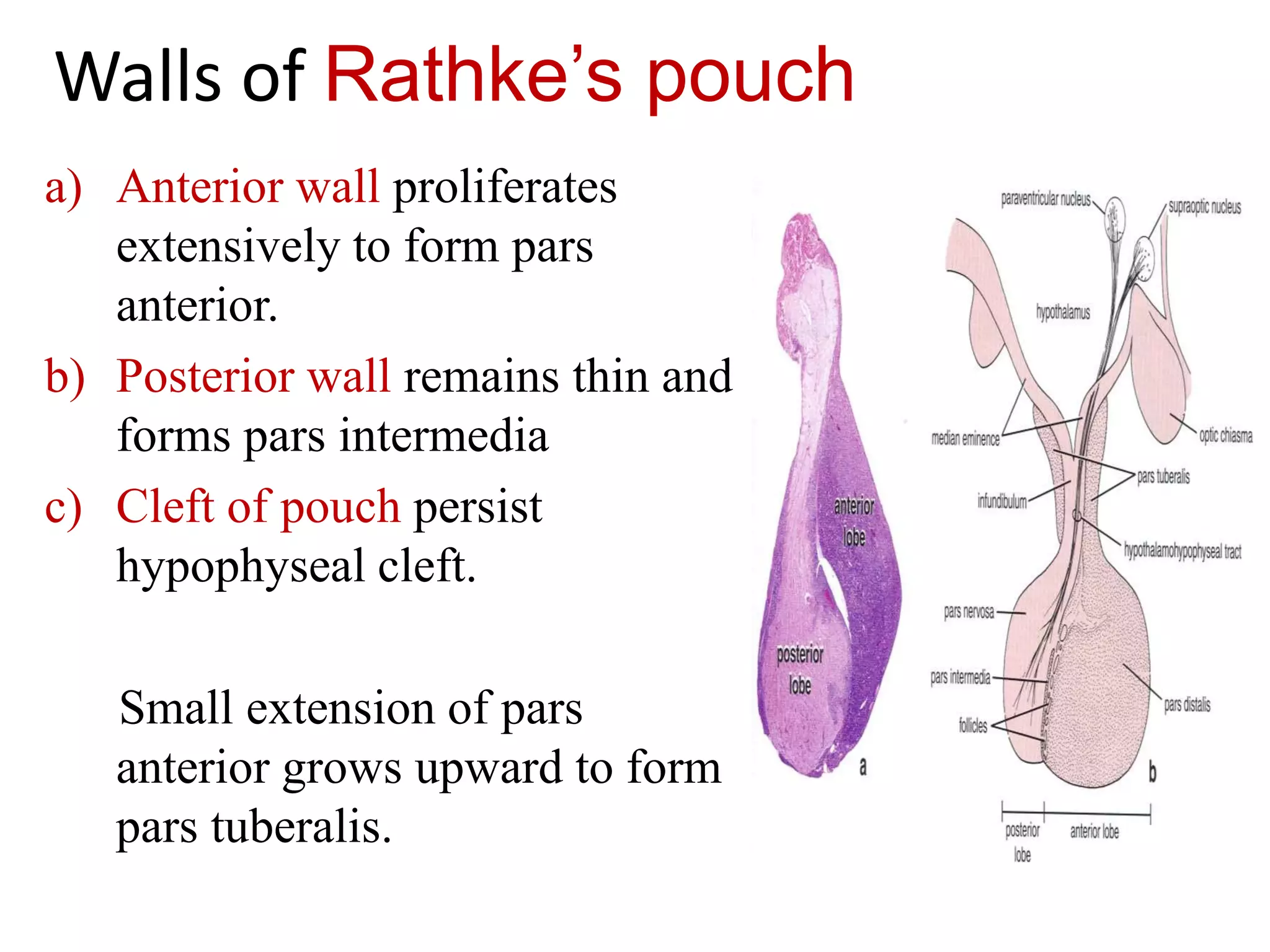
Walls of Rathke’s pouch
a) Anterior wall proliferates
extensively to form pars
anterior.
b) Posterior wall remains thin and
forms pars intermedia
c) Cleft of pouch persist
hypophyseal cleft.
Small extension of pars
anterior grows upward to form
pars tuberalis.
Neurohypophysis
Neurohypophysis
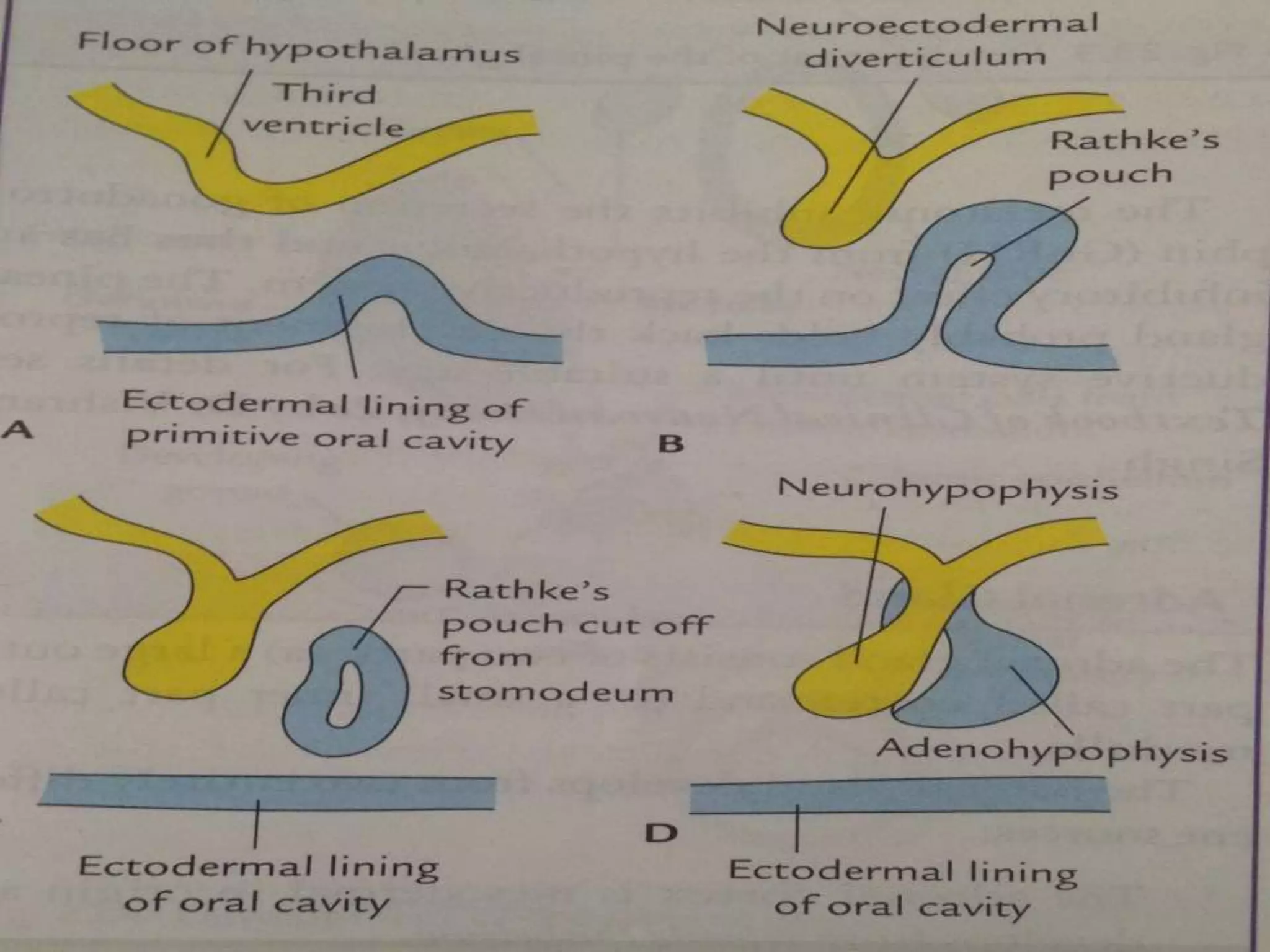
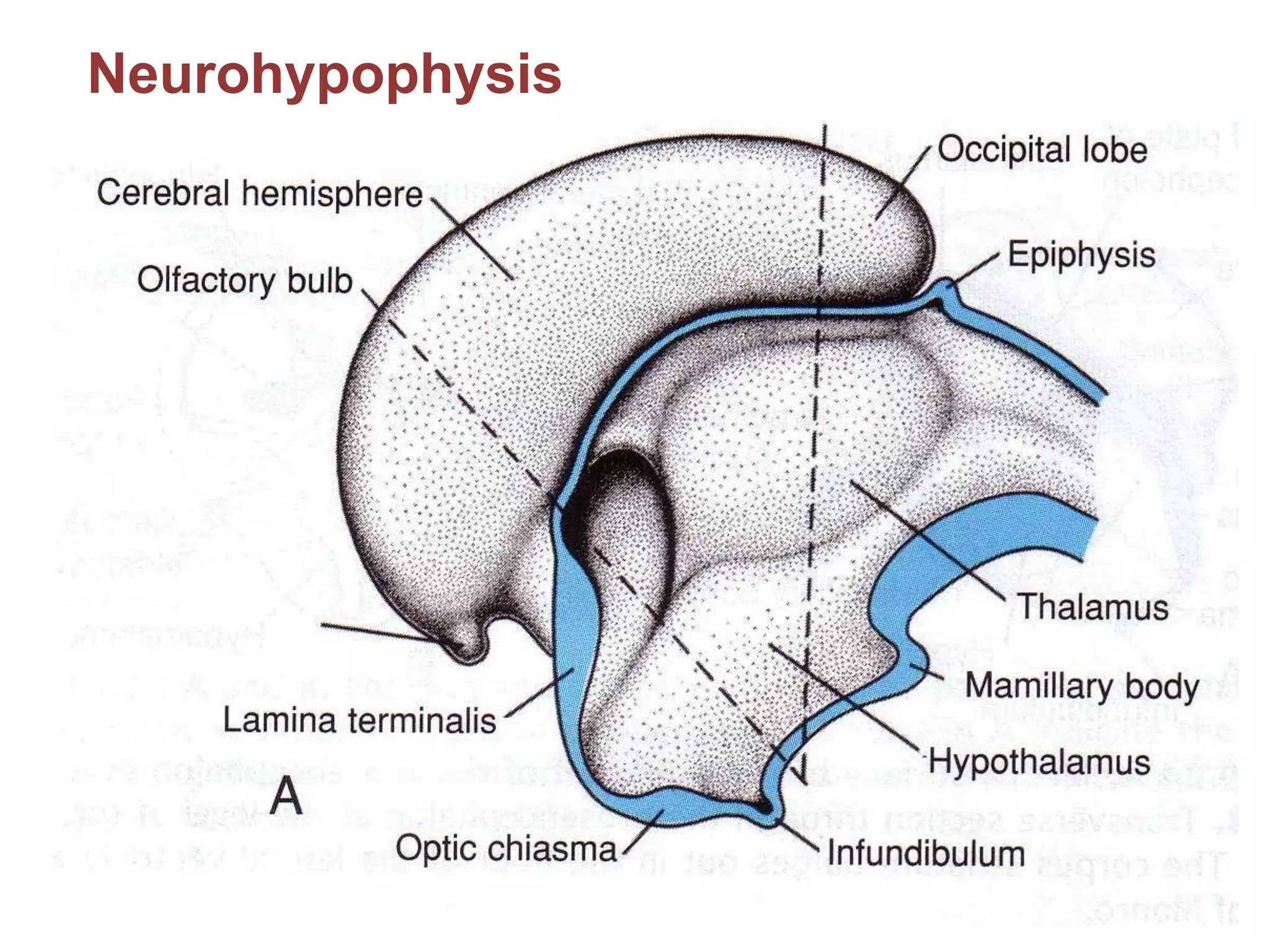
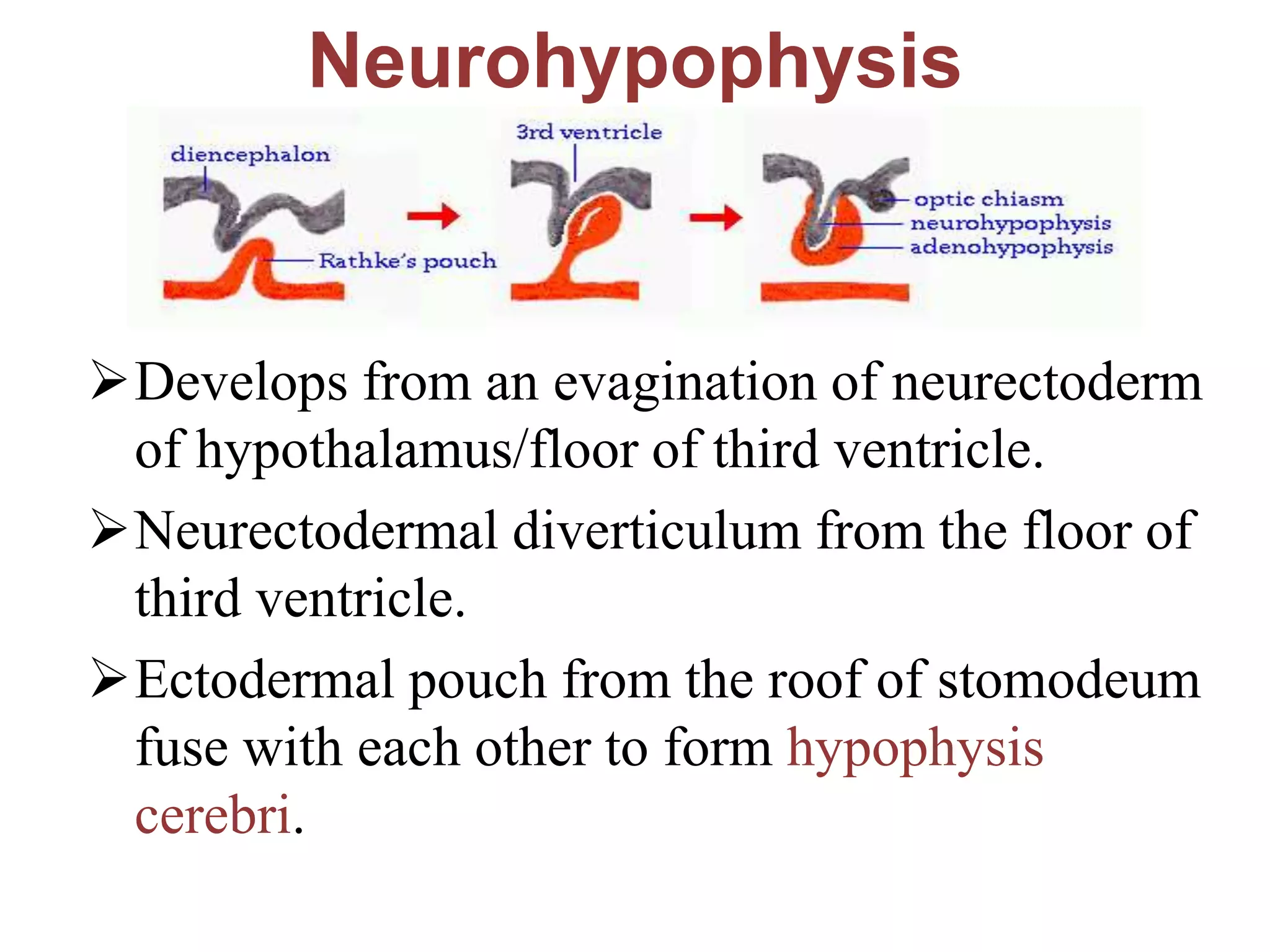
Develops from an evagination of neurectoderm
of hypothalamus/floor of third ventricle.
Neurectodermal diverticulum from the floor of
third ventricle.
Ectodermal pouch from the roof of stomodeum
fuse with each other to form hypophysis
cerebri.
PITUITARY GLAND
Possible congenital anomalies
• Ectopic posterior pituitary
• Pharyngeal hypophysis
• Agenesis/Hypogenesis of pituitary gland
• Duplication of pituitary gland
• Congenital tumor of the gland
(Craniopharyngioma)
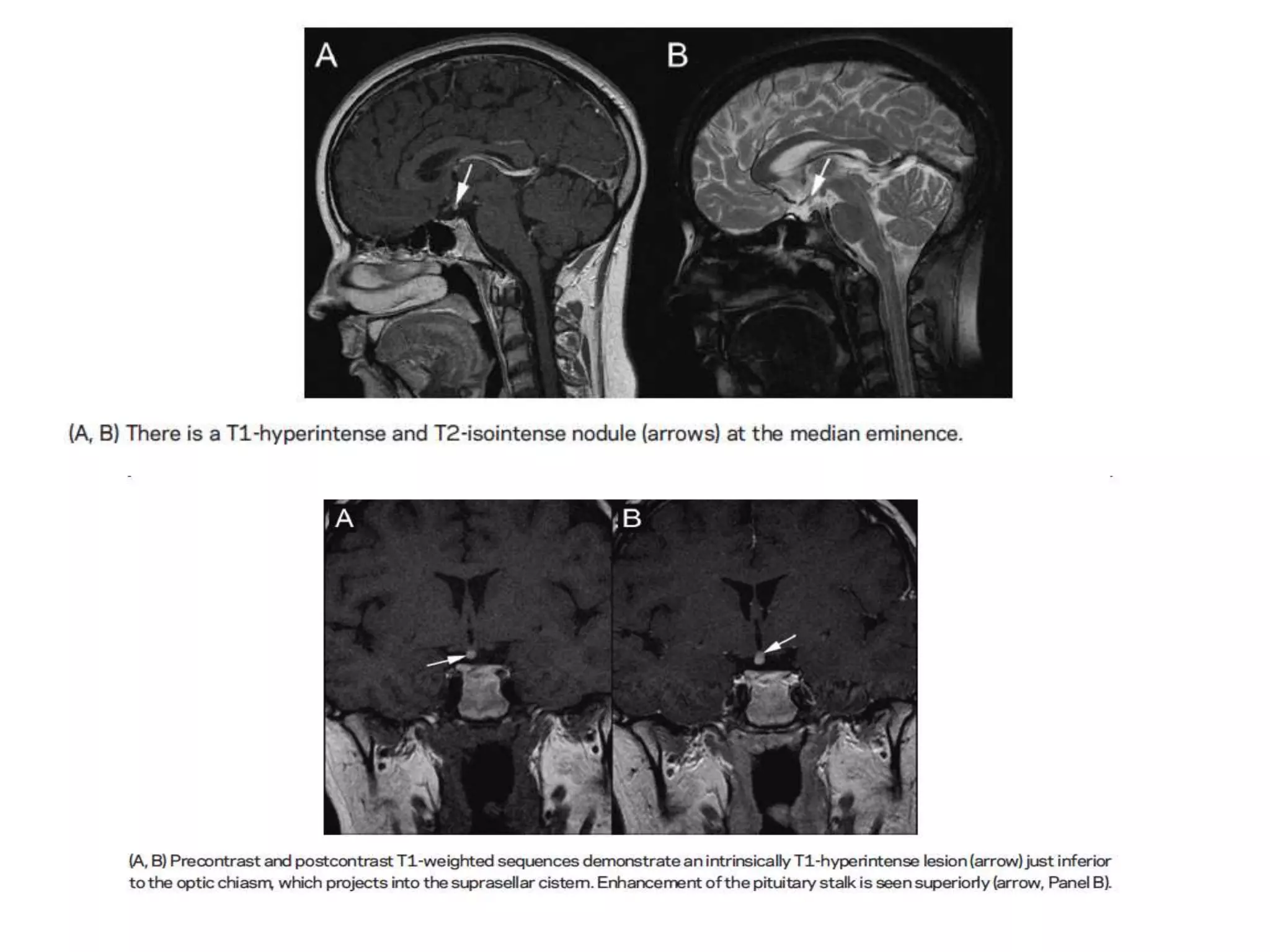
1) Ectopic posterior pituitary
Absent normal posterior pituitary
Bright spot within the sella with ectopic bright
signal at another site (such as the median
eminence) on a weighted magnetic resonance
Development:
Incomplete caudal extension of the diencephalon
during embryogenesis
Effect:
Pituitary dwarfism
Lack of growth hormone
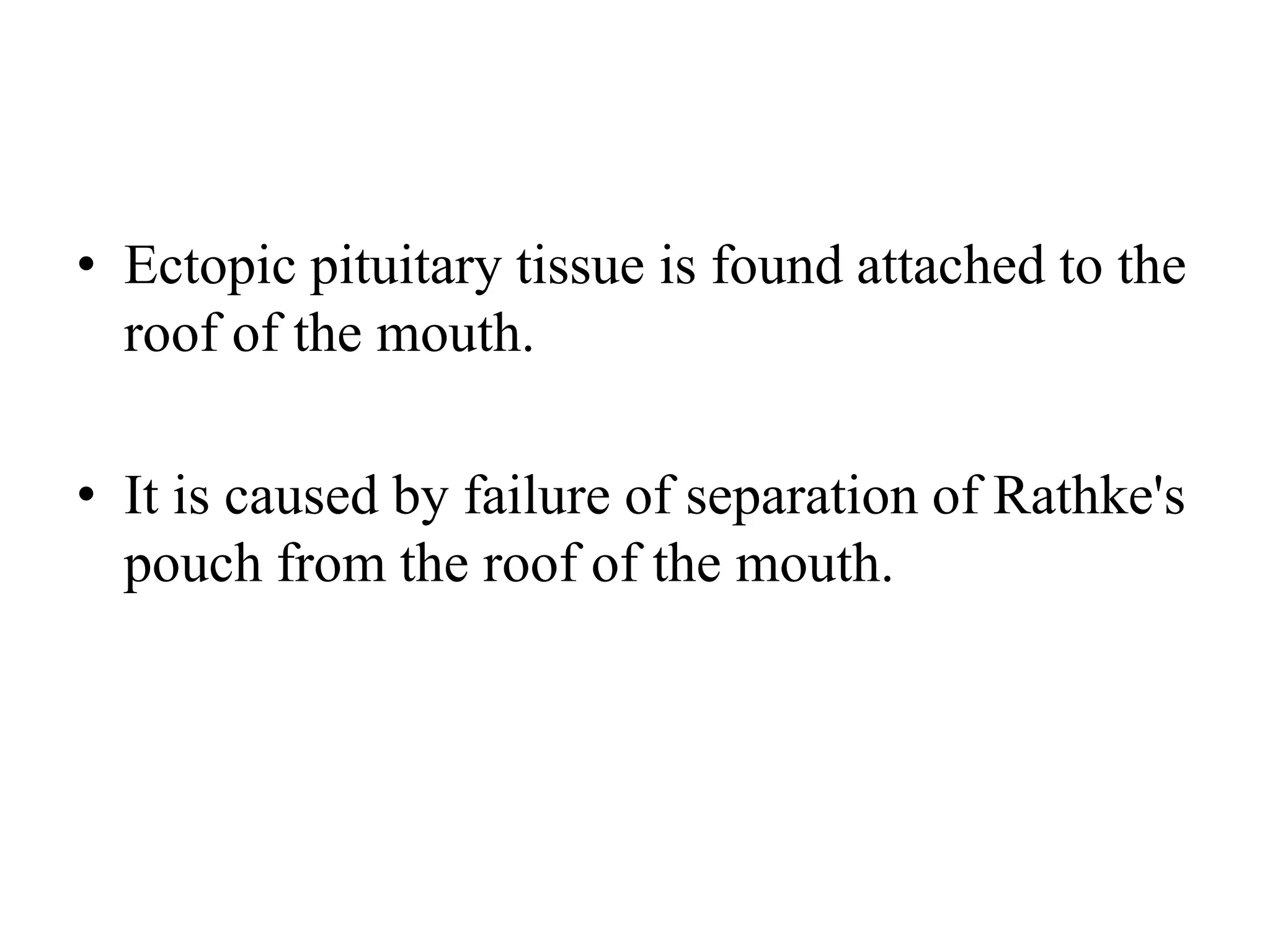
2) Pharyngeal hypophysis
Development:
-A remnant of the stalk of the hypophysial
diverticulum in the roof of the oropharynx
Pharyngeal
hypophysis
• Ectopic pituitary tissue is found attached to the
roof of the mouth.
• It is caused by failure of separation of Rathke's
pouch from the roof of the mouth.
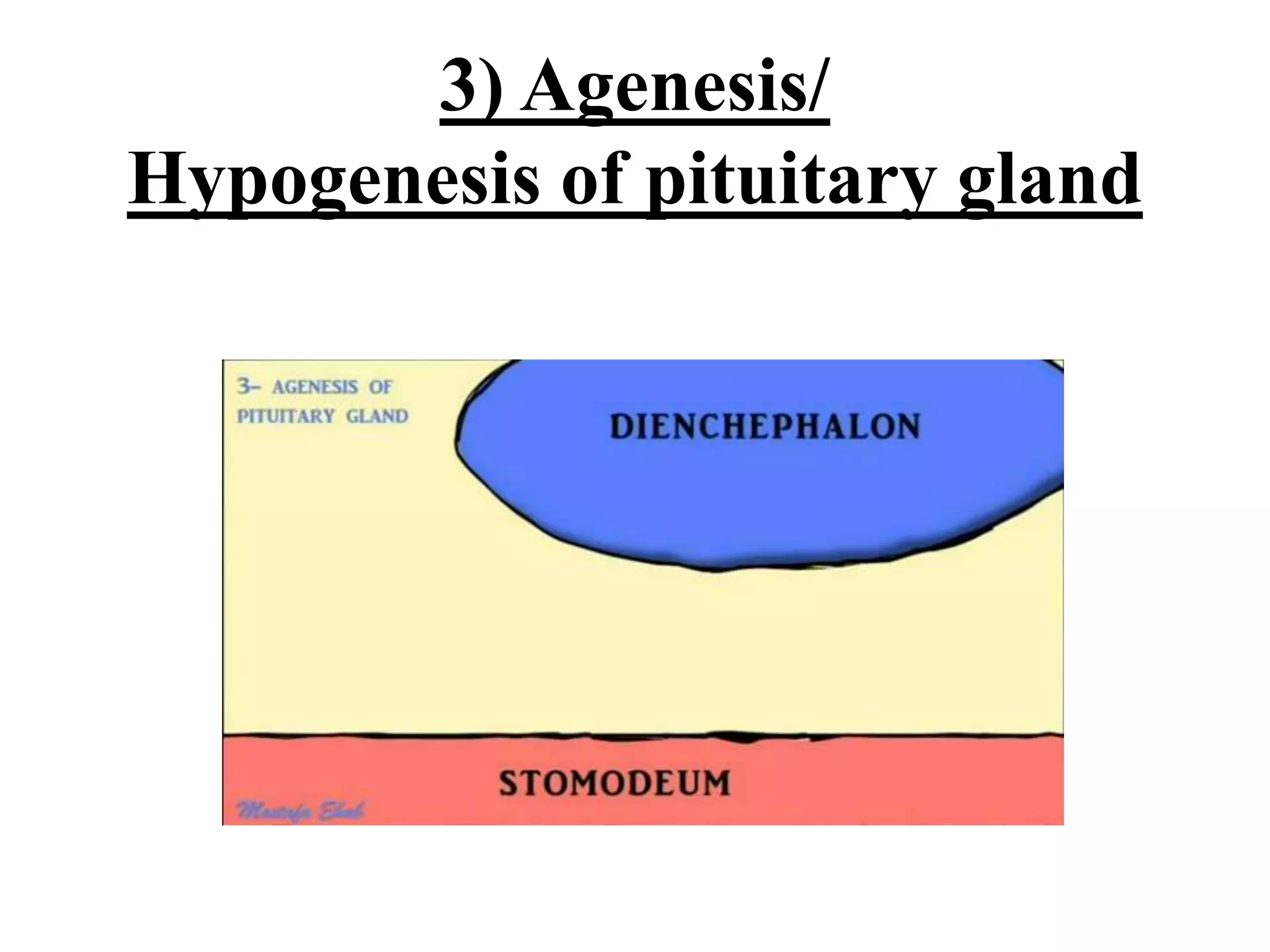
3) Agenesis/
Hypogenesis of pituitary gland
Effect:
Absence of the gland is incompatible with life,
i.e. it leads to death of the infant
Hypogenesis of pituitary gland: It leads to
panhypopituitarism
(is a condition of inadequate or absent production of the
anterior pituitary hormones.)
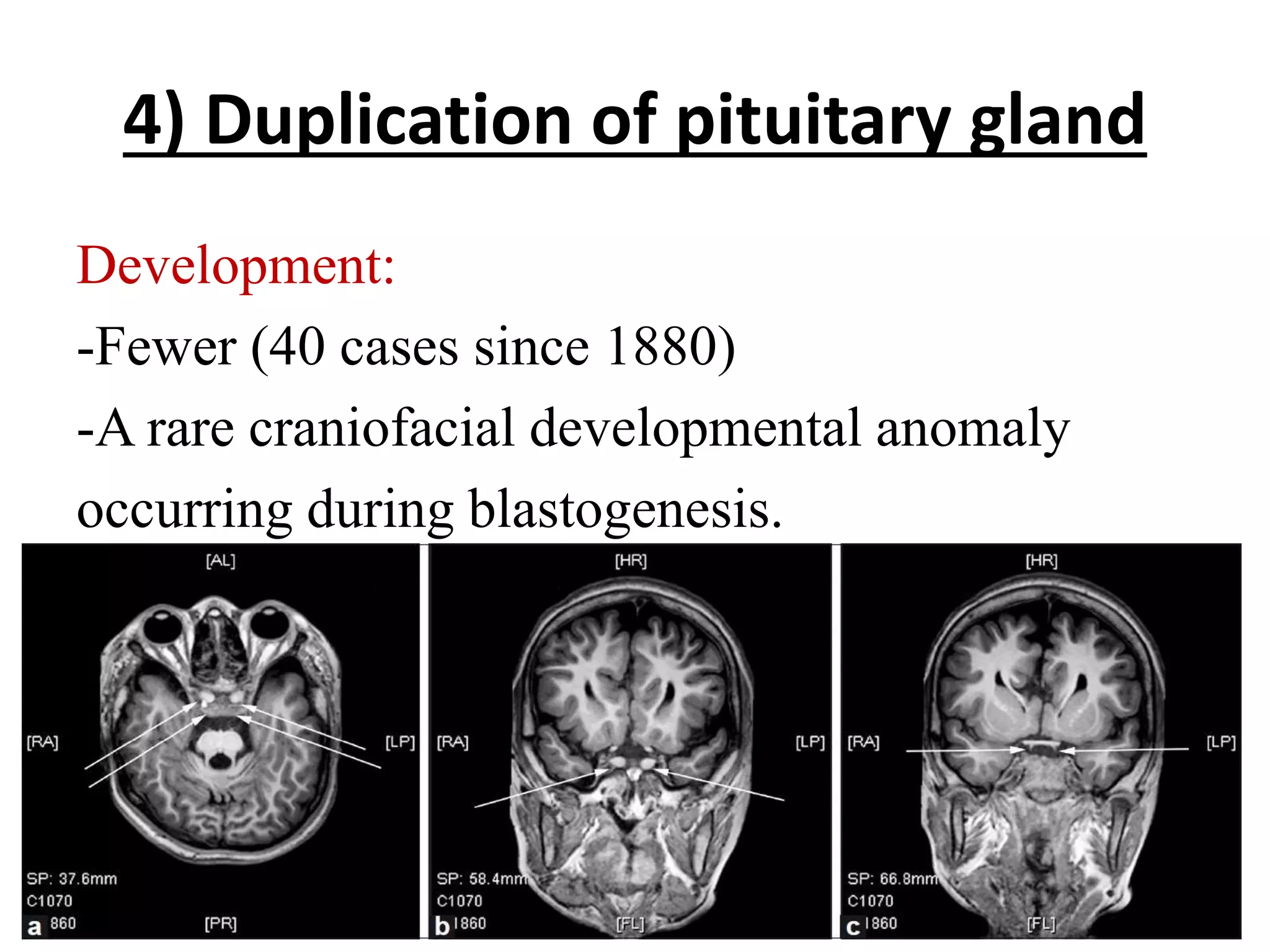
4) Duplication of pituitary gland
Development:
-Fewer (40 cases since 1880)
-A rare craniofacial developmental anomaly
occurring during blastogenesis.
• *Several mechanisms have been proposed for
DPG:
– partial twinning,
– prenatal teratogen exposure,
– extreme presentation of the median cleft face
syndrome
– splitting of the notochord during blastogenesis
• DPG is associated with various clinical
findings that represent a continuum of defects
in blastogenesis
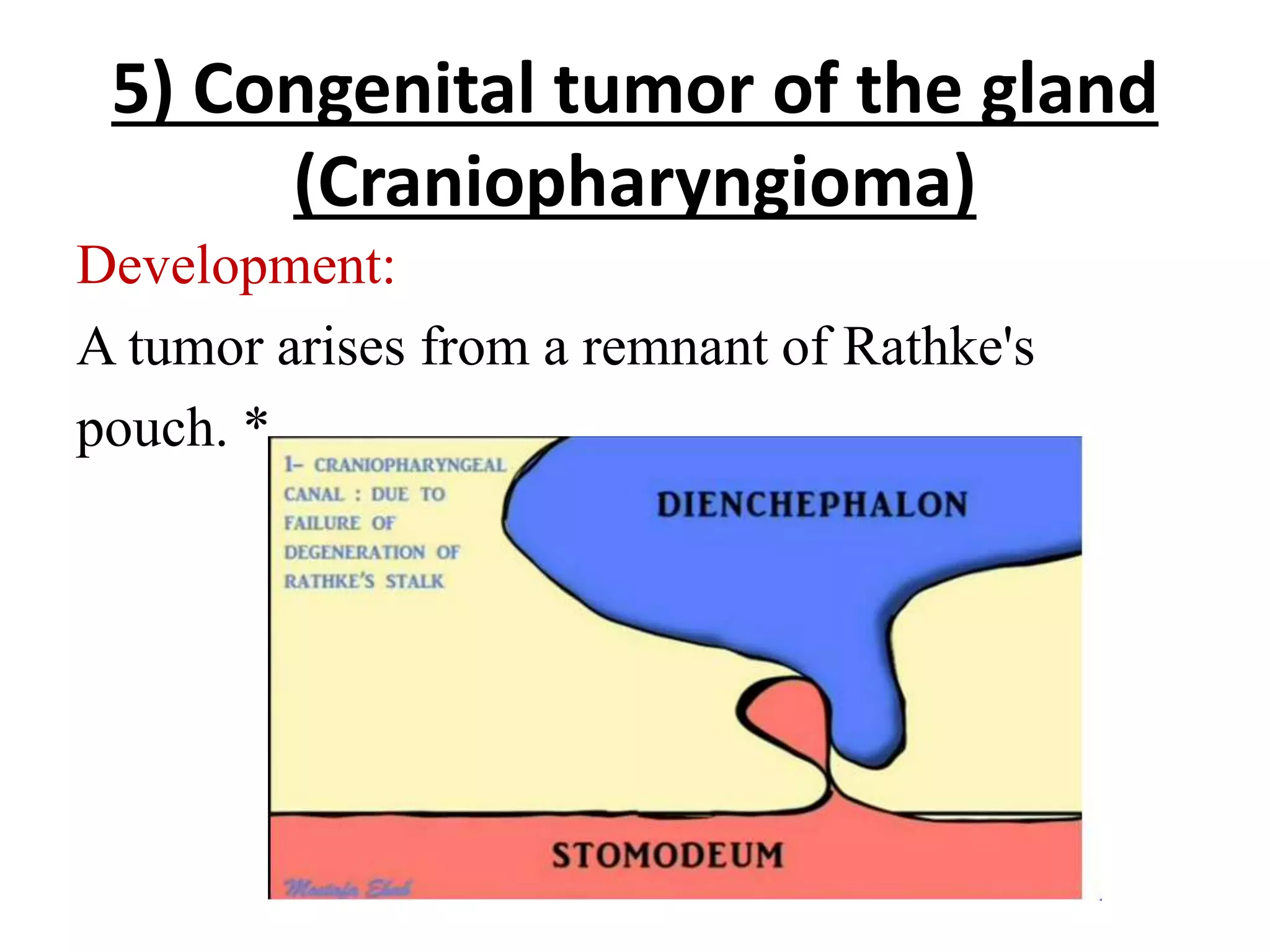
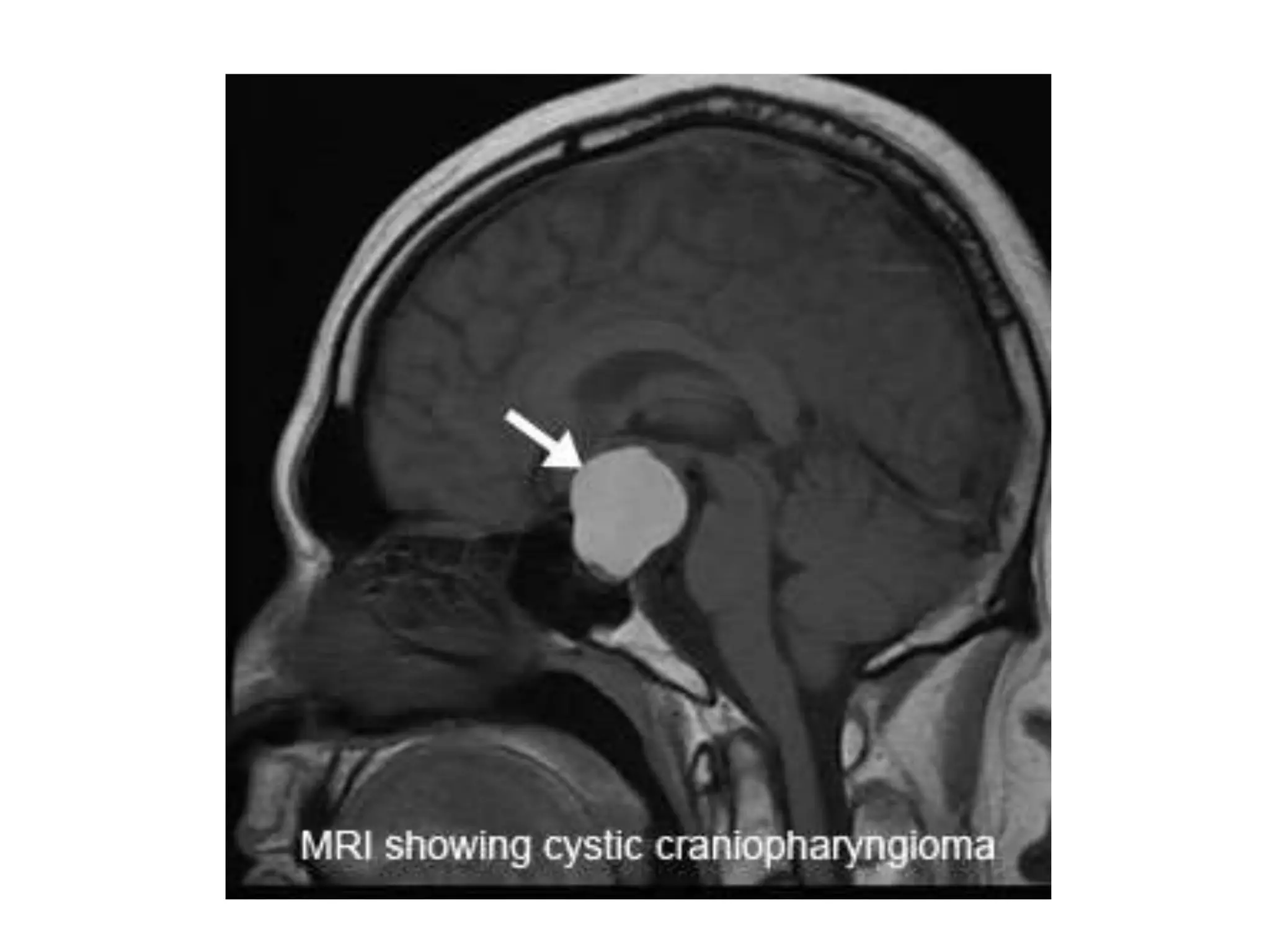
5) Congenital tumor of the gland
(Craniopharyngioma)
Development:
A tumor arises from a remnant of Rathke's
pouch. *
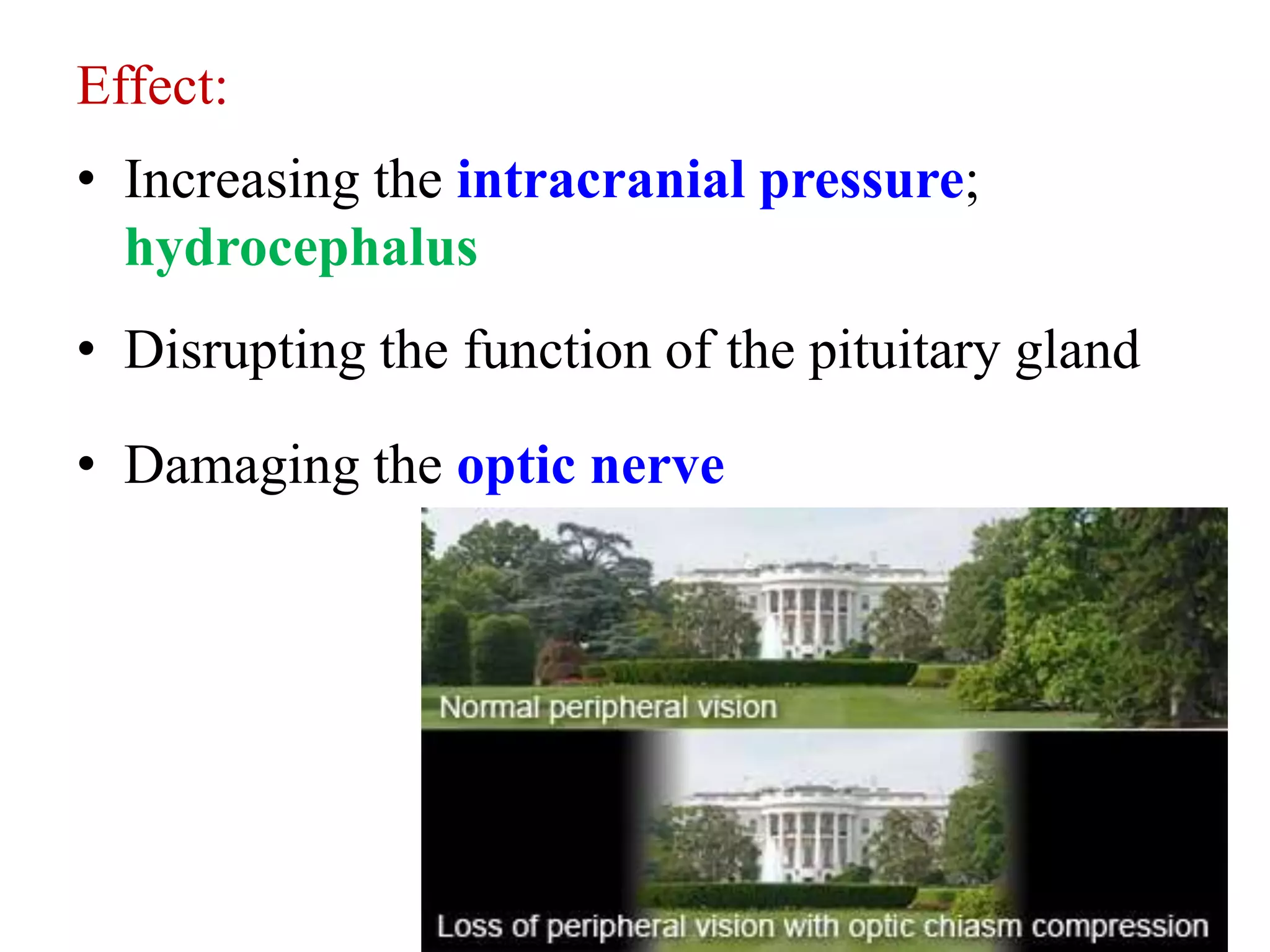
Effect:
• Increasing the intracranial pressure;
hydrocephalus
• Disrupting the function of the pituitary gland
• Damaging the optic nerve
PINEAL GLAND
PINEAL GLAND
PINEAL GLAND
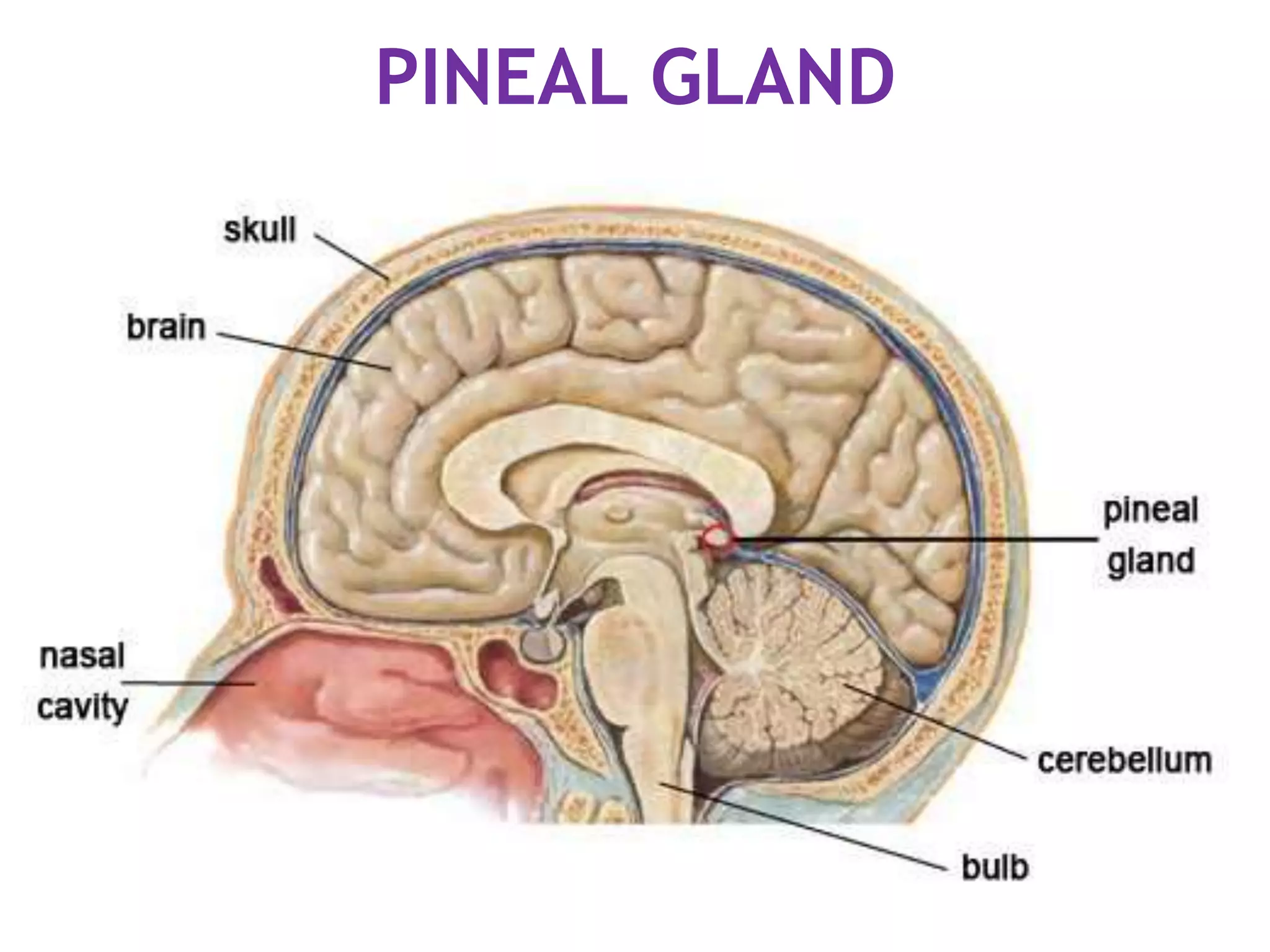
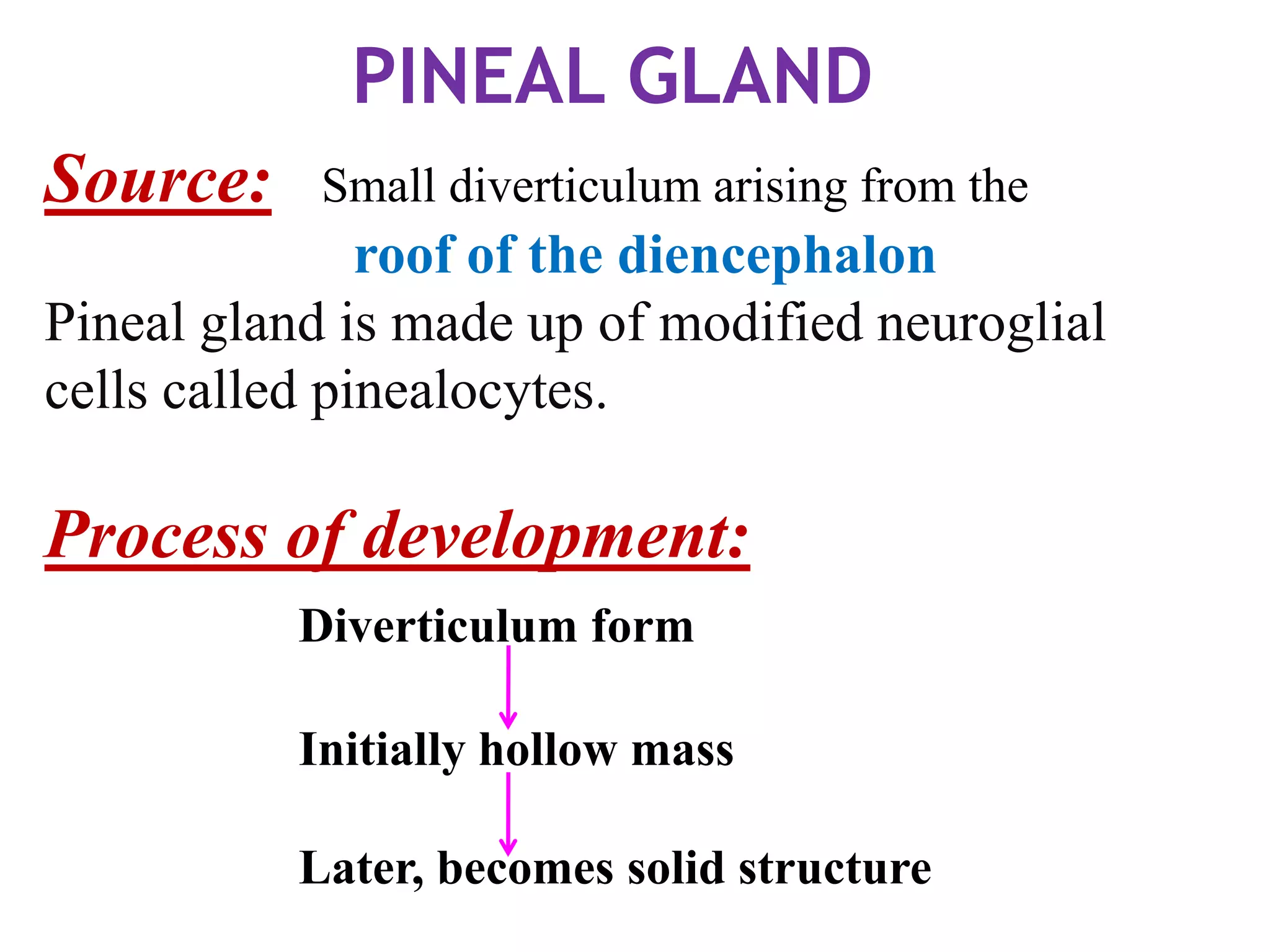
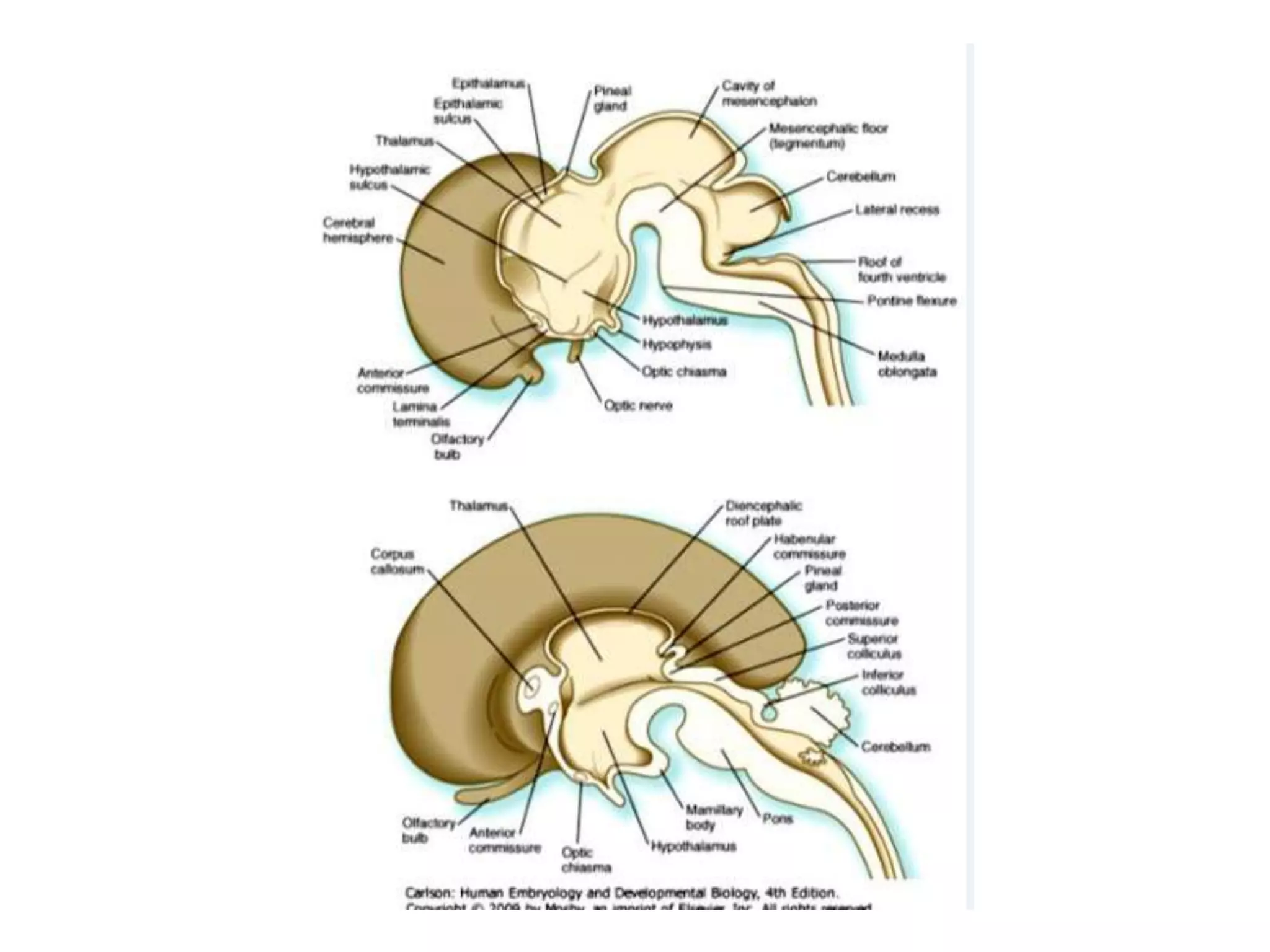
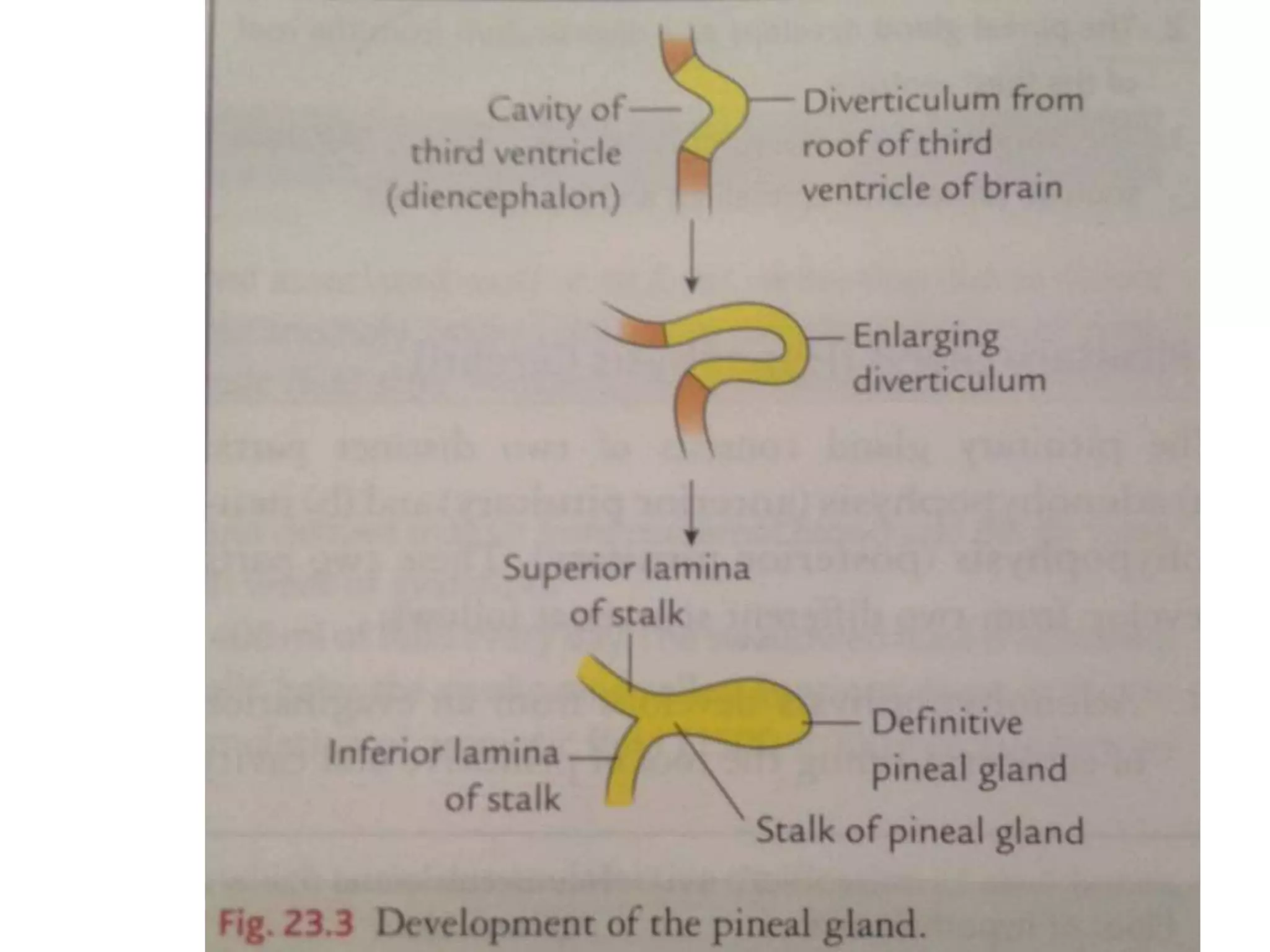
Source: Small diverticulum arising from the
roof of the diencephalon
Pineal gland is made up of modified neuroglial
cells called pinealocytes.
Process of development:
Diverticulum form
Initially hollow mass
Later, becomes solid structure
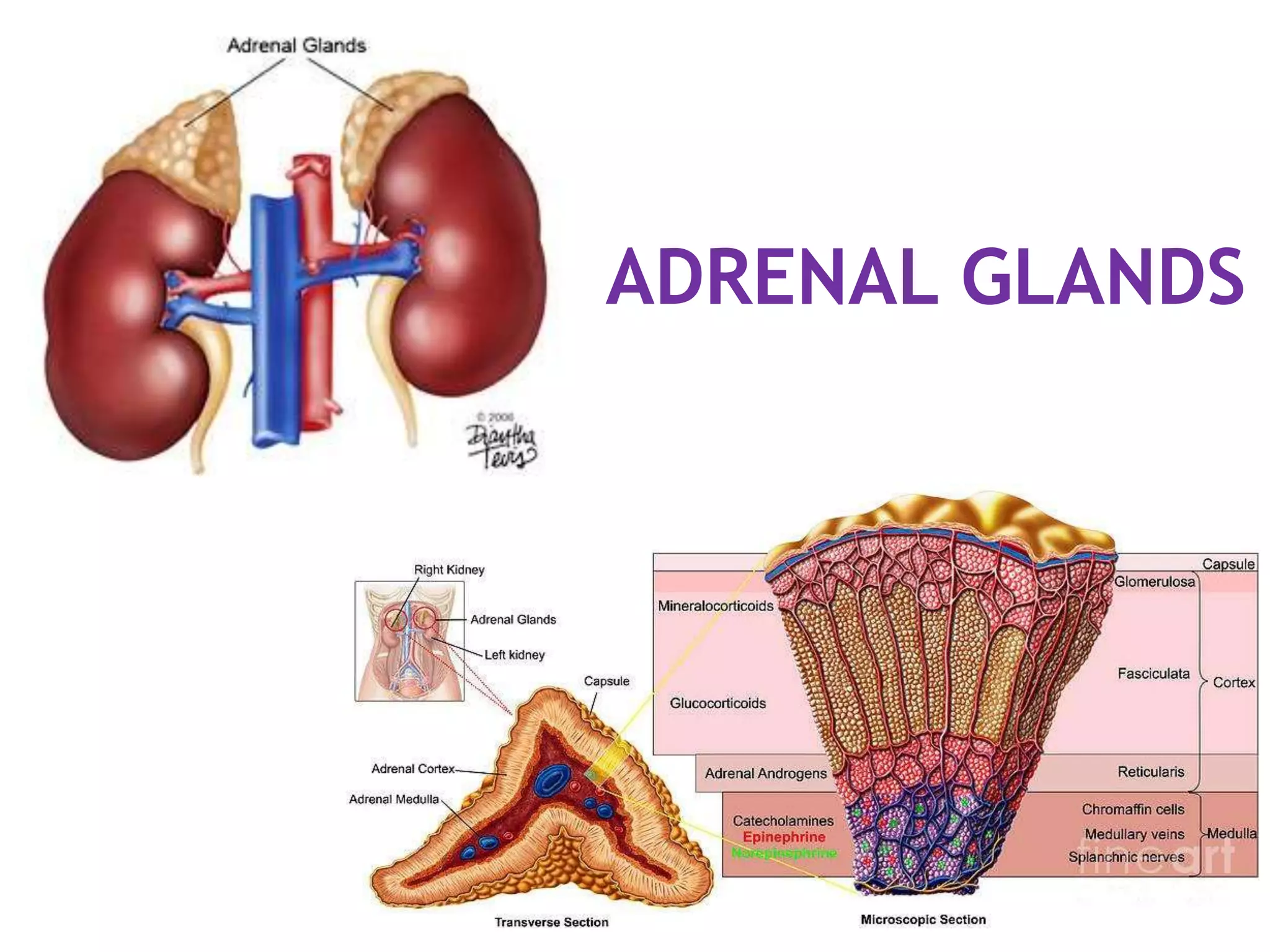
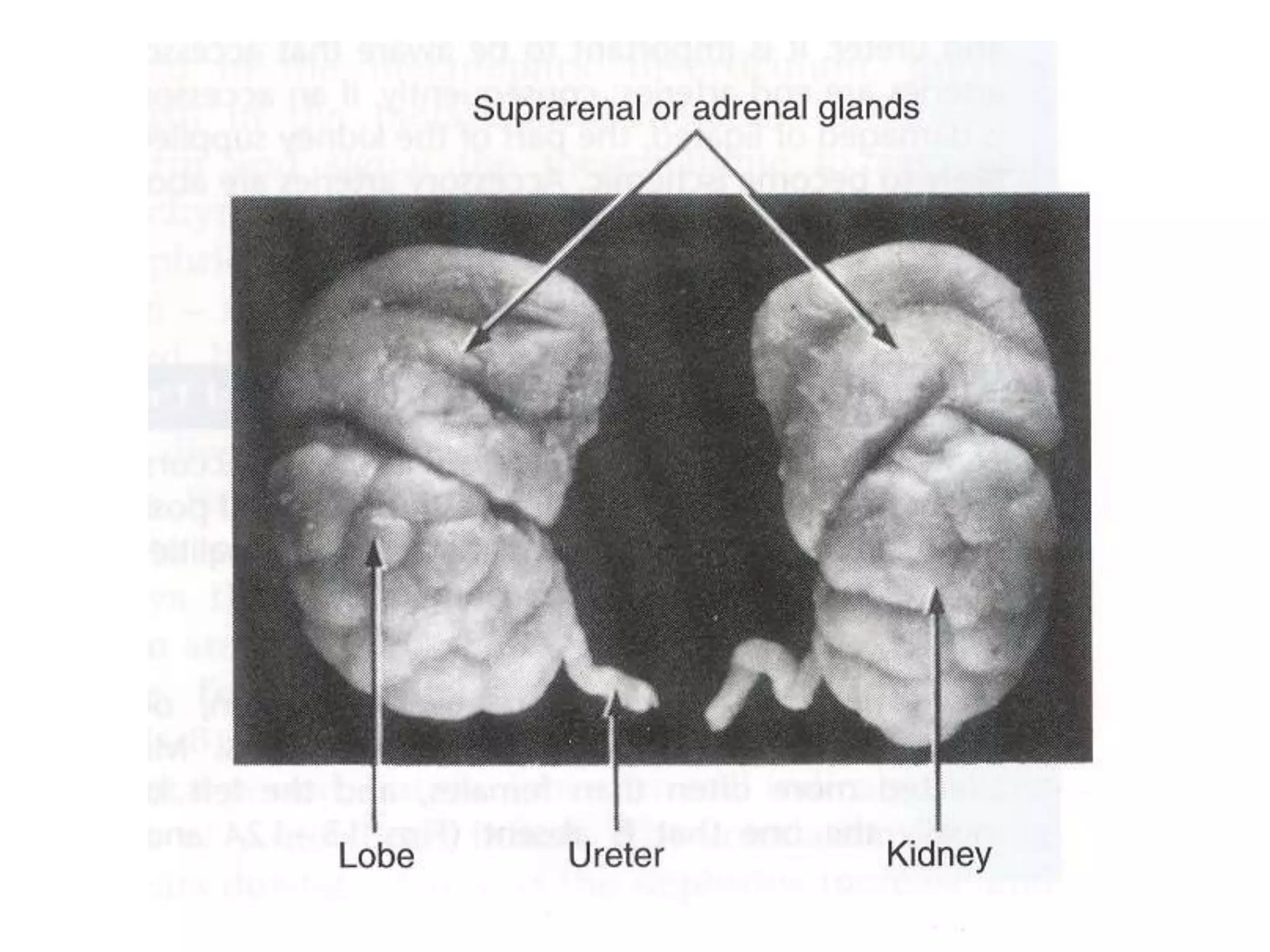
ADRENAL GLANDS
ADRENAL GLANDS
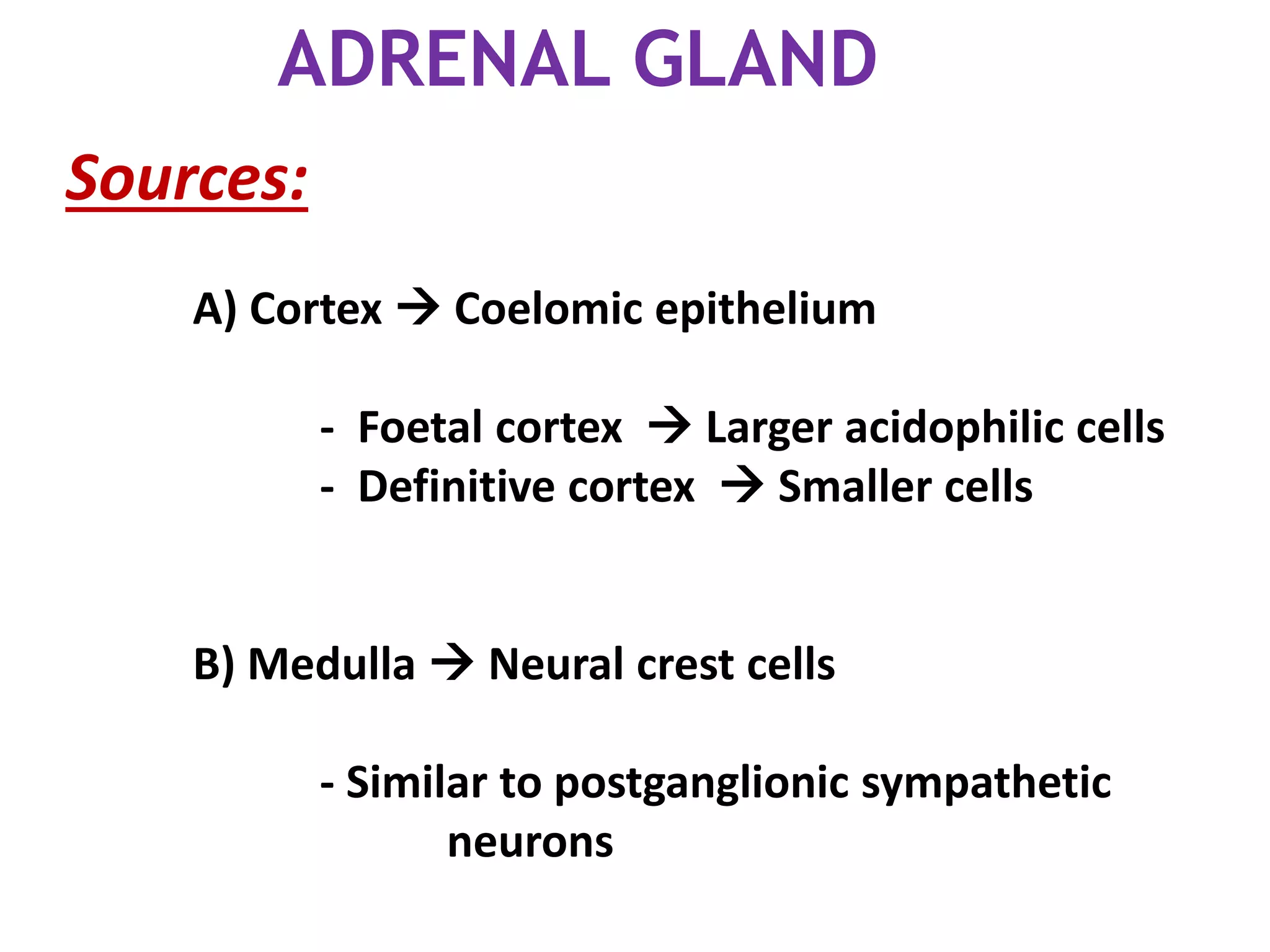
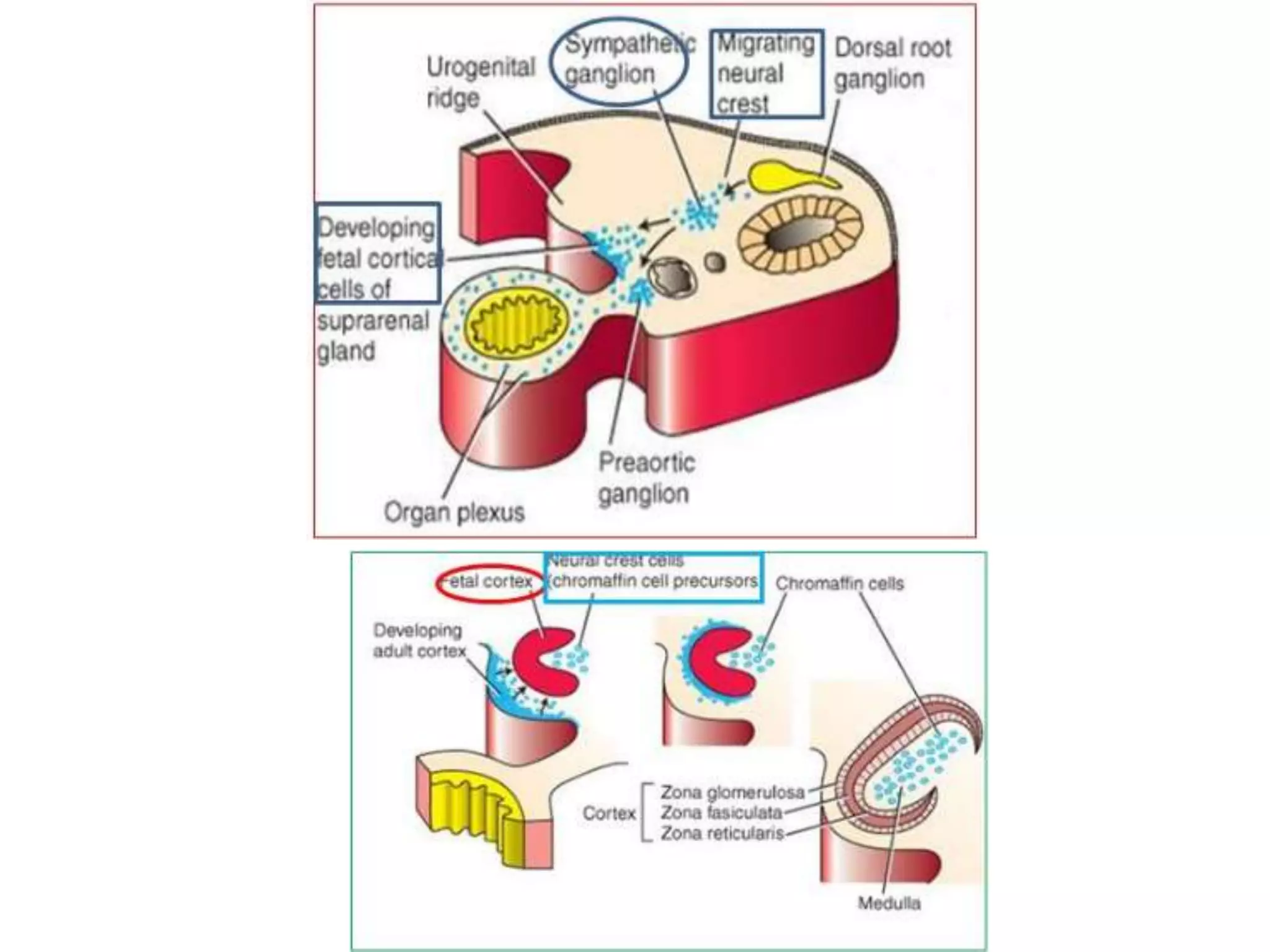
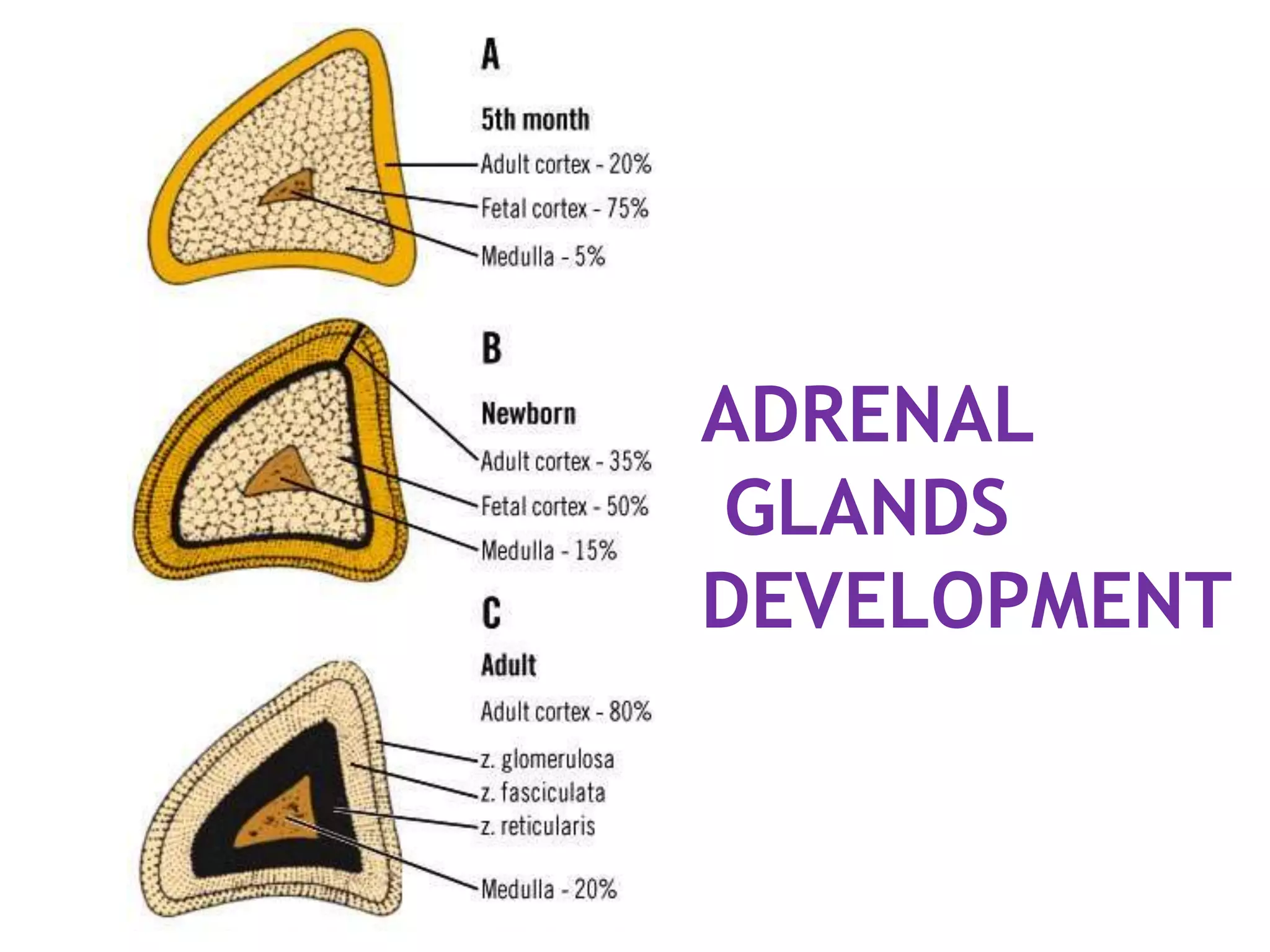
ADRENAL GLAND
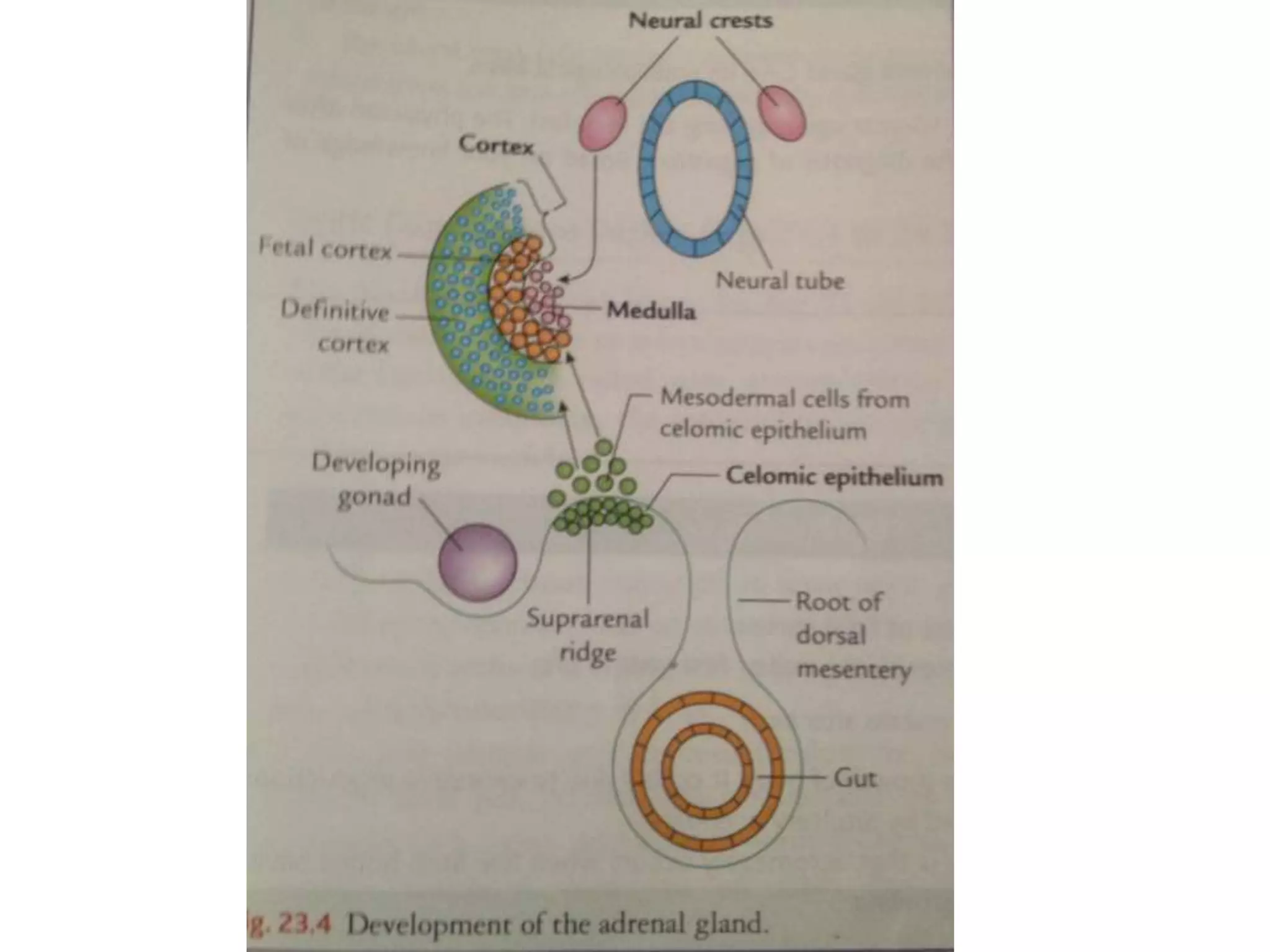
Sources:
A) Cortex  Coelomic epithelium
- Foetal cortex  Larger acidophilic cells
- Definitive cortex  Smaller cells
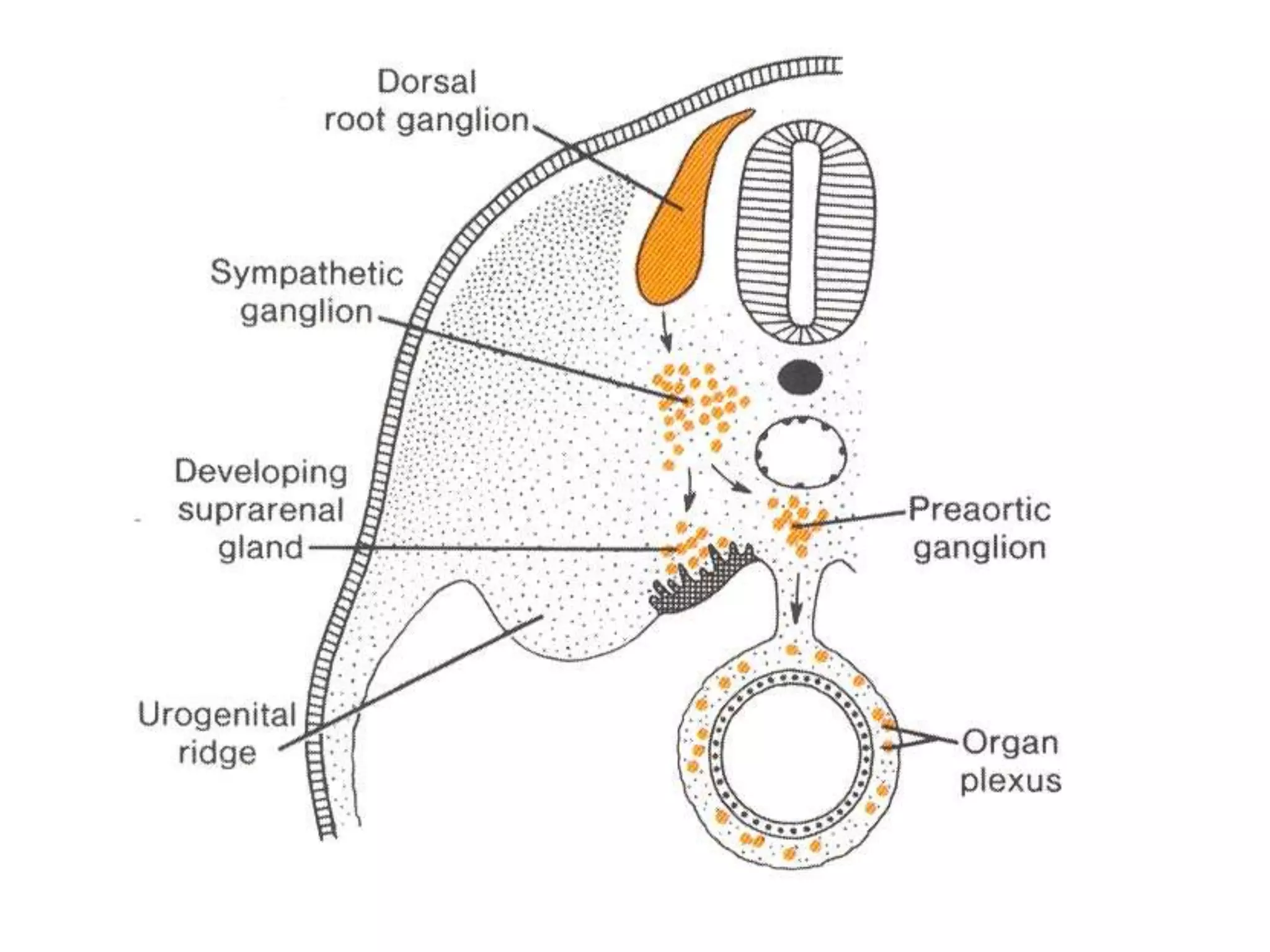
B) Medulla  Neural crest cells
- Similar to postganglionic sympathetic
neurons
ADRENAL
GLANDS
DEVELOPMENT
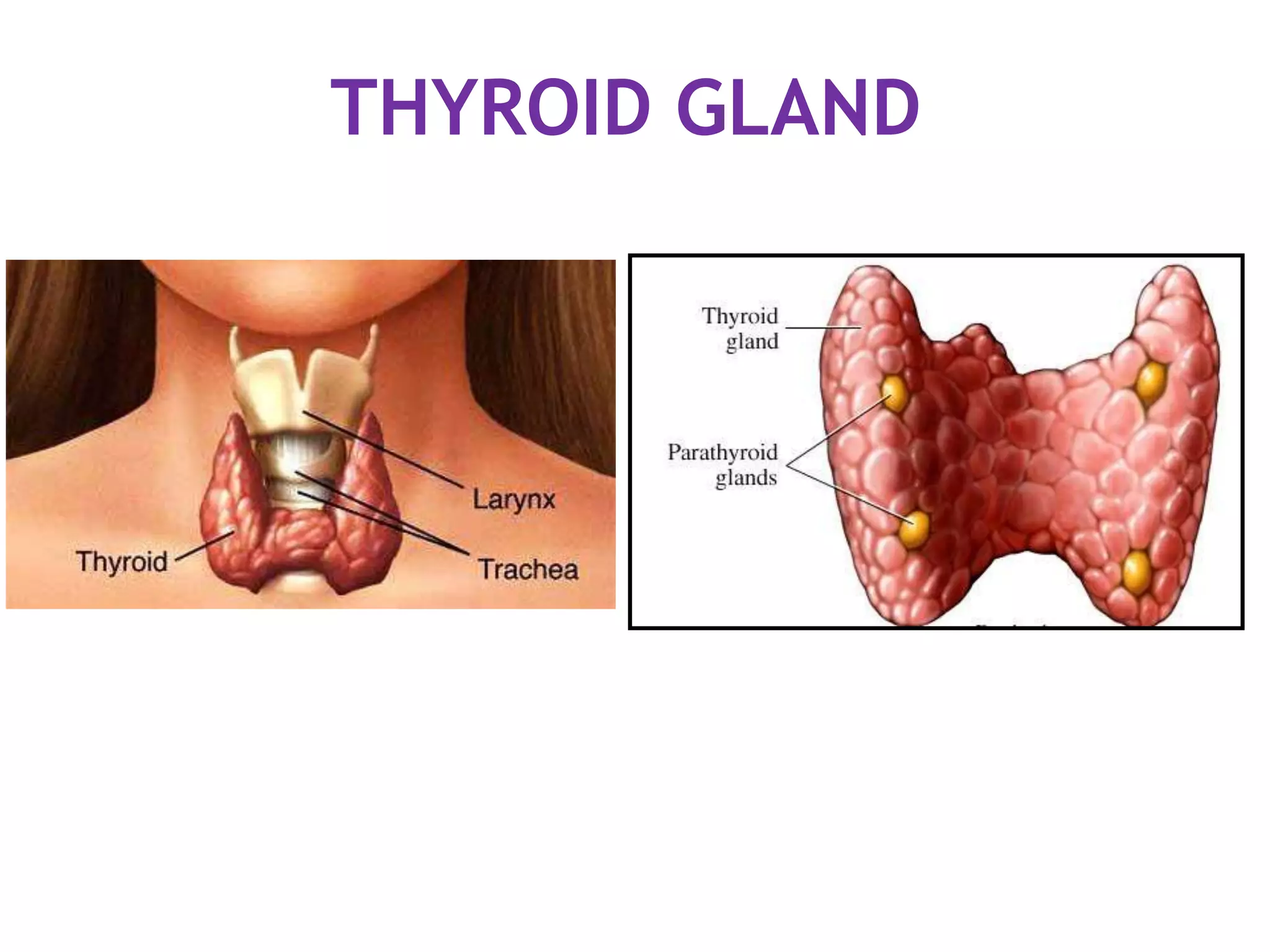
THYROID GLAND
THYROID GLAND
Chronological age:
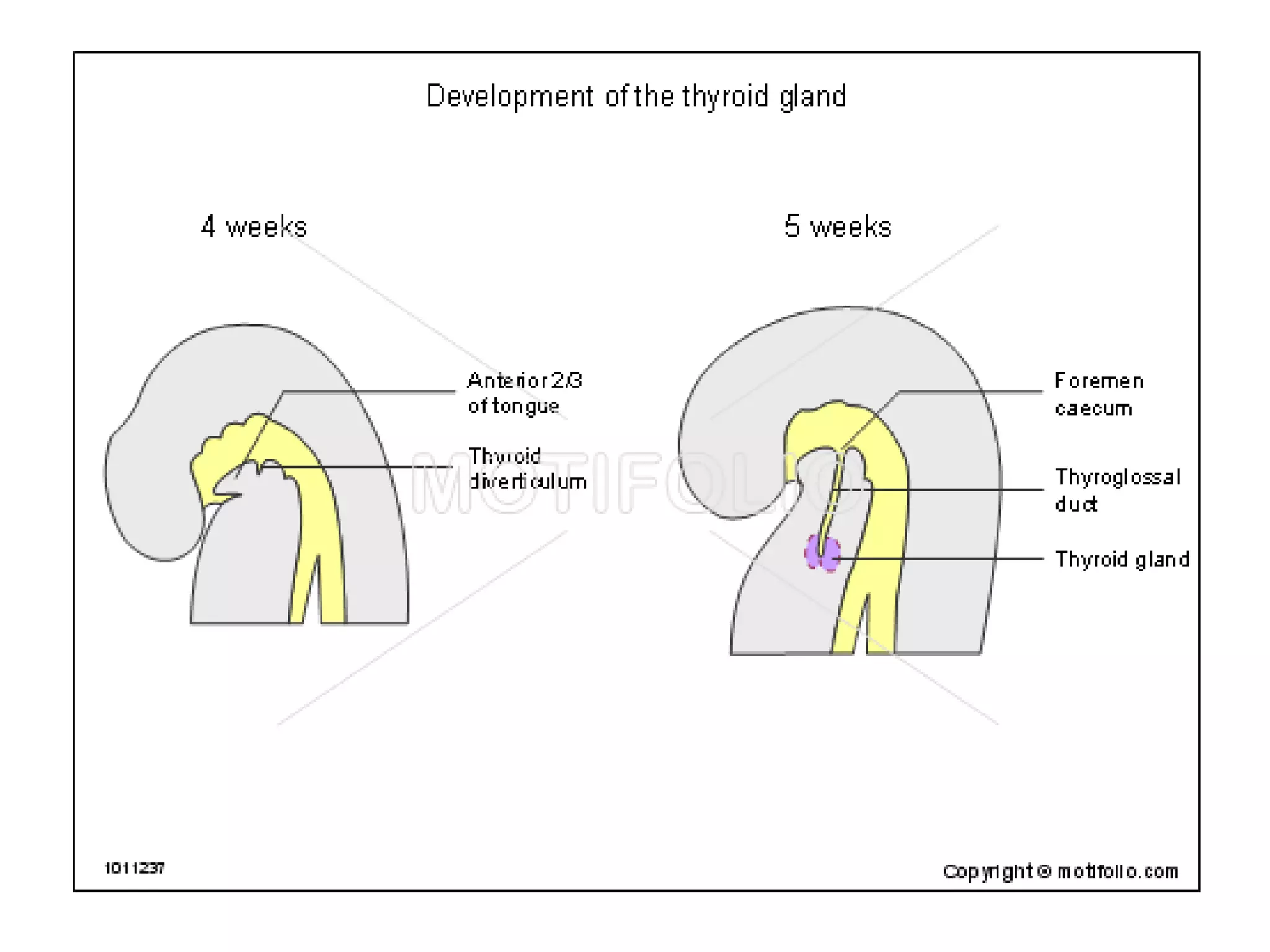
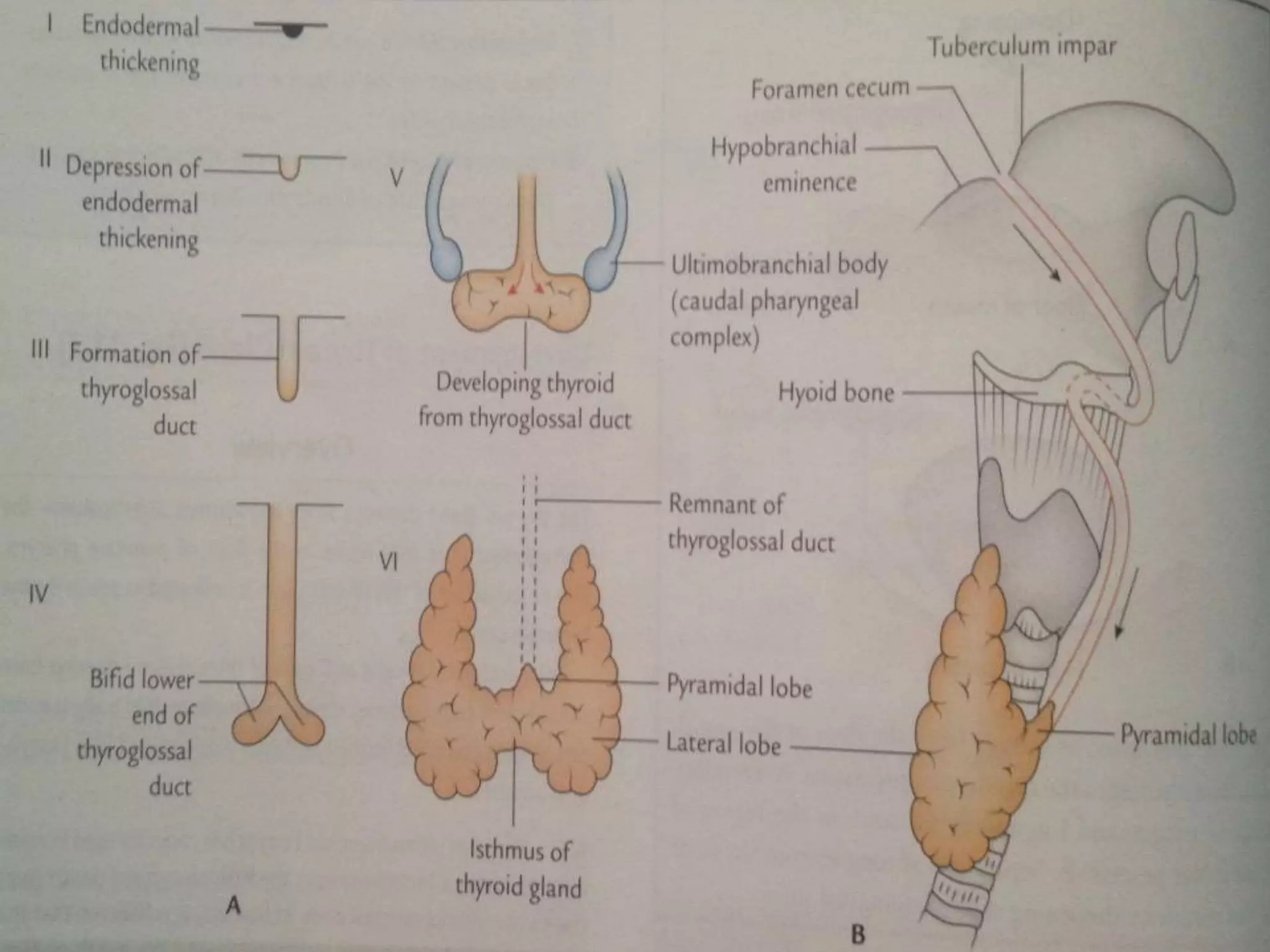
3th week of IUL (1st endocrine organ to develop)
Germ layer:
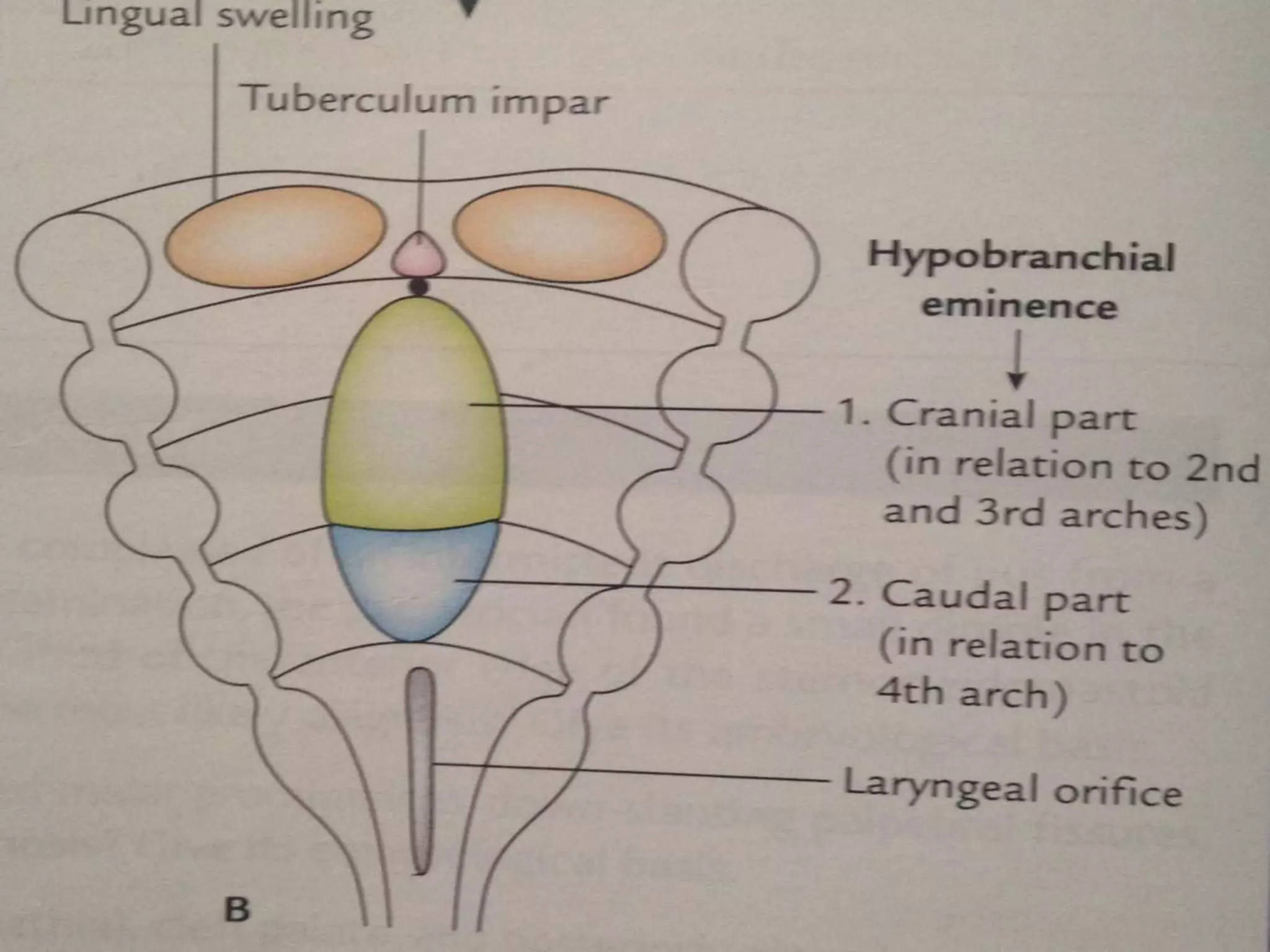
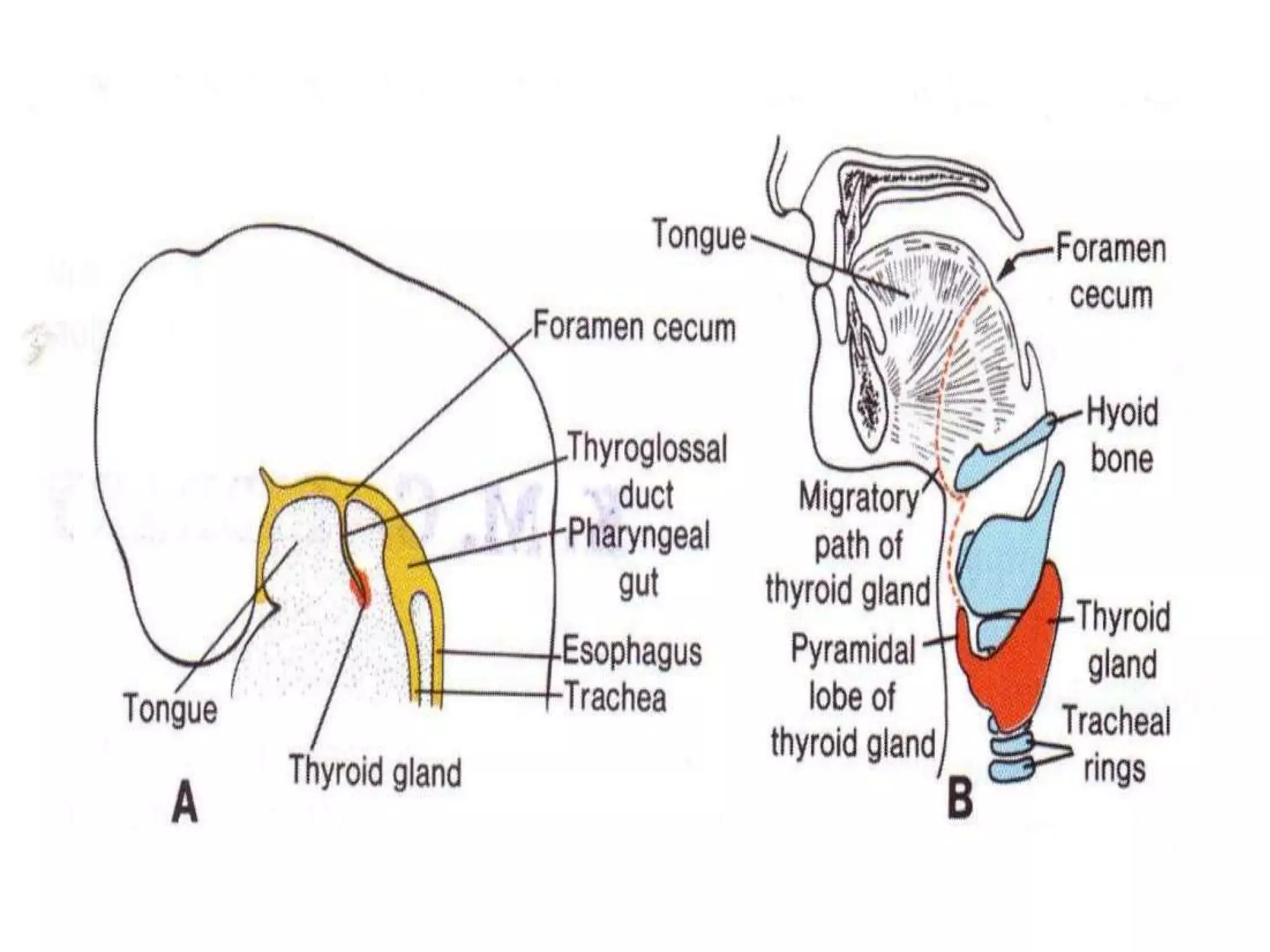
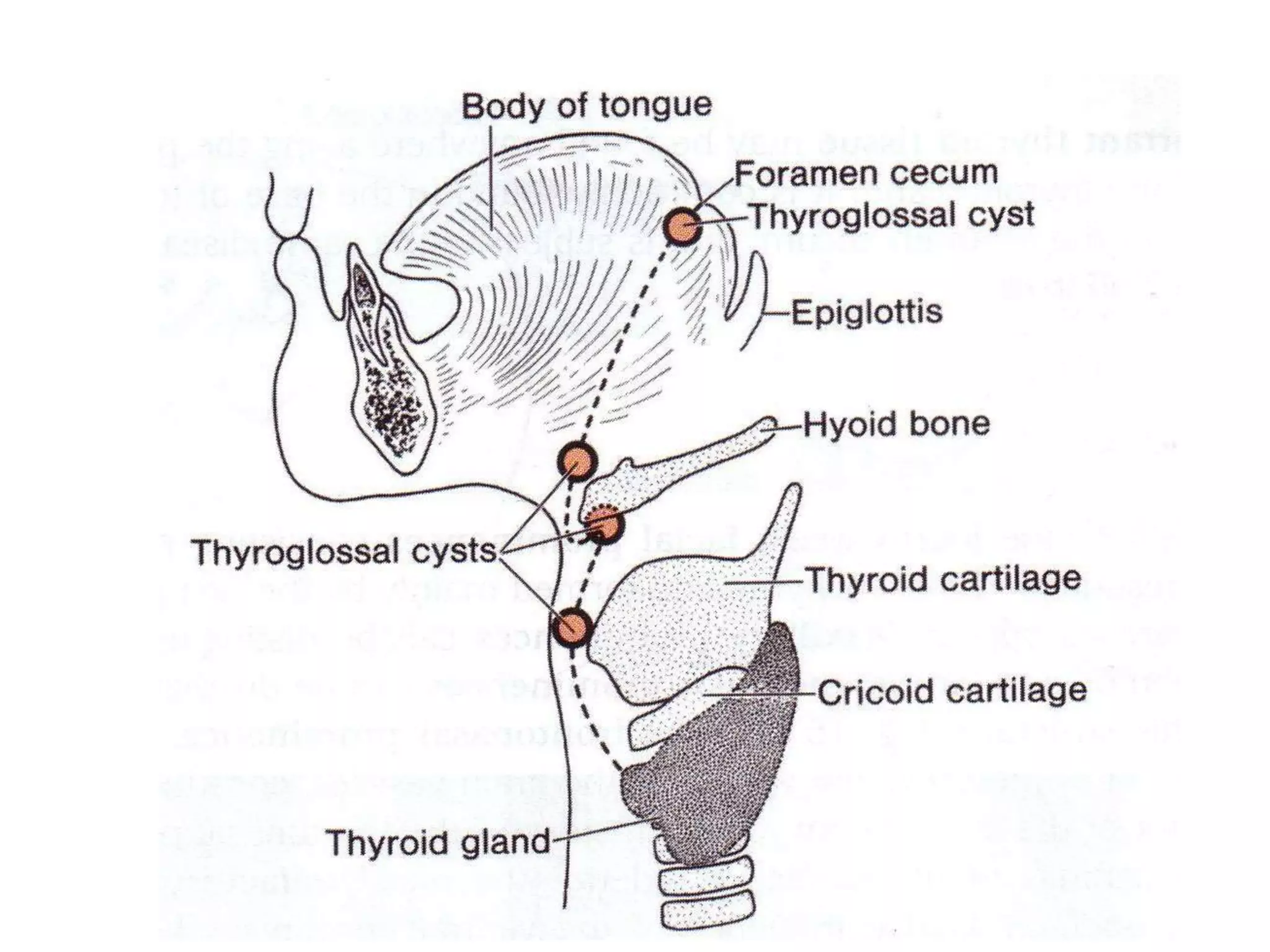
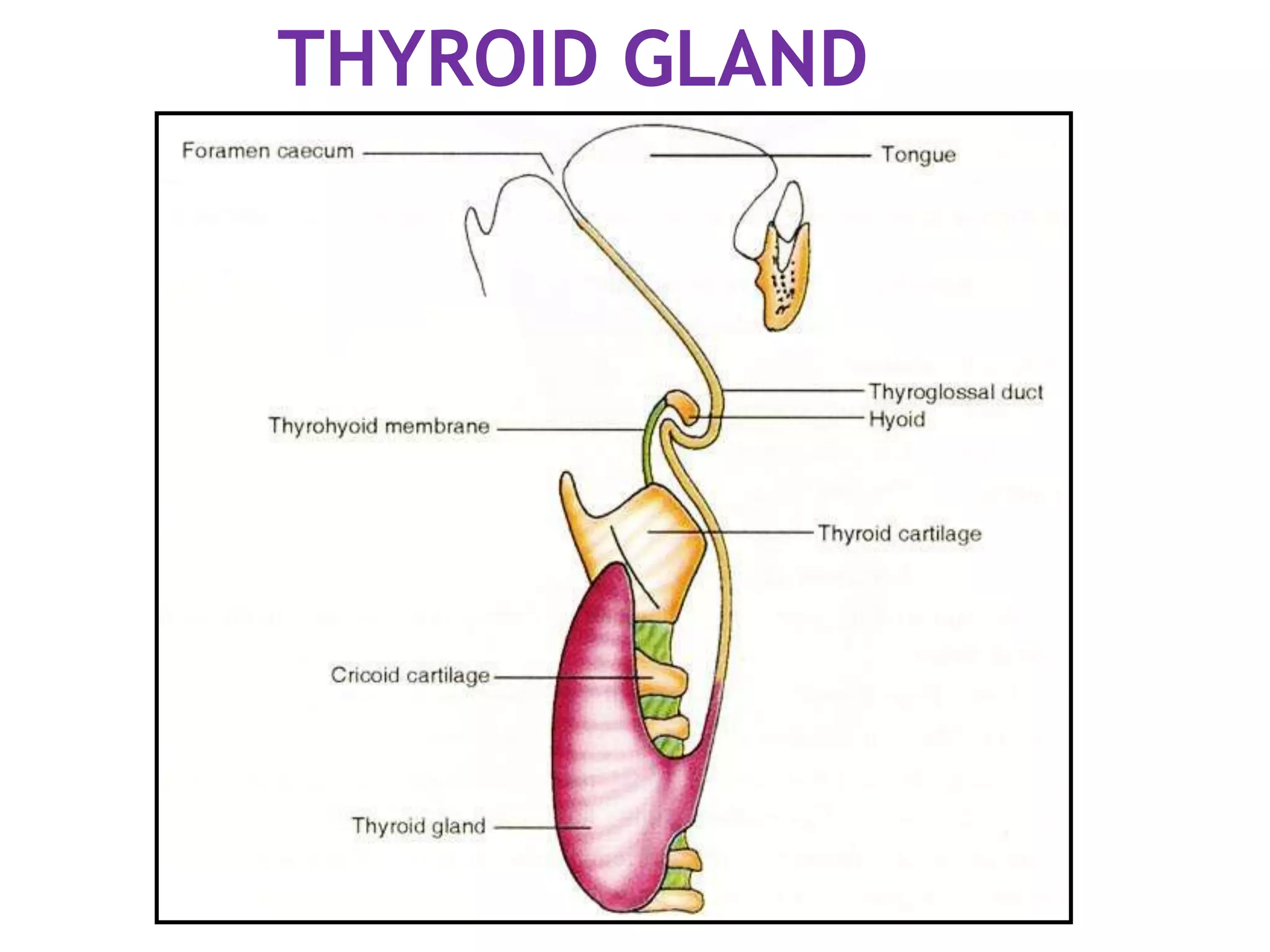
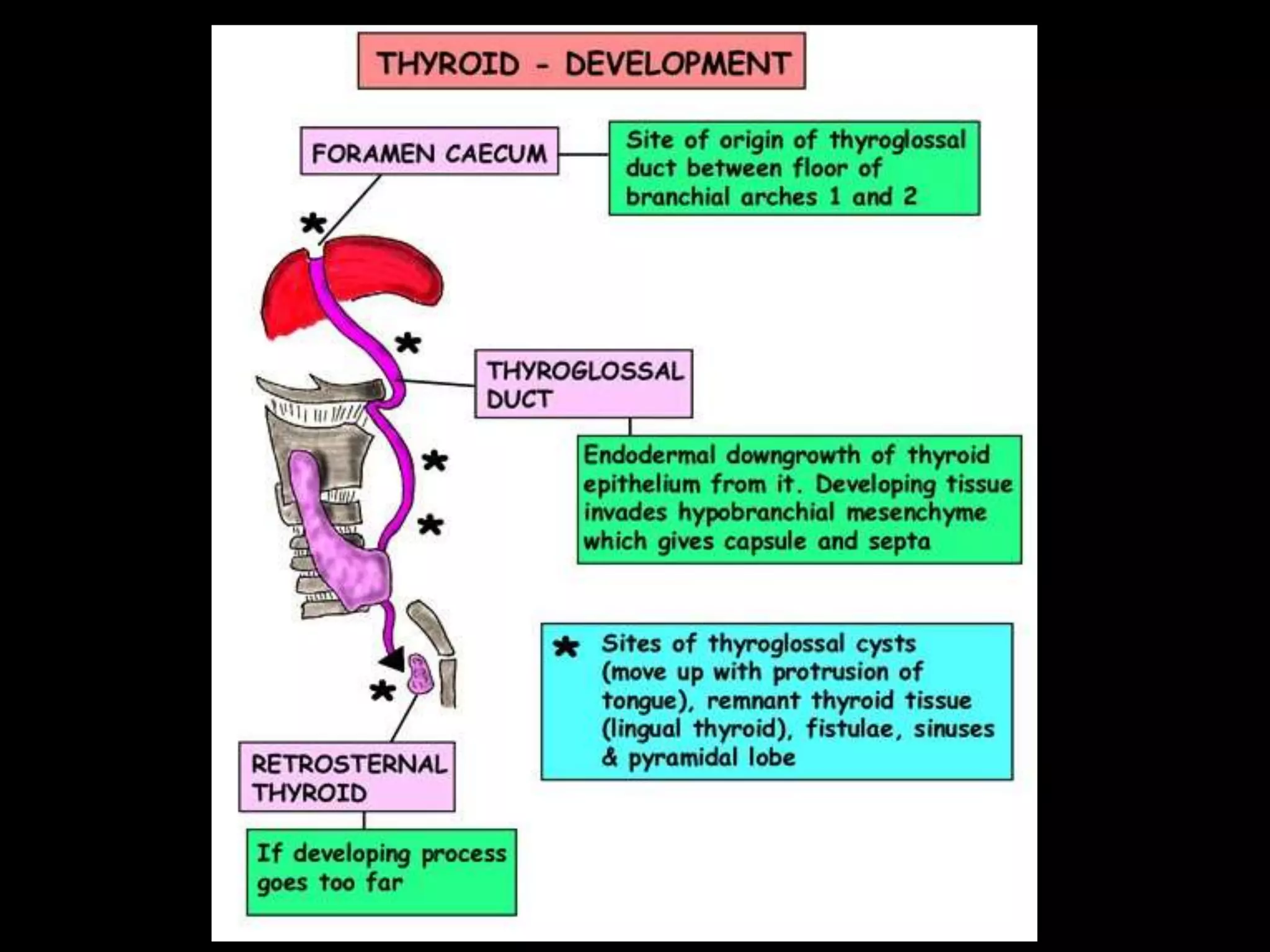
Endodermal diverticulum (Thyroglossal duct)
Site:
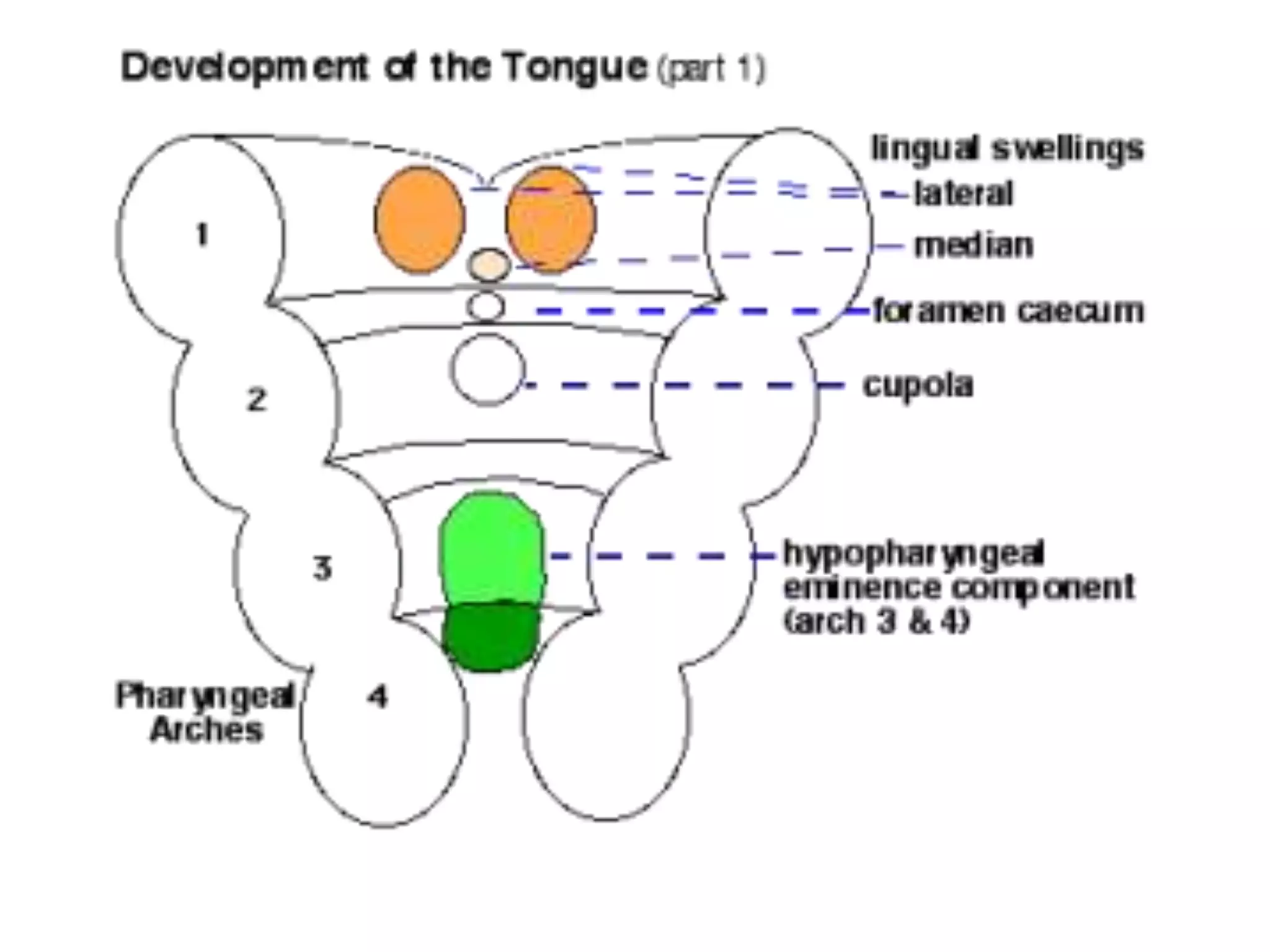
Floor of the pharynx [below & behind the
tuberculum impar of developing tongue]
Sources:
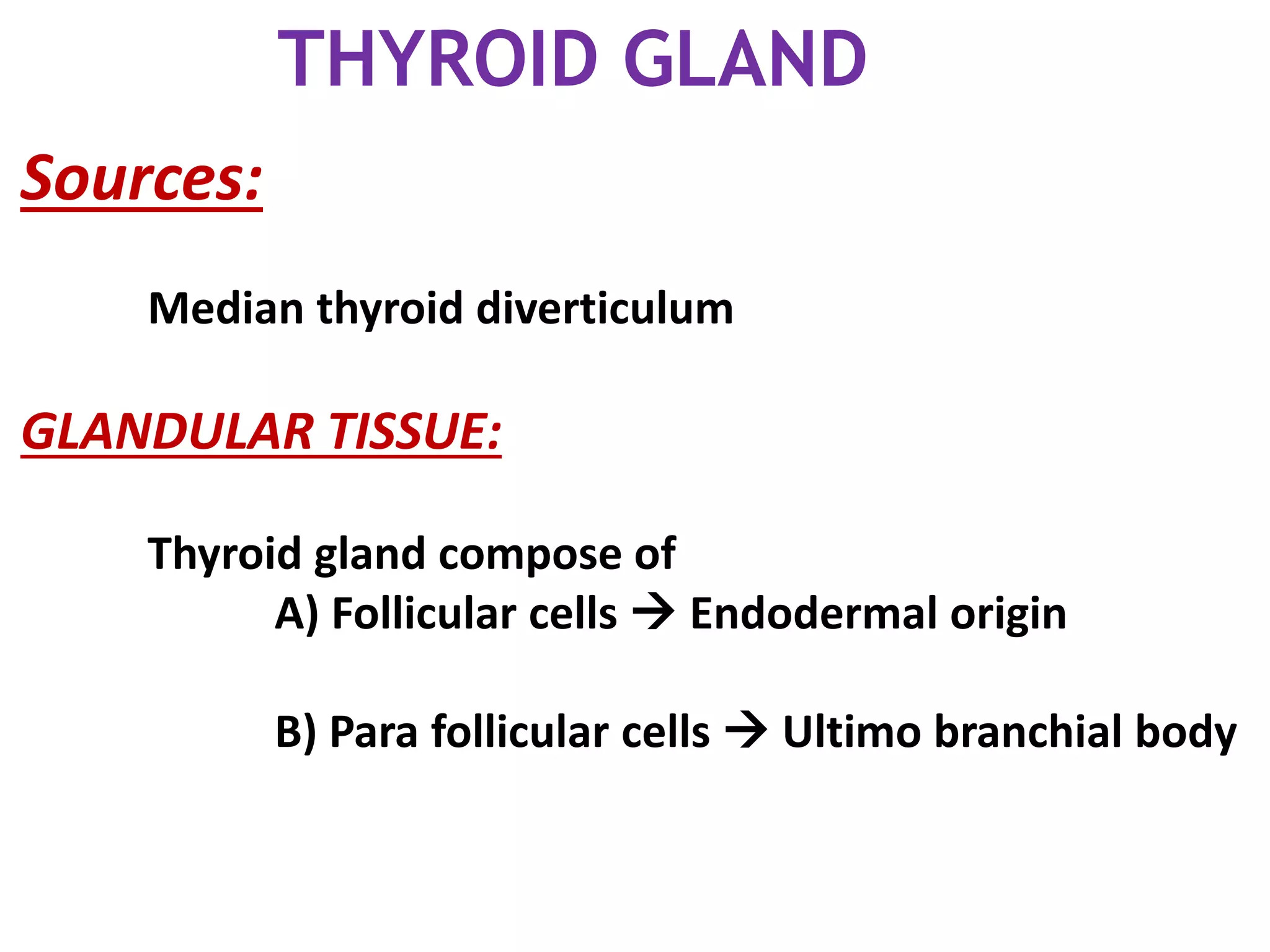
Median thyroid diverticulum
GLANDULAR TISSUE:
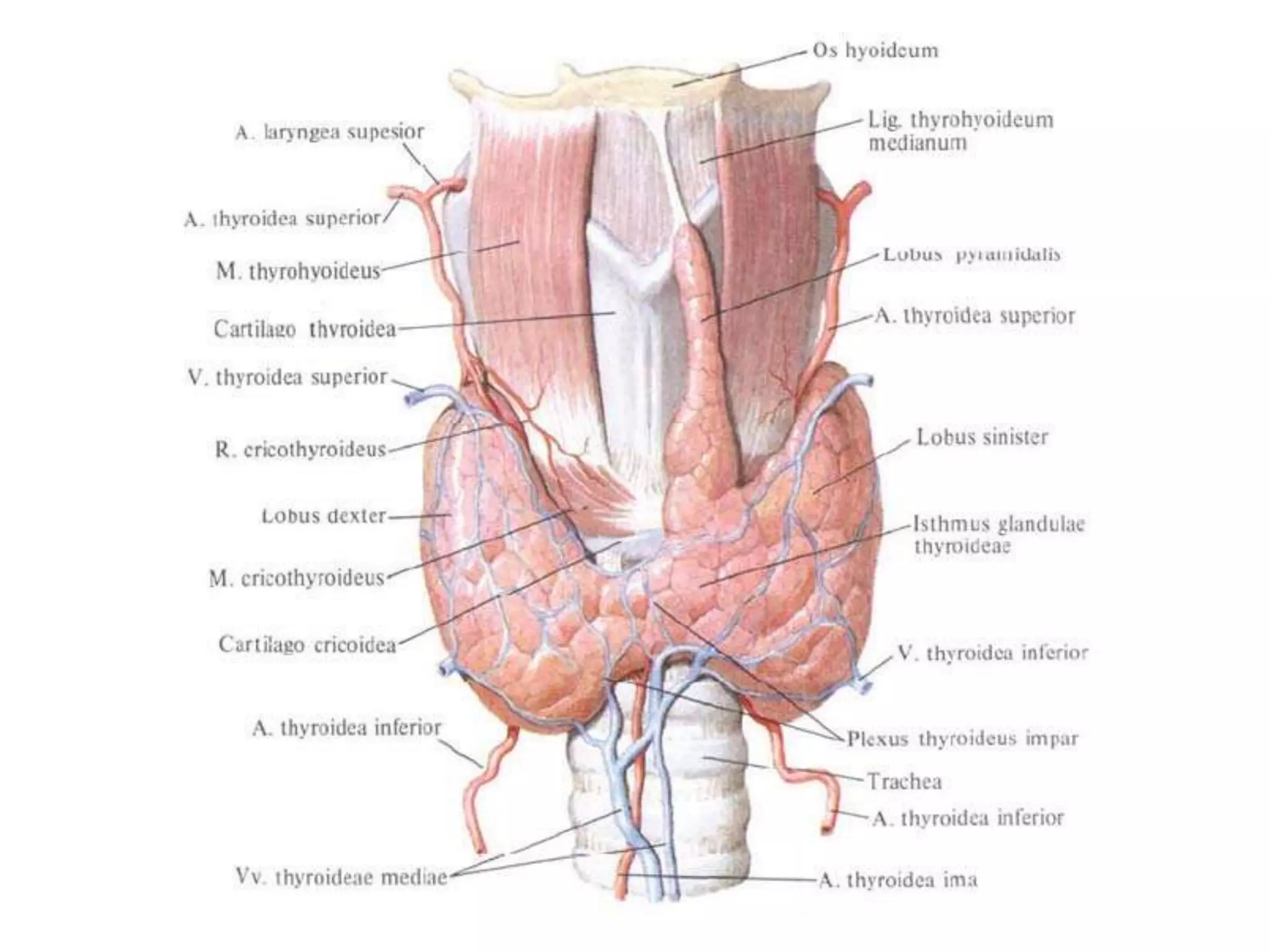
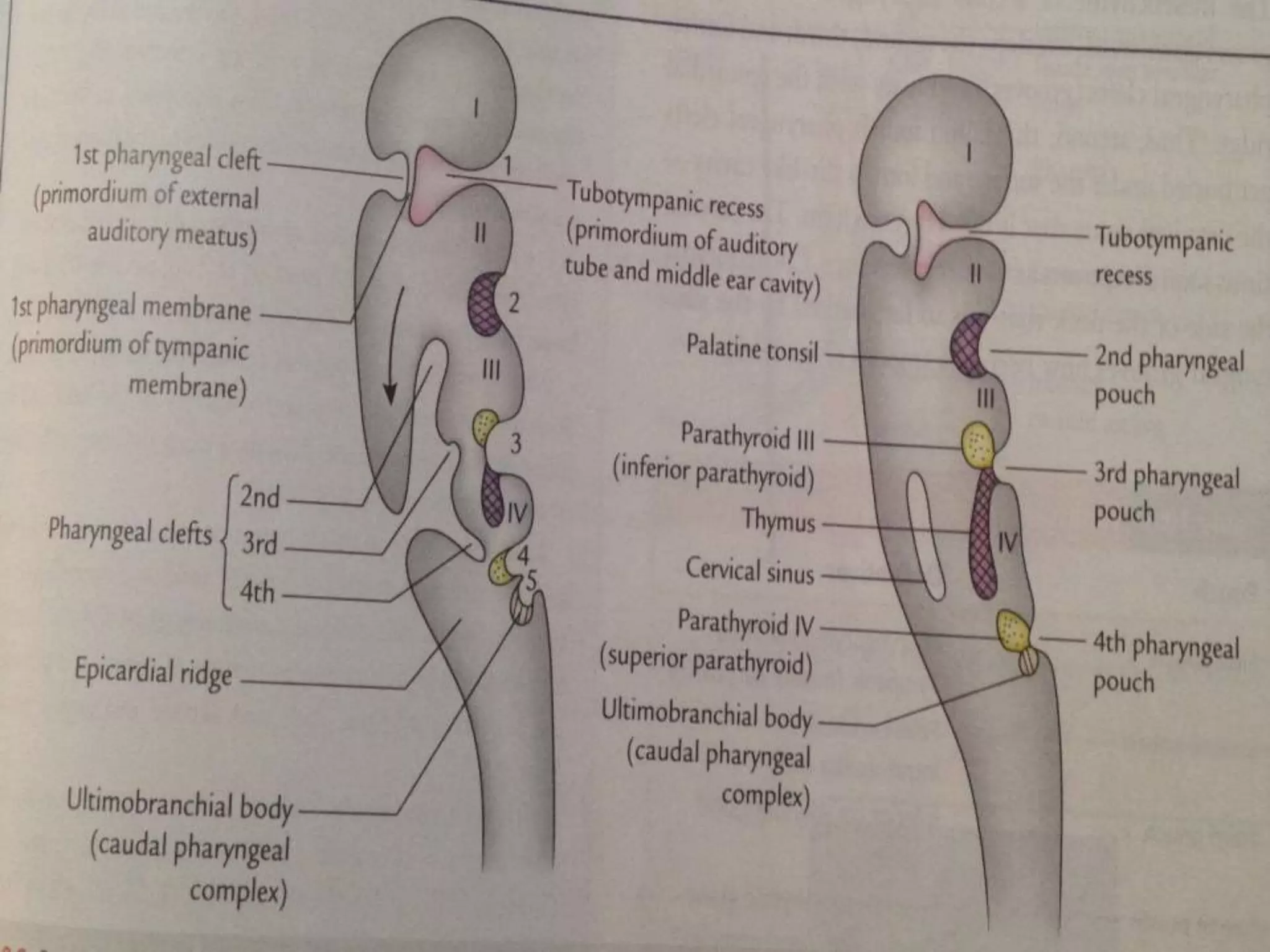
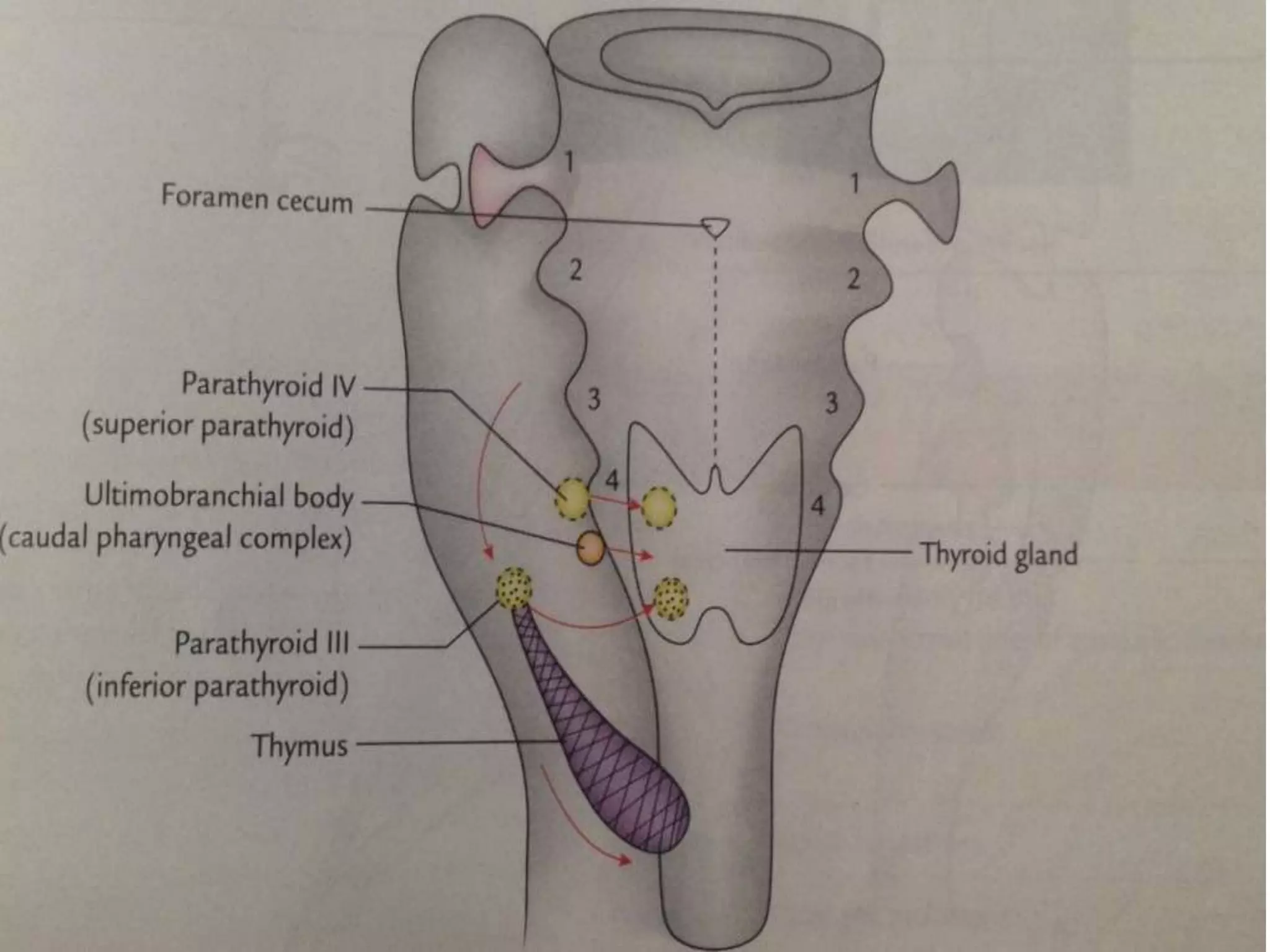
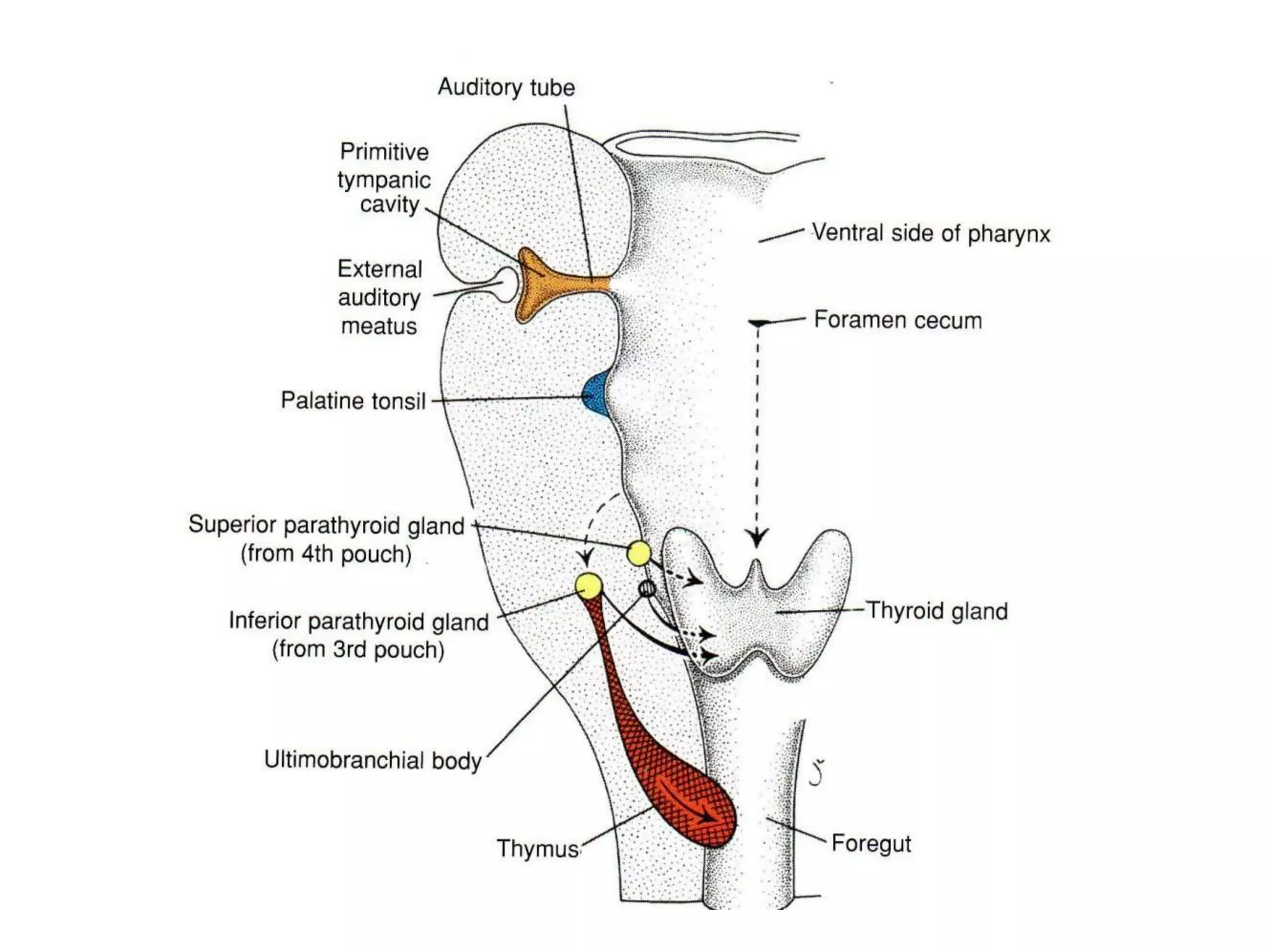
Thyroid gland compose of
A) Follicular cells  Endodermal origin
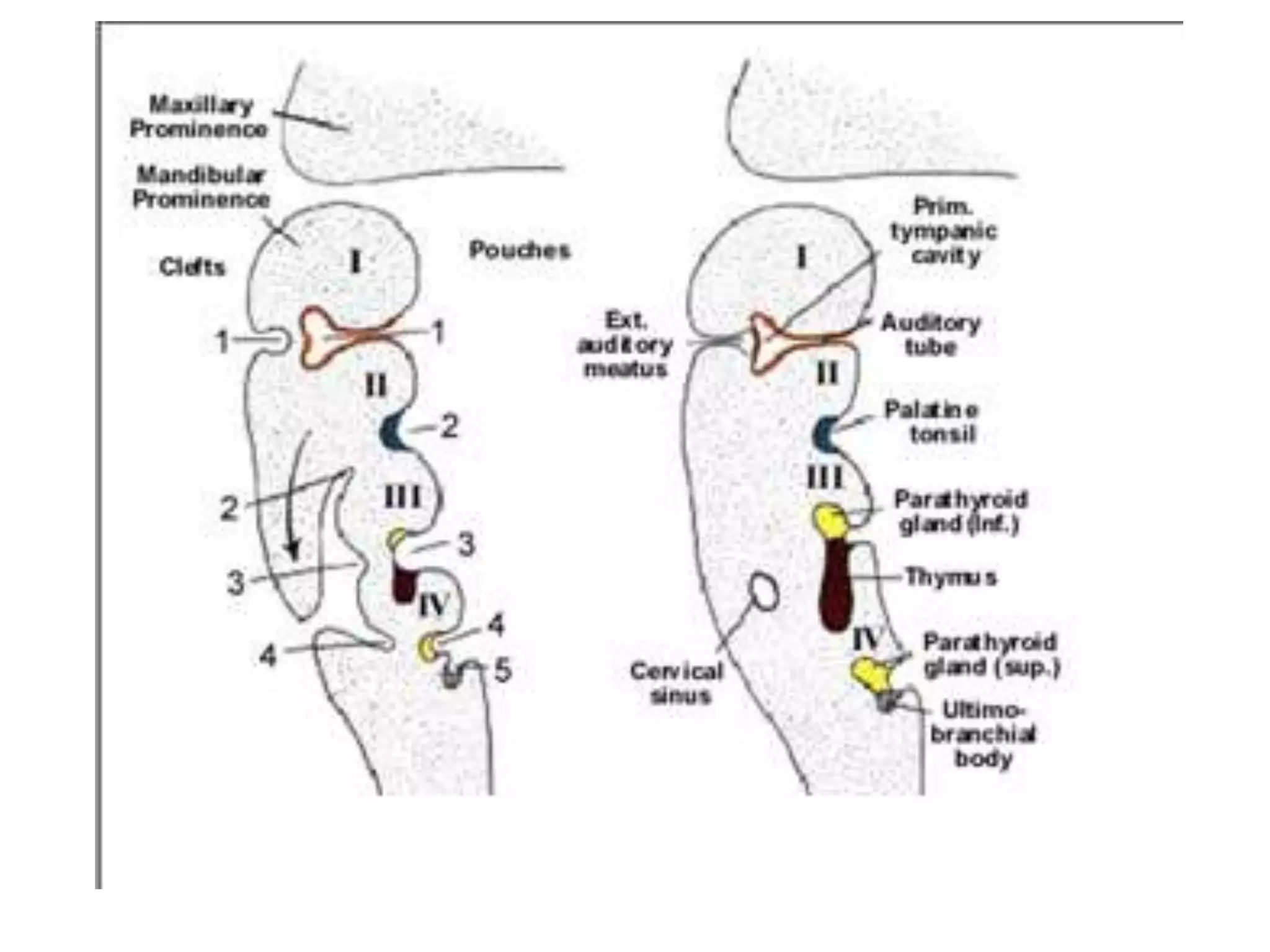
B) Para follicular cells  Ultimo branchial body
THYROID GLAND
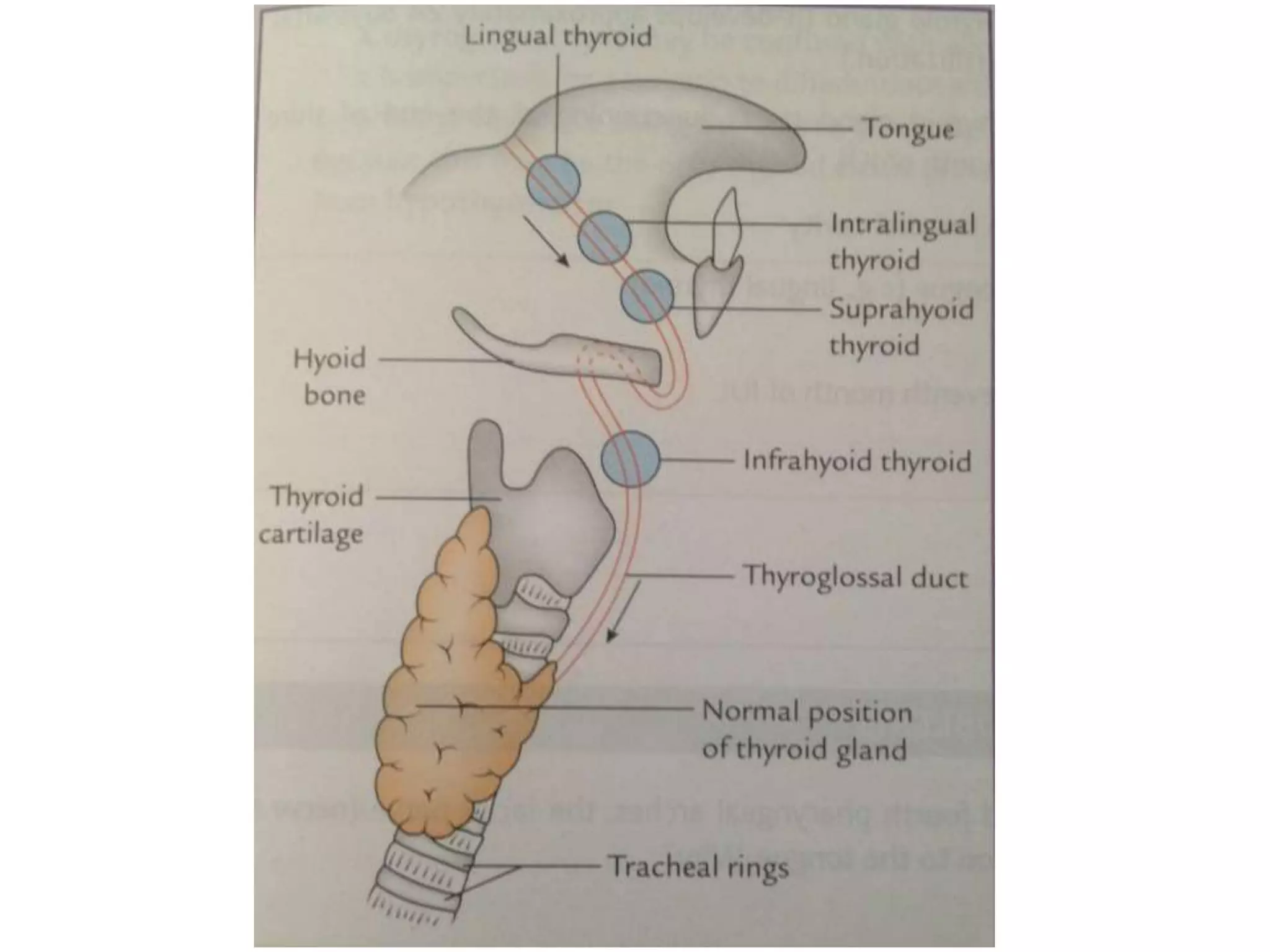
Fate of thyroglossal duct:
Anomalies:
1) Lingual thyroid
2) Retro sternal thyroid
3) Thyroglossal cyst
THYROID GLAND
THYROID GLAND
Development of endocrine system

Development of endocrine system

  • 1.
  • 2.
  • 3.
    PITUITARY GLAND Chronological age: Middleof 3th week of IUL Germ layer: Surface Adenohypophysis Ectoderm Neuro Neurohypophysis Site: A) Stomodeum B) Buccopharyngeal membrane
  • 4.
    PITUITARY GLAND Sources: A) Surfaceectoderm part (Rathke’s pouch) - Pars Distalis - Pars Tuberalis - Pars Intermedia B) Neuro ectoderm part (Hypopyseal stalk) - Infudibulum - Pars Posterior (Neurohypophysis) - Median eminance
  • 6.
    Adenohypophysis  Develops froman evagination of ectoderm lining the roof of primitive oral cavity called rathke’s pouch  Rathke’s pouch develops in third week of IUL.  Later this pouch is cut off from the primitive mouth stomodeum.
  • 9.
    Walls of Rathke’spouch a) Anterior wall proliferates extensively to form pars anterior. b) Posterior wall remains thin and forms pars intermedia c) Cleft of pouch persist hypophyseal cleft. Small extension of pars anterior grows upward to form pars tuberalis.
  • 11.
  • 12.
    Neurohypophysis Develops from anevagination of neurectoderm of hypothalamus/floor of third ventricle. Neurectodermal diverticulum from the floor of third ventricle. Ectodermal pouch from the roof of stomodeum fuse with each other to form hypophysis cerebri.
  • 13.
  • 14.
    Possible congenital anomalies •Ectopic posterior pituitary • Pharyngeal hypophysis • Agenesis/Hypogenesis of pituitary gland • Duplication of pituitary gland • Congenital tumor of the gland (Craniopharyngioma)
  • 15.
    1) Ectopic posteriorpituitary Absent normal posterior pituitary Bright spot within the sella with ectopic bright signal at another site (such as the median eminence) on a weighted magnetic resonance Development: Incomplete caudal extension of the diencephalon during embryogenesis
  • 17.
  • 18.
    2) Pharyngeal hypophysis Development: -Aremnant of the stalk of the hypophysial diverticulum in the roof of the oropharynx Pharyngeal hypophysis
  • 19.
    • Ectopic pituitarytissue is found attached to the roof of the mouth. • It is caused by failure of separation of Rathke's pouch from the roof of the mouth.
  • 20.
  • 21.
    Effect: Absence of thegland is incompatible with life, i.e. it leads to death of the infant Hypogenesis of pituitary gland: It leads to panhypopituitarism (is a condition of inadequate or absent production of the anterior pituitary hormones.)
  • 22.
    4) Duplication ofpituitary gland Development: -Fewer (40 cases since 1880) -A rare craniofacial developmental anomaly occurring during blastogenesis.
  • 23.
    • *Several mechanismshave been proposed for DPG: – partial twinning, – prenatal teratogen exposure, – extreme presentation of the median cleft face syndrome – splitting of the notochord during blastogenesis • DPG is associated with various clinical findings that represent a continuum of defects in blastogenesis
  • 24.
    5) Congenital tumorof the gland (Craniopharyngioma) Development: A tumor arises from a remnant of Rathke's pouch. *
  • 26.
    Effect: • Increasing theintracranial pressure; hydrocephalus • Disrupting the function of the pituitary gland • Damaging the optic nerve
  • 27.
  • 28.
  • 29.
    PINEAL GLAND Source: Smalldiverticulum arising from the roof of the diencephalon Pineal gland is made up of modified neuroglial cells called pinealocytes. Process of development: Diverticulum form Initially hollow mass Later, becomes solid structure
  • 32.
  • 33.
  • 34.
    ADRENAL GLAND Sources: A) Cortex Coelomic epithelium - Foetal cortex  Larger acidophilic cells - Definitive cortex  Smaller cells B) Medulla  Neural crest cells - Similar to postganglionic sympathetic neurons
  • 38.
  • 40.
  • 43.
    THYROID GLAND Chronological age: 3thweek of IUL (1st endocrine organ to develop) Germ layer: Endodermal diverticulum (Thyroglossal duct) Site: Floor of the pharynx [below & behind the tuberculum impar of developing tongue]
  • 44.
    Sources: Median thyroid diverticulum GLANDULARTISSUE: Thyroid gland compose of A) Follicular cells  Endodermal origin B) Para follicular cells  Ultimo branchial body THYROID GLAND
  • 52.
    Fate of thyroglossalduct: Anomalies: 1) Lingual thyroid 2) Retro sternal thyroid 3) Thyroglossal cyst THYROID GLAND
  • 53.