Group No 9
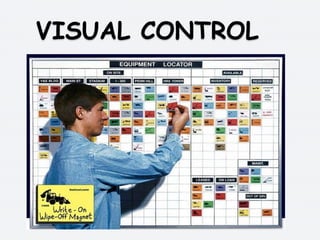
VISUAL CONTROL
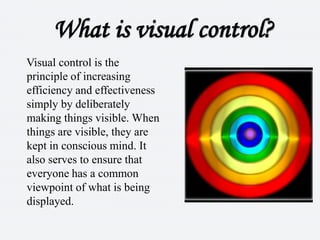
What is visual control?Visual control is the principle of increasing efficiency and effectiveness simply by deliberately making things visible. When things are visible, they are kept in conscious mind. It also serves to ensure that everyone has a common viewpoint of what is being displayed.
    Types of visual contolsINDICATORSIGNALCONTROL
 INDICATORPOWER LEVEL: LowDESCRIPTION: An indicator only provides information about the immediate environment or situation. Indicators are passive and people may not notice them or respond to them.
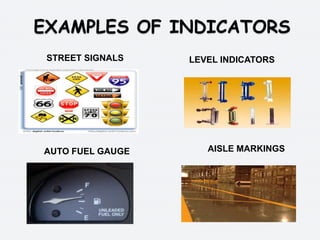
EXAMPLES OF INDICATORSSTREET SIGNALSAUTO FUEL GAUGELEVEL INDICATORS               AISLE MARKINGS
SIGNALPOWER LEVEL: mediumDESCRIPTION:   Signals grab our attention with visual (or audible) alarms. People may still choose to ignore signals but they usually perceive them. 
EXAMPLES OF SIGNALS        TRAFFIC LIGHTSAIRCRAFT STALL WARNING
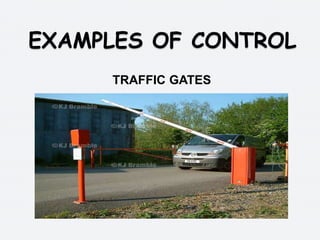
      CONTROLPOWER LEVEL: HighDESCRIPTION:   Controls limit behavior through strong visual messages or physical restrictions as an action takes place.
 EXAMPLES OF CONTROLTRAFFIC GATES
    Benefits of visual controlCorrect the problemsReduce manufacturing costs and possible wasteShorten production lead time and thus keep the delivery due dateReduce inventoryEnsure a safe and comfortable working environmentIncrease company's profit
    How to implement visual controlOrganize a program committee.  Develop a plan and budget.  Collect and develop examples and cases of problems or accidents.  Publicly announce the start of the program to your company.  Provide training and education to employees.  Select a day and have everybody apply visual control in his/her own working area.  Evaluate the results of visual control Self-Examination and take corrective actions.
Two types of visual control implementation ACTUALANALOG
       ACTUALExamples of actual items that can be implemented through visual control are items that are designed to designate a location/position for each item, indicate quantity including inventory levels, distinguish items from each other and specify form.
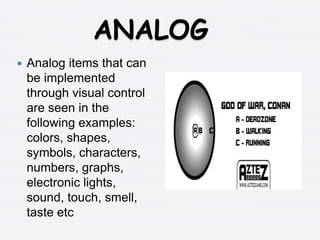
ANALOGAnalog items that can be implemented through visual control are seen in the following examples: colors, shapes, symbols, characters, numbers, graphs, electronic lights, sound, touch, smell, taste etc
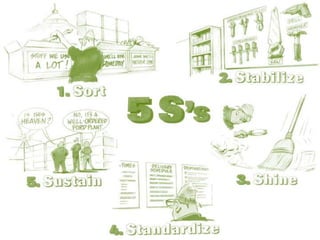
ELEMENTS OF 5 S
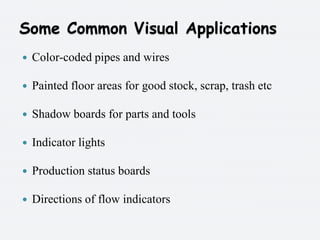
Some Common Visual ApplicationsColor-coded pipes and wires Painted floor areas for good stock, scrap, trash etc Shadow boards for parts and tools Indicator lights Production status boardsDirections of flow indicators
  Real time example- Pull board
CONCLUSIONBetter implementation of other procedures that are too tedious and complicated to understand. Helps enhance innovative process.It allows them to better enhance the overall efficiency of the company.

Visual control final presentation

  • 1.
  • 2.
  • 3.
    What is visualcontrol?Visual control is the principle of increasing efficiency and effectiveness simply by deliberately making things visible. When things are visible, they are kept in conscious mind. It also serves to ensure that everyone has a common viewpoint of what is being displayed.
  • 4.
    Types of visual contolsINDICATORSIGNALCONTROL
  • 5.
    INDICATORPOWER LEVEL:LowDESCRIPTION: An indicator only provides information about the immediate environment or situation. Indicators are passive and people may not notice them or respond to them.
  • 6.
    EXAMPLES OF INDICATORSSTREETSIGNALSAUTO FUEL GAUGELEVEL INDICATORS AISLE MARKINGS
  • 7.
    SIGNALPOWER LEVEL: mediumDESCRIPTION: Signals grab our attention with visual (or audible) alarms. People may still choose to ignore signals but they usually perceive them. 
  • 8.
    EXAMPLES OF SIGNALS TRAFFIC LIGHTSAIRCRAFT STALL WARNING
  • 9.
    CONTROLPOWER LEVEL: HighDESCRIPTION: Controls limit behavior through strong visual messages or physical restrictions as an action takes place.
  • 10.
    EXAMPLES OFCONTROLTRAFFIC GATES
  • 11.
    Benefits of visual controlCorrect the problemsReduce manufacturing costs and possible wasteShorten production lead time and thus keep the delivery due dateReduce inventoryEnsure a safe and comfortable working environmentIncrease company's profit
  • 12.
    How to implement visual controlOrganize a program committee.  Develop a plan and budget.  Collect and develop examples and cases of problems or accidents.  Publicly announce the start of the program to your company.  Provide training and education to employees.  Select a day and have everybody apply visual control in his/her own working area.  Evaluate the results of visual control Self-Examination and take corrective actions.
  • 13.
    Two types ofvisual control implementation ACTUALANALOG
  • 14.
    ACTUALExamples of actual items that can be implemented through visual control are items that are designed to designate a location/position for each item, indicate quantity including inventory levels, distinguish items from each other and specify form.
  • 15.
    ANALOGAnalog items thatcan be implemented through visual control are seen in the following examples: colors, shapes, symbols, characters, numbers, graphs, electronic lights, sound, touch, smell, taste etc
  • 17.
  • 18.
    Some Common VisualApplicationsColor-coded pipes and wires Painted floor areas for good stock, scrap, trash etc Shadow boards for parts and tools Indicator lights Production status boardsDirections of flow indicators
  • 19.
    Realtime example- Pull board
  • 20.
    CONCLUSIONBetter implementation ofother procedures that are too tedious and complicated to understand. Helps enhance innovative process.It allows them to better enhance the overall efficiency of the company.