Evolution of
Wireless
Generations
 In last few decades there is a great progress
in wireless networks , namely from 0G to 4G.
 1G
 2G
 3G
 4G
1G
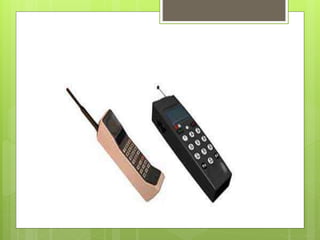
 1st Generation of wireless communication.
 Was launched in Japan in 1979-1980.
 Involve the technology AMPS (Advanced
Mobile Phone System)
 Data transfer rate is 2.4 Kbps
 1G uses analog signals , means the signals
are not converted in digital one.
 Called analog telecommunication standards.
Features
 Allows the voice calls in one country.
Drawbacks
 Poor voice quality
 Poor battery life
 Large phone size
 No security
 Limited capacity
 Low data rate(As 1G uses analog signals so
these signals can not cover up long distance
so we have move forward.)
Problem
 As analog signals cant cover long distance
so that is the advantage of analog signal.
Solution
 Instead of sending analog signals they should
be converted into digital signals
2G
 Uses digital technology.
 Uses digital signals.
 Introduced in Finland 1991-2000.
 Data transfer rate is 64 kbps.
Features
 Allows text messages , picture messages
and MMS
Technology
 GSM is the technology of 2G.
 At start GSM stands for Groupe Special
Module. Later on it changes to Global
System for mobile communications.
Problem
 Require strong digital signals for data
transmission , in case of no network
coverage , signals become week.
 Unable to handle videos.
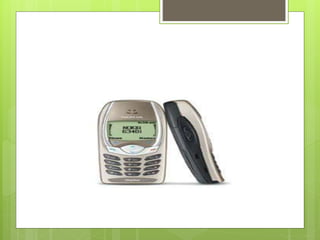
2.5G
 Follows the packet switching methodology.
 From
 Involv-2010
 the technology named GPRS.
 GPRS stands for General Packet Radio Service.
 GPRS support the transmission of data in form of
packets . And these packets are transmit through
air (Radio).
 GPRS refers to data rate of about 64-144 kbps.
Features
 Phone calls
 Send/receive email messages
 Web browsing
 Camera phones
 Take 6-9 minutes to download a 3 min mp3
song.
Problem
 Data rate is less
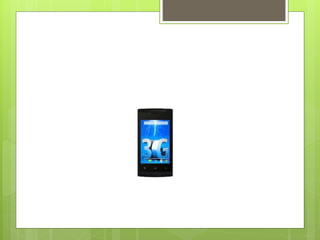
3G
 Introduced in 2000.
 Data transfer rate is 144kbps – 2Mbps
Features
 Faster communication
 Send / receive large email messages
 High speed web
 High security
 Video conferencing
 3D gaming
 TV streaming
 11 – 90 sec to download a 3 minutes mp3
song.
4G LTE
 The target was set to
 100 mbps – 1 Gbps
 Introduced in 2009.
After a long time research and working this target
is achieved. That’s why its is called Long Term
Evolution.
Evolution of wireless generations

Evolution of wireless generations

  • 1.
  • 2.
     In lastfew decades there is a great progress in wireless networks , namely from 0G to 4G.  1G  2G  3G  4G
  • 3.
    1G  1st Generationof wireless communication.  Was launched in Japan in 1979-1980.  Involve the technology AMPS (Advanced Mobile Phone System)  Data transfer rate is 2.4 Kbps
  • 4.
     1G usesanalog signals , means the signals are not converted in digital one.  Called analog telecommunication standards.
  • 5.
    Features  Allows thevoice calls in one country.
  • 6.
    Drawbacks  Poor voicequality  Poor battery life  Large phone size  No security  Limited capacity  Low data rate(As 1G uses analog signals so these signals can not cover up long distance so we have move forward.)
  • 8.
    Problem  As analogsignals cant cover long distance so that is the advantage of analog signal. Solution  Instead of sending analog signals they should be converted into digital signals
  • 9.
    2G  Uses digitaltechnology.  Uses digital signals.  Introduced in Finland 1991-2000.  Data transfer rate is 64 kbps.
  • 10.
    Features  Allows textmessages , picture messages and MMS
  • 11.
    Technology  GSM isthe technology of 2G.  At start GSM stands for Groupe Special Module. Later on it changes to Global System for mobile communications.
  • 12.
    Problem  Require strongdigital signals for data transmission , in case of no network coverage , signals become week.  Unable to handle videos.
  • 14.
    2.5G  Follows thepacket switching methodology.  From  Involv-2010  the technology named GPRS.  GPRS stands for General Packet Radio Service.  GPRS support the transmission of data in form of packets . And these packets are transmit through air (Radio).  GPRS refers to data rate of about 64-144 kbps.
  • 15.
    Features  Phone calls Send/receive email messages  Web browsing  Camera phones  Take 6-9 minutes to download a 3 min mp3 song.
  • 16.
  • 17.
    3G  Introduced in2000.  Data transfer rate is 144kbps – 2Mbps
  • 18.
    Features  Faster communication Send / receive large email messages  High speed web  High security  Video conferencing  3D gaming  TV streaming  11 – 90 sec to download a 3 minutes mp3 song.
  • 20.
    4G LTE  Thetarget was set to  100 mbps – 1 Gbps  Introduced in 2009. After a long time research and working this target is achieved. That’s why its is called Long Term Evolution.