LCDThe Liquid Crystal Display
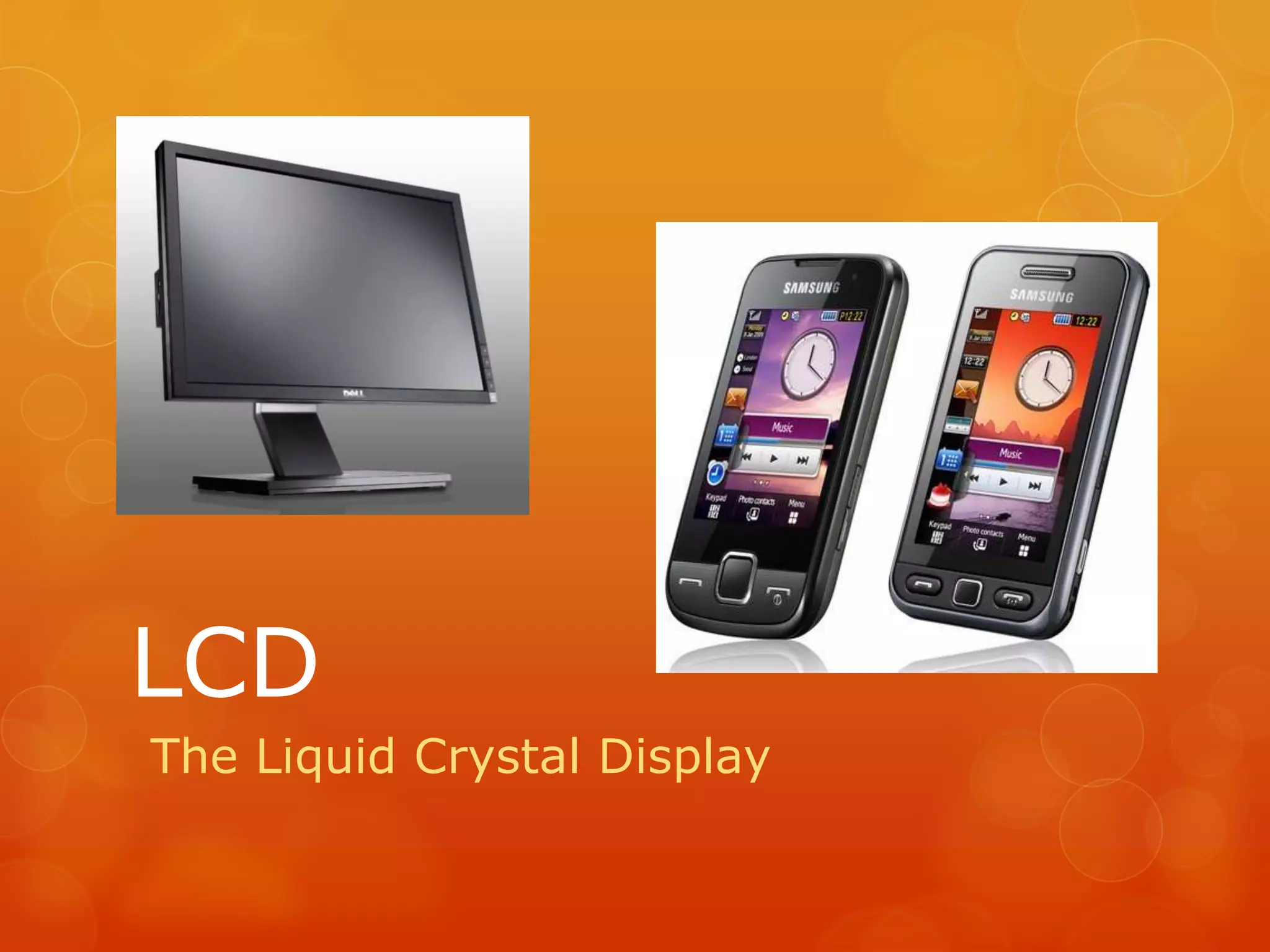
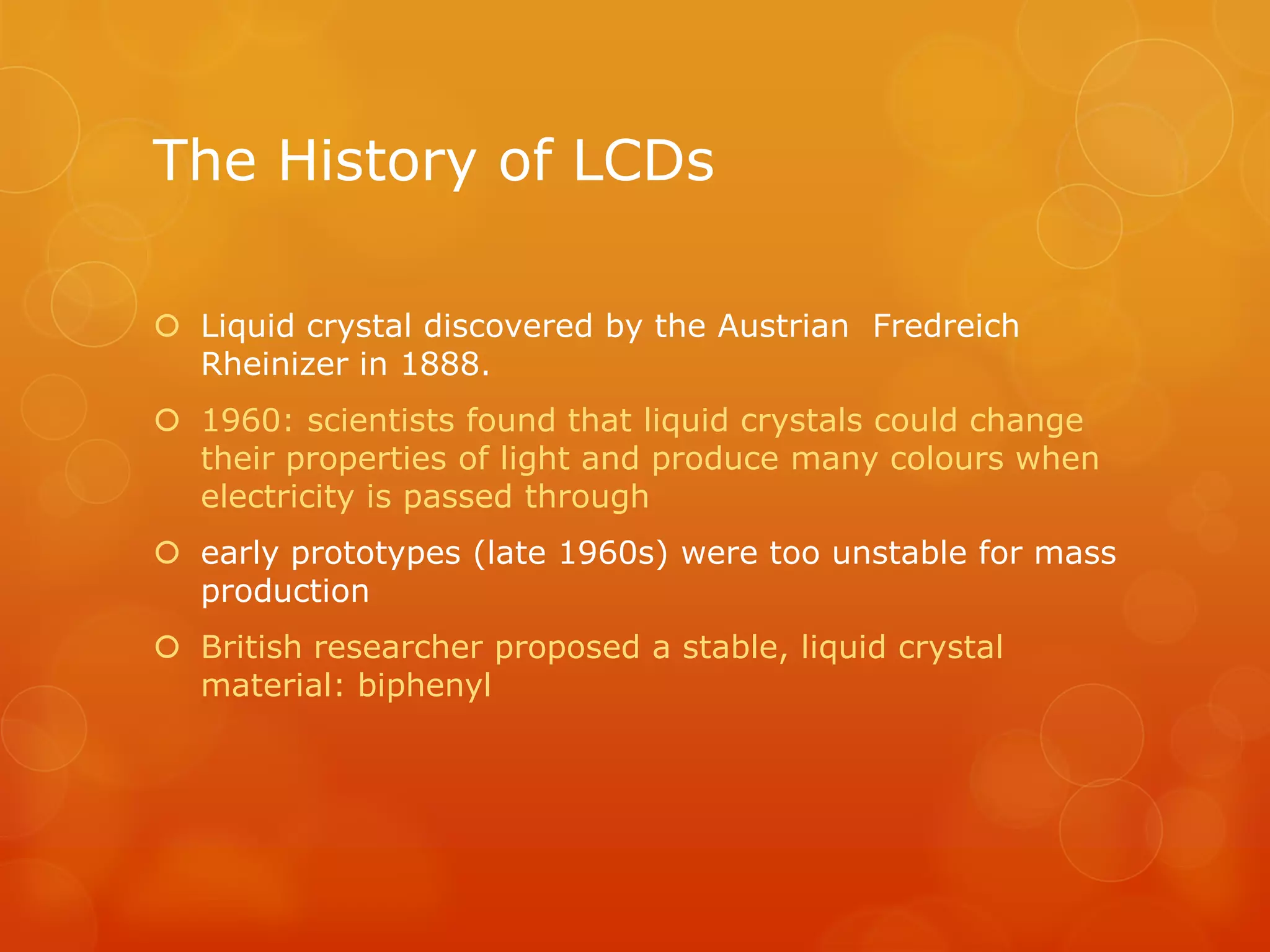
Computer monitorsTelevisionInstrument panelsAircraft cockpit displays sign Video playersGaming devicesClocksWatchesCalculators TelephonesThe Many Uses
The History of LCDsLiquid crystal discovered by the Austrian  Fredreich Rheinizer in 1888.1960: scientists found that liquid crystals could change their properties of light and produce many colours when electricity is passed throughearly prototypes (late 1960s) were too unstable for mass productionBritish researcher proposed a stable, liquid crystal material: biphenyl
How it all WorksLCDs are displays made from liquid crystalsLiquid crystals are both solid and liquid, but mostly liquidThey can keep their shape like solids, and move around like liquidsTheir form is changed with heatLiquid Crystals
How it all WorksNematic PhaseLiquid crystals have phases; Nematic is one of themIn this phase:Molecules are rod shapedThey are naturally twistedElectricity (heat) causes them to untwist, and light passes through
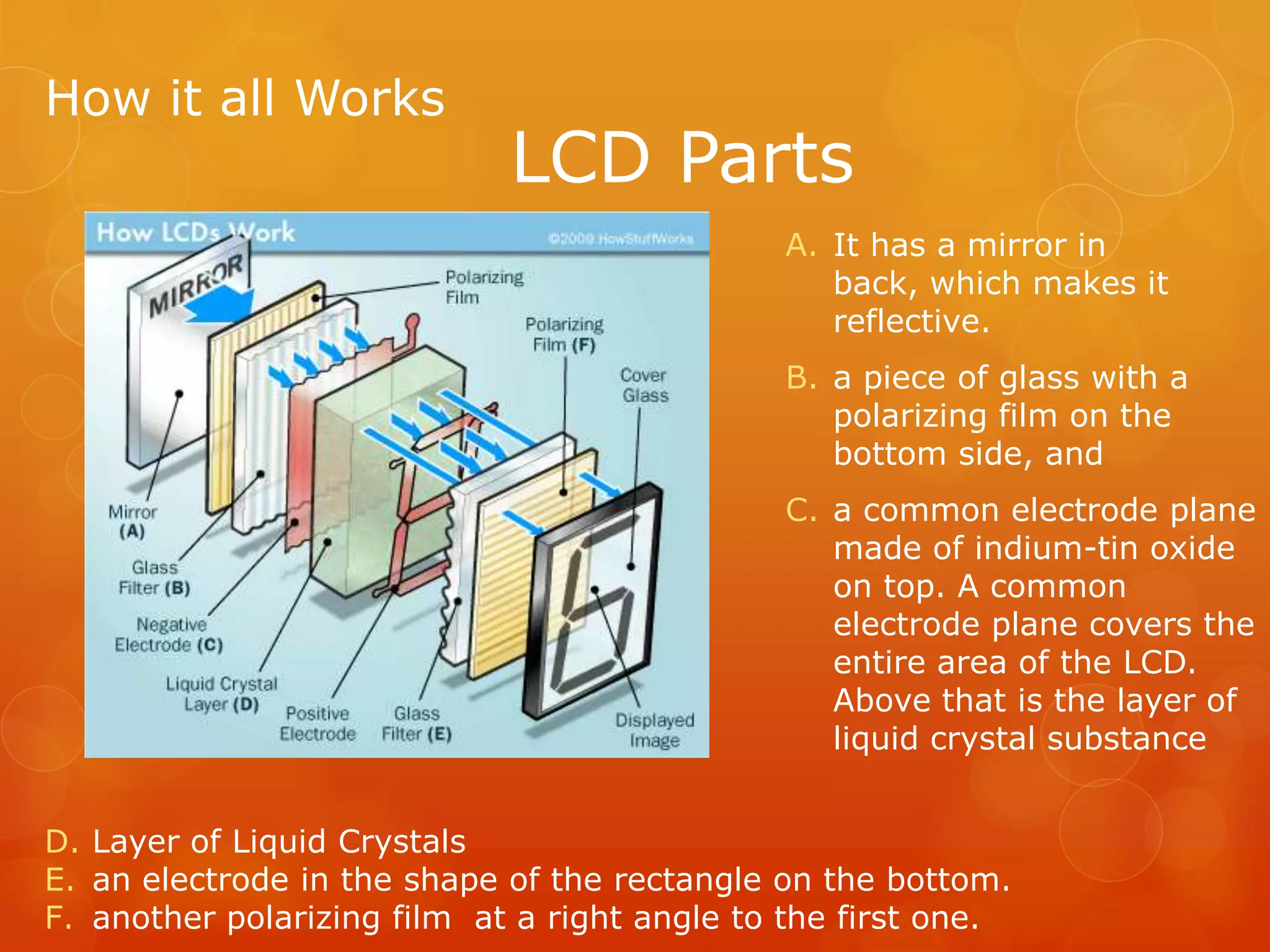
How it all WorksLCD PartsIt has a mirror in back, which makes it reflective. a piece of glass with a polarizing film on the bottom side, and a common electrode plane made of indium-tin oxide on top. A common electrode plane covers the entire area of the LCD. Above that is the layer of liquid crystal substance Layer of Liquid Crystalsan electrode in the shape of the rectangle on the bottom.another polarizing film  at a right angle to the first one.
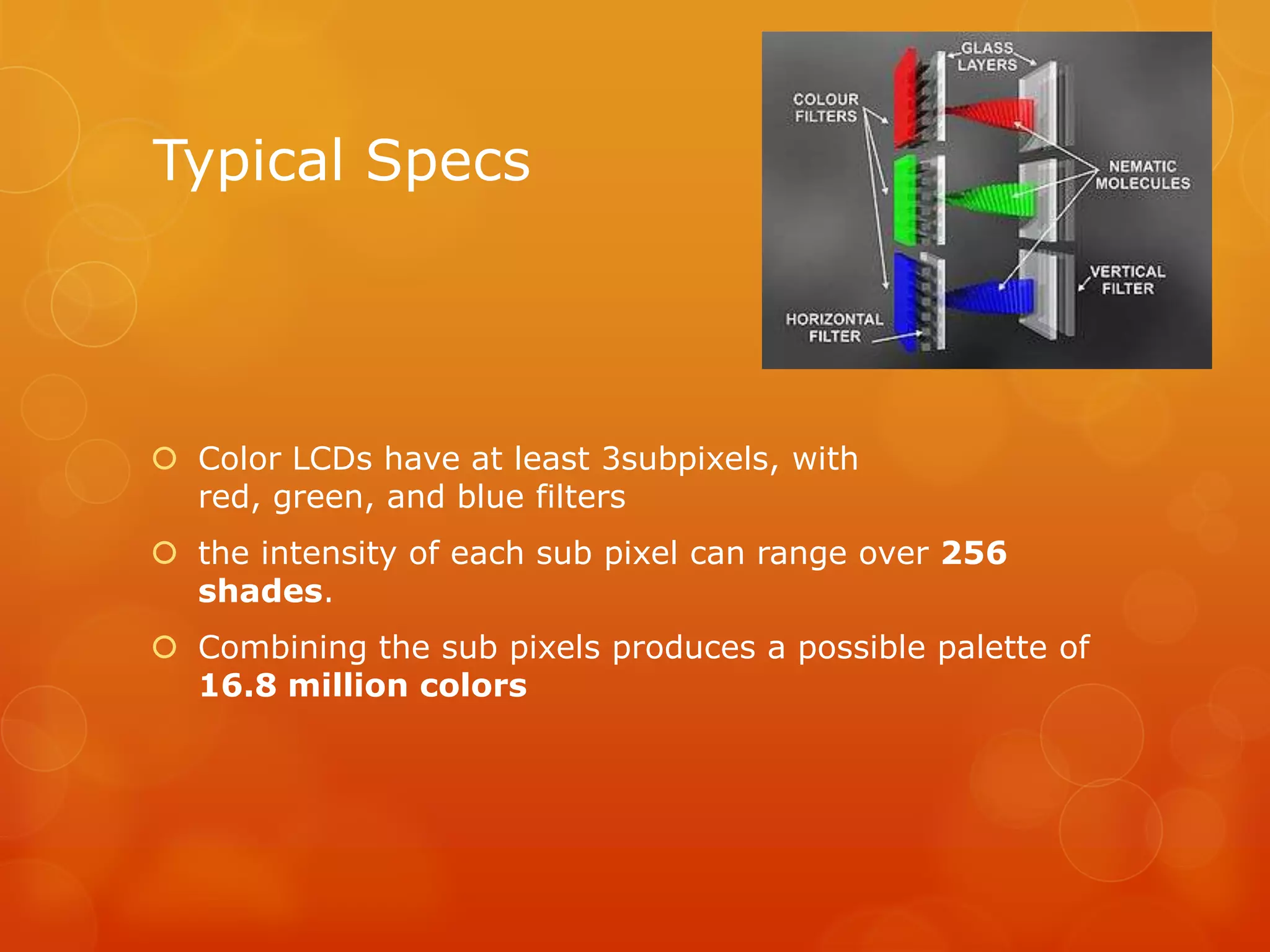
Typical SpecsColor LCDs have at least 3subpixels, with red, green, and blue filtersthe intensity of each sub pixel can range over 256 shades.Combining the sub pixels produces a possible palette of 16.8 million colors
Future TrendsHDTVs use higher resolutions of pixels to create better images
Resolution: number of pixels horizontally by number of pixels vertically1920 x 1080 is resolution for HD1280 x 720 is also HDOld standard TVs used a resolution of up to 400p
Advantages of LCDs Over CRTsLCDs can be constructed much smaller and lighterAre more economical to run, they use less powerGenerate less heatCreate higher quality imagesCauses less eye fatigueEmit less radiation

Liquid crystal displays

  • 1.
  • 2.
    Computer monitorsTelevisionInstrument panelsAircraftcockpit displays sign Video playersGaming devicesClocksWatchesCalculators TelephonesThe Many Uses
  • 3.
    The History ofLCDsLiquid crystal discovered by the Austrian  Fredreich Rheinizer in 1888.1960: scientists found that liquid crystals could change their properties of light and produce many colours when electricity is passed throughearly prototypes (late 1960s) were too unstable for mass productionBritish researcher proposed a stable, liquid crystal material: biphenyl
  • 4.
    How it allWorksLCDs are displays made from liquid crystalsLiquid crystals are both solid and liquid, but mostly liquidThey can keep their shape like solids, and move around like liquidsTheir form is changed with heatLiquid Crystals
  • 5.
    How it allWorksNematic PhaseLiquid crystals have phases; Nematic is one of themIn this phase:Molecules are rod shapedThey are naturally twistedElectricity (heat) causes them to untwist, and light passes through
  • 6.
    How it allWorksLCD PartsIt has a mirror in back, which makes it reflective. a piece of glass with a polarizing film on the bottom side, and a common electrode plane made of indium-tin oxide on top. A common electrode plane covers the entire area of the LCD. Above that is the layer of liquid crystal substance Layer of Liquid Crystalsan electrode in the shape of the rectangle on the bottom.another polarizing film at a right angle to the first one.
  • 7.
    Typical SpecsColor LCDshave at least 3subpixels, with red, green, and blue filtersthe intensity of each sub pixel can range over 256 shades.Combining the sub pixels produces a possible palette of 16.8 million colors
  • 8.
    Future TrendsHDTVs usehigher resolutions of pixels to create better images
  • 9.
    Resolution: number ofpixels horizontally by number of pixels vertically1920 x 1080 is resolution for HD1280 x 720 is also HDOld standard TVs used a resolution of up to 400p
  • 10.
    Advantages of LCDsOver CRTsLCDs can be constructed much smaller and lighterAre more economical to run, they use less powerGenerate less heatCreate higher quality imagesCauses less eye fatigueEmit less radiation
  • 11.