Downloaded 73 times

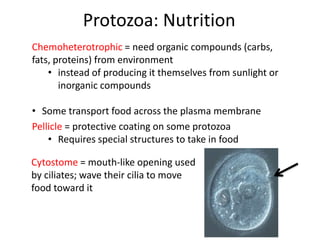

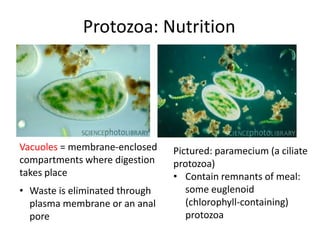


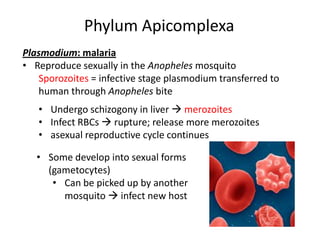


Protozoa are unicellular eukaryotes that inhabit water and soil and feed on organic matter. They display various modes of motility including pseudopods, cilia, and flagella. Many protozoa have complex life cycles with trophozoite and cyst stages and require multiple hosts to complete their life cycles. Some pathogenic protozoa cause diseases in humans through fecal-oral or insect transmission, infecting the gut or blood and potentially spreading to other organs. Common diseases include malaria, African sleeping sickness, leishmaniasis, and amoebic dysentery.


