Normal Uterine Action
Ayman Shehata
Ass.Lect. Ob/Gyn
LABOUR
comprising 4 stages:
First stage: from onset of labour pains till
cervix is fully dilated.
Second stage of labour: from complete
dilatation of cervix till the delivery.
Third stage of labour: placental separation
&expulsion
Fourth stage : first hour after delivery
Following are the major events during labour:
 Gradually increasing uterine contractions
 Retraction
 Dilatation of cervix
 Effacement of cervix
 Lower uterine segment formation
Duration:
o primigravida = 8-12 h
o multigravida = 6-8 h
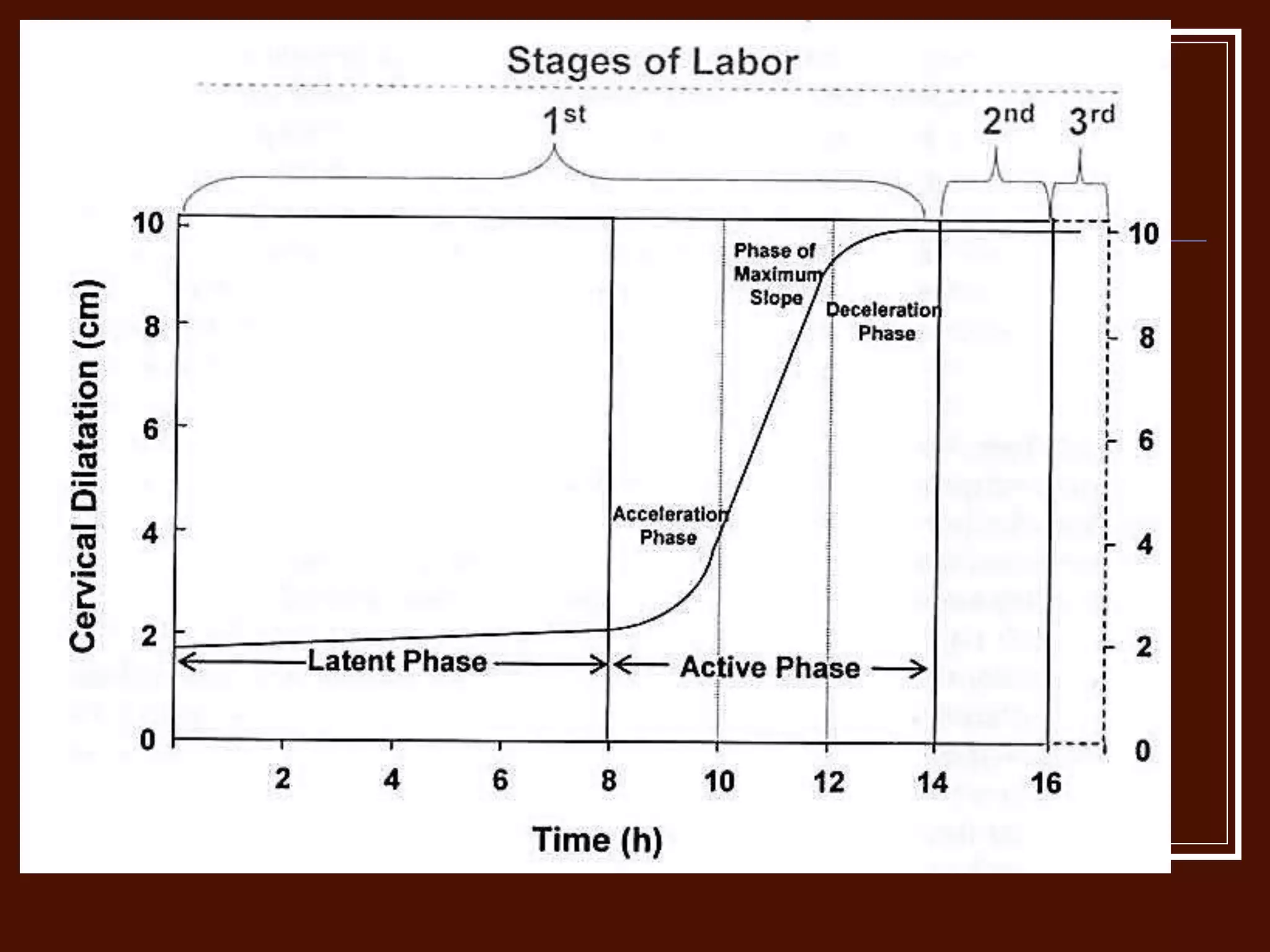
Phases of the first stage:
 Latent phase: started when the cervix dilatated
slowly and reached to about 3cm.
A. in primigravida = 8h
B. in multigravida = 4h
 - Active phase: rapid dilatation of the cervix to
reach 10cm
A. in primigravda = 4h
B. in multigravida =2h
UTERINE CONTRACTIONS
 FUNDAL DOMINANCE
 POLARITY
 COORDINATION
 EFFECTIVENESS
 FREQUENCY
 DURATION
 INTENSITY
 INTERVAL
 RESTING TONE(TONUS)
Fundal dominance
 Fundal dominance
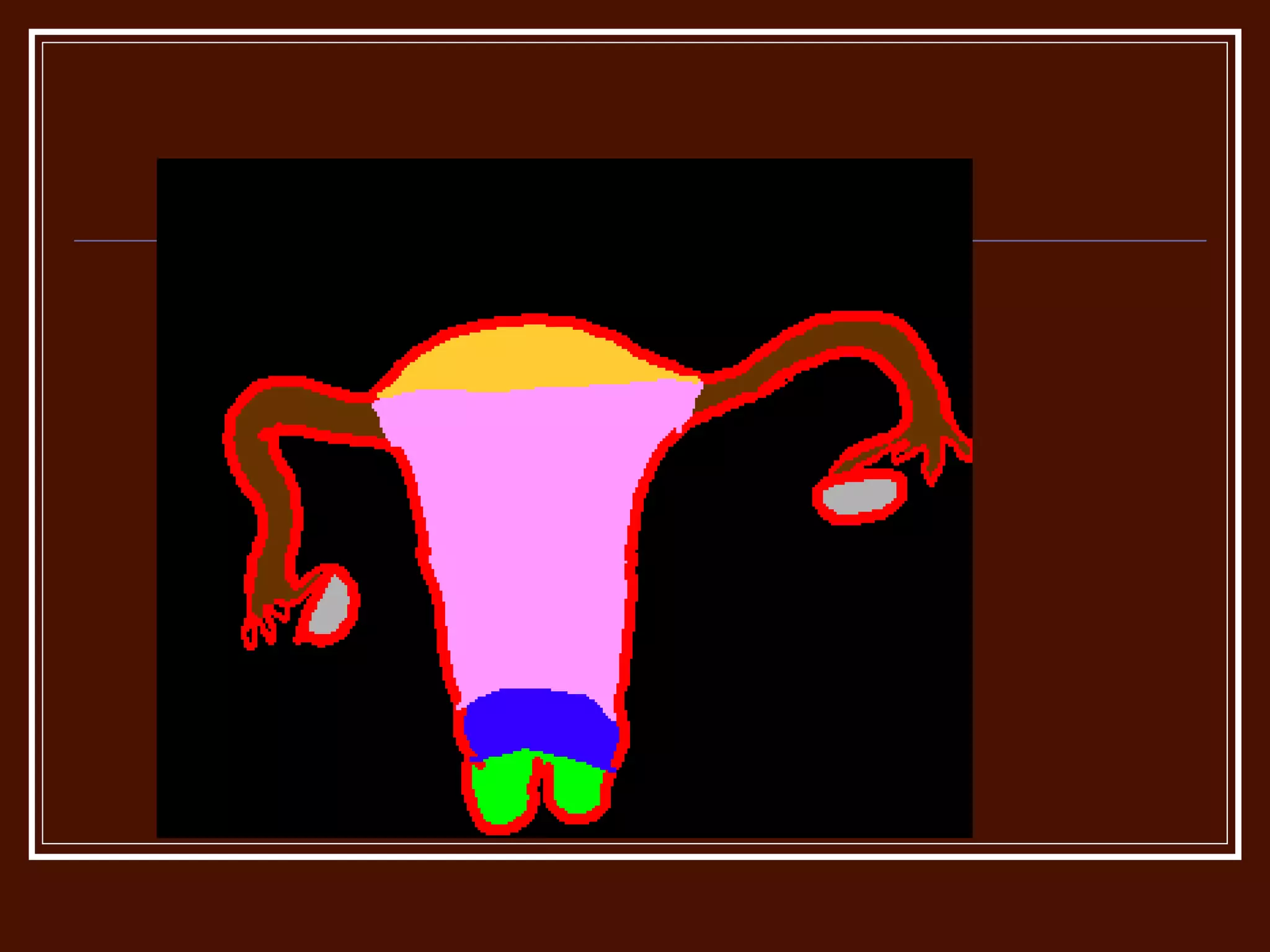
The activity of myometrium is greatest &
longest at the fundus, shifting &diminishing
towards midline and downwards ( towards
cervix)
 Pace maker
 Two one at each cornu from where wave of
contraction spread downwards.
 Their activities must be coordinated
 Propagation of wave must also be
coordinated
Sometimes there is emergence of multiple
pace maker foci leading to less efficient
contractions and hence causing primary
dysfunction labour
Polarity of uterus
 When upper segment contract the lower
segment relaxes.
 Lack of fundal dominance and the reverse
polarity leads to spastic lower uterine segment.
Here pacemaker does not work in rhythm.
Coordination
 Wave begins earlier in some part than
other but the contraction attains maximum
in the different parts of uterus at the same
time.
 At peak of contraction entire uterus acts as
a single unit.
 Relaxation Starts simultaneously in all parts
of uterus.
 For normal uterine action coordination is
required between both halves of uterus as
well as between upper and lower segments
UTERINE CONTRACTIONS
 FUNDAL DOMINANCE
 POLARITY
 COORDINATION
 EFFECTIVNESS
 FREQUENCY
 DURATION
 INTENSITY
 INTERVAL
 RESTING TONE(TONUS)
EFFECTIVNESS
 The effective uterine contractions results
progressive cx dilatation & descent of head
within a given time. Any deviation of normal
pattern of uterine contraction that affects
the course of labour is known as abnormal
uterine action
FREQUENCY
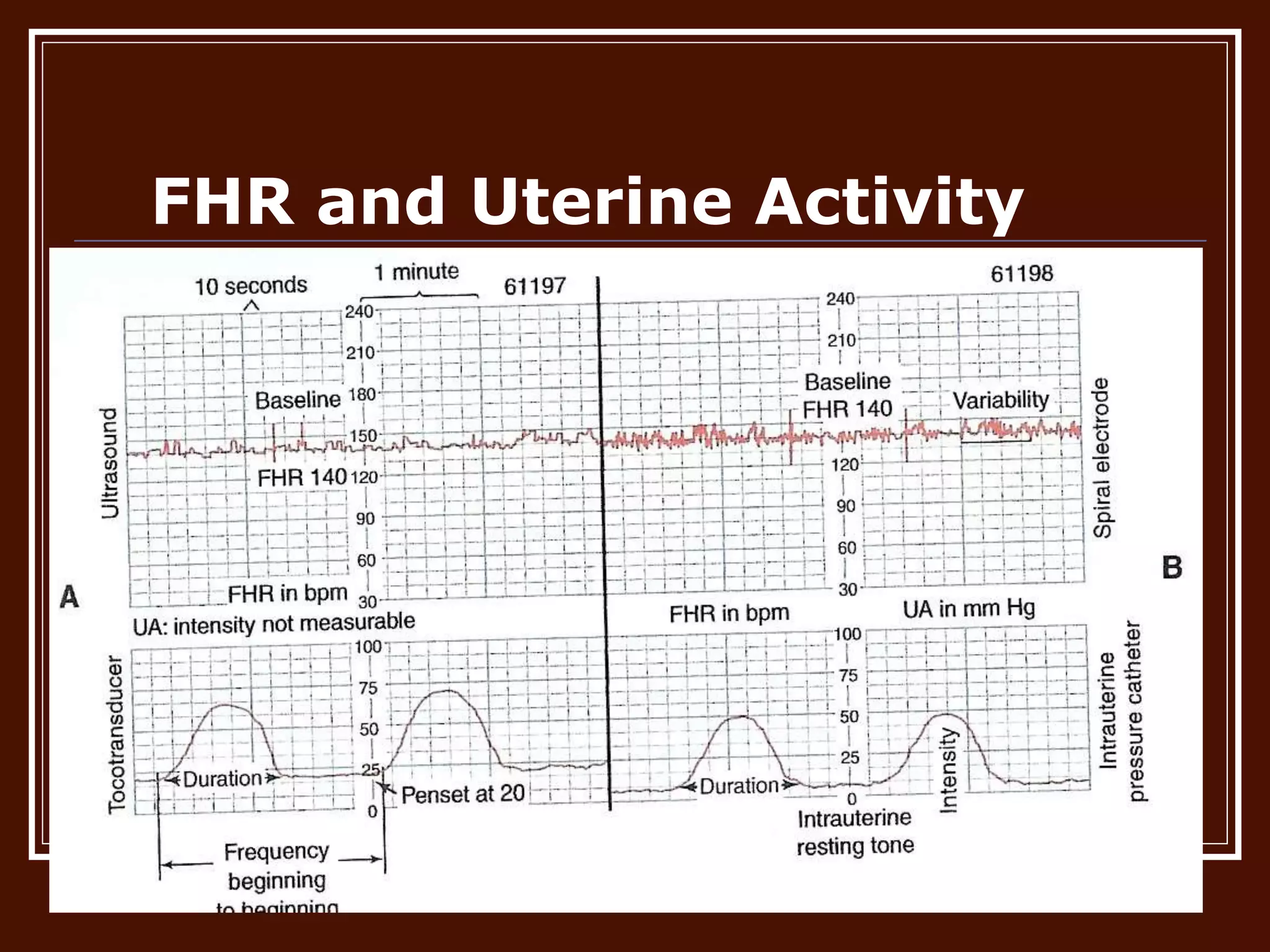
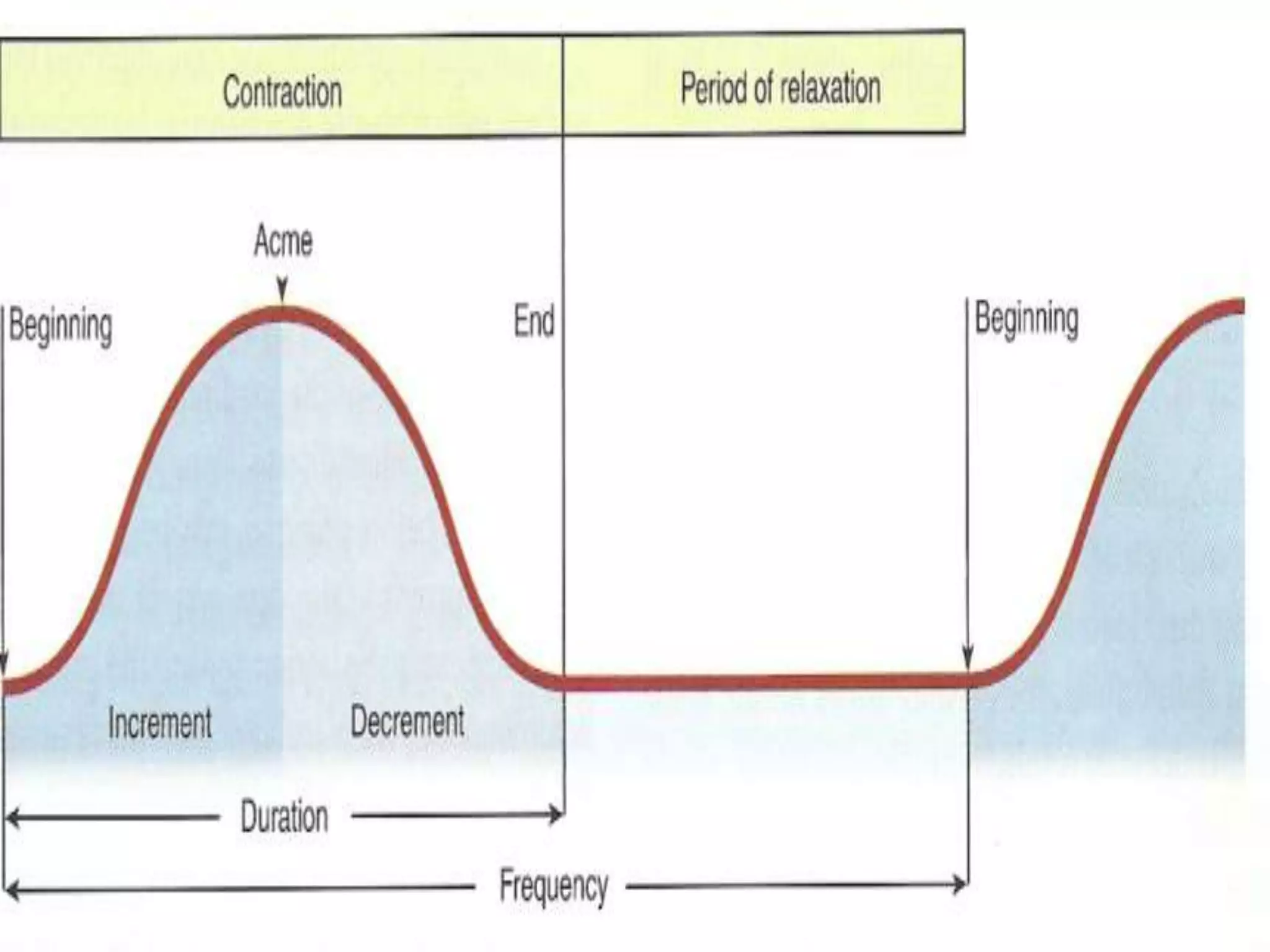
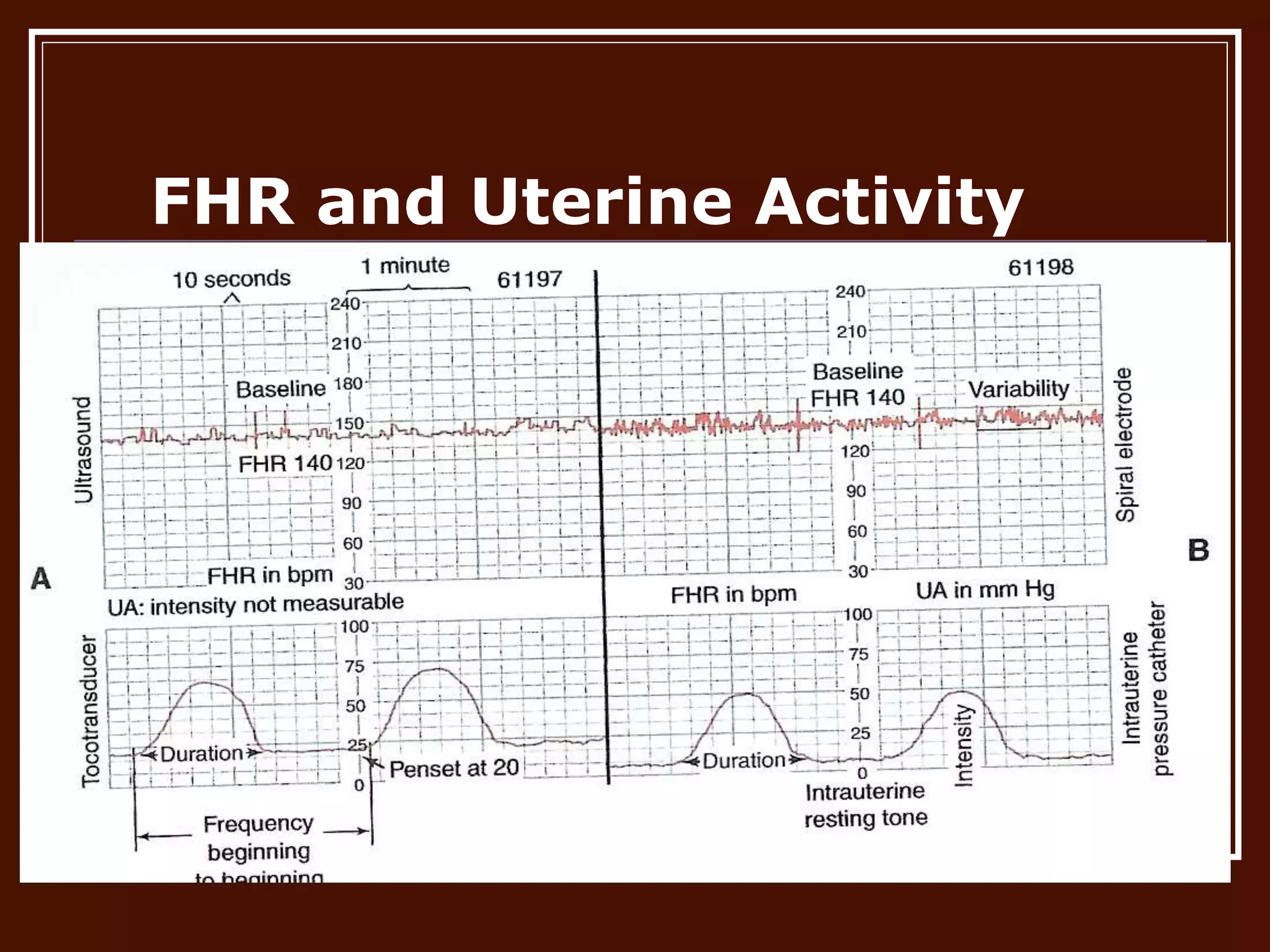
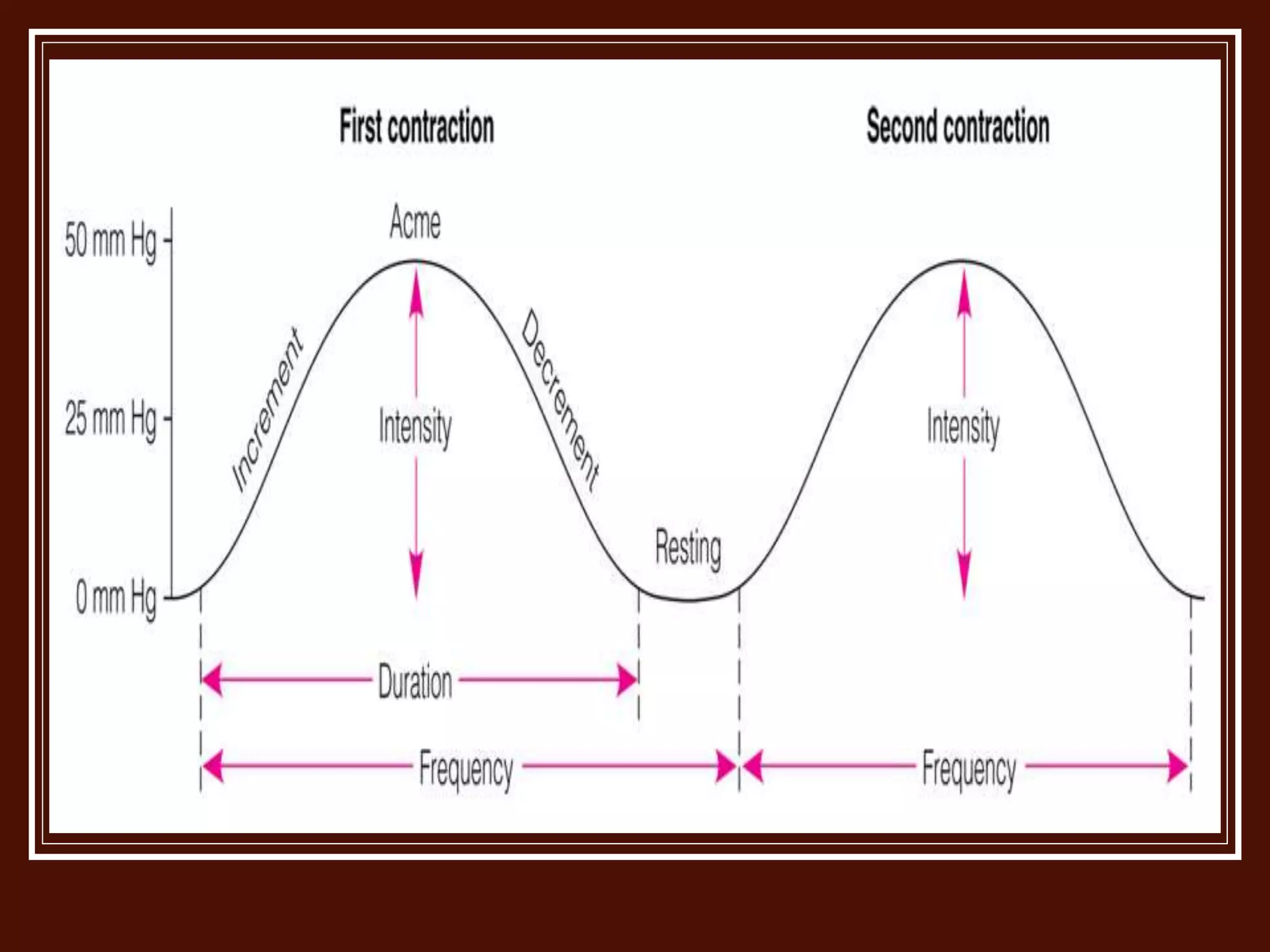
 Frequency- the amount of time between the start of one
contraction to the start of the next contraction.
 Frequency in the early stage of labour, contractions
come at the interval of 10-15min and increases to
maximum in 2nd stage of labour.
Clinically contractions are said to be good when they
come after interval of 3-5minutes and at the height of
contractions uterine wall can not be indented by fingers.
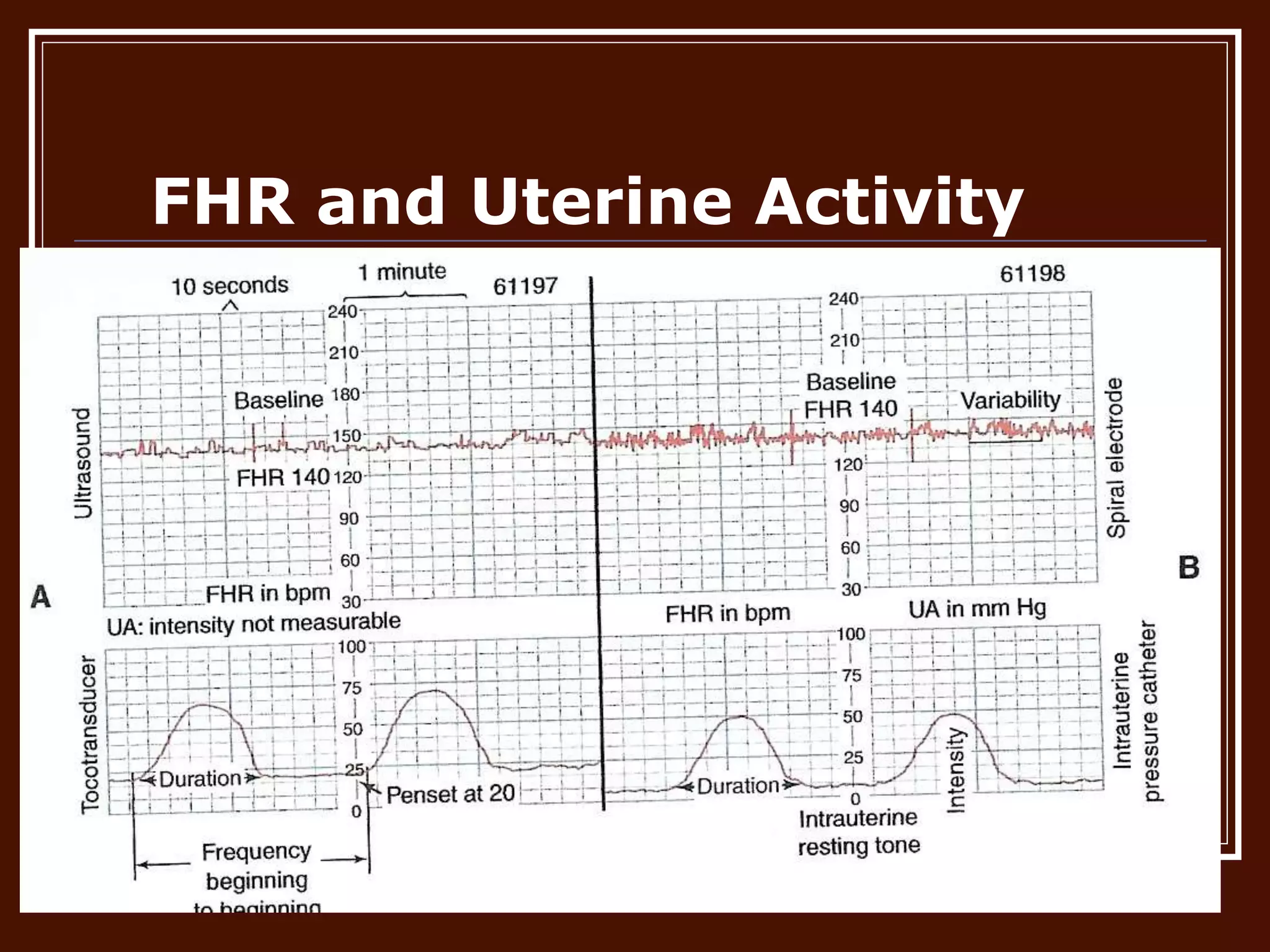
FHR and Uterine Activity
DURATION
 Duration- the amount of time from the start of a
contraction to the end of the same contraction.
 Normal labour is characterised by minimum
of three contractions that averaged >25
mmHg in 10 minutes lasting for certain
duration
<20 sec: mild,
20-40 sec: mod
> 40 sec: strong
FHR and Uterine Activity
Intensity or Amplitude
Intensity- a measure the strength a contraction
by measuring the rise in intrauterine pressure
brought about by each contraction. Measured
from baseline resting tonus
 With external monitoring, this necessitates
the use of palpation to determine relative
strength.
 With an IUPC, this is determined by assessing
actual pressures as graphed on the paper.
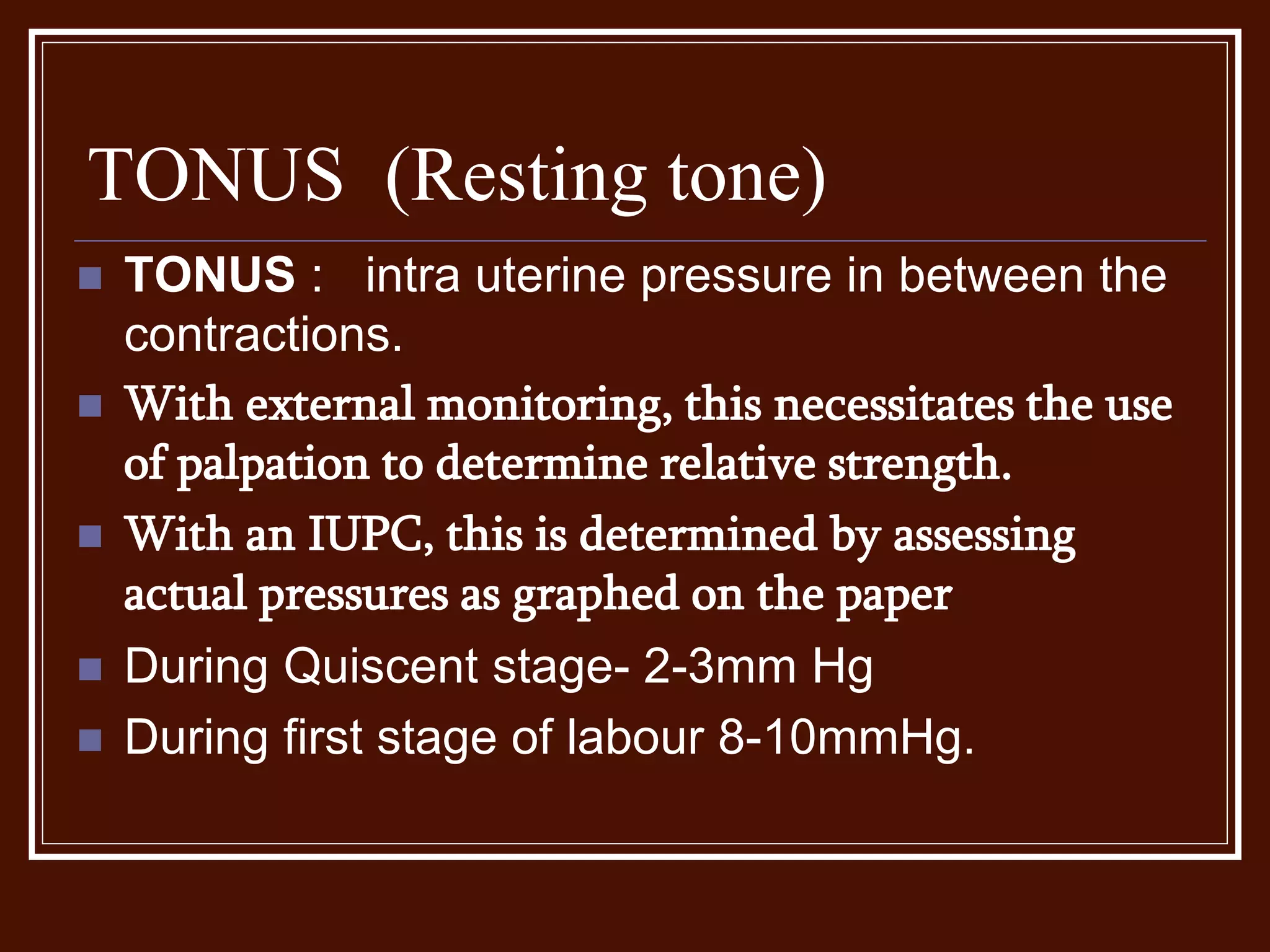
TONUS (Resting tone)
 TONUS : intra uterine pressure in between the
contractions.
 With external monitoring, this necessitates the use
of palpation to determine relative strength.
 With an IUPC, this is determined by assessing
actual pressures as graphed on the paper
 During Quiscent stage- 2-3mm Hg
 During first stage of labour 8-10mmHg.
Uterine Tone
 The lowest intrauterine pressure between
contractions is called resting tone
 Normal resting tone is 5-10 mmHg; during
labor resting tone may rise to 10-15 mmHg
 Pressure during contractions rises to ~25-100
mmHg (varies with stage)
 A resting pressure above 20 mmHg causes
decreased uterine perfusion
INTERVAL
 Interval- the amount of time between the end
of one contraction to the beginning of the
next contraction.
FHR and Uterine Activity
Uterine Activity
 Uterine activity can be quantified the number
of contractions present in a 10-minute
window, averaged over 30 minutes. Uterine
activity may be defined as:
 Normal- less than or equal to 5 contractions
in 10 minutes, averaged over a 30-minute
window
 Tachysystole more than 5 contractions in 10
minutes, averaged over a 30-minute window
Assessment of Uterine contractions
- Clinical palpation: by placing hand over
uterus
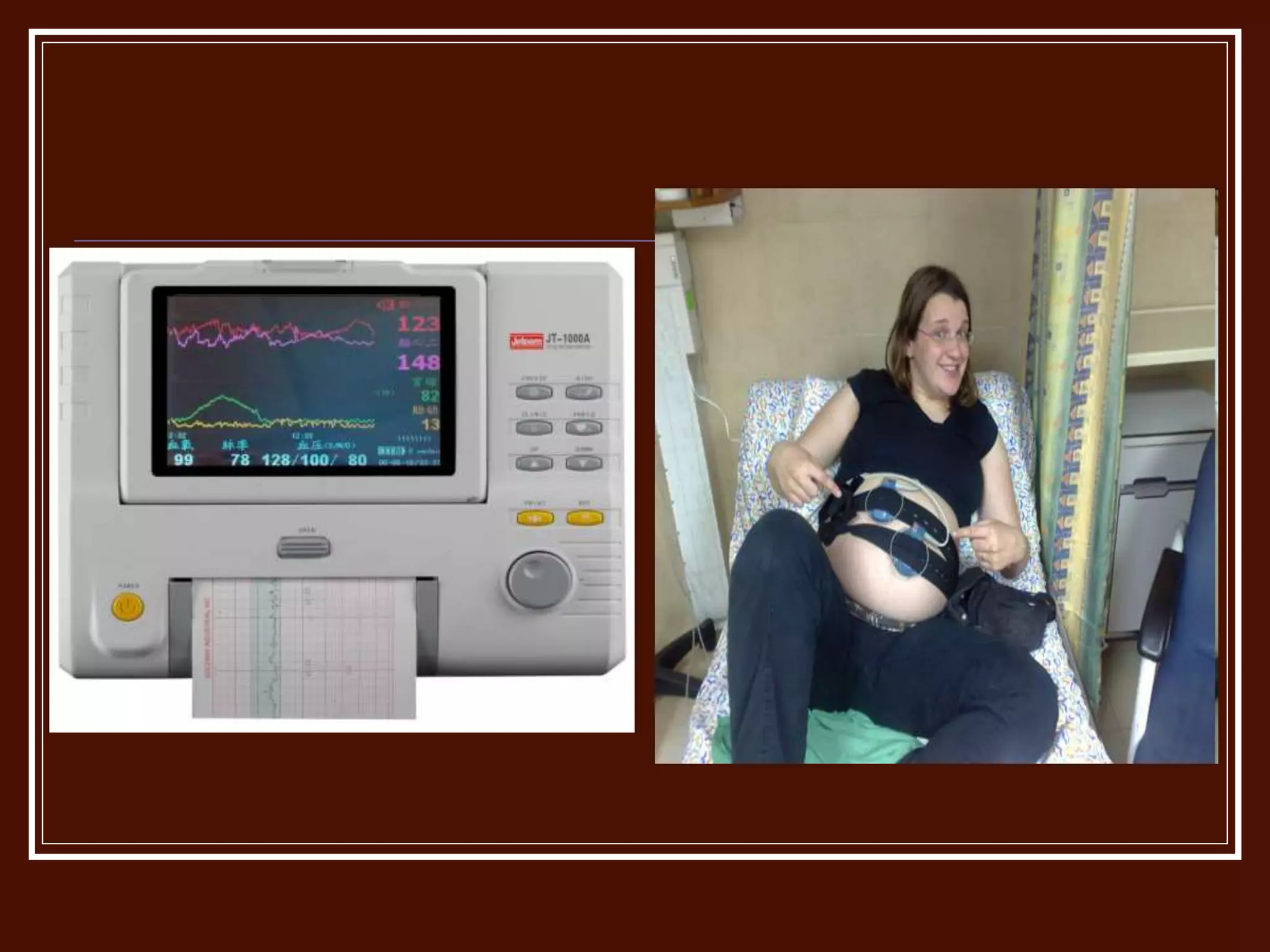
- Tocodynamometer: with external transducer
measures the duration and frequnecy but
not the stenghth.
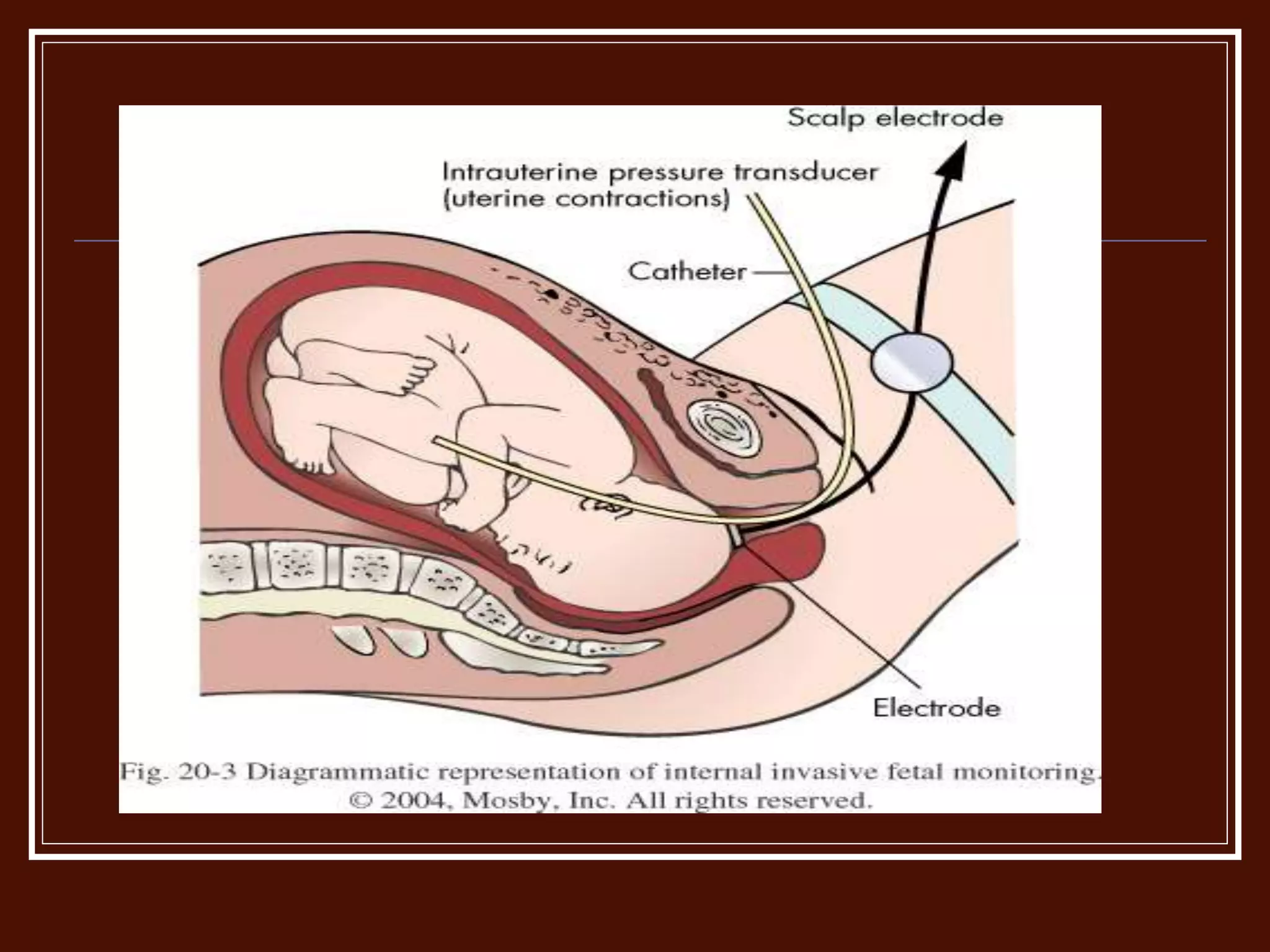
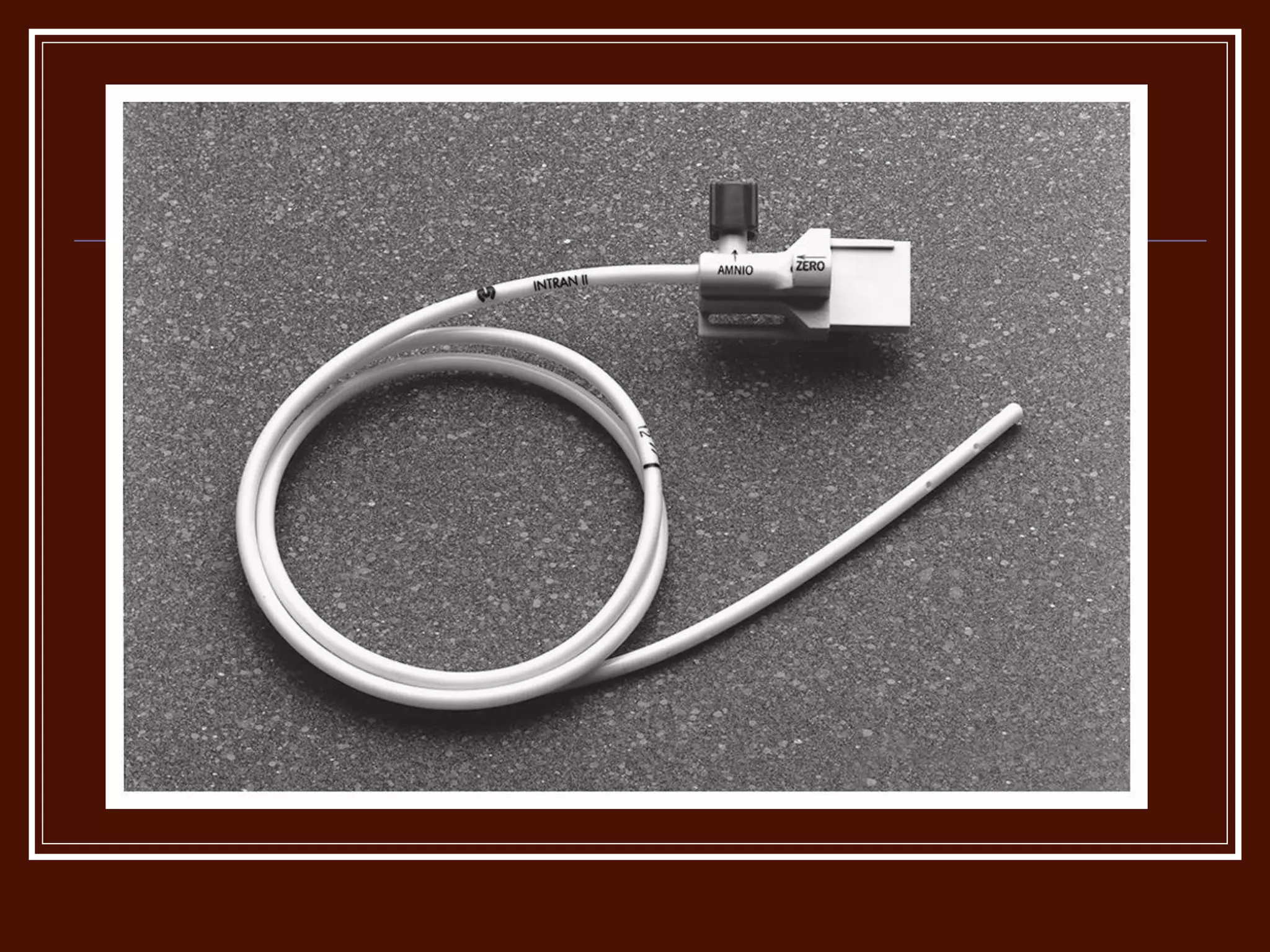
– IUPC: assess the strength of uterine
contractions can be measured by
intrauterine pressure catheter.
Uterine activity
–Montevideo unit
average intensity of uterine contraction x
frequency
-Alexandria unit
average intensity of uterine contraction in mm
of Hg x frequency / 10 min x average
duration contraction in minutes
Uterine Contractions
Uterine contraction:
 Uterine cont. has three phases:
 Increment: building up of the contraction
 Acme: peak or highest intensity
 Decrement: descent or relaxation of the
uterine muscle fibers
Uterine contraction during pregnancy
Less than 30 weeks
–frequency and strength of contraction low
i.e.<20 Montevideo units
After 30 weeks
-contractions are more frequent and may be
noticeable by patient. When painful
Classifications of AUA
□Coordinated uterine action
 Hyperfunction
 Precipitate labour: in absence of obstruction
 Pathological retraction ring: Excessive contraction and
retraction in presence of obstruction
 Hypofunction
 Hypotonic inertia (1ry and 2ry)
 Cervical dystocia (1ry and 2ry)
□Incoordinated uterine action
 Colicky uterus
 Tonic uterus
 Hyperactive lower uterine segment
 Constriction (contraction) ring
THANK YOU
 Contact me on :
 aymanshehata2008@yahoo.com
 Abuomar Obstetgyn on facebook

Normal uterine action

  • 1.
    Normal Uterine Action AymanShehata Ass.Lect. Ob/Gyn
  • 2.
    LABOUR comprising 4 stages: Firststage: from onset of labour pains till cervix is fully dilated. Second stage of labour: from complete dilatation of cervix till the delivery. Third stage of labour: placental separation &expulsion Fourth stage : first hour after delivery
  • 3.
    Following are themajor events during labour:  Gradually increasing uterine contractions  Retraction  Dilatation of cervix  Effacement of cervix  Lower uterine segment formation
  • 5.
    Duration: o primigravida =8-12 h o multigravida = 6-8 h Phases of the first stage:  Latent phase: started when the cervix dilatated slowly and reached to about 3cm. A. in primigravida = 8h B. in multigravida = 4h  - Active phase: rapid dilatation of the cervix to reach 10cm A. in primigravda = 4h B. in multigravida =2h
  • 6.
    UTERINE CONTRACTIONS  FUNDALDOMINANCE  POLARITY  COORDINATION  EFFECTIVENESS  FREQUENCY  DURATION  INTENSITY  INTERVAL  RESTING TONE(TONUS)
  • 7.
    Fundal dominance  Fundaldominance The activity of myometrium is greatest & longest at the fundus, shifting &diminishing towards midline and downwards ( towards cervix)
  • 8.
     Pace maker Two one at each cornu from where wave of contraction spread downwards.  Their activities must be coordinated  Propagation of wave must also be coordinated Sometimes there is emergence of multiple pace maker foci leading to less efficient contractions and hence causing primary dysfunction labour
  • 9.
    Polarity of uterus When upper segment contract the lower segment relaxes.
  • 10.
     Lack offundal dominance and the reverse polarity leads to spastic lower uterine segment. Here pacemaker does not work in rhythm.
  • 12.
    Coordination  Wave beginsearlier in some part than other but the contraction attains maximum in the different parts of uterus at the same time.  At peak of contraction entire uterus acts as a single unit.  Relaxation Starts simultaneously in all parts of uterus.  For normal uterine action coordination is required between both halves of uterus as well as between upper and lower segments
  • 13.
    UTERINE CONTRACTIONS  FUNDALDOMINANCE  POLARITY  COORDINATION  EFFECTIVNESS  FREQUENCY  DURATION  INTENSITY  INTERVAL  RESTING TONE(TONUS)
  • 14.
    EFFECTIVNESS  The effectiveuterine contractions results progressive cx dilatation & descent of head within a given time. Any deviation of normal pattern of uterine contraction that affects the course of labour is known as abnormal uterine action
  • 15.
    FREQUENCY  Frequency- theamount of time between the start of one contraction to the start of the next contraction.  Frequency in the early stage of labour, contractions come at the interval of 10-15min and increases to maximum in 2nd stage of labour. Clinically contractions are said to be good when they come after interval of 3-5minutes and at the height of contractions uterine wall can not be indented by fingers.
  • 16.
  • 17.
    DURATION  Duration- theamount of time from the start of a contraction to the end of the same contraction.  Normal labour is characterised by minimum of three contractions that averaged >25 mmHg in 10 minutes lasting for certain duration <20 sec: mild, 20-40 sec: mod > 40 sec: strong
  • 18.
  • 19.
    Intensity or Amplitude Intensity-a measure the strength a contraction by measuring the rise in intrauterine pressure brought about by each contraction. Measured from baseline resting tonus  With external monitoring, this necessitates the use of palpation to determine relative strength.  With an IUPC, this is determined by assessing actual pressures as graphed on the paper.
  • 24.
    TONUS (Resting tone) TONUS : intra uterine pressure in between the contractions.  With external monitoring, this necessitates the use of palpation to determine relative strength.  With an IUPC, this is determined by assessing actual pressures as graphed on the paper  During Quiscent stage- 2-3mm Hg  During first stage of labour 8-10mmHg.
  • 26.
    Uterine Tone  Thelowest intrauterine pressure between contractions is called resting tone  Normal resting tone is 5-10 mmHg; during labor resting tone may rise to 10-15 mmHg  Pressure during contractions rises to ~25-100 mmHg (varies with stage)  A resting pressure above 20 mmHg causes decreased uterine perfusion
  • 27.
    INTERVAL  Interval- theamount of time between the end of one contraction to the beginning of the next contraction.
  • 28.
  • 29.
    Uterine Activity  Uterineactivity can be quantified the number of contractions present in a 10-minute window, averaged over 30 minutes. Uterine activity may be defined as:  Normal- less than or equal to 5 contractions in 10 minutes, averaged over a 30-minute window  Tachysystole more than 5 contractions in 10 minutes, averaged over a 30-minute window
  • 30.
    Assessment of Uterinecontractions - Clinical palpation: by placing hand over uterus - Tocodynamometer: with external transducer measures the duration and frequnecy but not the stenghth. – IUPC: assess the strength of uterine contractions can be measured by intrauterine pressure catheter.
  • 31.
    Uterine activity –Montevideo unit averageintensity of uterine contraction x frequency -Alexandria unit average intensity of uterine contraction in mm of Hg x frequency / 10 min x average duration contraction in minutes
  • 32.
  • 33.
    Uterine contraction:  Uterinecont. has three phases:  Increment: building up of the contraction  Acme: peak or highest intensity  Decrement: descent or relaxation of the uterine muscle fibers
  • 35.
    Uterine contraction duringpregnancy Less than 30 weeks –frequency and strength of contraction low i.e.<20 Montevideo units After 30 weeks -contractions are more frequent and may be noticeable by patient. When painful
  • 36.
    Classifications of AUA □Coordinateduterine action  Hyperfunction  Precipitate labour: in absence of obstruction  Pathological retraction ring: Excessive contraction and retraction in presence of obstruction  Hypofunction  Hypotonic inertia (1ry and 2ry)  Cervical dystocia (1ry and 2ry) □Incoordinated uterine action  Colicky uterus  Tonic uterus  Hyperactive lower uterine segment  Constriction (contraction) ring
  • 37.
    THANK YOU  Contactme on :  aymanshehata2008@yahoo.com  Abuomar Obstetgyn on facebook

Editor's Notes