Power System Protection
OUTLINE

 System protection-Definition
 Need for the protection
 Elements of the protection system
What is System protection?

 System protection is the art and science of detecting
 problems with power system components and
 isolating these components.
Need for the protection

 The power system must maintain acceptable
    operation 24 hours a day
   Voltage and frequency must stay within certain
    limits
   Protect the public
   Improve system stability
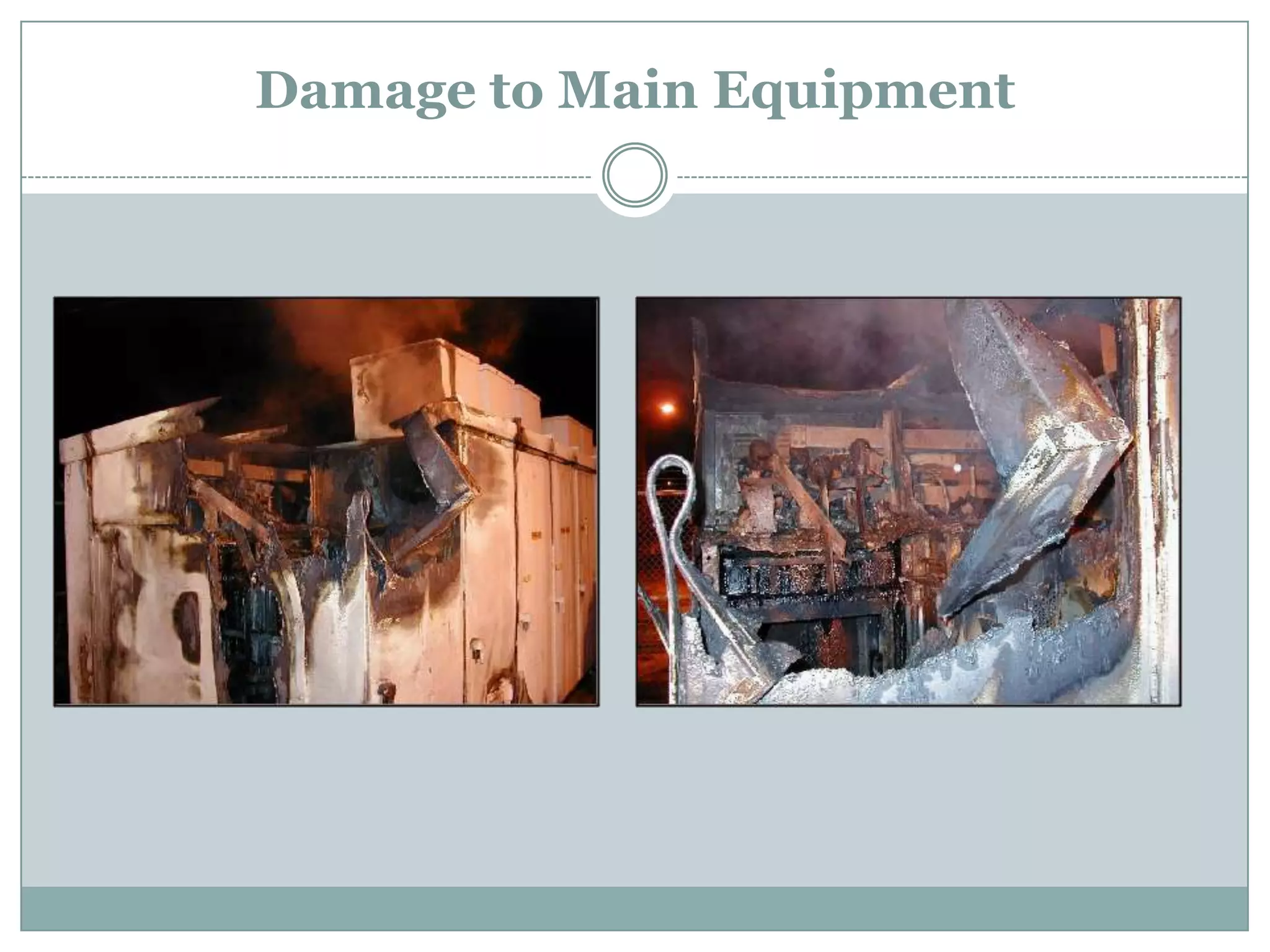
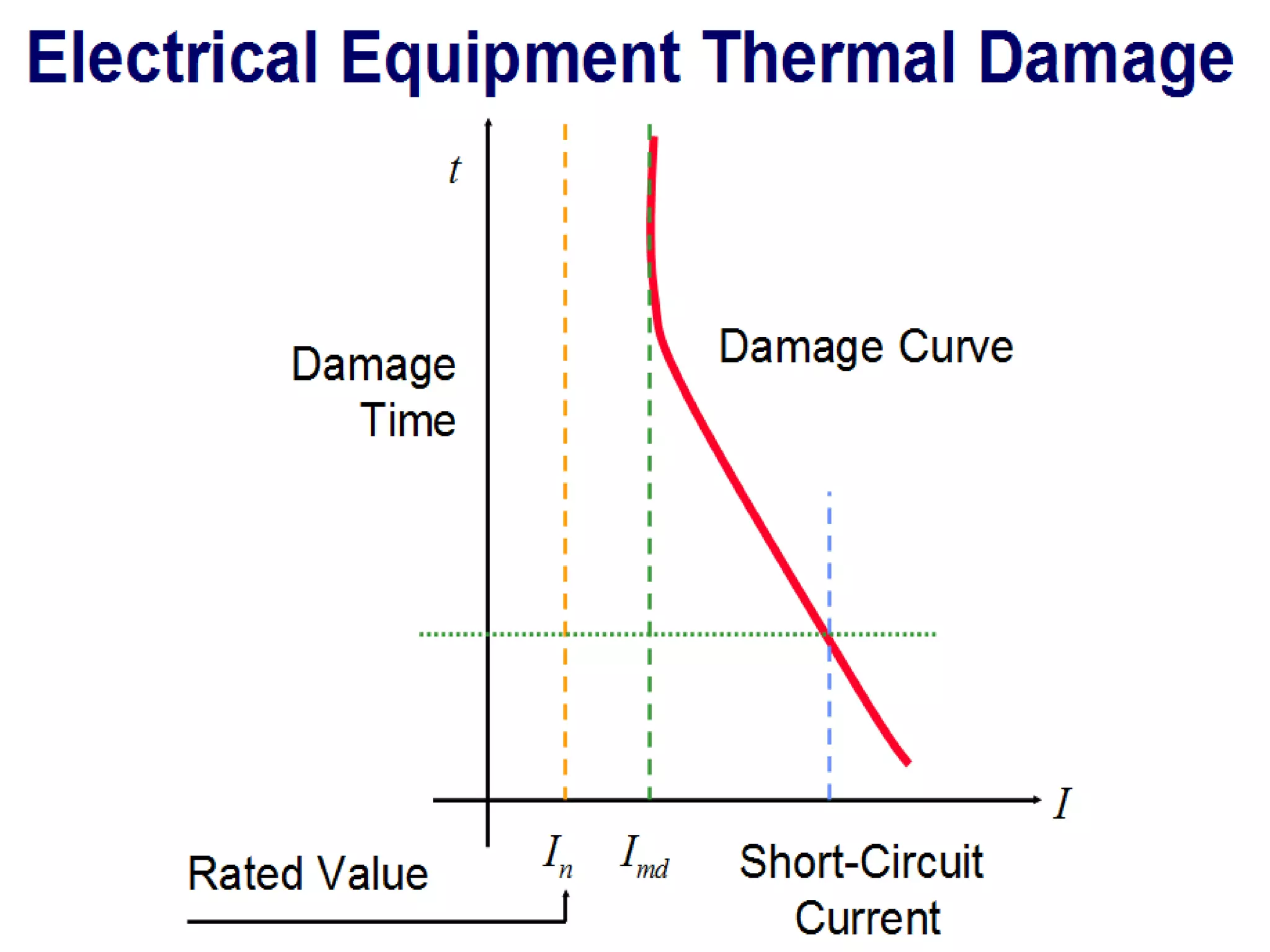
   Minimize damage to equipment
   Protect against overloads
Damage to Main Equipment
COMPONENTS USED FOR
    PROTECTION
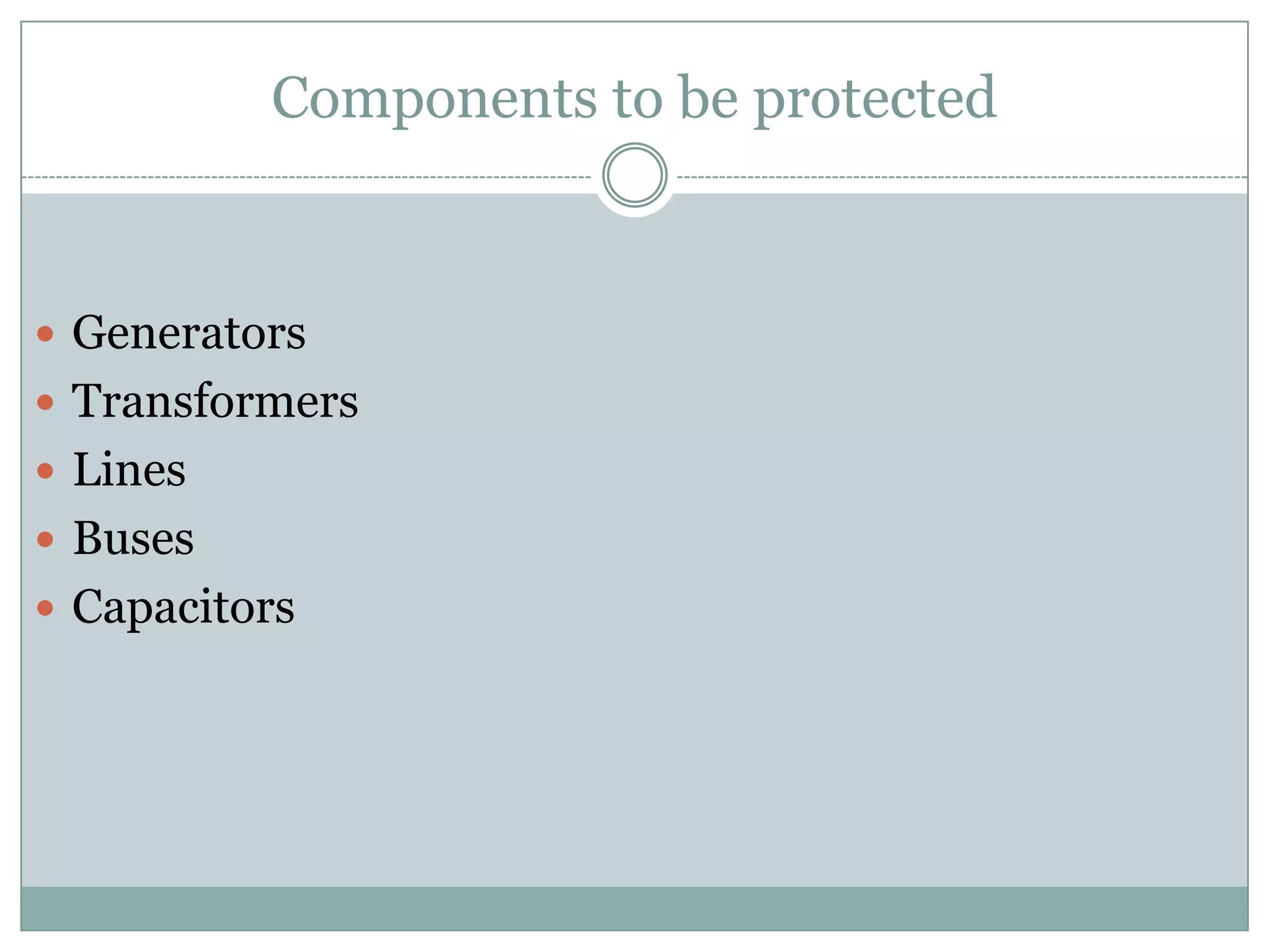
Components to be protected


 Generators
 Transformers
 Lines
 Buses
 Capacitors
GENERATOR PROTECTION
Generator Protection


 What can go wrong?
Stator Winding Problems
1. Winding-winding short
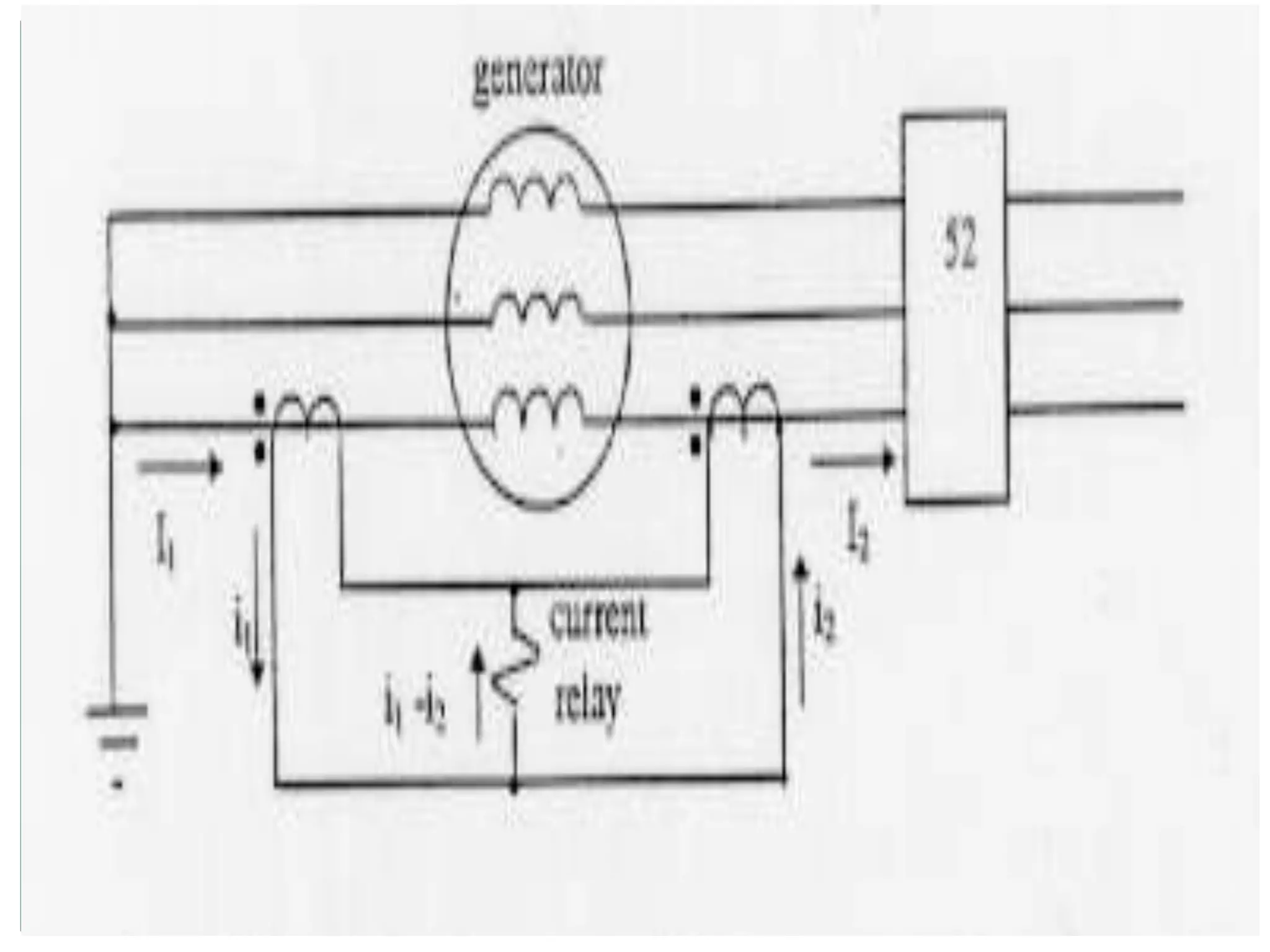
 How Do We Protect the Stator?
 A. Differential Protection (what goes in must come
  out)
 1. Detects phase-phase faults
TRANSFORMER
    PROTECTION
Transformer Protection


 What can go wrong?
● Winding-to-winding faults
● Winding-to-ground faults
● Bushing faults
Transformer Protection


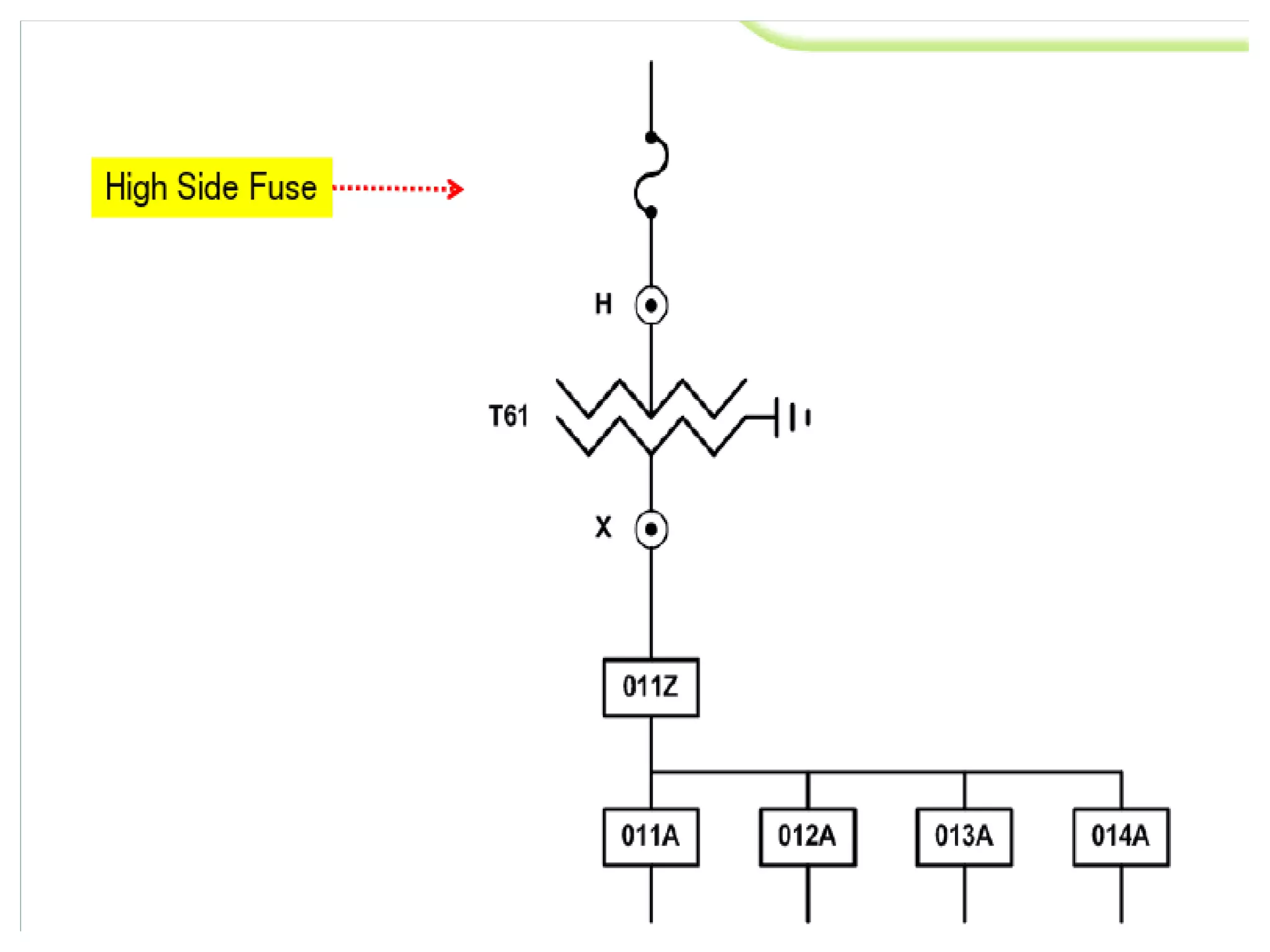
 Protection Methods:
 Fuse
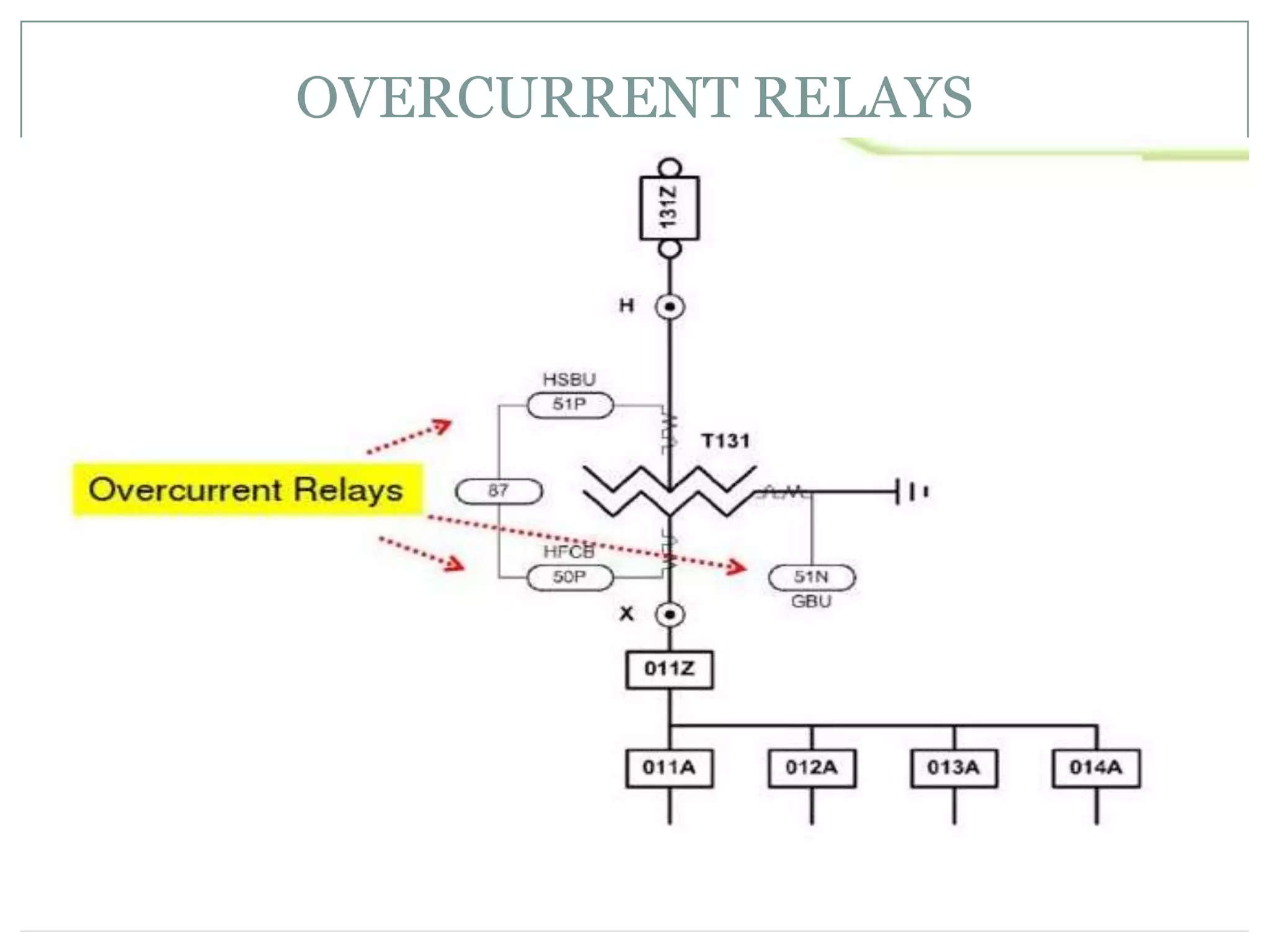
 Overcurrent
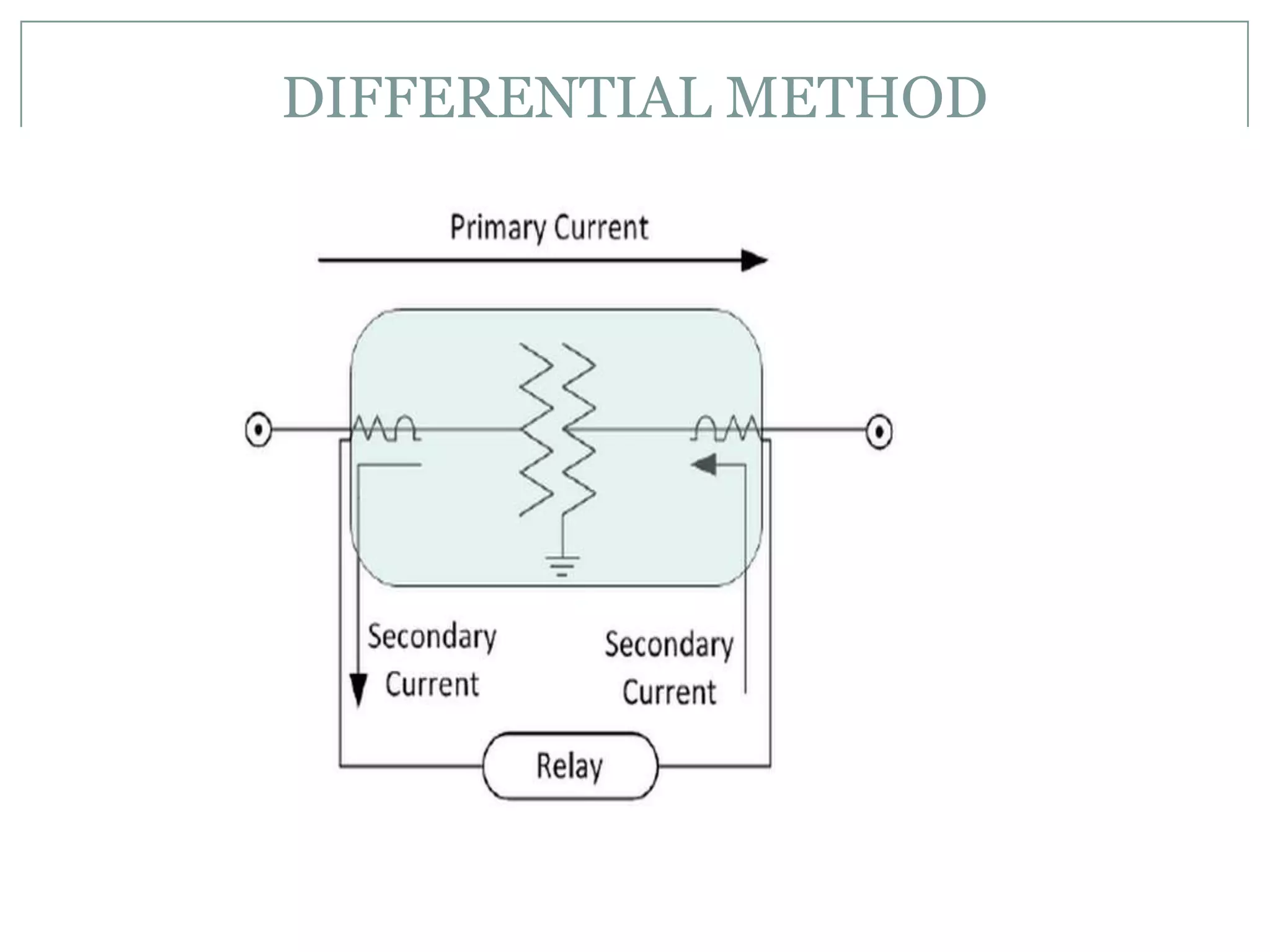
 Differential
FUSE
OVERCURRENT RELAYS
DIFFERENTIAL METHOD
TRANSMISSION LINE
    PROTECTION
TRANSMISSION LINE PROTECTION

What Can Go Wrong?
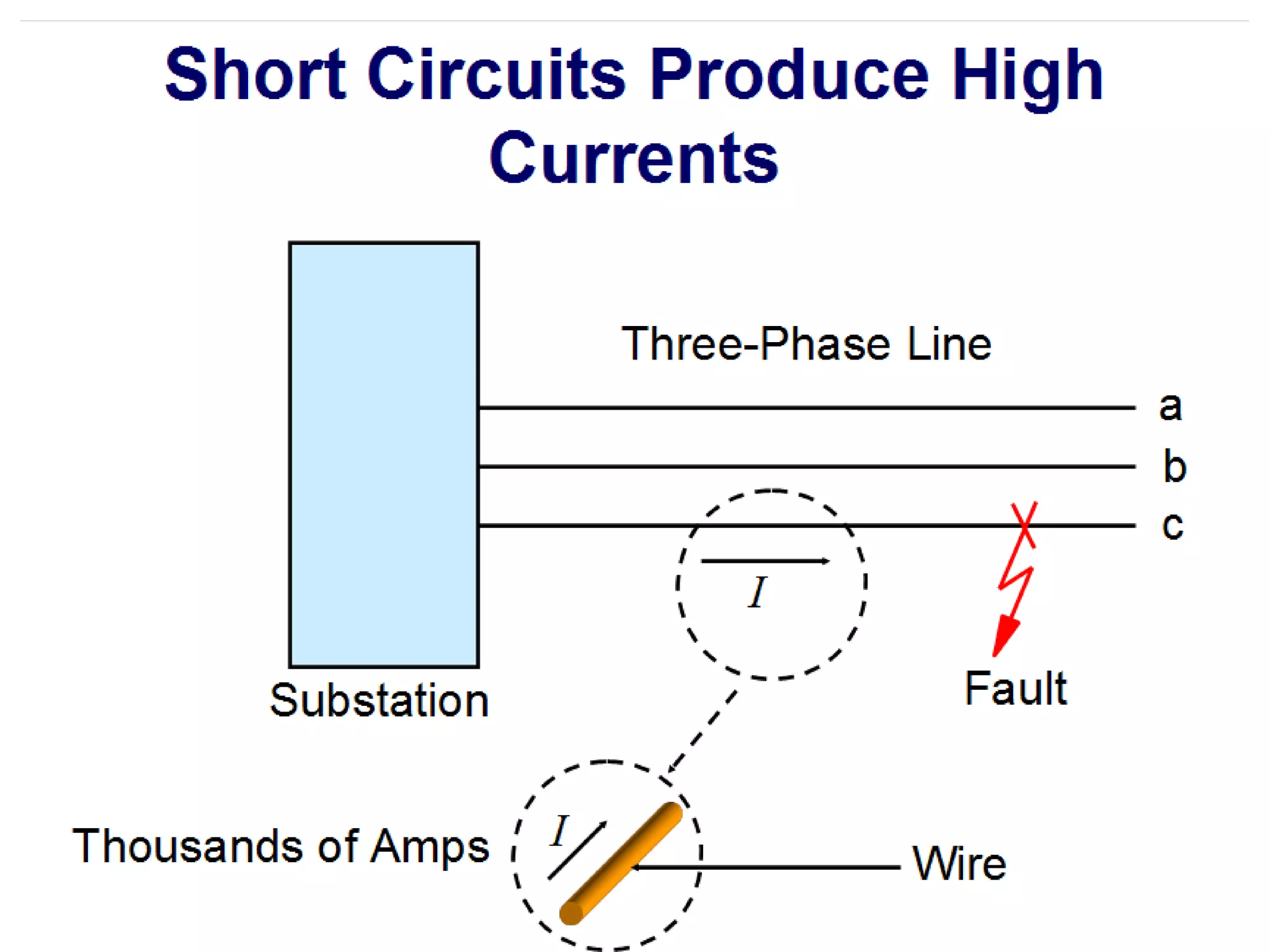
 FAULTS (Short Circuits)


SOME CAUSES OF FAULTS:
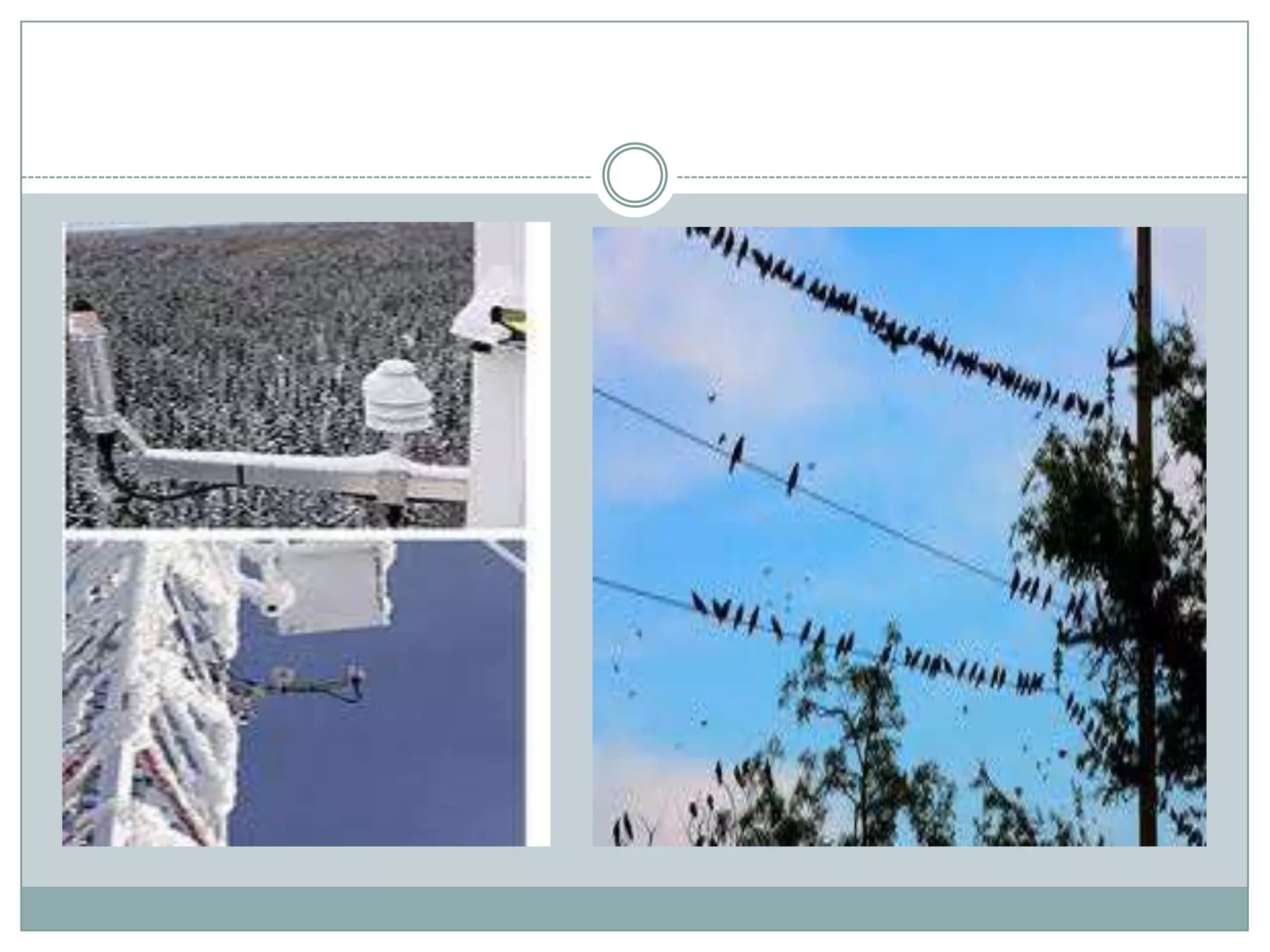
 Trees
 Lightning
 Animals (birds, squirrels, snakes)
 Weather (wind, snow, ice)
 Natural Disasters (earthquakes, floods)
 Faulty equipment (switches, insulators, clamps, etc.)
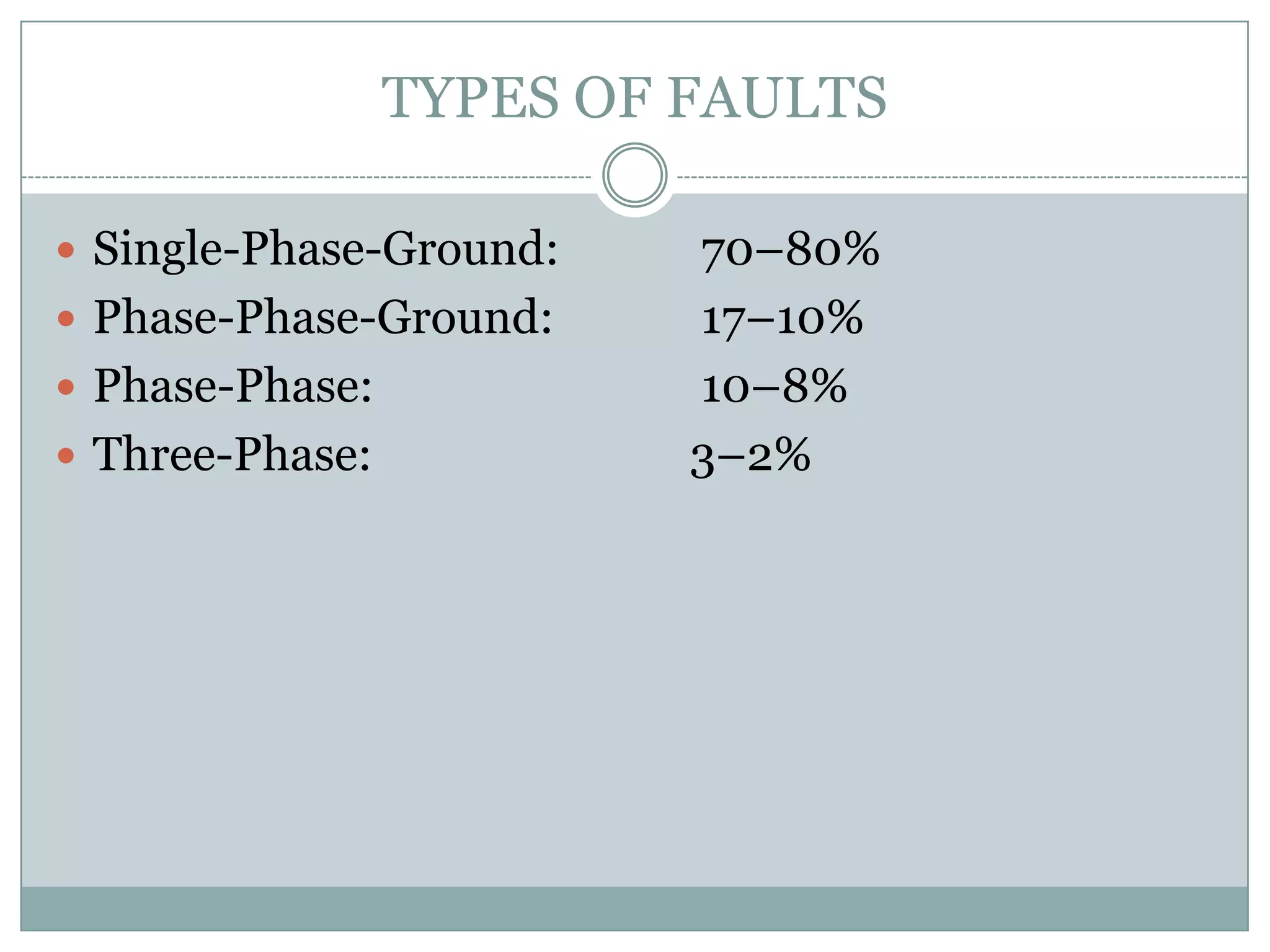
TYPES OF FAULTS

 Single-Phase-Ground:    70–80%
 Phase-Phase-Ground:     17–10%
 Phase-Phase:            10–8%
 Three-Phase:            3–2%
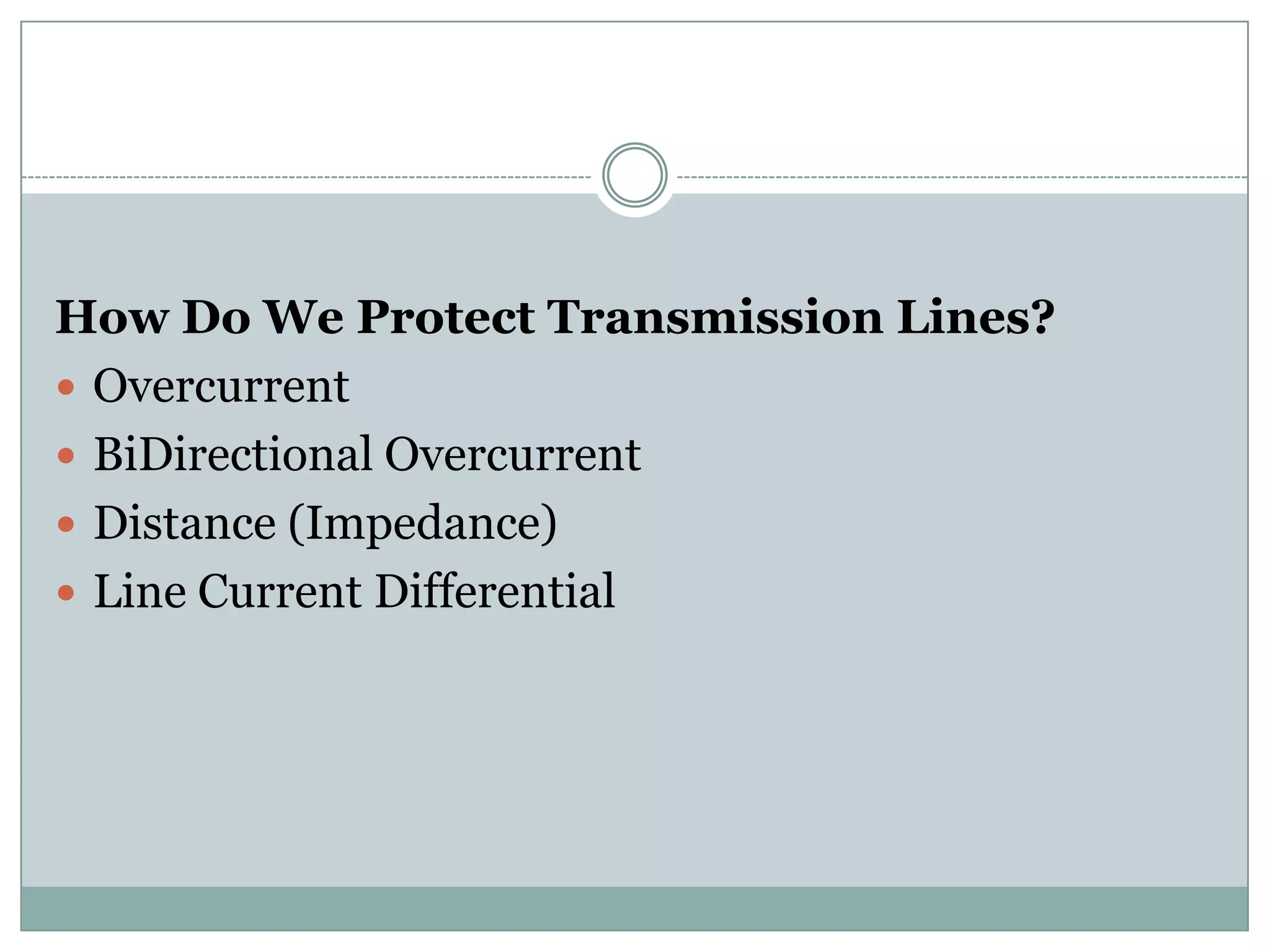
How Do We Protect Transmission Lines?
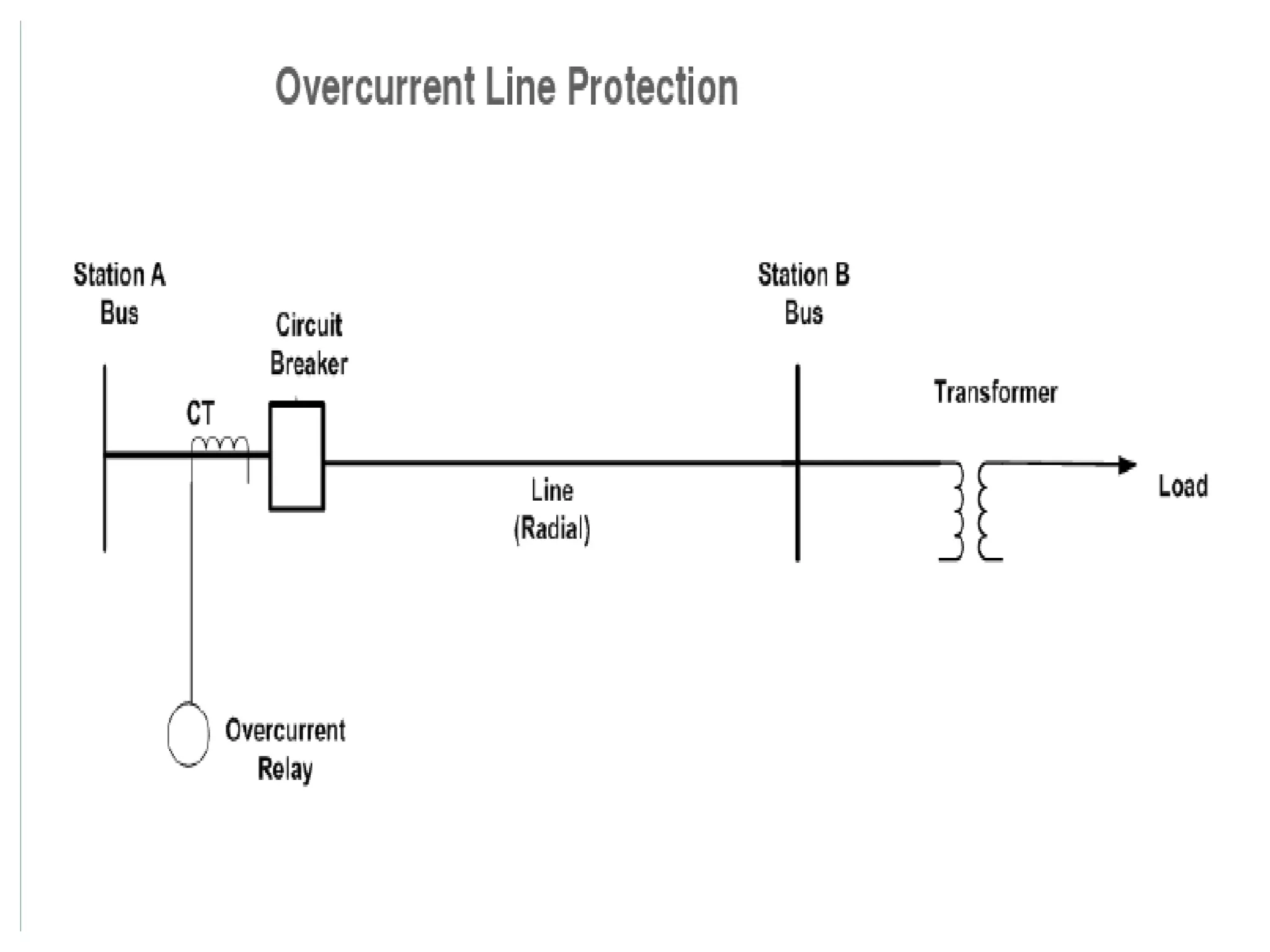
 Overcurrent
 BiDirectional Overcurrent
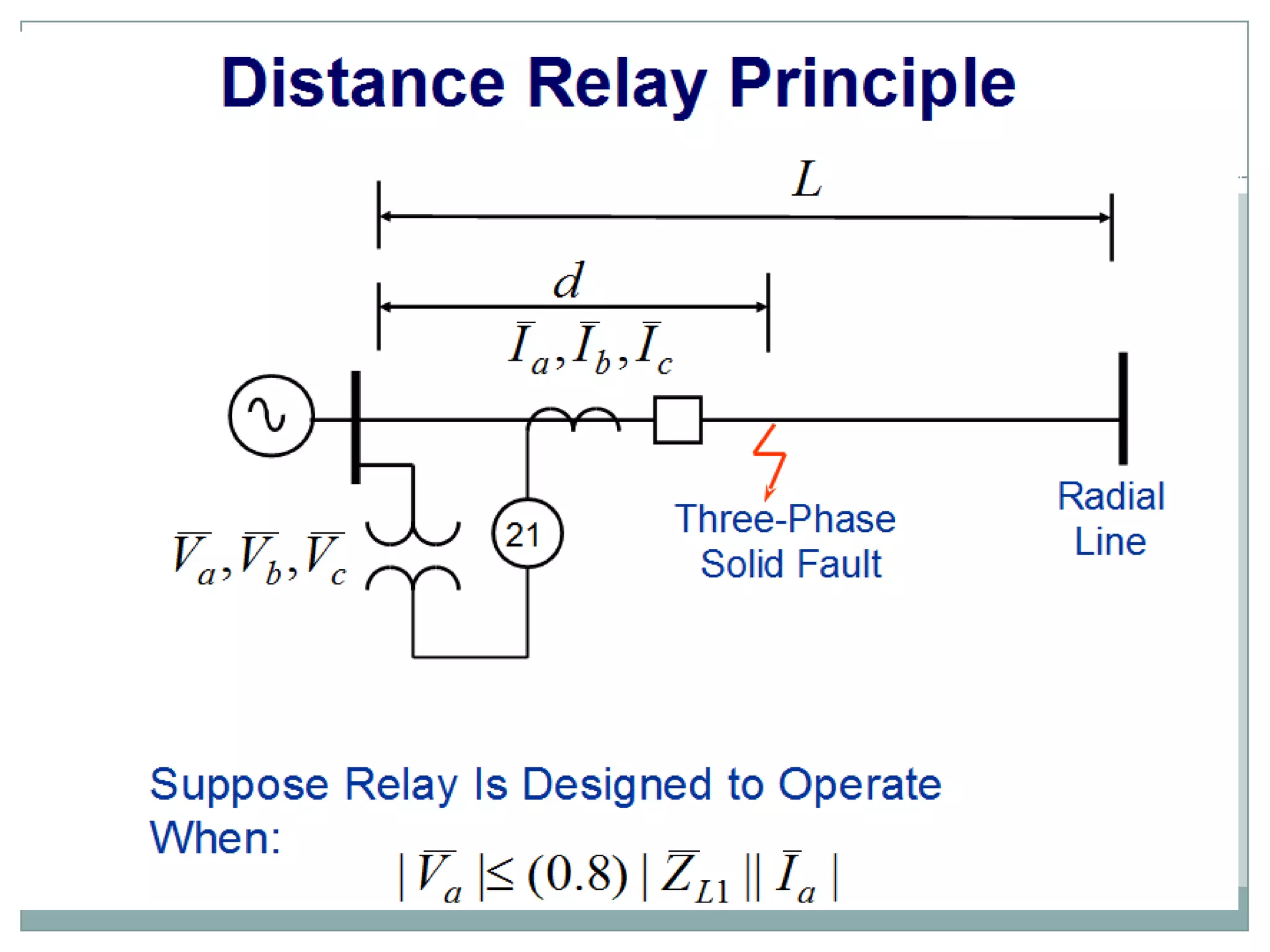
 Distance (Impedance)
 Line Current Differential
OVERCURRET PROTECTION
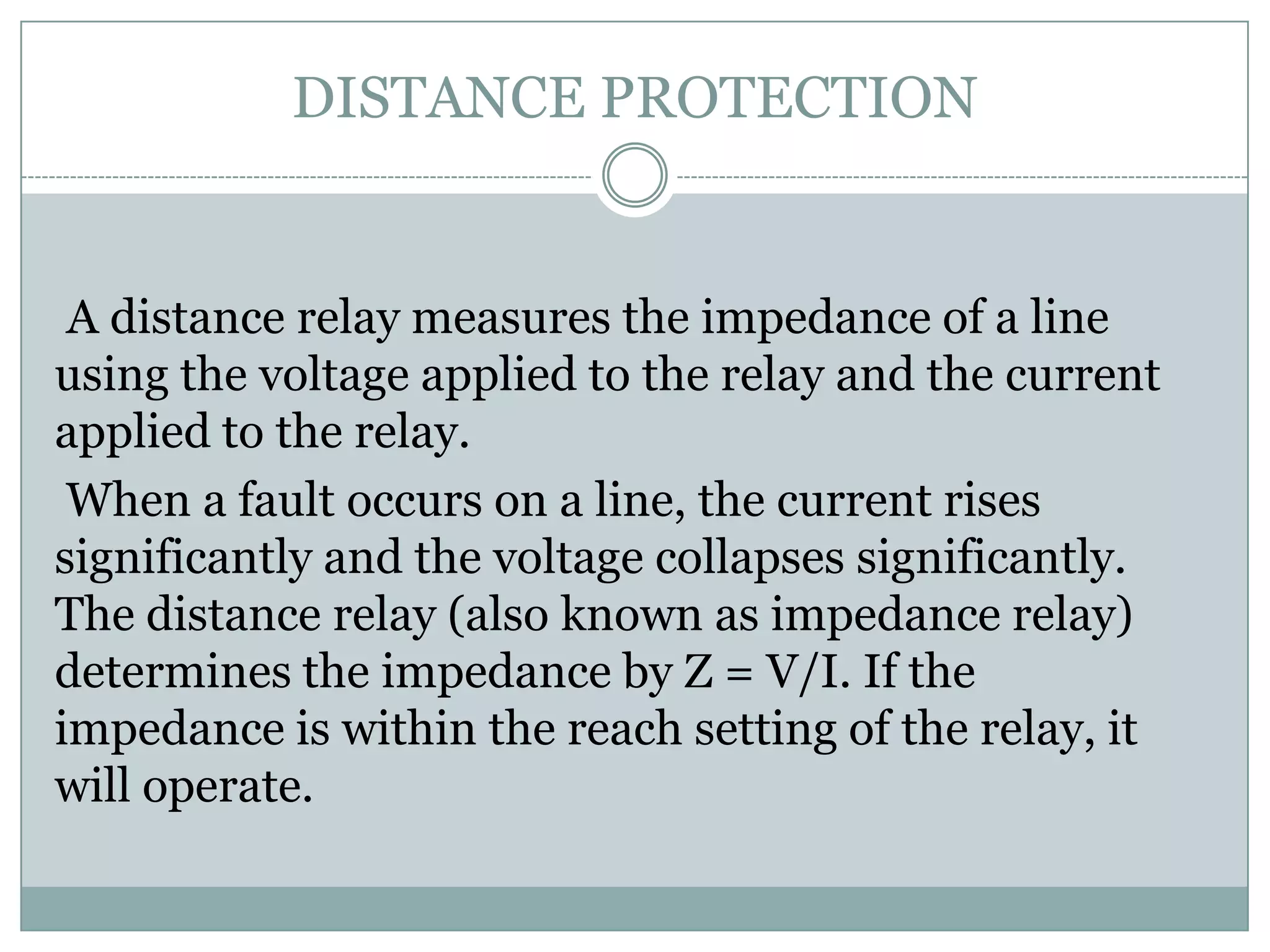
DISTANCE PROTECTION


 A distance relay measures the impedance of a line
using the voltage applied to the relay and the current
applied to the relay.
 When a fault occurs on a line, the current rises
significantly and the voltage collapses significantly.
The distance relay (also known as impedance relay)
determines the impedance by Z = V/I. If the
impedance is within the reach setting of the relay, it
will operate.
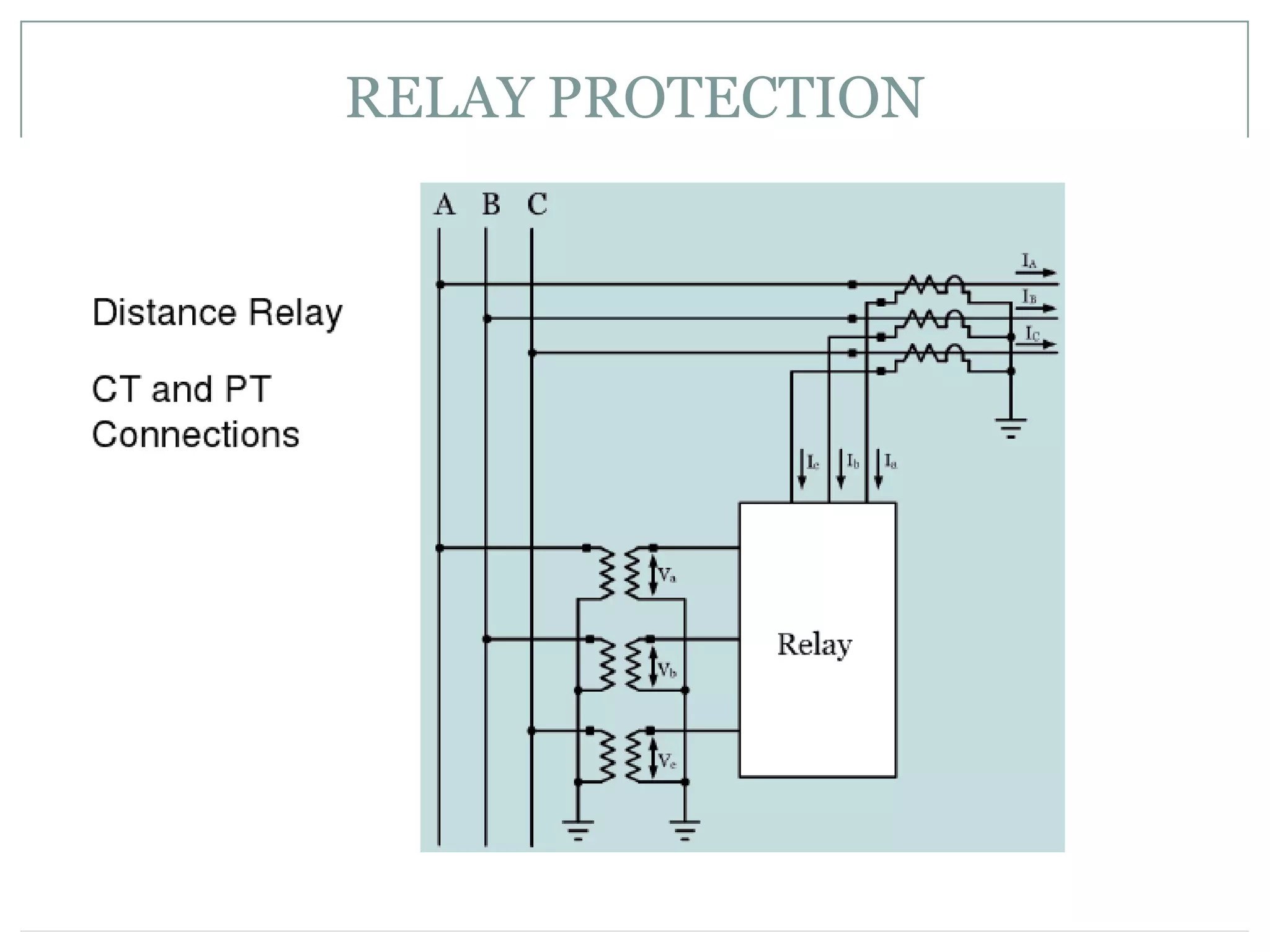
RELAY PROTECTION
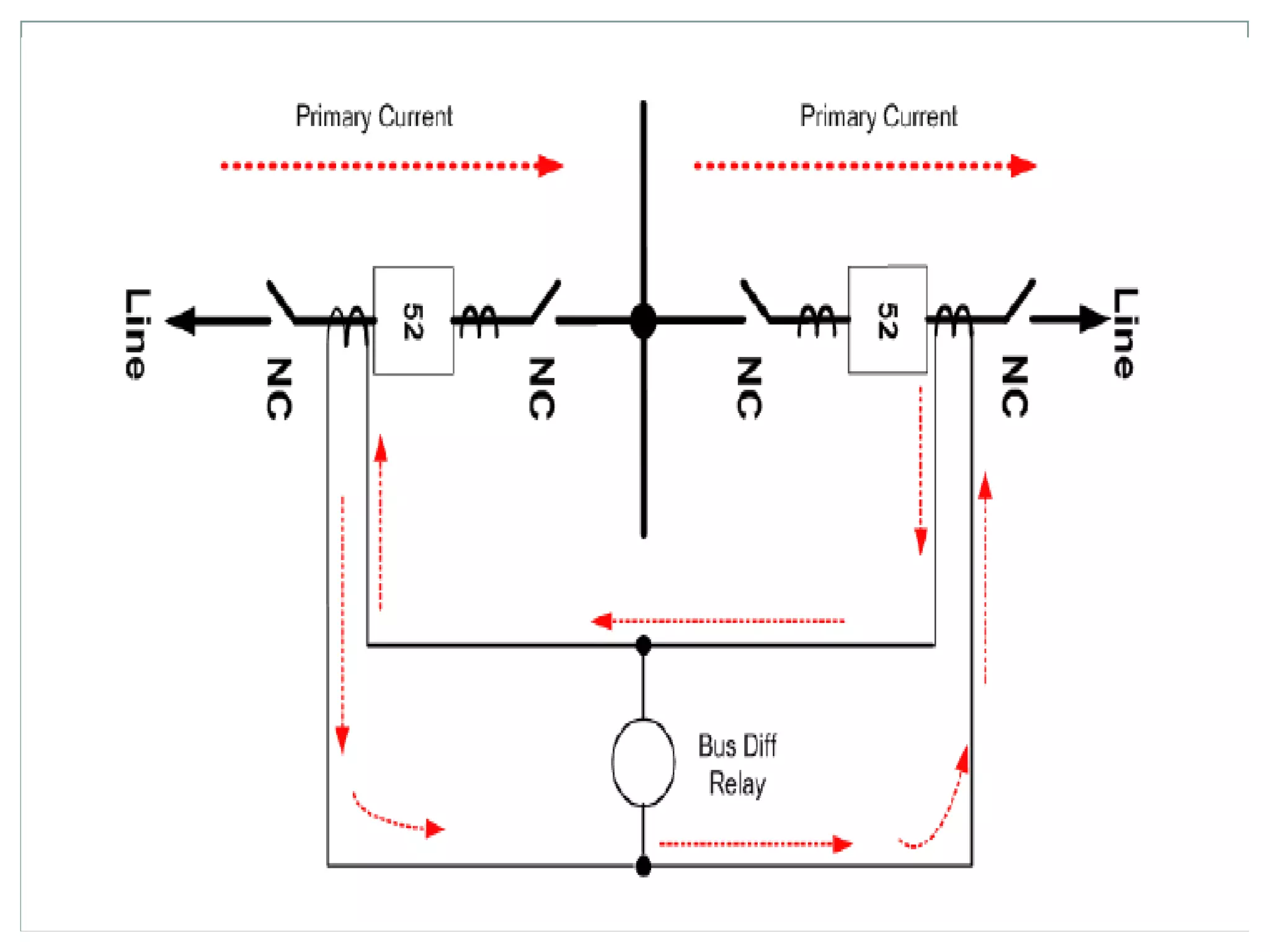
BUS PROTECTION


 Bus Differential:
 Current into bus must equal current out of bus
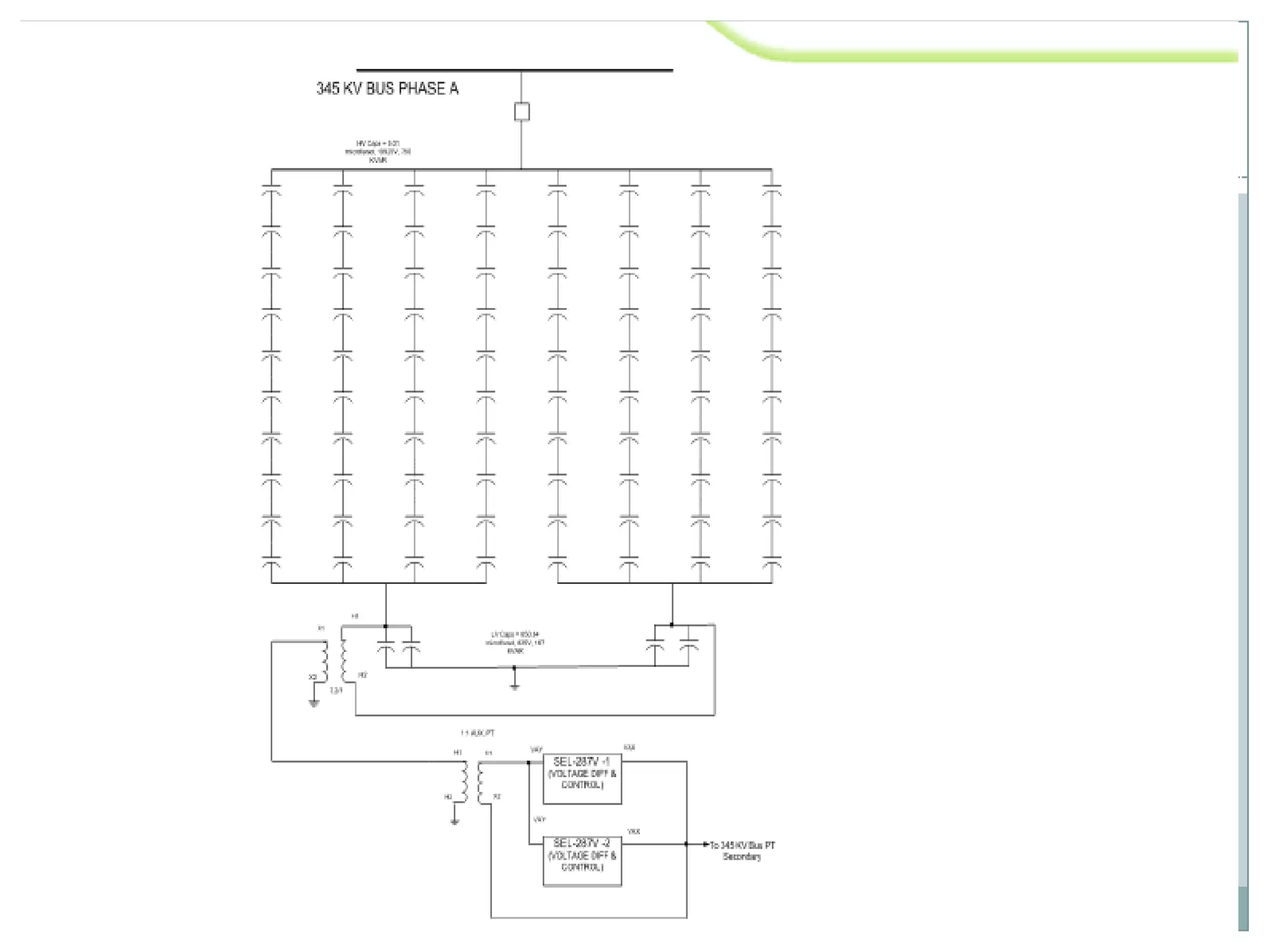
Capacitor Protection


 Purpose of capacitors: Shunt capacitors raise the
 voltage on a bus or line to a higher level, thus helping
 keep the voltage at desired level Series capacitors
 cancel out the inductive reactance of a line, thus
 making the line appear shorter increasing load flow
 on the line.
Power system protection

Power system protection

  • 1.
  • 2.
    OUTLINE  System protection-Definition Need for the protection  Elements of the protection system
  • 3.
    What is Systemprotection?  System protection is the art and science of detecting problems with power system components and isolating these components.
  • 4.
    Need for theprotection  The power system must maintain acceptable operation 24 hours a day  Voltage and frequency must stay within certain limits  Protect the public  Improve system stability  Minimize damage to equipment  Protect against overloads
  • 5.
    Damage to MainEquipment
  • 7.
  • 12.
    Components to beprotected  Generators  Transformers  Lines  Buses  Capacitors
  • 13.
  • 14.
    Generator Protection  Whatcan go wrong? Stator Winding Problems 1. Winding-winding short
  • 15.
     How DoWe Protect the Stator?  A. Differential Protection (what goes in must come out)  1. Detects phase-phase faults
  • 17.
    TRANSFORMER PROTECTION
  • 18.
    Transformer Protection  Whatcan go wrong? ● Winding-to-winding faults ● Winding-to-ground faults ● Bushing faults
  • 19.
    Transformer Protection  ProtectionMethods:  Fuse  Overcurrent  Differential
  • 20.
  • 21.
  • 22.
  • 23.
  • 24.
    TRANSMISSION LINE PROTECTION WhatCan Go Wrong?  FAULTS (Short Circuits) SOME CAUSES OF FAULTS:  Trees  Lightning  Animals (birds, squirrels, snakes)  Weather (wind, snow, ice)  Natural Disasters (earthquakes, floods)  Faulty equipment (switches, insulators, clamps, etc.)
  • 26.
    TYPES OF FAULTS Single-Phase-Ground: 70–80%  Phase-Phase-Ground: 17–10%  Phase-Phase: 10–8%  Three-Phase: 3–2%
  • 28.
    How Do WeProtect Transmission Lines?  Overcurrent  BiDirectional Overcurrent  Distance (Impedance)  Line Current Differential
  • 29.
  • 30.
    DISTANCE PROTECTION Adistance relay measures the impedance of a line using the voltage applied to the relay and the current applied to the relay. When a fault occurs on a line, the current rises significantly and the voltage collapses significantly. The distance relay (also known as impedance relay) determines the impedance by Z = V/I. If the impedance is within the reach setting of the relay, it will operate.
  • 32.
  • 33.
    BUS PROTECTION  BusDifferential:  Current into bus must equal current out of bus
  • 35.
    Capacitor Protection  Purposeof capacitors: Shunt capacitors raise the voltage on a bus or line to a higher level, thus helping keep the voltage at desired level Series capacitors cancel out the inductive reactance of a line, thus making the line appear shorter increasing load flow on the line.