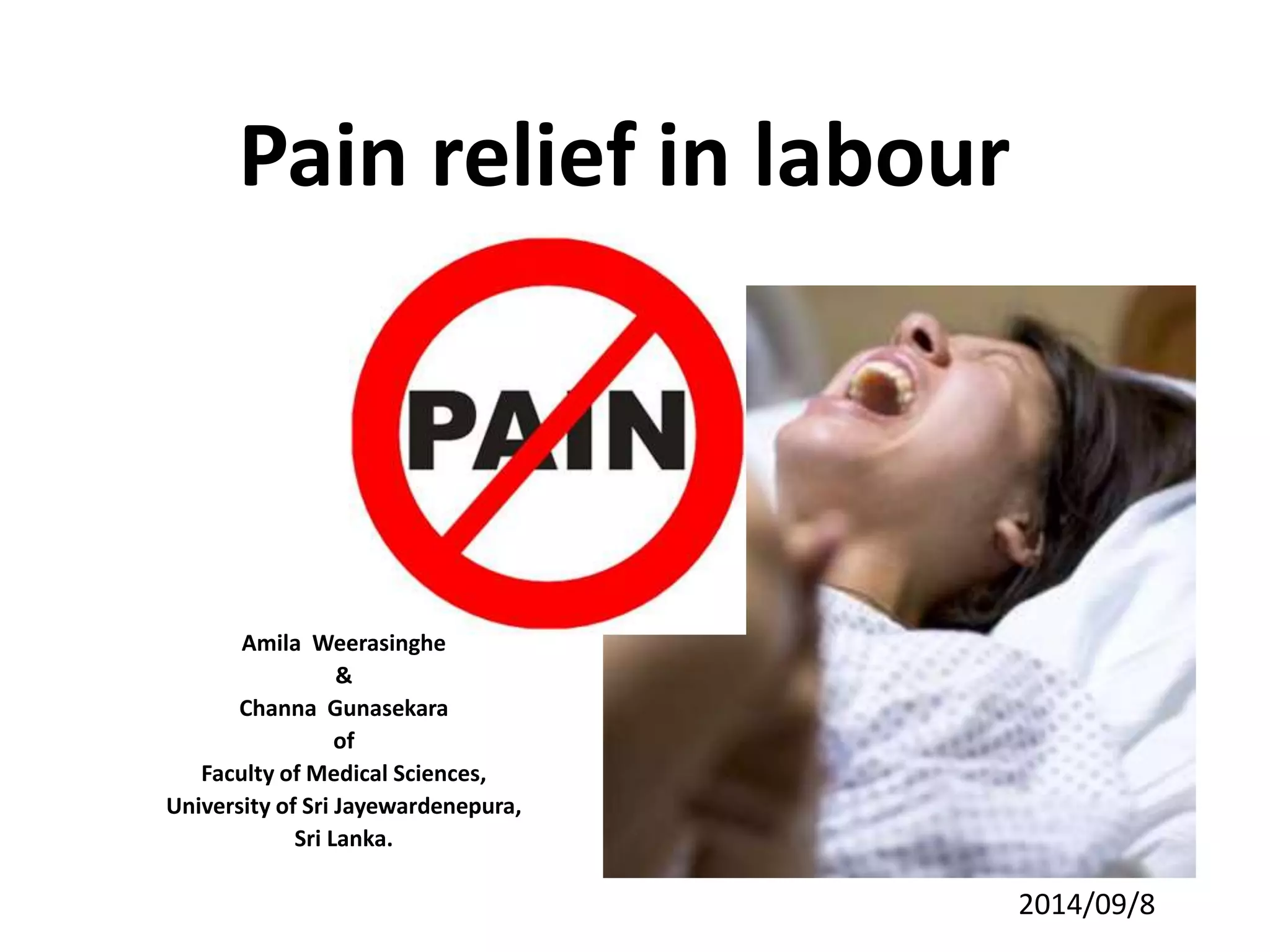
Pain relief in labour 
Amila Weerasinghe 
& 
Channa Gunasekara 
of 
Faculty of Medical Sciences, 
University of Sri Jayewardenepura, 
Sri Lanka. 
2014/09/8
What are we going to talk ? 
How does pain occur? 
Pain is caused by… 
Methods of pain relief
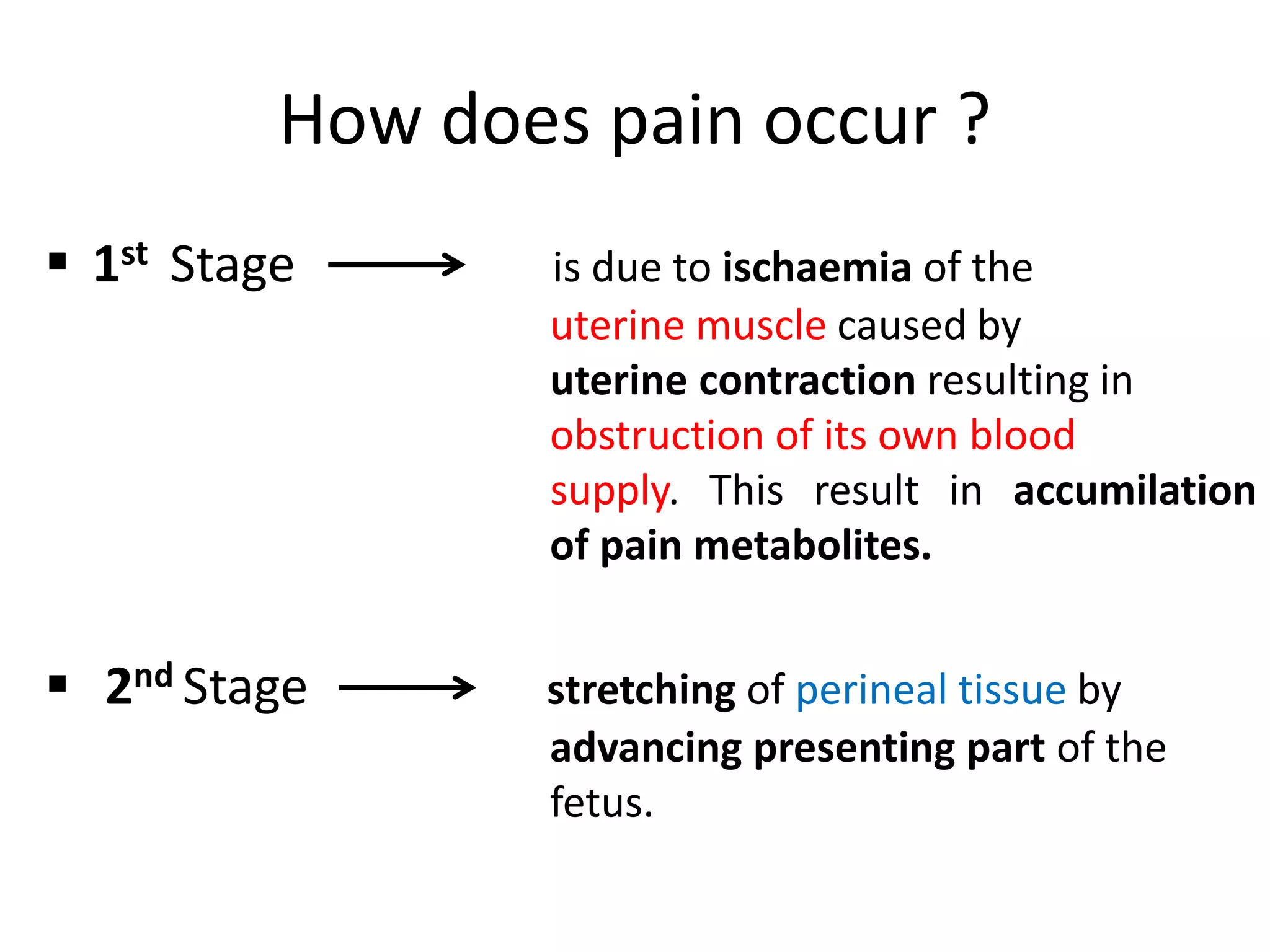
How does pain occur ? 
 1st Stage is due to ischaemia of the 
uterine muscle caused by 
uterine contraction resulting in 
obstruction of its own blood 
supply. This result in accumilation 
of pain metabolites. 
 2nd Stage stretching of perineal tissue by 
advancing presenting part of the 
fetus.
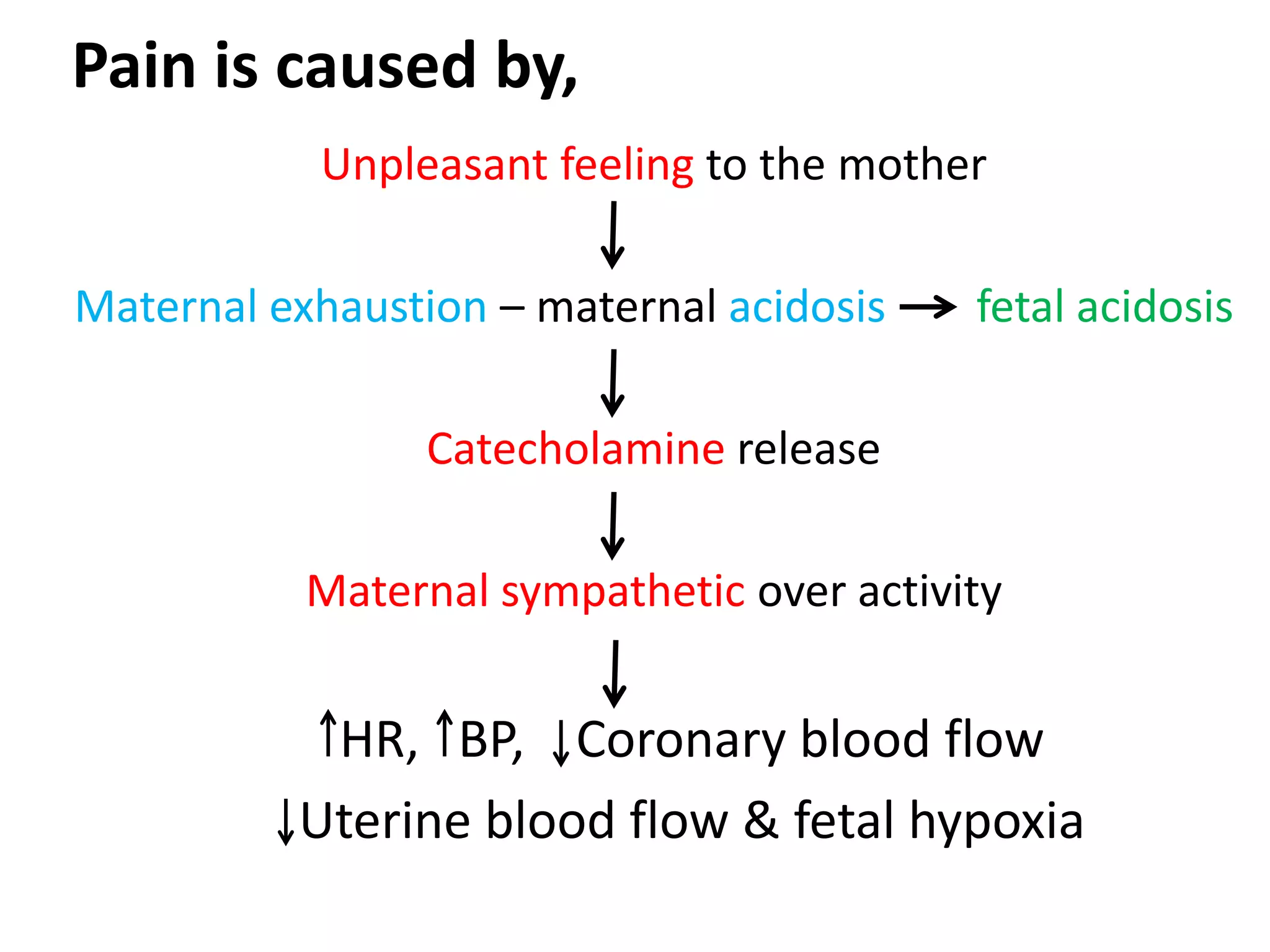
Pain is caused by, 
Unpleasant feeling to the mother 
Maternal exhaustion – maternal acidosis fetal acidosis 
Catecholamine release 
Maternal sympathetic over activity 
HR, BP, Coronary blood flow 
Uterine blood flow & fetal hypoxia
Methods of pain relief 
Methods 
Non pharmacological Pharmacological 
Opioids 
Inhalational 
Epidural 
Spinal
Non pharmacological 
 Educate on the process of labour & pain relief 
methods. 
 Relaxation 
 Breathing exercise 
 massaging
Pharmacological 
Opioids 
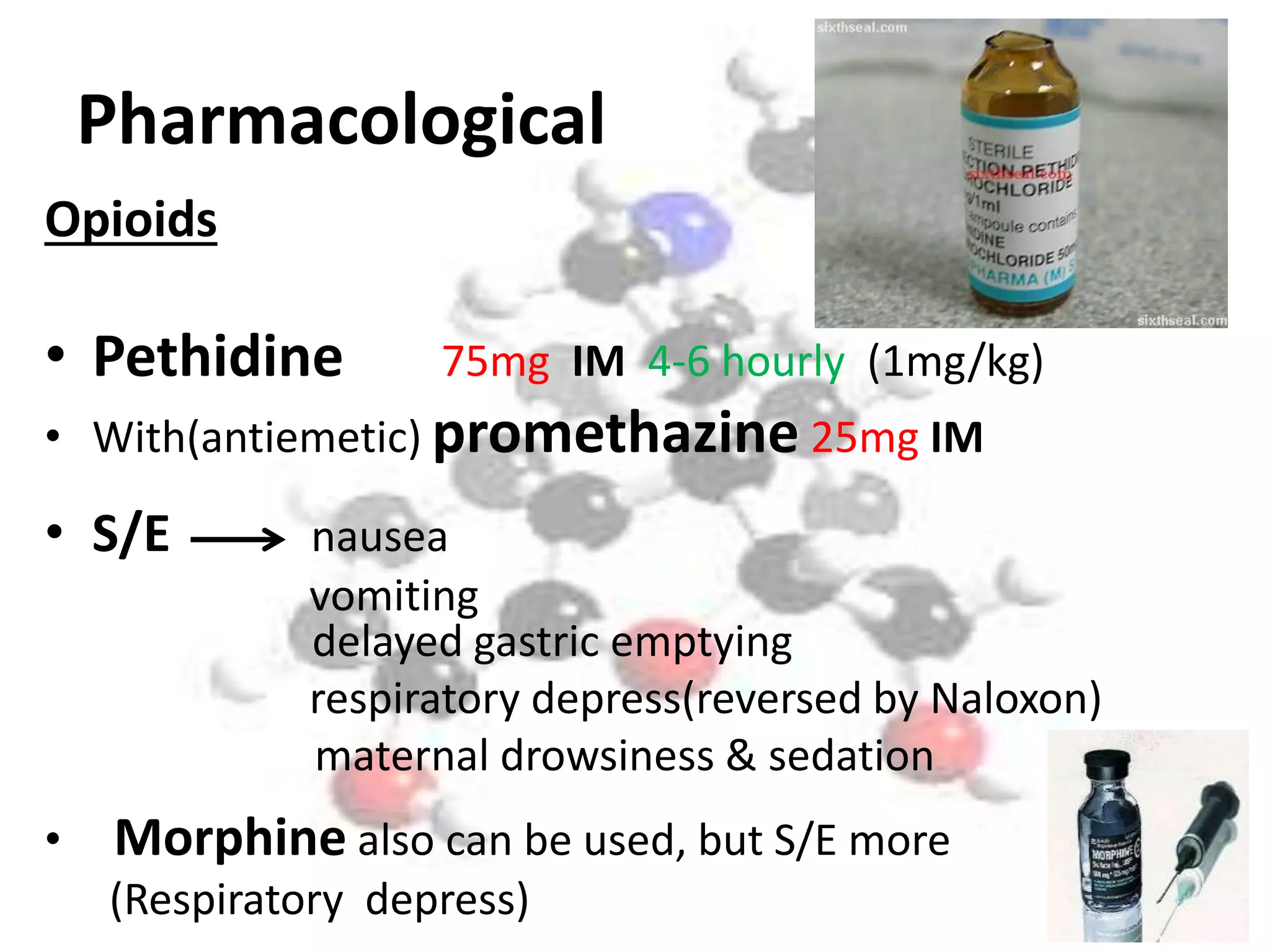
• Pethidine 75mg IM 4-6 hourly (1mg/kg) 
• With(antiemetic) promethazine 25mg IM 
• S/E nausea 
vomiting 
delayed gastric emptying 
respiratory depress(reversed by Naloxon) 
maternal drowsiness & sedation 
• Morphine also can be used, but S/E more 
(Respiratory depress)
Inhalational analgesia 
• N2O in the form of Entonox 
Quick onset(1-2min), short duration of effect (2- 
8min ) start inhaling at the onset of a contraction 
• Not suitable for prolong use of early labour 
because hyperventilation can cause 
hypocapnoea, dizziness & ultimately fetal hypoxia
Epidural analgesia 
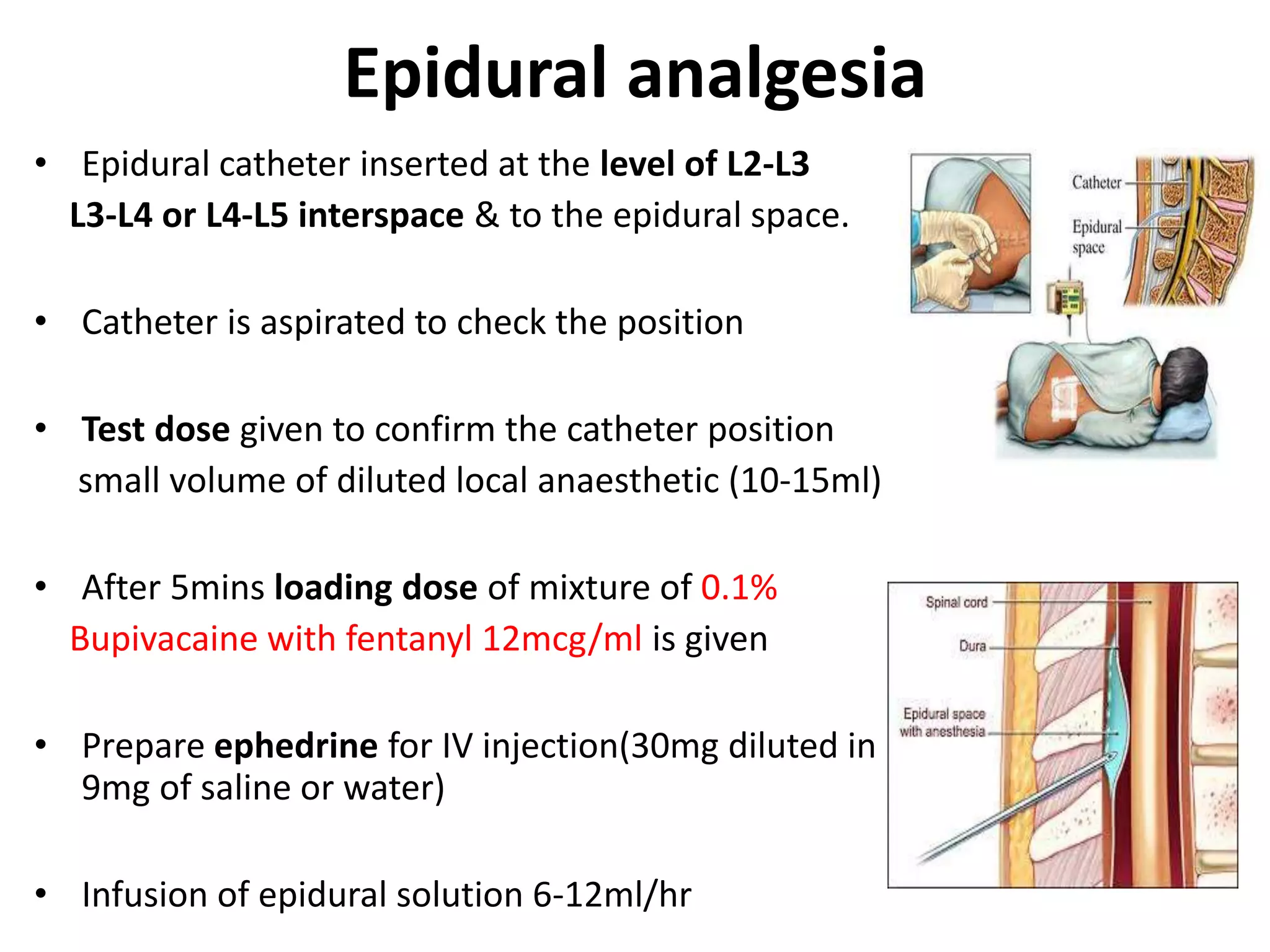
• Epidural catheter inserted at the level of L2-L3 
L3-L4 or L4-L5 interspace & to the epidural space. 
• Catheter is aspirated to check the position 
• Test dose given to confirm the catheter position 
small volume of diluted local anaesthetic (10-15ml) 
• After 5mins loading dose of mixture of 0.1% 
Bupivacaine with fentanyl 12mcg/ml is given 
• Prepare ephedrine for IV injection(30mg diluted in 
9mg of saline or water) 
• Infusion of epidural solution 6-12ml/hr
Important… 
• Secure IV access 
• Establishment/after each bolus measure BP every 5min 
for 15min,provide continuous EFM for 30 min 
• Every hour; check level of sensory block. 
• Continue until completion of the 3rd stage & any 
perineal repair. 
• Birth should take place within 4hours.
Contraindications 
• Coagulation disorders 
• Local or systemic sepsis 
• Hypovolamia 
• Insufficient no.of trained staff
Complications 
• Accidental dural puncture-leak of CSF causing spinal 
headache 
• Accidental total spinal anaesthesia -severe 
hypotension, respiratory failure, unconsciousness & 
death 
• Drug toxicity occur with 
accidental placement of catheter 
within a blood vessel 
• Bladder dysfunction 
• Short term respiratory distress in 
baby
Spinal Anaesthesia 
• A fine gauge atraumatic spinal needle is inserted 
in to the subarachnoid space 
• Small volume of local 
anaesthetic is injected, after 
which the spinal needle is 
withdrawn 
• Not used for routine analgesia 
in labour 
• Combined spinal- epidural analgesia?
Pain relief in labour

Pain relief in labour

  • 1.
    Pain relief inlabour Amila Weerasinghe & Channa Gunasekara of Faculty of Medical Sciences, University of Sri Jayewardenepura, Sri Lanka. 2014/09/8
  • 2.
    What are wegoing to talk ? How does pain occur? Pain is caused by… Methods of pain relief
  • 3.
    How does painoccur ?  1st Stage is due to ischaemia of the uterine muscle caused by uterine contraction resulting in obstruction of its own blood supply. This result in accumilation of pain metabolites.  2nd Stage stretching of perineal tissue by advancing presenting part of the fetus.
  • 4.
    Pain is causedby, Unpleasant feeling to the mother Maternal exhaustion – maternal acidosis fetal acidosis Catecholamine release Maternal sympathetic over activity HR, BP, Coronary blood flow Uterine blood flow & fetal hypoxia
  • 5.
    Methods of painrelief Methods Non pharmacological Pharmacological Opioids Inhalational Epidural Spinal
  • 6.
    Non pharmacological Educate on the process of labour & pain relief methods.  Relaxation  Breathing exercise  massaging
  • 7.
    Pharmacological Opioids •Pethidine 75mg IM 4-6 hourly (1mg/kg) • With(antiemetic) promethazine 25mg IM • S/E nausea vomiting delayed gastric emptying respiratory depress(reversed by Naloxon) maternal drowsiness & sedation • Morphine also can be used, but S/E more (Respiratory depress)
  • 8.
    Inhalational analgesia •N2O in the form of Entonox Quick onset(1-2min), short duration of effect (2- 8min ) start inhaling at the onset of a contraction • Not suitable for prolong use of early labour because hyperventilation can cause hypocapnoea, dizziness & ultimately fetal hypoxia
  • 9.
    Epidural analgesia •Epidural catheter inserted at the level of L2-L3 L3-L4 or L4-L5 interspace & to the epidural space. • Catheter is aspirated to check the position • Test dose given to confirm the catheter position small volume of diluted local anaesthetic (10-15ml) • After 5mins loading dose of mixture of 0.1% Bupivacaine with fentanyl 12mcg/ml is given • Prepare ephedrine for IV injection(30mg diluted in 9mg of saline or water) • Infusion of epidural solution 6-12ml/hr
  • 10.
    Important… • SecureIV access • Establishment/after each bolus measure BP every 5min for 15min,provide continuous EFM for 30 min • Every hour; check level of sensory block. • Continue until completion of the 3rd stage & any perineal repair. • Birth should take place within 4hours.
  • 11.
    Contraindications • Coagulationdisorders • Local or systemic sepsis • Hypovolamia • Insufficient no.of trained staff
  • 12.
    Complications • Accidentaldural puncture-leak of CSF causing spinal headache • Accidental total spinal anaesthesia -severe hypotension, respiratory failure, unconsciousness & death • Drug toxicity occur with accidental placement of catheter within a blood vessel • Bladder dysfunction • Short term respiratory distress in baby
  • 13.
    Spinal Anaesthesia •A fine gauge atraumatic spinal needle is inserted in to the subarachnoid space • Small volume of local anaesthetic is injected, after which the spinal needle is withdrawn • Not used for routine analgesia in labour • Combined spinal- epidural analgesia?

Editor's Notes