Downloaded 54 times
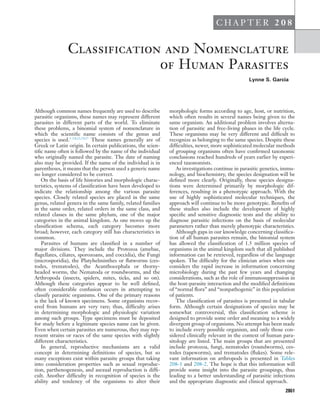
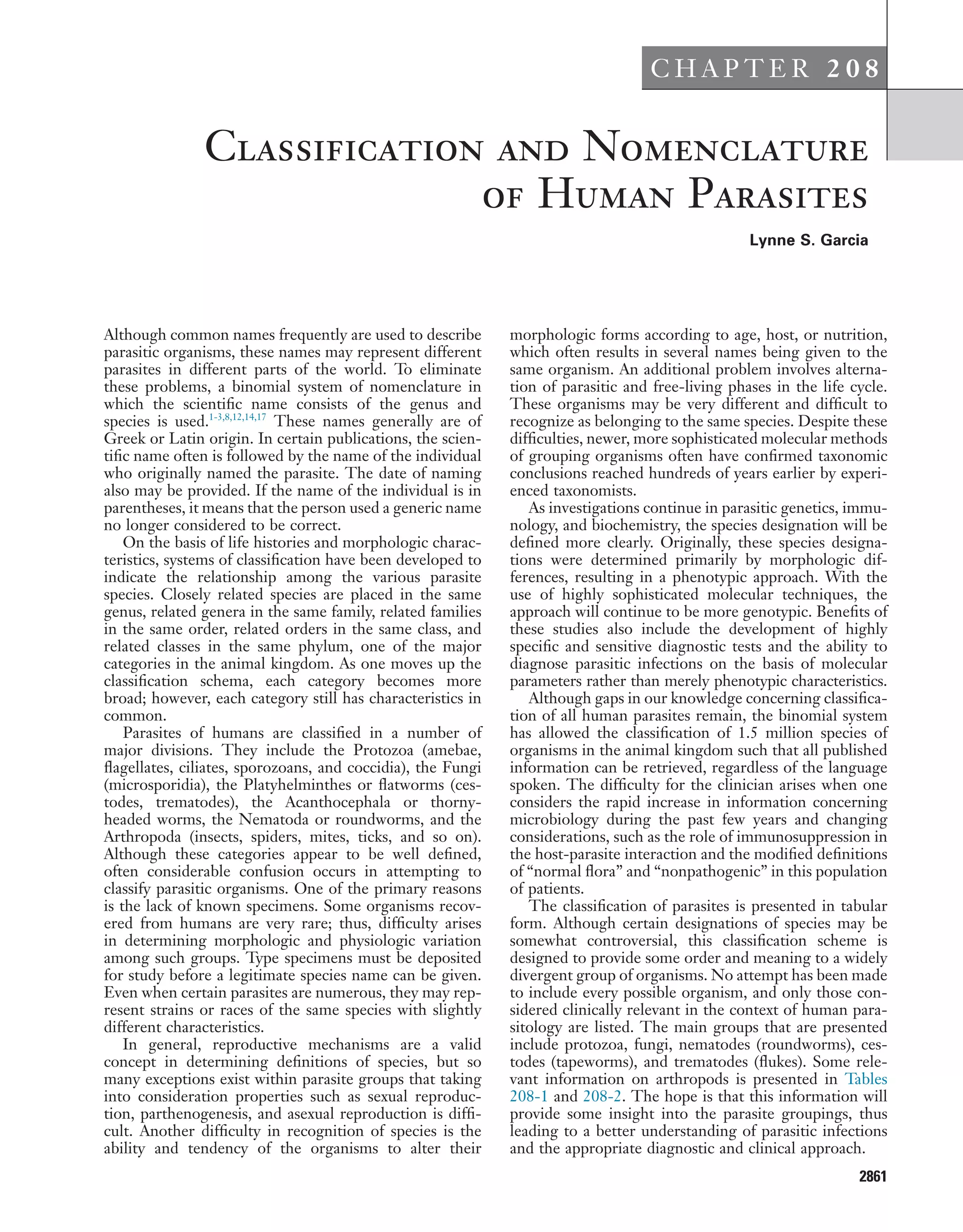
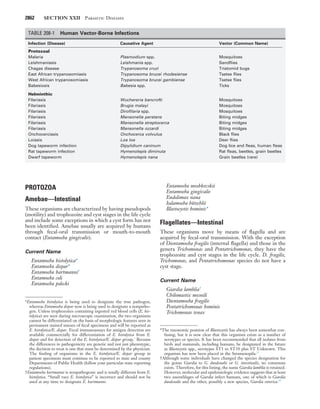
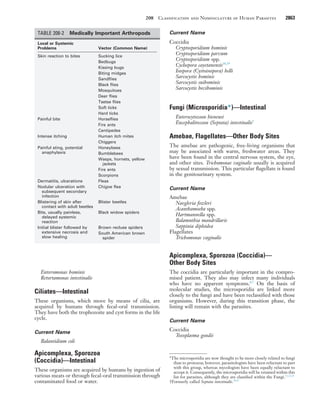
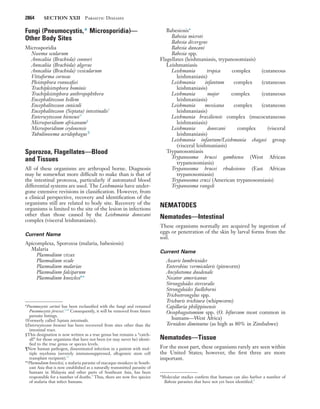
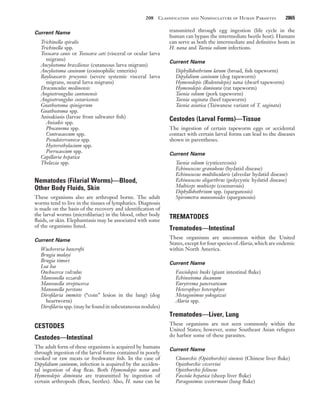
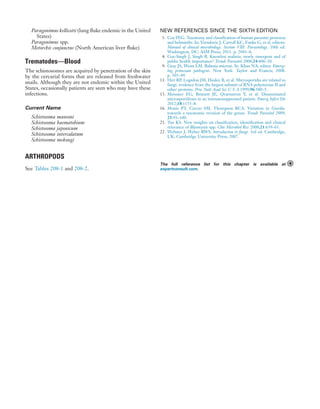

This document discusses the classification and nomenclature of human parasites. It begins by explaining that parasites are scientifically classified using binomial nomenclature with their genus and species. Parasites are further classified into taxonomic groups like phylum, class, order, family and genus based on their life cycles and morphological characteristics. The document then provides examples of how major groups of human parasites are classified, including protozoa (amebae, flagellates, ciliates), fungi, platyhelminthes (cestodes, trematodes), nematodes, acanthocephala, and arthropods. It notes that classifying parasites can be difficult due to lack of specimens, morphological variations, and differences


