INTRODUCTION TO MEDICAL
PARASITOLOGY
Abura Geoffrey
Kampala International University-
Western Campus
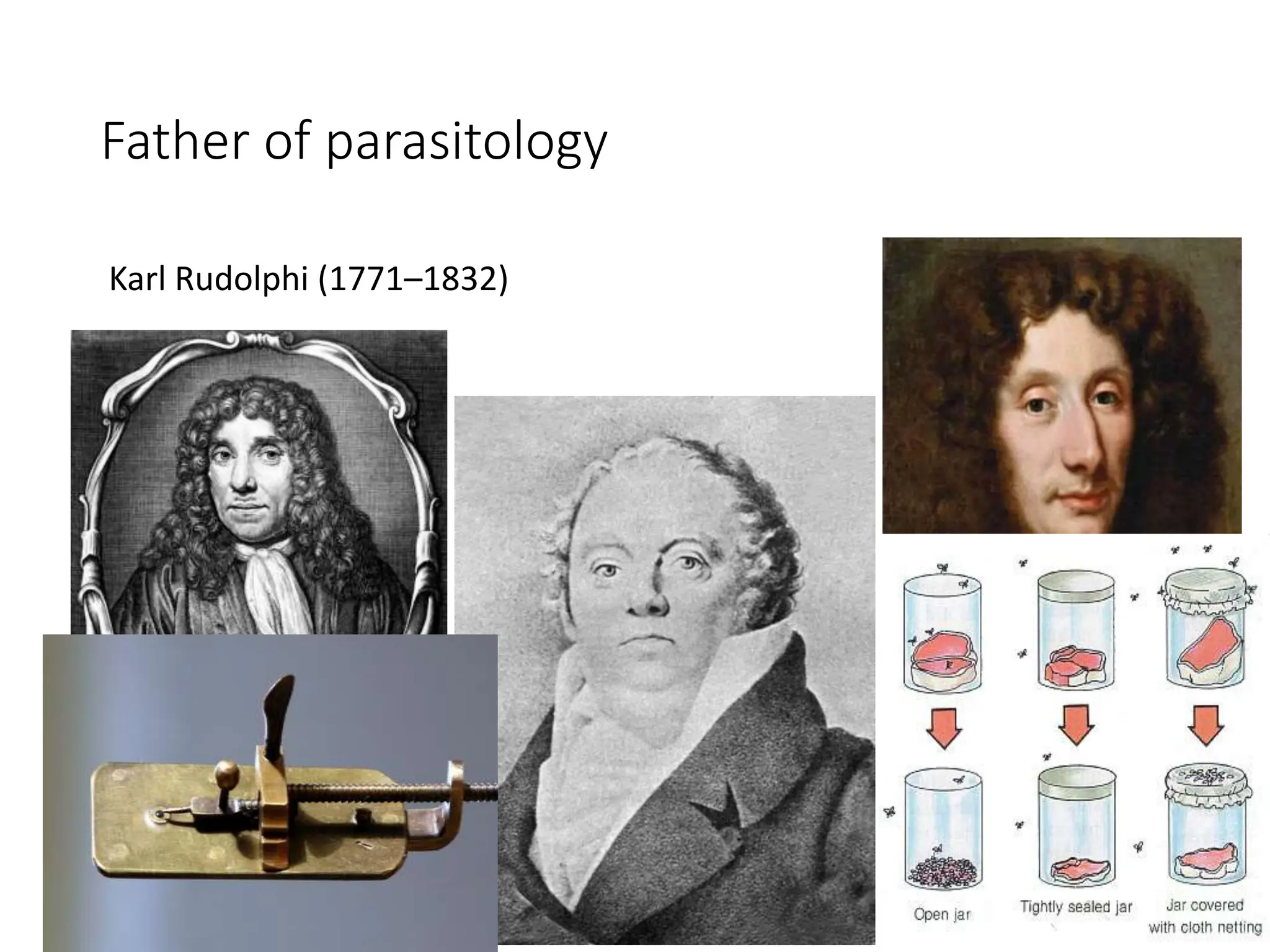
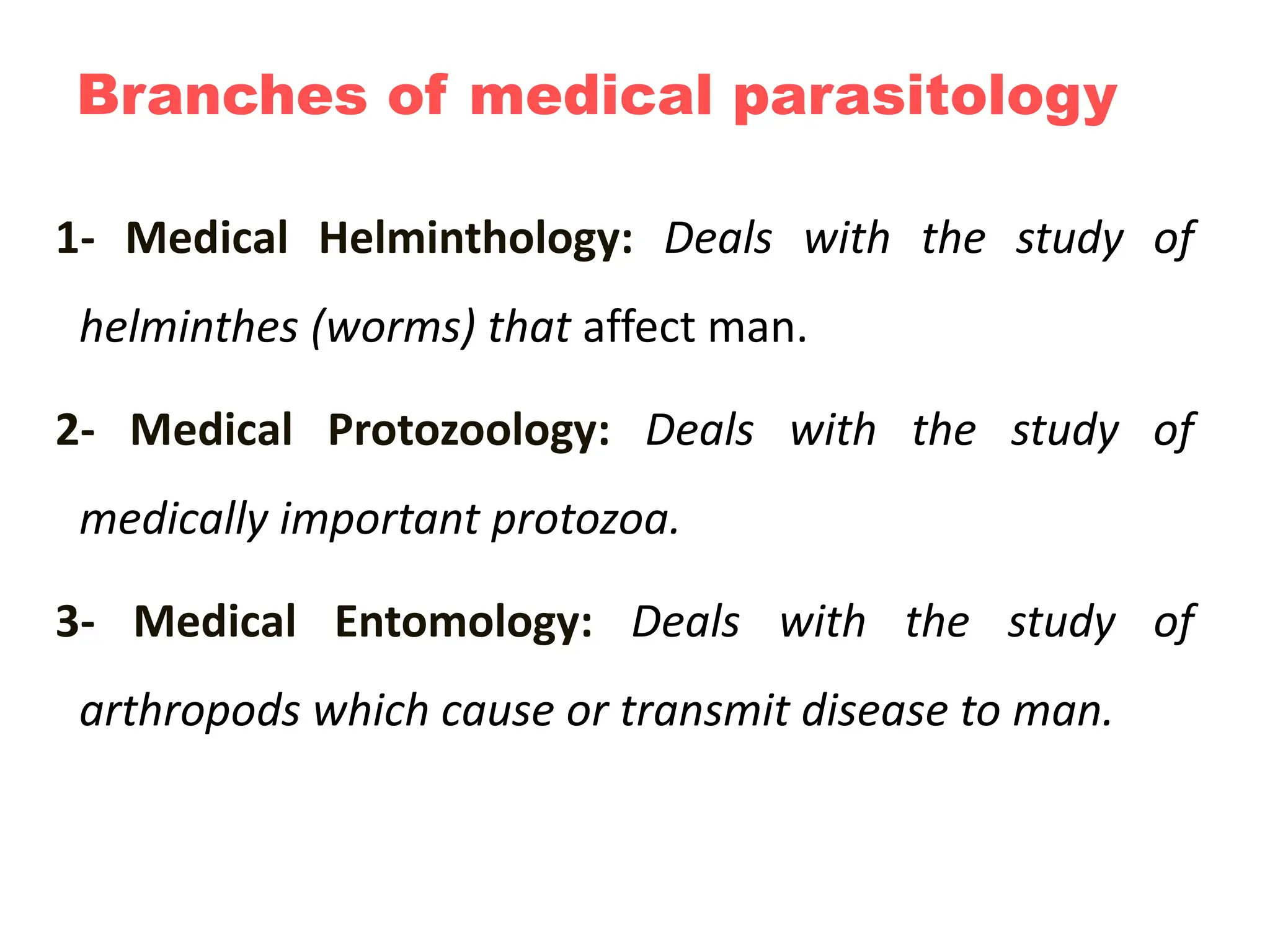
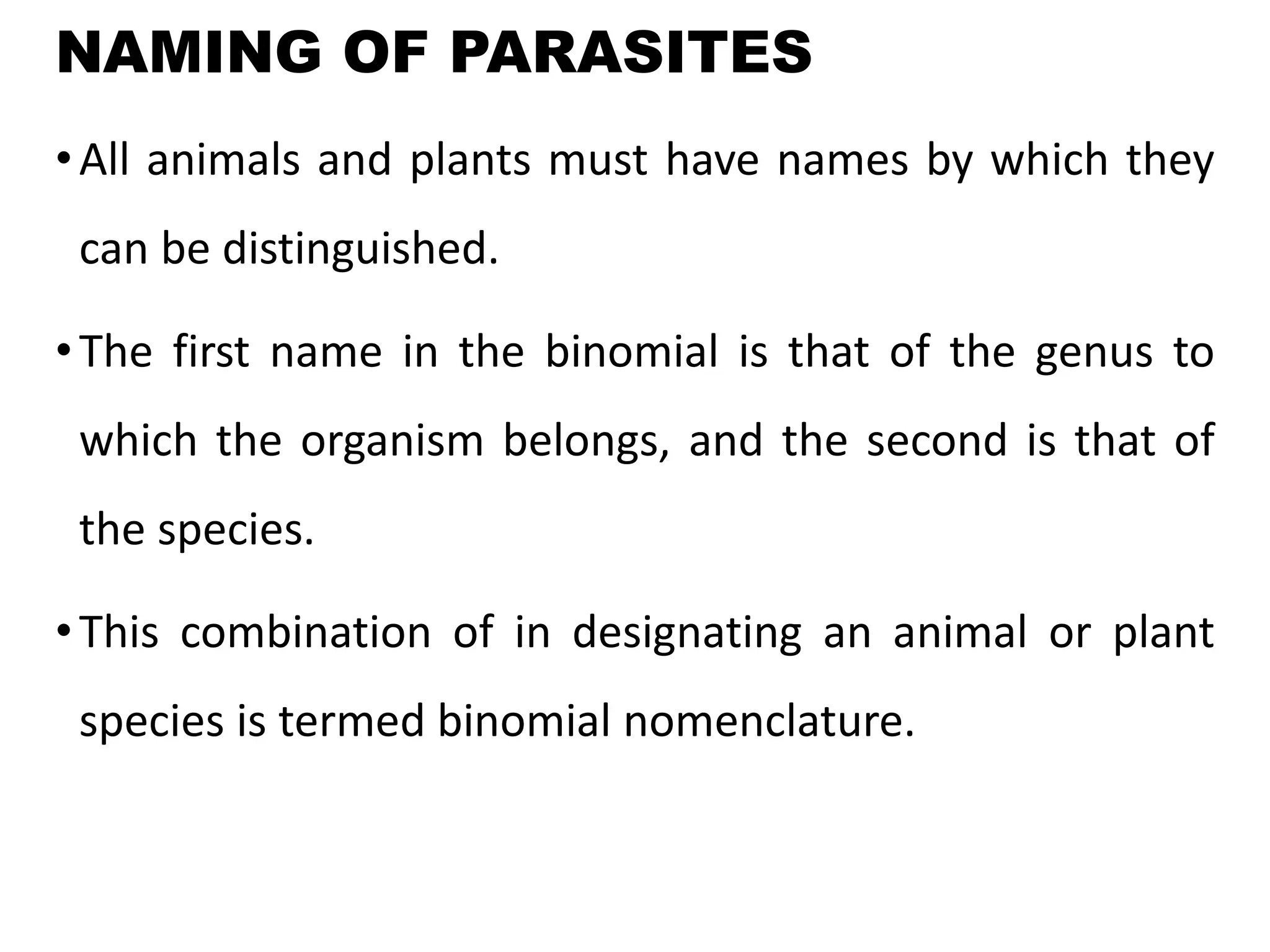
Father of parasitology
Karl Rudolphi (1771–1832)
Branches of medical parasitology
1- Medical Helminthology: Deals with the study of
helminthes (worms) that affect man.
2- Medical Protozoology: Deals with the study of
medically important protozoa.
3- Medical Entomology: Deals with the study of
arthropods which cause or transmit disease to man.
NAMING OF PARASITES
•All animals and plants must have names by which they
can be distinguished.
•The first name in the binomial is that of the genus to
which the organism belongs, and the second is that of
the species.
•This combination of in designating an animal or plant
species is termed binomial nomenclature.
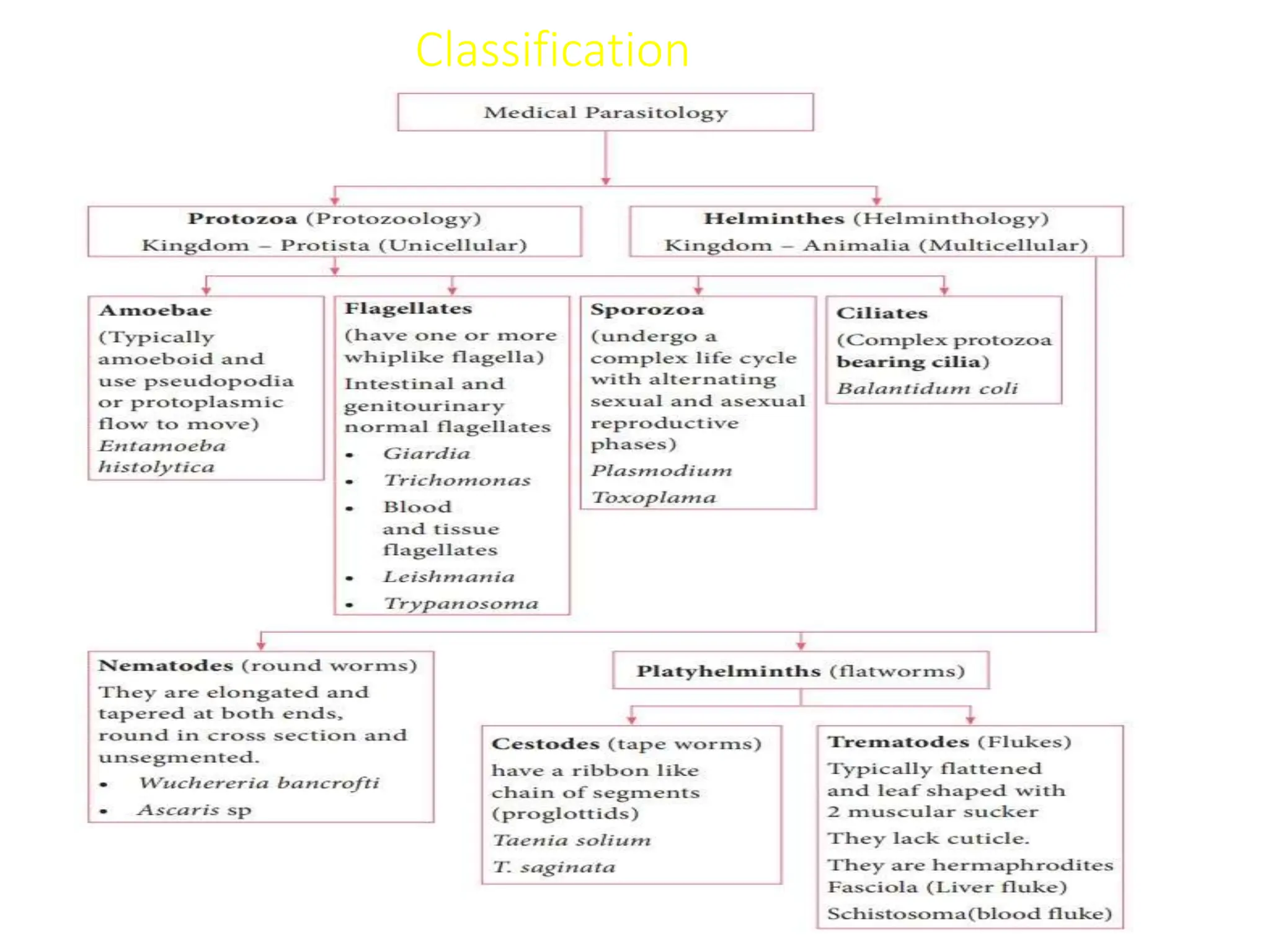
Classification of parasites
Parasites are classified into: -
1. Protozoa
2. Helminthes
PROTOZOA
•These are unicellular organisms which multiply
by binary fission.
•A single cell performs all functions of the
organism.
•Protozoa are single celled animals, occurring
as free living organisms and as parasites.
.
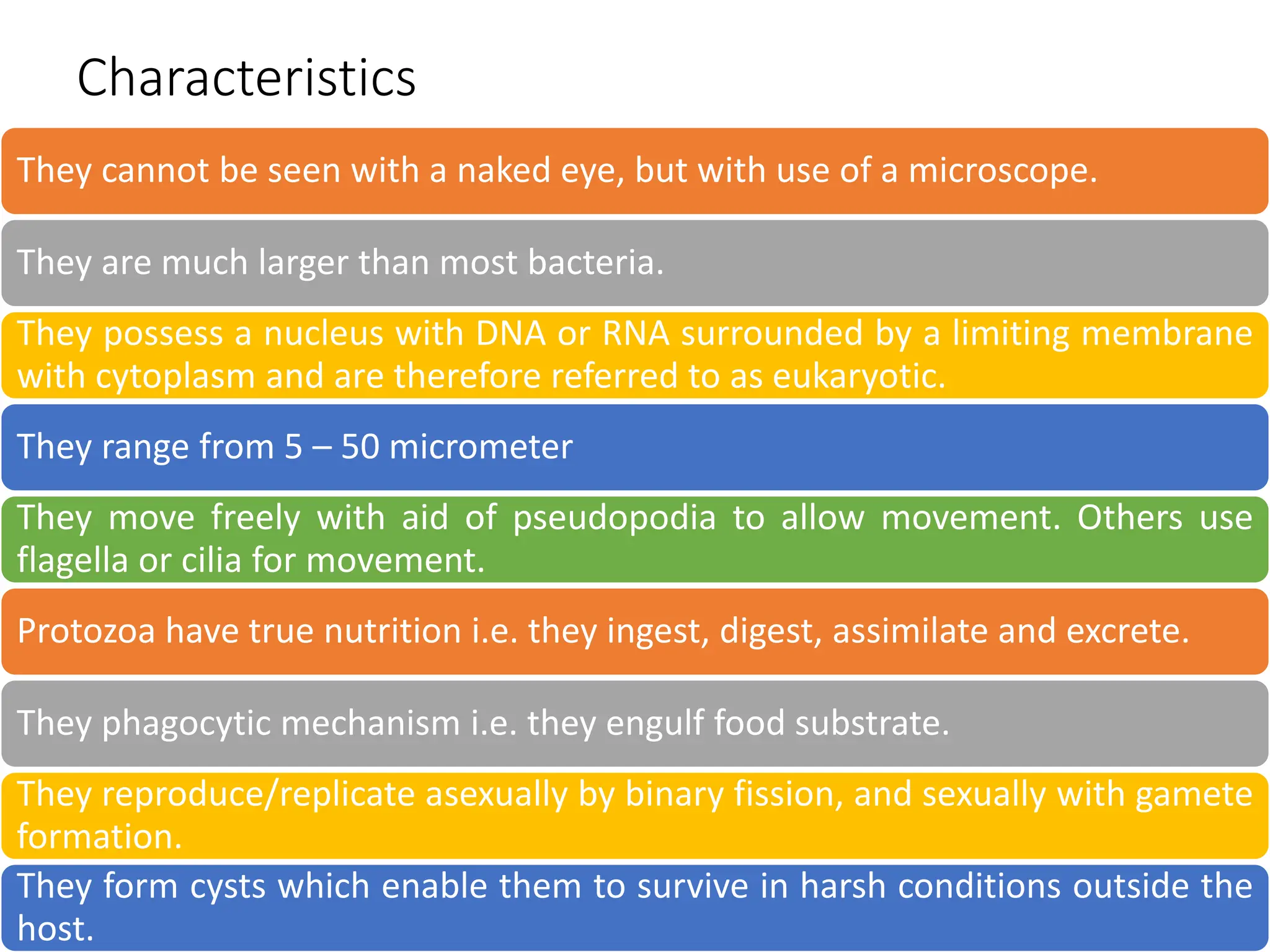
Characteristics
They cannot be seen with a naked eye, but with use of a microscope.
They are much larger than most bacteria.
They possess a nucleus with DNA or RNA surrounded by a limiting membrane
with cytoplasm and are therefore referred to as eukaryotic.
They range from 5 – 50 micrometer
They move freely with aid of pseudopodia to allow movement. Others use
flagella or cilia for movement.
Protozoa have true nutrition i.e. they ingest, digest, assimilate and excrete.
They phagocytic mechanism i.e. they engulf food substrate.
They reproduce/replicate asexually by binary fission, and sexually with gamete
formation.
They form cysts which enable them to survive in harsh conditions outside the
host.
HELMINTHIASIS (WORM INFESTTATIONS)
Helminthiasis is a disease/condition resulting from
an infestation with parasitic worms.
Helminthes are eukaryotic parasitic worms that live
mainly in the human GIT. Man is the only reservoir.
Unlike bacteria, protozoa and viruses, helminthes
are often large organisms.
Worm infestations are common in developing
countries and affect children more than adults.
Con’t
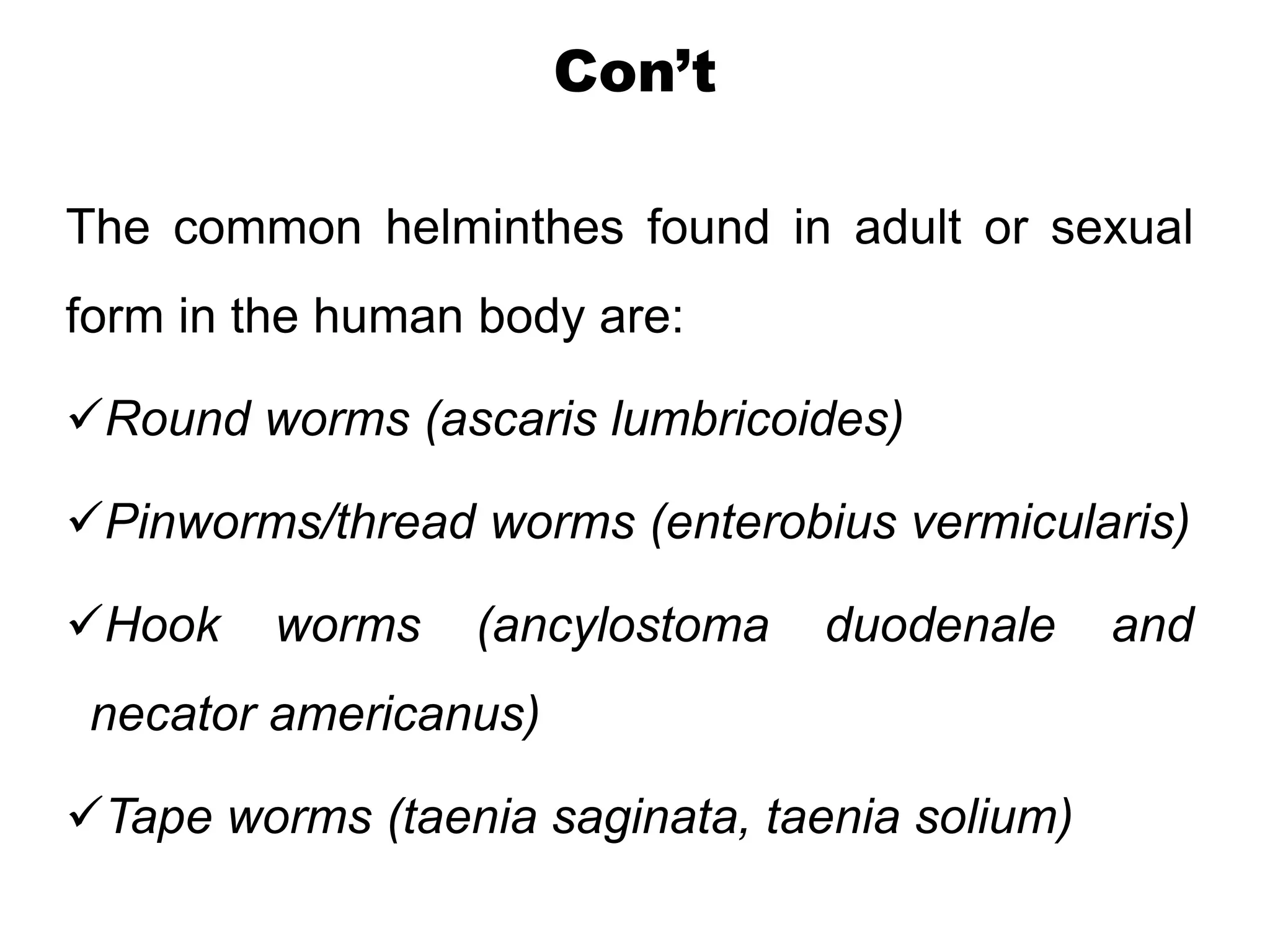
The common helminthes found in adult or sexual
form in the human body are:
Round worms (ascaris lumbricoides)
Pinworms/thread worms (enterobius vermicularis)
Hook worms (ancylostoma duodenale and
necator americanus)
Tape worms (taenia saginata, taenia solium)
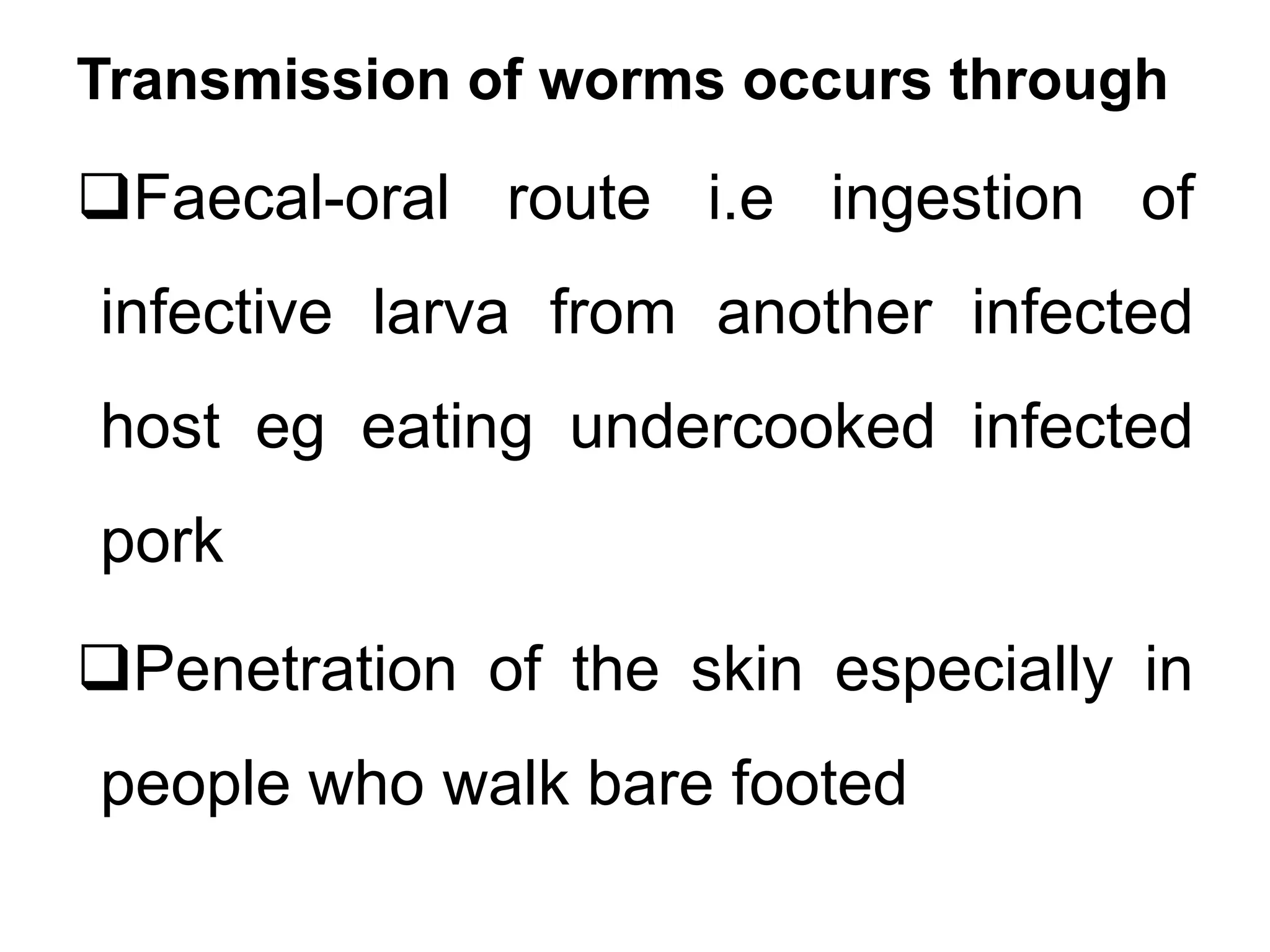
Transmission of worms occurs through
Faecal-oral route i.e ingestion of
infective larva from another infected
host eg eating undercooked infected
pork
Penetration of the skin especially in
people who walk bare footed
Classification
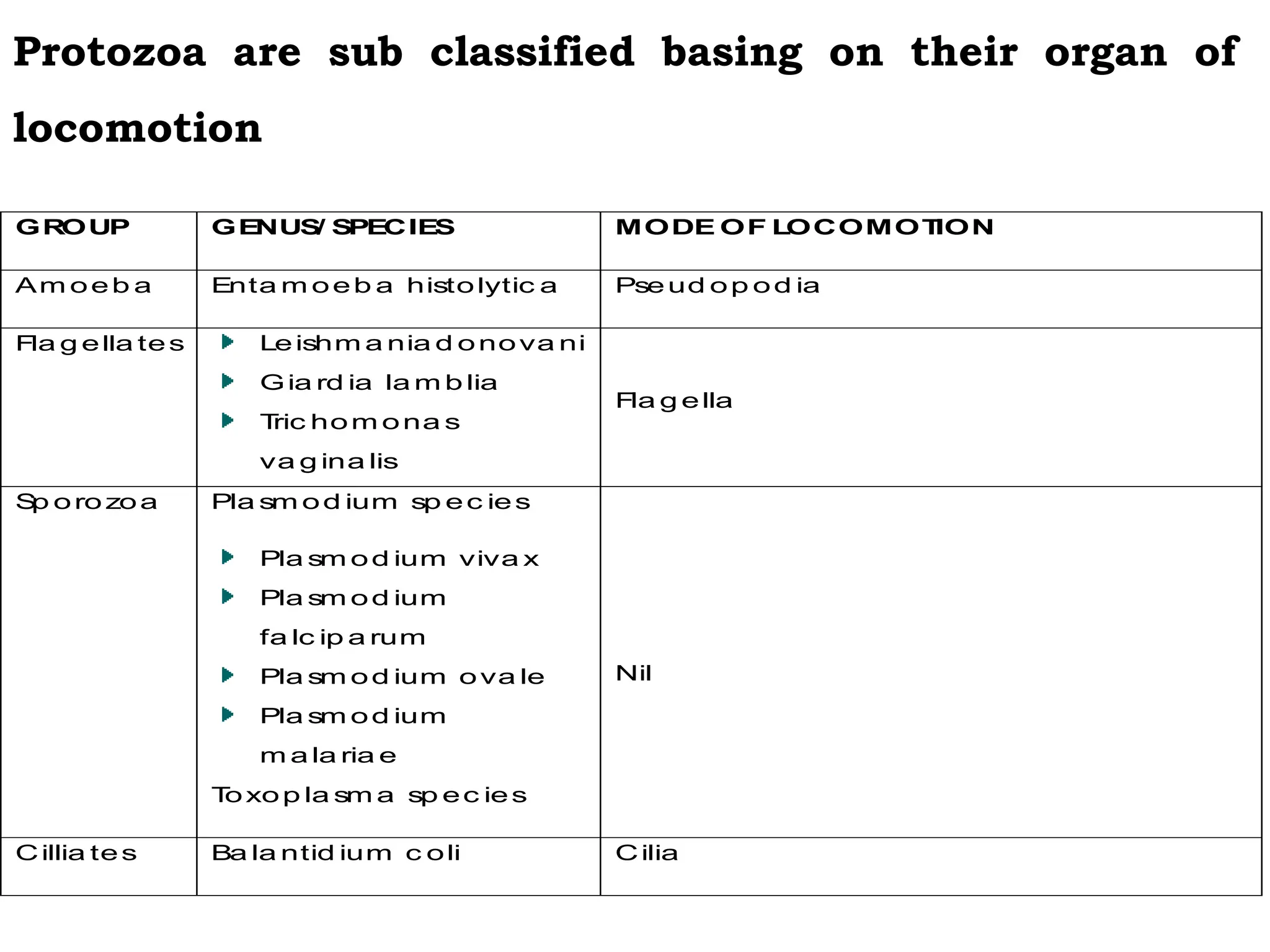
GR
OUP GE
NUS
/ S
PE
CIE
S MODE OF L
OCOMOT
ION
Am oeb a Enta m oeb a histolytic a Pseud op od ia
Fla g ella tes Leishm a nia d onova ni
Gia rd ia la m b lia
T
ric hom ona s
va g ina lis
Fla g ella
S
p oro zoa Pla sm od ium sp ec ies
Pla sm od ium viva x
Pla sm od ium
fa lc ip a rum
Pla sm od ium ova le
Pla sm od ium
m a la ria e
T
oxop la sm a sp ec ies
Nil
Cillia tes Ba la ntid ium c oli Cilia
Protozoa are sub classified basing on their organ of
locomotion
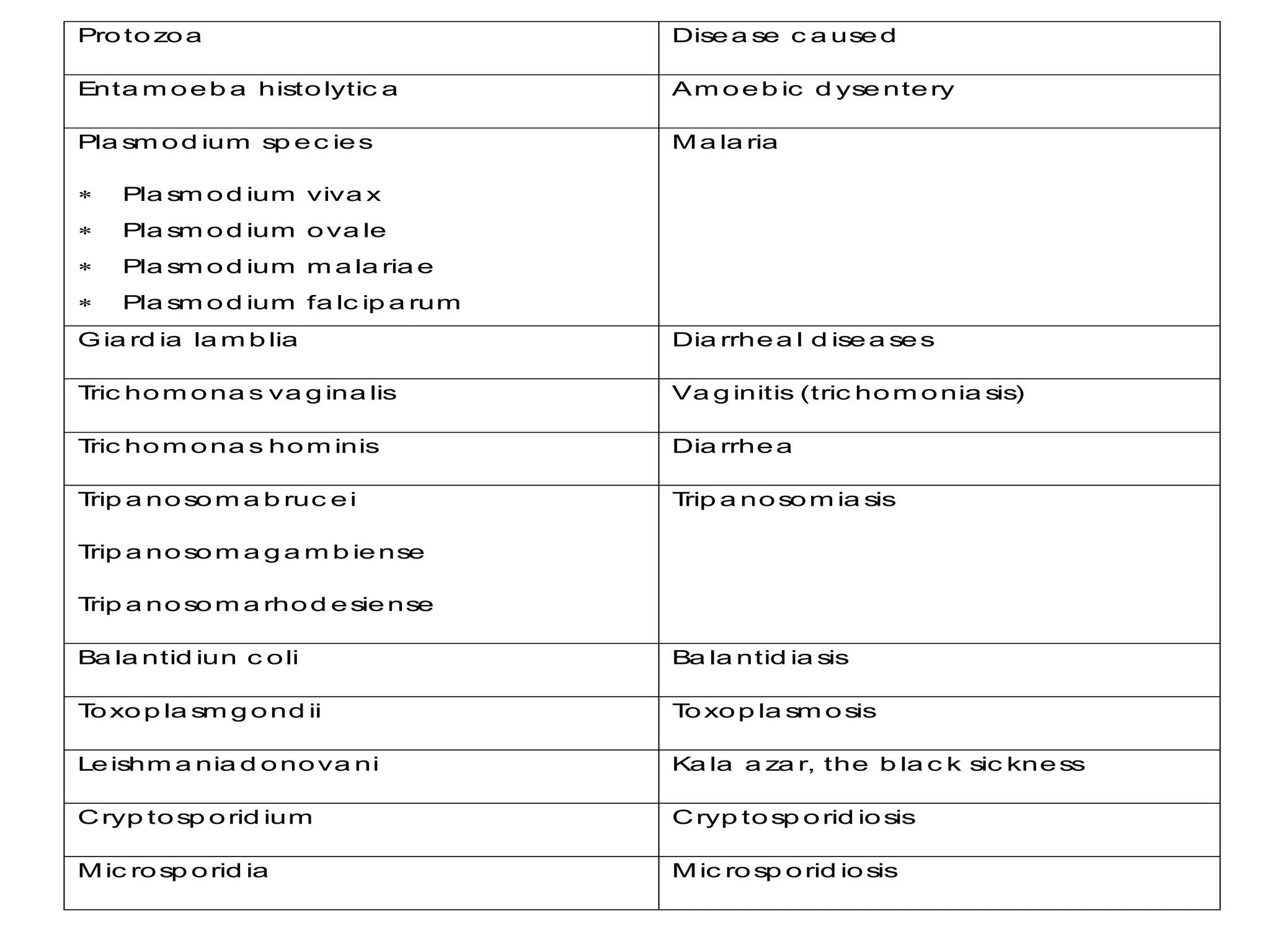
Pro to zoa Disea se c a used
Enta m oeb a histolytic a Am oeb ic d yse ntery
Pla sm od ium sp ec ies
 Pla sm od ium viva x
 Pla sm od ium ova le
 Pla sm od ium m a la ria e
 Pla sm od ium fa lc ip a rum
Ma la ria
Gia rd ia la m b lia Dia rrhea l d isea ses
T
ric hom ona s va g ina lis Va g initis (tric hom onia sis)
T
ric hom ona s hom inis Dia rrhea
T
rip a nosom a b ruc ei
T
rip a nosom a g a m b iense
T
rip a nosom a rhod esiense
T
rip a nosom ia sis
Ba la ntid iun c oli Ba la ntid ia sis
T
oxop la sm g ond ii T
oxop la sm osis
Leishm a nia d onova ni Ka la a za r, the b la c k sic kness
Cryp tosp orid ium Cryp tosp orid iosis
Mic rosp orid ia Mic rosp orid iosis
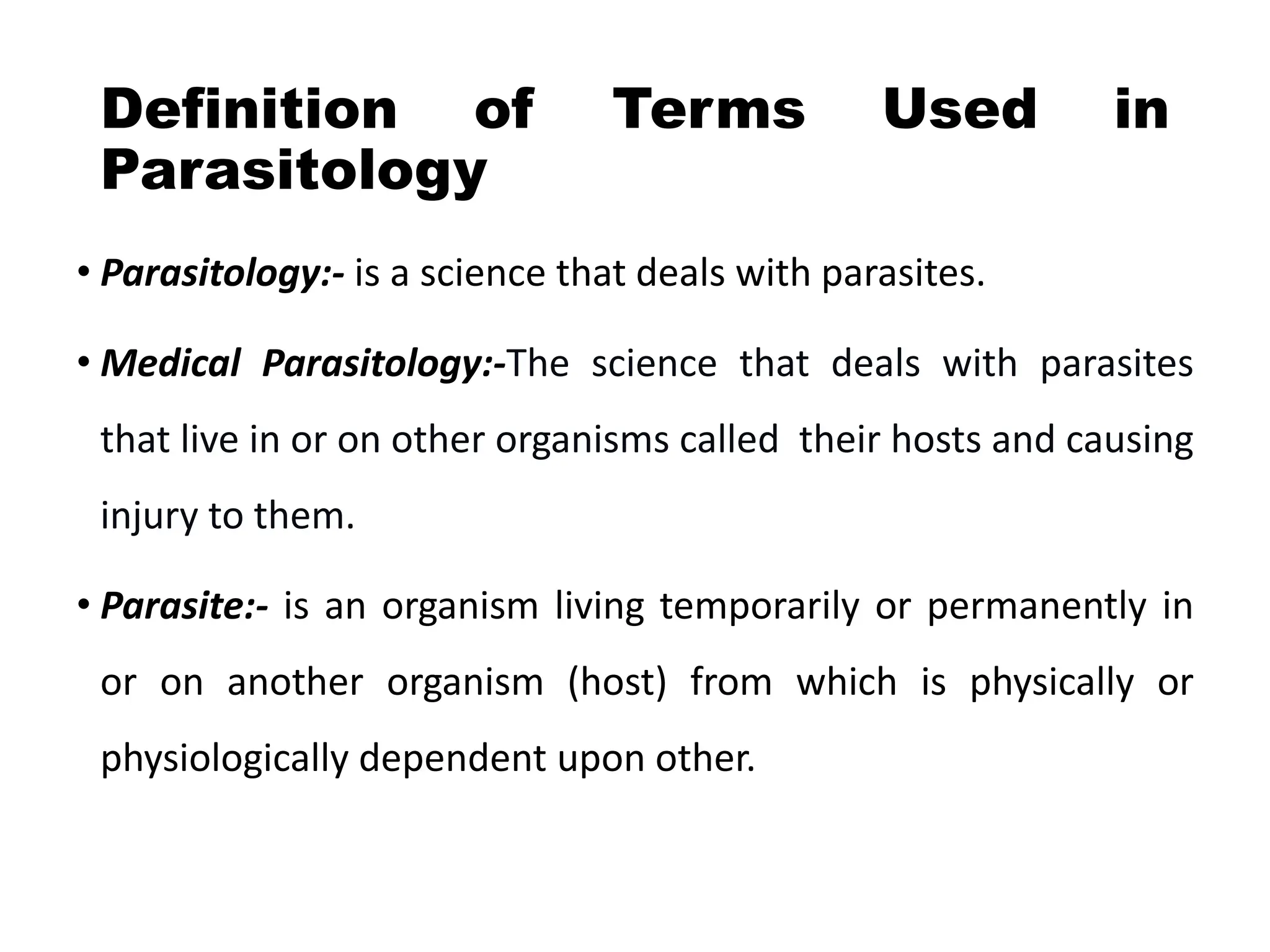
Definition of Terms Used in
Parasitology
• Parasitology:- is a science that deals with parasites.
• Medical Parasitology:-The science that deals with parasites
that live in or on other organisms called their hosts and causing
injury to them.
• Parasite:- is an organism living temporarily or permanently in
or on another organism (host) from which is physically or
physiologically dependent upon other.
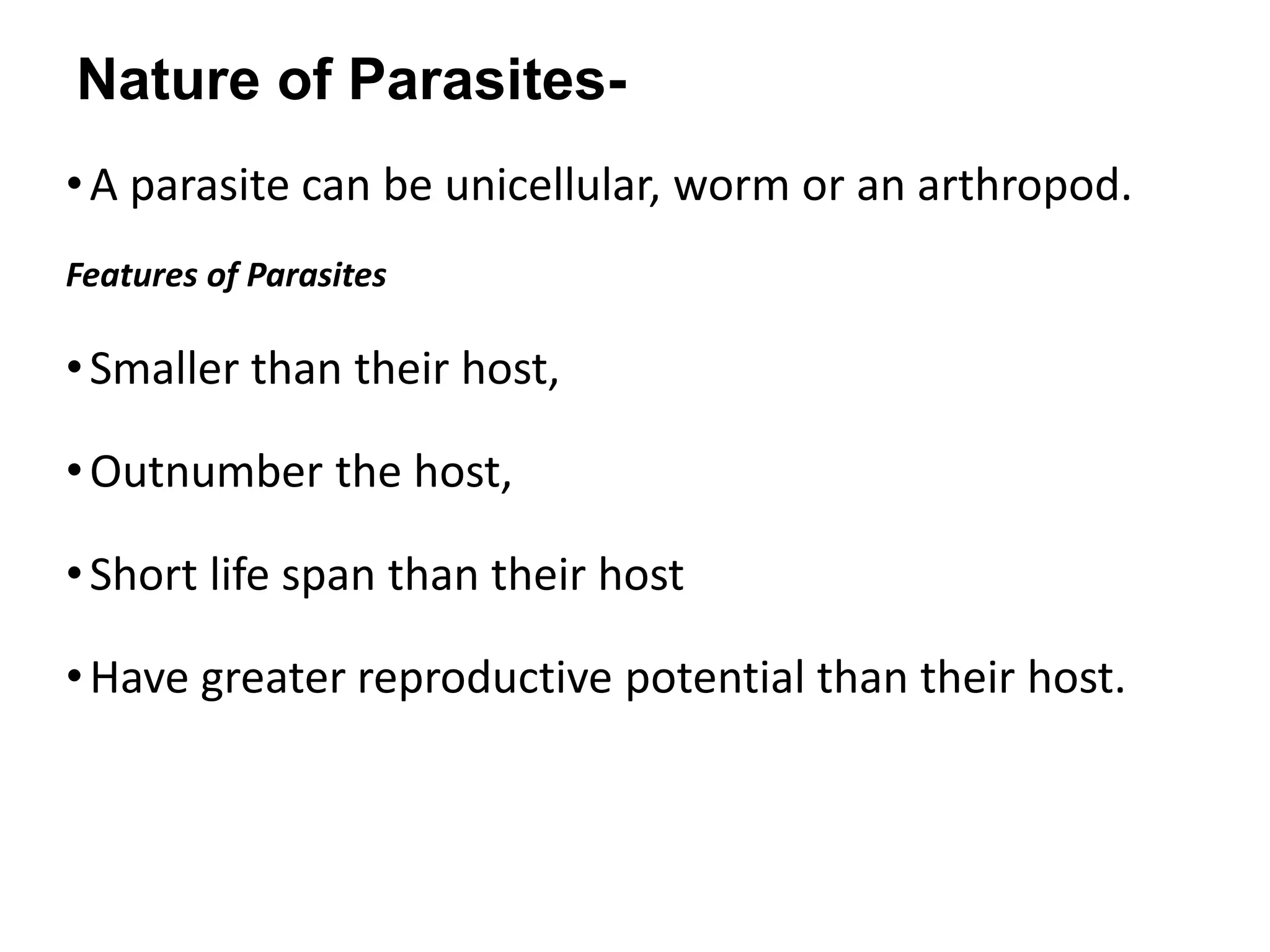
Nature of Parasites-
•A parasite can be unicellular, worm or an arthropod.
Features of Parasites
•Smaller than their host,
•Outnumber the host,
•Short life span than their host
•Have greater reproductive potential than their host.
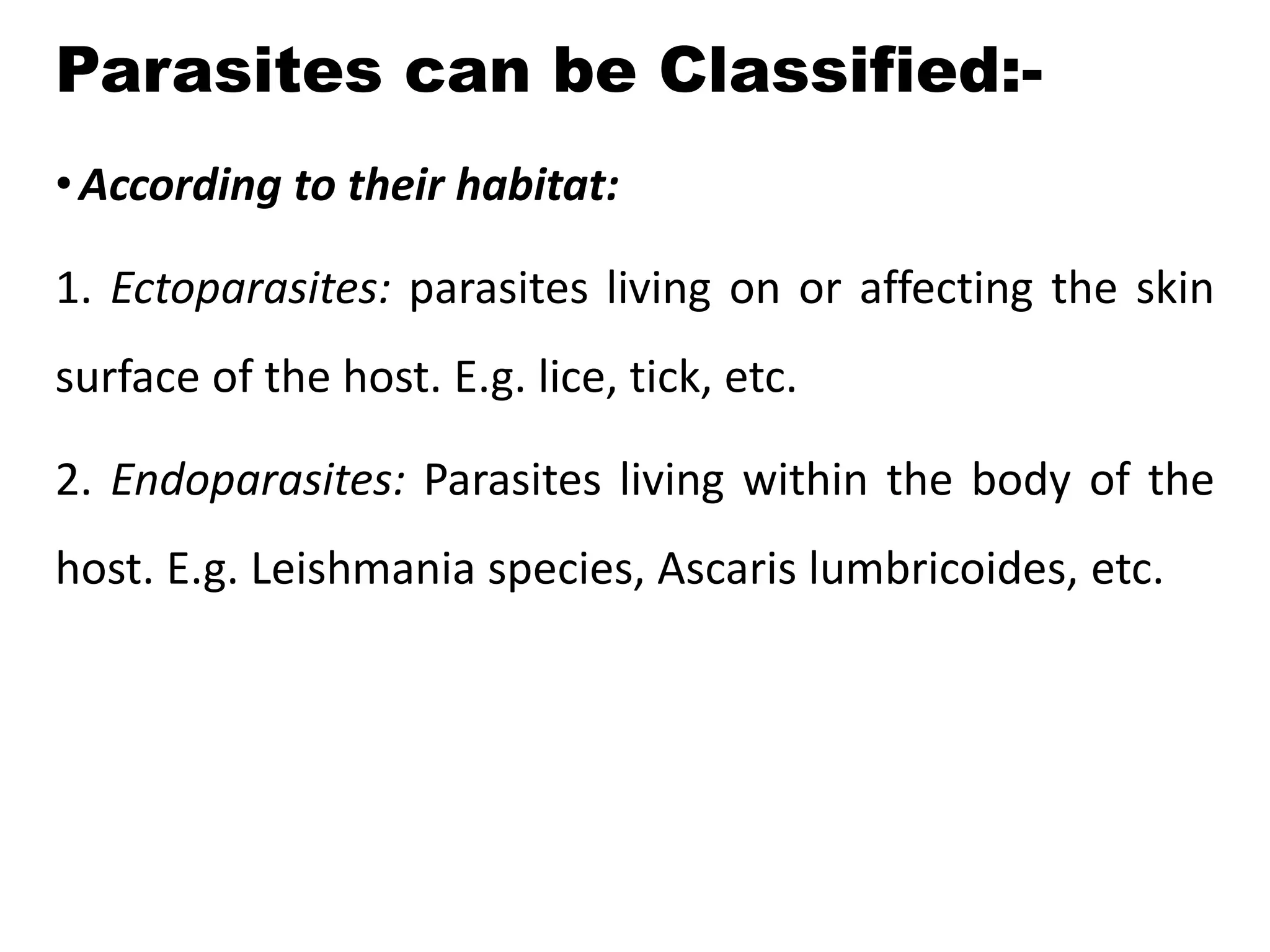
Parasites can be Classified:-
•According to their habitat:
1. Ectoparasites: parasites living on or affecting the skin
surface of the host. E.g. lice, tick, etc.
2. Endoparasites: Parasites living within the body of the
host. E.g. Leishmania species, Ascaris lumbricoides, etc.
According to their dependence on
the host:
1. Permanent (obligate) parasites: The parasite depends
completely upon its host for metabolites, shelter, and
transportation. This parasite can not live outside its host. E.g.
Plasmodium species, Trichmonas vaginalis, etc.
2. Temporary (facultative) parasite: The parasite is capable of
independent existence in addition to parasitic life. E.g.
Strongyloids stercolaris, Naegleria fowleri, etc.
According to their Pathogenicity:
1. Pathogenic parasites:- It causes disease in the host. E.g., E.
histolytica
2. Non-Pathogenic (commensal) parasite:-The parasite derives food
and protection from the host without causing harm to the host. E.g.
Entamoeba coli
3. Opportunistic parasites:- Parasites which cause mild disease in
immunologically healthy individuals, but they cause severe disease
in immuno-deficient hosts. E.g. Pneumocystis carnii, Toxoplasma
gondii, Isospora belli
Host
• Hosts are organism which harbors the parasite.
Types of Hosts:-
1. Definitive host:-
Depending on the parasitic species, it is either a host
which harbors the adult stage of a parasite or most
highly developed form of the parasite occurs; or
sexually mature stages of a parasite and fertilization
takes place in it, e.g., man is the definitive host of
Taenia saginata.
Con’t
2. Intermediate host:- Is a host harboring sexually immature or larval stage
of a parasite and in which no fertilization takes place in it. E.g. Cow is the
intermediate host for Taenia saginata.
Con’t
3. Reservoir host:- A wild or domestic animal which
harbors a parasite and acts as sources of infection to
humans.
4. Carrier host:- A host harboring and disseminating a
parasite but exhibiting no clinical sign.
5. Accidental (Incidental) host:- Infection of a host other
than the normal host species. A parasite may or may not
continue full development in this host.
Vector:-
•Any arthropod or other living carrier which transports a
pathogenic microorganisms from an infected to non-
infected host.
•A. Biological vectors:-
• Those vectors that complete the life cycle a parasite E.g.
Anopheles (Vector of Plasmodium), Phlebotomus (Vector of
Leishmania), Glossina (vector of Trypanosoma), Simulium (Vector
of Onchocerca), etc.
Con’t
• B. Mechanical (Parathenic or transport) Vectors:
• They are passive carriers of parasites, not essential in the life cycle. E.g.
House fly and Chockroach as a mechanical vector for Amoebae, Giardia,
etc.
Disease terminologies
• Diagnostic Stage:-A developmental stage of a pathogenic
organism that can be detected in stool, blood, urine, sputum, CSF
or other human body secretions.
• Infective Stage:- The stage of parasite at which it is capable of
entering the host and continue development within the host.
• Infection:- Invasion of the body by any pathogenic organism and
the reaction of the hosts tissue to the presence of the parasite or
related toxins.
Con’t
• Infestation:- The establishment of arthropods upon or within a
host.
• Zoonosis:- Diseases of animals. Today this term is applied for those
diseases that are transmittable to man.
• Biological Incubation (Prepatent) Period:- It is time elapsing
between initial infection with the parasite and demonstration of
the parasites or their stages in excreta, blood, aspirate and other
diagnostic material.
Con’t
• Clinical Incubation Period:- It is the interval between exposure
and the earliest manifestation or infestation.
• Autoinfection:- An infected individual acts as a source for hyper-
infection to himself.
• Superinfection (Hyper-infection):- When an individual harboring
the parasite is reinfected by the same parasite.
• Retroinfection:- A retrograde infection caused by the newly
hatched larva of E. vermicularis from the perianal region to reach
the colon, where the adolescent form of the parasite develop.
Mode of parasitic infections:
• Direct contact through the skin or sexually.
• Ingestion of contaminated food and water or undercooked
meat in which the infective stage has developed.
• Penetration of the skin due to contact with infected soil or
water stream.
• Inhalation of dust carrying the infective stage of parasite.
• Vectors: through the bite or faeces of infected vector or by
swallowing the vector.
• Autoinfection: occurs when infective stages are carried from
faeces to mouth of patient.
Major Routes of Transmission of
parasitic infection
1- Mouth: most common: Ingestion of infective stage, e.g.
protozoan cysts & embryonated nematode eggs. Intimate
oral kissing, e.g. Entamoeba gingivalis.
2- Skin penetration of infective larval stage to skin: Directly:
e.g. Cercaria of Schistosoma & filariform larva of hookworm.
Indirectly (through insect vectors), e.g. infective stage of
trypanosome
3- Airborne: Parasite inhaled  nose  nasopharynx 
intestine, e.g. E. vermicularis. Parasite inhaled  nose 
blood or lymphatic  specific tissues, e.g. T. Gondii & free
living amoeba.
4- Transplacental: Parasite from mother to foetus
Host – Parasite Relationship
1. Commensalism: 2 animals of different species live together
without metabolically dependent on the other, although one
organism may receive some benefit but does not harm the
other.
2. Mutualism: Where shared benefits are present; one cannot
survive in the absence of the other
3. Parasitism: where an organism living in or on another living
organism, causing some degree of damage to its host
Diagnosis
 Clinical Diagnosis
Clinical Picture – Symptoms - Signs
 Laboratory Diagnosis
- Direct Methods: Demonstration of the diagnostic parasitic stage, in urine
or stool or blood or sputum, under microscopy
- Indirect Methods:
*Detection of Antibodies (Abs) by serological tests [IHAT- IFAT-ELISA]
*Detection of Antigens (Ags)
 Imaging Methods
X-Ray – Ultrasonography – Ct Scan - MRI
EFFECT OF PARASITES ON THE HOST
• (a) Direct effects of the parasite on the host
• Mechanical injury - may be inflicted by a parasite by means of
pressure as it grows larger, e.g. Hydatid cyst causes blockage of
ducts such as blood vessels
• Harmful effect of toxic substances- in Plasmodium falciparum
production of toxic substances may cause rigors and other
symptoms.
• Deprivation of nutrients, fluids and metabolites -parasite may
produce disease by
• competing with the host for nutrients.
(b) Indirect effects of the parasite on the host:
• Immunological reaction: Tissue damage may be caused by
immunological
• response of the host, e.g. nephritic syndrome following
Plasmodium infections.
• Excessive proliferation of certain tissues due to invasion by some
parasites can
• Also cause tissue damage in man, e.g. fibrosis of liver after
deposition of the ova of Schistosoma.
Host Susceptibility Factors
• Not all parasitic infection causes disease of clinical significance.
• Both host and parasitic factors are involved.
Host Factors
1. Genetic constitution
2. Age
3. Sex
4. Level of immunity: natural and acquired immunity.
5. Nutrition (malnutrition or under nutrition)
6. Intensity and frequency of infections
7. Presence of co-existing disease or conditions which reduces
immune response. e.g. Pregnancy, HIV
8. Life style and occupation
Parasite factors
Strain of the parasite and adaptation to human host
Parasite load ( number of parasite )
Site (s) occupied in the body
Metabolic process of the parasite, particularly the
nature of any waste products or toxins produced by the
parasite during its growth and reproduction.
Escape mechanism of parasite from
the immune system
Parasites can evade the host immune responses by variety
mechanisms:
1. Site Intracellular parasites as T. cruzi, Leishmania and the
intracellular stage of Plasmodia are to some extent protected
from the action of antibodies as are those forming cysts as T.
gondii and larva of T. solium, Echinococcus and Trichinella
spiralis. Parasite living in macrophages as Toxoplasma, T. cruzi
and Leishmania are able to avoid or inactivate the lysosomal
enzymes, which are the cells weapons of offences against
microbial organisms.
Con’t
1. Avoidance of recognition : This can be accomplished by:
a. Production of successive waves of progeny with different
surface antigens (i.e., variation of antigens) as in African
trypanosomes.
b. Molecular mimicry: Certain parasites are recognized as self and
consequently do not stimulate immunologic reactions in their
host. Thus Schistosome worms are capable of masking their
foreigners by acquiring a surface layer of host antigens which
possibly protect them from antibody damage. These are called
“eclipsed” antigens, since these antigens by resembling those of
the host are not recognized as foreign and therefore are hidden
Con’t
• from the immune recognition. This phenomenon of antigen
sharing between a parasite and a host is called Molecular
mimicry.
3. Suppression of immune response: Several parasitic species e.g,
Plasmodium, Toxoplasm, Trypanosoma and Trichinella are able to
suppress the ability of the host to respond immunologically. This
sometimes, results in an increase in the severity of any viral or
bacterial infection also present. Immuno-supression is due to
production by the parasite of large quantities of soluble antigens
which: 3.1. Combine with the antibody and preventing it from
attaching to the parasite 3.2. Induce B or T-cell tolerance either by
blocking antibody forming cells or by depleting the stock of mature
antigen- specific lymphocites ( clonal exhaustion ). 3.3. Activating
specific suppressor cells (T-cells or macrophages).
General Life Cycles of Parasites
•Direct life cycle: A parasite that can complete its life
cycle in a single host.
•E.g., S. stercoralis, Hook worms, G. lamblia, E,.
histolytica, etc.
•Indirect life cycle: When a parasite requires an
intermediate host or vector to complete its
development.
•E.g., Plasmodium species, Leishmania species , Taenia
species. etc.
Types of specimen used for
parasitological examination
• Stool :-.e.g., intestinal nematodes, cestodes, trematodes and
protozoa.
• Blood :- e.g., Haemoparasites
• Urine :- e.g., S. hematobium, T. vaginalis,
• Sputum :- e.g., P. westermani.
• Skin :- e.g., L. aethopica, O. volvulus, D. medinensis and E.
vermiculari
• Cerebro-Spinal fluid:- e.g., Trypanosoma rhodisense and Naegleria
fowleri.
Con’t
• Bone marrow:- e.g., L. donovani and T.gondii Lymphgland
aspirates:- e.g Trypanosoma rhodisense, L..donovani and T. gondii
• Liver aspirate :e.g.,E.histolytica, L..donovani and T.gondii
• Spleen aspirate:- e.g L..donovani and T.gondii
• Muscle biopsy:- e.g., T. spiralis
• Rectal scraping:- e.g., Schistosoma species Duodenal aspirate:-
e.g., G. lamblia, F. hepatica and S. stercoralis
• Bronchial biopsy :- e.g., P.carnii
• Perianal swab:- e.g.,E.vermicularis
Review Questions
1. What is the difference between?
a. Commensalism and parasitism
b. Obligate and temporary parasite
c. Definitive and intermediate host
d. Biological vector and mechanical vector
2. List the sources of exposure to parasite.
3. Mention possible parasites that are found in the following specimens
a. Stool b. Blood c. Urine d. Sputum e. CSF
4. Identify the possible sources of specimen for the following parasites
a. Schistosoma mansoni
b. E. vermicularis
c. Trypanosome species
d. Filaria worms
e. Giardia lamblia
5. Parasites that have indirect life cycle are more difficult to control. Why?

1.INTRODUCTION TO MEDICAL PARASITOLOGY.ppt

  • 1.
    INTRODUCTION TO MEDICAL PARASITOLOGY AburaGeoffrey Kampala International University- Western Campus
  • 2.
    Father of parasitology KarlRudolphi (1771–1832)
  • 3.
    Branches of medicalparasitology 1- Medical Helminthology: Deals with the study of helminthes (worms) that affect man. 2- Medical Protozoology: Deals with the study of medically important protozoa. 3- Medical Entomology: Deals with the study of arthropods which cause or transmit disease to man.
  • 4.
    NAMING OF PARASITES •Allanimals and plants must have names by which they can be distinguished. •The first name in the binomial is that of the genus to which the organism belongs, and the second is that of the species. •This combination of in designating an animal or plant species is termed binomial nomenclature.
  • 5.
    Classification of parasites Parasitesare classified into: - 1. Protozoa 2. Helminthes
  • 6.
    PROTOZOA •These are unicellularorganisms which multiply by binary fission. •A single cell performs all functions of the organism. •Protozoa are single celled animals, occurring as free living organisms and as parasites. .
  • 7.
    Characteristics They cannot beseen with a naked eye, but with use of a microscope. They are much larger than most bacteria. They possess a nucleus with DNA or RNA surrounded by a limiting membrane with cytoplasm and are therefore referred to as eukaryotic. They range from 5 – 50 micrometer They move freely with aid of pseudopodia to allow movement. Others use flagella or cilia for movement. Protozoa have true nutrition i.e. they ingest, digest, assimilate and excrete. They phagocytic mechanism i.e. they engulf food substrate. They reproduce/replicate asexually by binary fission, and sexually with gamete formation. They form cysts which enable them to survive in harsh conditions outside the host.
  • 8.
    HELMINTHIASIS (WORM INFESTTATIONS) Helminthiasisis a disease/condition resulting from an infestation with parasitic worms. Helminthes are eukaryotic parasitic worms that live mainly in the human GIT. Man is the only reservoir. Unlike bacteria, protozoa and viruses, helminthes are often large organisms. Worm infestations are common in developing countries and affect children more than adults.
  • 9.
    Con’t The common helminthesfound in adult or sexual form in the human body are: Round worms (ascaris lumbricoides) Pinworms/thread worms (enterobius vermicularis) Hook worms (ancylostoma duodenale and necator americanus) Tape worms (taenia saginata, taenia solium)
  • 10.
    Transmission of wormsoccurs through Faecal-oral route i.e ingestion of infective larva from another infected host eg eating undercooked infected pork Penetration of the skin especially in people who walk bare footed
  • 11.
  • 12.
    GR OUP GE NUS / S PE CIE SMODE OF L OCOMOT ION Am oeb a Enta m oeb a histolytic a Pseud op od ia Fla g ella tes Leishm a nia d onova ni Gia rd ia la m b lia T ric hom ona s va g ina lis Fla g ella S p oro zoa Pla sm od ium sp ec ies Pla sm od ium viva x Pla sm od ium fa lc ip a rum Pla sm od ium ova le Pla sm od ium m a la ria e T oxop la sm a sp ec ies Nil Cillia tes Ba la ntid ium c oli Cilia Protozoa are sub classified basing on their organ of locomotion
  • 13.
    Pro to zoaDisea se c a used Enta m oeb a histolytic a Am oeb ic d yse ntery Pla sm od ium sp ec ies  Pla sm od ium viva x  Pla sm od ium ova le  Pla sm od ium m a la ria e  Pla sm od ium fa lc ip a rum Ma la ria Gia rd ia la m b lia Dia rrhea l d isea ses T ric hom ona s va g ina lis Va g initis (tric hom onia sis) T ric hom ona s hom inis Dia rrhea T rip a nosom a b ruc ei T rip a nosom a g a m b iense T rip a nosom a rhod esiense T rip a nosom ia sis Ba la ntid iun c oli Ba la ntid ia sis T oxop la sm g ond ii T oxop la sm osis Leishm a nia d onova ni Ka la a za r, the b la c k sic kness Cryp tosp orid ium Cryp tosp orid iosis Mic rosp orid ia Mic rosp orid iosis
  • 14.
    Definition of TermsUsed in Parasitology • Parasitology:- is a science that deals with parasites. • Medical Parasitology:-The science that deals with parasites that live in or on other organisms called their hosts and causing injury to them. • Parasite:- is an organism living temporarily or permanently in or on another organism (host) from which is physically or physiologically dependent upon other.
  • 15.
    Nature of Parasites- •Aparasite can be unicellular, worm or an arthropod. Features of Parasites •Smaller than their host, •Outnumber the host, •Short life span than their host •Have greater reproductive potential than their host.
  • 16.
    Parasites can beClassified:- •According to their habitat: 1. Ectoparasites: parasites living on or affecting the skin surface of the host. E.g. lice, tick, etc. 2. Endoparasites: Parasites living within the body of the host. E.g. Leishmania species, Ascaris lumbricoides, etc.
  • 17.
    According to theirdependence on the host: 1. Permanent (obligate) parasites: The parasite depends completely upon its host for metabolites, shelter, and transportation. This parasite can not live outside its host. E.g. Plasmodium species, Trichmonas vaginalis, etc. 2. Temporary (facultative) parasite: The parasite is capable of independent existence in addition to parasitic life. E.g. Strongyloids stercolaris, Naegleria fowleri, etc.
  • 18.
    According to theirPathogenicity: 1. Pathogenic parasites:- It causes disease in the host. E.g., E. histolytica 2. Non-Pathogenic (commensal) parasite:-The parasite derives food and protection from the host without causing harm to the host. E.g. Entamoeba coli 3. Opportunistic parasites:- Parasites which cause mild disease in immunologically healthy individuals, but they cause severe disease in immuno-deficient hosts. E.g. Pneumocystis carnii, Toxoplasma gondii, Isospora belli
  • 19.
    Host • Hosts areorganism which harbors the parasite.
  • 20.
    Types of Hosts:- 1.Definitive host:- Depending on the parasitic species, it is either a host which harbors the adult stage of a parasite or most highly developed form of the parasite occurs; or sexually mature stages of a parasite and fertilization takes place in it, e.g., man is the definitive host of Taenia saginata.
  • 21.
    Con’t 2. Intermediate host:-Is a host harboring sexually immature or larval stage of a parasite and in which no fertilization takes place in it. E.g. Cow is the intermediate host for Taenia saginata.
  • 22.
    Con’t 3. Reservoir host:-A wild or domestic animal which harbors a parasite and acts as sources of infection to humans. 4. Carrier host:- A host harboring and disseminating a parasite but exhibiting no clinical sign. 5. Accidental (Incidental) host:- Infection of a host other than the normal host species. A parasite may or may not continue full development in this host.
  • 23.
    Vector:- •Any arthropod orother living carrier which transports a pathogenic microorganisms from an infected to non- infected host. •A. Biological vectors:- • Those vectors that complete the life cycle a parasite E.g. Anopheles (Vector of Plasmodium), Phlebotomus (Vector of Leishmania), Glossina (vector of Trypanosoma), Simulium (Vector of Onchocerca), etc.
  • 24.
    Con’t • B. Mechanical(Parathenic or transport) Vectors: • They are passive carriers of parasites, not essential in the life cycle. E.g. House fly and Chockroach as a mechanical vector for Amoebae, Giardia, etc.
  • 25.
    Disease terminologies • DiagnosticStage:-A developmental stage of a pathogenic organism that can be detected in stool, blood, urine, sputum, CSF or other human body secretions. • Infective Stage:- The stage of parasite at which it is capable of entering the host and continue development within the host. • Infection:- Invasion of the body by any pathogenic organism and the reaction of the hosts tissue to the presence of the parasite or related toxins.
  • 26.
    Con’t • Infestation:- Theestablishment of arthropods upon or within a host. • Zoonosis:- Diseases of animals. Today this term is applied for those diseases that are transmittable to man. • Biological Incubation (Prepatent) Period:- It is time elapsing between initial infection with the parasite and demonstration of the parasites or their stages in excreta, blood, aspirate and other diagnostic material.
  • 27.
    Con’t • Clinical IncubationPeriod:- It is the interval between exposure and the earliest manifestation or infestation. • Autoinfection:- An infected individual acts as a source for hyper- infection to himself. • Superinfection (Hyper-infection):- When an individual harboring the parasite is reinfected by the same parasite. • Retroinfection:- A retrograde infection caused by the newly hatched larva of E. vermicularis from the perianal region to reach the colon, where the adolescent form of the parasite develop.
  • 28.
    Mode of parasiticinfections: • Direct contact through the skin or sexually. • Ingestion of contaminated food and water or undercooked meat in which the infective stage has developed. • Penetration of the skin due to contact with infected soil or water stream. • Inhalation of dust carrying the infective stage of parasite. • Vectors: through the bite or faeces of infected vector or by swallowing the vector. • Autoinfection: occurs when infective stages are carried from faeces to mouth of patient.
  • 29.
    Major Routes ofTransmission of parasitic infection 1- Mouth: most common: Ingestion of infective stage, e.g. protozoan cysts & embryonated nematode eggs. Intimate oral kissing, e.g. Entamoeba gingivalis. 2- Skin penetration of infective larval stage to skin: Directly: e.g. Cercaria of Schistosoma & filariform larva of hookworm. Indirectly (through insect vectors), e.g. infective stage of trypanosome 3- Airborne: Parasite inhaled  nose  nasopharynx  intestine, e.g. E. vermicularis. Parasite inhaled  nose  blood or lymphatic  specific tissues, e.g. T. Gondii & free living amoeba. 4- Transplacental: Parasite from mother to foetus
  • 30.
    Host – ParasiteRelationship 1. Commensalism: 2 animals of different species live together without metabolically dependent on the other, although one organism may receive some benefit but does not harm the other. 2. Mutualism: Where shared benefits are present; one cannot survive in the absence of the other 3. Parasitism: where an organism living in or on another living organism, causing some degree of damage to its host
  • 31.
    Diagnosis  Clinical Diagnosis ClinicalPicture – Symptoms - Signs  Laboratory Diagnosis - Direct Methods: Demonstration of the diagnostic parasitic stage, in urine or stool or blood or sputum, under microscopy - Indirect Methods: *Detection of Antibodies (Abs) by serological tests [IHAT- IFAT-ELISA] *Detection of Antigens (Ags)  Imaging Methods X-Ray – Ultrasonography – Ct Scan - MRI
  • 32.
    EFFECT OF PARASITESON THE HOST • (a) Direct effects of the parasite on the host • Mechanical injury - may be inflicted by a parasite by means of pressure as it grows larger, e.g. Hydatid cyst causes blockage of ducts such as blood vessels • Harmful effect of toxic substances- in Plasmodium falciparum production of toxic substances may cause rigors and other symptoms. • Deprivation of nutrients, fluids and metabolites -parasite may produce disease by • competing with the host for nutrients.
  • 33.
    (b) Indirect effectsof the parasite on the host: • Immunological reaction: Tissue damage may be caused by immunological • response of the host, e.g. nephritic syndrome following Plasmodium infections. • Excessive proliferation of certain tissues due to invasion by some parasites can • Also cause tissue damage in man, e.g. fibrosis of liver after deposition of the ova of Schistosoma.
  • 34.
    Host Susceptibility Factors •Not all parasitic infection causes disease of clinical significance. • Both host and parasitic factors are involved.
  • 35.
    Host Factors 1. Geneticconstitution 2. Age 3. Sex 4. Level of immunity: natural and acquired immunity. 5. Nutrition (malnutrition or under nutrition) 6. Intensity and frequency of infections 7. Presence of co-existing disease or conditions which reduces immune response. e.g. Pregnancy, HIV 8. Life style and occupation
  • 36.
    Parasite factors Strain ofthe parasite and adaptation to human host Parasite load ( number of parasite ) Site (s) occupied in the body Metabolic process of the parasite, particularly the nature of any waste products or toxins produced by the parasite during its growth and reproduction.
  • 37.
    Escape mechanism ofparasite from the immune system Parasites can evade the host immune responses by variety mechanisms: 1. Site Intracellular parasites as T. cruzi, Leishmania and the intracellular stage of Plasmodia are to some extent protected from the action of antibodies as are those forming cysts as T. gondii and larva of T. solium, Echinococcus and Trichinella spiralis. Parasite living in macrophages as Toxoplasma, T. cruzi and Leishmania are able to avoid or inactivate the lysosomal enzymes, which are the cells weapons of offences against microbial organisms.
  • 38.
    Con’t 1. Avoidance ofrecognition : This can be accomplished by: a. Production of successive waves of progeny with different surface antigens (i.e., variation of antigens) as in African trypanosomes. b. Molecular mimicry: Certain parasites are recognized as self and consequently do not stimulate immunologic reactions in their host. Thus Schistosome worms are capable of masking their foreigners by acquiring a surface layer of host antigens which possibly protect them from antibody damage. These are called “eclipsed” antigens, since these antigens by resembling those of the host are not recognized as foreign and therefore are hidden
  • 39.
    Con’t • from theimmune recognition. This phenomenon of antigen sharing between a parasite and a host is called Molecular mimicry. 3. Suppression of immune response: Several parasitic species e.g, Plasmodium, Toxoplasm, Trypanosoma and Trichinella are able to suppress the ability of the host to respond immunologically. This sometimes, results in an increase in the severity of any viral or bacterial infection also present. Immuno-supression is due to production by the parasite of large quantities of soluble antigens which: 3.1. Combine with the antibody and preventing it from attaching to the parasite 3.2. Induce B or T-cell tolerance either by blocking antibody forming cells or by depleting the stock of mature antigen- specific lymphocites ( clonal exhaustion ). 3.3. Activating specific suppressor cells (T-cells or macrophages).
  • 40.
    General Life Cyclesof Parasites •Direct life cycle: A parasite that can complete its life cycle in a single host. •E.g., S. stercoralis, Hook worms, G. lamblia, E,. histolytica, etc. •Indirect life cycle: When a parasite requires an intermediate host or vector to complete its development. •E.g., Plasmodium species, Leishmania species , Taenia species. etc.
  • 41.
    Types of specimenused for parasitological examination • Stool :-.e.g., intestinal nematodes, cestodes, trematodes and protozoa. • Blood :- e.g., Haemoparasites • Urine :- e.g., S. hematobium, T. vaginalis, • Sputum :- e.g., P. westermani. • Skin :- e.g., L. aethopica, O. volvulus, D. medinensis and E. vermiculari • Cerebro-Spinal fluid:- e.g., Trypanosoma rhodisense and Naegleria fowleri.
  • 42.
    Con’t • Bone marrow:-e.g., L. donovani and T.gondii Lymphgland aspirates:- e.g Trypanosoma rhodisense, L..donovani and T. gondii • Liver aspirate :e.g.,E.histolytica, L..donovani and T.gondii • Spleen aspirate:- e.g L..donovani and T.gondii • Muscle biopsy:- e.g., T. spiralis • Rectal scraping:- e.g., Schistosoma species Duodenal aspirate:- e.g., G. lamblia, F. hepatica and S. stercoralis • Bronchial biopsy :- e.g., P.carnii • Perianal swab:- e.g.,E.vermicularis
  • 43.
    Review Questions 1. Whatis the difference between? a. Commensalism and parasitism b. Obligate and temporary parasite c. Definitive and intermediate host d. Biological vector and mechanical vector 2. List the sources of exposure to parasite. 3. Mention possible parasites that are found in the following specimens a. Stool b. Blood c. Urine d. Sputum e. CSF 4. Identify the possible sources of specimen for the following parasites a. Schistosoma mansoni b. E. vermicularis c. Trypanosome species d. Filaria worms e. Giardia lamblia 5. Parasites that have indirect life cycle are more difficult to control. Why?