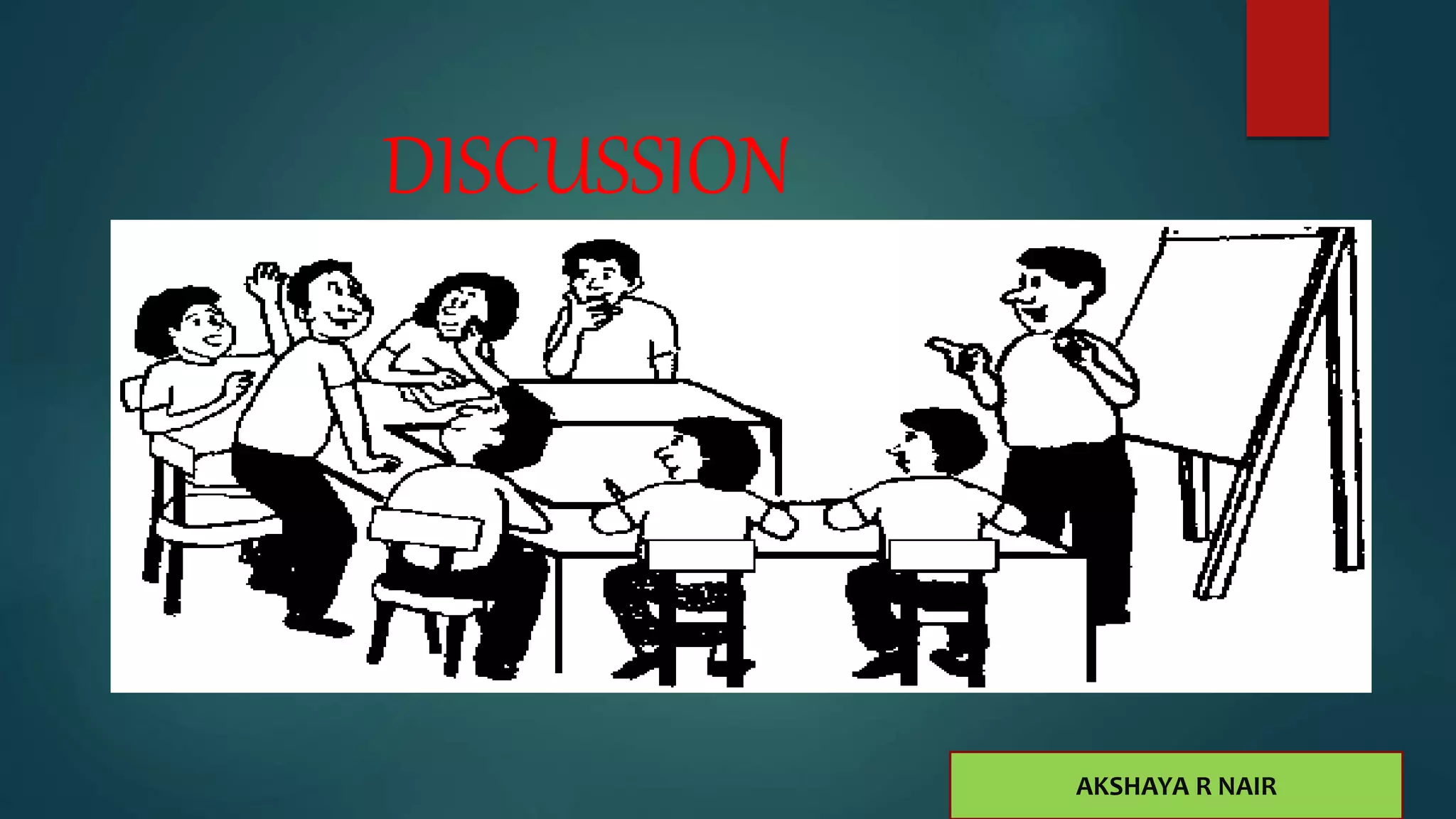
DISCUSSION
AKSHAYA R NAIR
DEFINITION
DISCUSSION METHOD OF TEACHING IS A GROUP ACTIVITY INVOLVING THE
TEACHER AND THE STUDENT TO DEFINE THE PROBLEM AND SEEK ITS
SOLUTION.DISCUSSION METHOD IS ALSO DESCRIBED AS A CONSTRUCTIVE
PROCESS INVOLVING LISTENING ,THINKING ,AS WELL AS THE SPEAKING
ABILITY OF THE STUDENT.
PREPARATION AND CONDUCT OF
DISCUSSION METHOD
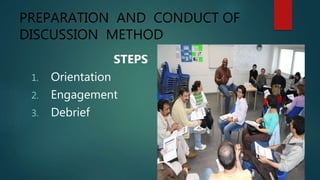
STEPS
1. Orientation
2. Engagement
3. Debrief
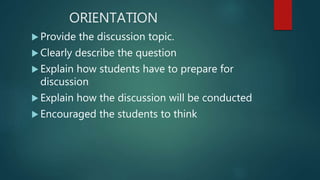
ORIENTATION
 Provide the discussion topic.
 Clearly describe the question
 Explain how students have to prepare for
discussion
 Explain how the discussion will be conducted
 Encouraged the students to think
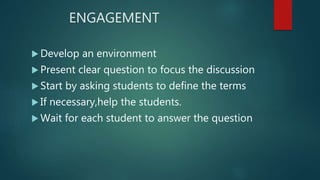
ENGAGEMENT
 Develop an environment
 Present clear question to focus the discussion
 Start by asking students to define the terms
 If necessary,help the students.
 Wait for each student to answer the question
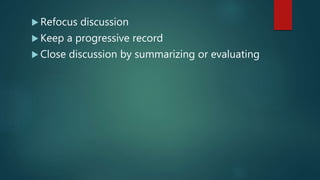
 Refocus discussion
 Keep a progressive record
 Close discussion by summarizing or evaluating
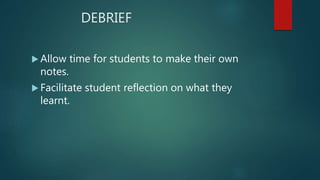
DEBRIEF
 Allow time for students to make their own
notes.
 Facilitate student reflection on what they
learnt.
PRINCIPLES
 The objective should be clearly defined and
understood by all participants.
 The teacher should prepare carefully as a
facilitator to guide
 Question outline should be prepared carefully
 The members of the group should come
prepared; have a basic knowledge about the
topic to be discussed.
 Leader need to guide and coordinate the
proceedings so that the discussion should be
kept to the point.
 Record the main points of discussion
 Each one in the group should feel free to
participate and a shy person should be
encouraged to contribute
 Discussion should be properly ended with a
report.
 Emphasis on learning instead of teaching
 Participation by every body
 Fostering democratic way of thinking
 Training in reflective thinking
 Training in self expression
 Made interest
 More time and effort
 May not be end with solution
 Teacher may not be able to guide and provide
true leadership
 Success of discussion is based on good
preparation
 It may create emotional stess
 Not effective in describing procedures
 Few students may dominate in discussion
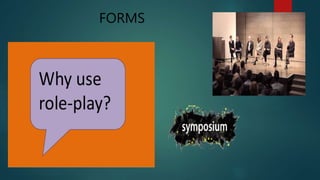
FORMS
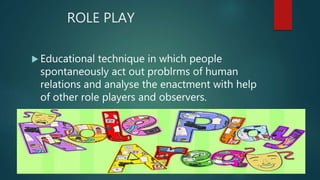
ROLE PLAY
 Educational technique in which people
spontaneously act out problrms of human
relations and analyse the enactment with help
of other role players and observers.
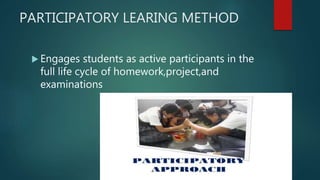
PARTICIPATORY LEARING METHOD
 Engages students as active participants in the
full life cycle of homework,project,and
examinations
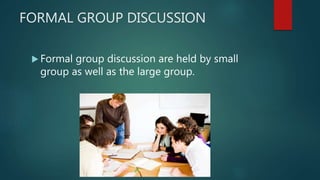
FORMAL GROUP DISCUSSION
 Formal group discussion are held by small
group as well as the large group.
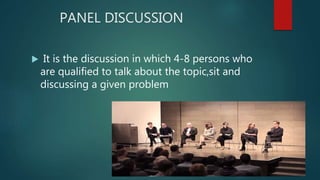
PANEL DISCUSSION
 It is the discussion in which 4-8 persons who
are qualified to talk about the topic,sit and
discussing a given problem
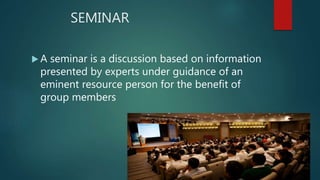
SEMINAR
 A seminar is a discussion based on information
presented by experts under guidance of an
eminent resource person for the benefit of
group members
SYMPOSIUM
 It is an technique serve as an excellent device
for informing an audience discussion. The
procedure is like straight lecture form,
ak

Discussion method of teaching

  • 1.
  • 2.
    DEFINITION DISCUSSION METHOD OFTEACHING IS A GROUP ACTIVITY INVOLVING THE TEACHER AND THE STUDENT TO DEFINE THE PROBLEM AND SEEK ITS SOLUTION.DISCUSSION METHOD IS ALSO DESCRIBED AS A CONSTRUCTIVE PROCESS INVOLVING LISTENING ,THINKING ,AS WELL AS THE SPEAKING ABILITY OF THE STUDENT.
  • 3.
    PREPARATION AND CONDUCTOF DISCUSSION METHOD STEPS 1. Orientation 2. Engagement 3. Debrief
  • 4.
    ORIENTATION  Provide thediscussion topic.  Clearly describe the question  Explain how students have to prepare for discussion  Explain how the discussion will be conducted  Encouraged the students to think
  • 5.
    ENGAGEMENT  Develop anenvironment  Present clear question to focus the discussion  Start by asking students to define the terms  If necessary,help the students.  Wait for each student to answer the question
  • 6.
     Refocus discussion Keep a progressive record  Close discussion by summarizing or evaluating
  • 7.
    DEBRIEF  Allow timefor students to make their own notes.  Facilitate student reflection on what they learnt.
  • 8.
    PRINCIPLES  The objectiveshould be clearly defined and understood by all participants.  The teacher should prepare carefully as a facilitator to guide  Question outline should be prepared carefully  The members of the group should come prepared; have a basic knowledge about the topic to be discussed.
  • 9.
     Leader needto guide and coordinate the proceedings so that the discussion should be kept to the point.  Record the main points of discussion  Each one in the group should feel free to participate and a shy person should be encouraged to contribute  Discussion should be properly ended with a report.
  • 11.
     Emphasis onlearning instead of teaching  Participation by every body  Fostering democratic way of thinking  Training in reflective thinking  Training in self expression  Made interest
  • 13.
     More timeand effort  May not be end with solution  Teacher may not be able to guide and provide true leadership  Success of discussion is based on good preparation  It may create emotional stess
  • 14.
     Not effectivein describing procedures  Few students may dominate in discussion
  • 15.
  • 16.
    ROLE PLAY  Educationaltechnique in which people spontaneously act out problrms of human relations and analyse the enactment with help of other role players and observers.
  • 17.
    PARTICIPATORY LEARING METHOD Engages students as active participants in the full life cycle of homework,project,and examinations
  • 18.
    FORMAL GROUP DISCUSSION Formal group discussion are held by small group as well as the large group.
  • 19.
    PANEL DISCUSSION  Itis the discussion in which 4-8 persons who are qualified to talk about the topic,sit and discussing a given problem
  • 20.
    SEMINAR  A seminaris a discussion based on information presented by experts under guidance of an eminent resource person for the benefit of group members
  • 21.
    SYMPOSIUM  It isan technique serve as an excellent device for informing an audience discussion. The procedure is like straight lecture form,
  • 22.