By
Dr. Abhishek Solanki
INTRODUCTION
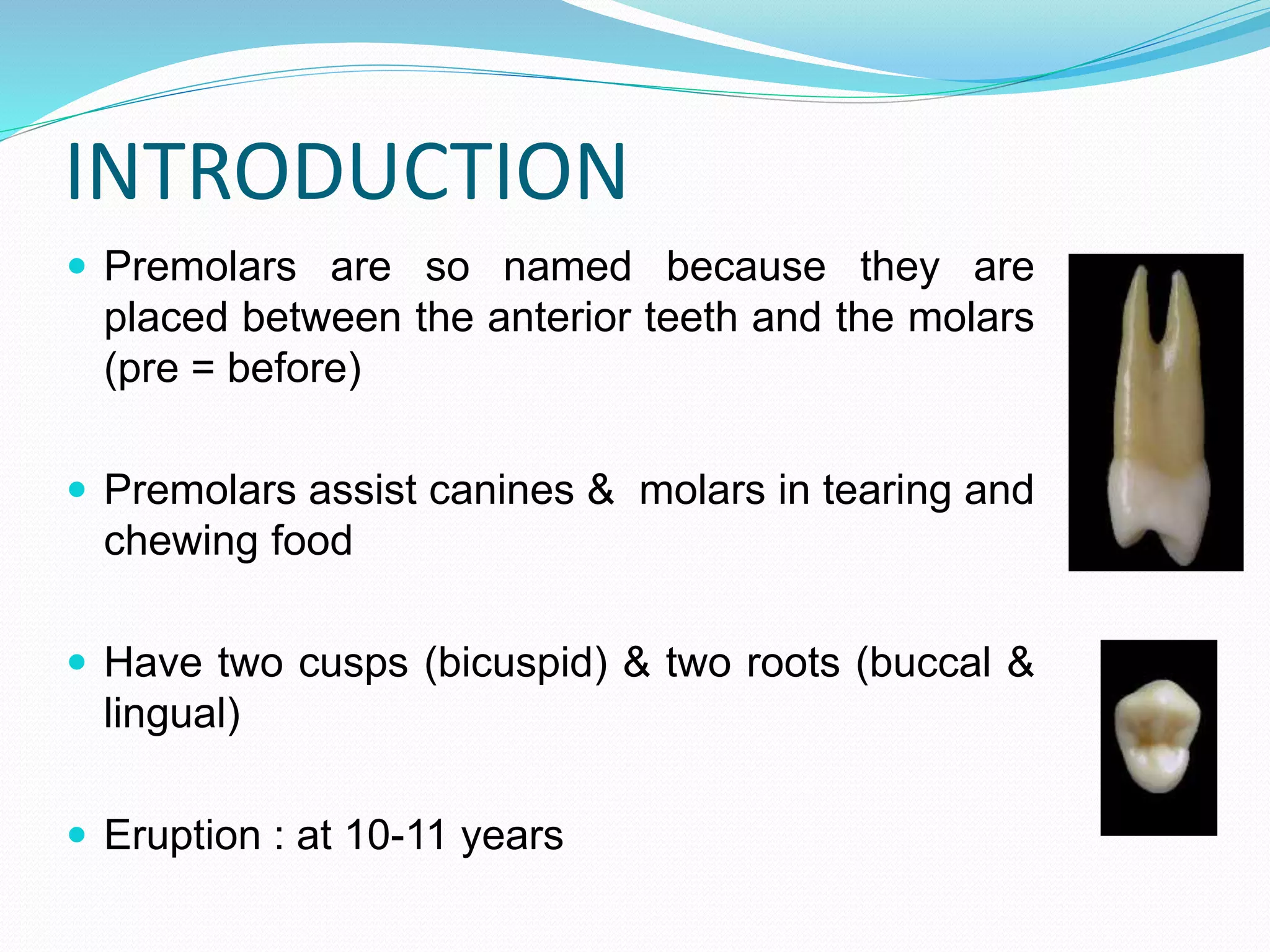
 Premolars are so named because they are
placed between the anterior teeth and the molars
(pre = before)
 Premolars assist canines & molars in tearing and
chewing food
 Have two cusps (bicuspid) & two roots (buccal &
lingual)
 Eruption : at 10-11 years
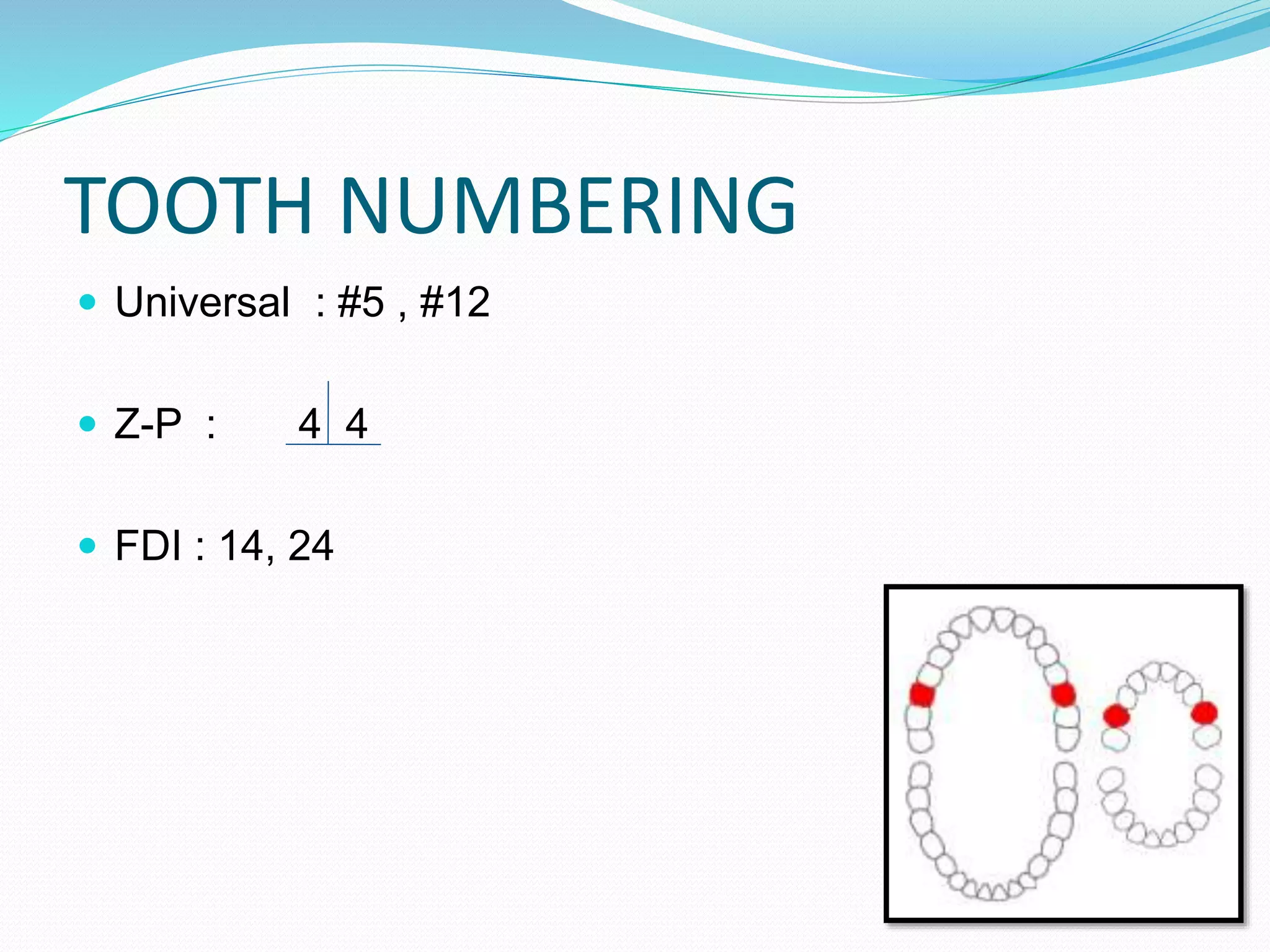
TOOTH NUMBERING
 Universal : #5 , #12
 Z-P : 4 4
 FDI : 14, 24
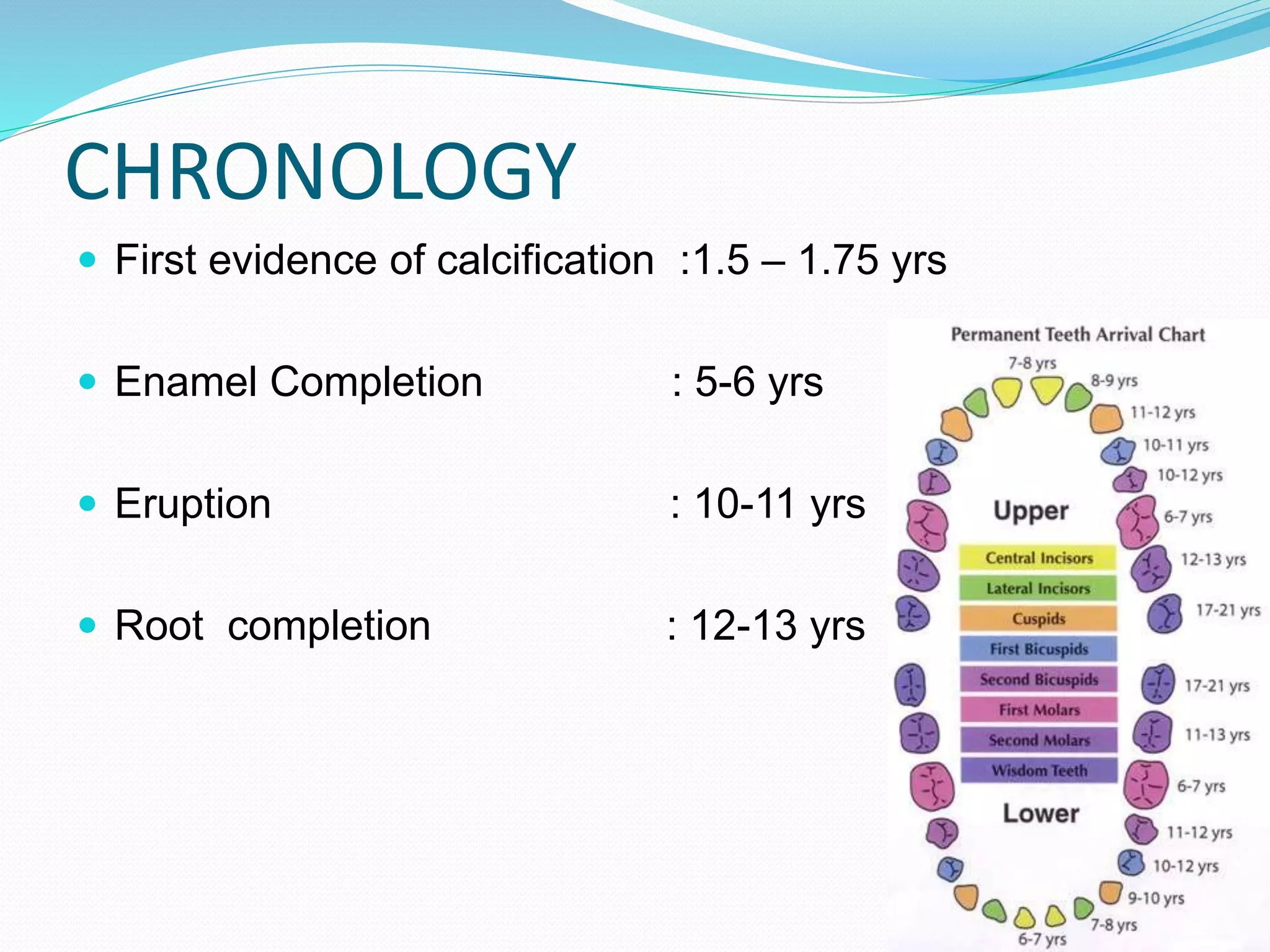
CHRONOLOGY
 First evidence of calcification :1.5 – 1.75 yrs
 Enamel Completion : 5-6 yrs
 Eruption : 10-11 yrs
 Root completion : 12-13 yrs
DIMENSIONS (in mm)
Cervico-occlusal Length of Crown 8.5
Length of Root 14
Mesiodistal Diameter of Crown 7
Mesiodistal Diameter of Crown at Cervix 5
Labio- or Bucco-lingual Diameter of Crown 9
Labio- or Bucco-lingual Diameter of Crown at Cervix 8
Curvature of Cervical Line—Mesial 1
Curvature of Cervical Line—Distal 0
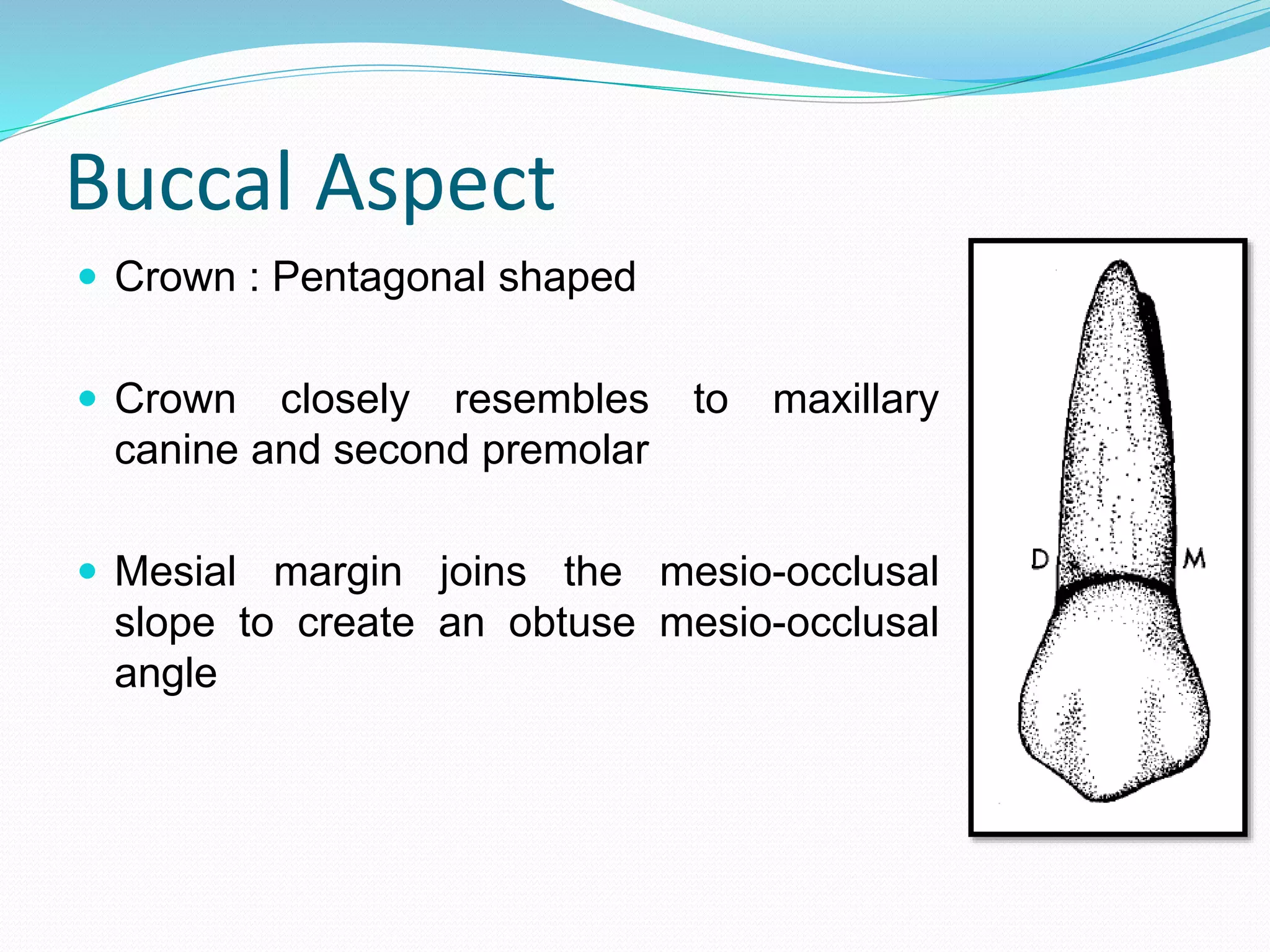
Buccal Aspect
 Crown : Pentagonal shaped
 Crown closely resembles to maxillary
canine and second premolar
 Mesial margin joins the mesio-occlusal
slope to create an obtuse mesio-occlusal
angle
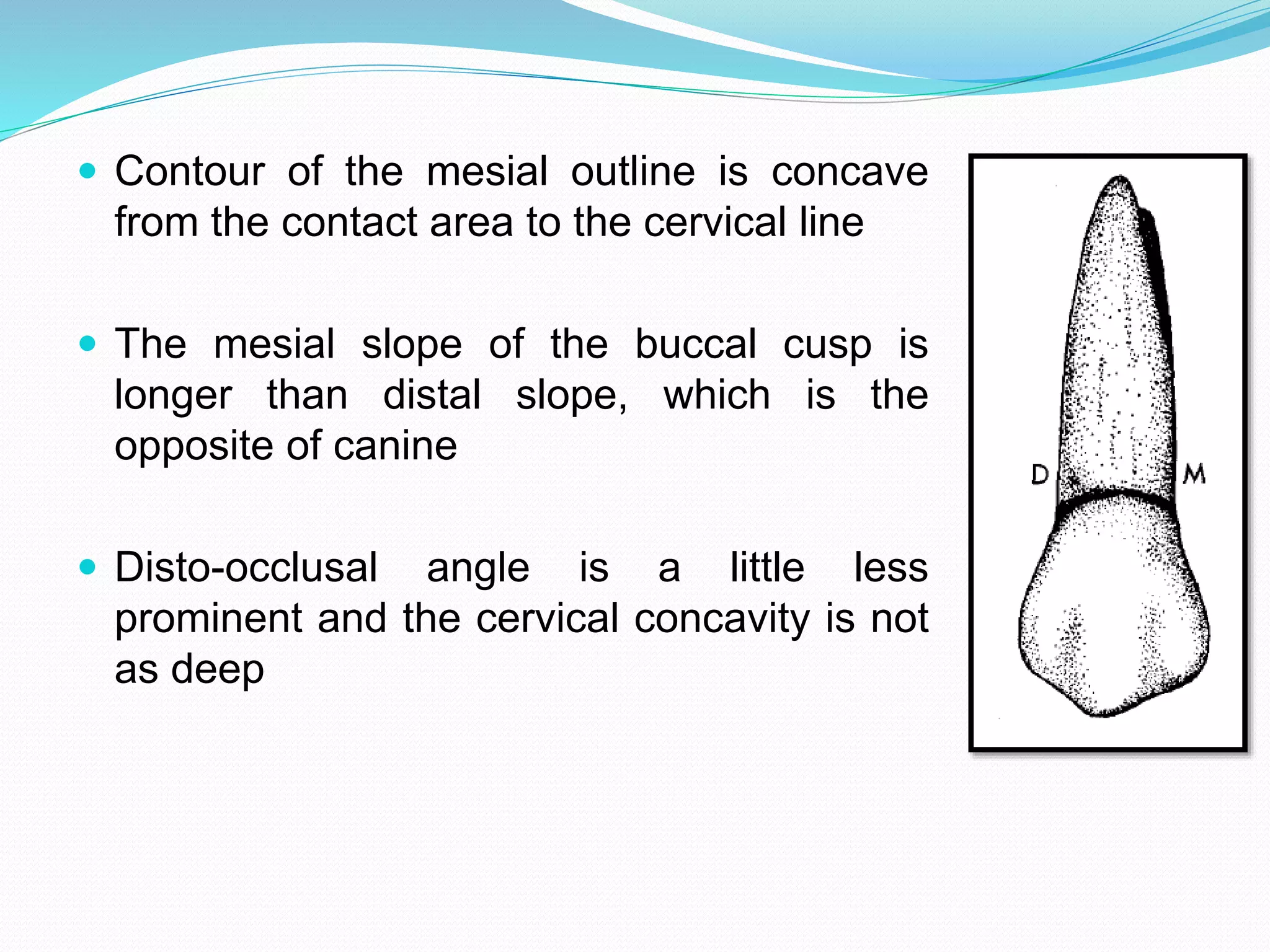
 Contour of the mesial outline is concave
from the contact area to the cervical line
 The mesial slope of the buccal cusp is
longer than distal slope, which is the
opposite of canine
 Disto-occlusal angle is a little less
prominent and the cervical concavity is not
as deep
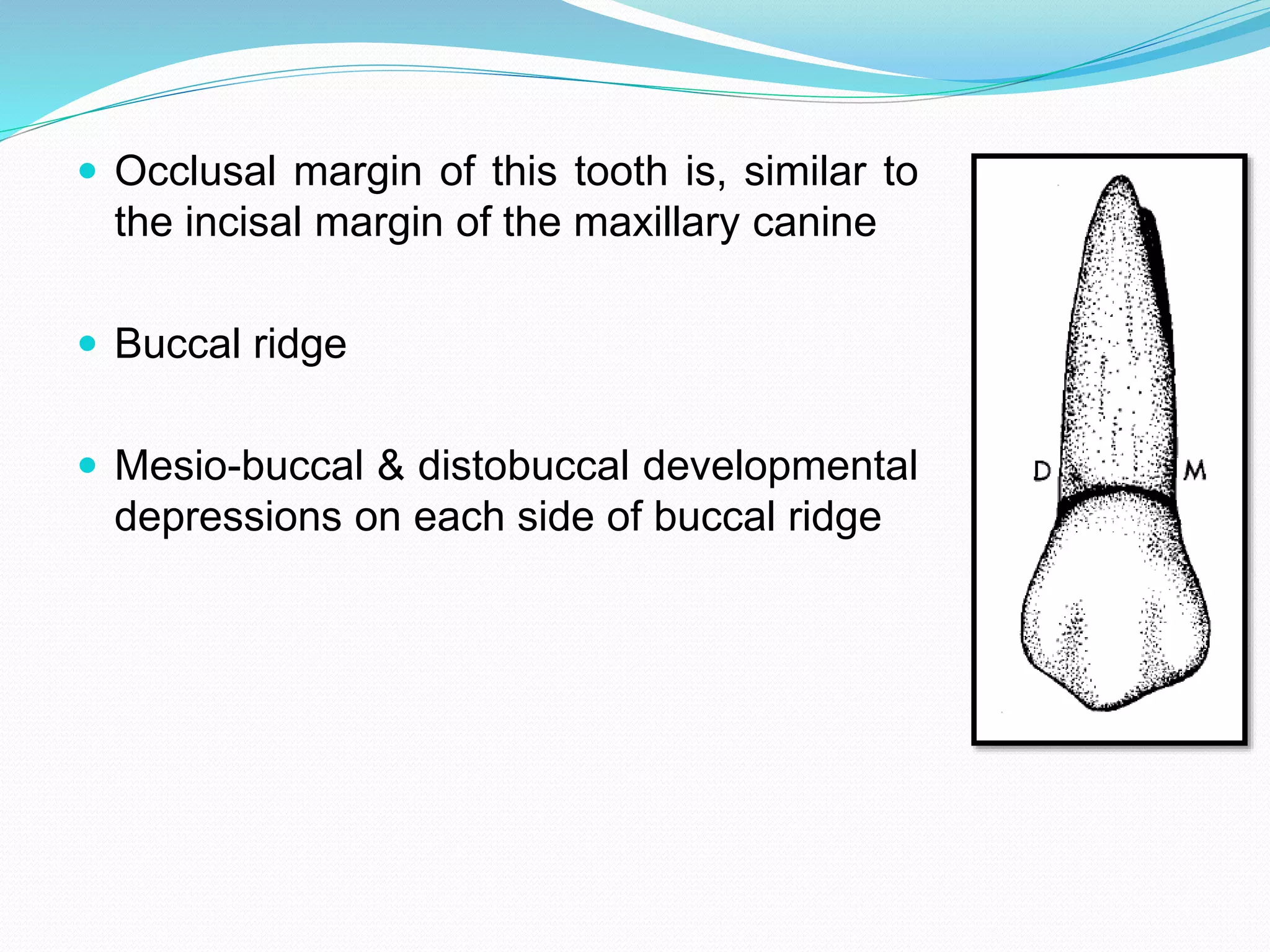
 Occlusal margin of this tooth is, similar to
the incisal margin of the maxillary canine
 Buccal ridge
 Mesio-buccal & distobuccal developmental
depressions on each side of buccal ridge
Lingual Aspect
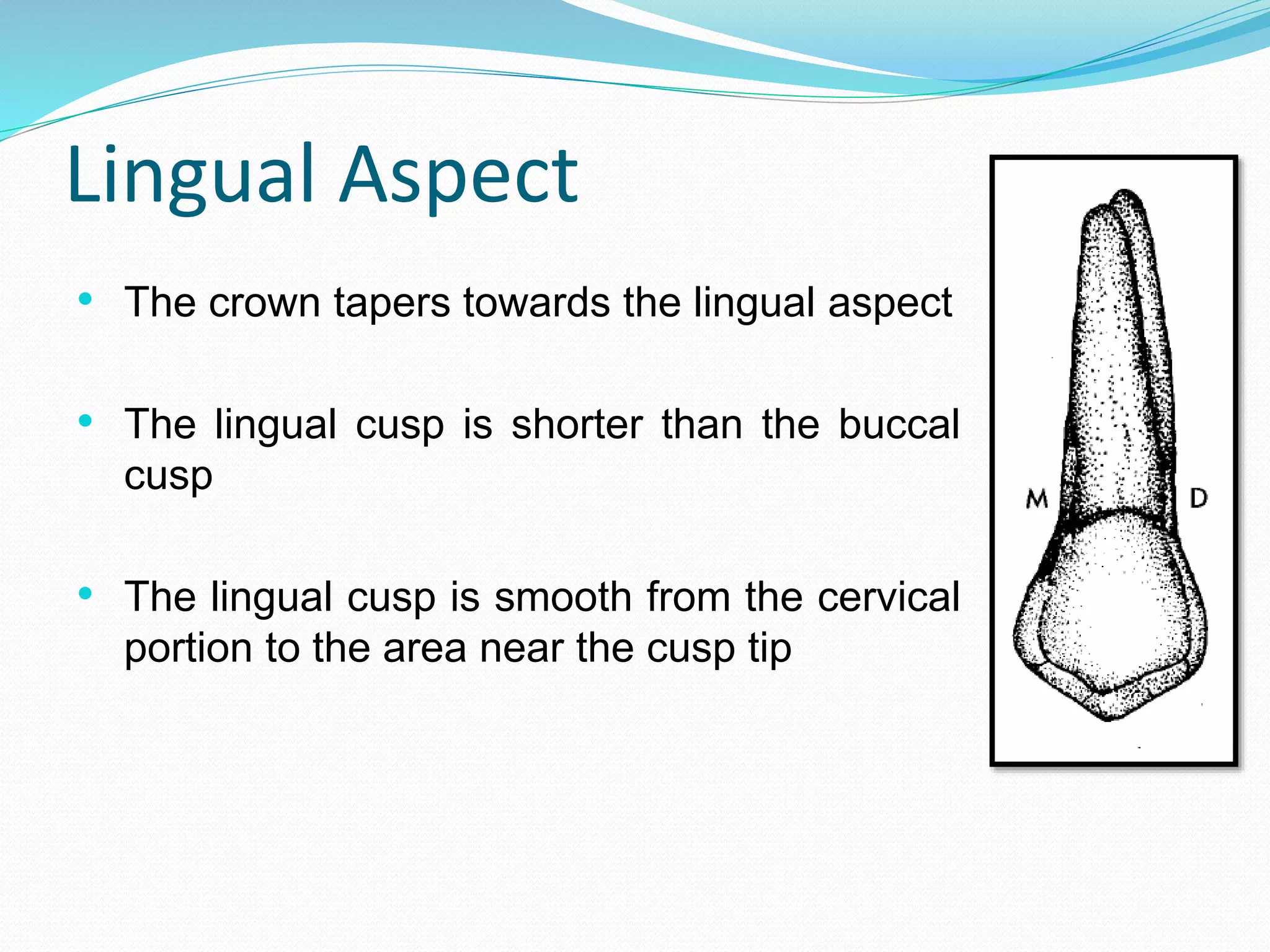
• The crown tapers towards the lingual aspect
• The lingual cusp is shorter than the buccal
cusp
• The lingual cusp is smooth from the cervical
portion to the area near the cusp tip
• The cusp tip is pointed with mesial and
distal slope meeting at an angle of about
90 degrees
• Small portion of the buccal cusp can be
seen from this aspect
 Smoothly convex in all directions
 There is no clearly defined lingual ridge
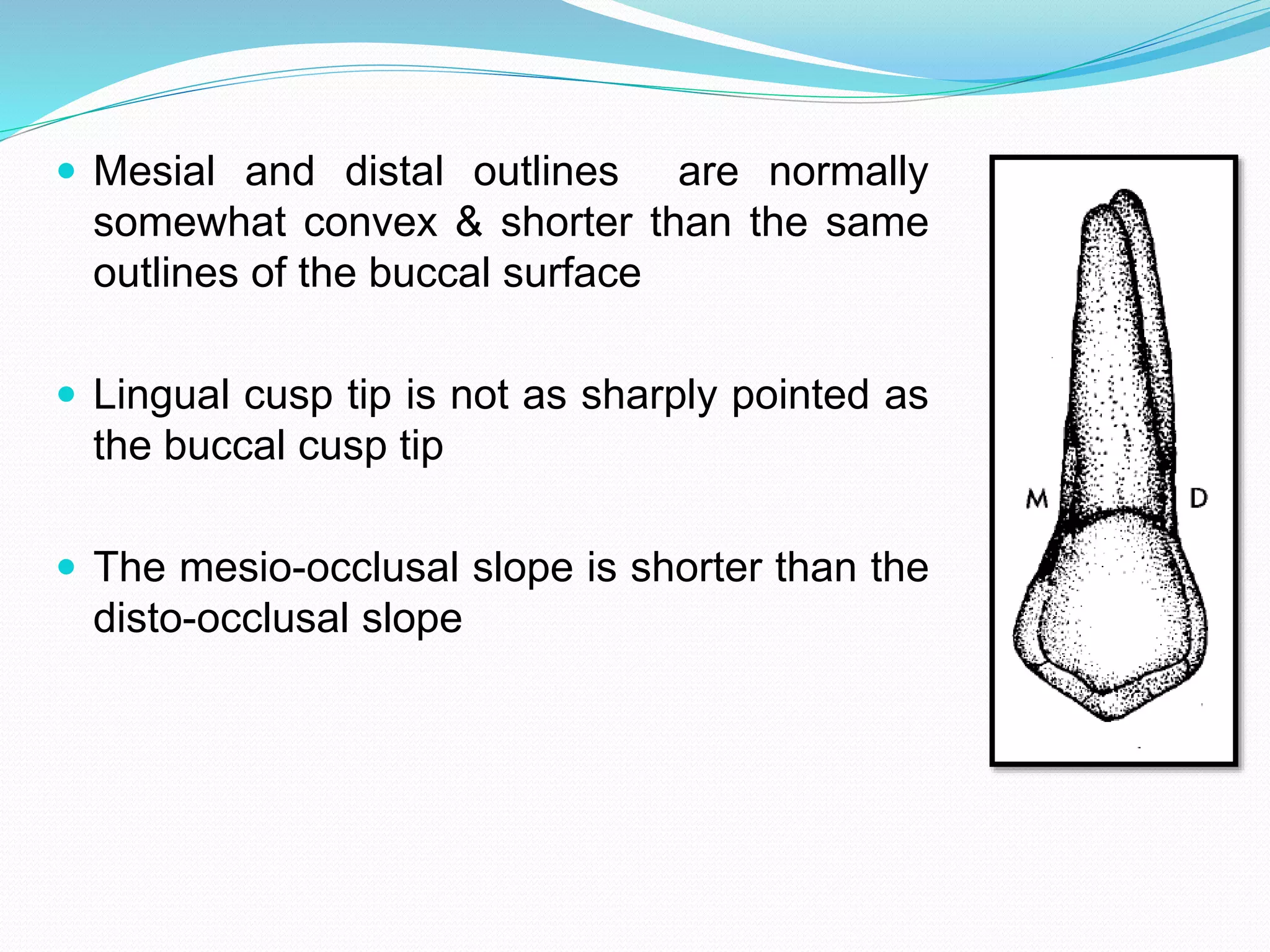
 Mesial and distal outlines are normally
somewhat convex & shorter than the same
outlines of the buccal surface
 Lingual cusp tip is not as sharply pointed as
the buccal cusp tip
 The mesio-occlusal slope is shorter than the
disto-occlusal slope
Mesial Aspect
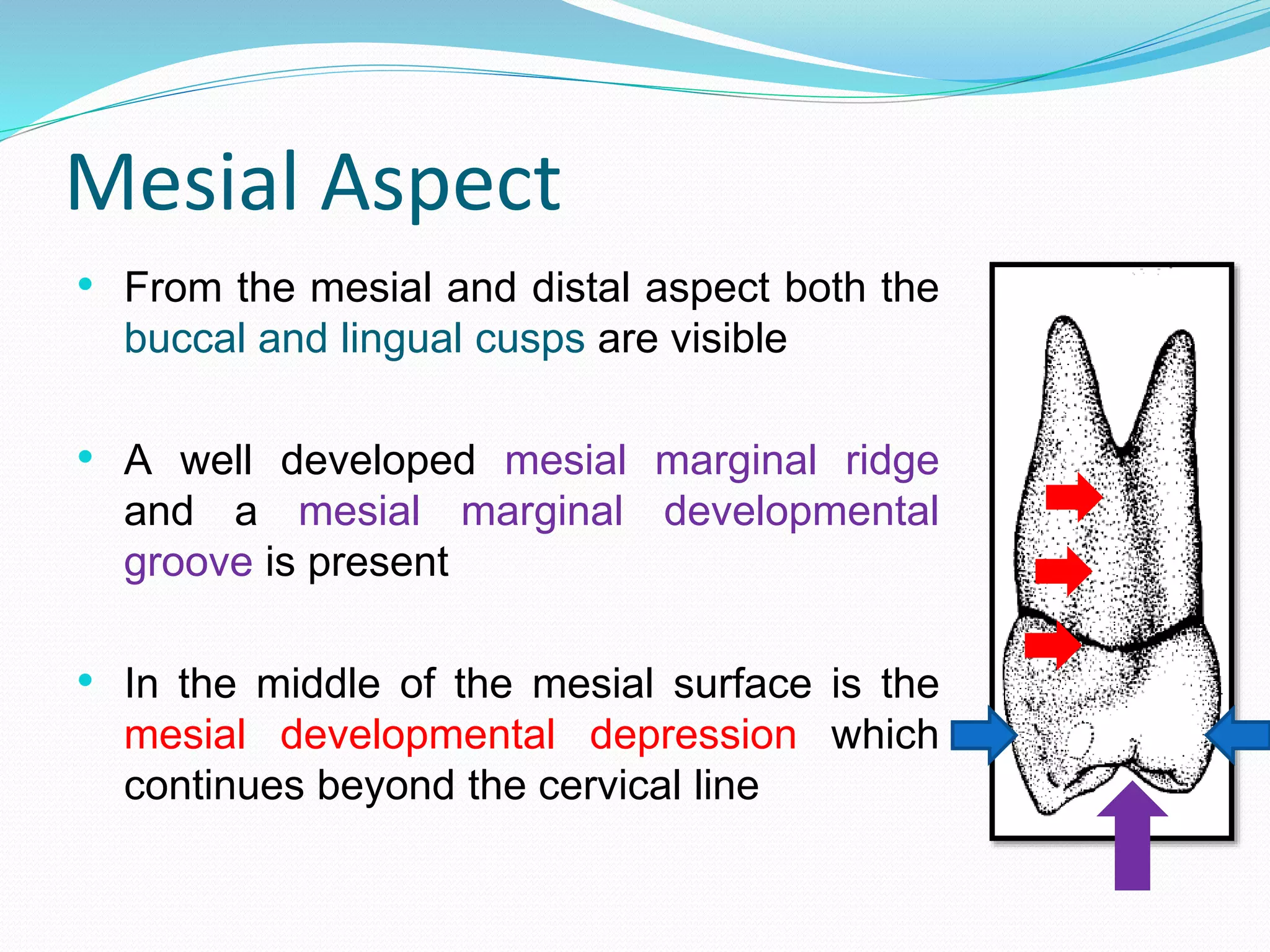
• From the mesial and distal aspect both the
buccal and lingual cusps are visible
• A well developed mesial marginal ridge
and a mesial marginal developmental
groove is present
• In the middle of the mesial surface is the
mesial developmental depression which
continues beyond the cervical line
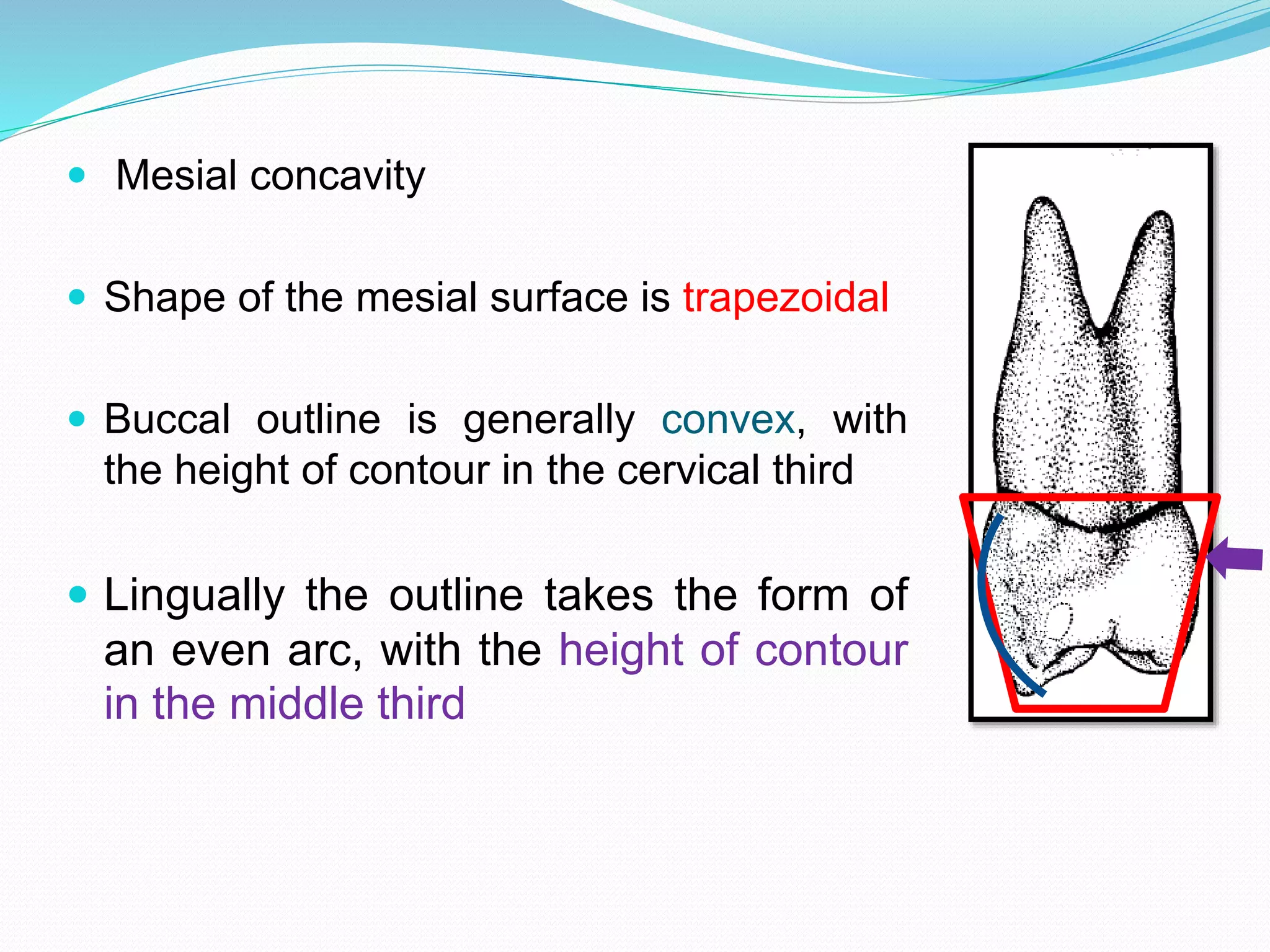
 Mesial concavity
 Shape of the mesial surface is trapezoidal
 Buccal outline is generally convex, with
the height of contour in the cervical third
 Lingually the outline takes the form of
an even arc, with the height of contour
in the middle third
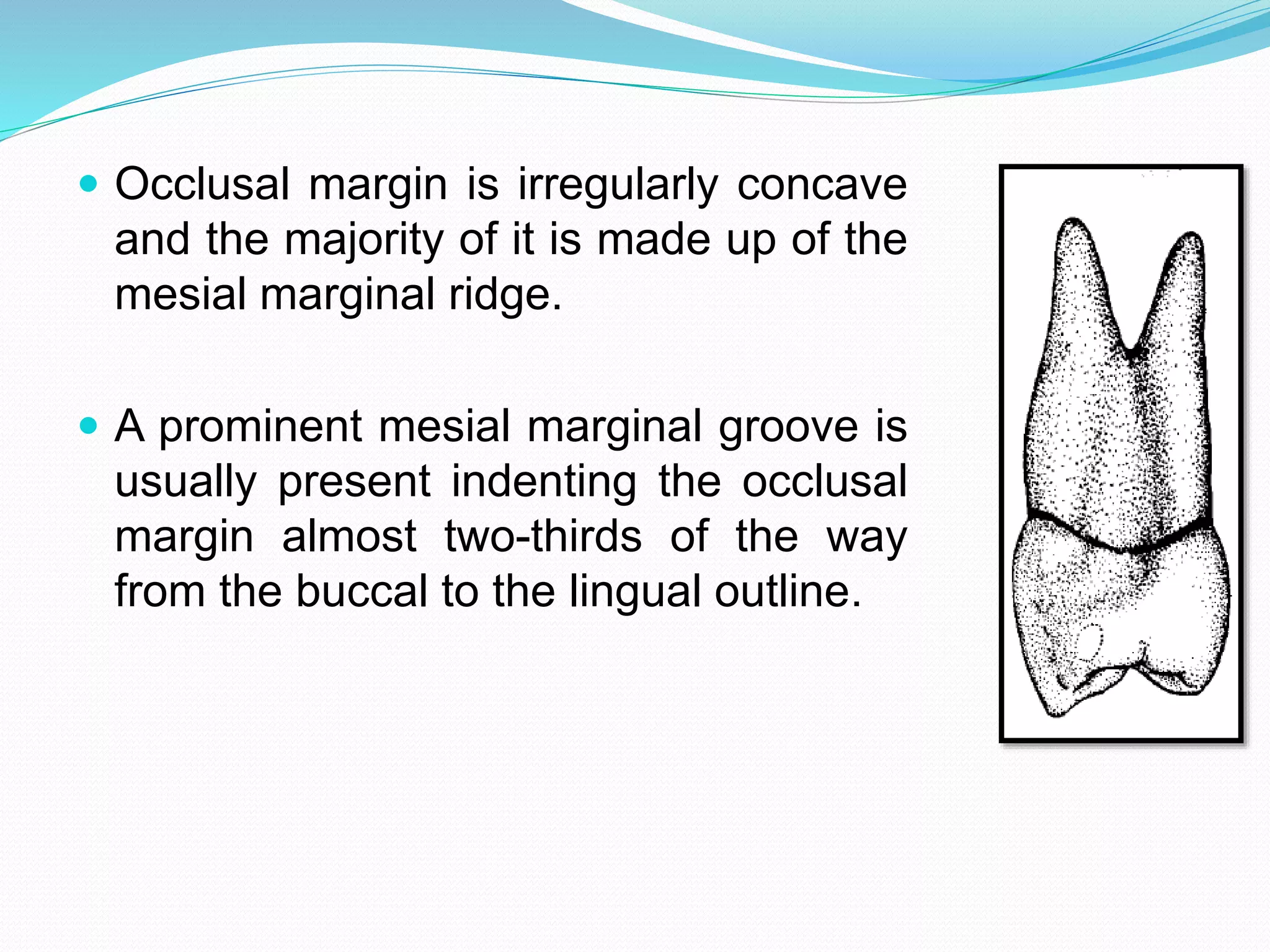
 Occlusal margin is irregularly concave
and the majority of it is made up of the
mesial marginal ridge.
 A prominent mesial marginal groove is
usually present indenting the occlusal
margin almost two-thirds of the way
from the buccal to the lingual outline.
Distal Aspect
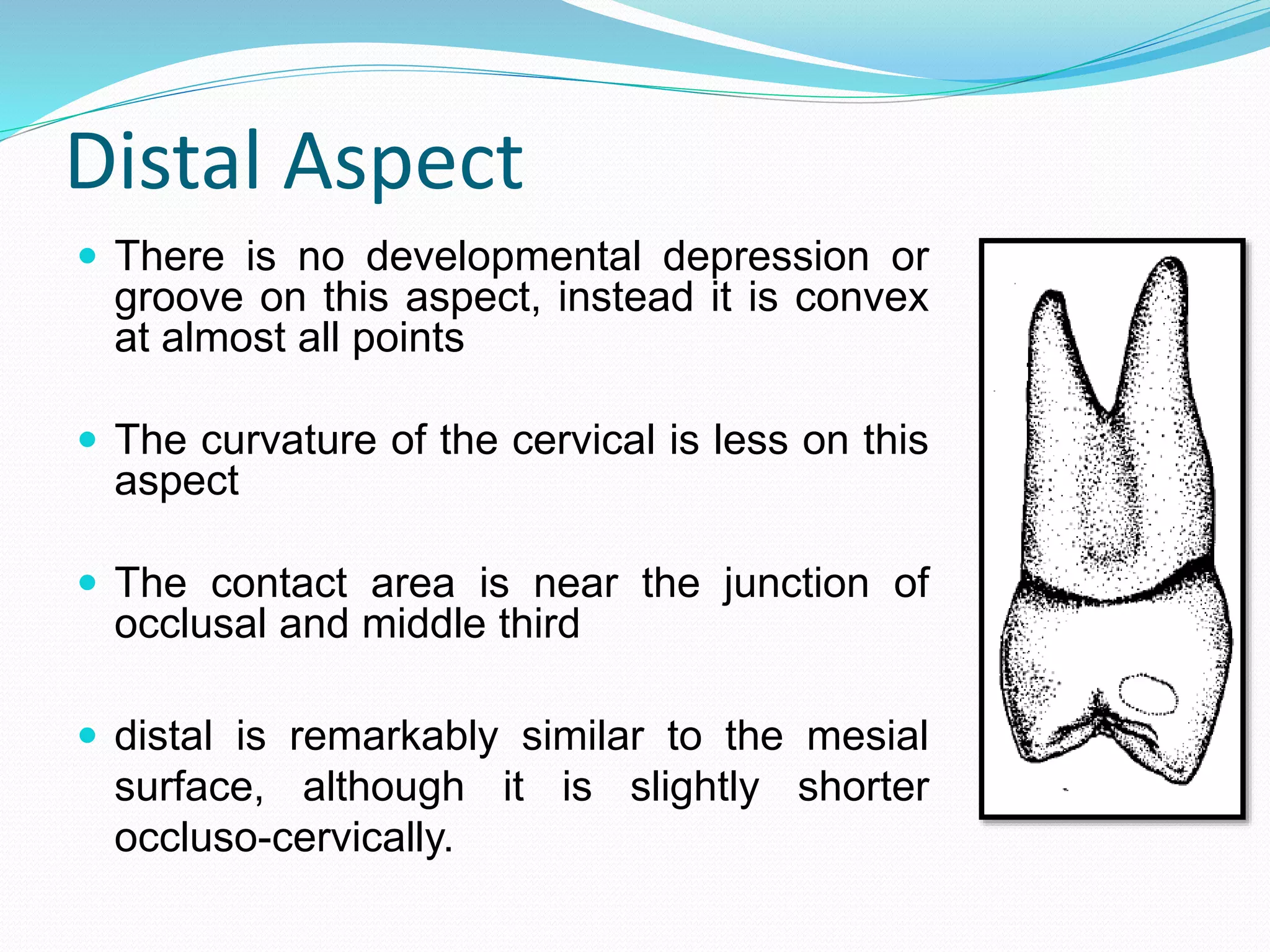
 There is no developmental depression or
groove on this aspect, instead it is convex
at almost all points
 The curvature of the cervical is less on this
aspect
 The contact area is near the junction of
occlusal and middle third
 distal is remarkably similar to the mesial
surface, although it is slightly shorter
occluso-cervically.
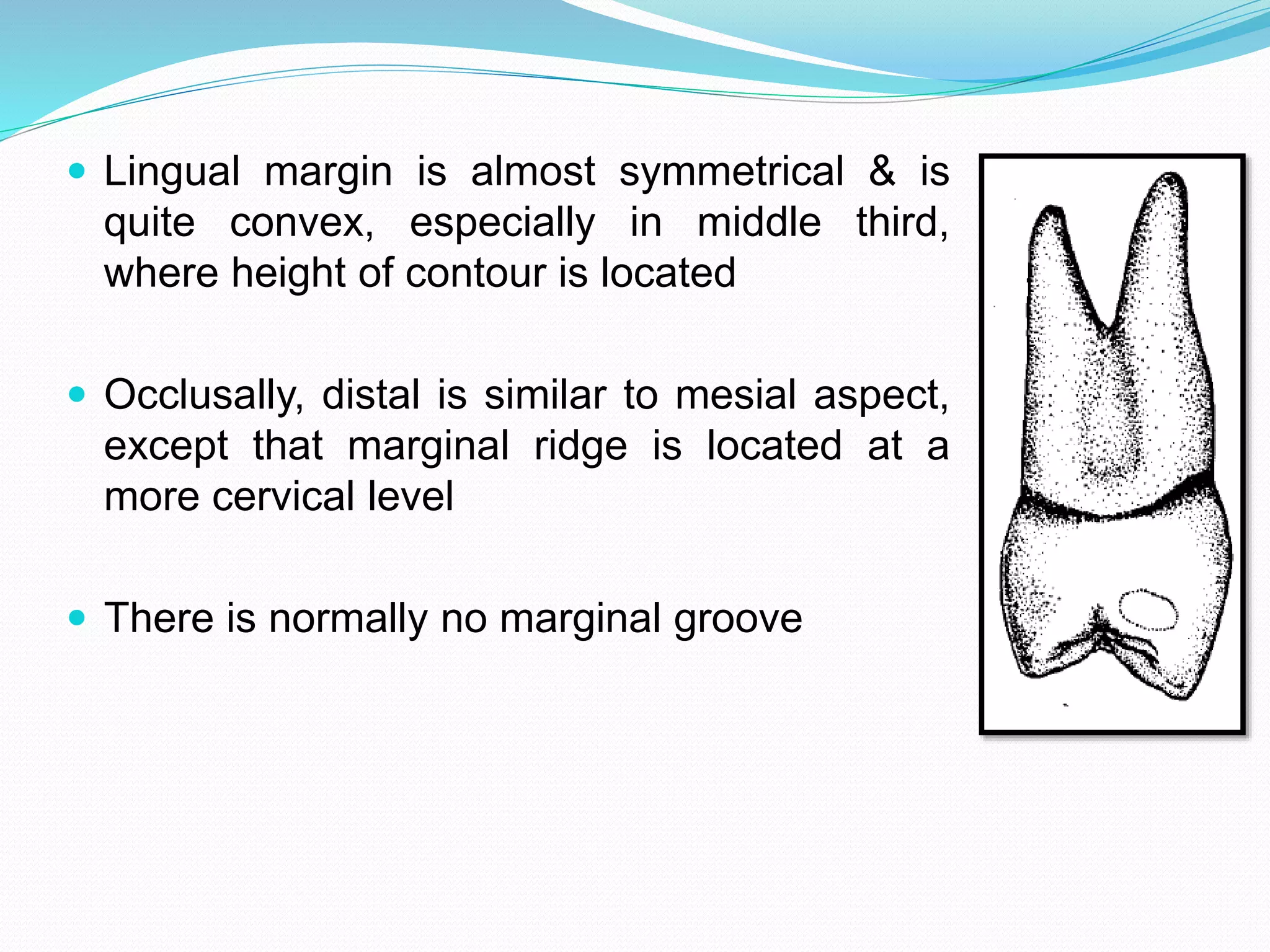
 Lingual margin is almost symmetrical & is
quite convex, especially in middle third,
where height of contour is located
 Occlusally, distal is similar to mesial aspect,
except that marginal ridge is located at a
more cervical level
 There is normally no marginal groove
Occlusal Aspect
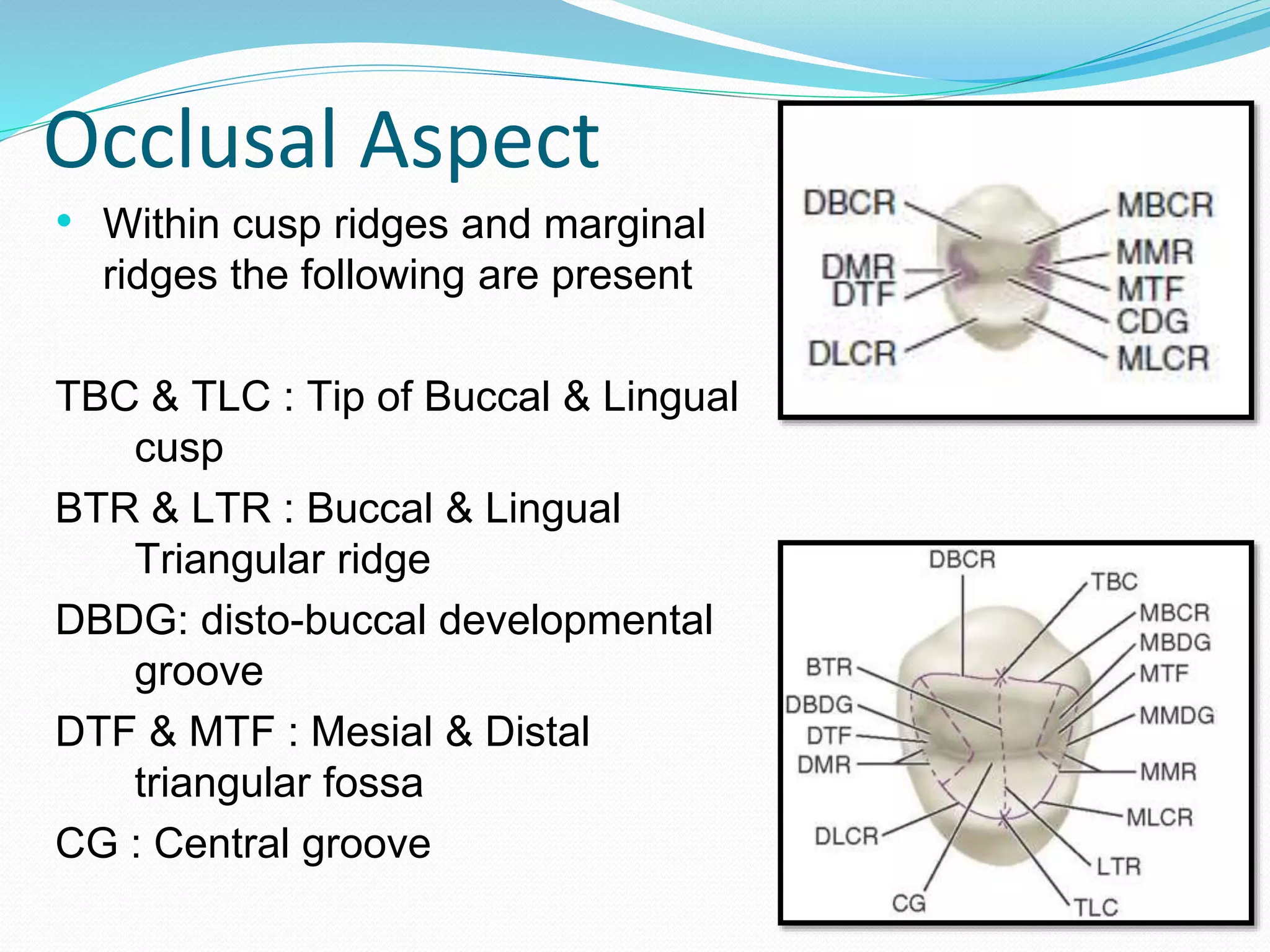
• Within cusp ridges and marginal
ridges the following are present
TBC & TLC : Tip of Buccal & Lingual
cusp
BTR & LTR : Buccal & Lingual
Triangular ridge
DBDG: disto-buccal developmental
groove
DTF & MTF : Mesial & Distal
triangular fossa
CG : Central groove
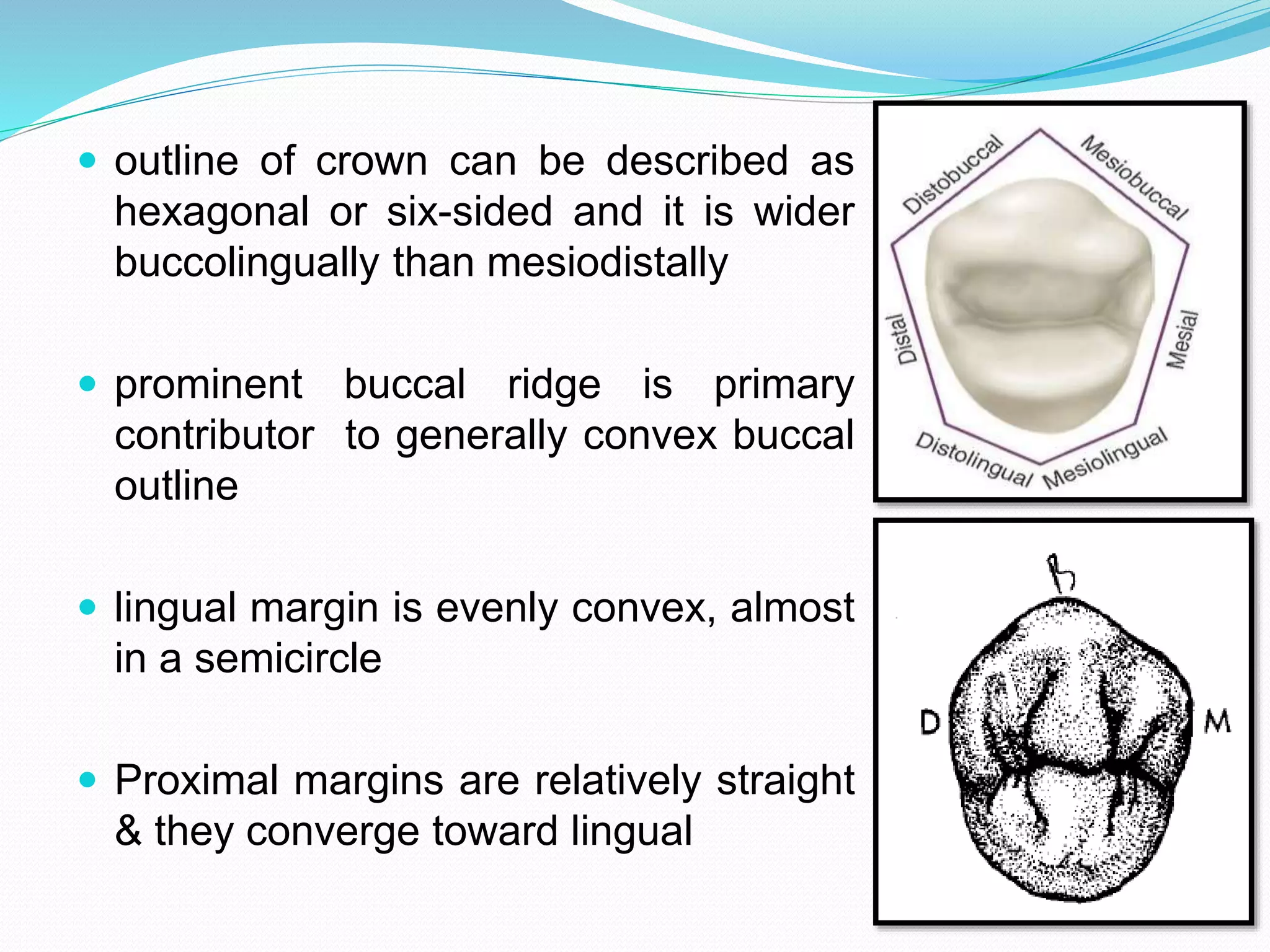
 outline of crown can be described as
hexagonal or six-sided and it is wider
buccolingually than mesiodistally
 prominent buccal ridge is primary
contributor to generally convex buccal
outline
 lingual margin is evenly convex, almost
in a semicircle
 Proximal margins are relatively straight
& they converge toward lingual
Root
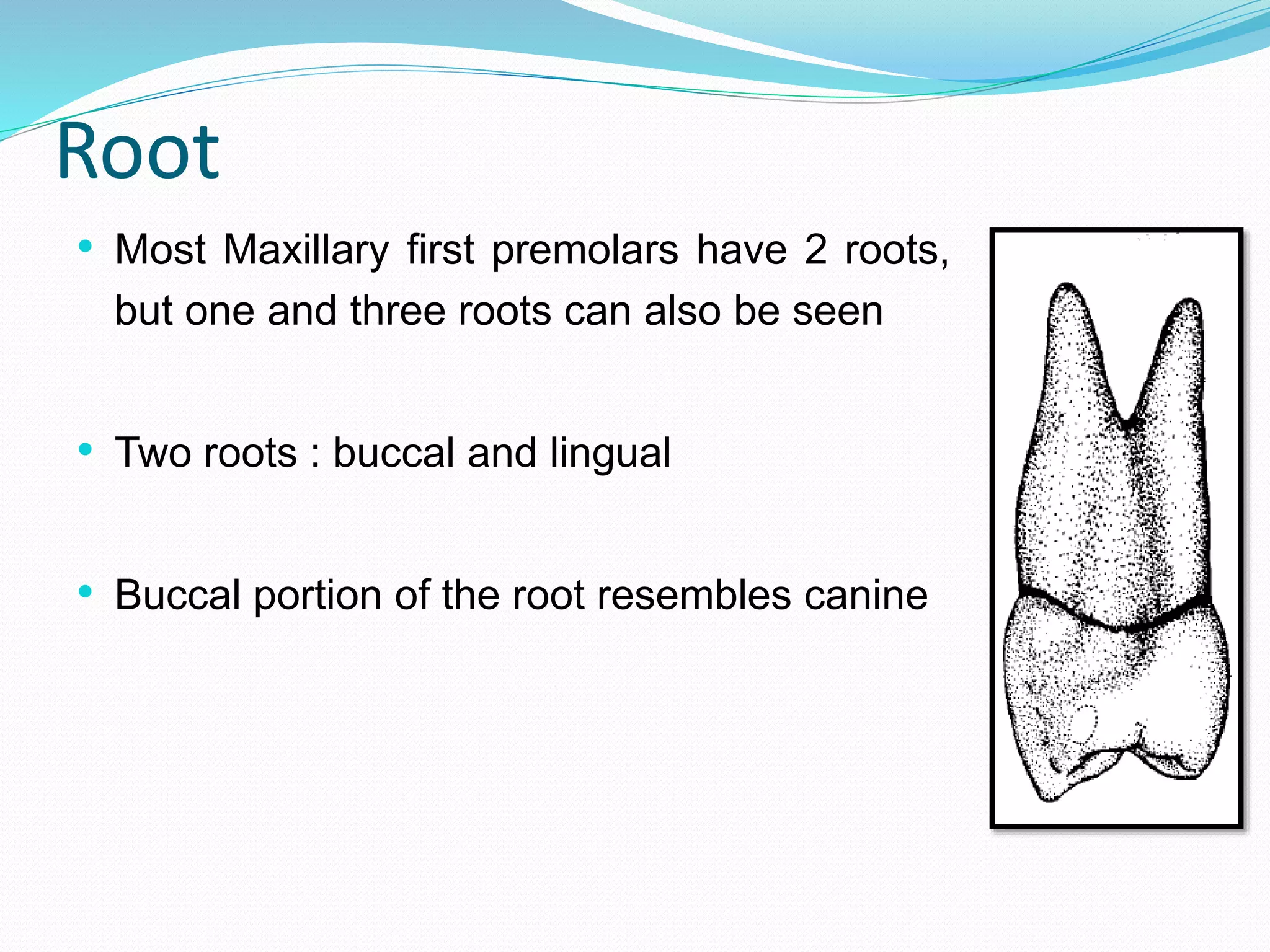
• Most Maxillary first premolars have 2 roots,
but one and three roots can also be seen
• Two roots : buccal and lingual
• Buccal portion of the root resembles canine
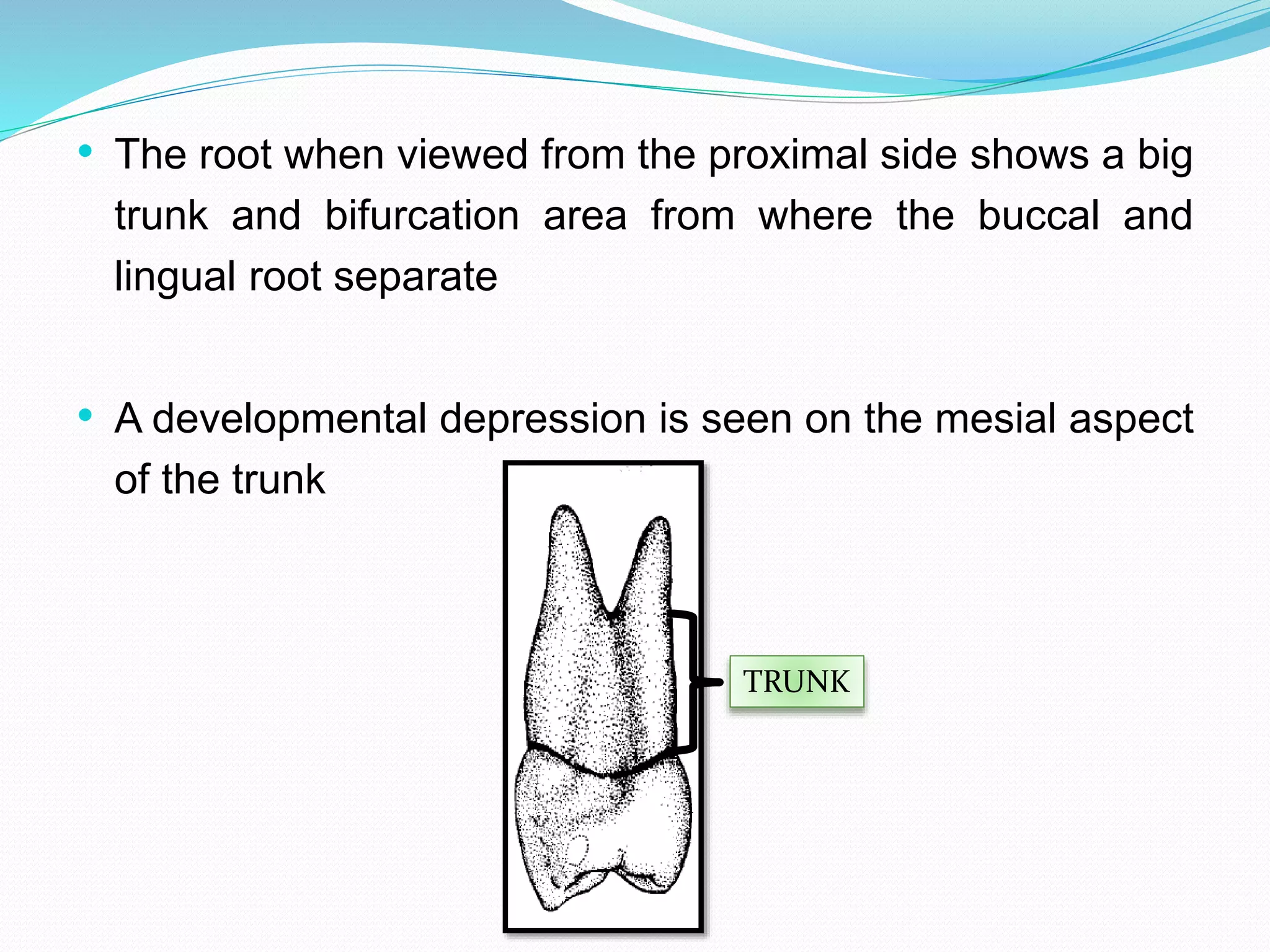
• The root when viewed from the proximal side shows a big
trunk and bifurcation area from where the buccal and
lingual root separate
• A developmental depression is seen on the mesial aspect
of the trunk
TRUNK
REFERENCES
 CONCISE DENTAL ANATOMY & MORPHOLOGY :
JAMES L FULLER
 DENTAL ANATOMY, PHYSIOLOGY & OCCLUSION:
WHEELER’S
 TEXTBOOK OF DENTAL ANATOMY, PHYSIOLOGY &
OCCLUSION: RASHMI GS (PHULARI)
 INTERNET

Permanent Maxillary 1st premolar

  • 1.
  • 2.
    INTRODUCTION  Premolars areso named because they are placed between the anterior teeth and the molars (pre = before)  Premolars assist canines & molars in tearing and chewing food  Have two cusps (bicuspid) & two roots (buccal & lingual)  Eruption : at 10-11 years
  • 3.
    TOOTH NUMBERING  Universal: #5 , #12  Z-P : 4 4  FDI : 14, 24
  • 4.
    CHRONOLOGY  First evidenceof calcification :1.5 – 1.75 yrs  Enamel Completion : 5-6 yrs  Eruption : 10-11 yrs  Root completion : 12-13 yrs
  • 5.
    DIMENSIONS (in mm) Cervico-occlusalLength of Crown 8.5 Length of Root 14 Mesiodistal Diameter of Crown 7 Mesiodistal Diameter of Crown at Cervix 5 Labio- or Bucco-lingual Diameter of Crown 9 Labio- or Bucco-lingual Diameter of Crown at Cervix 8 Curvature of Cervical Line—Mesial 1 Curvature of Cervical Line—Distal 0
  • 6.
    Buccal Aspect  Crown: Pentagonal shaped  Crown closely resembles to maxillary canine and second premolar  Mesial margin joins the mesio-occlusal slope to create an obtuse mesio-occlusal angle
  • 7.
     Contour ofthe mesial outline is concave from the contact area to the cervical line  The mesial slope of the buccal cusp is longer than distal slope, which is the opposite of canine  Disto-occlusal angle is a little less prominent and the cervical concavity is not as deep
  • 8.
     Occlusal marginof this tooth is, similar to the incisal margin of the maxillary canine  Buccal ridge  Mesio-buccal & distobuccal developmental depressions on each side of buccal ridge
  • 9.
    Lingual Aspect • Thecrown tapers towards the lingual aspect • The lingual cusp is shorter than the buccal cusp • The lingual cusp is smooth from the cervical portion to the area near the cusp tip
  • 10.
    • The cusptip is pointed with mesial and distal slope meeting at an angle of about 90 degrees • Small portion of the buccal cusp can be seen from this aspect  Smoothly convex in all directions  There is no clearly defined lingual ridge
  • 11.
     Mesial anddistal outlines are normally somewhat convex & shorter than the same outlines of the buccal surface  Lingual cusp tip is not as sharply pointed as the buccal cusp tip  The mesio-occlusal slope is shorter than the disto-occlusal slope
  • 12.
    Mesial Aspect • Fromthe mesial and distal aspect both the buccal and lingual cusps are visible • A well developed mesial marginal ridge and a mesial marginal developmental groove is present • In the middle of the mesial surface is the mesial developmental depression which continues beyond the cervical line
  • 13.
     Mesial concavity Shape of the mesial surface is trapezoidal  Buccal outline is generally convex, with the height of contour in the cervical third  Lingually the outline takes the form of an even arc, with the height of contour in the middle third
  • 14.
     Occlusal marginis irregularly concave and the majority of it is made up of the mesial marginal ridge.  A prominent mesial marginal groove is usually present indenting the occlusal margin almost two-thirds of the way from the buccal to the lingual outline.
  • 15.
    Distal Aspect  Thereis no developmental depression or groove on this aspect, instead it is convex at almost all points  The curvature of the cervical is less on this aspect  The contact area is near the junction of occlusal and middle third  distal is remarkably similar to the mesial surface, although it is slightly shorter occluso-cervically.
  • 16.
     Lingual marginis almost symmetrical & is quite convex, especially in middle third, where height of contour is located  Occlusally, distal is similar to mesial aspect, except that marginal ridge is located at a more cervical level  There is normally no marginal groove
  • 17.
    Occlusal Aspect • Withincusp ridges and marginal ridges the following are present TBC & TLC : Tip of Buccal & Lingual cusp BTR & LTR : Buccal & Lingual Triangular ridge DBDG: disto-buccal developmental groove DTF & MTF : Mesial & Distal triangular fossa CG : Central groove
  • 18.
     outline ofcrown can be described as hexagonal or six-sided and it is wider buccolingually than mesiodistally  prominent buccal ridge is primary contributor to generally convex buccal outline  lingual margin is evenly convex, almost in a semicircle  Proximal margins are relatively straight & they converge toward lingual
  • 19.
    Root • Most Maxillaryfirst premolars have 2 roots, but one and three roots can also be seen • Two roots : buccal and lingual • Buccal portion of the root resembles canine
  • 20.
    • The rootwhen viewed from the proximal side shows a big trunk and bifurcation area from where the buccal and lingual root separate • A developmental depression is seen on the mesial aspect of the trunk TRUNK
  • 21.
    REFERENCES  CONCISE DENTALANATOMY & MORPHOLOGY : JAMES L FULLER  DENTAL ANATOMY, PHYSIOLOGY & OCCLUSION: WHEELER’S  TEXTBOOK OF DENTAL ANATOMY, PHYSIOLOGY & OCCLUSION: RASHMI GS (PHULARI)  INTERNET