Translation In Eukaryotes
Muhammad Umer Farooq
BAGF13E221
What Is Translation??
 Translation is the process by which protein is synthesized from
the information contained in a molecule of messenger RNA
(mRNA).
What are Eukaryotes?
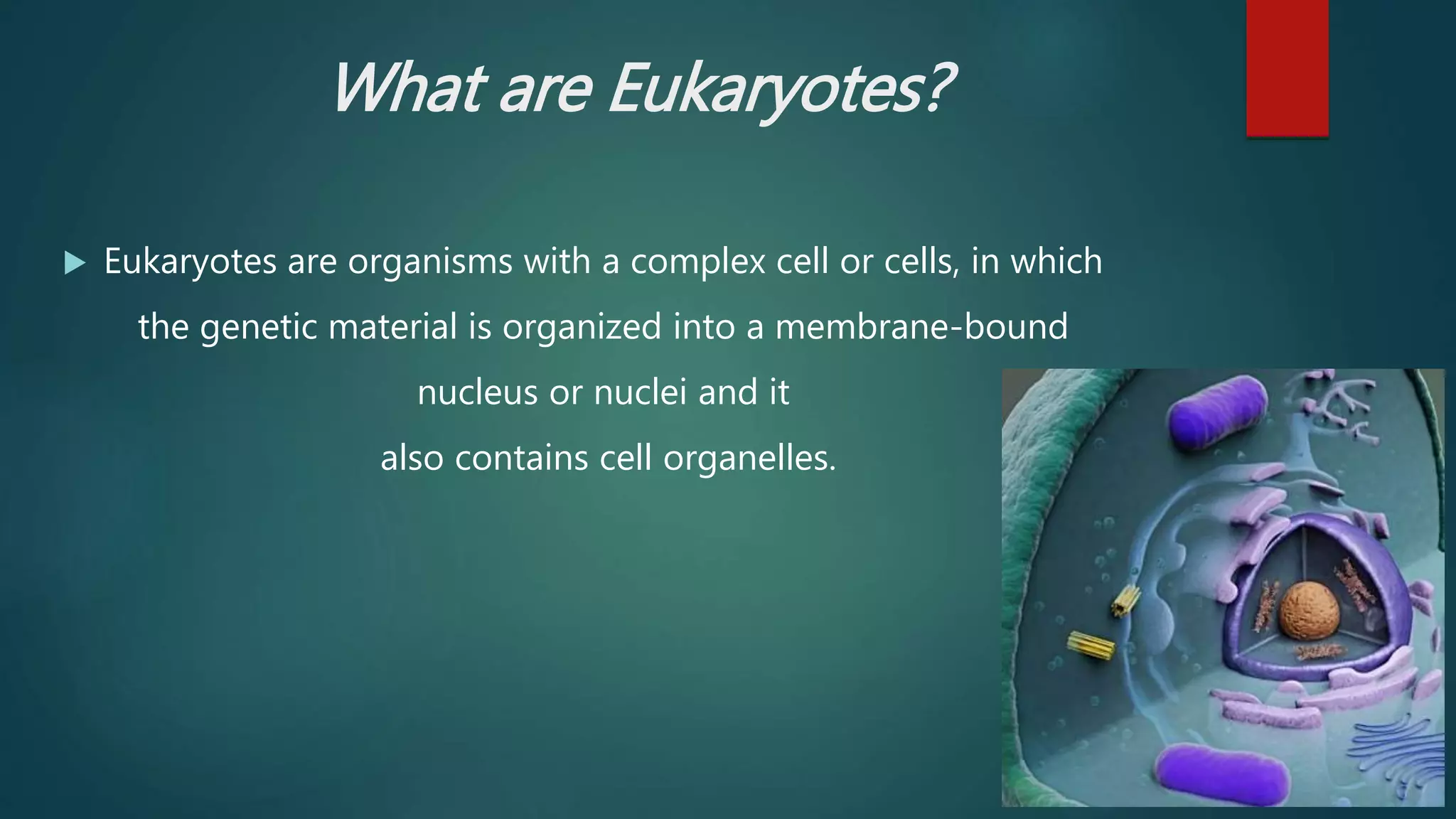
 Eukaryotes are organisms with a complex cell or cells, in which
the genetic material is organized into a membrane-bound
nucleus or nuclei and it
also contains cell organelles.
Translation: An Overview
 Ribosomes translate the genetic message of mRNA into
proteins.
 The mRNA is translated from 5’ 3’.
 Amino acids bound to tRNAs are inserted in a proper
sequence due to:
- Specific binding of each amino acid to its tRNA.
- Specific base-pairing between the mRNA codon and
tRNA anticodon.
Components of Translation
 mRNA:
- Made in the nucleus, transported to cytoplasm.
 tRNA:
- Adaptor molecule that mediate the transfer of information from
nucleic acid to protein.
 Ribosomes:
- Manufacturing units of a cell.
 Enzymes:
- Required for the attachment of amino acids to the correct tRNA
molecule, and for peptide bond formation between amino acids.
 Proteins:
- Soluble factors necessary for proper initiation, elongation and
termination.
Enzymes
 catalyze the
attachment of tRNA molecule to its respective amino acid.
- At least one for each tRNA.
- Attachment of amino acid activates/ charges the
tRNA molecule.
 catalyzes the sequential transfer
of amino acid to the growing chain.
- Forms the peptide bond between the amino acids.
Ribosomes: Role In Translation
 The smaller subunit is the one that initially binds with the
mRNA.
 The larger subunit provides the enzyme activity:
- Peptidyl transferase
- Catalyzes the formation of peptide bonds joining amino acids.
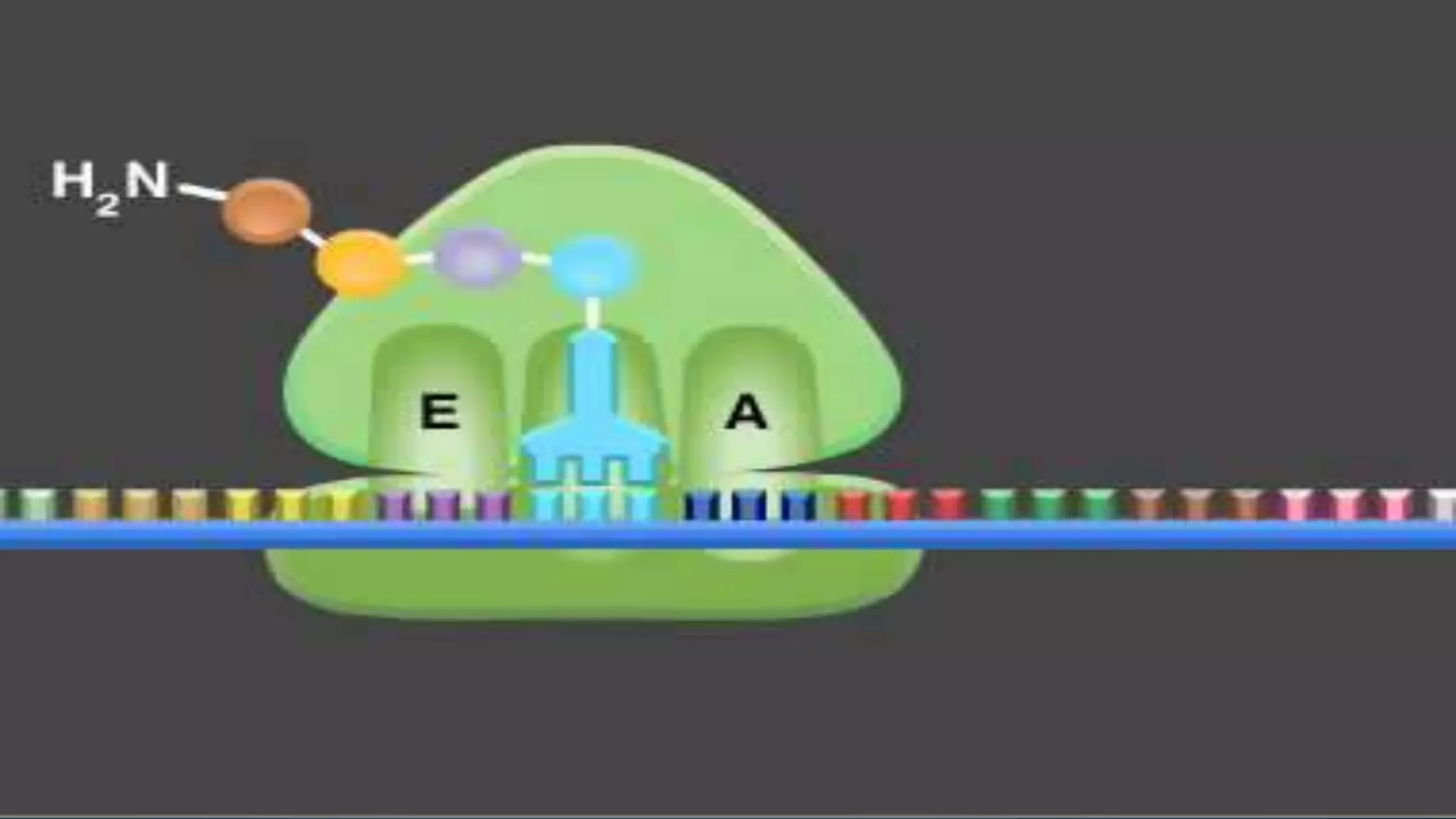
 The assembled structure of ribosome creates three pockets for
the binding of two molecules of tRNA.
- A site
- P site
- E site
Mechanism Of Translation
 Three steps of translation:
- Initiation: Sets the stage for polypeptide synthesis.
- Elongation: Causes the sequential addition of amino
acids to the polypeptide chain as determined by
mRNA.
- Termination: Brings the polypeptide synthesis to the
halt.
Initiation
 The initiation codon is an AUG.
- is towards the 5’ end of the mRNA molecule that Is being
translated.
Scanning Model of Initiation
• Proposed by M. Kozak
• Small subunit of ribosome (+ initiation factors, GTP and
tRNAiMet) binds to the 5’ Cap, and scans along the mRNA until
the first AUG
• Translation starts at the first AUG
Initiation Factors
 eIF-1(and 1A): promotes scanning.
 *eIF-2: binds tRNAiMet to 40S subunit, requires
GTP (which gets hydrolyzed to GDP)
 eIF-2B: catalyzes exchange of GTP to GDP on
eIF-2
 *eIF-3: binds to 40S subunit, prevents 60S subunit
from binding to it
 eIF-5: stimulates 60S subunit binding to the 40S
pre-initiation complex
 *eIF-6: binds to 60S subunit, helps prevent 40S
subunit from binding to it
Elongation
 At the start of elongation, the mRNA is bound to the complete two subunit ribosome,
- With the initiating tRNA in the P site,
- and the A site is free for binding to the next tRNA.
 The ribosome moves along the mRNA in a 5’ to 3’ direction, in a step-wise process,
recognizing each subsequent codon.
 The peptidyl transferase enzyme then catalyzes the formation of a peptide bond
between
- the free N terminal of the amino acid at the A site,
- and the Carboxyl end of the amino acid at the P site, which is
actually connected to the tRNA.
 This disconnects the tRNA fMet from the amino acid, and the tRNA at the A site now
carries two amino acids,
- with a free N terminal and the Carboxyl terminal of the second
amino acid connected to its tRNA.
Chain Elongation: Translocation
 During translocation the peptidyl-tRNA remains attached to
its codon, but is transferred from the ribosomal A site to the P
site.
 The vacant A site now contains a new codon, and an
aminoacyl-tRNA with the correct anticodon can enter and
bind.
 The process repeats until a stop codon is reached.
Chain Elongation: Translocation
 In both prokaryotes and eukaryotes, simultaneous translation
occurs.
- New ribosomes may initiate as soon as the previous
ribosome has moved away from the initiation site,
creating a polyribosome (polysome).
- An average mRNA might have 8–10 ribosomes
attached at a given moment.
Termination
 When the ribosome encounters a stop codon,
- there is no tRNA available to bind to the A site of the
ribosome,
- instead a release factor binds to it.
 The details are not very clear, but once the release factor
binds, the ribosome unit falls apart,
- releasing the large and small subunits,
- the tRNA carrying the polypeptide is also released,
freeing up the polypeptide product.
Translation In Eukaryotes

Translation In Eukaryotes

  • 1.
    Translation In Eukaryotes MuhammadUmer Farooq BAGF13E221
  • 2.
    What Is Translation?? Translation is the process by which protein is synthesized from the information contained in a molecule of messenger RNA (mRNA).
  • 3.
    What are Eukaryotes? Eukaryotes are organisms with a complex cell or cells, in which the genetic material is organized into a membrane-bound nucleus or nuclei and it also contains cell organelles.
  • 4.
    Translation: An Overview Ribosomes translate the genetic message of mRNA into proteins.  The mRNA is translated from 5’ 3’.  Amino acids bound to tRNAs are inserted in a proper sequence due to: - Specific binding of each amino acid to its tRNA. - Specific base-pairing between the mRNA codon and tRNA anticodon.
  • 5.
    Components of Translation mRNA: - Made in the nucleus, transported to cytoplasm.  tRNA: - Adaptor molecule that mediate the transfer of information from nucleic acid to protein.  Ribosomes: - Manufacturing units of a cell.  Enzymes: - Required for the attachment of amino acids to the correct tRNA molecule, and for peptide bond formation between amino acids.  Proteins: - Soluble factors necessary for proper initiation, elongation and termination.
  • 6.
    Enzymes  catalyze the attachmentof tRNA molecule to its respective amino acid. - At least one for each tRNA. - Attachment of amino acid activates/ charges the tRNA molecule.  catalyzes the sequential transfer of amino acid to the growing chain. - Forms the peptide bond between the amino acids.
  • 7.
    Ribosomes: Role InTranslation  The smaller subunit is the one that initially binds with the mRNA.  The larger subunit provides the enzyme activity: - Peptidyl transferase - Catalyzes the formation of peptide bonds joining amino acids.  The assembled structure of ribosome creates three pockets for the binding of two molecules of tRNA. - A site - P site - E site
  • 9.
    Mechanism Of Translation Three steps of translation: - Initiation: Sets the stage for polypeptide synthesis. - Elongation: Causes the sequential addition of amino acids to the polypeptide chain as determined by mRNA. - Termination: Brings the polypeptide synthesis to the halt.
  • 10.
    Initiation  The initiationcodon is an AUG. - is towards the 5’ end of the mRNA molecule that Is being translated.
  • 11.
    Scanning Model ofInitiation • Proposed by M. Kozak • Small subunit of ribosome (+ initiation factors, GTP and tRNAiMet) binds to the 5’ Cap, and scans along the mRNA until the first AUG • Translation starts at the first AUG
  • 12.
    Initiation Factors  eIF-1(and1A): promotes scanning.  *eIF-2: binds tRNAiMet to 40S subunit, requires GTP (which gets hydrolyzed to GDP)  eIF-2B: catalyzes exchange of GTP to GDP on eIF-2  *eIF-3: binds to 40S subunit, prevents 60S subunit from binding to it  eIF-5: stimulates 60S subunit binding to the 40S pre-initiation complex  *eIF-6: binds to 60S subunit, helps prevent 40S subunit from binding to it
  • 14.
    Elongation  At thestart of elongation, the mRNA is bound to the complete two subunit ribosome, - With the initiating tRNA in the P site, - and the A site is free for binding to the next tRNA.  The ribosome moves along the mRNA in a 5’ to 3’ direction, in a step-wise process, recognizing each subsequent codon.  The peptidyl transferase enzyme then catalyzes the formation of a peptide bond between - the free N terminal of the amino acid at the A site, - and the Carboxyl end of the amino acid at the P site, which is actually connected to the tRNA.  This disconnects the tRNA fMet from the amino acid, and the tRNA at the A site now carries two amino acids, - with a free N terminal and the Carboxyl terminal of the second amino acid connected to its tRNA.
  • 16.
    Chain Elongation: Translocation During translocation the peptidyl-tRNA remains attached to its codon, but is transferred from the ribosomal A site to the P site.  The vacant A site now contains a new codon, and an aminoacyl-tRNA with the correct anticodon can enter and bind.  The process repeats until a stop codon is reached.
  • 17.
    Chain Elongation: Translocation In both prokaryotes and eukaryotes, simultaneous translation occurs. - New ribosomes may initiate as soon as the previous ribosome has moved away from the initiation site, creating a polyribosome (polysome). - An average mRNA might have 8–10 ribosomes attached at a given moment.
  • 20.
    Termination  When theribosome encounters a stop codon, - there is no tRNA available to bind to the A site of the ribosome, - instead a release factor binds to it.  The details are not very clear, but once the release factor binds, the ribosome unit falls apart, - releasing the large and small subunits, - the tRNA carrying the polypeptide is also released, freeing up the polypeptide product.