POST-STROKE HEMISPATIAL
NEGLECT SYNDROME
A NEUROLOGY POSTING SEMINAR PRESENTATION AT
THE PHYSIOTHERAPY DEPARTMENT, UNIVERSITY OF
ABUJATEACHING HOSPITAL, GWAGWALADA
BY
MUSA, SUMAYYAH BAMIDELE
26TH JUNE, 2018
OUTLINE
• Introduction
• Epidemiology
• Risk factors
• Aetiology / Pathology
• Clinical Presentation
• Diagnosis
• Management / Interventions
• Level of evidence
• Prognosis
• References
JUN-19MUSA, SUMAYYAH B.
2
INTRODUCTION
• Hemispatial neglect is an attention disorder
that arises as a result of injury to the cerebral
cortex (Hillis 2006)
• Also known as unilateral neglect, visuospatial
neglect, contralateral neglect, spatial neglect
or hemi-neglect (Plummer et al, 2003)
JUN-19MUSA, SUMAYYAH B.
3
INTRODUCTION
• In unilateral neglect, patients fail to report,
respond or orient to meaningful stimuli
presented on the affected side (Menon &
Korner, 2004)
• In most cases, the right parietal cortex is
injured and the left side of the body and/or
space is/are ignored (Yang et al, 2012)
JUN-19MUSA, SUMAYYAH B.
4
EPIDEMIOLOGY
• The likelihood of a stroke patient having hemi-
neglect following a left hemiplegic stroke is
substantially increased if there was damage to the
right posterior parietal cortex (Beis et al, 2004)
• Incidence rate for hemi-neglect following stroke in
the US is more than 80% in right hemiplegic stroke
patients (Barrett et al, 2017)
JUN-19MUSA, SUMAYYAH B.
5
RISK FACTORS
• Age:
A study by Gottesman et al, 2008 found that
69.6% of people above 65 years of age had hemi-
neglect following stroke while only 49.4% of people
below the age of 65 had neglect.
The chances of a patient having hemi-neglect
increases 1.83% per additional 10 years of age after
65 (Gottesman et al, 2008)
JUN-19MUSA, SUMAYYAH B.
6
RISK FACTORS
• Side affected (right or left CVD)
A meta-analysis found that contralateral hemi-
neglect is more likely following a right hemisphere
deficit compared to a left hemisphere deficit (Suchan
et al, 2012)
• Gender
No gender differences in the prevalence or
severity of hemi-neglect following stroke (Kleinman
et al, 2008)
JUN-19MUSA, SUMAYYAH B.
7
AETIOLOGY / PATHOLOGY
• Unilateral neglect usually results from damage to
the right parietal area, often the posterior parietal
cortex (Hillis 2006)
• Usually, unilateral neglect results from stroke;
however, it may also result from traumatic brain
injuries, Alzheimer’s or a neoplastic disease (Yang
2012)
JUN-19MUSA, SUMAYYAH B.
8
CLINICAL PRESENTATION
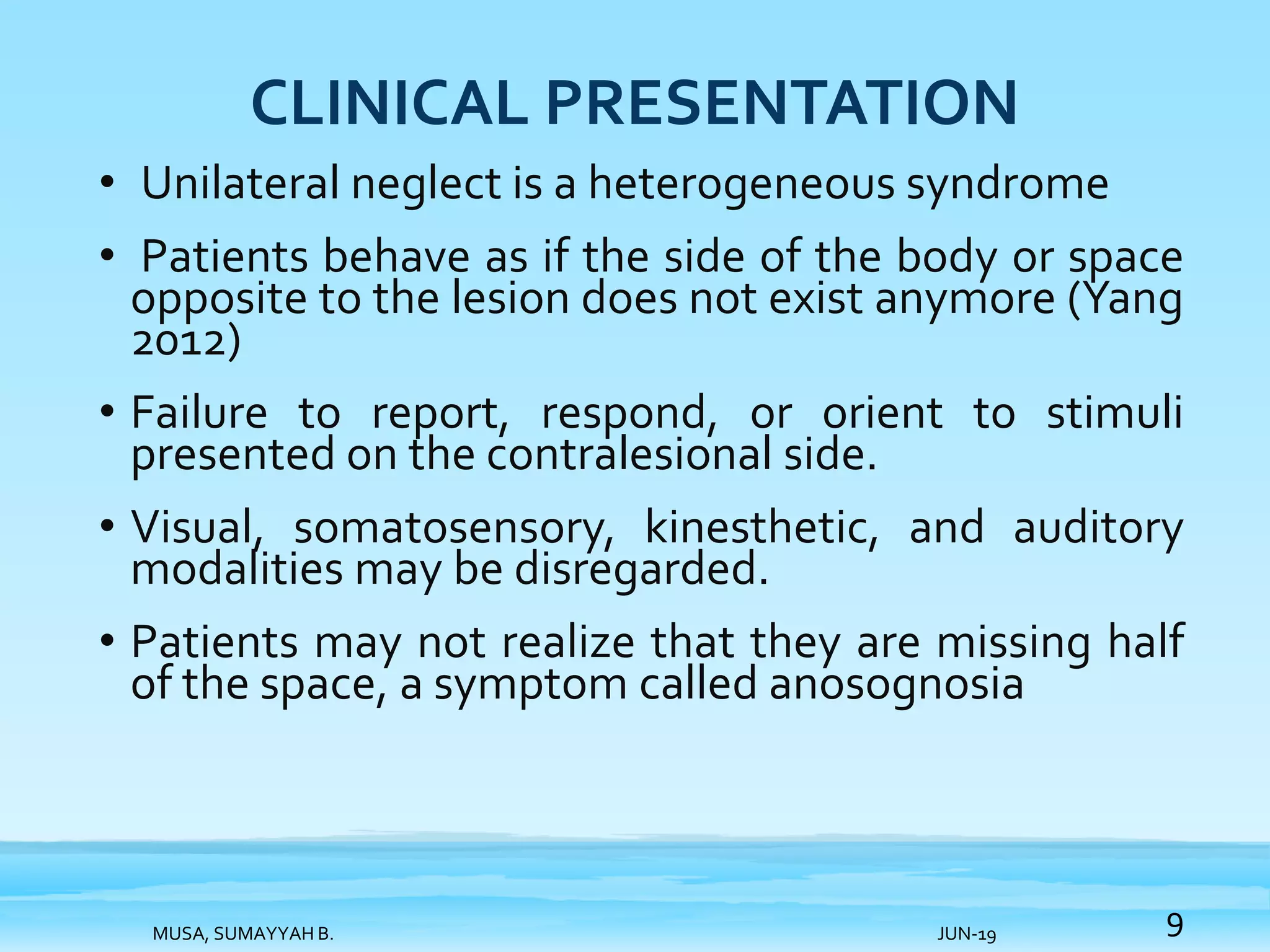
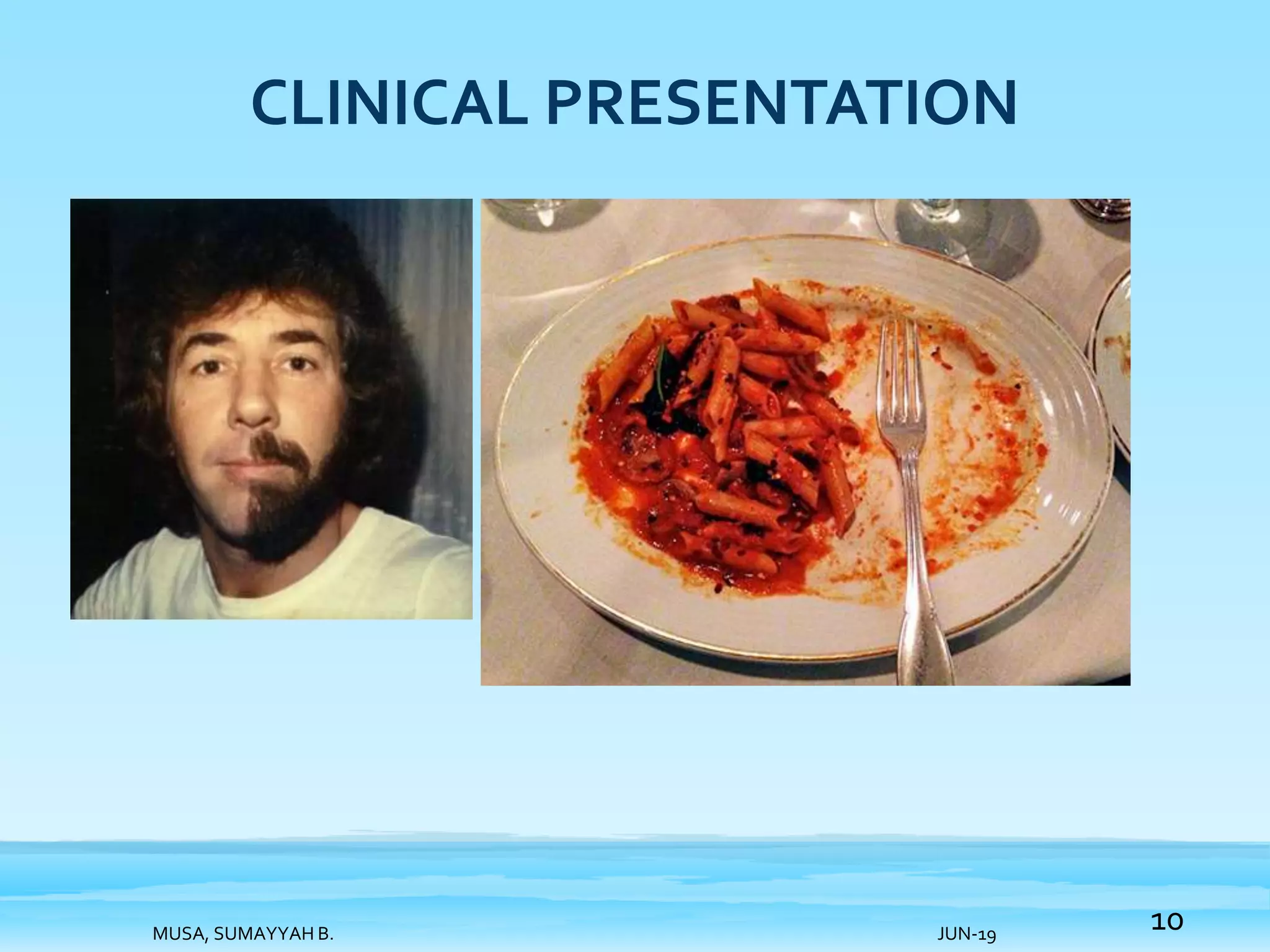
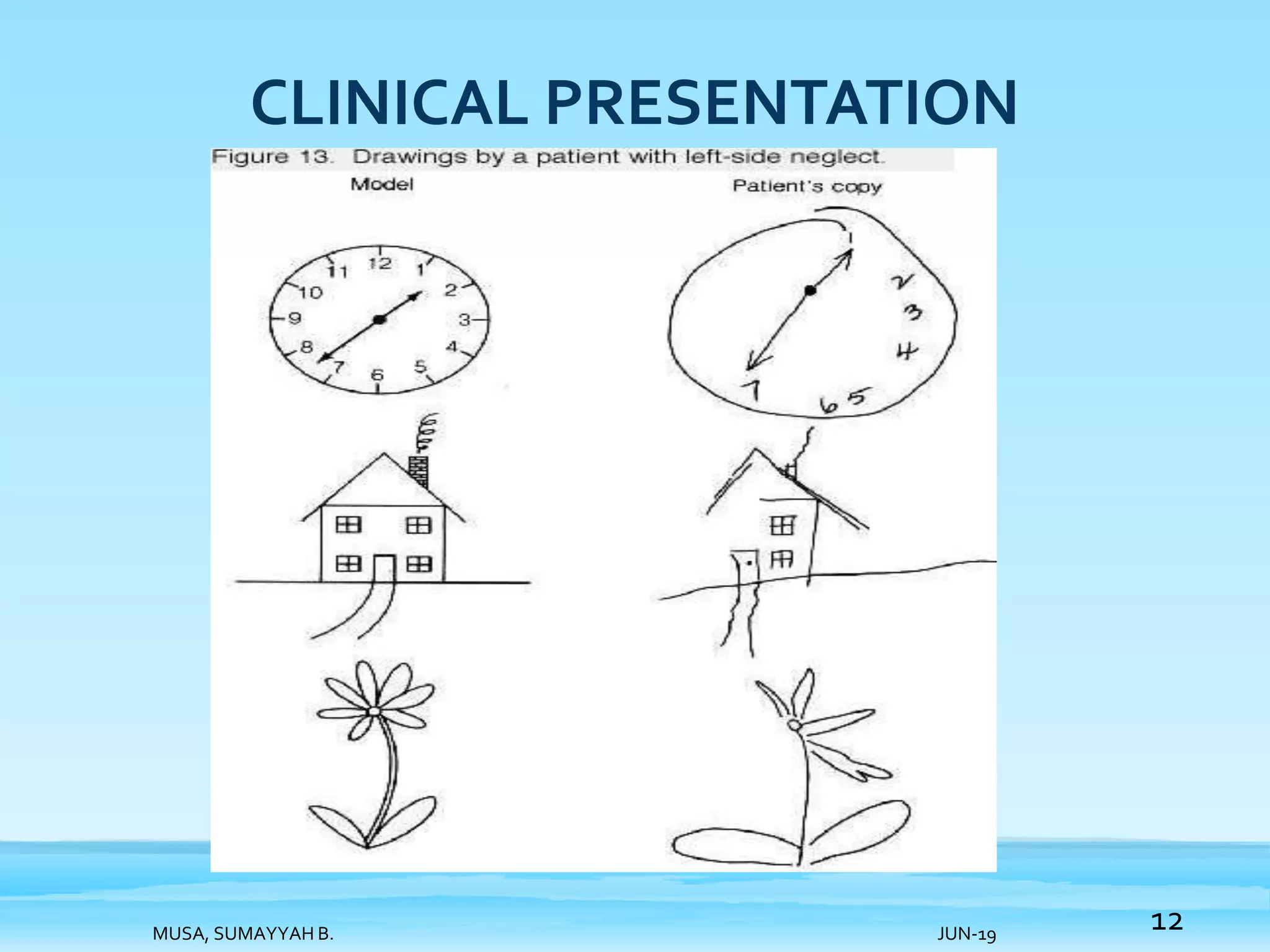
• Unilateral neglect is a heterogeneous syndrome
• Patients behave as if the side of the body or space
opposite to the lesion does not exist anymore (Yang
2012)
• Failure to report, respond, or orient to stimuli
presented on the contralesional side.
• Visual, somatosensory, kinesthetic, and auditory
modalities may be disregarded.
• Patients may not realize that they are missing half
of the space, a symptom called anosognosia
JUN-19MUSA, SUMAYYAH B.
9
CLINICAL PRESENTATION
JUN-19MUSA, SUMAYYAH B.
10
CLINICAL PRESENTATION
JUN-19MUSA, SUMAYYAH B.
11
CLINICAL PRESENTATION
JUN-19MUSA, SUMAYYAH B.
12
DIAGNOSIS
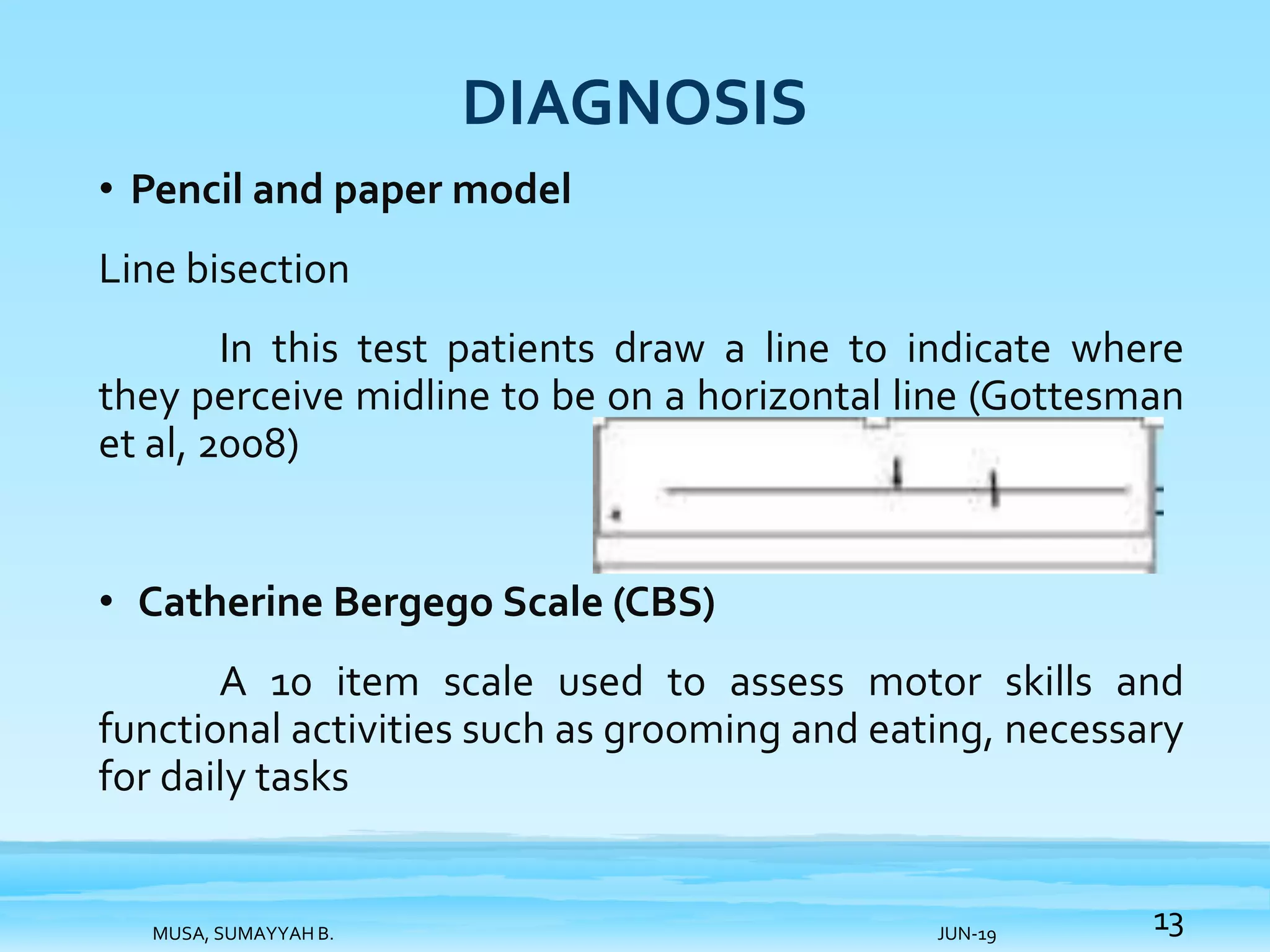
• Pencil and paper model
Line bisection
In this test patients draw a line to indicate where
they perceive midline to be on a horizontal line (Gottesman
et al, 2008)
• Catherine Bergego Scale (CBS)
A 10 item scale used to assess motor skills and
functional activities such as grooming and eating, necessary
for daily tasks
JUN-19MUSA, SUMAYYAH B.
13
MANAGEMENT / INTERVENTIONS
• Interventions used to improve hemi-neglect are of two
types (Kleinman 2008):
1. Aims at improving the patient’s attention to the
neglected space
2. Aims at addressing the proprioceptive and kinaesthetic
deficits
• Physiotherapy typically involves treating the motor and
sensory deficits caused by the stroke, but in stroke
patients with hemi-neglect, it is important to ensure that
the attentional deficits are addressed as well (Hillis, 2006).
JUN-19MUSA, SUMAYYAH B.
14
INTERVENTIONS
• Limb Activation
Training
This involves
getting the patient to
perform active limb
movements on the
contralesional side of
the body in an attempt
to bring more attention
to that side of the body
(Beis et al, 2004)
MUSA, SUMAYYAH B. JUN-19 15
INTERVENTIONS
• Mirror Therapy
This is carried out
by having the patient
place both of their arms
on a table with a mirror
placed between their
arms (Hillis, 2006)
They are then
required to look in the
mirror while moving both
arms. The reflecting side
of the mirror faces the
non-affected arm (Hillis,
2006)
MUSA, SUMAYYAH B. JUN-19 16
INTERVENTIONS
• TENS
Electrical stimulation of the posterior aspect of
the sternocleidomastoid muscle can be used to
improve postural control in patients with neglect.
Parameters:
Frequency: 100Hz
Pulse width: 200µs
(Kleinman et al, 2008)
JUN-19MUSA, SUMAYYAH B.
17
INTERVENTIONS
• Eye Patching
An eye patch over the patient’s ipsilesional eye
can improve symptoms of visuo-spatial neglect
JUN-19MUSA, SUMAYYAH B.
18
INTERVENTIONS
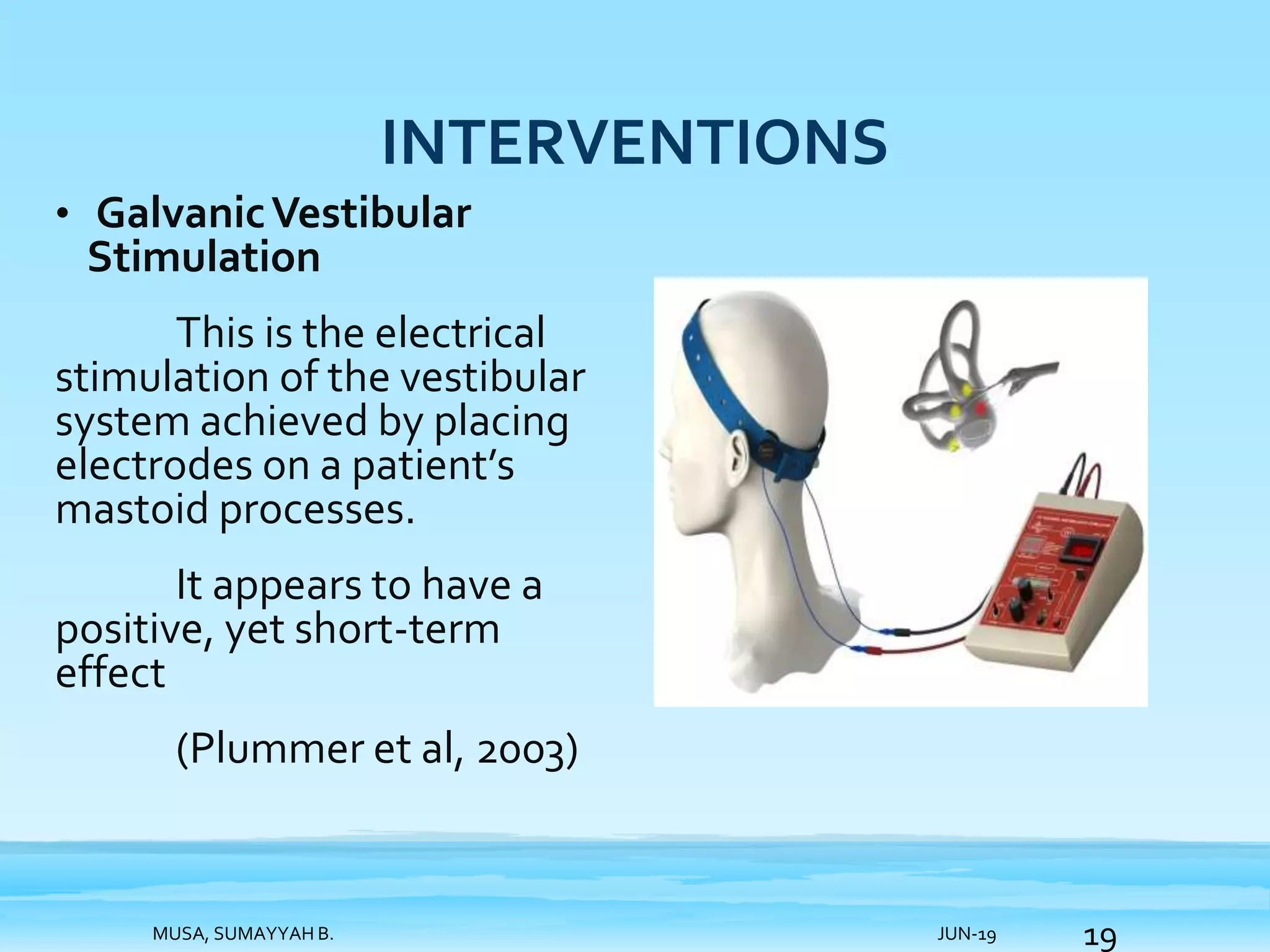
• GalvanicVestibular
Stimulation
This is the electrical
stimulation of the vestibular
system achieved by placing
electrodes on a patient’s
mastoid processes.
It appears to have a
positive, yet short-term
effect
(Plummer et al, 2003)
MUSA, SUMAYYAH B. JUN-19 19
INTERVENTIONS
Other interventions include:
• Optokinetic Stimulation
• PrismAdaptation
• Mental ImageryTraining
• FeedbackTraining
• CaloricVestibular Stimulation
• Visual ExplorationTraining
• Transcranial Magnetic Stimulation
• Neck MuscleVibration
• Trunk RotationTraining
• Virtual RealityTraining
JUN-19MUSA, SUMAYYAH B.
20
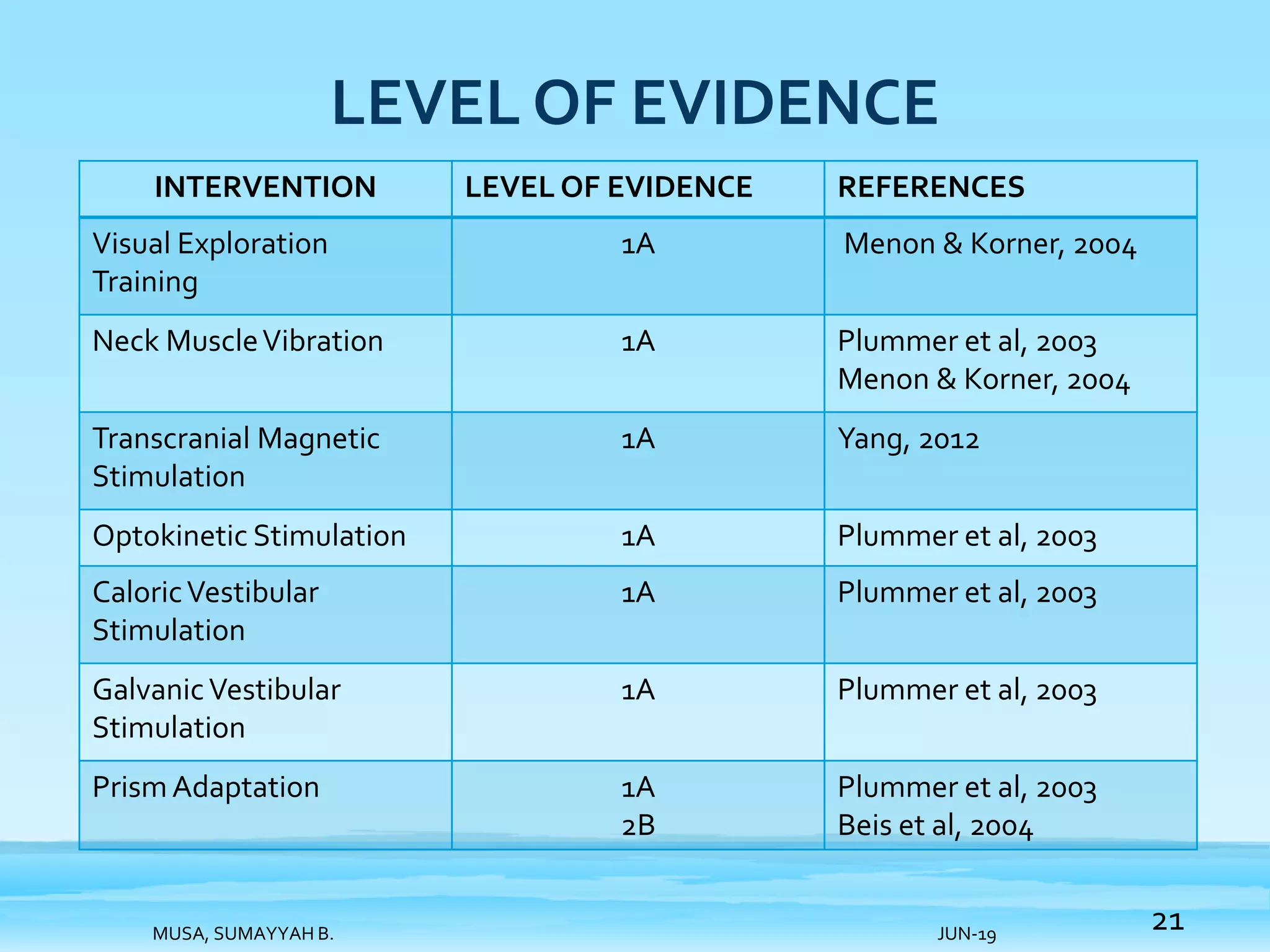
LEVEL OF EVIDENCE
INTERVENTION LEVEL OF EVIDENCE REFERENCES
Visual Exploration
Training
1A Menon & Korner, 2004
Neck MuscleVibration 1A Plummer et al, 2003
Menon & Korner, 2004
Transcranial Magnetic
Stimulation
1A Yang, 2012
Optokinetic Stimulation 1A Plummer et al, 2003
CaloricVestibular
Stimulation
1A Plummer et al, 2003
GalvanicVestibular
Stimulation
1A Plummer et al, 2003
PrismAdaptation 1A
2B
Plummer et al, 2003
Beis et al, 2004
JUN-19MUSA, SUMAYYAH B.
21
LEVEL OF EVIDENCE
INTERVENTION LEVEL OF EVIDENCE REFERENCES
LimbActivationTraining 2B Beis et al, 2004
Mental ImageryTraining 2B Beis et al, 2004
Sustained Attention
Training
2B Beis et al, 2004
Eye Patching 2B Beis et al, 2004
Virtual RealityTraining 2B Suchan et al, 2011
Trunk RotationTraining 2B Beis et al, 2004
Gottesman 2008
Transcutaneous Electrical
Nerve Stimulation (TENS)
2B
5
Kleinman et al, 2008
Barrett et al, 2017
JUN-19MUSA, SUMAYYAH B.
22
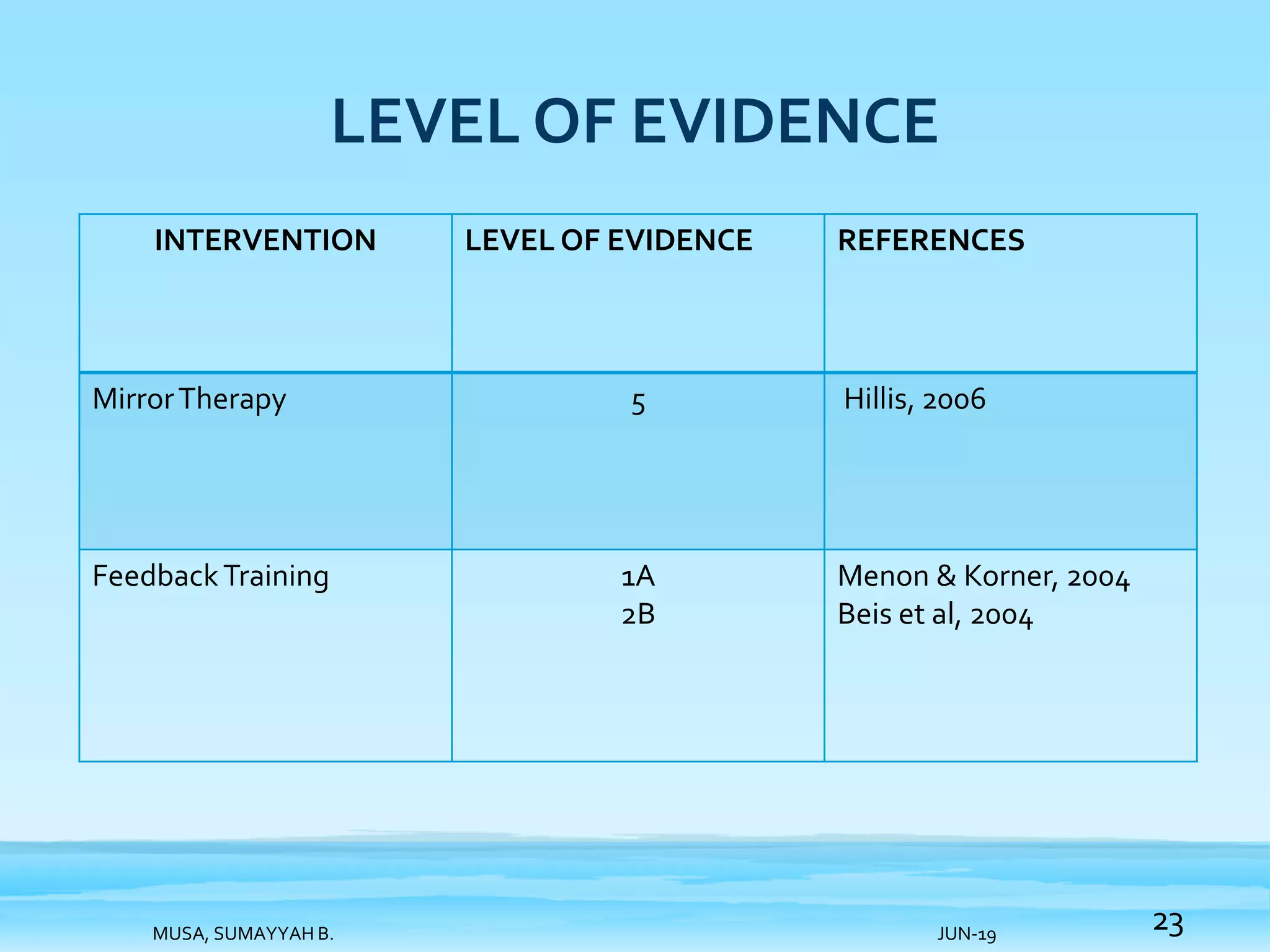
LEVEL OF EVIDENCE
INTERVENTION LEVEL OF EVIDENCE REFERENCES
MirrorTherapy 5 Hillis, 2006
FeedbackTraining 1A
2B
Menon & Korner, 2004
Beis et al, 2004
JUN-19MUSA, SUMAYYAH B.
23
PROGNOSIS
• Hemispatial neglect rather than overall stroke
severity, predicts poor outcome in right
hemispheric stroke (Plummer et al, 2003)
• Patients with hemispatial neglect have:
- poorer functional & rehabilitation outcomes
- increased length of stay (Yang et al, 2012)
- increased need for sheltered living and home
assistance (Suchan et al, 2011)
JUN-19MUSA, SUMAYYAH B.
24
PROGNOSIS
• Recovery from hemispatial neglect is most rapid
over the first 10 days post-stroke and plateaus at
the three month (Beis et al, 2004)
• The chances of a full recovery are higher in those
who suffered a left hemispheric stroke compared to
those who suffered a right hemispheric stroke (Beis
et al, 2004)
JUN-19MUSA, SUMAYYAH B.
25
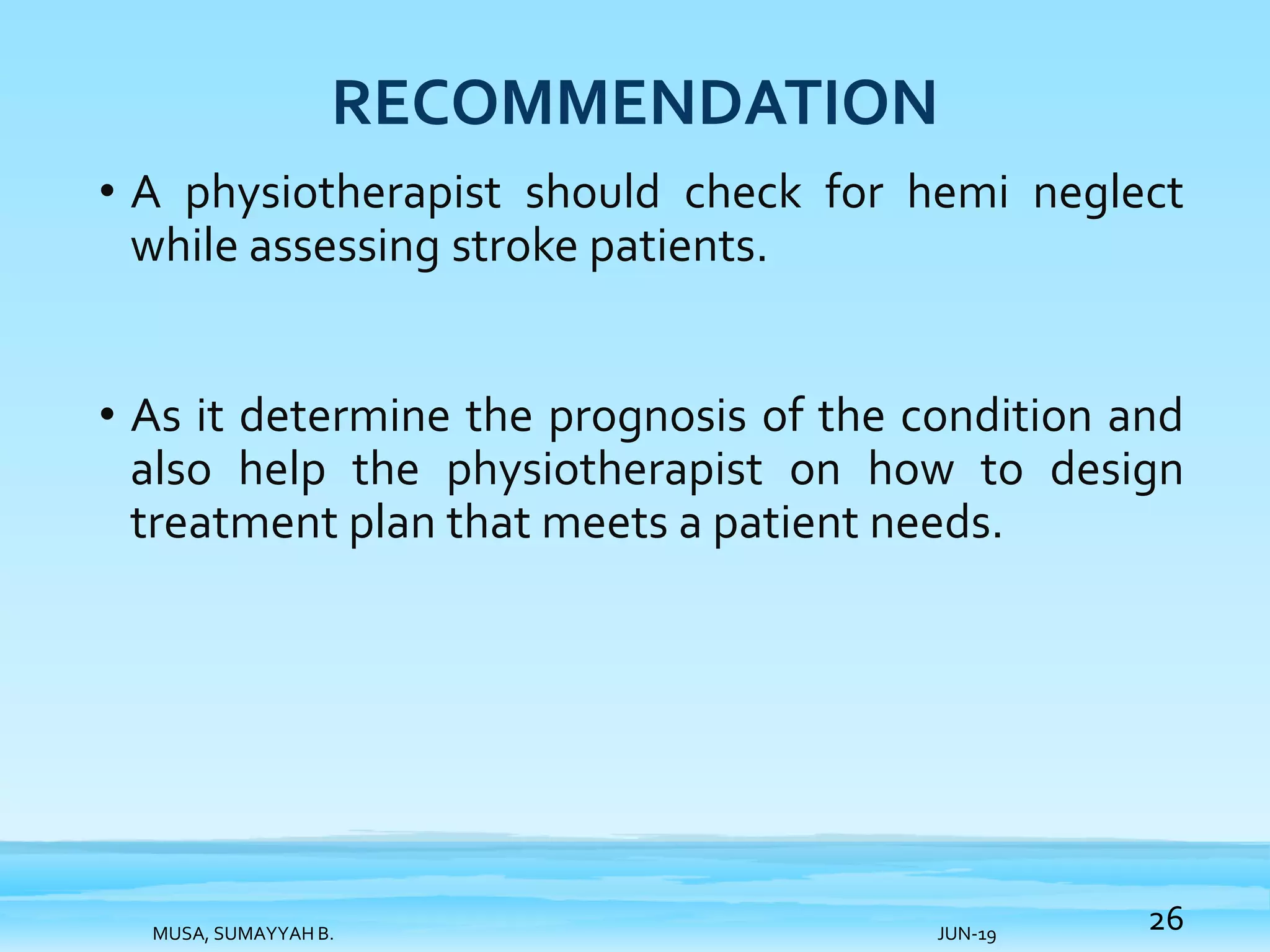
RECOMMENDATION
• A physiotherapist should check for hemi neglect
while assessing stroke patients.
• As it determine the prognosis of the condition and
also help the physiotherapist on how to design
treatment plan that meets a patient needs.
JUN-19MUSA, SUMAYYAH B.
26
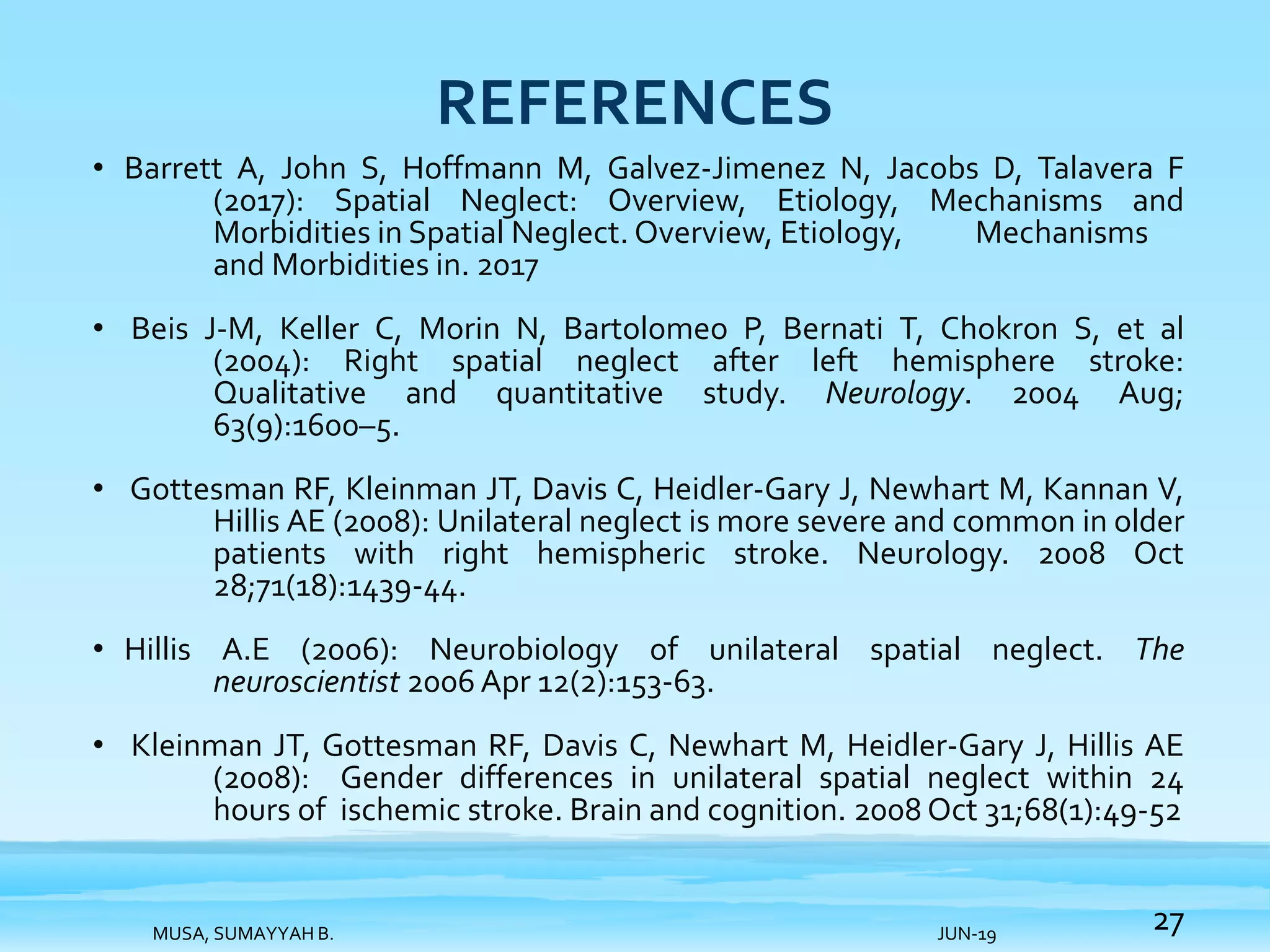
REFERENCES
JUN-19MUSA, SUMAYYAH B.
27
• Barrett A, John S, Hoffmann M, Galvez-Jimenez N, Jacobs D, Talavera F
(2017): Spatial Neglect: Overview, Etiology, Mechanisms and
Morbidities in Spatial Neglect. Overview, Etiology, Mechanisms
and Morbidities in. 2017
• Beis J-M, Keller C, Morin N, Bartolomeo P, Bernati T, Chokron S, et al
(2004): Right spatial neglect after left hemisphere stroke:
Qualitative and quantitative study. Neurology. 2004 Aug;
63(9):1600–5.
• Gottesman RF, Kleinman JT, Davis C, Heidler-Gary J, Newhart M, Kannan V,
Hillis AE (2008): Unilateral neglect is more severe and common in older
patients with right hemispheric stroke. Neurology. 2008 Oct
28;71(18):1439-44.
• Hillis A.E (2006): Neurobiology of unilateral spatial neglect. The
neuroscientist 2006 Apr 12(2):153-63.
• Kleinman JT, Gottesman RF, Davis C, Newhart M, Heidler-Gary J, Hillis AE
(2008): Gender differences in unilateral spatial neglect within 24
hours of ischemic stroke. Brain and cognition. 2008 Oct 31;68(1):49-52
REFERENCES
JUN-19MUSA, SUMAYYAH B.
28
• Menon A, Korner-Bitensky N. (2004): Evaluating unilateral spatial neglect
post stroke: Working your way through the maze of assessment
choices. Topics in stroke rehabilitation 2004 Jul 11(3):41-66
• Plummer P, Morris M.E, Dunai J (2003): Assessment of unilateral neglect.
PhysicalTherapy 2003 Aug 83(8):732-740
• Suchan J, Rorden C, Karnath H.O (2012): Neglect severity after left and
right brain damage. Neuropsychologia. 2012;50(6):1136–41
• Yang N.Y.H, Zhou D, Chung R.C.K, Li-Tsang C.W.P, Fong K.N.K (2012):
Rehabilitation Interventions for Unilateral Neglect after Stroke: A
Systematic Review from 1997 through 2012. Frontiers in Human
Neuroscience. 2013 May 10;7:1–11.
THANKYOU
FOR LISTENING
JUN-19MUSA, SUMAYYAH B.
29

Post stroke hemispatial neglect syndrome

  • 1.
    POST-STROKE HEMISPATIAL NEGLECT SYNDROME ANEUROLOGY POSTING SEMINAR PRESENTATION AT THE PHYSIOTHERAPY DEPARTMENT, UNIVERSITY OF ABUJATEACHING HOSPITAL, GWAGWALADA BY MUSA, SUMAYYAH BAMIDELE 26TH JUNE, 2018
  • 2.
    OUTLINE • Introduction • Epidemiology •Risk factors • Aetiology / Pathology • Clinical Presentation • Diagnosis • Management / Interventions • Level of evidence • Prognosis • References JUN-19MUSA, SUMAYYAH B. 2
  • 3.
    INTRODUCTION • Hemispatial neglectis an attention disorder that arises as a result of injury to the cerebral cortex (Hillis 2006) • Also known as unilateral neglect, visuospatial neglect, contralateral neglect, spatial neglect or hemi-neglect (Plummer et al, 2003) JUN-19MUSA, SUMAYYAH B. 3
  • 4.
    INTRODUCTION • In unilateralneglect, patients fail to report, respond or orient to meaningful stimuli presented on the affected side (Menon & Korner, 2004) • In most cases, the right parietal cortex is injured and the left side of the body and/or space is/are ignored (Yang et al, 2012) JUN-19MUSA, SUMAYYAH B. 4
  • 5.
    EPIDEMIOLOGY • The likelihoodof a stroke patient having hemi- neglect following a left hemiplegic stroke is substantially increased if there was damage to the right posterior parietal cortex (Beis et al, 2004) • Incidence rate for hemi-neglect following stroke in the US is more than 80% in right hemiplegic stroke patients (Barrett et al, 2017) JUN-19MUSA, SUMAYYAH B. 5
  • 6.
    RISK FACTORS • Age: Astudy by Gottesman et al, 2008 found that 69.6% of people above 65 years of age had hemi- neglect following stroke while only 49.4% of people below the age of 65 had neglect. The chances of a patient having hemi-neglect increases 1.83% per additional 10 years of age after 65 (Gottesman et al, 2008) JUN-19MUSA, SUMAYYAH B. 6
  • 7.
    RISK FACTORS • Sideaffected (right or left CVD) A meta-analysis found that contralateral hemi- neglect is more likely following a right hemisphere deficit compared to a left hemisphere deficit (Suchan et al, 2012) • Gender No gender differences in the prevalence or severity of hemi-neglect following stroke (Kleinman et al, 2008) JUN-19MUSA, SUMAYYAH B. 7
  • 8.
    AETIOLOGY / PATHOLOGY •Unilateral neglect usually results from damage to the right parietal area, often the posterior parietal cortex (Hillis 2006) • Usually, unilateral neglect results from stroke; however, it may also result from traumatic brain injuries, Alzheimer’s or a neoplastic disease (Yang 2012) JUN-19MUSA, SUMAYYAH B. 8
  • 9.
    CLINICAL PRESENTATION • Unilateralneglect is a heterogeneous syndrome • Patients behave as if the side of the body or space opposite to the lesion does not exist anymore (Yang 2012) • Failure to report, respond, or orient to stimuli presented on the contralesional side. • Visual, somatosensory, kinesthetic, and auditory modalities may be disregarded. • Patients may not realize that they are missing half of the space, a symptom called anosognosia JUN-19MUSA, SUMAYYAH B. 9
  • 10.
  • 11.
  • 12.
  • 13.
    DIAGNOSIS • Pencil andpaper model Line bisection In this test patients draw a line to indicate where they perceive midline to be on a horizontal line (Gottesman et al, 2008) • Catherine Bergego Scale (CBS) A 10 item scale used to assess motor skills and functional activities such as grooming and eating, necessary for daily tasks JUN-19MUSA, SUMAYYAH B. 13
  • 14.
    MANAGEMENT / INTERVENTIONS •Interventions used to improve hemi-neglect are of two types (Kleinman 2008): 1. Aims at improving the patient’s attention to the neglected space 2. Aims at addressing the proprioceptive and kinaesthetic deficits • Physiotherapy typically involves treating the motor and sensory deficits caused by the stroke, but in stroke patients with hemi-neglect, it is important to ensure that the attentional deficits are addressed as well (Hillis, 2006). JUN-19MUSA, SUMAYYAH B. 14
  • 15.
    INTERVENTIONS • Limb Activation Training Thisinvolves getting the patient to perform active limb movements on the contralesional side of the body in an attempt to bring more attention to that side of the body (Beis et al, 2004) MUSA, SUMAYYAH B. JUN-19 15
  • 16.
    INTERVENTIONS • Mirror Therapy Thisis carried out by having the patient place both of their arms on a table with a mirror placed between their arms (Hillis, 2006) They are then required to look in the mirror while moving both arms. The reflecting side of the mirror faces the non-affected arm (Hillis, 2006) MUSA, SUMAYYAH B. JUN-19 16
  • 17.
    INTERVENTIONS • TENS Electrical stimulationof the posterior aspect of the sternocleidomastoid muscle can be used to improve postural control in patients with neglect. Parameters: Frequency: 100Hz Pulse width: 200µs (Kleinman et al, 2008) JUN-19MUSA, SUMAYYAH B. 17
  • 18.
    INTERVENTIONS • Eye Patching Aneye patch over the patient’s ipsilesional eye can improve symptoms of visuo-spatial neglect JUN-19MUSA, SUMAYYAH B. 18
  • 19.
    INTERVENTIONS • GalvanicVestibular Stimulation This isthe electrical stimulation of the vestibular system achieved by placing electrodes on a patient’s mastoid processes. It appears to have a positive, yet short-term effect (Plummer et al, 2003) MUSA, SUMAYYAH B. JUN-19 19
  • 20.
    INTERVENTIONS Other interventions include: •Optokinetic Stimulation • PrismAdaptation • Mental ImageryTraining • FeedbackTraining • CaloricVestibular Stimulation • Visual ExplorationTraining • Transcranial Magnetic Stimulation • Neck MuscleVibration • Trunk RotationTraining • Virtual RealityTraining JUN-19MUSA, SUMAYYAH B. 20
  • 21.
    LEVEL OF EVIDENCE INTERVENTIONLEVEL OF EVIDENCE REFERENCES Visual Exploration Training 1A Menon & Korner, 2004 Neck MuscleVibration 1A Plummer et al, 2003 Menon & Korner, 2004 Transcranial Magnetic Stimulation 1A Yang, 2012 Optokinetic Stimulation 1A Plummer et al, 2003 CaloricVestibular Stimulation 1A Plummer et al, 2003 GalvanicVestibular Stimulation 1A Plummer et al, 2003 PrismAdaptation 1A 2B Plummer et al, 2003 Beis et al, 2004 JUN-19MUSA, SUMAYYAH B. 21
  • 22.
    LEVEL OF EVIDENCE INTERVENTIONLEVEL OF EVIDENCE REFERENCES LimbActivationTraining 2B Beis et al, 2004 Mental ImageryTraining 2B Beis et al, 2004 Sustained Attention Training 2B Beis et al, 2004 Eye Patching 2B Beis et al, 2004 Virtual RealityTraining 2B Suchan et al, 2011 Trunk RotationTraining 2B Beis et al, 2004 Gottesman 2008 Transcutaneous Electrical Nerve Stimulation (TENS) 2B 5 Kleinman et al, 2008 Barrett et al, 2017 JUN-19MUSA, SUMAYYAH B. 22
  • 23.
    LEVEL OF EVIDENCE INTERVENTIONLEVEL OF EVIDENCE REFERENCES MirrorTherapy 5 Hillis, 2006 FeedbackTraining 1A 2B Menon & Korner, 2004 Beis et al, 2004 JUN-19MUSA, SUMAYYAH B. 23
  • 24.
    PROGNOSIS • Hemispatial neglectrather than overall stroke severity, predicts poor outcome in right hemispheric stroke (Plummer et al, 2003) • Patients with hemispatial neglect have: - poorer functional & rehabilitation outcomes - increased length of stay (Yang et al, 2012) - increased need for sheltered living and home assistance (Suchan et al, 2011) JUN-19MUSA, SUMAYYAH B. 24
  • 25.
    PROGNOSIS • Recovery fromhemispatial neglect is most rapid over the first 10 days post-stroke and plateaus at the three month (Beis et al, 2004) • The chances of a full recovery are higher in those who suffered a left hemispheric stroke compared to those who suffered a right hemispheric stroke (Beis et al, 2004) JUN-19MUSA, SUMAYYAH B. 25
  • 26.
    RECOMMENDATION • A physiotherapistshould check for hemi neglect while assessing stroke patients. • As it determine the prognosis of the condition and also help the physiotherapist on how to design treatment plan that meets a patient needs. JUN-19MUSA, SUMAYYAH B. 26
  • 27.
    REFERENCES JUN-19MUSA, SUMAYYAH B. 27 •Barrett A, John S, Hoffmann M, Galvez-Jimenez N, Jacobs D, Talavera F (2017): Spatial Neglect: Overview, Etiology, Mechanisms and Morbidities in Spatial Neglect. Overview, Etiology, Mechanisms and Morbidities in. 2017 • Beis J-M, Keller C, Morin N, Bartolomeo P, Bernati T, Chokron S, et al (2004): Right spatial neglect after left hemisphere stroke: Qualitative and quantitative study. Neurology. 2004 Aug; 63(9):1600–5. • Gottesman RF, Kleinman JT, Davis C, Heidler-Gary J, Newhart M, Kannan V, Hillis AE (2008): Unilateral neglect is more severe and common in older patients with right hemispheric stroke. Neurology. 2008 Oct 28;71(18):1439-44. • Hillis A.E (2006): Neurobiology of unilateral spatial neglect. The neuroscientist 2006 Apr 12(2):153-63. • Kleinman JT, Gottesman RF, Davis C, Newhart M, Heidler-Gary J, Hillis AE (2008): Gender differences in unilateral spatial neglect within 24 hours of ischemic stroke. Brain and cognition. 2008 Oct 31;68(1):49-52
  • 28.
    REFERENCES JUN-19MUSA, SUMAYYAH B. 28 •Menon A, Korner-Bitensky N. (2004): Evaluating unilateral spatial neglect post stroke: Working your way through the maze of assessment choices. Topics in stroke rehabilitation 2004 Jul 11(3):41-66 • Plummer P, Morris M.E, Dunai J (2003): Assessment of unilateral neglect. PhysicalTherapy 2003 Aug 83(8):732-740 • Suchan J, Rorden C, Karnath H.O (2012): Neglect severity after left and right brain damage. Neuropsychologia. 2012;50(6):1136–41 • Yang N.Y.H, Zhou D, Chung R.C.K, Li-Tsang C.W.P, Fong K.N.K (2012): Rehabilitation Interventions for Unilateral Neglect after Stroke: A Systematic Review from 1997 through 2012. Frontiers in Human Neuroscience. 2013 May 10;7:1–11.
  • 29.