TISSUE PROCESSING
AT MICROSCOPIC LEVEL-
 HISTOLOGY
 Science of examination of normal tissues
 HISTOPATHOLOGY
 Examination of tissues for presence / absence of
changes in structure due to disease process
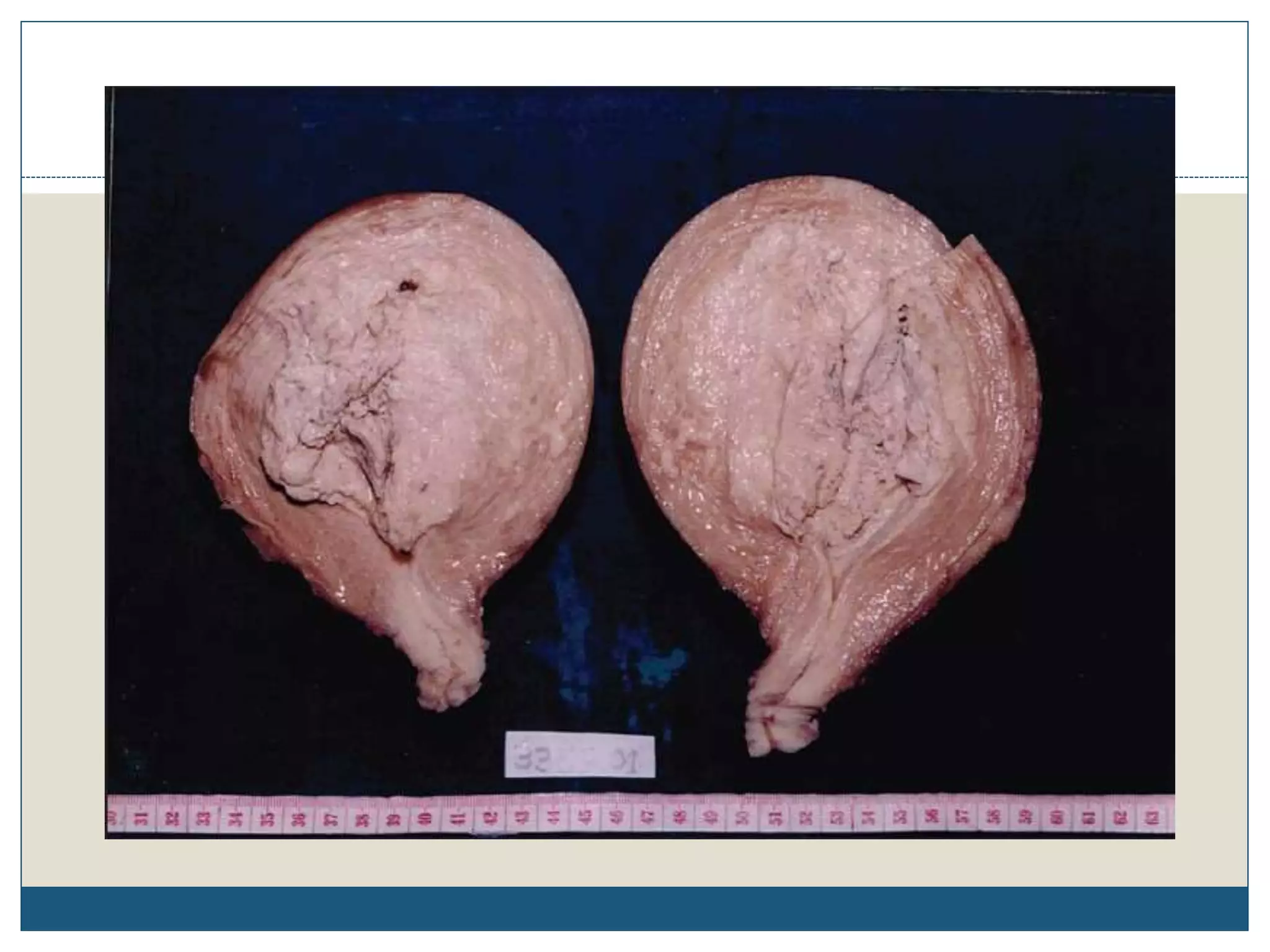
What happens to the SPECIMEN?
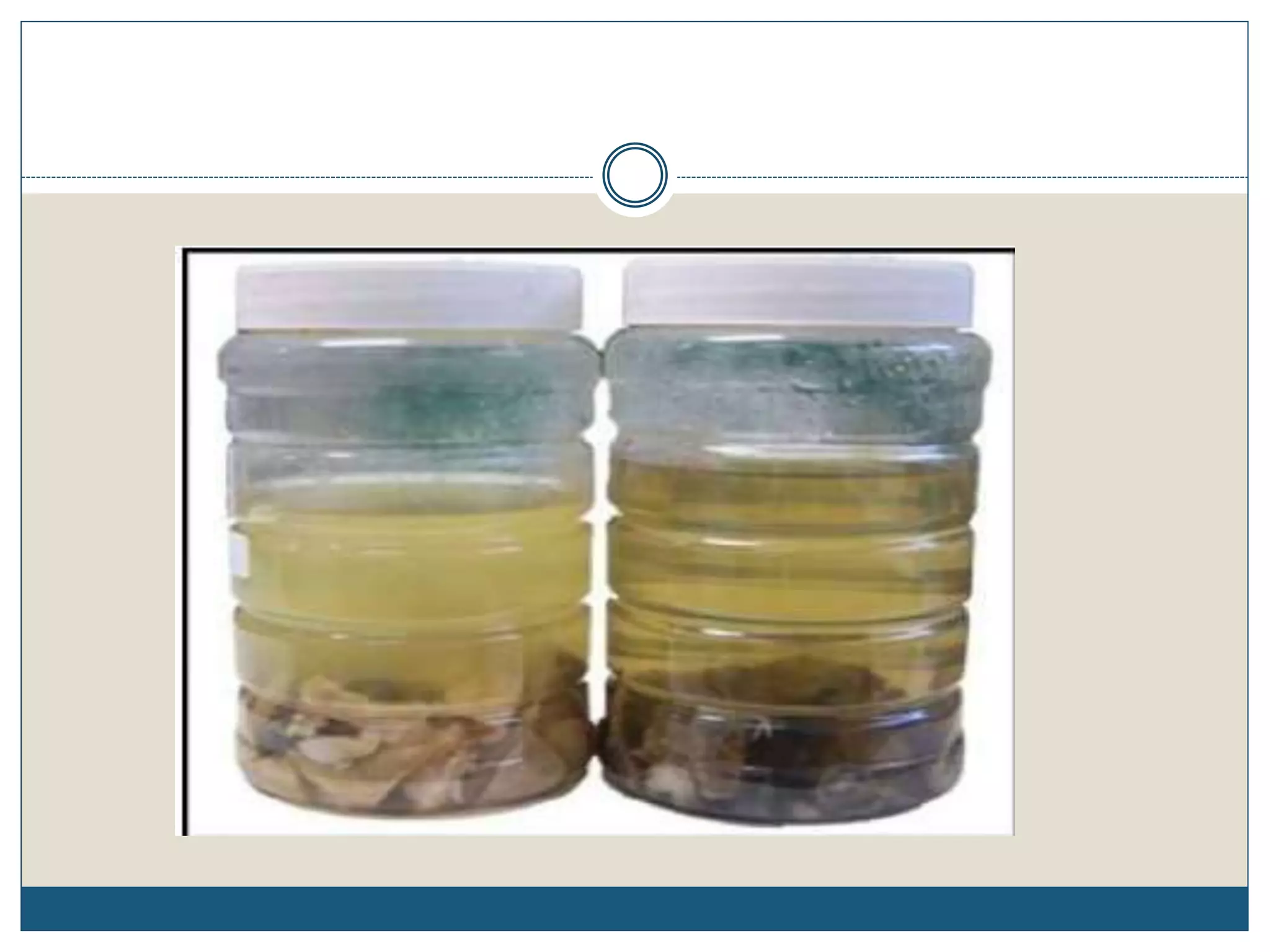
 Specimen received in the lab (10% formalin)
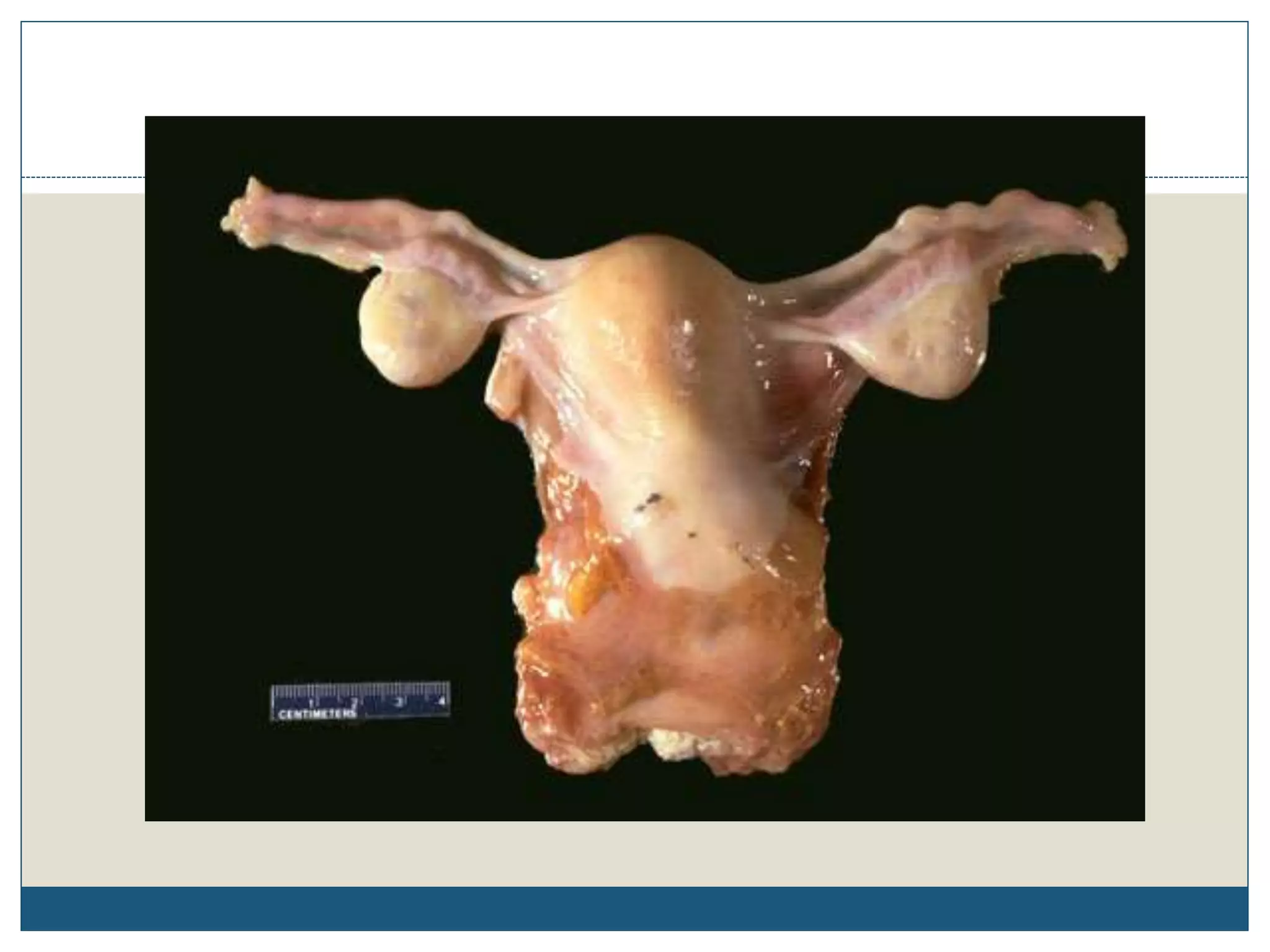
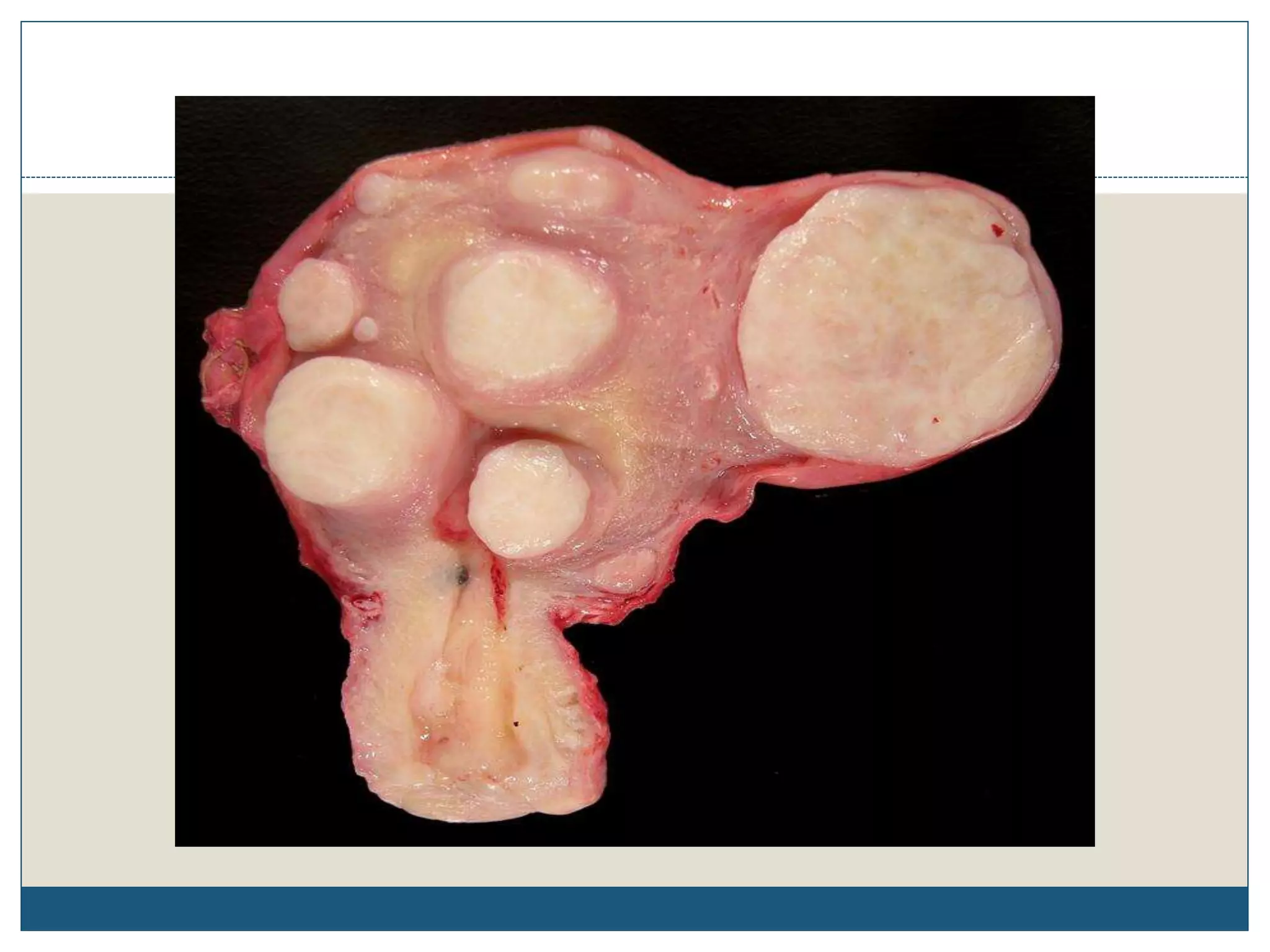
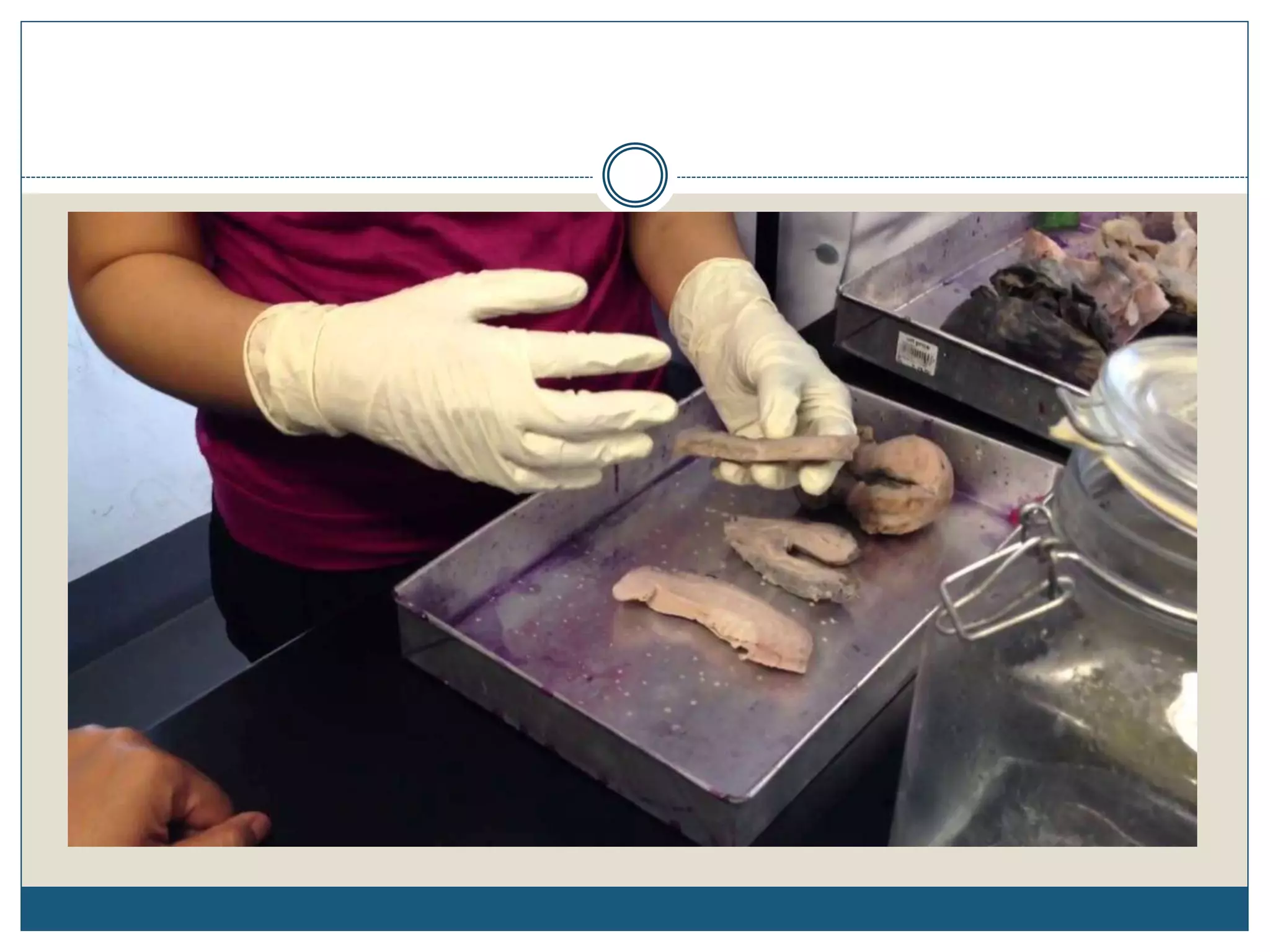
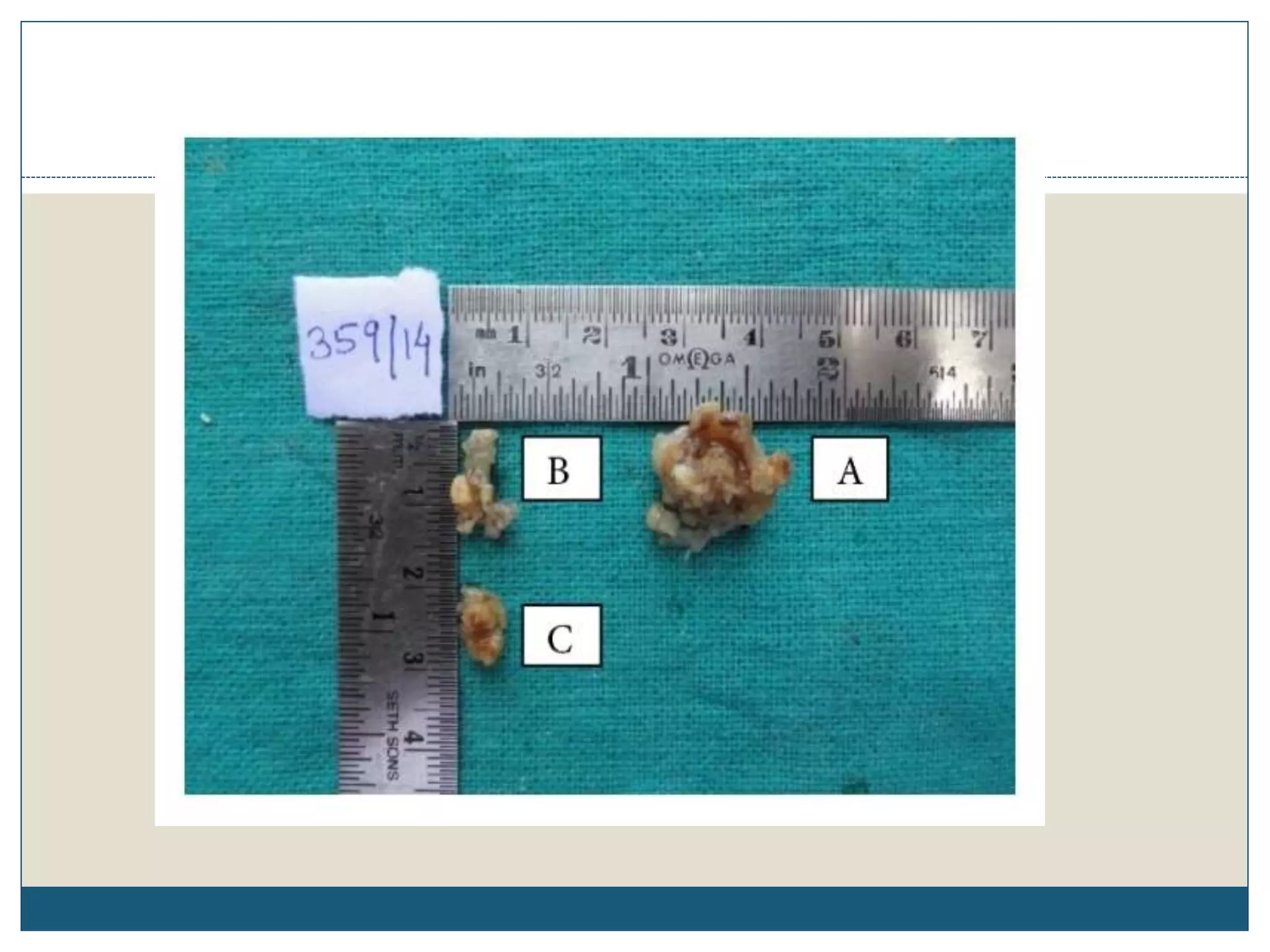
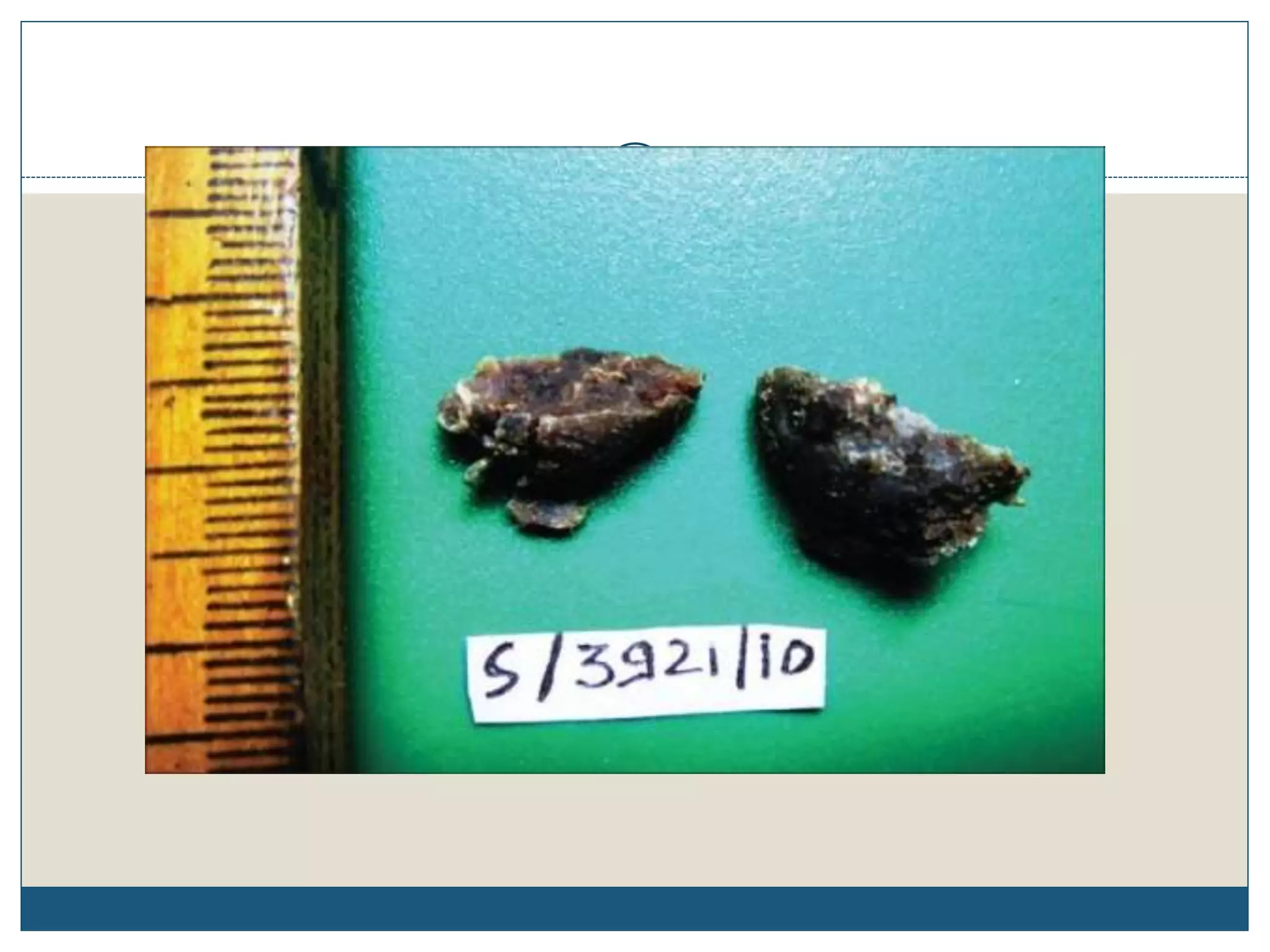
 Grossed (appearance, measurements, noticeable
pathological changes etc) and kept for formalin fixation
 Bits given from representative areas ( not >4mm thick)
 Tissue processed…
 Final outcome : stained slide for microscopic
examination
TISSUE PROCESSING
1. Fixation
2. Dehydration
3. Clearing
4. Impregnation
5. Embedding and blocking
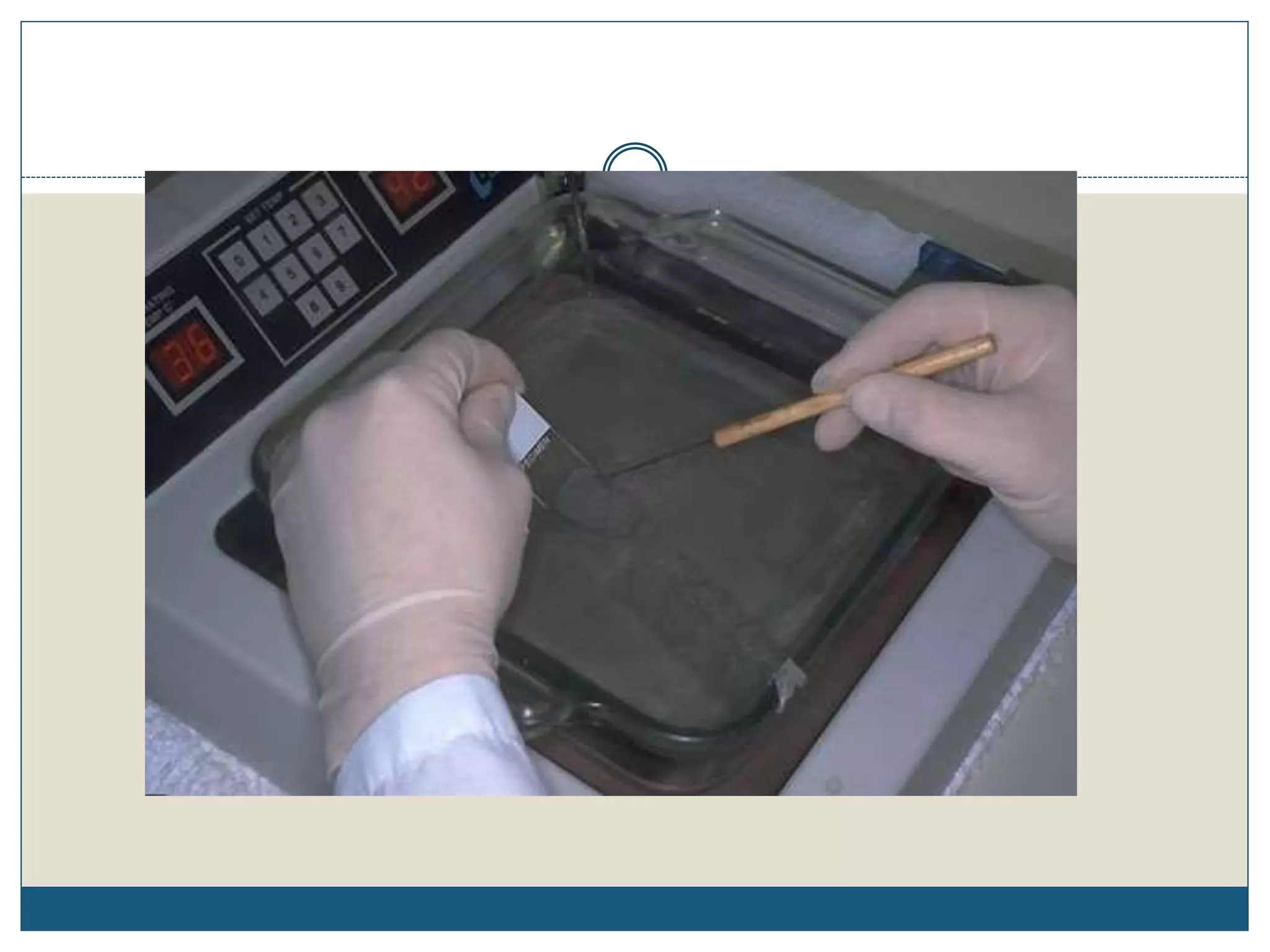
6. Section cutting
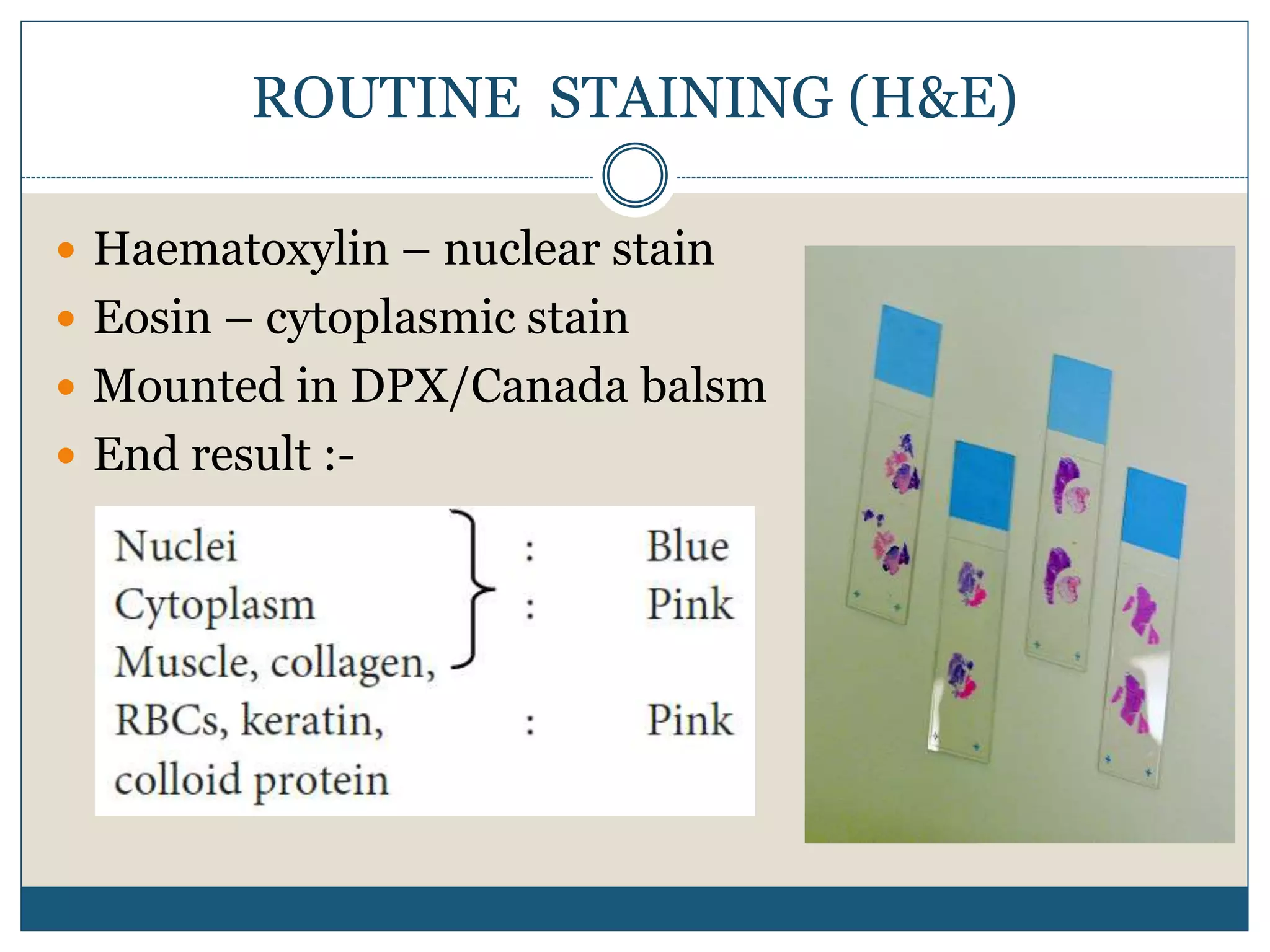
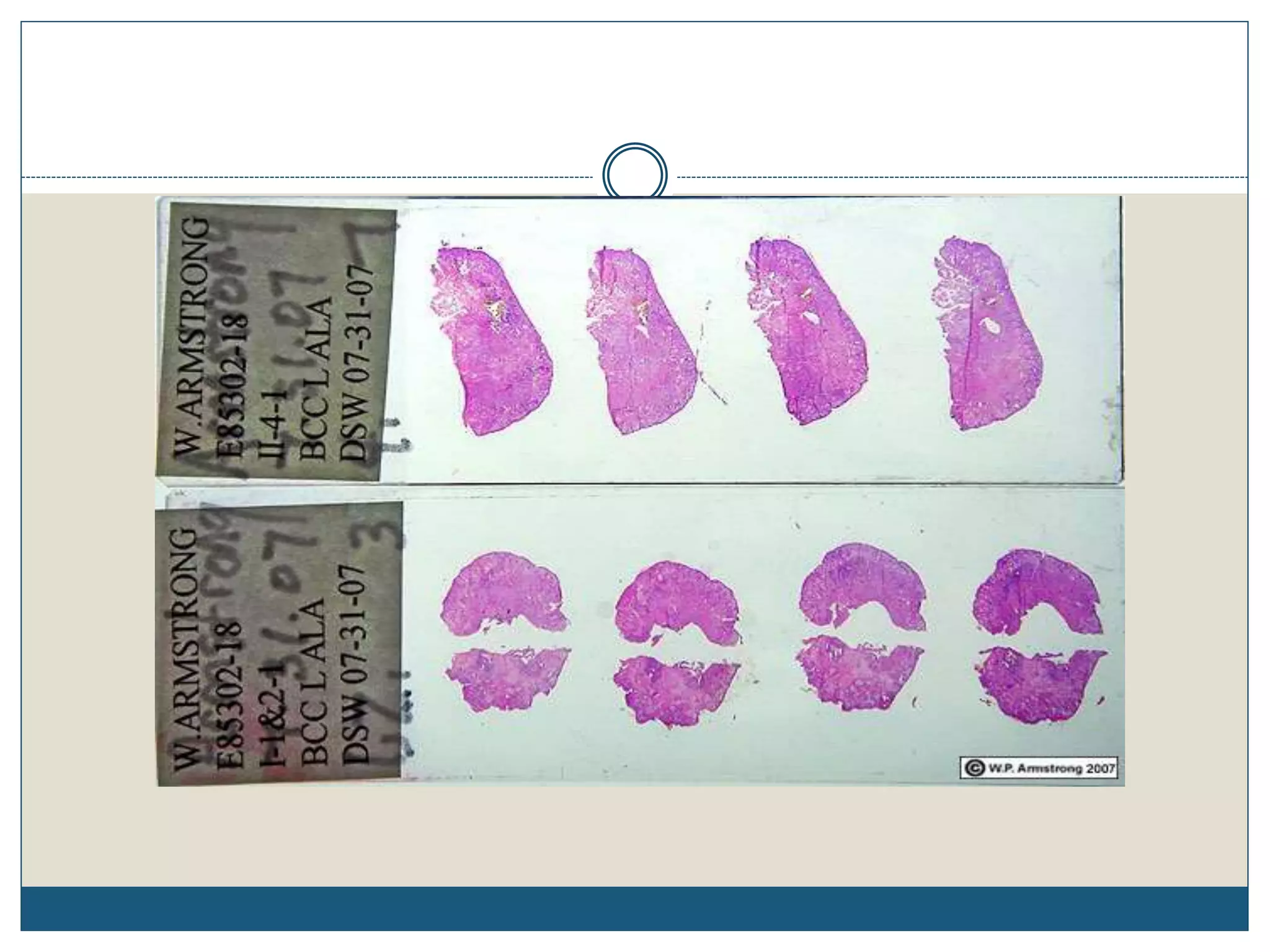
7. Routine staining
FIXATION
 Any tissue once taken out of the body will decompose
due to:-
 Loss of bloody supply and oxygen
 Accumulation of products of metabolism
 Action of autolytic enzymes
 Putrefaction by bacteria
 All the above changes PREVENTED BY FIXATION!
 Tissue get fixed in complete physical and partial
chemical state
 Principle : denaturation / precipitation of cell
proteins , soluble component is made insoluble
Fixatives produce the following effect…
IDEAL FIXATIVE
TYPES OF FIXATIVES
 [A]
 Simple (one substance) Eg. Formalin
 Compound (two or more) Eg. Bouin’s solution, Zencker’s
solution
 [B]
 Microanantomical – preserves anatomy
 Cytological – cytoplasmic and nuclear features
 Histochemical – constituents and enzymes
COMMONLY USED FIXATIVES
 Formalin – MC – routine
 Glutaraldehyde – electron microscopy
 Picric acid(Bouin’s solution) – renal & testicular
tissue
 Alcohol(Carnoy’s fixative) – cytologic smears,
endometrial sampling
 Osmium tetraoxide – CNS tissues & electron
microscopy
DEHYDRATION
 Water removed from tissue s and cells – this space is
occupied by wax
 Tissue sent through grades of alcohol : 70%, 80%,
95% and absolute alcohol
 Ethyl (MC used), methyl, isopropyl alcohol or
acetone can be used
CLEARING
 Alcohol from tissues and cells is removed
(dealcoholisation) and replaced by a fluid in which
wax is soluble – makes tissue transparent
 Xylene (MC used) , toluene, benzene, chloroform,
cedar wood oil can be used
IMPREGNATION
 Empty spaces in tissues and cells , after removal of
clearing agent, are taken by molten wax
 Hardens the tissue – helps in section cutting
 Melting point of wax – 54- 62 degree C
TISSUE PROCESSOR
 Dehydration + clearing + impregnation
 Automated tissue processor
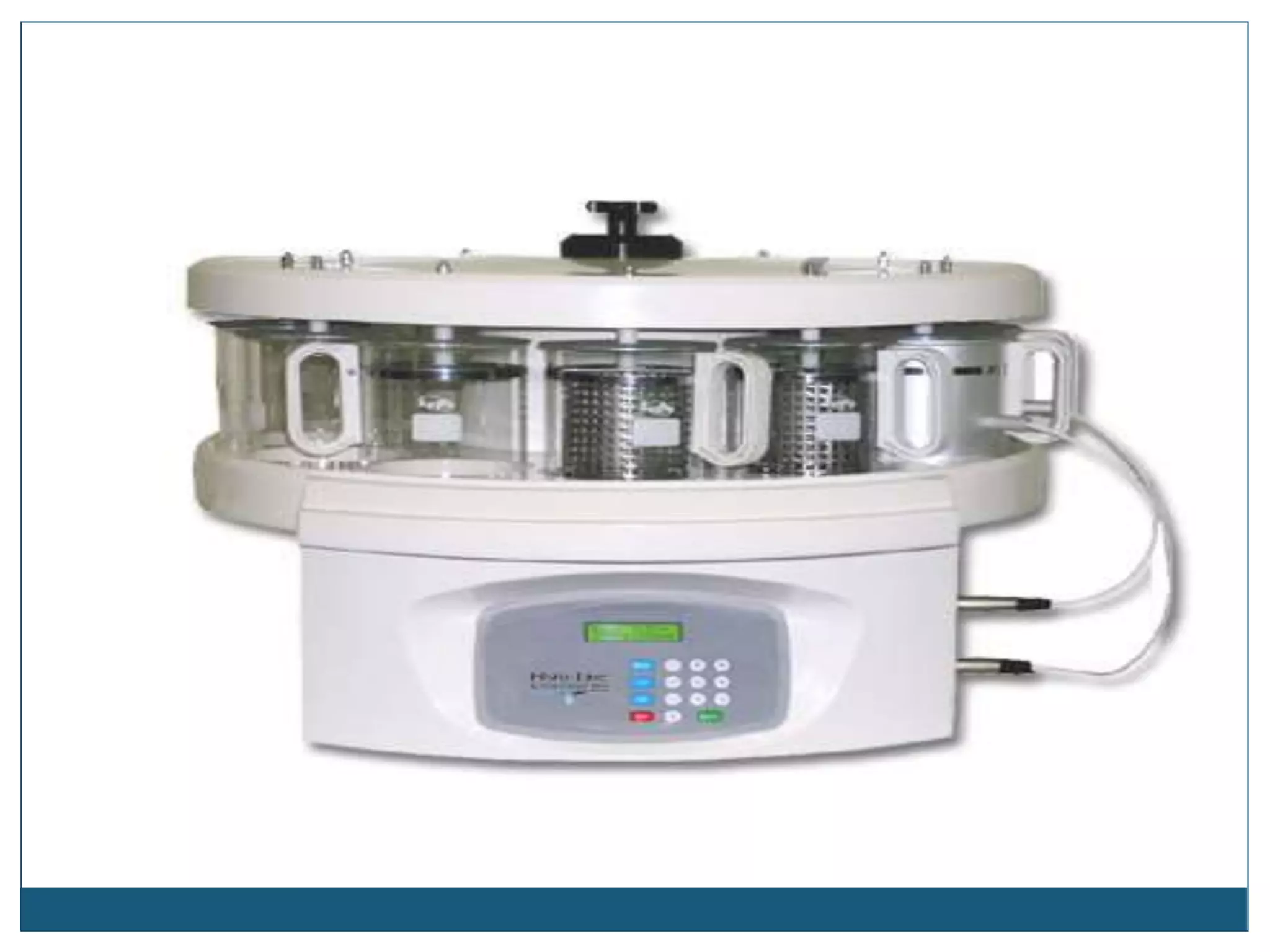
Open (hydraulic )
Closed (vaccum)
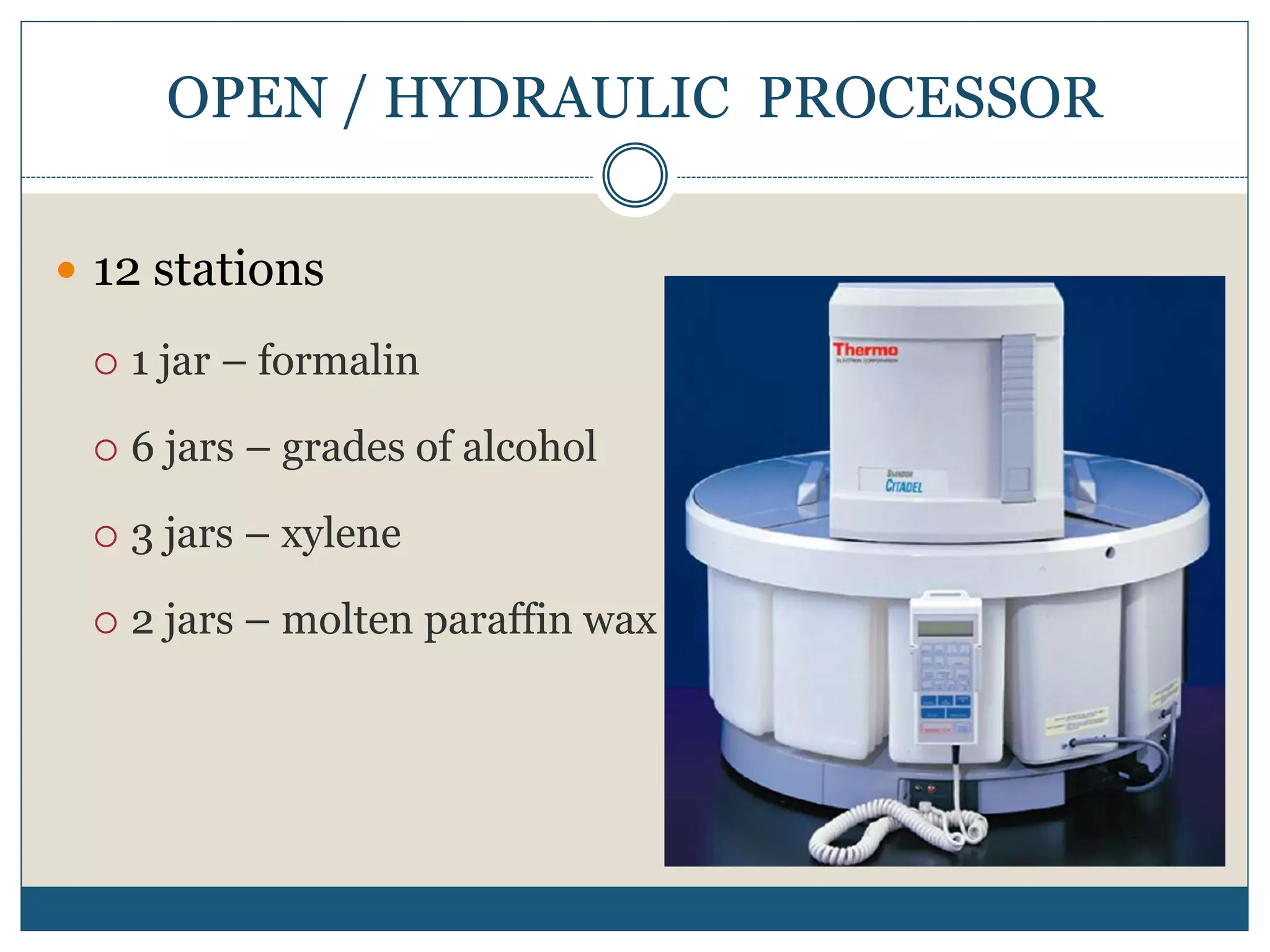
OPEN / HYDRAULIC PROCESSOR
 12 stations
 1 jar – formalin
 6 jars – grades of alcohol
 3 jars – xylene
 2 jars – molten paraffin wax
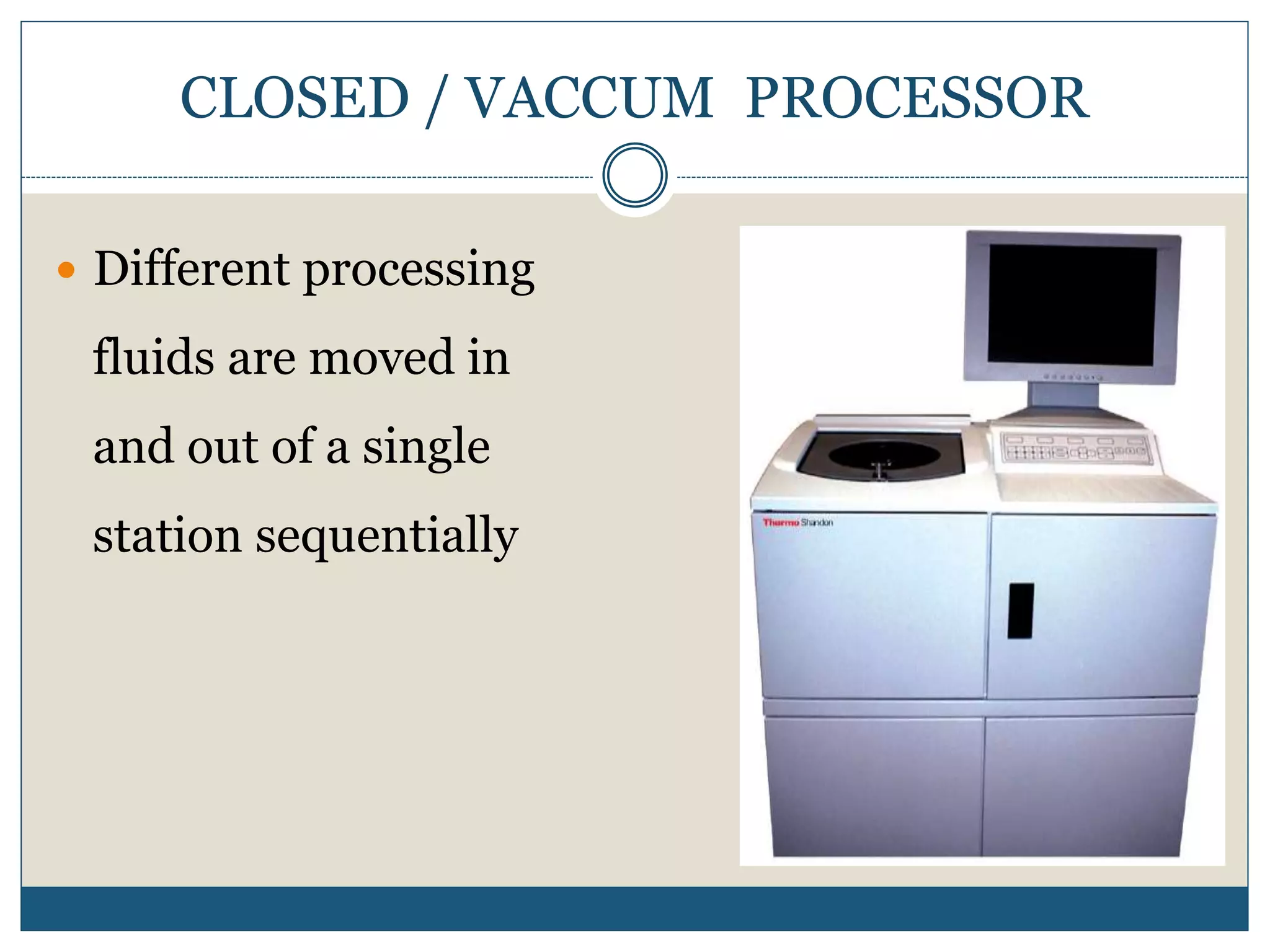
CLOSED / VACCUM PROCESSOR
 Different processing
fluids are moved in
and out of a single
station sequentially
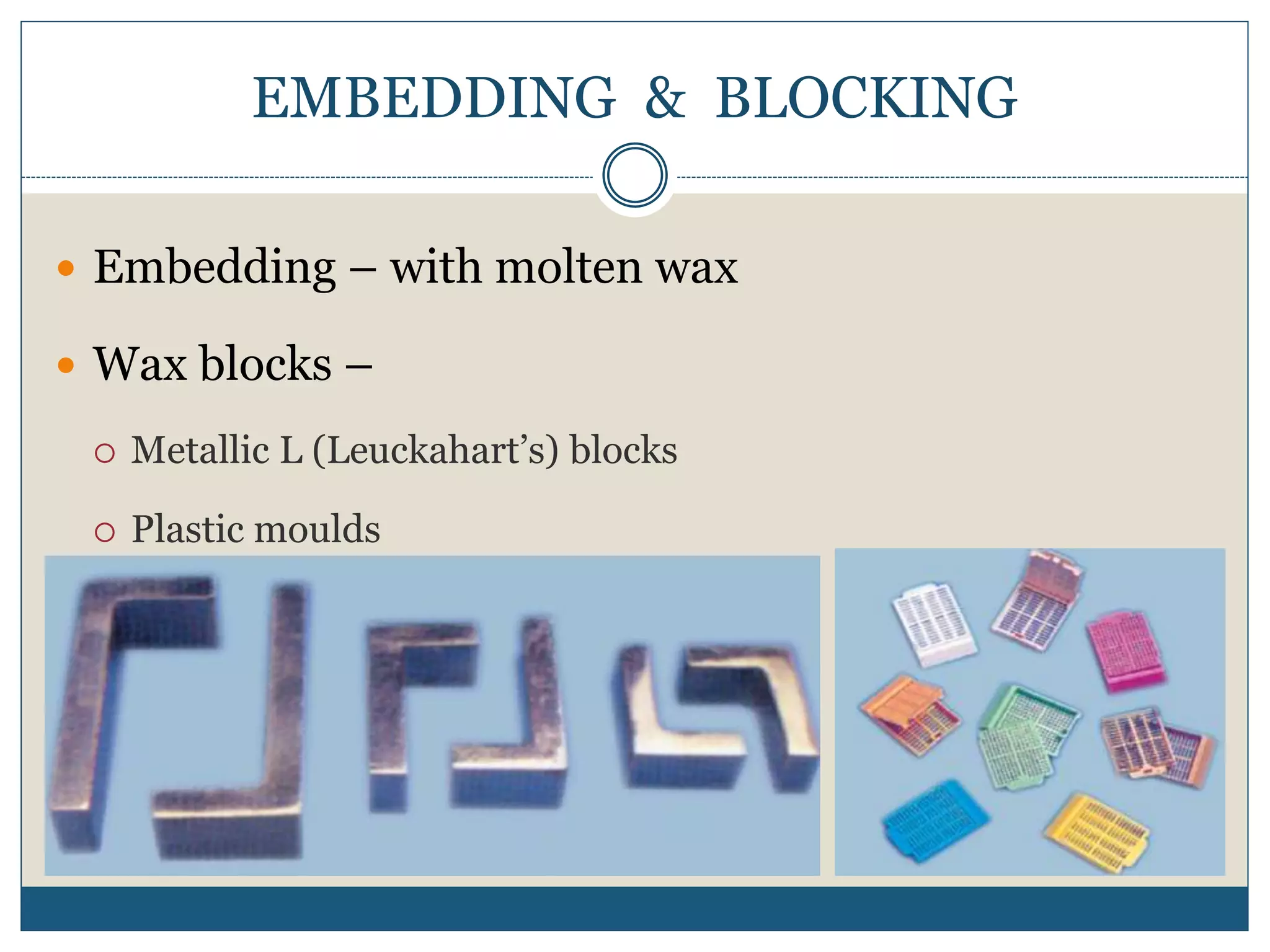
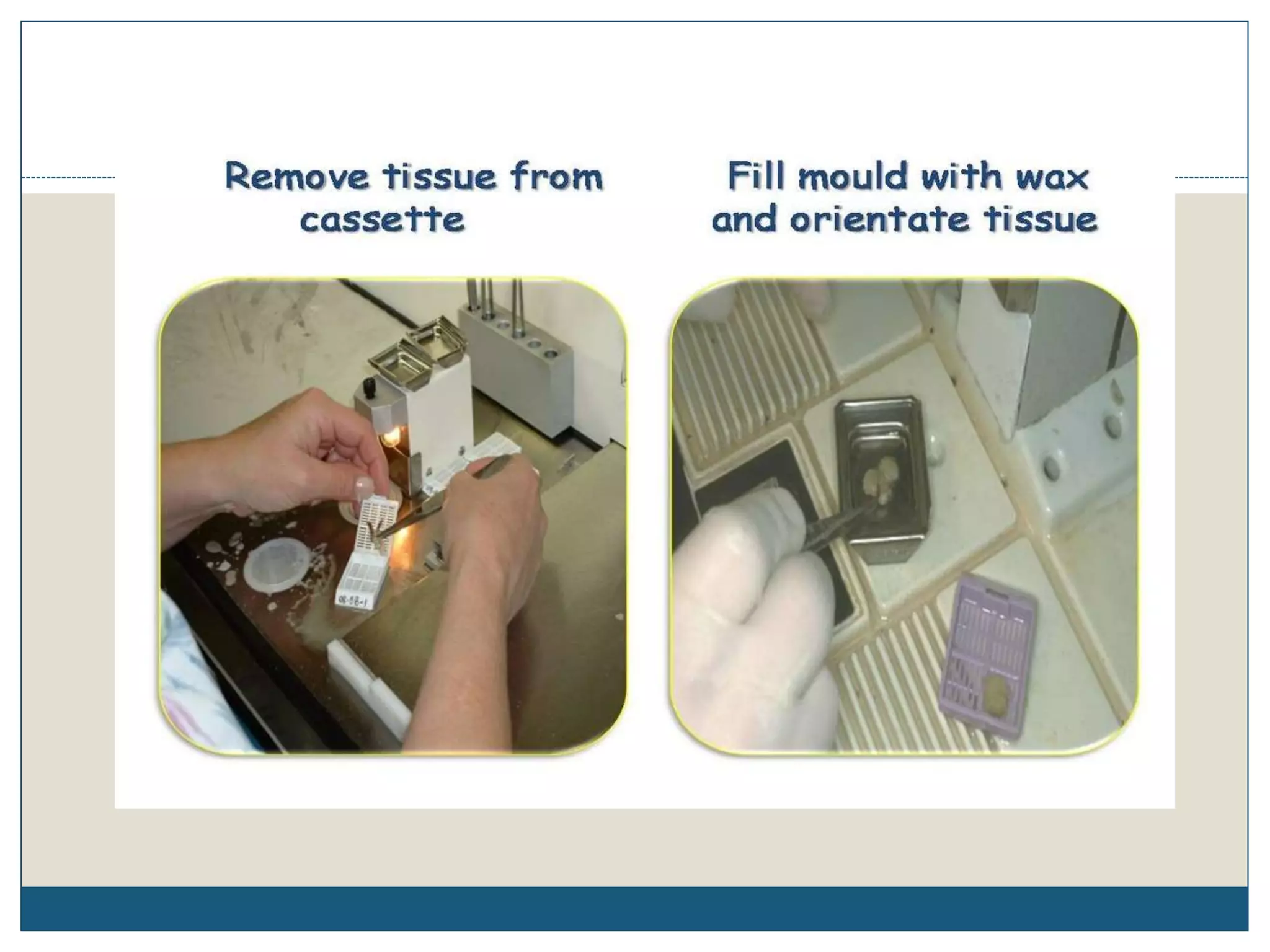
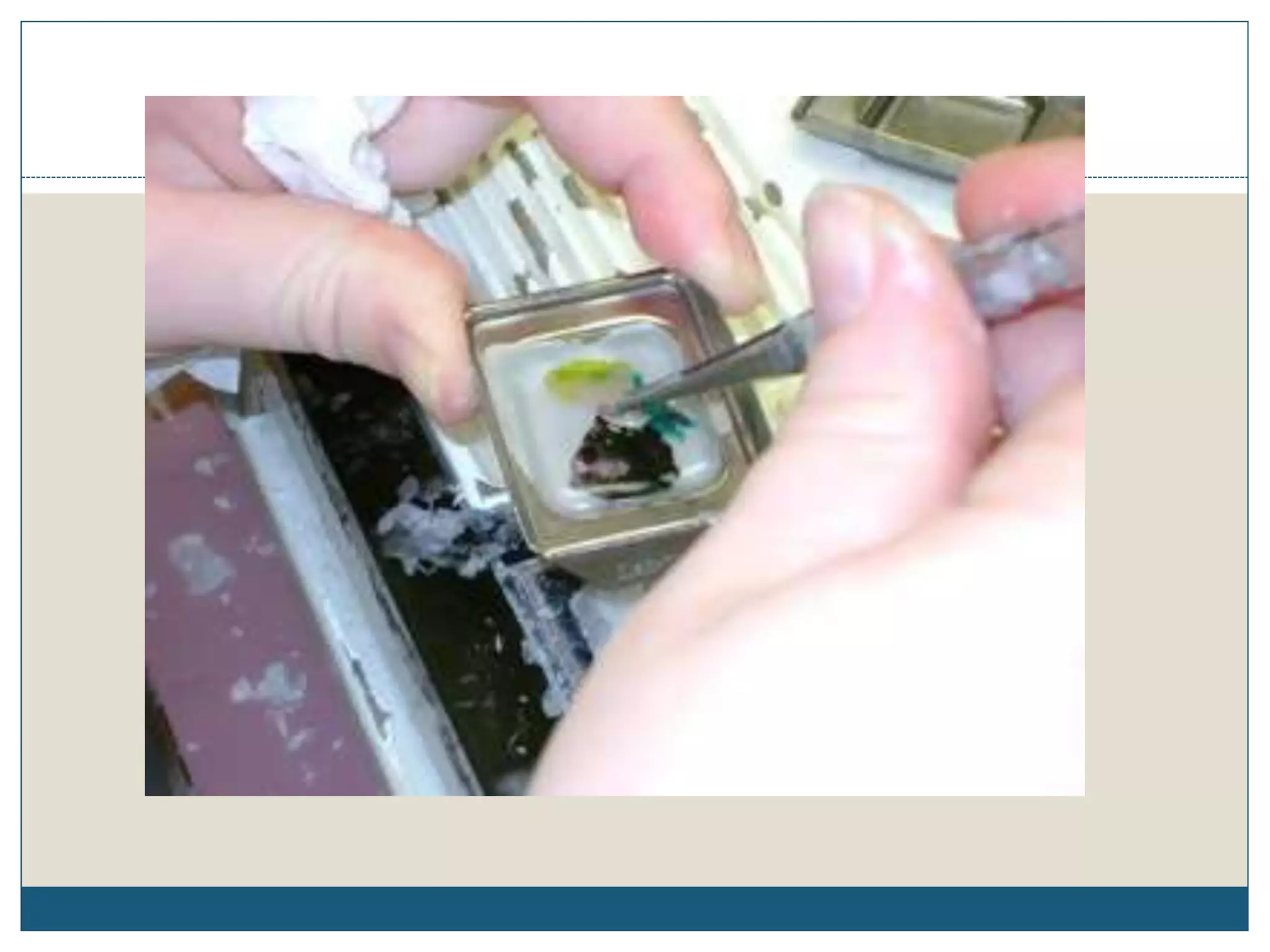
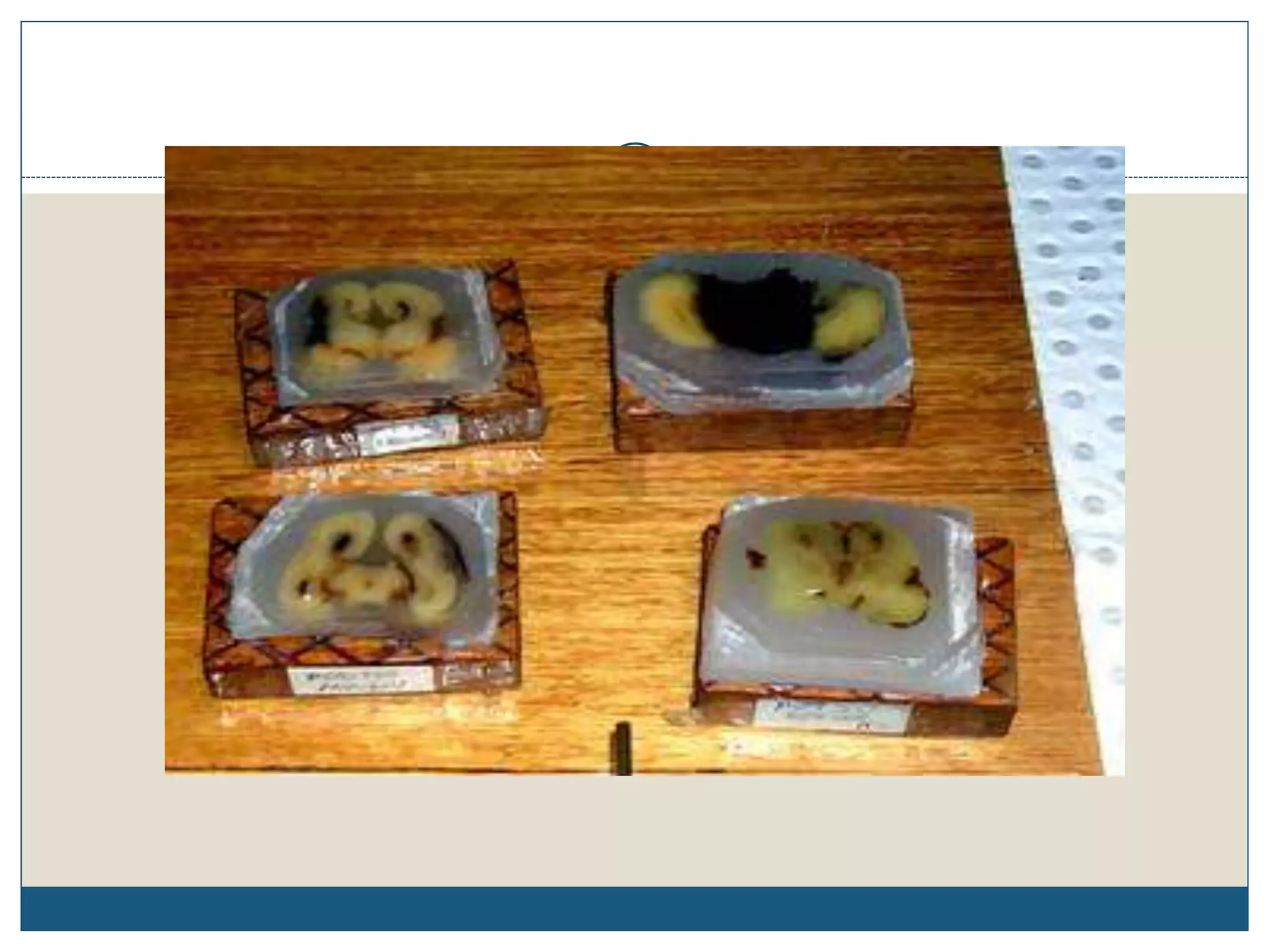
EMBEDDING & BLOCKING
 Embedding – with molten wax
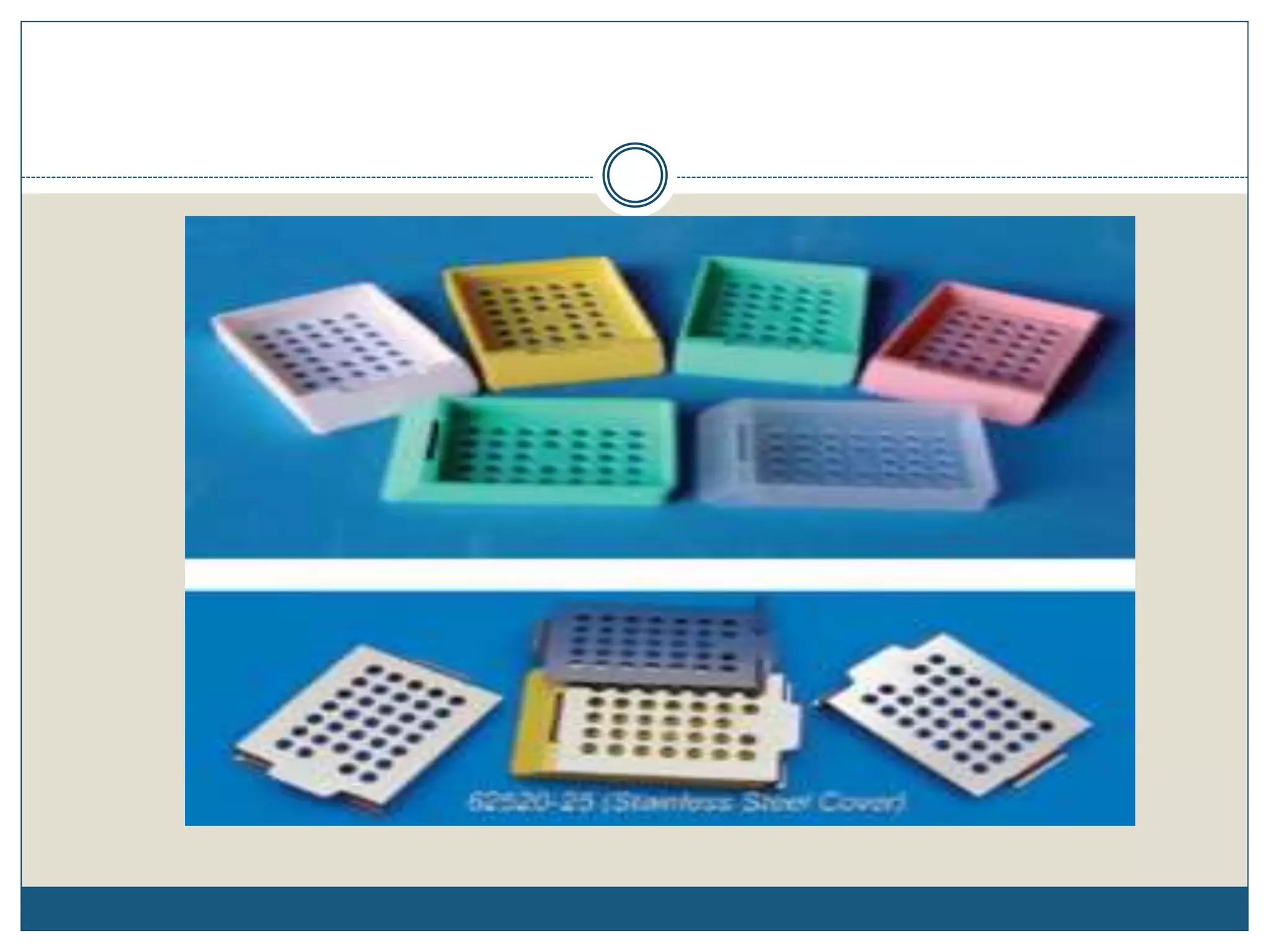
 Wax blocks –
 Metallic L (Leuckahart’s) blocks
 Plastic moulds
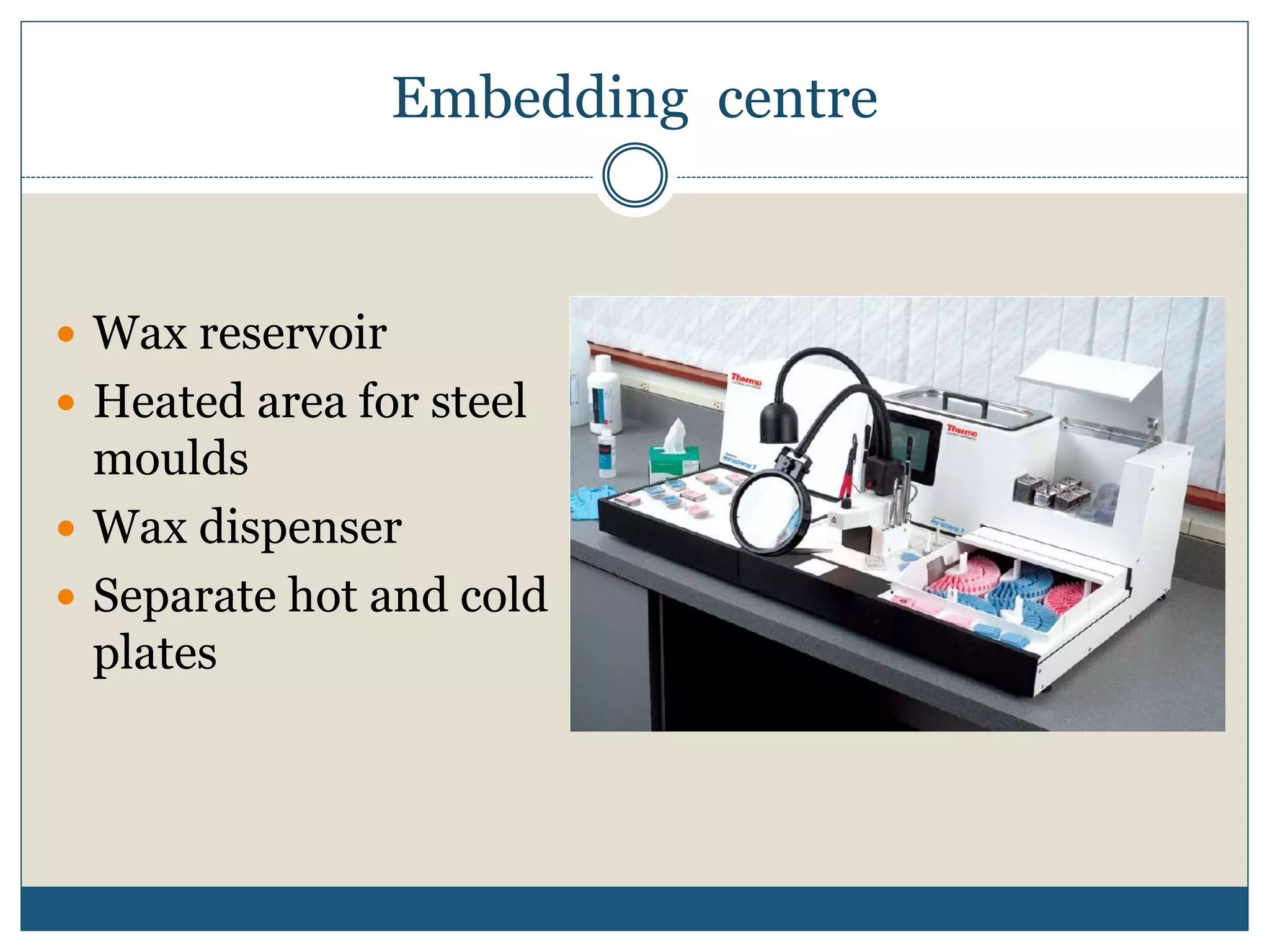
Embedding centre
 Wax reservoir
 Heated area for steel
moulds
 Wax dispenser
 Separate hot and cold
plates
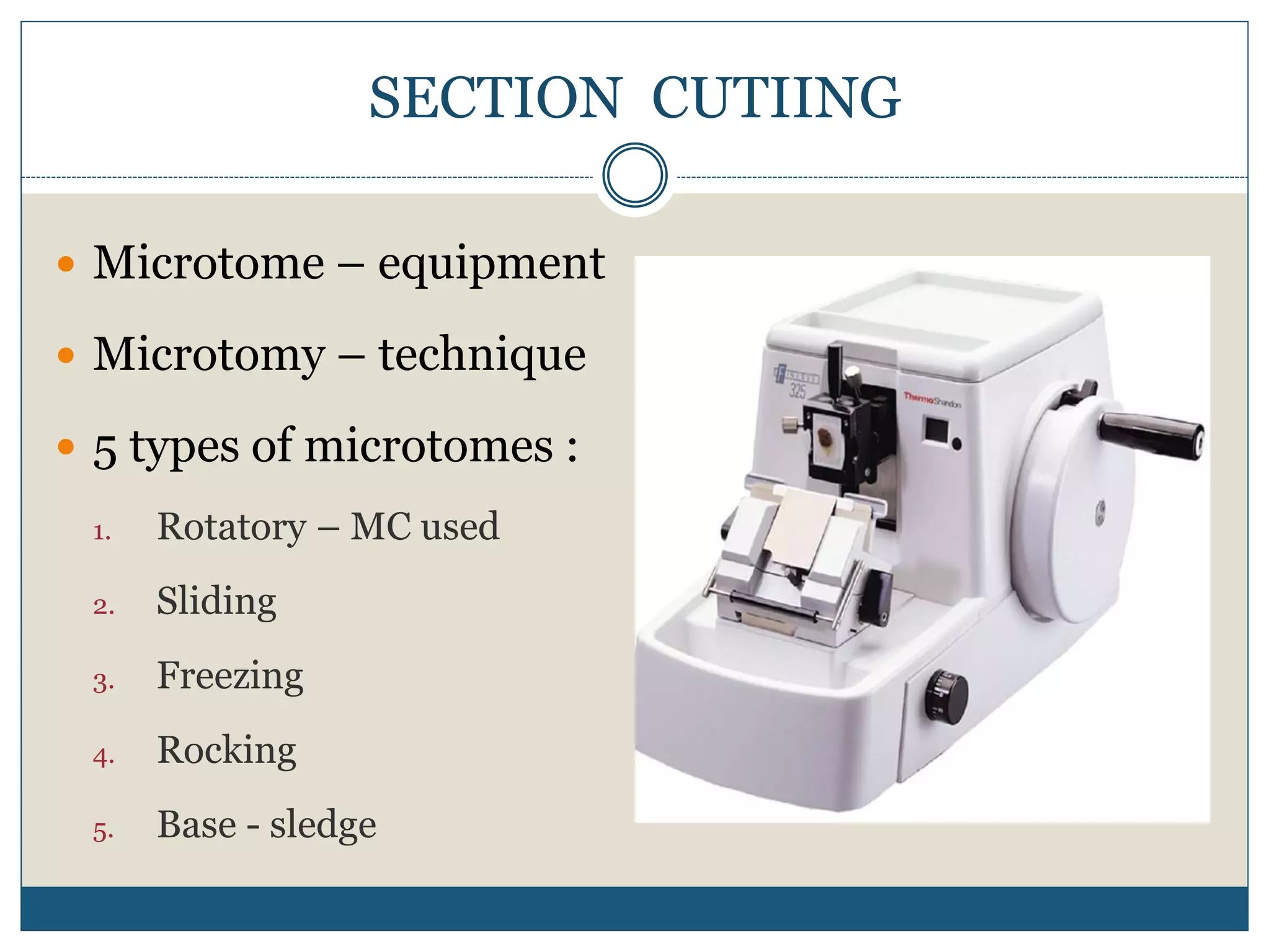
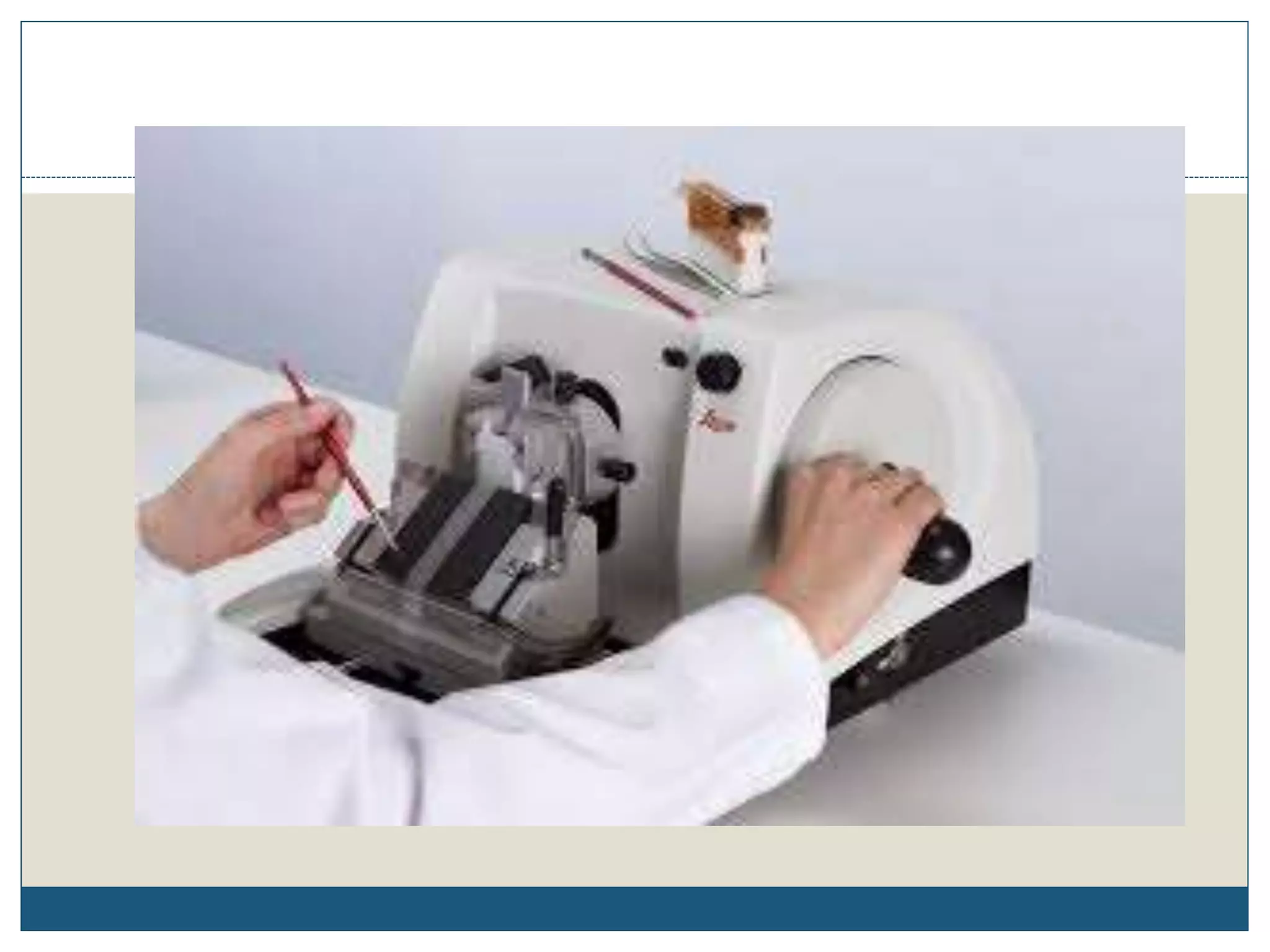
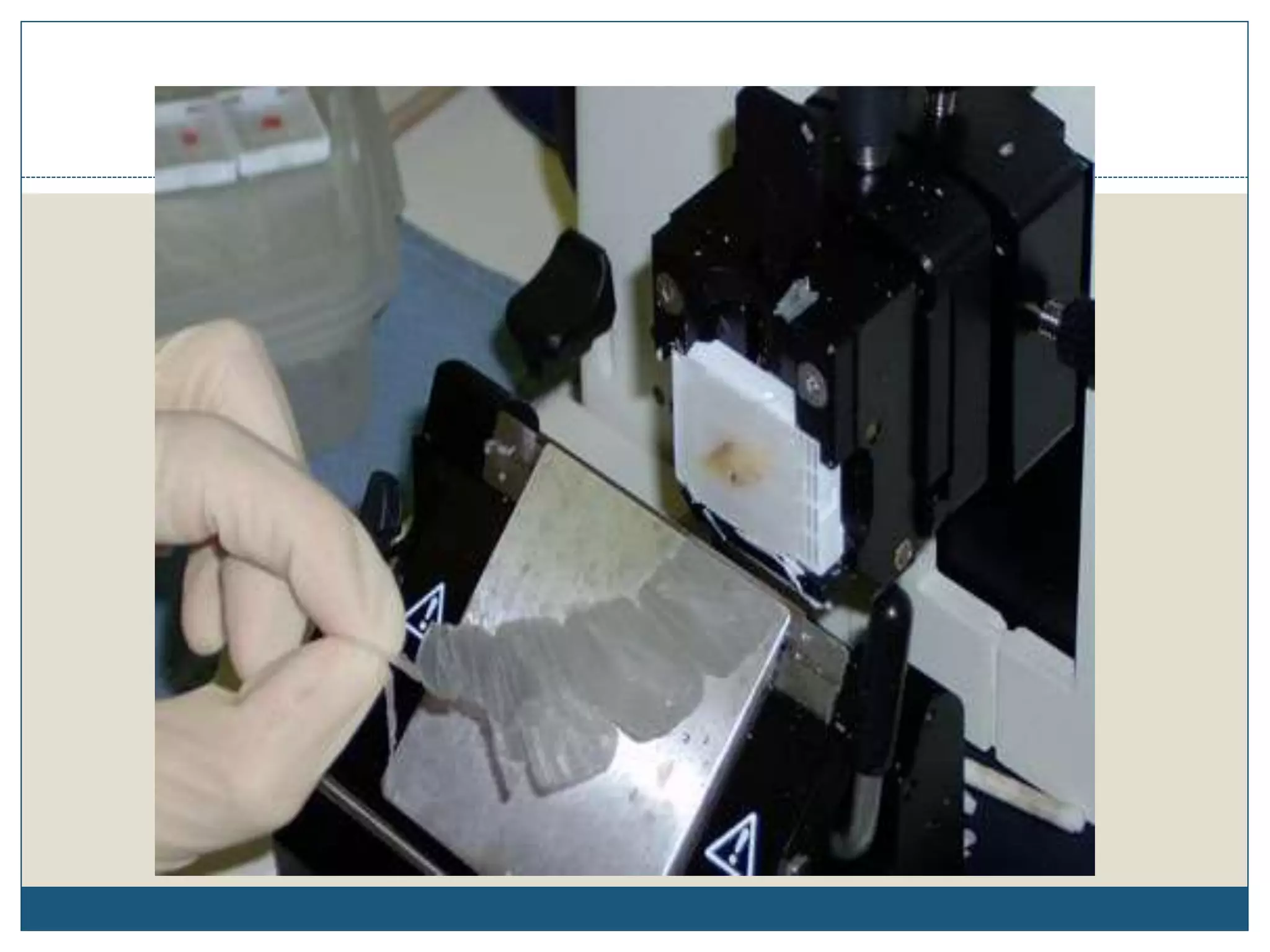
SECTION CUTIING
 Microtome – equipment
 Microtomy – technique
 5 types of microtomes :
1. Rotatory – MC used
2. Sliding
3. Freezing
4. Rocking
5. Base - sledge
ROUTINE STAINING (H&E)
 Haematoxylin – nuclear stain
 Eosin – cytoplasmic stain
 Mounted in DPX/Canada balsm
 End result :-
Tissue  processing
Tissue  processing
Tissue  processing

Tissue processing

  • 1.
  • 2.
    AT MICROSCOPIC LEVEL- HISTOLOGY  Science of examination of normal tissues  HISTOPATHOLOGY  Examination of tissues for presence / absence of changes in structure due to disease process
  • 3.
    What happens tothe SPECIMEN?  Specimen received in the lab (10% formalin)  Grossed (appearance, measurements, noticeable pathological changes etc) and kept for formalin fixation  Bits given from representative areas ( not >4mm thick)  Tissue processed…  Final outcome : stained slide for microscopic examination
  • 7.
    TISSUE PROCESSING 1. Fixation 2.Dehydration 3. Clearing 4. Impregnation 5. Embedding and blocking 6. Section cutting 7. Routine staining
  • 8.
    FIXATION  Any tissueonce taken out of the body will decompose due to:-  Loss of bloody supply and oxygen  Accumulation of products of metabolism  Action of autolytic enzymes  Putrefaction by bacteria  All the above changes PREVENTED BY FIXATION!
  • 9.
     Tissue getfixed in complete physical and partial chemical state  Principle : denaturation / precipitation of cell proteins , soluble component is made insoluble
  • 10.
    Fixatives produce thefollowing effect…
  • 11.
  • 12.
    TYPES OF FIXATIVES [A]  Simple (one substance) Eg. Formalin  Compound (two or more) Eg. Bouin’s solution, Zencker’s solution  [B]  Microanantomical – preserves anatomy  Cytological – cytoplasmic and nuclear features  Histochemical – constituents and enzymes
  • 13.
    COMMONLY USED FIXATIVES Formalin – MC – routine  Glutaraldehyde – electron microscopy  Picric acid(Bouin’s solution) – renal & testicular tissue  Alcohol(Carnoy’s fixative) – cytologic smears, endometrial sampling  Osmium tetraoxide – CNS tissues & electron microscopy
  • 19.
    DEHYDRATION  Water removedfrom tissue s and cells – this space is occupied by wax  Tissue sent through grades of alcohol : 70%, 80%, 95% and absolute alcohol  Ethyl (MC used), methyl, isopropyl alcohol or acetone can be used
  • 20.
    CLEARING  Alcohol fromtissues and cells is removed (dealcoholisation) and replaced by a fluid in which wax is soluble – makes tissue transparent  Xylene (MC used) , toluene, benzene, chloroform, cedar wood oil can be used
  • 21.
    IMPREGNATION  Empty spacesin tissues and cells , after removal of clearing agent, are taken by molten wax  Hardens the tissue – helps in section cutting  Melting point of wax – 54- 62 degree C
  • 22.
    TISSUE PROCESSOR  Dehydration+ clearing + impregnation  Automated tissue processor Open (hydraulic ) Closed (vaccum)
  • 23.
    OPEN / HYDRAULICPROCESSOR  12 stations  1 jar – formalin  6 jars – grades of alcohol  3 jars – xylene  2 jars – molten paraffin wax
  • 25.
    CLOSED / VACCUMPROCESSOR  Different processing fluids are moved in and out of a single station sequentially
  • 26.
    EMBEDDING & BLOCKING Embedding – with molten wax  Wax blocks –  Metallic L (Leuckahart’s) blocks  Plastic moulds
  • 28.
    Embedding centre  Waxreservoir  Heated area for steel moulds  Wax dispenser  Separate hot and cold plates
  • 32.
    SECTION CUTIING  Microtome– equipment  Microtomy – technique  5 types of microtomes : 1. Rotatory – MC used 2. Sliding 3. Freezing 4. Rocking 5. Base - sledge
  • 36.
    ROUTINE STAINING (H&E) Haematoxylin – nuclear stain  Eosin – cytoplasmic stain  Mounted in DPX/Canada balsm  End result :-

Editor's Notes