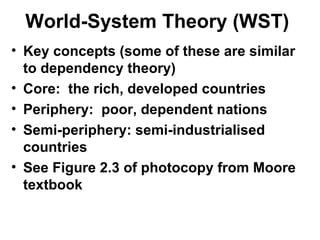
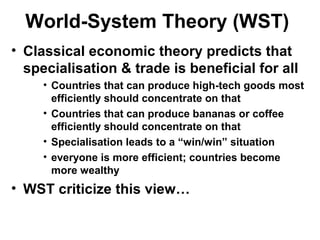
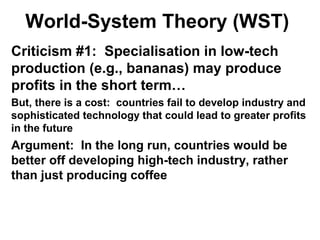
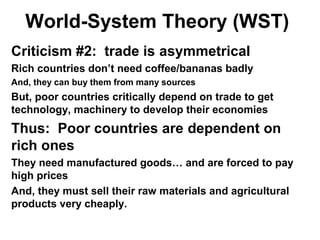
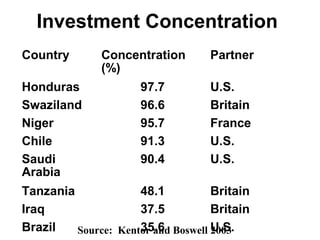
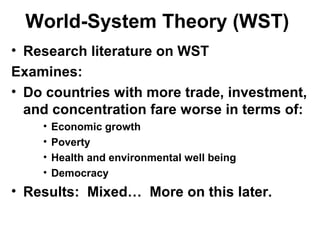
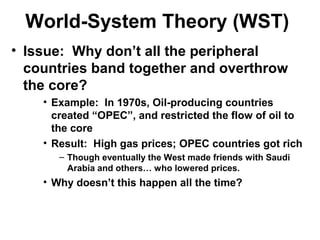
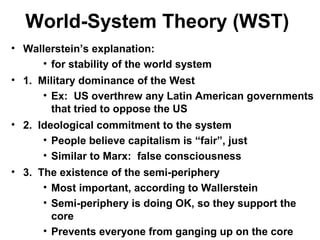
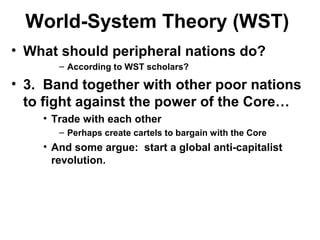
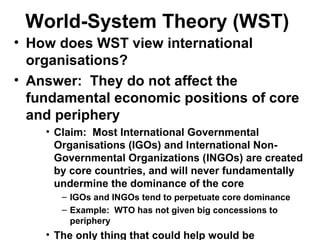
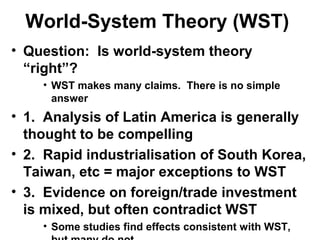
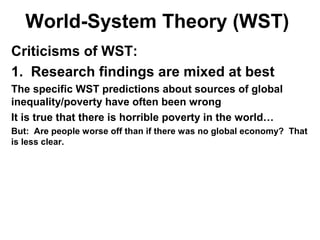
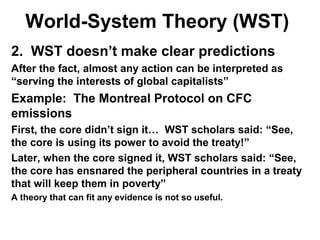
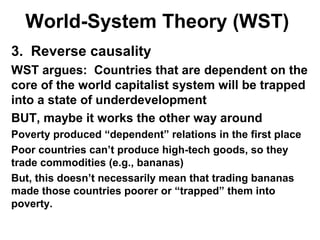
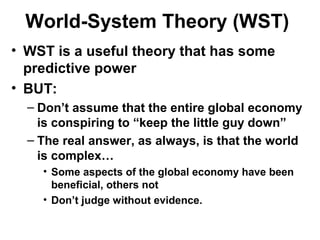
World systems theory argues that underdeveloped countries are poor not due to their own histories or characteristics, but because of their position in the global capitalist system. Core developed countries exploit peripheral poorer nations by maintaining economic and military dominance over them. This allows core nations to extract resources and profits from peripheries while preventing their industrial development. World systems theorists claim international organizations do not challenge this global power structure and peripheries should pursue policies like import substitution and cooperation to resist exploitation by the core. However, critics argue world systems theory's claims are not always supported by evidence and the causes of global inequality may be more complex.


![International Relations ppt[1] EDITED.pptx](https://cdn.slidesharecdn.com/ss_thumbnails/internationalrelationsppt1edited-260105183345-e065515d-thumbnail.jpg?width=640&height=640&fit=bounds)


