Working Capital Management
Blessy Varghese
Assistant Professor
Department of Management Studies
St. Mary’s College
Thrissur-680020
Kerala
Working Capital Management,Blessy Varghese,St.Mary’s College
Definition
According to Shubin “ Working capital is the amount of funds
necessary to cover the cost of operating the enterprise”
Meaning of Working Capital
Working capital is the capital required for the day to day working
of an enterprise. It is required for the purchase of raw materials
and for meeting day to day expenditure on salaries,
wages,rents,advertising etc.
Working Capital Management,Blessy Varghese,St.Mary’s College
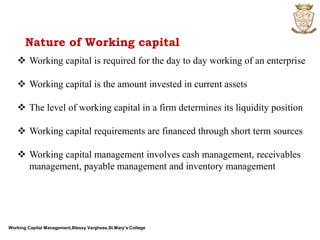
Nature of Working capital
 Working capital is required for the day to day working of an enterprise
 Working capital is the amount invested in current assets
 The level of working capital in a firm determines its liquidity position
 Working capital requirements are financed through short term sources
 Working capital management involves cash management, receivables
management, payable management and inventory management
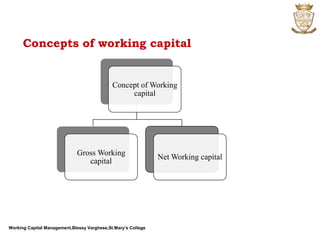
Concept of Working
capital
Gross Working
capital
Net Working capital
Concepts of working capital
Working Capital Management,Blessy Varghese,St.Mary’s College
Nature of Working capital
 Working capital is required for the day to day working of an enterprise
 Working capital is the amount invested in current assets
 The level of working capital in a firm determines its liquidity position
 Working capital requirements are financed through short term sources
 Working capital management involves cash management, receivables
management, payable management and inventory management
Working Capital Management,Blessy Varghese,St.Mary’s College
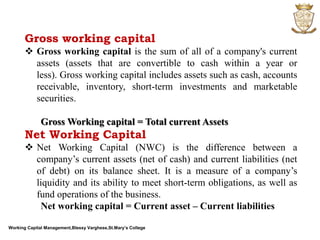
Gross working capital
 Gross working capital is the sum of all of a company's current
assets (assets that are convertible to cash within a year or
less). Gross working capital includes assets such as cash, accounts
receivable, inventory, short-term investments and marketable
securities.
Gross Working capital = Total current Assets
Net Working Capital
 Net Working Capital (NWC) is the difference between a
company’s current assets (net of cash) and current liabilities (net
of debt) on its balance sheet. It is a measure of a company’s
liquidity and its ability to meet short-term obligations, as well as
fund operations of the business.
Net working capital = Current asset – Current liabilities
Working Capital Management,Blessy Varghese,St.Mary’s College
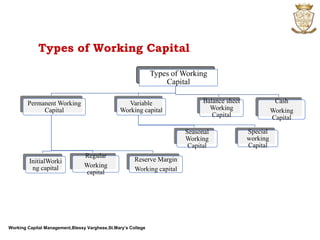
Types of Working Capital
Types of Working
Capital
Permanent Working
Capital
InitialWorki
ng capital
Regular
Working
capital
Reserve Margin
Working capital
Cash
Working
Capital
Balance sheet
Working
Capital
Variable
Working capital
Seasonal
Working
Capital
Special
working
Capital
Working Capital Management,Blessy Varghese,St.Mary’s College
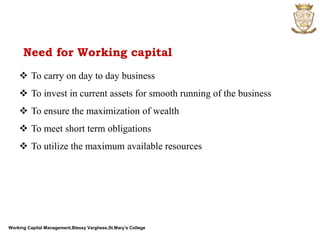
 To carry on day to day business
 To invest in current assets for smooth running of the business
 To ensure the maximization of wealth
 To meet short term obligations
 To utilize the maximum available resources
Need for Working capital
Working Capital Management,Blessy Varghese,St.Mary’s College
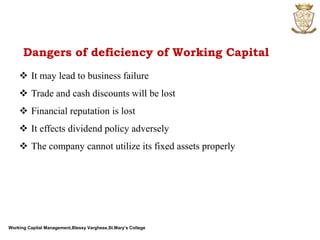
 It may lead to business failure
 Trade and cash discounts will be lost
 Financial reputation is lost
 It effects dividend policy adversely
 The company cannot utilize its fixed assets properly
Dangers of deficiency of Working Capital
Working Capital Management,Blessy Varghese,St.Mary’s College
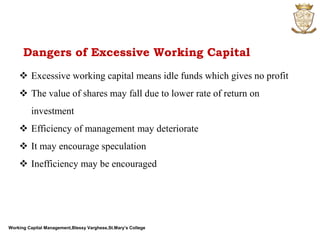
 Excessive working capital means idle funds which gives no profit
 The value of shares may fall due to lower rate of return on
investment
 Efficiency of management may deteriorate
 It may encourage speculation
 Inefficiency may be encouraged
Dangers of Excessive Working Capital
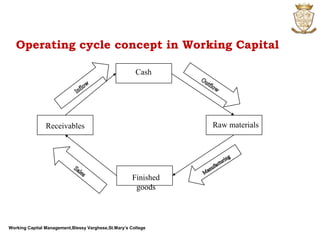
Operating cycle concept in Working Capital
Cash
Raw materials
Finished
goods
Receivables
Working Capital Management,Blessy Varghese,St.Mary’s College
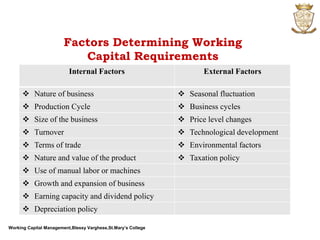
Factors Determining Working
Capital Requirements
Internal Factors External Factors
 Nature of business  Seasonal fluctuation
 Production Cycle  Business cycles
 Size of the business  Price level changes
 Turnover  Technological development
 Terms of trade  Environmental factors
 Nature and value of the product  Taxation policy
 Use of manual labor or machines
 Growth and expansion of business
 Earning capacity and dividend policy
 Depreciation policy
Working Capital Management,Blessy Varghese,St.Mary’s College
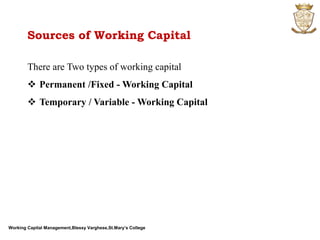
Sources of Working Capital
There are Two types of working capital
 Permanent /Fixed - Working Capital
 Temporary / Variable - Working Capital
Working Capital Management,Blessy Varghese,St.Mary’s College
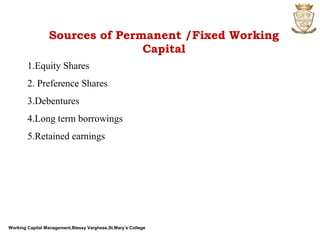
Sources of Permanent /Fixed Working
Capital
1.Equity Shares
2. Preference Shares
3.Debentures
4.Long term borrowings
5.Retained earnings
Working Capital Management,Blessy Varghese,St.Mary’s College
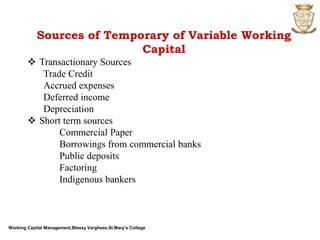
Sources of Temporary of Variable Working
Capital
 Transactionary Sources
Trade Credit
Accrued expenses
Deferred income
Depreciation
 Short term sources
Commercial Paper
Borrowings from commercial banks
Public deposits
Factoring
Indigenous bankers

Business Administration-Working Capital Management

  • 1.
    Working Capital Management BlessyVarghese Assistant Professor Department of Management Studies St. Mary’s College Thrissur-680020 Kerala
  • 2.
    Working Capital Management,BlessyVarghese,St.Mary’s College Definition According to Shubin “ Working capital is the amount of funds necessary to cover the cost of operating the enterprise” Meaning of Working Capital Working capital is the capital required for the day to day working of an enterprise. It is required for the purchase of raw materials and for meeting day to day expenditure on salaries, wages,rents,advertising etc.
  • 3.
    Working Capital Management,BlessyVarghese,St.Mary’s College Nature of Working capital  Working capital is required for the day to day working of an enterprise  Working capital is the amount invested in current assets  The level of working capital in a firm determines its liquidity position  Working capital requirements are financed through short term sources  Working capital management involves cash management, receivables management, payable management and inventory management
  • 4.
    Concept of Working capital GrossWorking capital Net Working capital Concepts of working capital Working Capital Management,Blessy Varghese,St.Mary’s College
  • 5.
    Working Capital Management,BlessyVarghese,St.Mary’s College Nature of Working capital  Working capital is required for the day to day working of an enterprise  Working capital is the amount invested in current assets  The level of working capital in a firm determines its liquidity position  Working capital requirements are financed through short term sources  Working capital management involves cash management, receivables management, payable management and inventory management
  • 6.
    Working Capital Management,BlessyVarghese,St.Mary’s College Gross working capital  Gross working capital is the sum of all of a company's current assets (assets that are convertible to cash within a year or less). Gross working capital includes assets such as cash, accounts receivable, inventory, short-term investments and marketable securities. Gross Working capital = Total current Assets Net Working Capital  Net Working Capital (NWC) is the difference between a company’s current assets (net of cash) and current liabilities (net of debt) on its balance sheet. It is a measure of a company’s liquidity and its ability to meet short-term obligations, as well as fund operations of the business. Net working capital = Current asset – Current liabilities
  • 7.
    Working Capital Management,BlessyVarghese,St.Mary’s College Types of Working Capital Types of Working Capital Permanent Working Capital InitialWorki ng capital Regular Working capital Reserve Margin Working capital Cash Working Capital Balance sheet Working Capital Variable Working capital Seasonal Working Capital Special working Capital
  • 8.
    Working Capital Management,BlessyVarghese,St.Mary’s College  To carry on day to day business  To invest in current assets for smooth running of the business  To ensure the maximization of wealth  To meet short term obligations  To utilize the maximum available resources Need for Working capital
  • 9.
    Working Capital Management,BlessyVarghese,St.Mary’s College  It may lead to business failure  Trade and cash discounts will be lost  Financial reputation is lost  It effects dividend policy adversely  The company cannot utilize its fixed assets properly Dangers of deficiency of Working Capital
  • 10.
    Working Capital Management,BlessyVarghese,St.Mary’s College  Excessive working capital means idle funds which gives no profit  The value of shares may fall due to lower rate of return on investment  Efficiency of management may deteriorate  It may encourage speculation  Inefficiency may be encouraged Dangers of Excessive Working Capital
  • 11.
    Operating cycle conceptin Working Capital Cash Raw materials Finished goods Receivables Working Capital Management,Blessy Varghese,St.Mary’s College
  • 12.
    Working Capital Management,BlessyVarghese,St.Mary’s College Factors Determining Working Capital Requirements Internal Factors External Factors  Nature of business  Seasonal fluctuation  Production Cycle  Business cycles  Size of the business  Price level changes  Turnover  Technological development  Terms of trade  Environmental factors  Nature and value of the product  Taxation policy  Use of manual labor or machines  Growth and expansion of business  Earning capacity and dividend policy  Depreciation policy
  • 13.
    Working Capital Management,BlessyVarghese,St.Mary’s College Sources of Working Capital There are Two types of working capital  Permanent /Fixed - Working Capital  Temporary / Variable - Working Capital
  • 14.
    Working Capital Management,BlessyVarghese,St.Mary’s College Sources of Permanent /Fixed Working Capital 1.Equity Shares 2. Preference Shares 3.Debentures 4.Long term borrowings 5.Retained earnings
  • 15.
    Working Capital Management,BlessyVarghese,St.Mary’s College Sources of Temporary of Variable Working Capital  Transactionary Sources Trade Credit Accrued expenses Deferred income Depreciation  Short term sources Commercial Paper Borrowings from commercial banks Public deposits Factoring Indigenous bankers