Reproductive and Endocrine
Systems
What is the function of the
reproductive system?
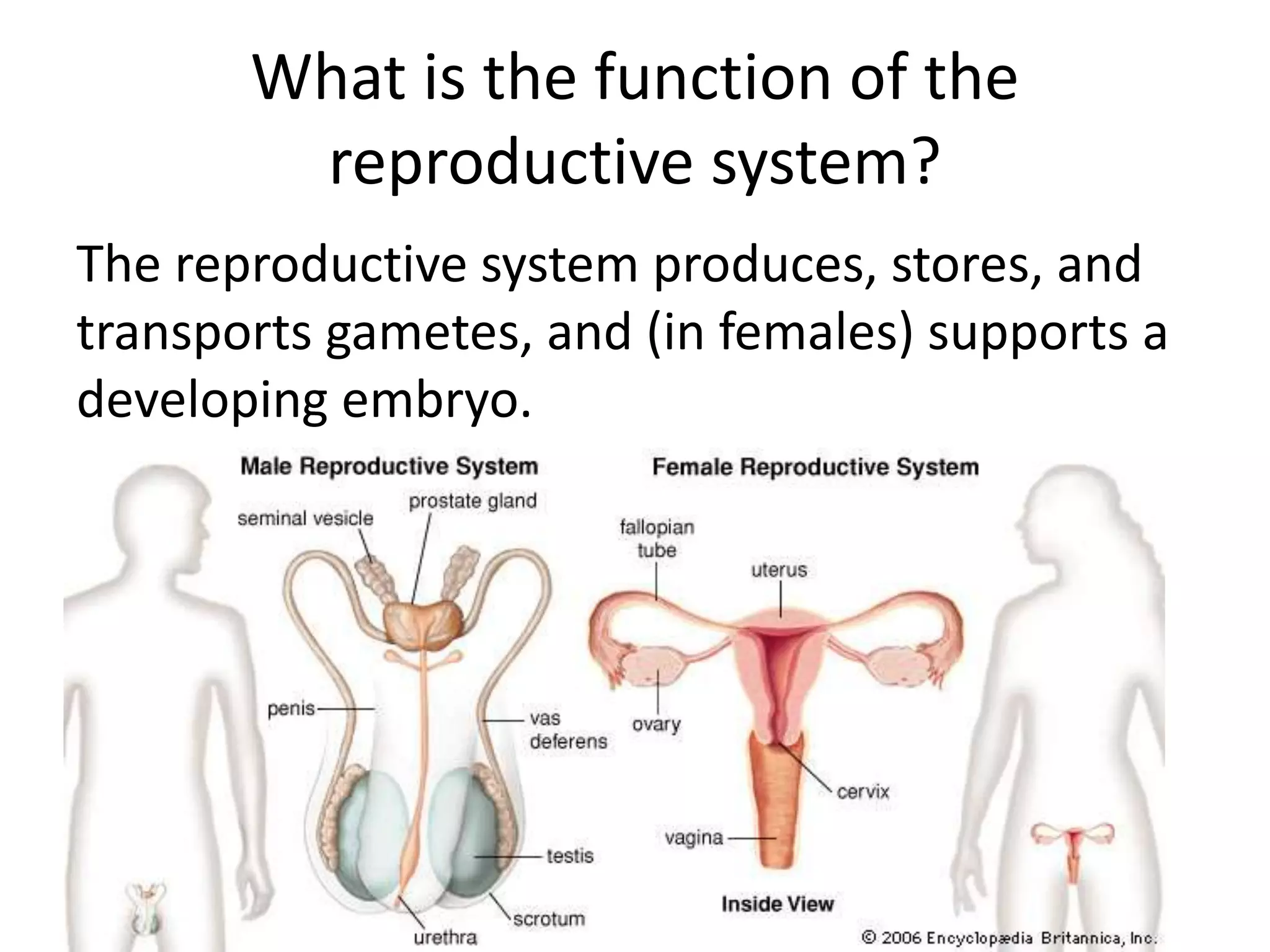
The reproductive system produces, stores, and
transports gametes, and (in females) supports a
developing embryo.
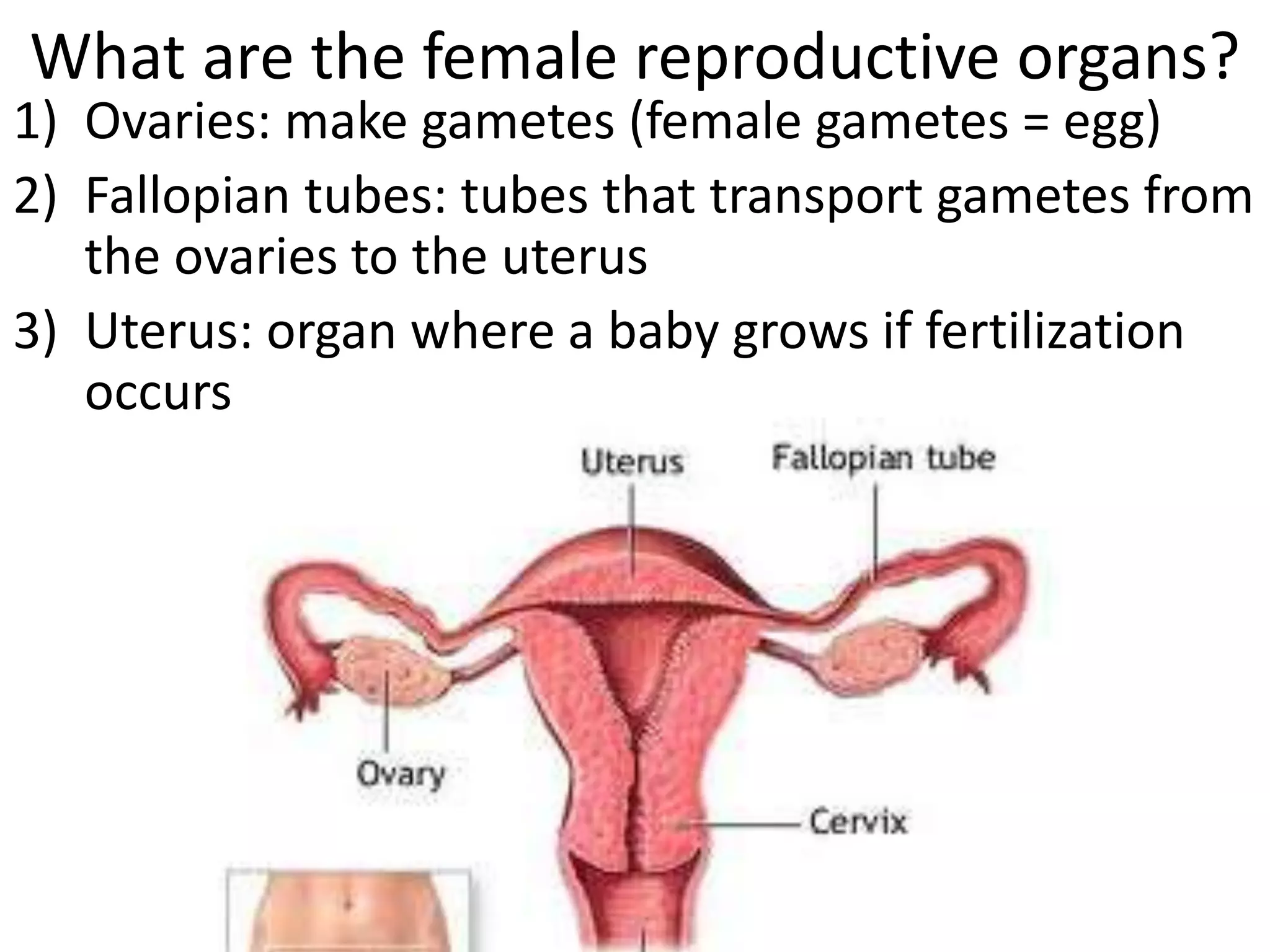
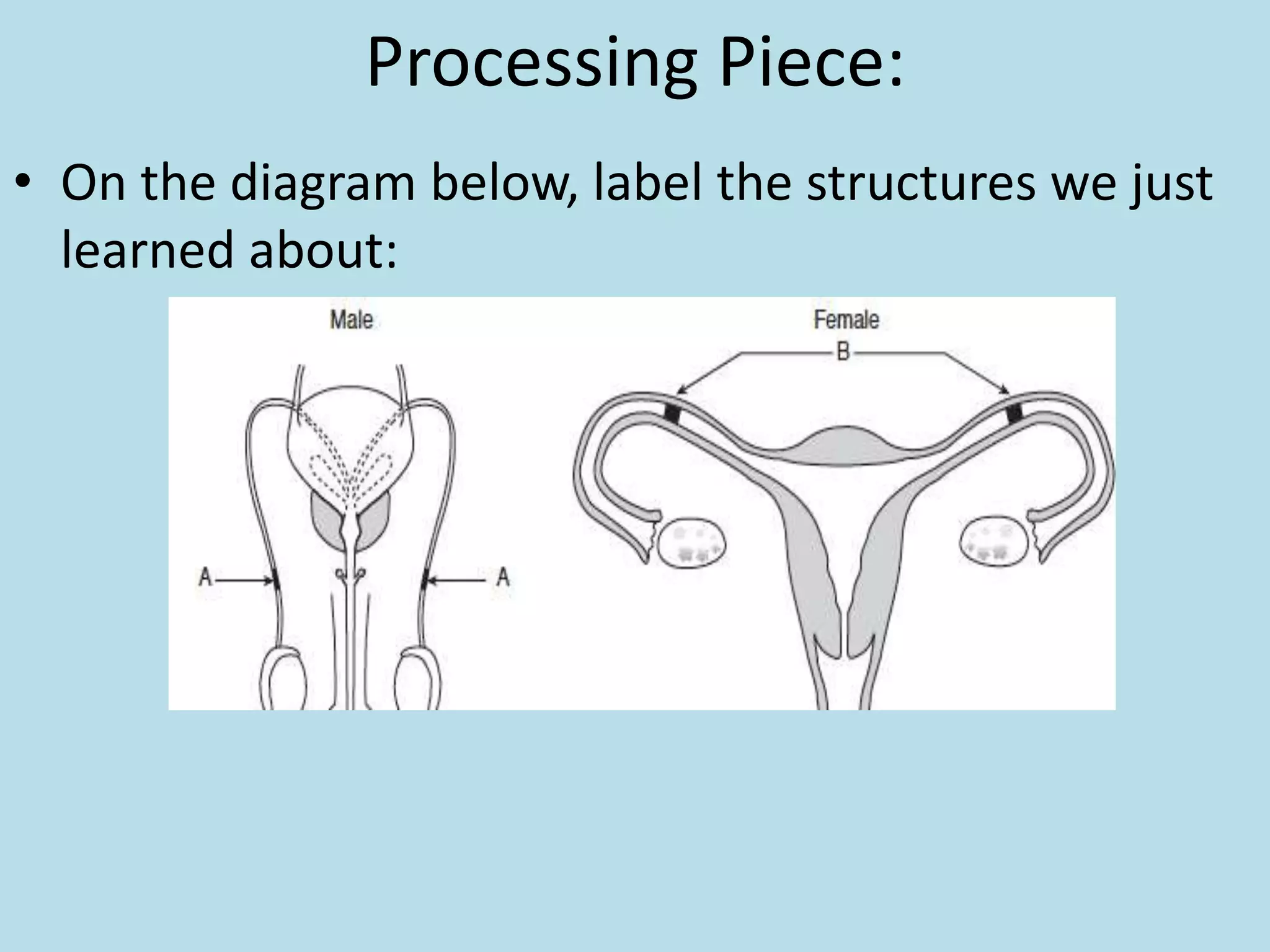
What are the female reproductive organs?
1) Ovaries: make gametes (female gametes = egg)
2) Fallopian tubes: tubes that transport gametes from
the ovaries to the uterus
3) Uterus: organ where a baby grows if fertilization
occurs
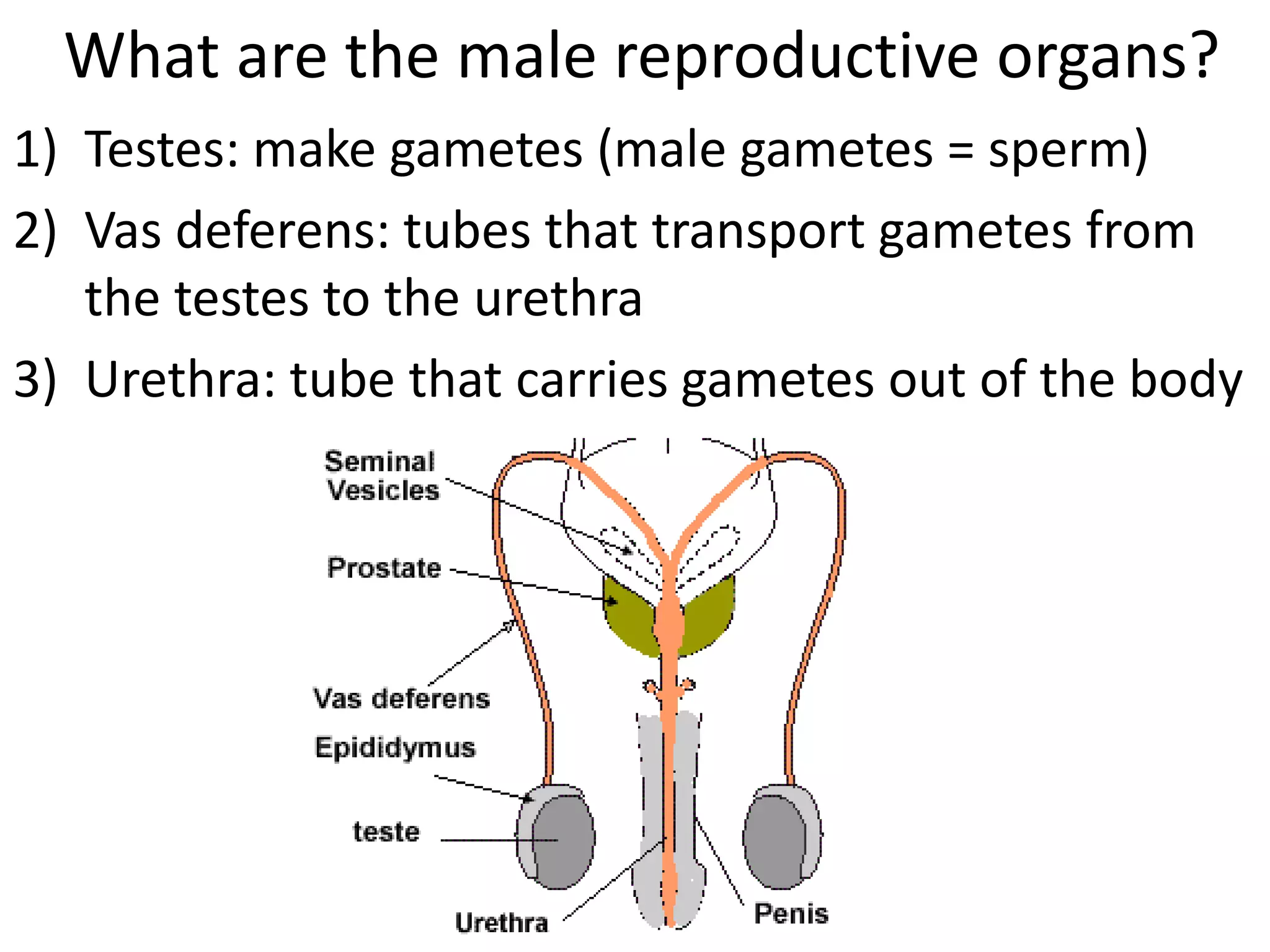
What are the male reproductive organs?
1) Testes: make gametes (male gametes = sperm)
2) Vas deferens: tubes that transport gametes from
the testes to the urethra
3) Urethra: tube that carries gametes out of the body
Processing Piece:
• On the diagram below, label the structures we just
learned about:
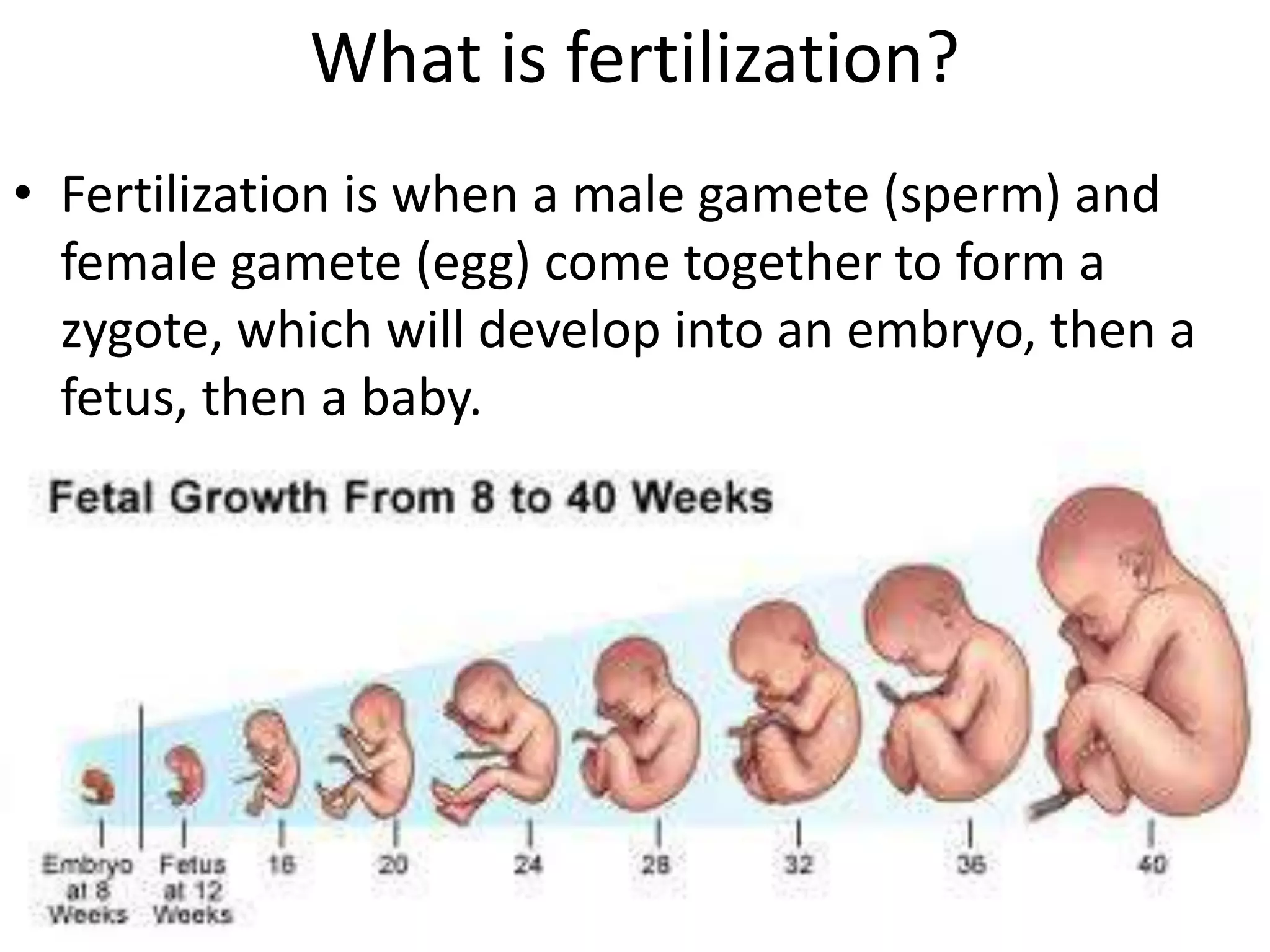
What is fertilization?
• Fertilization is when a male gamete (sperm) and
female gamete (egg) come together to form a
zygote, which will develop into an embryo, then a
fetus, then a baby.
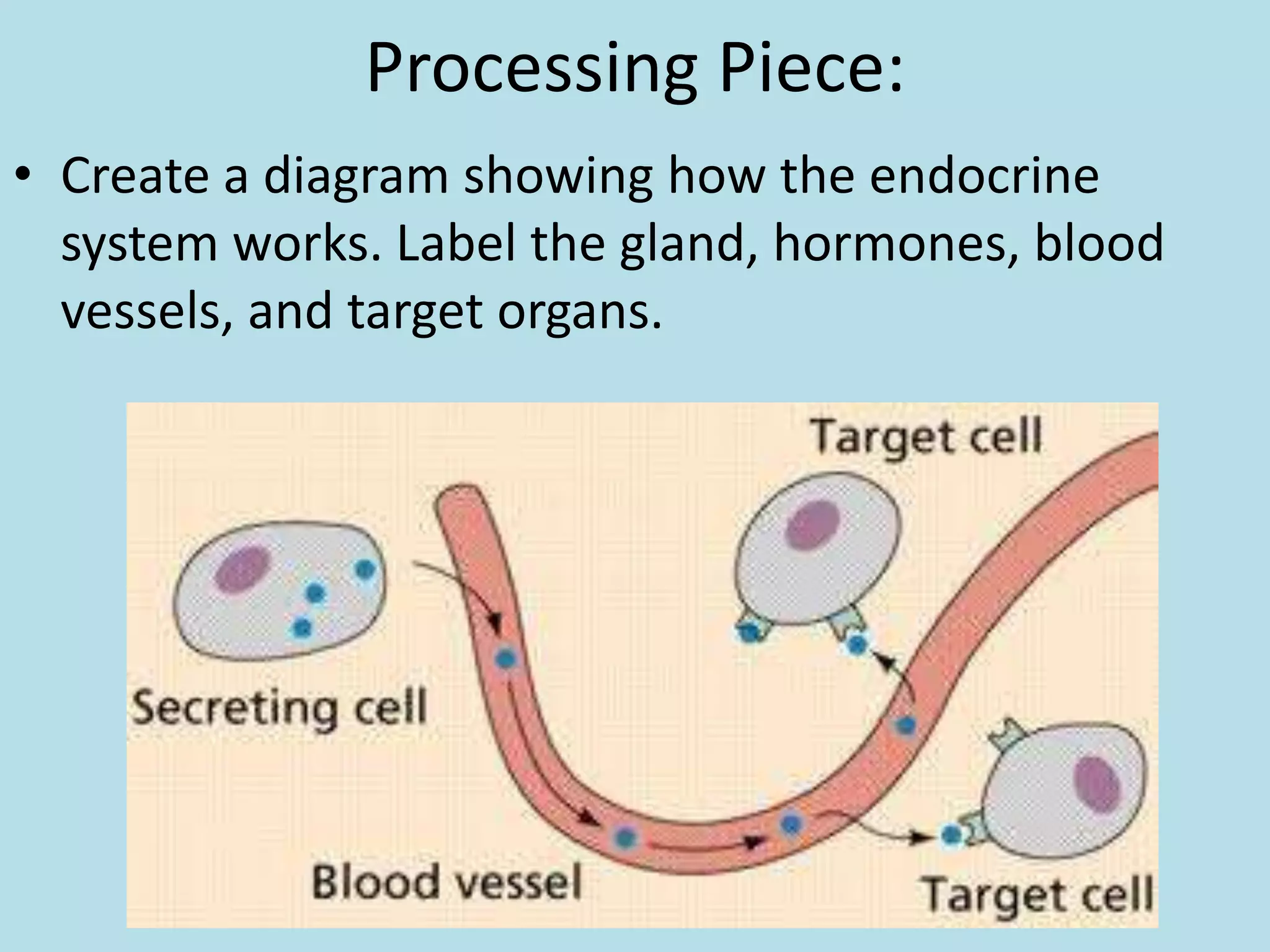
What is the function of the endocrine system?
The endocrine system is made up of glands (small
organs) that produce tiny signal molecules called
hormones. Hormones travel through the blood to
various tissues of the body and cause changes.
Processing Piece:
• Create a diagram showing how the endocrine
system works. Label the gland, hormones, blood
vessels, and target organs.
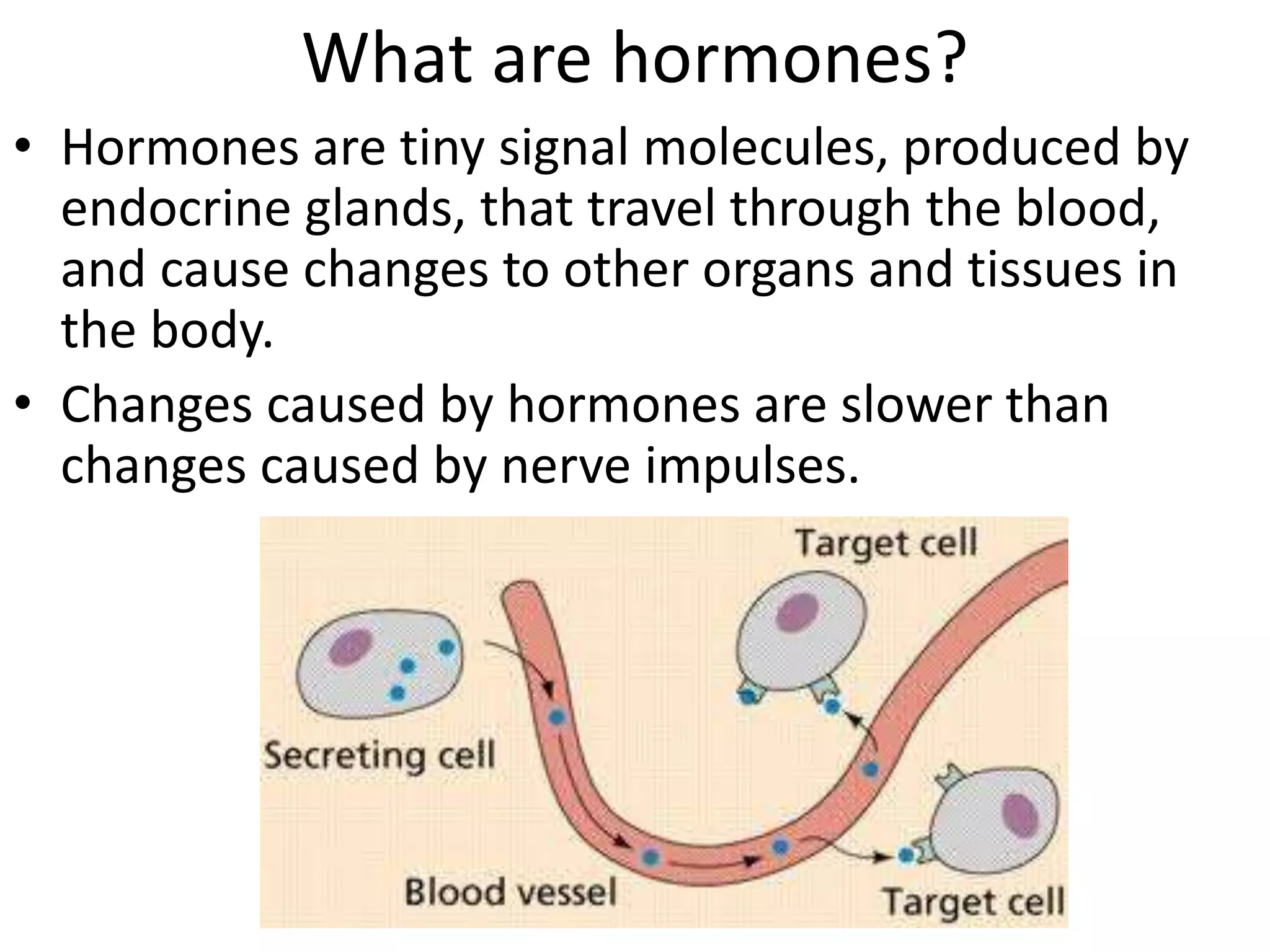
What are hormones?
• Hormones are tiny signal molecules, produced by
endocrine glands, that travel through the blood,
and cause changes to other organs and tissues in
the body.
• Changes caused by hormones are slower than
changes caused by nerve impulses.
Processing Piece:
• Neurotransmitters are molecules that are secreted
by neurons. They travel from the axon of one nerve,
to the dendrites of another nerve right next to it.
• How are neurotransmitters different from nerves?
Create a Venn diagram and list as many differences
as you can think of.
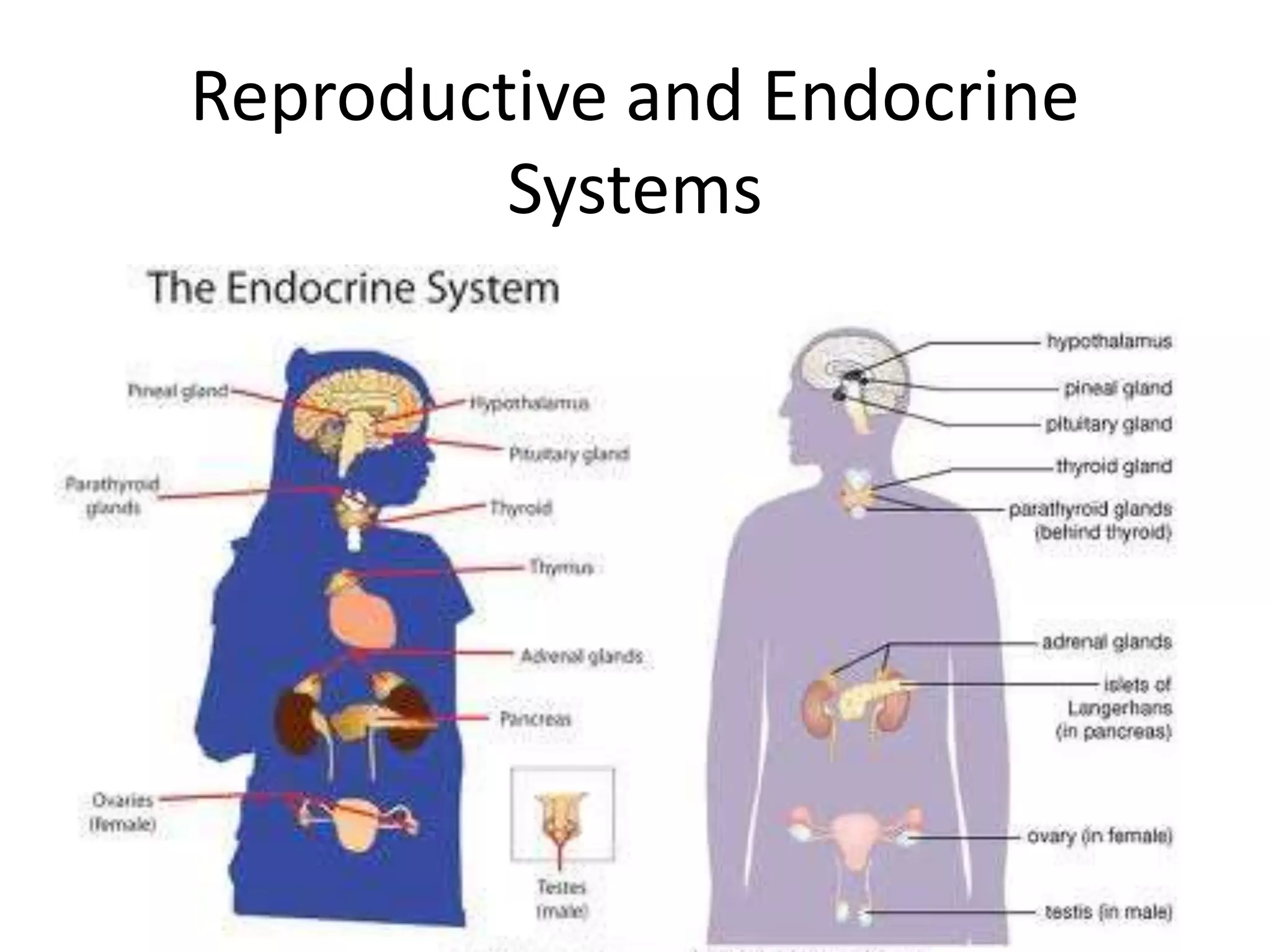
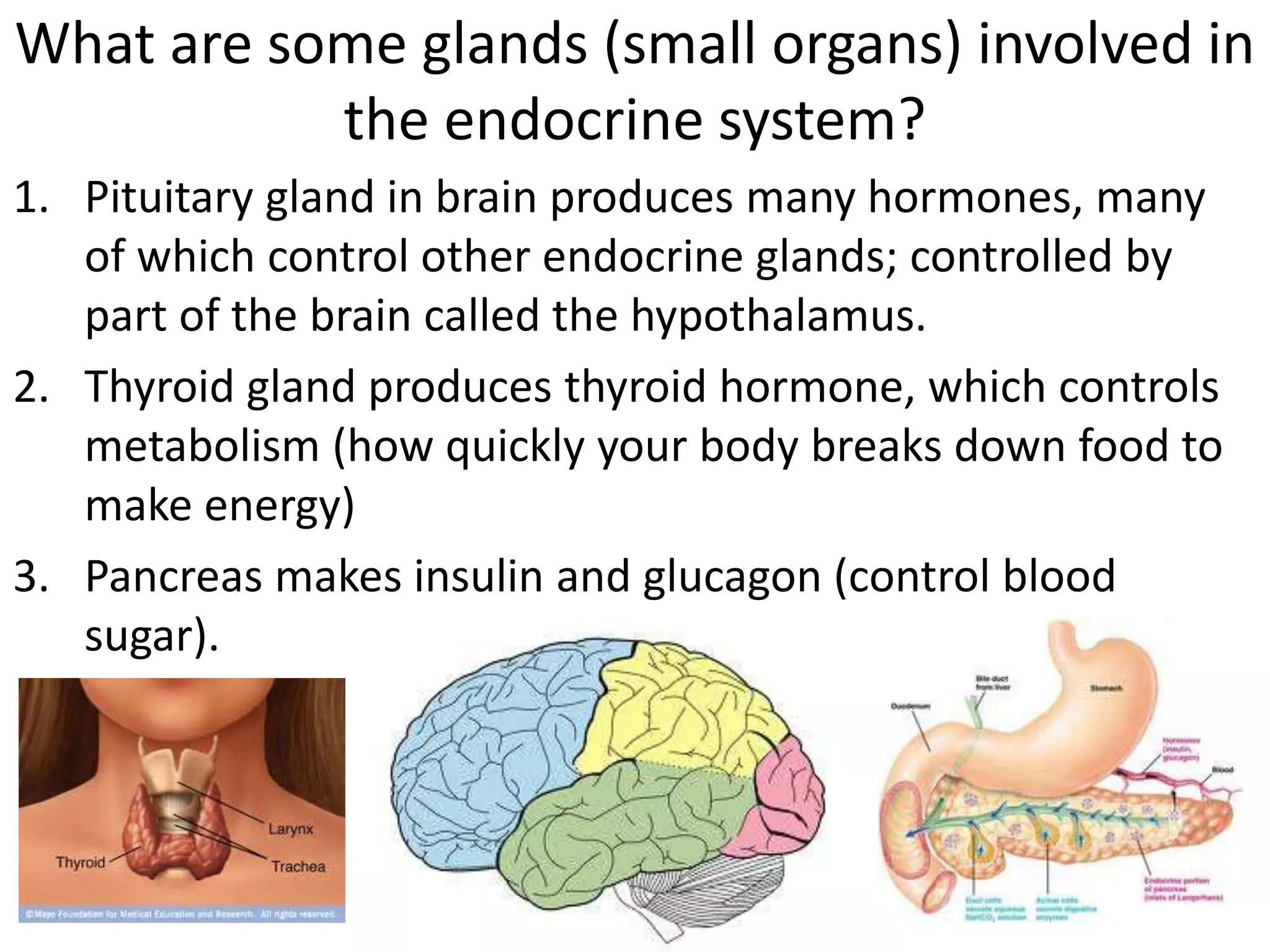
What are some glands (small organs) involved in
the endocrine system?
1. Pituitary gland in brain produces many hormones, many
of which control other endocrine glands; controlled by
part of the brain called the hypothalamus.
2. Thyroid gland produces thyroid hormone, which controls
metabolism (how quickly your body breaks down food to
make energy)
3. Pancreas makes insulin and glucagon (control blood
sugar).
What are some glands (organs) involved in the
endocrine system?
4. Adrenal glands make adrenalin.
5. Testes make testosterone.
6. Ovaries make estrogen and progesterone
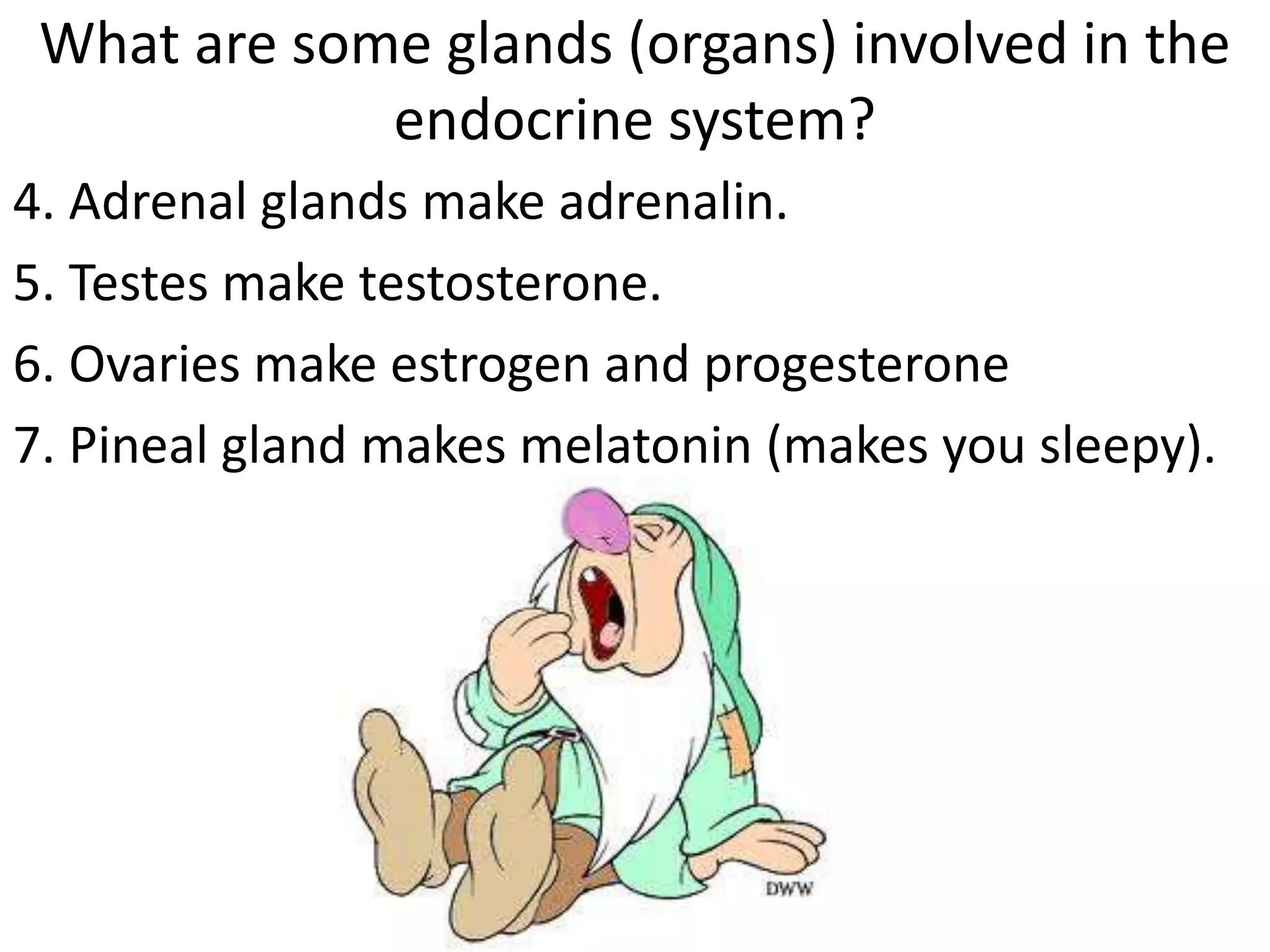
7. Pineal gland makes melatonin (makes you sleepy).
What are some examples of hormones
produced by the endocrine system?
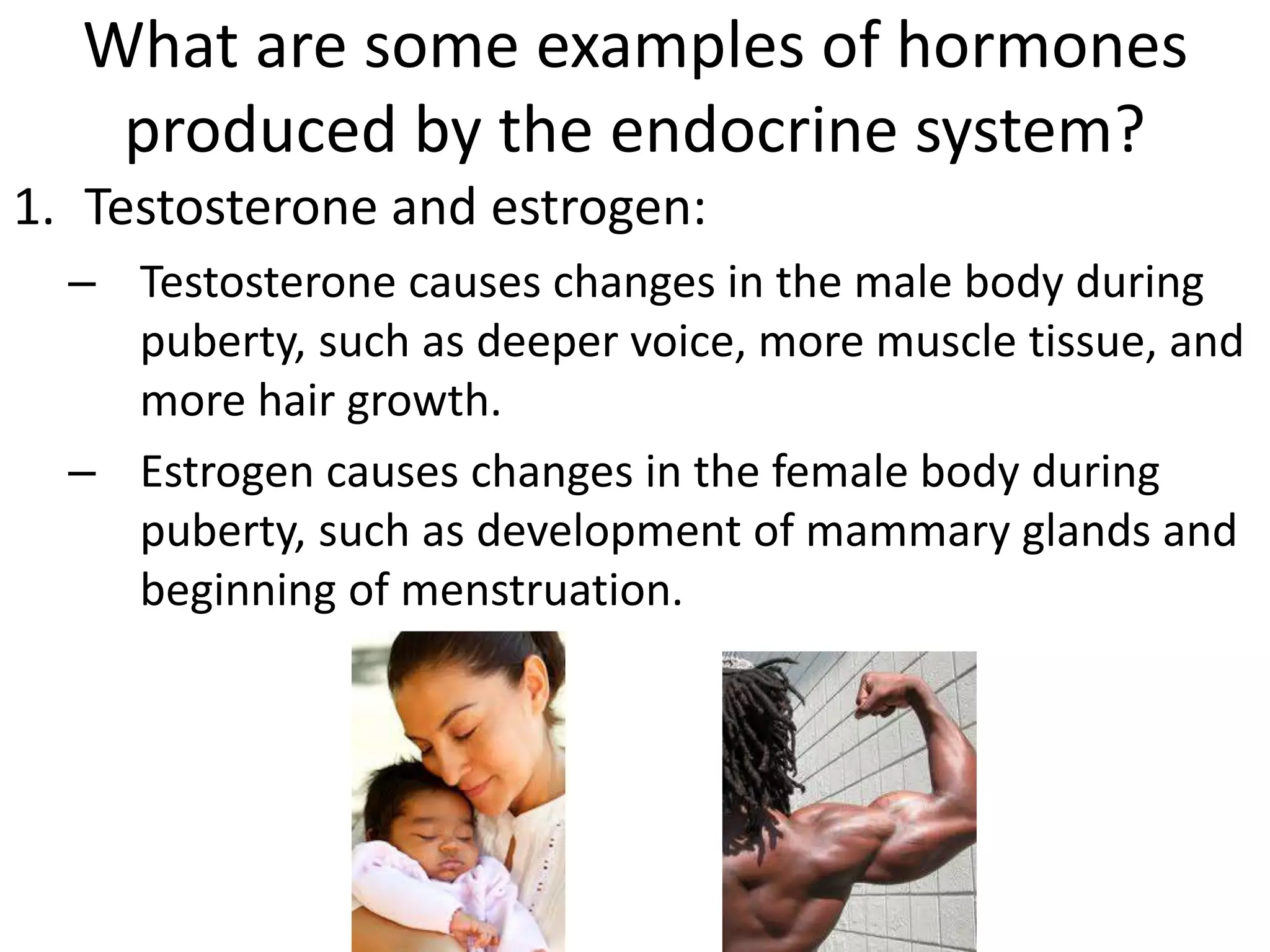
1. Testosterone and estrogen:
– Testosterone causes changes in the male body during
puberty, such as deeper voice, more muscle tissue, and
more hair growth.
– Estrogen causes changes in the female body during
puberty, such as development of mammary glands and
beginning of menstruation.
What are some examples of hormones
produced by the endocrine system?
2. Adrenaline
– Hormone released when you feel threatened and/or
stressed.
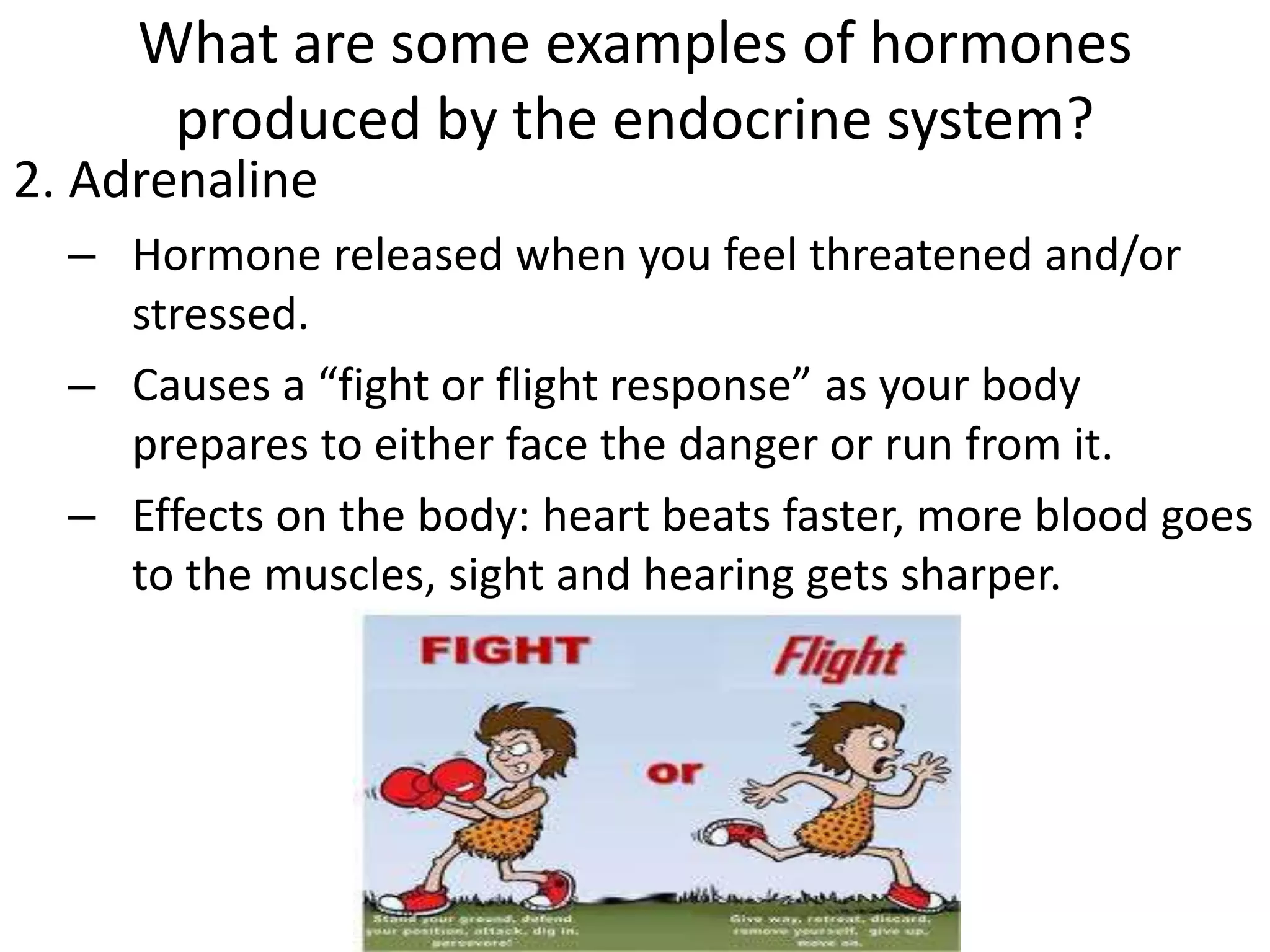
– Causes a “fight or flight response” as your body
prepares to either face the danger or run from it.
– Effects on the body: heart beats faster, more blood goes
to the muscles, sight and hearing gets sharper.
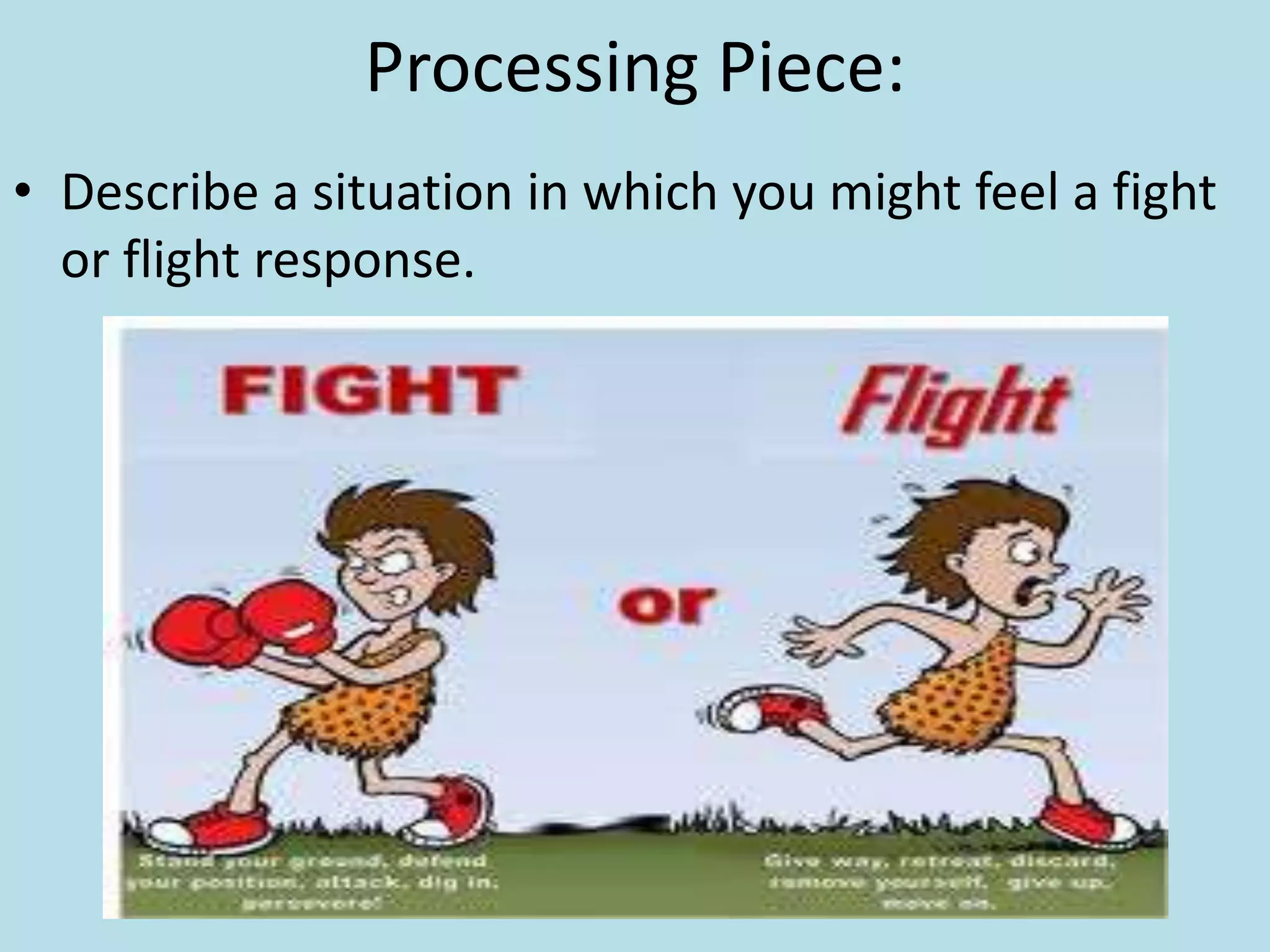
Processing Piece:
• Describe a situation in which you might feel a fight
or flight response.
What are some examples of hormones produced by
the endocrine system?
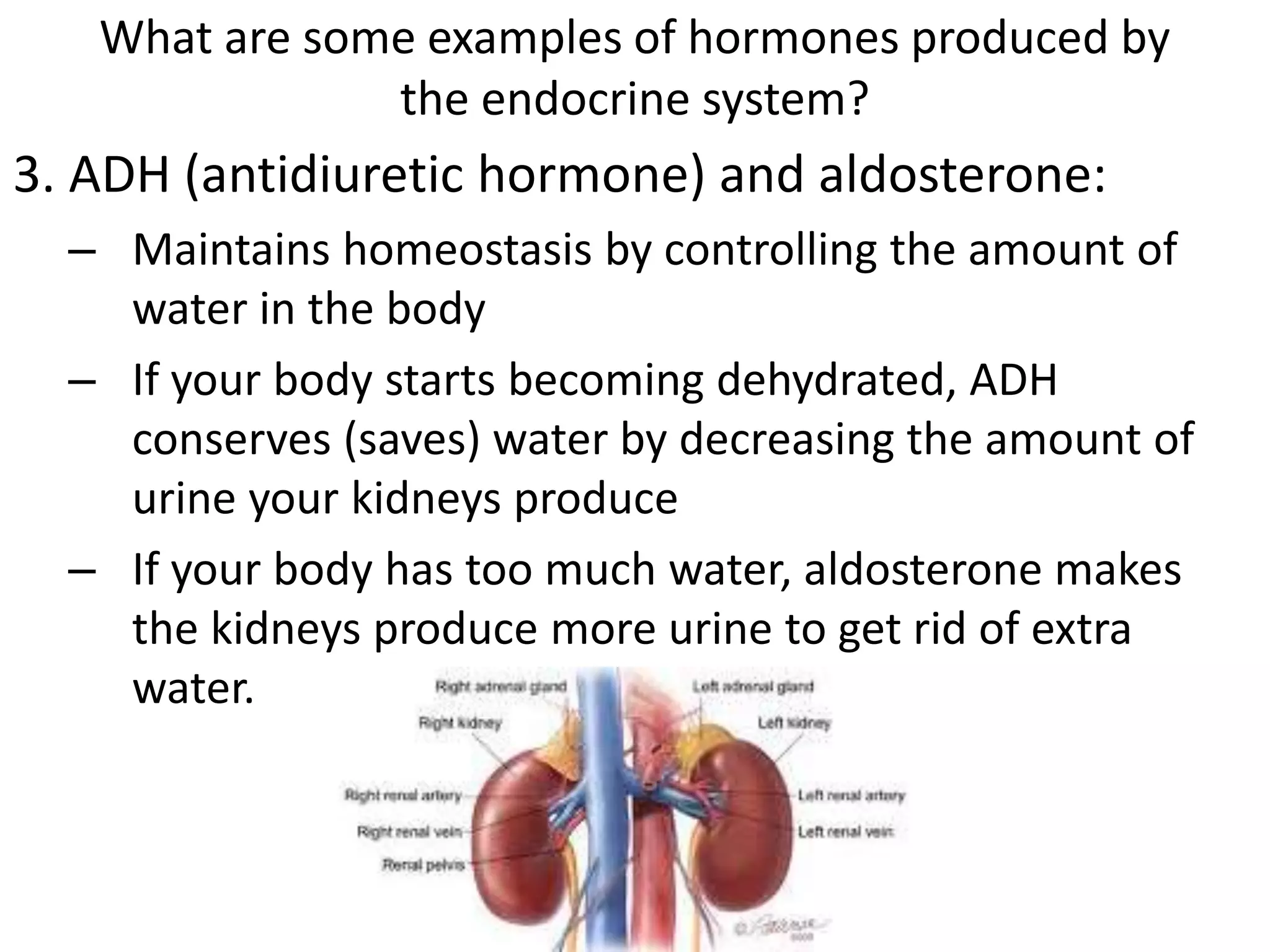
3. ADH (antidiuretic hormone) and aldosterone:
– Maintains homeostasis by controlling the amount of
water in the body
– If your body starts becoming dehydrated, ADH
conserves (saves) water by decreasing the amount of
urine your kidneys produce
– If your body has too much water, aldosterone makes
the kidneys produce more urine to get rid of extra
water.
Processing Piece:
• ADH and aldosterone are hormones released by the
pituitary gland in your brain. The hormones affect the
kidneys, which are in your lower body below your rib
cage. What would happen if these hormones were not
able to get into your blood stream? Why?
What are some examples of hormones produced by the
endocrine system?
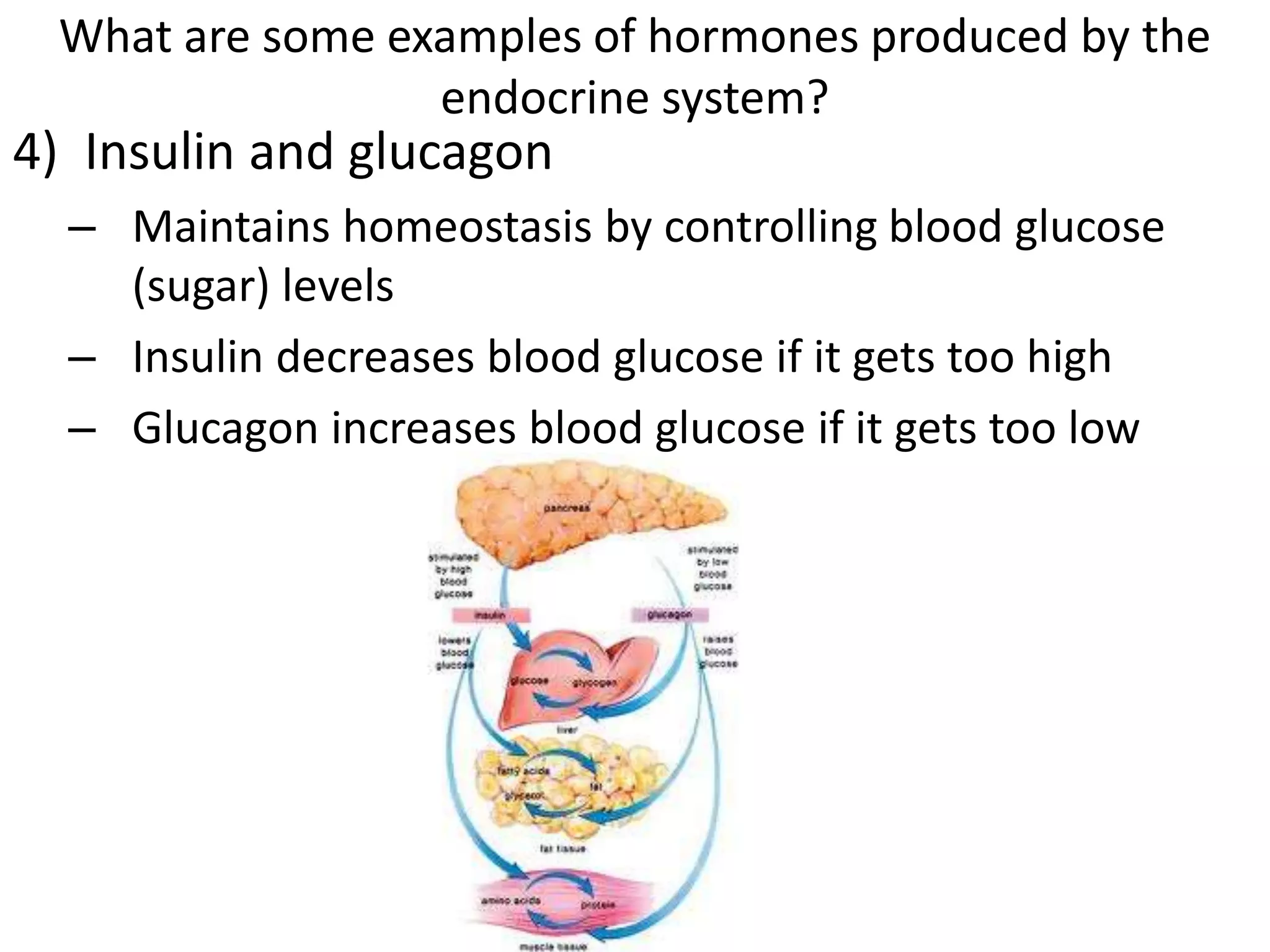
4) Insulin and glucagon
– Maintains homeostasis by controlling blood glucose
(sugar) levels
– Insulin decreases blood glucose if it gets too high
– Glucagon increases blood glucose if it gets too low
Processing Piece:
• What would happen if your body wasn’t able to
make one of these hormones?
What are some examples of hormones produced by
the endocrine system?
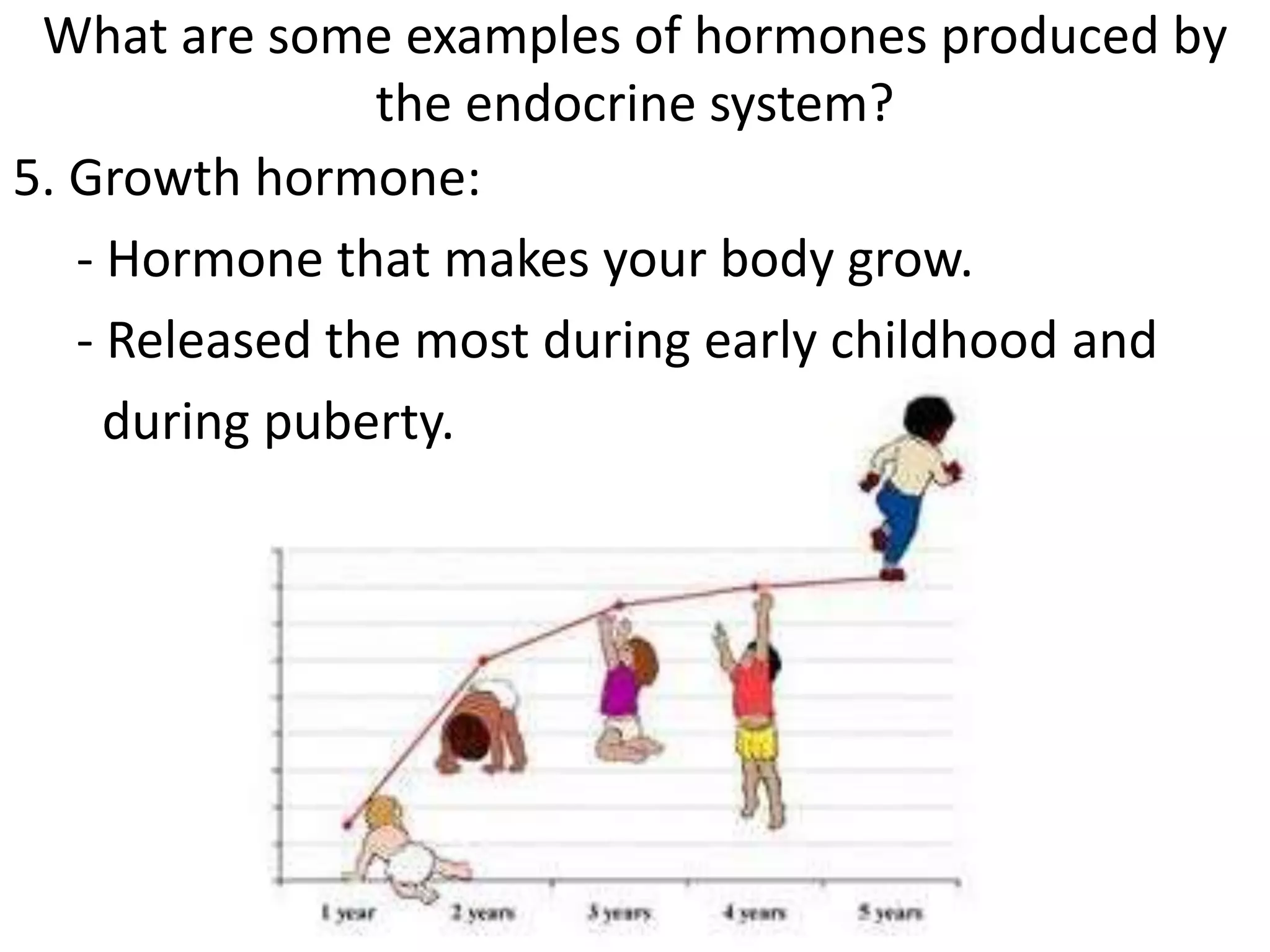
5. Growth hormone:
- Hormone that makes your body grow.
- Released the most during early childhood and
during puberty.
Exit Ticket
1. What is the function of the endocrine system?
2. What are hormones?
3. What is the function of the reproductive system?

Reproductive and endocrine systems

  • 1.
  • 2.
    What is thefunction of the reproductive system? The reproductive system produces, stores, and transports gametes, and (in females) supports a developing embryo.
  • 3.
    What are thefemale reproductive organs? 1) Ovaries: make gametes (female gametes = egg) 2) Fallopian tubes: tubes that transport gametes from the ovaries to the uterus 3) Uterus: organ where a baby grows if fertilization occurs
  • 4.
    What are themale reproductive organs? 1) Testes: make gametes (male gametes = sperm) 2) Vas deferens: tubes that transport gametes from the testes to the urethra 3) Urethra: tube that carries gametes out of the body
  • 5.
    Processing Piece: • Onthe diagram below, label the structures we just learned about:
  • 6.
    What is fertilization? •Fertilization is when a male gamete (sperm) and female gamete (egg) come together to form a zygote, which will develop into an embryo, then a fetus, then a baby.
  • 7.
    What is thefunction of the endocrine system? The endocrine system is made up of glands (small organs) that produce tiny signal molecules called hormones. Hormones travel through the blood to various tissues of the body and cause changes.
  • 8.
    Processing Piece: • Createa diagram showing how the endocrine system works. Label the gland, hormones, blood vessels, and target organs.
  • 9.
    What are hormones? •Hormones are tiny signal molecules, produced by endocrine glands, that travel through the blood, and cause changes to other organs and tissues in the body. • Changes caused by hormones are slower than changes caused by nerve impulses.
  • 10.
    Processing Piece: • Neurotransmittersare molecules that are secreted by neurons. They travel from the axon of one nerve, to the dendrites of another nerve right next to it. • How are neurotransmitters different from nerves? Create a Venn diagram and list as many differences as you can think of.
  • 11.
    What are someglands (small organs) involved in the endocrine system? 1. Pituitary gland in brain produces many hormones, many of which control other endocrine glands; controlled by part of the brain called the hypothalamus. 2. Thyroid gland produces thyroid hormone, which controls metabolism (how quickly your body breaks down food to make energy) 3. Pancreas makes insulin and glucagon (control blood sugar).
  • 12.
    What are someglands (organs) involved in the endocrine system? 4. Adrenal glands make adrenalin. 5. Testes make testosterone. 6. Ovaries make estrogen and progesterone 7. Pineal gland makes melatonin (makes you sleepy).
  • 13.
    What are someexamples of hormones produced by the endocrine system? 1. Testosterone and estrogen: – Testosterone causes changes in the male body during puberty, such as deeper voice, more muscle tissue, and more hair growth. – Estrogen causes changes in the female body during puberty, such as development of mammary glands and beginning of menstruation.
  • 14.
    What are someexamples of hormones produced by the endocrine system? 2. Adrenaline – Hormone released when you feel threatened and/or stressed. – Causes a “fight or flight response” as your body prepares to either face the danger or run from it. – Effects on the body: heart beats faster, more blood goes to the muscles, sight and hearing gets sharper.
  • 15.
    Processing Piece: • Describea situation in which you might feel a fight or flight response.
  • 16.
    What are someexamples of hormones produced by the endocrine system? 3. ADH (antidiuretic hormone) and aldosterone: – Maintains homeostasis by controlling the amount of water in the body – If your body starts becoming dehydrated, ADH conserves (saves) water by decreasing the amount of urine your kidneys produce – If your body has too much water, aldosterone makes the kidneys produce more urine to get rid of extra water.
  • 17.
    Processing Piece: • ADHand aldosterone are hormones released by the pituitary gland in your brain. The hormones affect the kidneys, which are in your lower body below your rib cage. What would happen if these hormones were not able to get into your blood stream? Why?
  • 18.
    What are someexamples of hormones produced by the endocrine system? 4) Insulin and glucagon – Maintains homeostasis by controlling blood glucose (sugar) levels – Insulin decreases blood glucose if it gets too high – Glucagon increases blood glucose if it gets too low
  • 19.
    Processing Piece: • Whatwould happen if your body wasn’t able to make one of these hormones?
  • 20.
    What are someexamples of hormones produced by the endocrine system? 5. Growth hormone: - Hormone that makes your body grow. - Released the most during early childhood and during puberty.
  • 21.
    Exit Ticket 1. Whatis the function of the endocrine system? 2. What are hormones? 3. What is the function of the reproductive system?