Neonatal fluid
requirement/therapy & special
condition
Guide- Dr Karan Joshi sir
Presented by Dr Veerendra
Life originates in water
OVERVIEW
 Introduction
 Developmental changes.
 Physiology of regulation.
 Maturation of organs regulating body composition
 Management of fluid & electrolyte requirement
 Monitoring of fluid & electrolyte status
 Special condition
 Key home message
INTRODUCTION
• Disorders of fluid and electrolyte are
common in neonates.
• Proper understanding of physiological
changes in fluid and electrolyte after birth
is necessary to overcome the morbidities.
Developmental changes affecting
fluid & electrolyte balance in fetus &
neonates
Changes during intrauterine period
 changes during labour & delivery
Changes in postnatal period
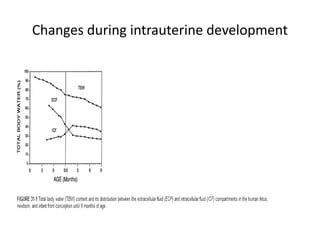
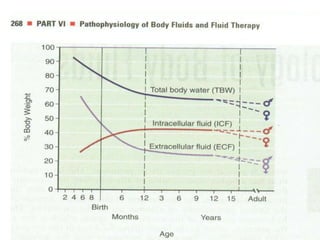
Changes during intrauterine development
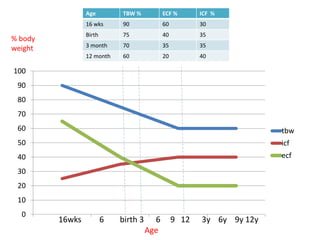
16wks 6 birth 3 6 9 12 3y 6y 9y 12y
Age
0
10
20
30
40
50
60
70
80
90
100
tbw
icf
ecf
% body
weight
Age TBW % ECF % ICF %
16 wks 90 60 30
Birth 75 40 35
3 month 70 35 35
12 month 60 20 40
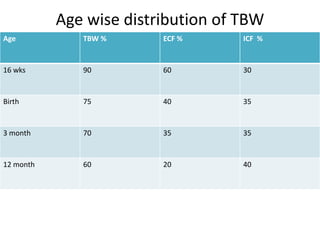
Age wise distribution of TBW
wwwwwwwwwwwwwwwwwaterAge TBW % ECF % ICF %
16 wks 90 60 30
Birth 75 40 35
3 month 70 35 35
12 month 60 20 40
• Therefore infants born prematurely have TBW
excess and extracellular volume expansion
compared with their term counterparts with
majority of expanded ECF being distributed in
the interstitium.
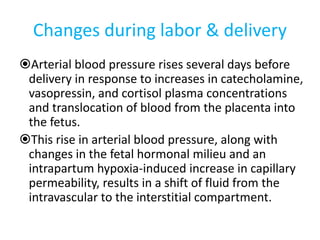
Changes during labor & delivery
Arterial blood pressure rises several days before
delivery in response to increases in catecholamine,
vasopressin, and cortisol plasma concentrations
and translocation of blood from the placenta into
the fetus.
This rise in arterial blood pressure, along with
changes in the fetal hormonal milieu and an
intrapartum hypoxia-induced increase in capillary
permeability, results in a shift of fluid from the
intravascular to the interstitial compartment.
• This fluid shift results in an approximately 25%
reduction in circulating plasma volume in the
human fetus during labor and delivery
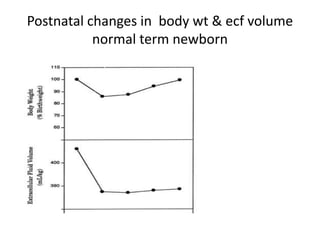
Postnatal changes in body wt & ecf volume
normal term newborn
Changes in the postnatal period
In normal conditions in the first few days after
birth, the postnatal increase in capillary
membrane integrity favors absorption of the
interstitial fluid into the intravascular
compartment.
The ensuing rise in circulating blood volume
stimulates the release of atrial natriuretic peptide
from the heart, which in turn enhances renal
sodium and water excretion resulting in an abrupt
decrease in TBW and attendant weight loss.
Although it is generally accepted that this
postnatal weight loss is primarily due to the
contraction of the expanded ECF compartment
some water loss from the intracellular
compartment can also occur, particularly in
infants with extremely low birthweight (ELBW)
and increased transepidermal water losses
Healthy term newborns lose an average of 5% to
10% of their birthweight during the first 4 to 7
days of life
 Because preterm infants have an increased TBW
content and extracellular volume, they lose an
average of 10% to15% of their birthweight during
transition.
 Failure to loose this ECW may be associated with
overhydration and problems of patent ductus
arteriosus (PDA), necrotizing enterocolitis (NEC)
and chronic lung disease (CLD) in preterm
neonates.
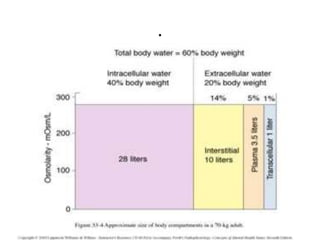
Fluid compartment ,composition &
their physiological regulation
• TBW = ECF + ICF
• (60%) (20%) (40%)
• ECF = Intravascular fluid + Interstitial Fluid
(20%) (5%) (15%)
.
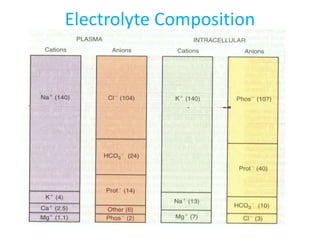
Electrolyte Composition
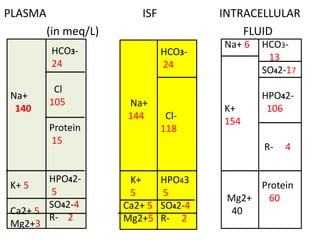
PLASMA ISF INTRACELLULAR
(in meq/L) FLUID
Na+
140
K+ 5
Ca2+ 5
Mg2+3
HCO3-
24
Cl-
118
HPO43
5
SO42-4
R- 2
HCO3-
24
Cl
105
Protein
15
HPO42-
5
SO42-4
R- 2
Na+
144
K+
5
Ca2+ 5
Mg2+5
Na+ 6
K+
154
Mg2+
40
HCO3-
13
SO42-17
HPO42-
106
R- 4
Protein
60
Osmolality
• Calculated osmolality
2 [Na+] + [Glucose] /18 + [BUN]/2.8
• Effective osmolality /Tonicitiy
2[Na+] + [Glucose]/18
• Measured Osmolality –measured by degree of
freezing point depression
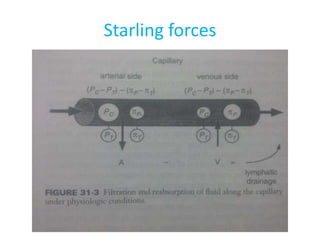
Starling forces
Maturation of Organs Regulating Body
Composition and Fluid Compartments
• Maturation of the Cardiovascular System
There is a direct relationship between
gestational maturity and the ability of the
neonatal heart to respond to acute volume
loading .
 The blunted Starling response of the
immature myocardium results from its lower
content of contractile elements and
incomplete sympathetic innervations.
Because central vasoregulation and
endothelial integrity are also developmentally
regulated , an appropriate effective
intravascular volume is seldom maintained in a
critically ill preterm infant.
Maturation of Renal Function
The kidney has a crucial role in the physiologic
control of fluid and electrolyte balance.
 It regulates extracellular volume and
osmolality through the selective reabsorption
of sodium and water, respectively
• Immaturity of renal function renders preterm
infants susceptible to both excessive sodium
and bicarbonate losses. In addition, the
inability of the preterm infant to respond
promptly to a sodium or volume load results
in a tendency toward extracellular volume
expansion with edema formation.
During the first few weeks of life,
hemodynamically stable but extremely immature
infants produce dilute urine and may develop
polyuria because of their renal tubular immaturity.
As tubular functions mature, their concentrating
capacity gradually improves from the 2nd to 4th
week of life. However, it takes years for the
developing kidney to reach the concentrating
capacity of the adult kidney.
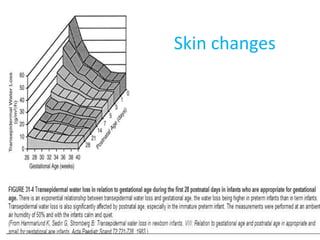
Maturation of skin
Skin changes
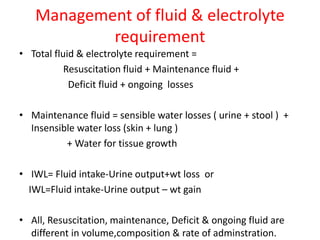
Management of fluid & electrolyte
requirement
• Total fluid & electrolyte requirement =
Resuscitation fluid + Maintenance fluid +
Deficit fluid + ongoing losses
• Maintenance fluid = sensible water losses ( urine + stool ) +
Insensible water loss (skin + lung )
+ Water for tissue growth
• IWL= Fluid intake-Urine output+wt loss or
IWL=Fluid intake-Urine output – wt gain
• All, Resuscitation, maintenance, Deficit & ongoing fluid are
different in volume,composition & rate of adminstration.
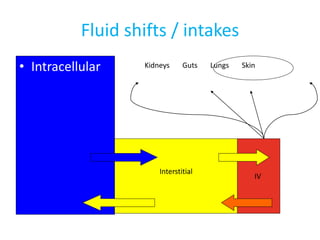
Fluid shifts / intakes
• Intracellular Kidneys Guts Lungs Skin
Interstitial
IV
Sensible water loss
• Urine output is most important source of
sensible water loss
• Extremely preterm infants without systemic
hypotension or renal failure usually lose 30 to
40 mL/kg/day of water in the urine on the first
postnatal day and approximately 120
mL/kg/day by the third day.
• In stable, more mature preterm infants born
after the 28 weeks’ gestation, urinary water loss
is approximately 90 mL/kg/day on the first
postnatal day and 150 mL/kg/day by the third
day .
• Normal water losses in the stool are less
significant, amounting to approximately 10
mL/kg/day in term infants and 7 mL/kg/day in
preterm infants during the first postnatal week .
Insensible water losses
Evaporation loss through skin usually contributes
to 70% IWL ,rest 30% is contributed by
respiratory tract.
Gestational age, postnatal age, and
environmental factors determine the amount of
daily insensible water losses through the skin .
During the first few postnatal days,
transepidermal water losses may be 15-fold
higher in extremely premature infants born at 23
to 26 weeks’ gestation than in term neonates
Although the skin matures rapidly after birth,
even in extremely immature infants, insensible
losses are still somewhat higher at the end of
the first month than in the term counterparts.
 Prenatal steroid exposure is associated with
substantially less insensible water loss (IWL) in
premature infants .
• Incubators, heat shields, transparent plastic
barriers, coconut oil application, caps & shocks
are effective in reducing insensible water loss.
• Thin transparent plastic barrier (e.g cling wrap)
reduces IWL 50%-70% without interfering
thermal regulation of warmer.
• The emphasis in fluid and electrolyte therapy
should be on prevention of excessive IWL rather
than replacement of increased IWL.
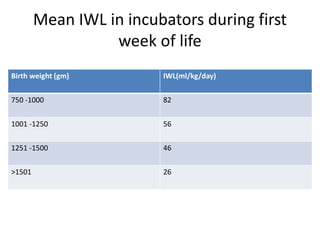
Mean IWL in incubators during first
week of life
Birth weight (gm) IWL(ml/kg/day)
750 -1000 82
1001 -1250 56
1251 -1500 46
>1501 26
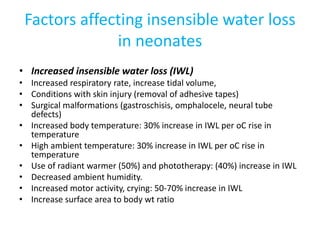
Factors affecting insensible water loss
in neonates
• Increased insensible water loss (IWL)
• Increased respiratory rate, increase tidal volume,
• Conditions with skin injury (removal of adhesive tapes)
• Surgical malformations (gastroschisis, omphalocele, neural tube
defects)
• Increased body temperature: 30% increase in IWL per oC rise in
temperature
• High ambient temperature: 30% increase in IWL per oC rise in
temperature
• Use of radiant warmer (50%) and phototherapy: (40%) increase in IWL
• Decreased ambient humidity.
• Increased motor activity, crying: 50-70% increase in IWL
• Increase surface area to body wt ratio
• Decreased insensible water loss (IWL)
• Use of incubators
• Humidification & Temp of inspired gases in
head box and ventilators
• Dead space ventilation
• Use of plexiglas heat shields
• Increased ambient humidity
• Thin transparent plastic barrier
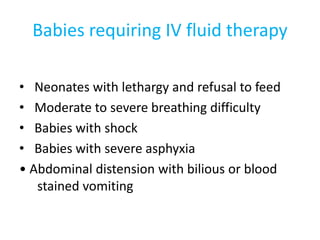
Babies requiring IV fluid therapy
• Neonates with lethargy and refusal to feed
• Moderate to severe breathing difficulty
• Babies with shock
• Babies with severe asphyxia
• Abdominal distension with bilious or blood
stained vomiting
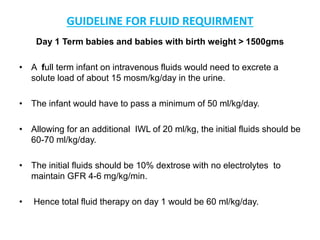
GUIDELINE FOR FLUID REQUIRMENT
Day 1 Term babies and babies with birth weight > 1500gms
• A full term infant on intravenous fluids would need to excrete a
solute load of about 15 mosm/kg/day in the urine.
• The infant would have to pass a minimum of 50 ml/kg/day.
• Allowing for an additional IWL of 20 ml/kg, the initial fluids should be
60-70 ml/kg/day.
• The initial fluids should be 10% dextrose with no electrolytes to
maintain GFR 4-6 mg/kg/min.
• Hence total fluid therapy on day 1 would be 60 ml/kg/day.
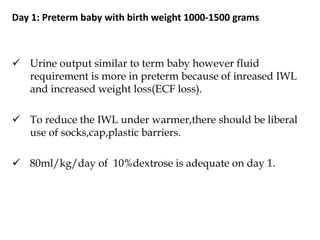
Day 1: Preterm baby with birth weight 1000-1500 grams
 Urine output similar to term baby however fluid
requirement is more in preterm because of inreased IWL
and increased weight loss(ECF loss).
 To reduce the IWL under warmer,there should be liberal
use of socks,cap,plastic barriers.
 80ml/kg/day of 10%dextrose is adequate on day 1.
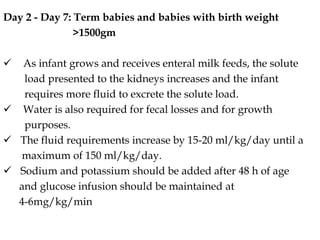
Day 2 - Day 7: Term babies and babies with birth weight
>1500gm
 As infant grows and receives enteral milk feeds, the solute
load presented to the kidneys increases and the infant
requires more fluid to excrete the solute load.
 Water is also required for fecal losses and for growth
purposes.
 The fluid requirements increase by 15-20 ml/kg/day until a
maximum of 150 ml/kg/day.
 Sodium and potassium should be added after 48 h of age
and glucose infusion should be maintained at
4-6mg/kg/min
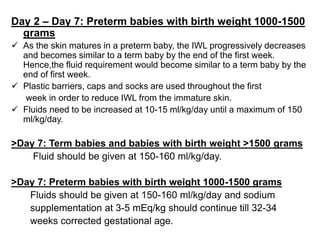
Day 2 – Day 7: Preterm babies with birth weight 1000-1500
grams
 As the skin matures in a preterm baby, the IWL progressively decreases
and becomes similar to a term baby by the end of the first week.
Hence,the fluid requirement would become similar to a term baby by the
end of first week.
 Plastic barriers, caps and socks are used throughout the first
week in order to reduce IWL from the immature skin.
 Fluids need to be increased at 10-15 ml/kg/day until a maximum of 150
ml/kg/day.
>Day 7: Term babies and babies with birth weight >1500 grams
Fluid should be given at 150-160 ml/kg/day.
>Day 7: Preterm babies with birth weight 1000-1500 grams
Fluids should be given at 150-160 ml/kg/day and sodium
supplementation at 3-5 mEq/kg should continue till 32-34
weeks corrected gestational age.
3/15/2015
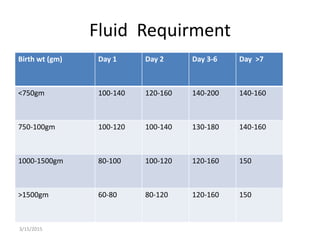
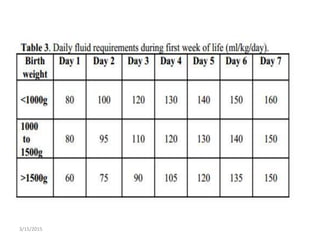
Fluid Requirment
Birth wt (gm) Day 1 Day 2 Day 3-6 Day >7
<750gm 100-140 120-160 140-200 140-160
750-100gm 100-120 100-140 130-180 140-160
1000-1500gm 80-100 100-120 120-160 150
>1500gm 60-80 80-120 120-160 150
3/15/2015
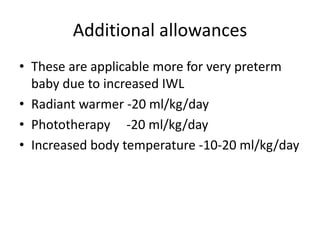
Additional allowances
• These are applicable more for very preterm
baby due to increased IWL
• Radiant warmer -20 ml/kg/day
• Phototherapy -20 ml/kg/day
• Increased body temperature -10-20 ml/kg/day
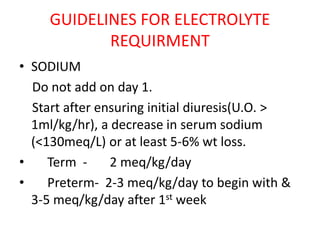
GUIDELINES FOR ELECTROLYTE
REQUIRMENT
• SODIUM
Do not add on day 1.
Start after ensuring initial diuresis(U.O. >
1ml/kg/hr), a decrease in serum sodium
(<130meq/L) or at least 5-6% wt loss.
• Term - 2 meq/kg/day
• Preterm- 2-3 meq/kg/day to begin with &
3-5 meq/kg/day after 1st week
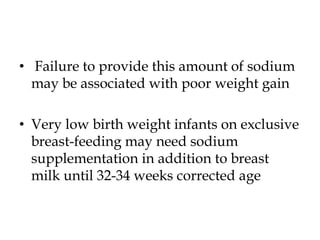
• Failure to provide this amount of sodium
may be associated with poor weight gain
• Very low birth weight infants on exclusive
breast-feeding may need sodium
supplementation in addition to breast
milk until 32-34 weeks corrected age
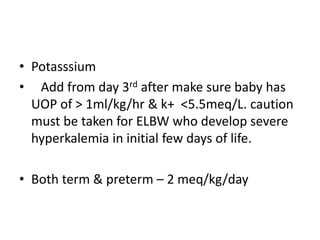
• Potasssium
• Add from day 3rd after make sure baby has
UOP of > 1ml/kg/hr & k+ <5.5meq/L. caution
must be taken for ELBW who develop severe
hyperkalemia in initial few days of life.
• Both term & preterm – 2 meq/kg/day
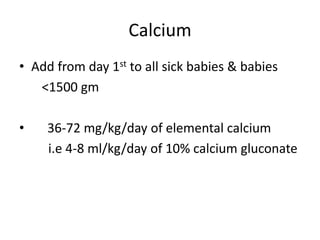
Calcium
• Add from day 1st to all sick babies & babies
<1500 gm
• 36-72 mg/kg/day of elemental calcium
i.e 4-8 ml/kg/day of 10% calcium gluconate
Choice of fluid
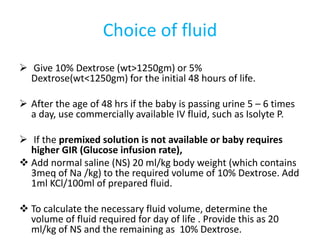
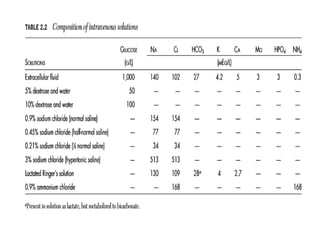
 Give 10% Dextrose (wt>1250gm) or 5%
Dextrose(wt<1250gm) for the initial 48 hours of life.
 After the age of 48 hrs if the baby is passing urine 5 – 6 times
a day, use commercially available IV fluid, such as Isolyte P.
 If the premixed solution is not available or baby requires
higher GIR (Glucose infusion rate),
 Add normal saline (NS) 20 ml/kg body weight (which contains
3meq of Na /kg) to the required volume of 10% Dextrose. Add
1ml KCl/100ml of prepared fluid.
 To calculate the necessary fluid volume, determine the
volume of fluid required for day of life . Provide this as 20
ml/kg of NS and the remaining as 10% Dextrose.
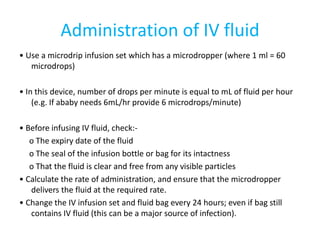
Administration of IV fluid
• Use a microdrip infusion set which has a microdropper (where 1 ml = 60
microdrops)
• In this device, number of drops per minute is equal to mL of fluid per hour
(e.g. If ababy needs 6mL/hr provide 6 microdrops/minute)
• Before infusing IV fluid, check:-
o The expiry date of the fluid
o The seal of the infusion bottle or bag for its intactness
o That the fluid is clear and free from any visible particles
• Calculate the rate of administration, and ensure that the microdropper
delivers the fluid at the required rate.
• Change the IV infusion set and fluid bag every 24 hours; even if bag still
contains IV fluid (this can be a major source of infection).
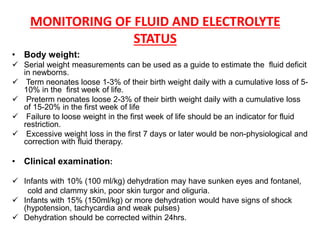
MONITORING OF FLUID AND ELECTROLYTE
STATUS
• Body weight:
 Serial weight measurements can be used as a guide to estimate the fluid deficit
in newborns.
 Term neonates loose 1-3% of their birth weight daily with a cumulative loss of 5-
10% in the first week of life.
 Preterm neonates loose 2-3% of their birth weight daily with a cumulative loss
of 15-20% in the first week of life
 Failure to loose weight in the first week of life should be an indicator for fluid
restriction.
 Excessive weight loss in the first 7 days or later would be non-physiological and
correction with fluid therapy.
• Clinical examination:
 Infants with 10% (100 ml/kg) dehydration may have sunken eyes and fontanel,
cold and clammy skin, poor skin turgor and oliguria.
 Infants with 15% (150ml/kg) or more dehydration would have signs of shock
(hypotension, tachycardia and weak pulses)
 Dehydration should be corrected within 24hrs.
SERUM BIOCHEMISTRY:
 Serum sodium and plasma osmolarity helpful in the assessment of the
hydration status in an infant.
 Serum Sodium values should be maintained between 135-145 meq/L.
 Hyponatremia with weight loss suggests sodium depletion and
would merit sodium replacement.
 Hyponatremia with weight gain suggests water excess and require
fluid restriction.
 Hypernatremia with weight loss suggests dehydration and require
fluid correction over 48 hours.
 Hypernatremia with weight gain suggests salt and water load and
would be an indication of fluid and sodium restriction.
URINE OUTPUT,SPECIFIC GRAVITY AND OSMOLARITY:
• Urine output would be 1-3ml/kg/hr
• Specific gravity between 1.005 to 1.012
• Osmolarity between 100-400 mosm/L.
• Specific gravity can be checked by dipstick or by a hand held
• Blood gas:
• Useful in the acid base management of patients with
poor tissue perfusion and shock.
• Hypo-perfusion is associated with metabolic acidosis.
• Fractional excretion of sodium (FENa):
• Indicator of normal tubular function but is of limited value
in preterm infants due to developmental tubular
immaturity
• Serum blood urea nitrogen (BUN), creatinine:
• Serum creatinine is a useful indicator of renal function.
There is an exponential fall in serum creatinine levels in
the first week of life as maternally derived creatinine is
excreted. Failure to observe this normal decline in serial
samples is a better indicator of renal failure as compared
to a single value of creatinine in the first week of life.
LABORATORY GUIDELINE FOR FLUID AND ELECTROLYTE
THERAPY:
• Intravenous fluids should be increased in the presence of
(a) Increased weight loss(>3%/day or a cumulative loss >20%)
(b) Increased serum sodium (Na>145 mEq/L)
(c)Increased urine specific gravity (>1.020) or urine osmolality
(>400mosm/L)
(d)Decreased urine output (<1 ml/kg/hr)
• Fluids should be restricted in the presence of
(a) Decreased weight loss (<1%/day or a cumulative loss <5%)
(b) Decreased serum sodium in the presence of weight gain
(Na<130mEq/L)
(c) Decreased urine specific gravity (<1.005) or urine osmolality
(<100mosm/L)
(d) Increased urine output (>3 ml/kg/hr)
Monitoring of babies receiving IV fluid
 Inspect the infusion site every hour.
 Look for redness and swelling around the insertion site of the
cannula, which indicates that the cannula is not in the vein and fluid
is leaking into the subcutaneous tissues.
 If redness or swelling is seen at any time, stop the infusion, remove
the cannula, and establish a new IV line in a different vein.
 Check the volume of fluid infused and compare to the prescribed
volume, record all findings.
 Measure blood glucose every nursing shift i.e. 6 – 8 hours.
 If the blood glucose is less than 45 mg/dl, treat for low blood
glucose
 If the blood glucose is more than 150 mg/dl on two consecutive
readings: - Changeto a 5% Dextrose solution and measure blood
glucose again in three hours
Weigh the baby daily. If the daily weight loss is
more than 5%, increase the total volume of fluid
by 10 ml/kg body weight for one day to
compensate for inadequate fluid administration.
If there is no weight loss or there is weight gain in
the initial 3 days of life, do not give the daily
increment, keep the fluid rate same as the
previous day ,however, if there is excessive
weight gain (3-5%) decrease the fluid intake by
15-20 ml/kg/day.
If there are signs of overhydration (e.g. excessive
weight gain, puffy eyes, or increasing oedema over
lower parts of the body), reduce the volume of fluid by
half for 24 hours after the overhydration is noted.
Check Serum Na, Urine specific gravity & titrate fluid
accordingly.
 Check urine output: Normally a baby passes urine 5 –
6 times everyday. If there is decreased urine output
and weight loss increase fluid intake by 10-20mL/kg;
However, if there is decreased urine output with
weight gain, decrease daily fluid volume by 10mL/kg
and evaluate for renal failure.
Adjusting IV fluid with enteral feeding
 Allow the baby to begin breastfeeding as soon as the baby’s
condition improves.
 If the baby cannot be breastfed, give expressed breast milk
using an alternative feeding method .

If the baby tolerates the feed and there are no problems,
continue to increase the volume of feeds by 20-30mL/kg/day,
while decreasing the volume of IV fluid to maintain the total daily
fluid volume according to the baby’s daily requirement.
 Feed the baby every two hours, adjusting the volume at each
feeding accordingly.
 Discontinue the infusion of IV fluid when the baby is receiving more
than two-third of the daily fluid volume by mouth and has no
abdominal distension or vomiting.
 Encourage the mother to initiate breastfeeding as soon as possible
Replacement of fluid deficit therapy
 Moderate (10%) to severe (15%) dehydration fluid deficits are
corrected gradually over 24 hours.
 For infants in shock, 10-20 ml/kg of normal saline is given
immediately over 20 minutes followed by half correction over 8
hours. The remaining deficit is administered over 16 hours.the
volume of bolus should include in the initial half correction.
 the replacement fluid after correction of shock, should consist of N/2
composition.
 This fluid and electrolyte solution should be administered in addition
to the maintenance fluid therapy.
 Assuming a deficit of 10% isotonic dehydration in a 3 kg child on day
4, the fluid calculation would be as follows:
(a) Dehydration replacement: 300 ml of N/2 saline over 24 hours
(150 ml over 8 hours and 150 ml over 16 hours)
(b) Maintenance fluids: 300 ml(100 ml/kg/day on day 4) of N/5 in
Ongoing losses
• Volume by volume replacement is needed(in
addition to maintenance fluid) in situation like
diarrhea chest tube drainage,excess gastric
aspirate,surgical wound drainage and excessive
urine loss.
• Estimate losses over 6-12 over.Replace urinary
losses only if total loss>4 ml/kg/h in 6 hr
priod.Replace the volume that is in excess of
4ml/kg/h-volume by volume over next 6 h.Other
losses replaced volume for volume every 6 h
Type of fluid
• Vomiting, NG aspiration, excess urine output
in polyuria (>4ml/kg/h) : Replace with N/2
saline +10meq/L KCL (0.5 ml KCL added every
100 ml of fluid)
• Chest tube drainage, third space losses with
NS
• Diarrheal losses (10-20 ml/stool) with N/5 in
D 5% +20 meq/L KCL (1 ml KCL added every
100 ml of fluid).
SPECIFIC CLINICAL CONDITIONS
Extreme prematurity (gestation <28 weeks, birth
weight <1000 grams):
• These babies have large insensible water losses due to
thin, immature skin barrier.
• Fluid requirements become comparable to larger infants
by the end of the second week.
• Fluid requirement in the first week may be decreased by:
Plastic transparent barriers
Coconut oil application
Double walled incubators
• The initial fluids on day 1 should be electrolyte free and
should be made using 5% dextrose solutions to prevent
risks of hyperglycemia.
• Sodium and potassium should be added after 48hrs.
Perinatal asphyxia and brain injury:
• Perinatal asphyxia may be associated with
syndrome of inappropriate ADH (SIADH) secretion.
• Fluid restriction in this condition should be done
only in the presence of hyponatremia(<120 meq/L)
due to SIADH or if there is renal faliure.
• The intake should be restricted to two-thirds
maintenance fluids till serum sodium values return
to normal.
• Once urine production increases by the third
postnatal day, fluids may be gradually restored to
normal levels.
Renal faliure
• Pre renal faliure account for 75% cause of ARF
• When a baby has not passed urine in the past 12 hrs,
the first thing is to look for distended bladder by
palpation of the abdomen . It is better to avoid
catheterization of the bladder to prevent infection,.
• After confirming the absence of urine in the bladder,
a fluid challenge can be given. a normal saline bolus
of 10 mL/kg can be given over 20 min (or 20 mL/kg
over 2 hrs). In spite of the fluid challenge, if urine
output fails to ensue, frusemide can be given in a
single dose of 1 mg/kg (in a non dehydrated patient )
• Fluid management
• Fluids must be restricted to insensible water loss
(IWL) along with urinary loss. The urinary loss must
be replaced volume for volume 8 hrly. The insensible
water loss in a term neonate is 25 mL/kg/day. In
preterm neonates, this can vary between 40-100
mL/kg/day depending on gestation, postnatal age,
use of radiant warmers, phototherapy etc.
• The insensible water losses should be replaced with
5-10% dextrose. The urine output should be replaced
volume by volume with N/5 saline.
RDS
Surfactant deficiency results in pulmonary
atelectasis, elevated pulmonary vascular
resistance, poor lung compliance, and
decreased lymphatic drainage.
In addition, preterm infants have low plasma
oncotic and critical pulmonary capillary
pressures and suffer pulmonary capillary
endothelial injury from mechanical ventilation,
oxygen administration, and perinatal hypoxia .
These abnormalities alter the balance of the
Starling forces in the pulmonary microcirculation,
leading to interstitial edema formation with
further impairment in pulmonary functions.
In the presurfactant era, an improvement in
pulmonary function occurred only during the 3rd
to 4th postnatal day. This improvement was
usually preceded by a period of brisk diuresis
characterized by small increases in glomerular
filtration rate and sodium clearance and a larger
rise in free water clearance .
• because significant improvements in lung
function take place only after the majority of the
excess free water is excreted , daily fluid intake
should still be restricted to allow the extracellular
volume contraction
• The renal function in preterm babies may be
further compromised in the presence of hypoxia
and acidosis due to RDS.
• Positive pressure ventilation may lead to
increased secretion of aldosterone and ADH,
leading to water retention
If this principle is not followed and a positive
fluid balance occurs, preterm infants with
respiratory distress syndrome are at higher risk
for a more severe course of acute lung disease
and have a higher incidence of patent ductus
arteriosus, congestive heart failure, and
necrotizing enterocolitis as well as a greater
severity of the ensuing bronchopulmonary
dysplasia..
BPD
• higher fluid intake and lack of appropriate
weight loss in the first 10 days of life are
associated with significantly higher risk for
bronchopulmonary dysplasia, even after
controlling for other known risk factors such
as those listed previously.
PDA
Under physiologic circumstances in the immediate
postnatal period, renal prostaglandin production is
increased to counterbalance the renal actions of
vasoconstrictor and sodium- and water-retaining
hormones released during labor and delivery .
 Compared with the renal function of the adult kidney
in euvolemia, the neonatal kidney is more dependent
on the increased production of vasodilatory and
natriuretic prostaglandins, rendering it more sensitive
to the vasoconstrictive and sodium- and water-
retaining actions of cyclooxygenase inhibition.
Therefore fluid management of the preterm
infant receiving indomethacin must focus on
maintaining an appropriately restricted fluid
intake and avoiding extra sodium
supplementation.
As the prostaglandin inhibitory effects of
indomethacin diminish following the last dose,
renal prostaglandin production returns to normal,
and the retained sodium and excess free water
are usually rapidly excreted, especially with the
improvement in the cardiovascular status as the
ductal shunt decreases.
In clinically symptomatic or echocardiographically
diagnosed PDA, it is recommended to restrict
parenteral fluid intake to 120 mL/kg/day, provided
other parameters like urine output, serum Na, urine
specific gravity etc are within normal limits
 Infants on full enteral feeds with hs-PDA a fluid intake
of up to 150 ml/kg/day may be used and calorie
density may be increased in case of inadequate weight
gain
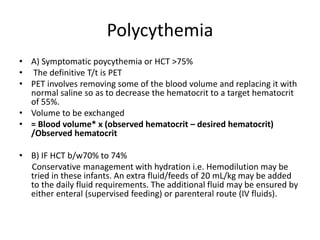
Polycythemia
• A) Symptomatic poycythemia or HCT >75%
• The definitive T/t is PET
• PET involves removing some of the blood volume and replacing it with
normal saline so as to decrease the hematocrit to a target hematocrit
of 55%.
• Volume to be exchanged
• = Blood volume* x (observed hematocrit – desired hematocrit)
/Observed hematocrit
• B) IF HCT b/w70% to 74%
Conservative management with hydration i.e. Hemodilution may be
tried in these infants. An extra fluid/feeds of 20 mL/kg may be added
to the daily fluid requirements. The additional fluid may be ensured by
either enteral (supervised feeding) or parenteral route (IV fluids).
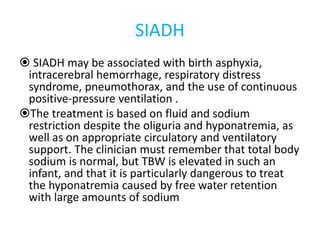
SIADH
 SIADH may be associated with birth asphyxia,
intracerebral hemorrhage, respiratory distress
syndrome, pneumothorax, and the use of continuous
positive-pressure ventilation .
The treatment is based on fluid and sodium
restriction despite the oliguria and hyponatremia, as
well as on appropriate circulatory and ventilatory
support. The clinician must remember that total body
sodium is normal, but TBW is elevated in such an
infant, and that it is particularly dangerous to treat
the hyponatremia caused by free water retention
with large amounts of sodium
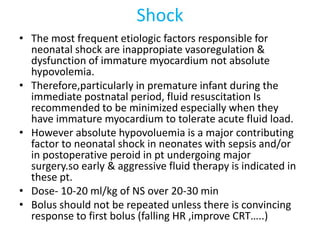
Shock
• The most frequent etiologic factors responsible for
neonatal shock are inappropiate vasoregulation &
dysfunction of immature myocardium not absolute
hypovolemia.
• Therefore,particularly in premature infant during the
immediate postnatal period, fluid resuscitation Is
recommended to be minimized especially when they
have immature myocardium to tolerate acute fluid load.
• However absolute hypovoluemia is a major contributing
factor to neonatal shock in neonates with sepsis and/or
in postoperative peroid in pt undergoing major
surgery.so early & aggressive fluid therapy is indicated in
these pt.
• Dose- 10-20 ml/kg of NS over 20-30 min
• Bolus should not be repeated unless there is convincing
response to first bolus (falling HR ,improve CRT…..)
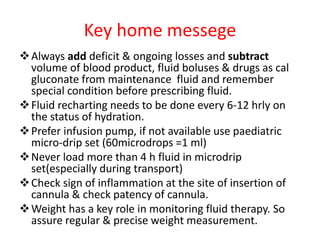
Key home messege
Always add deficit & ongoing losses and subtract
volume of blood product, fluid boluses & drugs as cal
gluconate from maintenance fluid and remember
special condition before prescribing fluid.
Fluid recharting needs to be done every 6-12 hrly on
the status of hydration.
Prefer infusion pump, if not available use paediatric
micro-drip set (60microdrops =1 ml)
Never load more than 4 h fluid in microdrip
set(especially during transport)
Check sign of inflammation at the site of insertion of
cannula & check patency of cannula.
Weight has a key role in monitoring fluid therapy. So
assure regular & precise weight measurement.
Evaluation
• Preterm 33 weeks neonate, weighing 1.4 kg with breathing
difficulty is brought to SCNUon D1 of life. The health care
provider has decided to provide IV fluids along with
othersupportive treatment.
1. What IV fluid you would start? How much volume of IV
fluid is needed and at whatRate?
2. After 48 hours this baby still needs IV fluids. What
changes in IV fluids are required.
3. Baby’s respiratory distress settled on day 3 and he was
started on minimal feeds.Today on day 4 he is on 3 ml 2
hrly feeds of EBM. How will you adjust the IV fluid?
4. What are the steps of monitoring this baby
who is on IV fluids?
5. On D 7 of life baby is receiving 9 ml of
EBM every 2 hours. How will you adjust IV
fluids?
6. When will you stop IV fluids in this baby.
References
• Avery’s Disease of The Newborn,9th edition
• Manual of neonatal care (Cloherty) seventh ed
• Care of Newborn seventh ed (Meharban singh)
• NELSON textbook of pediatrics,19th edition
• GHAI essential pediatrics,eighth edition
• AIIMS Nicu protocols 2014
• PGI Nicu protocols 2012
• NRHM SNCU Guidelines
Breast milk is a best fluid made by God
Neonatal fluid requirements and specials conditions

Neonatal fluid requirements and specials conditions

  • 1.
    Neonatal fluid requirement/therapy &special condition Guide- Dr Karan Joshi sir Presented by Dr Veerendra
  • 2.
  • 3.
    OVERVIEW  Introduction  Developmentalchanges.  Physiology of regulation.  Maturation of organs regulating body composition  Management of fluid & electrolyte requirement  Monitoring of fluid & electrolyte status  Special condition  Key home message
  • 4.
    INTRODUCTION • Disorders offluid and electrolyte are common in neonates. • Proper understanding of physiological changes in fluid and electrolyte after birth is necessary to overcome the morbidities.
  • 6.
    Developmental changes affecting fluid& electrolyte balance in fetus & neonates Changes during intrauterine period  changes during labour & delivery Changes in postnatal period
  • 7.
  • 8.
    16wks 6 birth3 6 9 12 3y 6y 9y 12y Age 0 10 20 30 40 50 60 70 80 90 100 tbw icf ecf % body weight Age TBW % ECF % ICF % 16 wks 90 60 30 Birth 75 40 35 3 month 70 35 35 12 month 60 20 40
  • 9.
    Age wise distributionof TBW wwwwwwwwwwwwwwwwwaterAge TBW % ECF % ICF % 16 wks 90 60 30 Birth 75 40 35 3 month 70 35 35 12 month 60 20 40
  • 10.
    • Therefore infantsborn prematurely have TBW excess and extracellular volume expansion compared with their term counterparts with majority of expanded ECF being distributed in the interstitium.
  • 12.
    Changes during labor& delivery Arterial blood pressure rises several days before delivery in response to increases in catecholamine, vasopressin, and cortisol plasma concentrations and translocation of blood from the placenta into the fetus. This rise in arterial blood pressure, along with changes in the fetal hormonal milieu and an intrapartum hypoxia-induced increase in capillary permeability, results in a shift of fluid from the intravascular to the interstitial compartment.
  • 13.
    • This fluidshift results in an approximately 25% reduction in circulating plasma volume in the human fetus during labor and delivery
  • 14.
    Postnatal changes inbody wt & ecf volume normal term newborn
  • 15.
    Changes in thepostnatal period In normal conditions in the first few days after birth, the postnatal increase in capillary membrane integrity favors absorption of the interstitial fluid into the intravascular compartment. The ensuing rise in circulating blood volume stimulates the release of atrial natriuretic peptide from the heart, which in turn enhances renal sodium and water excretion resulting in an abrupt decrease in TBW and attendant weight loss.
  • 16.
    Although it isgenerally accepted that this postnatal weight loss is primarily due to the contraction of the expanded ECF compartment some water loss from the intracellular compartment can also occur, particularly in infants with extremely low birthweight (ELBW) and increased transepidermal water losses
  • 17.
    Healthy term newbornslose an average of 5% to 10% of their birthweight during the first 4 to 7 days of life  Because preterm infants have an increased TBW content and extracellular volume, they lose an average of 10% to15% of their birthweight during transition.  Failure to loose this ECW may be associated with overhydration and problems of patent ductus arteriosus (PDA), necrotizing enterocolitis (NEC) and chronic lung disease (CLD) in preterm neonates.
  • 18.
    Fluid compartment ,composition& their physiological regulation • TBW = ECF + ICF • (60%) (20%) (40%) • ECF = Intravascular fluid + Interstitial Fluid (20%) (5%) (15%)
  • 19.
  • 20.
  • 21.
    PLASMA ISF INTRACELLULAR (inmeq/L) FLUID Na+ 140 K+ 5 Ca2+ 5 Mg2+3 HCO3- 24 Cl- 118 HPO43 5 SO42-4 R- 2 HCO3- 24 Cl 105 Protein 15 HPO42- 5 SO42-4 R- 2 Na+ 144 K+ 5 Ca2+ 5 Mg2+5 Na+ 6 K+ 154 Mg2+ 40 HCO3- 13 SO42-17 HPO42- 106 R- 4 Protein 60
  • 22.
    Osmolality • Calculated osmolality 2[Na+] + [Glucose] /18 + [BUN]/2.8 • Effective osmolality /Tonicitiy 2[Na+] + [Glucose]/18 • Measured Osmolality –measured by degree of freezing point depression
  • 23.
  • 24.
    Maturation of OrgansRegulating Body Composition and Fluid Compartments • Maturation of the Cardiovascular System There is a direct relationship between gestational maturity and the ability of the neonatal heart to respond to acute volume loading .  The blunted Starling response of the immature myocardium results from its lower content of contractile elements and incomplete sympathetic innervations.
  • 25.
    Because central vasoregulationand endothelial integrity are also developmentally regulated , an appropriate effective intravascular volume is seldom maintained in a critically ill preterm infant.
  • 26.
    Maturation of RenalFunction The kidney has a crucial role in the physiologic control of fluid and electrolyte balance.  It regulates extracellular volume and osmolality through the selective reabsorption of sodium and water, respectively
  • 27.
    • Immaturity ofrenal function renders preterm infants susceptible to both excessive sodium and bicarbonate losses. In addition, the inability of the preterm infant to respond promptly to a sodium or volume load results in a tendency toward extracellular volume expansion with edema formation.
  • 28.
    During the firstfew weeks of life, hemodynamically stable but extremely immature infants produce dilute urine and may develop polyuria because of their renal tubular immaturity. As tubular functions mature, their concentrating capacity gradually improves from the 2nd to 4th week of life. However, it takes years for the developing kidney to reach the concentrating capacity of the adult kidney.
  • 29.
  • 30.
    Management of fluid& electrolyte requirement • Total fluid & electrolyte requirement = Resuscitation fluid + Maintenance fluid + Deficit fluid + ongoing losses • Maintenance fluid = sensible water losses ( urine + stool ) + Insensible water loss (skin + lung ) + Water for tissue growth • IWL= Fluid intake-Urine output+wt loss or IWL=Fluid intake-Urine output – wt gain • All, Resuscitation, maintenance, Deficit & ongoing fluid are different in volume,composition & rate of adminstration.
  • 31.
    Fluid shifts /intakes • Intracellular Kidneys Guts Lungs Skin Interstitial IV
  • 32.
    Sensible water loss •Urine output is most important source of sensible water loss • Extremely preterm infants without systemic hypotension or renal failure usually lose 30 to 40 mL/kg/day of water in the urine on the first postnatal day and approximately 120 mL/kg/day by the third day.
  • 33.
    • In stable,more mature preterm infants born after the 28 weeks’ gestation, urinary water loss is approximately 90 mL/kg/day on the first postnatal day and 150 mL/kg/day by the third day . • Normal water losses in the stool are less significant, amounting to approximately 10 mL/kg/day in term infants and 7 mL/kg/day in preterm infants during the first postnatal week .
  • 34.
    Insensible water losses Evaporationloss through skin usually contributes to 70% IWL ,rest 30% is contributed by respiratory tract. Gestational age, postnatal age, and environmental factors determine the amount of daily insensible water losses through the skin . During the first few postnatal days, transepidermal water losses may be 15-fold higher in extremely premature infants born at 23 to 26 weeks’ gestation than in term neonates
  • 35.
    Although the skinmatures rapidly after birth, even in extremely immature infants, insensible losses are still somewhat higher at the end of the first month than in the term counterparts.  Prenatal steroid exposure is associated with substantially less insensible water loss (IWL) in premature infants .
  • 36.
    • Incubators, heatshields, transparent plastic barriers, coconut oil application, caps & shocks are effective in reducing insensible water loss. • Thin transparent plastic barrier (e.g cling wrap) reduces IWL 50%-70% without interfering thermal regulation of warmer. • The emphasis in fluid and electrolyte therapy should be on prevention of excessive IWL rather than replacement of increased IWL.
  • 37.
    Mean IWL inincubators during first week of life Birth weight (gm) IWL(ml/kg/day) 750 -1000 82 1001 -1250 56 1251 -1500 46 >1501 26
  • 38.
    Factors affecting insensiblewater loss in neonates • Increased insensible water loss (IWL) • Increased respiratory rate, increase tidal volume, • Conditions with skin injury (removal of adhesive tapes) • Surgical malformations (gastroschisis, omphalocele, neural tube defects) • Increased body temperature: 30% increase in IWL per oC rise in temperature • High ambient temperature: 30% increase in IWL per oC rise in temperature • Use of radiant warmer (50%) and phototherapy: (40%) increase in IWL • Decreased ambient humidity. • Increased motor activity, crying: 50-70% increase in IWL • Increase surface area to body wt ratio
  • 39.
    • Decreased insensiblewater loss (IWL) • Use of incubators • Humidification & Temp of inspired gases in head box and ventilators • Dead space ventilation • Use of plexiglas heat shields • Increased ambient humidity • Thin transparent plastic barrier
  • 40.
    Babies requiring IVfluid therapy • Neonates with lethargy and refusal to feed • Moderate to severe breathing difficulty • Babies with shock • Babies with severe asphyxia • Abdominal distension with bilious or blood stained vomiting
  • 41.
    GUIDELINE FOR FLUIDREQUIRMENT Day 1 Term babies and babies with birth weight > 1500gms • A full term infant on intravenous fluids would need to excrete a solute load of about 15 mosm/kg/day in the urine. • The infant would have to pass a minimum of 50 ml/kg/day. • Allowing for an additional IWL of 20 ml/kg, the initial fluids should be 60-70 ml/kg/day. • The initial fluids should be 10% dextrose with no electrolytes to maintain GFR 4-6 mg/kg/min. • Hence total fluid therapy on day 1 would be 60 ml/kg/day.
  • 42.
    Day 1: Pretermbaby with birth weight 1000-1500 grams  Urine output similar to term baby however fluid requirement is more in preterm because of inreased IWL and increased weight loss(ECF loss).  To reduce the IWL under warmer,there should be liberal use of socks,cap,plastic barriers.  80ml/kg/day of 10%dextrose is adequate on day 1.
  • 43.
    Day 2 -Day 7: Term babies and babies with birth weight >1500gm  As infant grows and receives enteral milk feeds, the solute load presented to the kidneys increases and the infant requires more fluid to excrete the solute load.  Water is also required for fecal losses and for growth purposes.  The fluid requirements increase by 15-20 ml/kg/day until a maximum of 150 ml/kg/day.  Sodium and potassium should be added after 48 h of age and glucose infusion should be maintained at 4-6mg/kg/min
  • 44.
    Day 2 –Day 7: Preterm babies with birth weight 1000-1500 grams  As the skin matures in a preterm baby, the IWL progressively decreases and becomes similar to a term baby by the end of the first week. Hence,the fluid requirement would become similar to a term baby by the end of first week.  Plastic barriers, caps and socks are used throughout the first week in order to reduce IWL from the immature skin.  Fluids need to be increased at 10-15 ml/kg/day until a maximum of 150 ml/kg/day. >Day 7: Term babies and babies with birth weight >1500 grams Fluid should be given at 150-160 ml/kg/day. >Day 7: Preterm babies with birth weight 1000-1500 grams Fluids should be given at 150-160 ml/kg/day and sodium supplementation at 3-5 mEq/kg should continue till 32-34 weeks corrected gestational age.
  • 45.
    3/15/2015 Fluid Requirment Birth wt(gm) Day 1 Day 2 Day 3-6 Day >7 <750gm 100-140 120-160 140-200 140-160 750-100gm 100-120 100-140 130-180 140-160 1000-1500gm 80-100 100-120 120-160 150 >1500gm 60-80 80-120 120-160 150
  • 46.
  • 47.
    Additional allowances • Theseare applicable more for very preterm baby due to increased IWL • Radiant warmer -20 ml/kg/day • Phototherapy -20 ml/kg/day • Increased body temperature -10-20 ml/kg/day
  • 48.
    GUIDELINES FOR ELECTROLYTE REQUIRMENT •SODIUM Do not add on day 1. Start after ensuring initial diuresis(U.O. > 1ml/kg/hr), a decrease in serum sodium (<130meq/L) or at least 5-6% wt loss. • Term - 2 meq/kg/day • Preterm- 2-3 meq/kg/day to begin with & 3-5 meq/kg/day after 1st week
  • 49.
    • Failure toprovide this amount of sodium may be associated with poor weight gain • Very low birth weight infants on exclusive breast-feeding may need sodium supplementation in addition to breast milk until 32-34 weeks corrected age
  • 50.
    • Potasssium • Addfrom day 3rd after make sure baby has UOP of > 1ml/kg/hr & k+ <5.5meq/L. caution must be taken for ELBW who develop severe hyperkalemia in initial few days of life. • Both term & preterm – 2 meq/kg/day
  • 51.
    Calcium • Add fromday 1st to all sick babies & babies <1500 gm • 36-72 mg/kg/day of elemental calcium i.e 4-8 ml/kg/day of 10% calcium gluconate
  • 52.
    Choice of fluid Give 10% Dextrose (wt>1250gm) or 5% Dextrose(wt<1250gm) for the initial 48 hours of life.  After the age of 48 hrs if the baby is passing urine 5 – 6 times a day, use commercially available IV fluid, such as Isolyte P.  If the premixed solution is not available or baby requires higher GIR (Glucose infusion rate),  Add normal saline (NS) 20 ml/kg body weight (which contains 3meq of Na /kg) to the required volume of 10% Dextrose. Add 1ml KCl/100ml of prepared fluid.  To calculate the necessary fluid volume, determine the volume of fluid required for day of life . Provide this as 20 ml/kg of NS and the remaining as 10% Dextrose.
  • 54.
    Administration of IVfluid • Use a microdrip infusion set which has a microdropper (where 1 ml = 60 microdrops) • In this device, number of drops per minute is equal to mL of fluid per hour (e.g. If ababy needs 6mL/hr provide 6 microdrops/minute) • Before infusing IV fluid, check:- o The expiry date of the fluid o The seal of the infusion bottle or bag for its intactness o That the fluid is clear and free from any visible particles • Calculate the rate of administration, and ensure that the microdropper delivers the fluid at the required rate. • Change the IV infusion set and fluid bag every 24 hours; even if bag still contains IV fluid (this can be a major source of infection).
  • 55.
    MONITORING OF FLUIDAND ELECTROLYTE STATUS • Body weight:  Serial weight measurements can be used as a guide to estimate the fluid deficit in newborns.  Term neonates loose 1-3% of their birth weight daily with a cumulative loss of 5- 10% in the first week of life.  Preterm neonates loose 2-3% of their birth weight daily with a cumulative loss of 15-20% in the first week of life  Failure to loose weight in the first week of life should be an indicator for fluid restriction.  Excessive weight loss in the first 7 days or later would be non-physiological and correction with fluid therapy. • Clinical examination:  Infants with 10% (100 ml/kg) dehydration may have sunken eyes and fontanel, cold and clammy skin, poor skin turgor and oliguria.  Infants with 15% (150ml/kg) or more dehydration would have signs of shock (hypotension, tachycardia and weak pulses)  Dehydration should be corrected within 24hrs.
  • 56.
    SERUM BIOCHEMISTRY:  Serumsodium and plasma osmolarity helpful in the assessment of the hydration status in an infant.  Serum Sodium values should be maintained between 135-145 meq/L.  Hyponatremia with weight loss suggests sodium depletion and would merit sodium replacement.  Hyponatremia with weight gain suggests water excess and require fluid restriction.  Hypernatremia with weight loss suggests dehydration and require fluid correction over 48 hours.  Hypernatremia with weight gain suggests salt and water load and would be an indication of fluid and sodium restriction. URINE OUTPUT,SPECIFIC GRAVITY AND OSMOLARITY: • Urine output would be 1-3ml/kg/hr • Specific gravity between 1.005 to 1.012 • Osmolarity between 100-400 mosm/L. • Specific gravity can be checked by dipstick or by a hand held
  • 57.
    • Blood gas: •Useful in the acid base management of patients with poor tissue perfusion and shock. • Hypo-perfusion is associated with metabolic acidosis. • Fractional excretion of sodium (FENa): • Indicator of normal tubular function but is of limited value in preterm infants due to developmental tubular immaturity • Serum blood urea nitrogen (BUN), creatinine: • Serum creatinine is a useful indicator of renal function. There is an exponential fall in serum creatinine levels in the first week of life as maternally derived creatinine is excreted. Failure to observe this normal decline in serial samples is a better indicator of renal failure as compared to a single value of creatinine in the first week of life.
  • 58.
    LABORATORY GUIDELINE FORFLUID AND ELECTROLYTE THERAPY: • Intravenous fluids should be increased in the presence of (a) Increased weight loss(>3%/day or a cumulative loss >20%) (b) Increased serum sodium (Na>145 mEq/L) (c)Increased urine specific gravity (>1.020) or urine osmolality (>400mosm/L) (d)Decreased urine output (<1 ml/kg/hr) • Fluids should be restricted in the presence of (a) Decreased weight loss (<1%/day or a cumulative loss <5%) (b) Decreased serum sodium in the presence of weight gain (Na<130mEq/L) (c) Decreased urine specific gravity (<1.005) or urine osmolality (<100mosm/L) (d) Increased urine output (>3 ml/kg/hr)
  • 59.
    Monitoring of babiesreceiving IV fluid  Inspect the infusion site every hour.  Look for redness and swelling around the insertion site of the cannula, which indicates that the cannula is not in the vein and fluid is leaking into the subcutaneous tissues.  If redness or swelling is seen at any time, stop the infusion, remove the cannula, and establish a new IV line in a different vein.  Check the volume of fluid infused and compare to the prescribed volume, record all findings.  Measure blood glucose every nursing shift i.e. 6 – 8 hours.  If the blood glucose is less than 45 mg/dl, treat for low blood glucose  If the blood glucose is more than 150 mg/dl on two consecutive readings: - Changeto a 5% Dextrose solution and measure blood glucose again in three hours
  • 60.
    Weigh the babydaily. If the daily weight loss is more than 5%, increase the total volume of fluid by 10 ml/kg body weight for one day to compensate for inadequate fluid administration. If there is no weight loss or there is weight gain in the initial 3 days of life, do not give the daily increment, keep the fluid rate same as the previous day ,however, if there is excessive weight gain (3-5%) decrease the fluid intake by 15-20 ml/kg/day.
  • 61.
    If there aresigns of overhydration (e.g. excessive weight gain, puffy eyes, or increasing oedema over lower parts of the body), reduce the volume of fluid by half for 24 hours after the overhydration is noted. Check Serum Na, Urine specific gravity & titrate fluid accordingly.  Check urine output: Normally a baby passes urine 5 – 6 times everyday. If there is decreased urine output and weight loss increase fluid intake by 10-20mL/kg; However, if there is decreased urine output with weight gain, decrease daily fluid volume by 10mL/kg and evaluate for renal failure.
  • 62.
    Adjusting IV fluidwith enteral feeding  Allow the baby to begin breastfeeding as soon as the baby’s condition improves.  If the baby cannot be breastfed, give expressed breast milk using an alternative feeding method .  If the baby tolerates the feed and there are no problems, continue to increase the volume of feeds by 20-30mL/kg/day, while decreasing the volume of IV fluid to maintain the total daily fluid volume according to the baby’s daily requirement.  Feed the baby every two hours, adjusting the volume at each feeding accordingly.  Discontinue the infusion of IV fluid when the baby is receiving more than two-third of the daily fluid volume by mouth and has no abdominal distension or vomiting.  Encourage the mother to initiate breastfeeding as soon as possible
  • 63.
    Replacement of fluiddeficit therapy  Moderate (10%) to severe (15%) dehydration fluid deficits are corrected gradually over 24 hours.  For infants in shock, 10-20 ml/kg of normal saline is given immediately over 20 minutes followed by half correction over 8 hours. The remaining deficit is administered over 16 hours.the volume of bolus should include in the initial half correction.  the replacement fluid after correction of shock, should consist of N/2 composition.  This fluid and electrolyte solution should be administered in addition to the maintenance fluid therapy.  Assuming a deficit of 10% isotonic dehydration in a 3 kg child on day 4, the fluid calculation would be as follows: (a) Dehydration replacement: 300 ml of N/2 saline over 24 hours (150 ml over 8 hours and 150 ml over 16 hours) (b) Maintenance fluids: 300 ml(100 ml/kg/day on day 4) of N/5 in
  • 64.
    Ongoing losses • Volumeby volume replacement is needed(in addition to maintenance fluid) in situation like diarrhea chest tube drainage,excess gastric aspirate,surgical wound drainage and excessive urine loss. • Estimate losses over 6-12 over.Replace urinary losses only if total loss>4 ml/kg/h in 6 hr priod.Replace the volume that is in excess of 4ml/kg/h-volume by volume over next 6 h.Other losses replaced volume for volume every 6 h
  • 65.
    Type of fluid •Vomiting, NG aspiration, excess urine output in polyuria (>4ml/kg/h) : Replace with N/2 saline +10meq/L KCL (0.5 ml KCL added every 100 ml of fluid) • Chest tube drainage, third space losses with NS • Diarrheal losses (10-20 ml/stool) with N/5 in D 5% +20 meq/L KCL (1 ml KCL added every 100 ml of fluid).
  • 66.
    SPECIFIC CLINICAL CONDITIONS Extremeprematurity (gestation <28 weeks, birth weight <1000 grams): • These babies have large insensible water losses due to thin, immature skin barrier. • Fluid requirements become comparable to larger infants by the end of the second week. • Fluid requirement in the first week may be decreased by: Plastic transparent barriers Coconut oil application Double walled incubators • The initial fluids on day 1 should be electrolyte free and should be made using 5% dextrose solutions to prevent risks of hyperglycemia. • Sodium and potassium should be added after 48hrs.
  • 67.
    Perinatal asphyxia andbrain injury: • Perinatal asphyxia may be associated with syndrome of inappropriate ADH (SIADH) secretion. • Fluid restriction in this condition should be done only in the presence of hyponatremia(<120 meq/L) due to SIADH or if there is renal faliure. • The intake should be restricted to two-thirds maintenance fluids till serum sodium values return to normal. • Once urine production increases by the third postnatal day, fluids may be gradually restored to normal levels.
  • 68.
    Renal faliure • Prerenal faliure account for 75% cause of ARF • When a baby has not passed urine in the past 12 hrs, the first thing is to look for distended bladder by palpation of the abdomen . It is better to avoid catheterization of the bladder to prevent infection,. • After confirming the absence of urine in the bladder, a fluid challenge can be given. a normal saline bolus of 10 mL/kg can be given over 20 min (or 20 mL/kg over 2 hrs). In spite of the fluid challenge, if urine output fails to ensue, frusemide can be given in a single dose of 1 mg/kg (in a non dehydrated patient )
  • 69.
    • Fluid management •Fluids must be restricted to insensible water loss (IWL) along with urinary loss. The urinary loss must be replaced volume for volume 8 hrly. The insensible water loss in a term neonate is 25 mL/kg/day. In preterm neonates, this can vary between 40-100 mL/kg/day depending on gestation, postnatal age, use of radiant warmers, phototherapy etc. • The insensible water losses should be replaced with 5-10% dextrose. The urine output should be replaced volume by volume with N/5 saline.
  • 70.
    RDS Surfactant deficiency resultsin pulmonary atelectasis, elevated pulmonary vascular resistance, poor lung compliance, and decreased lymphatic drainage. In addition, preterm infants have low plasma oncotic and critical pulmonary capillary pressures and suffer pulmonary capillary endothelial injury from mechanical ventilation, oxygen administration, and perinatal hypoxia .
  • 71.
    These abnormalities alterthe balance of the Starling forces in the pulmonary microcirculation, leading to interstitial edema formation with further impairment in pulmonary functions. In the presurfactant era, an improvement in pulmonary function occurred only during the 3rd to 4th postnatal day. This improvement was usually preceded by a period of brisk diuresis characterized by small increases in glomerular filtration rate and sodium clearance and a larger rise in free water clearance .
  • 72.
    • because significantimprovements in lung function take place only after the majority of the excess free water is excreted , daily fluid intake should still be restricted to allow the extracellular volume contraction • The renal function in preterm babies may be further compromised in the presence of hypoxia and acidosis due to RDS. • Positive pressure ventilation may lead to increased secretion of aldosterone and ADH, leading to water retention
  • 73.
    If this principleis not followed and a positive fluid balance occurs, preterm infants with respiratory distress syndrome are at higher risk for a more severe course of acute lung disease and have a higher incidence of patent ductus arteriosus, congestive heart failure, and necrotizing enterocolitis as well as a greater severity of the ensuing bronchopulmonary dysplasia..
  • 74.
    BPD • higher fluidintake and lack of appropriate weight loss in the first 10 days of life are associated with significantly higher risk for bronchopulmonary dysplasia, even after controlling for other known risk factors such as those listed previously.
  • 75.
    PDA Under physiologic circumstancesin the immediate postnatal period, renal prostaglandin production is increased to counterbalance the renal actions of vasoconstrictor and sodium- and water-retaining hormones released during labor and delivery .  Compared with the renal function of the adult kidney in euvolemia, the neonatal kidney is more dependent on the increased production of vasodilatory and natriuretic prostaglandins, rendering it more sensitive to the vasoconstrictive and sodium- and water- retaining actions of cyclooxygenase inhibition.
  • 76.
    Therefore fluid managementof the preterm infant receiving indomethacin must focus on maintaining an appropriately restricted fluid intake and avoiding extra sodium supplementation. As the prostaglandin inhibitory effects of indomethacin diminish following the last dose, renal prostaglandin production returns to normal, and the retained sodium and excess free water are usually rapidly excreted, especially with the improvement in the cardiovascular status as the ductal shunt decreases.
  • 77.
    In clinically symptomaticor echocardiographically diagnosed PDA, it is recommended to restrict parenteral fluid intake to 120 mL/kg/day, provided other parameters like urine output, serum Na, urine specific gravity etc are within normal limits  Infants on full enteral feeds with hs-PDA a fluid intake of up to 150 ml/kg/day may be used and calorie density may be increased in case of inadequate weight gain
  • 78.
    Polycythemia • A) Symptomaticpoycythemia or HCT >75% • The definitive T/t is PET • PET involves removing some of the blood volume and replacing it with normal saline so as to decrease the hematocrit to a target hematocrit of 55%. • Volume to be exchanged • = Blood volume* x (observed hematocrit – desired hematocrit) /Observed hematocrit • B) IF HCT b/w70% to 74% Conservative management with hydration i.e. Hemodilution may be tried in these infants. An extra fluid/feeds of 20 mL/kg may be added to the daily fluid requirements. The additional fluid may be ensured by either enteral (supervised feeding) or parenteral route (IV fluids).
  • 79.
    SIADH  SIADH maybe associated with birth asphyxia, intracerebral hemorrhage, respiratory distress syndrome, pneumothorax, and the use of continuous positive-pressure ventilation . The treatment is based on fluid and sodium restriction despite the oliguria and hyponatremia, as well as on appropriate circulatory and ventilatory support. The clinician must remember that total body sodium is normal, but TBW is elevated in such an infant, and that it is particularly dangerous to treat the hyponatremia caused by free water retention with large amounts of sodium
  • 80.
    Shock • The mostfrequent etiologic factors responsible for neonatal shock are inappropiate vasoregulation & dysfunction of immature myocardium not absolute hypovolemia. • Therefore,particularly in premature infant during the immediate postnatal period, fluid resuscitation Is recommended to be minimized especially when they have immature myocardium to tolerate acute fluid load. • However absolute hypovoluemia is a major contributing factor to neonatal shock in neonates with sepsis and/or in postoperative peroid in pt undergoing major surgery.so early & aggressive fluid therapy is indicated in these pt. • Dose- 10-20 ml/kg of NS over 20-30 min • Bolus should not be repeated unless there is convincing response to first bolus (falling HR ,improve CRT…..)
  • 81.
    Key home messege Alwaysadd deficit & ongoing losses and subtract volume of blood product, fluid boluses & drugs as cal gluconate from maintenance fluid and remember special condition before prescribing fluid. Fluid recharting needs to be done every 6-12 hrly on the status of hydration. Prefer infusion pump, if not available use paediatric micro-drip set (60microdrops =1 ml) Never load more than 4 h fluid in microdrip set(especially during transport) Check sign of inflammation at the site of insertion of cannula & check patency of cannula. Weight has a key role in monitoring fluid therapy. So assure regular & precise weight measurement.
  • 82.
    Evaluation • Preterm 33weeks neonate, weighing 1.4 kg with breathing difficulty is brought to SCNUon D1 of life. The health care provider has decided to provide IV fluids along with othersupportive treatment. 1. What IV fluid you would start? How much volume of IV fluid is needed and at whatRate? 2. After 48 hours this baby still needs IV fluids. What changes in IV fluids are required. 3. Baby’s respiratory distress settled on day 3 and he was started on minimal feeds.Today on day 4 he is on 3 ml 2 hrly feeds of EBM. How will you adjust the IV fluid?
  • 83.
    4. What arethe steps of monitoring this baby who is on IV fluids? 5. On D 7 of life baby is receiving 9 ml of EBM every 2 hours. How will you adjust IV fluids? 6. When will you stop IV fluids in this baby.
  • 84.
    References • Avery’s Diseaseof The Newborn,9th edition • Manual of neonatal care (Cloherty) seventh ed • Care of Newborn seventh ed (Meharban singh) • NELSON textbook of pediatrics,19th edition • GHAI essential pediatrics,eighth edition • AIIMS Nicu protocols 2014 • PGI Nicu protocols 2012 • NRHM SNCU Guidelines
  • 85.
    Breast milk isa best fluid made by God