HYPOGLYCEMIA
IN NEWBORN
Dr.David Mendez
Miami Childrens Hospital
Kidz Medical Services
INTRODUCTION
• Common metabolic problem
• Blood glucose in newborns are generally lower than
older children & adult
• Fetal glucose level maintained at 2/3 of maternal
B.glucose by transplacental route
• Glucose level fall in Ist 1-2 hrs,lowest value at age of
3 hrs, increase and stabilise by 4 hrs.
• New born – glycogenolysis, gluconeogenesis and
exogenous nutrients.
DEFINITION
Defined as a blood glucose level of <40mg % regardless of
gestational age and whether or not symptoms are present

Whipple’s triad:
• low glucose level documented by accurate lab method

• Signs and symptoms of hypoglycemia
• Resolution of signs and symptoms on restoration of
blood glucose levels.
ETIOLOGY
• Fetal or Neonatal Hyperinsulinism – ↑utilization of
glucose.

 Decreased production or store

 Increased utilization and/or decreased production
Hypoglycemia of the newborn

 Fetal or Neonatal Hyperinsulinism – ↑utilization of glucose.

 Babies born to Diabetic mothers(15-25 % GDM,2550% DM)
 LGA infants-16%
 Erythroblastosis

 Islet cell hyperplasia
 Beckwith-Weidemann(macrosomia,microcephaly,omphalocoele,macroglos
sia,visceromegaly).
Hypoglycemia of the newborn

Insulin producing tumors(islet cell adenoma).

 Maternal therapy with tocolytics like
terbutaline,ritodrine, OHA and diuretics
(chlorothiazide)

 Glucose infusion through UAC –high glucose into
celiac,SMA—stimulate insulin from pancreas
Hypoglycemia of the newborn

 Decreased production or store:

 Prematurity
 IUGR (15% in SGA)
 Inadequate calorie intake
 Delayed onset of feeding
Hypoglycemia of the newborn

 Increased utilisation or decreased production:

Perinatal stress
Sepsis/shock/asphyxia/respiratory distress/hypothermia/post resuscitation.

Exchange transfusion
Heparinised blood with low glucose level
CPD blood (relatively hyperglycemic---reactive hypoglcemia

Defects in carbohydrate metabolism
Glycogen storage disease
Fructose intolerance
Galactosemia
Hypoglycemia of the newborn
 Endocrine deficiency
Adrenal insufficiency
Hypothalamic deficiency

Hypopituitarism
(neonatal emergencies such as apnea, cyanosis, or severe hypoglycemia with or without
seizures, hyperbilirubinemia, and micropenis. )

Glucagon def

Epn deficiency

 Defects in amino acid metabolism

MSUD,propionic acidemia,MMA,tyrosinemia
Hypoglycemia of the newborn

• Polycythemia

-higher glucose utilization by increased mass of RBC

 Maternal therapy with beta blockers
-Prevention of symp stimulation of glycogenolysis
&epinephrine induced increase in FFA
DIAGNOSIS
• SYMPTOMS

Tremors,jitteriness,irritability,seizures,lethargy, poor
feeding,vomiting ,limpness,weak or high pitched cry
,cyanosis
ASYMPTOMATIC.

• MEASURMENT OF BLOOD GLUCOSE

glucometer- 15% lower than plasma levels
Lab diagnosis-sample obtained and analyzed promptly
(18mg/dl/hr)
MANAGEMENT
• The major long-term sequelae of severe, prolonged
hypoglycemia are mental retardation, recurrent
seizure activity, or both.
• Permanent neurologic sequelae are present in 25–50%
ofbabies with severe recurrent symptomatic
hypoglycemia
• These sequelae are more likely when alternative fuel
sources are limited, as occurs with hyperinsulinemia

• Anticipation and prevention –key to management of
infants with risk factors for HG
Routine screening in babies with risk factors

• SGA/Smaller of the discordant twin
• IDM/LGA
• Preterm <35 weeks
• On IVF/TPN
• Prolonged hypoxia
/hypothermia/polycythemia/septicemia/ suspected
IEM
•

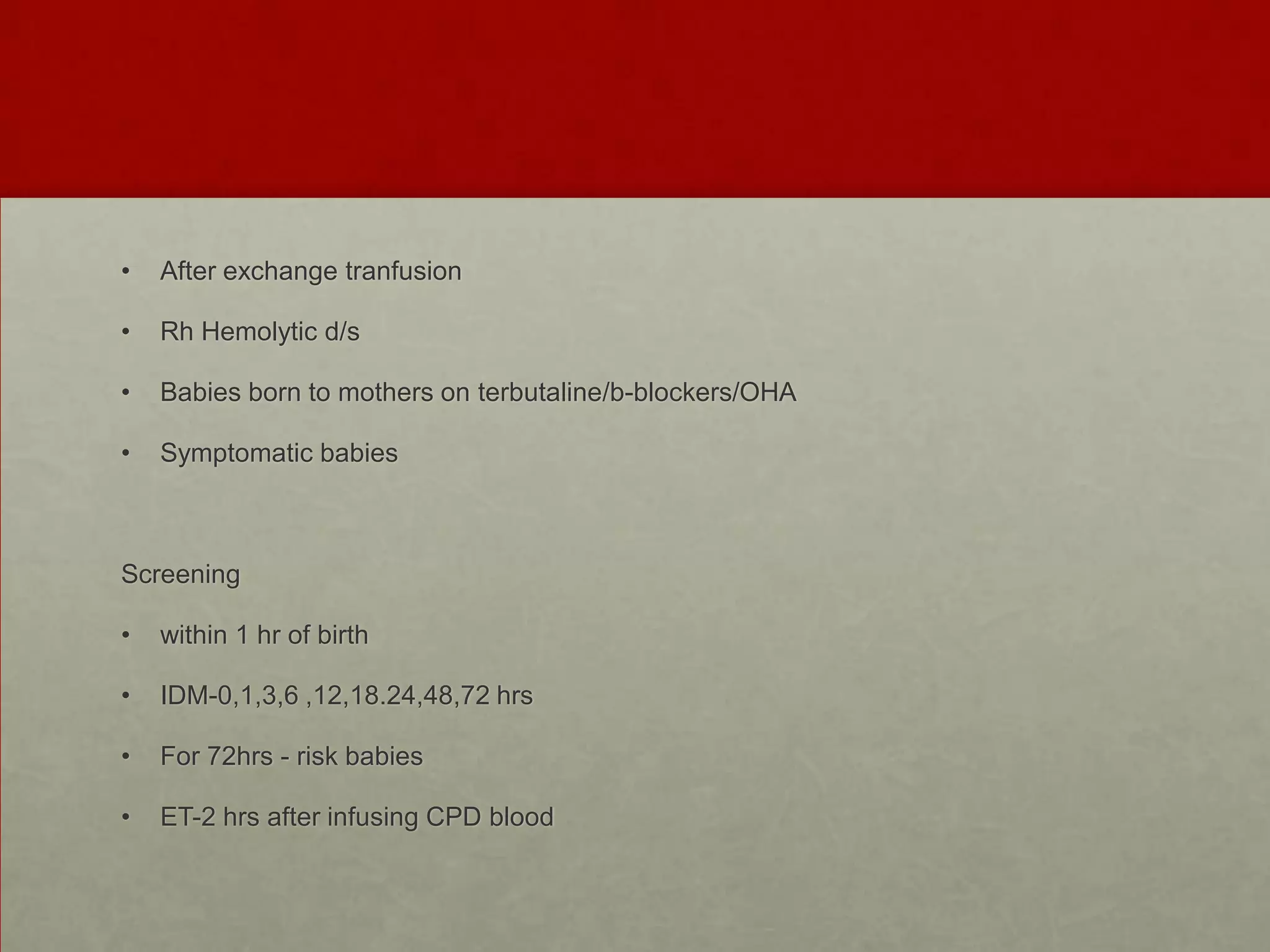
After exchange tranfusion

•

Rh Hemolytic d/s

•

Babies born to mothers on terbutaline/b-blockers/OHA

•

Symptomatic babies

Screening
•

within 1 hr of birth

•

IDM-0,1,3,6 ,12,18.24,48,72 hrs

•

For 72hrs - risk babies

•

ET-2 hrs after infusing CPD blood
• Early feeding with glucose water raises BG only
transiently and asso with rebound hypoglycemia

• Early introduction of breast feeds
o maintain stable BG levels without rebound HG

o keep ketone levels high---alternate fuel during 1st few
days while baby adapts to DBF
o enhances gluconeogenesis
• IV therapy
Indications –
 intolerance to oral feeds
 Symptomatic
 oral feeds not maintaining glucose levels
 BG level < 25mg/dl
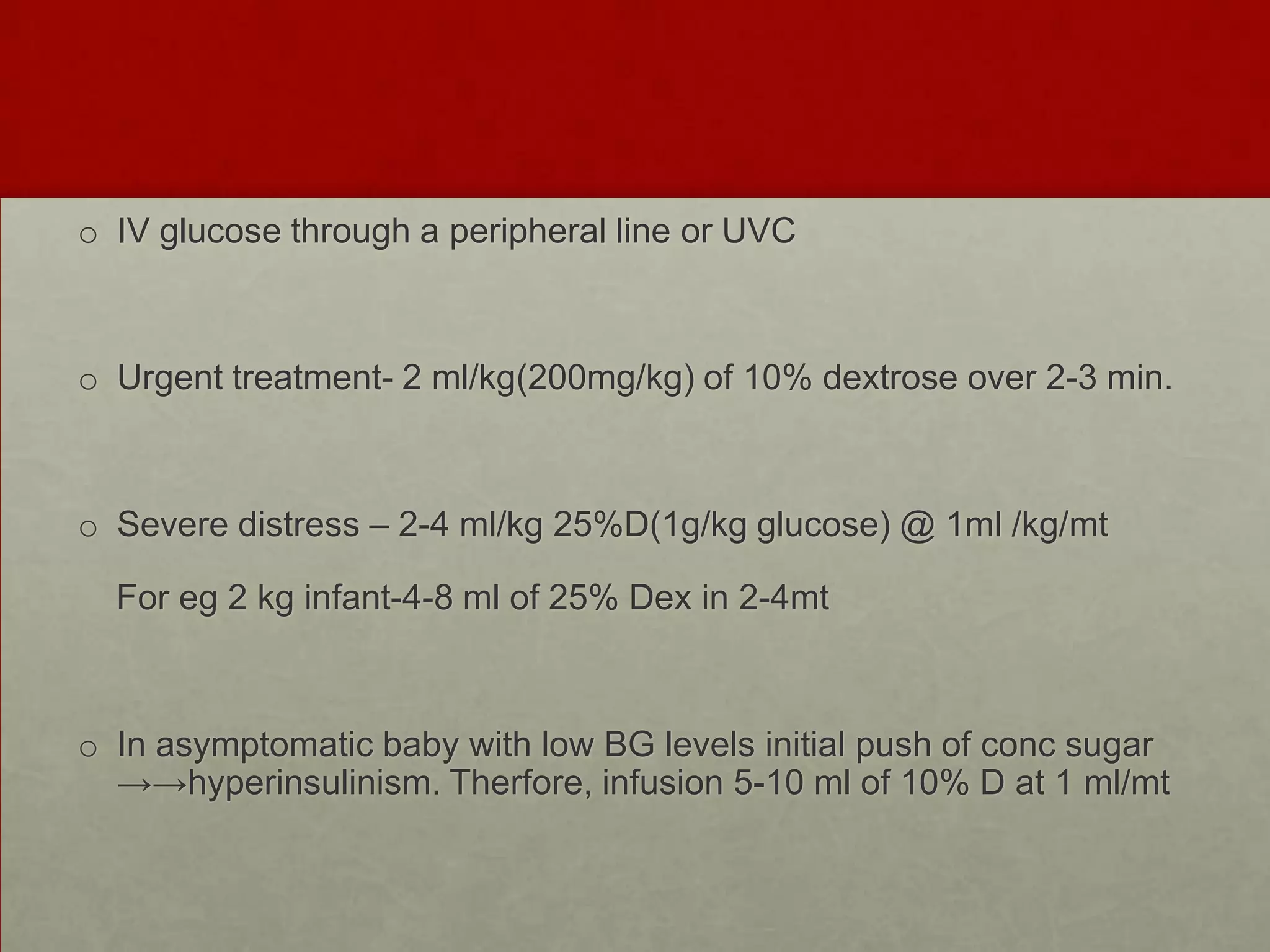
o IV glucose through a peripheral line or UVC

o Urgent treatment- 2 ml/kg(200mg/kg) of 10% dextrose over 2-3 min.

o Severe distress – 2-4 ml/kg 25%D(1g/kg glucose) @ 1ml /kg/mt
For eg 2 kg infant-4-8 ml of 25% Dex in 2-4mt

o In asymptomatic baby with low BG levels initial push of conc sugar
→→hyperinsulinism. Therfore, infusion 5-10 ml of 10% D at 1 ml/mt
Continuing therapy – based on Glucose Infusion Rate

GIR(mg/kg/min) = % dextrose x ml/kg/day
144

For eg.86 ml/kg/day of 10% D--GIR 6-8

[GIR of 8.33 = 80ml/kg/day of 15%D]
•

Monitor BG hourly till euglycemic and thereafter 6th hrly

•

If BG > 40mg%,Continue same and monitor

•

When 2 BG values >50 mg%,wean GIR by 2mg/kg/mt 6th hrly and start oral feeds

Stop infusion when baby is stable @4mg/kg/mt for 12 hr
Monitoring stopped when 2 values on oral feeds >50mg%
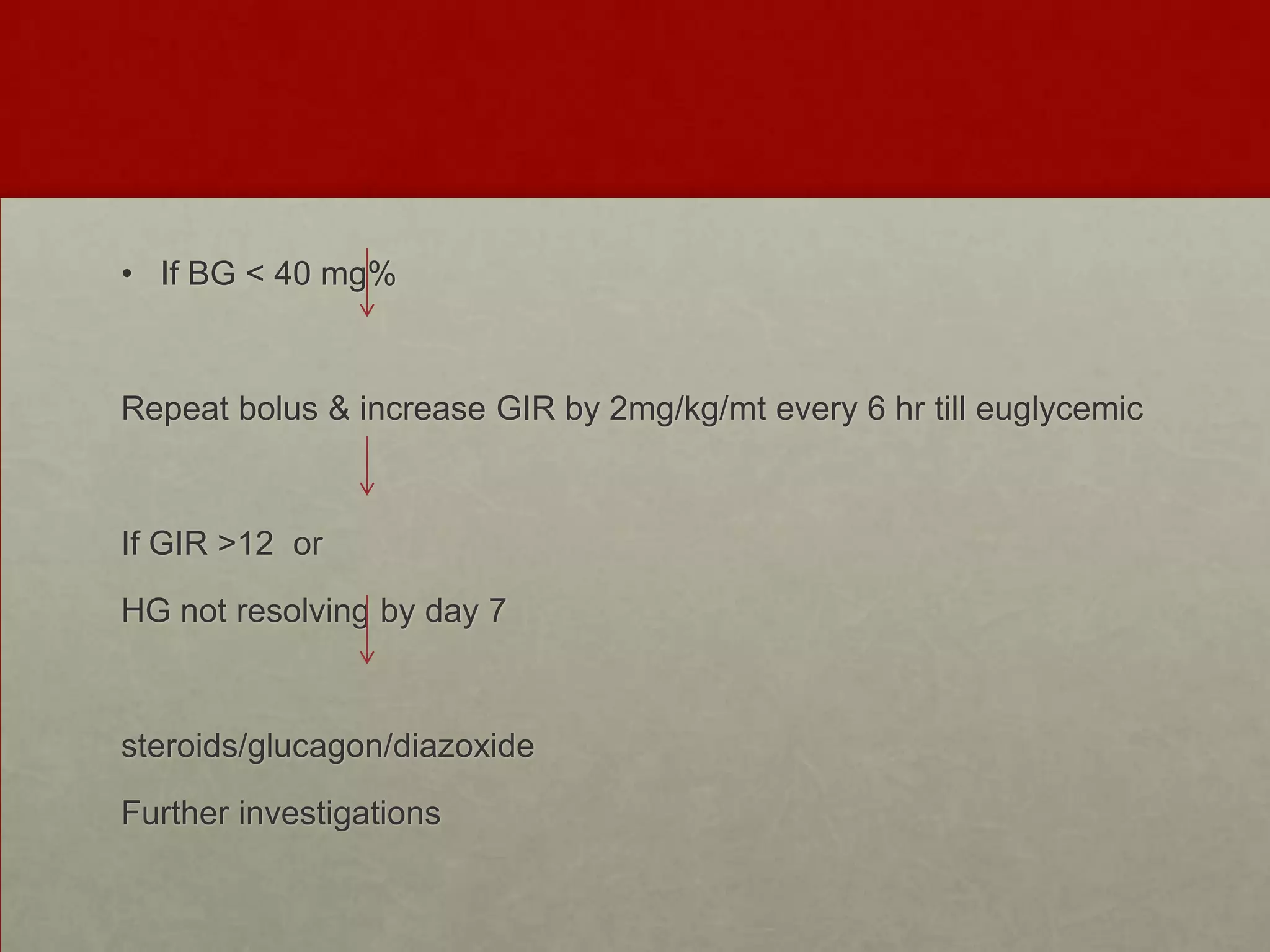
• If BG < 40 mg%

Repeat bolus & increase GIR by 2mg/kg/mt every 6 hr till euglycemic

If GIR >12 or
HG not resolving by day 7

steroids/glucagon/diazoxide
Further investigations
• Check blood glucose after 30 mts of every
change in infusion rate

• Monitoring of glucose levels-to ensure adequate correction of hypoglycemia
-To avoid hyperglycemia---diuresis---dehydration
IDM
• <2kg –parenteral therapy in the 1st hour of life

• >2 kg- can be fed hourly, for 3 or 4 feeds ,and then 2
hrly
• As interval increase ,vol ↑
• If by 2 hrs ,despite feeding GRBS< 40 mg%-parenteral therapy
Hydrocortisone
• 10mg/kg/day in 2 div doses

• MOA-decrease peripheral glucose utilisation, increase
gluconeogenesis,increase effects of glucagon
• Rapidly tapered off in few days

• Before administration of HC ,obtain blood samples for
insulin and cortisol levels
 Glucagon
•

Mobilising hepatic glycogen stores

•

Infants with good glycogen stores

•

Not in preterms and malnourished

•

0.025-0.3 mg/kg IM

•

Diazoxide (2-5mg/kg q8h PO) – in persistent hyperinsulinemia

•

Epinephrine

•

Subtotal pancreatectomy
ADDITIONAL TESTS:

Endocrine Evaluation
•

Insulin

•

GH

•

Cortisol/ACTH

•

T4,TSH

•

Glucagon

Metabolic work up
•

ABG/Blood NH3/ lactate

•

Plasma or urine amino acids

•

Urine organic acids

•

Urine ketones/Urine reducing substance
• Na /K-adrenal insufficiency

• MRI brain-hypothalamic/pituitary pathology
• CT abdomen-islet cell adenoma
• Genetic testing – to look for mutations
•
• Samples to detect insulin levels should be drawn at the
time of low BG

• Criteria for Diagnosing Hyperinsulinism Based on
―Critical‖ Samples

• 1. Hyperinsulinemia (p.insulin >2 μU/mL)
• 2. Hypofattyacidemia (p. FFA<1.5 mmol/L)
• 3. Hypoketonemia (p. β-hydroxybutyrate: <2.0 mmol/L)
• 4. Inappropriate glycemic response to glucagon, 1 mg IV
(rise >40 mg/dL)
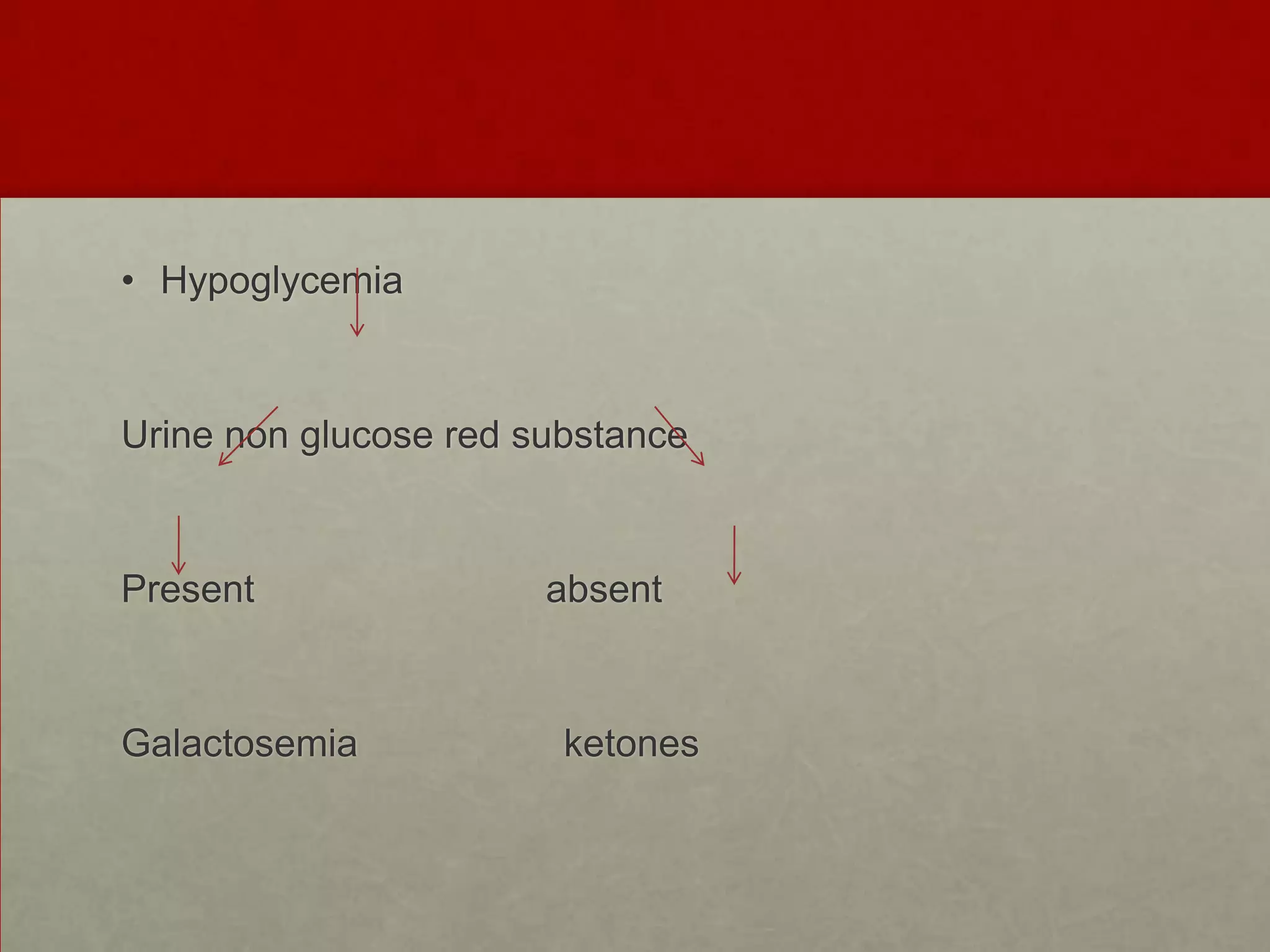
• Hypoglycemia

Urine non glucose red substance

Present

Galactosemia

absent

ketones
ketones

high

gluconeogenic
defect or
Organic acidemia

low(nonketotic HG)

FA oxidation defect
or
Ketogenic defect
Hyperinsulinism
DIFFERENTIAL DIAGNOSIS:
• Sepsis

• CNS disease
• Metabolic
abnormalities(hypocalcemia,hyponatremia,hypernatr
emia,hypomagnesemia,pyridoxine deficiency)
• Adrenal insufficiency
• Renal failure
• Liver failure
• Heart failure
THANK YOU!
Neonatal
Hypoglycaemia
Dr Varsha Atul Shah
Dept of Neonatal and Developmental Medicine
Singapore General Hospital
Extremes of
Birth Weight

Neonatal
Hypoglycaemia

Prematurity
Definition
• Controversial

• Operational threshold
• Pragmatic approach
• i.e. blood glucose level at which clinical intervention
should be considered
• Indication for action but not diagnostic of disease
• Symptomatic: < 45mg/dl (2.5mmol/L)
• Asymptomatic & at-risk: < 36mg/dl (2.0mmol/L)
• Significant neonatal hypoglycaemia (Whipple’s triad)
• Clinical manifestations
• Coincident low plasma glucose level (laboratory)
• Clinical signs resolve within mins - hrs of establishing
normoglycaemia

• Therapeutic objective
• Raise plasma glucose level > 45mg/dl (2.5mmol/L)
• Term breastfed infants
• Can utilise ketones as source of energy in absence of
glucose during transient starvation
• May tolerate low glucose levels better
Clinical Features
• Non specific
• Apathy, lethargy, irritability
• Hypotonia, limpness
• Sweating, tremors, jitteriness, abnormal cry (weak / high
pitched)
• Hypothermia
• Poor feeding, vomiting
• Apnoea, irregular respiration, respiratory distress,
cyanosis
• Tachycardia, CCF
• Seizures, coma

• Asymptomatic
Aetiology
•

utilisation of glucose: hyperinsulinism
(Hyperinsulinism: inhibit glycogenolysis & gluconeogenesis)
• Infant of diabetic mother (IDM)
• Erythroblastosis
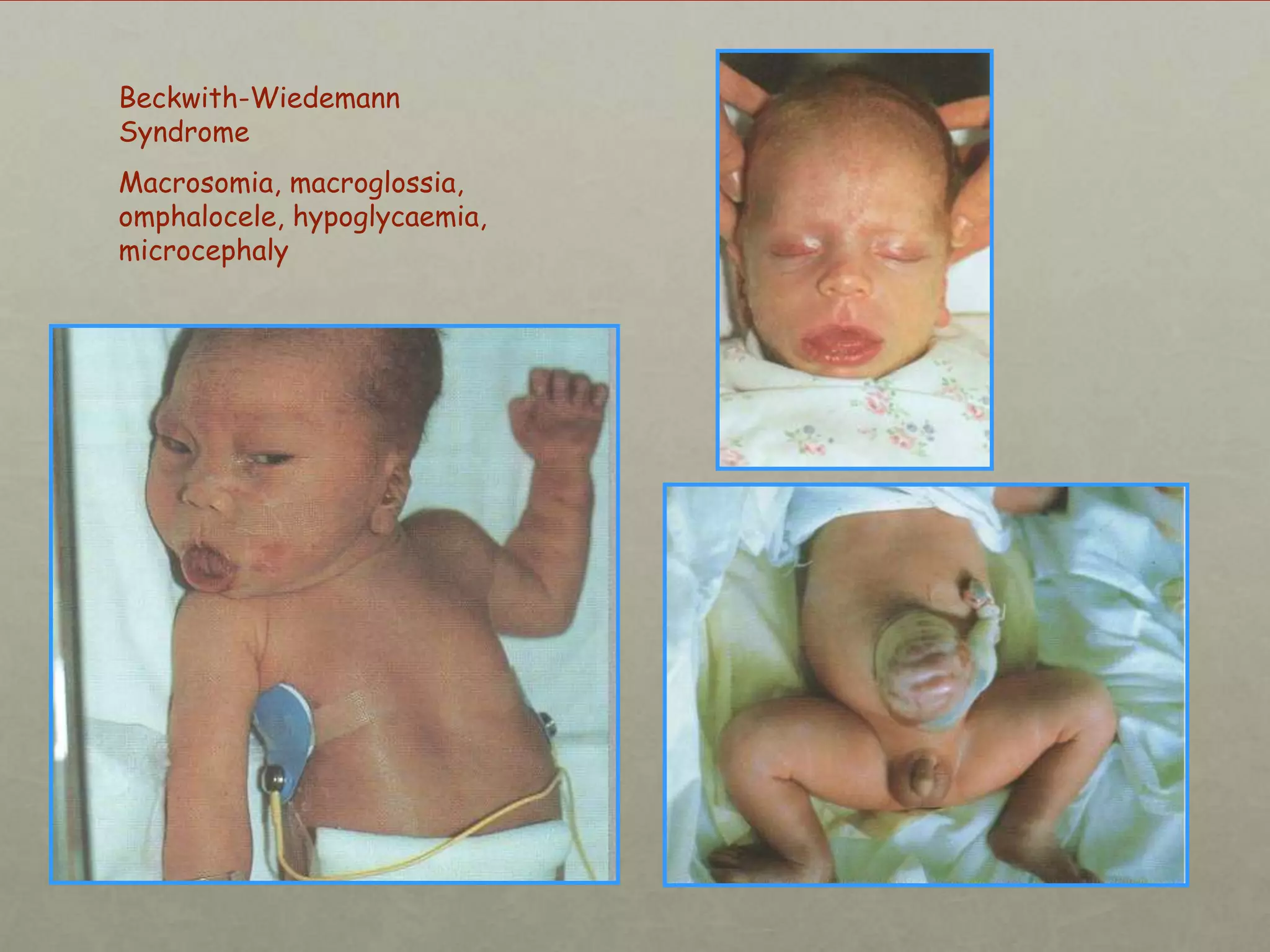
• Beckwith-Wiedemann syndrome
• Islet-cell hyperplasia / hyperfunction
• Insulin-producing tumours (nesidioblastosis, islet-cell
adenoma)
• Maternal drugs (salbutamol, chlorpropamide)
• Abrupt cessation of high-glucose infusions
Infant of diabetic mum
“Cherubic” facies
Beckwith-Wiedemann
Syndrome
Macrosomia, macroglossia,
omphalocele, hypoglycaemia,
microcephaly
•

production/stores
• Prematurity
• Intrauterine growth retardation
• Inadequate caloric intake

Premature

IUGR
•

utilisation and/or

production or others

• Stress
•
•
•
•

Sepsis ( utilisation)
Shock
Asphyxia ( stores)
Hypothermia ( utilisation)

• Polycythaemia ( utilisation by
• Exchange transfusion
• Inborn errors of metabolism

red cell mass)

• Defect in carbohydrate metabolism
• Glycogen storage disease, fructose intolerance,
galactosemia
• Defect in amino acid metabolism
• Maple syrup urine disease, propionic acidemia, etc

• Endocrine causes
• Adrenal insufficiency, hypothalamic deficiency, congenital
hypopituitarism, glucagon deficiency, epinephrine
deficiency
Management
• Prevention
• Antenatal & intrapartum care
• e.g. control of maternal diabetes, causes of prematurity &
IUGR

• Avoid environmental stress e.g. cold
• Early feeding / IV dextrose infusion
• Anticipation
• Screening
1. At-risk babies
a. Maternal

e.g. drugs, intrapartum glucose, diabetes, etc
b. Neonatal
e.g. asphyxia / perinatal stress, premature, SGA / LGA, low
birth weight, sepsis, shock, polycythaemia, etc

2. Those with symptoms
Non specific; high index of suspicion
• Diagnosis
• Screening using glucose reagent strips
• Within 2 - 3 hrs after birth & before feeding
for 24 - 48 hrs & whenever symptomatic

(2 - 4 hrly)

• Confirmatory laboratory diagnosis important
• Do not delay treatment while waiting for result
• Analysed promptly to avoid falsely low value due to
glycolysis
• Treatment
• Aim to maintain plasma glucose > 45mg/dl (2.5mmol/L)

• IV dextrose
• Mini bolus Dex 10% (2ml/kg) followed by infusion
• Central line required for high dextrose concentrations (>
Dex 10%)
• Continued close plasma glucose monitoring to titrate
infusion
• Avoid abruptly decreasing dextrose infusion (rebound
hypoglycaemia)
• Adjunct therapy
• Considered if persistent hypoglycaemia despite glucose
infusion > 10-12mg/kg/min
• Glucagon: stimulates glycogenolysis (adequate glycogen
stores) (AGA/LGA)
• Hydrocortisone: peripheral glucose utilisation,
gluconeogenesis, glucagon effects (prem/SGA)
• Rarely:
• Diazoxide: inhibits insulin secretion
• Somatostatin: inhibits insulin & growth hormone release
• Subtotal pancreatectomy: decreases insulin release (insulinsecreting tumours)
• Most hypoglycaemia resolve in 2 - 3 dys

• Persistent / recurrent hypoglycaemia for > 1 week may
require evaluation for other causes

• e.g. insulin, cortisol, other endocrine & IEM
studies during period of hypoglycaemia
• During a period of hypoglycaemia, a normal infant’s
blood insulin level should be low or absent. If it is very
high suggests hyperinsulinism. It inhibits braeking down
of glyconen
Significance of Hypoglycaemia
• Neuronal cell injury, cerebral damage, long term
neurologic sequelae

• No single value below which or duration beyond
which brain injury definitely occurs

• ? Vulnerability of brain of infants of different
gestational ages

• Prevention, prompt treatment important
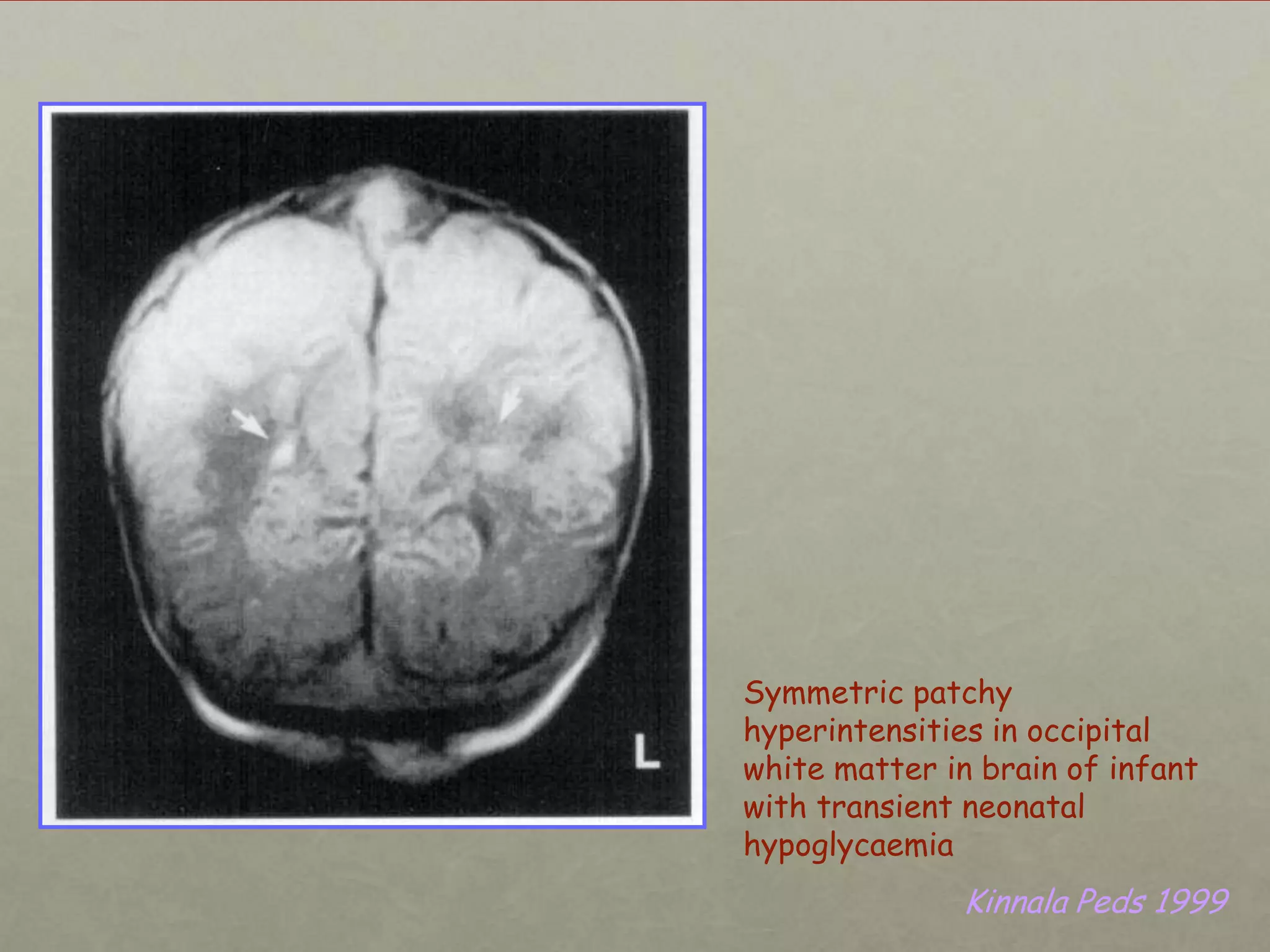
Symmetric patchy
hyperintensities in occipital
white matter in brain of infant
with transient neonatal
hypoglycaemia

Kinnala Peds 1999
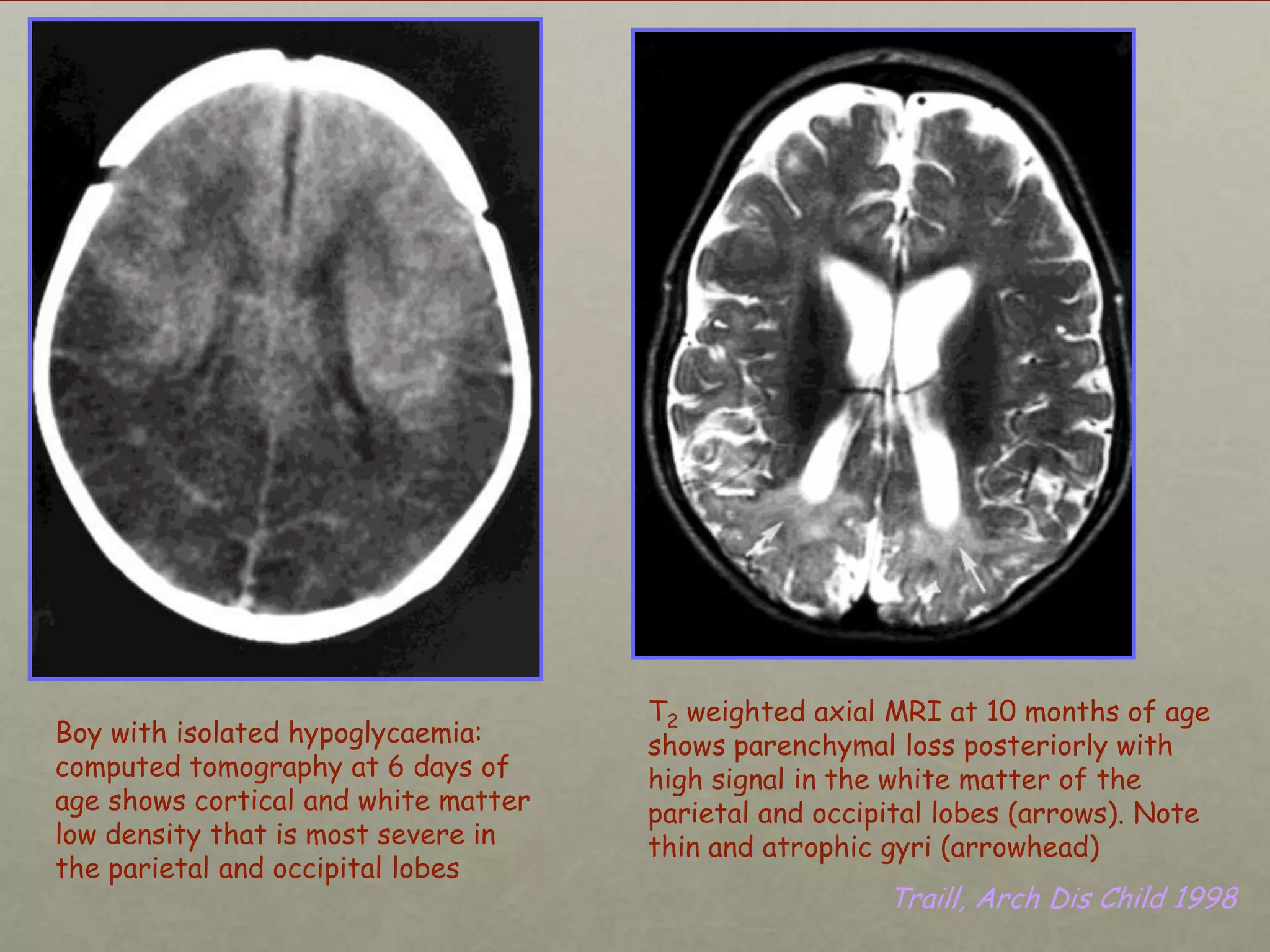
Boy with isolated hypoglycaemia:
computed tomography at 6 days of
age shows cortical and white matter
low density that is most severe in
the parietal and occipital lobes

T2 weighted axial MRI at 10 months of age
shows parenchymal loss posteriorly with
high signal in the white matter of the
parietal and occipital lobes (arrows). Note
thin and atrophic gyri (arrowhead)

Traill, Arch Dis Child 1998
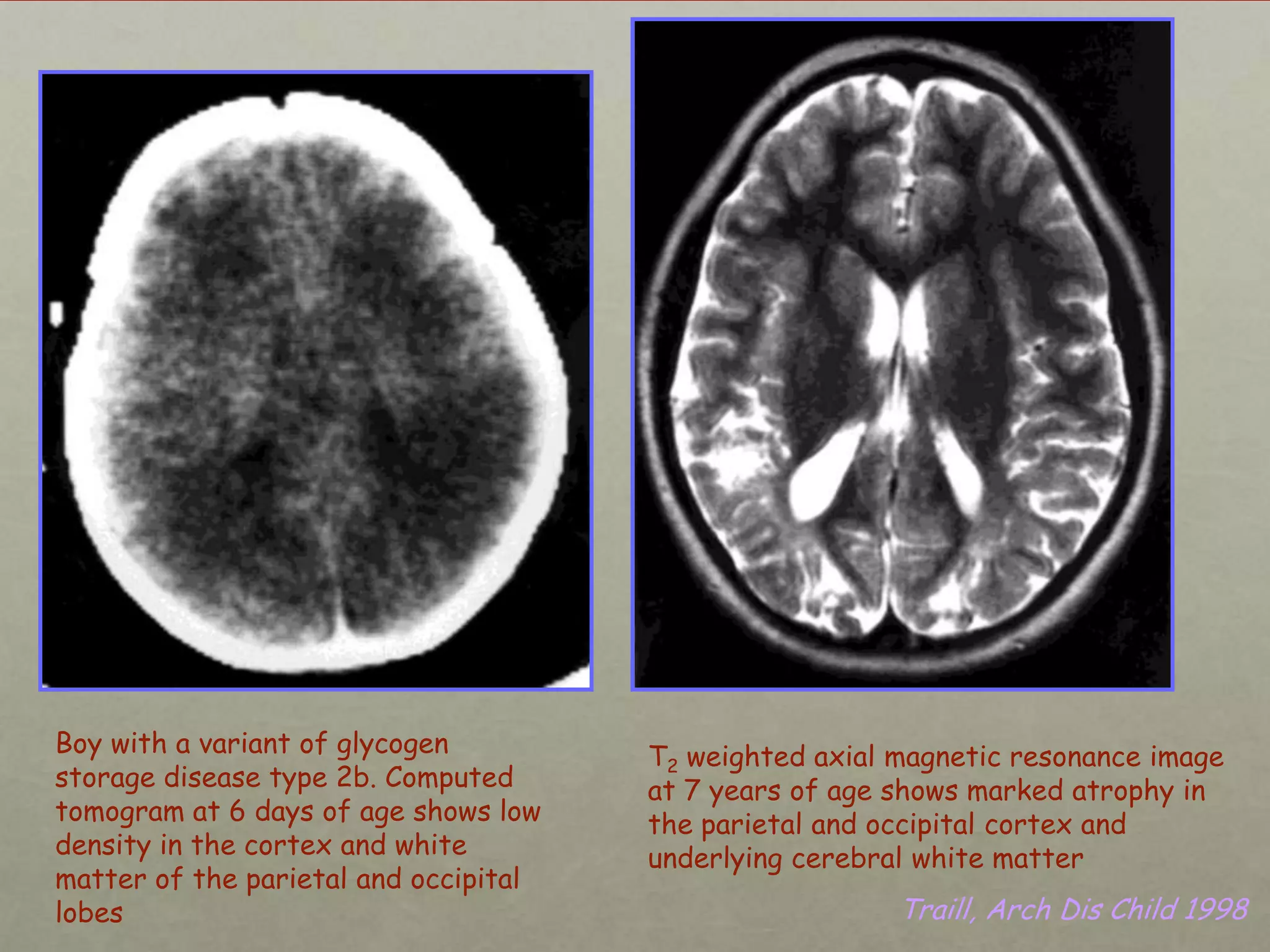
Boy with a variant of glycogen
storage disease type 2b. Computed
tomogram at 6 days of age shows low
density in the cortex and white
matter of the parietal and occipital
lobes

T2 weighted axial magnetic resonance image
at 7 years of age shows marked atrophy in
the parietal and occipital cortex and
underlying cerebral white matter

Traill, Arch Dis Child 1998
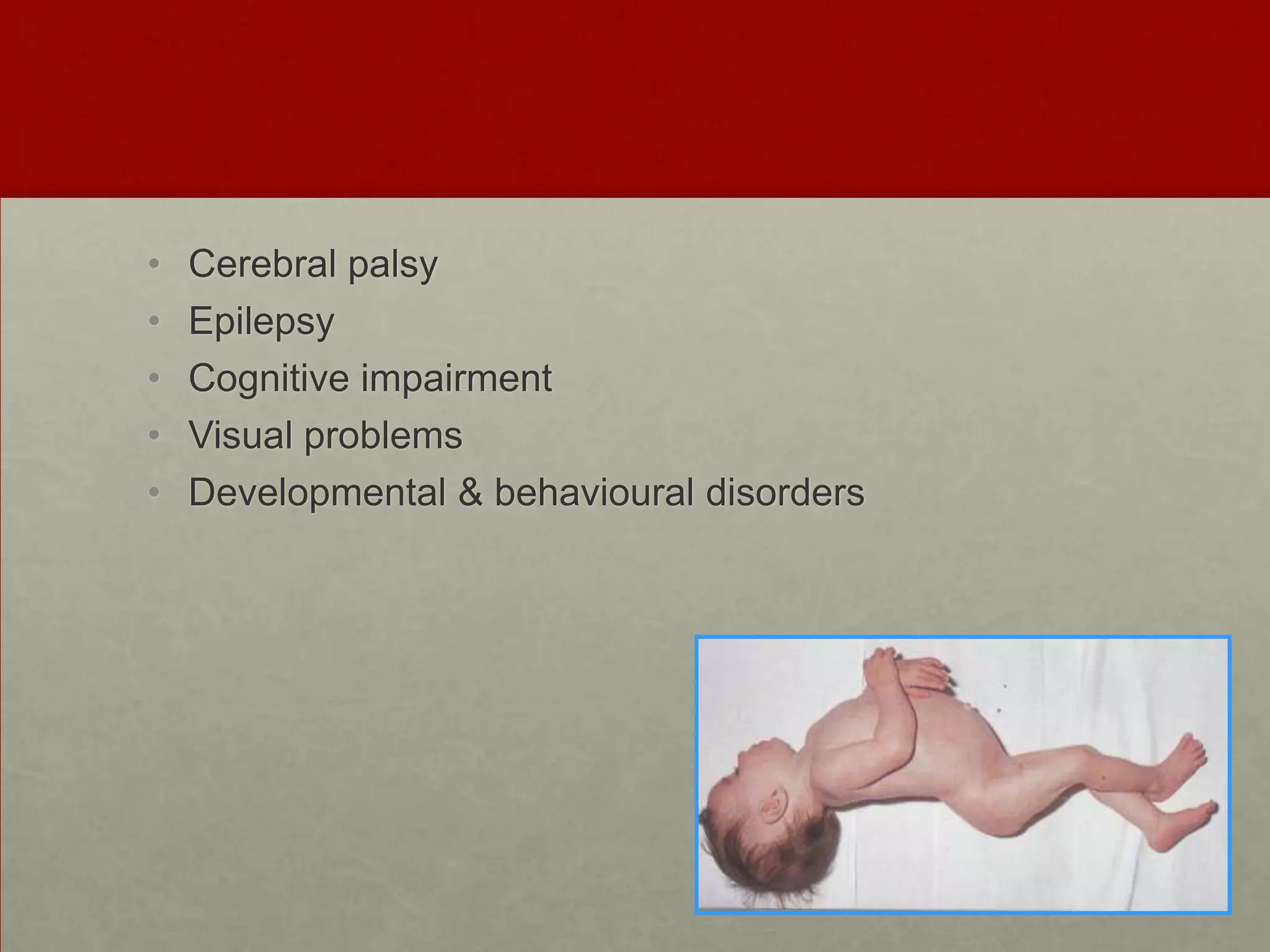
Outcome
• Varied

• Some have no long term sequelae

• Symptomatic / severe / persistent hypoglycaemia
• Abnormal neurointellectual development
•
•
•
•
•

Cerebral palsy
Epilepsy
Cognitive impairment
Visual problems
Developmental & behavioural disorders
Long Term Management
• Neurodevelopmental follow up to identify sequelae of
neuroglycopenia

• Identify growth deficits
Neonatal Hypoglycemia

Neonatal Hypoglycemia

  • 1.
    HYPOGLYCEMIA IN NEWBORN Dr.David Mendez MiamiChildrens Hospital Kidz Medical Services
  • 2.
    INTRODUCTION • Common metabolicproblem • Blood glucose in newborns are generally lower than older children & adult • Fetal glucose level maintained at 2/3 of maternal B.glucose by transplacental route • Glucose level fall in Ist 1-2 hrs,lowest value at age of 3 hrs, increase and stabilise by 4 hrs. • New born – glycogenolysis, gluconeogenesis and exogenous nutrients.
  • 3.
    DEFINITION Defined as ablood glucose level of <40mg % regardless of gestational age and whether or not symptoms are present Whipple’s triad: • low glucose level documented by accurate lab method • Signs and symptoms of hypoglycemia • Resolution of signs and symptoms on restoration of blood glucose levels.
  • 4.
    ETIOLOGY • Fetal orNeonatal Hyperinsulinism – ↑utilization of glucose.  Decreased production or store  Increased utilization and/or decreased production
  • 5.
    Hypoglycemia of thenewborn  Fetal or Neonatal Hyperinsulinism – ↑utilization of glucose.  Babies born to Diabetic mothers(15-25 % GDM,2550% DM)  LGA infants-16%  Erythroblastosis  Islet cell hyperplasia  Beckwith-Weidemann(macrosomia,microcephaly,omphalocoele,macroglos sia,visceromegaly).
  • 6.
    Hypoglycemia of thenewborn Insulin producing tumors(islet cell adenoma).  Maternal therapy with tocolytics like terbutaline,ritodrine, OHA and diuretics (chlorothiazide)  Glucose infusion through UAC –high glucose into celiac,SMA—stimulate insulin from pancreas
  • 7.
    Hypoglycemia of thenewborn  Decreased production or store:  Prematurity  IUGR (15% in SGA)  Inadequate calorie intake  Delayed onset of feeding
  • 8.
    Hypoglycemia of thenewborn  Increased utilisation or decreased production: Perinatal stress Sepsis/shock/asphyxia/respiratory distress/hypothermia/post resuscitation. Exchange transfusion Heparinised blood with low glucose level CPD blood (relatively hyperglycemic---reactive hypoglcemia Defects in carbohydrate metabolism Glycogen storage disease Fructose intolerance Galactosemia
  • 9.
    Hypoglycemia of thenewborn  Endocrine deficiency Adrenal insufficiency Hypothalamic deficiency Hypopituitarism (neonatal emergencies such as apnea, cyanosis, or severe hypoglycemia with or without seizures, hyperbilirubinemia, and micropenis. ) Glucagon def Epn deficiency  Defects in amino acid metabolism MSUD,propionic acidemia,MMA,tyrosinemia
  • 10.
    Hypoglycemia of thenewborn • Polycythemia -higher glucose utilization by increased mass of RBC  Maternal therapy with beta blockers -Prevention of symp stimulation of glycogenolysis &epinephrine induced increase in FFA
  • 11.
    DIAGNOSIS • SYMPTOMS Tremors,jitteriness,irritability,seizures,lethargy, poor feeding,vomiting,limpness,weak or high pitched cry ,cyanosis ASYMPTOMATIC. • MEASURMENT OF BLOOD GLUCOSE glucometer- 15% lower than plasma levels Lab diagnosis-sample obtained and analyzed promptly (18mg/dl/hr)
  • 12.
    MANAGEMENT • The majorlong-term sequelae of severe, prolonged hypoglycemia are mental retardation, recurrent seizure activity, or both. • Permanent neurologic sequelae are present in 25–50% ofbabies with severe recurrent symptomatic hypoglycemia • These sequelae are more likely when alternative fuel sources are limited, as occurs with hyperinsulinemia • Anticipation and prevention –key to management of infants with risk factors for HG
  • 13.
    Routine screening inbabies with risk factors • SGA/Smaller of the discordant twin • IDM/LGA • Preterm <35 weeks • On IVF/TPN • Prolonged hypoxia /hypothermia/polycythemia/septicemia/ suspected IEM
  • 14.
    • After exchange tranfusion • RhHemolytic d/s • Babies born to mothers on terbutaline/b-blockers/OHA • Symptomatic babies Screening • within 1 hr of birth • IDM-0,1,3,6 ,12,18.24,48,72 hrs • For 72hrs - risk babies • ET-2 hrs after infusing CPD blood
  • 15.
    • Early feedingwith glucose water raises BG only transiently and asso with rebound hypoglycemia • Early introduction of breast feeds o maintain stable BG levels without rebound HG o keep ketone levels high---alternate fuel during 1st few days while baby adapts to DBF o enhances gluconeogenesis
  • 16.
    • IV therapy Indications–  intolerance to oral feeds  Symptomatic  oral feeds not maintaining glucose levels  BG level < 25mg/dl
  • 17.
    o IV glucosethrough a peripheral line or UVC o Urgent treatment- 2 ml/kg(200mg/kg) of 10% dextrose over 2-3 min. o Severe distress – 2-4 ml/kg 25%D(1g/kg glucose) @ 1ml /kg/mt For eg 2 kg infant-4-8 ml of 25% Dex in 2-4mt o In asymptomatic baby with low BG levels initial push of conc sugar →→hyperinsulinism. Therfore, infusion 5-10 ml of 10% D at 1 ml/mt
  • 18.
    Continuing therapy –based on Glucose Infusion Rate GIR(mg/kg/min) = % dextrose x ml/kg/day 144 For eg.86 ml/kg/day of 10% D--GIR 6-8 [GIR of 8.33 = 80ml/kg/day of 15%D]
  • 19.
    • Monitor BG hourlytill euglycemic and thereafter 6th hrly • If BG > 40mg%,Continue same and monitor • When 2 BG values >50 mg%,wean GIR by 2mg/kg/mt 6th hrly and start oral feeds Stop infusion when baby is stable @4mg/kg/mt for 12 hr Monitoring stopped when 2 values on oral feeds >50mg%
  • 20.
    • If BG< 40 mg% Repeat bolus & increase GIR by 2mg/kg/mt every 6 hr till euglycemic If GIR >12 or HG not resolving by day 7 steroids/glucagon/diazoxide Further investigations
  • 21.
    • Check bloodglucose after 30 mts of every change in infusion rate • Monitoring of glucose levels-to ensure adequate correction of hypoglycemia -To avoid hyperglycemia---diuresis---dehydration
  • 22.
    IDM • <2kg –parenteraltherapy in the 1st hour of life • >2 kg- can be fed hourly, for 3 or 4 feeds ,and then 2 hrly • As interval increase ,vol ↑ • If by 2 hrs ,despite feeding GRBS< 40 mg%-parenteral therapy
  • 23.
    Hydrocortisone • 10mg/kg/day in2 div doses • MOA-decrease peripheral glucose utilisation, increase gluconeogenesis,increase effects of glucagon • Rapidly tapered off in few days • Before administration of HC ,obtain blood samples for insulin and cortisol levels
  • 24.
     Glucagon • Mobilising hepaticglycogen stores • Infants with good glycogen stores • Not in preterms and malnourished • 0.025-0.3 mg/kg IM • Diazoxide (2-5mg/kg q8h PO) – in persistent hyperinsulinemia • Epinephrine • Subtotal pancreatectomy
  • 25.
    ADDITIONAL TESTS: Endocrine Evaluation • Insulin • GH • Cortisol/ACTH • T4,TSH • Glucagon Metabolicwork up • ABG/Blood NH3/ lactate • Plasma or urine amino acids • Urine organic acids • Urine ketones/Urine reducing substance
  • 26.
    • Na /K-adrenalinsufficiency • MRI brain-hypothalamic/pituitary pathology • CT abdomen-islet cell adenoma • Genetic testing – to look for mutations •
  • 27.
    • Samples todetect insulin levels should be drawn at the time of low BG • Criteria for Diagnosing Hyperinsulinism Based on ―Critical‖ Samples • 1. Hyperinsulinemia (p.insulin >2 μU/mL) • 2. Hypofattyacidemia (p. FFA<1.5 mmol/L) • 3. Hypoketonemia (p. β-hydroxybutyrate: <2.0 mmol/L) • 4. Inappropriate glycemic response to glucagon, 1 mg IV (rise >40 mg/dL)
  • 28.
    • Hypoglycemia Urine nonglucose red substance Present Galactosemia absent ketones
  • 29.
    ketones high gluconeogenic defect or Organic acidemia low(nonketoticHG) FA oxidation defect or Ketogenic defect Hyperinsulinism
  • 30.
    DIFFERENTIAL DIAGNOSIS: • Sepsis •CNS disease • Metabolic abnormalities(hypocalcemia,hyponatremia,hypernatr emia,hypomagnesemia,pyridoxine deficiency) • Adrenal insufficiency • Renal failure • Liver failure • Heart failure
  • 31.
  • 32.
    Neonatal Hypoglycaemia Dr Varsha AtulShah Dept of Neonatal and Developmental Medicine Singapore General Hospital
  • 33.
  • 34.
    Definition • Controversial • Operationalthreshold • Pragmatic approach • i.e. blood glucose level at which clinical intervention should be considered • Indication for action but not diagnostic of disease • Symptomatic: < 45mg/dl (2.5mmol/L) • Asymptomatic & at-risk: < 36mg/dl (2.0mmol/L)
  • 35.
    • Significant neonatalhypoglycaemia (Whipple’s triad) • Clinical manifestations • Coincident low plasma glucose level (laboratory) • Clinical signs resolve within mins - hrs of establishing normoglycaemia • Therapeutic objective • Raise plasma glucose level > 45mg/dl (2.5mmol/L)
  • 36.
    • Term breastfedinfants • Can utilise ketones as source of energy in absence of glucose during transient starvation • May tolerate low glucose levels better
  • 37.
    Clinical Features • Nonspecific • Apathy, lethargy, irritability • Hypotonia, limpness • Sweating, tremors, jitteriness, abnormal cry (weak / high pitched) • Hypothermia • Poor feeding, vomiting • Apnoea, irregular respiration, respiratory distress, cyanosis • Tachycardia, CCF • Seizures, coma • Asymptomatic
  • 39.
    Aetiology • utilisation of glucose:hyperinsulinism (Hyperinsulinism: inhibit glycogenolysis & gluconeogenesis) • Infant of diabetic mother (IDM) • Erythroblastosis • Beckwith-Wiedemann syndrome • Islet-cell hyperplasia / hyperfunction • Insulin-producing tumours (nesidioblastosis, islet-cell adenoma) • Maternal drugs (salbutamol, chlorpropamide) • Abrupt cessation of high-glucose infusions
  • 40.
    Infant of diabeticmum “Cherubic” facies
  • 41.
  • 42.
    • production/stores • Prematurity • Intrauterinegrowth retardation • Inadequate caloric intake Premature IUGR
  • 43.
    • utilisation and/or production orothers • Stress • • • • Sepsis ( utilisation) Shock Asphyxia ( stores) Hypothermia ( utilisation) • Polycythaemia ( utilisation by • Exchange transfusion • Inborn errors of metabolism red cell mass) • Defect in carbohydrate metabolism • Glycogen storage disease, fructose intolerance, galactosemia • Defect in amino acid metabolism • Maple syrup urine disease, propionic acidemia, etc • Endocrine causes • Adrenal insufficiency, hypothalamic deficiency, congenital hypopituitarism, glucagon deficiency, epinephrine deficiency
  • 44.
    Management • Prevention • Antenatal& intrapartum care • e.g. control of maternal diabetes, causes of prematurity & IUGR • Avoid environmental stress e.g. cold • Early feeding / IV dextrose infusion
  • 45.
    • Anticipation • Screening 1.At-risk babies a. Maternal e.g. drugs, intrapartum glucose, diabetes, etc b. Neonatal e.g. asphyxia / perinatal stress, premature, SGA / LGA, low birth weight, sepsis, shock, polycythaemia, etc 2. Those with symptoms Non specific; high index of suspicion
  • 46.
    • Diagnosis • Screeningusing glucose reagent strips • Within 2 - 3 hrs after birth & before feeding for 24 - 48 hrs & whenever symptomatic (2 - 4 hrly) • Confirmatory laboratory diagnosis important • Do not delay treatment while waiting for result • Analysed promptly to avoid falsely low value due to glycolysis
  • 47.
    • Treatment • Aimto maintain plasma glucose > 45mg/dl (2.5mmol/L) • IV dextrose • Mini bolus Dex 10% (2ml/kg) followed by infusion • Central line required for high dextrose concentrations (> Dex 10%) • Continued close plasma glucose monitoring to titrate infusion • Avoid abruptly decreasing dextrose infusion (rebound hypoglycaemia)
  • 48.
    • Adjunct therapy •Considered if persistent hypoglycaemia despite glucose infusion > 10-12mg/kg/min • Glucagon: stimulates glycogenolysis (adequate glycogen stores) (AGA/LGA) • Hydrocortisone: peripheral glucose utilisation, gluconeogenesis, glucagon effects (prem/SGA) • Rarely: • Diazoxide: inhibits insulin secretion • Somatostatin: inhibits insulin & growth hormone release • Subtotal pancreatectomy: decreases insulin release (insulinsecreting tumours)
  • 49.
    • Most hypoglycaemiaresolve in 2 - 3 dys • Persistent / recurrent hypoglycaemia for > 1 week may require evaluation for other causes • e.g. insulin, cortisol, other endocrine & IEM studies during period of hypoglycaemia • During a period of hypoglycaemia, a normal infant’s blood insulin level should be low or absent. If it is very high suggests hyperinsulinism. It inhibits braeking down of glyconen
  • 50.
    Significance of Hypoglycaemia •Neuronal cell injury, cerebral damage, long term neurologic sequelae • No single value below which or duration beyond which brain injury definitely occurs • ? Vulnerability of brain of infants of different gestational ages • Prevention, prompt treatment important
  • 51.
    Symmetric patchy hyperintensities inoccipital white matter in brain of infant with transient neonatal hypoglycaemia Kinnala Peds 1999
  • 52.
    Boy with isolatedhypoglycaemia: computed tomography at 6 days of age shows cortical and white matter low density that is most severe in the parietal and occipital lobes T2 weighted axial MRI at 10 months of age shows parenchymal loss posteriorly with high signal in the white matter of the parietal and occipital lobes (arrows). Note thin and atrophic gyri (arrowhead) Traill, Arch Dis Child 1998
  • 53.
    Boy with avariant of glycogen storage disease type 2b. Computed tomogram at 6 days of age shows low density in the cortex and white matter of the parietal and occipital lobes T2 weighted axial magnetic resonance image at 7 years of age shows marked atrophy in the parietal and occipital cortex and underlying cerebral white matter Traill, Arch Dis Child 1998
  • 54.
    Outcome • Varied • Somehave no long term sequelae • Symptomatic / severe / persistent hypoglycaemia • Abnormal neurointellectual development
  • 55.
  • 56.
    Long Term Management •Neurodevelopmental follow up to identify sequelae of neuroglycopenia • Identify growth deficits