Current Concepts in the
Management of Shoulder Instability
By Dr.PONNILAVAN
ORTHO RESIDENT
PIMS
PONDICHERRY
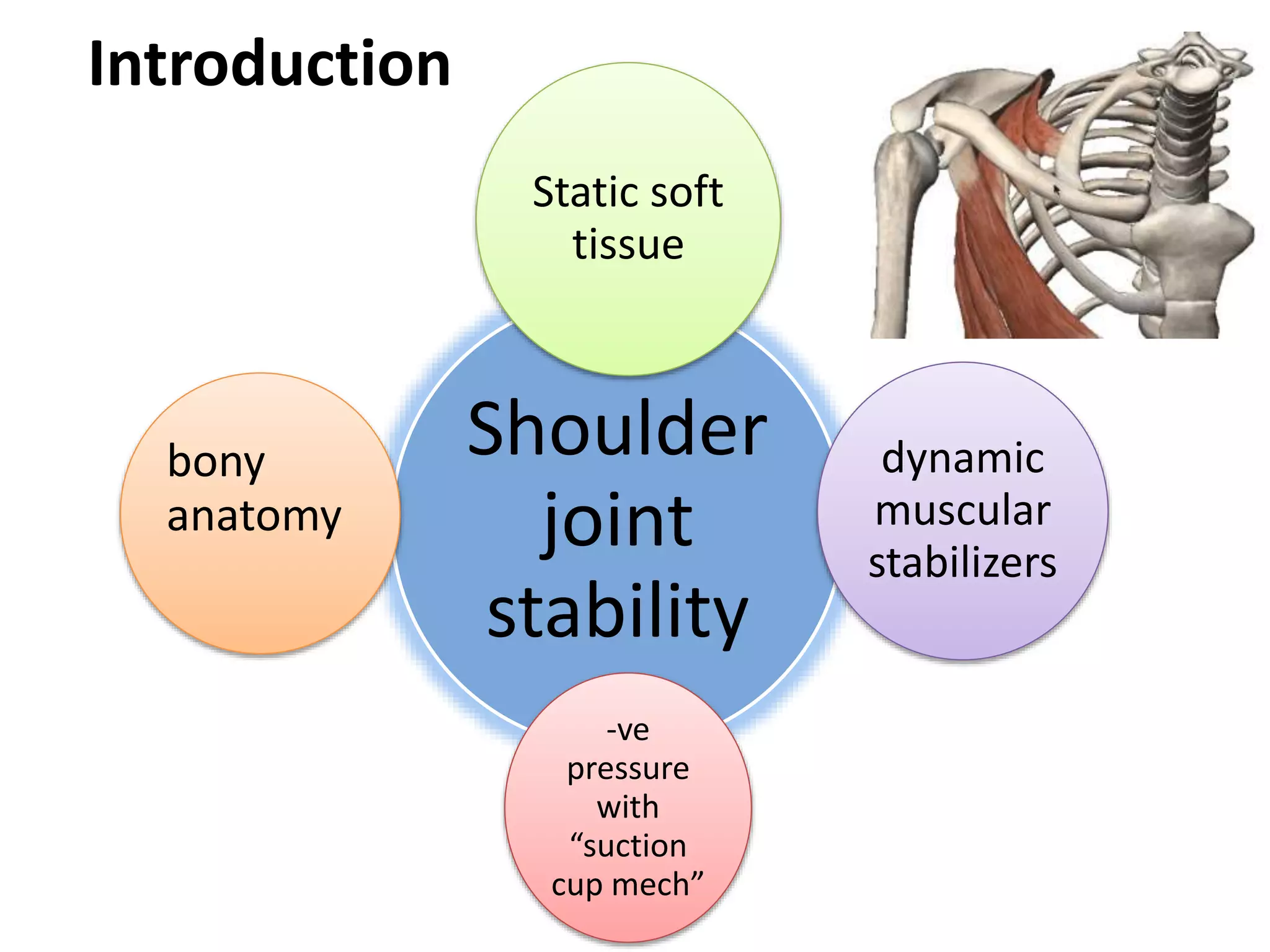
Introduction
Shoulder
joint
stability
Static soft
tissue
dynamic
muscular
stabilizers
-ve
pressure
with
“suction
cup mech”
bony
anatomy
SI causes pain and dysfunction in young active
pts, more so in athletes.
Optimal Mx of SI is challenging in young adult as
well as the professional sportsperson.
Increase in the no. of shoulder D/L being
identified & managed in the last 2 to 3 decades.
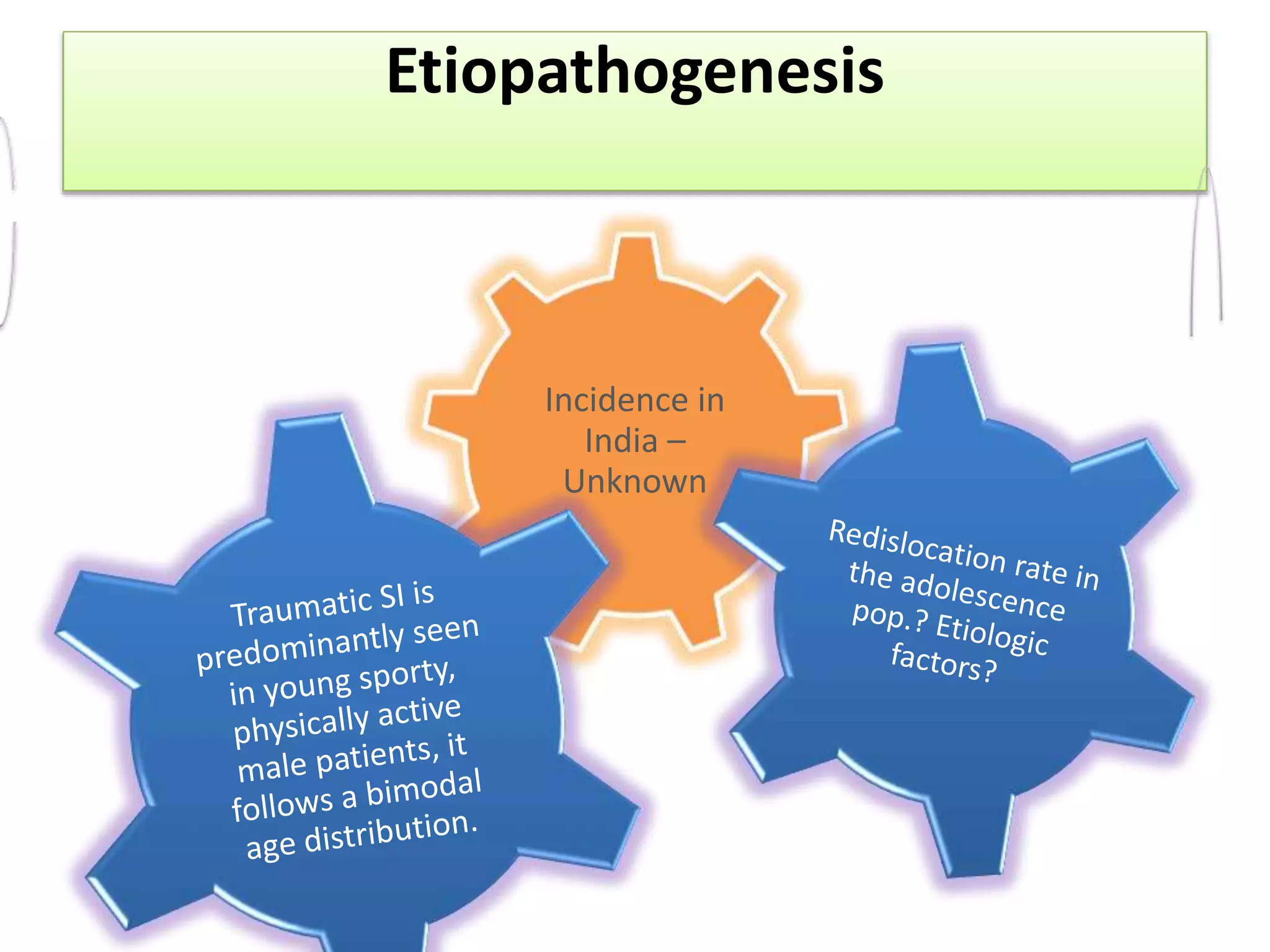
Etiopathogenesis
Incidence in
India –
Unknown
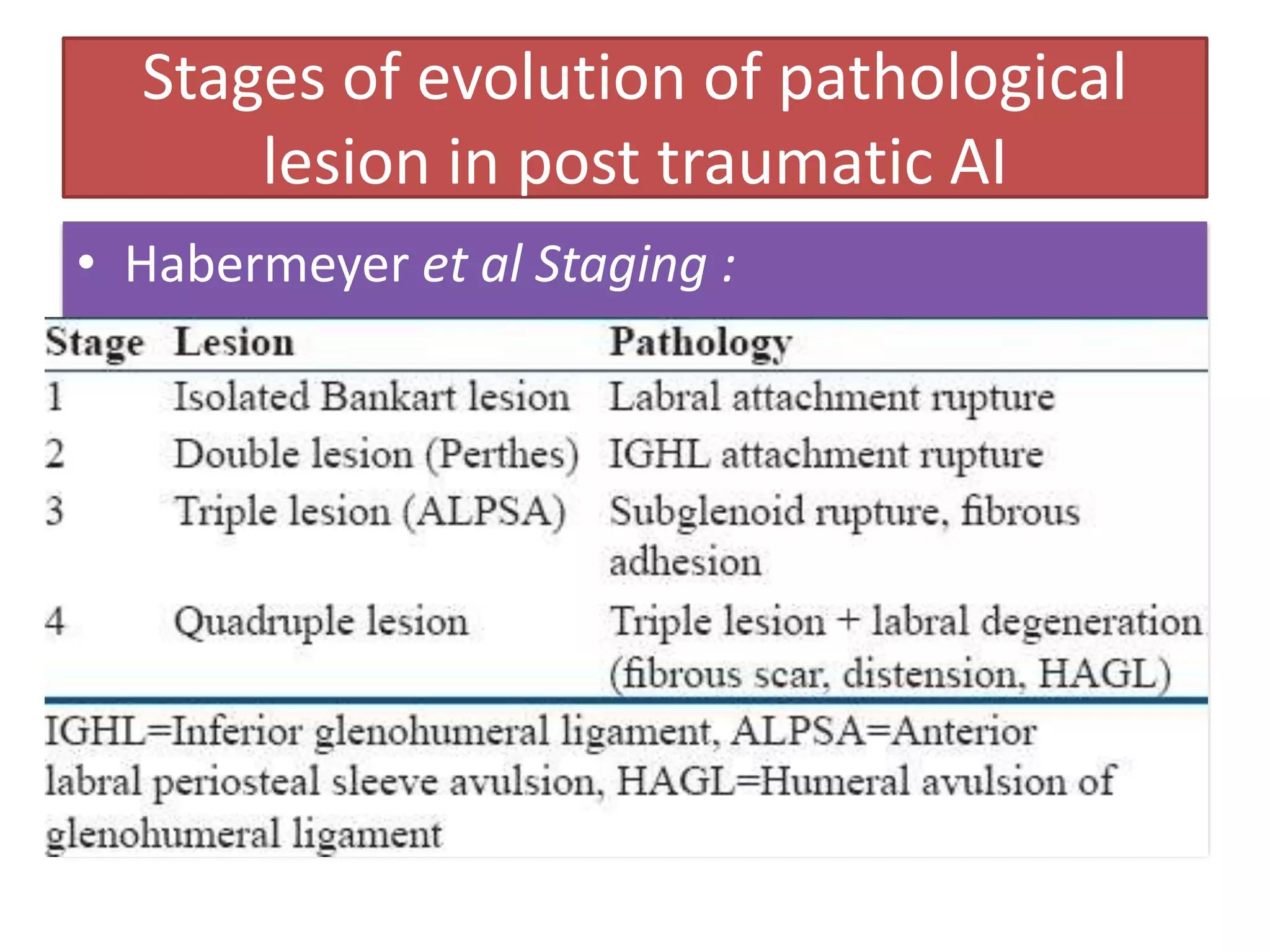
Stages of evolution of pathological
lesion in post traumatic AI
• Habermeyer et al Staging :
Classification
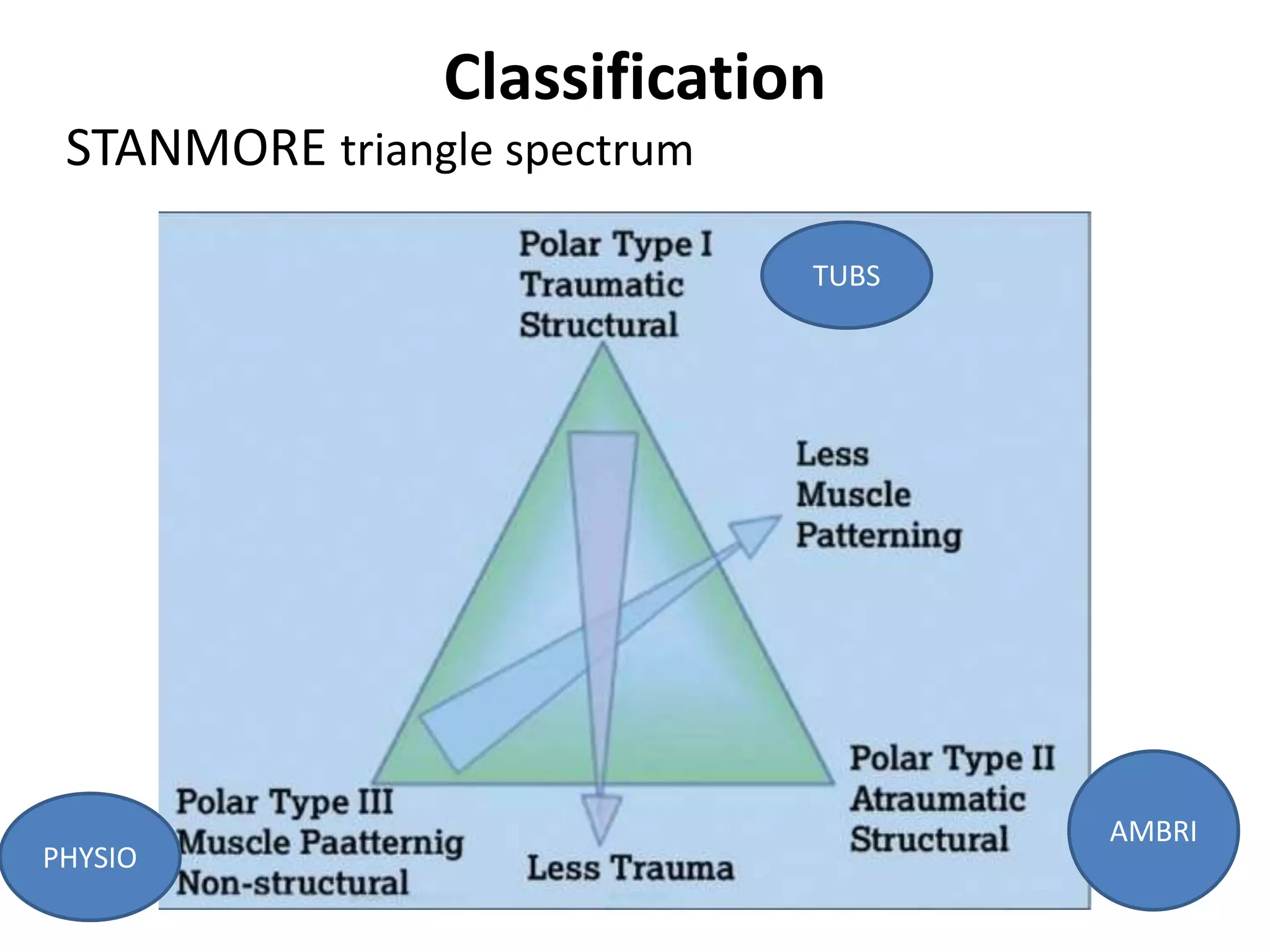
STANMORE triangle spectrum
TUBS
AMBRI
PHYSIO
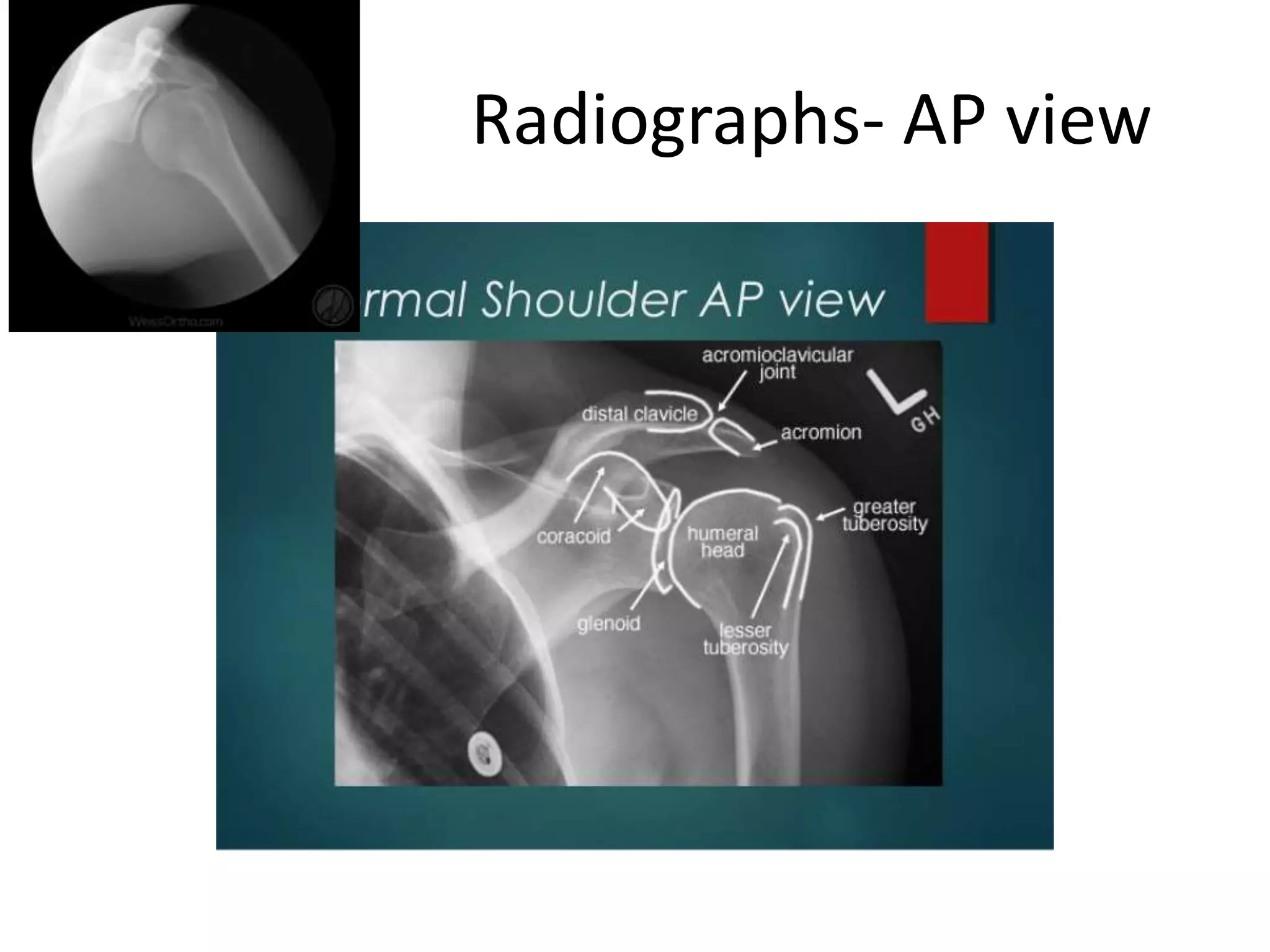
Radiographs- AP view
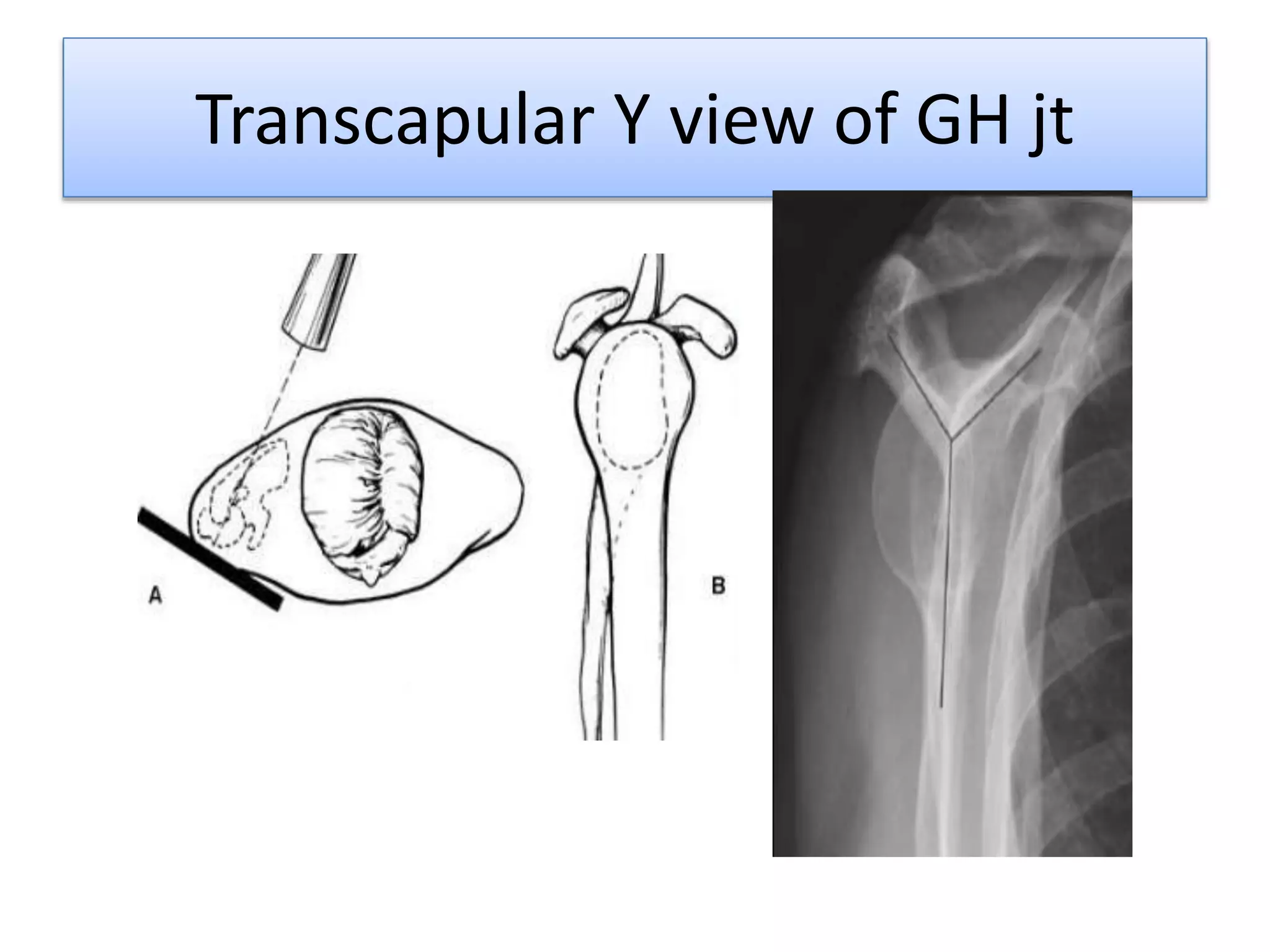
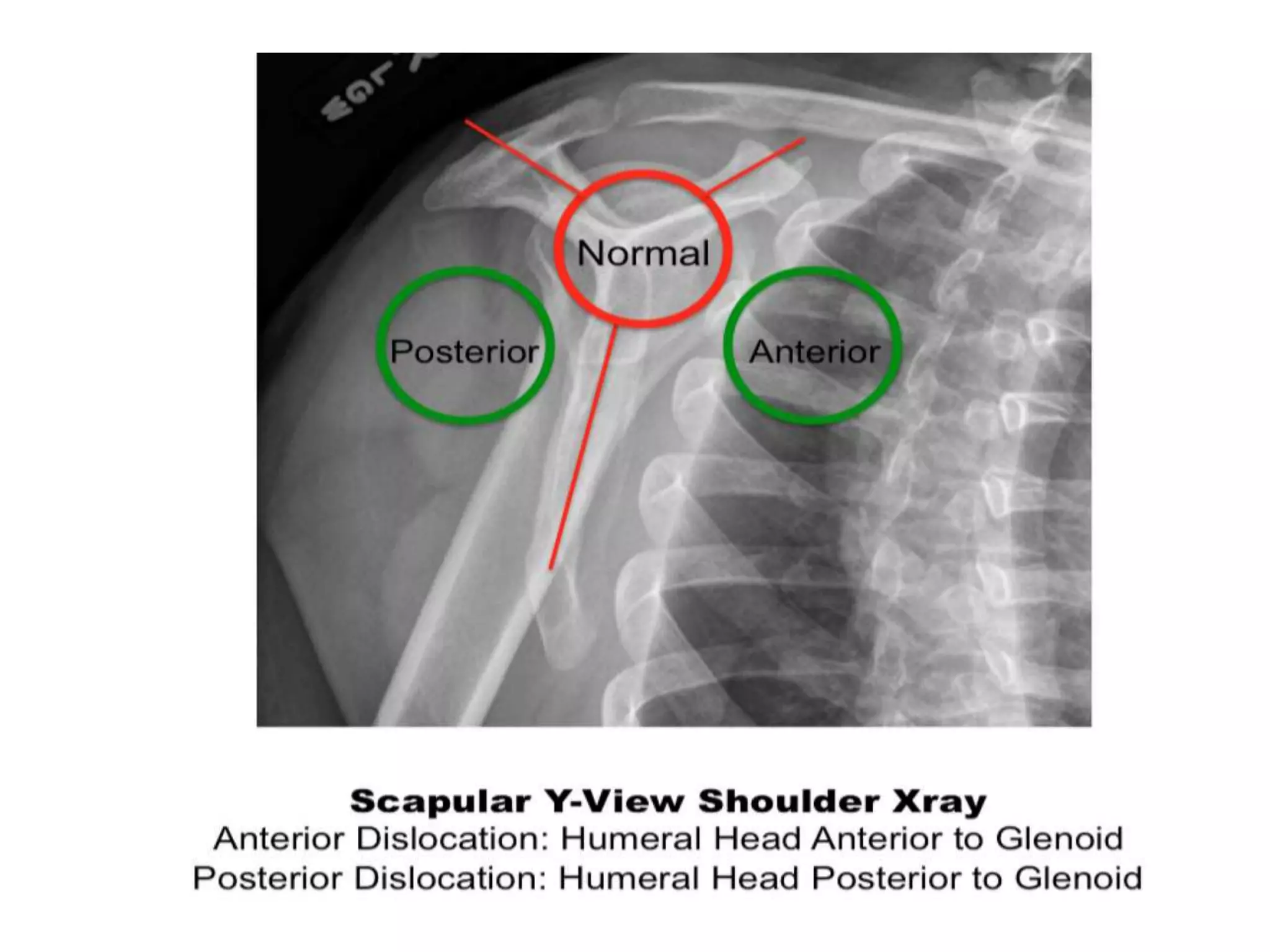
Transcapular Y view of GH jt
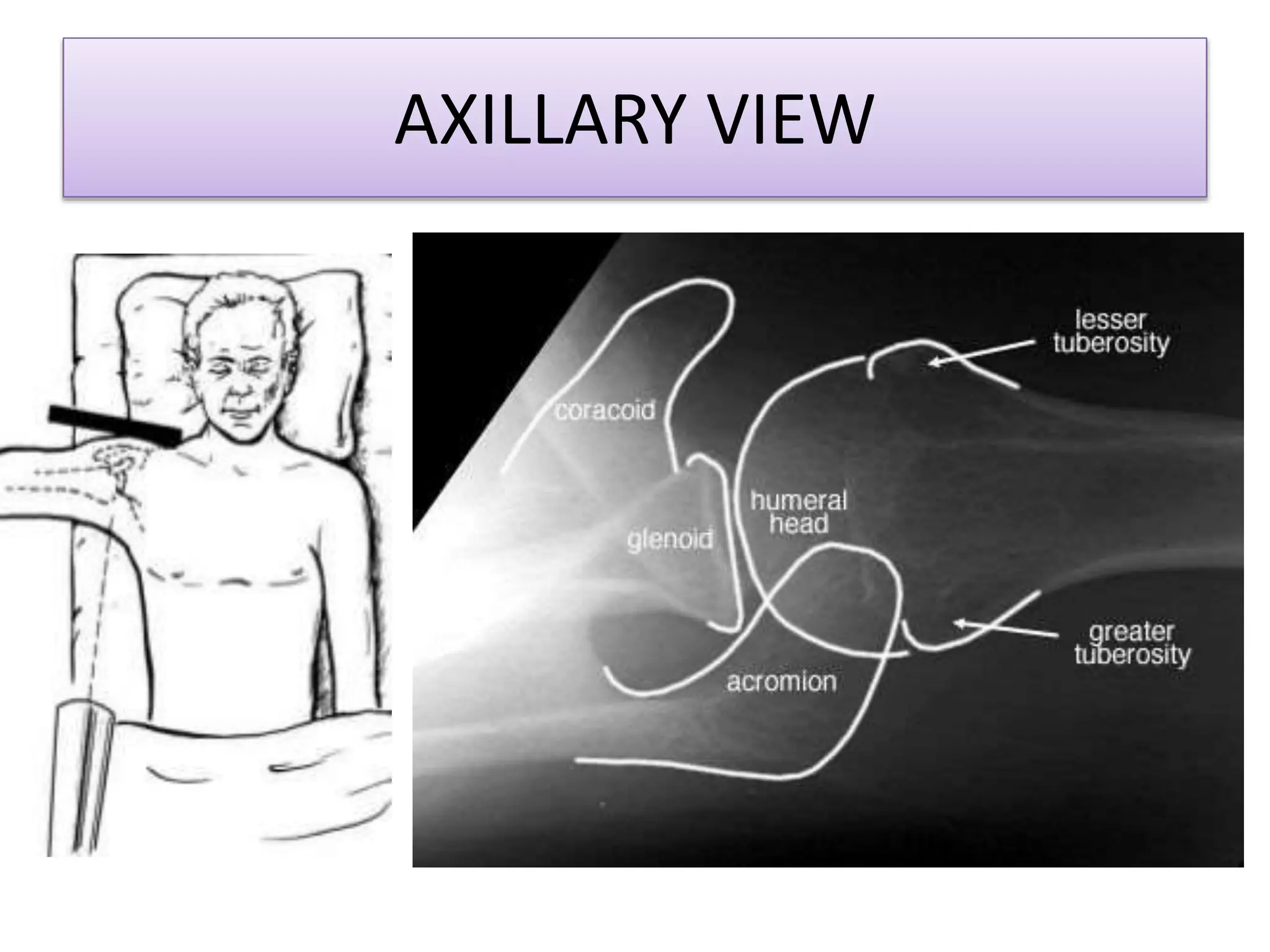
AXILLARY VIEW
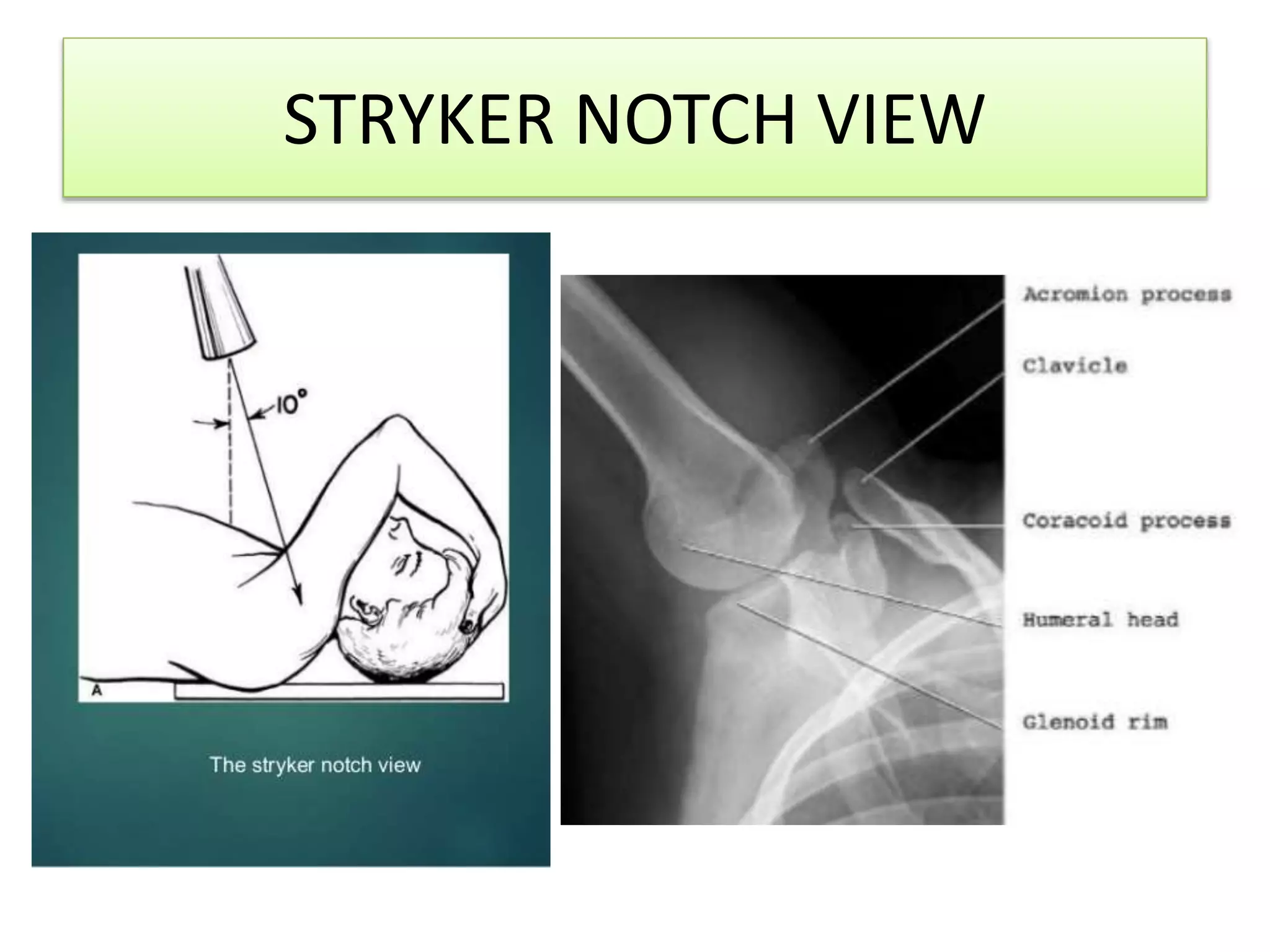
STRYKER NOTCH VIEW
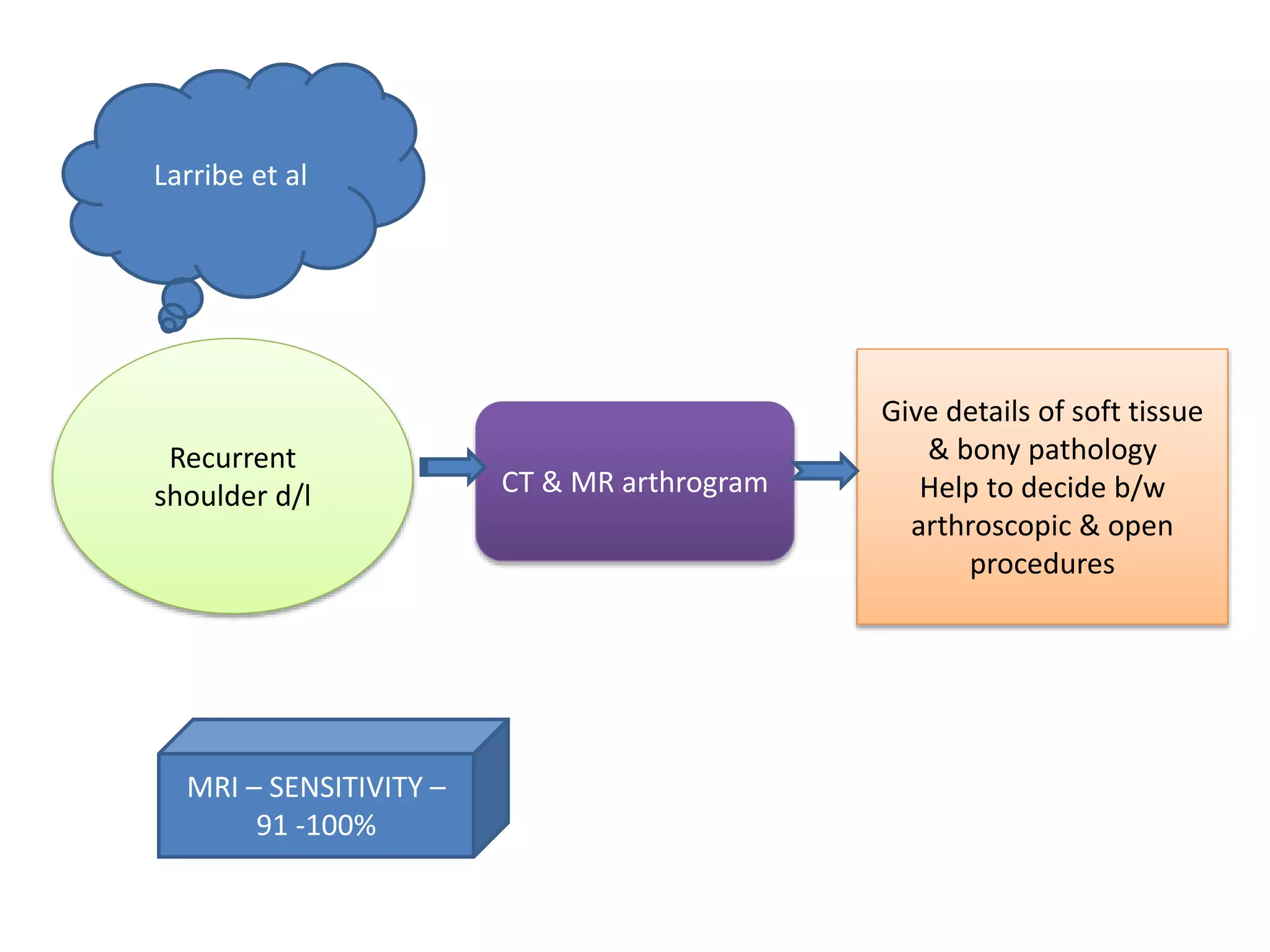
CT & MR arthrogram
Give details of soft tissue
& bony pathology
Help to decide b/w
arthroscopic & open
procedures
Recurrent
shoulder d/l
Larribe et al
MRI – SENSITIVITY –
91 -100%
Mx
• Non - operative – PHYSIOTHERAPY
• Operative Mx
- a} Anterior instability-
key factors- < 20yrs
- activity of the person
[sports person , active military
personal,climbers]
- pts expectations
Decision making in chronic SI
2 key question –
- what is the
problem ? – soft
tissue, bony or
both
-if bony – where
is the problem ?(
glenoid or
humerus or both
)
If in doubt abt the quality of soft tissue &
bony defect & based on intraoperative
assessement , a latarjet procedure described
by him in 1954 would more reliably stabilize
the jt esp. in contact sportsmen.
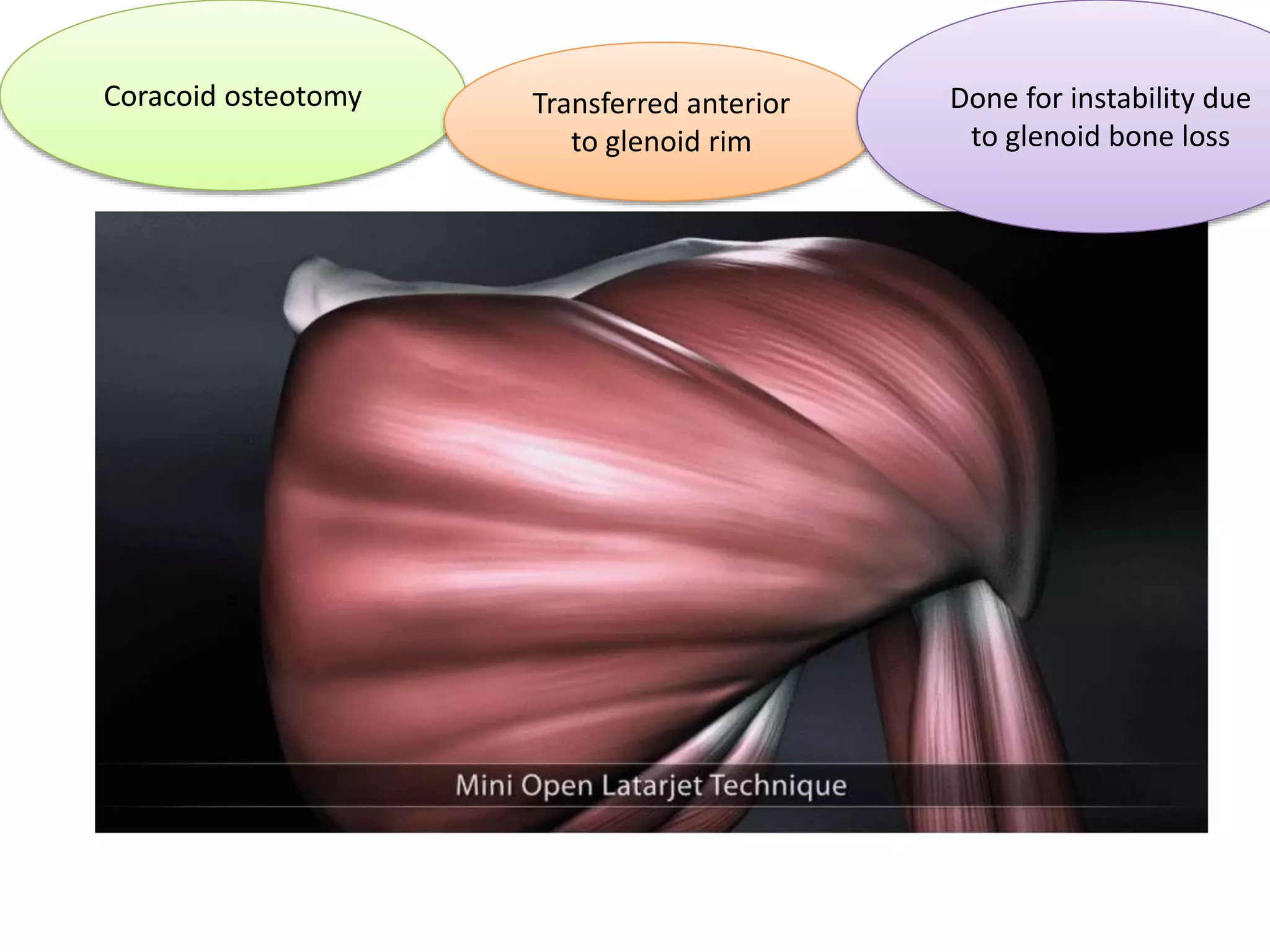
Coracoid osteotomy Transferred anterior
to glenoid rim
Done for instability due
to glenoid bone loss
• Latarjet - > 25% glenoid osseous defect
• Modified congruent arc latarjet procedure
developed by de Beer in atheletes with
recurrent anterior instability .
• Colegate et al found that complication rate –
7% & 89% pts return to sports activity in a
mean of 3.2 mts
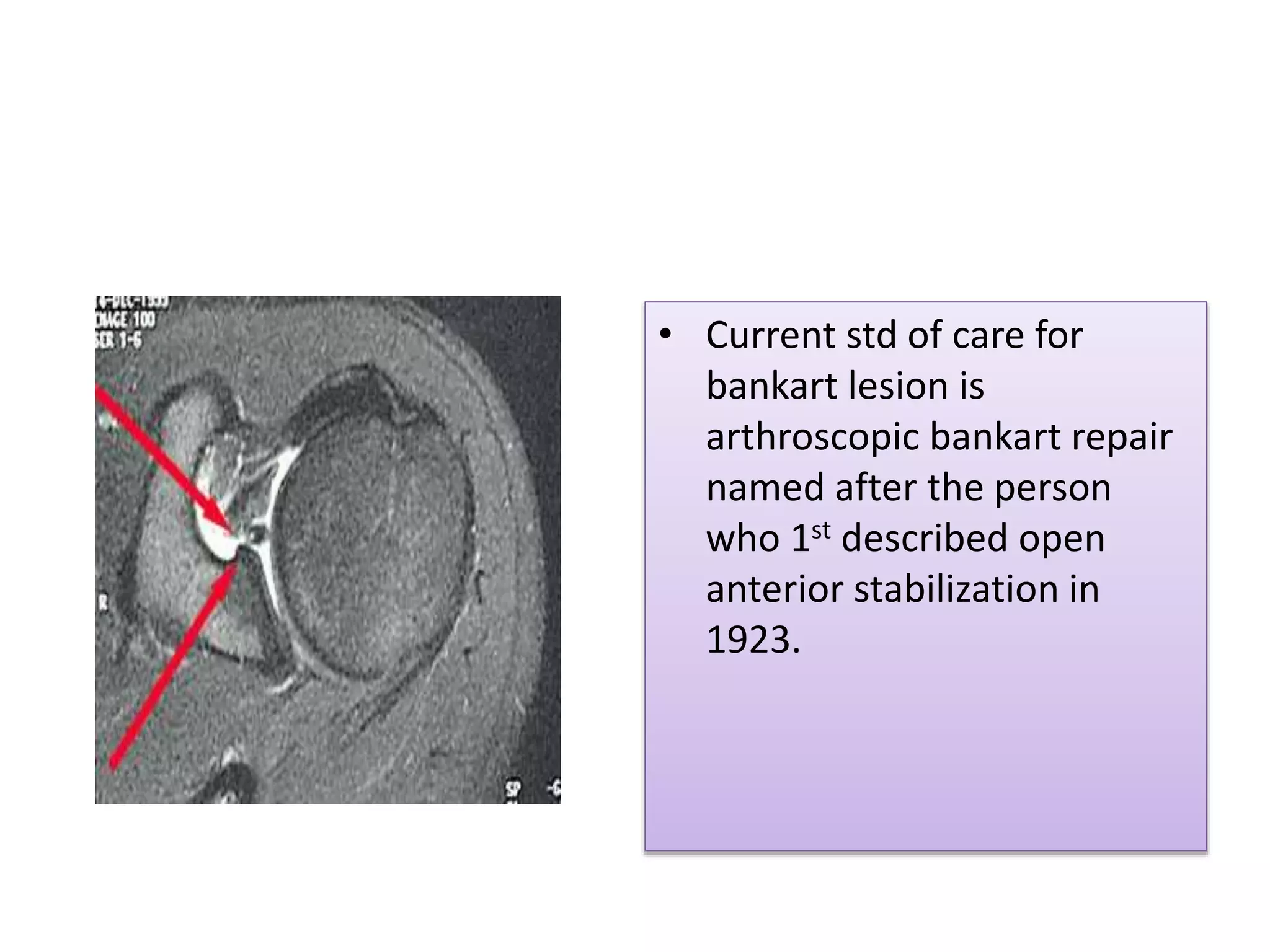
• Current std of care for
bankart lesion is
arthroscopic bankart repair
named after the person
who 1st described open
anterior stabilization in
1923.
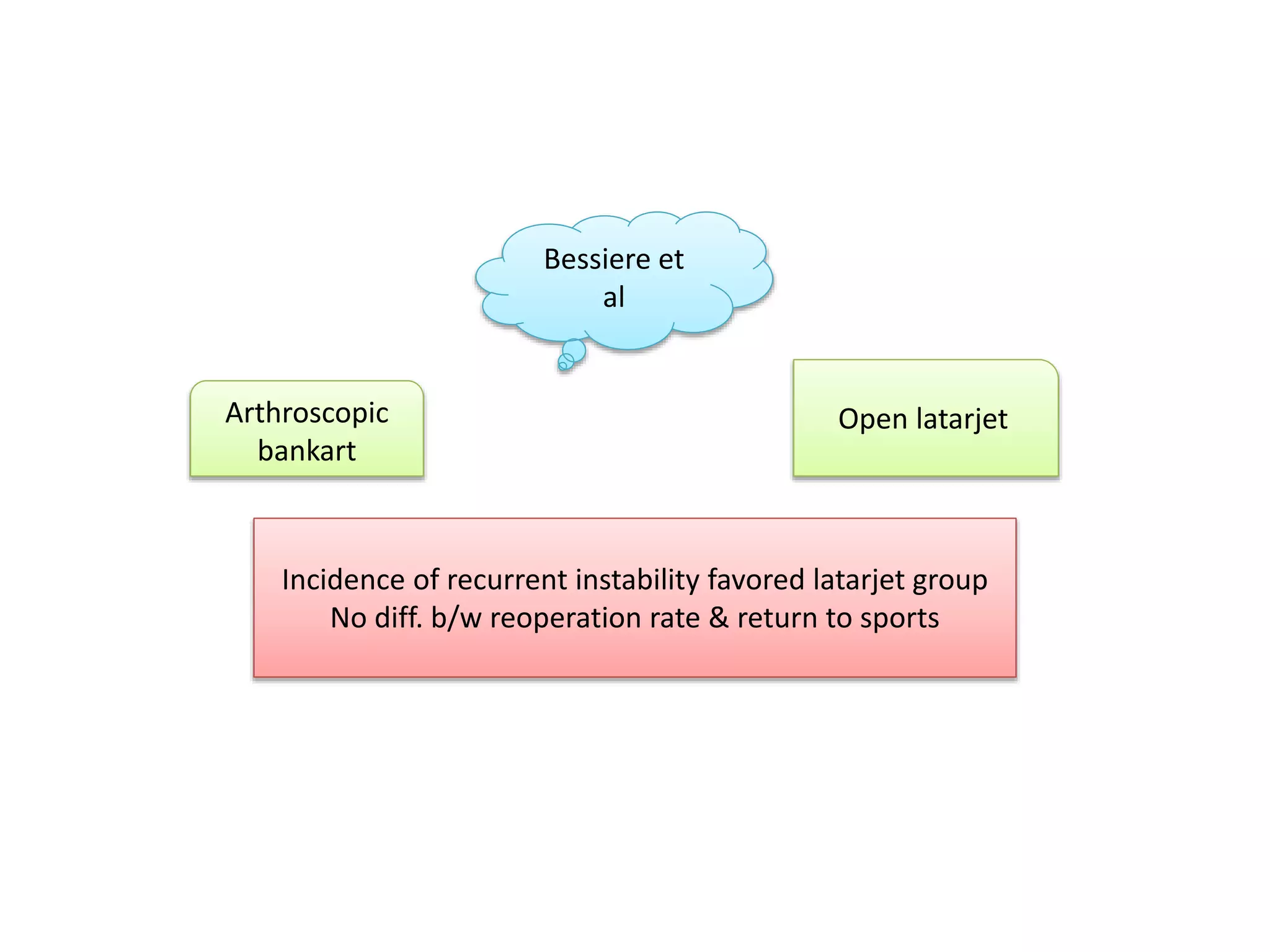
Bessiere et
al
Arthroscopic
bankart
Open latarjet
Incidence of recurrent instability favored latarjet group
No diff. b/w reoperation rate & return to sports
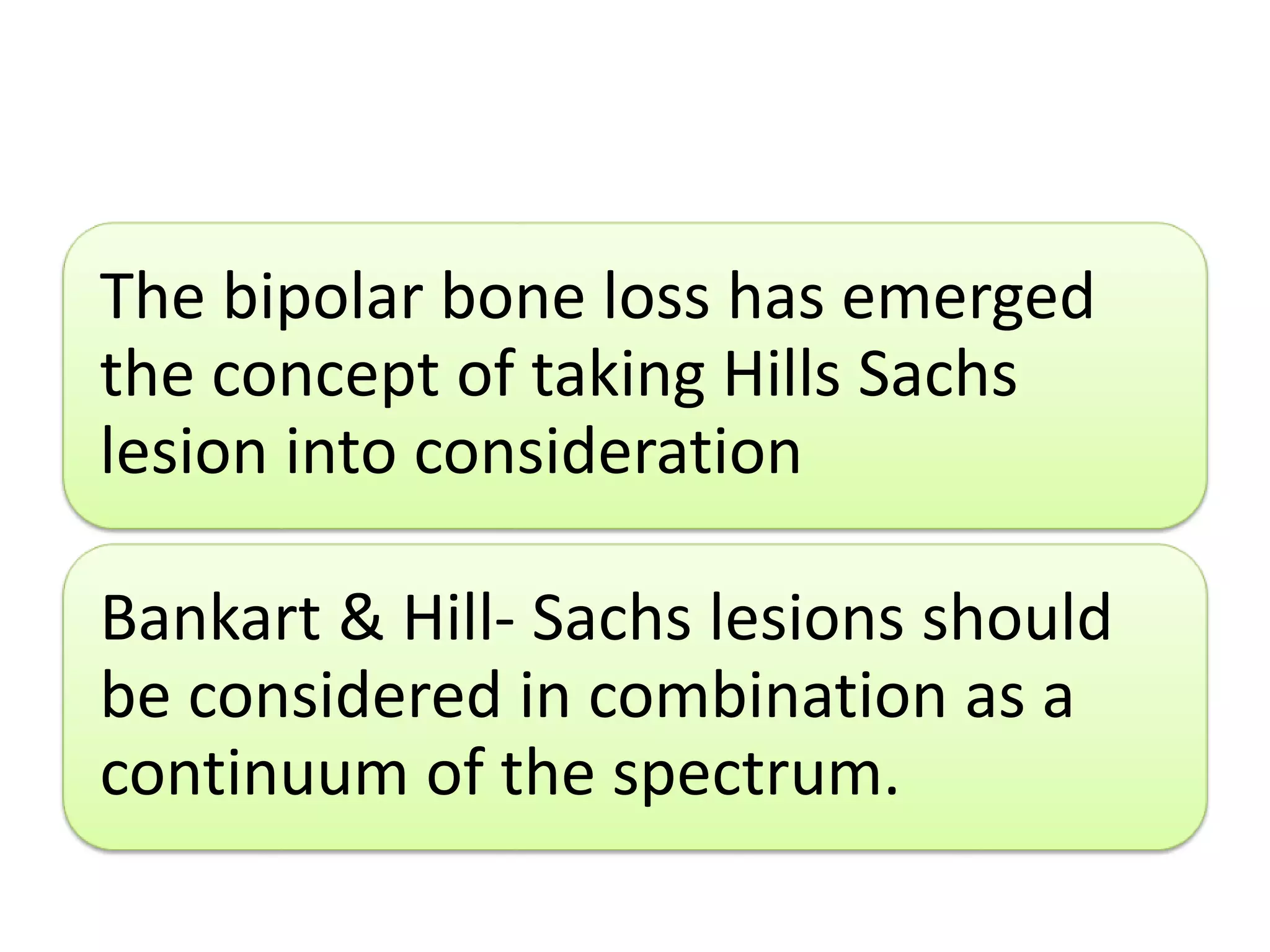
The bipolar bone loss has emerged
the concept of taking Hills Sachs
lesion into consideration
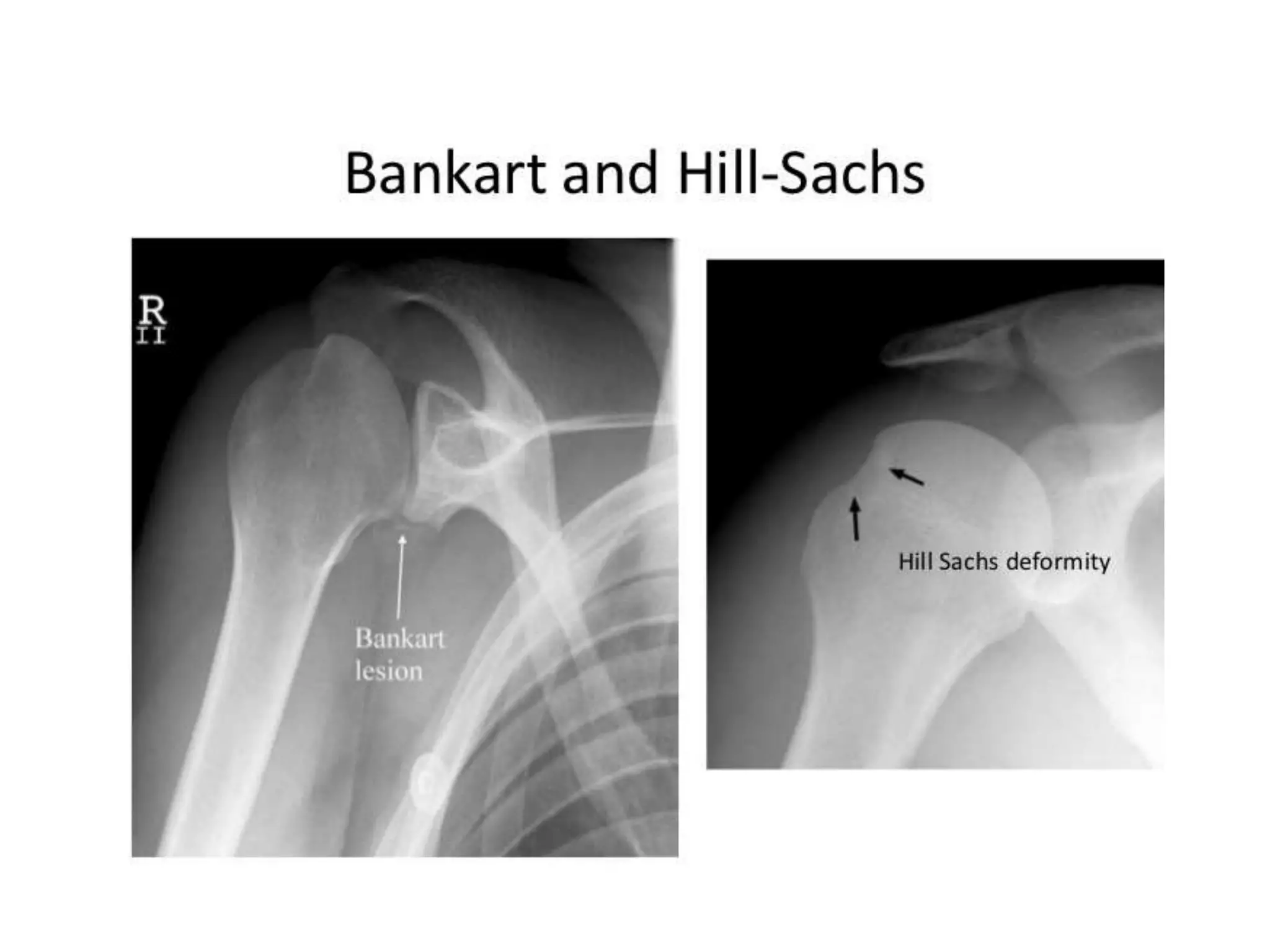
Bankart & Hill- Sachs lesions should
be considered in combination as a
continuum of the spectrum.
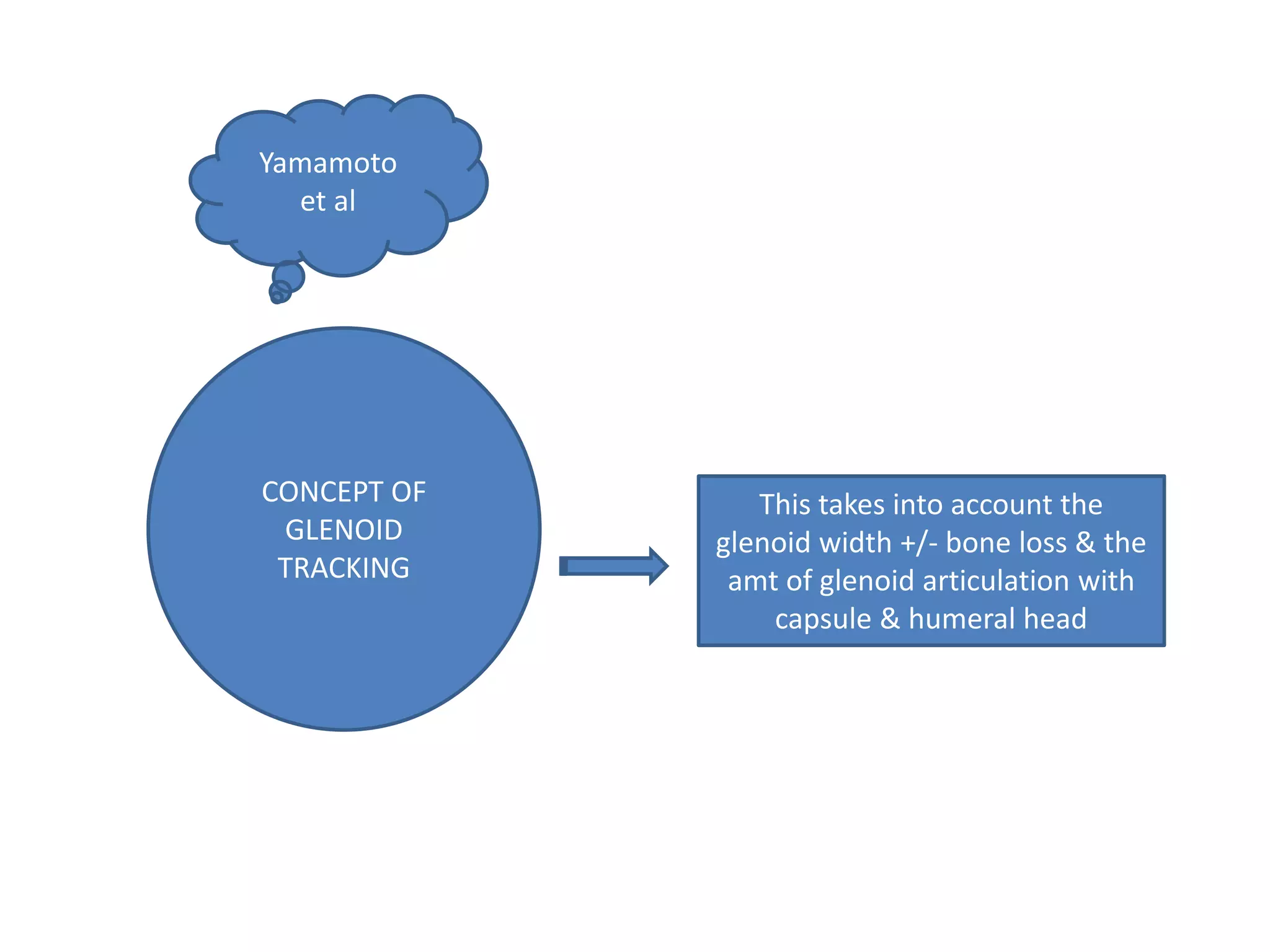
Yamamoto
et al
CONCEPT OF
GLENOID
TRACKING
This takes into account the
glenoid width +/- bone loss & the
amt of glenoid articulation with
capsule & humeral head
• In instability due to large Hill- Sachs lesion,
there is a role for arthroscopic reimplissage
procedure [ French to fill up]
• This involves using the capsule & infraspinatus
to fill up a large engaging Hill- Sachs defect
usually in combination with anterior bankart
repair.
• It makes the defect extrarticular so that it
does not engage against glenoid edge
• The Instability severity index score[ ISIS] < 6pts
meant an acceptably rate of 10% instability
recurrence & potentially good candidates for
bankart procedure.
• Phandnis et al study with 141 pts, found a 7-%
risk of failure of arthroscopic ant. Stabilization
if ISIS >4 vs 4% risk if score < 4
Multidirectional instability
Rx of choice is open
or arthroscopic
plication and capsular
shift if conservative
management fails.
- no diff. in open or arthroscopic
management -based on 24 studies
with a mean age of 24 yrs & mean FU
of 4 yrs in a 790pt with 861 shoulders
Longo et al - systematic
review
Posterior instability
Patients often do not present with typical history and
could describe the posterior joint pain and/or clicking.
They are also likely to be missed on scans unless
specifically looked for.
Principles of Mx & Sx stabilization are same as anterior
instability, i.e., if there is posterior soft tissue injury, then
capsular shift and posterior labral repair is indicated.
Antoniou and Harryman reported successful
achievement of stability for PI instability using their
techniques of arthroscopic posterior capsulolabral
repair and shift.
For bony injuries, McLaughlin procedure has been
described historically.
The posterior bone block could be considered in very
carefully selected cases
Rehabilitation
Rehabilitation aims are to return the
patient to the previous level of functional
status before injury.
Healing and recovery of sportspersons
may be much quicker due to better muscle
conditioning, motivation, facilities with
therapy input and compliance, as
compared to nonathletes.
Conventionally, a time-based approach has been used by
most surgeons in the postoperative rehabilitation phase.
Protect the repair with the arm in a sling, for 3 weeks avoid
rotations, especially external rotation and taking the arm
backwards. After 3 weeks, progressive mobilization is started
till 6 weeks when sling comes off and active mobilization
along with strengthening commences.
Summary
Shoulder instability
requires a
meticulous and
systematic
management plan.
All aspects of
instability should be
sought for and
thoroughly assessed.
Investigations (MRA,
CT scan) are adjuncts
to a comprehensive
history, examination,
and good diagnostic
arthroscopy
Thank u

Current concepts in the management of shoulder instability

  • 1.
    Current Concepts inthe Management of Shoulder Instability By Dr.PONNILAVAN ORTHO RESIDENT PIMS PONDICHERRY
  • 2.
  • 3.
    SI causes painand dysfunction in young active pts, more so in athletes. Optimal Mx of SI is challenging in young adult as well as the professional sportsperson. Increase in the no. of shoulder D/L being identified & managed in the last 2 to 3 decades.
  • 4.
  • 5.
    Stages of evolutionof pathological lesion in post traumatic AI • Habermeyer et al Staging :
  • 6.
  • 7.
  • 8.
  • 10.
  • 11.
  • 13.
    CT & MRarthrogram Give details of soft tissue & bony pathology Help to decide b/w arthroscopic & open procedures Recurrent shoulder d/l Larribe et al MRI – SENSITIVITY – 91 -100%
  • 14.
    Mx • Non -operative – PHYSIOTHERAPY • Operative Mx - a} Anterior instability- key factors- < 20yrs - activity of the person [sports person , active military personal,climbers] - pts expectations
  • 15.
    Decision making inchronic SI 2 key question – - what is the problem ? – soft tissue, bony or both -if bony – where is the problem ?( glenoid or humerus or both ) If in doubt abt the quality of soft tissue & bony defect & based on intraoperative assessement , a latarjet procedure described by him in 1954 would more reliably stabilize the jt esp. in contact sportsmen.
  • 16.
    Coracoid osteotomy Transferredanterior to glenoid rim Done for instability due to glenoid bone loss
  • 17.
    • Latarjet -> 25% glenoid osseous defect • Modified congruent arc latarjet procedure developed by de Beer in atheletes with recurrent anterior instability . • Colegate et al found that complication rate – 7% & 89% pts return to sports activity in a mean of 3.2 mts
  • 18.
    • Current stdof care for bankart lesion is arthroscopic bankart repair named after the person who 1st described open anterior stabilization in 1923.
  • 19.
    Bessiere et al Arthroscopic bankart Open latarjet Incidenceof recurrent instability favored latarjet group No diff. b/w reoperation rate & return to sports
  • 20.
    The bipolar boneloss has emerged the concept of taking Hills Sachs lesion into consideration Bankart & Hill- Sachs lesions should be considered in combination as a continuum of the spectrum.
  • 22.
    Yamamoto et al CONCEPT OF GLENOID TRACKING Thistakes into account the glenoid width +/- bone loss & the amt of glenoid articulation with capsule & humeral head
  • 23.
    • In instabilitydue to large Hill- Sachs lesion, there is a role for arthroscopic reimplissage procedure [ French to fill up] • This involves using the capsule & infraspinatus to fill up a large engaging Hill- Sachs defect usually in combination with anterior bankart repair. • It makes the defect extrarticular so that it does not engage against glenoid edge
  • 24.
    • The Instabilityseverity index score[ ISIS] < 6pts meant an acceptably rate of 10% instability recurrence & potentially good candidates for bankart procedure. • Phandnis et al study with 141 pts, found a 7-% risk of failure of arthroscopic ant. Stabilization if ISIS >4 vs 4% risk if score < 4
  • 25.
    Multidirectional instability Rx ofchoice is open or arthroscopic plication and capsular shift if conservative management fails.
  • 26.
    - no diff.in open or arthroscopic management -based on 24 studies with a mean age of 24 yrs & mean FU of 4 yrs in a 790pt with 861 shoulders Longo et al - systematic review
  • 27.
    Posterior instability Patients oftendo not present with typical history and could describe the posterior joint pain and/or clicking. They are also likely to be missed on scans unless specifically looked for. Principles of Mx & Sx stabilization are same as anterior instability, i.e., if there is posterior soft tissue injury, then capsular shift and posterior labral repair is indicated.
  • 28.
    Antoniou and Harrymanreported successful achievement of stability for PI instability using their techniques of arthroscopic posterior capsulolabral repair and shift. For bony injuries, McLaughlin procedure has been described historically. The posterior bone block could be considered in very carefully selected cases
  • 29.
    Rehabilitation Rehabilitation aims areto return the patient to the previous level of functional status before injury. Healing and recovery of sportspersons may be much quicker due to better muscle conditioning, motivation, facilities with therapy input and compliance, as compared to nonathletes.
  • 30.
    Conventionally, a time-basedapproach has been used by most surgeons in the postoperative rehabilitation phase. Protect the repair with the arm in a sling, for 3 weeks avoid rotations, especially external rotation and taking the arm backwards. After 3 weeks, progressive mobilization is started till 6 weeks when sling comes off and active mobilization along with strengthening commences.
  • 31.
    Summary Shoulder instability requires a meticulousand systematic management plan. All aspects of instability should be sought for and thoroughly assessed. Investigations (MRA, CT scan) are adjuncts to a comprehensive history, examination, and good diagnostic arthroscopy
  • 32.

Editor's Notes

  • #3 Movt of rotator cuff m/s contribute negative pressure
  • #5  -92%. - trauma, uncontrolled epilepsy and symptomatic hyperlaxity
  • #6 - staged evolution of intraarticular findings in patients with posttraumatic SI progressing from isolated lesion to a quadruple lesion
  • #7 replaces TUBS & AMBRI matsen classification (traumatic, unilateral, bankart, and surgery (atraumatic, multi-directional, bilateral, rehabilitation, and inferior capsular shift is done if sx is needed) main stay of muscle patterning instability remains physiotherapy
  • #9 Allows assessment of humeral head location in relation to glenoid cavity
  • #10 Lines through acromion, corocoid process & scapular body intersect at the center of glenoid Humeral head is centered on tis intersection
  • #11 Axillary view locates humeral head relative to glenoid cavity
  • #12 Hill-Sachs lesion
  • #13 Anteroinferior glenoid, bony bankart, proximal humerus fx
  • #14 L et al suggested advanced imaging suct as ct & magnetic resonance arthrogram for recurrent shoulder d/l
  • #15 FOR STANMORE TRIANGLE POLAR TYPE 3 INSTABILITY FOR ALL 1ST TIME DISLOCATORS