

POSTERIOR INSTABILITY 
W.Jaap Willems, 
Lairesse Kliniek 
Amsterdam, The Netherlands
Disclosures 
Consultant - Smith and Nephew 
- Tornier 
Reearch grants - Tornier
Classification 
• Complete traumatic dislocation 
- locked 
- recurrent 
• Traumatic subluxation: (involuntary 
instability) 
• Voluntary instability 
• Voluntary turned into involuntary instability
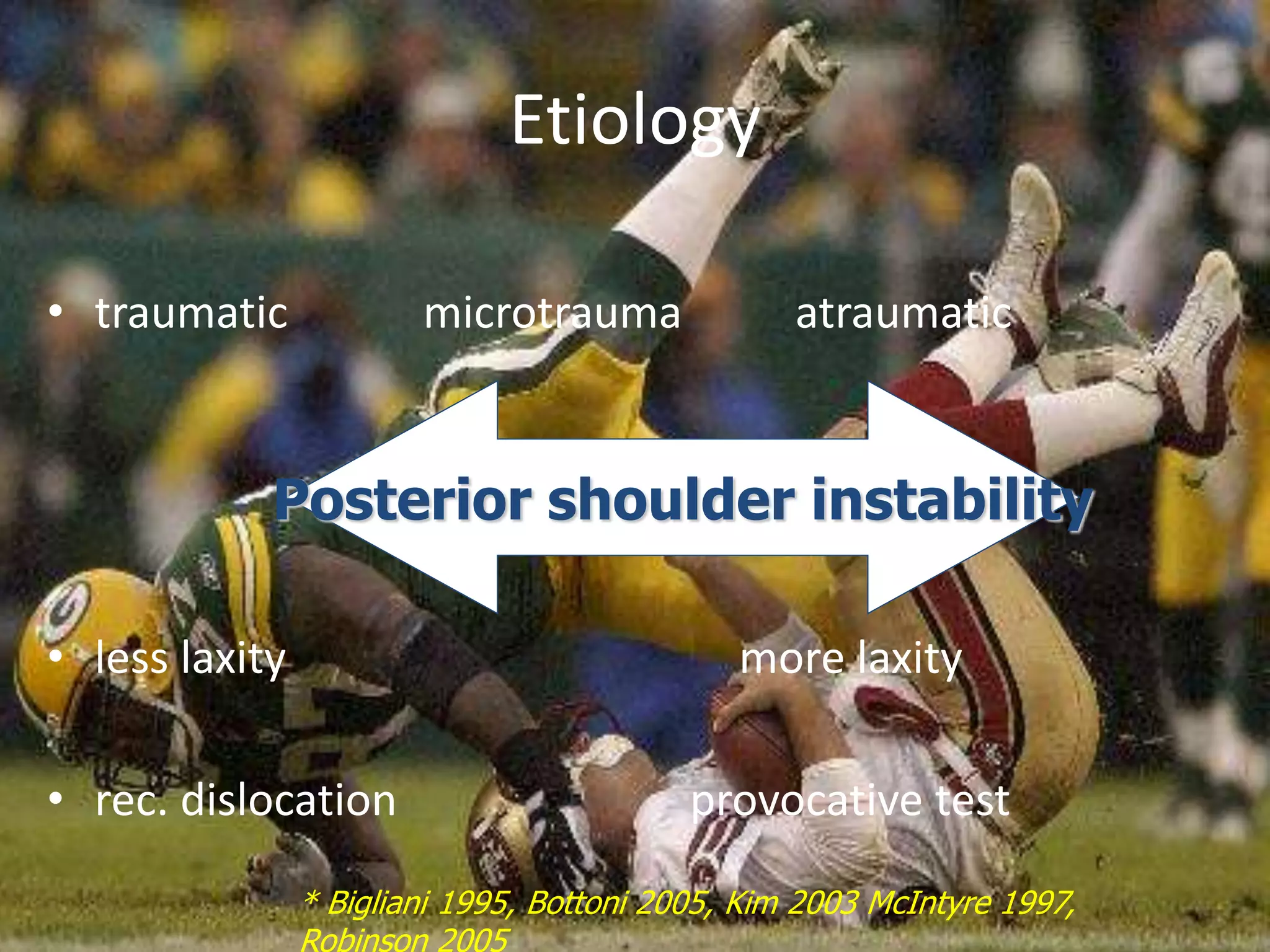
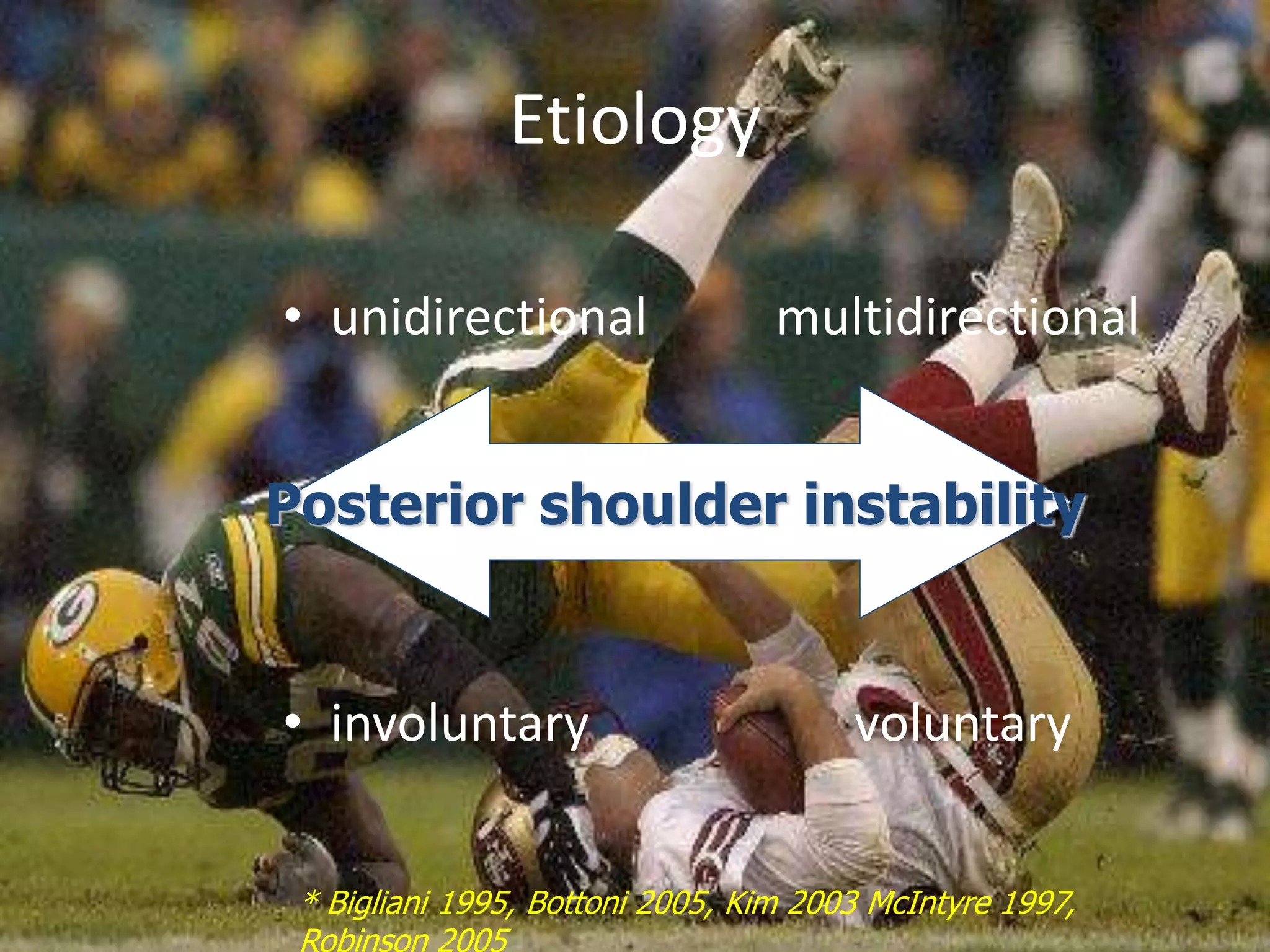
Etiology 
• traumatic microtrauma atraumatic 
Posterior shoulder instability 
• less laxity more laxity 
• rec. dislocation provocative test 
* Bigliani 1995, Bottoni 2005, Kim 2003 McIntyre 1997, 
Robinson 2005
Etiology 
• unidirectional multidirectional 
Posterior shoulder instability 
• involuntary voluntary 
* Bigliani 1995, Bottoni 2005, Kim 2003 McIntyre 1997, 
Robinson 2005
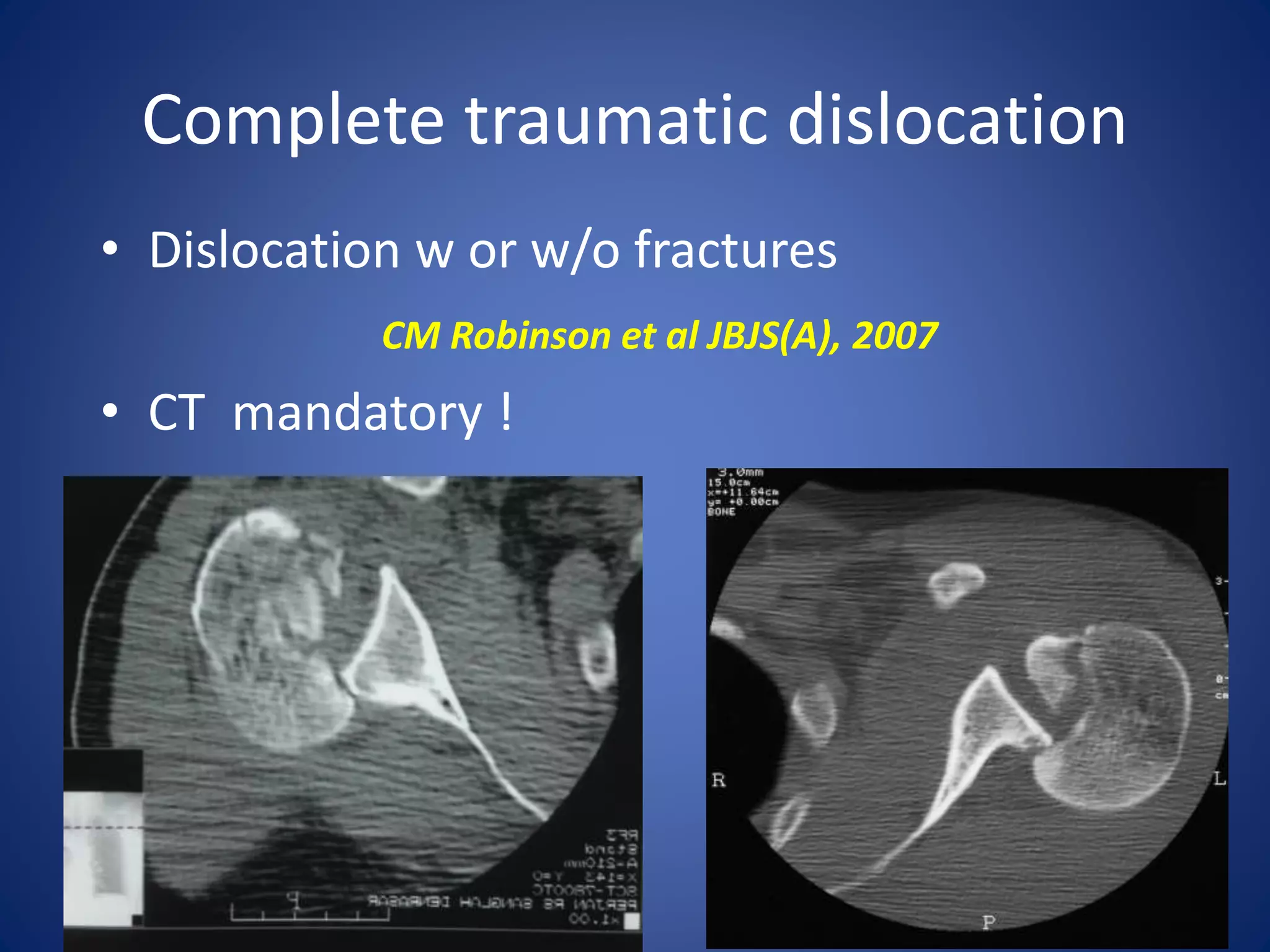
Complete traumatic dislocation 
• Dislocation w or w/o fractures 
CM Robinson et al JBJS(A), 2007 
• CT mandatory !
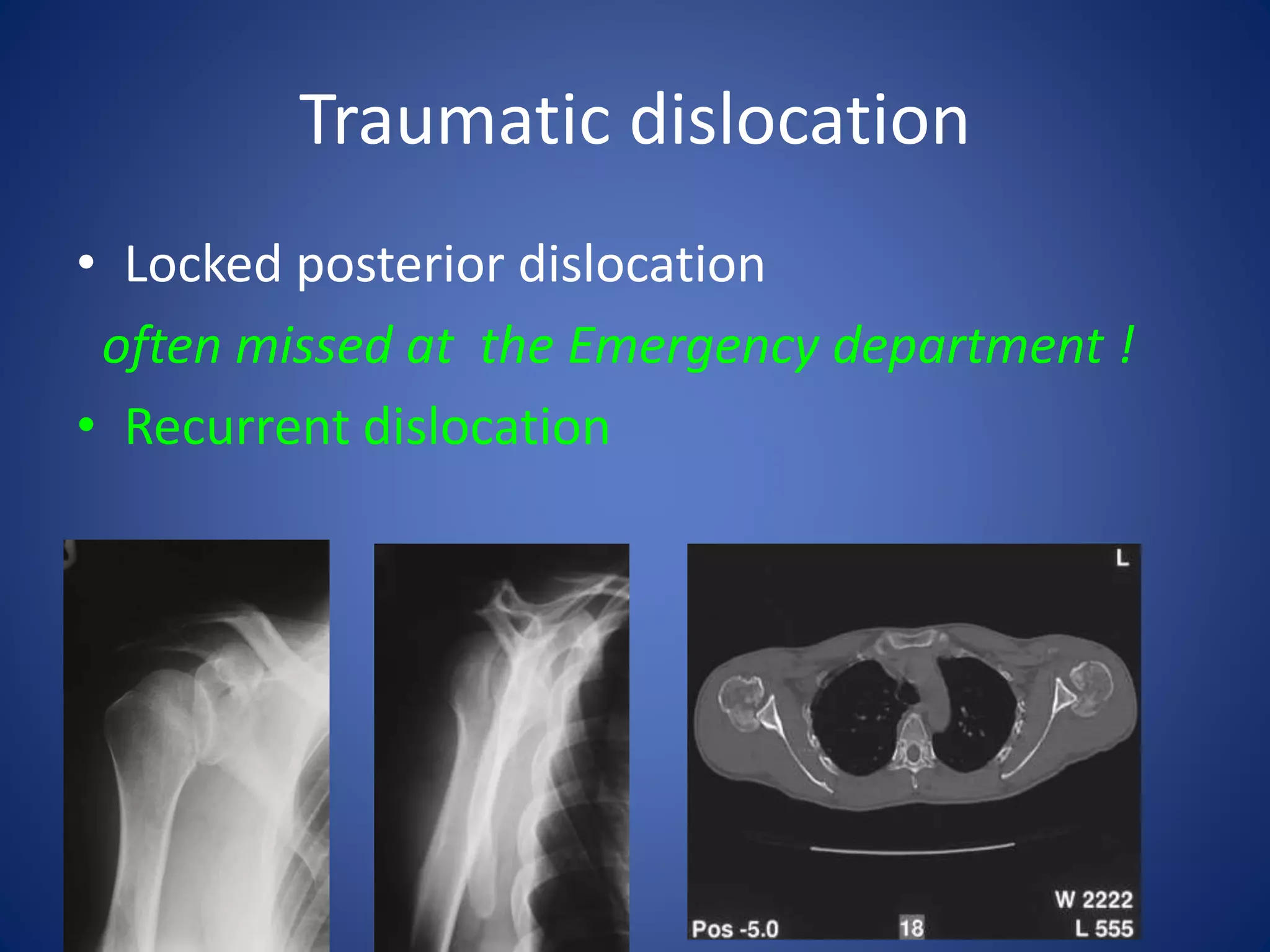
Traumatic dislocation 
• Locked posterior dislocation 
often missed at the Emergency department ! 
• Recurrent dislocation
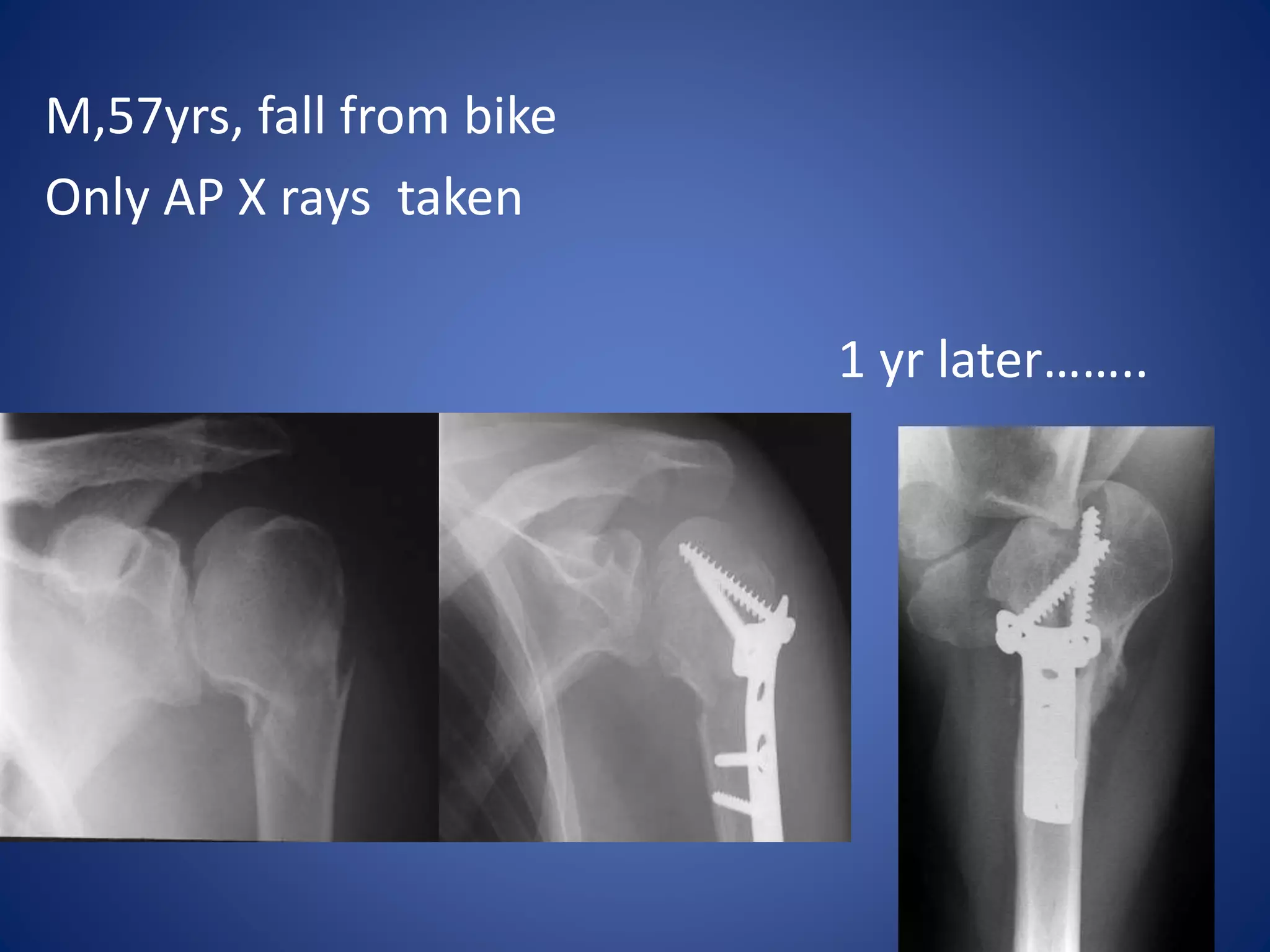
M,57yrs, fall from bike 
Only AP X rays taken 
1 yr later……..
Treatment locked dislocation 
• Acute without fracture: closed reduction, 
aneasthesia or plexus block 
• Chronic: - open reduction 
- allograft 
- Mclaughlin (minor tuberosity transfer) 
- HSA
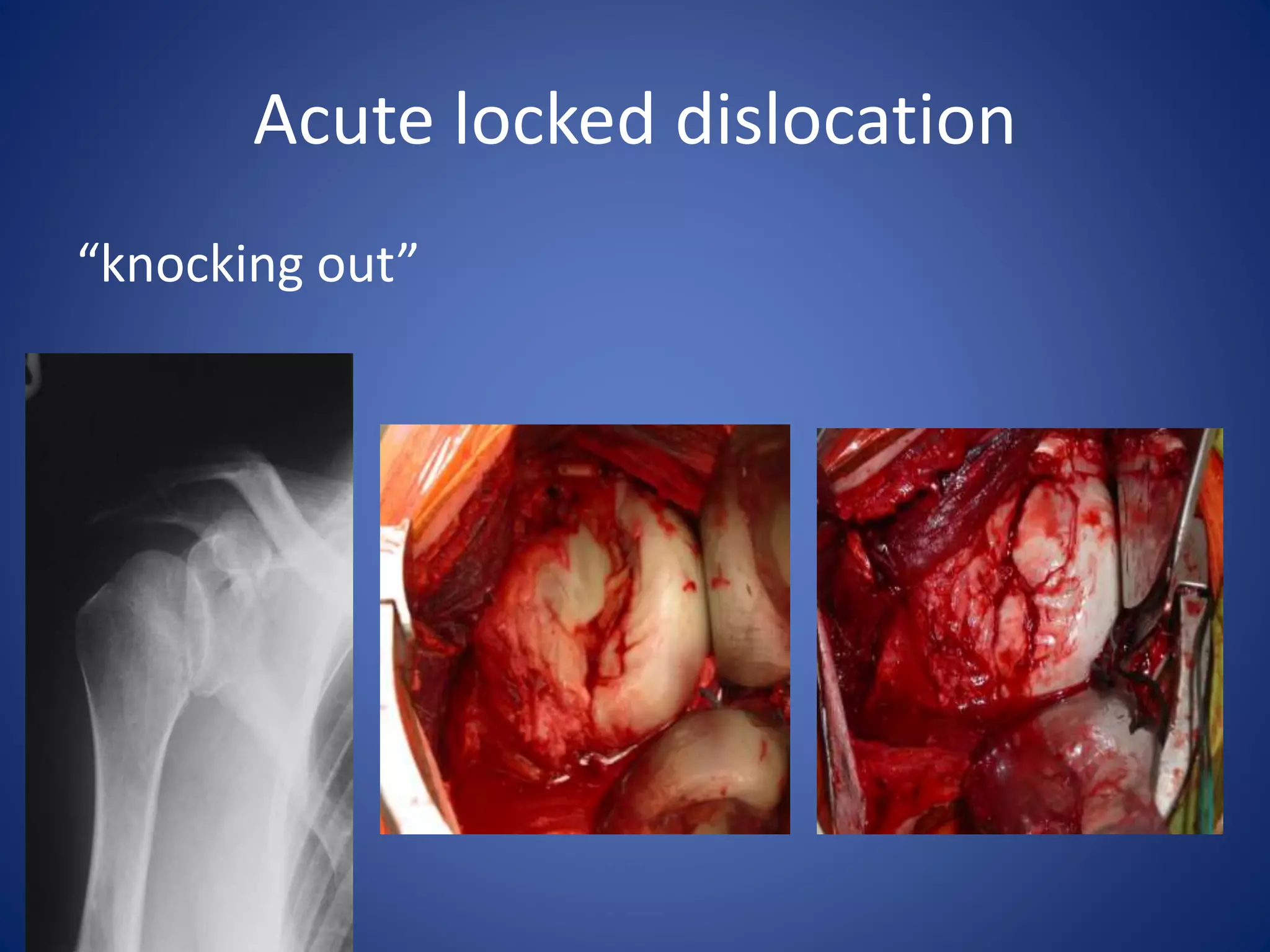
Acute locked dislocation 
“knocking out”
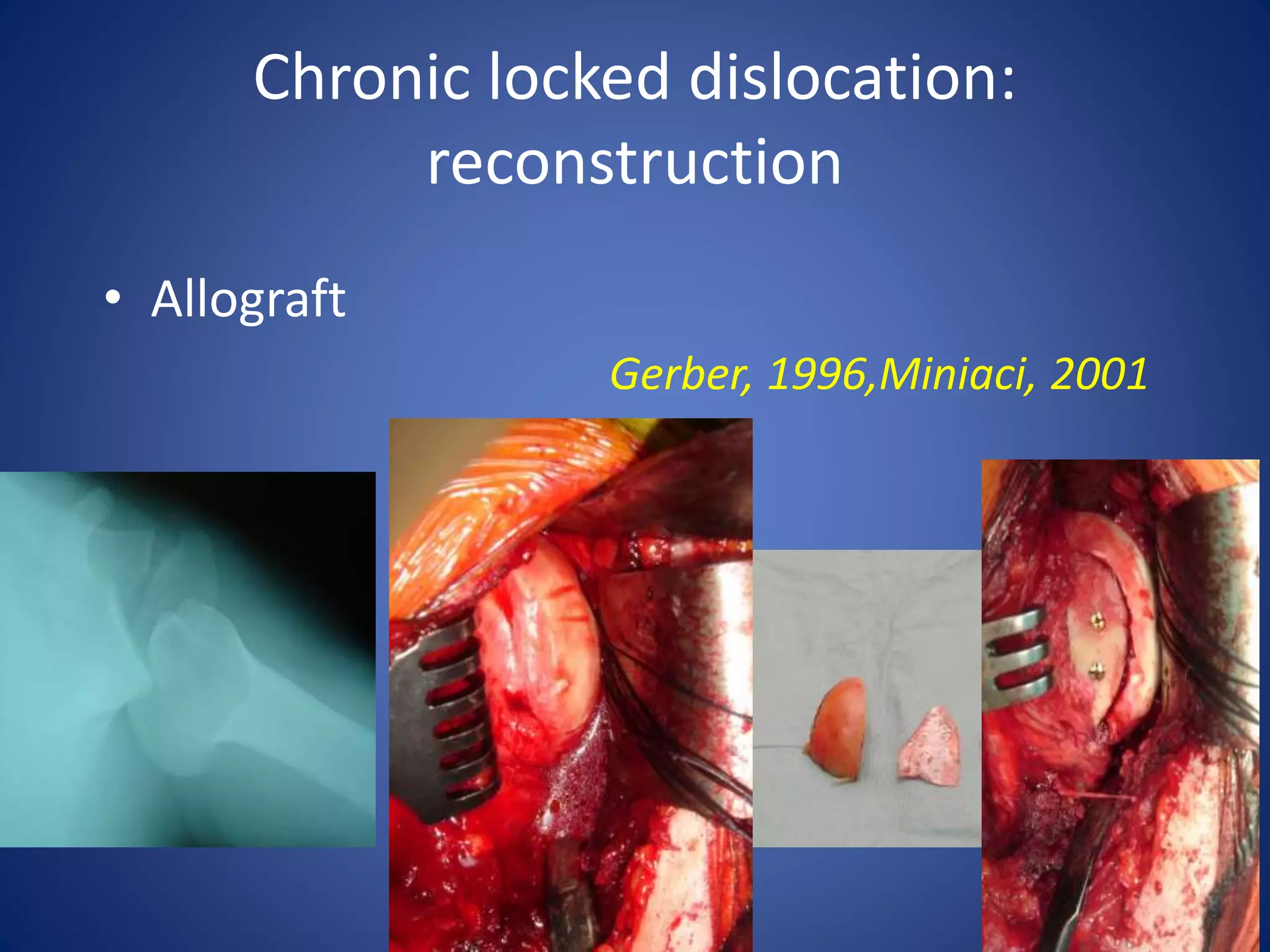
Chronic locked dislocation: 
reconstruction 
• Allograft 
Gerber, 1996,Miniaci, 2001
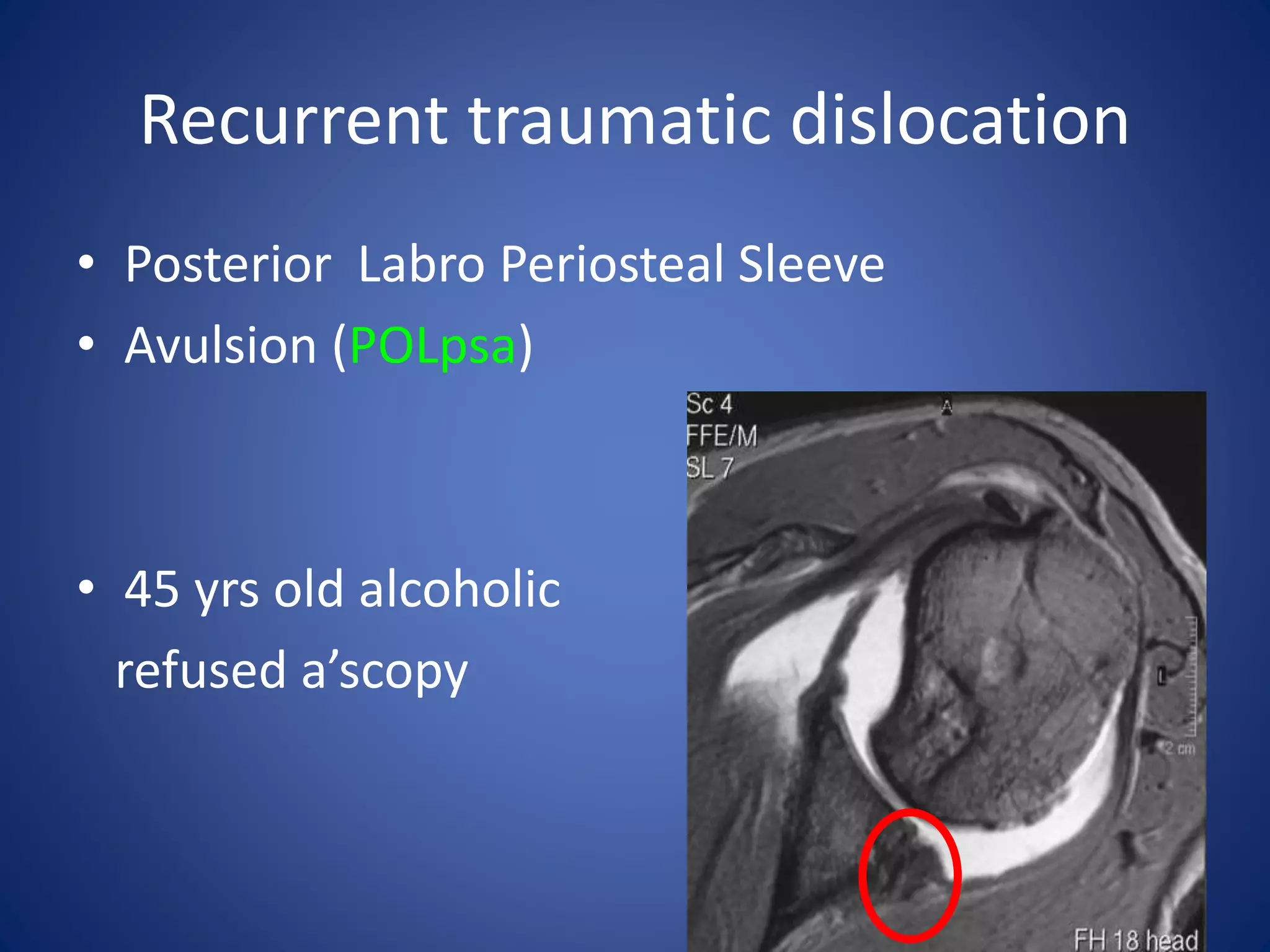
Recurrent traumatic dislocation 
• Posterior Labro Periosteal Sleeve 
• Avulsion (POLpsa) 
• 45 yrs old alcoholic 
refused a’scopy
Recurrent traumatic subluxation 
• Etiology: acute trauma 
or 
recurrent microtrauma 
• Symptoms : - posterior shoulder pain 
- instability symptoms
Diagnostic tests 
• Jerk test 
• Posterior load and shift 
• Sulcus sign 
• Posterior apprehension test 
• Hyperlaxity tests
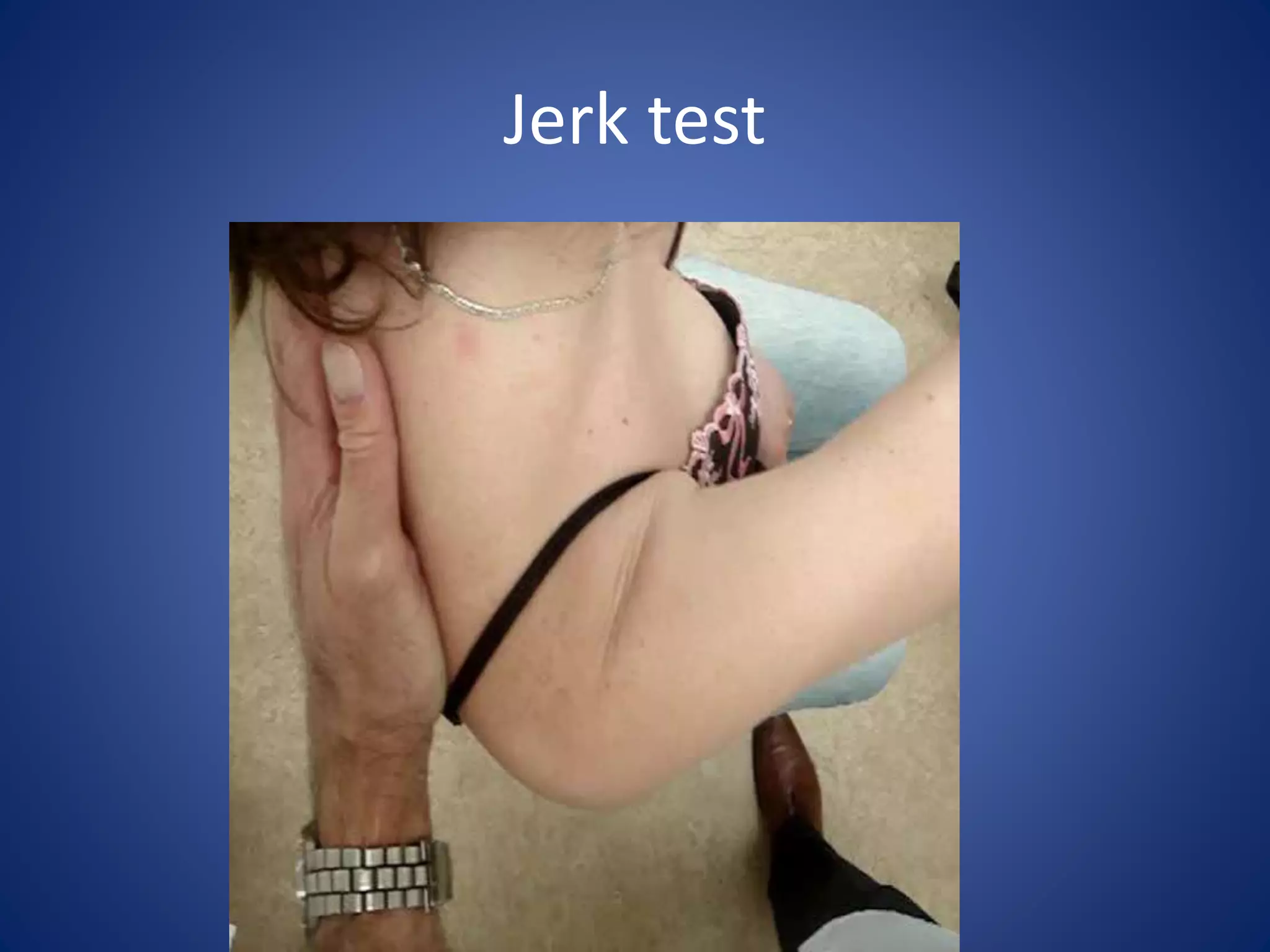
Jerk test 
• Dynamic test, simulates posterior subluxation 
and reproduces symptoms 
• Axial posterior load onto a arm flexed at 90°, 
adducted and internally rotated 
• Predictive measure for non-operative 
treatment 
Kim, 2001
Jerk test
Pathophysiology 
• Bony anatomic deformities 
• Excessive capsular laxity 
• Labral lesions
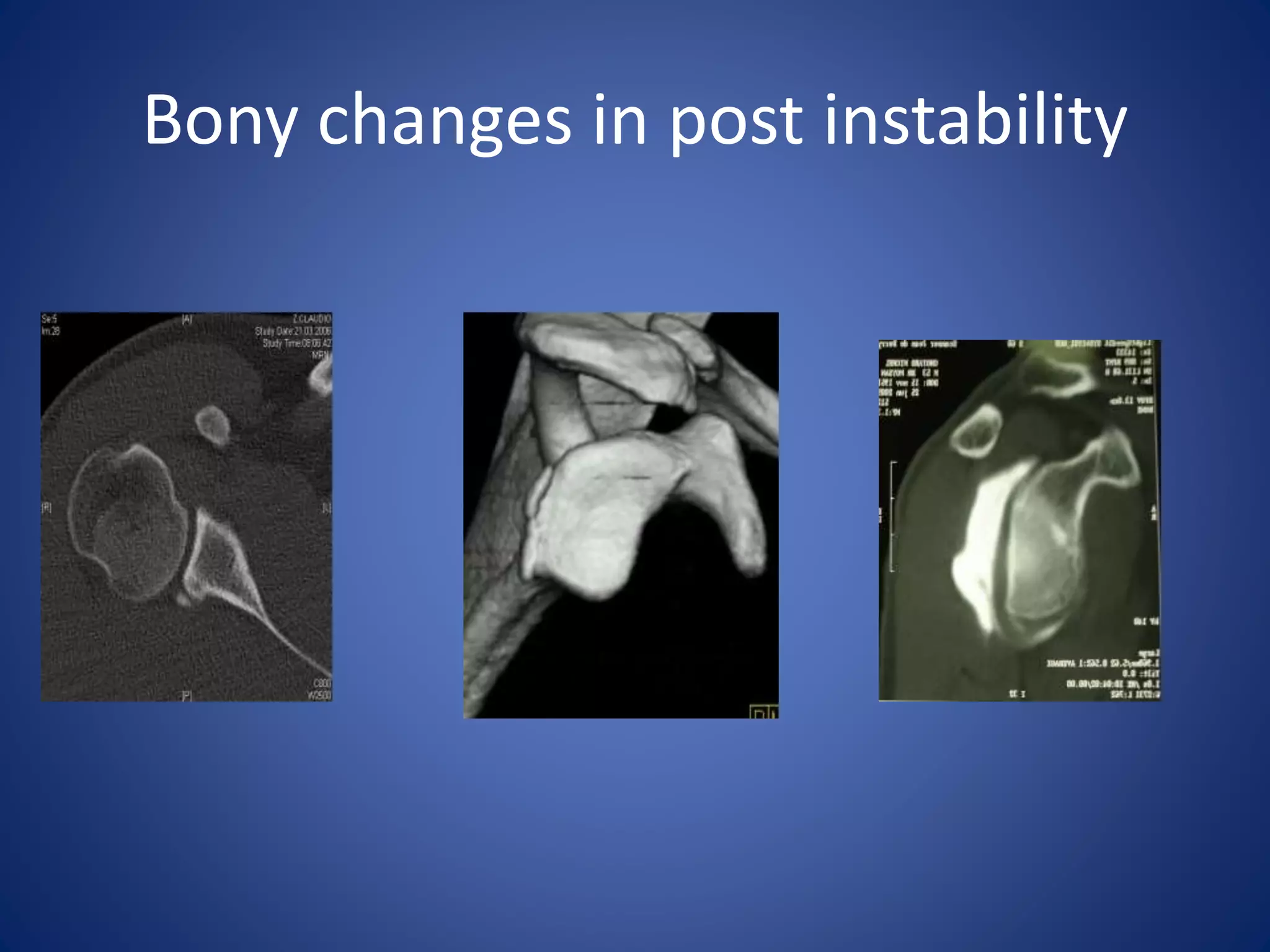
Bony changes in post instability
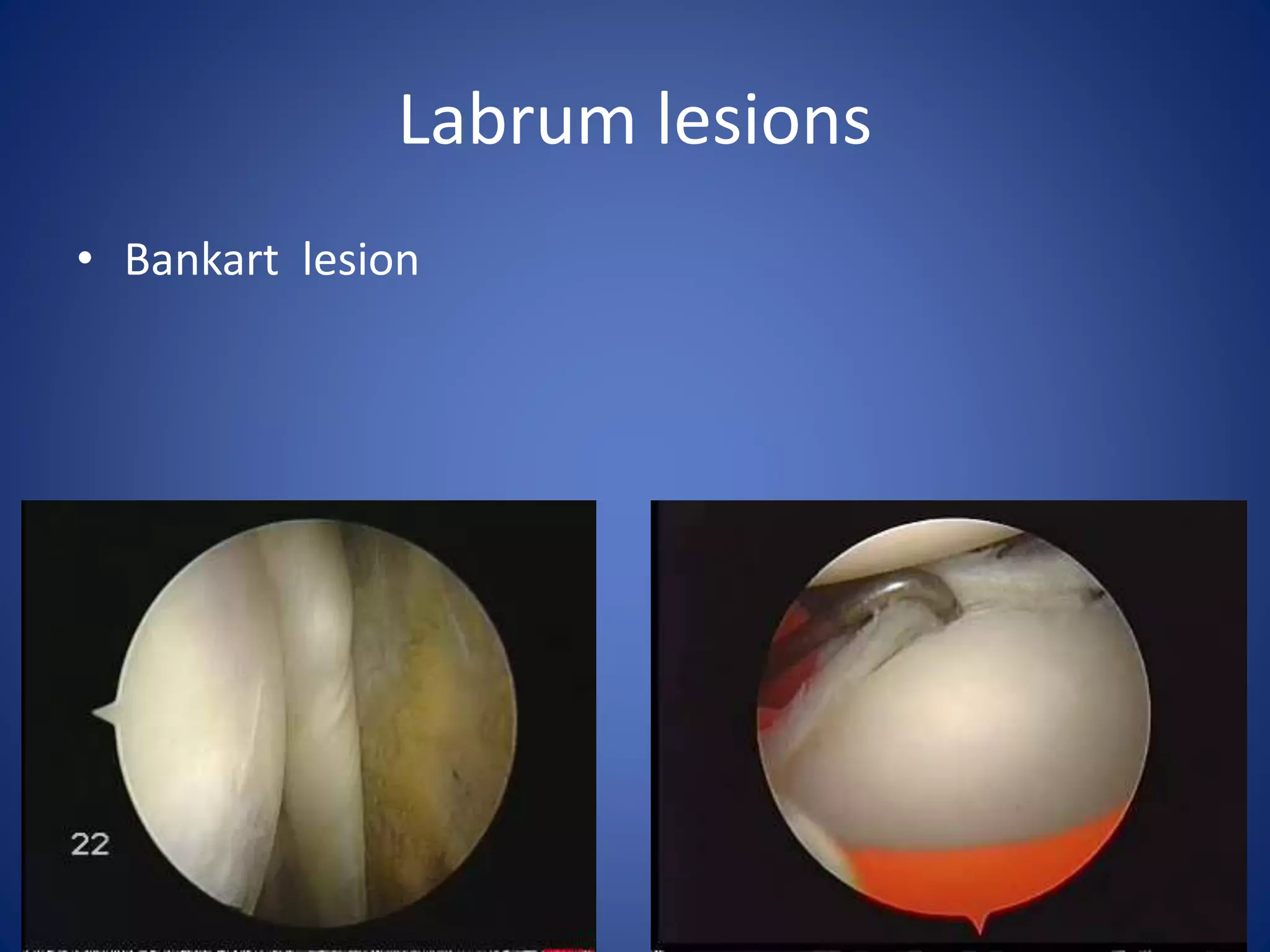
Labrum lesions 
• Bankart lesion
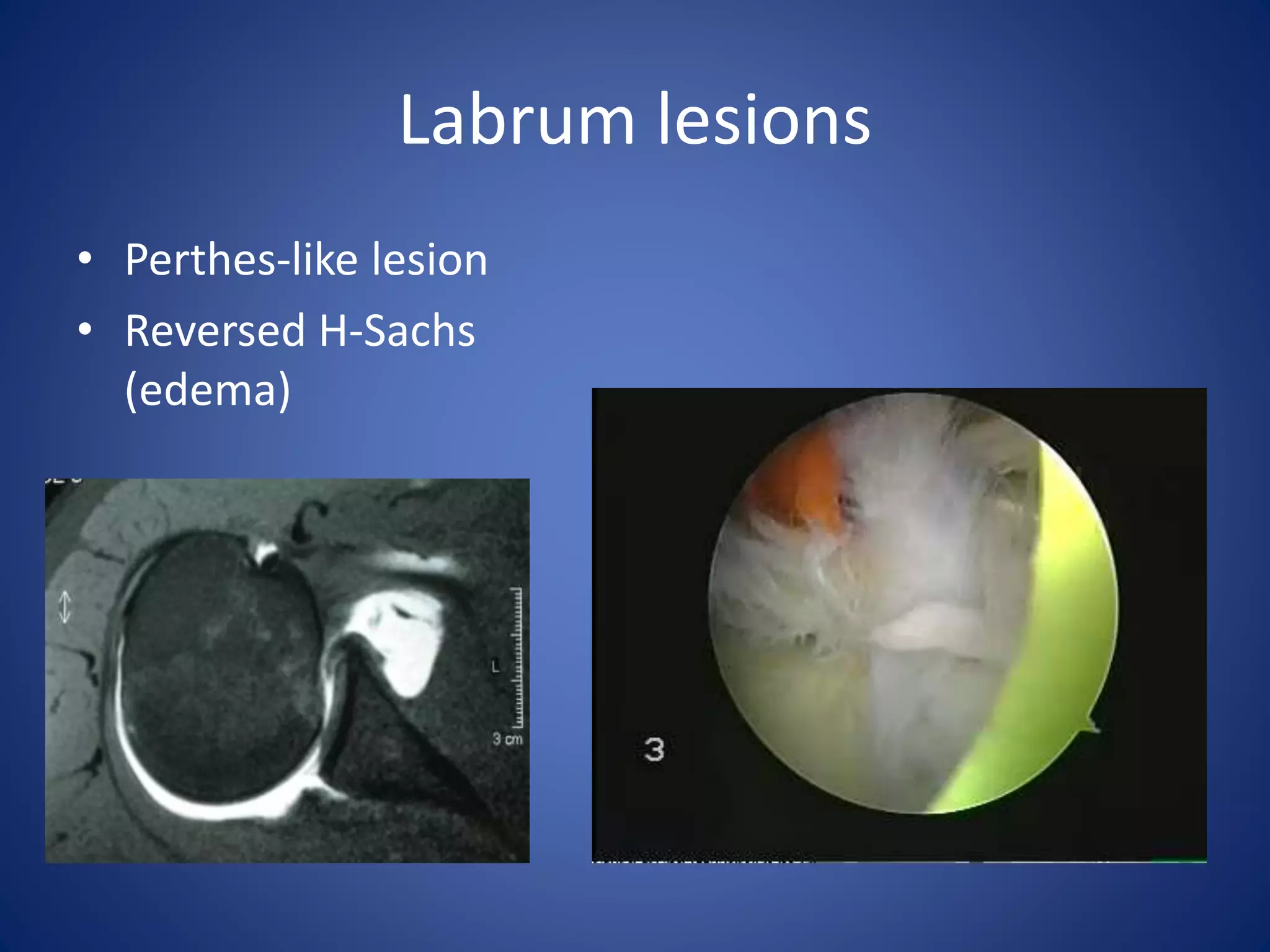
Labrum lesions 
• Perthes-like lesion 
• Reversed H-Sachs 
(edema)
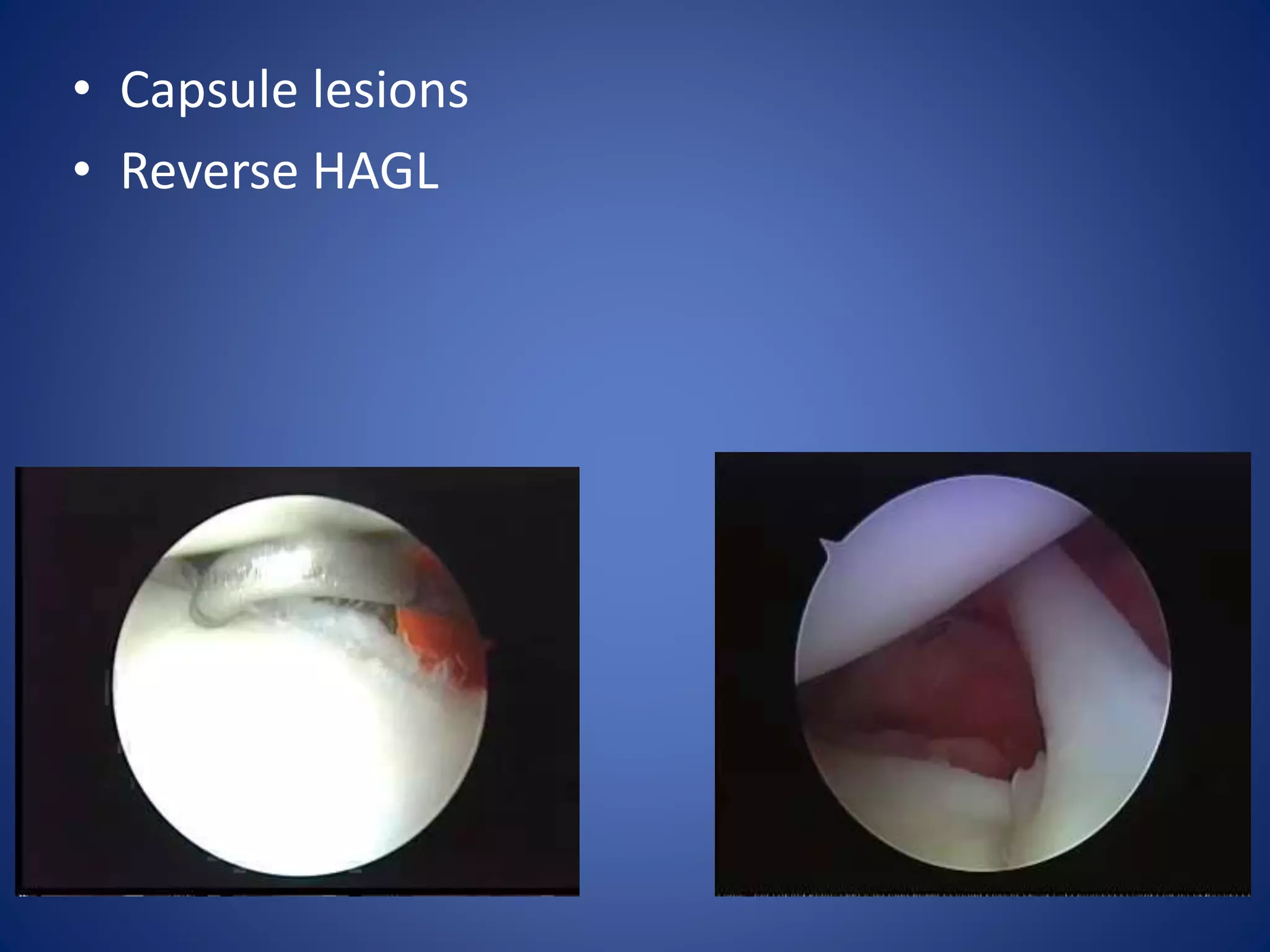
• Capsule lesions 
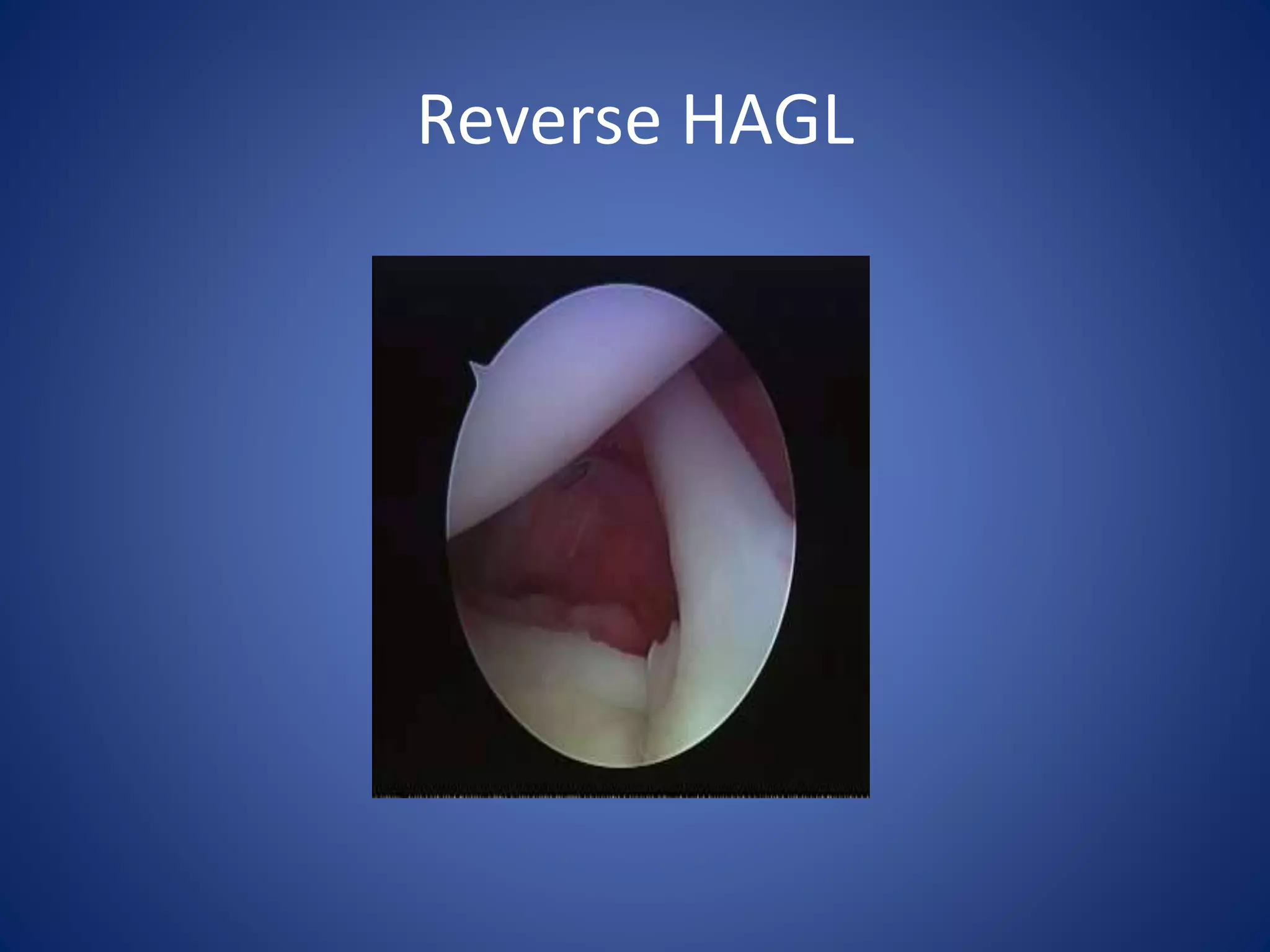
• Reverse HAGL
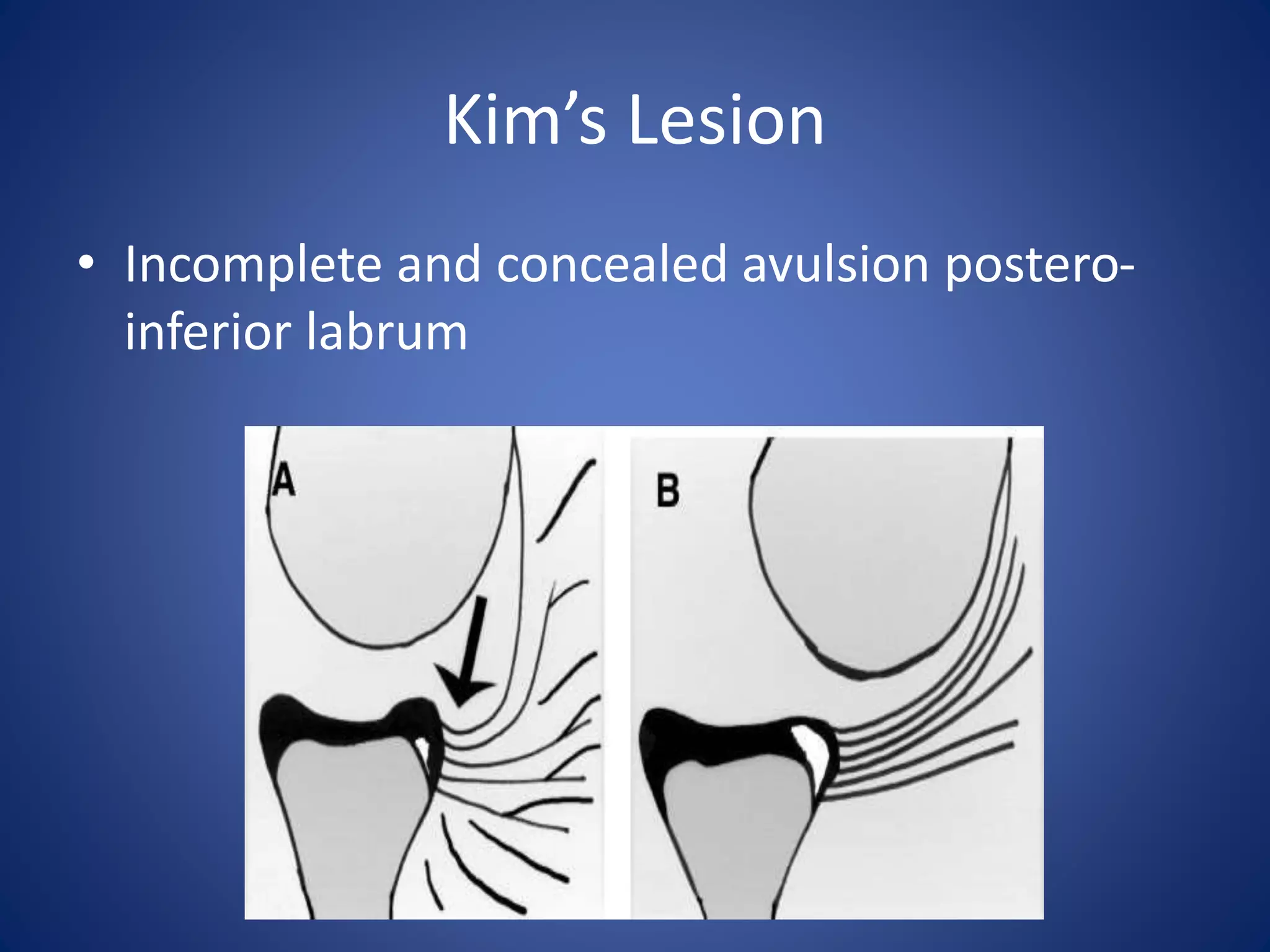
Kim’s Lesion 
• Incomplete and concealed avulsion postero-inferior 
labrum
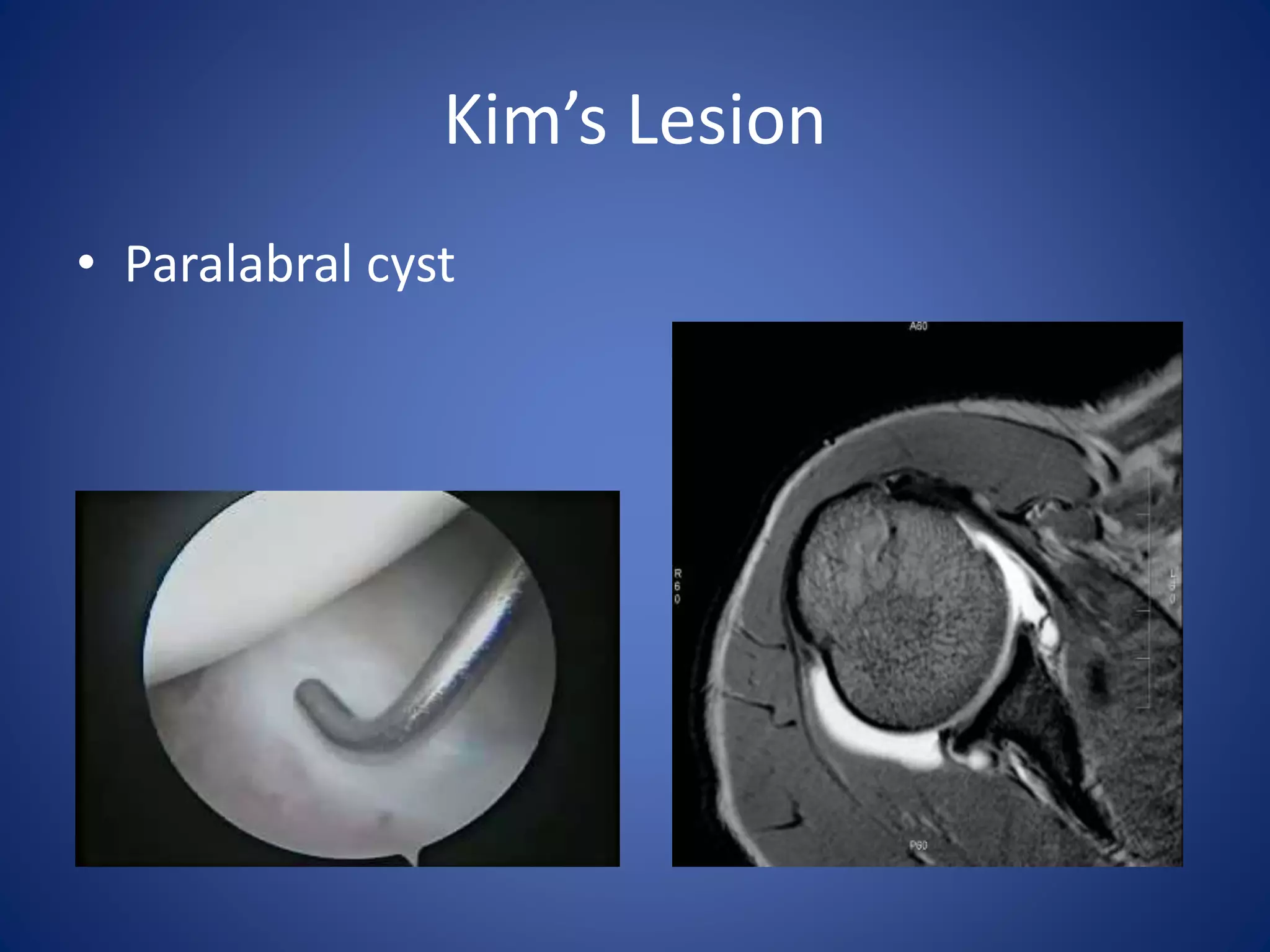
Kim’s Lesion 
• Paralabral cyst
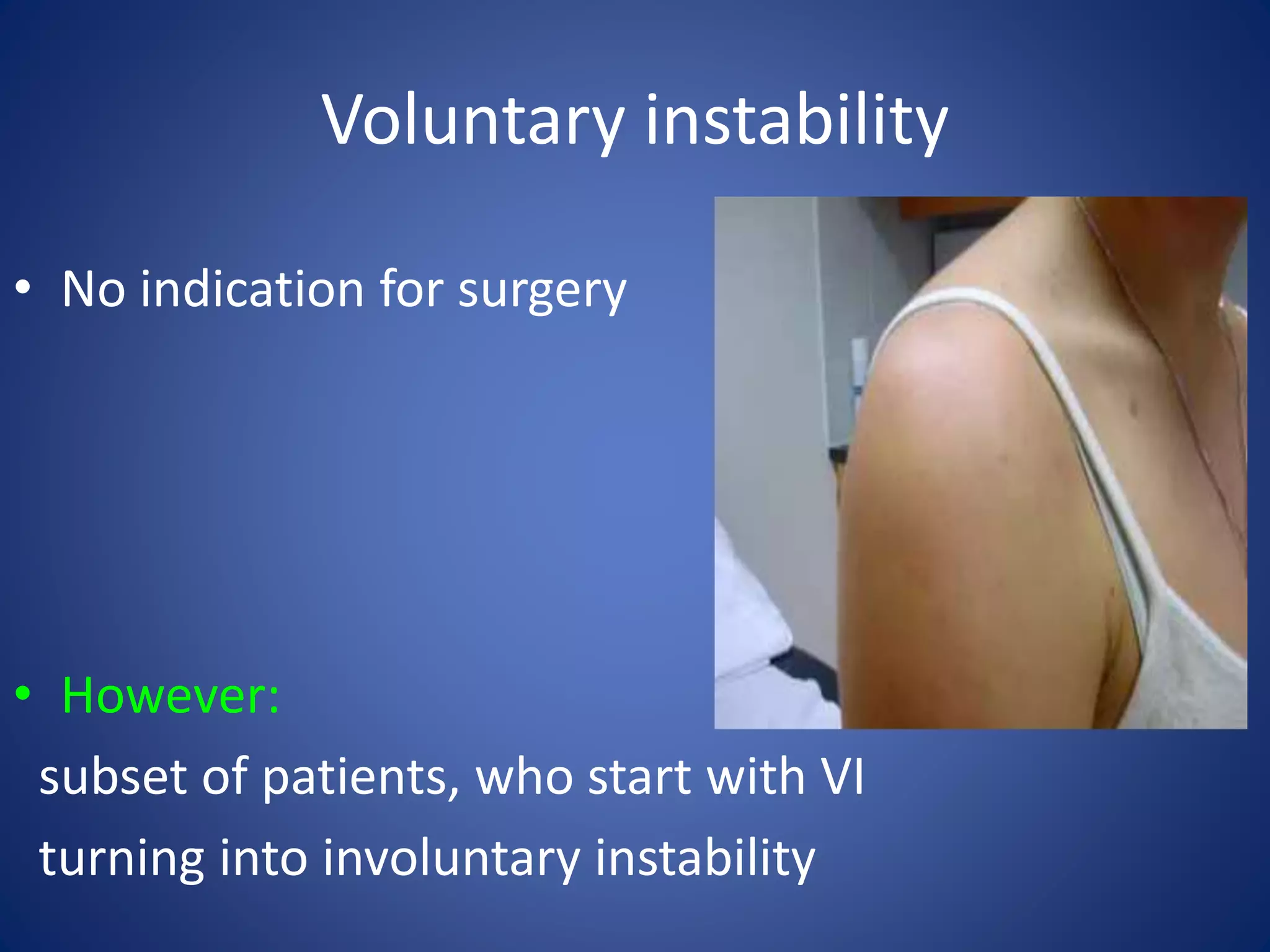
Voluntary instability 
• No indication for surgery 
• However: 
subset of patients, who start with VI 
turning into involuntary instability
Treatment of posterior instability 
• Open treatment modalities 
• open capsulorraphy 
• glenoid osteotomy 
• bone block procedure
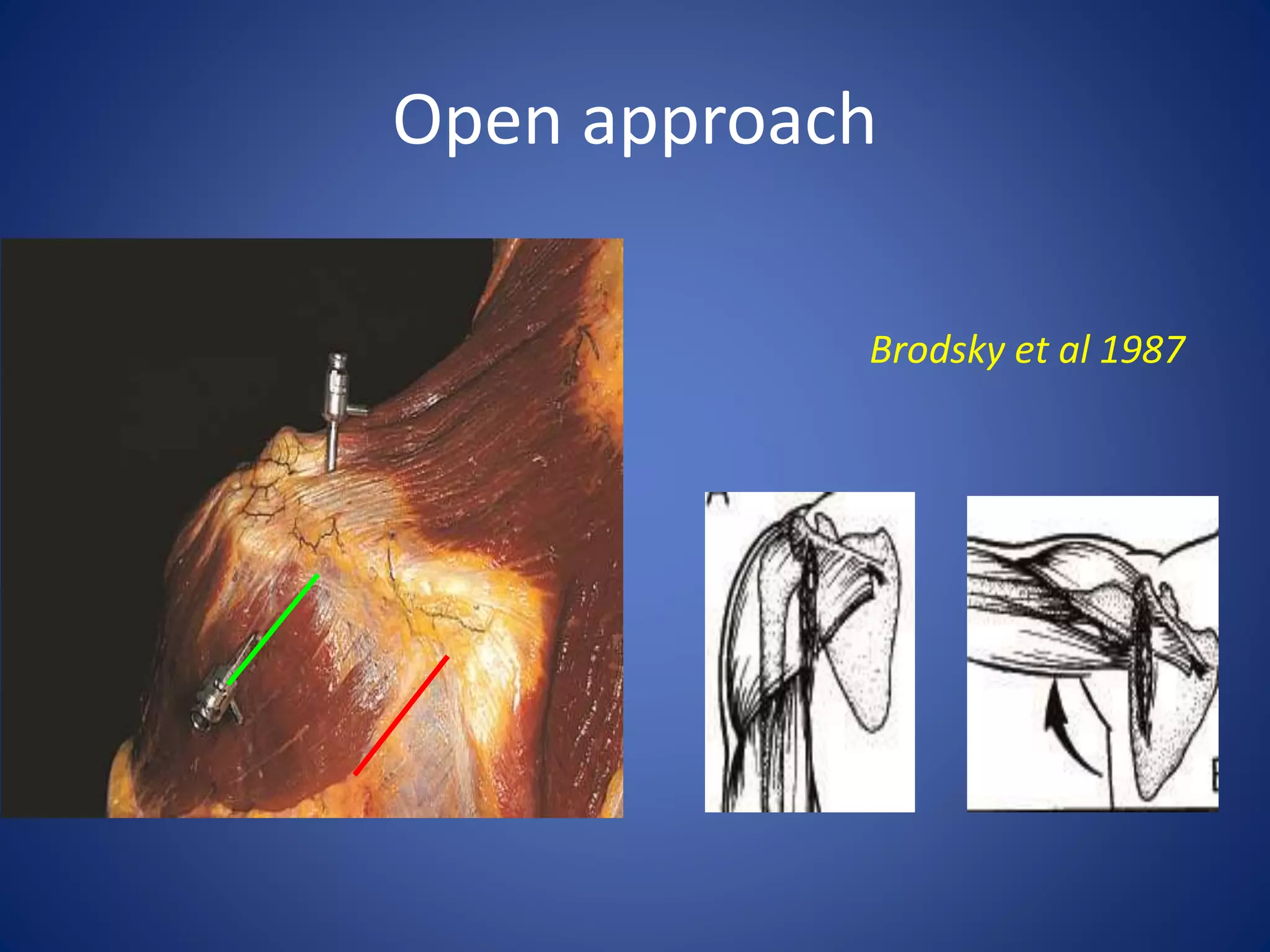
Open approach 
Brodsky et al 1987
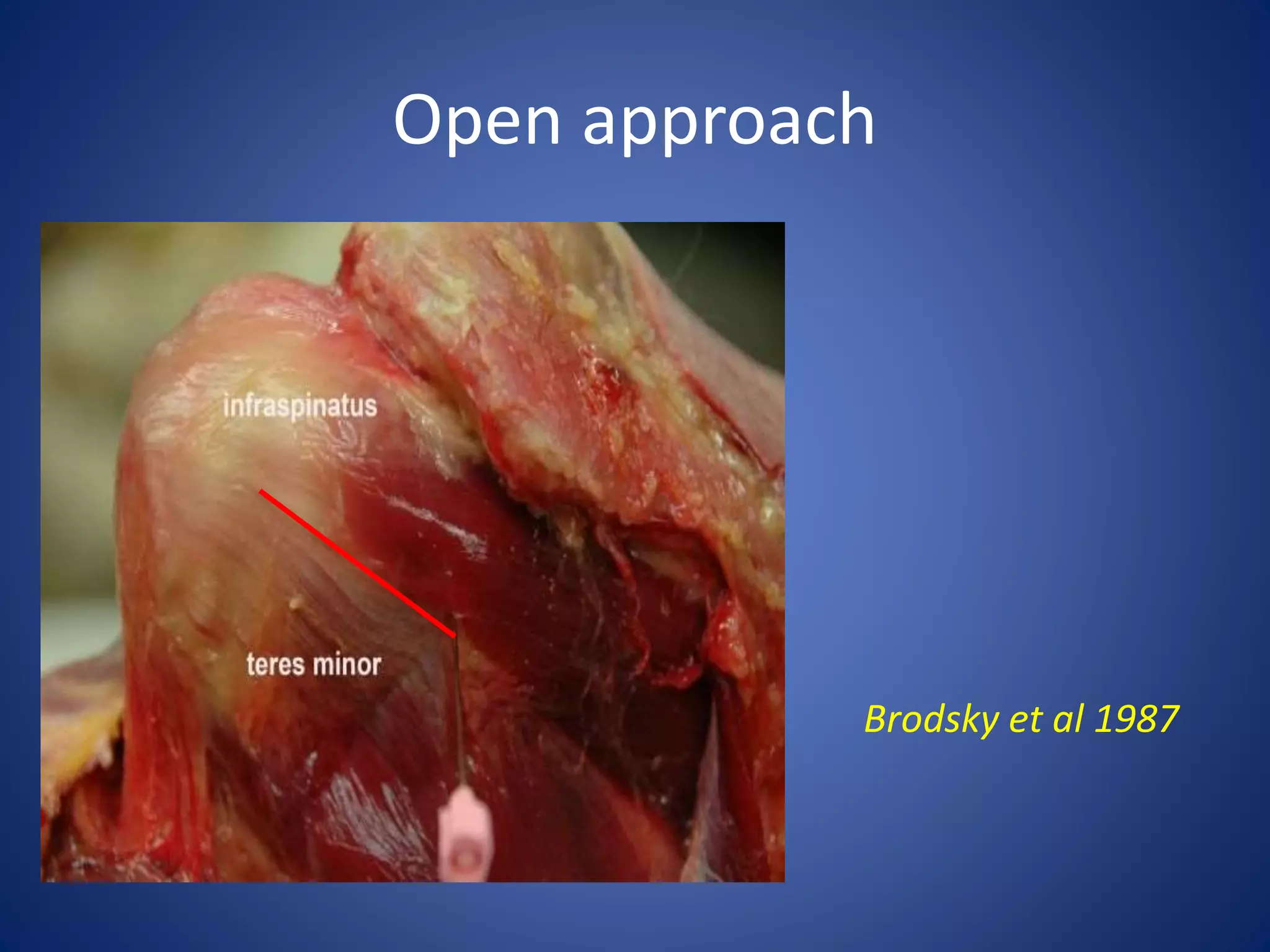
Open approach 
Brodsky et al 1987
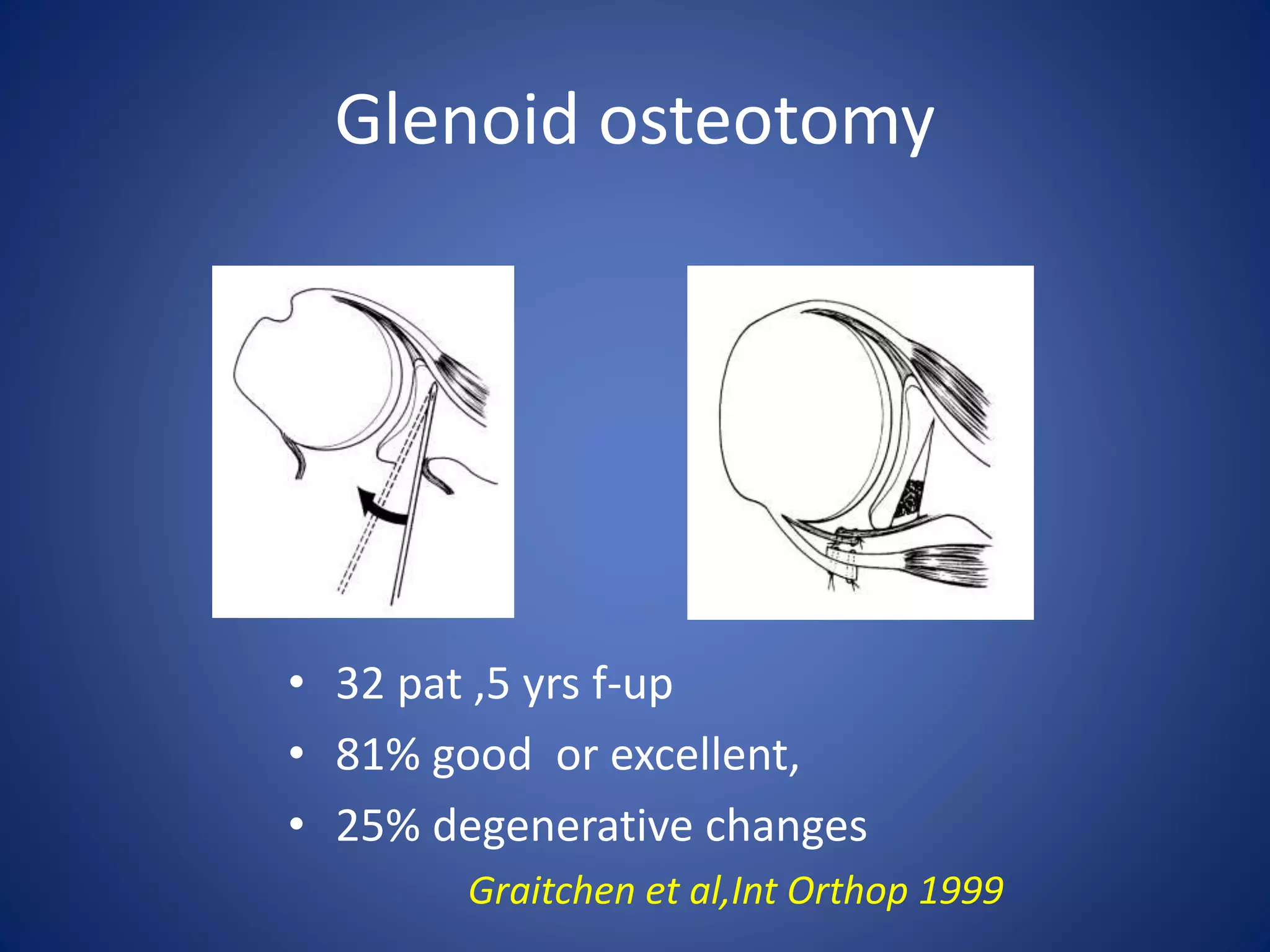
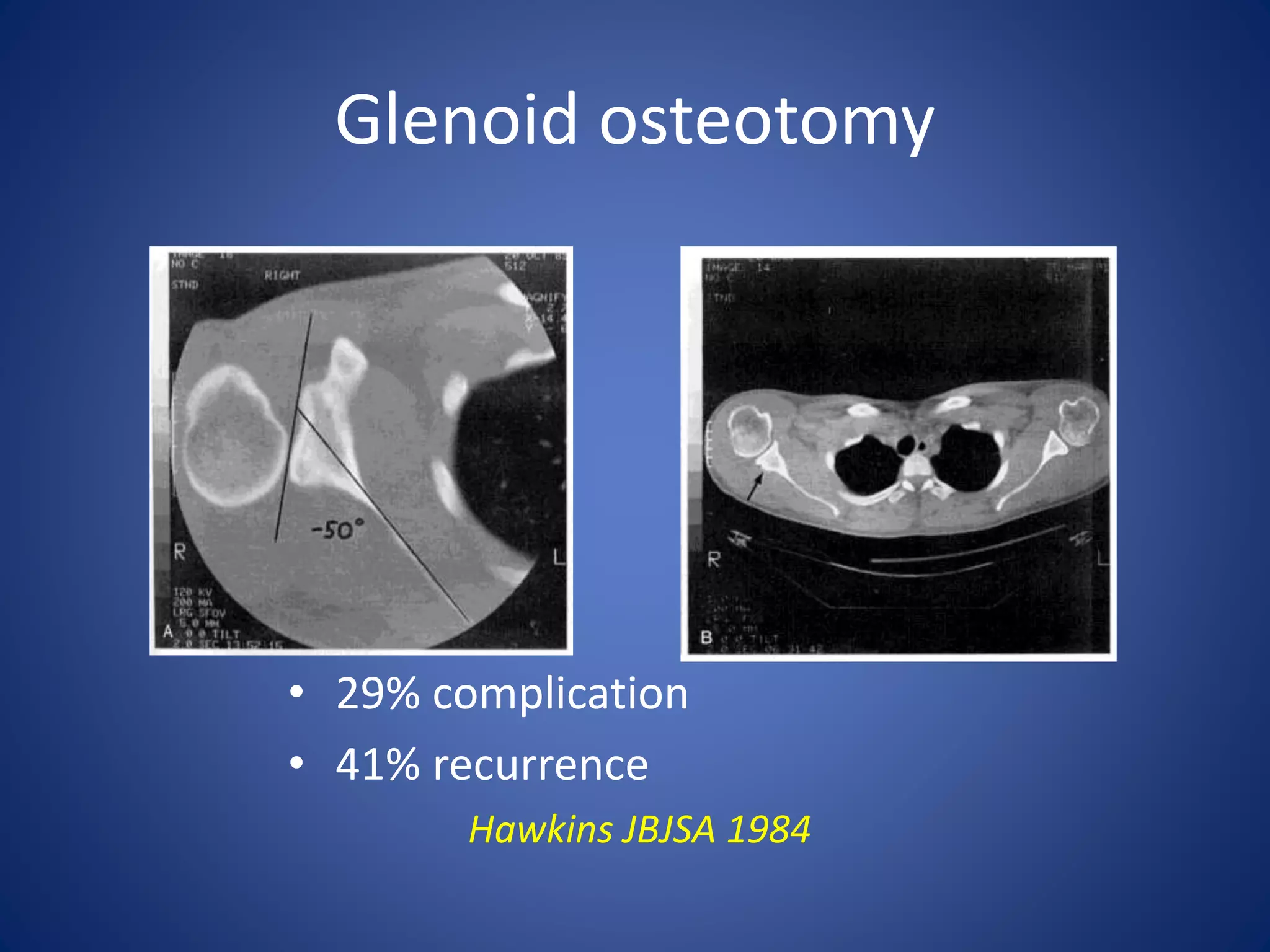
Glenoid osteotomy 
• 32 pat ,5 yrs f-up 
• 81% good or excellent, 
• 25% degenerative changes 
Graitchen et al,Int Orthop 1999
Glenoid osteotomy 
• 29% complication 
• 41% recurrence 
Hawkins JBJSA 1984
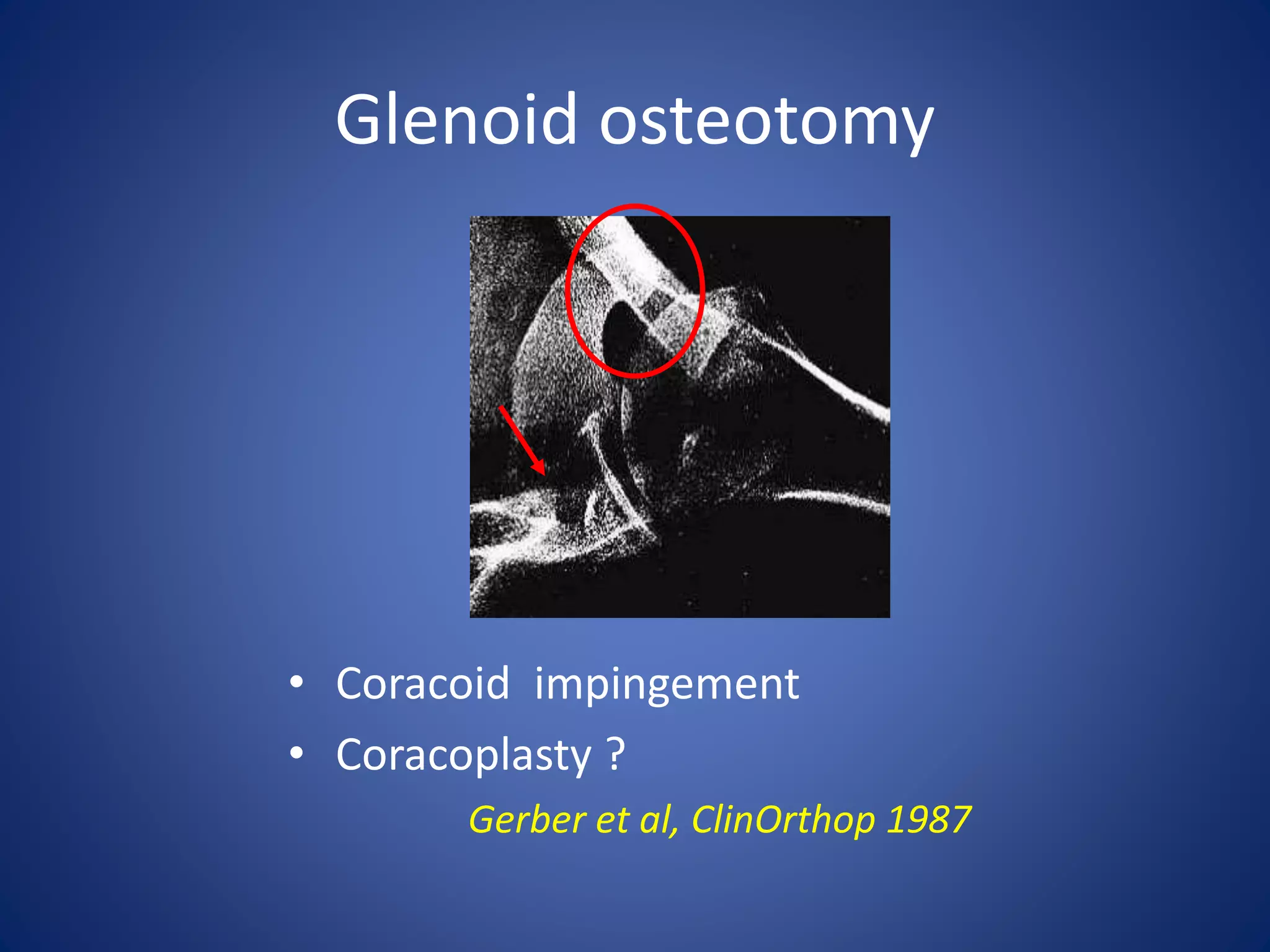
Glenoid osteotomy 
• Coracoid impingement 
• Coracoplasty ? 
Gerber et al, ClinOrthop 1987
Bone block 
• 20 patients with involuntary instability 
• Posterior bone block, 5-10 mm overhang 
• 3 failures; 60% very satisfied, 40% satisfied 
Walch et al, KSSTA 2007
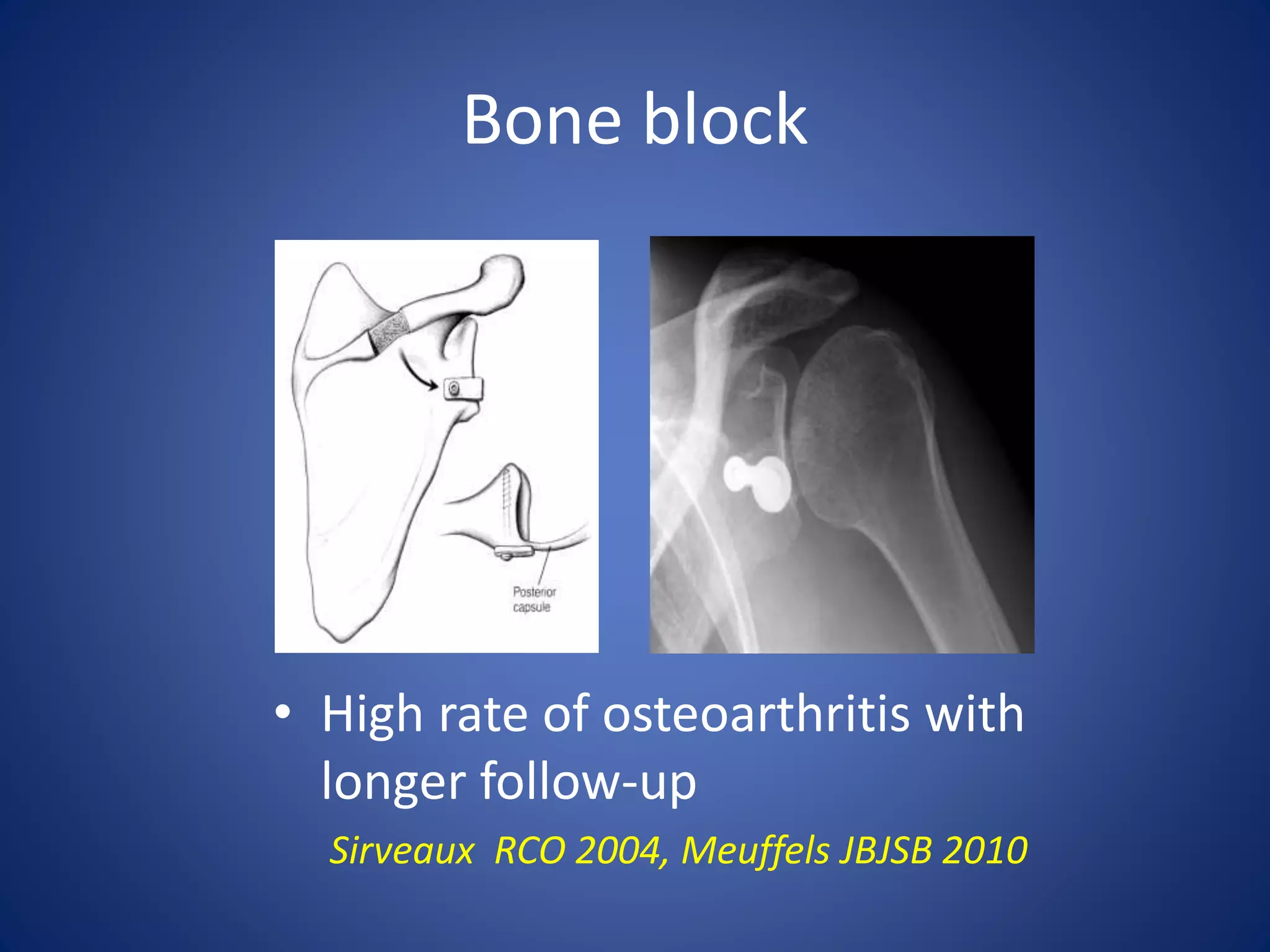
Bone block 
• High rate of osteoarthritis with 
longer follow-up 
Sirveaux RCO 2004, Meuffels JBJSB 2010
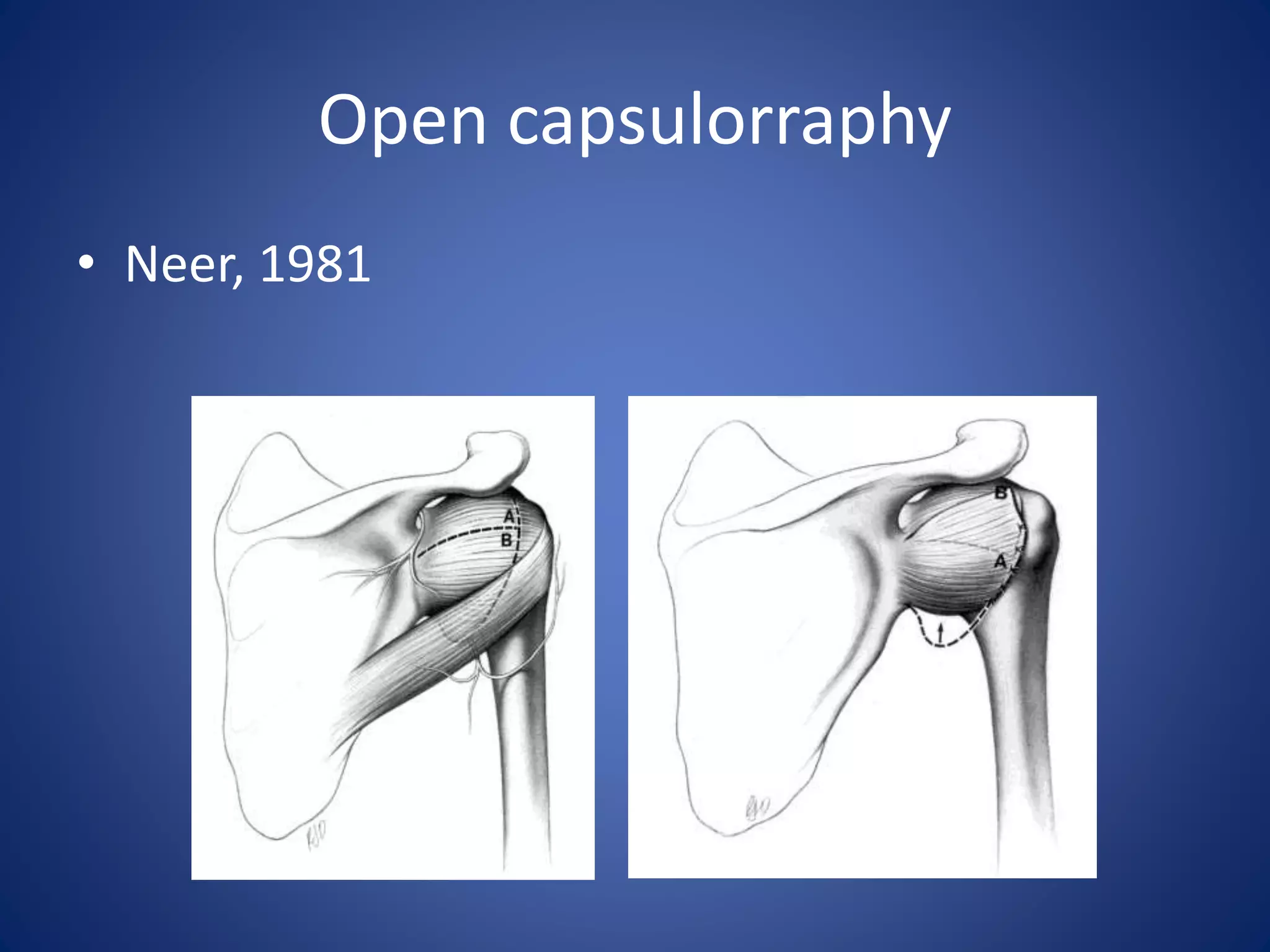
Open capsulorraphy 
• Neer, 1981
Arthroscopic treatment 
• with or without labral detachment 
• labral repair +/- capsulorraphy 
• rotator interval ?
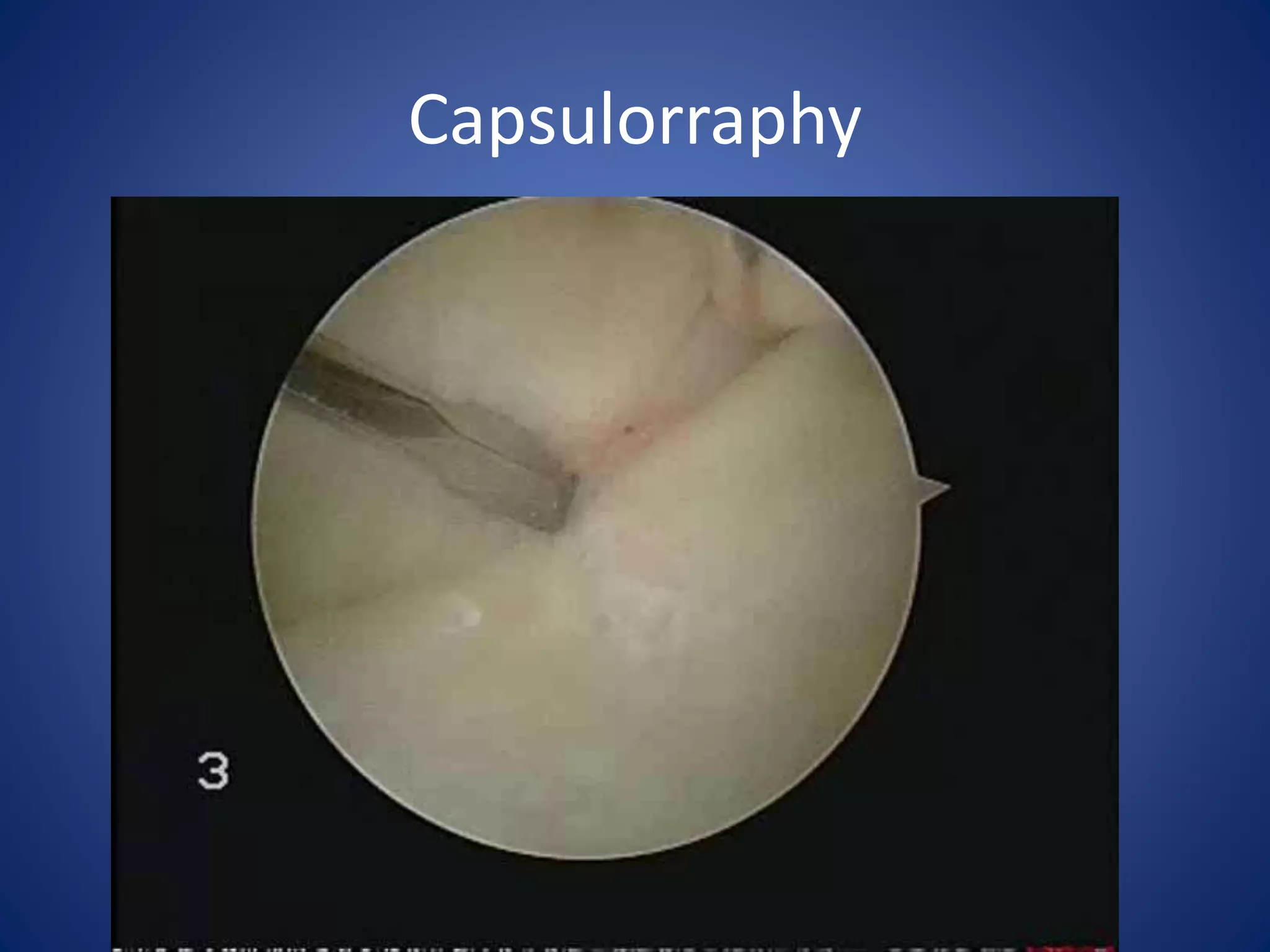
Capsulorraphy
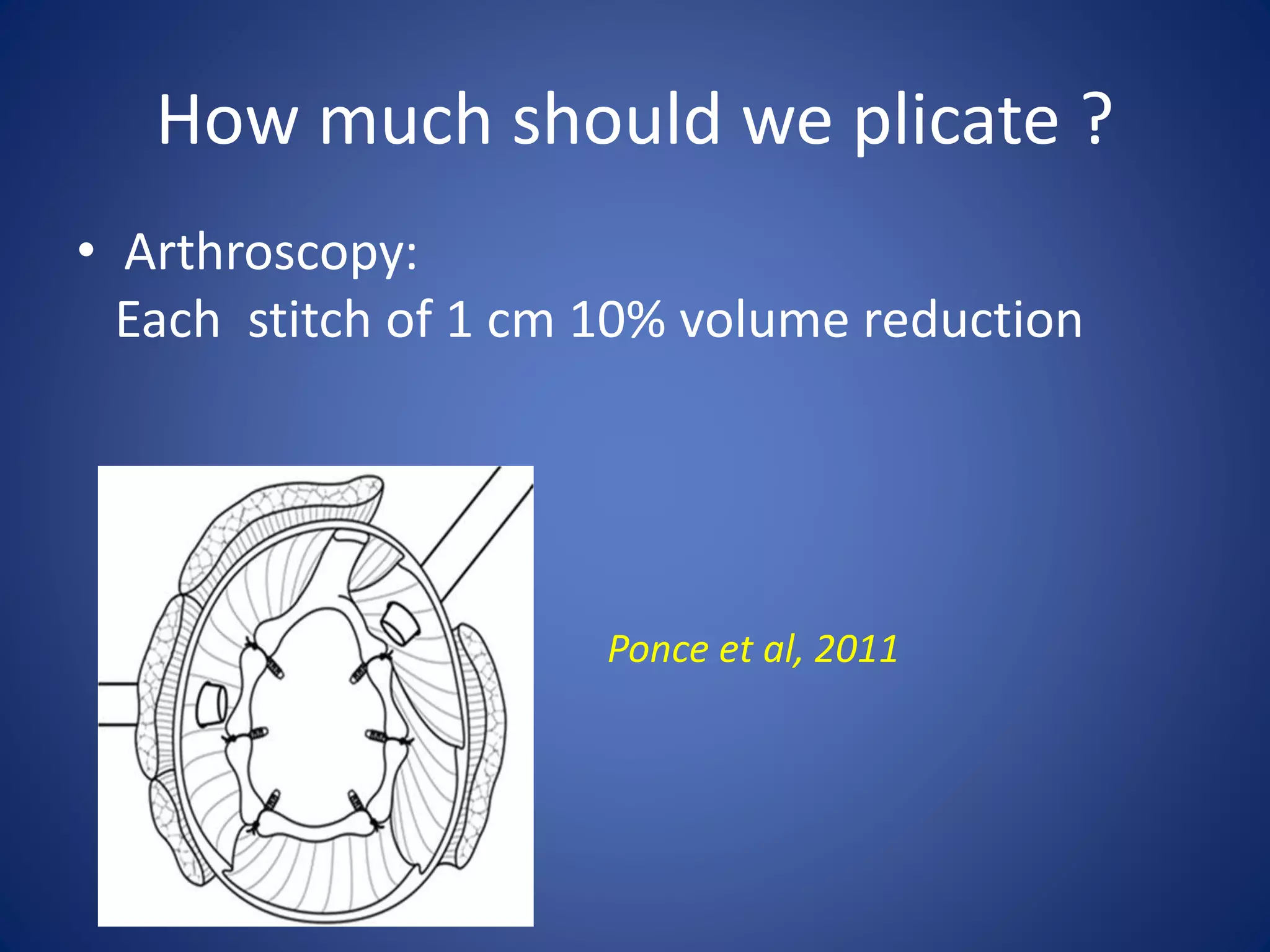
How much should we plicate ? 
• Arthroscopy: 
Each stitch of 1 cm 10% volume reduction 
Ponce et al, 2011
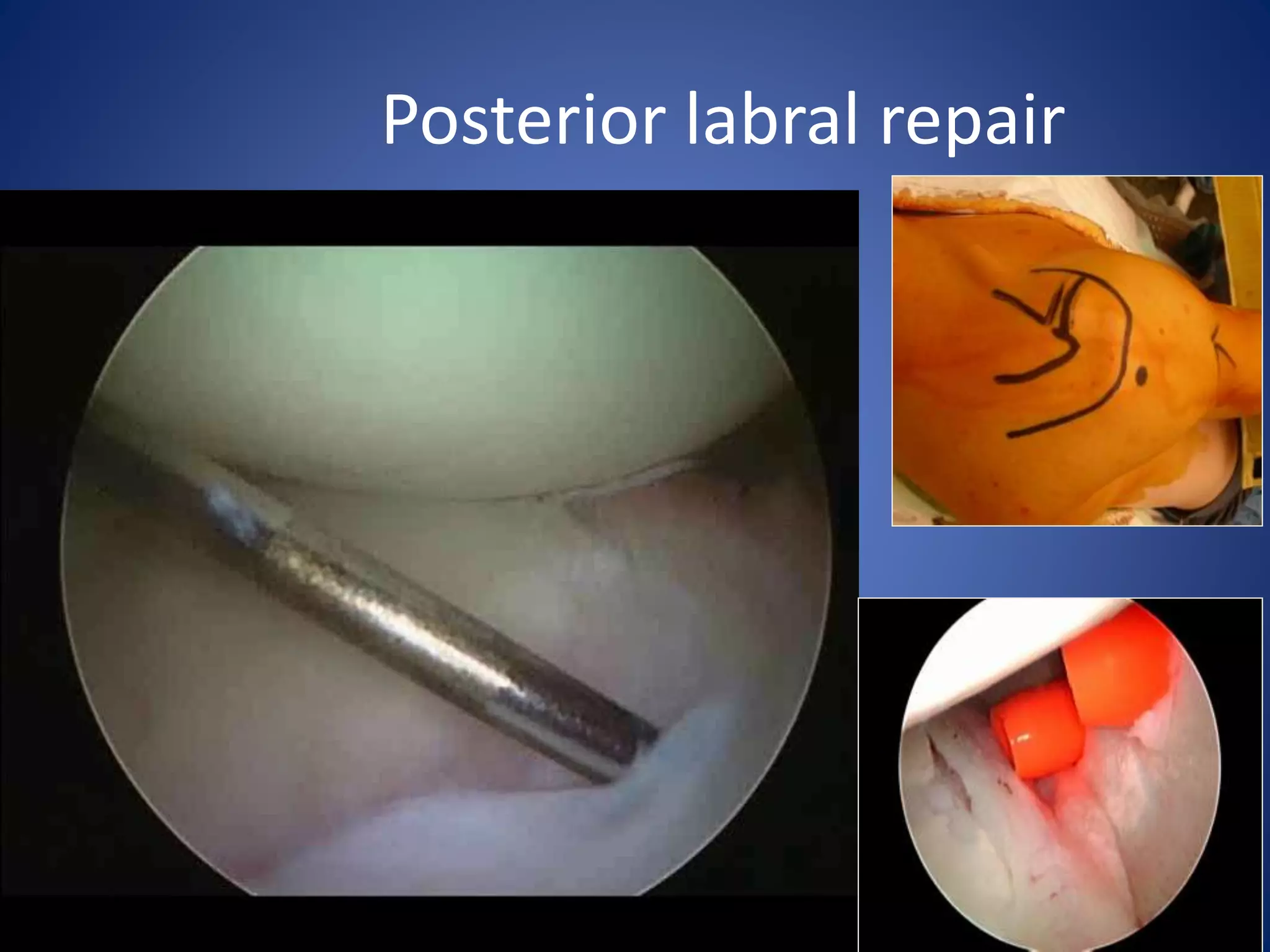
Posterior labral repair
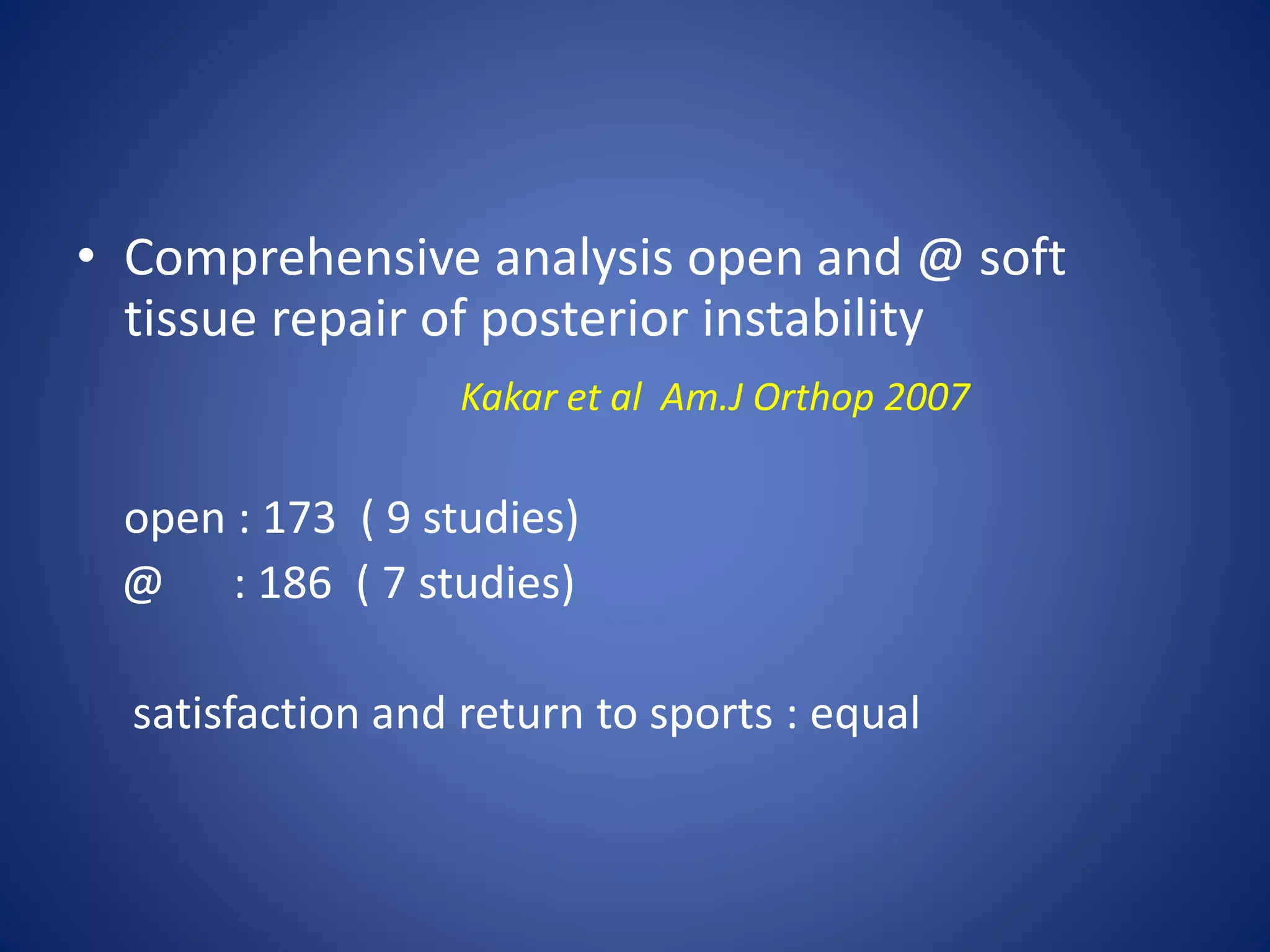
• Comprehensive analysis open and @ soft 
tissue repair of posterior instability 
Kakar et al Am.J Orthop 2007 
open : 173 ( 9 studies) 
@ : 186 ( 7 studies) 
satisfaction and return to sports : equal
Thank you for your attention
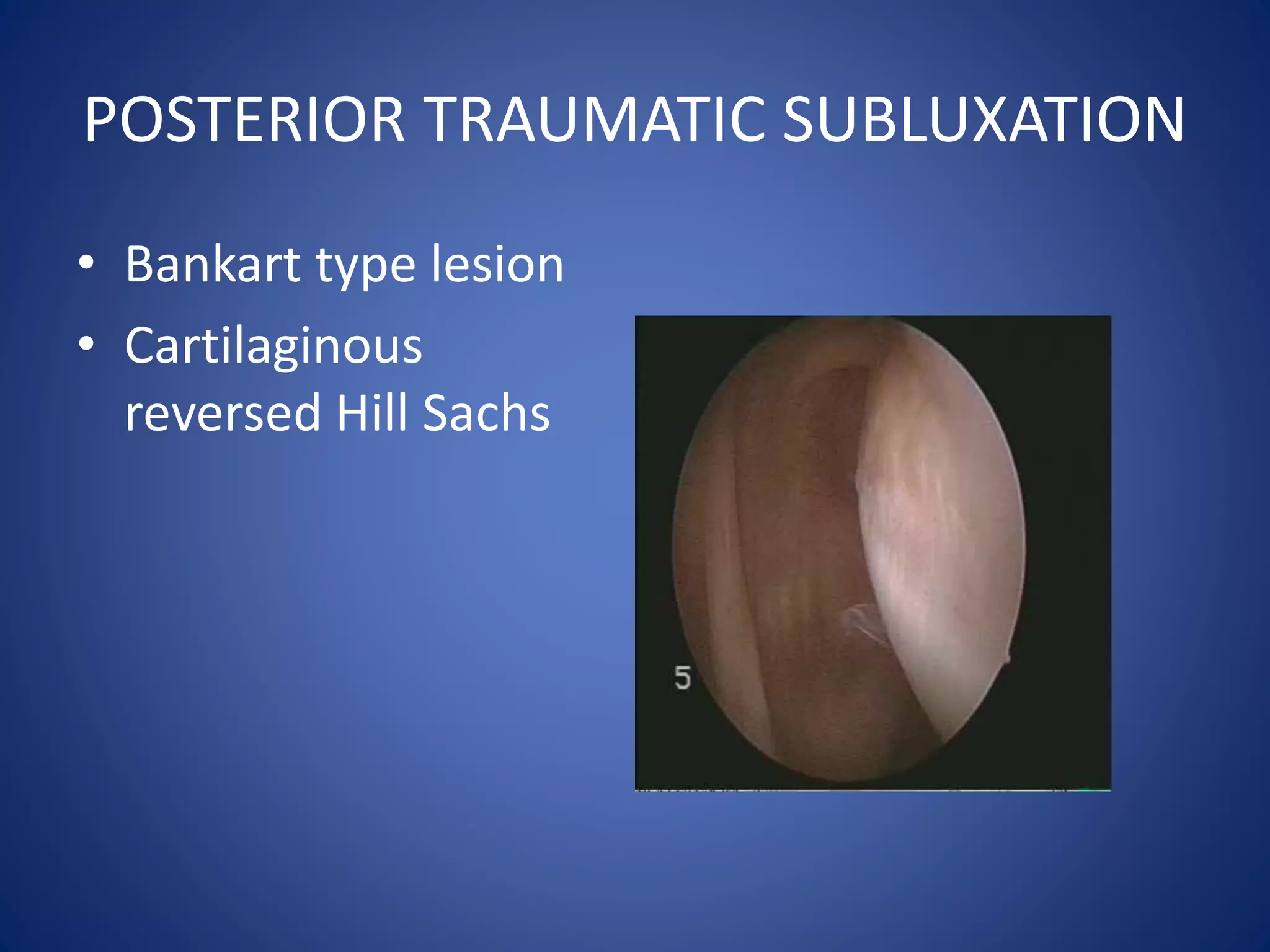
POSTERIOR TRAUMATIC SUBLUXATION 
• Bankart type lesion 
• Cartilaginous 
reversed Hill Sachs
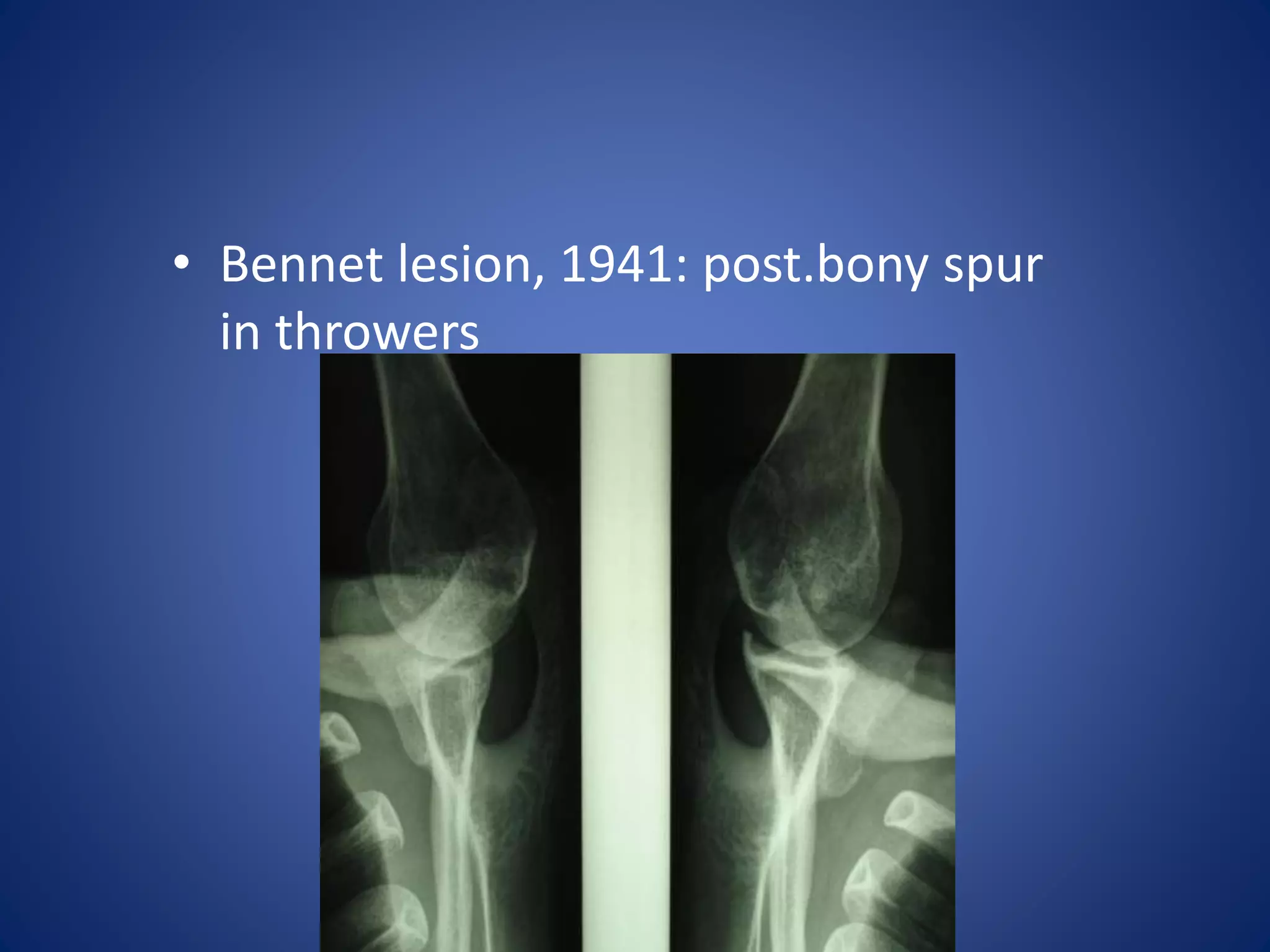
• Bennet lesion, 1941: post.bony spur 
in throwers
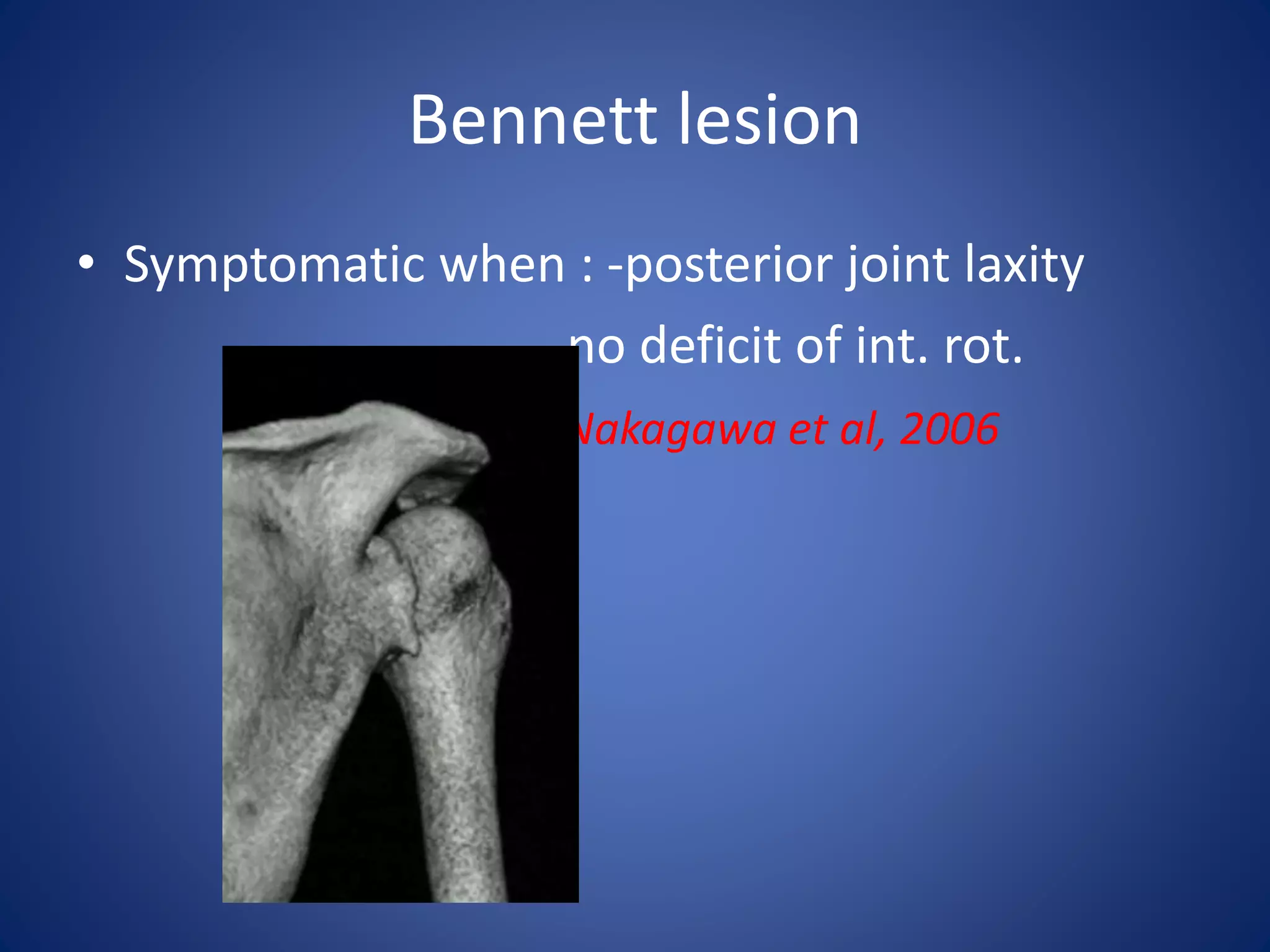
Bennett lesion 
• Symptomatic when : -posterior joint laxity 
- no deficit of int. rot. 
Nakagawa et al, 2006
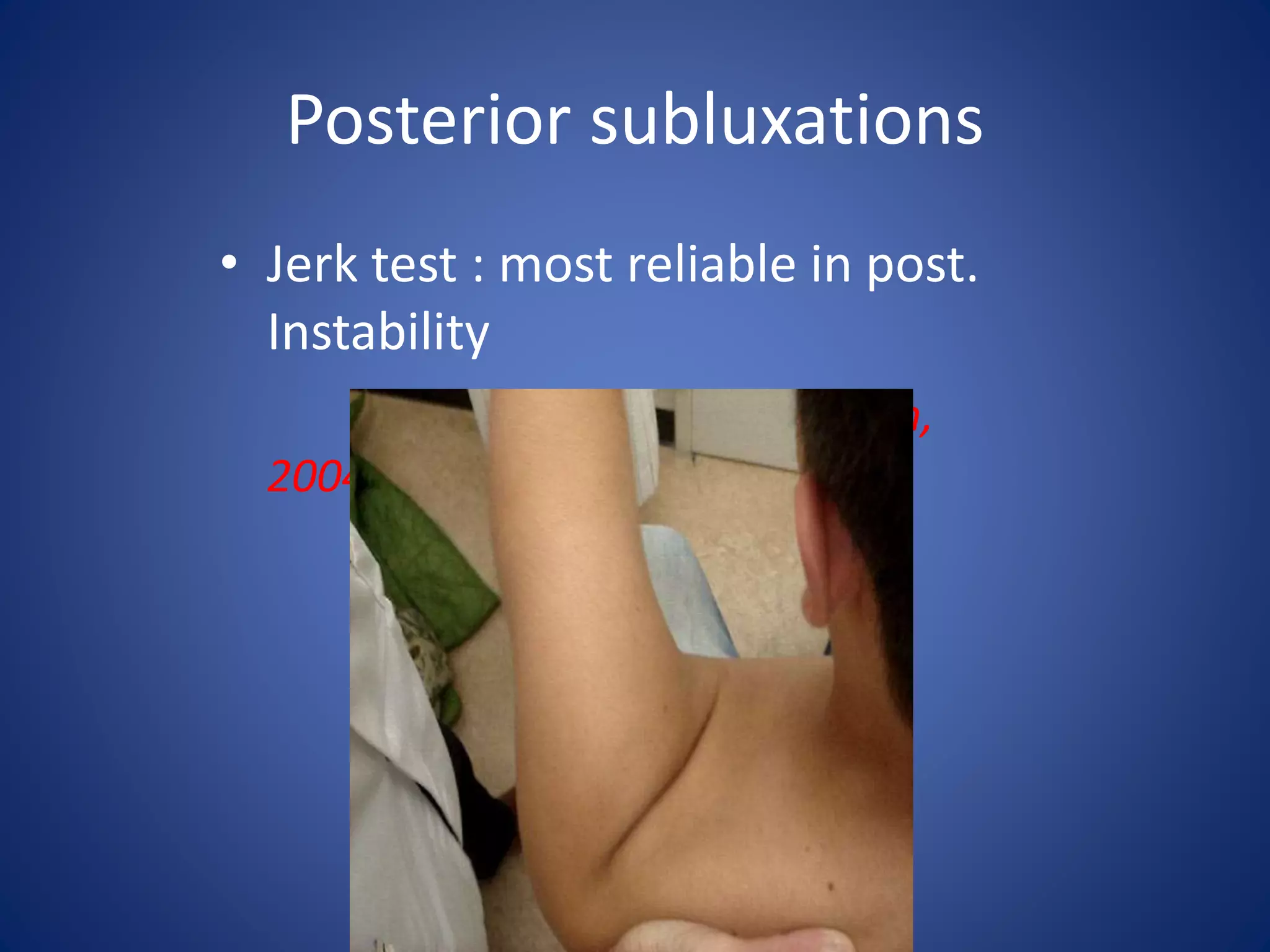
Posterior subluxations 
• Jerk test : most reliable in post. 
Instability 
Kim, 
2004
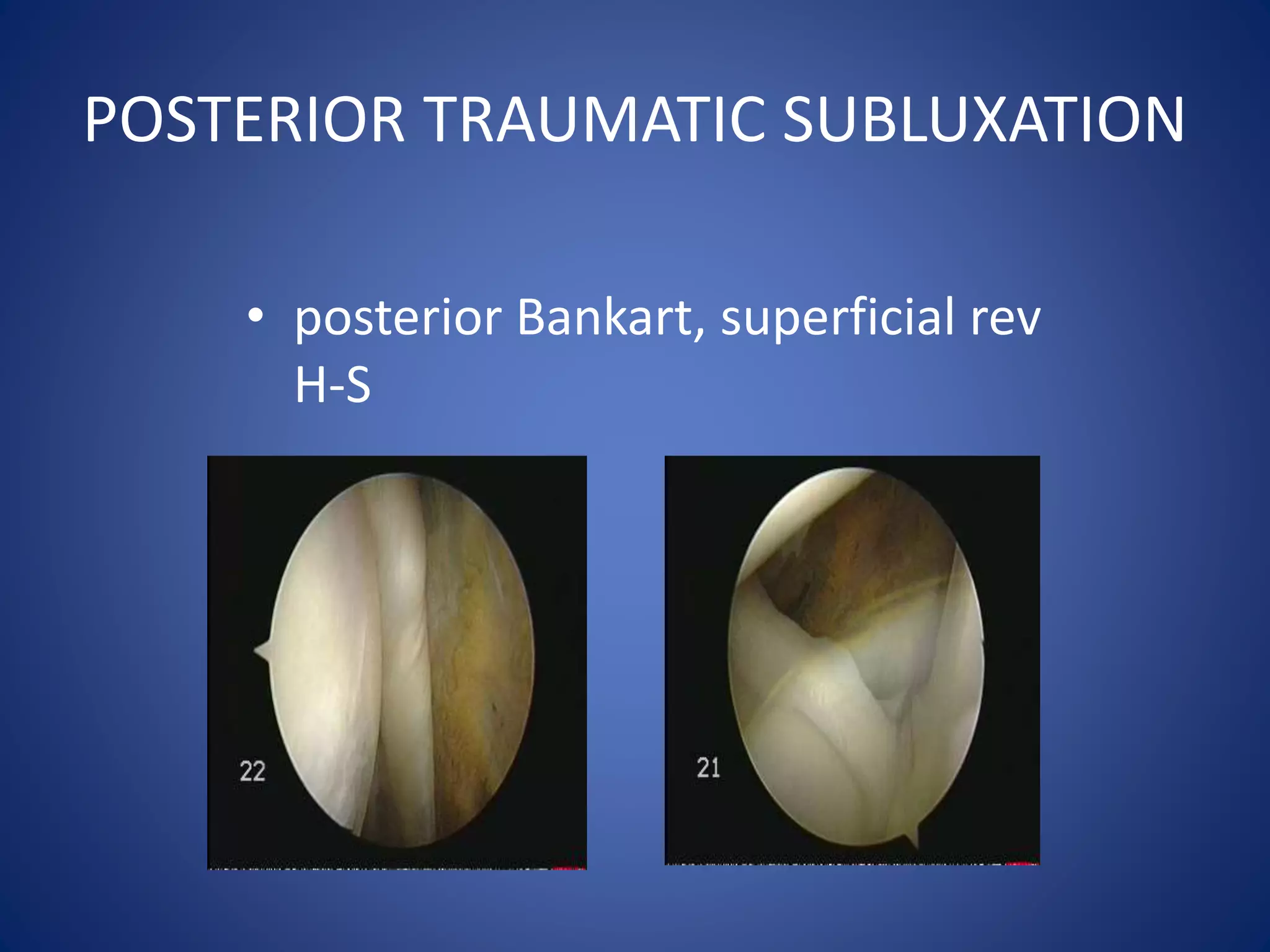
POSTERIOR TRAUMATIC SUBLUXATION 
• posterior Bankart, superficial rev 
H-S
POSTERIOR TRAUMATIC SUBLUXATION 
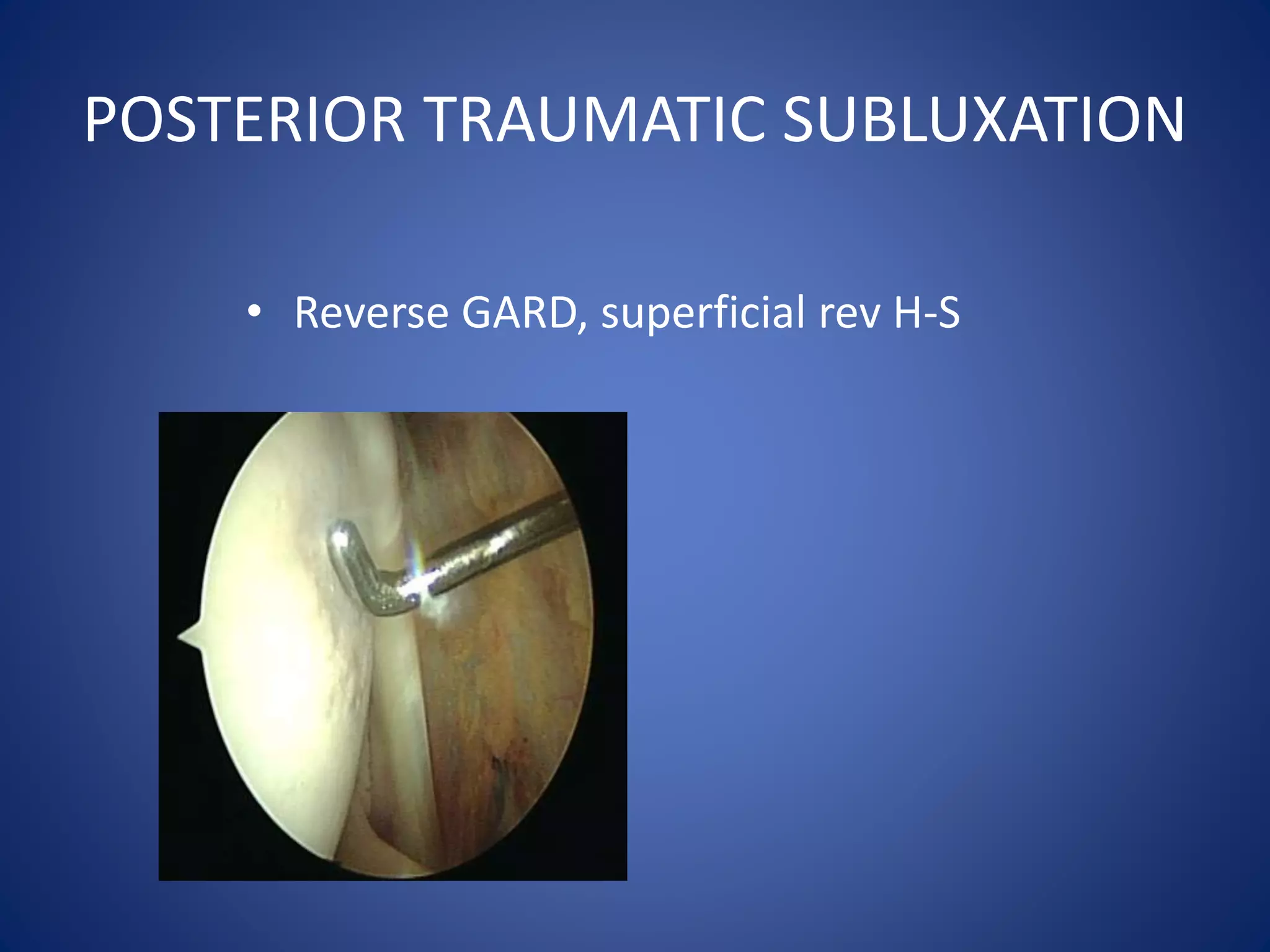
• Reverse GARD, superficial rev H-S
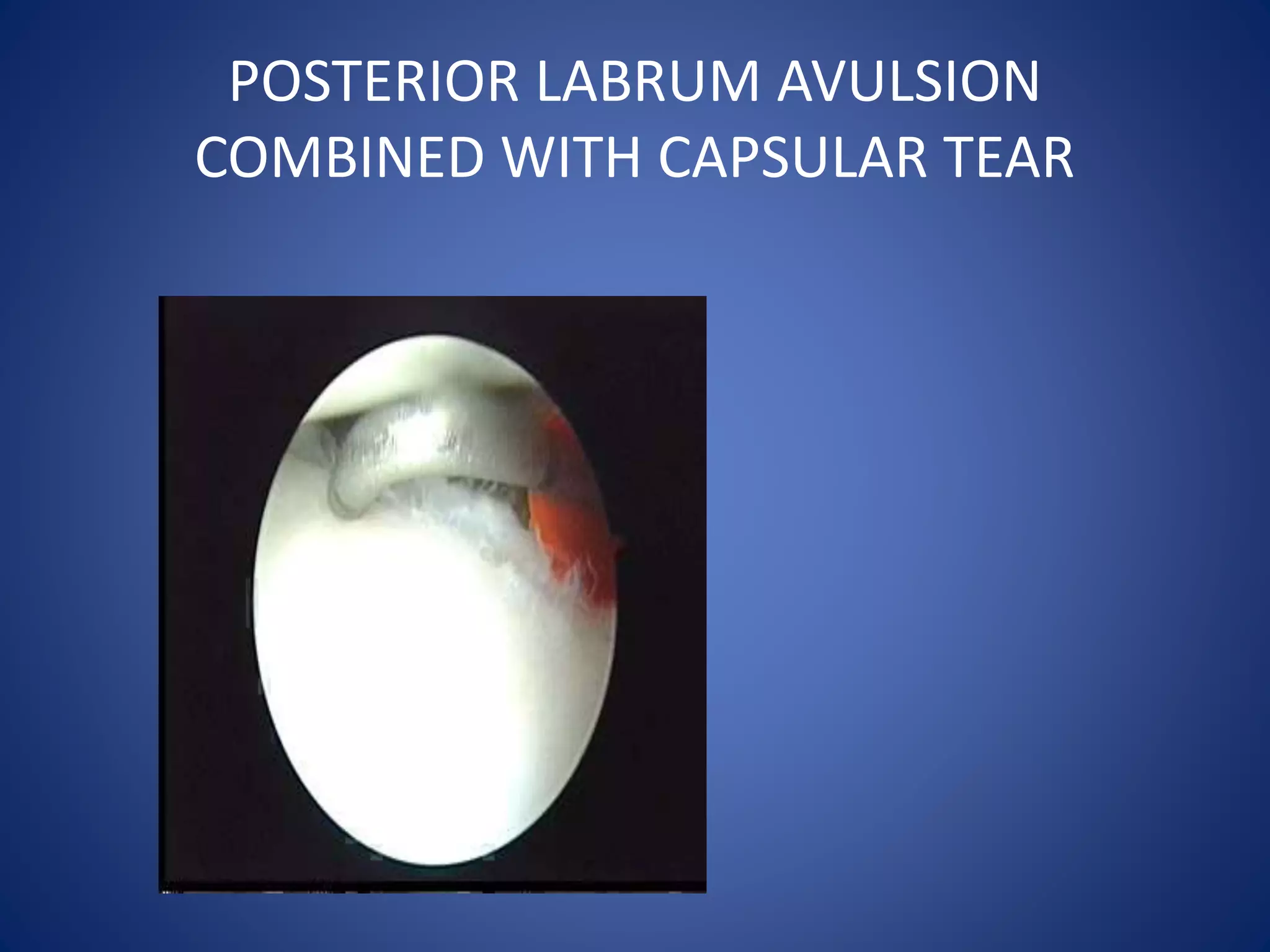
POSTERIOR LABRUM AVULSION 
COMBINED WITH CAPSULAR TEAR
Reverse HAGL
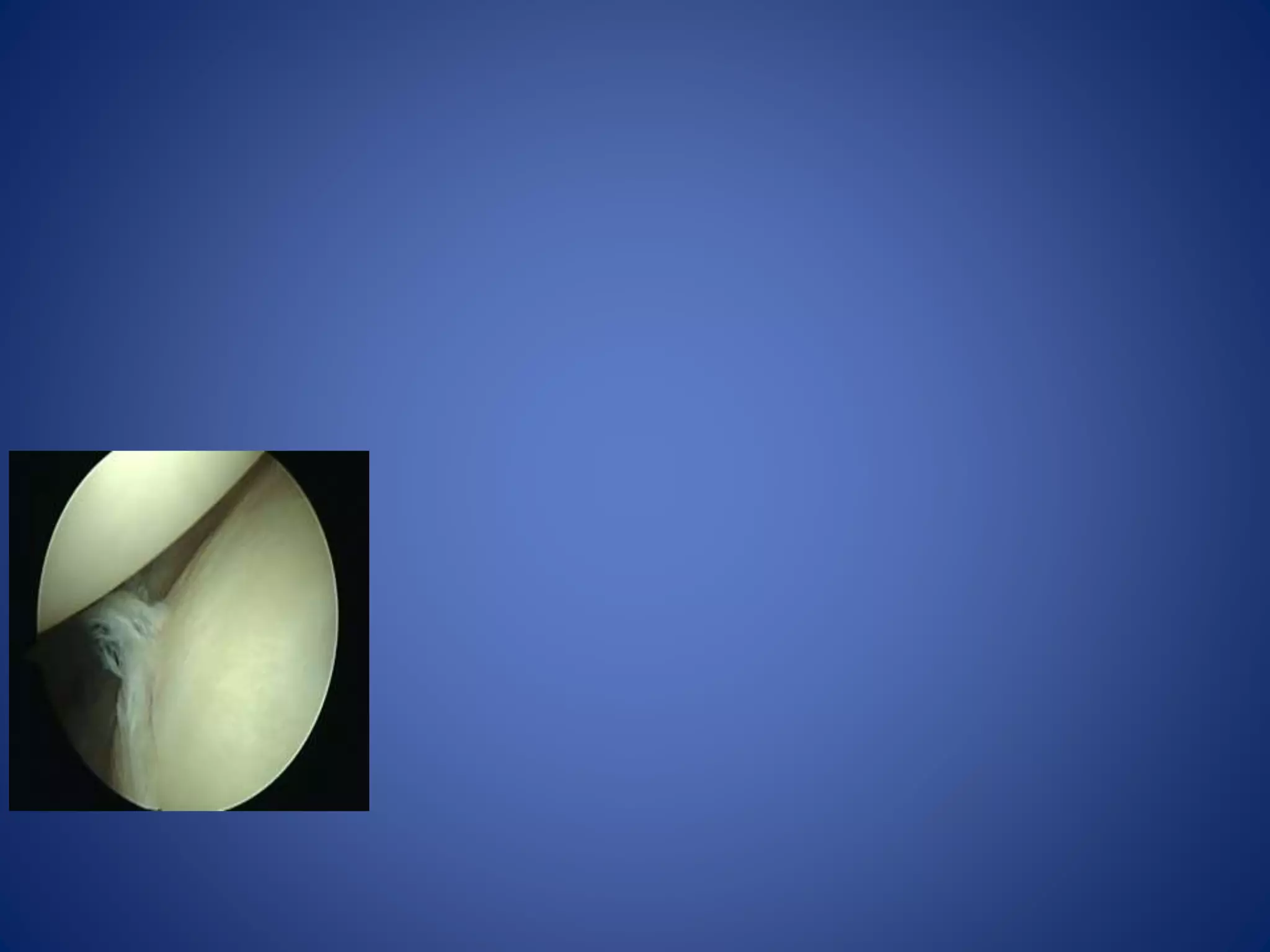
ANATOMY OF POSTERIOR LABRUM 
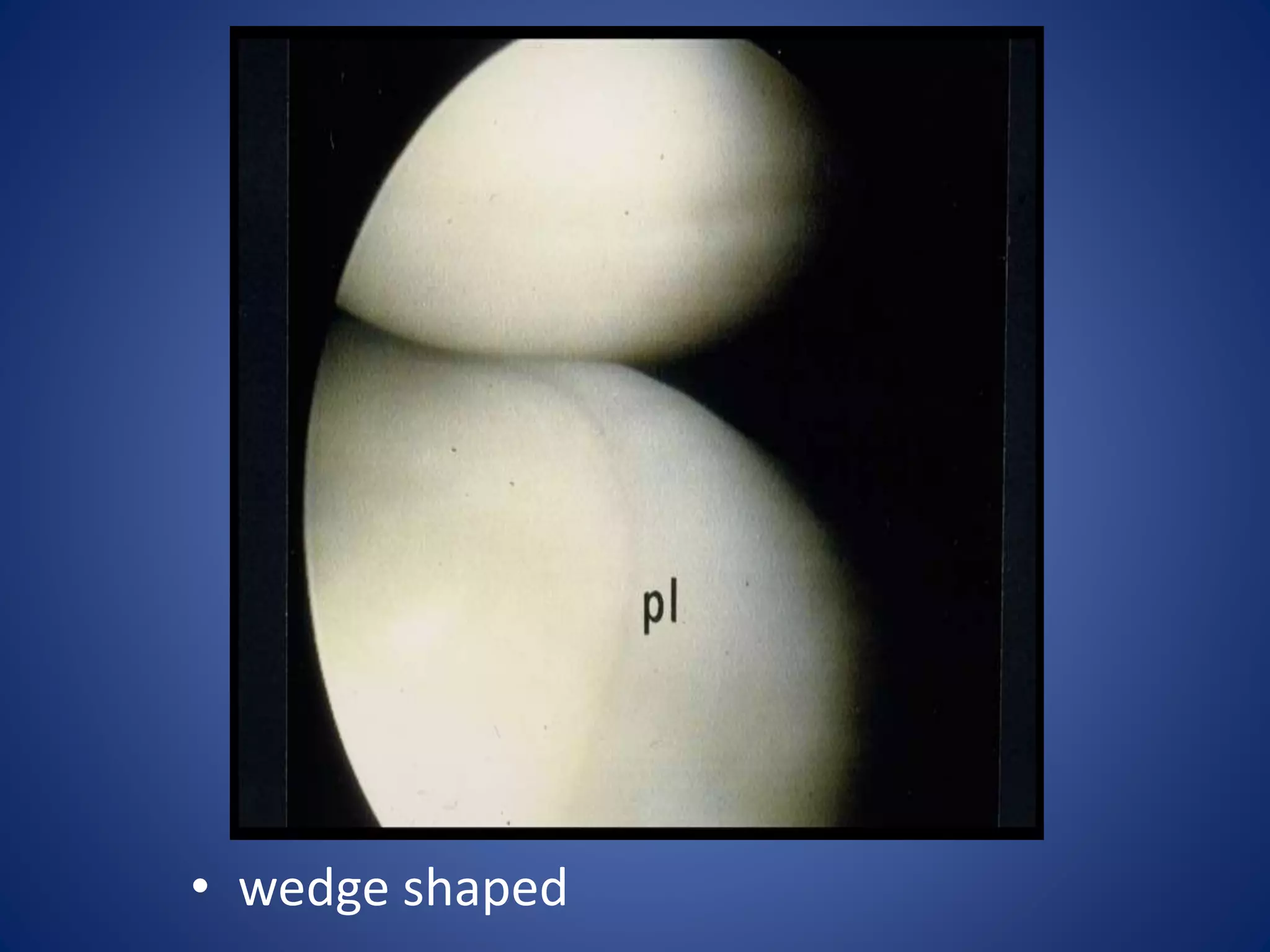
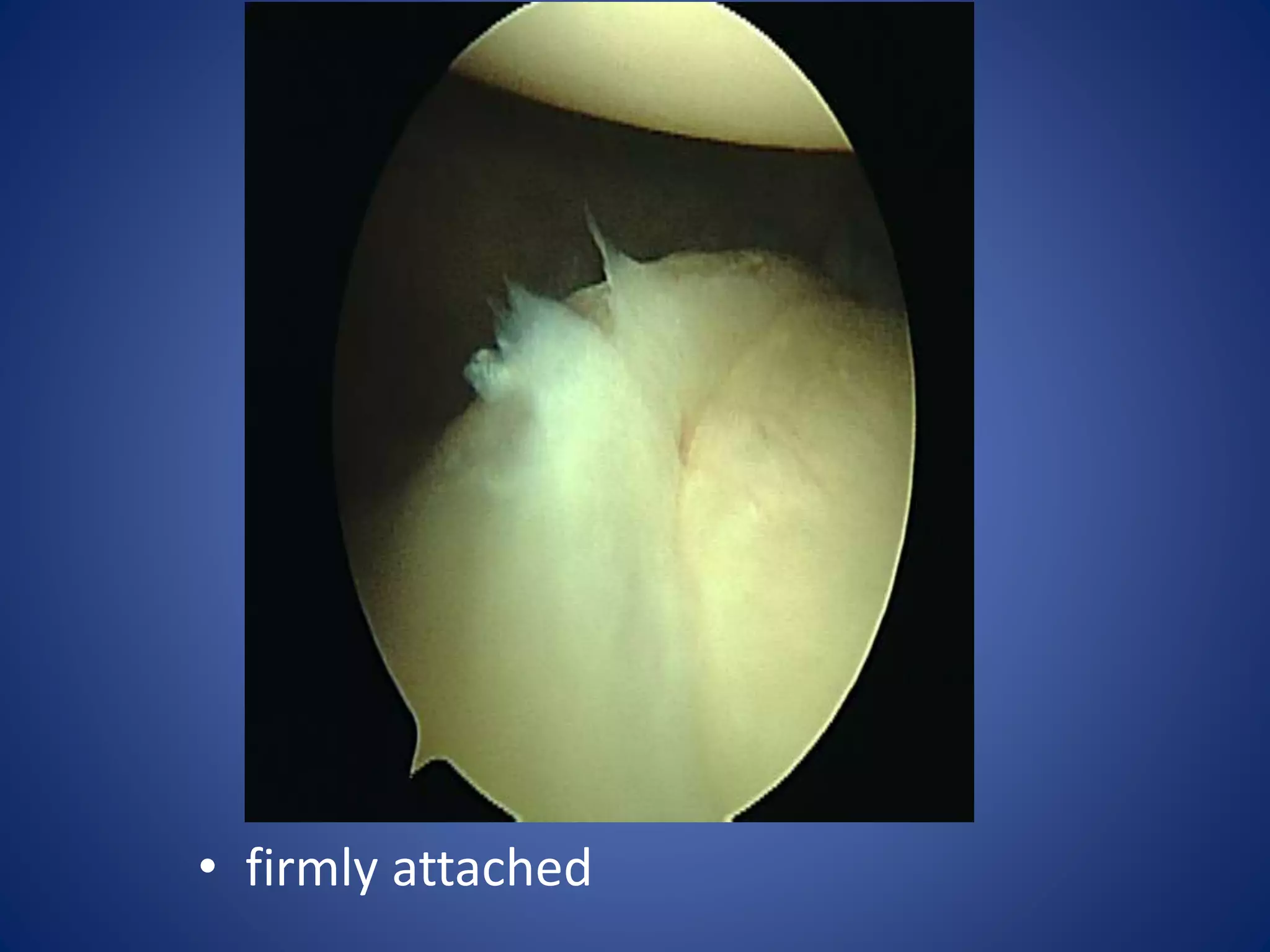
• Detrisac and Johnson: 
• 2 types: -wedge labrum 
-firmly attached
• wedge shaped
• firmly attached
Post instability echte

Post instability echte