

1
Welcome
to
My presentation
Application of Technical Textile
Md. Azizul Haque Juel
ID:161-32-308
Department of Textile Engineering
3
Introduction
The Textile Institute defines technical textiles as the 'textile materials and
products manufactured primarily for their technical and performance
properties rather than their aesthetic or decorative characteristics '.
An exceptional feature of technical textiles is the use of innumerable
varities of raw materials, processes, product and application for their
production. Some of the materials used for making technical textile such as
Metal, like steel; Minerals, like asbestos and glass; Synthetic fibre
polymers, like PES, PA, PAN, PP etc. Regenerated fibres like rayon fibre
and acetate fibre. Natural fibres like cotton fibre, like cotton fibre, wool
fibre etc.
Technical textiles
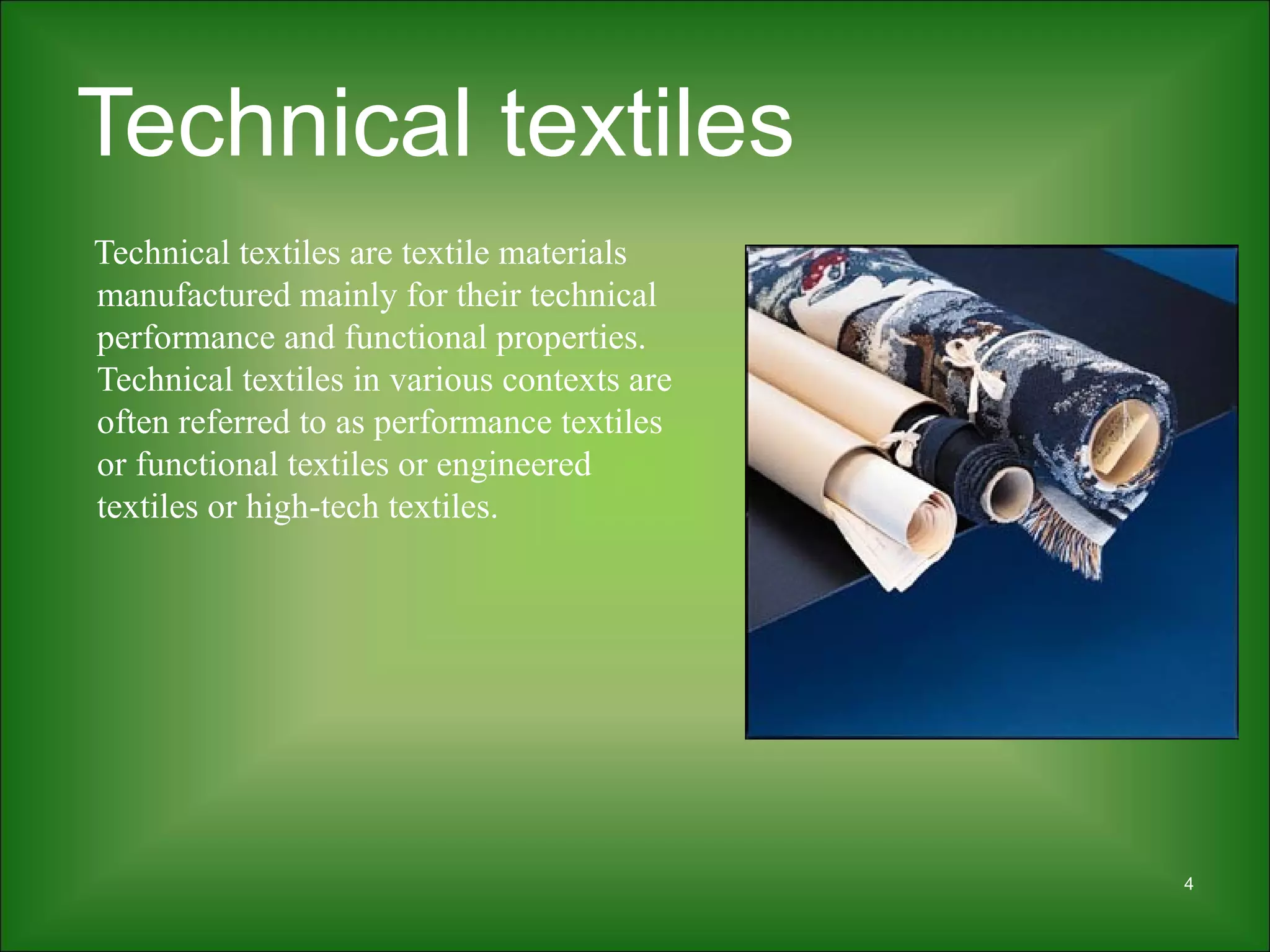
Technical textiles are textile materials
manufactured mainly for their technical
performance and functional properties.
Technical textiles in various contexts are
often referred to as performance textiles
or functional textiles or engineered
textiles or high-tech textiles.
4
Technical Textile fiber
Almost 90 % of the
fibers(link to textile fabric)
utilized to make technical
textiles belong to the
category of conventional
fibers and the fibers
specially developed to
specifically use in technical
textiles are not only
expensive but often have
limited applications.
Technical Textile products
Within the composites
industry, woven, knitted
braided, non woven(link)
and wound reinforcements
produced from glass, carbon
fiber and organic polymer
materials like aramids are
presently accepted as
technical textile products.
5
Other terms used in Technical Textile
 Industrial textile
 Functional textile
 Performance textile
 Engineering textile
 Invisible textile
 high-tech textile
6
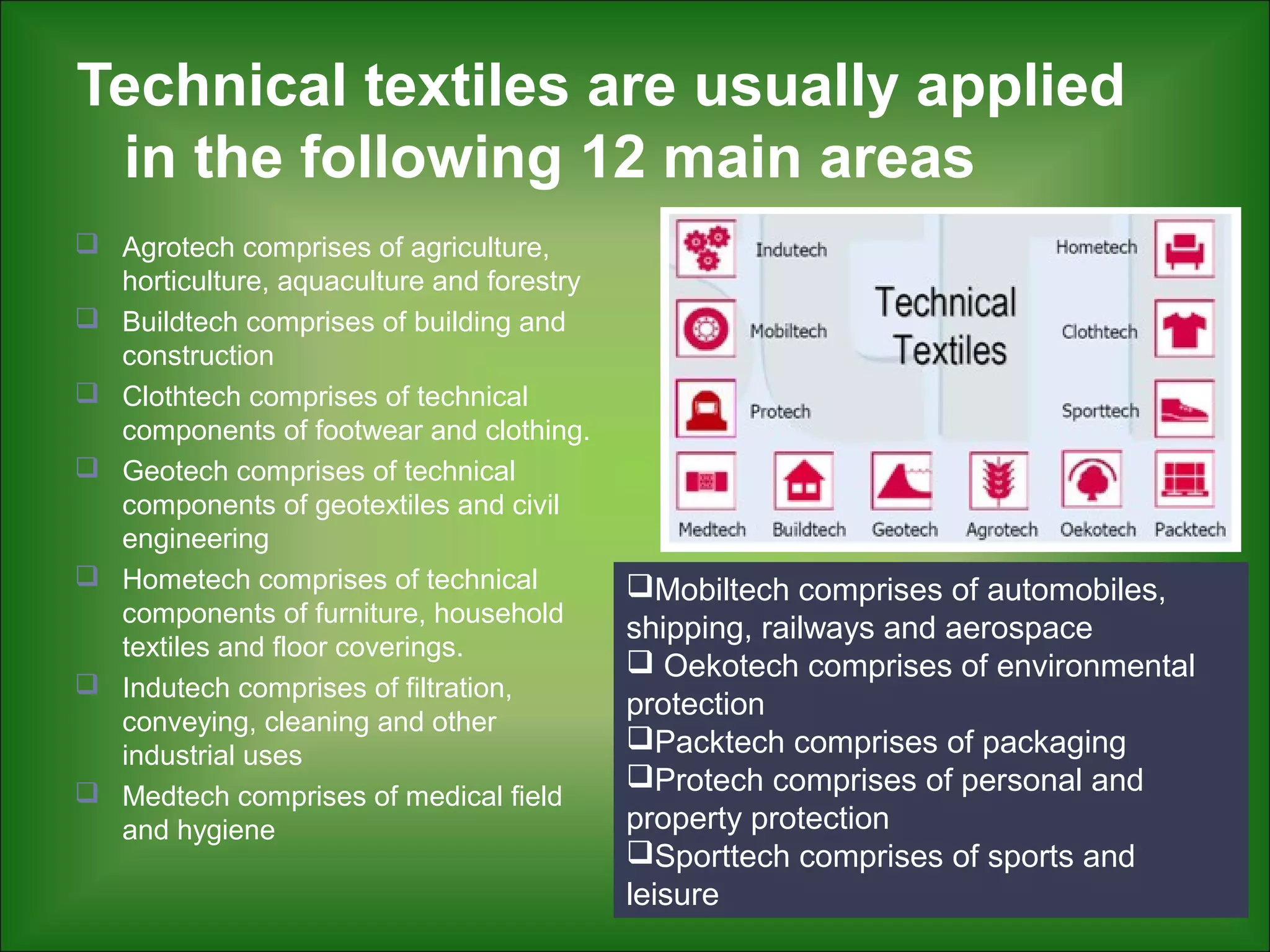
Technical textiles are usually applied
in the following 12 main areas
 Agrotech comprises of agriculture,
horticulture, aquaculture and forestry
 Buildtech comprises of building and
construction
 Clothtech comprises of technical
components of footwear and clothing.
 Geotech comprises of technical
components of geotextiles and civil
engineering
 Hometech comprises of technical
components of furniture, household
textiles and floor coverings.
 Indutech comprises of filtration,
conveying, cleaning and other
industrial uses
 Medtech comprises of medical field
and hygiene
7
Mobiltech comprises of automobiles,
shipping, railways and aerospace
 Oekotech comprises of environmental
protection
Packtech comprises of packaging
Protech comprises of personal and
property protection
Sporttech comprises of sports and
leisure
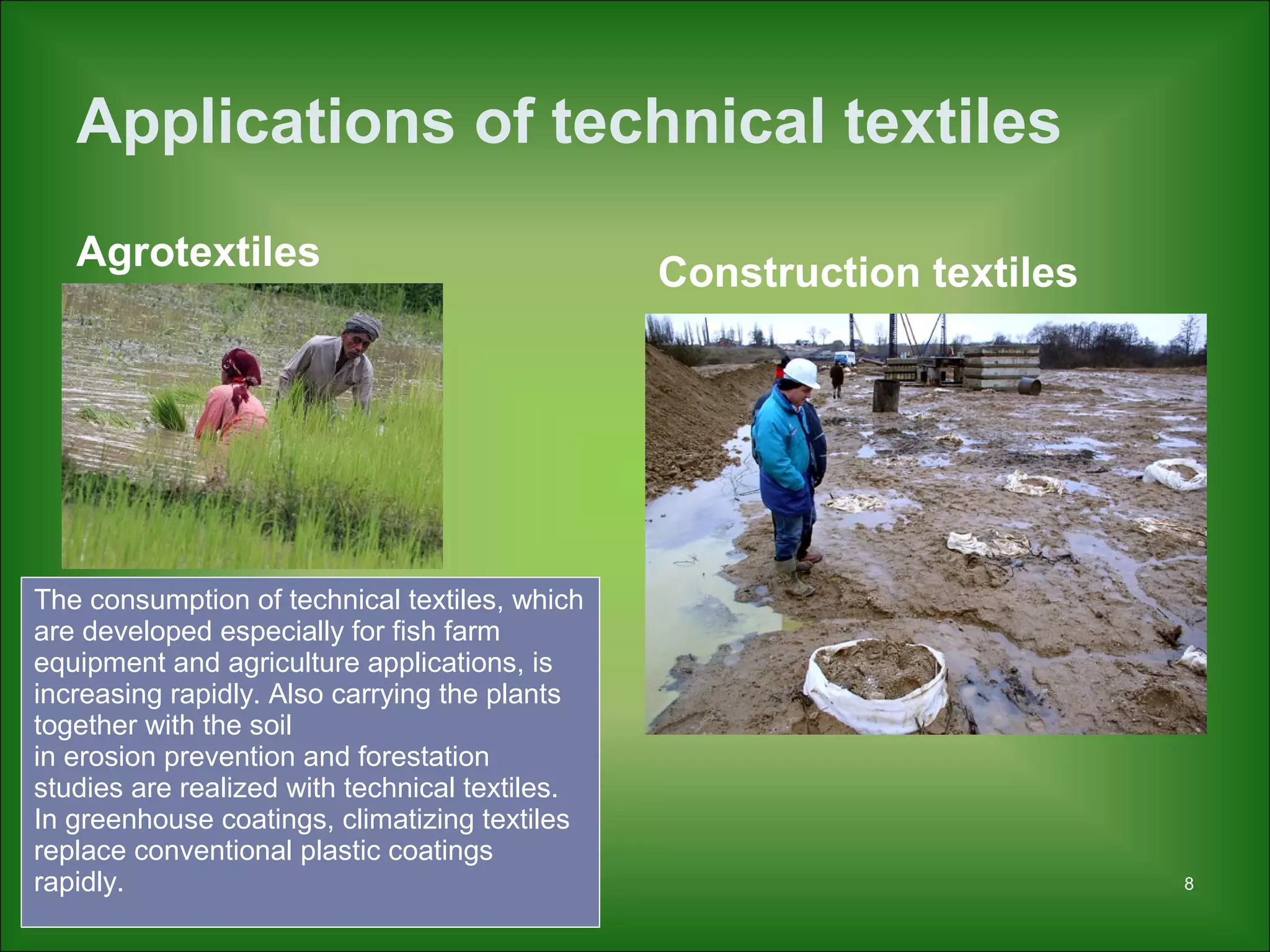
Applications of technical textiles
Agrotextiles Construction textiles
8
The consumption of technical textiles, which
are developed especially for fish farm
equipment and agriculture applications, is
increasing rapidly. Also carrying the plants
together with the soil
in erosion prevention and forestation
studies are realized with technical textiles.
In greenhouse coatings, climatizing textiles
replace conventional plastic coatings
rapidly.
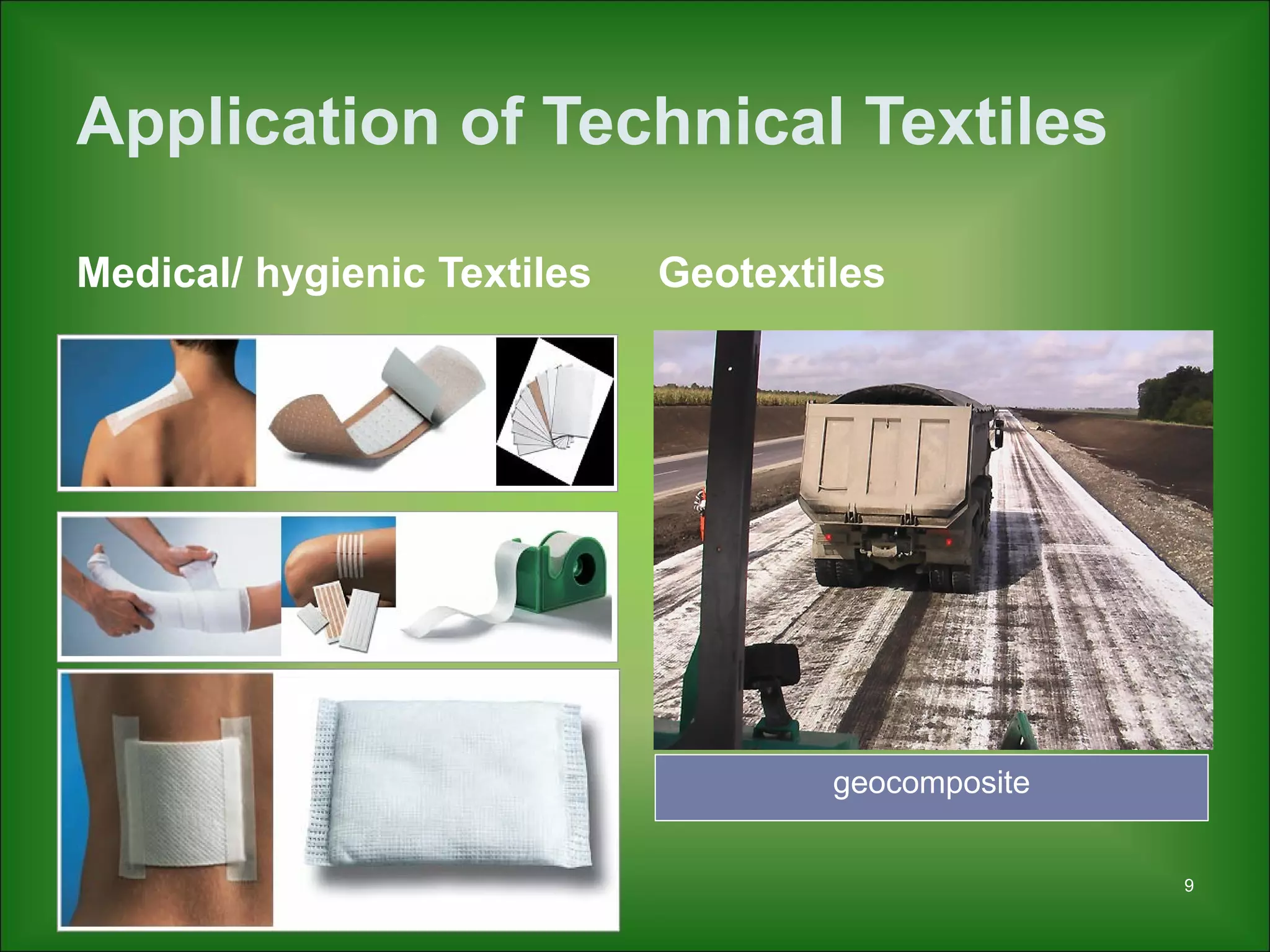
Application of Technical Textiles
Medical/ hygienic Textiles Geotextiles
9
geocomposite
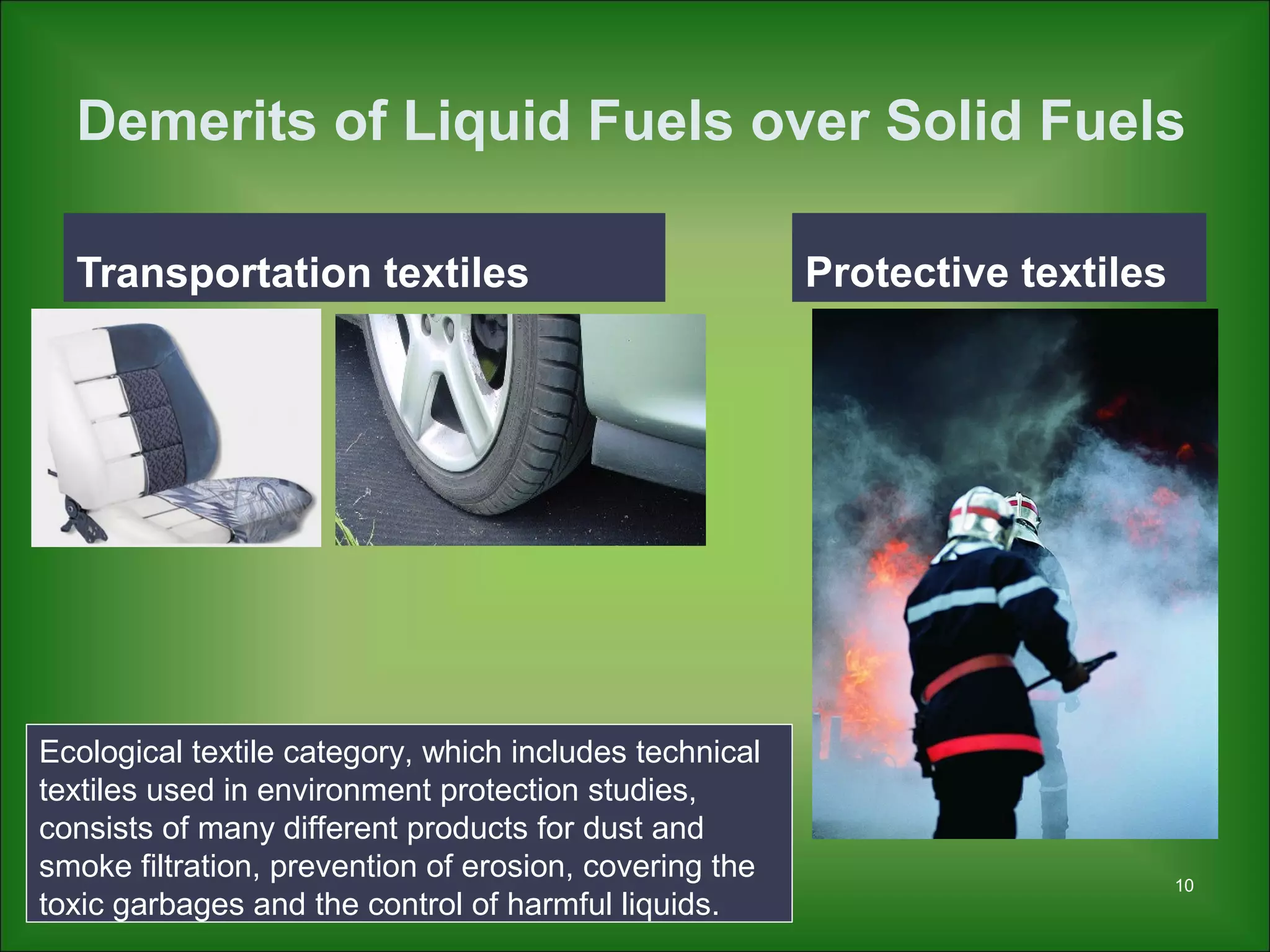
Demerits of Liquid Fuels over Solid Fuels
Transportation textiles Protective textiles
10
Ecological textile category, which includes technical
textiles used in environment protection studies,
consists of many different products for dust and
smoke filtration, prevention of erosion, covering the
toxic garbages and the control of harmful liquids.
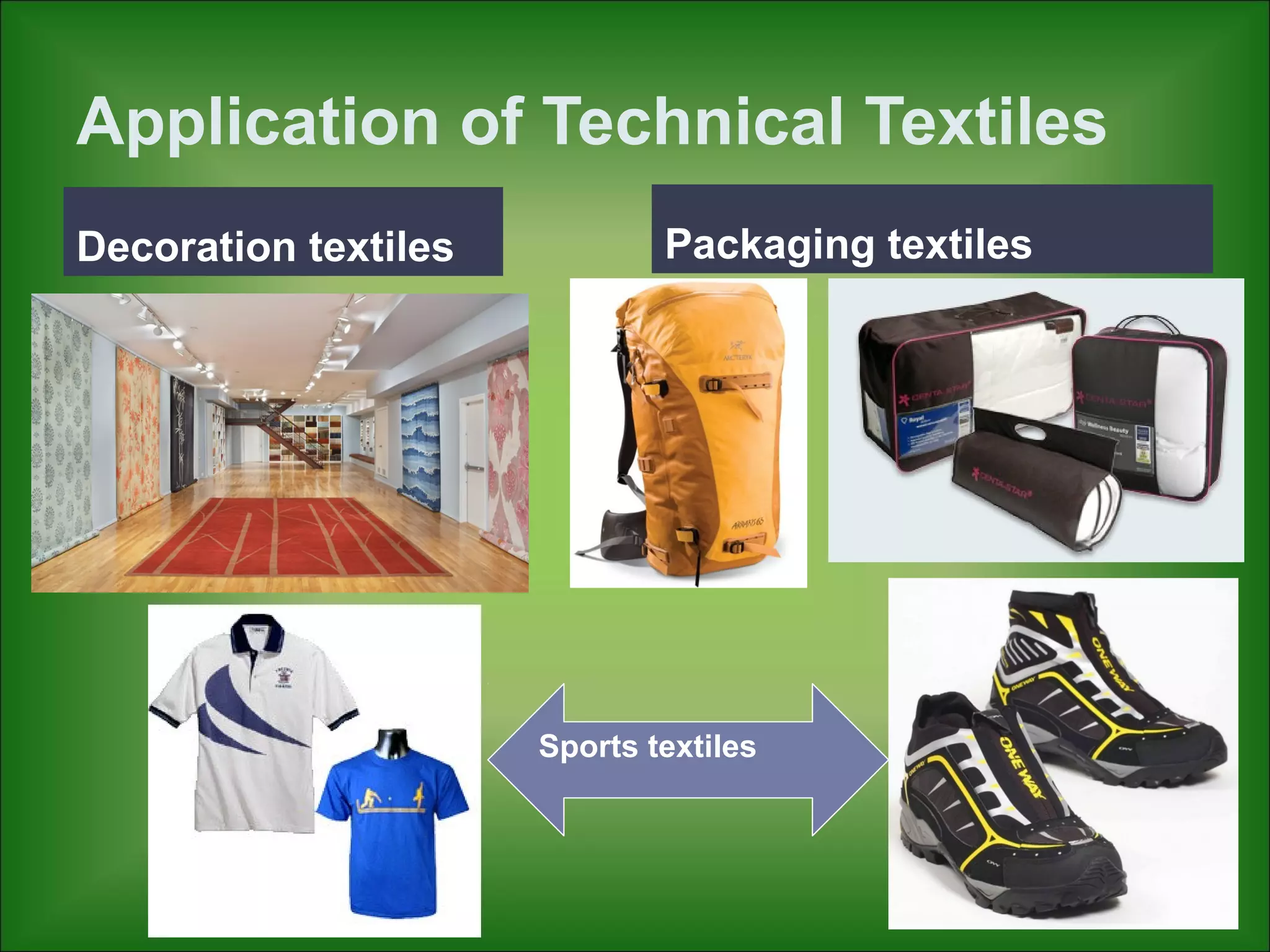
Application of Technical Textiles
Decoration textiles Packaging textiles
11
Sports textiles
Conclusion
Technical textile is more importance to developed our export economy.
Bangladesh is leg behind in technical textiles precuts as neither the
government nor the textile industry has made any serious efforts
towards synchronizing textile products with emerging needs of our
world markets by developing high value added products. our
government and the textile industry keep their focus on conventional
textiles ,ignoring technical textile and knowledge –based products.
12
13
Thanks All

Application of Technical Textile

  • 1.
  • 2.
    Application of TechnicalTextile Md. Azizul Haque Juel ID:161-32-308 Department of Textile Engineering
  • 3.
    3 Introduction The Textile Institutedefines technical textiles as the 'textile materials and products manufactured primarily for their technical and performance properties rather than their aesthetic or decorative characteristics '. An exceptional feature of technical textiles is the use of innumerable varities of raw materials, processes, product and application for their production. Some of the materials used for making technical textile such as Metal, like steel; Minerals, like asbestos and glass; Synthetic fibre polymers, like PES, PA, PAN, PP etc. Regenerated fibres like rayon fibre and acetate fibre. Natural fibres like cotton fibre, like cotton fibre, wool fibre etc.
  • 4.
    Technical textiles Technical textilesare textile materials manufactured mainly for their technical performance and functional properties. Technical textiles in various contexts are often referred to as performance textiles or functional textiles or engineered textiles or high-tech textiles. 4
  • 5.
    Technical Textile fiber Almost90 % of the fibers(link to textile fabric) utilized to make technical textiles belong to the category of conventional fibers and the fibers specially developed to specifically use in technical textiles are not only expensive but often have limited applications. Technical Textile products Within the composites industry, woven, knitted braided, non woven(link) and wound reinforcements produced from glass, carbon fiber and organic polymer materials like aramids are presently accepted as technical textile products. 5
  • 6.
    Other terms usedin Technical Textile  Industrial textile  Functional textile  Performance textile  Engineering textile  Invisible textile  high-tech textile 6
  • 7.
    Technical textiles areusually applied in the following 12 main areas  Agrotech comprises of agriculture, horticulture, aquaculture and forestry  Buildtech comprises of building and construction  Clothtech comprises of technical components of footwear and clothing.  Geotech comprises of technical components of geotextiles and civil engineering  Hometech comprises of technical components of furniture, household textiles and floor coverings.  Indutech comprises of filtration, conveying, cleaning and other industrial uses  Medtech comprises of medical field and hygiene 7 Mobiltech comprises of automobiles, shipping, railways and aerospace  Oekotech comprises of environmental protection Packtech comprises of packaging Protech comprises of personal and property protection Sporttech comprises of sports and leisure
  • 8.
    Applications of technicaltextiles Agrotextiles Construction textiles 8 The consumption of technical textiles, which are developed especially for fish farm equipment and agriculture applications, is increasing rapidly. Also carrying the plants together with the soil in erosion prevention and forestation studies are realized with technical textiles. In greenhouse coatings, climatizing textiles replace conventional plastic coatings rapidly.
  • 9.
    Application of TechnicalTextiles Medical/ hygienic Textiles Geotextiles 9 geocomposite
  • 10.
    Demerits of LiquidFuels over Solid Fuels Transportation textiles Protective textiles 10 Ecological textile category, which includes technical textiles used in environment protection studies, consists of many different products for dust and smoke filtration, prevention of erosion, covering the toxic garbages and the control of harmful liquids.
  • 11.
    Application of TechnicalTextiles Decoration textiles Packaging textiles 11 Sports textiles
  • 12.
    Conclusion Technical textile ismore importance to developed our export economy. Bangladesh is leg behind in technical textiles precuts as neither the government nor the textile industry has made any serious efforts towards synchronizing textile products with emerging needs of our world markets by developing high value added products. our government and the textile industry keep their focus on conventional textiles ,ignoring technical textile and knowledge –based products. 12
  • 13.