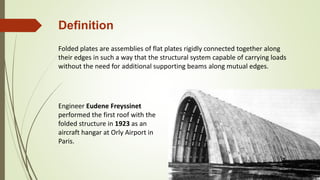
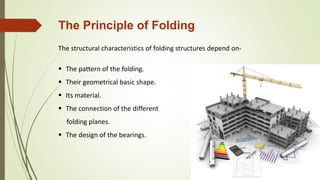
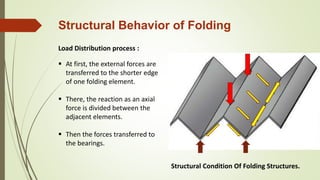
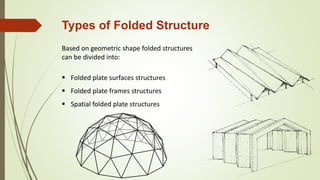
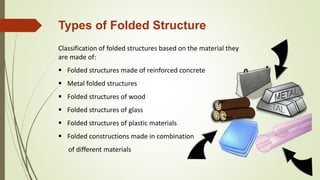
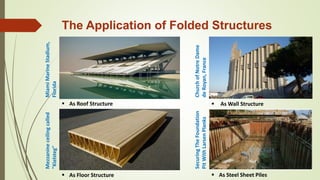
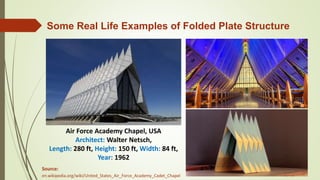
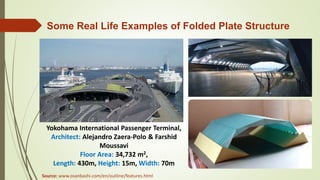
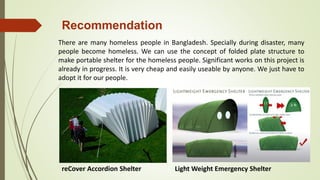
Folded plate structures are assemblies of flat plates rigidly connected along edges to form a structure without additional beams. They were first used in 1923 for an aircraft hangar. The principle is inspired by folding in nature like leaves and wings. Structural behavior depends on folding pattern and connections. Types include folded plate surfaces, frames, and spatial structures made of materials like concrete, metal, wood, and glass. Applications include roofs, walls, floors, and steel sheet piles. Advantages are light construction and longer spans while disadvantages include complex formwork and labor. Examples are the Air Force Academy Chapel and Yokohama Passenger Terminal. The document recommends using folded plates for portable homeless shelters in Bangladesh.