BY: Huzaifa Atique 
Sir Syed University of Engineering and 
Technology
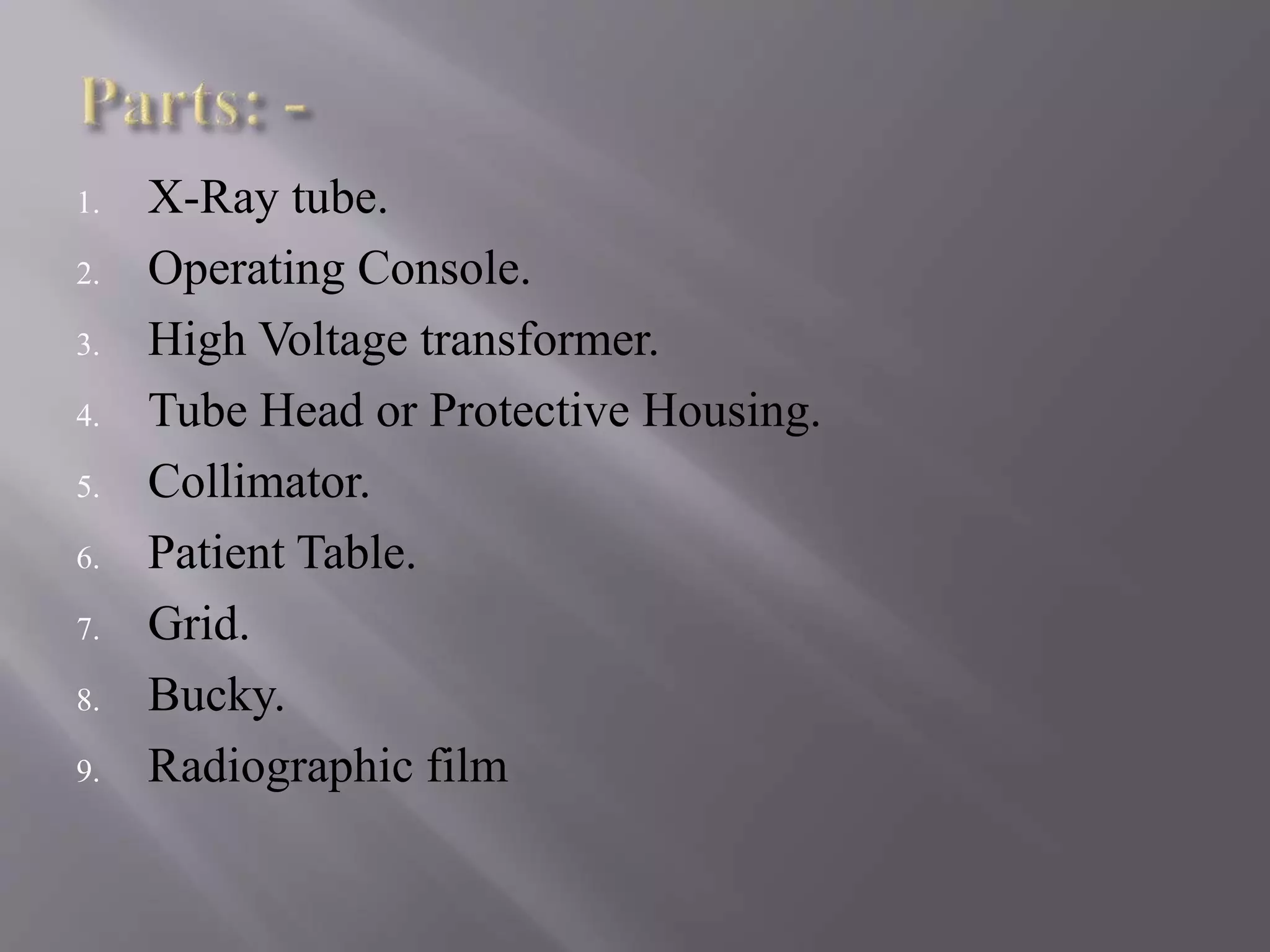
1. X-Ray tube. 
2. Operating Console. 
3. High Voltage transformer. 
4. Tube Head or Protective Housing. 
5. Collimator. 
6. Patient Table. 
7. Grid. 
8. Bucky. 
9. Radiographic film
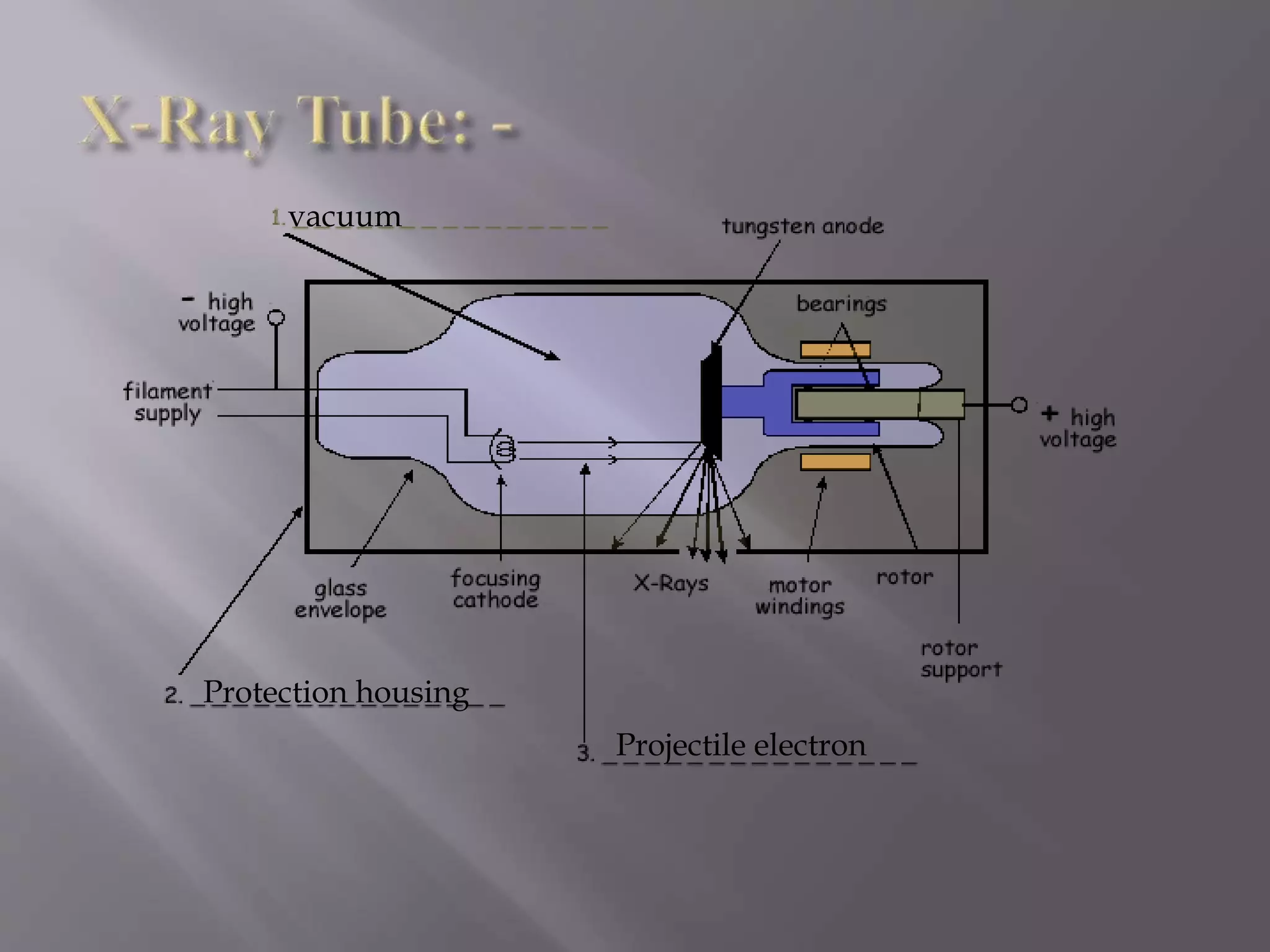
vacuum 
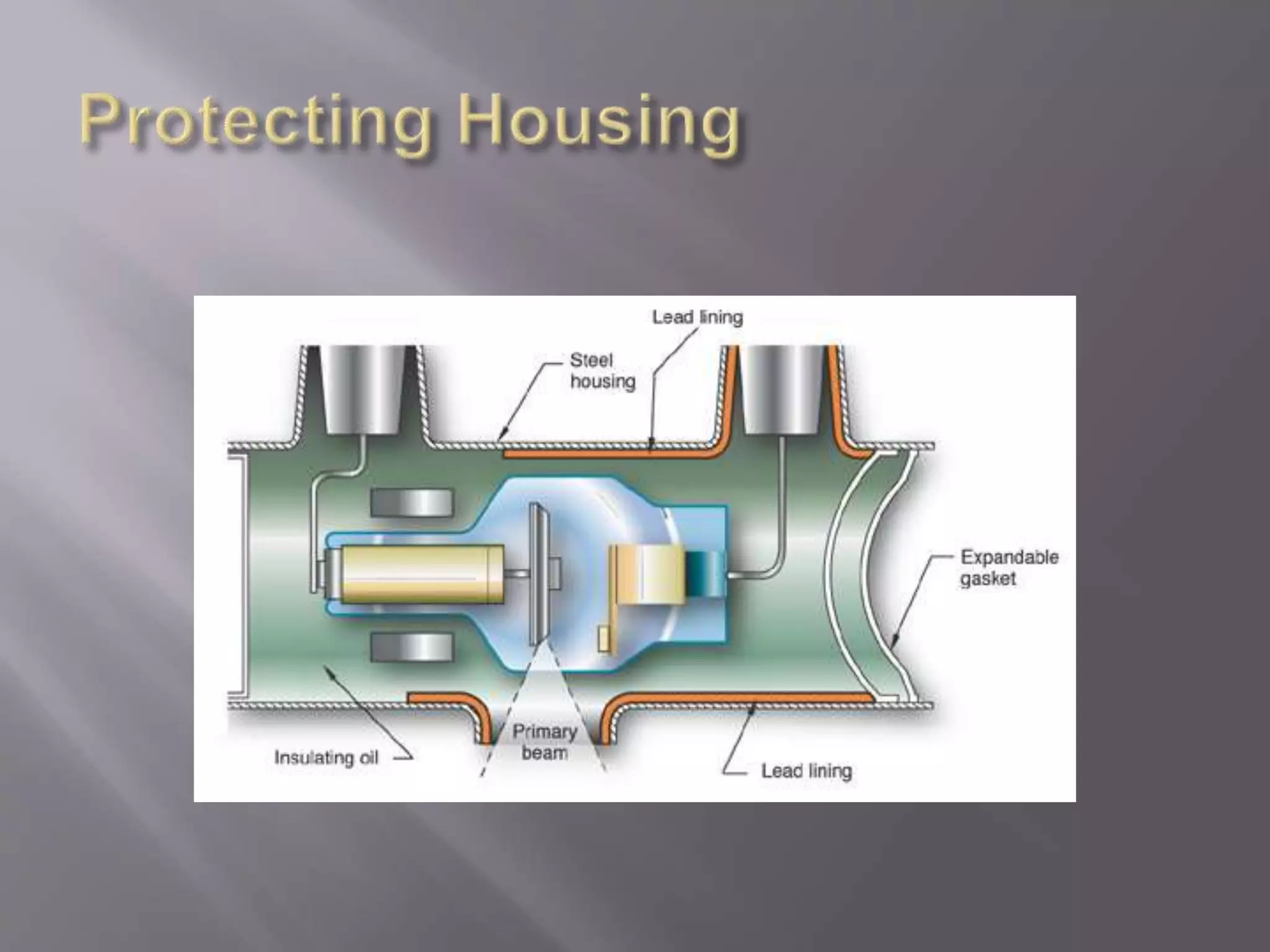
Protection housing 
Projectile electron
 It is an important component of x-ray machine 
which is inaccessible as it is contained in a 
protective housing. 
 It is a vacuum tube. 
 Early tubes were called Crook’s tube and were not 
vacuum. 
 Modern tubes are known as Coolidge tube and are 
vacuumed. 
 There are two primary parts. 
 1) the cathode 
 2) the Anode.
 It is an apparatus in X-Ray machine that allows 
to control the x-ray tube current and voltage. 
 The Console Controls: - 
 Line compensation. 
 kVp. 
 mA. 
 Exposure time.
 It have 5 further parts: 
1. Line compensator. 
2. Auto transformer. 
3. Current source. 
4. Voltage source. 
5. Exposure time.
 Most machine are designed to operate at 220 
volts while some will work with 110 volts or 
440 volts 
 The power company often cannot provide 
exactly 220 volts at all times. 
 Because of variations in power distribution to 
the hospital and in power consumption by the 
various sections of the hospital, the voltage to 
the x-ray unit may vary by 5%, which will 
result in large variations in x-ray output.
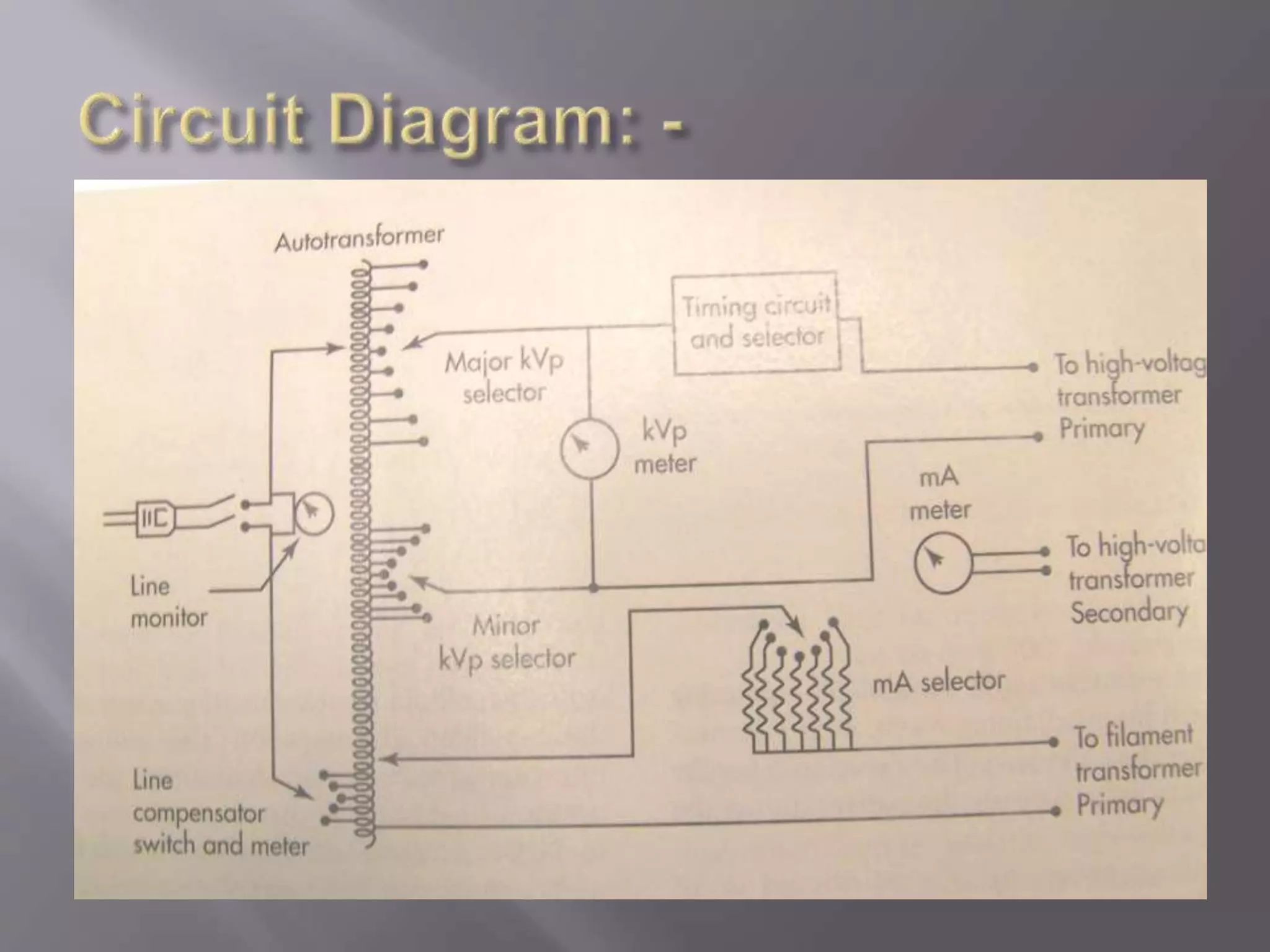
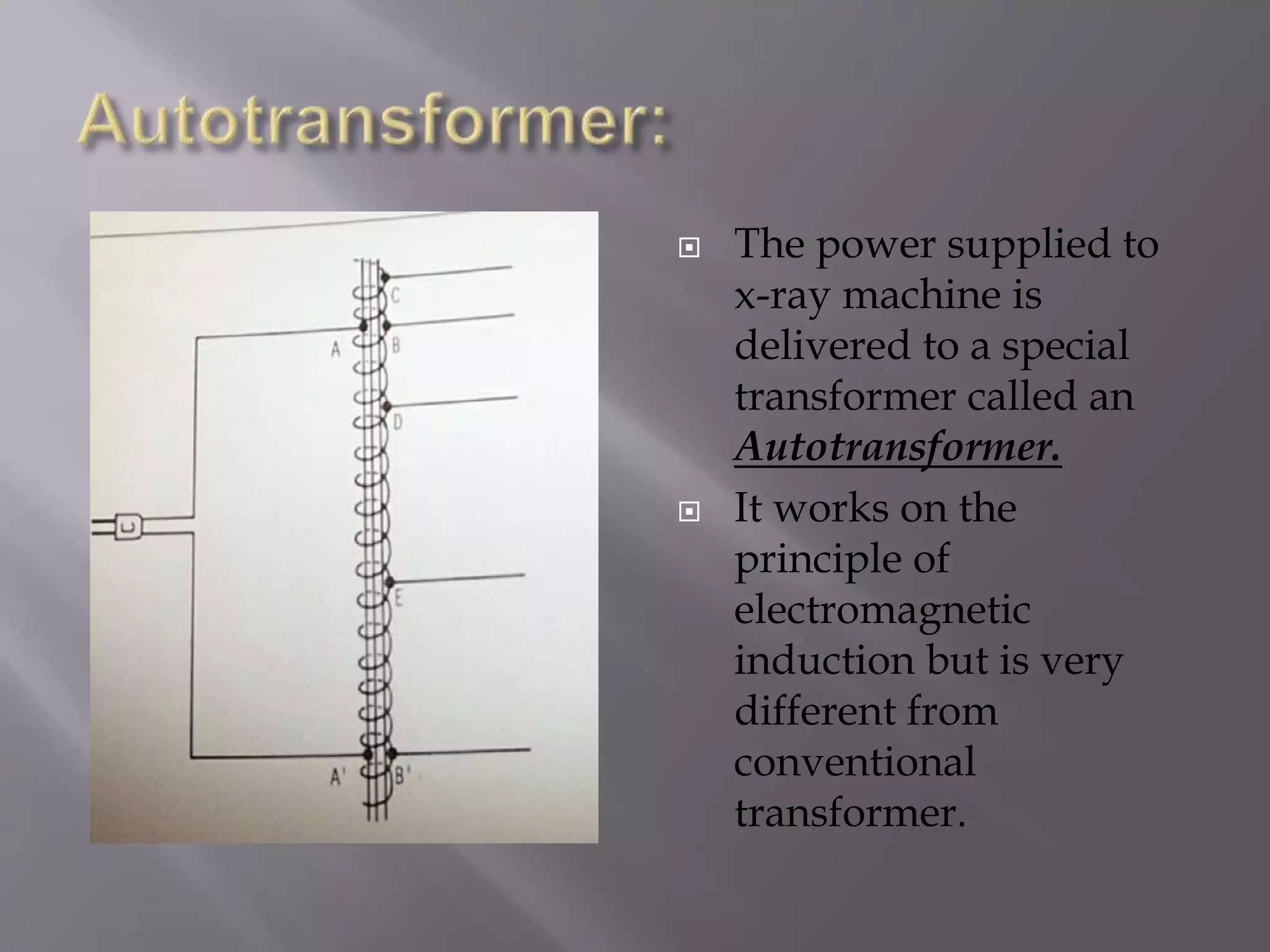
 The power supplied to 
x-ray machine is 
delivered to a special 
transformer called an 
Autotransformer. 
 It works on the 
principle of 
electromagnetic 
induction but is very 
different from 
conventional 
transformer.
 It has only one winding and one core. 
 The single winding has number of 
connections, or electric taps. 
 The purpose to use the Autotransformer 
is to overcome induction losses. 
 Its value ranges from 0 to 400V.
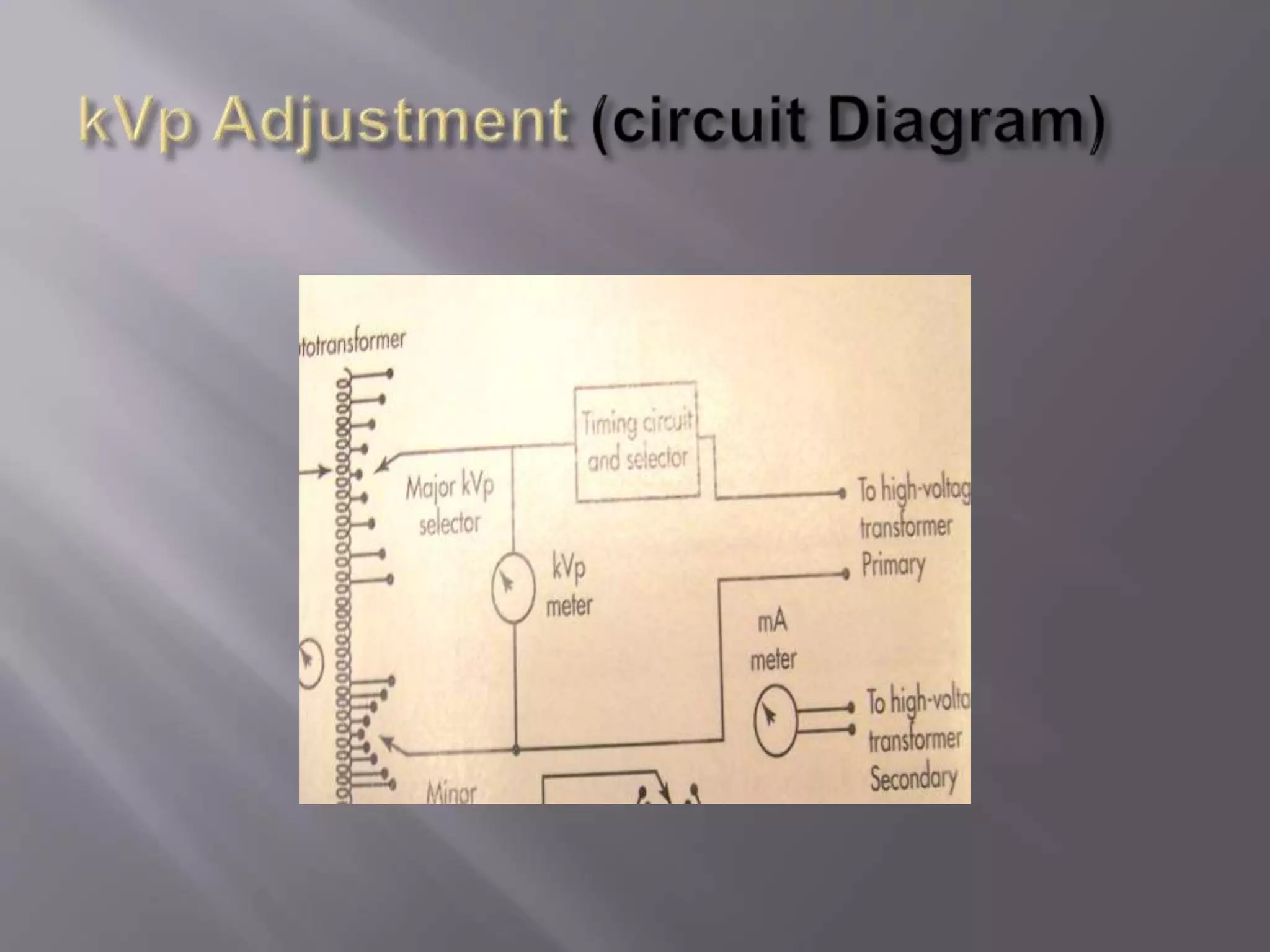
 X-ray console have adjustments labeled major 
kVp and minor kVp. 
 By the combinations of these two, we can get 
the required kVp. 
 The low voltage becomes input to the high 
voltage step up transformer. 
 The kVp meter is placed across the output 
terminal of autotransformer.
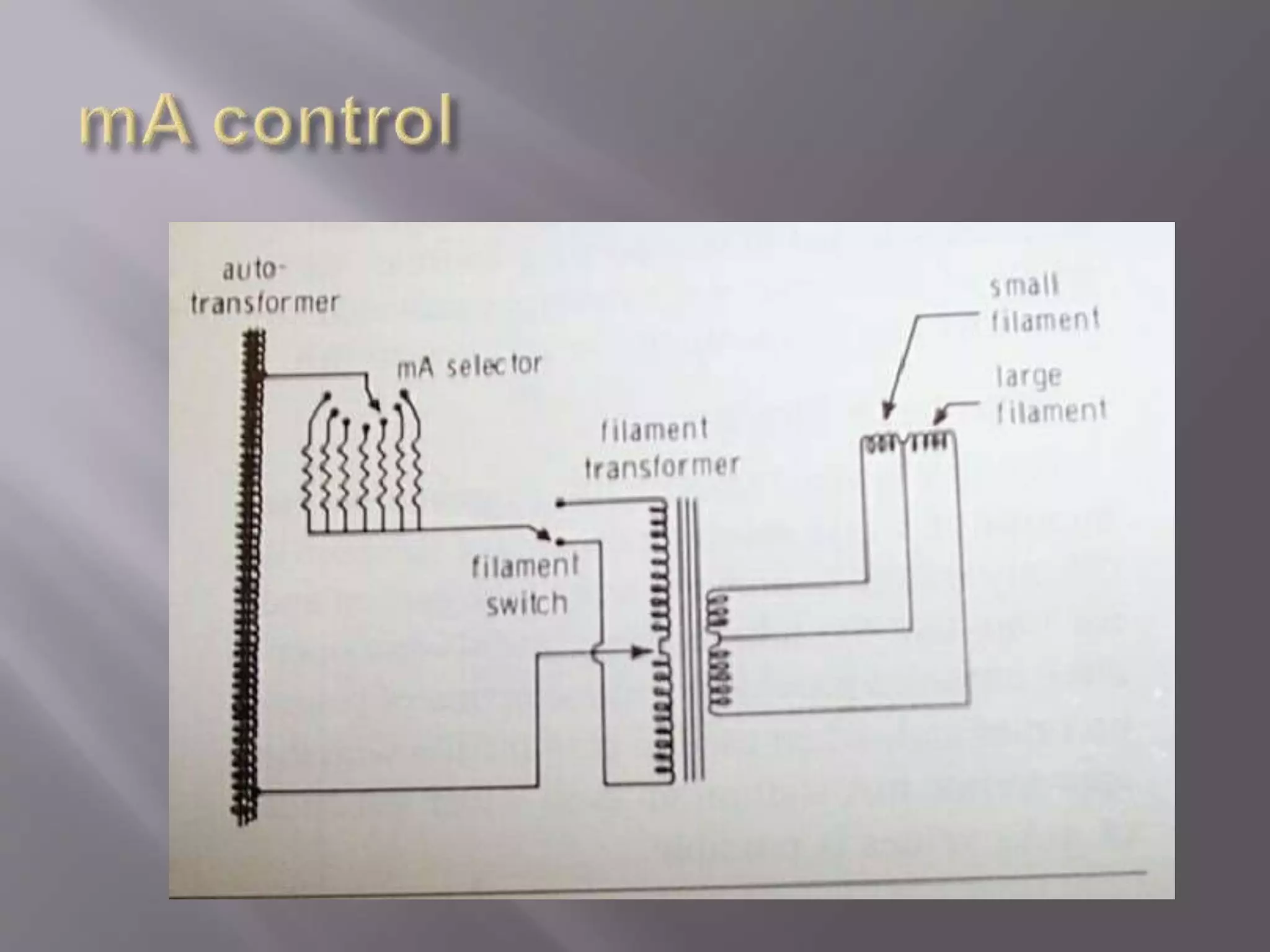
 The tube current, the number of electrons 
crossing from the cathode to anode per second 
is measured in milli Amperes (mA). 
 The quantity of electrons is determined by 
filament temperature. 
 The filament normally operates at currents 
between 3 and 5 A. 
 The Tube Current is controlled through a 
separate circuit called the filament circuit. 
 The transformer used for filament is step 
down .
 It consists of a mechanical or electronic device 
whose action is to make and break the high 
voltage across the tube on the primary side of 
the high voltage section. 
 There are five types of timers: 
 Mechanical Timers 
 Synchronous Timers 
 Electronic Timers 
 mAs Timers 
 Phototimers.
 The high voltage transformer is a step-up 
transformer. 
 There will be more winding on the secondary side 
compared to the primary side. 
 The ratio of windings is referred to as the turns 
ratio. 
 The only difference between the primary and 
secondary waveforms is the amplitude. 
 The turn ratio for most x-ray high voltage 
transformers is between 500 and 1000. 
 The primary voltage is measured in volts, and 
secondary in kilovolts.
 X-ray tube is always mounted inside a lead-lined 
protective housing that is designed to: 
 Prevent excessive radiation exposure. 
 Prevent electric shock to the patient and operator 
(technologist) 
 Incorporates specially designed high-voltage 
receptacles. 
 Provides mechanical support for the x-ray tube 
and protects it from damage. 
 Some tube housings contain oil in which the 
tube is bathed. 
 Some tube housings contain a cooling fan to 
air-cool the tube.
 When properly designed, they reduce the level 
of leakage radiation to less than 100 mR/hr 
at 1 meter when operated at maximum 
conditions.
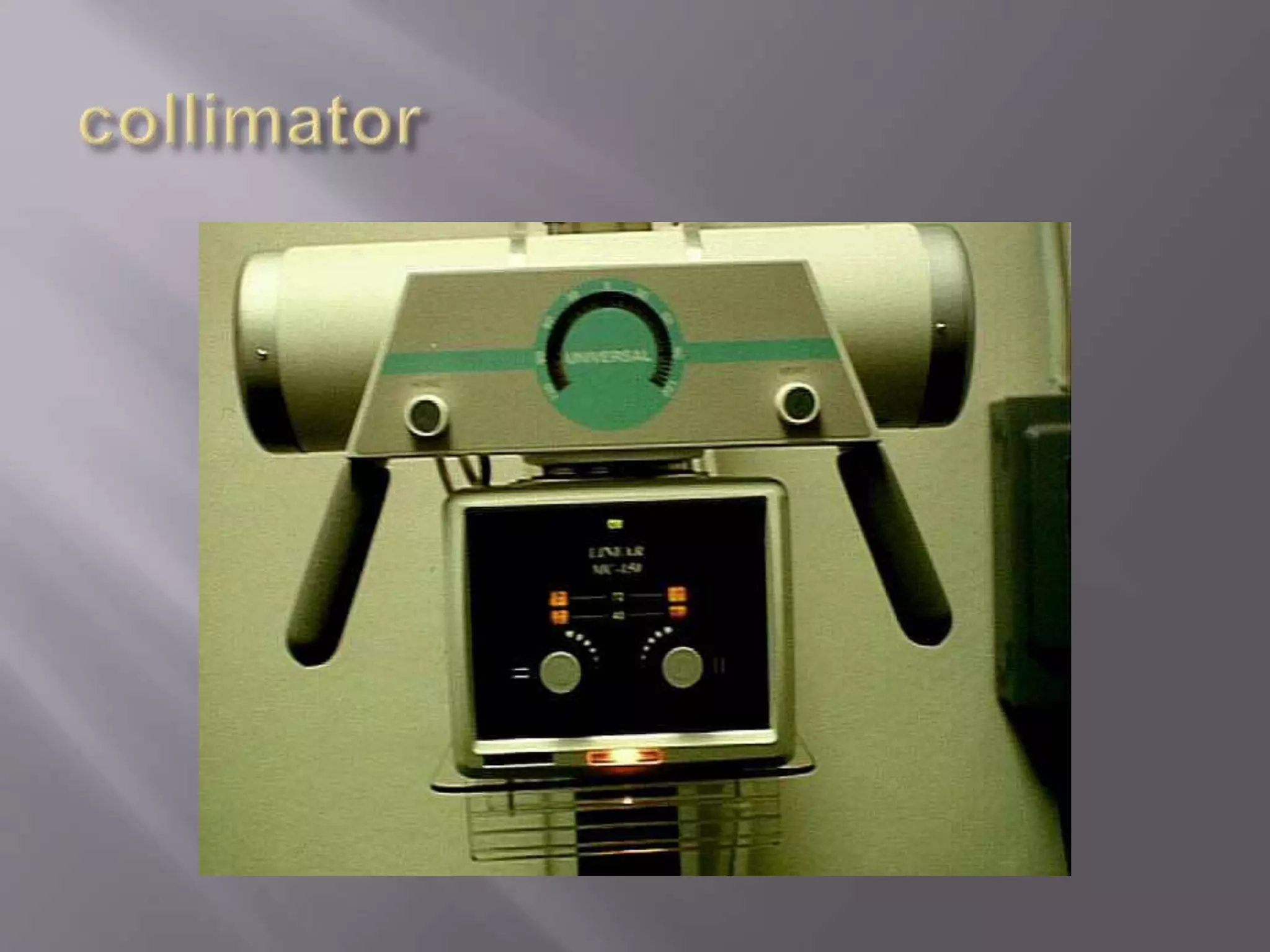
 The Collimator is attached to the x-ray tube 
below the glass window where the useful beam 
is emitted. 
 Lead shutters are used to restrict the beam. 
 Its purpose is to minimize field of view, to 
avoid un necessary exposure by using lead 
plates.
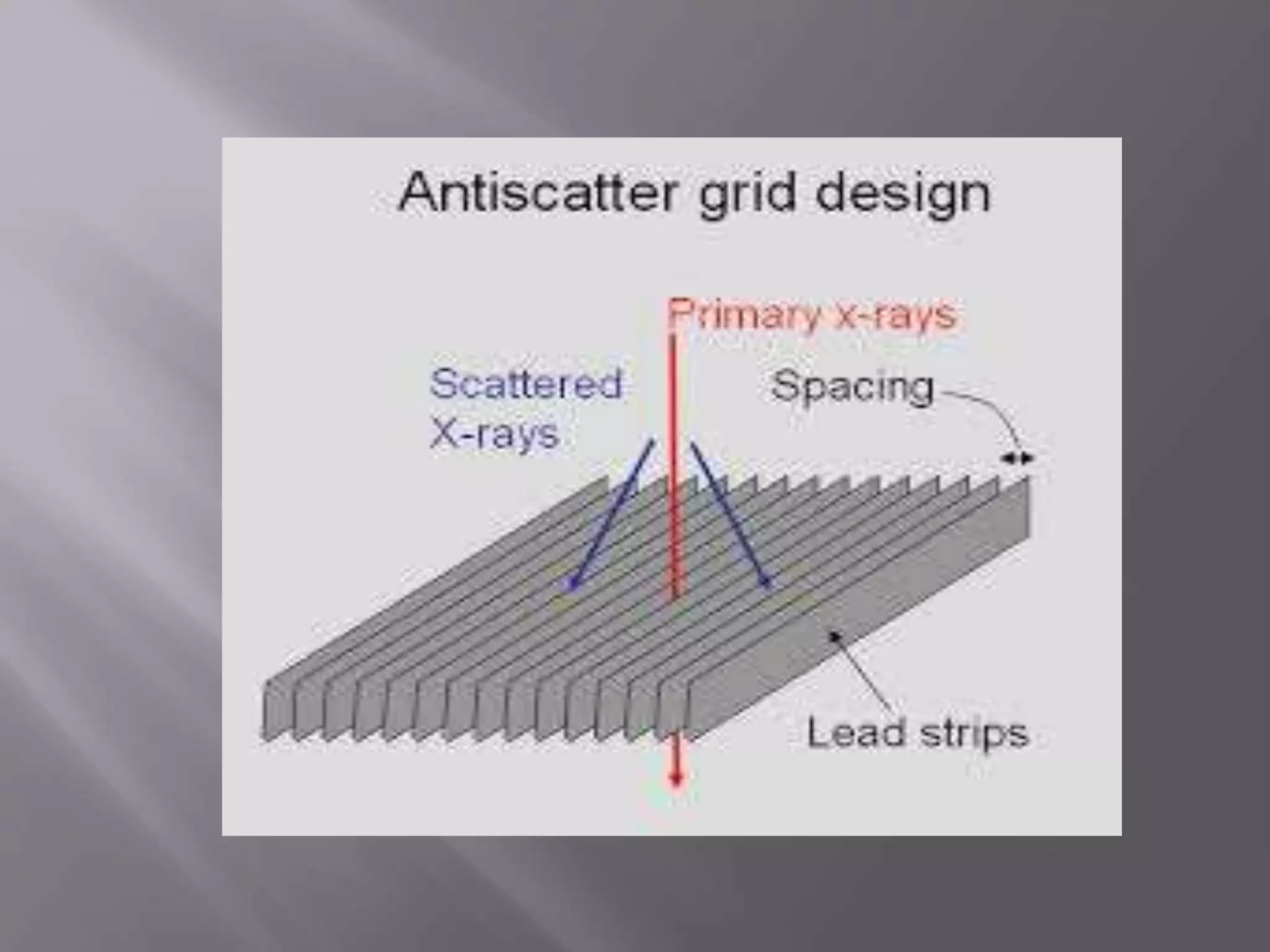
 By virtue of function and material, collimator 
and grid are same but they have different 
location. 
 It is made up of lead. 
 It is located just after patient. 
 It is used to destroy scattered radiation from 
the body.
 Some of the X-Rays entering the body of a 
patient are actually scattered and no longer 
travel in a straight line, this scattering can 
cause blurring of X-Ray image. 
 The rays which are at 90’ can be passed .
 A Bucky is a component of x-ray units that 
holds the x-ray film cassette and moves 
the grid during x-ray exposure. The motion 
keeps the lead strips from being seen on the x-ray 
picture. 
The name refers to Dr. Gustave Bucky who 
invented the use of filter grids in 1913.
 Two types of x-ray photon are respnsible for 
density, contrast and image on a radiograph. 
 Those that pass through the patient without 
interacting and those that are scattered in the 
patient through compton interaction. 
 Together these x-rays that exit from the patient and 
intersect the film are called Remnant x-rays. 
 Film Construction 
 Radiographic Film has two basic parts. 
 Base 
 Emulsion 
 Most film has two layers of emulsion so it is referred to as 
Double Emulsion Film
• The emulsion is the heart of the film. The x-rays 
or light from the intensifying screens interact 
with the emulsion and transfer information to 
the film.
 Thank you

Introduction to the parts of x ray machine

  • 1.
    BY: Huzaifa Atique Sir Syed University of Engineering and Technology
  • 2.
    1. X-Ray tube. 2. Operating Console. 3. High Voltage transformer. 4. Tube Head or Protective Housing. 5. Collimator. 6. Patient Table. 7. Grid. 8. Bucky. 9. Radiographic film
  • 3.
    vacuum Protection housing Projectile electron
  • 4.
     It isan important component of x-ray machine which is inaccessible as it is contained in a protective housing.  It is a vacuum tube.  Early tubes were called Crook’s tube and were not vacuum.  Modern tubes are known as Coolidge tube and are vacuumed.  There are two primary parts.  1) the cathode  2) the Anode.
  • 5.
     It isan apparatus in X-Ray machine that allows to control the x-ray tube current and voltage.  The Console Controls: -  Line compensation.  kVp.  mA.  Exposure time.
  • 7.
     It have5 further parts: 1. Line compensator. 2. Auto transformer. 3. Current source. 4. Voltage source. 5. Exposure time.
  • 8.
     Most machineare designed to operate at 220 volts while some will work with 110 volts or 440 volts  The power company often cannot provide exactly 220 volts at all times.  Because of variations in power distribution to the hospital and in power consumption by the various sections of the hospital, the voltage to the x-ray unit may vary by 5%, which will result in large variations in x-ray output.
  • 9.
     The powersupplied to x-ray machine is delivered to a special transformer called an Autotransformer.  It works on the principle of electromagnetic induction but is very different from conventional transformer.
  • 10.
     It hasonly one winding and one core.  The single winding has number of connections, or electric taps.  The purpose to use the Autotransformer is to overcome induction losses.  Its value ranges from 0 to 400V.
  • 12.
     X-ray consolehave adjustments labeled major kVp and minor kVp.  By the combinations of these two, we can get the required kVp.  The low voltage becomes input to the high voltage step up transformer.  The kVp meter is placed across the output terminal of autotransformer.
  • 14.
     The tubecurrent, the number of electrons crossing from the cathode to anode per second is measured in milli Amperes (mA).  The quantity of electrons is determined by filament temperature.  The filament normally operates at currents between 3 and 5 A.  The Tube Current is controlled through a separate circuit called the filament circuit.  The transformer used for filament is step down .
  • 15.
     It consistsof a mechanical or electronic device whose action is to make and break the high voltage across the tube on the primary side of the high voltage section.  There are five types of timers:  Mechanical Timers  Synchronous Timers  Electronic Timers  mAs Timers  Phototimers.
  • 16.
     The highvoltage transformer is a step-up transformer.  There will be more winding on the secondary side compared to the primary side.  The ratio of windings is referred to as the turns ratio.  The only difference between the primary and secondary waveforms is the amplitude.  The turn ratio for most x-ray high voltage transformers is between 500 and 1000.  The primary voltage is measured in volts, and secondary in kilovolts.
  • 18.
     X-ray tubeis always mounted inside a lead-lined protective housing that is designed to:  Prevent excessive radiation exposure.  Prevent electric shock to the patient and operator (technologist)  Incorporates specially designed high-voltage receptacles.  Provides mechanical support for the x-ray tube and protects it from damage.  Some tube housings contain oil in which the tube is bathed.  Some tube housings contain a cooling fan to air-cool the tube.
  • 19.
     When properlydesigned, they reduce the level of leakage radiation to less than 100 mR/hr at 1 meter when operated at maximum conditions.
  • 21.
     The Collimatoris attached to the x-ray tube below the glass window where the useful beam is emitted.  Lead shutters are used to restrict the beam.  Its purpose is to minimize field of view, to avoid un necessary exposure by using lead plates.
  • 22.
     By virtueof function and material, collimator and grid are same but they have different location.  It is made up of lead.  It is located just after patient.  It is used to destroy scattered radiation from the body.
  • 24.
     Some ofthe X-Rays entering the body of a patient are actually scattered and no longer travel in a straight line, this scattering can cause blurring of X-Ray image.  The rays which are at 90’ can be passed .
  • 25.
     A Buckyis a component of x-ray units that holds the x-ray film cassette and moves the grid during x-ray exposure. The motion keeps the lead strips from being seen on the x-ray picture. The name refers to Dr. Gustave Bucky who invented the use of filter grids in 1913.
  • 26.
     Two typesof x-ray photon are respnsible for density, contrast and image on a radiograph.  Those that pass through the patient without interacting and those that are scattered in the patient through compton interaction.  Together these x-rays that exit from the patient and intersect the film are called Remnant x-rays.  Film Construction  Radiographic Film has two basic parts.  Base  Emulsion  Most film has two layers of emulsion so it is referred to as Double Emulsion Film
  • 27.
    • The emulsionis the heart of the film. The x-rays or light from the intensifying screens interact with the emulsion and transfer information to the film.
  • 28.