Presented by:
Aaditee. S. Kulkarni
Omkar. R. Haldonkar
Pranali. N. Kulkarni
Ganesh M. Nair
What are x rays?
    Electromagnetic radiations.


    Wavelength 0.01 to 10 nanometers.


    Can penetrate some solids and liquids, and all
    uncompressed gases.


    Used for diagnostic radiology.
Three major elements of an x-ray
 machine:
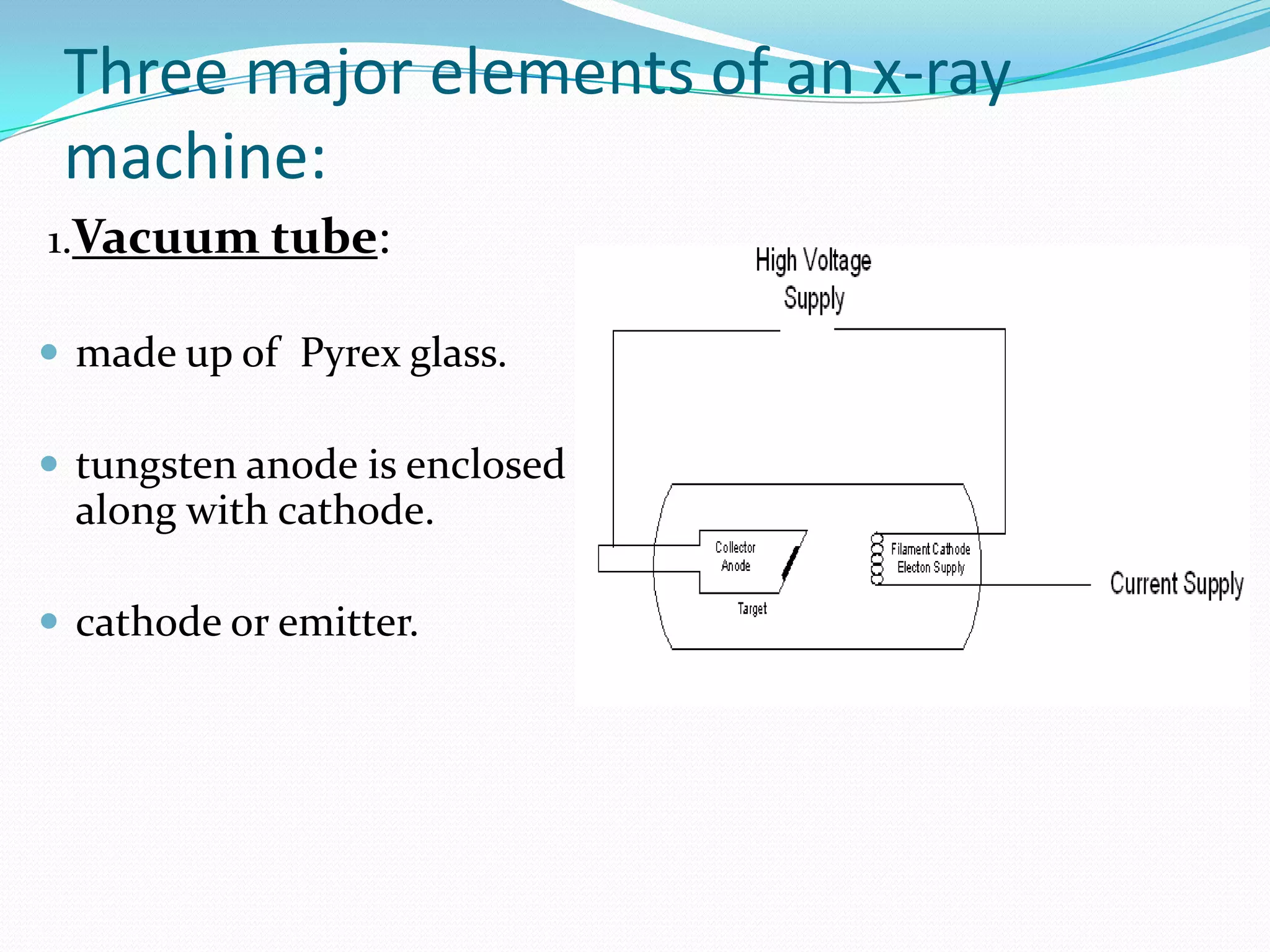
1.Vacuum tube:

 made up of Pyrex glass.

 tungsten anode is enclosed
  along with cathode.

 cathode or emitter.
X-ray tube
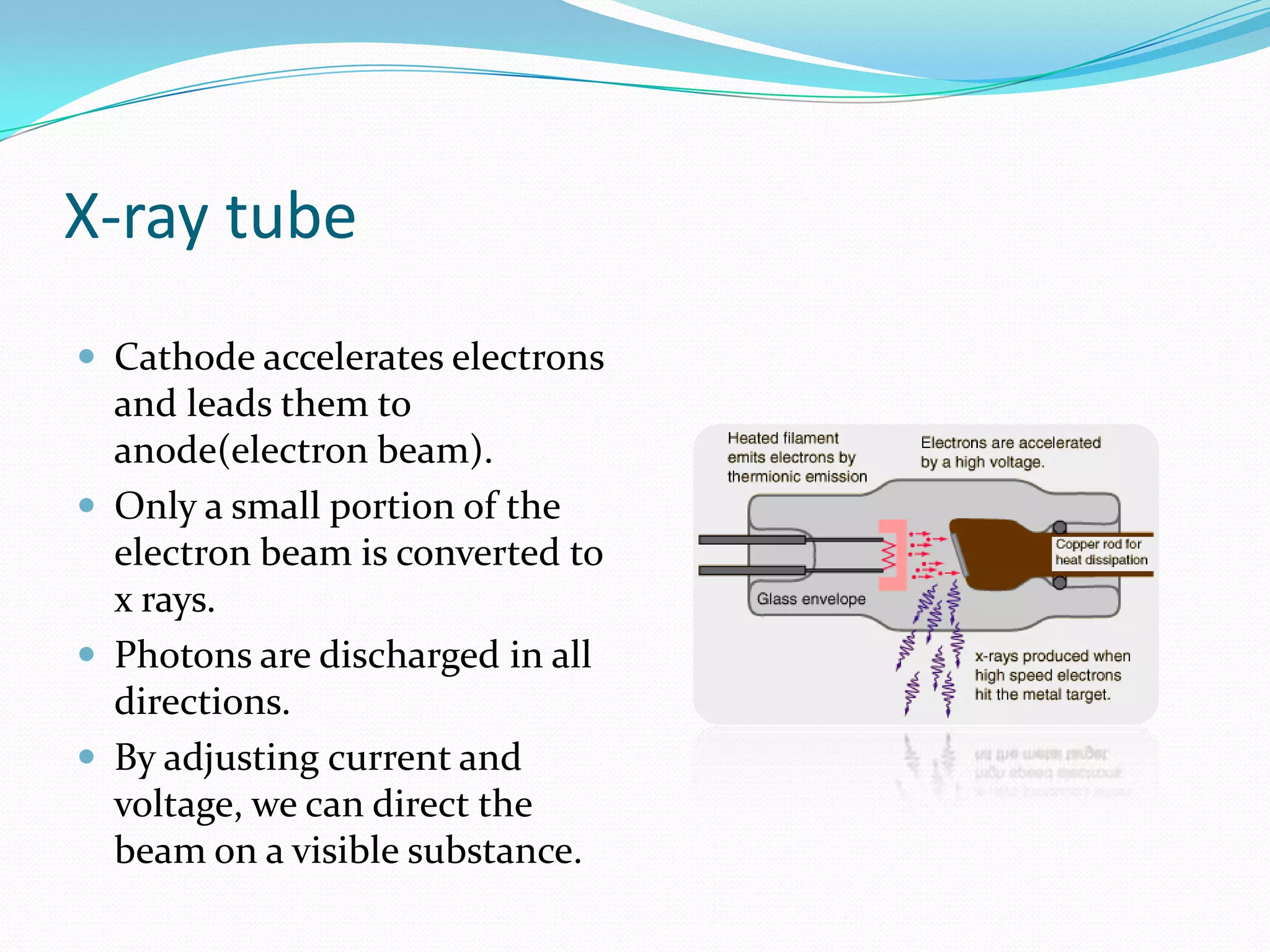
 Cathode accelerates electrons
  and leads them to
  anode(electron beam).
 Only a small portion of the
  electron beam is converted to
  x rays.
 Photons are discharged in all
  directions.
 By adjusting current and
  voltage, we can direct the
  beam on a visible substance.
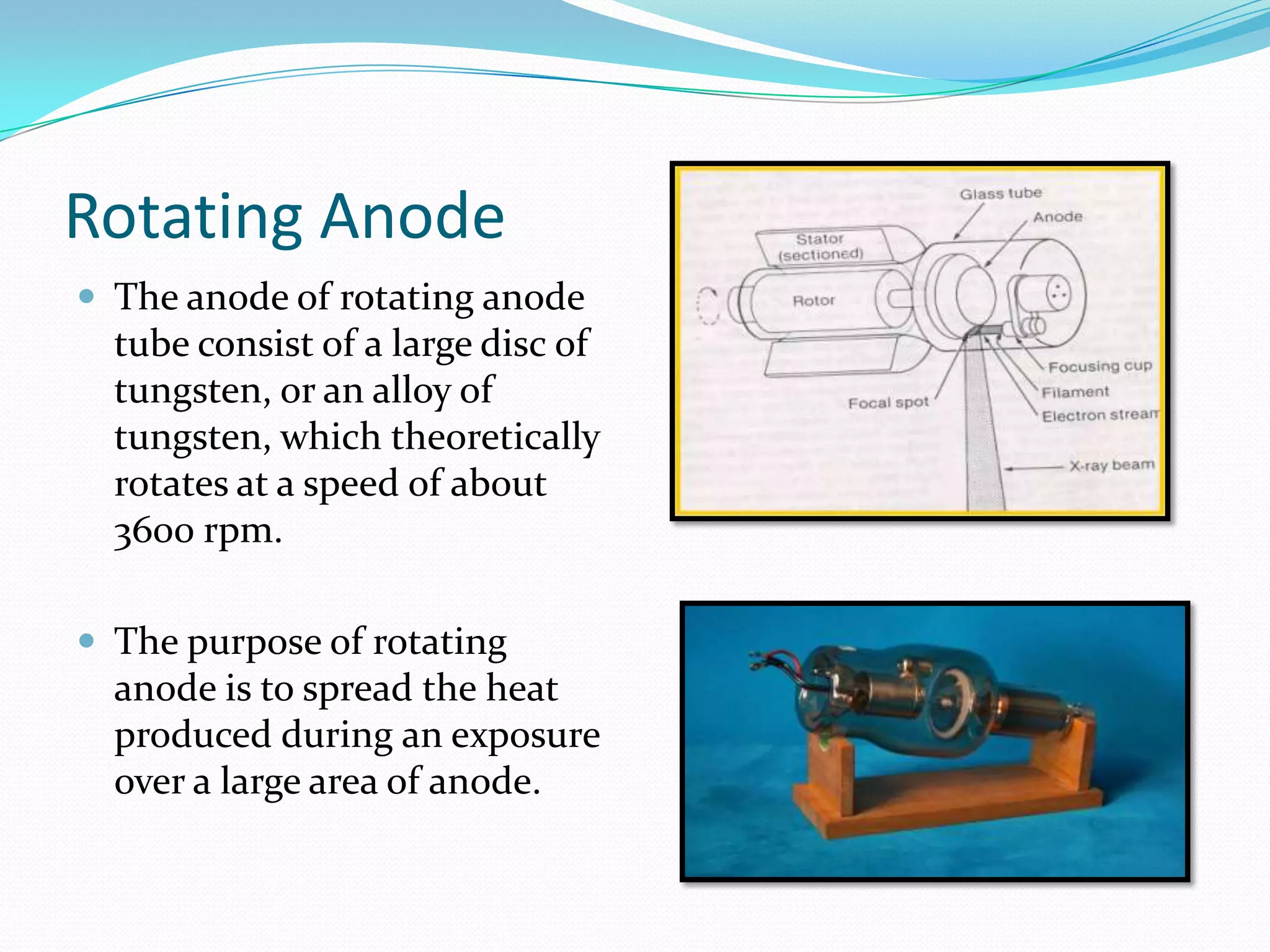
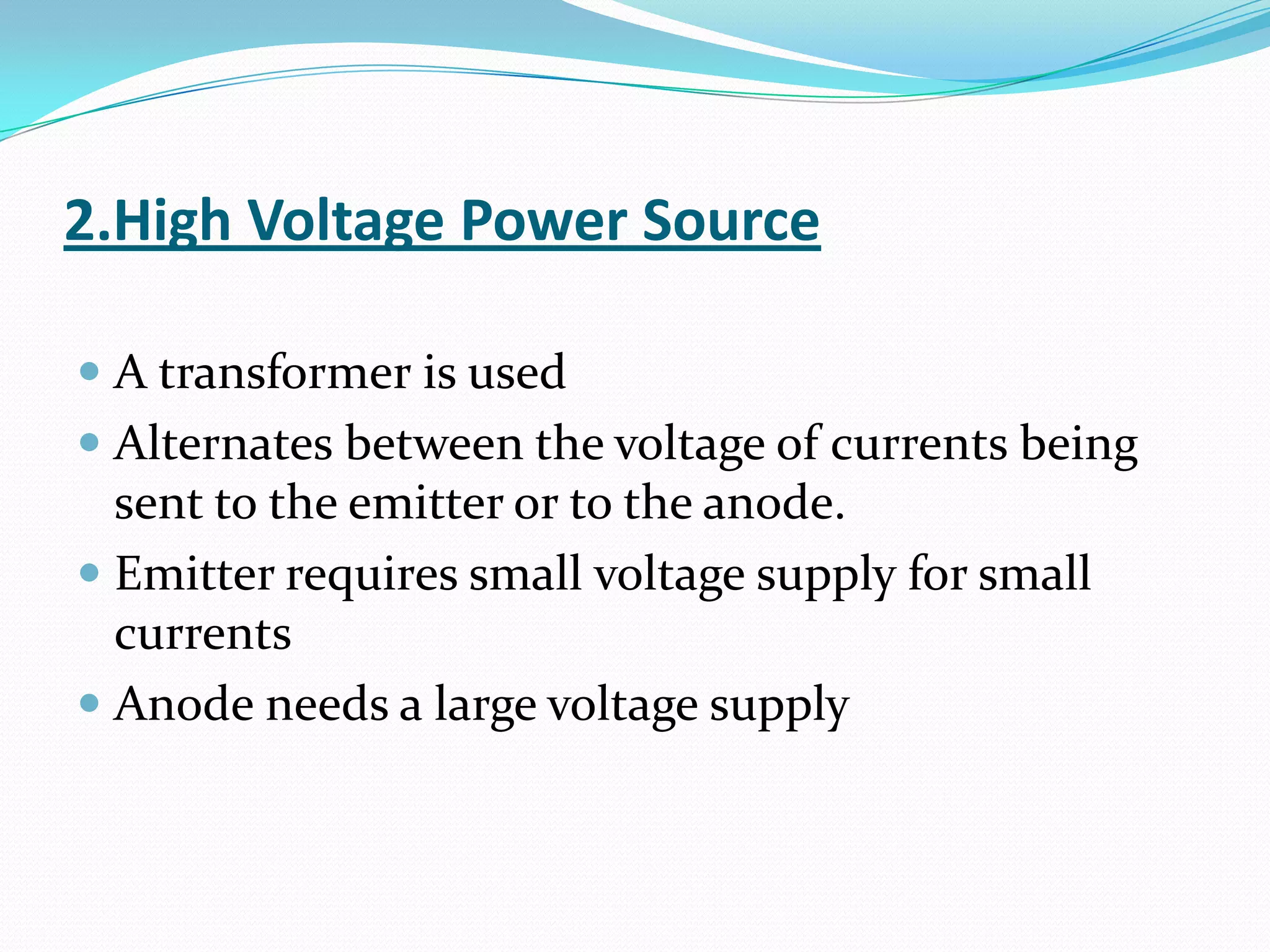
Rotating Anode
 The anode of rotating anode
  tube consist of a large disc of
  tungsten, or an alloy of
  tungsten, which theoretically
  rotates at a speed of about
  3600 rpm.

 The purpose of rotating
  anode is to spread the heat
  produced during an exposure
  over a large area of anode.
2.High Voltage Power Source

 A transformer is used
 Alternates between the voltage of currents being
  sent to the emitter or to the anode.
 Emitter requires small voltage supply for small
  currents
 Anode needs a large voltage supply
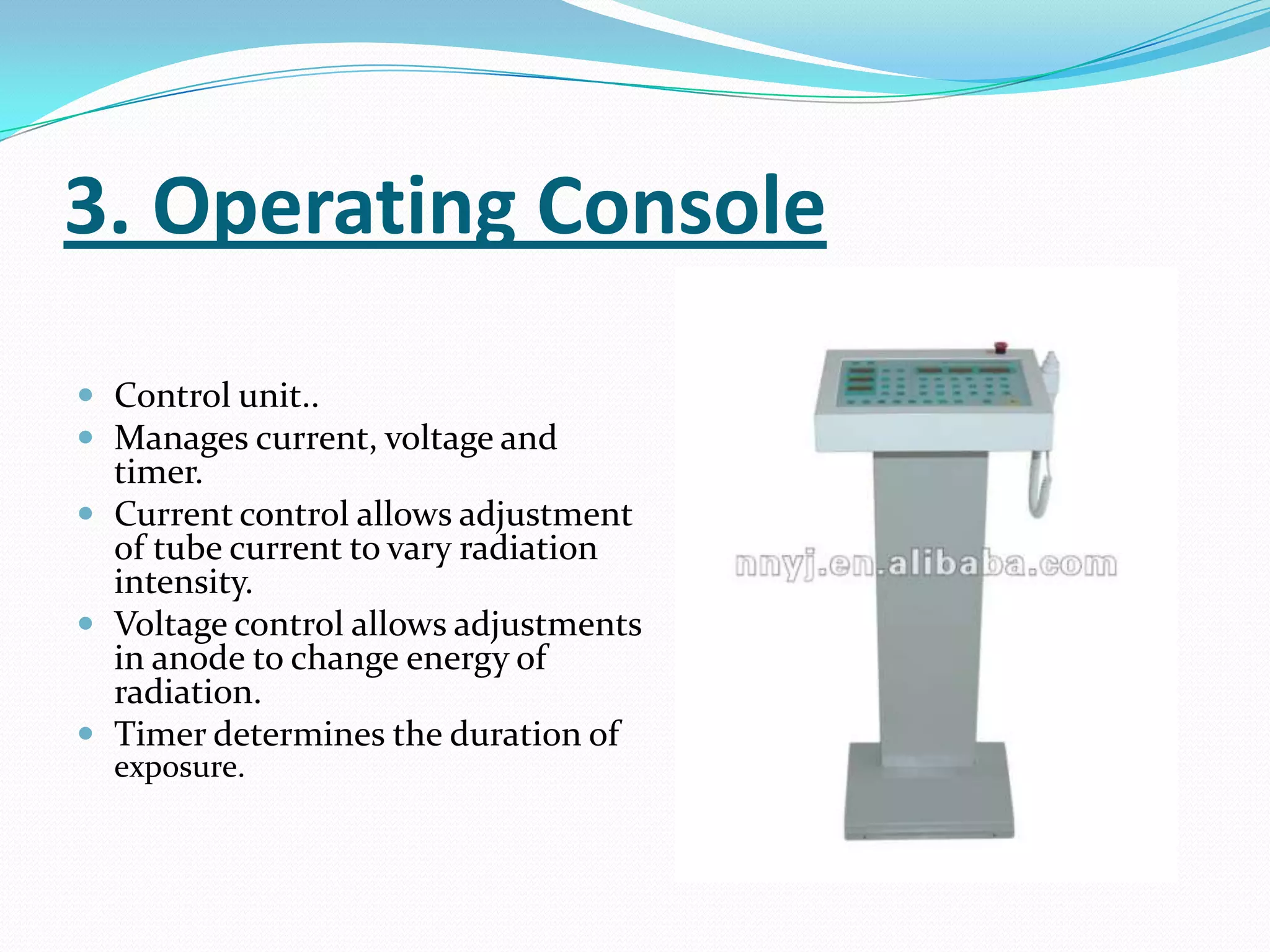
3. Operating Console
 Control unit..
 Manages current, voltage and
  timer.
 Current control allows adjustment
  of tube current to vary radiation
  intensity.
 Voltage control allows adjustments
  in anode to change energy of
  radiation.
 Timer determines the duration of
  exposure.
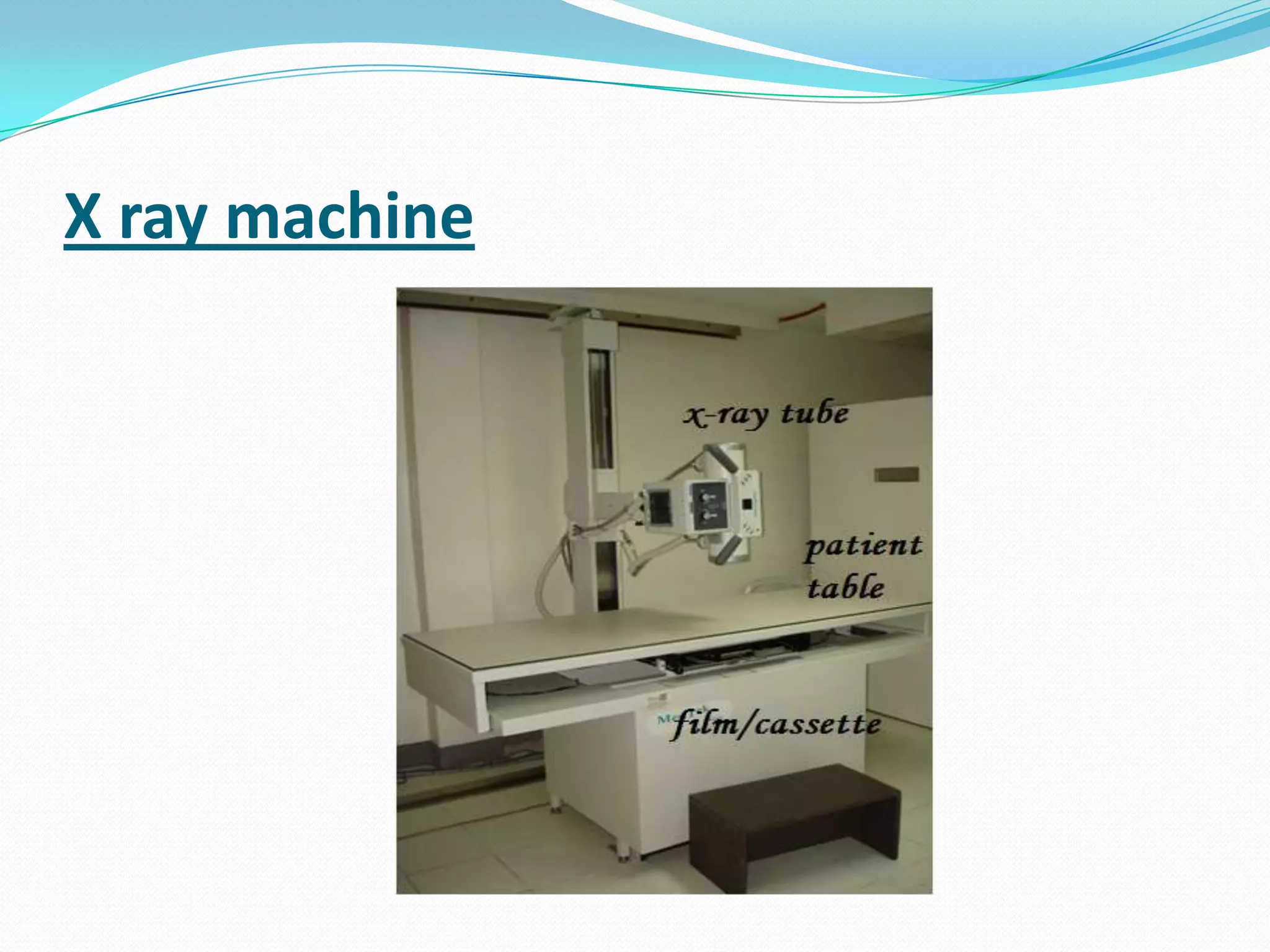
X ray machine
Working of x-ray tube:


 Cathode accelerates electrons and leads them to
  anode(electron beam)
 Only a small portion of the electron beam is
  converted to x rays
 Photons are discharged in all directions
 By adjusting current and voltage, we can direct the
  beam on a visible substance
 Advantages:
- It is non-invasive.
- It can be made available as a portable x-ray unit.
- It is less costly when compared to the other imaging modalities
  like MRI or CT.

 Limitations:
- X-ray uses radiation, which can cause cancer if you are exposed
  to it over a prolonged period of time.
- Do not provide as much information as MRI and CT.
APPLICATIONS

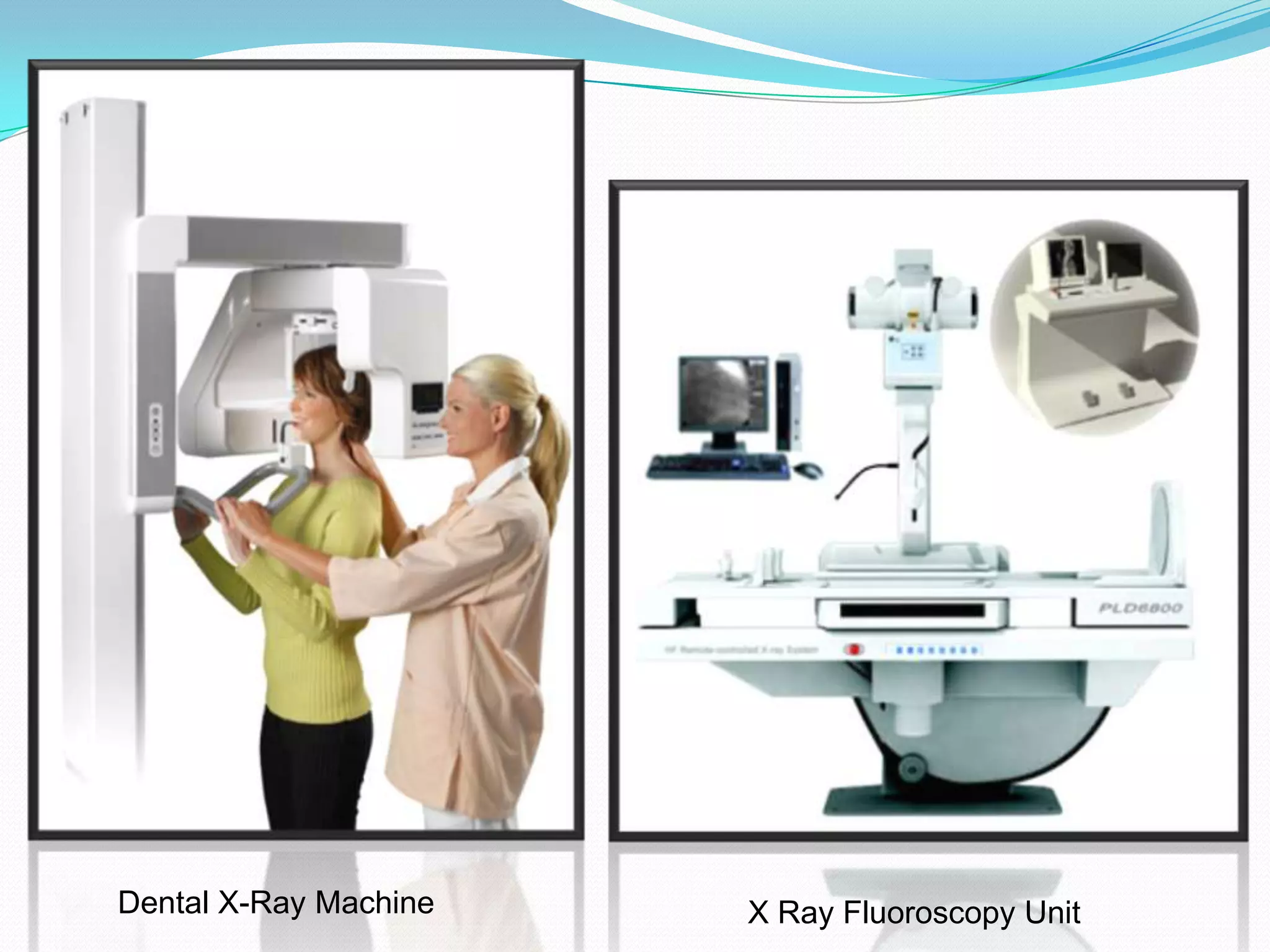
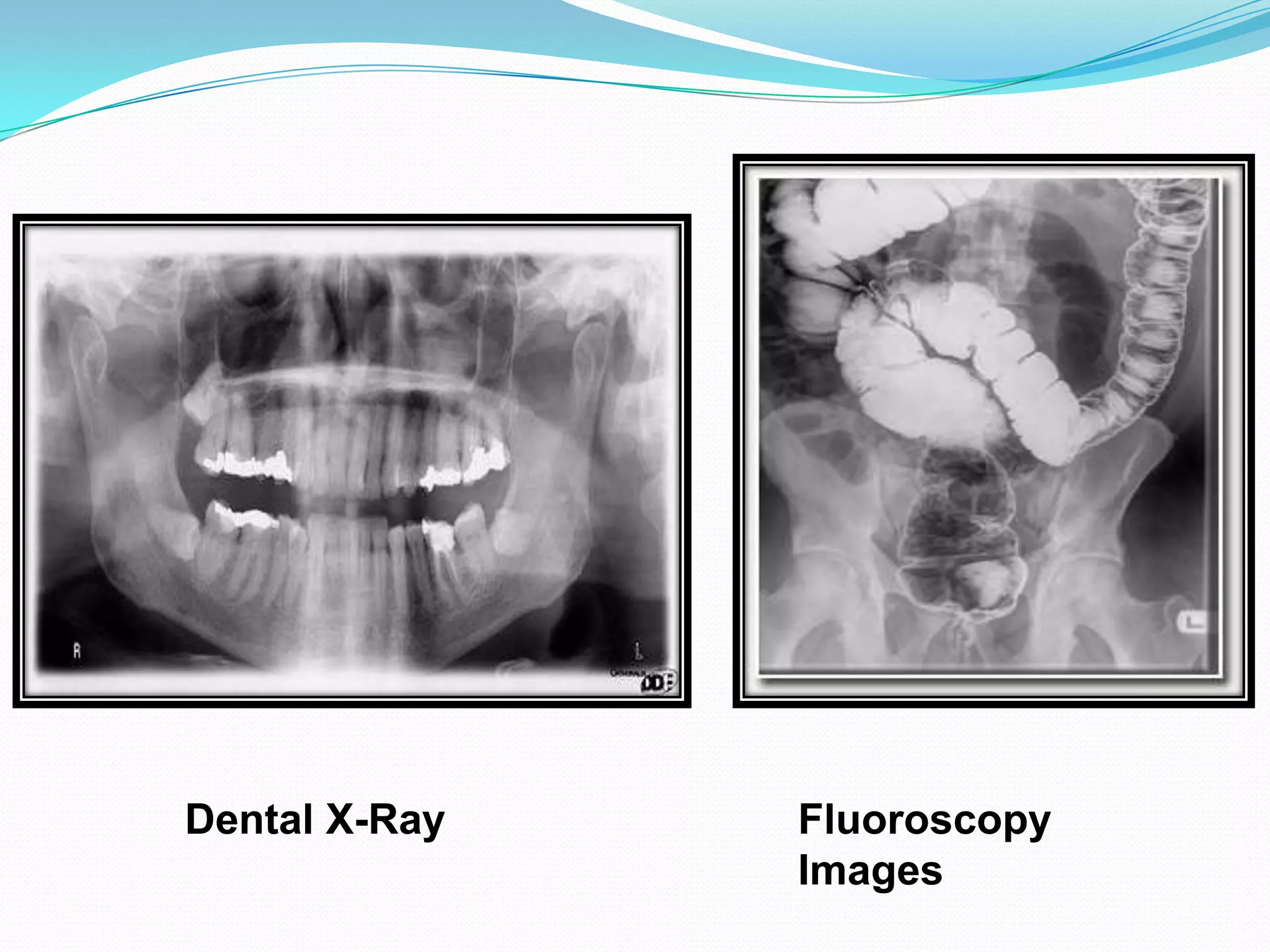
 Orthopantomogram: all teeth


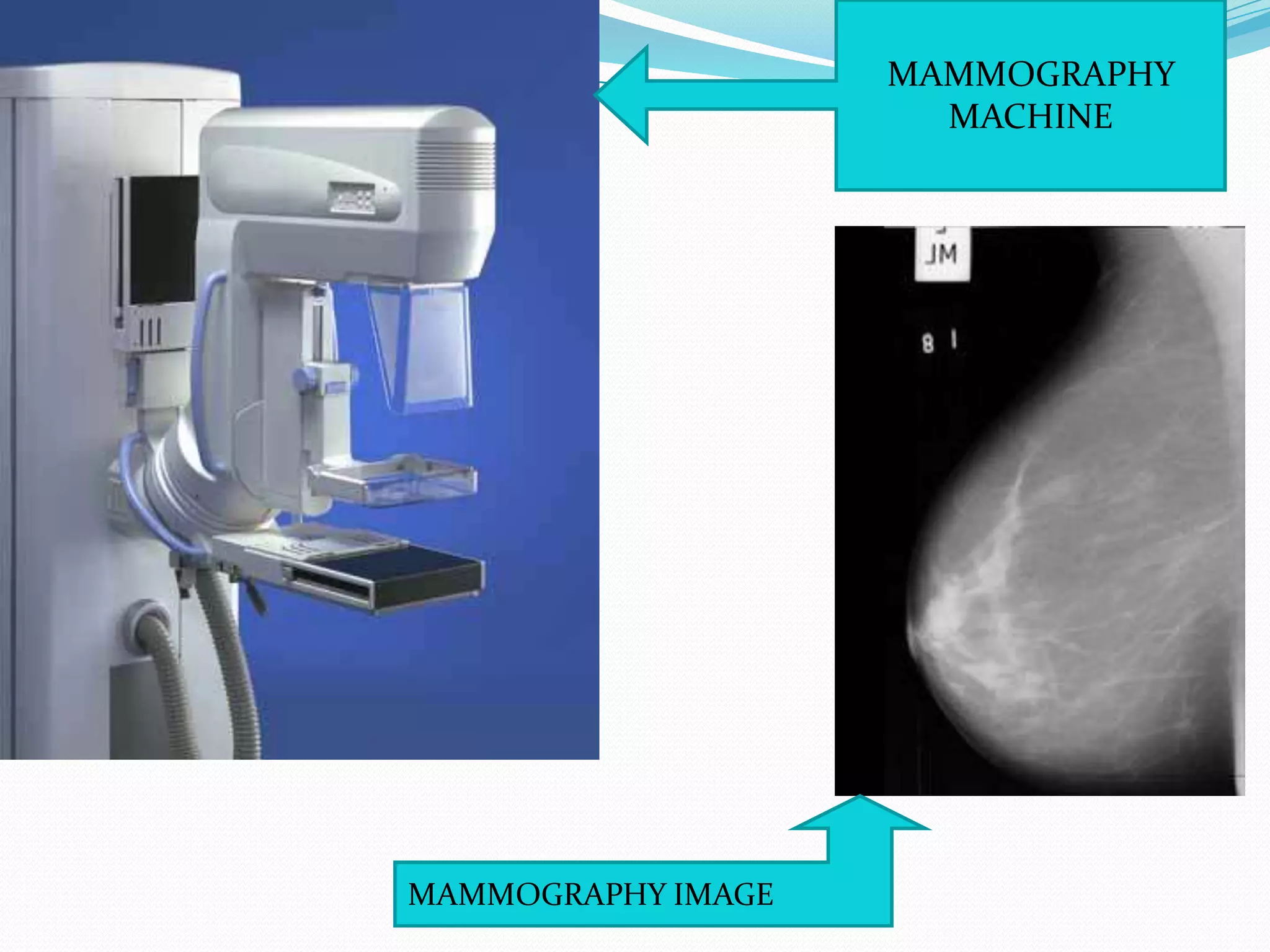
 Mammogram: breast tissues


 Fluoroscopy for real time images
Medical purposes

 Radiography


 Dentistry
Dental X-Ray Machine   X Ray Fluoroscopy Unit
Dental X-Ray   Fluoroscopy
               Images
MAMMOGRAPHY
                      MACHINE


MAMMOGRAPHY IMAGE
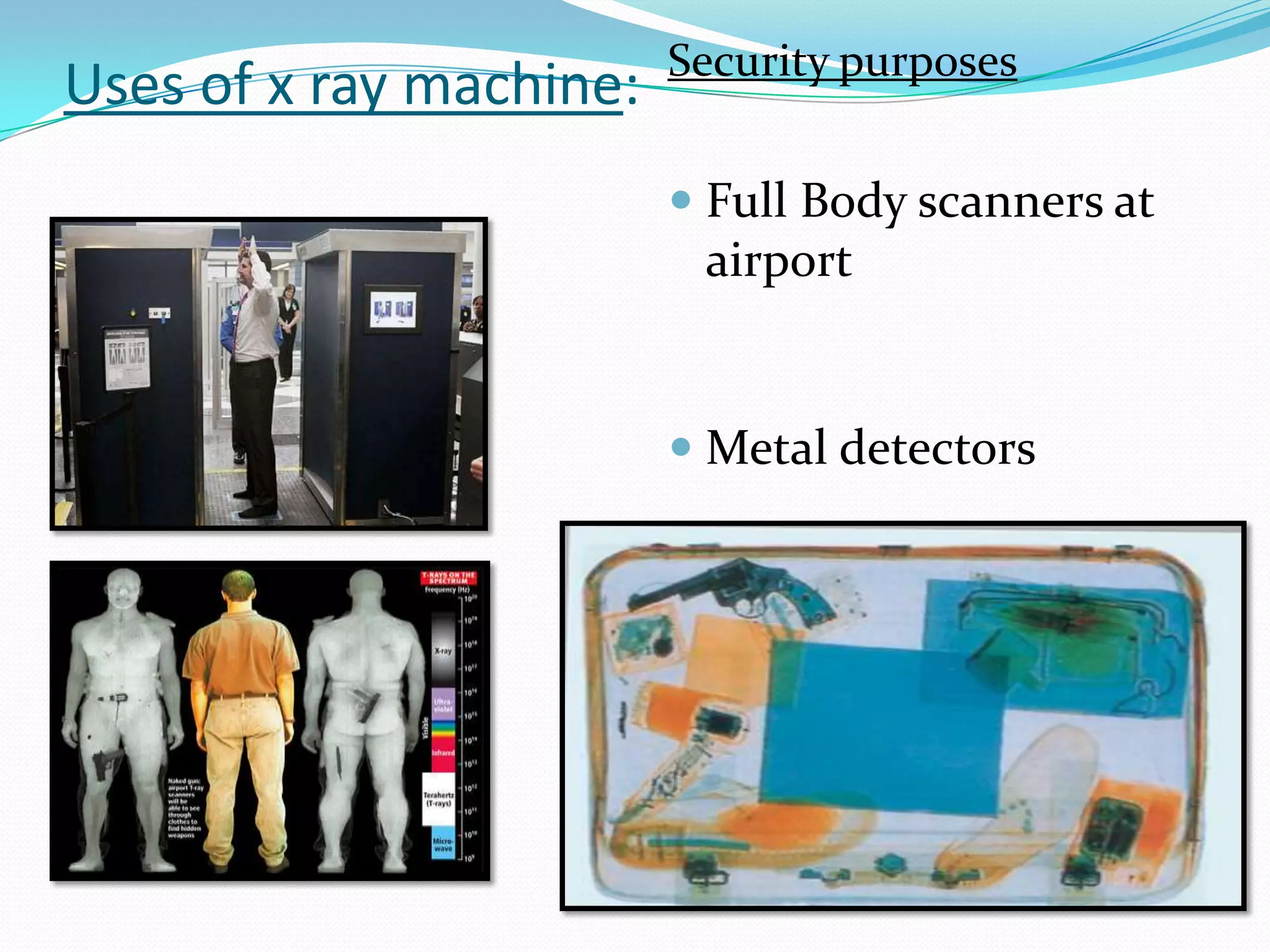
Security purposes
Uses of x ray machine:
                          Full Body scanners at
                           airport


                          Metal detectors
Thank you

X ray machine-new

  • 1.
    Presented by: Aaditee. S.Kulkarni Omkar. R. Haldonkar Pranali. N. Kulkarni Ganesh M. Nair
  • 2.
    What are xrays?  Electromagnetic radiations.  Wavelength 0.01 to 10 nanometers.  Can penetrate some solids and liquids, and all uncompressed gases.  Used for diagnostic radiology.
  • 3.
    Three major elementsof an x-ray machine: 1.Vacuum tube:  made up of Pyrex glass.  tungsten anode is enclosed along with cathode.  cathode or emitter.
  • 4.
    X-ray tube  Cathodeaccelerates electrons and leads them to anode(electron beam).  Only a small portion of the electron beam is converted to x rays.  Photons are discharged in all directions.  By adjusting current and voltage, we can direct the beam on a visible substance.
  • 5.
    Rotating Anode  Theanode of rotating anode tube consist of a large disc of tungsten, or an alloy of tungsten, which theoretically rotates at a speed of about 3600 rpm.  The purpose of rotating anode is to spread the heat produced during an exposure over a large area of anode.
  • 6.
    2.High Voltage PowerSource  A transformer is used  Alternates between the voltage of currents being sent to the emitter or to the anode.  Emitter requires small voltage supply for small currents  Anode needs a large voltage supply
  • 7.
    3. Operating Console Control unit..  Manages current, voltage and timer.  Current control allows adjustment of tube current to vary radiation intensity.  Voltage control allows adjustments in anode to change energy of radiation.  Timer determines the duration of exposure.
  • 8.
  • 9.
    Working of x-raytube:  Cathode accelerates electrons and leads them to anode(electron beam)  Only a small portion of the electron beam is converted to x rays  Photons are discharged in all directions  By adjusting current and voltage, we can direct the beam on a visible substance
  • 10.
     Advantages: - Itis non-invasive. - It can be made available as a portable x-ray unit. - It is less costly when compared to the other imaging modalities like MRI or CT.  Limitations: - X-ray uses radiation, which can cause cancer if you are exposed to it over a prolonged period of time. - Do not provide as much information as MRI and CT.
  • 11.
    APPLICATIONS  Orthopantomogram: allteeth  Mammogram: breast tissues  Fluoroscopy for real time images
  • 12.
  • 13.
    Dental X-Ray Machine X Ray Fluoroscopy Unit
  • 14.
    Dental X-Ray Fluoroscopy Images
  • 15.
    MAMMOGRAPHY MACHINE MAMMOGRAPHY IMAGE
  • 16.
    Security purposes Uses ofx ray machine:  Full Body scanners at airport  Metal detectors
  • 17.