Digitization of the Learning
and Development Function
2
Presenters
Shreya Sarkar-Barney, Ph.D.
President & Founder
Human Capital Growth
CopyrightHumanCapitalGrowth.AllRightsReserved.
3
Leadership
Excellence
Talent
Management
Excellence
US India
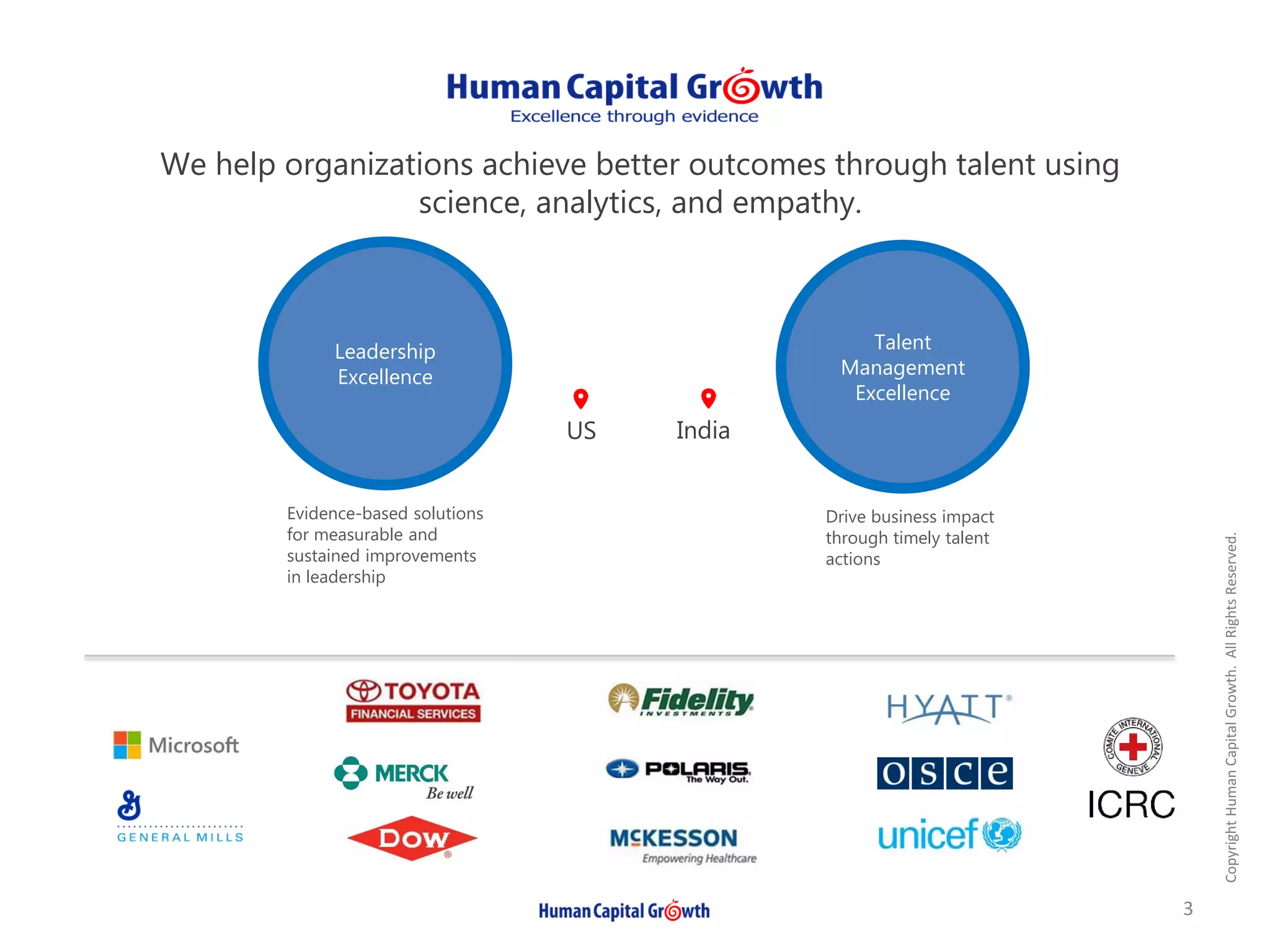
We help organizations achieve better outcomes through talent using
science, analytics, and empathy.
Drive business impact
through timely talent
actions
Evidence-based solutions
for measurable and
sustained improvements
in leadership
Agenda
Digital Learning
4
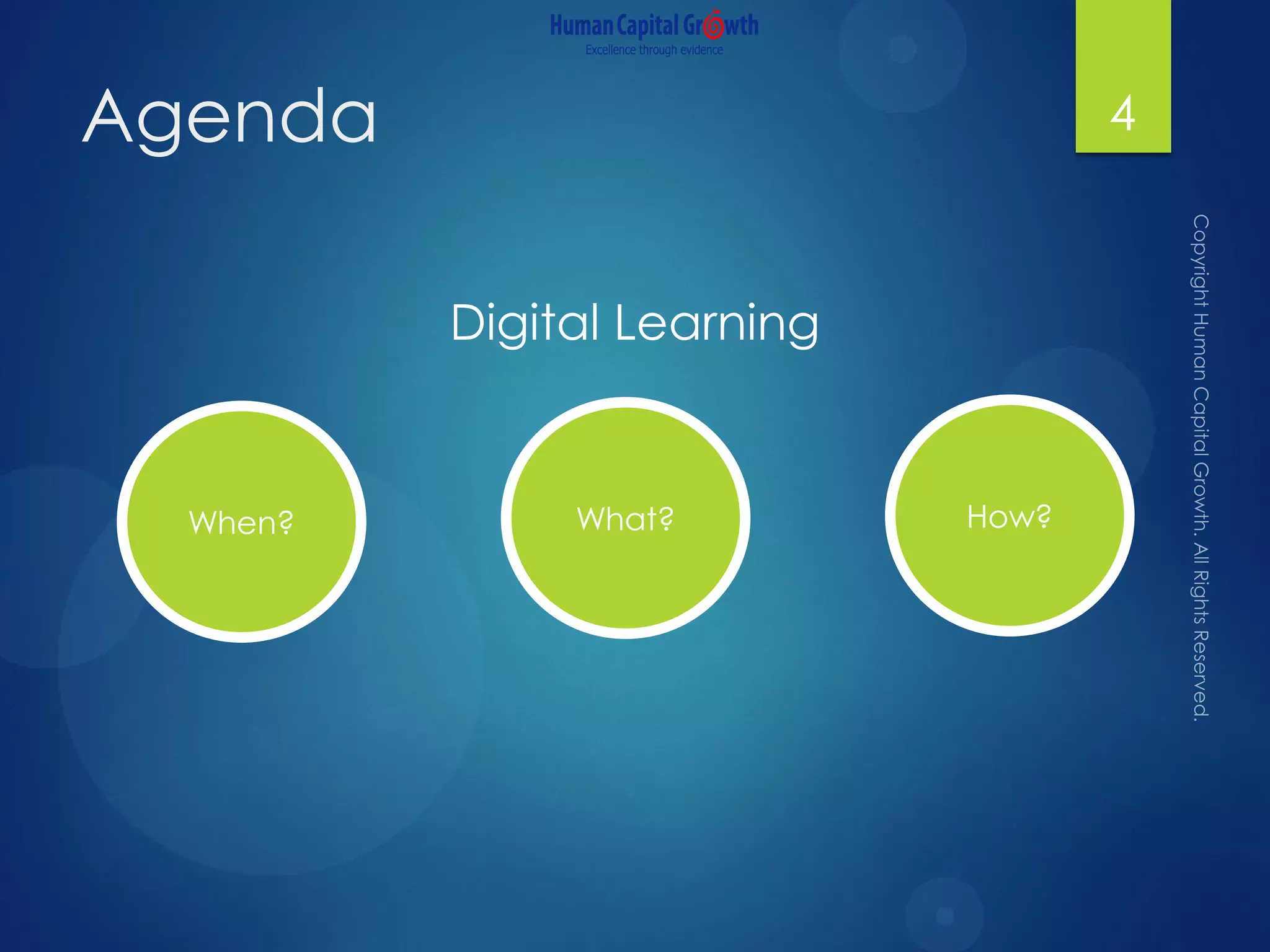
When? What? How?
Digital Learning 5
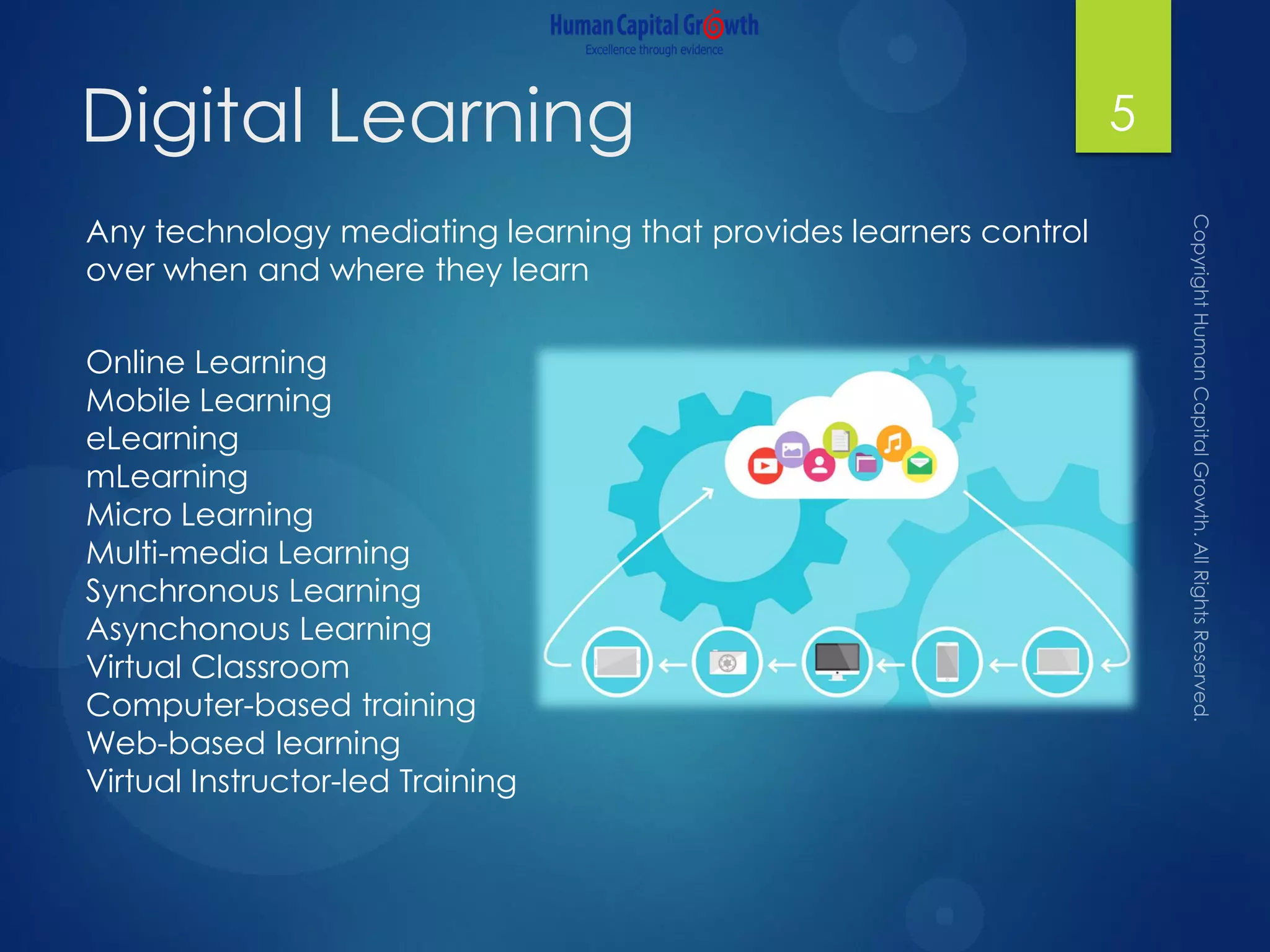
Online Learning
Mobile Learning
eLearning
mLearning
Micro Learning
Multi-media Learning
Synchronous Learning
Asynchonous Learning
Virtual Classroom
Computer-based training
Web-based learning
Virtual Instructor-led Training
Any technology mediating learning that provides learners control
over when and where they learn
Learning 6
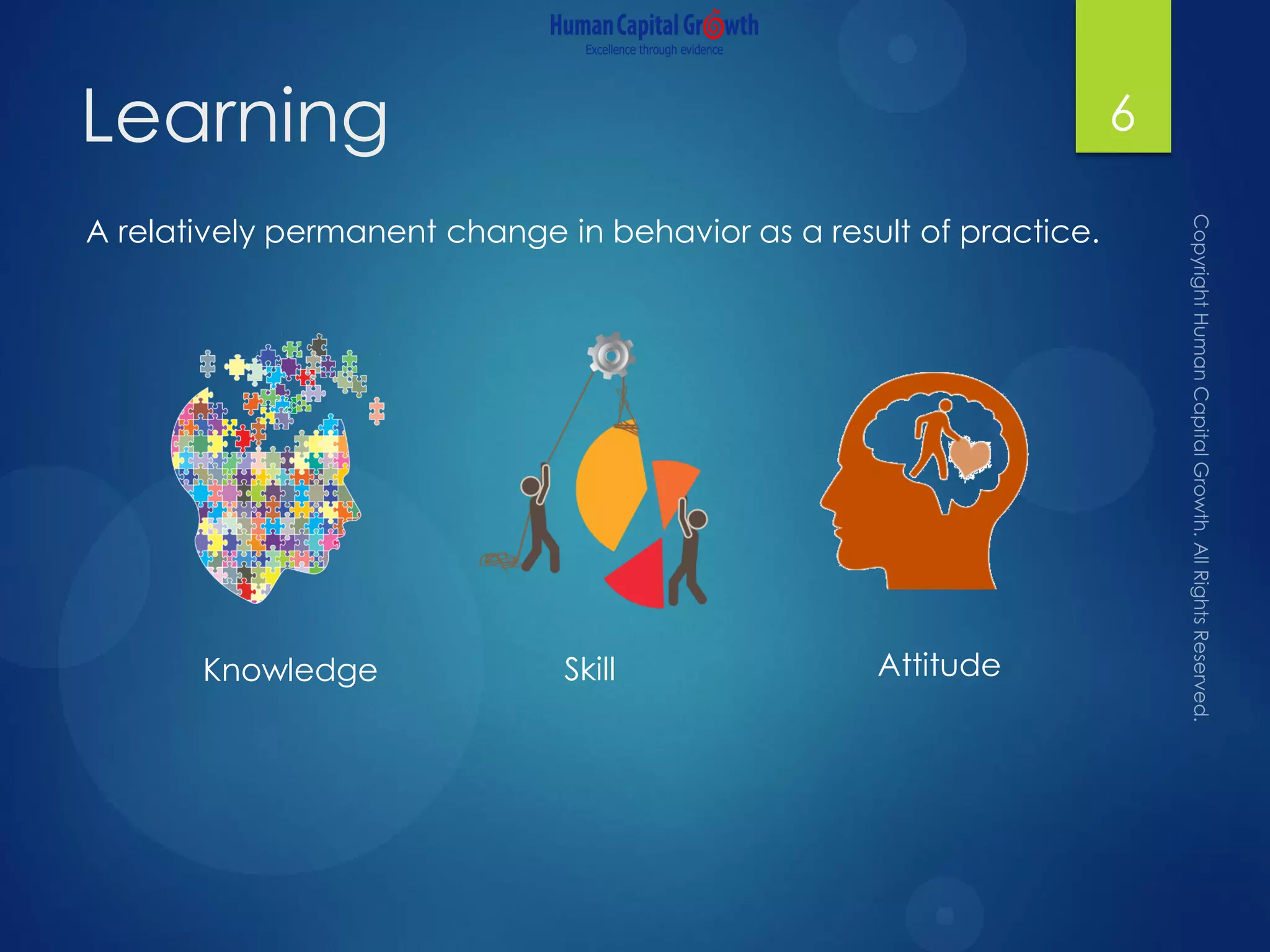
A relatively permanent change in behavior as a result of practice.
Knowledge Skill Attitude
Benefits of Digital Learning 7
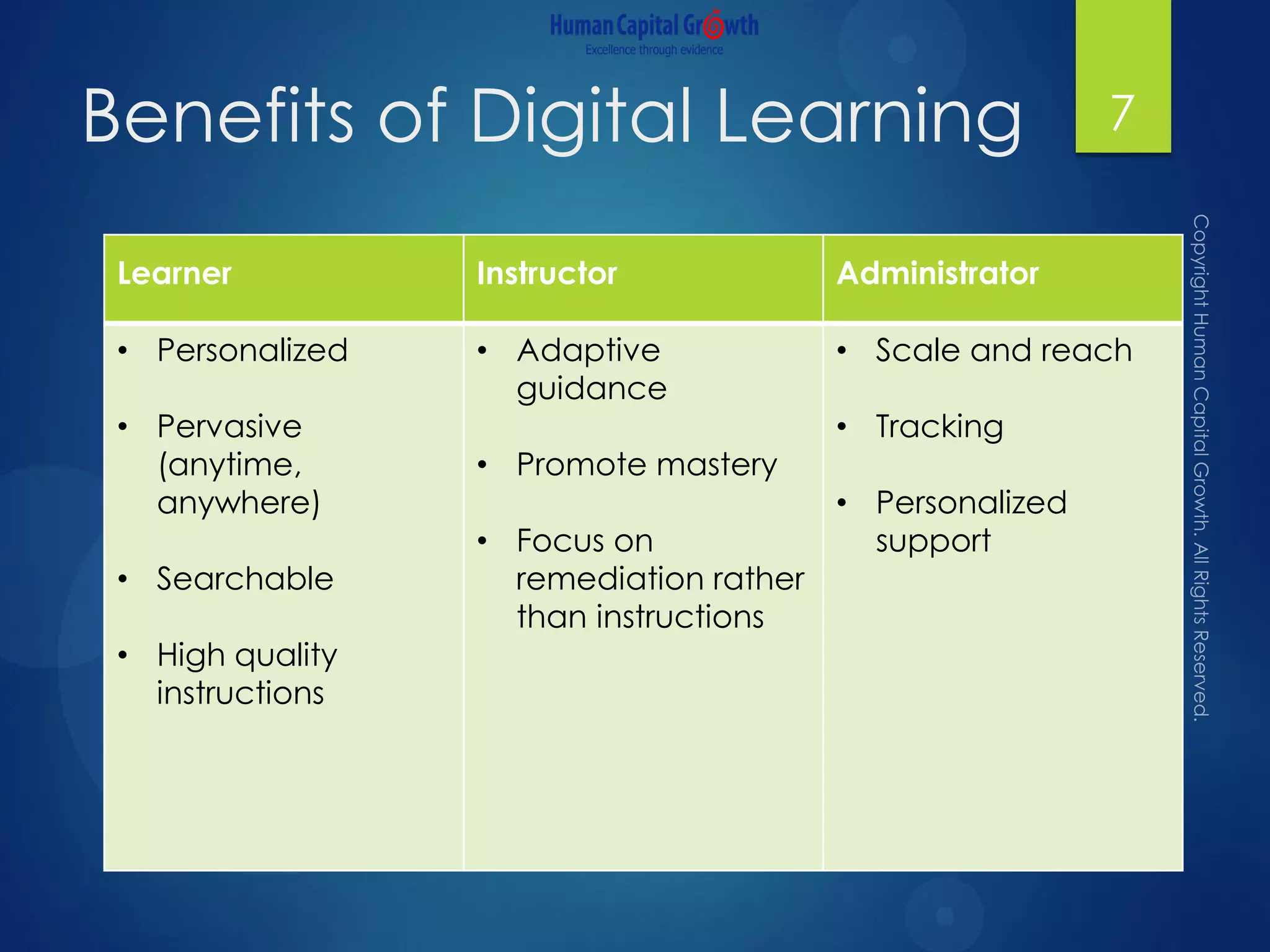
Learner Instructor Administrator
• Personalized
• Pervasive
(anytime,
anywhere)
• Searchable
• High quality
instructions
• Adaptive
guidance
• Promote mastery
• Focus on
remediation rather
than instructions
• Scale and reach
• Tracking
• Personalized
support
The Value Chain 8
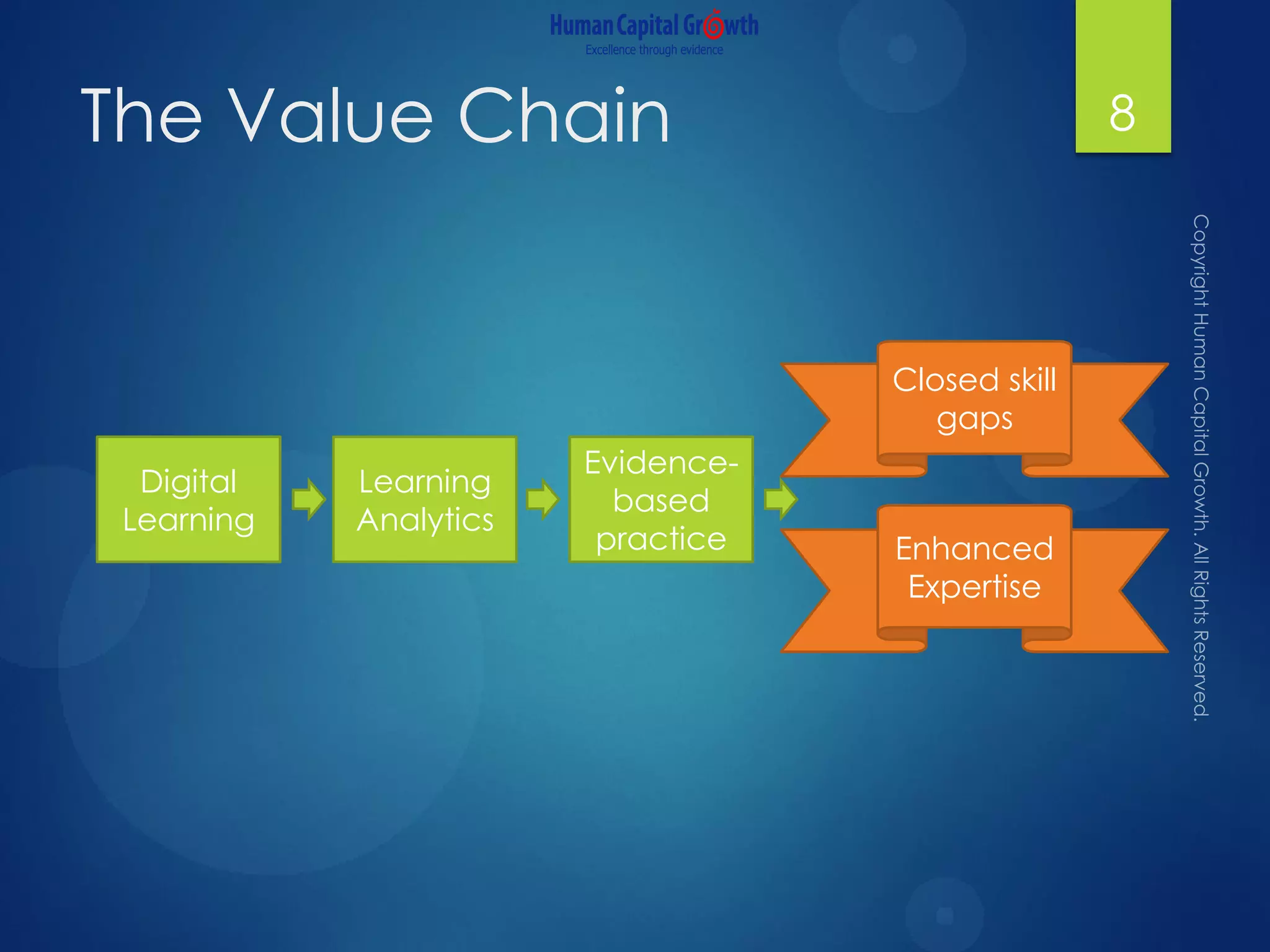
Digital
Learning
Learning
Analytics
Evidence-
based
practice
Closed skill
gaps
Enhanced
Expertise
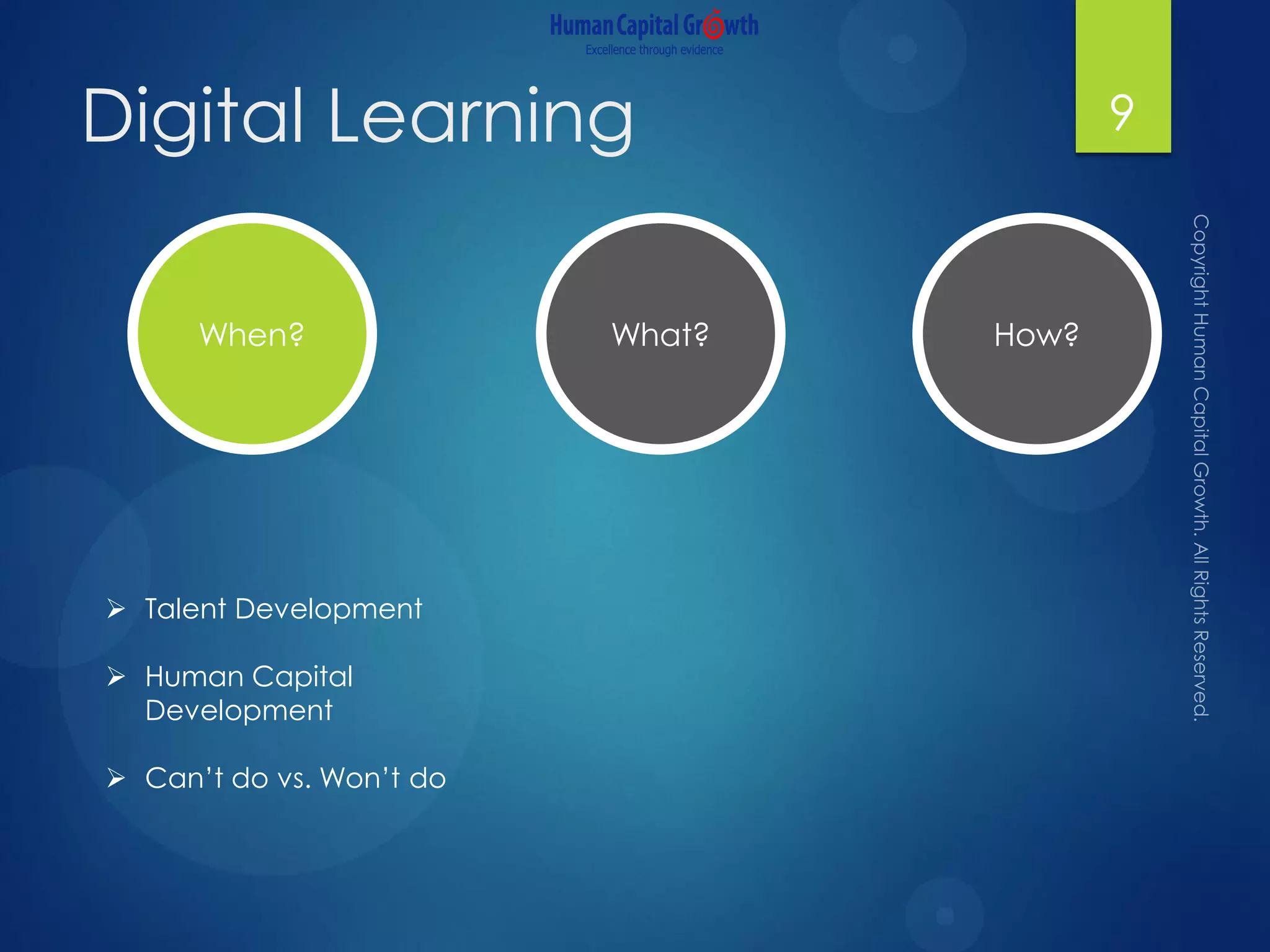
Digital Learning 9
What?When? How?
 Talent Development
 Human Capital
Development
 Can’t do vs. Won’t do
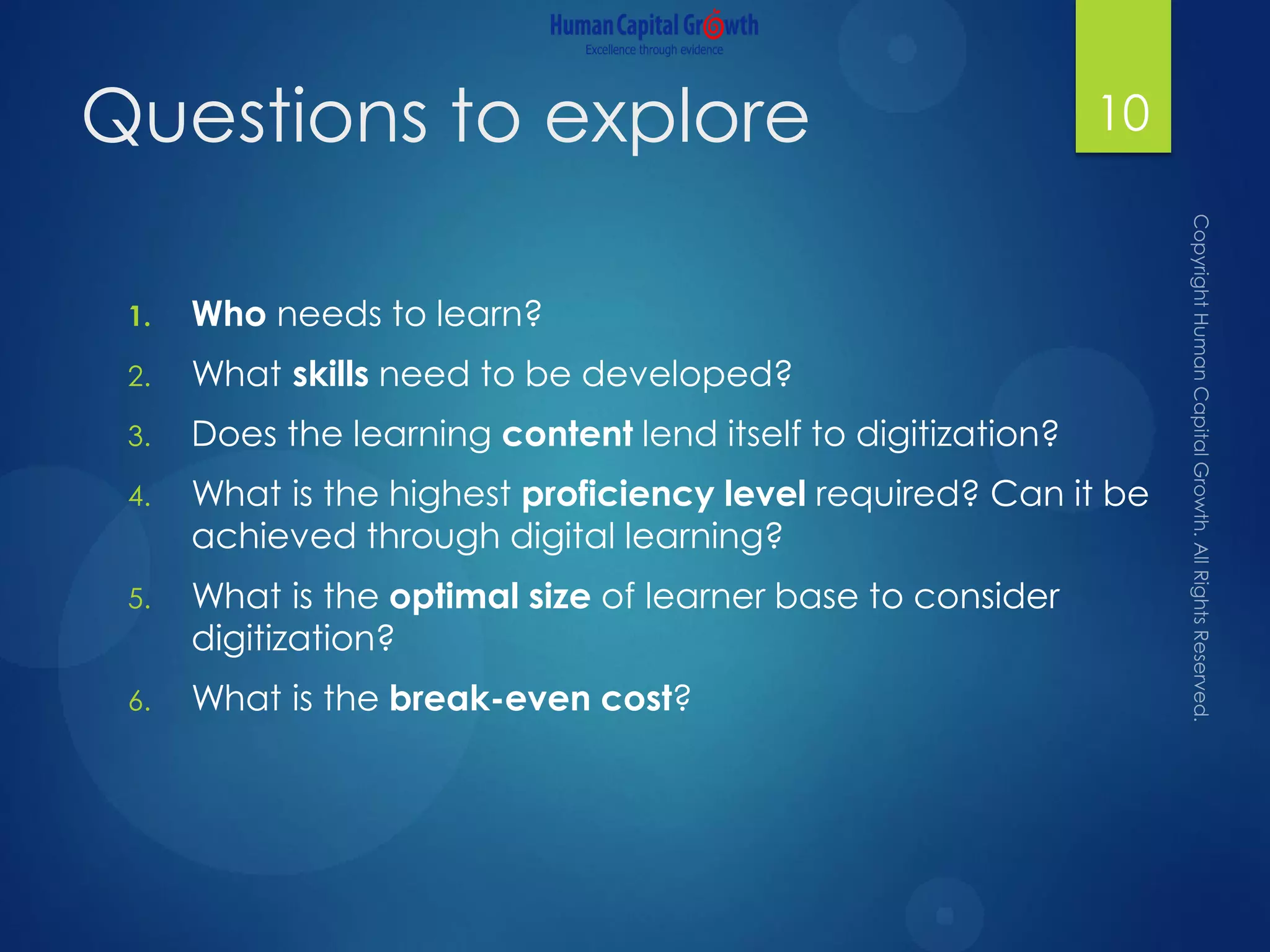
Questions to explore
1. Who needs to learn?
2. What skills need to be developed?
3. Does the learning content lend itself to digitization?
4. What is the highest proficiency level required? Can it be
achieved through digital learning?
5. What is the optimal size of learner base to consider
digitization?
6. What is the break-even cost?
10
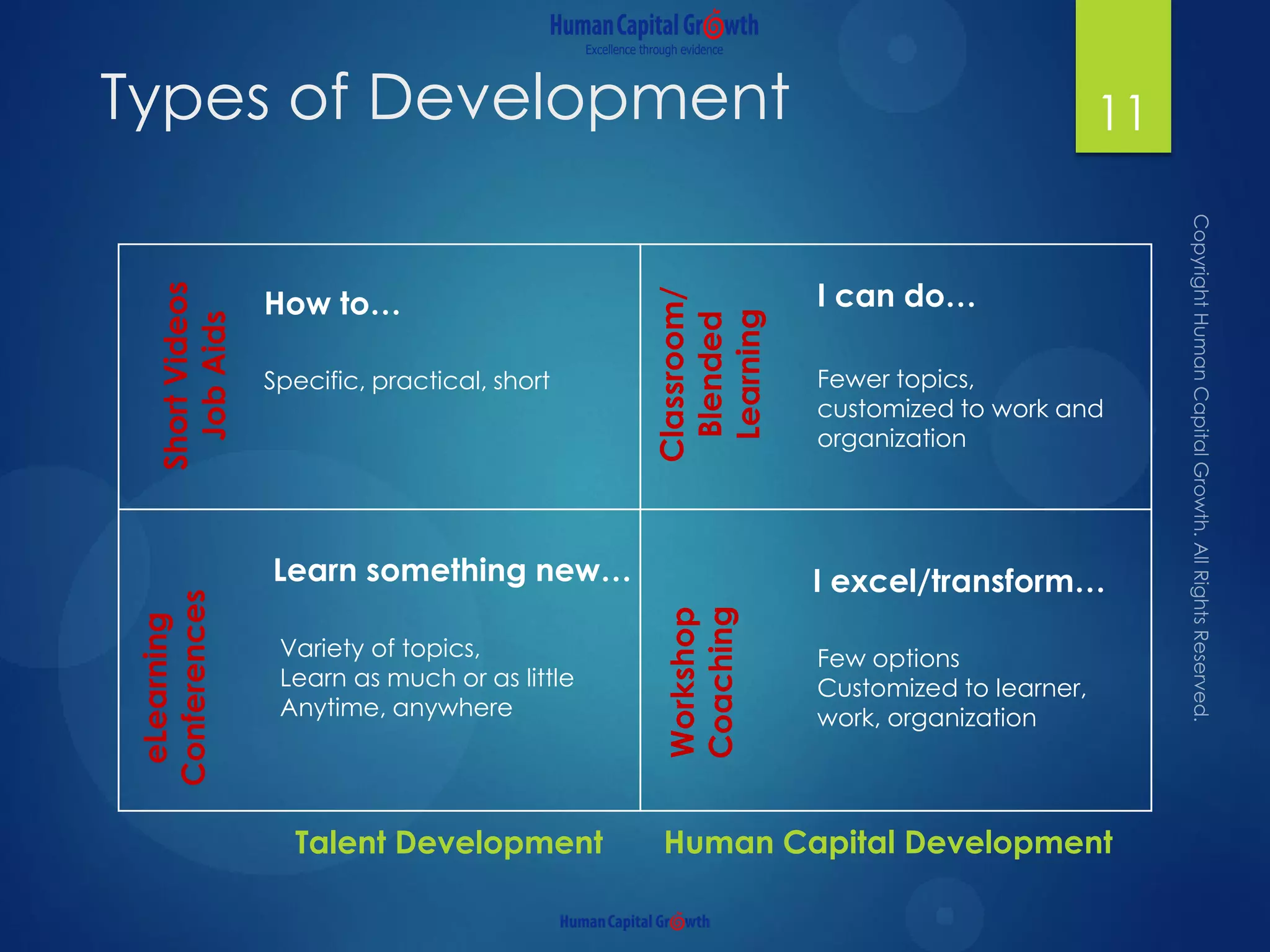
ShortVideos
JobAids
eLearning
Conferences
Classroom/
Blended
Learning
Workshop
Coaching
How to…
Variety of topics,
Learn as much or as little
Anytime, anywhere
Fewer topics,
customized to work and
organization
Few options
Customized to learner,
work, organization
Talent Development Human Capital Development
Types of Development 11
Specific, practical, short
Learn something new…
I can do…
I excel/transform…
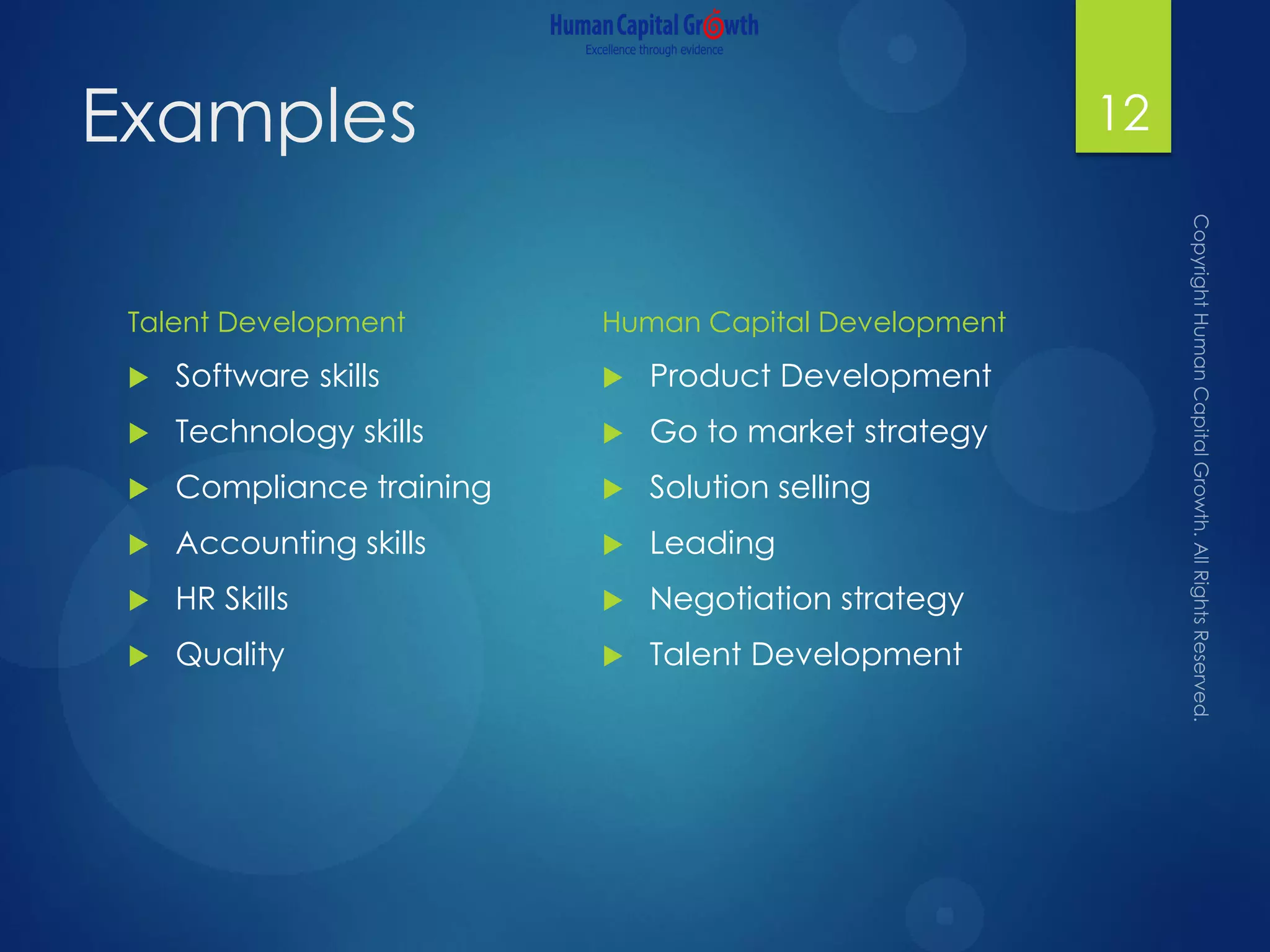
Examples
Talent Development
 Software skills
 Technology skills
 Compliance training
 Accounting skills
 HR Skills
 Quality
Human Capital Development
 Product Development
 Go to market strategy
 Solution selling
 Leading
 Negotiation strategy
 Talent Development
12
13
Former Attorney General Eric Holder’s report for
fixing Uber’s toxic culture recommended
mandatory training for leadership, managers, and
HR to combat implicit bias.
Will this fix the issue?
Fixing the Culture Problem
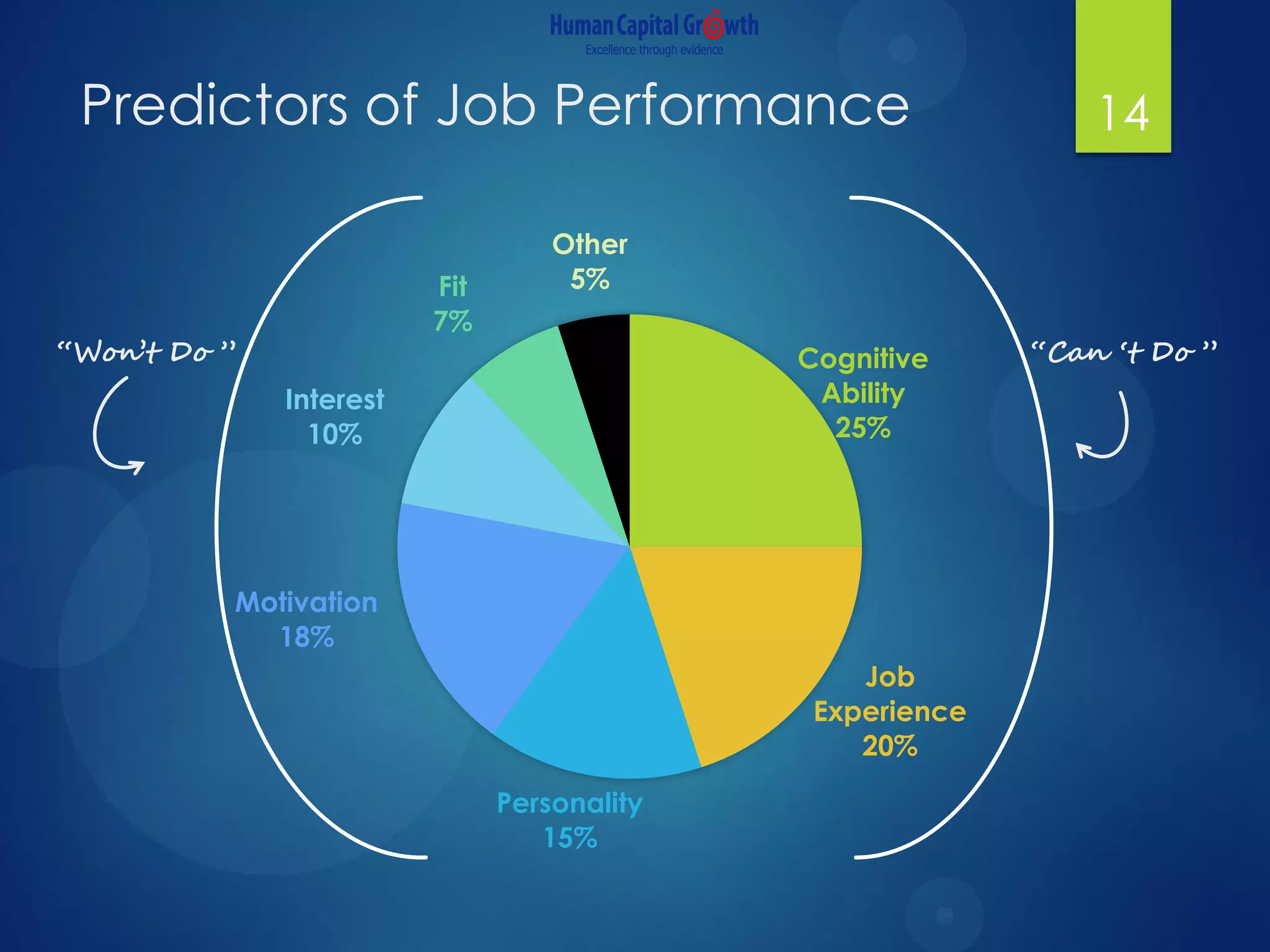
Predictors of Job Performance 14
“Won’t Do ” “Can ‘t Do ”Cognitive
Ability
25%
Job
Experience
20%
Personality
15%
Motivation
18%
Interest
10%
Fit
7%
Other
5%
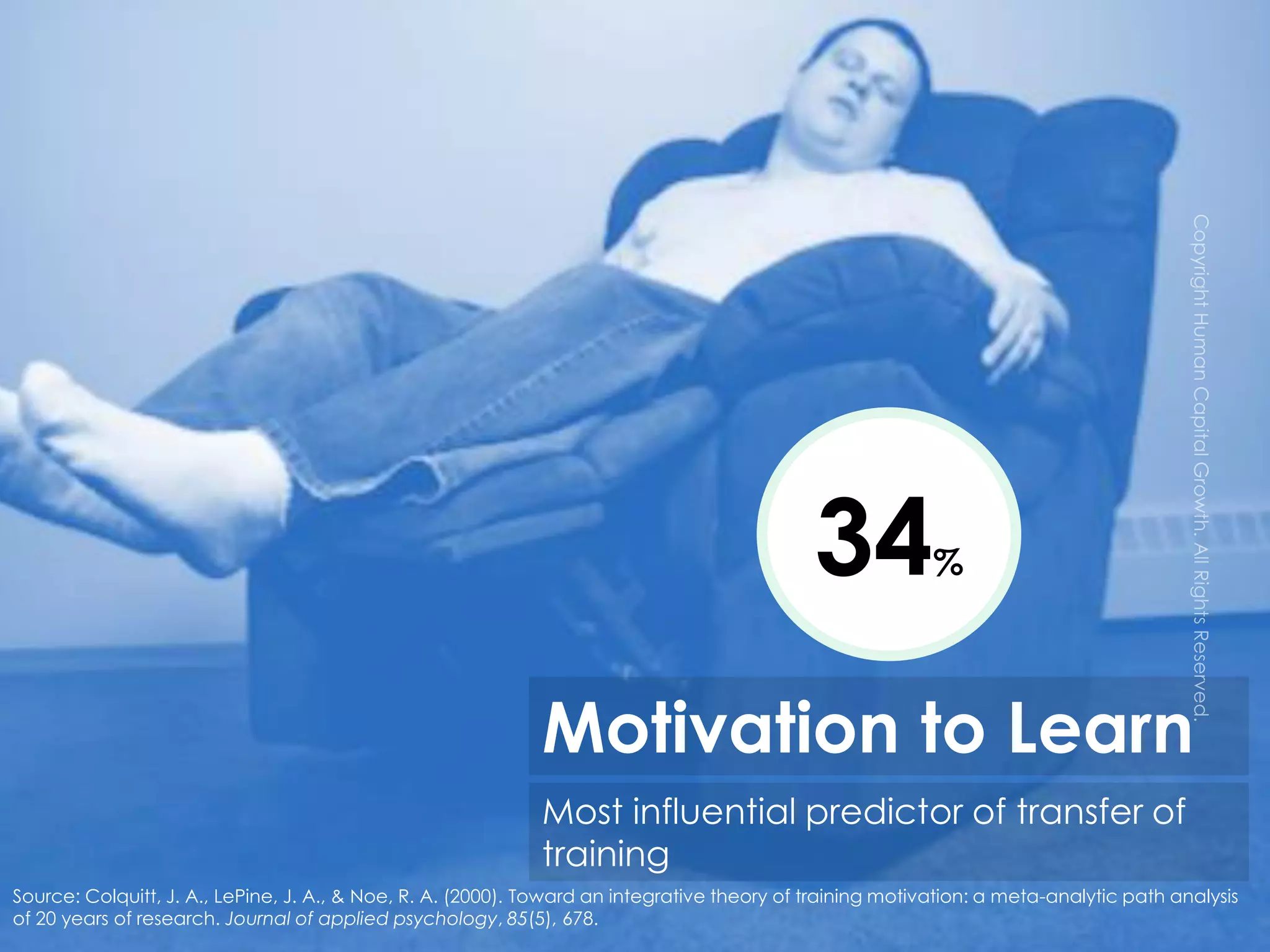
34%
Motivation to Learn
Most influential predictor of transfer of
training
Source: Colquitt, J. A., LePine, J. A., & Noe, R. A. (2000). Toward an integrative theory of training motivation: a meta-analytic path analysis
of 20 years of research. Journal of applied psychology, 85(5), 678.
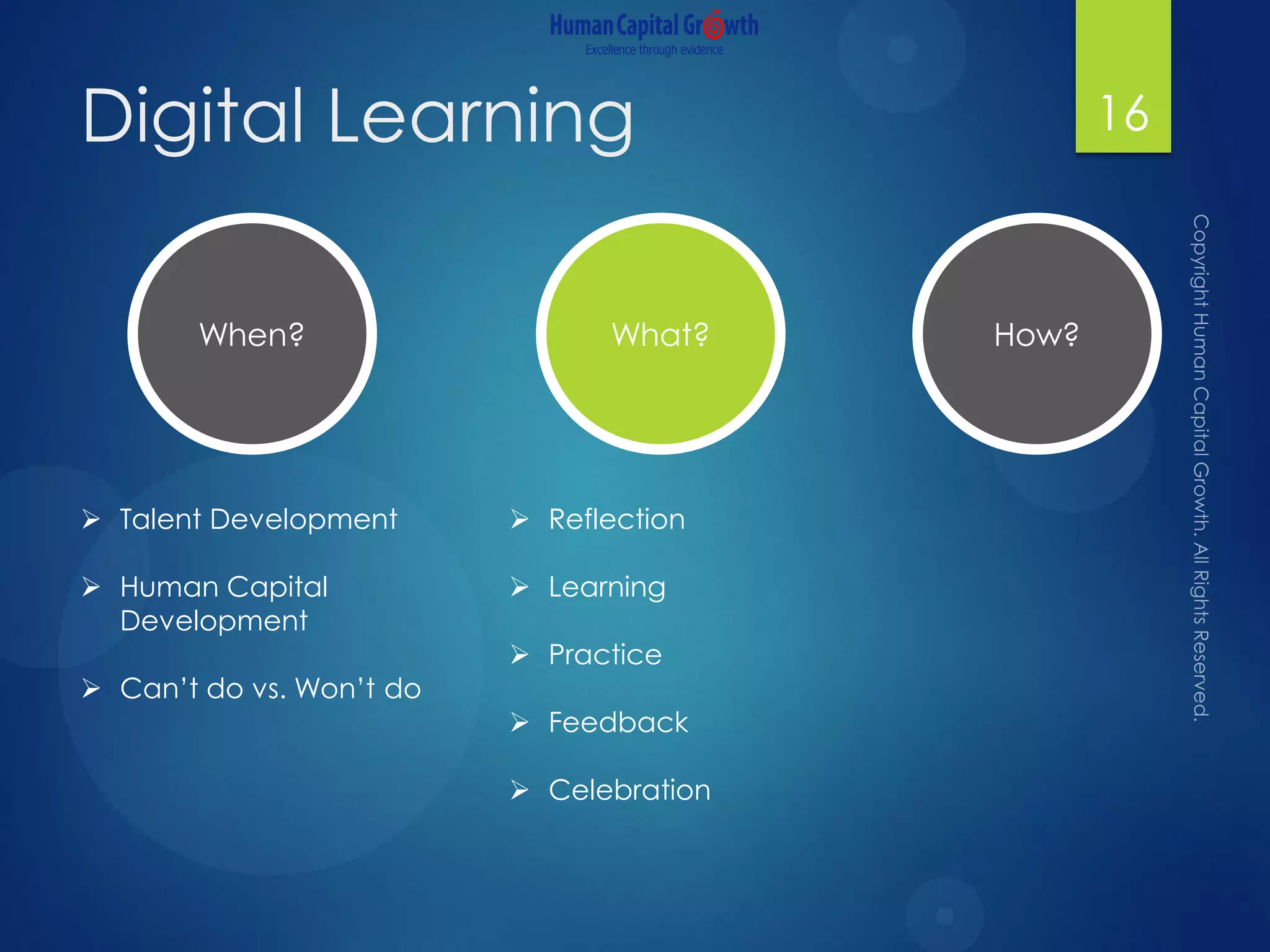
Digital Learning 16
What?When? How?
 Talent Development
 Human Capital
Development
 Can’t do vs. Won’t do
 Reflection
 Learning
 Practice
 Feedback
 Celebration
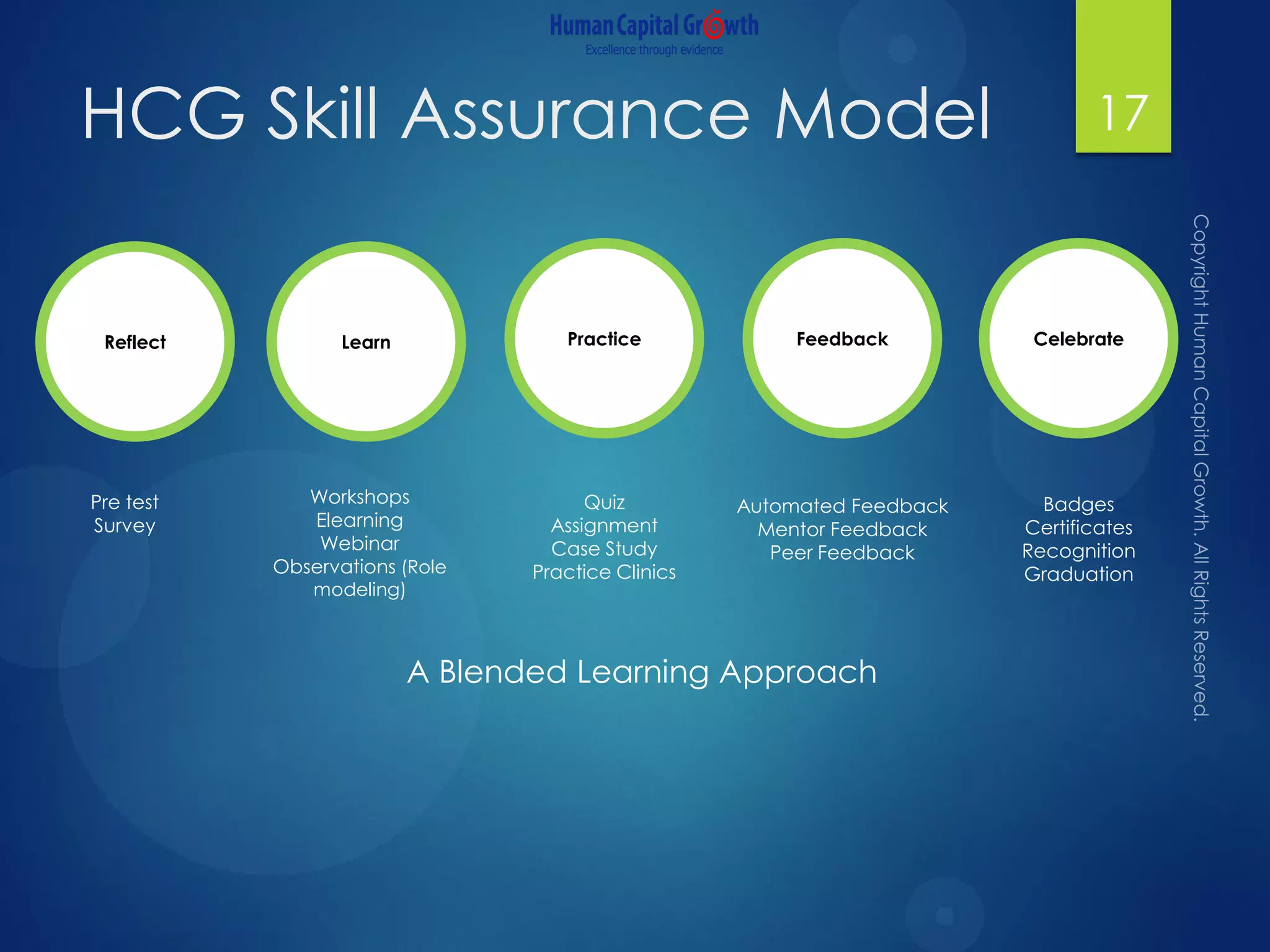
HCG Skill Assurance Model 17
Learn Practice FeedbackReflect
Pre test
Survey
Workshops
Elearning
Webinar
Observations (Role
modeling)
Quiz
Assignment
Case Study
Practice Clinics
Automated Feedback
Mentor Feedback
Peer Feedback
Celebrate
Badges
Certificates
Recognition
Graduation
A Blended Learning Approach
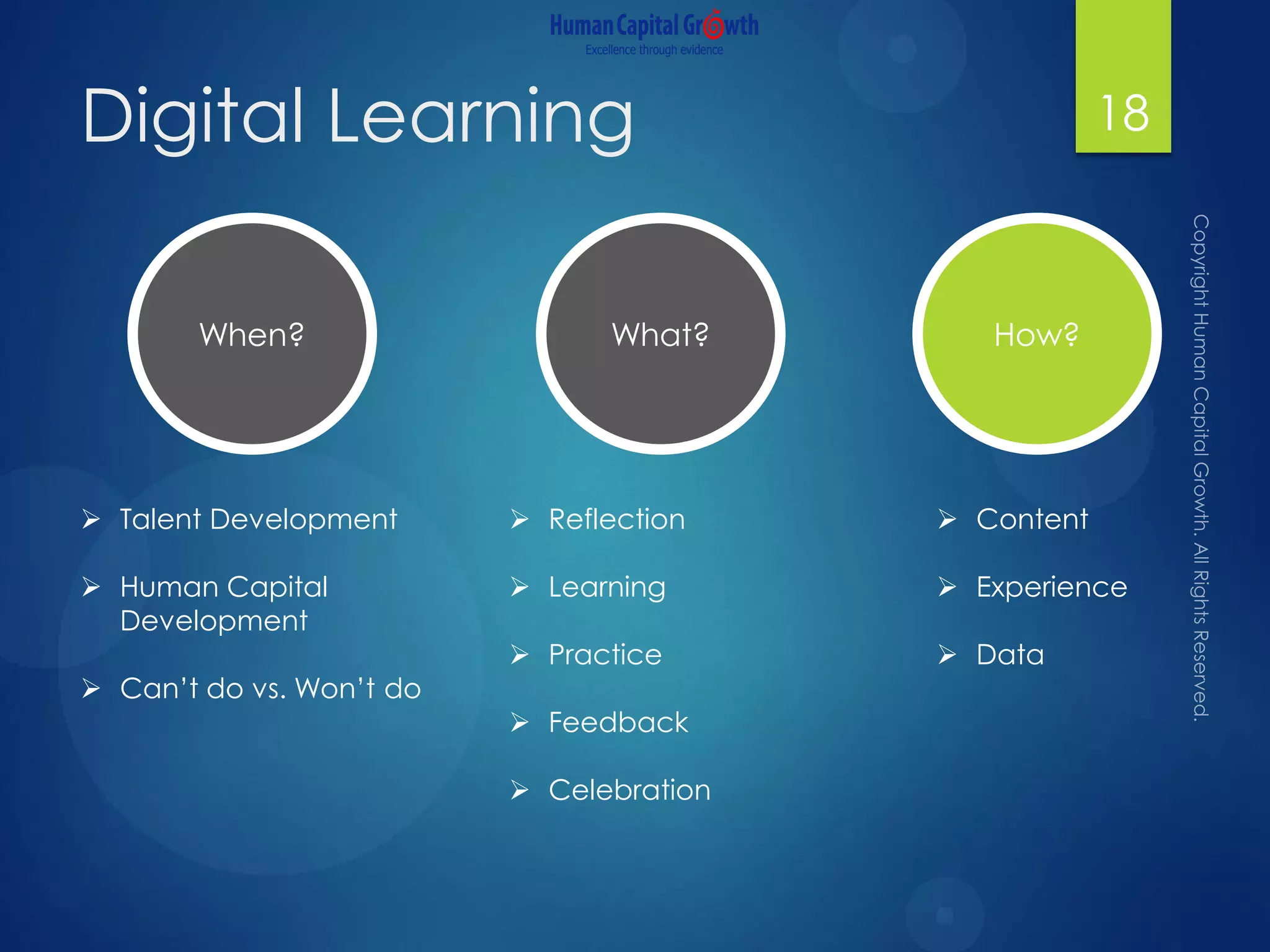
Digital Learning 18
What?When? How?
 Talent Development
 Human Capital
Development
 Can’t do vs. Won’t do
 Content
 Experience
 Data
 Reflection
 Learning
 Practice
 Feedback
 Celebration
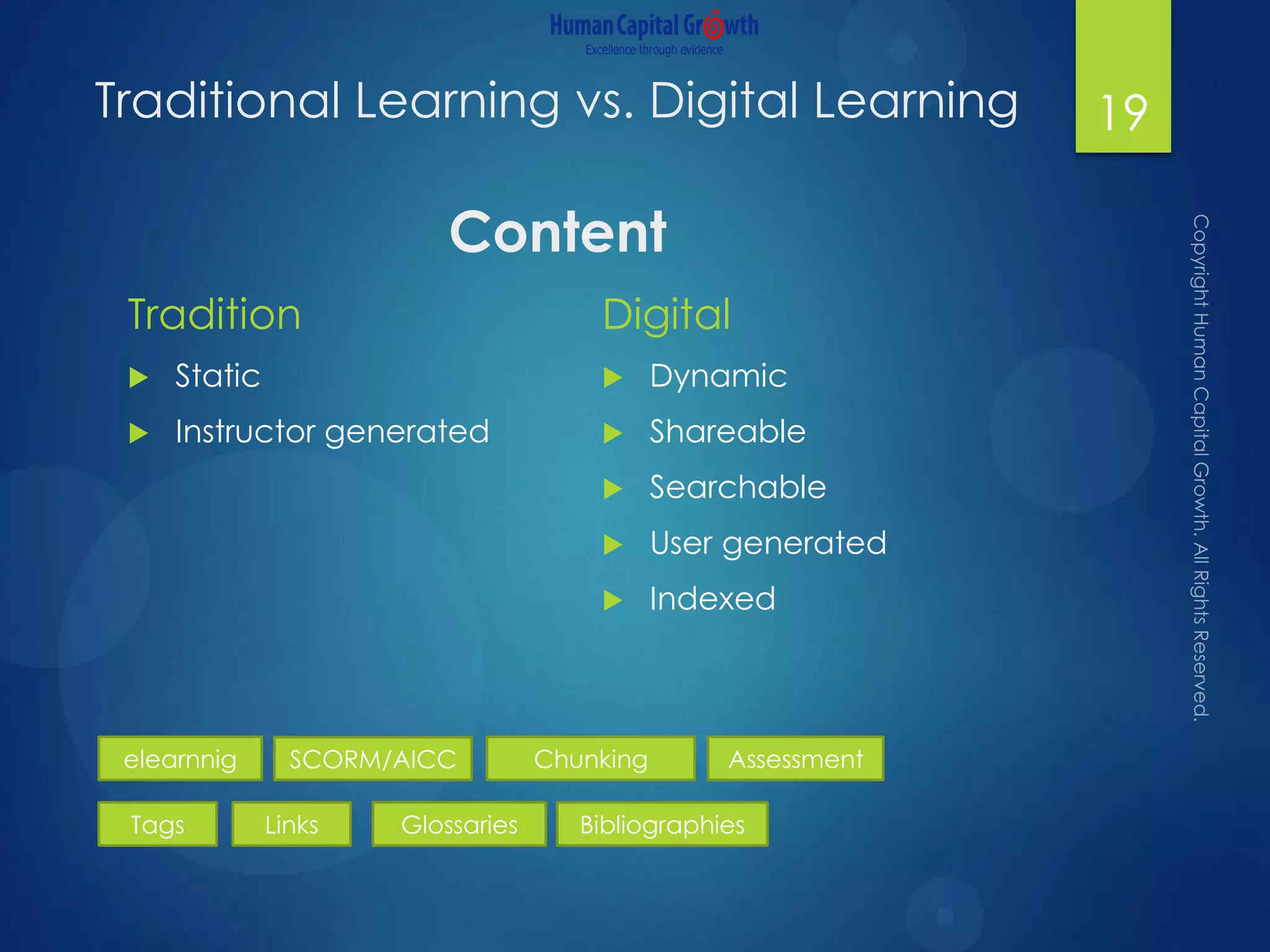
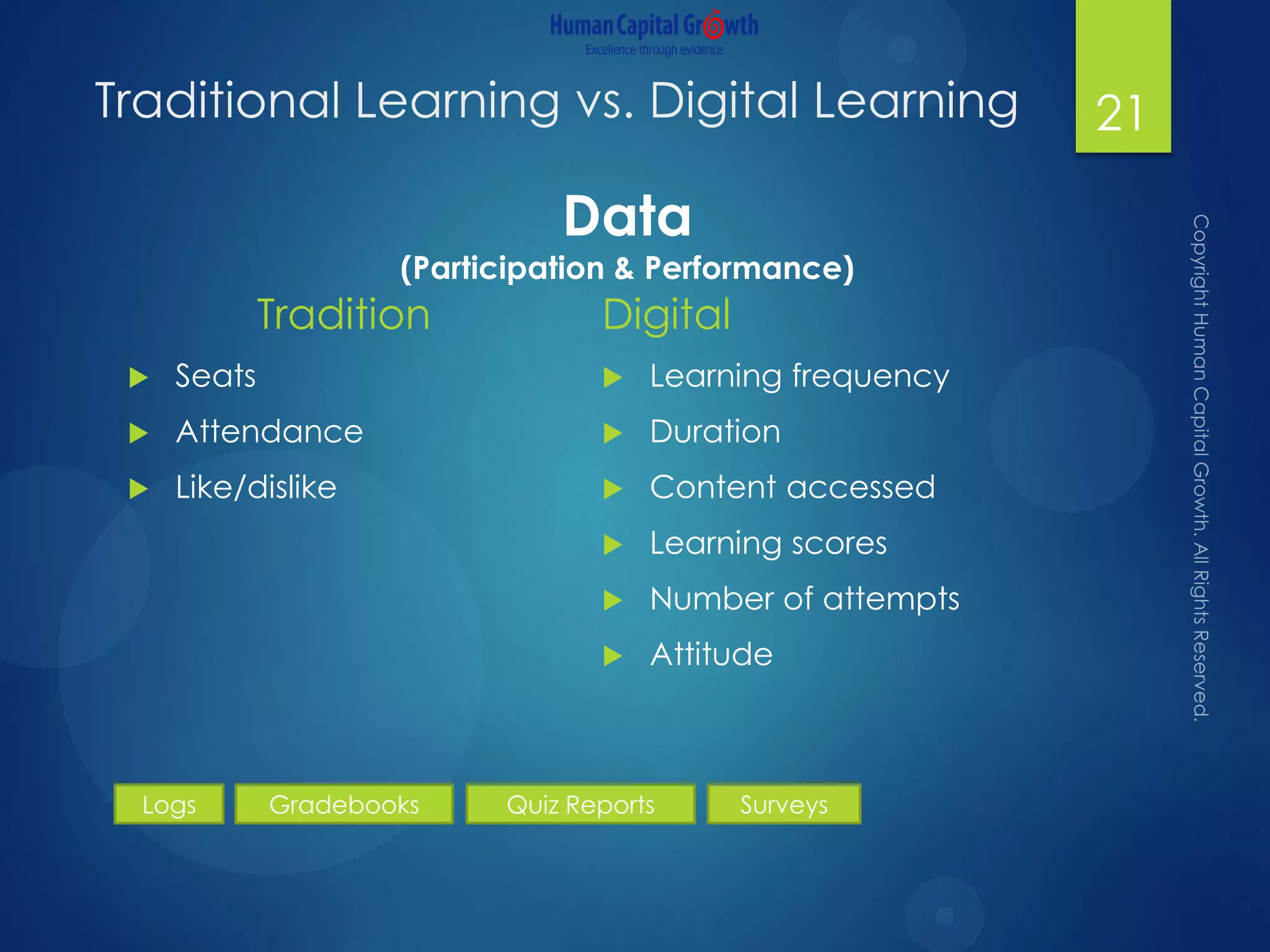
Traditional Learning vs. Digital Learning
Content
Tradition
 Static
 Instructor generated
Digital
 Dynamic
 Shareable
 Searchable
 User generated
 Indexed
19
Tags Links Glossaries Bibliographies
elearnnig SCORM/AICC Chunking Assessment
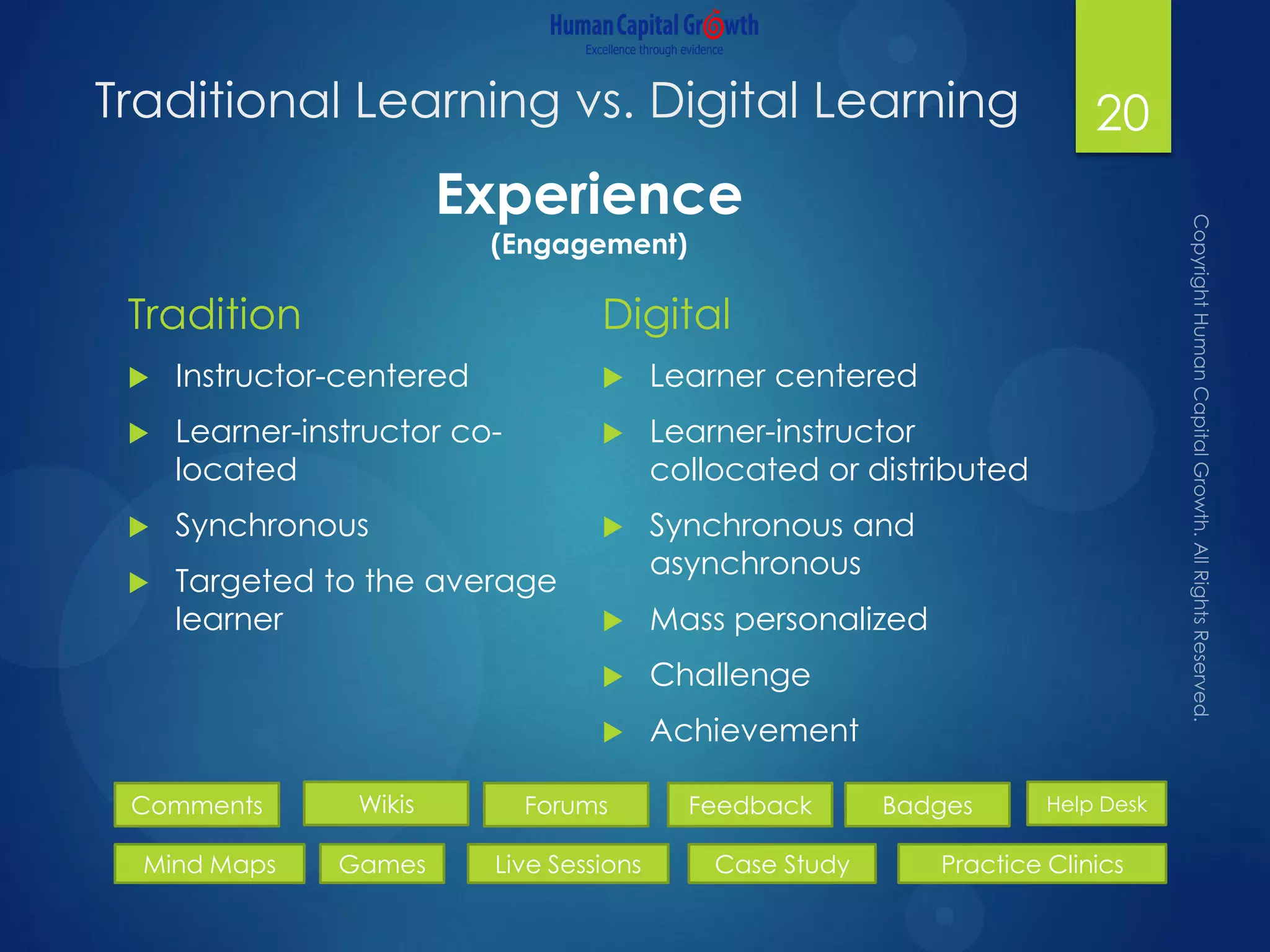
Traditional Learning vs. Digital Learning
Tradition
 Instructor-centered
 Learner-instructor co-
located
 Synchronous
 Targeted to the average
learner
Digital
 Learner centered
 Learner-instructor
collocated or distributed
 Synchronous and
asynchronous
 Mass personalized
 Challenge
 Achievement
20
Comments Wikis Forums Feedback Badges
Mind Maps Games
Experience
(Engagement)
Live Sessions Case Study Practice Clinics
Help Desk
Traditional Learning vs. Digital Learning
Tradition
 Seats
 Attendance
 Like/dislike
Digital
 Learning frequency
 Duration
 Content accessed
 Learning scores
 Number of attempts
 Attitude
21
Logs Gradebooks Quiz Reports Surveys
Data
(Participation & Performance)
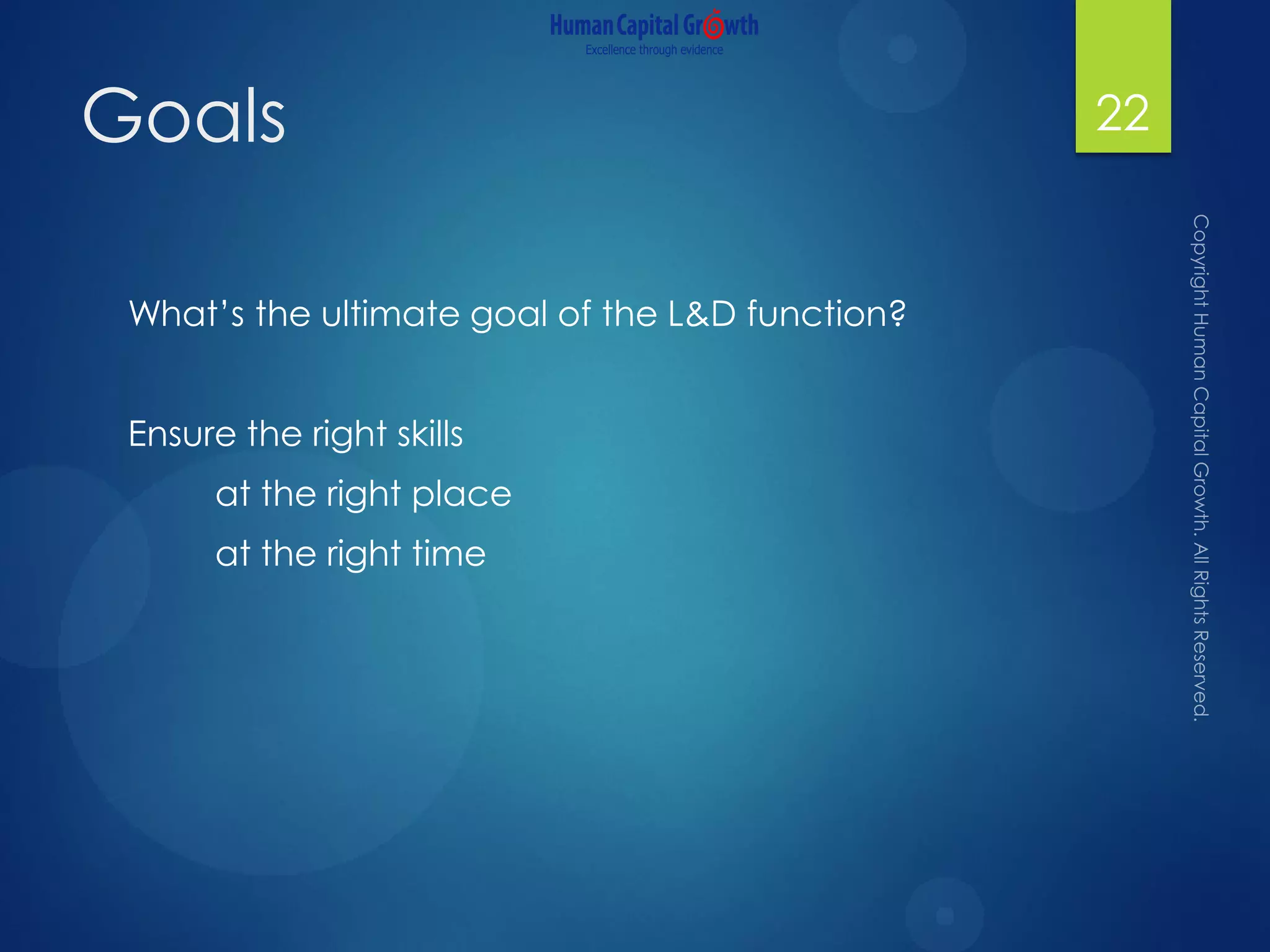
Goals
What’s the ultimate goal of the L&D function?
Ensure the right skills
at the right place
at the right time
22
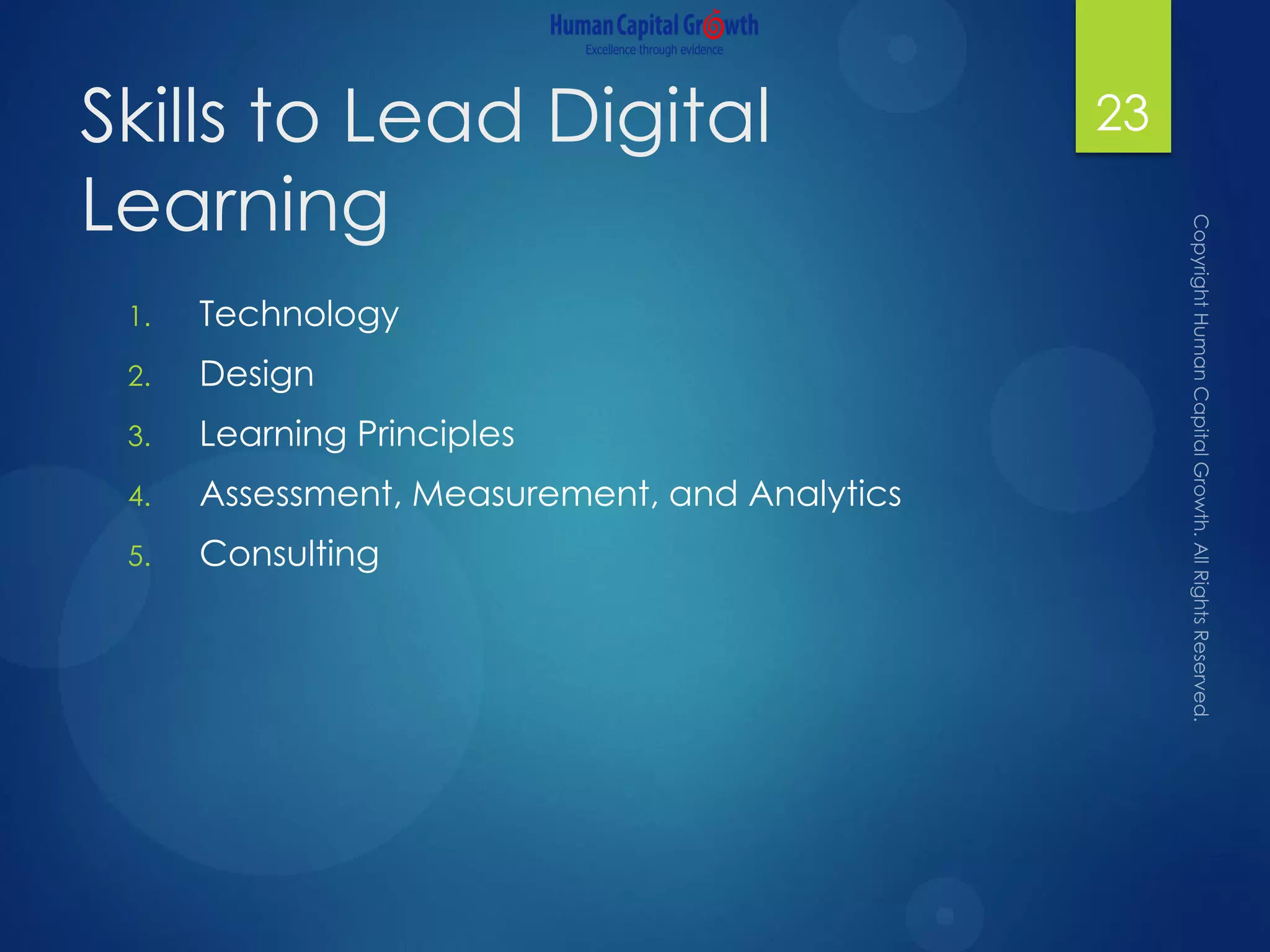
Skills to Lead Digital
Learning
1. Technology
2. Design
3. Learning Principles
4. Assessment, Measurement, and Analytics
5. Consulting
23
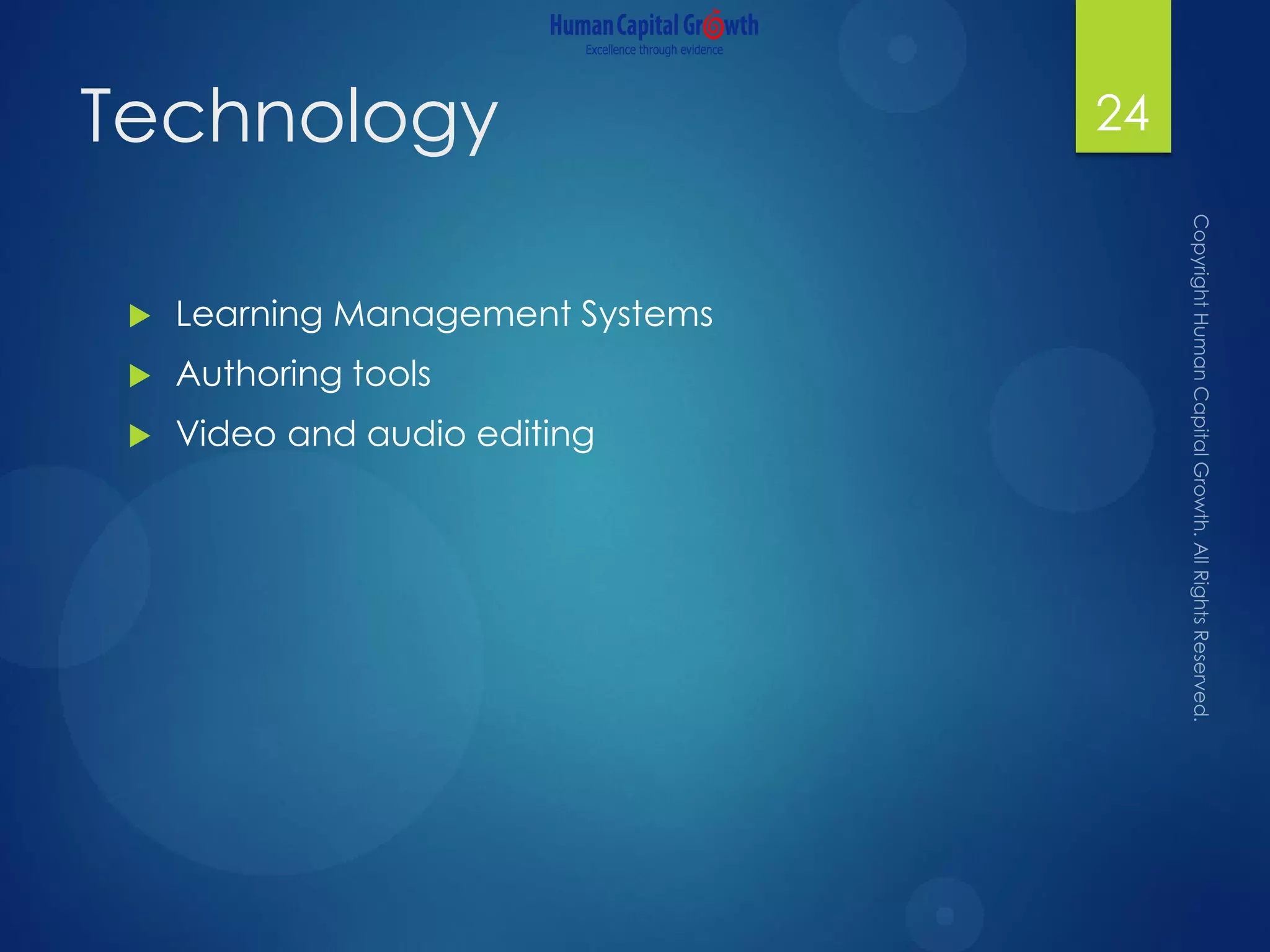
Technology
 Learning Management Systems
 Authoring tools
 Video and audio editing
24
Design
 Instructional Design
 Graphic Design
 Visual Design
25
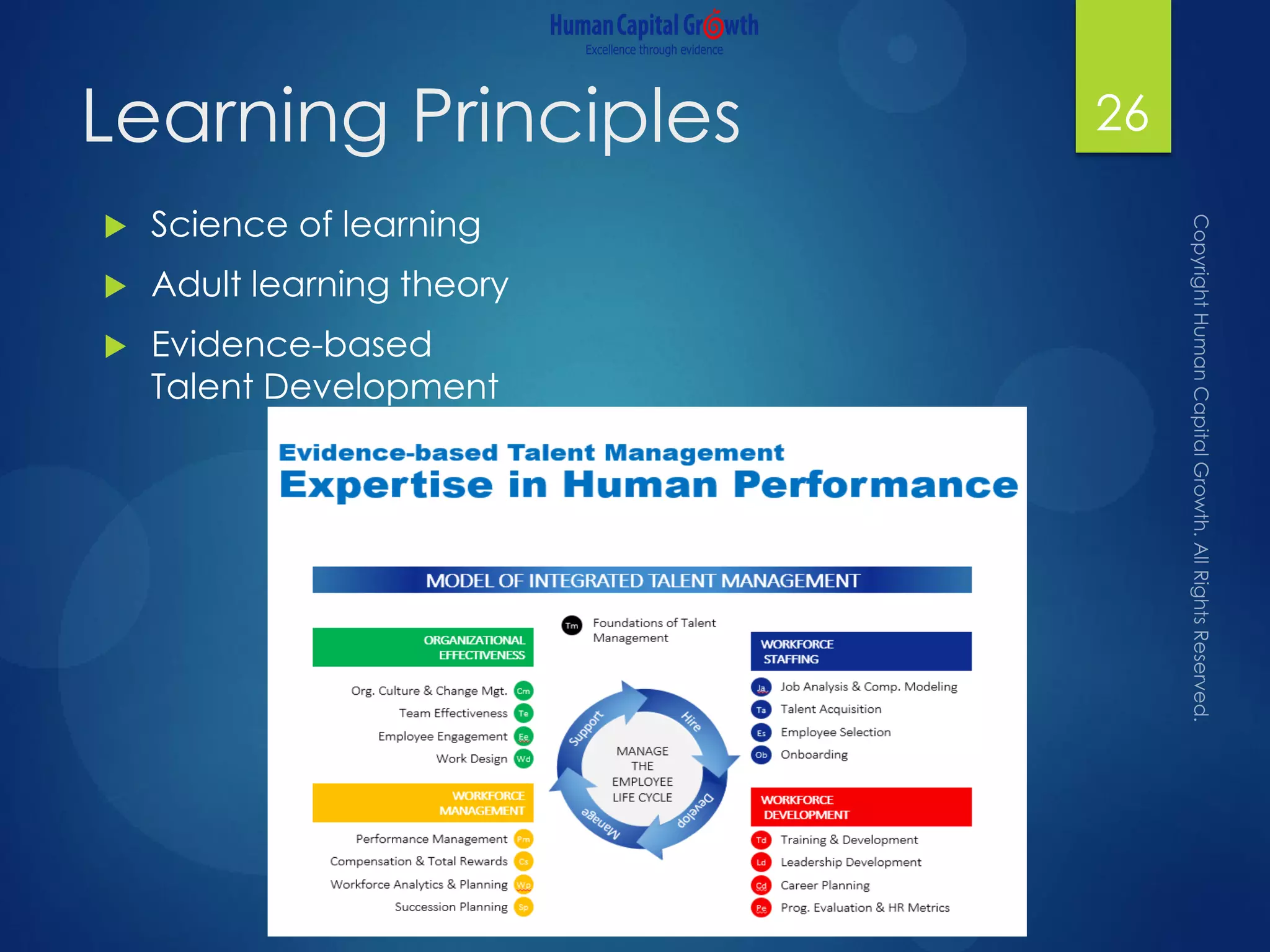
Learning Principles
 Science of learning
 Adult learning theory
 Evidence-based
Talent Development
26
Measurement and
Analytics
 Data
 Assessment & Measurement
 Statistics
27
Consulting
 Making a business case
 Stakeholder management
 Influence and persuasion
 Project planning
 Communication skills
 Leadership
28
Do you have needs in these areas?
 eLearning
 Learning/certification assessments
 Learning assets (e.g. tools, job aids)
 Gamification
 Learning analytics
 Design of learning platform
We can help!
29
Call +1 707 317 7644
Email: Shreya@humancapitalgrowth.com
Thank You!
FOR MORE INFORMATION CONTACT
SHREYA@HUMANCAPITALGROWTH.COM
30

Human Capital Growth Webinar: Digitization of the learning and development function

  • 1.
    Digitization of theLearning and Development Function
  • 2.
  • 3.
    CopyrightHumanCapitalGrowth.AllRightsReserved. 3 Leadership Excellence Talent Management Excellence US India We helporganizations achieve better outcomes through talent using science, analytics, and empathy. Drive business impact through timely talent actions Evidence-based solutions for measurable and sustained improvements in leadership
  • 4.
  • 5.
    Digital Learning 5 OnlineLearning Mobile Learning eLearning mLearning Micro Learning Multi-media Learning Synchronous Learning Asynchonous Learning Virtual Classroom Computer-based training Web-based learning Virtual Instructor-led Training Any technology mediating learning that provides learners control over when and where they learn
  • 6.
    Learning 6 A relativelypermanent change in behavior as a result of practice. Knowledge Skill Attitude
  • 7.
    Benefits of DigitalLearning 7 Learner Instructor Administrator • Personalized • Pervasive (anytime, anywhere) • Searchable • High quality instructions • Adaptive guidance • Promote mastery • Focus on remediation rather than instructions • Scale and reach • Tracking • Personalized support
  • 8.
    The Value Chain8 Digital Learning Learning Analytics Evidence- based practice Closed skill gaps Enhanced Expertise
  • 9.
    Digital Learning 9 What?When?How?  Talent Development  Human Capital Development  Can’t do vs. Won’t do
  • 10.
    Questions to explore 1.Who needs to learn? 2. What skills need to be developed? 3. Does the learning content lend itself to digitization? 4. What is the highest proficiency level required? Can it be achieved through digital learning? 5. What is the optimal size of learner base to consider digitization? 6. What is the break-even cost? 10
  • 11.
    ShortVideos JobAids eLearning Conferences Classroom/ Blended Learning Workshop Coaching How to… Variety oftopics, Learn as much or as little Anytime, anywhere Fewer topics, customized to work and organization Few options Customized to learner, work, organization Talent Development Human Capital Development Types of Development 11 Specific, practical, short Learn something new… I can do… I excel/transform…
  • 12.
    Examples Talent Development  Softwareskills  Technology skills  Compliance training  Accounting skills  HR Skills  Quality Human Capital Development  Product Development  Go to market strategy  Solution selling  Leading  Negotiation strategy  Talent Development 12
  • 13.
    13 Former Attorney GeneralEric Holder’s report for fixing Uber’s toxic culture recommended mandatory training for leadership, managers, and HR to combat implicit bias. Will this fix the issue? Fixing the Culture Problem
  • 14.
    Predictors of JobPerformance 14 “Won’t Do ” “Can ‘t Do ”Cognitive Ability 25% Job Experience 20% Personality 15% Motivation 18% Interest 10% Fit 7% Other 5%
  • 15.
    34% Motivation to Learn Mostinfluential predictor of transfer of training Source: Colquitt, J. A., LePine, J. A., & Noe, R. A. (2000). Toward an integrative theory of training motivation: a meta-analytic path analysis of 20 years of research. Journal of applied psychology, 85(5), 678.
  • 16.
    Digital Learning 16 What?When?How?  Talent Development  Human Capital Development  Can’t do vs. Won’t do  Reflection  Learning  Practice  Feedback  Celebration
  • 17.
    HCG Skill AssuranceModel 17 Learn Practice FeedbackReflect Pre test Survey Workshops Elearning Webinar Observations (Role modeling) Quiz Assignment Case Study Practice Clinics Automated Feedback Mentor Feedback Peer Feedback Celebrate Badges Certificates Recognition Graduation A Blended Learning Approach
  • 18.
    Digital Learning 18 What?When?How?  Talent Development  Human Capital Development  Can’t do vs. Won’t do  Content  Experience  Data  Reflection  Learning  Practice  Feedback  Celebration
  • 19.
    Traditional Learning vs.Digital Learning Content Tradition  Static  Instructor generated Digital  Dynamic  Shareable  Searchable  User generated  Indexed 19 Tags Links Glossaries Bibliographies elearnnig SCORM/AICC Chunking Assessment
  • 20.
    Traditional Learning vs.Digital Learning Tradition  Instructor-centered  Learner-instructor co- located  Synchronous  Targeted to the average learner Digital  Learner centered  Learner-instructor collocated or distributed  Synchronous and asynchronous  Mass personalized  Challenge  Achievement 20 Comments Wikis Forums Feedback Badges Mind Maps Games Experience (Engagement) Live Sessions Case Study Practice Clinics Help Desk
  • 21.
    Traditional Learning vs.Digital Learning Tradition  Seats  Attendance  Like/dislike Digital  Learning frequency  Duration  Content accessed  Learning scores  Number of attempts  Attitude 21 Logs Gradebooks Quiz Reports Surveys Data (Participation & Performance)
  • 22.
    Goals What’s the ultimategoal of the L&D function? Ensure the right skills at the right place at the right time 22
  • 23.
    Skills to LeadDigital Learning 1. Technology 2. Design 3. Learning Principles 4. Assessment, Measurement, and Analytics 5. Consulting 23
  • 24.
    Technology  Learning ManagementSystems  Authoring tools  Video and audio editing 24
  • 25.
    Design  Instructional Design Graphic Design  Visual Design 25
  • 26.
    Learning Principles  Scienceof learning  Adult learning theory  Evidence-based Talent Development 26
  • 27.
    Measurement and Analytics  Data Assessment & Measurement  Statistics 27
  • 28.
    Consulting  Making abusiness case  Stakeholder management  Influence and persuasion  Project planning  Communication skills  Leadership 28
  • 29.
    Do you haveneeds in these areas?  eLearning  Learning/certification assessments  Learning assets (e.g. tools, job aids)  Gamification  Learning analytics  Design of learning platform We can help! 29 Call +1 707 317 7644 Email: Shreya@humancapitalgrowth.com
  • 30.
    Thank You! FOR MOREINFORMATION CONTACT SHREYA@HUMANCAPITALGROWTH.COM 30