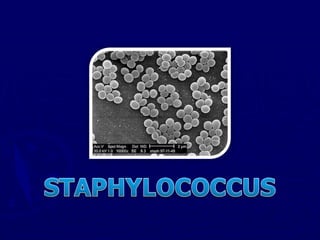
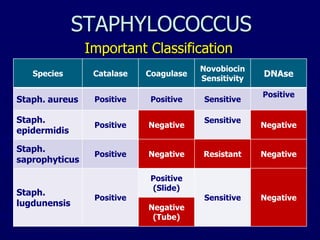
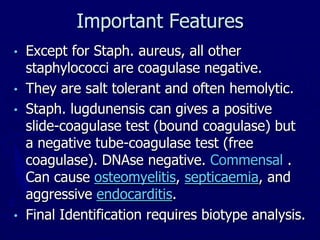
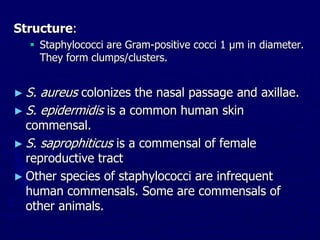
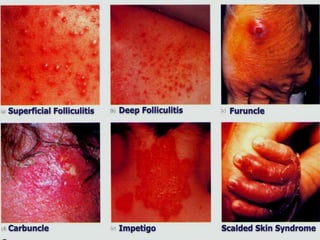
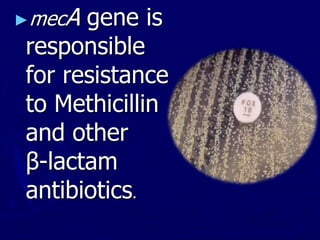
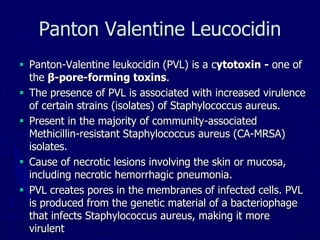
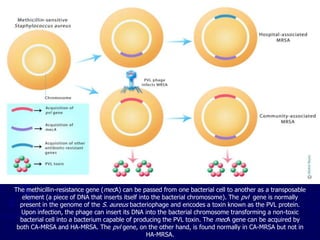
This document discusses Staphylococcus aureus and methicillin-resistant Staphylococcus aureus (MRSA). It describes the identification and characteristics of S. aureus, including its ability to cause various infections like abscesses, sepsis, impetigo, and toxic shock syndrome. MRSA is defined as S. aureus resistant to beta-lactam antibiotics like methicillin due to the mecA gene. MRSA infections are difficult to treat and prevention relies on hand washing and infection control practices. Community-associated MRSA strains often contain the Panton-Valentine leukocidin toxin which increases virulence.









![Staphylococcus_lecture. FUHSA 2025 [Compatibility Mode].pdf](https://cdn.slidesharecdn.com/ss_thumbnails/staphylococcuslecture-250716105746-0d9f38b5-thumbnail.jpg?width=640&height=640&fit=bounds)


