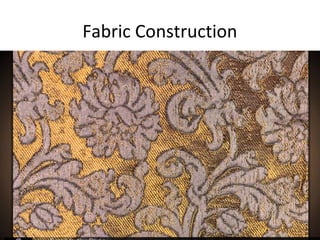
Fabric Construction
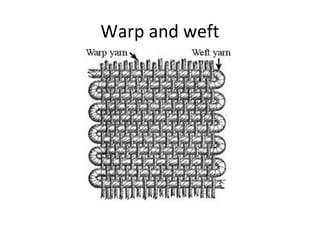
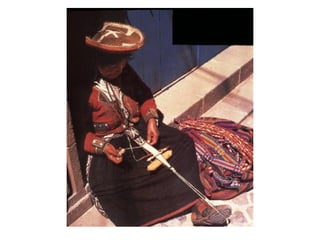
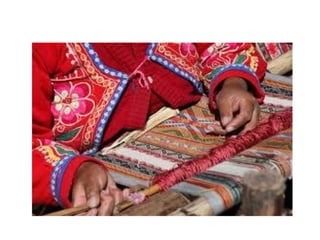
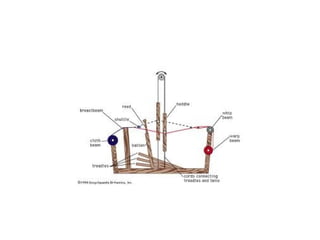
Warp and weft
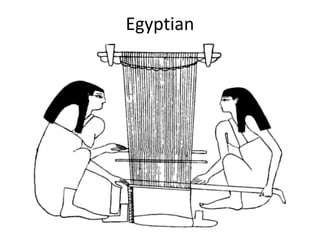
Egyptian
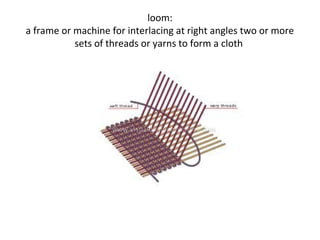
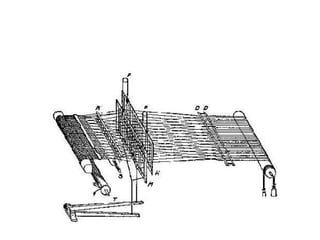
loom:
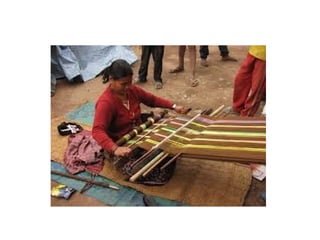
a frame or machine for interlacing at right angles two or more
sets of threads or yarns to form a cloth
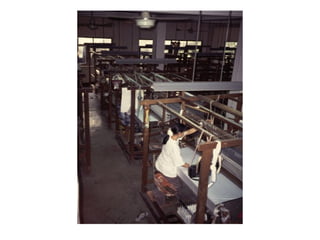
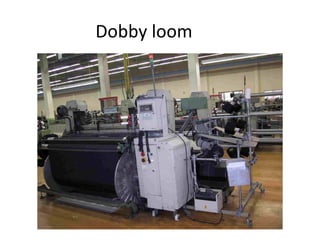
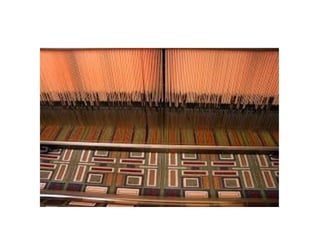
Dobby loom
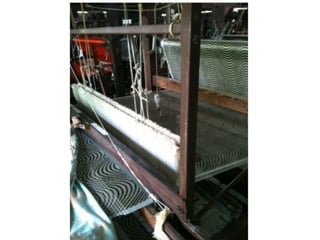
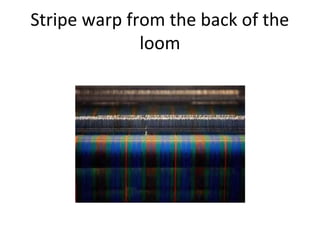
Stripe warp from the back of the
loom
Three basic weaves
• Plain
• Twill
• Satin
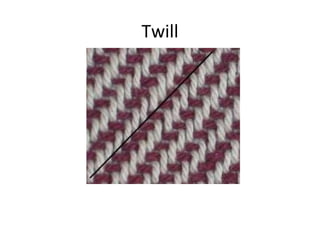
Twill
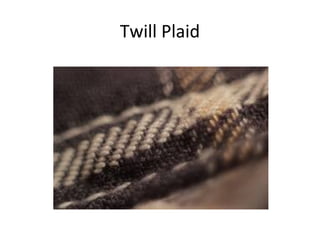
Twill Plaid
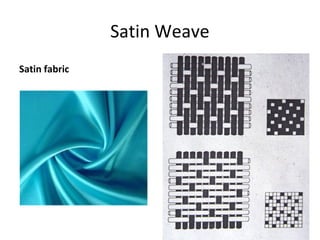
Satin Weave
Satin fabric
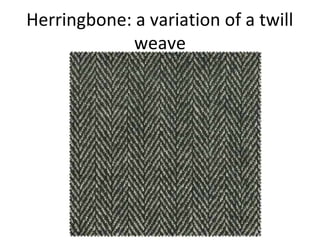
Herringbone: a variation of a twill
weave
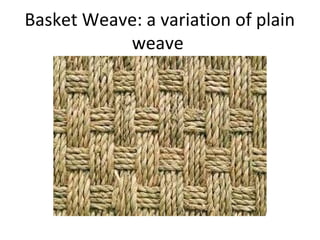
Basket Weave: a variation of plain
weave
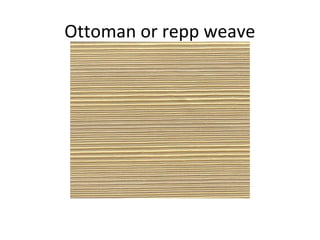
Ottoman or repp weave
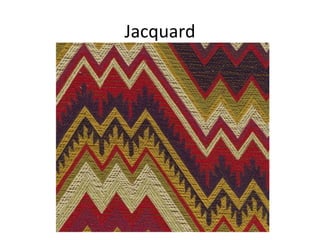
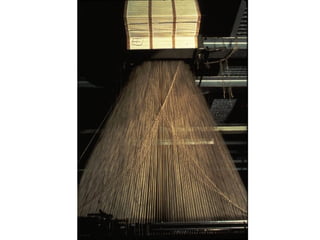
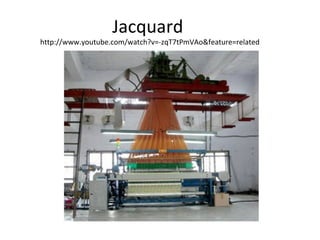
Jacquard
Jacquard
• Joseph Jacquard invented in 1801, Lyon
France
• Device that simplifies the process of
manufacturing complex textile patterns.
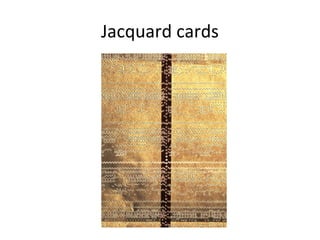
• Each design has a set of punch cards
• First key punch system
• Binary system forerunner of computers
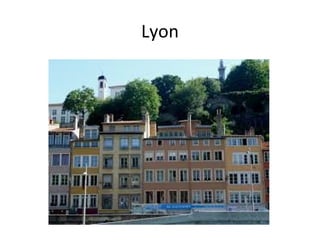
Lyon
Jacquard cards
Jacquard
http://www.youtube.com/watch?v=-zqT7tPmVAo&feature=related
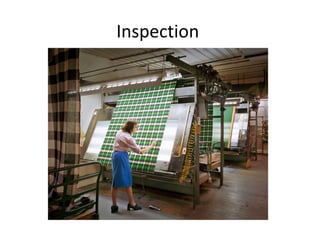
Inspection
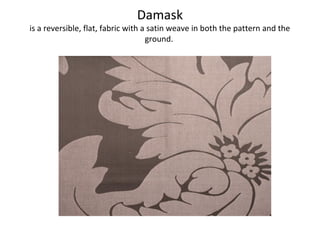
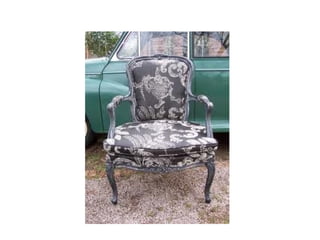
Damask
is a reversible, flat, fabric with a satin weave in both the pattern and the
ground.
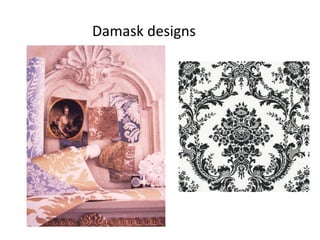
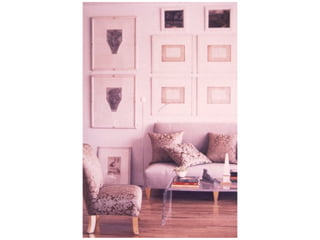
Damask designs
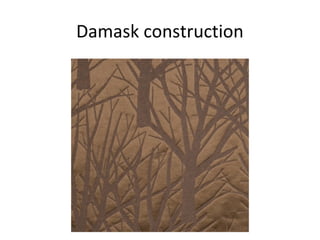
Damask construction
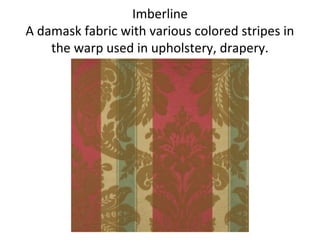
Imberline
A damask fabric with various colored stripes in
the warp used in upholstery, drapery.
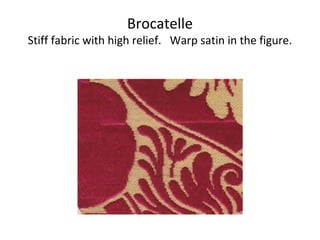
Brocatelle
Stiff fabric with high relief. Warp satin in the figure.
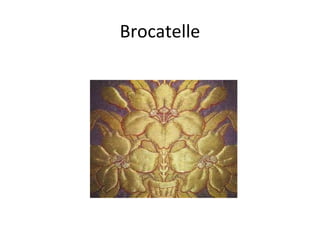
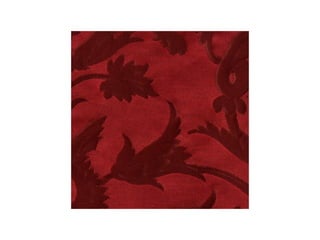
Brocatelle
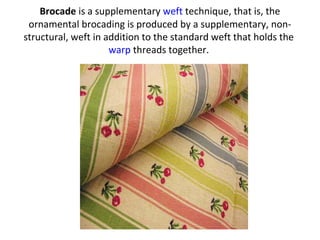
Brocade is a supplementary weft technique, that is, the
ornamental brocading is produced by a supplementary, non-
structural, weft in addition to the standard weft that holds the
warp threads together.
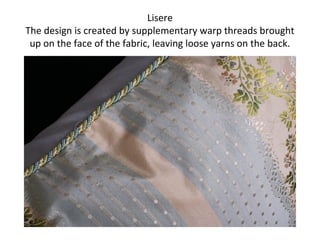
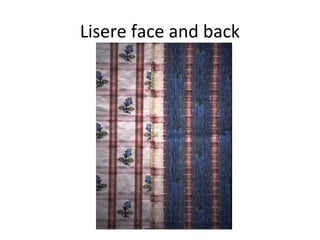
Lisere
The design is created by supplementary warp threads brought
up on the face of the fabric, leaving loose yarns on the back.
Lisere face and back
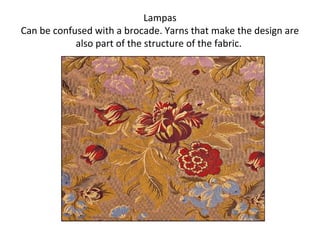
Lampas
Can be confused with a brocade. Yarns that make the design are
also part of the structure of the fabric.
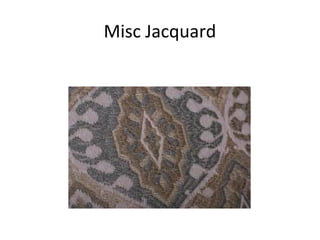
Misc Jacquard
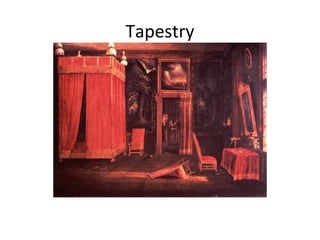
Tapestry
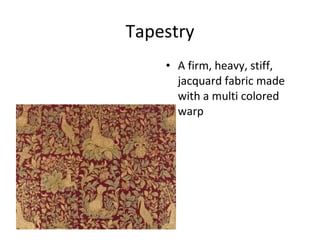
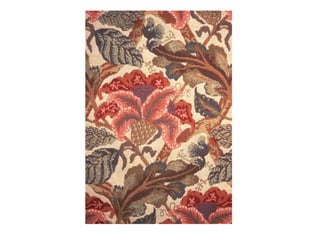
Tapestry
• A firm, heavy, stiff,
jacquard fabric made
with a multi colored
warp
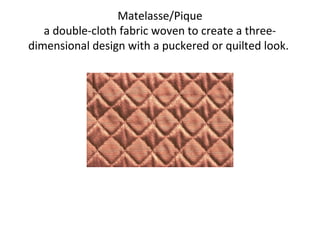
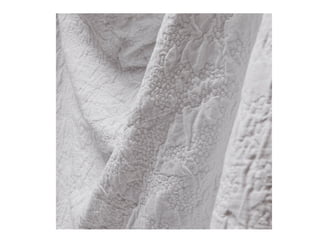
Matelasse/Pique
a double-cloth fabric woven to create a three-
dimensional design with a puckered or quilted look.
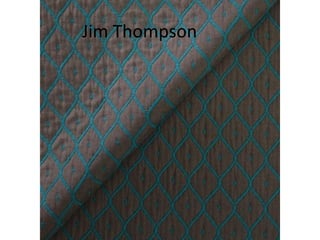
Jim Thompson
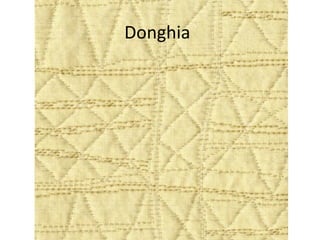
Donghia
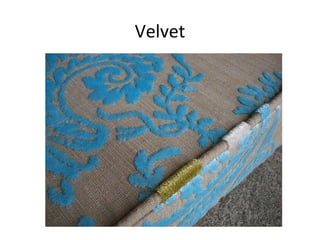
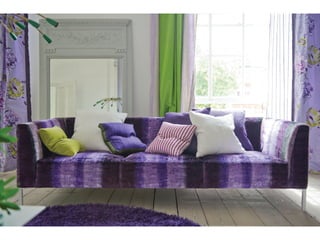
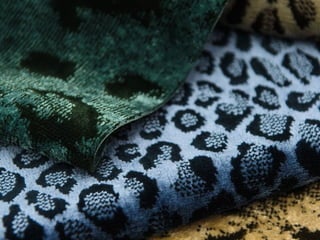
Velvet
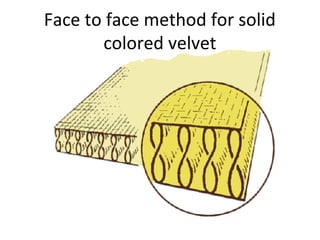
Face to face method for solid
colored velvet
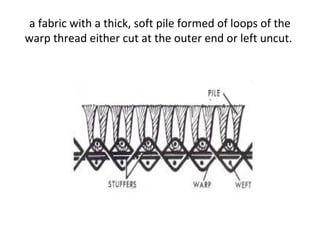
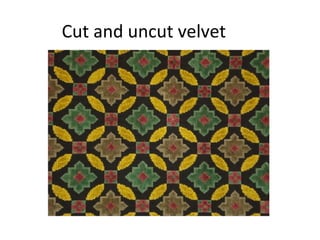
a fabric with a thick, soft pile formed of loops of the
warp thread either cut at the outer end or left uncut.
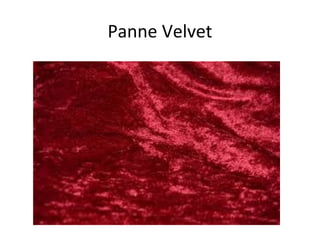
Panne Velvet
Panne Velvet
Cut and uncut velvet
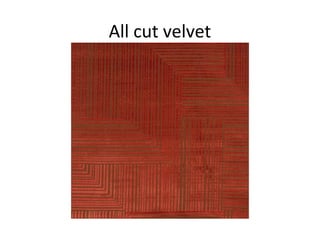
All cut velvet
Velvet facts
• Nap, pile lays down in one direction
• Pile can be interlaced in the form of a V or W
and V is superior because more compact.
• Wears from the back to the face
• Frieze, short, fine, tight loop
• Chenille and flocking mock velvet
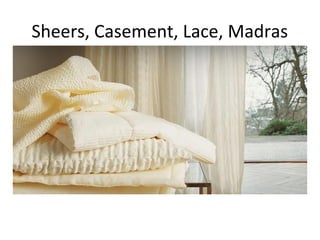
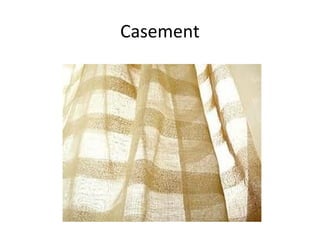
Sheers, Casement, Lace, Madras
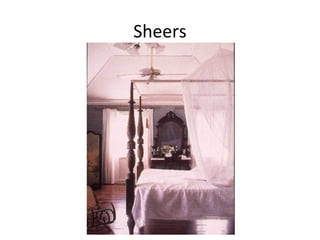
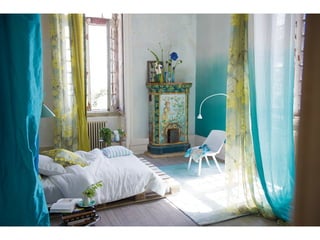
Sheers
Casement
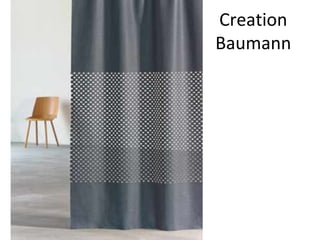
Creation
Baumann
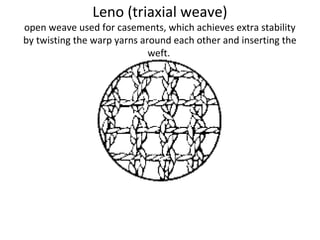
Leno (triaxial weave)
open weave used for casements, which achieves extra stability
by twisting the warp yarns around each other and inserting the
weft.
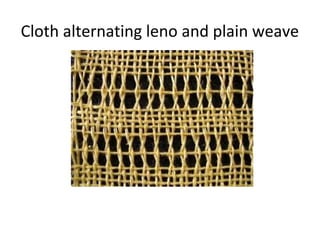
Cloth alternating leno and plain weave
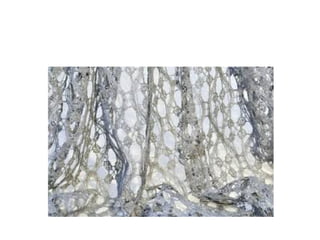
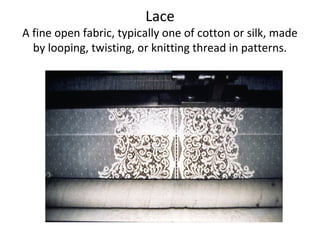
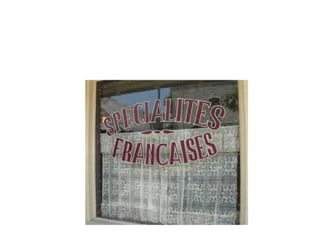
Lace
A fine open fabric, typically one of cotton or silk, made
by looping, twisting, or knitting thread in patterns.
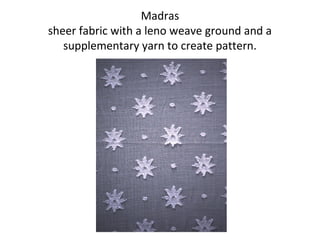
Madras
sheer fabric with a leno weave ground and a
supplementary yarn to create pattern.
Woven facts
• 54” wide on average but can range from 48” up. Window fabrics can be
108”
• Sold by the running yard. D&D code. Each wholesaler has a different
minimum size order.
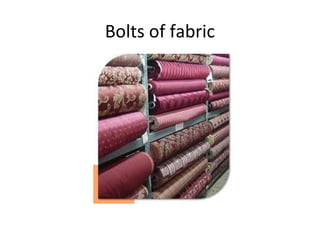
• A piece or bolt of fabric averages 55 yards depending on the weight of the
fabric
• The repeat size and repeat configuration contributed to the amount of
waste.
• Work with your upholsterer to determine quantities and how you want
the pattern engineered on the furniture or window treatment.
• Thread count is the number of yarns per square inch. In other words the
number of warp thread per inch and weft threads per inch added up.
Bolts of fabric
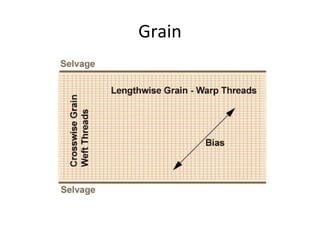
Grain
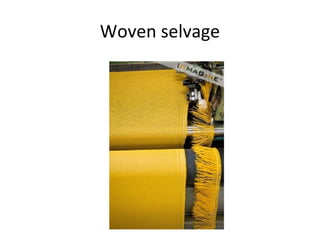
Woven selvage
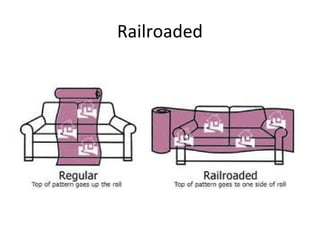
Railroaded
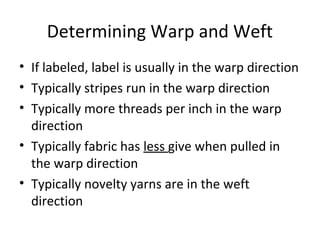
Determining Warp and Weft
• If labeled, label is usually in the warp direction
• Typically stripes run in the warp direction
• Typically more threads per inch in the warp
direction
• Typically fabric has less give when pulled in
the warp direction
• Typically novelty yarns are in the weft
direction
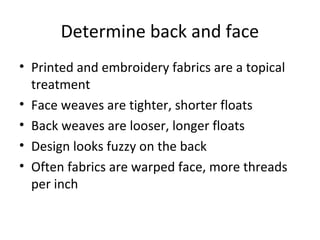
Determine back and face
• Printed and embroidery fabrics are a topical
treatment
• Face weaves are tighter, shorter floats
• Back weaves are looser, longer floats
• Design looks fuzzy on the back
• Often fabrics are warped face, more threads
per inch
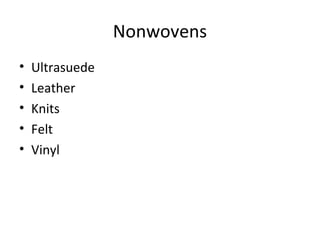
Nonwovens
• Ultrasuede
• Leather
• Knits
• Felt
• Vinyl
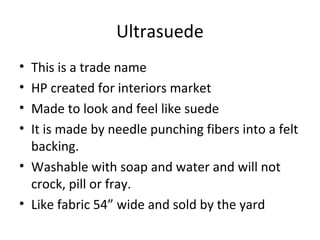
Ultrasuede
• This is a trade name
• HP created for interiors market
• Made to look and feel like suede
• It is made by needle punching fibers into a felt
backing.
• Washable with soap and water and will not
crock, pill or fray.
• Like fabric 54” wide and sold by the yard
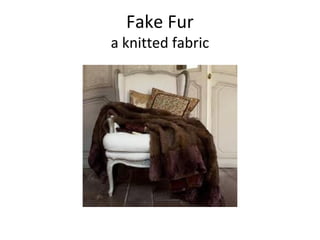
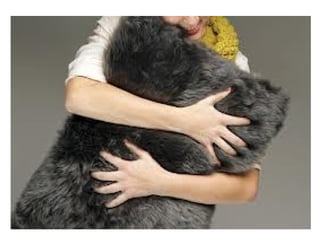
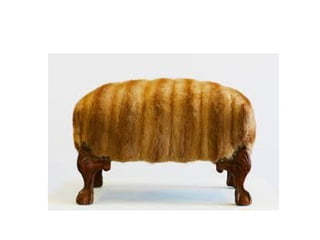
Fake Fur
a knitted fabric
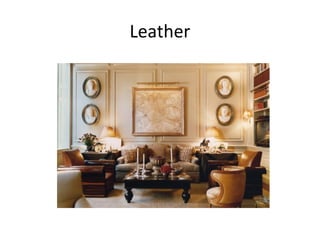
Leather
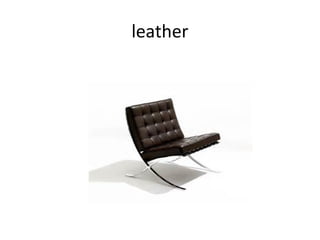
leather
Leather facts
• Has grain
– Full grain is natural
– Top grain has undergone minor corrections
– Split leather in only the center of the hide without
markings
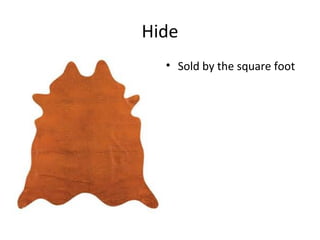
Hide
• Sold by the square foot
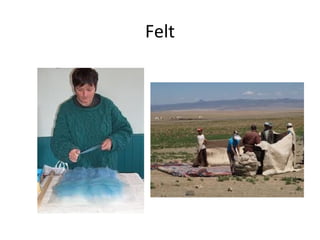
Felt
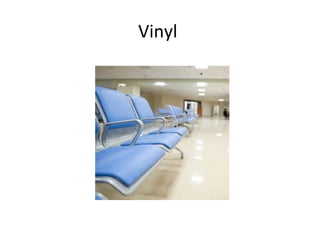
Vinyl
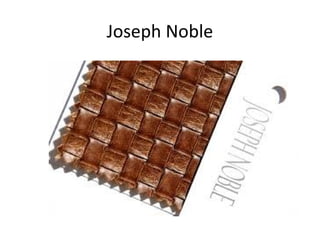
Joseph Noble
Review
• Weaving is the interlacing of yarns at right angles to each
other.
• Warp yarns run vertically through the loom and are held
under tension and systematically raised allowing the weft
yarn to be inserted horizontally.
• A loom is a frame or machine for interlacing at right angles
two or more sets of threads or yarns to form a cloth.
• Know the different ways to determine the warp and weft of a
fabric.
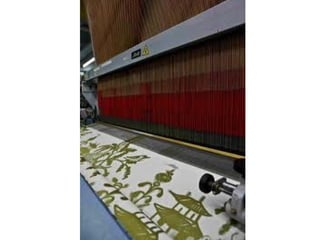
• Dobby looms weave simple fabrics and jacquard looms weave
large complex designs.
• What is a selvage?
• Know how to determine the front and back of a fabric.
• The type and size of the design repeat adds to the amount of fabrics
needed for a project.
• What is the grain of a fabric?
• A railroaded fabric is one in which the design is oriented sideways to save
yardage when upholstering.
• Know what thread count means.
• How is leather sold?
• Fabric pricing. 5/10 code verses retail.
• The most common fabric width is 54” and fabrics are sold by the running
yard.
• You use sheers, casements and madras on windows or beds to filter light,
create privacy and/or insulate a room.
• How does a leno weave differ from other weaves?
• Why is it important to determine the nap of a velvet before using it for
drapery or upholstery?
• What are nonwovens and name five examples that are used in interiors.

Fabric construction

  • 1.
  • 2.
  • 3.
  • 4.
    loom: a frame ormachine for interlacing at right angles two or more sets of threads or yarns to form a cloth
  • 13.
  • 16.
    Stripe warp fromthe back of the loom
  • 17.
    Three basic weaves •Plain • Twill • Satin
  • 18.
  • 19.
  • 20.
  • 21.
    Herringbone: a variationof a twill weave
  • 22.
    Basket Weave: avariation of plain weave
  • 23.
  • 24.
  • 25.
    Jacquard • Joseph Jacquardinvented in 1801, Lyon France • Device that simplifies the process of manufacturing complex textile patterns. • Each design has a set of punch cards • First key punch system • Binary system forerunner of computers
  • 26.
  • 28.
  • 29.
  • 30.
  • 31.
    Damask is a reversible,flat, fabric with a satin weave in both the pattern and the ground.
  • 32.
  • 33.
  • 36.
    Imberline A damask fabricwith various colored stripes in the warp used in upholstery, drapery.
  • 37.
    Brocatelle Stiff fabric withhigh relief. Warp satin in the figure.
  • 38.
  • 40.
    Brocade is asupplementary weft technique, that is, the ornamental brocading is produced by a supplementary, non- structural, weft in addition to the standard weft that holds the warp threads together.
  • 42.
    Lisere The design iscreated by supplementary warp threads brought up on the face of the fabric, leaving loose yarns on the back.
  • 43.
  • 44.
    Lampas Can be confusedwith a brocade. Yarns that make the design are also part of the structure of the fabric.
  • 45.
  • 46.
  • 47.
    Tapestry • A firm,heavy, stiff, jacquard fabric made with a multi colored warp
  • 52.
    Matelasse/Pique a double-cloth fabricwoven to create a three- dimensional design with a puckered or quilted look.
  • 54.
  • 55.
  • 56.
  • 57.
    Face to facemethod for solid colored velvet
  • 58.
    a fabric witha thick, soft pile formed of loops of the warp thread either cut at the outer end or left uncut.
  • 60.
  • 62.
  • 64.
  • 65.
  • 68.
    Velvet facts • Nap,pile lays down in one direction • Pile can be interlaced in the form of a V or W and V is superior because more compact. • Wears from the back to the face • Frieze, short, fine, tight loop • Chenille and flocking mock velvet
  • 69.
  • 70.
  • 73.
  • 74.
  • 75.
    Leno (triaxial weave) openweave used for casements, which achieves extra stability by twisting the warp yarns around each other and inserting the weft.
  • 76.
    Cloth alternating lenoand plain weave
  • 77.
    Lace A fine openfabric, typically one of cotton or silk, made by looping, twisting, or knitting thread in patterns.
  • 79.
    Madras sheer fabric witha leno weave ground and a supplementary yarn to create pattern.
  • 80.
    Woven facts • 54”wide on average but can range from 48” up. Window fabrics can be 108” • Sold by the running yard. D&D code. Each wholesaler has a different minimum size order. • A piece or bolt of fabric averages 55 yards depending on the weight of the fabric • The repeat size and repeat configuration contributed to the amount of waste. • Work with your upholsterer to determine quantities and how you want the pattern engineered on the furniture or window treatment. • Thread count is the number of yarns per square inch. In other words the number of warp thread per inch and weft threads per inch added up.
  • 81.
  • 82.
  • 83.
  • 84.
  • 85.
    Determining Warp andWeft • If labeled, label is usually in the warp direction • Typically stripes run in the warp direction • Typically more threads per inch in the warp direction • Typically fabric has less give when pulled in the warp direction • Typically novelty yarns are in the weft direction
  • 86.
    Determine back andface • Printed and embroidery fabrics are a topical treatment • Face weaves are tighter, shorter floats • Back weaves are looser, longer floats • Design looks fuzzy on the back • Often fabrics are warped face, more threads per inch
  • 87.
  • 88.
    Ultrasuede • This isa trade name • HP created for interiors market • Made to look and feel like suede • It is made by needle punching fibers into a felt backing. • Washable with soap and water and will not crock, pill or fray. • Like fabric 54” wide and sold by the yard
  • 90.
  • 93.
  • 94.
  • 95.
    Leather facts • Hasgrain – Full grain is natural – Top grain has undergone minor corrections – Split leather in only the center of the hide without markings
  • 96.
    Hide • Sold bythe square foot
  • 97.
  • 98.
  • 99.
  • 100.
    Review • Weaving isthe interlacing of yarns at right angles to each other. • Warp yarns run vertically through the loom and are held under tension and systematically raised allowing the weft yarn to be inserted horizontally. • A loom is a frame or machine for interlacing at right angles two or more sets of threads or yarns to form a cloth. • Know the different ways to determine the warp and weft of a fabric. • Dobby looms weave simple fabrics and jacquard looms weave large complex designs. • What is a selvage? • Know how to determine the front and back of a fabric.
  • 101.
    • The typeand size of the design repeat adds to the amount of fabrics needed for a project. • What is the grain of a fabric? • A railroaded fabric is one in which the design is oriented sideways to save yardage when upholstering. • Know what thread count means. • How is leather sold? • Fabric pricing. 5/10 code verses retail. • The most common fabric width is 54” and fabrics are sold by the running yard. • You use sheers, casements and madras on windows or beds to filter light, create privacy and/or insulate a room. • How does a leno weave differ from other weaves? • Why is it important to determine the nap of a velvet before using it for drapery or upholstery? • What are nonwovens and name five examples that are used in interiors.