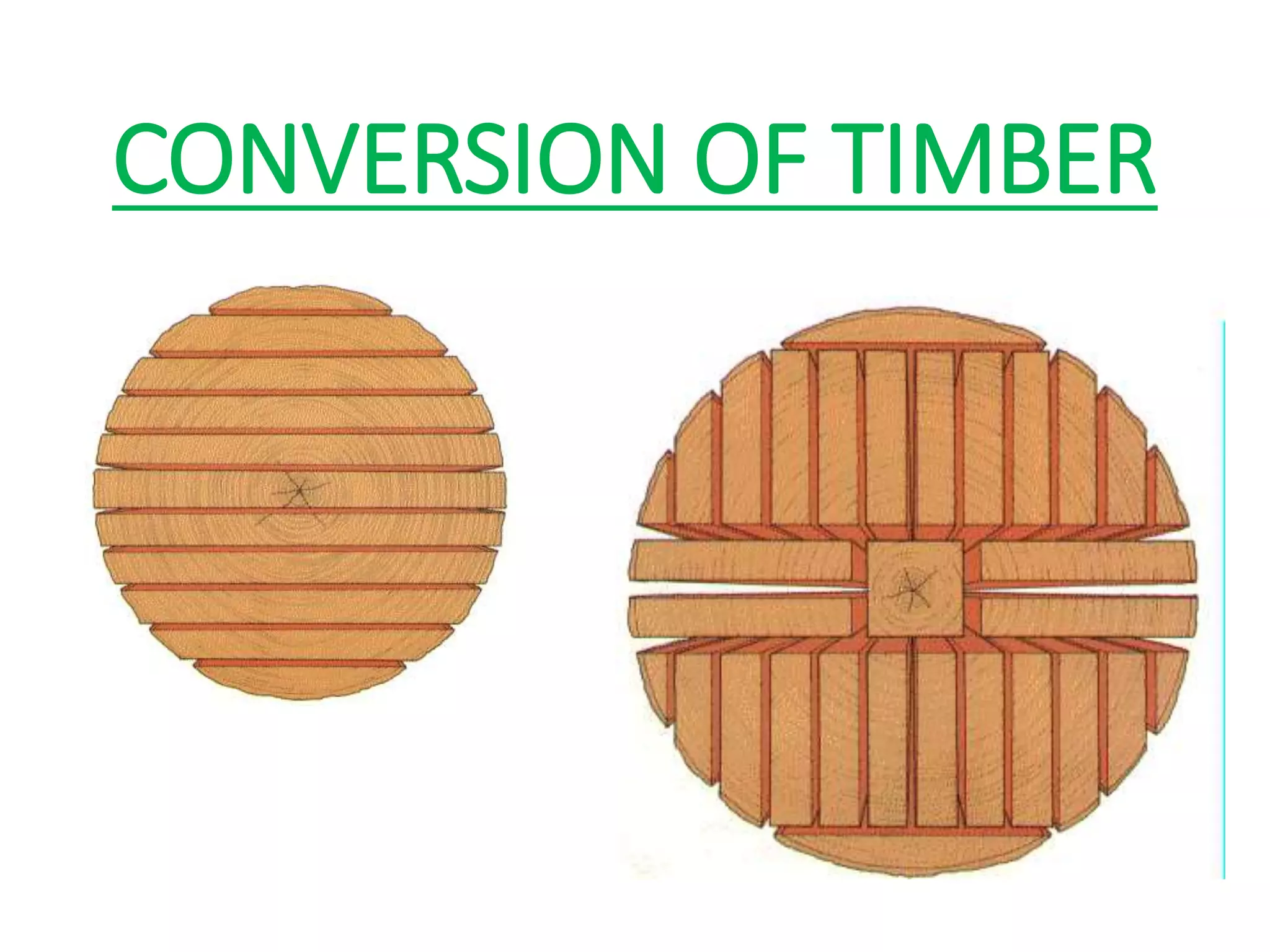
CONVERSION OF TIMBER
Trees are cut down during winter as there is
less growth, therefore less sap
After felling trees are transported to sawmills
to be cut into boards
This process of converting logs to boards is
known as conversion
METHODS OF CONVERSION
3 methods of conversion
Through and through sawing
Tangential sawing
Quarter sawing
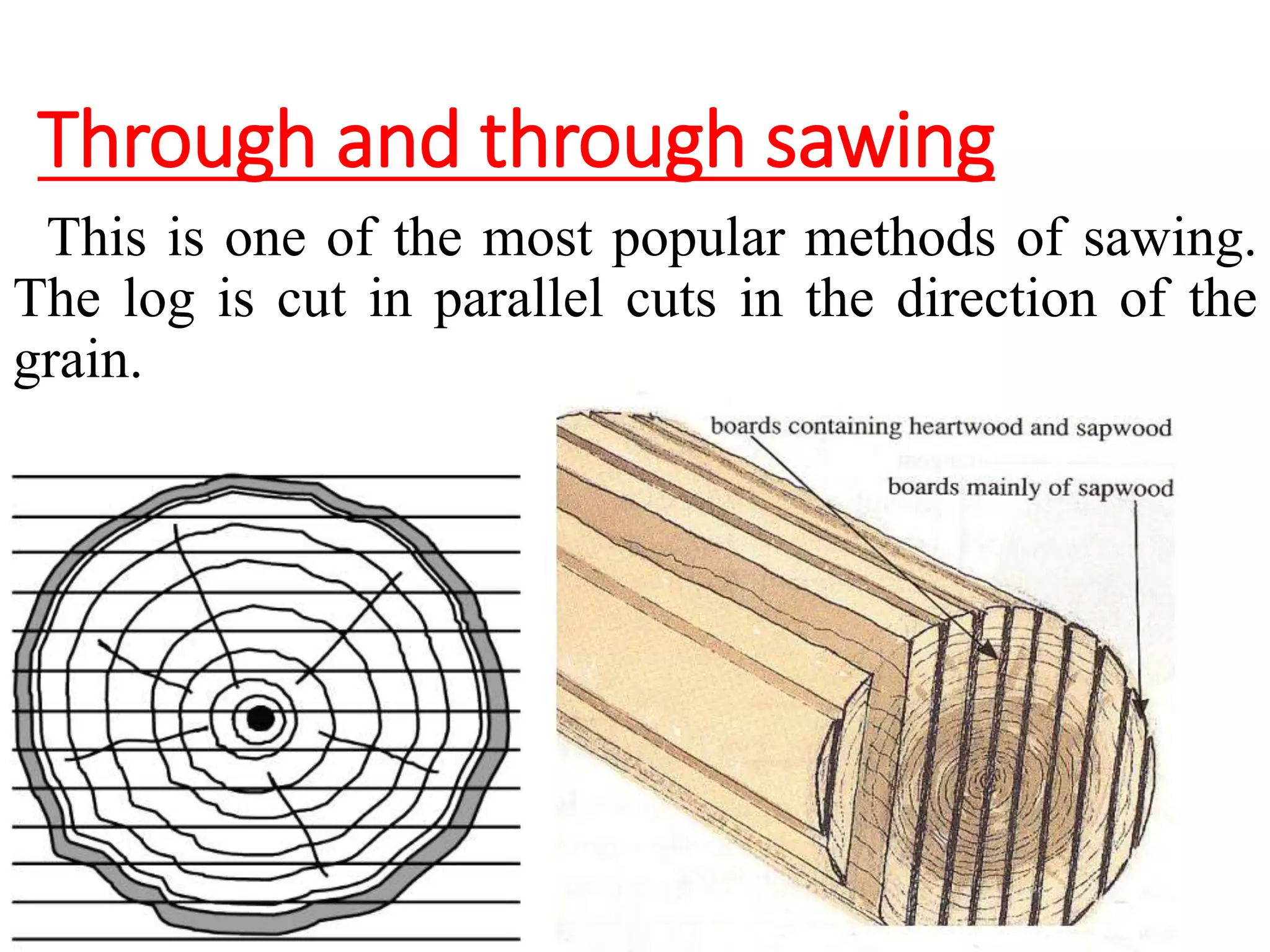
Through and through sawing
This is one of the most popular methods of sawing.
The log is cut in parallel cuts in the direction of the
grain.
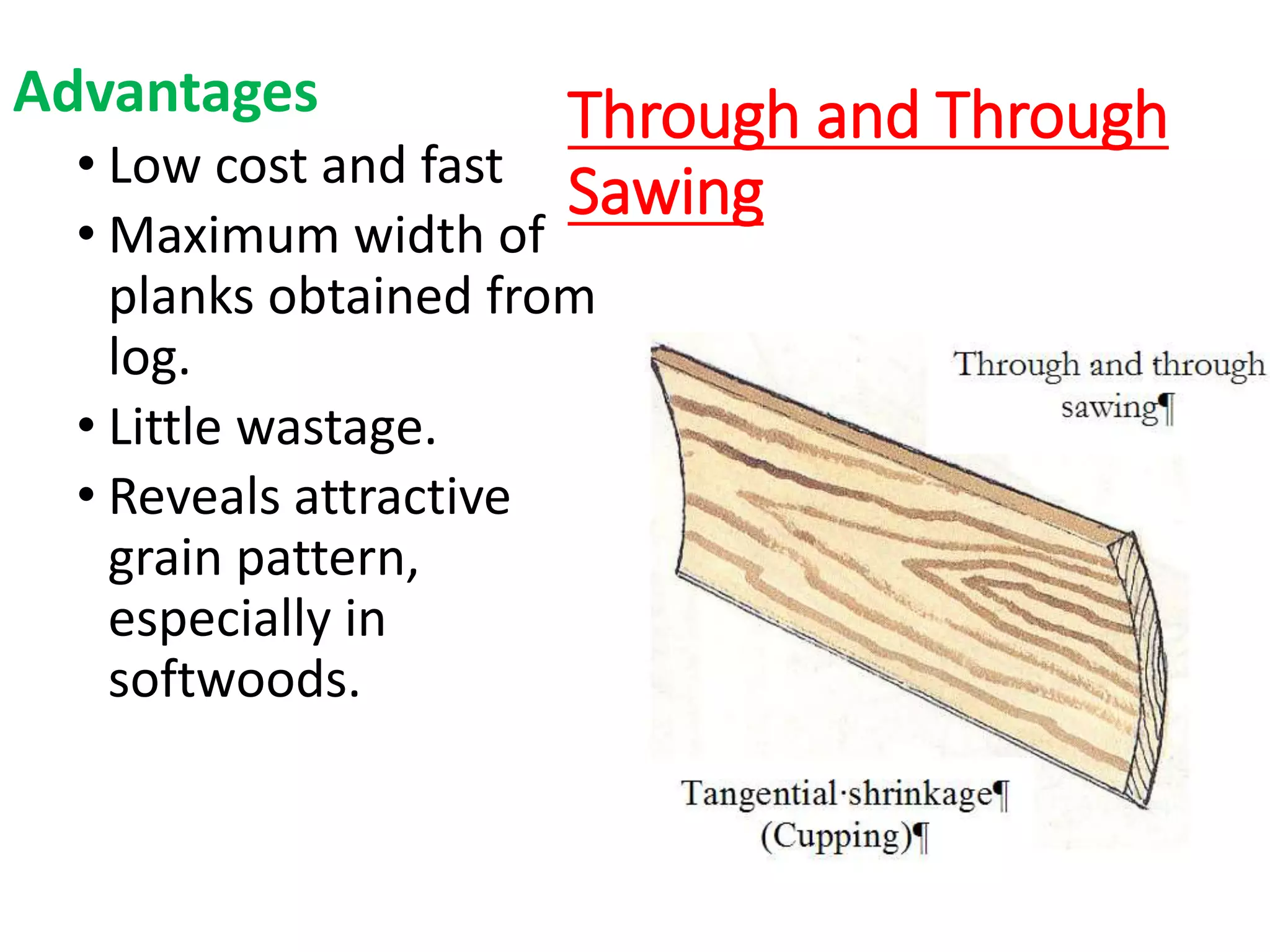
Through and Through
Sawing
Advantages
• Low cost and fast
• Maximum width of
planks obtained from
log.
• Little wastage.
• Reveals attractive
grain pattern,
especially in
softwoods.
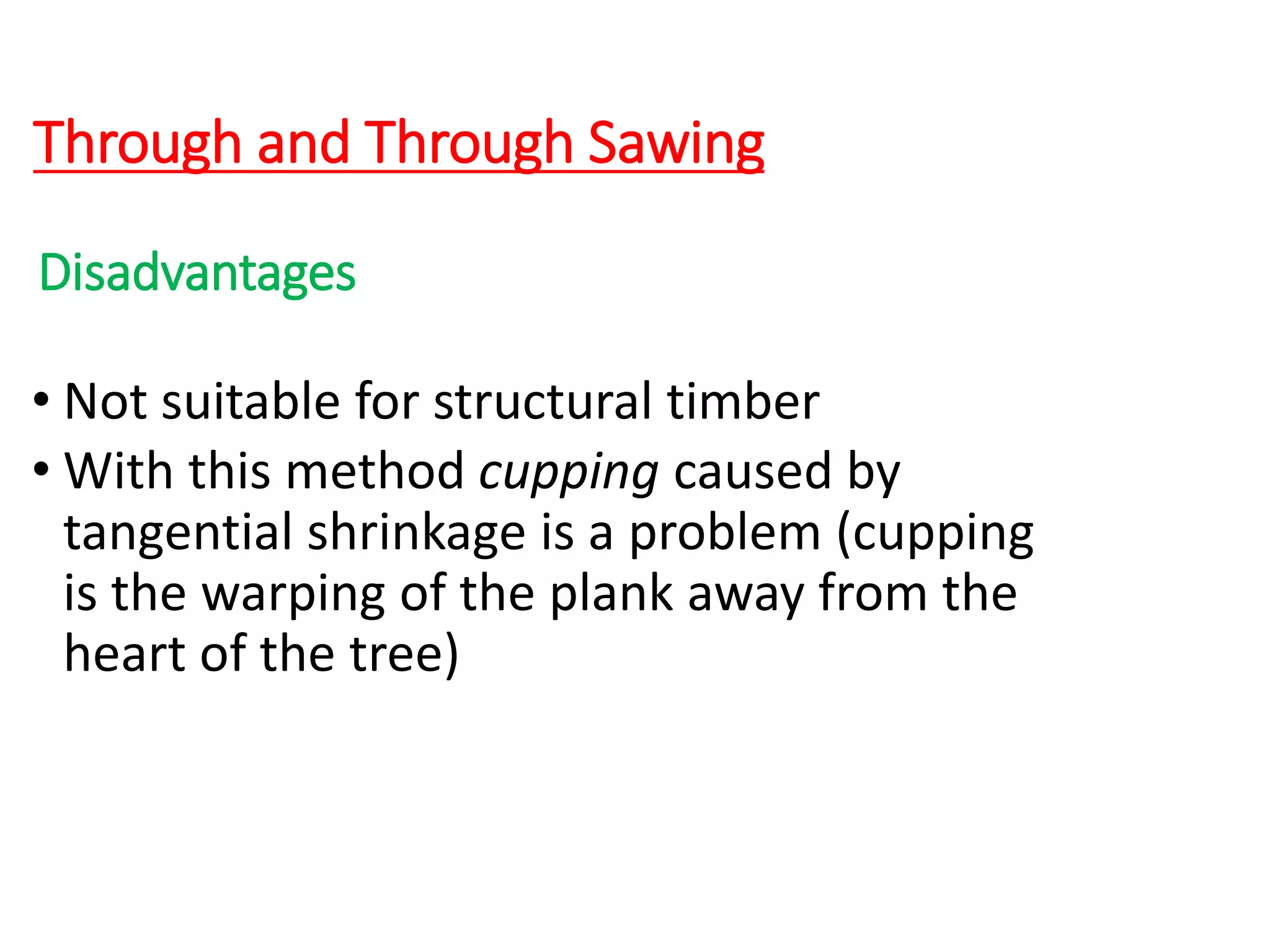
Disadvantages
• Not suitable for structural timber
• With this method cupping caused by
tangential shrinkage is a problem (cupping
is the warping of the plank away from the
heart of the tree)
Through and Through Sawing
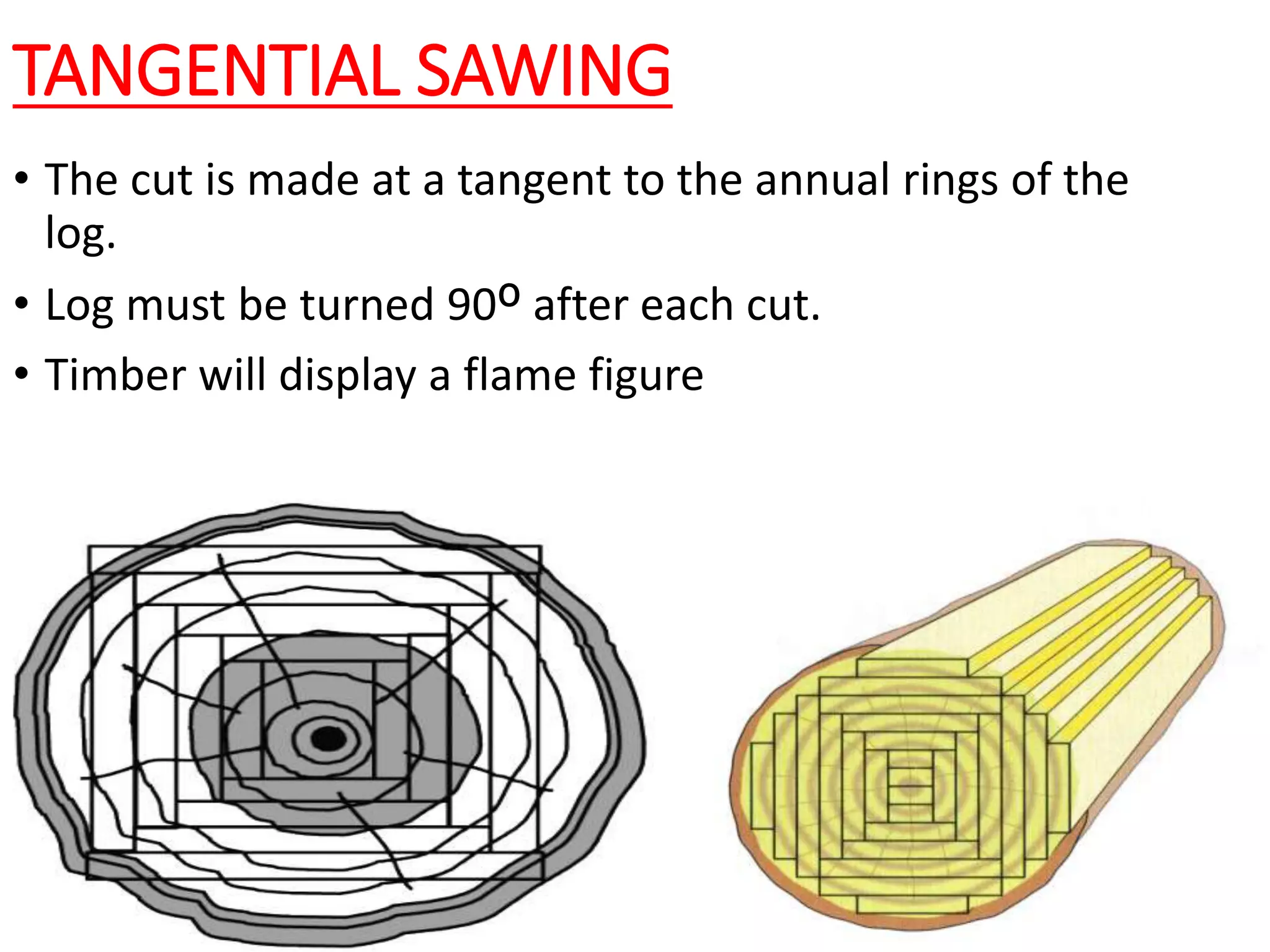
TANGENTIAL SAWING
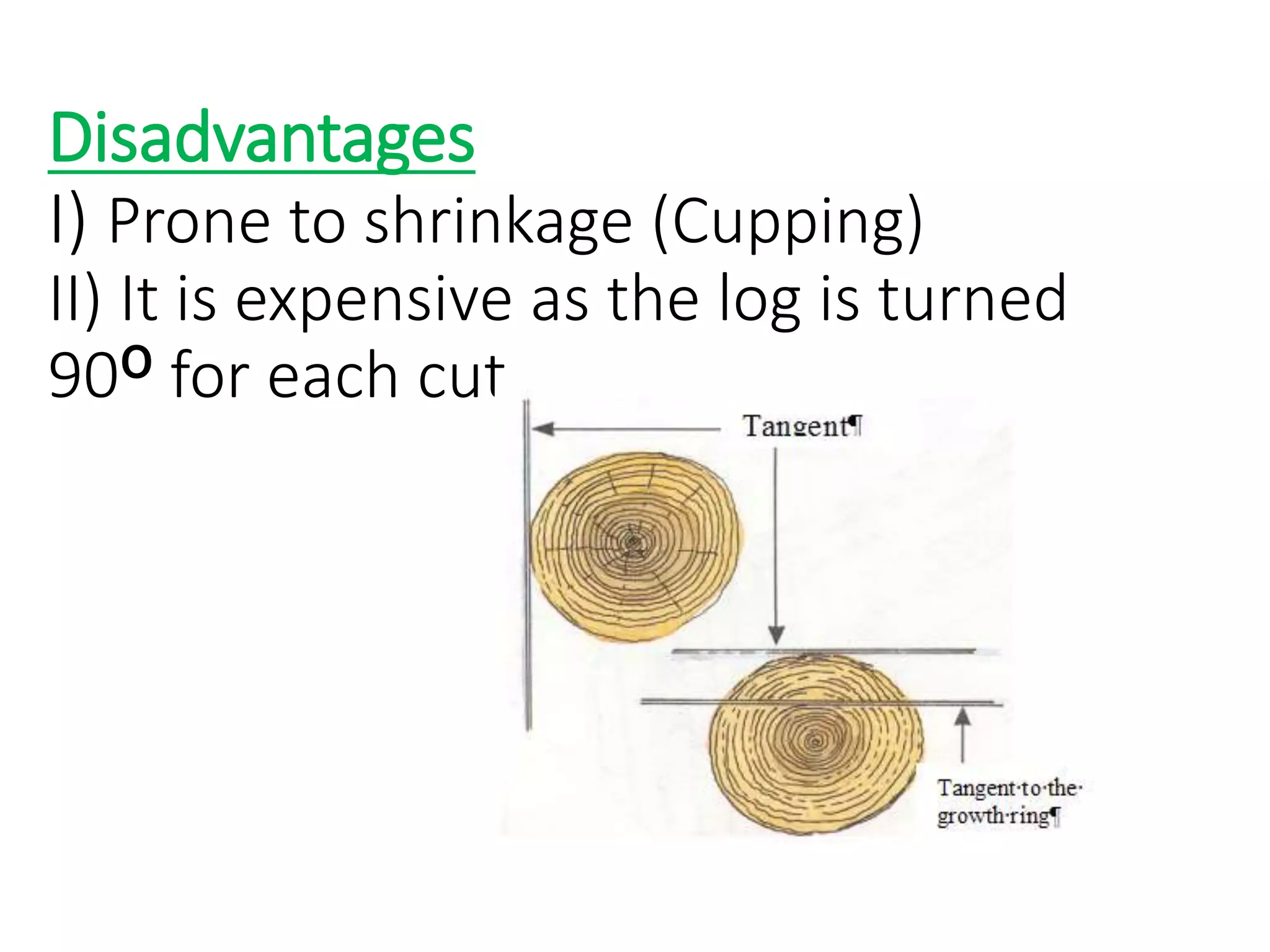
• The cut is made at a tangent to the annual rings of the
log.
• Log must be turned 90º after each cut.
• Timber will display a flame figure
Tangential Sawing
Advantages
• Produce board with flame figure
• Tangential boards are strong boards, used for
beams and joists
• Heartwood and sapwood are easily separated
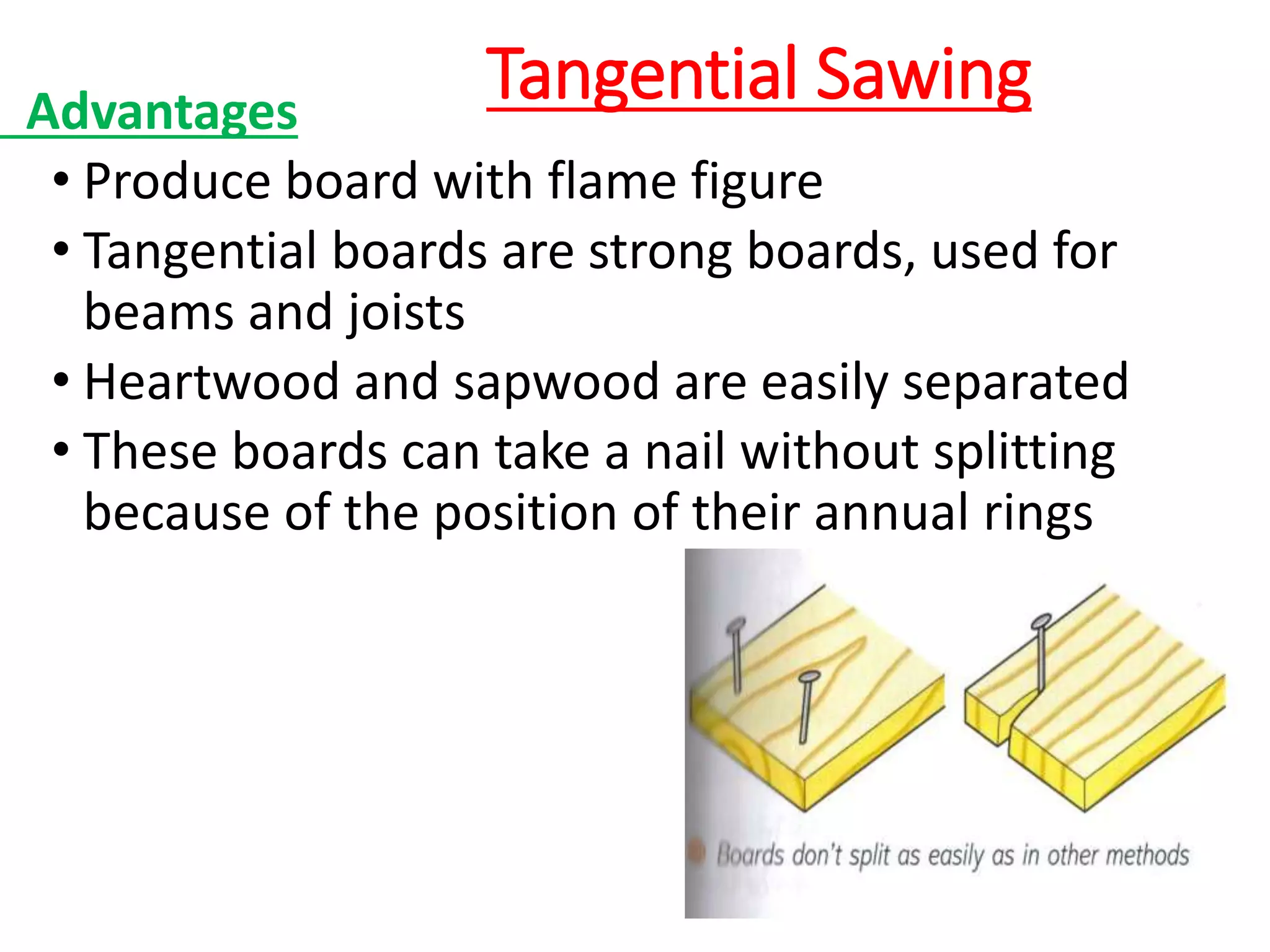
• These boards can take a nail without splitting
because of the position of their annual rings
Disadvantages
I) Prone to shrinkage (Cupping)
II) It is expensive as the log is turned
90º for each cut
QUARTER SAWING
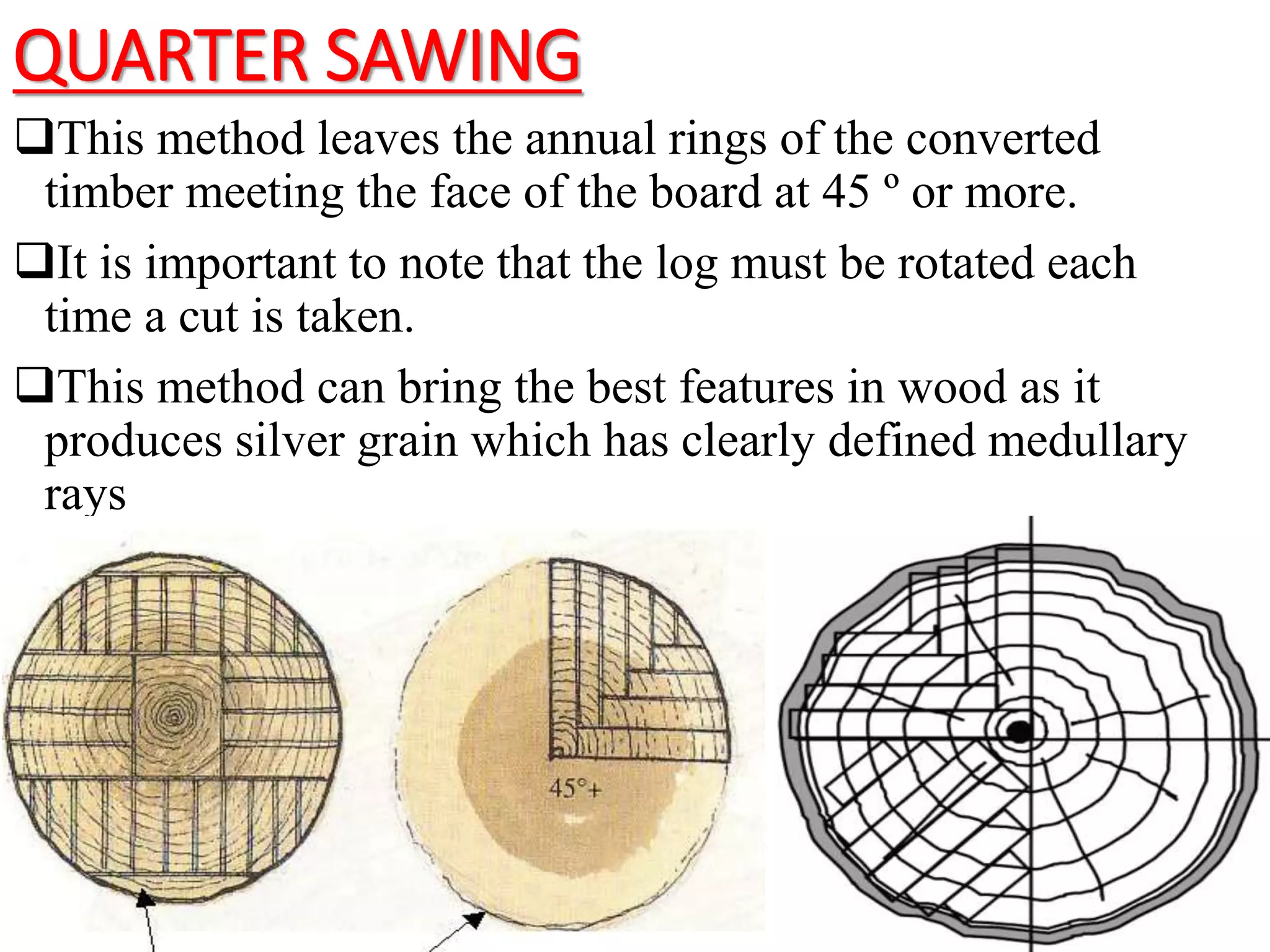
This method leaves the annual rings of the converted
timber meeting the face of the board at 45 º or more.
It is important to note that the log must be rotated each
time a cut is taken.
This method can bring the best features in wood as it
produces silver grain which has clearly defined medullary
rays
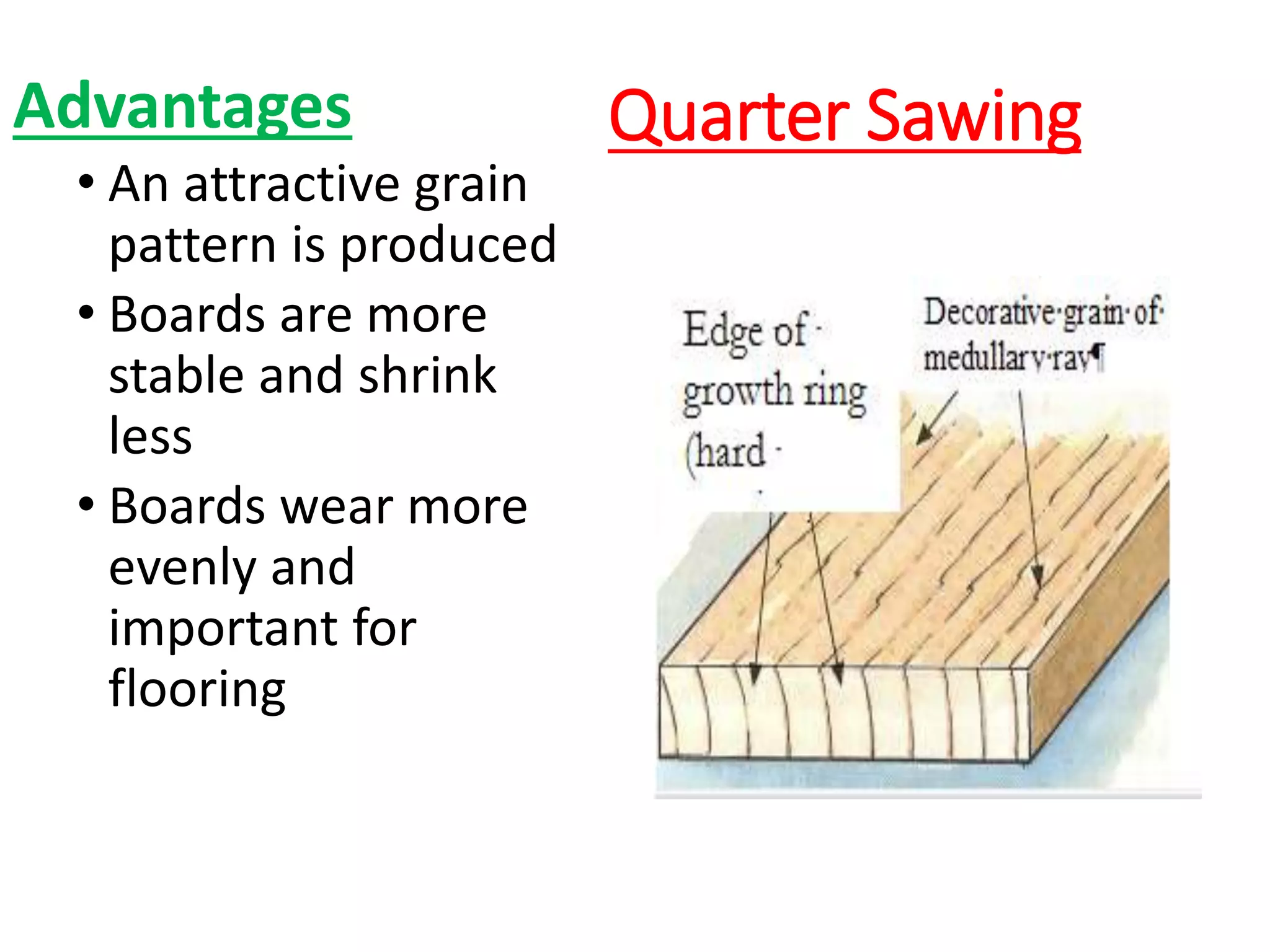
Quarter Sawing
Advantages
• An attractive grain
pattern is produced
• Boards are more
stable and shrink
less
• Boards wear more
evenly and
important for
flooring
Disadvantages
•Expensive, as the log has to be first quartered
then turned for every cut.
•Because the log is quartered then cut again
narrower boards are produced
What are the methods are used in general to convert wood
into different shape and which method gives you a best wood
plank and reasons why?

conversion of timber.pptx

  • 1.
  • 2.
    CONVERSION OF TIMBER Treesare cut down during winter as there is less growth, therefore less sap After felling trees are transported to sawmills to be cut into boards This process of converting logs to boards is known as conversion
  • 3.
    METHODS OF CONVERSION 3methods of conversion Through and through sawing Tangential sawing Quarter sawing
  • 4.
    Through and throughsawing This is one of the most popular methods of sawing. The log is cut in parallel cuts in the direction of the grain.
  • 5.
    Through and Through Sawing Advantages •Low cost and fast • Maximum width of planks obtained from log. • Little wastage. • Reveals attractive grain pattern, especially in softwoods.
  • 6.
    Disadvantages • Not suitablefor structural timber • With this method cupping caused by tangential shrinkage is a problem (cupping is the warping of the plank away from the heart of the tree) Through and Through Sawing
  • 7.
    TANGENTIAL SAWING • Thecut is made at a tangent to the annual rings of the log. • Log must be turned 90º after each cut. • Timber will display a flame figure
  • 8.
    Tangential Sawing Advantages • Produceboard with flame figure • Tangential boards are strong boards, used for beams and joists • Heartwood and sapwood are easily separated • These boards can take a nail without splitting because of the position of their annual rings
  • 9.
    Disadvantages I) Prone toshrinkage (Cupping) II) It is expensive as the log is turned 90º for each cut
  • 10.
    QUARTER SAWING This methodleaves the annual rings of the converted timber meeting the face of the board at 45 º or more. It is important to note that the log must be rotated each time a cut is taken. This method can bring the best features in wood as it produces silver grain which has clearly defined medullary rays
  • 11.
    Quarter Sawing Advantages • Anattractive grain pattern is produced • Boards are more stable and shrink less • Boards wear more evenly and important for flooring
  • 12.
    Disadvantages •Expensive, as thelog has to be first quartered then turned for every cut. •Because the log is quartered then cut again narrower boards are produced What are the methods are used in general to convert wood into different shape and which method gives you a best wood plank and reasons why?