Presentation Topic:
Soldering and Brazing
Group Members:
Abdullah 15053386-005
Muhammad Atif 15053386-015
Muhammad Alyas 15053386-020
Aakash Zafar 15053386-035
M. Mubashar 15053386-036
Group No: #06
University of Gujrat:
Introduction:
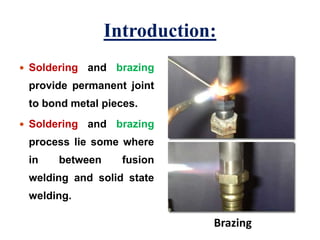
 Soldering and brazing
provide permanent joint
to bond metal pieces.
 Soldering and brazing
process lie some where
in between fusion
welding and solid state
welding.
Brazing
Soldering:
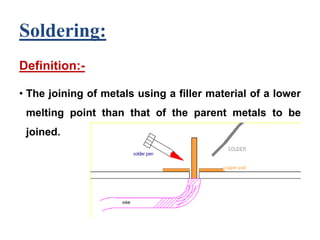
Definition:-
• The joining of metals using a filler material of a lower
melting point than that of the parent metals to be
joined.
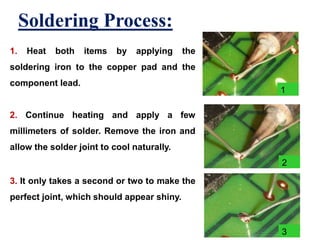
Soldering Process:
5
1
1. Heat both items by applying the
soldering iron to the copper pad and the
component lead.
2
2. Continue heating and apply a few
millimeters of solder. Remove the iron and
allow the solder joint to cool naturally.
3
3. It only takes a second or two to make the
perfect joint, which should appear shiny.
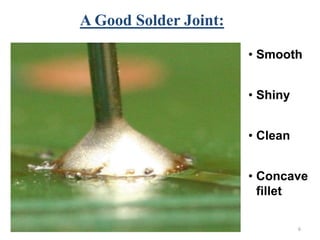
A Good Solder Joint:
6
• Smooth
• Shiny
• Clean
• Concave
fillet
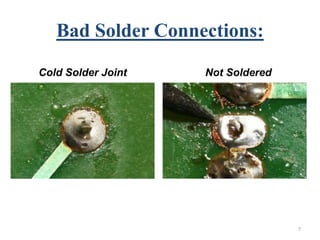
Bad Solder Connections:
7
Cold Solder Joint Not Soldered
Soldering Tools:
8
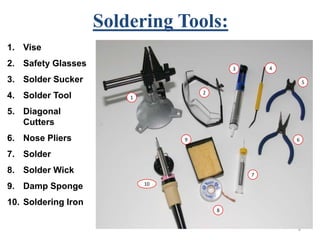
1. Vise
2. Safety Glasses
3. Solder Sucker
4. Solder Tool
5. Diagonal
Cutters
6. Nose Pliers
7. Solder
8. Solder Wick
9. Damp Sponge
10. Soldering Iron
1
2
3 4
5
6
7
9
8
10
Solder:
• Solder is an alloy of Tin and Lead.
• The solder used for electronics is frequently called
60/40 solder because it is made of 63% tin and 37%
lead.
• 60/40 solder melts at 361 F.
• Multi-core solder is the usual form for electrical
work.
9
Soldering Iron:
10
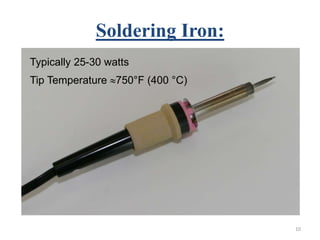
Typically 25-30 watts
Tip Temperature 750°F (400 °C)
Tinning Process:
11
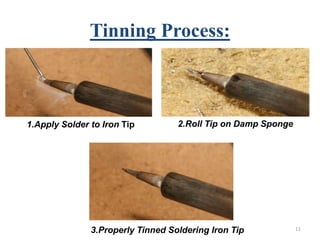
1.Apply Solder to Iron Tip 2.Roll Tip on Damp Sponge
3.Properly Tinned Soldering Iron Tip
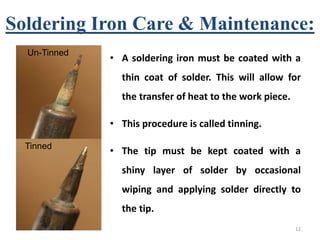
Soldering Iron Care & Maintenance:
• A soldering iron must be coated with a
thin coat of solder. This will allow for
the transfer of heat to the work piece.
• This procedure is called tinning.
• The tip must be kept coated with a
shiny layer of solder by occasional
wiping and applying solder directly to
the tip.
12
Tinned
Un-Tinned
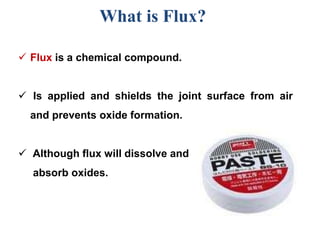
What is Flux?
 Flux is a chemical compound.
 Is applied and shields the joint surface from air
and prevents oxide formation.
 Although flux will dissolve and
absorb oxides.
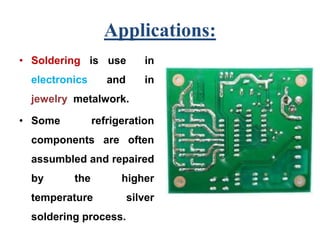
Applications:
• Soldering is use in
electronics and in
jewelry metalwork.
• Some refrigeration
components are often
assumbled and repaired
by the higher
temperature silver
soldering process.
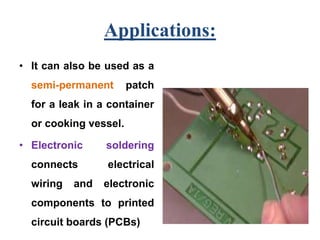
Applications:
• It can also be used as a
semi-permanent patch
for a leak in a container
or cooking vessel.
• Electronic soldering
connects electrical
wiring and electronic
components to printed
circuit boards (PCBs)
Advantages of Soldering:
1. Low power is required.
2. Low process temperature.
3. Microstructure is not affected by heat.
4. Easily automated process.
5. Dissimilar materials may be joined.
6. High variety of materials may be joined.
7. Thin wall parts may be joined.
Disadvantages of soldering:
1. Large sections cannot be joined.
2. Fluxes may contain toxic components.
3. Soldering joints can not be used in high
temperature applications.
4. Low strength of joints.
5. Careful removal of the flux residuals is required in
order to prevent corrosion.
Barazing:
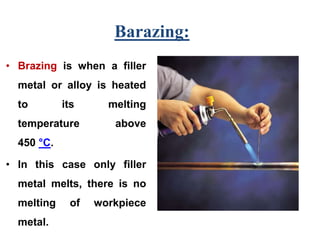
• Brazing is when a filler
metal or alloy is heated
to its melting
temperature above
450 °C.
• In this case only filler
metal melts, there is no
melting of workpiece
metal.
Brazing Process:
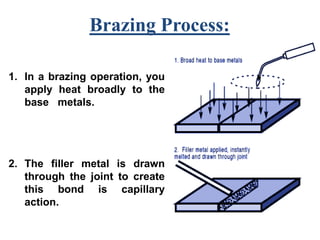
1. In a brazing operation, you
apply heat broadly to the
base metals.
2. The filler metal is drawn
through the joint to create
this bond is capillary
action.
Brazing Methods:
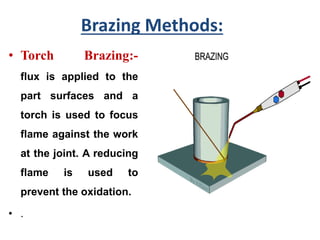
• Torch Brazing:-
flux is applied to the
part surfaces and a
torch is used to focus
flame against the work
at the joint. A reducing
flame is used to
prevent the oxidation.
• .
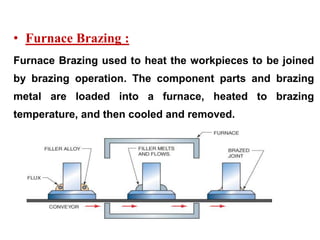
• Furnace Brazing :
Furnace Brazing used to heat the workpieces to be joined
by brazing operation. The component parts and brazing
metal are loaded into a furnace, heated to brazing
temperature, and then cooled and removed.
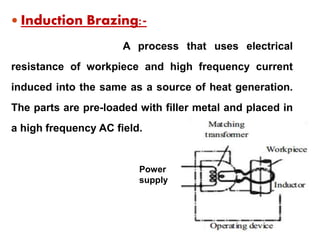
 Induction Brazing:-
A process that uses electrical
resistance of workpiece and high frequency current
induced into the same as a source of heat generation.
The parts are pre-loaded with filler metal and placed in
a high frequency AC field.
Power
supply
 Dip Brazing:
Assembled parts are typically dipped in a
heated chemical bath which serve as both fluxing agent and
heat source to melt pre-applied filler material.
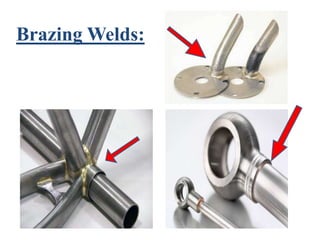
Brazing Welds:
Advantages of Brazing:
1. Any metals can be joined including dissimilar
metals.
2. Certain brazing methods can be performed quickly.
3. Brazing can be applied to join thin-walled parts that
can’t be welded.
4. In general, less heat and power are required than in
fusion welding.
Disadvantages of Brazing:
1. Joint strenght is generally less than that of a welded
joint.
2. Although strenght of a good brazed joint is greater
than that of the filler metal it is likely to be less than
that of the base metals.
3. High service temperatures may weaken a brazed
joint
4. The colour of the metal in brazed joint may not
match the colour of the base metal parts
Soldering and brazing

Soldering and brazing

  • 1.
  • 2.
    Group Members: Abdullah 15053386-005 MuhammadAtif 15053386-015 Muhammad Alyas 15053386-020 Aakash Zafar 15053386-035 M. Mubashar 15053386-036 Group No: #06 University of Gujrat:
  • 3.
    Introduction:  Soldering andbrazing provide permanent joint to bond metal pieces.  Soldering and brazing process lie some where in between fusion welding and solid state welding. Brazing
  • 4.
    Soldering: Definition:- • The joiningof metals using a filler material of a lower melting point than that of the parent metals to be joined.
  • 5.
    Soldering Process: 5 1 1. Heatboth items by applying the soldering iron to the copper pad and the component lead. 2 2. Continue heating and apply a few millimeters of solder. Remove the iron and allow the solder joint to cool naturally. 3 3. It only takes a second or two to make the perfect joint, which should appear shiny.
  • 6.
    A Good SolderJoint: 6 • Smooth • Shiny • Clean • Concave fillet
  • 7.
    Bad Solder Connections: 7 ColdSolder Joint Not Soldered
  • 8.
    Soldering Tools: 8 1. Vise 2.Safety Glasses 3. Solder Sucker 4. Solder Tool 5. Diagonal Cutters 6. Nose Pliers 7. Solder 8. Solder Wick 9. Damp Sponge 10. Soldering Iron 1 2 3 4 5 6 7 9 8 10
  • 9.
    Solder: • Solder isan alloy of Tin and Lead. • The solder used for electronics is frequently called 60/40 solder because it is made of 63% tin and 37% lead. • 60/40 solder melts at 361 F. • Multi-core solder is the usual form for electrical work. 9
  • 10.
    Soldering Iron: 10 Typically 25-30watts Tip Temperature 750°F (400 °C)
  • 11.
    Tinning Process: 11 1.Apply Solderto Iron Tip 2.Roll Tip on Damp Sponge 3.Properly Tinned Soldering Iron Tip
  • 12.
    Soldering Iron Care& Maintenance: • A soldering iron must be coated with a thin coat of solder. This will allow for the transfer of heat to the work piece. • This procedure is called tinning. • The tip must be kept coated with a shiny layer of solder by occasional wiping and applying solder directly to the tip. 12 Tinned Un-Tinned
  • 13.
    What is Flux? Flux is a chemical compound.  Is applied and shields the joint surface from air and prevents oxide formation.  Although flux will dissolve and absorb oxides.
  • 14.
    Applications: • Soldering isuse in electronics and in jewelry metalwork. • Some refrigeration components are often assumbled and repaired by the higher temperature silver soldering process.
  • 15.
    Applications: • It canalso be used as a semi-permanent patch for a leak in a container or cooking vessel. • Electronic soldering connects electrical wiring and electronic components to printed circuit boards (PCBs)
  • 16.
    Advantages of Soldering: 1.Low power is required. 2. Low process temperature. 3. Microstructure is not affected by heat. 4. Easily automated process. 5. Dissimilar materials may be joined. 6. High variety of materials may be joined. 7. Thin wall parts may be joined.
  • 17.
    Disadvantages of soldering: 1.Large sections cannot be joined. 2. Fluxes may contain toxic components. 3. Soldering joints can not be used in high temperature applications. 4. Low strength of joints. 5. Careful removal of the flux residuals is required in order to prevent corrosion.
  • 18.
    Barazing: • Brazing iswhen a filler metal or alloy is heated to its melting temperature above 450 °C. • In this case only filler metal melts, there is no melting of workpiece metal.
  • 19.
    Brazing Process: 1. Ina brazing operation, you apply heat broadly to the base metals. 2. The filler metal is drawn through the joint to create this bond is capillary action.
  • 20.
    Brazing Methods: • TorchBrazing:- flux is applied to the part surfaces and a torch is used to focus flame against the work at the joint. A reducing flame is used to prevent the oxidation. • .
  • 21.
    • Furnace Brazing: Furnace Brazing used to heat the workpieces to be joined by brazing operation. The component parts and brazing metal are loaded into a furnace, heated to brazing temperature, and then cooled and removed.
  • 22.
     Induction Brazing:- Aprocess that uses electrical resistance of workpiece and high frequency current induced into the same as a source of heat generation. The parts are pre-loaded with filler metal and placed in a high frequency AC field. Power supply
  • 23.
     Dip Brazing: Assembledparts are typically dipped in a heated chemical bath which serve as both fluxing agent and heat source to melt pre-applied filler material.
  • 24.
  • 25.
    Advantages of Brazing: 1.Any metals can be joined including dissimilar metals. 2. Certain brazing methods can be performed quickly. 3. Brazing can be applied to join thin-walled parts that can’t be welded. 4. In general, less heat and power are required than in fusion welding.
  • 26.
    Disadvantages of Brazing: 1.Joint strenght is generally less than that of a welded joint. 2. Although strenght of a good brazed joint is greater than that of the filler metal it is likely to be less than that of the base metals. 3. High service temperatures may weaken a brazed joint 4. The colour of the metal in brazed joint may not match the colour of the base metal parts

Editor's Notes