Topics
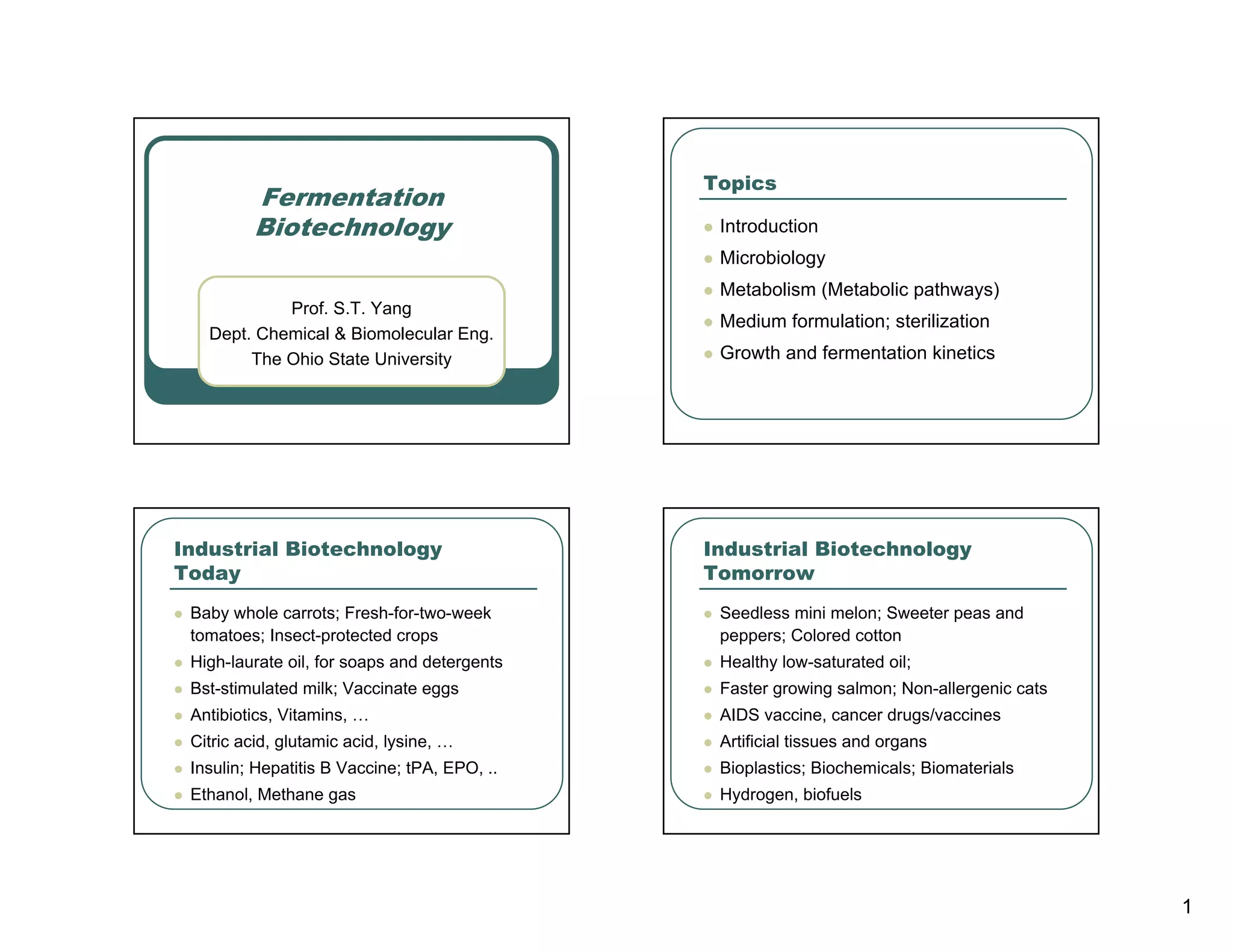
         Fermentation
         Biotechnology                         Introduction
                                               Microbiology
                                               Metabolism (Metabolic pathways)
            Prof. S.T. Yang
                                               Medium formulation; sterilization
   Dept. Chemical & Biomolecular Eng.
        The Ohio State University              Growth and fermentation kinetics


Industrial Biotechnology                      Industrial Biotechnology
Today                                         Tomorrow
 Baby whole carrots; Fresh-for-two-week        Seedless mini melon; Sweeter peas and
 tomatoes; Insect-protected crops              peppers; Colored cotton
 High-laurate oil, for soaps and detergents    Healthy low-saturated oil;
 Bst-stimulated milk; Vaccinate eggs           Faster growing salmon; Non-allergenic cats
 Antibiotics, Vitamins, …                      AIDS vaccine, cancer drugs/vaccines
 Citric acid, glutamic acid, lysine, …         Artificial tissues and organs
 Insulin; Hepatitis B Vaccine; tPA, EPO, ..    Bioplastics; Biochemicals; Biomaterials
 Ethanol, Methane gas                          Hydrogen, biofuels


                                                                                            1
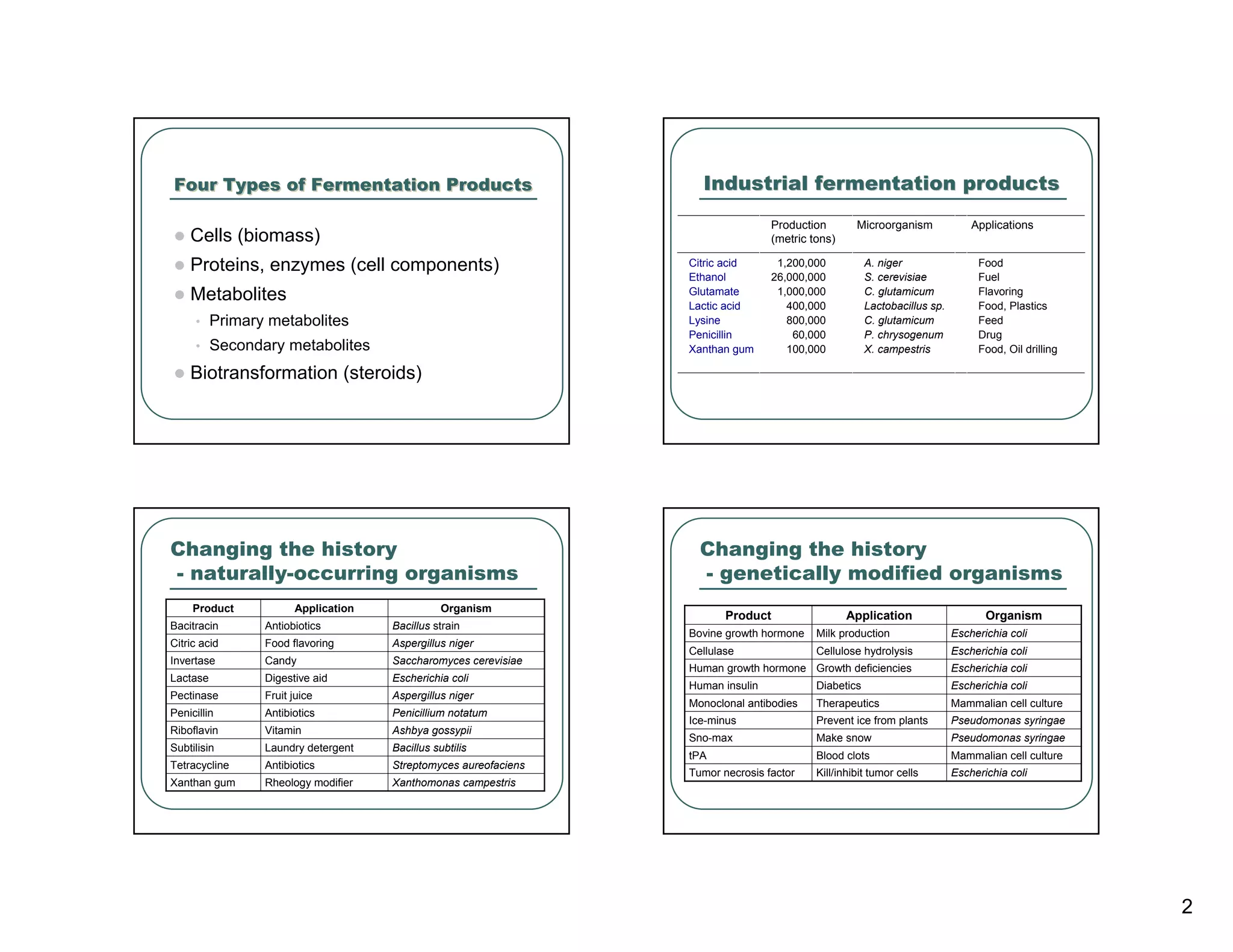
Four Types of Fermentation Products                                Industrial fermentation products
                                                                                 Production        Microorganism              Applications
    Cells (biomass)                                                              (metric tons)

    Proteins, enzymes (cell components)                          Citric acid      1,200,000           A. niger                 Food
                                                                 Ethanol         26,000,000           S. cerevisiae            Fuel
    Metabolites                                                  Glutamate        1,000,000           C. glutamicum            Flavoring
                                                                 Lactic acid        400,000           Lactobacillus sp.        Food, Plastics
     •    Primary metabolites                                    Lysine             800,000           C. glutamicum            Feed
                                                                 Penicillin          60,000           P. chrysogenum           Drug
     •    Secondary metabolites                                  Xanthan gum        100,000           X. campestris            Food, Oil drilling

    Biotransformation (steroids)


Changing the history                                               Changing the history
- naturally-occurring organisms                                    - genetically modified organisms
     Product           Application              Organism
                                                                        Product                  Application                     Organism
Bacitracin       Antiobiotics        Bacillus strain
                                                                 Bovine growth hormone    Milk production                 Escherichia coli
Citric acid      Food flavoring      Aspergillus niger
                                                                 Cellulase                Cellulose hydrolysis            Escherichia coli
Invertase        Candy               Saccharomyces cerevisiae
                                                                 Human growth hormone Growth deficiencies                 Escherichia coli
Lactase          Digestive aid       Escherichia coli
                                                                 Human insulin            Diabetics                       Escherichia coli
Pectinase        Fruit juice         Aspergillus niger
                                                                 Monoclonal antibodies    Therapeutics                    Mammalian cell culture
Penicillin       Antibiotics         Penicillium notatum
                                                                 Ice-minus                Prevent ice from plants         Pseudomonas syringae
Riboflavin       Vitamin             Ashbya gossypii
                                                                 Sno-max                  Make snow                       Pseudomonas syringae
Subtilisin       Laundry detergent   Bacillus subtilis
                                                                 tPA                      Blood clots                     Mammalian cell culture
Tetracycline     Antibiotics         Streptomyces aureofaciens
                                                                 Tumor necrosis factor    Kill/inhibit tumor cells        Escherichia coli
Xanthan gum      Rheology modifier   Xanthomonas campestris


                                                                                                                                                    2
Classification of microorganisms            Prokaryotes

 Prokaryotes – Bacteria, Blue-green algae    Unicellular: bacteria
                                             Multicellular: cyanobacteria
 Eukaryotes – Fungi (molds, yeasts),
                                             Do not contained membrane-contained
 algae, Protozoe                             nucleus
 Archaebacteria                              Can accept a wide variety of nutrients
                                             Rapid growth
 Viruses
                                             Versatile biochemical metabolism


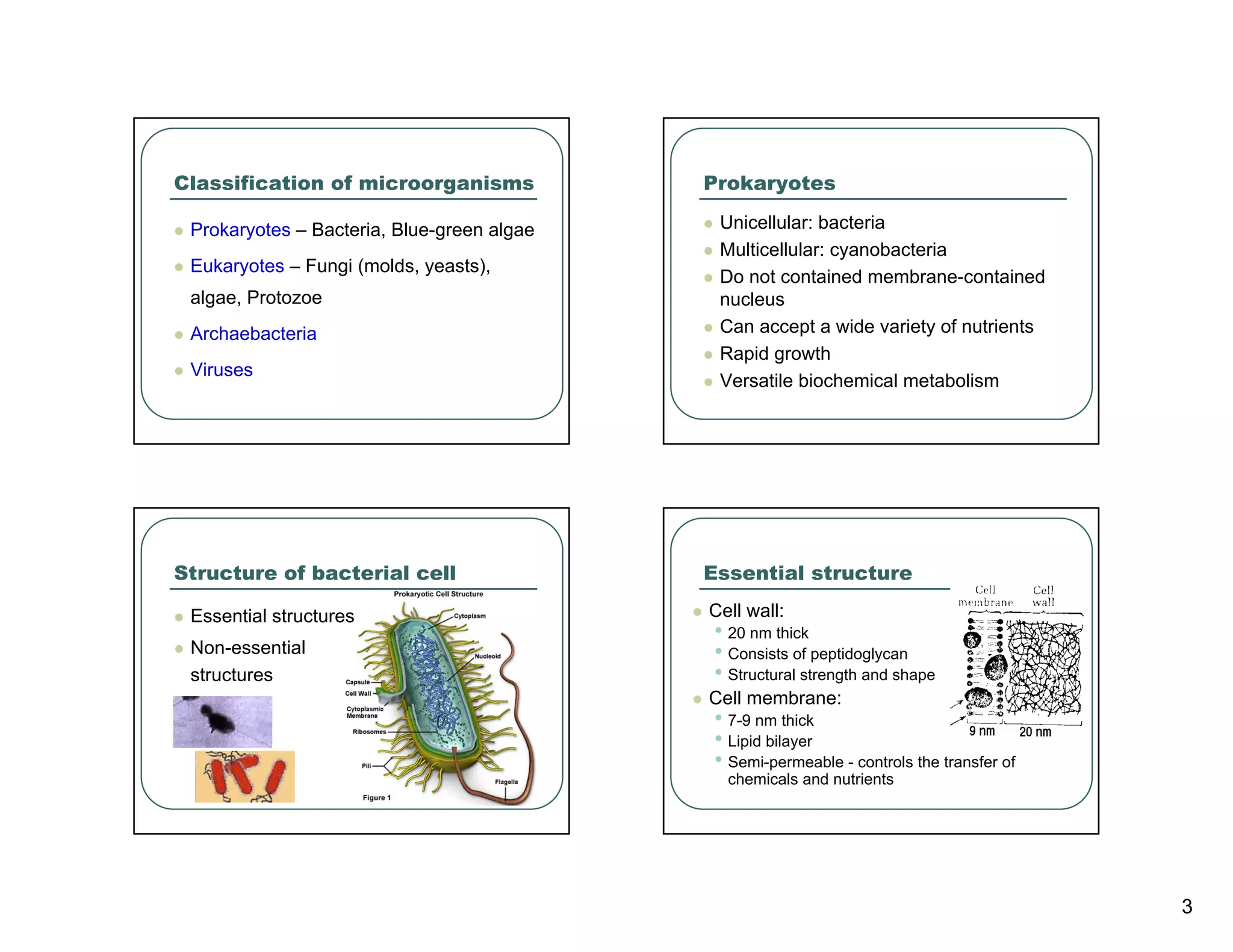
Structure of bacterial cell                 Essential structure

 Essential structures                       Cell wall:
                                            • 20 nm thick
 Non-essential                              • Consists of peptidoglycan
 structures                                 • Structural strength and shape
                                            Cell membrane:
                                            • 7-9 nm thick
                                            • Lipid bilayer
                                            • Semi-permeable - controls the transfer of
                                              chemicals and nutrients


                                                                                          3
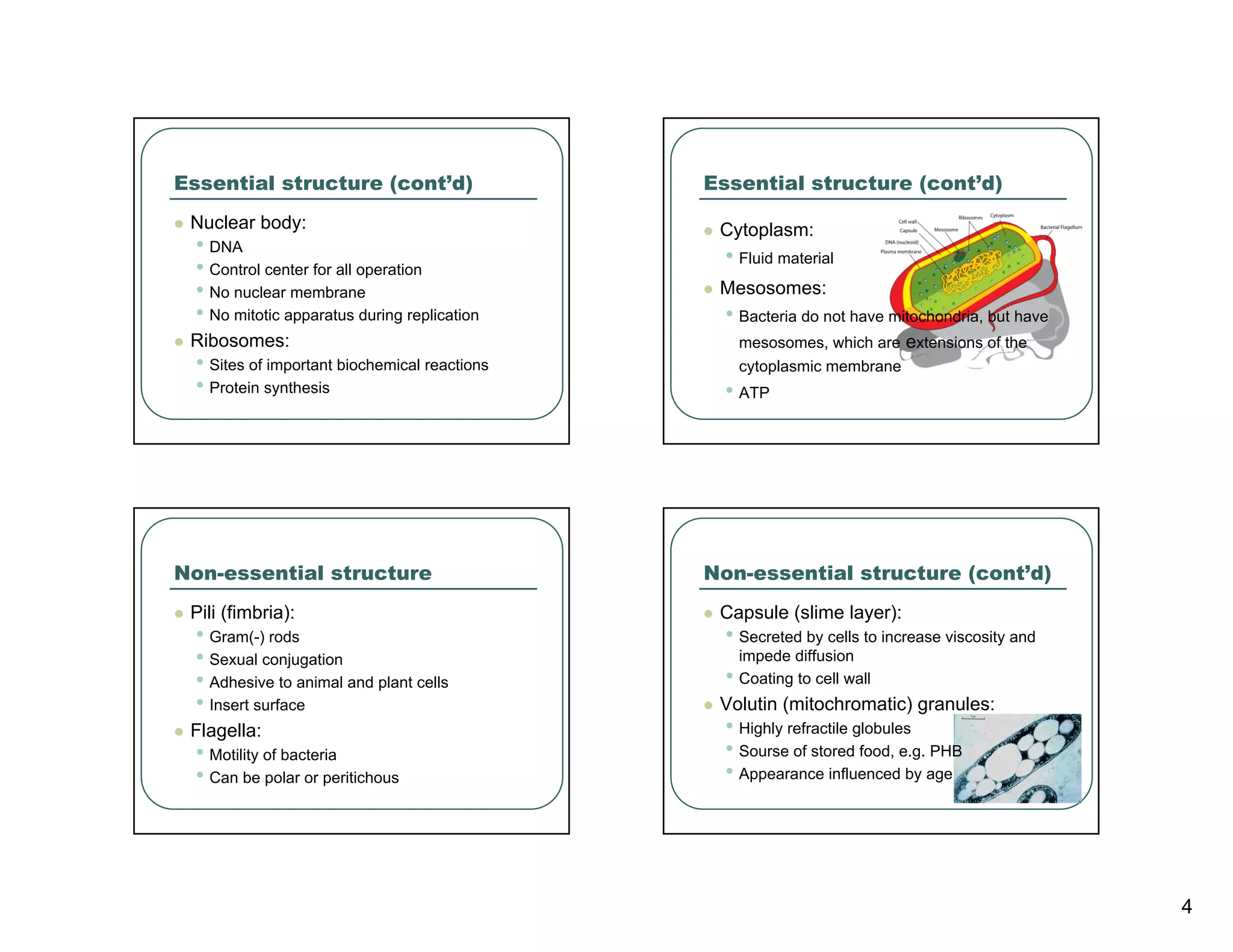
Essential structure (cont’d)                   Essential structure (cont’d)
 Nuclear body:                                  Cytoplasm:
  • DNA                                          • Fluid material
  • Control center for all operation
  • No nuclear membrane                         Mesosomes:
  • No mitotic apparatus during replication      • Bacteria do not have mitochondria, but have
 Ribosomes:                                        mesosomes, which are extensions of the
  • Sites of important biochemical reactions       cytoplasmic membrane
  • Protein synthesis                            • ATP


Non-essential structure                        Non-essential structure (cont’d)
 Pili (fimbria):                                Capsule (slime layer):
  • Gram(-) rods                                 • Secreted by cells to increase viscosity and
  • Sexual conjugation                             impede diffusion
  • Adhesive to animal and plant cells           • Coating to cell wall
  • Insert surface                              Volutin (mitochromatic) granules:
 Flagella:                                       • Highly refractile globules
  • Motility of bacteria                         • Sourse of stored food, e.g. PHB
  • Can be polar or peritichous                  • Appearance influenced by age


                                                                                                 4
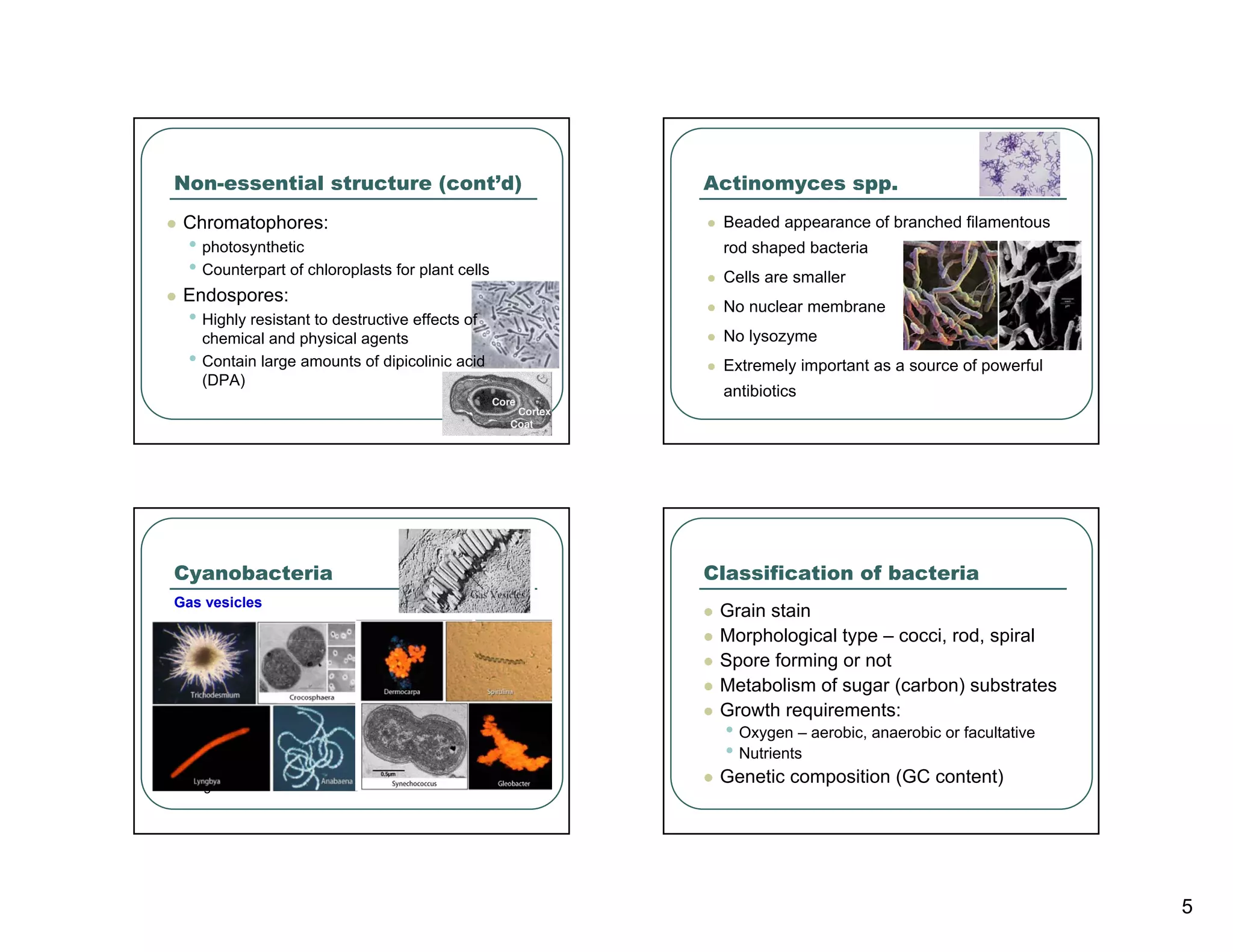
Non-essential structure (cont’d)                                Actinomyces spp.
 Chromatophores:                                                 Beaded appearance of branched filamentous
 • photosynthetic                                                rod shaped bacteria
 • Counterpart of chloroplasts for plant cells                   Cells are smaller
 Endospores:
                                                                 No nuclear membrane
 • Highly resistant to destructive effects of
     chemical and physical agents                                No lysozyme
 •   Contain large amounts of dipicolinic acid                   Extremely important as a source of powerful
     (DPA)
                                                                 antibiotics


Cyanobacteria                                                   Classification of bacteria
Gas vesicles
                                                                 Grain stain
 Gas vesicles are aggregates of hollow cylindrical structures
                                                                 Morphological type – cocci, rod, spiral
 composed of rigid proteins. They are impermeable to water,
 but permeable to gas. The amount of gas in the vacuole is       Spore forming or not
 under the control of the microorganism.                         Metabolism of sugar (carbon) substrates
 Gas vesicles are found in Cyanobacteria, which are              Growth requirements:
 photosynthetic and live in aquatic systems. In these lakes       • Oxygen – aerobic, anaerobic or facultative
 and oceans, the Cyanonbacteria want to control their             • Nutrients
 position in the water column to obtain the optimum amount
 of light and nutrients.
                                                                 Genetic composition (GC content)


                                                                                                                 5
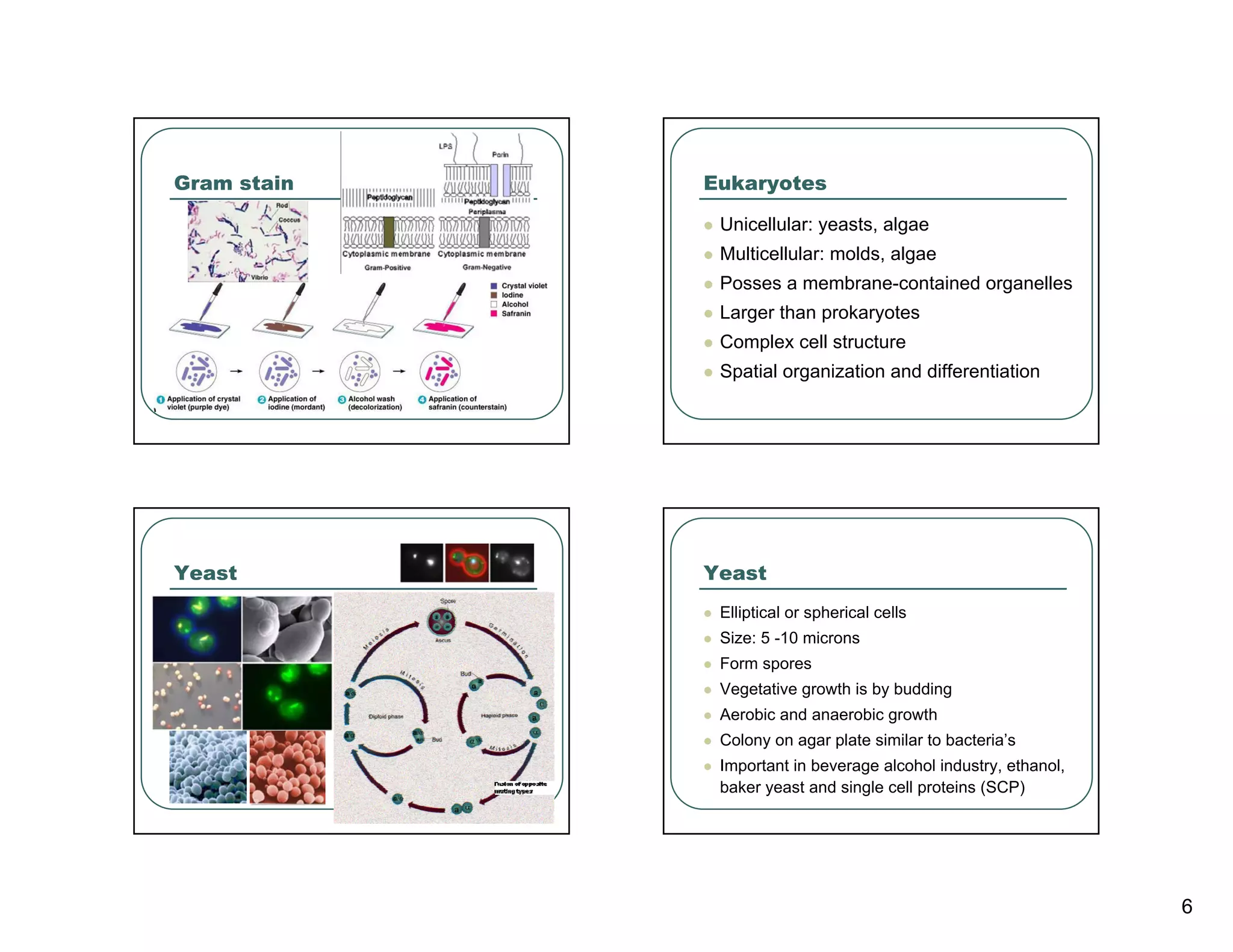
Gram stain   Eukaryotes

              Unicellular: yeasts, algae
              Multicellular: molds, algae
              Posses a membrane-contained organelles
              Larger than prokaryotes
              Complex cell structure
              Spatial organization and differentiation


Yeast        Yeast
              Elliptical or spherical cells
              Size: 5 -10 microns
              Form spores
              Vegetative growth is by budding
              Aerobic and anaerobic growth
              Colony on agar plate similar to bacteria’s
              Important in beverage alcohol industry, ethanol,
              baker yeast and single cell proteins (SCP)


                                                                 6
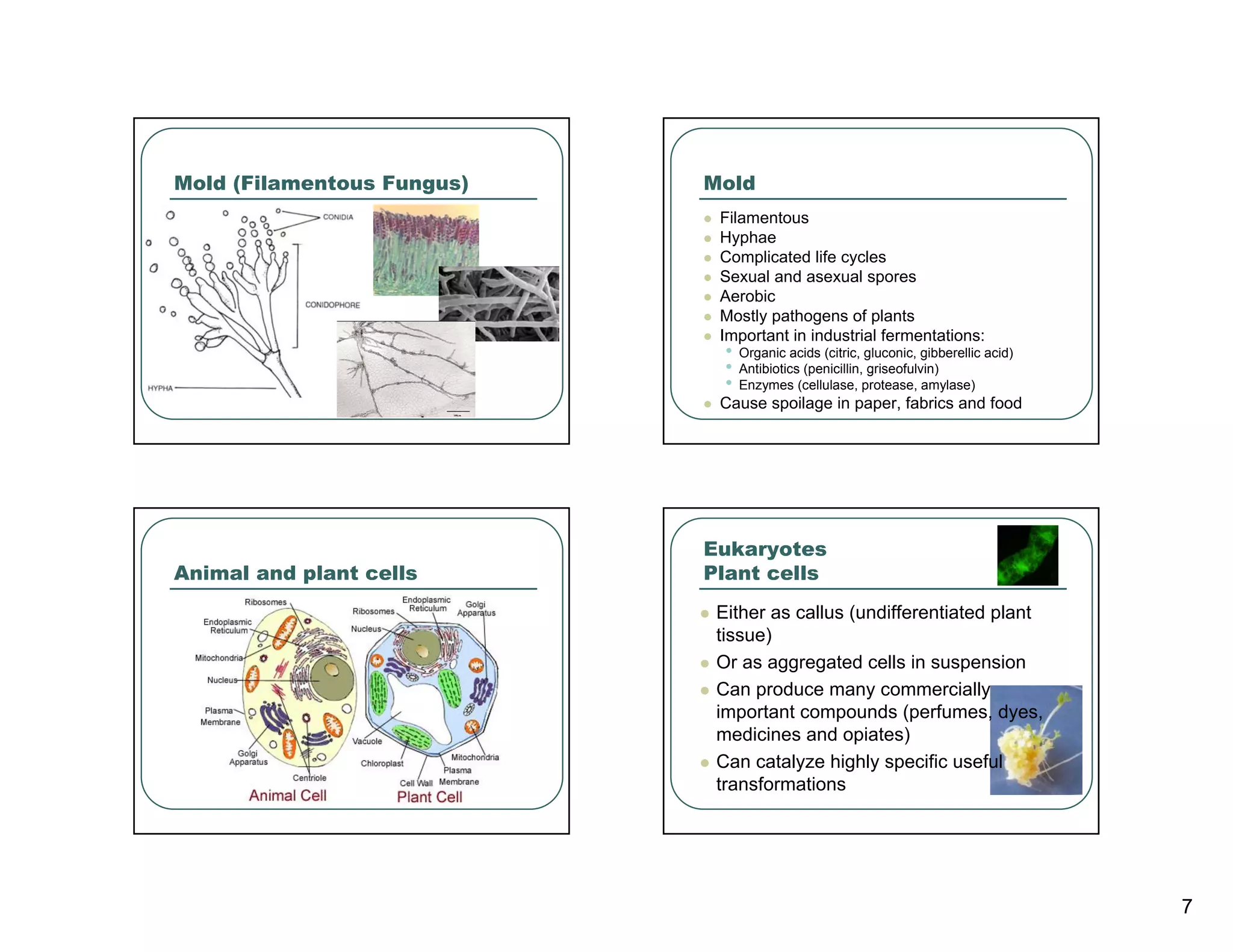
Mold (Filamentous Fungus)   Mold
                             Filamentous
                             Hyphae
                             Complicated life cycles
                             Sexual and asexual spores
                             Aerobic
                             Mostly pathogens of plants
                             Important in industrial fermentations:
                              •   Organic acids (citric, gluconic, gibberellic acid)
                              •   Antibiotics (penicillin, griseofulvin)
                              •   Enzymes (cellulase, protease, amylase)
                             Cause spoilage in paper, fabrics and food


                            Eukaryotes
Animal and plant cells      Plant cells
                             Either as callus (undifferentiated plant
                             tissue)
                             Or as aggregated cells in suspension
                             Can produce many commercially
                             important compounds (perfumes, dyes,
                             medicines and opiates)
                             Can catalyze highly specific useful
                             transformations


                                                                                       7
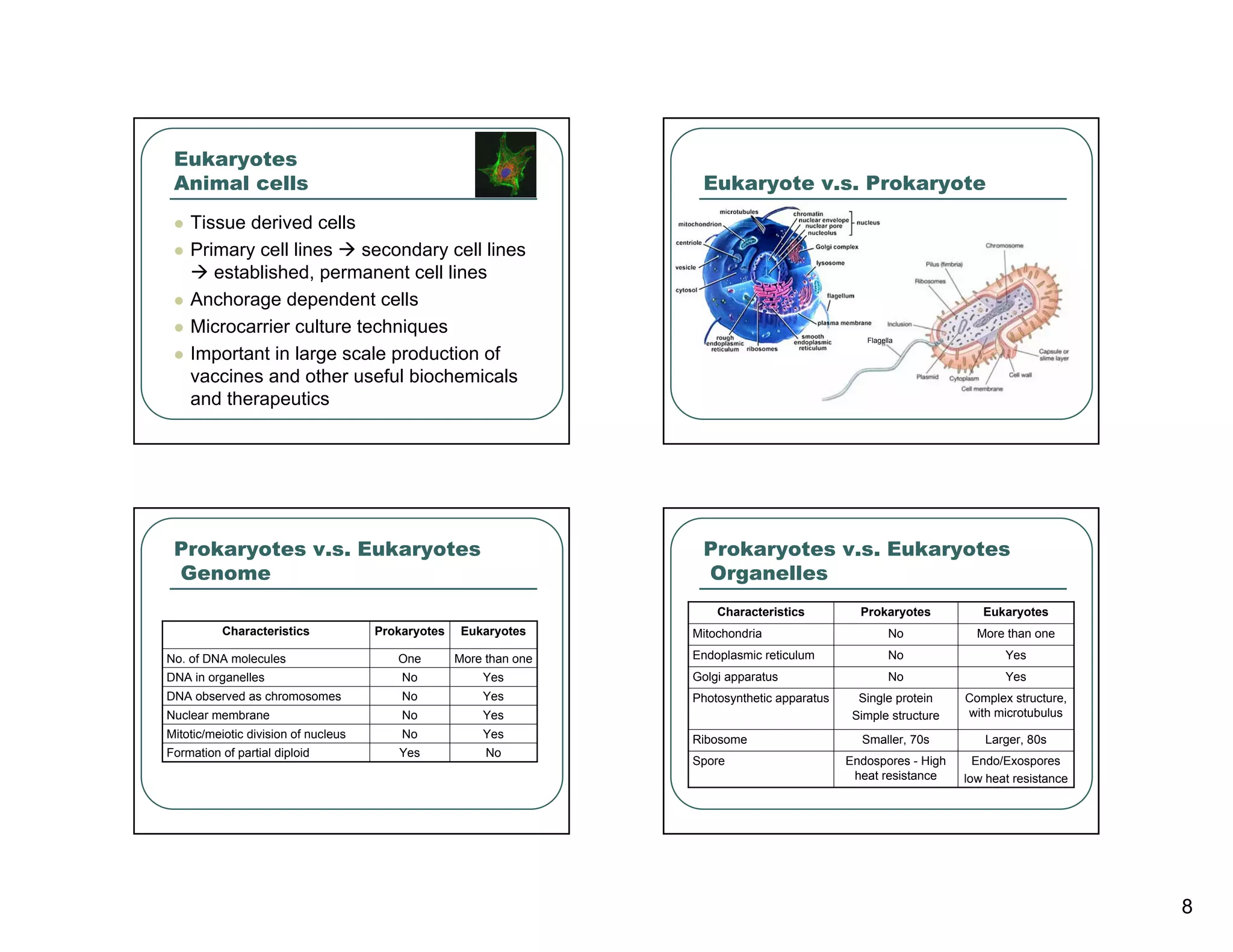
Eukaryotes
 Animal cells                                                        Eukaryote v.s. Prokaryote
    Tissue derived cells
    Primary cell lines    secondary cell lines
       established, permanent cell lines
    Anchorage dependent cells
    Microcarrier culture techniques
                                                                                                  Flagella

    Important in large scale production of
    vaccines and other useful biochemicals
    and therapeutics


 Prokaryotes v.s. Eukaryotes                                         Prokaryotes v.s. Eukaryotes
 Genome                                                              Organelles
                                                                        Characteristics          Prokaryotes          Eukaryotes
          Characteristics             Prokaryotes    Eukaryotes     Mitochondria                        No           More than one

No. of DNA molecules                     One        More than one   Endoplasmic reticulum               No                Yes
DNA in organelles                         No            Yes         Golgi apparatus                     No                Yes
DNA observed as chromosomes               No            Yes         Photosynthetic apparatus     Single protein    Complex structure,
Nuclear membrane                          No            Yes                                     Simple structure   with microtubulus
Mitotic/meiotic division of nucleus       No            Yes         Ribosome                     Smaller, 70s         Larger, 80s
Formation of partial diploid             Yes             No
                                                                    Spore                      Endospores - High     Endo/Exospores
                                                                                                heat resistance    low heat resistance


                                                                                                                                         8
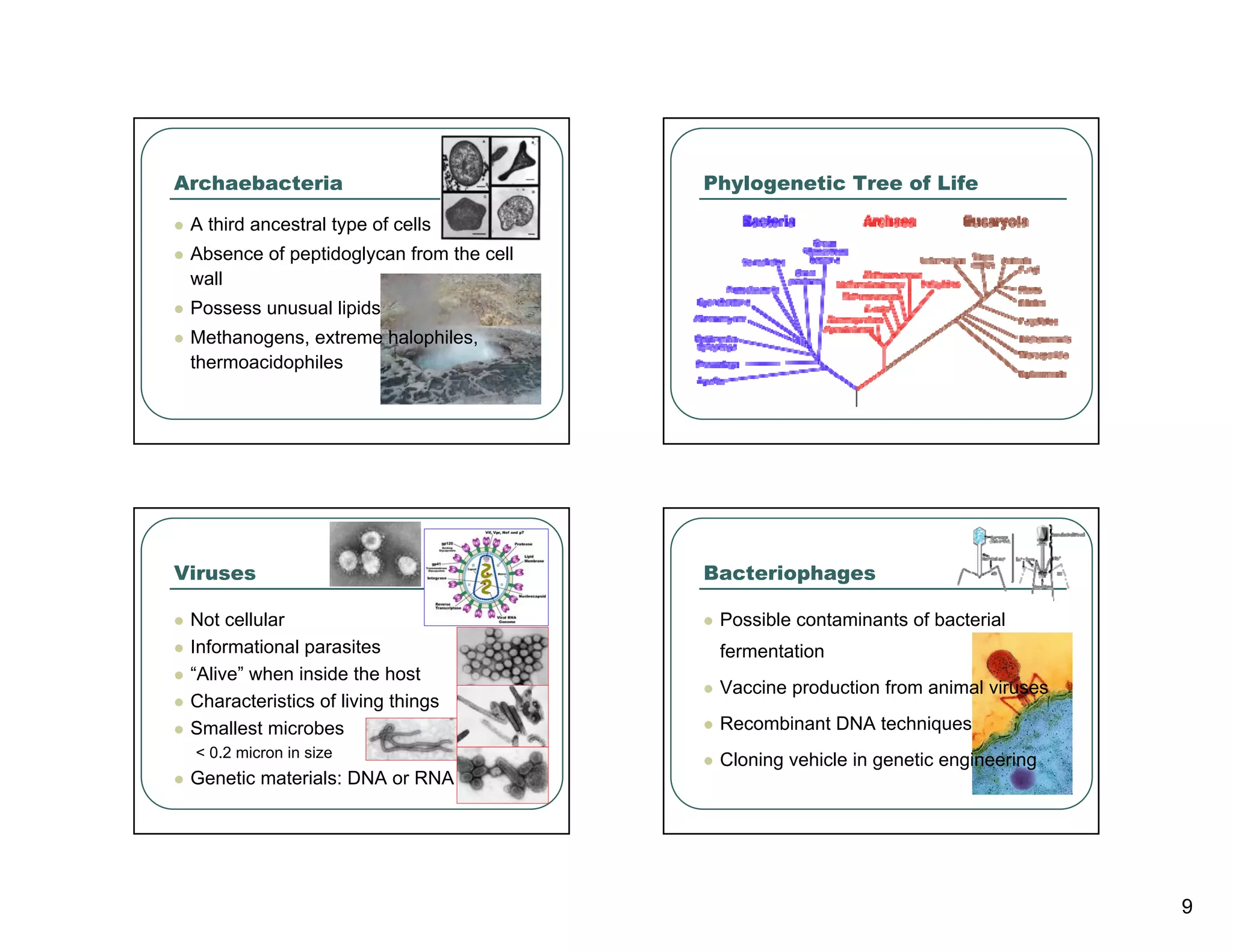
Archaebacteria                            Phylogenetic Tree of Life

 A third ancestral type of cells
 Absence of peptidoglycan from the cell
 wall
 Possess unusual lipids
 Methanogens, extreme halophiles,
 thermoacidophiles


Viruses                                   Bacteriophages

 Not cellular                              Possible contaminants of bacterial
 Informational parasites                   fermentation
 “Alive” when inside the host
                                           Vaccine production from animal viruses
 Characteristics of living things
 Smallest microbes                         Recombinant DNA techniques
 < 0.2 micron in size
                                           Cloning vehicle in genetic engineering
 Genetic materials: DNA or RNA


                                                                                    9
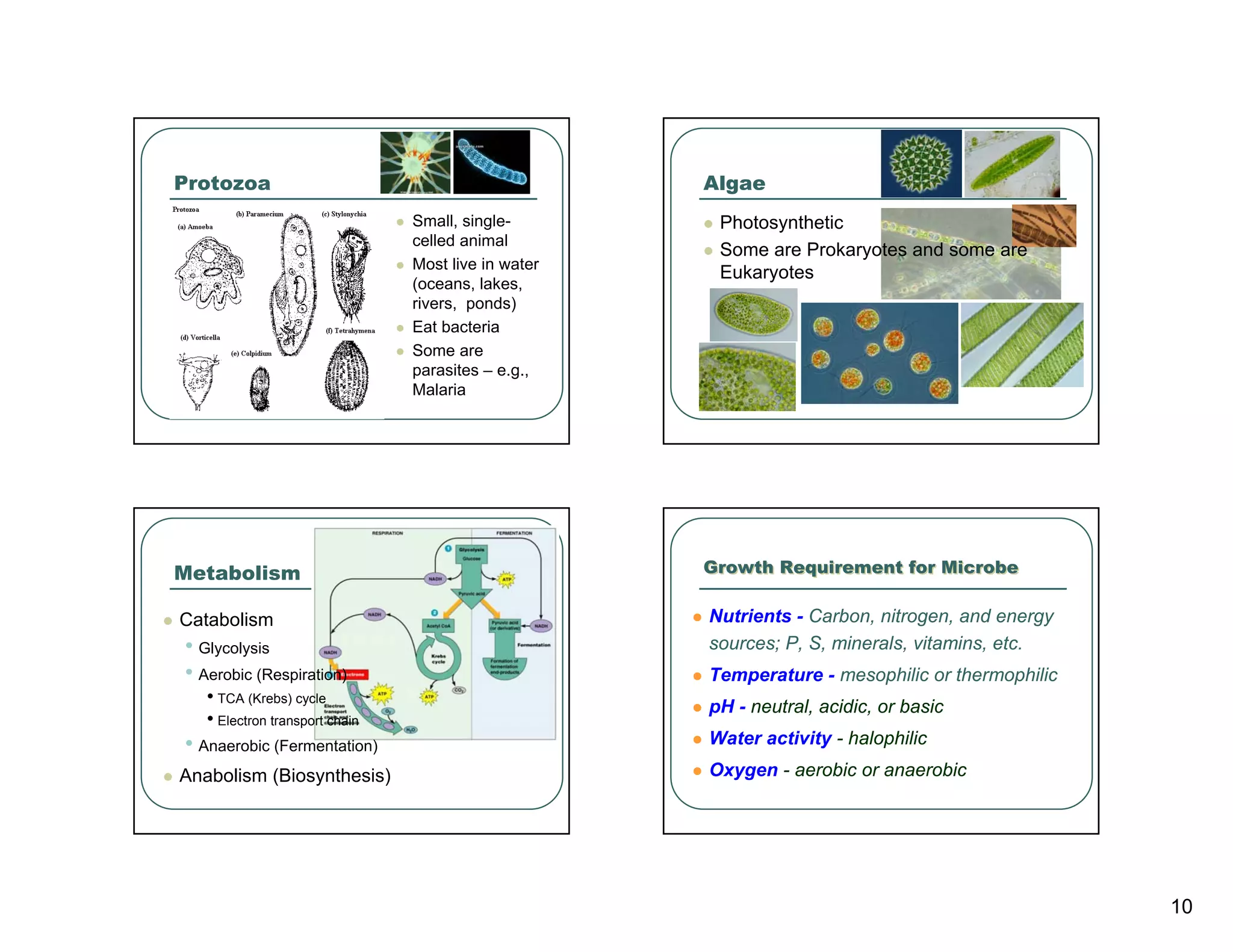
Protozoa                                             Algae
                                Small, single-        Photosynthetic
                                celled animal
                                                      Some are Prokaryotes and some are
                                Most live in water
                                                      Eukaryotes
                                (oceans, lakes,
                                rivers, ponds)
                                Eat bacteria
                                Some are
                                parasites – e.g.,
                                Malaria


Metabolism                                           Growth Requirement for Microbe


Catabolism                                           Nutrients - Carbon, nitrogen, and energy
• Glycolysis                                         sources; P, S, minerals, vitamins, etc.
• Aerobic (Respiration)                              Temperature - mesophilic or thermophilic
   • TCA (Krebs) cycle                               pH - neutral, acidic, or basic
   • Electron transport chain
• Anaerobic (Fermentation)                           Water activity - halophilic
Anabolism (Biosynthesis)                             Oxygen - aerobic or anaerobic


                                                                                                10

Lecture 1 fermentation biotechnology

  • 1.
    Topics Fermentation Biotechnology Introduction Microbiology Metabolism (Metabolic pathways) Prof. S.T. Yang Medium formulation; sterilization Dept. Chemical & Biomolecular Eng. The Ohio State University Growth and fermentation kinetics Industrial Biotechnology Industrial Biotechnology Today Tomorrow Baby whole carrots; Fresh-for-two-week Seedless mini melon; Sweeter peas and tomatoes; Insect-protected crops peppers; Colored cotton High-laurate oil, for soaps and detergents Healthy low-saturated oil; Bst-stimulated milk; Vaccinate eggs Faster growing salmon; Non-allergenic cats Antibiotics, Vitamins, … AIDS vaccine, cancer drugs/vaccines Citric acid, glutamic acid, lysine, … Artificial tissues and organs Insulin; Hepatitis B Vaccine; tPA, EPO, .. Bioplastics; Biochemicals; Biomaterials Ethanol, Methane gas Hydrogen, biofuels 1
  • 2.
    Four Types ofFermentation Products Industrial fermentation products Production Microorganism Applications Cells (biomass) (metric tons) Proteins, enzymes (cell components) Citric acid 1,200,000 A. niger Food Ethanol 26,000,000 S. cerevisiae Fuel Metabolites Glutamate 1,000,000 C. glutamicum Flavoring Lactic acid 400,000 Lactobacillus sp. Food, Plastics • Primary metabolites Lysine 800,000 C. glutamicum Feed Penicillin 60,000 P. chrysogenum Drug • Secondary metabolites Xanthan gum 100,000 X. campestris Food, Oil drilling Biotransformation (steroids) Changing the history Changing the history - naturally-occurring organisms - genetically modified organisms Product Application Organism Product Application Organism Bacitracin Antiobiotics Bacillus strain Bovine growth hormone Milk production Escherichia coli Citric acid Food flavoring Aspergillus niger Cellulase Cellulose hydrolysis Escherichia coli Invertase Candy Saccharomyces cerevisiae Human growth hormone Growth deficiencies Escherichia coli Lactase Digestive aid Escherichia coli Human insulin Diabetics Escherichia coli Pectinase Fruit juice Aspergillus niger Monoclonal antibodies Therapeutics Mammalian cell culture Penicillin Antibiotics Penicillium notatum Ice-minus Prevent ice from plants Pseudomonas syringae Riboflavin Vitamin Ashbya gossypii Sno-max Make snow Pseudomonas syringae Subtilisin Laundry detergent Bacillus subtilis tPA Blood clots Mammalian cell culture Tetracycline Antibiotics Streptomyces aureofaciens Tumor necrosis factor Kill/inhibit tumor cells Escherichia coli Xanthan gum Rheology modifier Xanthomonas campestris 2
  • 3.
    Classification of microorganisms Prokaryotes Prokaryotes – Bacteria, Blue-green algae Unicellular: bacteria Multicellular: cyanobacteria Eukaryotes – Fungi (molds, yeasts), Do not contained membrane-contained algae, Protozoe nucleus Archaebacteria Can accept a wide variety of nutrients Rapid growth Viruses Versatile biochemical metabolism Structure of bacterial cell Essential structure Essential structures Cell wall: • 20 nm thick Non-essential • Consists of peptidoglycan structures • Structural strength and shape Cell membrane: • 7-9 nm thick • Lipid bilayer • Semi-permeable - controls the transfer of chemicals and nutrients 3
  • 4.
    Essential structure (cont’d) Essential structure (cont’d) Nuclear body: Cytoplasm: • DNA • Fluid material • Control center for all operation • No nuclear membrane Mesosomes: • No mitotic apparatus during replication • Bacteria do not have mitochondria, but have Ribosomes: mesosomes, which are extensions of the • Sites of important biochemical reactions cytoplasmic membrane • Protein synthesis • ATP Non-essential structure Non-essential structure (cont’d) Pili (fimbria): Capsule (slime layer): • Gram(-) rods • Secreted by cells to increase viscosity and • Sexual conjugation impede diffusion • Adhesive to animal and plant cells • Coating to cell wall • Insert surface Volutin (mitochromatic) granules: Flagella: • Highly refractile globules • Motility of bacteria • Sourse of stored food, e.g. PHB • Can be polar or peritichous • Appearance influenced by age 4
  • 5.
    Non-essential structure (cont’d) Actinomyces spp. Chromatophores: Beaded appearance of branched filamentous • photosynthetic rod shaped bacteria • Counterpart of chloroplasts for plant cells Cells are smaller Endospores: No nuclear membrane • Highly resistant to destructive effects of chemical and physical agents No lysozyme • Contain large amounts of dipicolinic acid Extremely important as a source of powerful (DPA) antibiotics Cyanobacteria Classification of bacteria Gas vesicles Grain stain Gas vesicles are aggregates of hollow cylindrical structures Morphological type – cocci, rod, spiral composed of rigid proteins. They are impermeable to water, but permeable to gas. The amount of gas in the vacuole is Spore forming or not under the control of the microorganism. Metabolism of sugar (carbon) substrates Gas vesicles are found in Cyanobacteria, which are Growth requirements: photosynthetic and live in aquatic systems. In these lakes • Oxygen – aerobic, anaerobic or facultative and oceans, the Cyanonbacteria want to control their • Nutrients position in the water column to obtain the optimum amount of light and nutrients. Genetic composition (GC content) 5
  • 6.
    Gram stain Eukaryotes Unicellular: yeasts, algae Multicellular: molds, algae Posses a membrane-contained organelles Larger than prokaryotes Complex cell structure Spatial organization and differentiation Yeast Yeast Elliptical or spherical cells Size: 5 -10 microns Form spores Vegetative growth is by budding Aerobic and anaerobic growth Colony on agar plate similar to bacteria’s Important in beverage alcohol industry, ethanol, baker yeast and single cell proteins (SCP) 6
  • 7.
    Mold (Filamentous Fungus) Mold Filamentous Hyphae Complicated life cycles Sexual and asexual spores Aerobic Mostly pathogens of plants Important in industrial fermentations: • Organic acids (citric, gluconic, gibberellic acid) • Antibiotics (penicillin, griseofulvin) • Enzymes (cellulase, protease, amylase) Cause spoilage in paper, fabrics and food Eukaryotes Animal and plant cells Plant cells Either as callus (undifferentiated plant tissue) Or as aggregated cells in suspension Can produce many commercially important compounds (perfumes, dyes, medicines and opiates) Can catalyze highly specific useful transformations 7
  • 8.
    Eukaryotes Animal cells Eukaryote v.s. Prokaryote Tissue derived cells Primary cell lines secondary cell lines established, permanent cell lines Anchorage dependent cells Microcarrier culture techniques Flagella Important in large scale production of vaccines and other useful biochemicals and therapeutics Prokaryotes v.s. Eukaryotes Prokaryotes v.s. Eukaryotes Genome Organelles Characteristics Prokaryotes Eukaryotes Characteristics Prokaryotes Eukaryotes Mitochondria No More than one No. of DNA molecules One More than one Endoplasmic reticulum No Yes DNA in organelles No Yes Golgi apparatus No Yes DNA observed as chromosomes No Yes Photosynthetic apparatus Single protein Complex structure, Nuclear membrane No Yes Simple structure with microtubulus Mitotic/meiotic division of nucleus No Yes Ribosome Smaller, 70s Larger, 80s Formation of partial diploid Yes No Spore Endospores - High Endo/Exospores heat resistance low heat resistance 8
  • 9.
    Archaebacteria Phylogenetic Tree of Life A third ancestral type of cells Absence of peptidoglycan from the cell wall Possess unusual lipids Methanogens, extreme halophiles, thermoacidophiles Viruses Bacteriophages Not cellular Possible contaminants of bacterial Informational parasites fermentation “Alive” when inside the host Vaccine production from animal viruses Characteristics of living things Smallest microbes Recombinant DNA techniques < 0.2 micron in size Cloning vehicle in genetic engineering Genetic materials: DNA or RNA 9
  • 10.
    Protozoa Algae Small, single- Photosynthetic celled animal Some are Prokaryotes and some are Most live in water Eukaryotes (oceans, lakes, rivers, ponds) Eat bacteria Some are parasites – e.g., Malaria Metabolism Growth Requirement for Microbe Catabolism Nutrients - Carbon, nitrogen, and energy • Glycolysis sources; P, S, minerals, vitamins, etc. • Aerobic (Respiration) Temperature - mesophilic or thermophilic • TCA (Krebs) cycle pH - neutral, acidic, or basic • Electron transport chain • Anaerobic (Fermentation) Water activity - halophilic Anabolism (Biosynthesis) Oxygen - aerobic or anaerobic 10