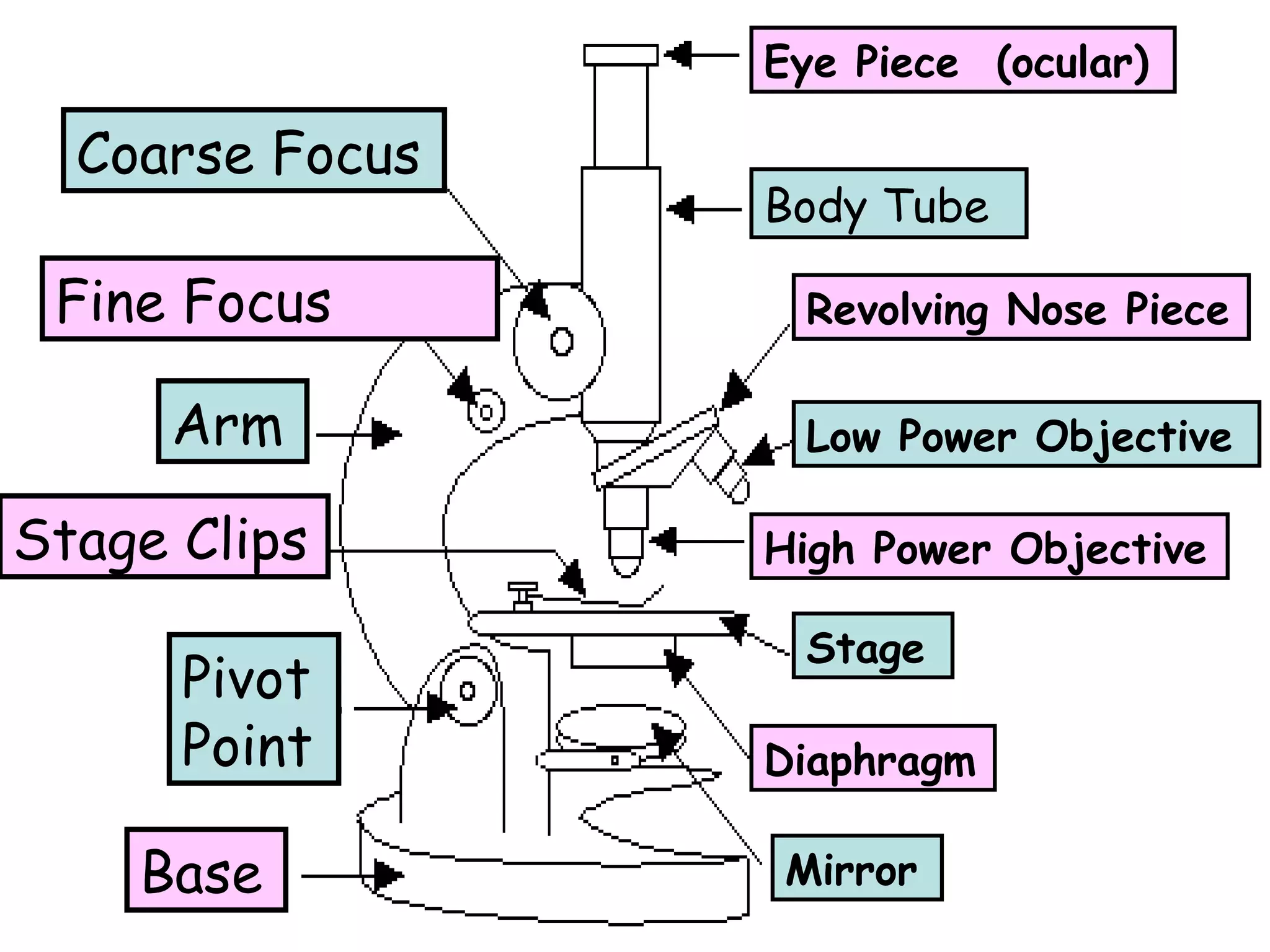
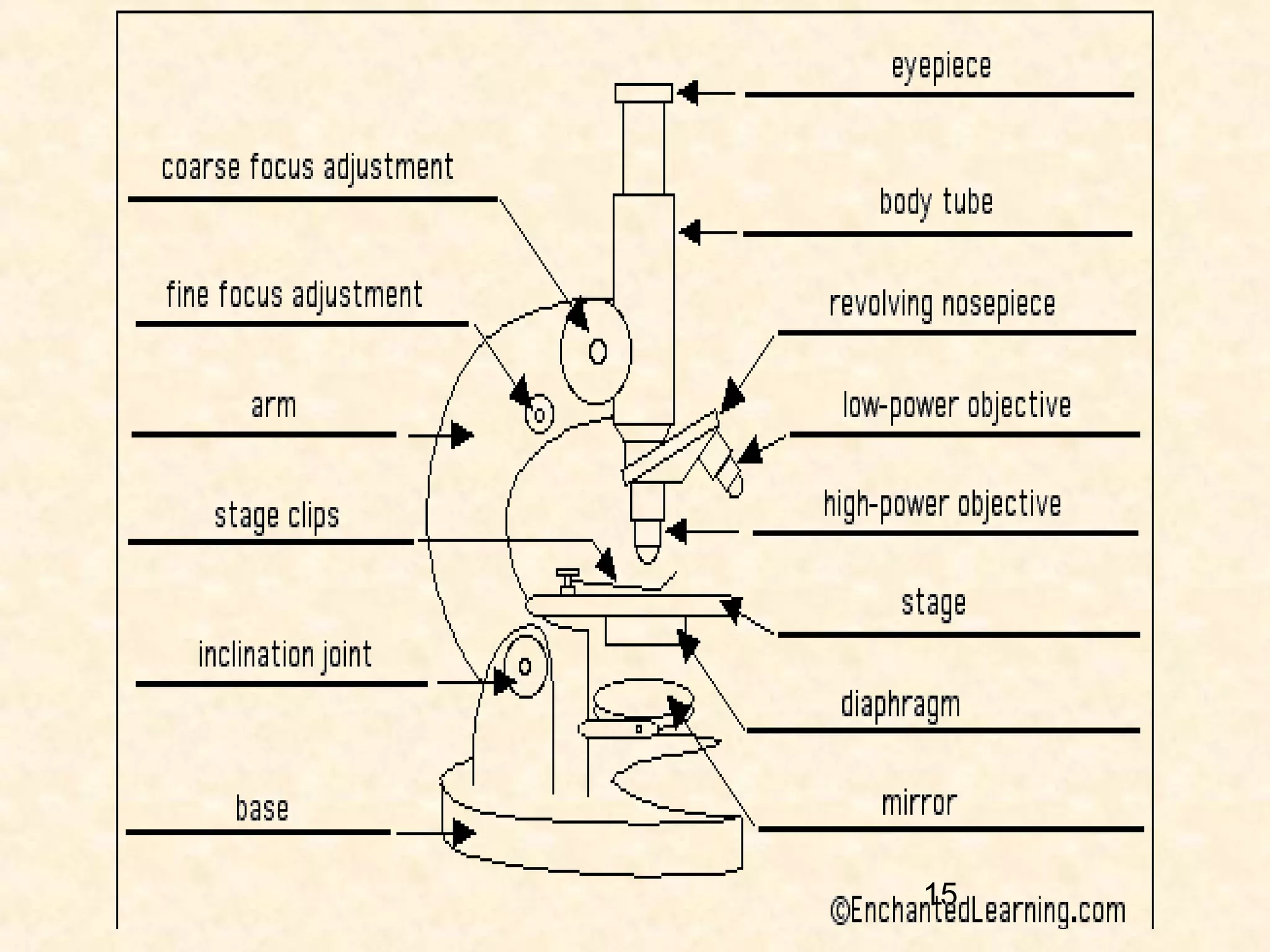
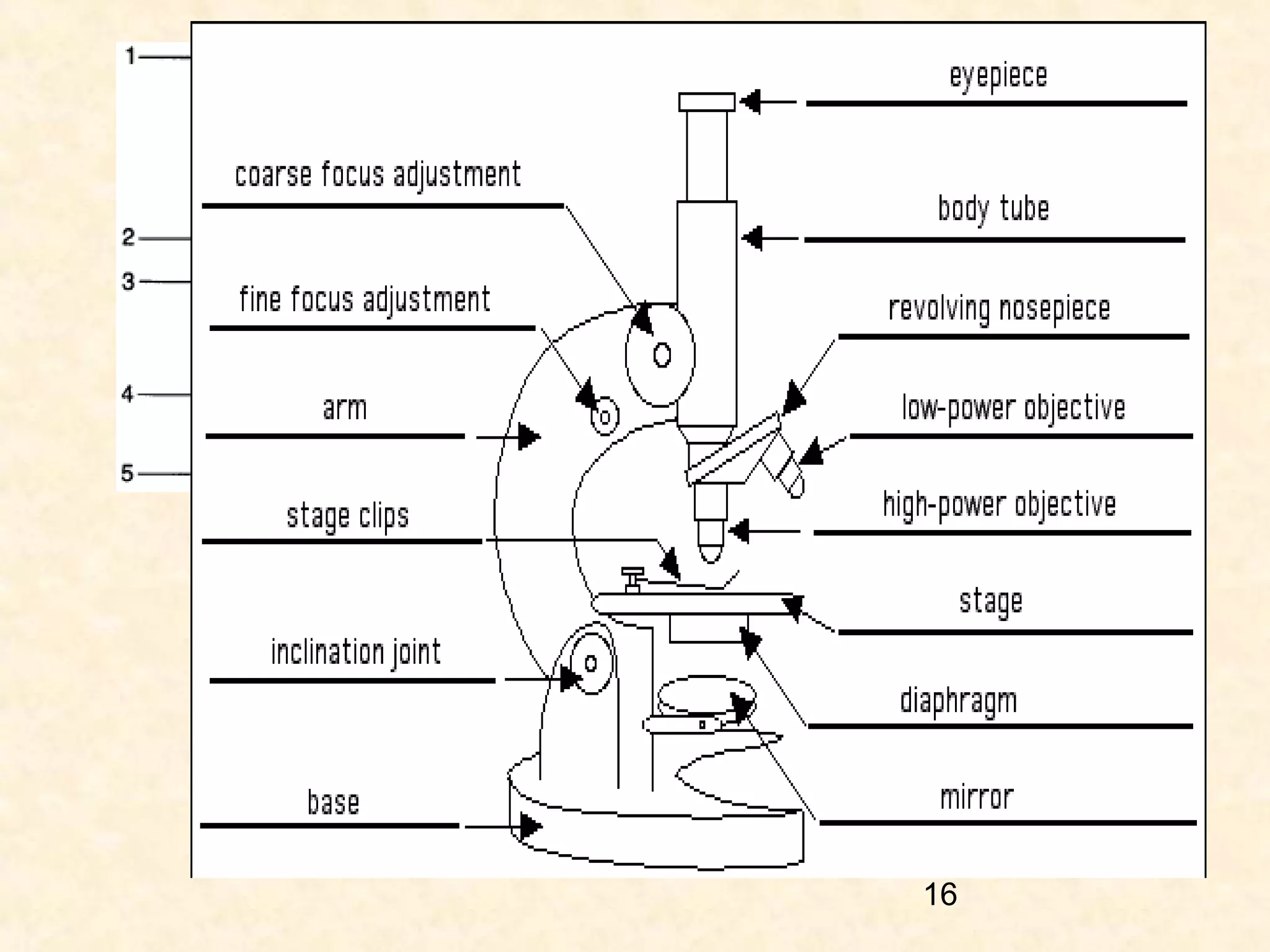
Eye Piece (ocular)

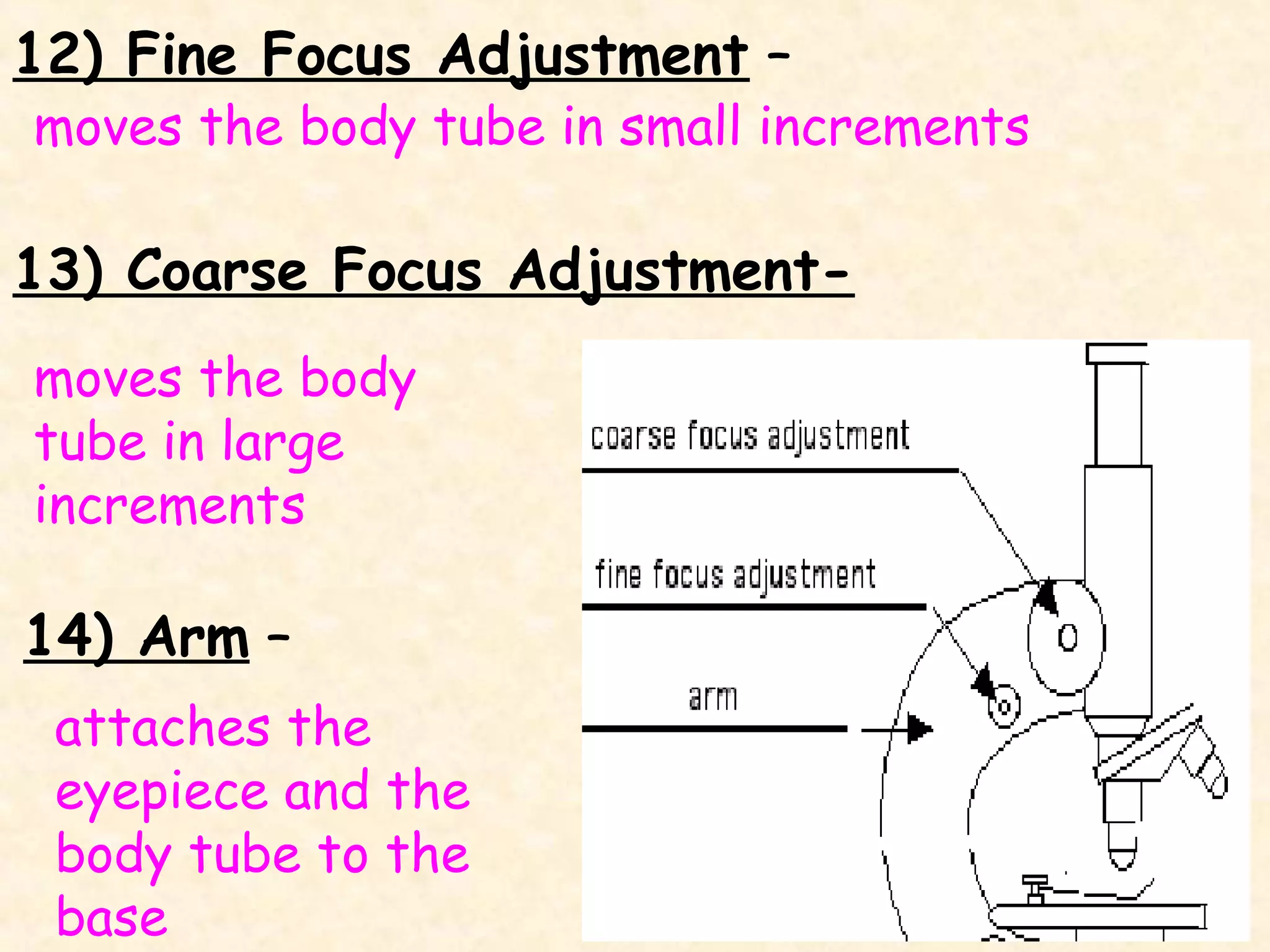
Coarse Focus
Fine Focus
Arm
Stage Clips
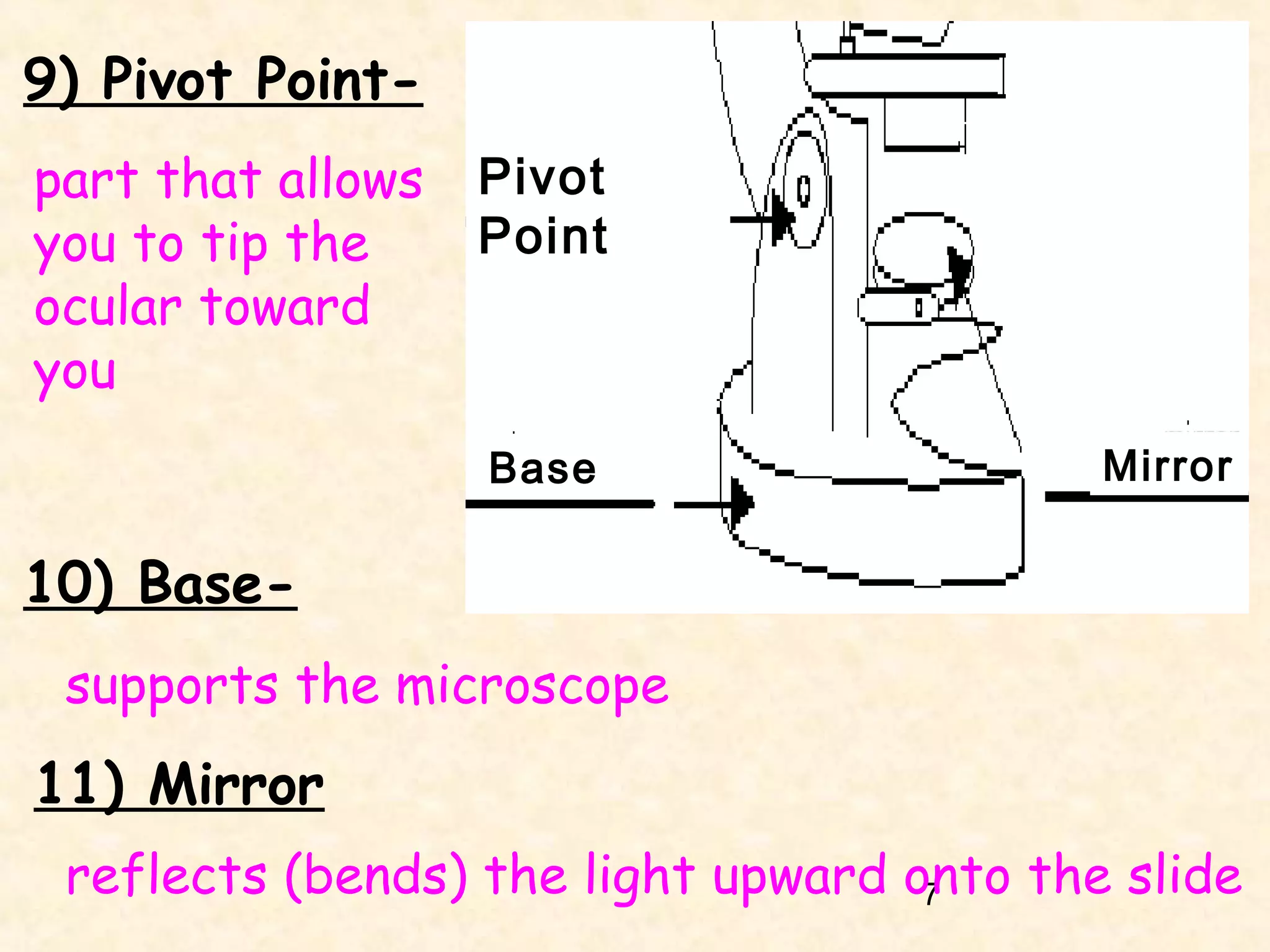
Pivot
Point
Base

Body Tube
Revolving Nose Piece
Low Power Objective
High Power Objective
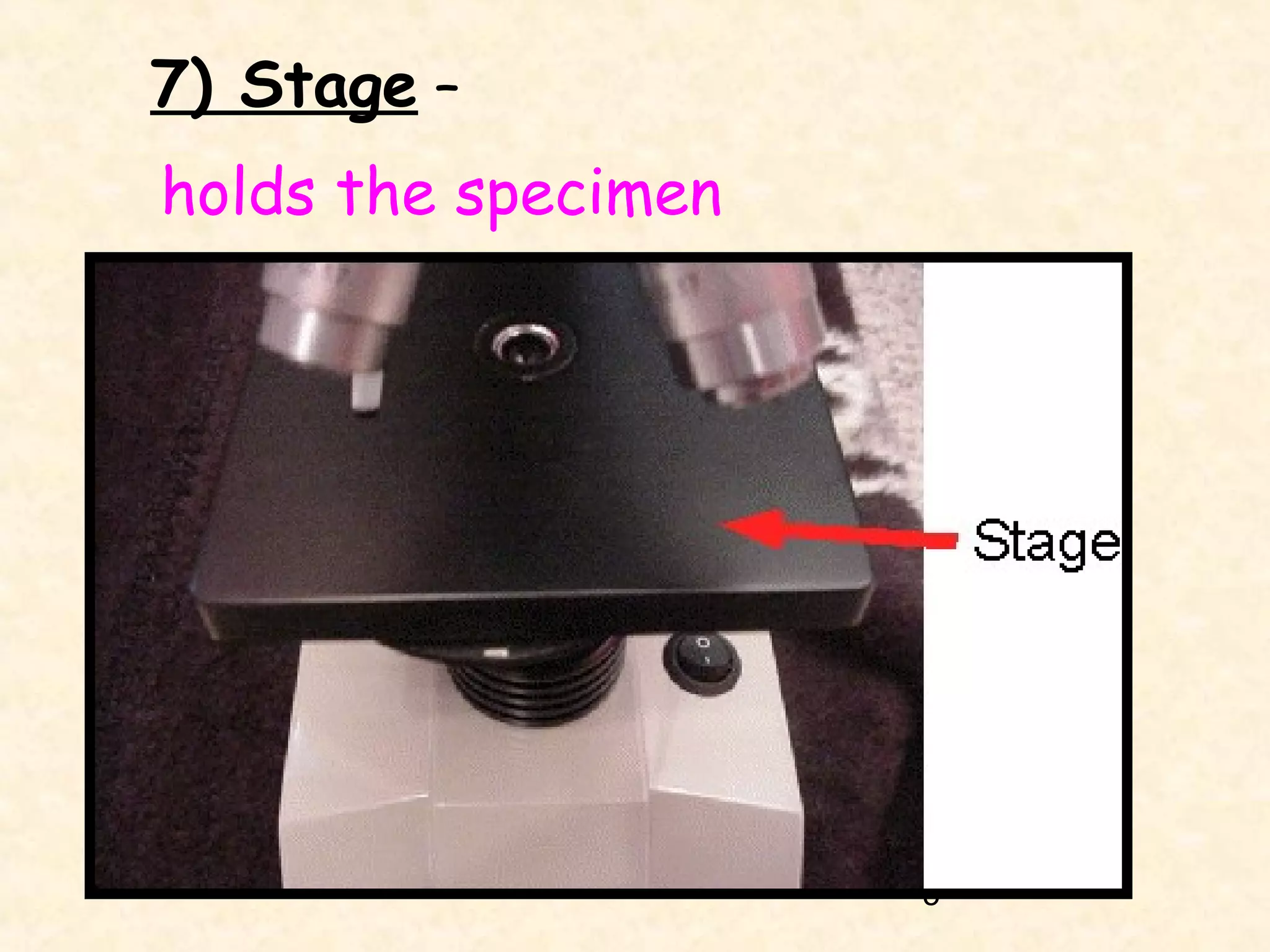
Stage
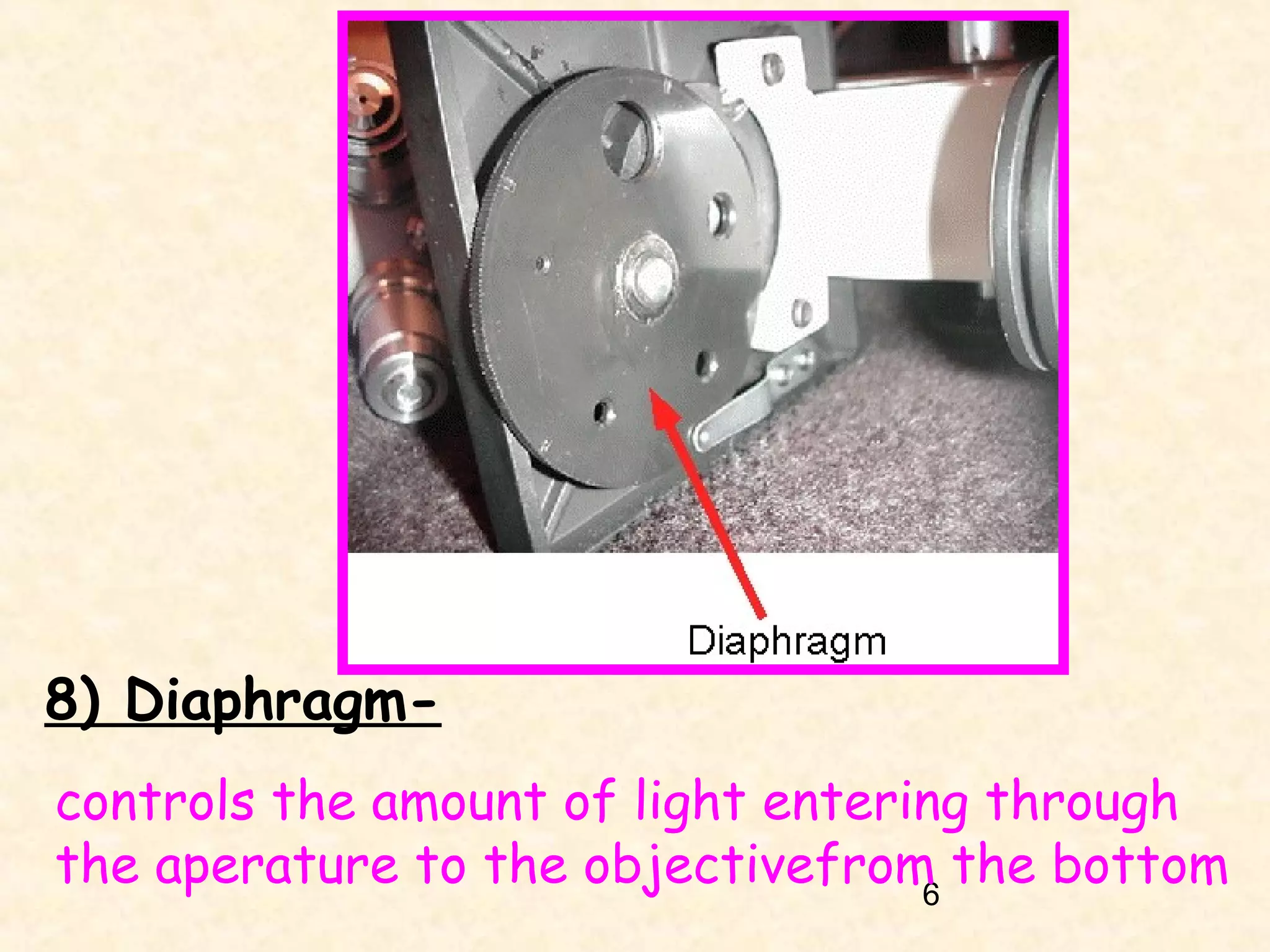
Diaphragm
Mirror 1
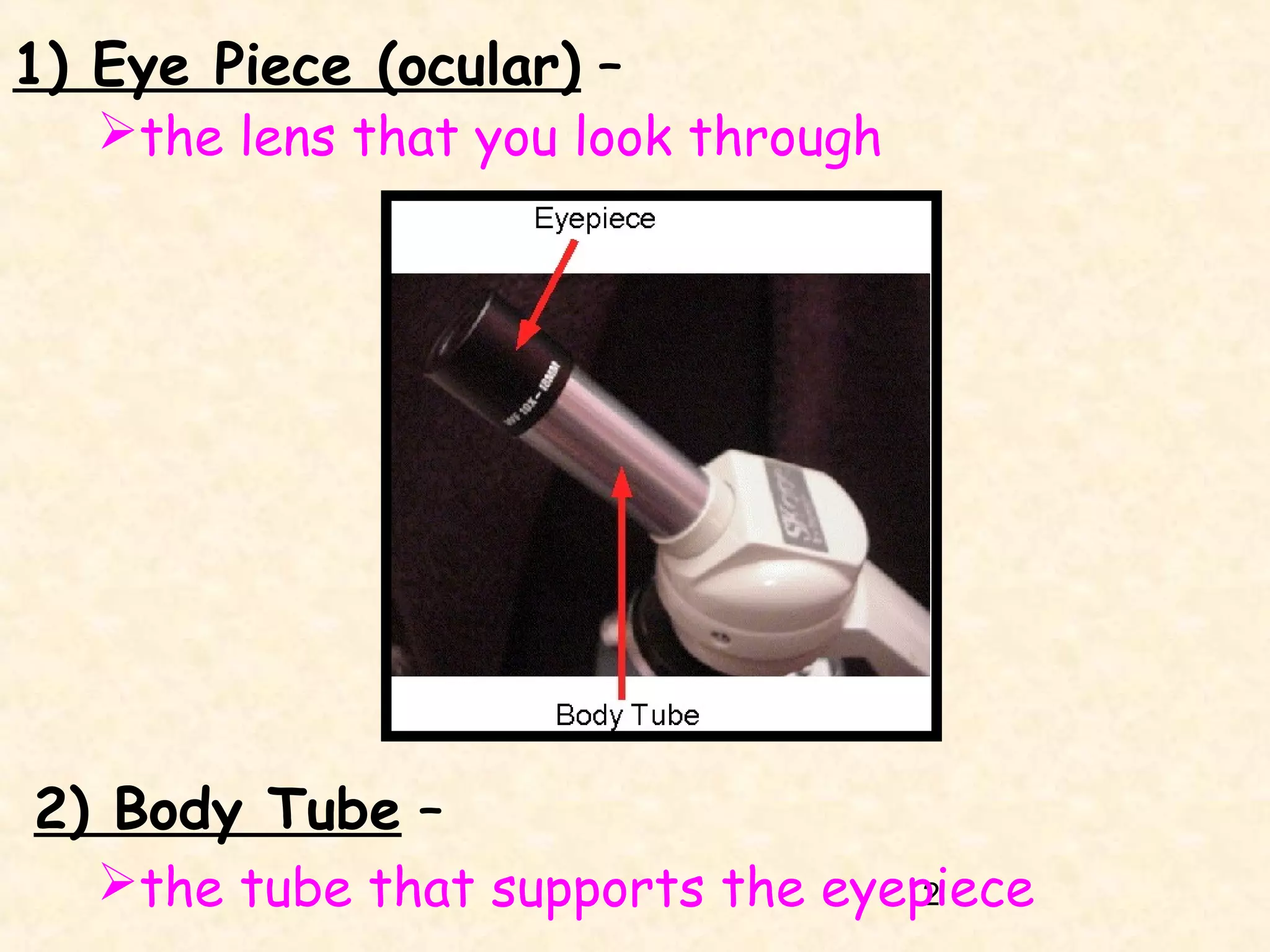
1) Eye Piece (ocular) –

the lens that you look through

2) Body Tube –
the tube that supports the eyepiece
2
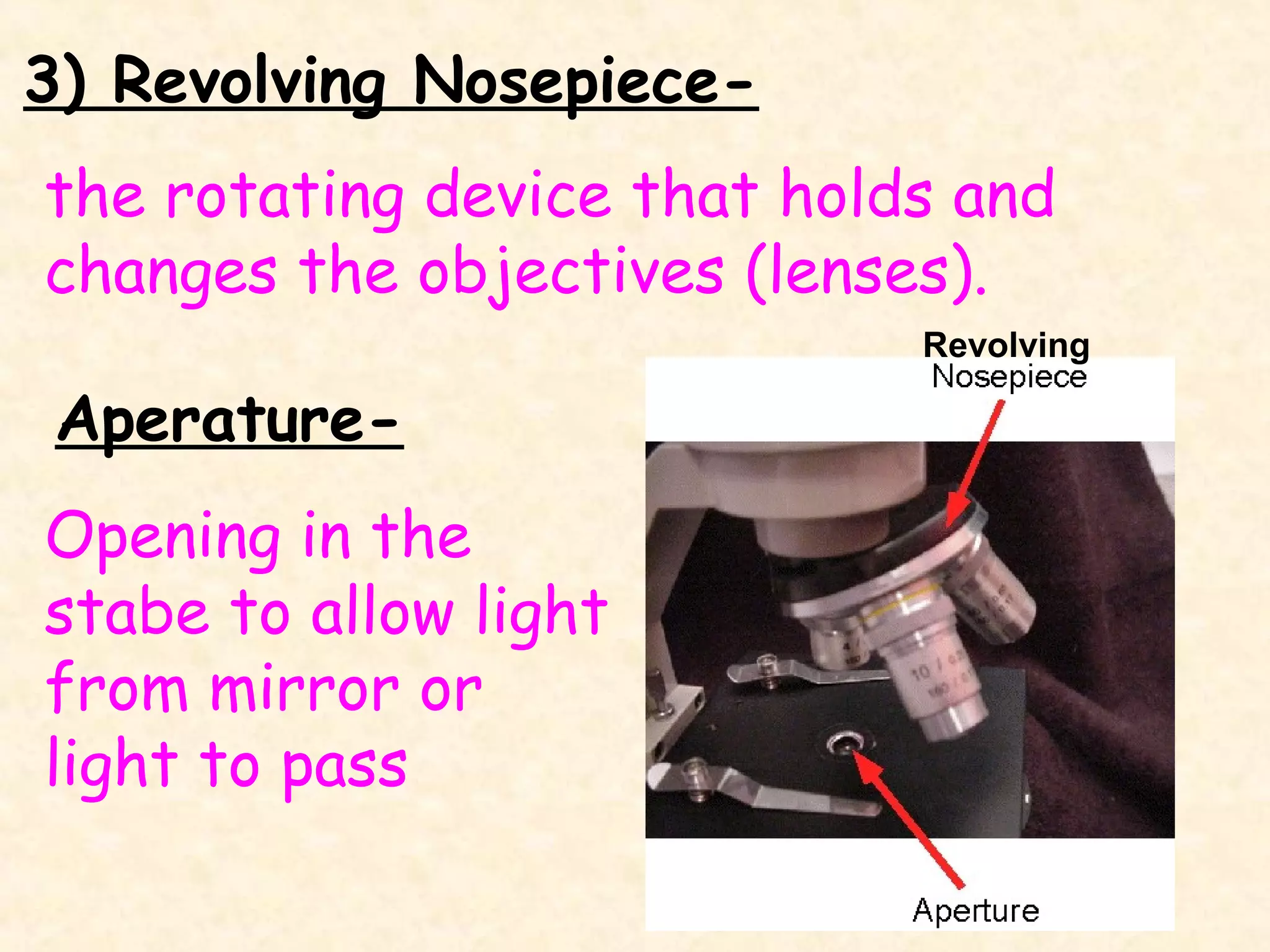
3) Revolving Nosepiecethe rotating device that holds and
changes the objectives (lenses).
Revolving

AperatureOpening in the
stabe to allow light
from mirror or
light to pass
3
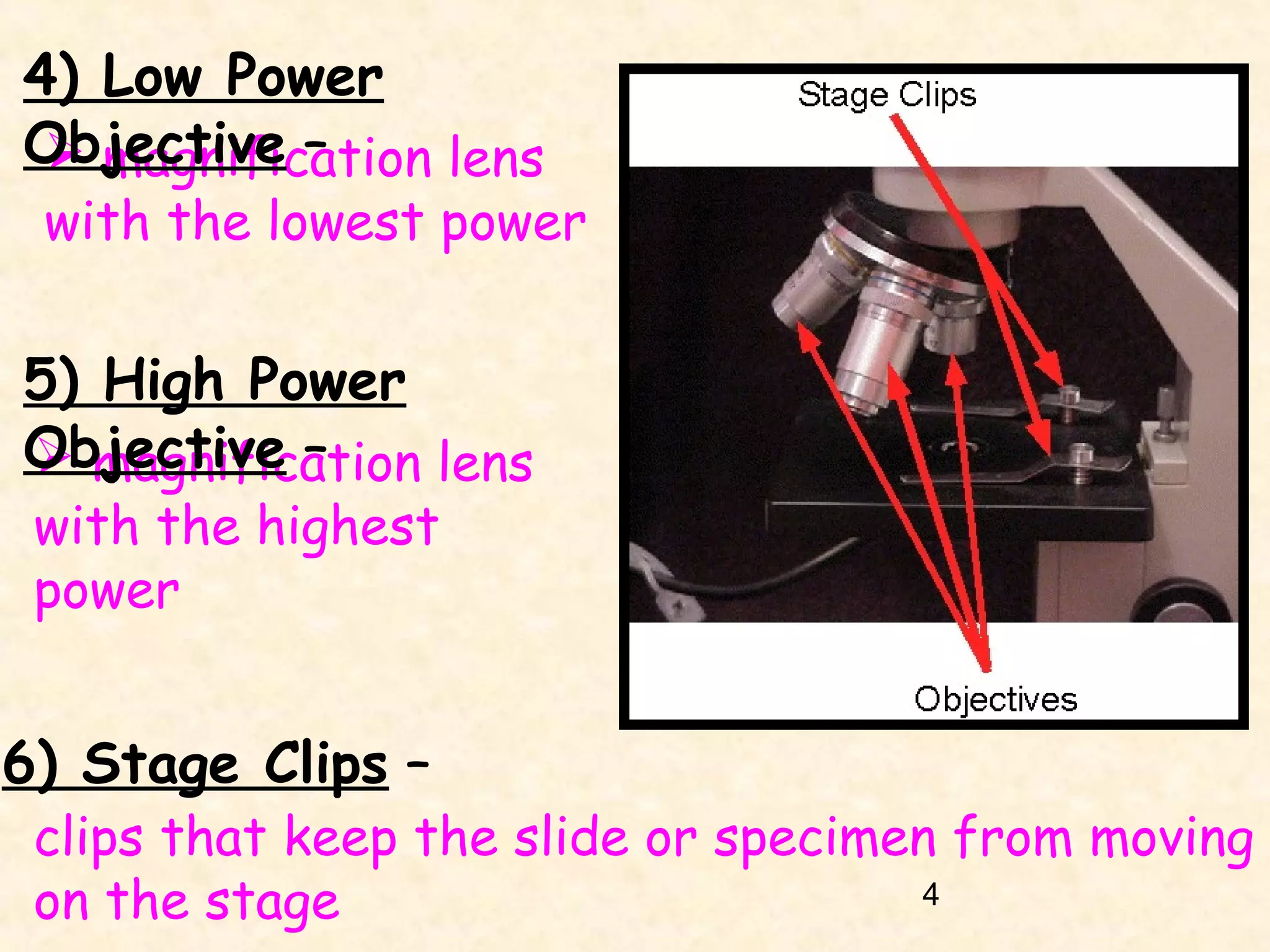
4) Low Power
Objective –
 magnification lens

with the lowest power

5) High Power
Objective –
 magnification lens
with the highest
power

6) Stage Clips –

clips that keep the slide or specimen from moving
4
on the stage
7) Stage –
holds the specimen

5
8) Diaphragmcontrols the amount of light entering through
the aperature to the objectivefrom the bottom
6
9) Pivot Pointpart that allows
you to tip the
ocular toward
you

Pivot
Point

Base

Mirror

10) Basesupports the microscope

11) Mirror
reflects (bends) the light upward onto the slide
7
12) Fine Focus Adjustment –

moves the body tube in small increments

13) Coarse Focus Adjustmentmoves the body
tube in large
increments

14) Arm –
attaches the
eyepiece and the
body tube to the
base

8
9
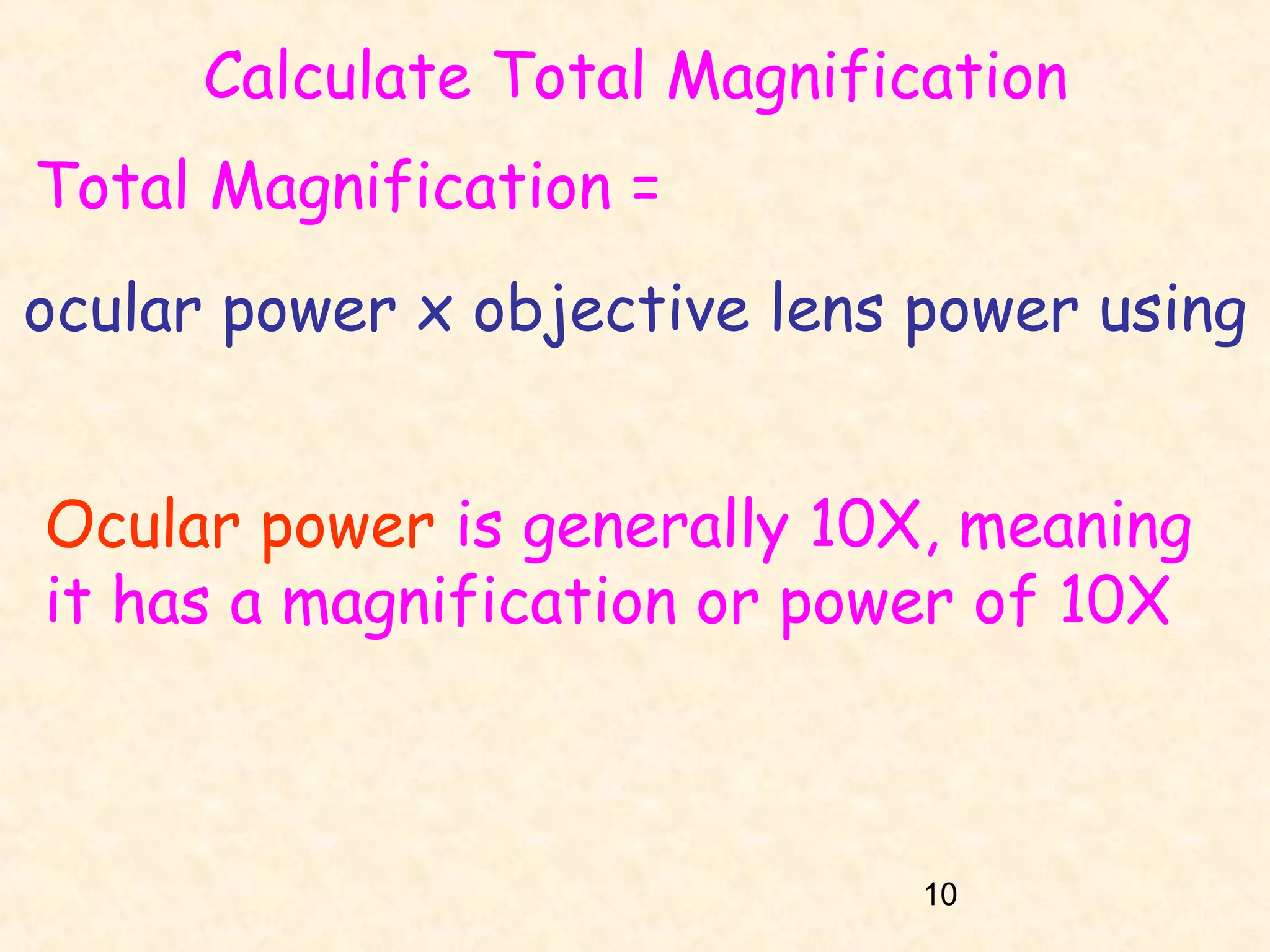
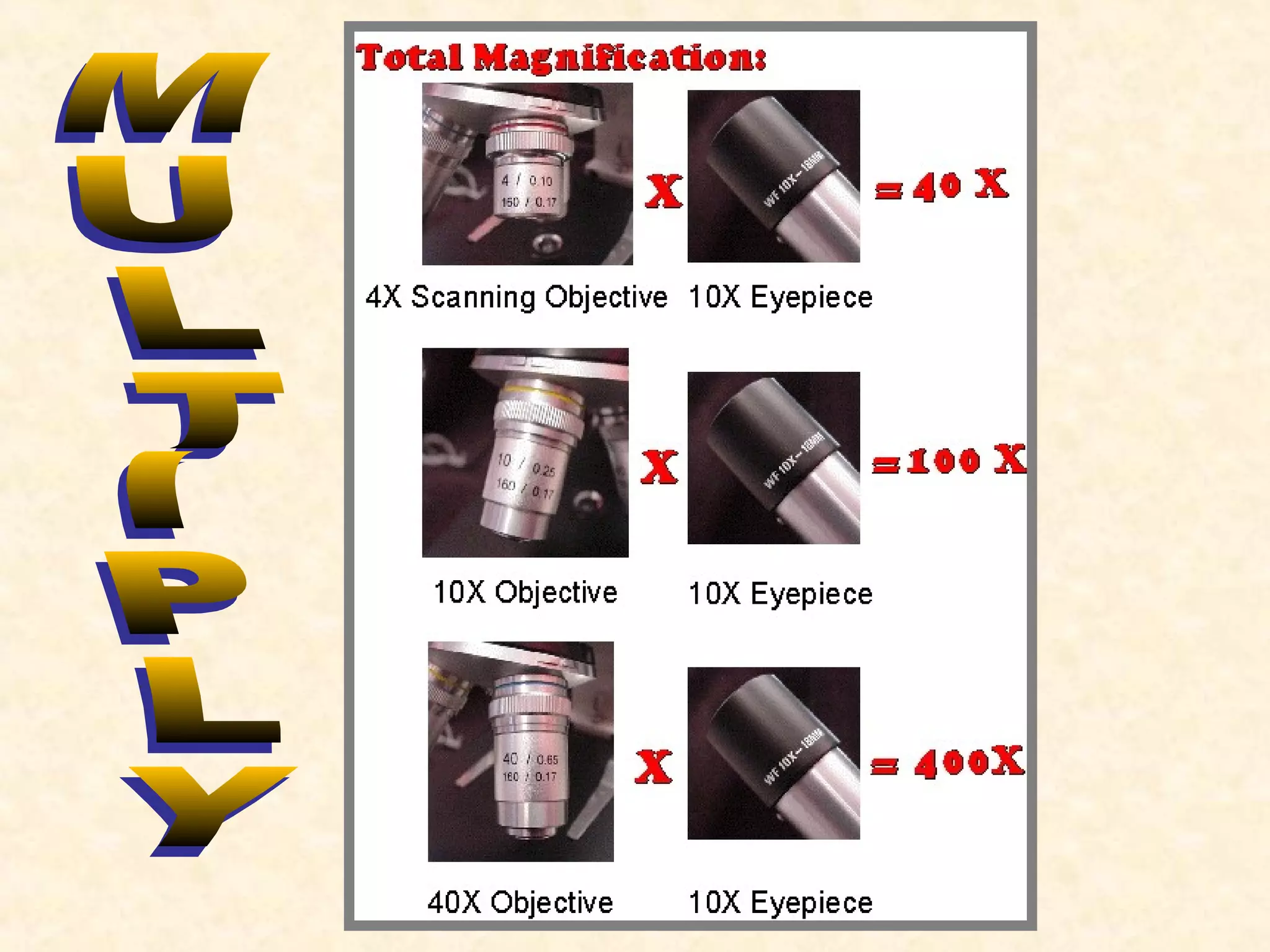
Calculate Total Magnification
Total Magnification =
ocular power x objective lens power using
Ocular power is generally 10X, meaning
it has a magnification or power of 10X

10
11
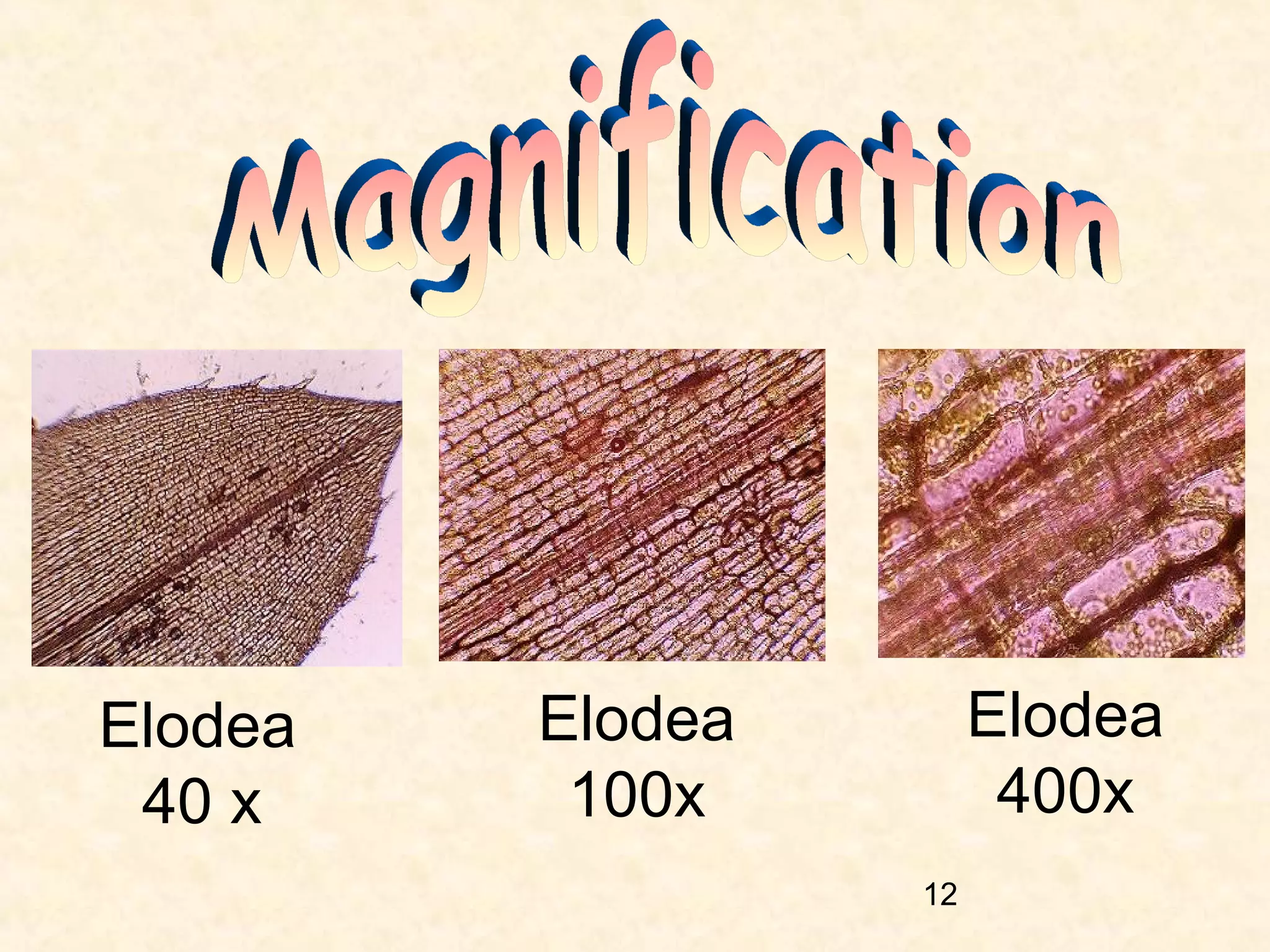
Elodea
40 x

Elodea
400x

Elodea
100x
12
The end

13
STOP:
TEACHER NOTES &
ADDITIONAL PICS

14
15
16

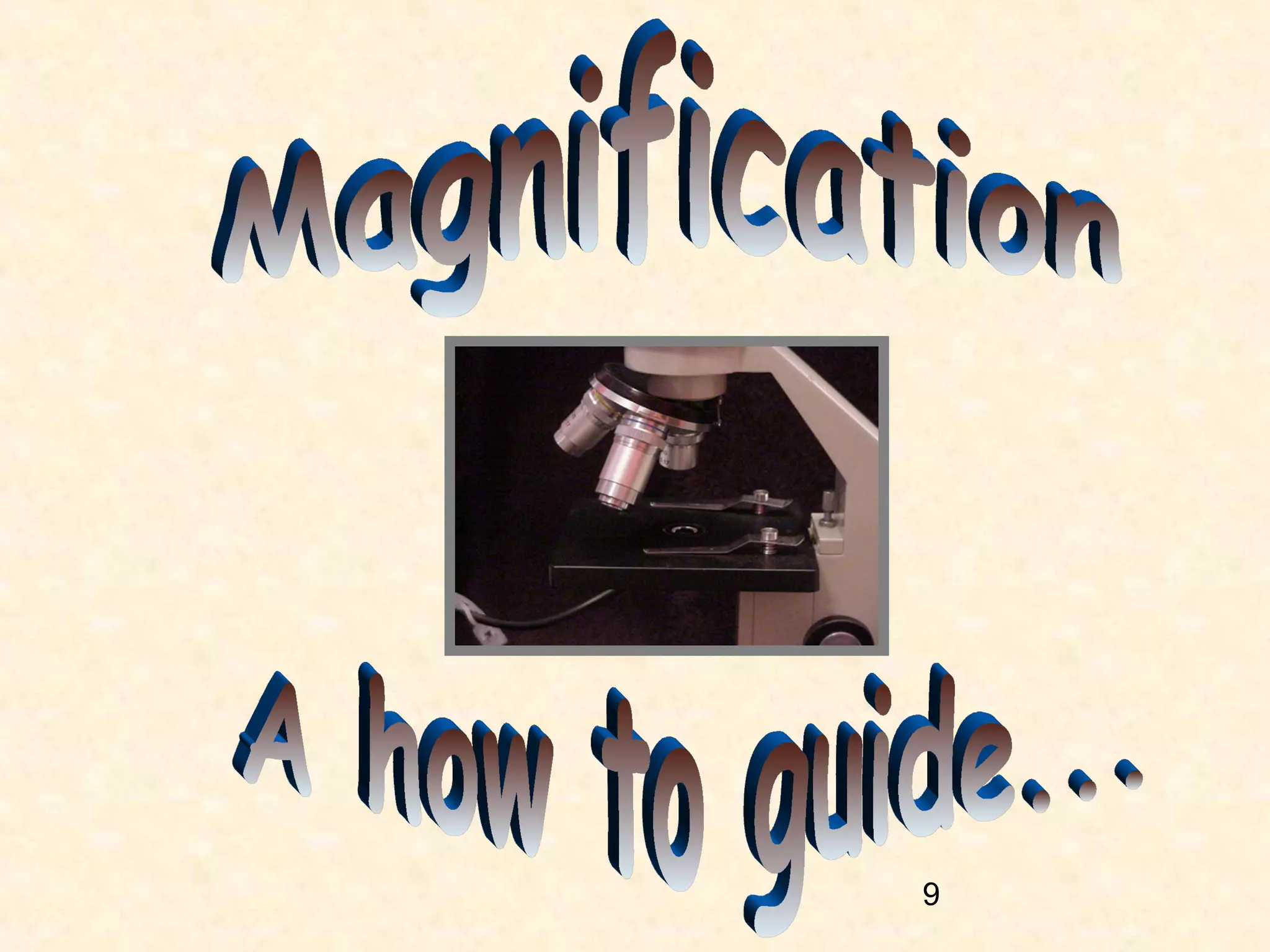
Microscope

  • 1.
    Eye Piece (ocular) CoarseFocus Fine Focus Arm Stage Clips Pivot Point Base Body Tube Revolving Nose Piece Low Power Objective High Power Objective Stage Diaphragm Mirror 1
  • 2.
    1) Eye Piece(ocular) – the lens that you look through 2) Body Tube – the tube that supports the eyepiece 2
  • 3.
    3) Revolving Nosepiecetherotating device that holds and changes the objectives (lenses). Revolving AperatureOpening in the stabe to allow light from mirror or light to pass 3
  • 4.
    4) Low Power Objective–  magnification lens with the lowest power 5) High Power Objective –  magnification lens with the highest power 6) Stage Clips – clips that keep the slide or specimen from moving 4 on the stage
  • 5.
    7) Stage – holdsthe specimen 5
  • 6.
    8) Diaphragmcontrols theamount of light entering through the aperature to the objectivefrom the bottom 6
  • 7.
    9) Pivot Pointpartthat allows you to tip the ocular toward you Pivot Point Base Mirror 10) Basesupports the microscope 11) Mirror reflects (bends) the light upward onto the slide 7
  • 8.
    12) Fine FocusAdjustment – moves the body tube in small increments 13) Coarse Focus Adjustmentmoves the body tube in large increments 14) Arm – attaches the eyepiece and the body tube to the base 8
  • 9.
  • 10.
    Calculate Total Magnification TotalMagnification = ocular power x objective lens power using Ocular power is generally 10X, meaning it has a magnification or power of 10X 10
  • 11.
  • 12.
  • 13.
  • 14.
  • 15.
  • 16.

Editor's Notes

  • #17 http://www.ekcsk12.org/science/lelab/lightmicroscopediagram.gif www.southwestschools.org/jsfaculty/ Microscopes/selftest.htm