Jane Secker & Emma Coonan Wolfson College, Cambridge A New Curriculum for Information Literacy Front cover image:  ‘Tulip staircase at the Queens House, Greenwich’ by  mcginnly http://www.flickr.com/photos/mcginnly/2197675676/ (licensed under Creative Commons)
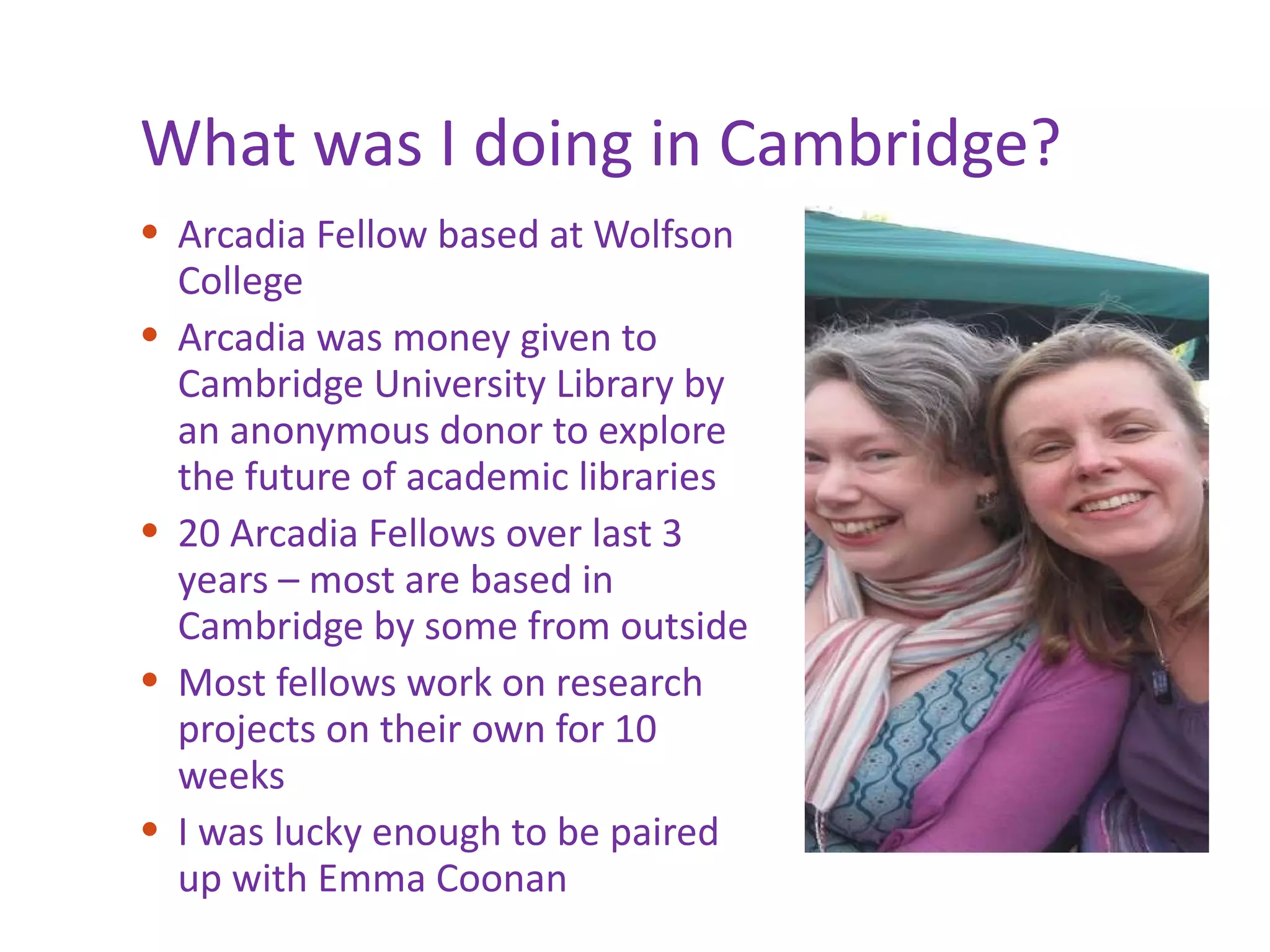
What was I doing in Cambridge? Arcadia Fellow based at Wolfson College Arcadia was money given to Cambridge University Library by an anonymous donor to explore the future of academic libraries 20 Arcadia Fellows over last 3 years – most are based in Cambridge by some from outside Most fellows work on research projects on their own for 10 weeks I was lucky enough to be paired up with Emma Coonan
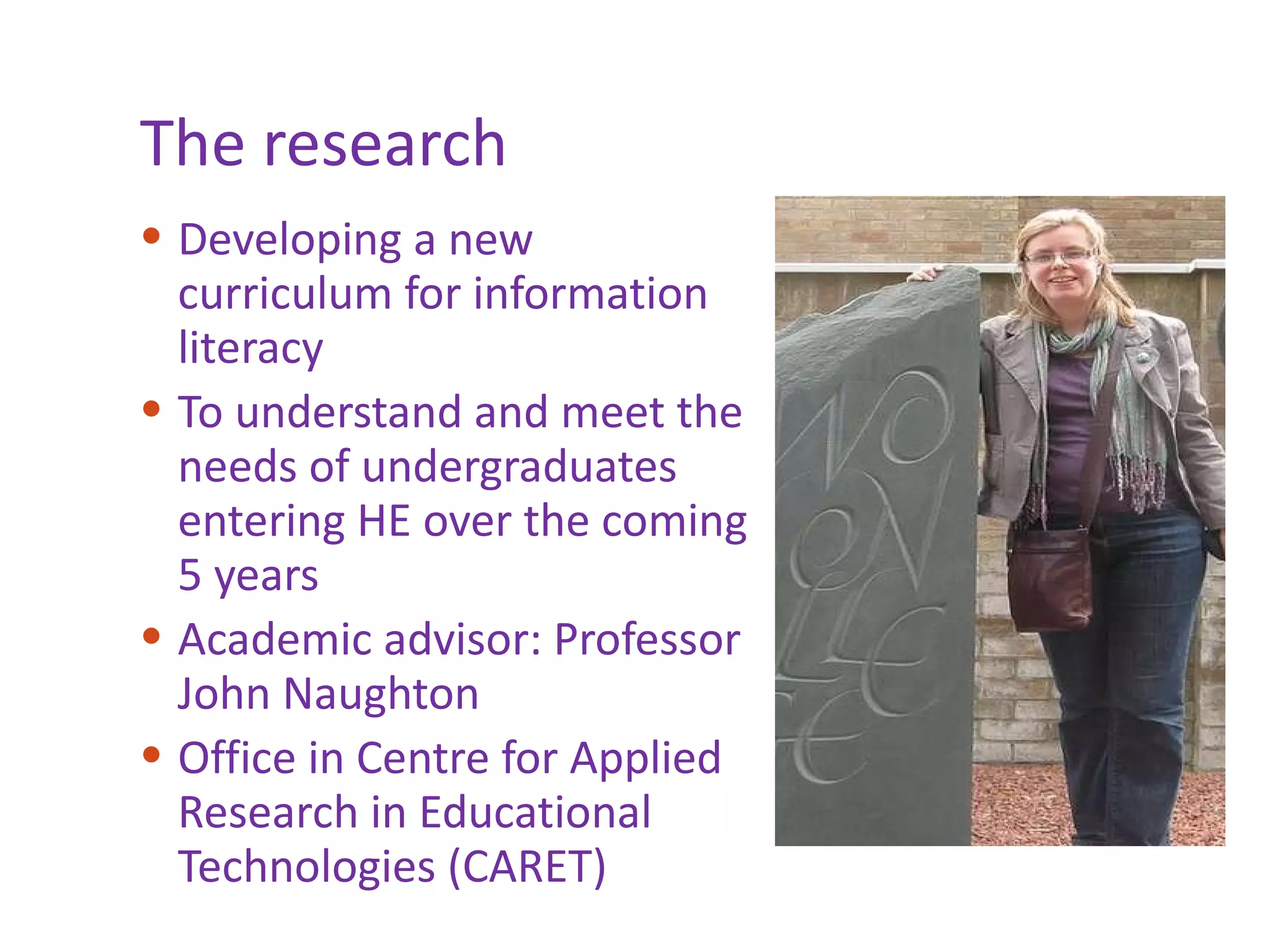
The research Developing a new curriculum for information literacy To understand and meet the needs of undergraduates entering HE over the coming 5 years Academic advisor: Professor John Naughton  Office in Centre for Applied Research in Educational Technologies (CARET)
Our research method Modified Delphi approach (used in forecasting the future)  Literature review Developing a curriculum plus various supporting resources  Preliminary findings presented at workshop and revisions made in light of feedback
Key curriculum attributes Grounded in a view of IL as fundamental to the ongoing development of the individual – social as well as academic “ Information literacy empowers people in all walks of life to seek, evaluate, use and create information effectively to achieve their personal, social, occupational and educational goals. It is a basic human right in a digital world and promotes social inclusion in all nations.”  UNESCO (2005) Alexandria Proclamation
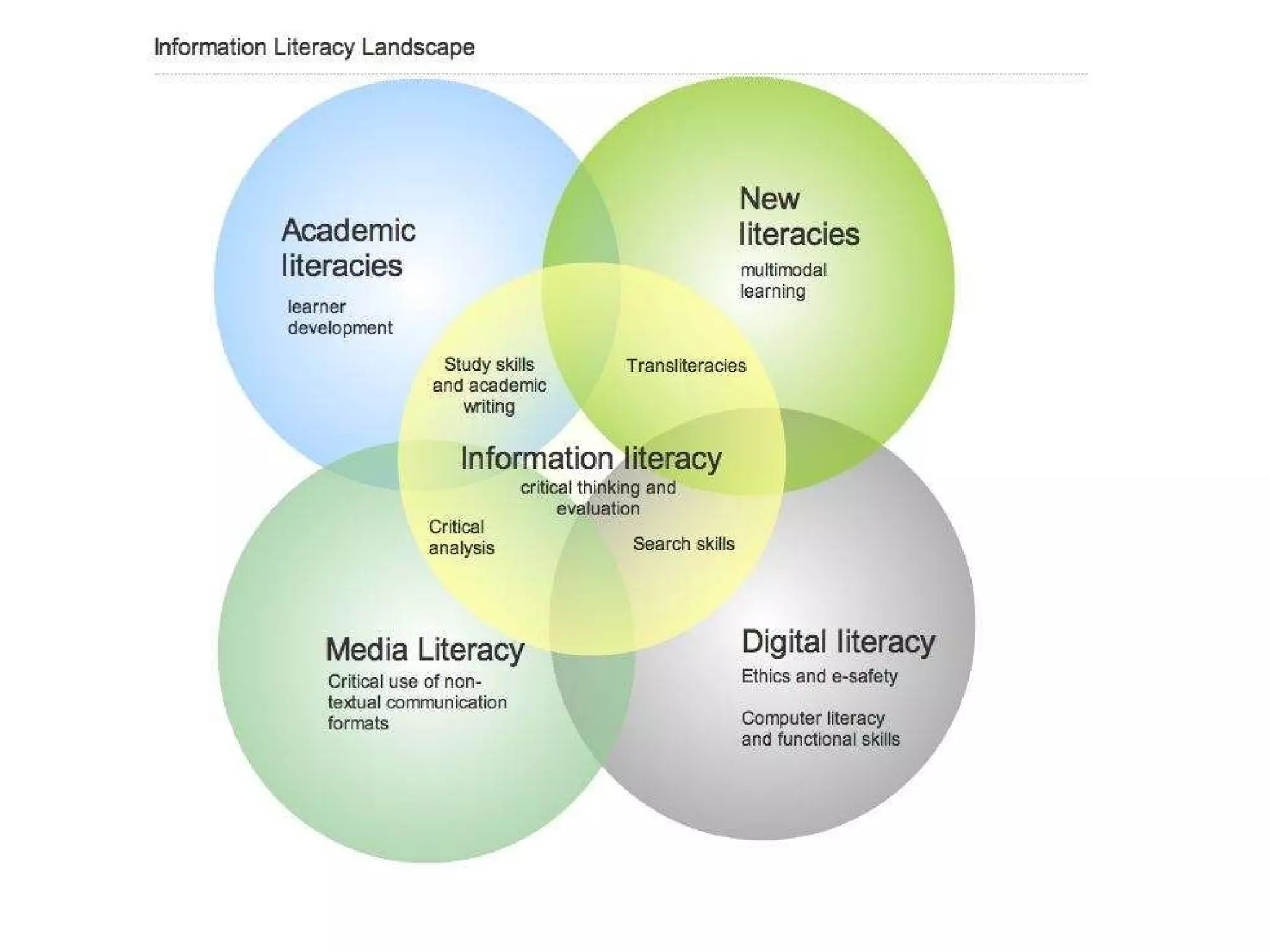
The Information Literacy landscape
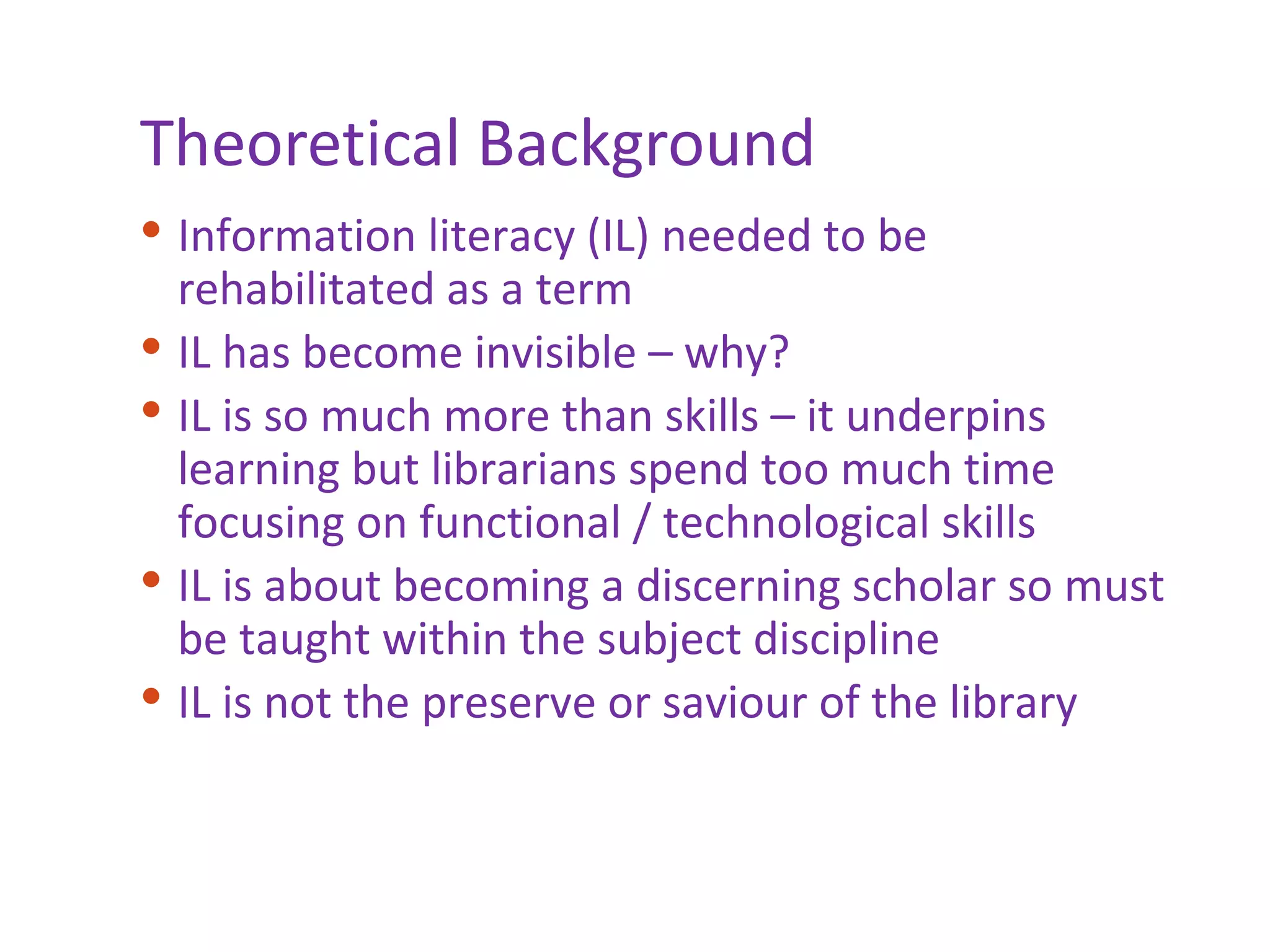
Theoretical Background Information literacy (IL) needed to be rehabilitated as a term IL has become invisible – why? IL is so much more than skills – it underpins learning but librarians spend too much time focusing on functional / technological skills IL is about becoming a discerning scholar so must be taught within the subject discipline IL is not the preserve or saviour of the library
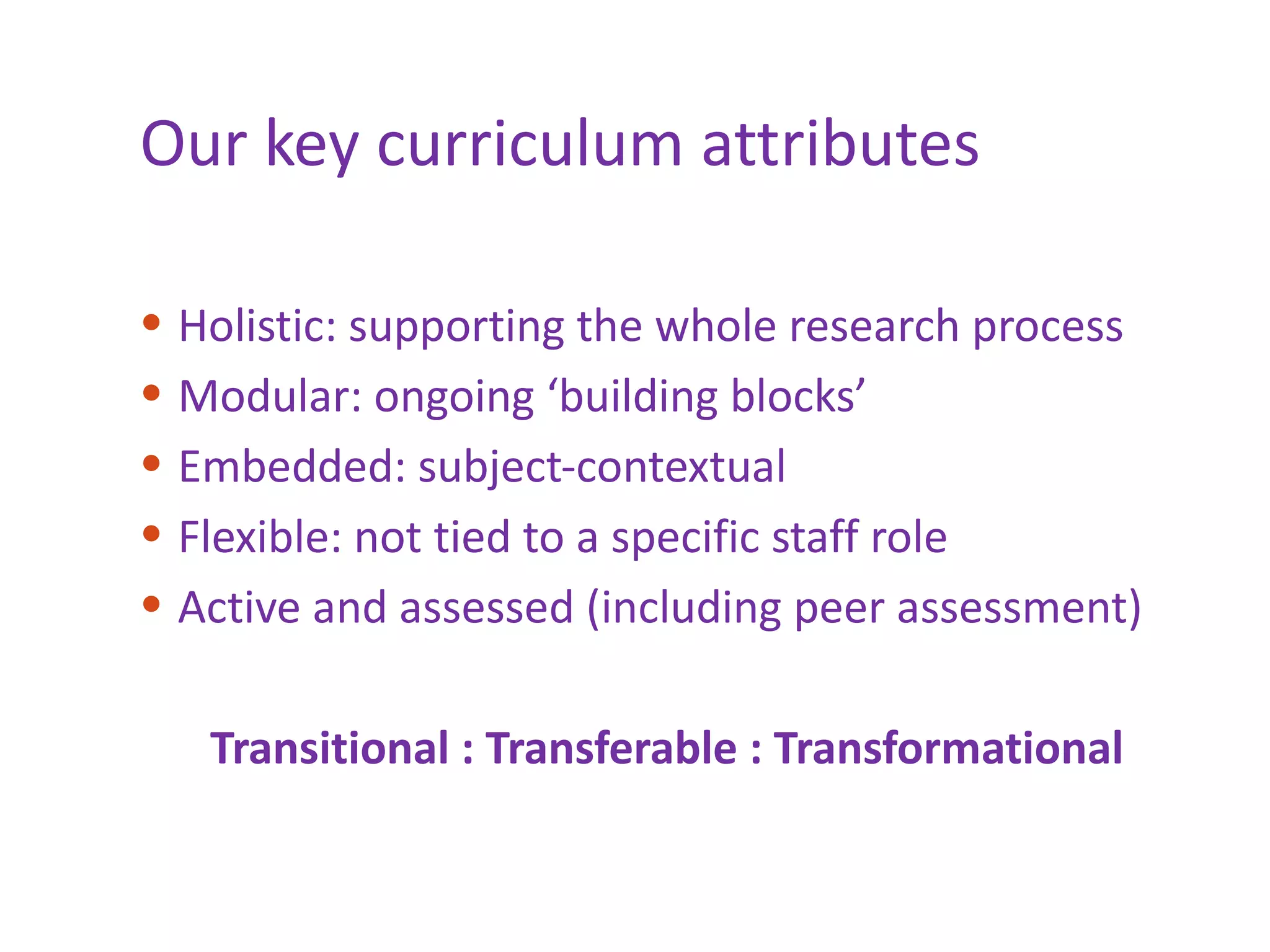
Our key curriculum attributes Holistic: supporting the whole research process Modular: ongoing ‘building blocks’ Embedded: subject-contextual Flexible: not tied to a specific staff role Active and assessed (including peer assessment) Transitional : Transferable : Transformational
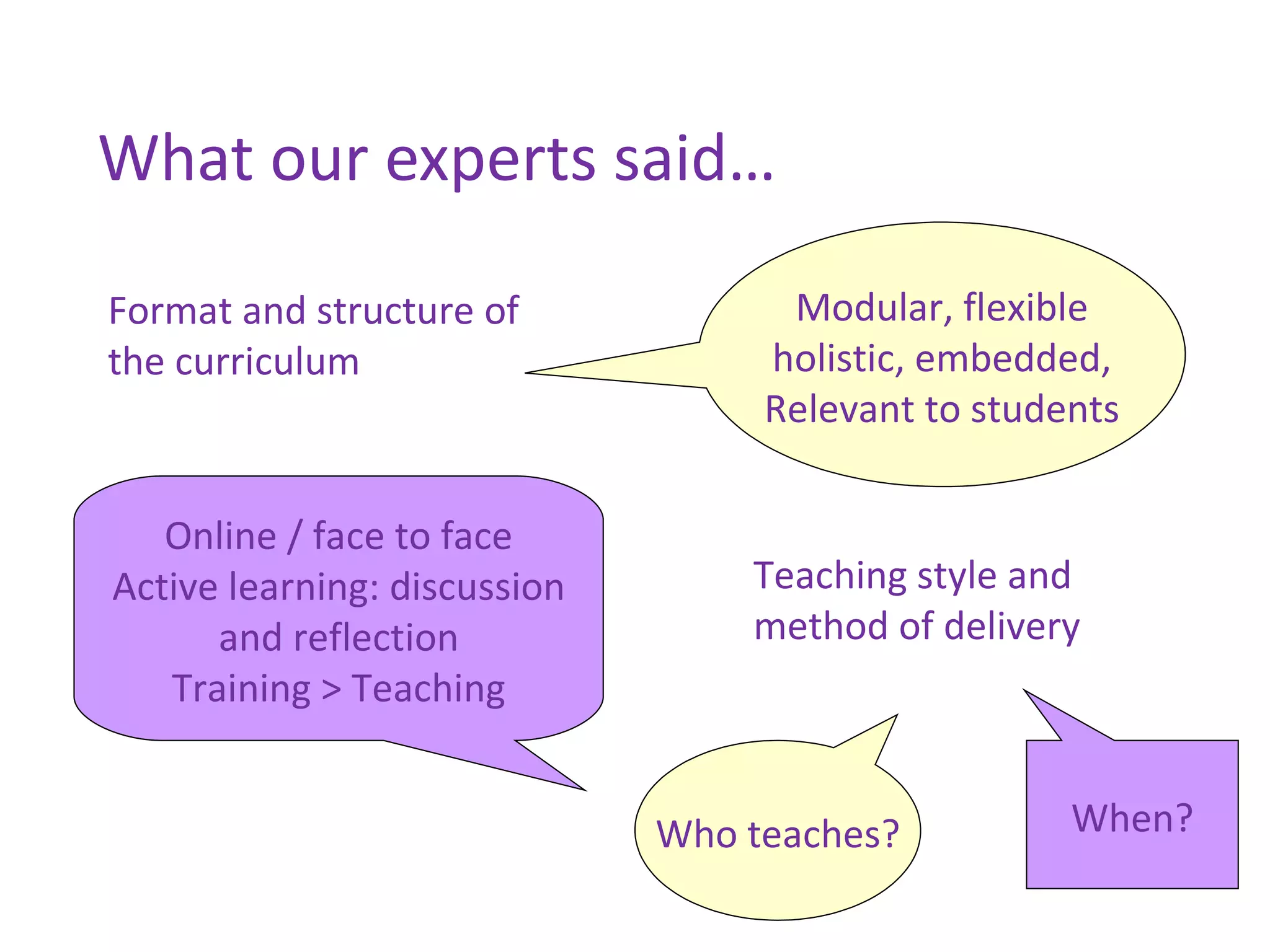
What our experts said… Modular, flexible holistic, embedded, Relevant to students Format and structure of the curriculum Online / face to face Active learning: discussion and reflection Training > Teaching Teaching style and method of delivery Who teaches? When?
And don’t forget…. Use of audits Meaningful assessment  Learning outcomes How to market IL  to different audiences Assessment Marketing / hooks Aligning the curriculum content to  discipline specific knowledge, skills and behaviour
Technology in the curriculum No need to teach specific tools and software as curriculum needs to evolve but … Assumptions around technology Ownership or access to computers Ownership or access to mobile technology Google generation assumption Greater use of cloud computing Great use of social media - combating the filter bubble
10 Curriculum themes Transition from school to higher education Becoming an independent learner Developing academic literacies Mapping and evaluating the information landscape  Resource discovery in your discipline  Managing information Ethical dimension of information  Presenting and communicating knowledge  Synthesising information and creating new knowledge Social dimension of information literacy
Using the curriculum Each theme has multiple levels Translated themes > learning outcomes > example activities > example assessment Classes can be designed to incorporate multiple themes at the same level Classes and activities should be active, reflective, relevant to student need You could use it to audit your own training provision
Find out more ... Visit our wiki ( http://ccfil.pbworks.com ) and the  project website Download the Executive summary If you’re interested in why its designed the way it is – read the Expert Report and Theoretical background If you’re interested in implementation, download the Curriculum and supporting documents
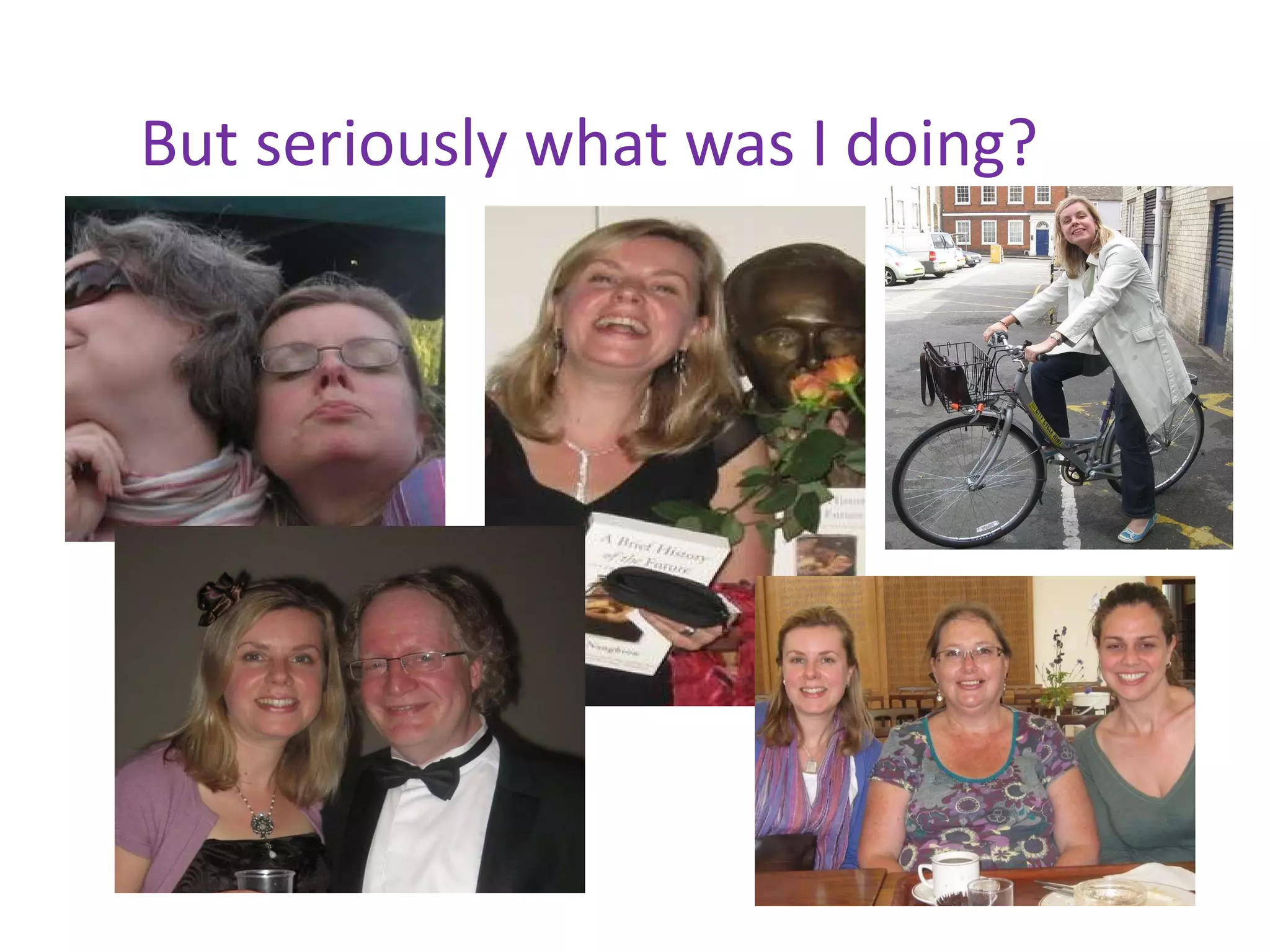
But seriously what was I doing?
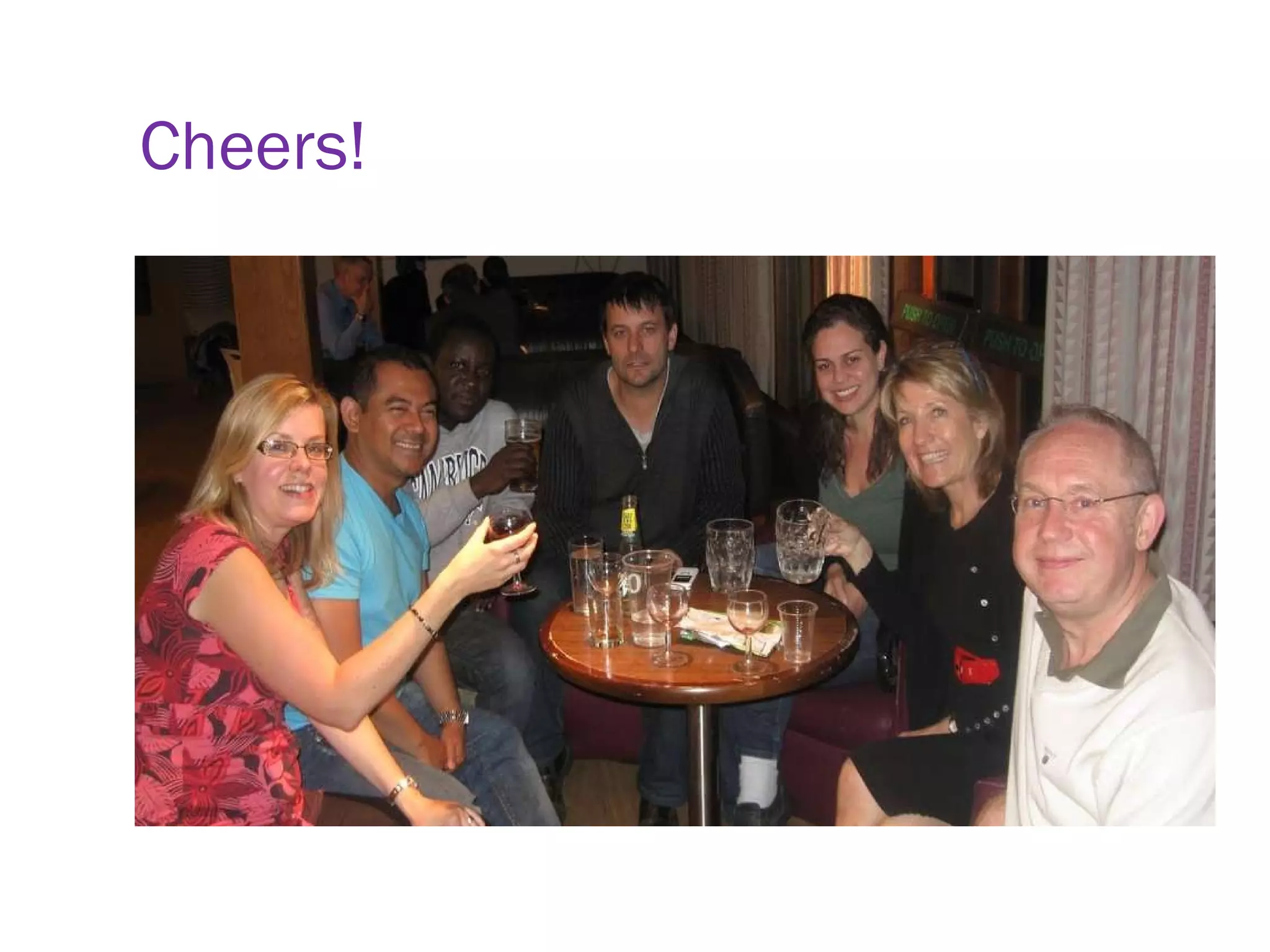
Cheers!

Brief overview of New Curriculum for IL

  • 1.
    Jane Secker &Emma Coonan Wolfson College, Cambridge A New Curriculum for Information Literacy Front cover image: ‘Tulip staircase at the Queens House, Greenwich’ by mcginnly http://www.flickr.com/photos/mcginnly/2197675676/ (licensed under Creative Commons)
  • 2.
    What was Idoing in Cambridge? Arcadia Fellow based at Wolfson College Arcadia was money given to Cambridge University Library by an anonymous donor to explore the future of academic libraries 20 Arcadia Fellows over last 3 years – most are based in Cambridge by some from outside Most fellows work on research projects on their own for 10 weeks I was lucky enough to be paired up with Emma Coonan
  • 3.
    The research Developinga new curriculum for information literacy To understand and meet the needs of undergraduates entering HE over the coming 5 years Academic advisor: Professor John Naughton Office in Centre for Applied Research in Educational Technologies (CARET)
  • 4.
    Our research methodModified Delphi approach (used in forecasting the future) Literature review Developing a curriculum plus various supporting resources Preliminary findings presented at workshop and revisions made in light of feedback
  • 5.
    Key curriculum attributesGrounded in a view of IL as fundamental to the ongoing development of the individual – social as well as academic “ Information literacy empowers people in all walks of life to seek, evaluate, use and create information effectively to achieve their personal, social, occupational and educational goals. It is a basic human right in a digital world and promotes social inclusion in all nations.” UNESCO (2005) Alexandria Proclamation
  • 6.
  • 7.
    Theoretical Background Informationliteracy (IL) needed to be rehabilitated as a term IL has become invisible – why? IL is so much more than skills – it underpins learning but librarians spend too much time focusing on functional / technological skills IL is about becoming a discerning scholar so must be taught within the subject discipline IL is not the preserve or saviour of the library
  • 8.
    Our key curriculumattributes Holistic: supporting the whole research process Modular: ongoing ‘building blocks’ Embedded: subject-contextual Flexible: not tied to a specific staff role Active and assessed (including peer assessment) Transitional : Transferable : Transformational
  • 9.
    What our expertssaid… Modular, flexible holistic, embedded, Relevant to students Format and structure of the curriculum Online / face to face Active learning: discussion and reflection Training > Teaching Teaching style and method of delivery Who teaches? When?
  • 10.
    And don’t forget….Use of audits Meaningful assessment Learning outcomes How to market IL to different audiences Assessment Marketing / hooks Aligning the curriculum content to discipline specific knowledge, skills and behaviour
  • 11.
    Technology in thecurriculum No need to teach specific tools and software as curriculum needs to evolve but … Assumptions around technology Ownership or access to computers Ownership or access to mobile technology Google generation assumption Greater use of cloud computing Great use of social media - combating the filter bubble
  • 12.
    10 Curriculum themesTransition from school to higher education Becoming an independent learner Developing academic literacies Mapping and evaluating the information landscape Resource discovery in your discipline Managing information Ethical dimension of information Presenting and communicating knowledge Synthesising information and creating new knowledge Social dimension of information literacy
  • 13.
    Using the curriculumEach theme has multiple levels Translated themes > learning outcomes > example activities > example assessment Classes can be designed to incorporate multiple themes at the same level Classes and activities should be active, reflective, relevant to student need You could use it to audit your own training provision
  • 14.
    Find out more... Visit our wiki ( http://ccfil.pbworks.com ) and the project website Download the Executive summary If you’re interested in why its designed the way it is – read the Expert Report and Theoretical background If you’re interested in implementation, download the Curriculum and supporting documents
  • 15.
    But seriously whatwas I doing?
  • 16.

Editor's Notes

  • #2 We selected the image on the front cover to reflect several key themes and ideas that arose from our research. Most notable among these is the concept of learning as an iterative and spiral process which progresses by building upon previously achieved insights. The image also suggests aspiration, development and upwards movement. Finally, the coincidental resemblance to an eye recalls the metaphor of vision often used as an analogy for the researcher’s mission: “ If I have seen further, it is by standing upon the shoulders of giants ” (Newton).
  • #3 Jane
  • #4 Jane
  • #5 Modified Delphi approach (used in forecasting the future) - consultation with experts in the education and information fields via e-mail questionnaire and interviews Including trainee teachers, school librarians, academic librarians, educational technologists and others Literature review Developing a curriculum plus various supporting resources Examples of best practice Evidence toolkit Mapping of curriculum to SCONUL 7 pillars Preliminary findings presented at workshop
  • #6 Emma UNESCO 2005 Alexandria Proclamation
  • #7 Emma – issues around terminology and mapping of the concept in different fields
  • #8 Emma
  • #9 Emma holistic: supporting the whole process of researching and writing rather than just teaching traditional library skills modular: ongoing classes to meet the developing needs of students during their whole academic career, not just one-shot sessions embedded and flexible: can be implemented and taught not only by librarians but by study skills advisors, learning developers, supervisors and lecturers (depending on the needs and structure of the institution) active and assessed: containing a significant element of active and reflective learning, including peer assessment elements, in order to help students develop into informed and autonomous learners Transitional Transferable Transformational Transition occurs in learners, who enter university from a wide variety of backgrounds, but often need to make the transition from school to higher education. They also have to make the transition from dependent to autonomous learning. The curriculum content needs to be transferable, forming a part of education, not simply ‘library training.’ Information literacy fosters and develops appropriatebehaviour, approaches, cognitive functions and skills surrounding the use of information. In essence information literacy equips students with the capacity to generate their own strategies for dealing with new information contexts, for example when they leave higher education and enter the workplace. Finally, information literacy should be transformational for the learner, changing their attitude, behaviour, outlook and even their world-view. Therefore this curriculum has the potential to change lives and make a real difference to society.
  • #10 Jane
  • #11 Jane
  • #12 Jane
  • #13 Transition from school to higher education Becoming an independent learner Developing academic literacies Mapping and evaluating the information landscape Resource discovery in your discipline Managing information Ethical dimension of information Presenting and communicating knowledge Synthesising information and creating new knowledge Social dimension of information literacy
  • #16 Drinking cocktails (and quite a lot of port) Attending balls and formal halls at Wolfson College Cycling round Cambridge Eating lunch at Wolfson College and making new friends