
Designing Online Courses
Barbara Treacy
July 16, 2014
Today’s focus
 Identify key questions about online course design
 Discuss key elements and key challenges in online
course design
 Engage in hands-on exploration of online activities to
prepare online designers
 Explore courses to identify elements of effective
online design
 Share resources to support ongoing learning about
effective design
 Wrap-up
Key Questions
 What’s different about online design?
 How do we adapt face-to-face content for
online delivery?
 How is online content designed so it’s
interactive and engaging?
 How is learning in the online environment assessed?
 How do we keep the focus on content and pedagogy
and not on the technology?
 How are learning communities integrated into online
courses?
 Your questions? Discuss: What do you want to
learn about online design?
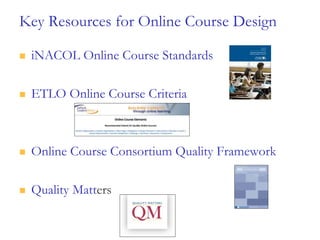
Key Resources for Online Course Design
 iNACOL Online Course Standards
 ETLO Online Course Criteria
 Online Course Consortium Quality Framework
 Quality Matters
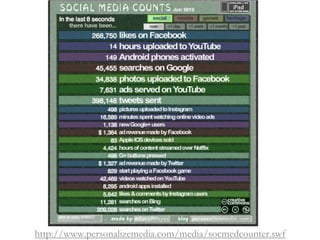
Gary’s Social Media Count
http://www.personalizemedia.com/media/socmedcounter.swf
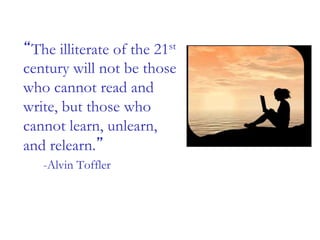
“The illiterate of the 21st
century will not be those
who cannot read and
write, but those who
cannot learn, unlearn,
and relearn.”
-Alvin Toffler
“Fast, easy, guaranteed ...pick none.
That's the work that's worth doing.”
-Seth Godin, author
Discuss
What are the elements of an
effective course – not specifically
online?
Elements
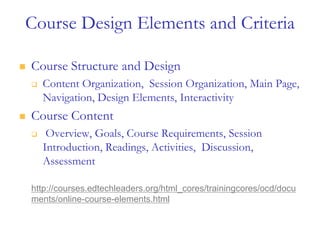
Course Design Elements and Criteria
 Course Structure and Design
 Content Organization, Session Organization, Main Page,
Navigation, Design Elements, Interactivity
 Course Content
 Overview, Goals, Course Requirements, Session
Introduction, Readings, Activities, Discussion,
Assessment
http://courses.edtechleaders.org/html_cores/trainingcores/ocd/docu
ments/online-course-elements.html
http://moodle.etlo.org Username and PW: blc
In small groups, explore the course and discuss:
1. What are the benefits of learning to design in the
online environment?
2. How does backwards design help in the process
of designing online?
3. What are the key differences in designing for f2f
vs. online or blended?
4. What did you find most important in the course?
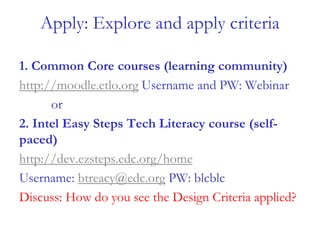
Apply: Explore and apply criteria
1. Common Core courses (learning community)
http://moodle.etlo.org Username and PW: Webinar
or
2. Intel Easy Steps Tech Literacy course (self-
paced)
http://dev.ezsteps.edc.org/home
Username: btreacy@edc.org PW: blcblc
Discuss: How do you see the Design Criteria applied?
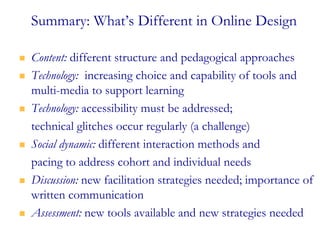
Summary: What’s Different in Online Design
 Content: different structure and pedagogical approaches
 Technology: increasing choice and capability of tools and
multi-media to support learning
 Technology: accessibility must be addressed;
technical glitches occur regularly (a challenge)
 Social dynamic: different interaction methods and
pacing to address cohort and individual needs
 Discussion: new facilitation strategies needed; importance of
written communication
 Assessment: new tools available and new strategies needed
“The change we are in the middle
of isn’t minor and isn’t optional”
-Clay Shirky, Author and
Professor, NYU
Thank you!
Barbara Treacy btreacy@edc.org
EdTech Leaders Online http://edtechleaders.org
Education Development Center http://edc.org

Blc developing online courses 071614v2

  • 1.
  • 2.
    Today’s focus  Identifykey questions about online course design  Discuss key elements and key challenges in online course design  Engage in hands-on exploration of online activities to prepare online designers  Explore courses to identify elements of effective online design  Share resources to support ongoing learning about effective design  Wrap-up
  • 3.
    Key Questions  What’sdifferent about online design?  How do we adapt face-to-face content for online delivery?  How is online content designed so it’s interactive and engaging?  How is learning in the online environment assessed?  How do we keep the focus on content and pedagogy and not on the technology?  How are learning communities integrated into online courses?  Your questions? Discuss: What do you want to learn about online design?
  • 4.
    Key Resources forOnline Course Design  iNACOL Online Course Standards  ETLO Online Course Criteria  Online Course Consortium Quality Framework  Quality Matters
  • 5.
    Gary’s Social MediaCount http://www.personalizemedia.com/media/socmedcounter.swf
  • 6.
    “The illiterate ofthe 21st century will not be those who cannot read and write, but those who cannot learn, unlearn, and relearn.” -Alvin Toffler
  • 7.
    “Fast, easy, guaranteed...pick none. That's the work that's worth doing.” -Seth Godin, author
  • 8.
    Discuss What are theelements of an effective course – not specifically online?
  • 9.
  • 10.
    Course Design Elementsand Criteria  Course Structure and Design  Content Organization, Session Organization, Main Page, Navigation, Design Elements, Interactivity  Course Content  Overview, Goals, Course Requirements, Session Introduction, Readings, Activities, Discussion, Assessment http://courses.edtechleaders.org/html_cores/trainingcores/ocd/docu ments/online-course-elements.html
  • 11.
    http://moodle.etlo.org Username andPW: blc In small groups, explore the course and discuss: 1. What are the benefits of learning to design in the online environment? 2. How does backwards design help in the process of designing online? 3. What are the key differences in designing for f2f vs. online or blended? 4. What did you find most important in the course?
  • 12.
    Apply: Explore andapply criteria 1. Common Core courses (learning community) http://moodle.etlo.org Username and PW: Webinar or 2. Intel Easy Steps Tech Literacy course (self- paced) http://dev.ezsteps.edc.org/home Username: btreacy@edc.org PW: blcblc Discuss: How do you see the Design Criteria applied?
  • 13.
    Summary: What’s Differentin Online Design  Content: different structure and pedagogical approaches  Technology: increasing choice and capability of tools and multi-media to support learning  Technology: accessibility must be addressed; technical glitches occur regularly (a challenge)  Social dynamic: different interaction methods and pacing to address cohort and individual needs  Discussion: new facilitation strategies needed; importance of written communication  Assessment: new tools available and new strategies needed
  • 14.
    “The change weare in the middle of isn’t minor and isn’t optional” -Clay Shirky, Author and Professor, NYU
  • 15.
    Thank you! Barbara Treacybtreacy@edc.org EdTech Leaders Online http://edtechleaders.org Education Development Center http://edc.org