By Whitney Walsh
Web-based Learning Web-based project learning is a “student- driven, teacher facilitated approach to learning.”  Students develop an inquiry based on their natural curiosity and conduct research under the teacher’s supervision. (Bell, 2010)
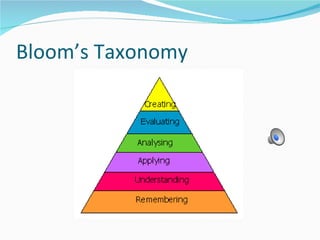
Advantages  Develops skills for the real world  Increases intrinsic motivation Incorporates higher levels of Bloom’s Taxonomy
Real World Implications  “Project-based learning[…] can provide students with the opportunity to work with emerging technologies and also gain important industrial experience.”   (Gibson, O’Reilly & Hughes, 2002)  “Students gain valuable skills that will build a strong foundation for their future in our global economy.”  (Bell, 2010)
Valuable Skills Gained  Technological Skills  Internet safety Reliable vs. Unreliable sources Accountability Goal setting Independence  Team Work
Intrinsic Motivation  “ [A] teaching strategy providing choices could produce dramatic increases in students’ intrinsic motivation and engagement in learning”  “[Web-based project learning] can enhance student motivation and promote self-directed learning because the learning issues usually arise from problems that attract the interest of students” (Lam, Cheng & Ma, 2008)
Guided by Interest  Choice Motivation Stimulates Curiosity Active role in learning
Bloom’s Taxonomy
‘[Project based learners] demonstrate a real grasp (learning, understanding, and application) of the material under study and illustrate the wide potential for learning and information gathering provided by the web.”  (Gibson, O’Reilly & Hughes, 2002)
Disadvantages  Social loafing: some students reported negative group experiences due to their perception of social loafing (Lam, Cheng & Ma, 2008)  This is why building a community in your classroom and teaching students about accountability is important before beginning a web-based project
Disadvantages As a new teaching approach, project based learning has encountered skepticism, because it bears little resemblance to current practices or methods teachers had learned and experienced as students themselves. (Lam, Cheng & Ma, 2008)  As teachers we are suppose to be constantly learning. This new approach to teaching is another thing teachers will have to learn in order to produce the most successful students.
Disadvantages Scaffolding is needed for success. This means that teachers will need to put in a lot of time, as well as much support and monitoring. Yes, successfully implicating a web-based project will take a lot of time at first, but the whole idea of scaffolding is that it is temporary. As the students gain skills, the scaffolds are removed, creating a more teacher-facilitated approach.
“Should there be questions relating to ICT in the curriculum, they must be concerned with ‘how’ it can best be included, rather than ‘why’ it should.” (Gibson, O’Reilly & Hughes, 2002)
References  Bell, S. (2010). Project-Based Learning for the 21 st  Century: Skills for the Future.  Clearing House: A Journal of Educational Strategies, Issues and Ideas  [serial online]. January 1, 2010;83(2):39-43. Available from: ERIC, Ipswich,  MA. Accessed May 25, 2010.  Gibson, I., O’Reilly, C., & Hughes, M. (2002) Integration of ICT within a  Project-Based Learning Environment.  European Journal of Engineering Education,  27(1), 21-30. Retrieved from ERIC database. Accessed May 25, 2010.  Lam, S., Cheng, R., & Ma, W. (2008) Teacher and Student Intrinsic Motivation in Project-Based Learning.  Instructional Science . September  16, 2008;37(6): 565-578. Retrieved from Springer Link. Accessed May 25, 2010.
References  McKimm, J., Jollie, C., & Cantillon, P. (2003). Abc of Learning and Teaching: Web Based Learning.  British Medical Journal . April 19, 2003; 326(7394):  870-873. Retrieved from JSTOR. Accessed May 25, 2010.

Implications of web based project learning

  • 1.
  • 2.
    Web-based Learning Web-basedproject learning is a “student- driven, teacher facilitated approach to learning.” Students develop an inquiry based on their natural curiosity and conduct research under the teacher’s supervision. (Bell, 2010)
  • 3.
    Advantages Developsskills for the real world Increases intrinsic motivation Incorporates higher levels of Bloom’s Taxonomy
  • 4.
    Real World Implications “Project-based learning[…] can provide students with the opportunity to work with emerging technologies and also gain important industrial experience.” (Gibson, O’Reilly & Hughes, 2002) “Students gain valuable skills that will build a strong foundation for their future in our global economy.” (Bell, 2010)
  • 5.
    Valuable Skills Gained Technological Skills Internet safety Reliable vs. Unreliable sources Accountability Goal setting Independence Team Work
  • 6.
    Intrinsic Motivation “ [A] teaching strategy providing choices could produce dramatic increases in students’ intrinsic motivation and engagement in learning” “[Web-based project learning] can enhance student motivation and promote self-directed learning because the learning issues usually arise from problems that attract the interest of students” (Lam, Cheng & Ma, 2008)
  • 7.
    Guided by Interest Choice Motivation Stimulates Curiosity Active role in learning
  • 8.
  • 9.
    ‘[Project based learners]demonstrate a real grasp (learning, understanding, and application) of the material under study and illustrate the wide potential for learning and information gathering provided by the web.” (Gibson, O’Reilly & Hughes, 2002)
  • 10.
    Disadvantages Socialloafing: some students reported negative group experiences due to their perception of social loafing (Lam, Cheng & Ma, 2008) This is why building a community in your classroom and teaching students about accountability is important before beginning a web-based project
  • 11.
    Disadvantages As anew teaching approach, project based learning has encountered skepticism, because it bears little resemblance to current practices or methods teachers had learned and experienced as students themselves. (Lam, Cheng & Ma, 2008) As teachers we are suppose to be constantly learning. This new approach to teaching is another thing teachers will have to learn in order to produce the most successful students.
  • 12.
    Disadvantages Scaffolding isneeded for success. This means that teachers will need to put in a lot of time, as well as much support and monitoring. Yes, successfully implicating a web-based project will take a lot of time at first, but the whole idea of scaffolding is that it is temporary. As the students gain skills, the scaffolds are removed, creating a more teacher-facilitated approach.
  • 13.
    “Should there bequestions relating to ICT in the curriculum, they must be concerned with ‘how’ it can best be included, rather than ‘why’ it should.” (Gibson, O’Reilly & Hughes, 2002)
  • 14.
    References Bell,S. (2010). Project-Based Learning for the 21 st Century: Skills for the Future. Clearing House: A Journal of Educational Strategies, Issues and Ideas [serial online]. January 1, 2010;83(2):39-43. Available from: ERIC, Ipswich, MA. Accessed May 25, 2010. Gibson, I., O’Reilly, C., & Hughes, M. (2002) Integration of ICT within a Project-Based Learning Environment. European Journal of Engineering Education, 27(1), 21-30. Retrieved from ERIC database. Accessed May 25, 2010. Lam, S., Cheng, R., & Ma, W. (2008) Teacher and Student Intrinsic Motivation in Project-Based Learning. Instructional Science . September 16, 2008;37(6): 565-578. Retrieved from Springer Link. Accessed May 25, 2010.
  • 15.
    References McKimm,J., Jollie, C., & Cantillon, P. (2003). Abc of Learning and Teaching: Web Based Learning. British Medical Journal . April 19, 2003; 326(7394): 870-873. Retrieved from JSTOR. Accessed May 25, 2010.