Welcome To Pasteurizaion
Technique
Department of Public Health Nutrition
Primeasia University
Pasteurization Technique
• Pasteurization is a process that kills microbes (mainly
bacteria) in food and drink, such as milk, juice, canned
food, and others.
• Pasteurization involves heating food to a temperature that
kills disease causing microorganism and substantially
reduces the levels of spoilage organisms.
• Pasteurization is not intended to kill all micro-organisms in
the food. Instead pasteurization aims to reduce the number
of viable pathogens so they are unlikely to cause disease
(assuming the pasteurized product is stored as indicated
and consumed before its expiration date).
• Heat also destroy enzymes that make milk spoil, so
pasteurized milk drinkable for longer time.
History:
• It was invented by French scientist Louis Pasteur during
the nineteenth century. In 1864 Pasteur discovered that
heating beer and wine was enough to kill most of the
bacteria that caused spoilage, preventing these
beverages from turning sour. The process achieves this by
eliminating pathogenic microbes and lowering microbial
numbers to prolong the quality of the beverage. Today,
pasteurisation is used widely in the dairy industry and
other food processing industries to achieve food
preservation and food safety.[2]
• Unlike sterilization, pasteurization is not intended to kill
all microorganisms in the food. Instead, it aims to reduce
the number of viable pathogens so they are unlikely to
cause disease (assuming the pasteurized product is
stored as indicated and is consumed before its expiration
date).
Objectives of Pasteurization:
• To Kill all the pathogens that may enter the
milk & be transmitted to people.
• To Improve the keeping quality of milk.
• To Increase the shelf-life of products.
• To destroy microorganisms that would
interfere with the activities of desirable
organisms.
Efficiency of Milk Pasteurization: or
The % of reduction of numbers of microorganisms in
milk depends on:
• Temperature of pasteurization.
• The holding time.
• The total number of microbial load that are
sporeformers or thermoduric organisms.
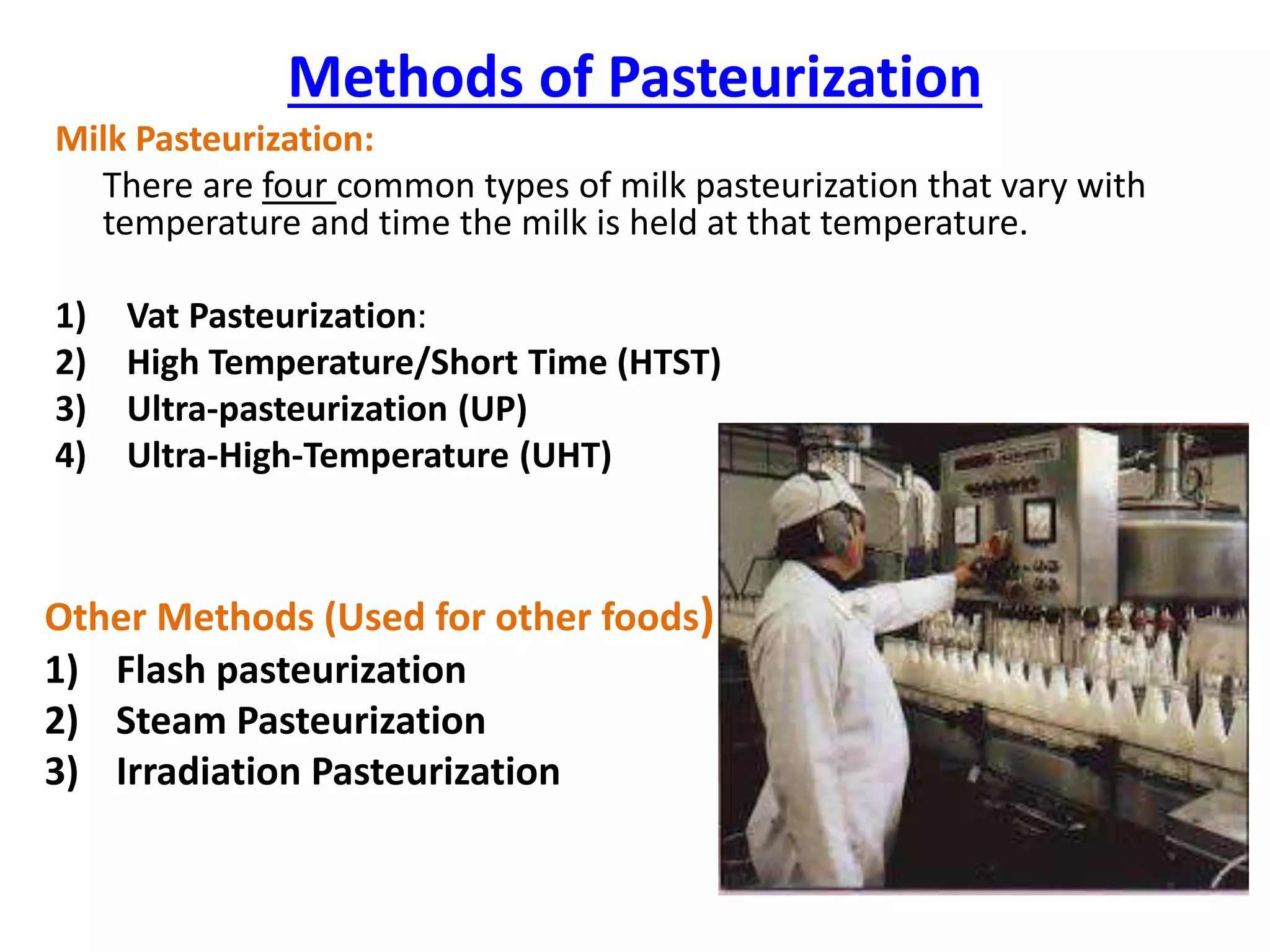
Methods of Pasteurization
Milk Pasteurization:
There are four common types of milk pasteurization that vary with
temperature and time the milk is held at that temperature.
1) Vat Pasteurization:
2) High Temperature/Short Time (HTST)
3) Ultra-pasteurization (UP)
4) Ultra-High-Temperature (UHT)
Other Methods (Used for other foods)
1) Flash pasteurization
2) Steam Pasteurization
3) Irradiation Pasteurization
Vat Pasteurization:
This is the type typically used by farmers for their own consumption, and is
the least harmful to the milk's nutrients. The milk is heated to 145° F and
held at that temperature for 30 minutes. Such milk is used to prepare milk
for culturing (cheese, yogurt, etc), as it is the least destructive to milk’s
proteins. Average shelf life is 7 - 10 days.
High Temperature/Short Time (HTST)
The milk is heated to 161° F and held at that temperature for 15 seconds.
This is the most common method of regular pasteurization used by local
dairies, with about the same shelf life as vat process.
Ultra-pasteurization (UP)
The milk is heated to 280° F for 2 seconds. Note this is above boiling, which
means that high pressure must be applied to the milk to achieve this
temperature, and is destructive to its nutritional quality. This method is
used because it extends the refrigerated shelf-life of the milk to 60 - 90
days, and is the method of choice for national or regional milk brands
because it allows time for warehousing and shipment of milk.
Ultra-High-Temperature (UHT)
The milk is heated to 280° to 302° F for 1 or 2 seconds followed by
packaging in airtight containers. It allows storage without refrigeration for
up to 90 days. Again, high pressure is required to reach this high
temperature.
Other Methods (Used for other foods)
Flash pasteurization
used for drink boxes and other liquids that can be stored for long
periods of time without refrigeration. This method involves high
temperature for 3 to 15 seconds, followed by cooling and
packaging. Very similar to UHT treatment of milk (see above).
Steam Pasteurization
used to kill E. coli, Salmonella and Listeria in beef carcasses. This
results in surface temperatures of about 200° F.
Irradiation Pasteurization
used on such foods as meats (especially prepared meats, sausages
and cold cuts), spices, and produce (such as almonds, etc). The
food is exposed to a type of radiation known as gamma rays
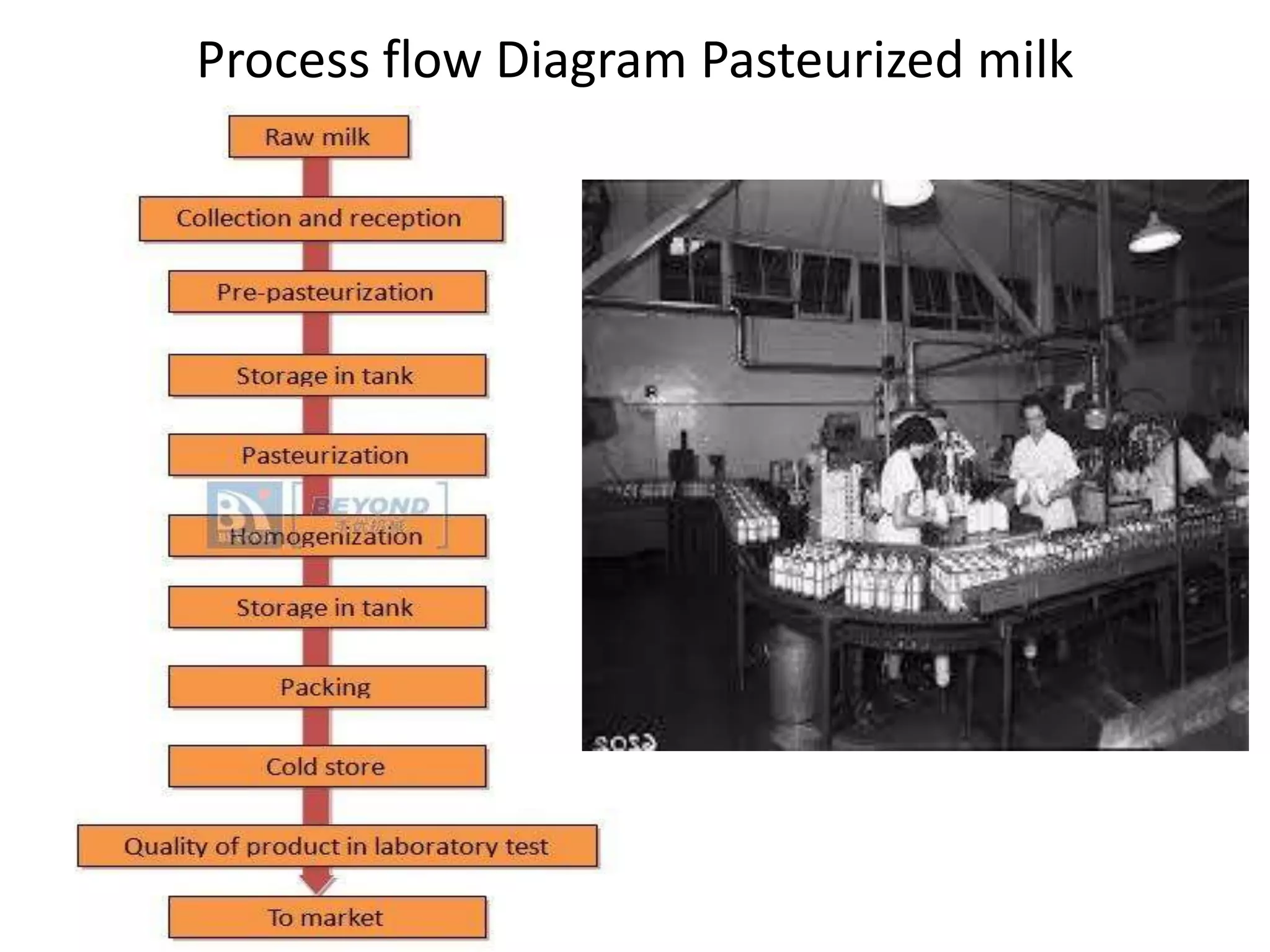
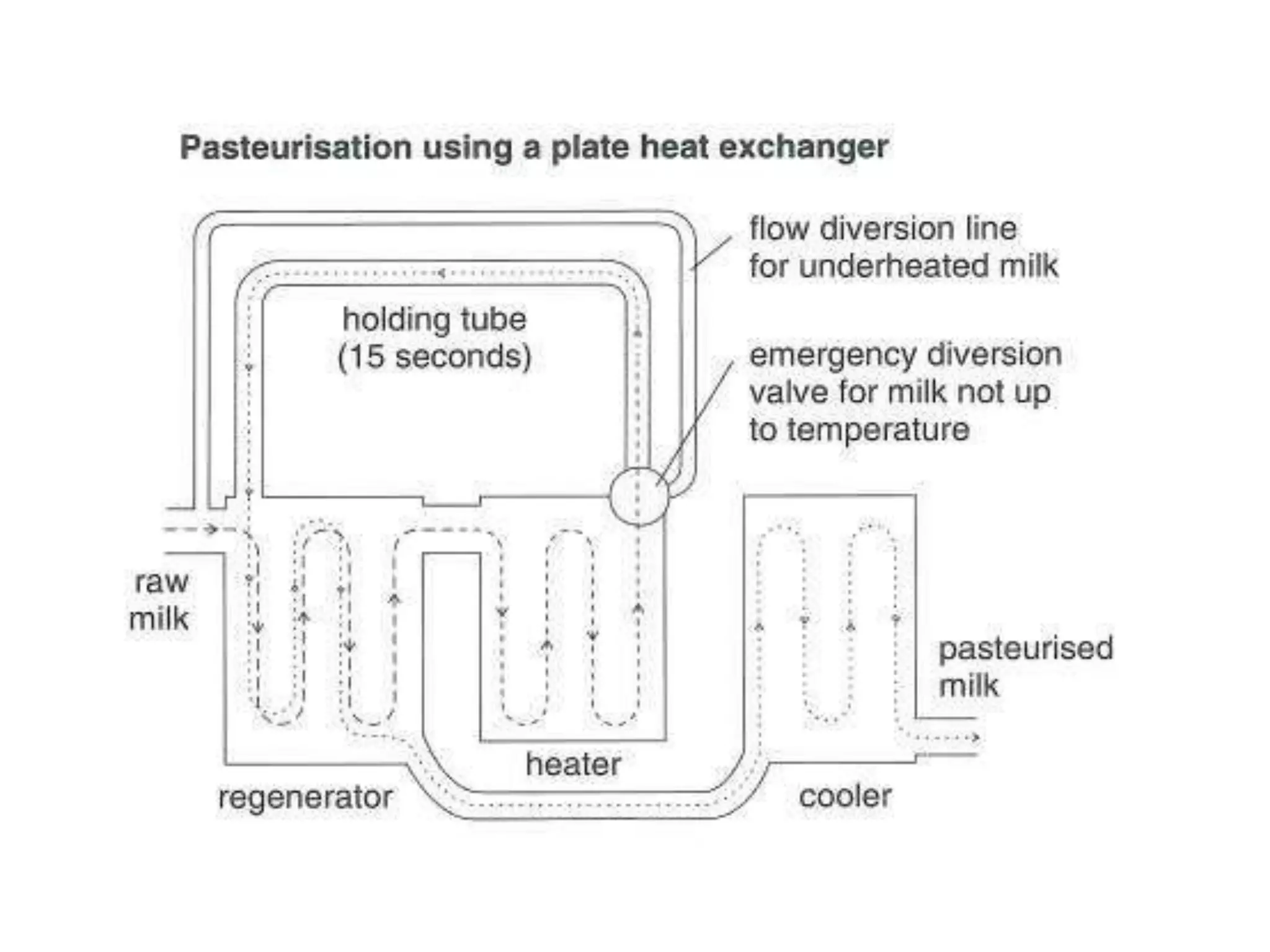
Process flow Diagram Pasteurized milk
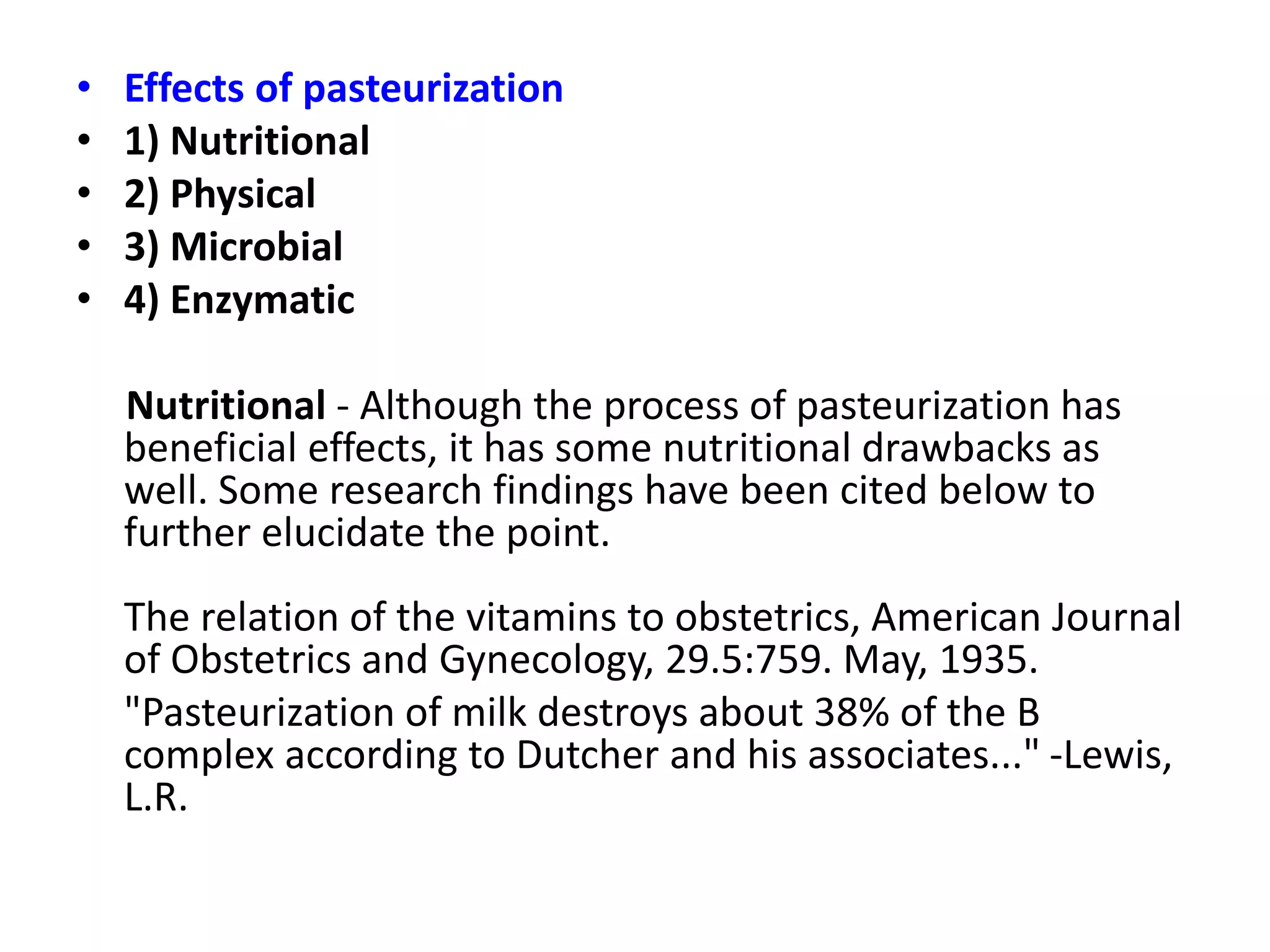
• Effects of pasteurization
• 1) Nutritional
• 2) Physical
• 3) Microbial
• 4) Enzymatic
Nutritional - Although the process of pasteurization has
beneficial effects, it has some nutritional drawbacks as
well. Some research findings have been cited below to
further elucidate the point.
The relation of the vitamins to obstetrics, American Journal
of Obstetrics and Gynecology, 29.5:759. May, 1935.
"Pasteurization of milk destroys about 38% of the B
complex according to Dutcher and his associates..." -Lewis,
L.R.
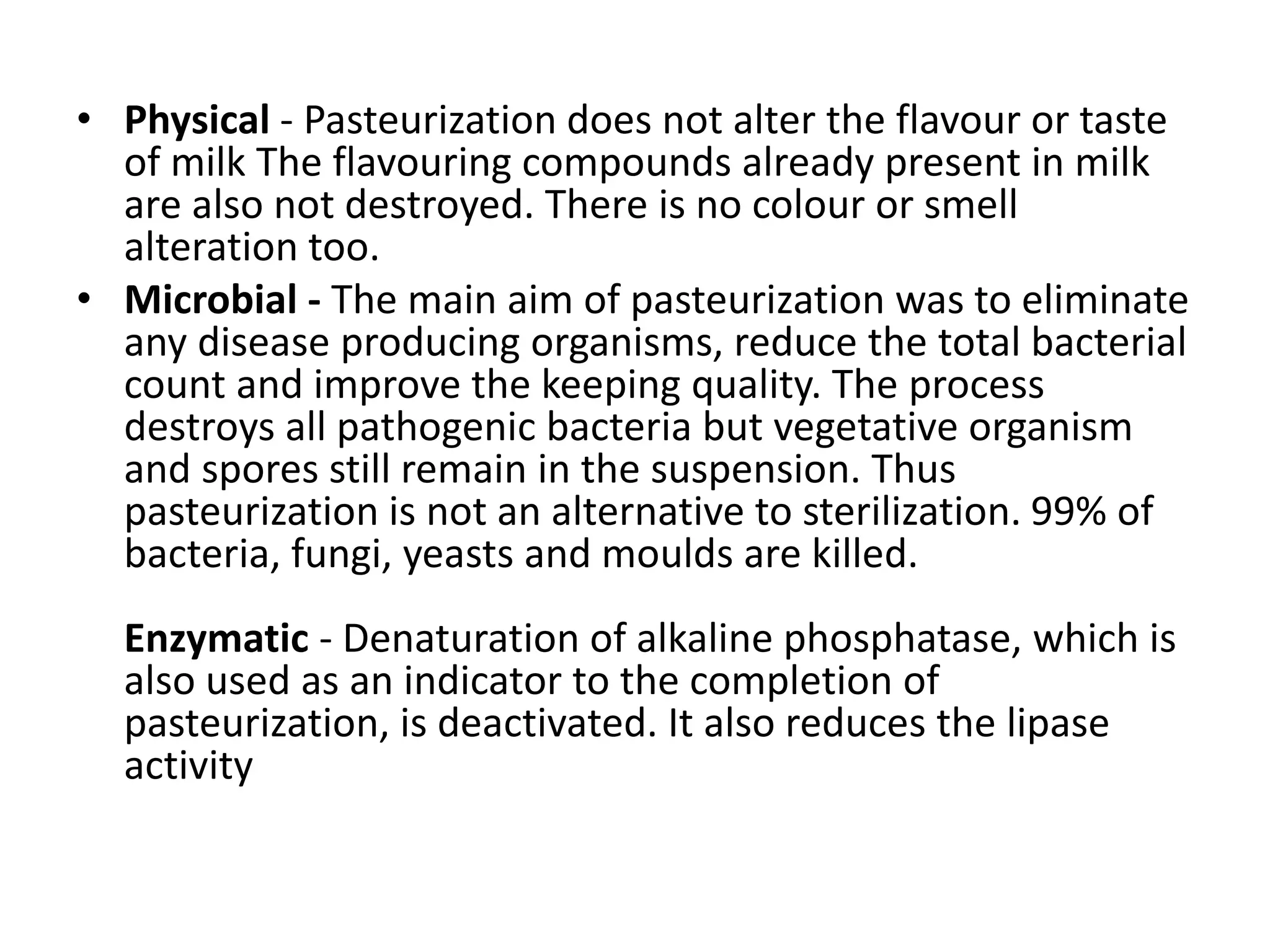
• Physical - Pasteurization does not alter the flavour or taste
of milk The flavouring compounds already present in milk
are also not destroyed. There is no colour or smell
alteration too.
• Microbial - The main aim of pasteurization was to eliminate
any disease producing organisms, reduce the total bacterial
count and improve the keeping quality. The process
destroys all pathogenic bacteria but vegetative organism
and spores still remain in the suspension. Thus
pasteurization is not an alternative to sterilization. 99% of
bacteria, fungi, yeasts and moulds are killed.
Enzymatic - Denaturation of alkaline phosphatase, which is
also used as an indicator to the completion of
pasteurization, is deactivated. It also reduces the lipase
activity
Refferences:
• http://Pasturization/Pasteurization%20-%20Wikipedia.htm#Process
• http://essentialstuff.org/wp-content/uploads/2009/08/foodSafety-
Pasteurization_chaug.pdf
• http://www.medindia.net/patients/patientinfo/latest-publication-
and-research-on-pasteurizationofmilk.htm
• http://www.extension.umn.edu/agriculture/dairy/calves-and-
heifers/pasteurization-considerations-for-dairy-calves.pdf
• http://science.howstuffworks.com/life/cellular-
microscopic/pasteurization4.htm
• https://www.extension.umn.edu/agriculture/dairy/calves-and-
heifers/pasteurization-considerations-for-dairy-calves.pdf
• Food microbiology book , 4th edition, William C. Frazier & Dennis
C.Westhoff, chapter 18, page:279-282
Thanks You
Every Body
Prepared by__
Md Zia Uddin, 131-485-034
Farhana Rifat Akul, 131-484-034
Department of Public Health Nutrition
Primeasia Univesrity
Dhaka-Bangladesh

Pasturization technique_zia_pau

  • 1.
    Welcome To Pasteurizaion Technique Departmentof Public Health Nutrition Primeasia University
  • 2.
    Pasteurization Technique • Pasteurizationis a process that kills microbes (mainly bacteria) in food and drink, such as milk, juice, canned food, and others. • Pasteurization involves heating food to a temperature that kills disease causing microorganism and substantially reduces the levels of spoilage organisms. • Pasteurization is not intended to kill all micro-organisms in the food. Instead pasteurization aims to reduce the number of viable pathogens so they are unlikely to cause disease (assuming the pasteurized product is stored as indicated and consumed before its expiration date). • Heat also destroy enzymes that make milk spoil, so pasteurized milk drinkable for longer time.
  • 3.
    History: • It wasinvented by French scientist Louis Pasteur during the nineteenth century. In 1864 Pasteur discovered that heating beer and wine was enough to kill most of the bacteria that caused spoilage, preventing these beverages from turning sour. The process achieves this by eliminating pathogenic microbes and lowering microbial numbers to prolong the quality of the beverage. Today, pasteurisation is used widely in the dairy industry and other food processing industries to achieve food preservation and food safety.[2] • Unlike sterilization, pasteurization is not intended to kill all microorganisms in the food. Instead, it aims to reduce the number of viable pathogens so they are unlikely to cause disease (assuming the pasteurized product is stored as indicated and is consumed before its expiration date).
  • 4.
    Objectives of Pasteurization: •To Kill all the pathogens that may enter the milk & be transmitted to people. • To Improve the keeping quality of milk. • To Increase the shelf-life of products. • To destroy microorganisms that would interfere with the activities of desirable organisms.
  • 5.
    Efficiency of MilkPasteurization: or The % of reduction of numbers of microorganisms in milk depends on: • Temperature of pasteurization. • The holding time. • The total number of microbial load that are sporeformers or thermoduric organisms.
  • 6.
    Methods of Pasteurization MilkPasteurization: There are four common types of milk pasteurization that vary with temperature and time the milk is held at that temperature. 1) Vat Pasteurization: 2) High Temperature/Short Time (HTST) 3) Ultra-pasteurization (UP) 4) Ultra-High-Temperature (UHT) Other Methods (Used for other foods) 1) Flash pasteurization 2) Steam Pasteurization 3) Irradiation Pasteurization
  • 7.
    Vat Pasteurization: This isthe type typically used by farmers for their own consumption, and is the least harmful to the milk's nutrients. The milk is heated to 145° F and held at that temperature for 30 minutes. Such milk is used to prepare milk for culturing (cheese, yogurt, etc), as it is the least destructive to milk’s proteins. Average shelf life is 7 - 10 days. High Temperature/Short Time (HTST) The milk is heated to 161° F and held at that temperature for 15 seconds. This is the most common method of regular pasteurization used by local dairies, with about the same shelf life as vat process. Ultra-pasteurization (UP) The milk is heated to 280° F for 2 seconds. Note this is above boiling, which means that high pressure must be applied to the milk to achieve this temperature, and is destructive to its nutritional quality. This method is used because it extends the refrigerated shelf-life of the milk to 60 - 90 days, and is the method of choice for national or regional milk brands because it allows time for warehousing and shipment of milk. Ultra-High-Temperature (UHT) The milk is heated to 280° to 302° F for 1 or 2 seconds followed by packaging in airtight containers. It allows storage without refrigeration for up to 90 days. Again, high pressure is required to reach this high temperature.
  • 8.
    Other Methods (Usedfor other foods) Flash pasteurization used for drink boxes and other liquids that can be stored for long periods of time without refrigeration. This method involves high temperature for 3 to 15 seconds, followed by cooling and packaging. Very similar to UHT treatment of milk (see above). Steam Pasteurization used to kill E. coli, Salmonella and Listeria in beef carcasses. This results in surface temperatures of about 200° F. Irradiation Pasteurization used on such foods as meats (especially prepared meats, sausages and cold cuts), spices, and produce (such as almonds, etc). The food is exposed to a type of radiation known as gamma rays
  • 9.
    Process flow DiagramPasteurized milk
  • 12.
    • Effects ofpasteurization • 1) Nutritional • 2) Physical • 3) Microbial • 4) Enzymatic Nutritional - Although the process of pasteurization has beneficial effects, it has some nutritional drawbacks as well. Some research findings have been cited below to further elucidate the point. The relation of the vitamins to obstetrics, American Journal of Obstetrics and Gynecology, 29.5:759. May, 1935. "Pasteurization of milk destroys about 38% of the B complex according to Dutcher and his associates..." -Lewis, L.R.
  • 13.
    • Physical -Pasteurization does not alter the flavour or taste of milk The flavouring compounds already present in milk are also not destroyed. There is no colour or smell alteration too. • Microbial - The main aim of pasteurization was to eliminate any disease producing organisms, reduce the total bacterial count and improve the keeping quality. The process destroys all pathogenic bacteria but vegetative organism and spores still remain in the suspension. Thus pasteurization is not an alternative to sterilization. 99% of bacteria, fungi, yeasts and moulds are killed. Enzymatic - Denaturation of alkaline phosphatase, which is also used as an indicator to the completion of pasteurization, is deactivated. It also reduces the lipase activity
  • 14.
    Refferences: • http://Pasturization/Pasteurization%20-%20Wikipedia.htm#Process • http://essentialstuff.org/wp-content/uploads/2009/08/foodSafety- Pasteurization_chaug.pdf •http://www.medindia.net/patients/patientinfo/latest-publication- and-research-on-pasteurizationofmilk.htm • http://www.extension.umn.edu/agriculture/dairy/calves-and- heifers/pasteurization-considerations-for-dairy-calves.pdf • http://science.howstuffworks.com/life/cellular- microscopic/pasteurization4.htm • https://www.extension.umn.edu/agriculture/dairy/calves-and- heifers/pasteurization-considerations-for-dairy-calves.pdf • Food microbiology book , 4th edition, William C. Frazier & Dennis C.Westhoff, chapter 18, page:279-282
  • 15.
    Thanks You Every Body Preparedby__ Md Zia Uddin, 131-485-034 Farhana Rifat Akul, 131-484-034 Department of Public Health Nutrition Primeasia Univesrity Dhaka-Bangladesh