Storage Bins and Hoppers
Introduction	The storage bin, silo or hopper are used to store bulk solids for handling.
Hopper Discharge ConsiderationsThe flow of material cannot be allowed to take freely but must be “throttled” to the required rate by some type of a “feeder”The product flows from the hopper to the feeder must flow continuously at an adequate rate.
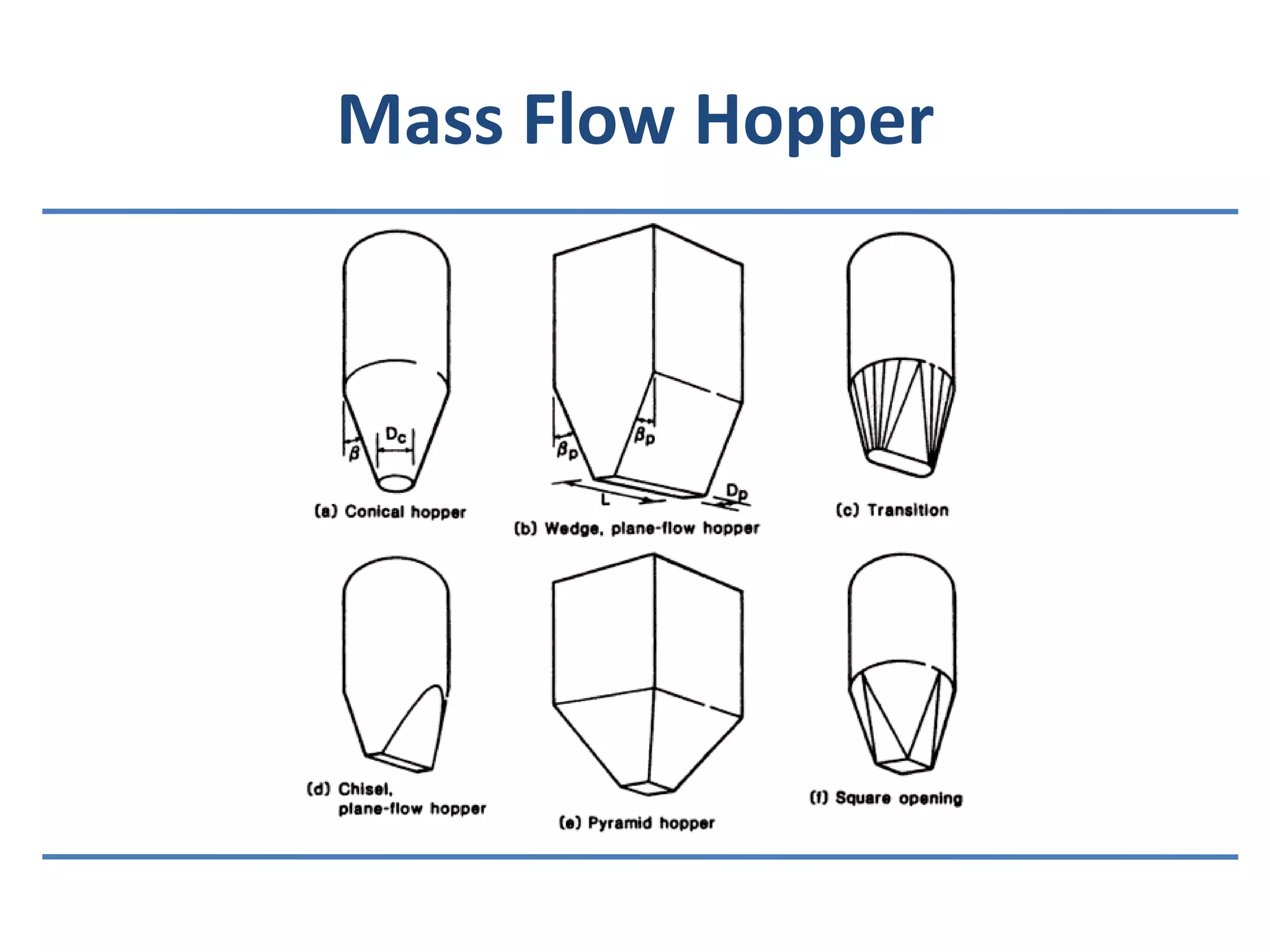
Mass Flow Hopper
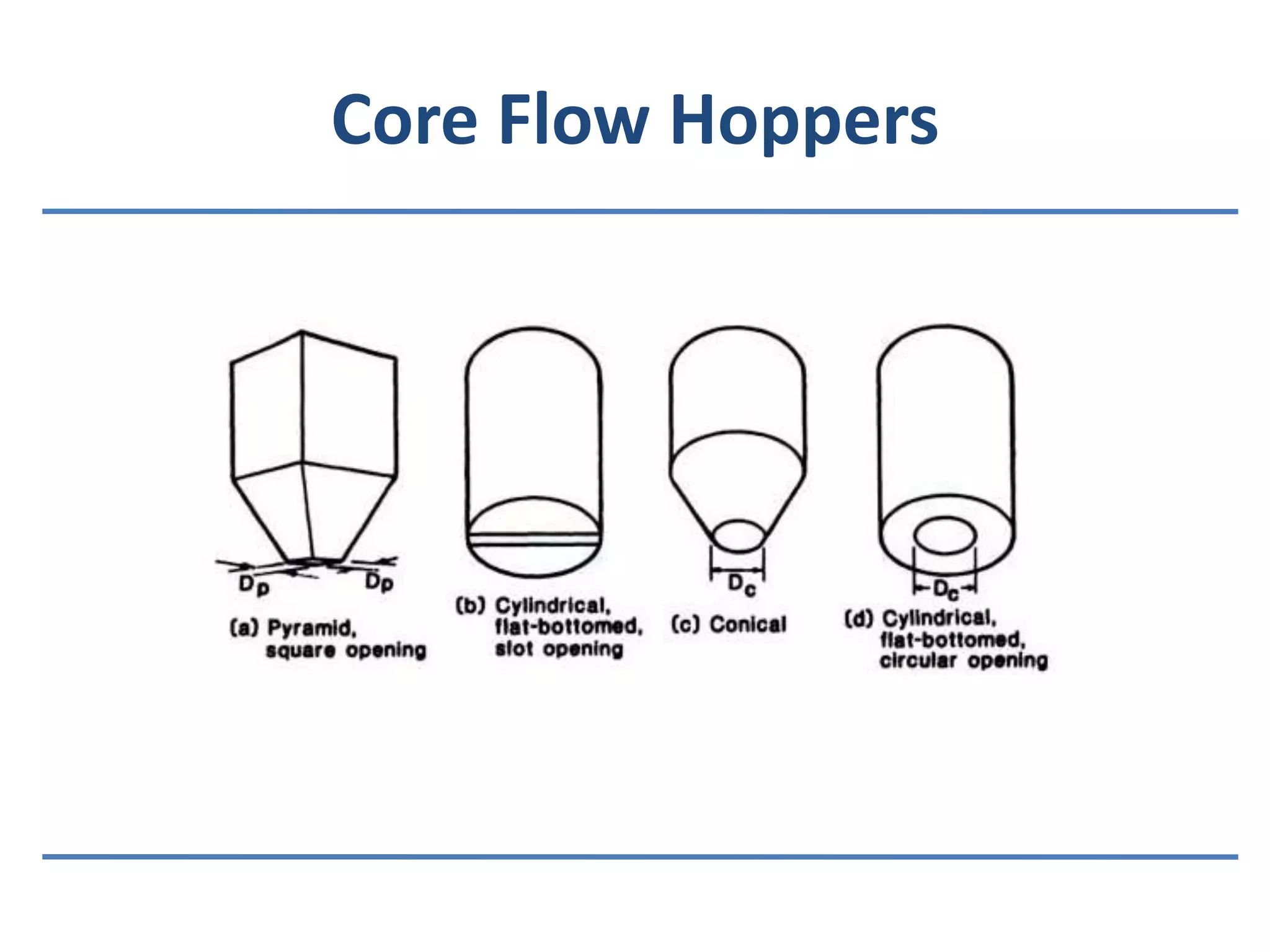
Core Flow Hoppers
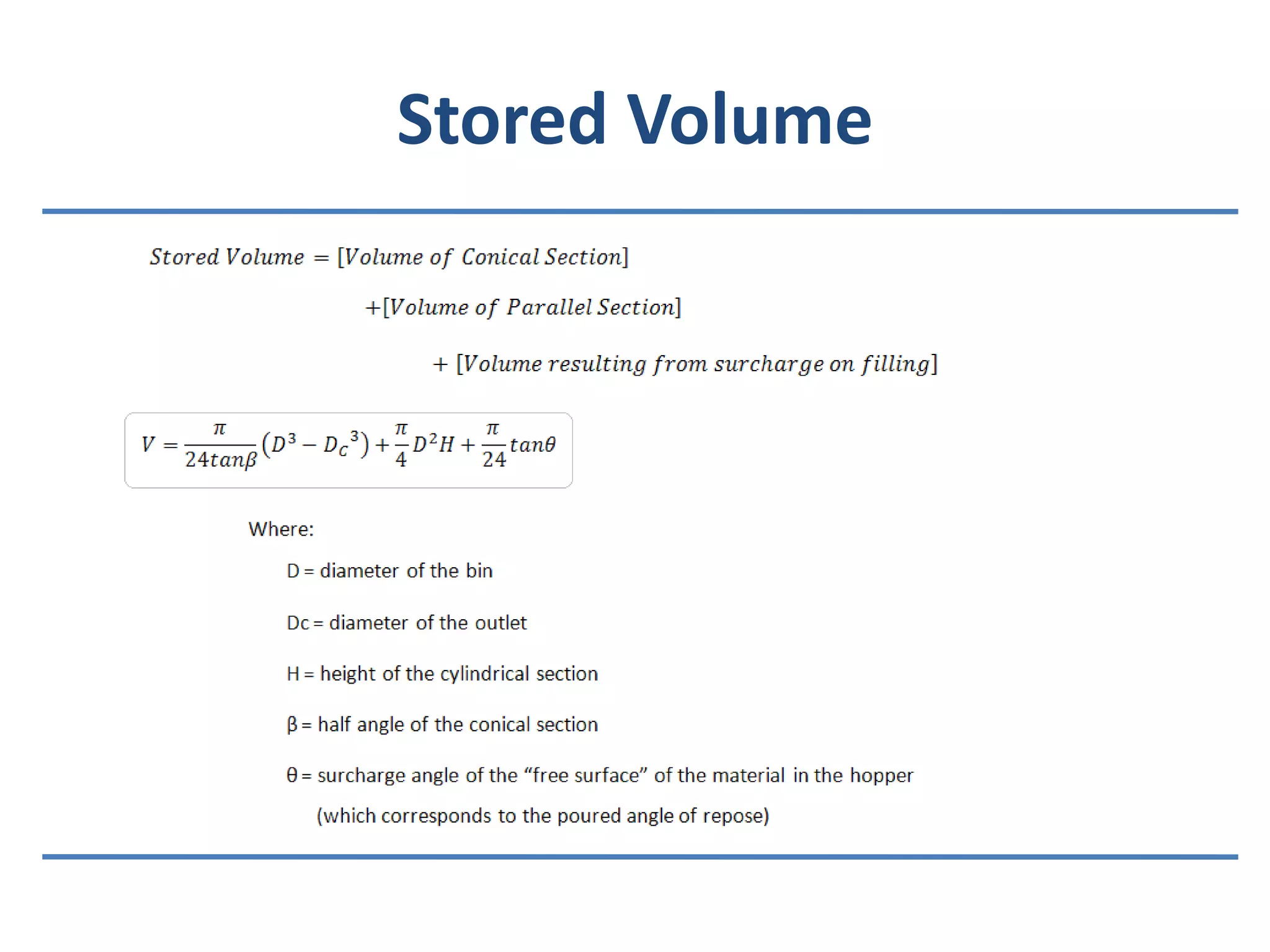
Stored Volume
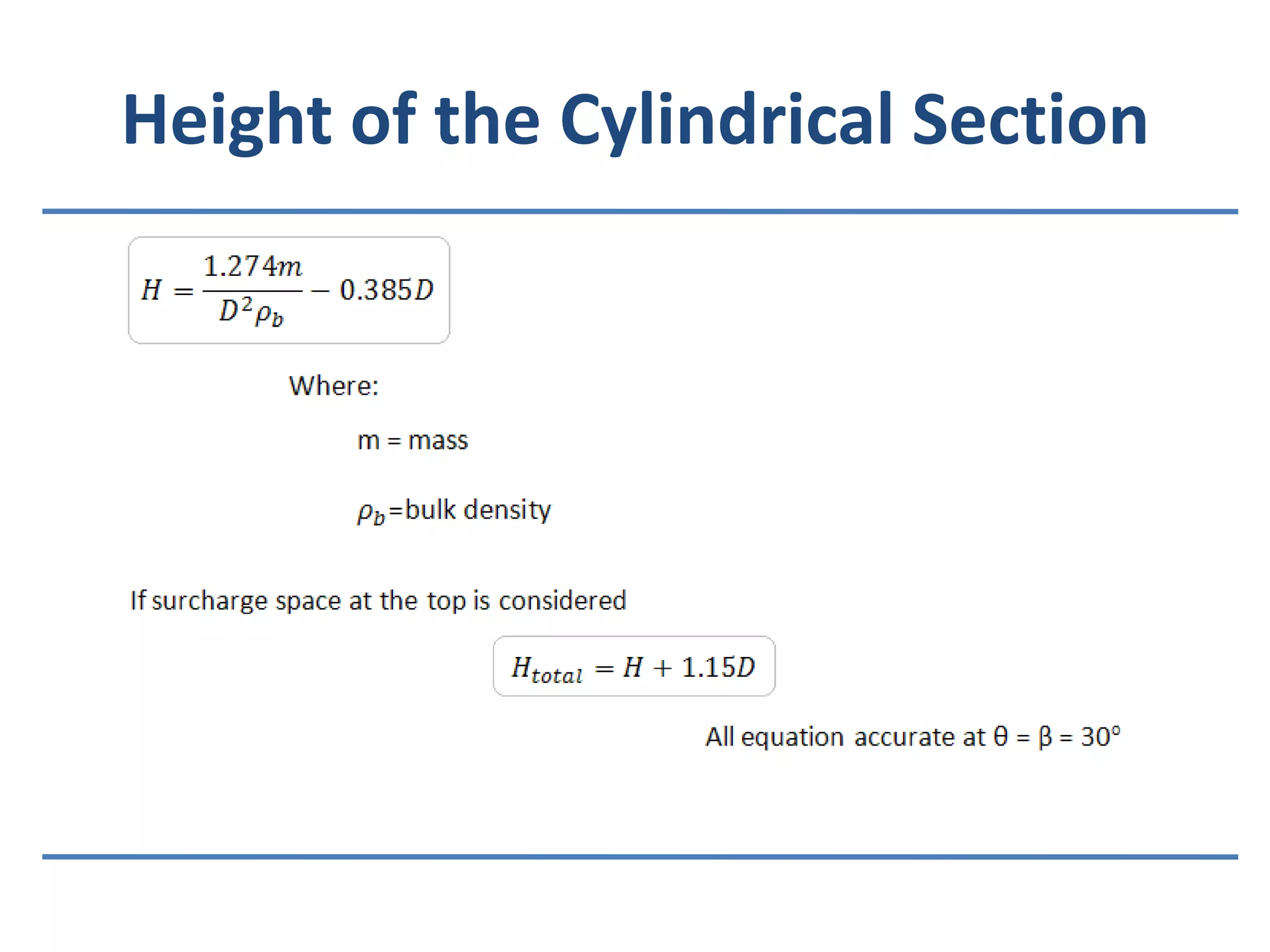
Height of the Cylindrical Section
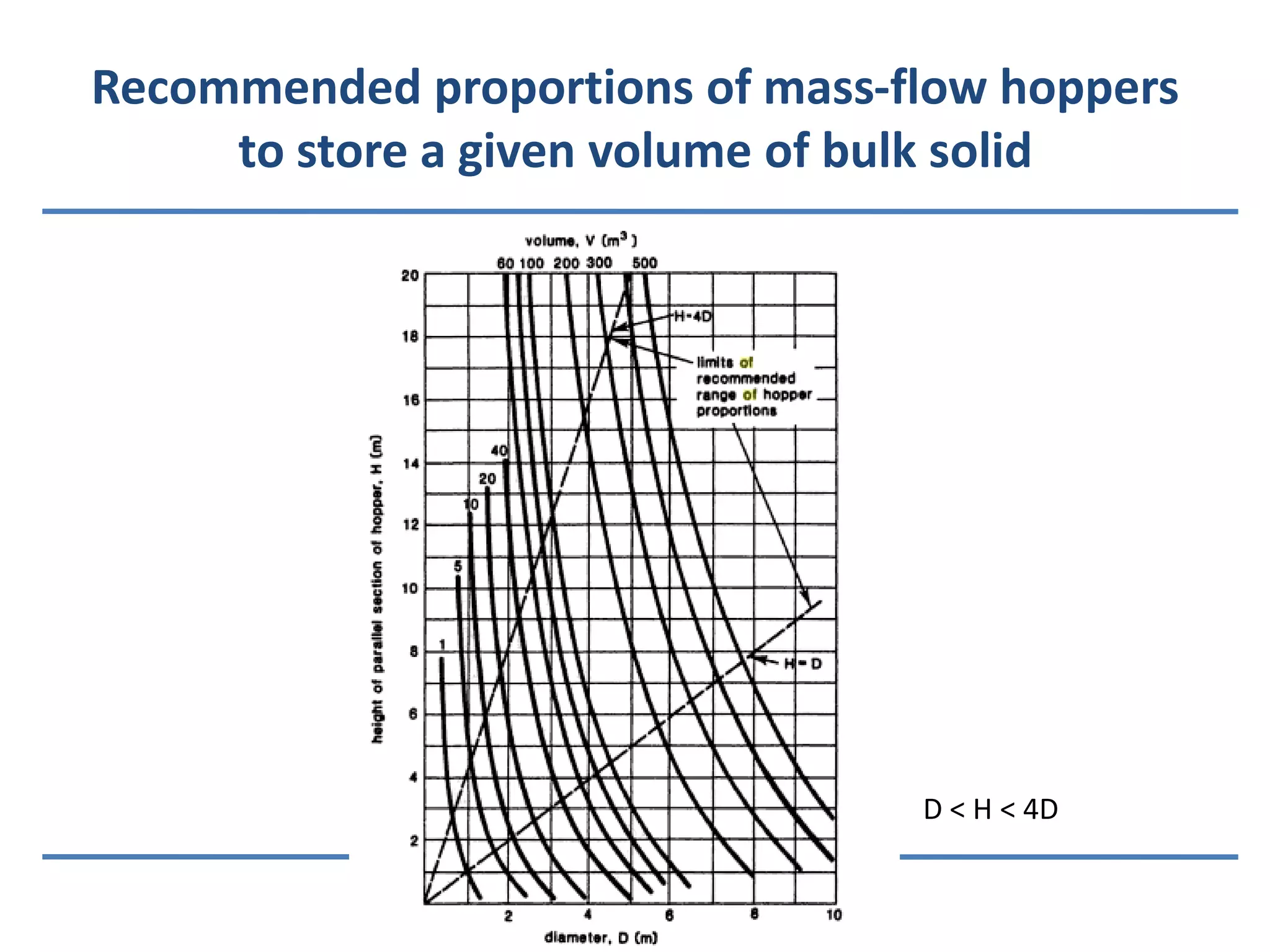
Recommended proportions of mass-flow hoppers to store a given volume of bulk solidD < H < 4D
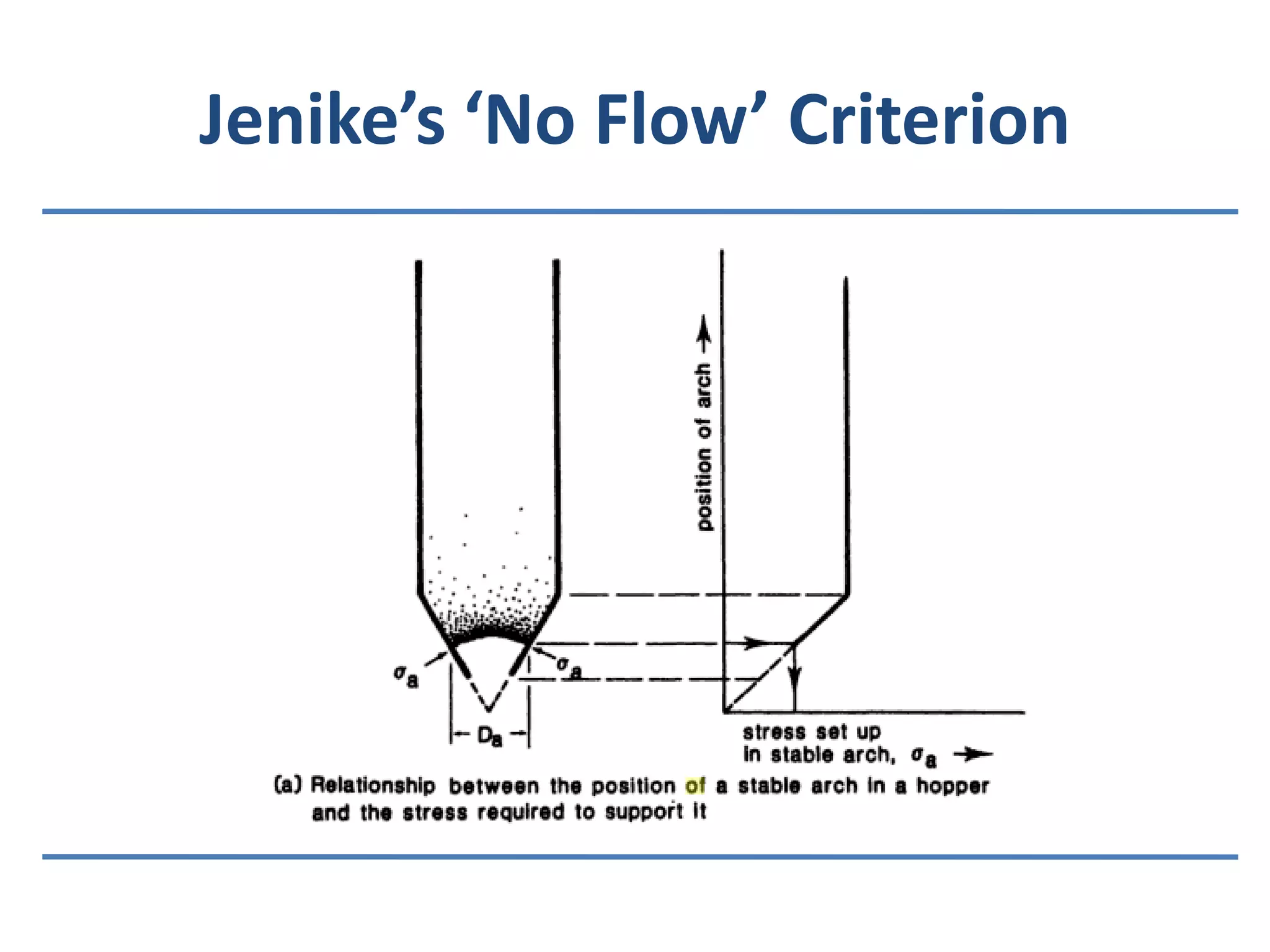
Jenike’s ‘No Flow’ Criterion
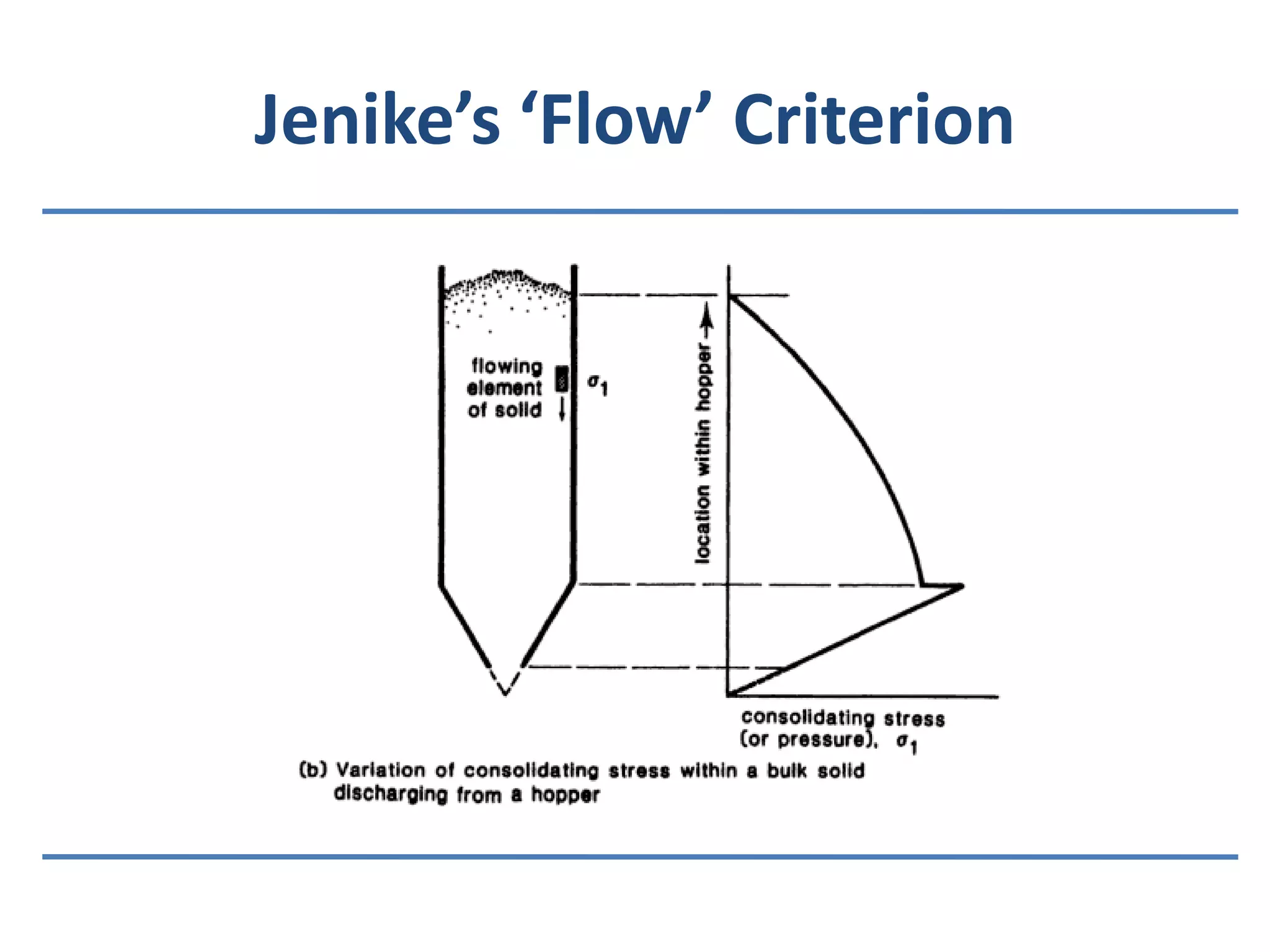
Jenike’s ‘Flow’ Criterion
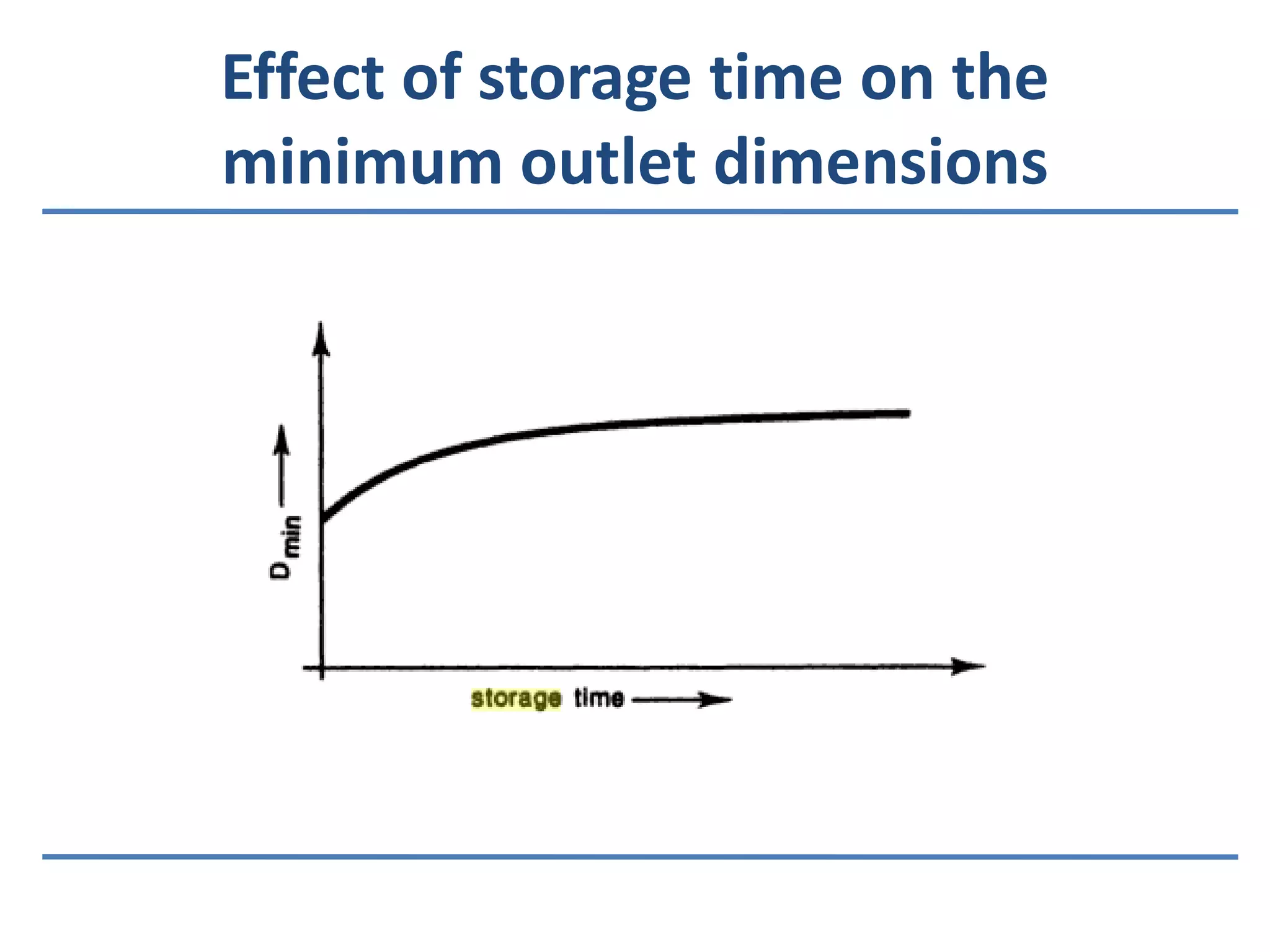
Effect of storage time on the minimum outlet dimensions
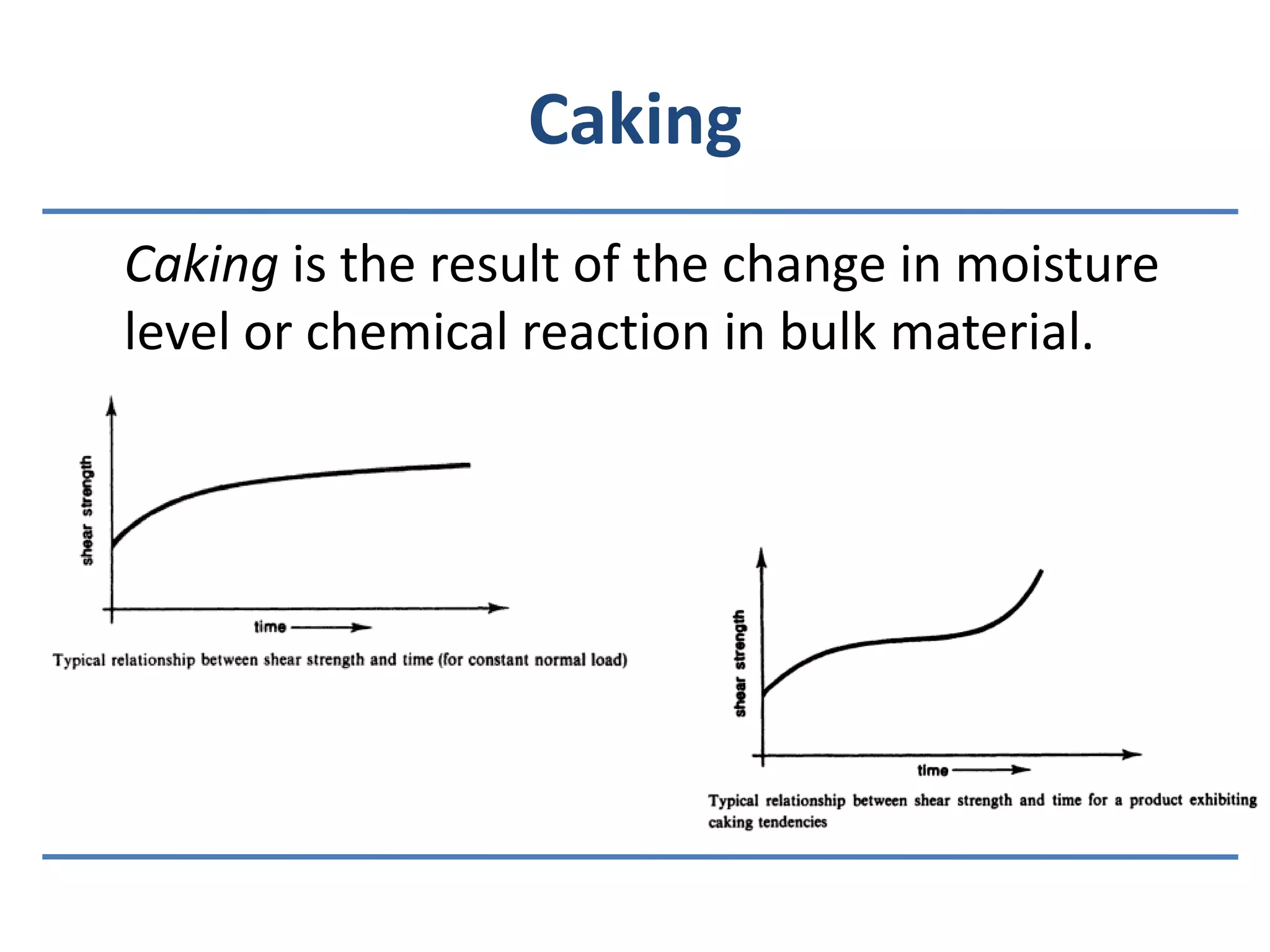
CakingCaking is the result of the change in moisture level or chemical reaction in bulk material.
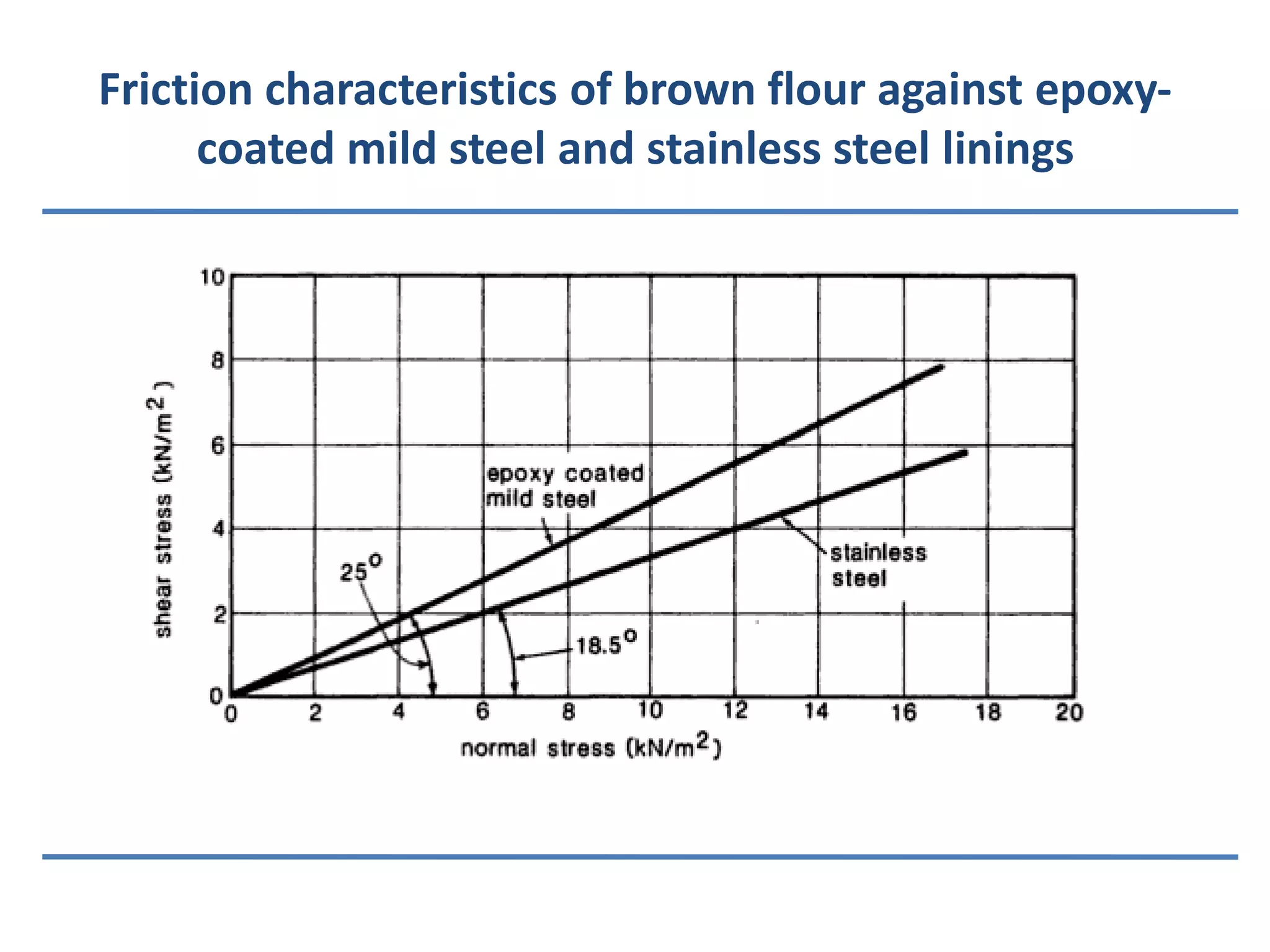
Friction characteristics of brown flour against epoxy-coated mild steel and stainless steel linings
Common causes of failure in SilosShock loads during arch collapseBending in cylinder walls Overpressure due to change in cross section
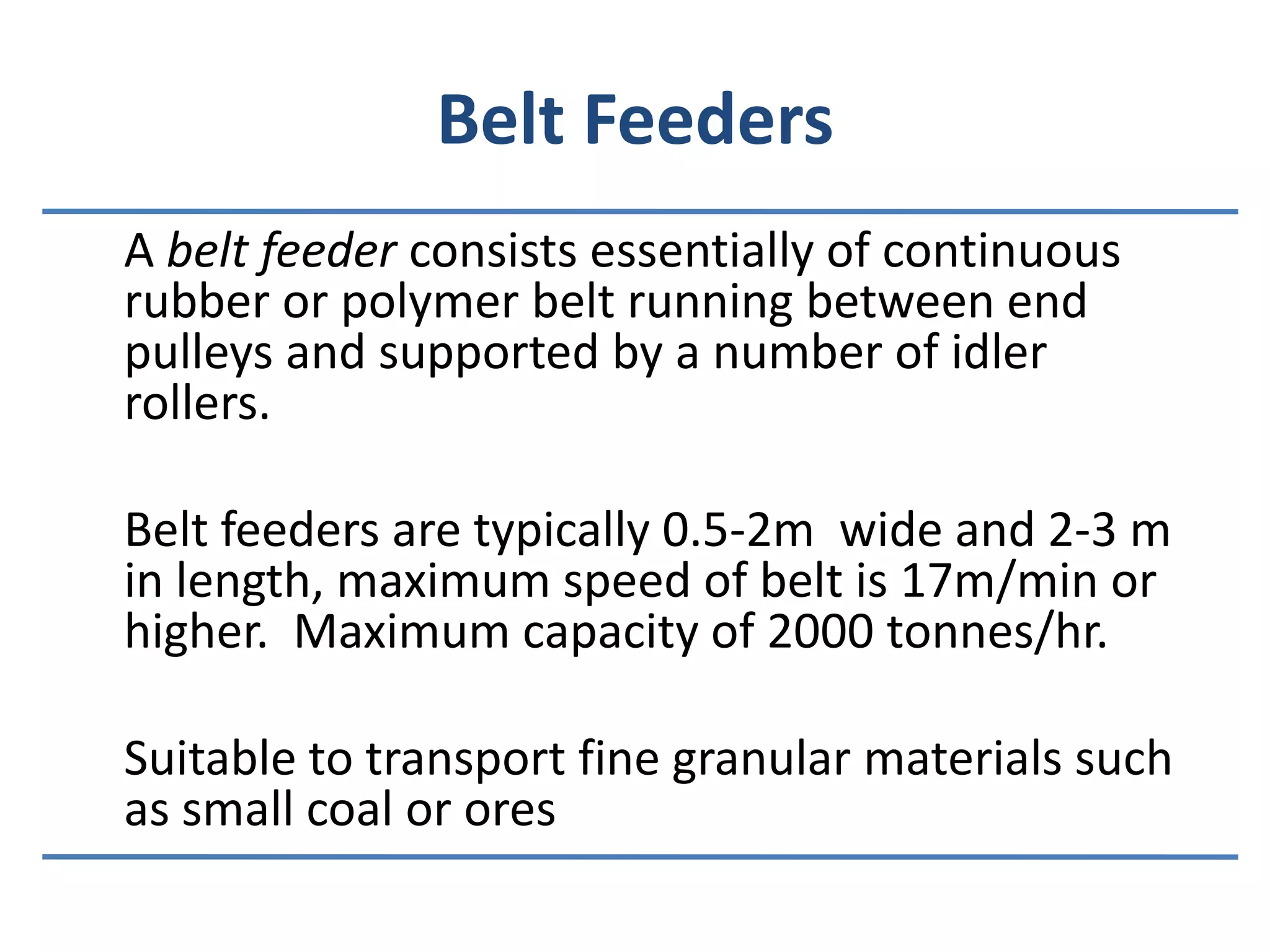
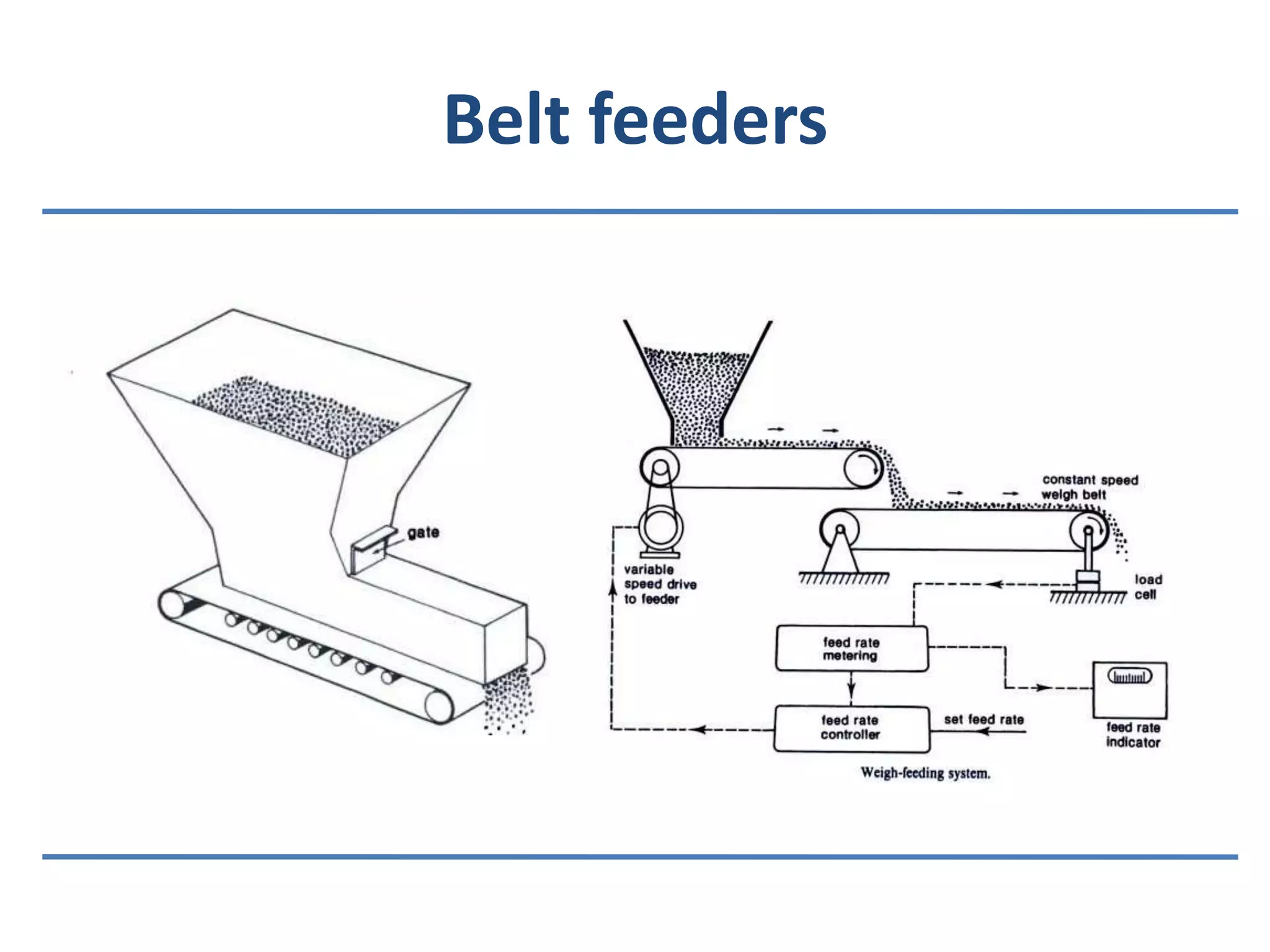
Belt Feeders	A belt feeder consists essentially of continuous rubber or polymer belt running between end pulleys and supported by a number of idler rollers.	Belt feeders are typically 0.5-2m  wide and 2-3 m in length, maximum speed of belt is 17m/min or higher.  Maximum capacity of 2000 tonnes/hr.	Suitable to transport fine granular materials such as small coal or ores
Belt feeders
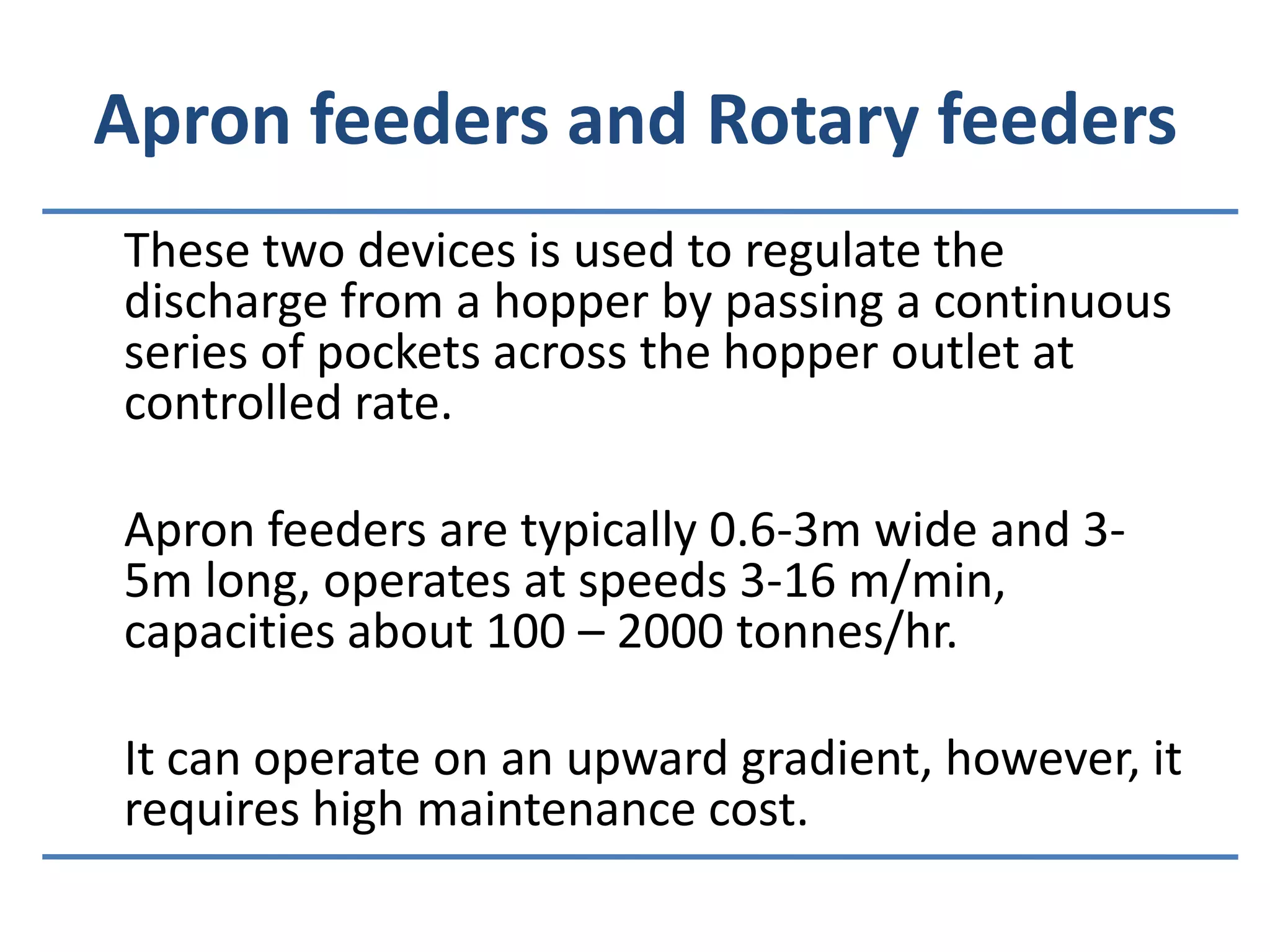
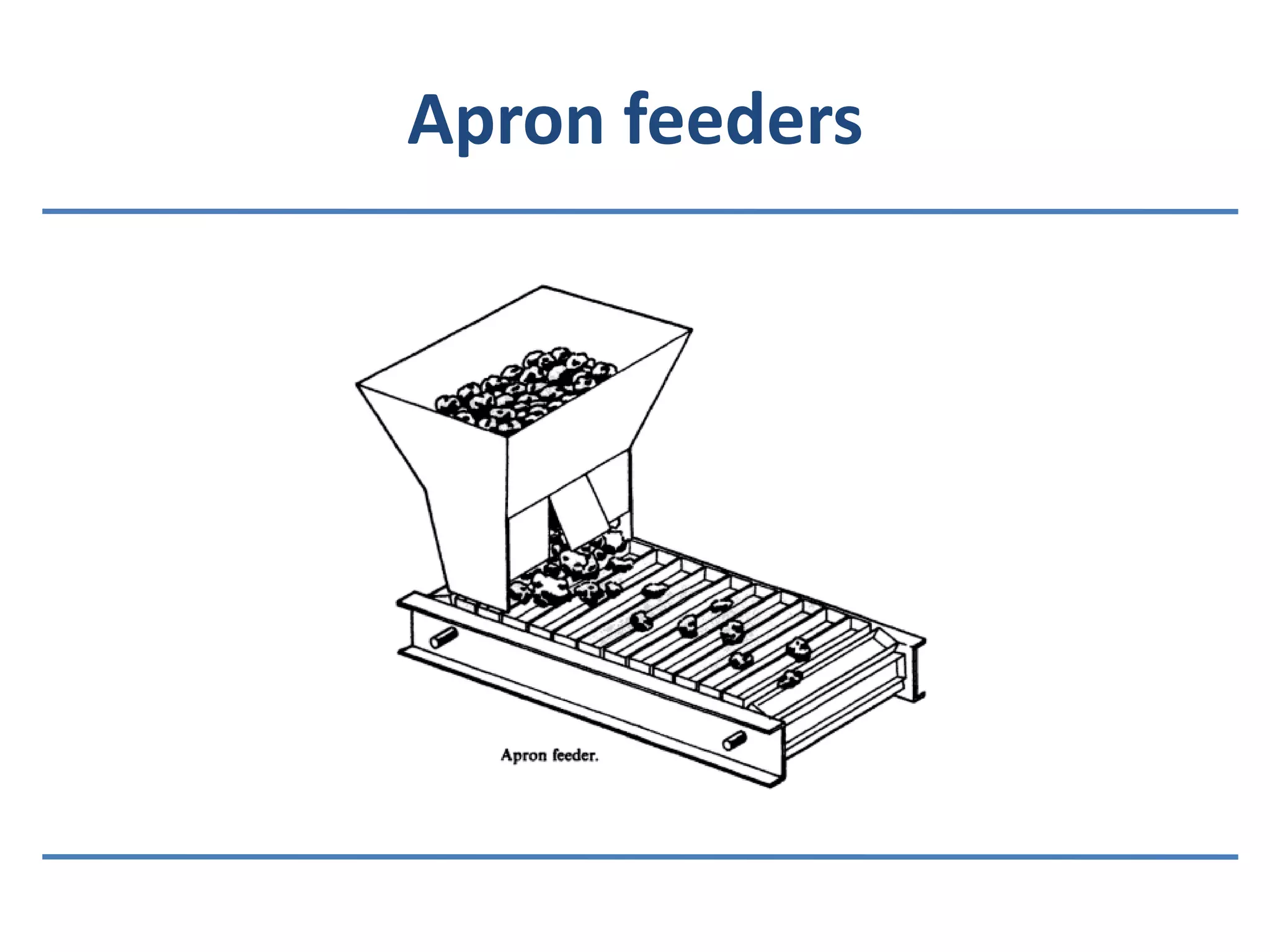
Apron feeders and Rotary feeders	These two devices is used to regulate the discharge from a hopper by passing a continuous series of pockets across the hopper outlet at controlled rate.	Apron feeders are typically 0.6-3m wide and 3-5m long, operates at speeds 3-16 m/min, capacities about 100 – 2000 tonnes/hr.	It can operate on an upward gradient, however, it requires high maintenance cost.
Apron feeders
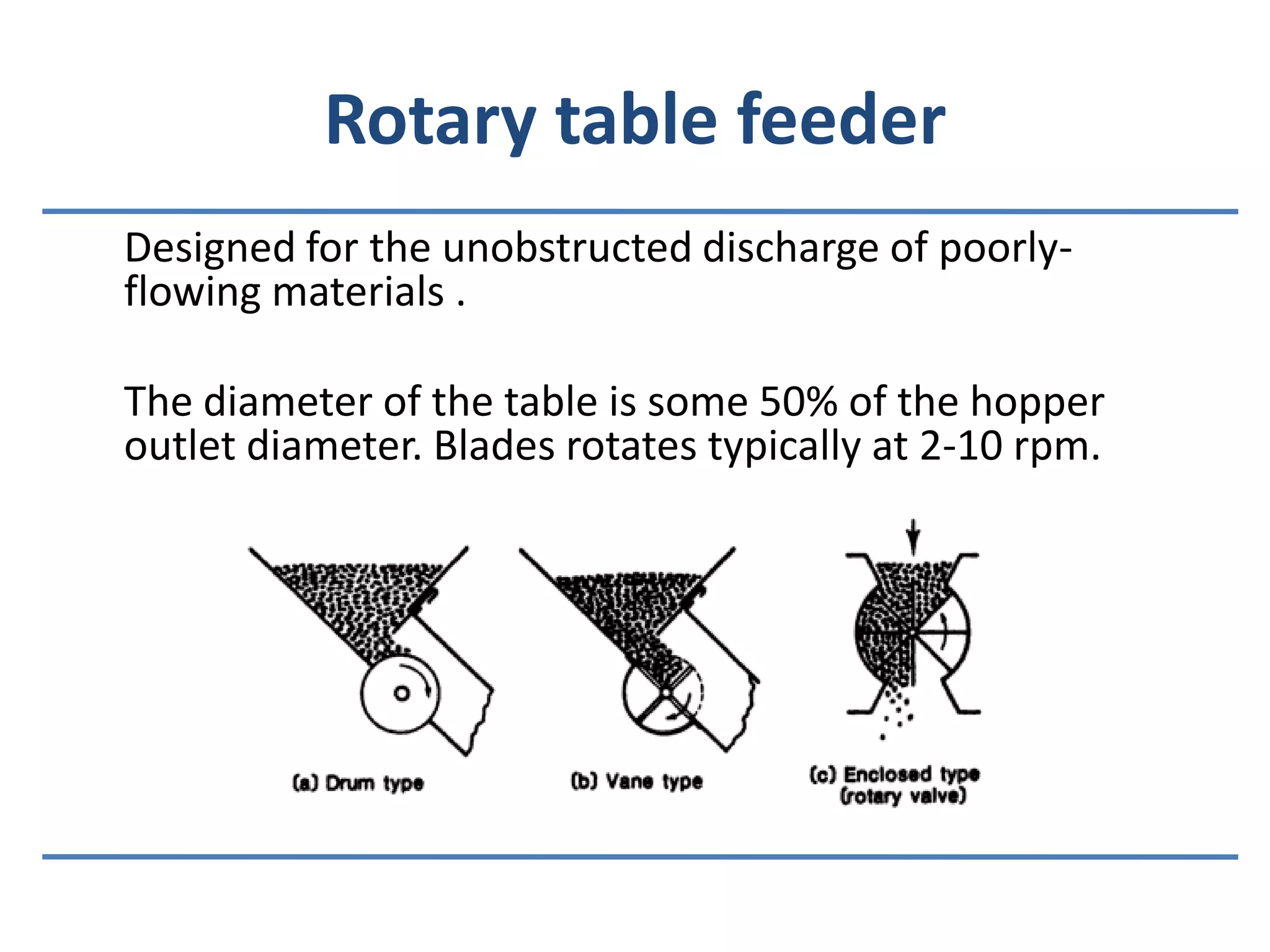
Rotary table feeder	Designed for the unobstructed discharge of poorly-flowing materials .	The diameter of the table is some 50% of the hopper outlet diameter. Blades rotates typically at 2-10 rpm.
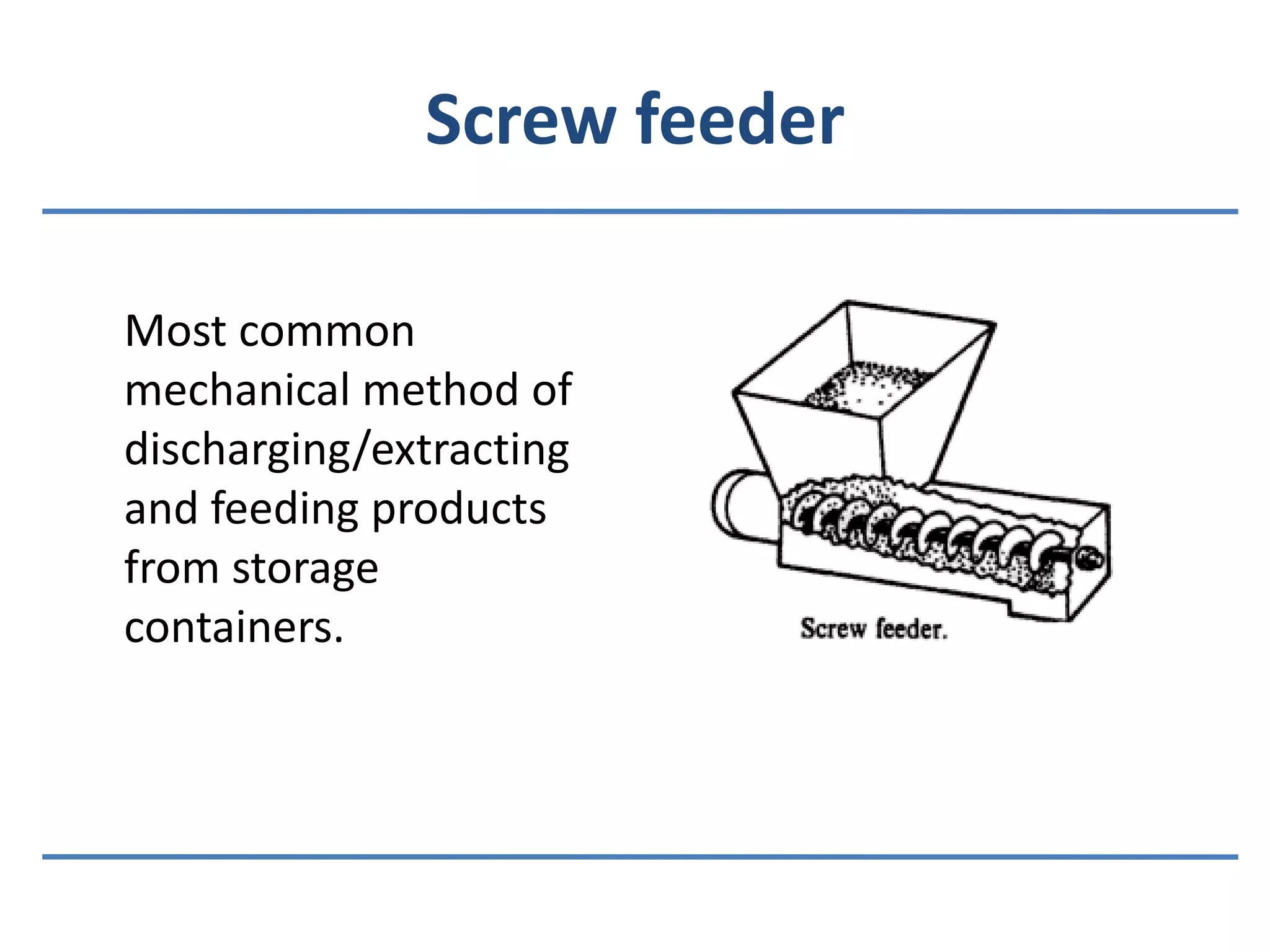
Screw feederMost common mechanical method of discharging/extracting and feeding products from storage containers.
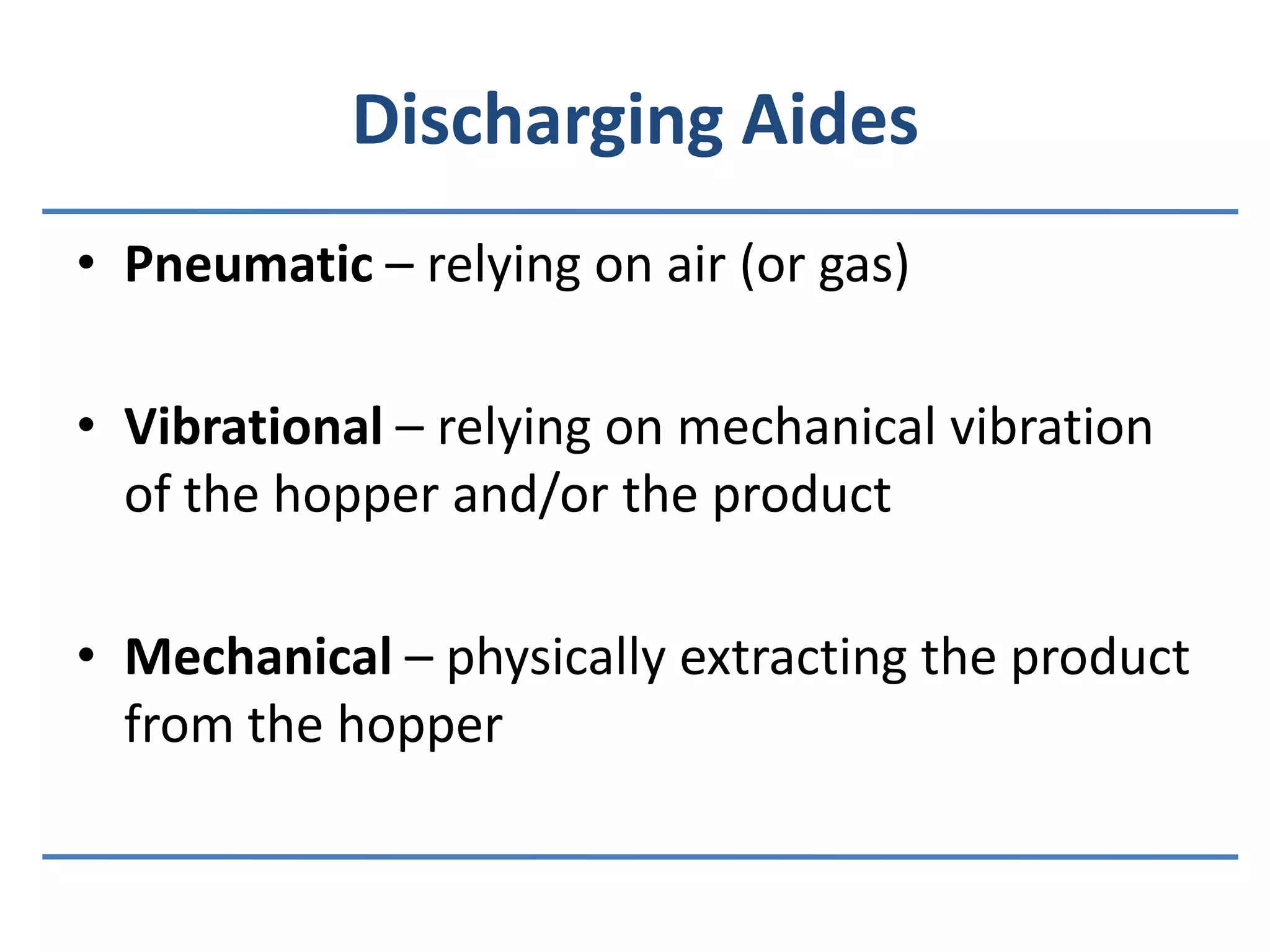
Discharging AidesPneumatic – relying on air (or gas)Vibrational– relying on mechanical vibration of the hopper and/or the productMechanical – physically extracting the product from the hopper
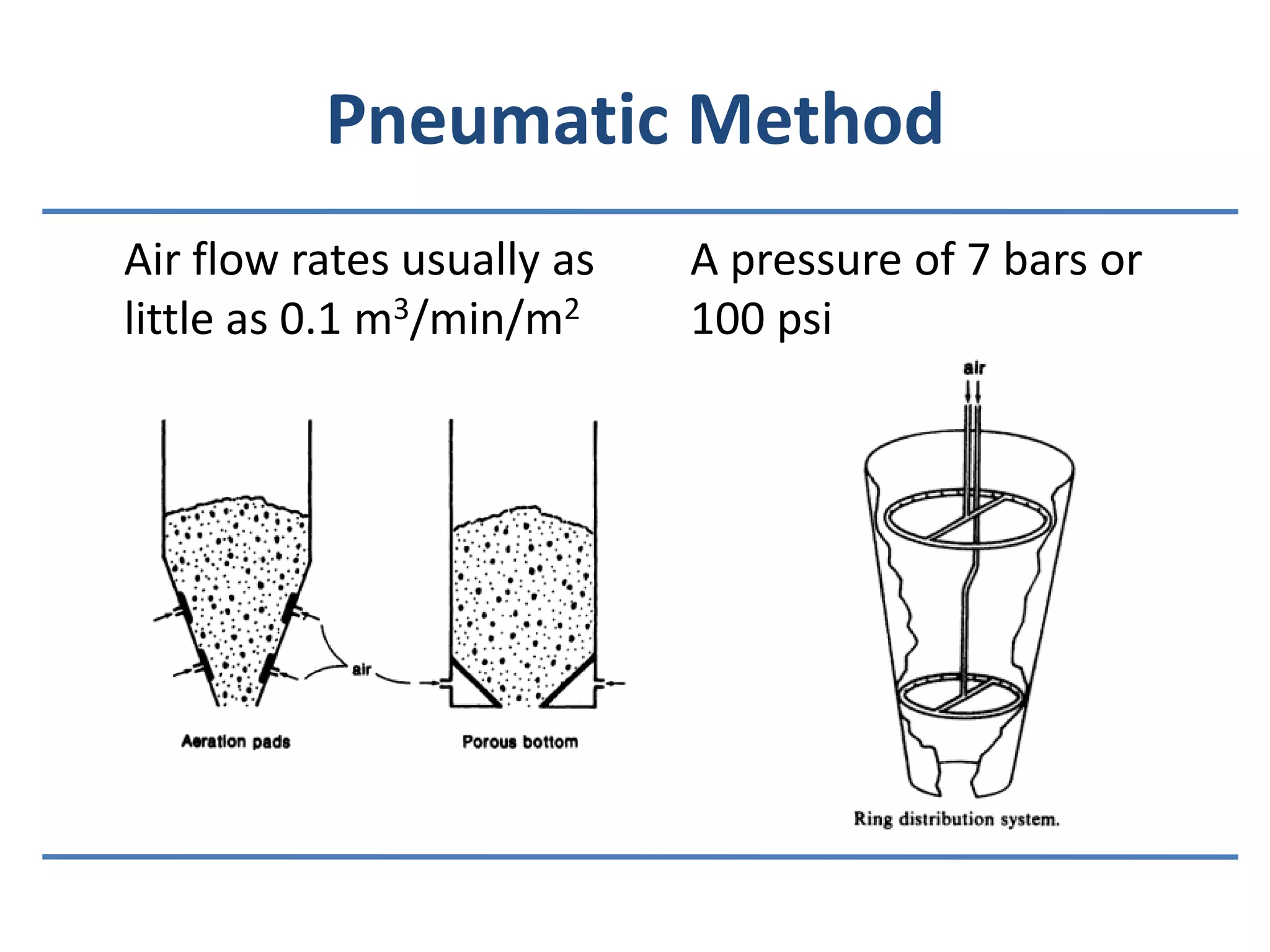
Pneumatic Method	Air flow rates usually as little as 0.1 m3/min/m2A pressure of 7 bars or 100 psi
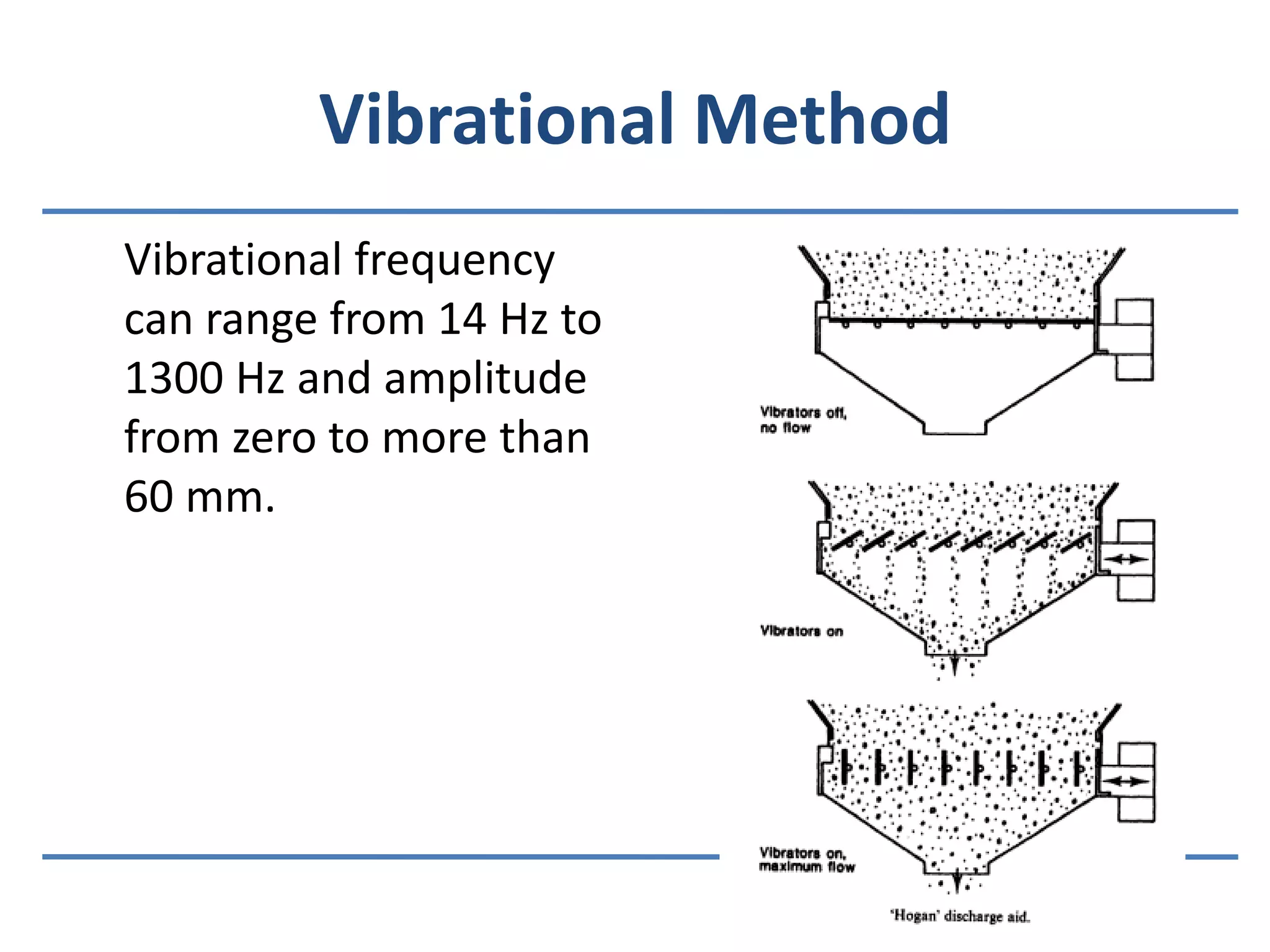
Vibrational MethodVibrational frequency can range from 14 Hz to 1300 Hz and amplitude from zero to more than 60 mm.
Vibrational Method
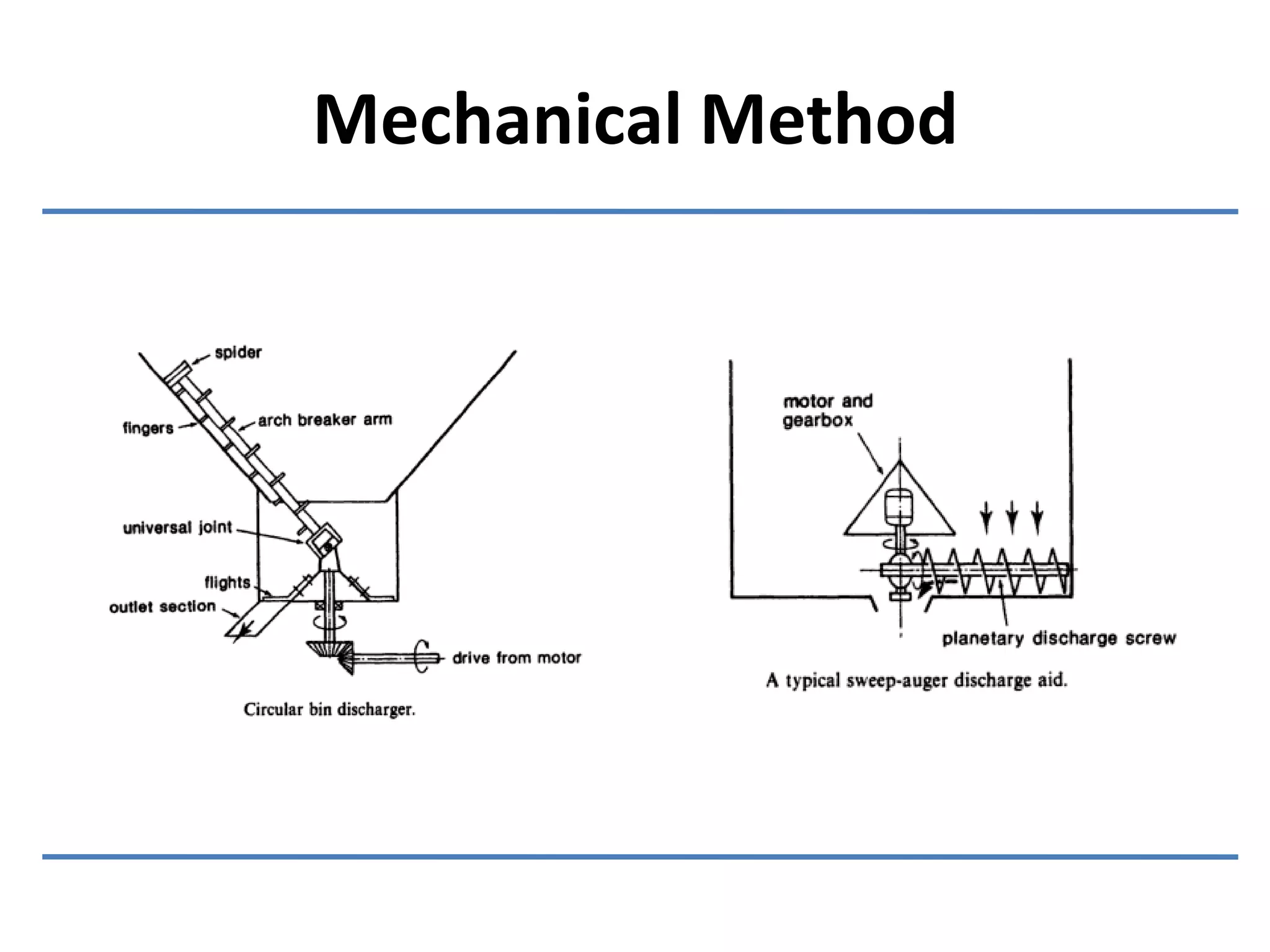
Mechanical Method
Assignment:Discuss and enumerate the safety systems, standards and procedures implemented in storage bins, silos or hoppers.What are the causes of silos to lose slow?What are the different methods of cleaning a silo, explain each.What are the different types of coatings that can be placed in a silo.
Reference:The Design of Storage Bins and HoppersBulk Solids Handling: An Introduction to Practice and Technology by C.R. Woodcock, DipTech, PhD, CEng, MIMechE and J.S. Mason, BSc, PhD, Ceng, FIMechE, FIMarE, MIMinE © 1987 Chapman & Hall

Storage bins and hoppers

  • 1.
  • 2.
    Introduction The storage bin,silo or hopper are used to store bulk solids for handling.
  • 3.
    Hopper Discharge ConsiderationsTheflow of material cannot be allowed to take freely but must be “throttled” to the required rate by some type of a “feeder”The product flows from the hopper to the feeder must flow continuously at an adequate rate.
  • 4.
  • 5.
  • 6.
  • 7.
    Height of theCylindrical Section
  • 8.
    Recommended proportions ofmass-flow hoppers to store a given volume of bulk solidD < H < 4D
  • 9.
  • 10.
  • 11.
    Effect of storagetime on the minimum outlet dimensions
  • 12.
    CakingCaking is theresult of the change in moisture level or chemical reaction in bulk material.
  • 13.
    Friction characteristics ofbrown flour against epoxy-coated mild steel and stainless steel linings
  • 14.
    Common causes offailure in SilosShock loads during arch collapseBending in cylinder walls Overpressure due to change in cross section
  • 15.
    Belt Feeders A beltfeeder consists essentially of continuous rubber or polymer belt running between end pulleys and supported by a number of idler rollers. Belt feeders are typically 0.5-2m wide and 2-3 m in length, maximum speed of belt is 17m/min or higher. Maximum capacity of 2000 tonnes/hr. Suitable to transport fine granular materials such as small coal or ores
  • 16.
  • 17.
    Apron feeders andRotary feeders These two devices is used to regulate the discharge from a hopper by passing a continuous series of pockets across the hopper outlet at controlled rate. Apron feeders are typically 0.6-3m wide and 3-5m long, operates at speeds 3-16 m/min, capacities about 100 – 2000 tonnes/hr. It can operate on an upward gradient, however, it requires high maintenance cost.
  • 18.
  • 19.
    Rotary table feeder Designedfor the unobstructed discharge of poorly-flowing materials . The diameter of the table is some 50% of the hopper outlet diameter. Blades rotates typically at 2-10 rpm.
  • 20.
    Screw feederMost commonmechanical method of discharging/extracting and feeding products from storage containers.
  • 21.
    Discharging AidesPneumatic –relying on air (or gas)Vibrational– relying on mechanical vibration of the hopper and/or the productMechanical – physically extracting the product from the hopper
  • 22.
    Pneumatic Method Air flowrates usually as little as 0.1 m3/min/m2A pressure of 7 bars or 100 psi
  • 23.
    Vibrational MethodVibrational frequencycan range from 14 Hz to 1300 Hz and amplitude from zero to more than 60 mm.
  • 24.
  • 25.
  • 26.
    Assignment:Discuss and enumeratethe safety systems, standards and procedures implemented in storage bins, silos or hoppers.What are the causes of silos to lose slow?What are the different methods of cleaning a silo, explain each.What are the different types of coatings that can be placed in a silo.
  • 27.
    Reference:The Design ofStorage Bins and HoppersBulk Solids Handling: An Introduction to Practice and Technology by C.R. Woodcock, DipTech, PhD, CEng, MIMechE and J.S. Mason, BSc, PhD, Ceng, FIMechE, FIMarE, MIMinE © 1987 Chapman & Hall