786
      Shakib Afzal
      Reg:09PWMIN0581
      Semester#7th
      Department of mining engineering UET
      peshawer
An Introduction to Basic
Hydrocyclone
• A cyclone is a piece of process equipment
capable of handling large volumes of
slurry and classifying it based on
differences in size and/or specific gravity.
• Based on these differences a cyclone will
then produce two products – an underflow
and an overflow.
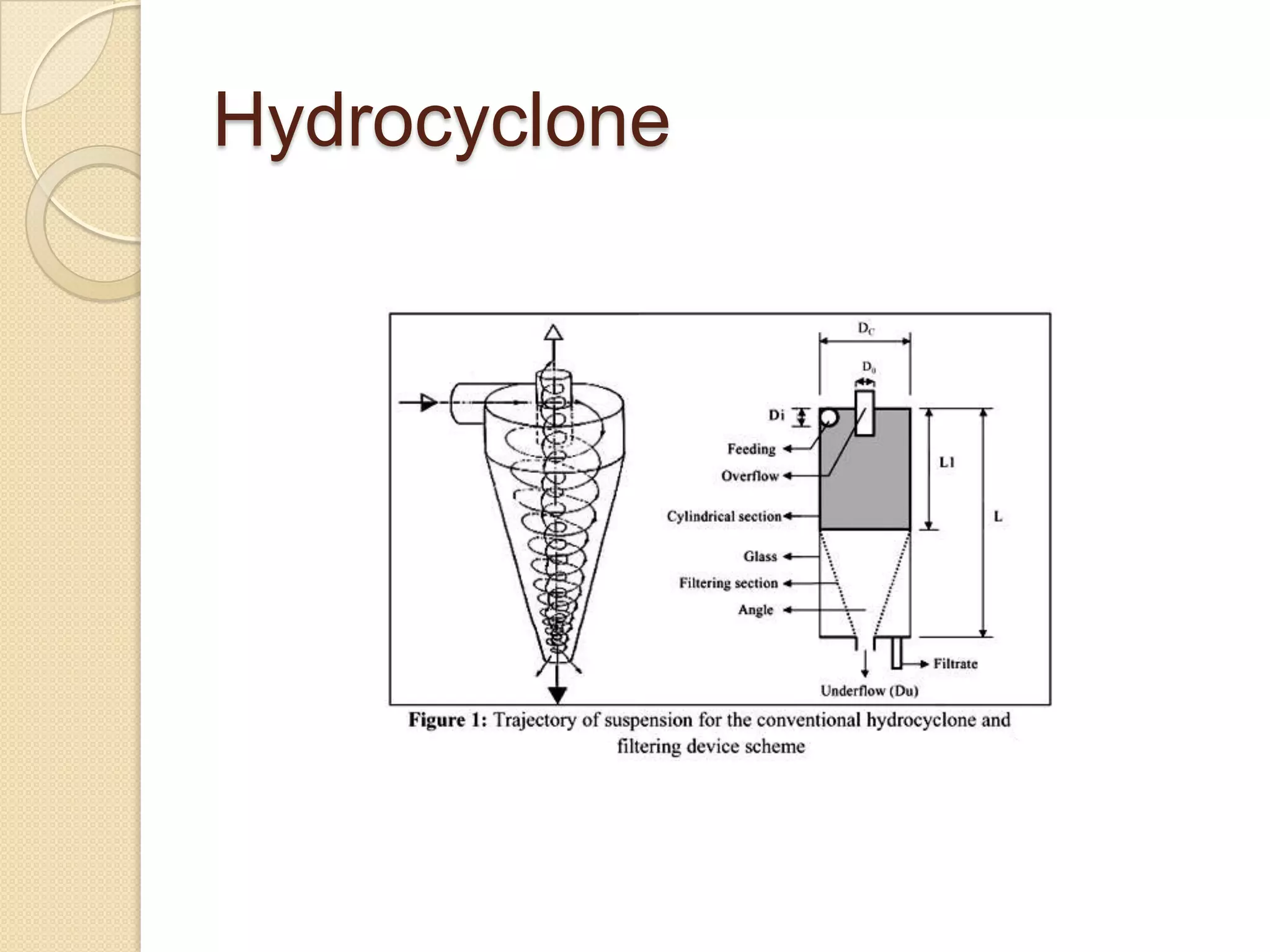
Hydrocyclone
Working principals
A cyclone uses centrifugal force that is
 generated by a slurry entering the
 feed chamber under pressure to make
 the separations. This centrifugal force
 causes the larger particles to be
 ‘slung’ to the cone wall while the finer
 material is kept closer to the center.
 The vortex finder draws the water and
 fine material to the overflow while the
 coarser material makes its way out the
 apex.
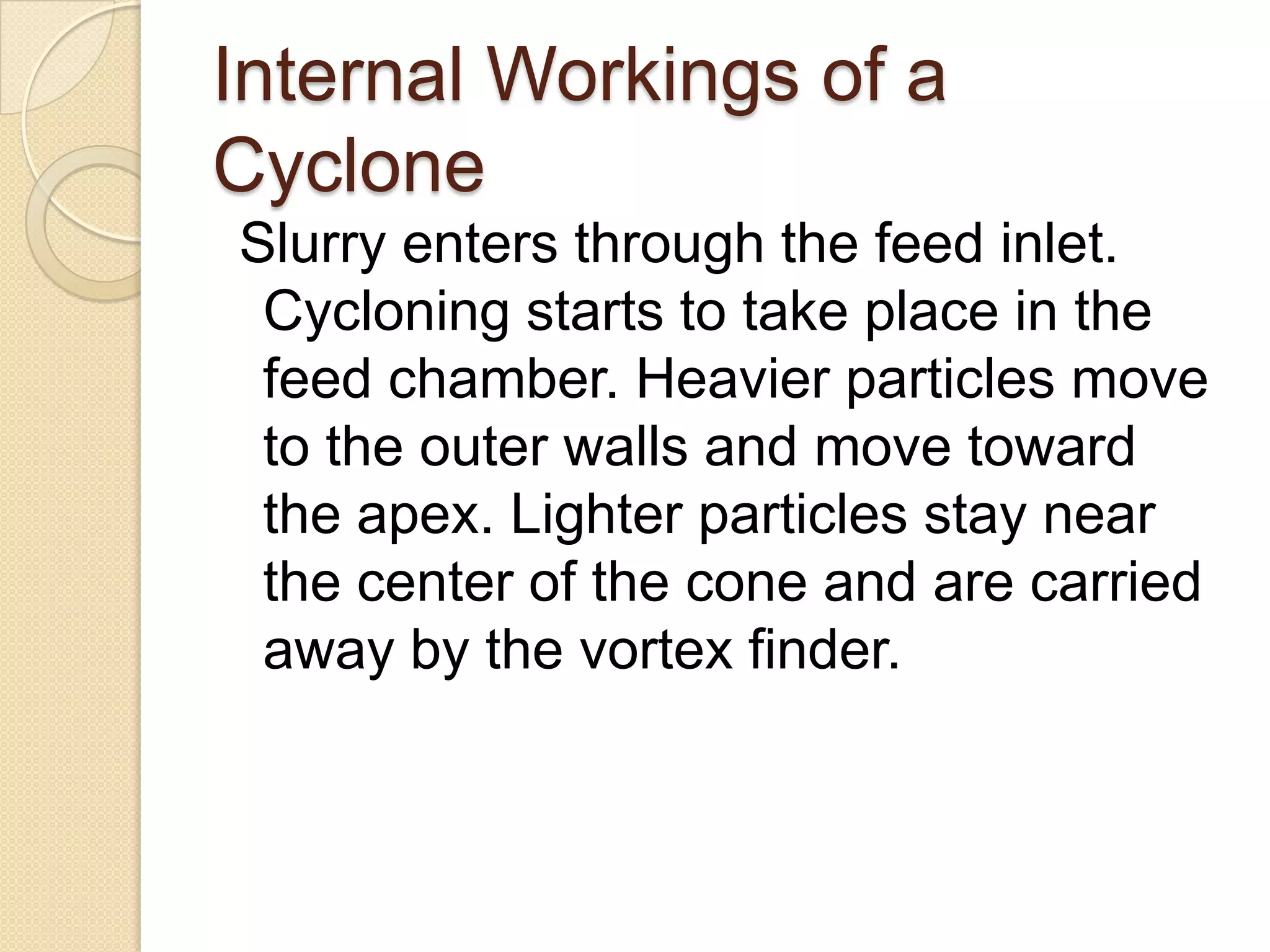
Internal Workings of a
Cyclone
Slurry enters through the feed inlet.
 Cycloning starts to take place in the
 feed chamber. Heavier particles move
 to the outer walls and move toward
 the apex. Lighter particles stay near
 the center of the cone and are carried
 away by the vortex finder.
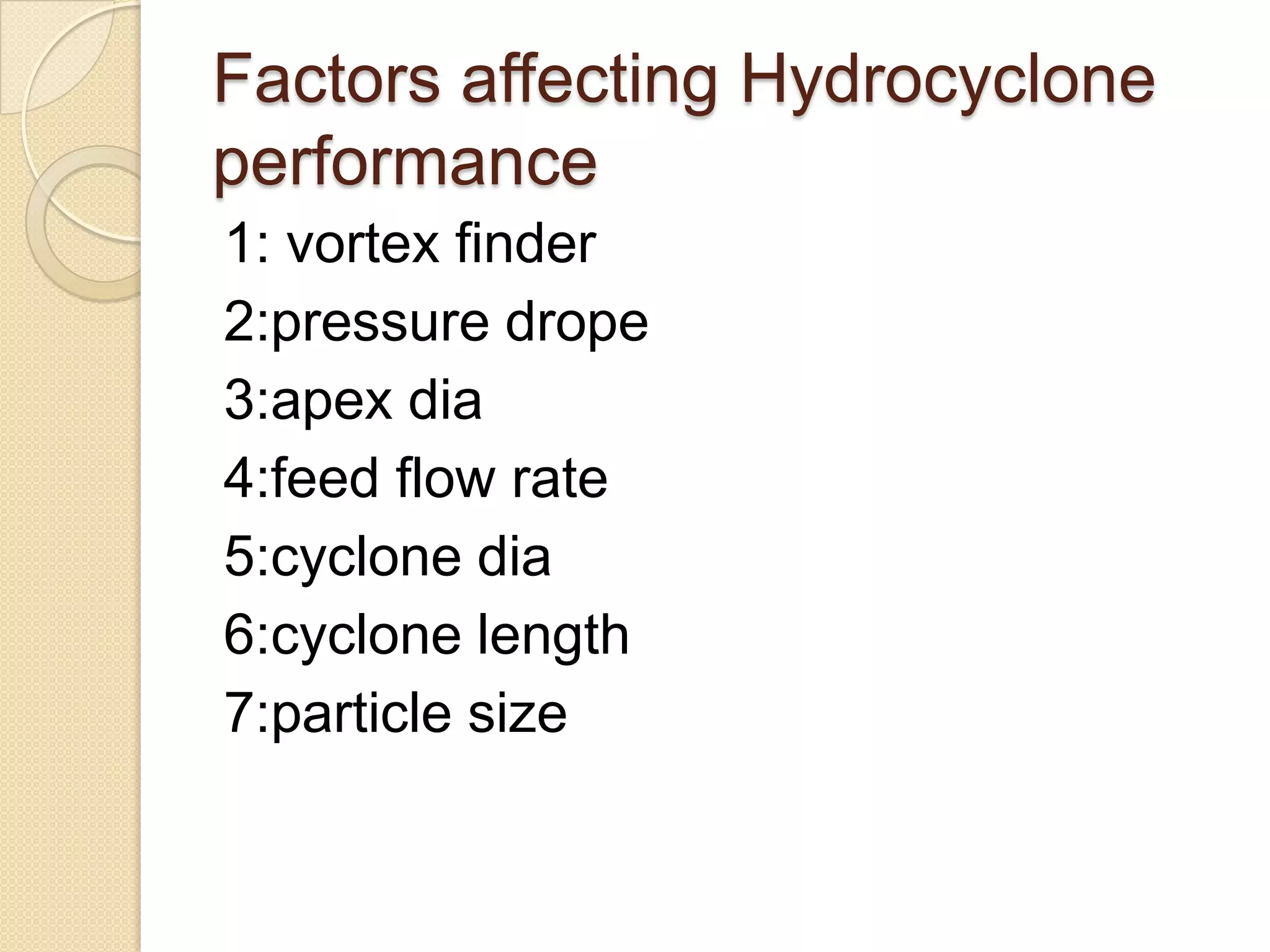
Factors affecting Hydrocyclone
performance
1: vortex finder
2:pressure drope
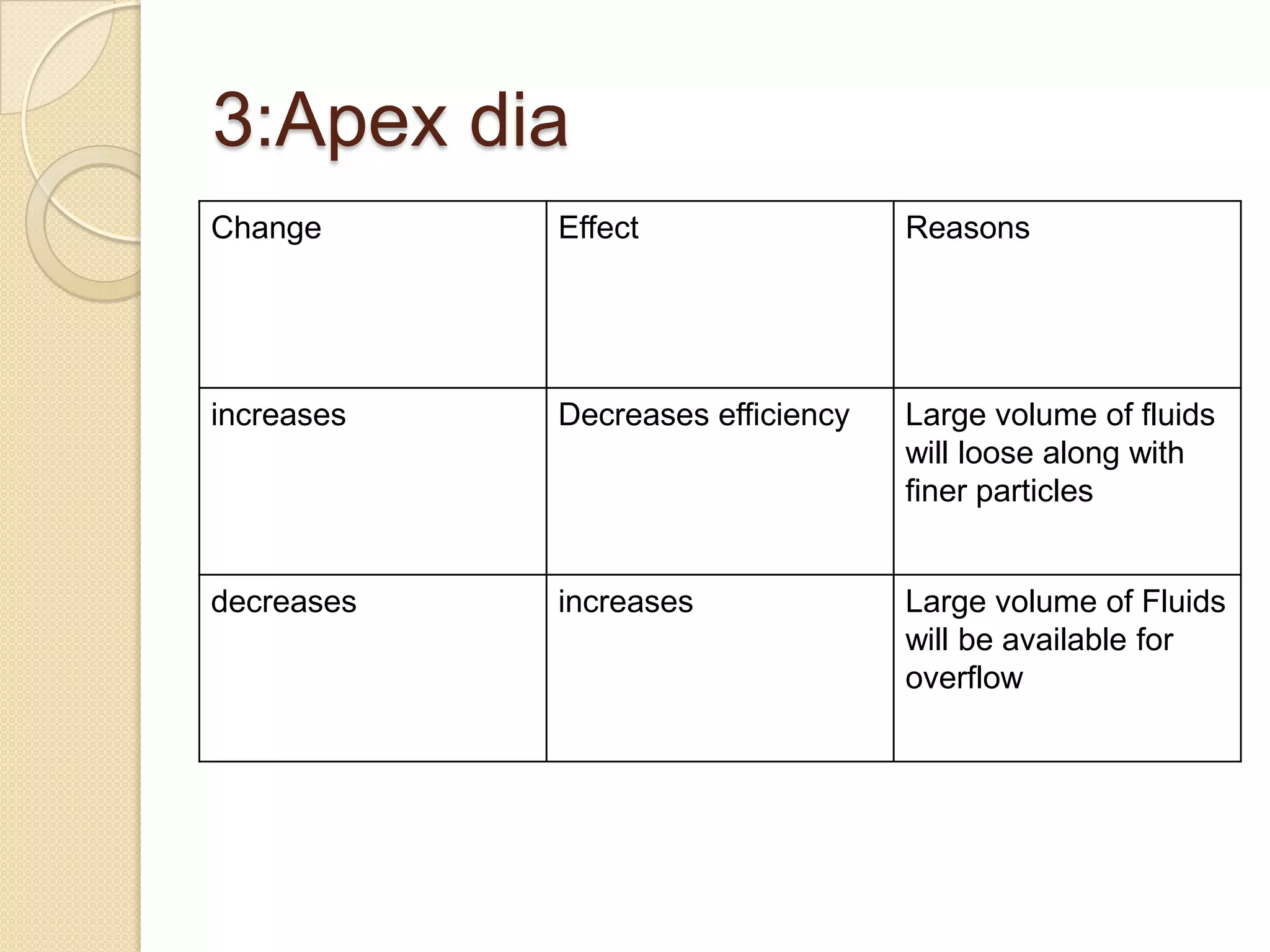
3:apex dia
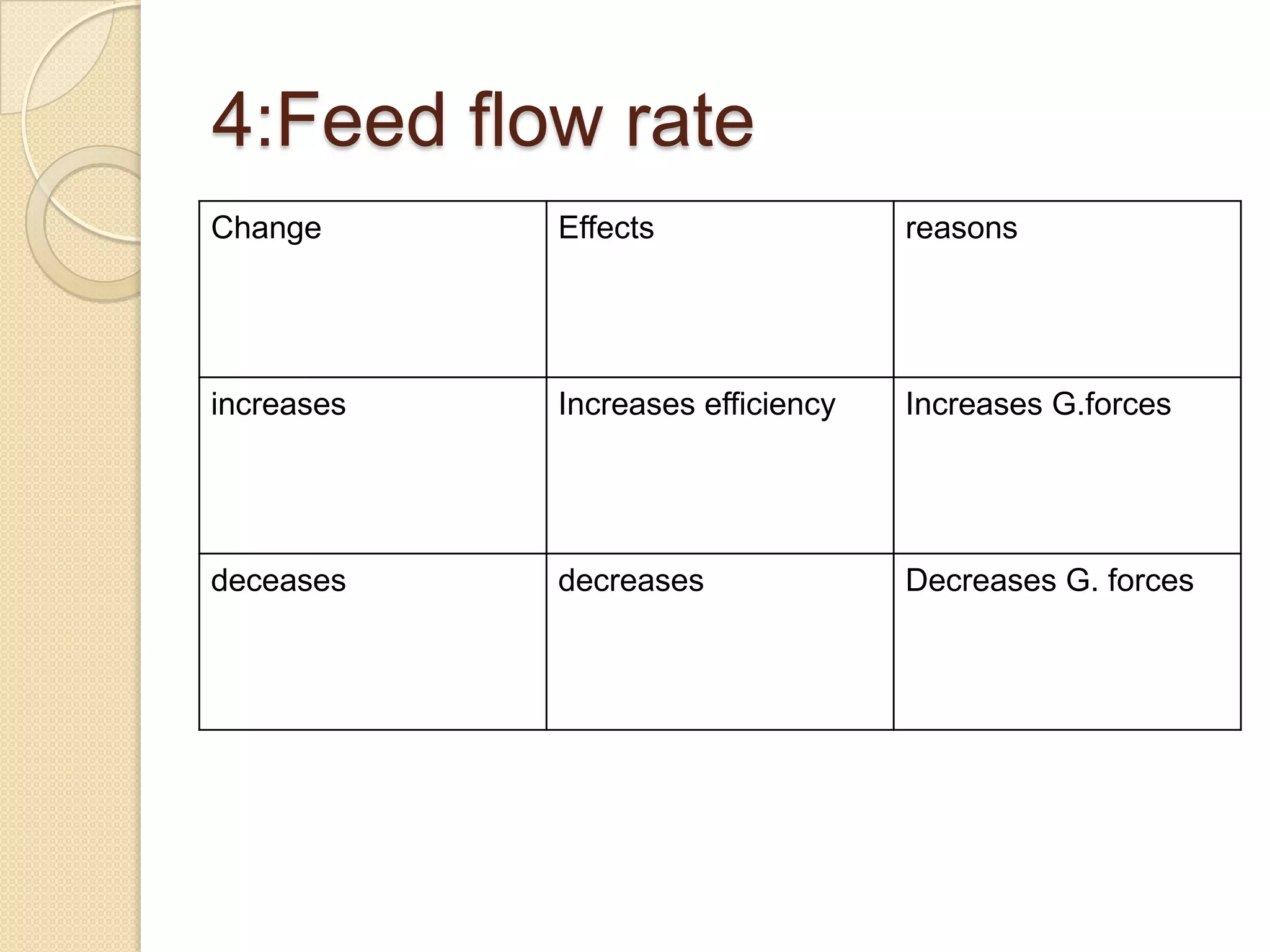
4:feed flow rate
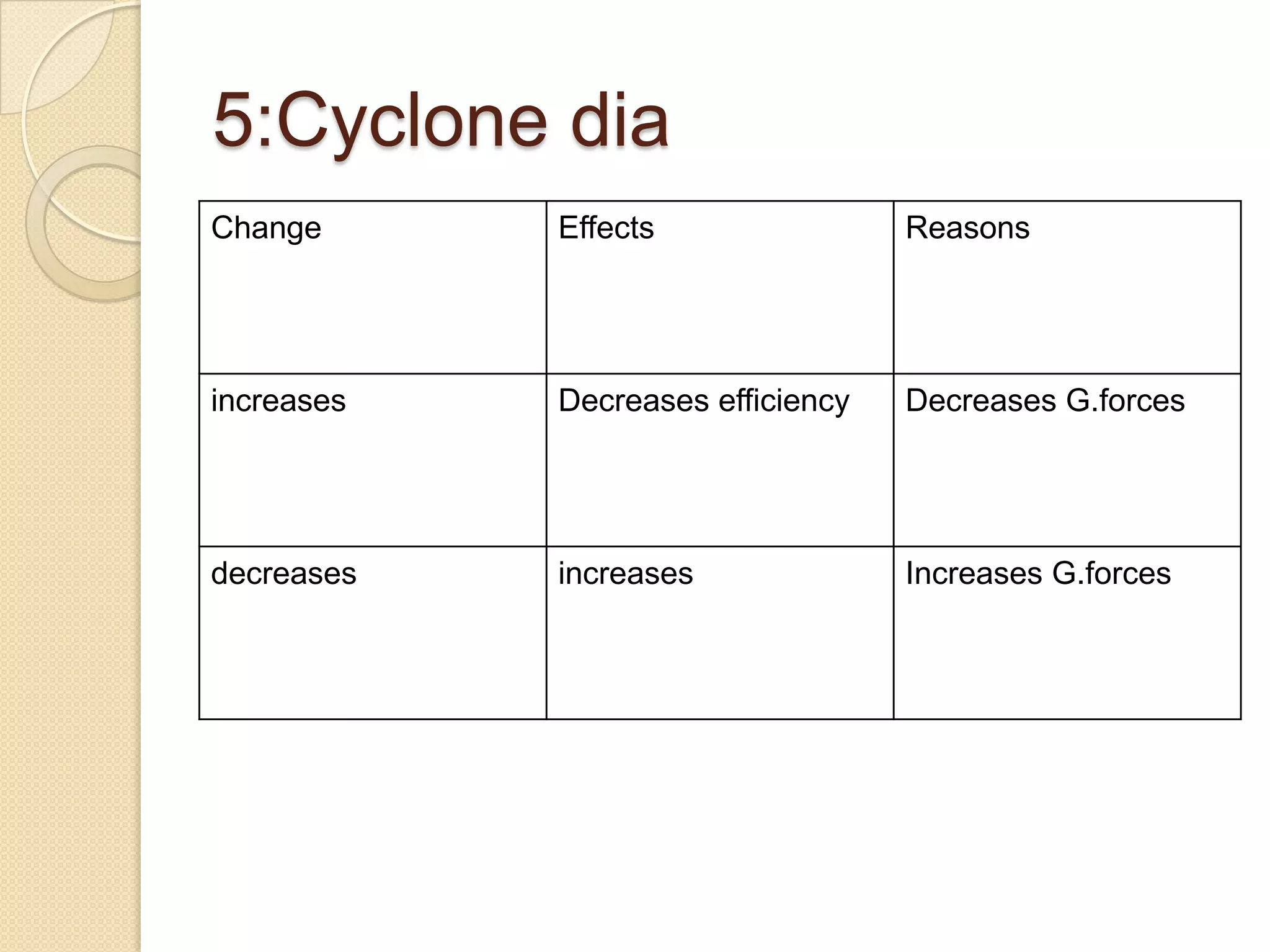
5:cyclone dia
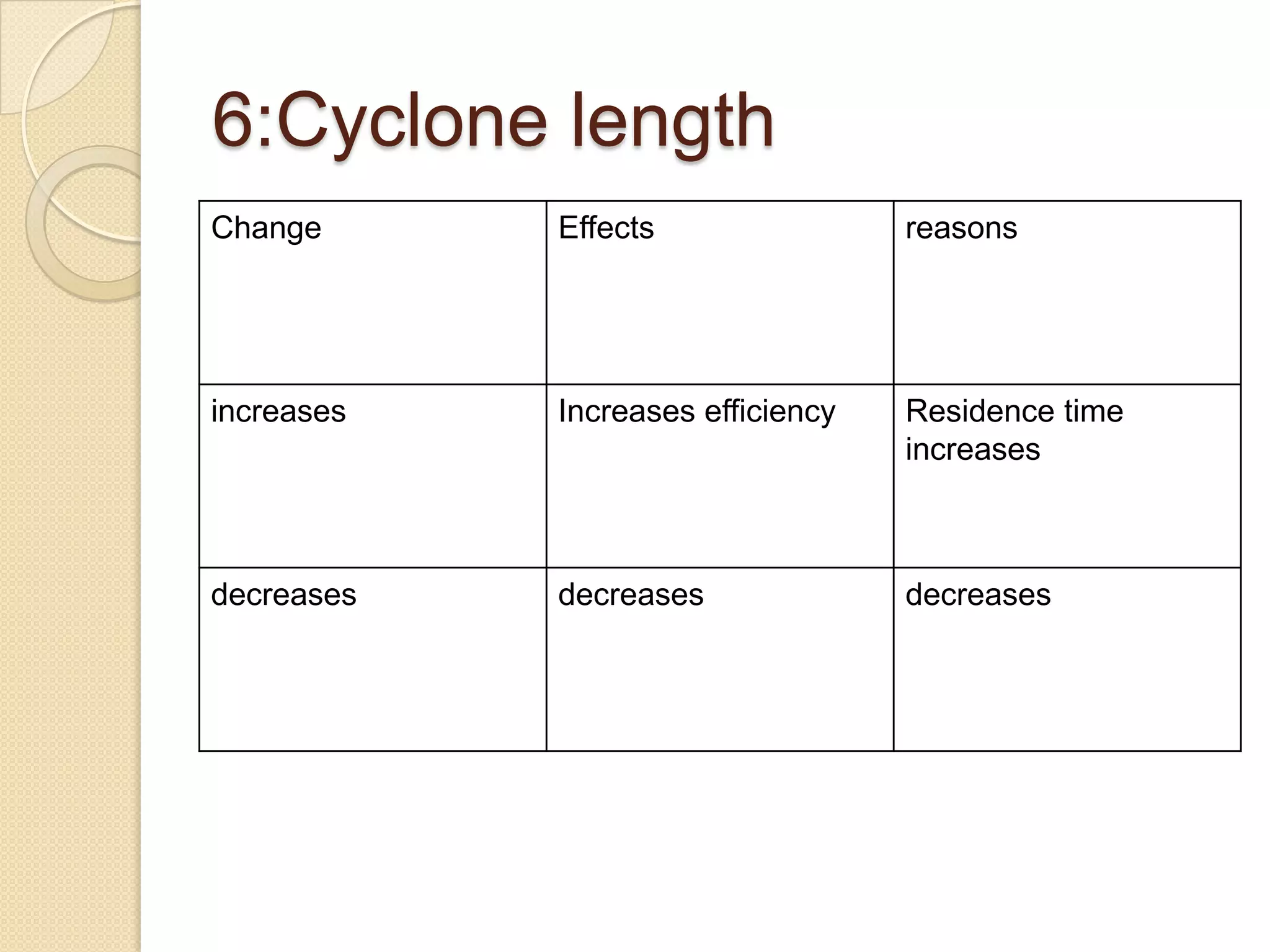
6:cyclone length
7:particle size
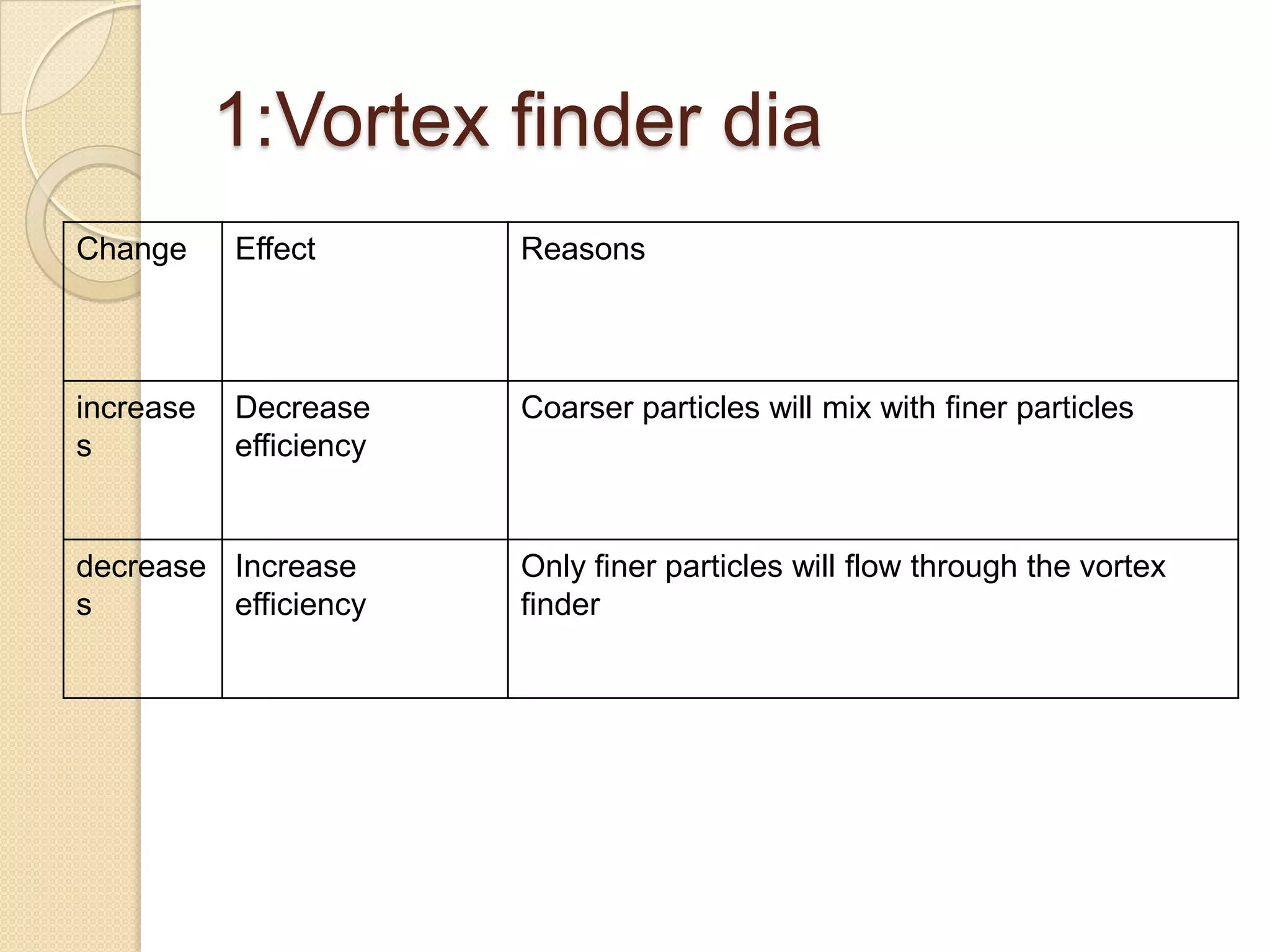
1:Vortex finder dia
Change     Effect       Reasons


increase   Decrease     Coarser particles will mix with finer particles
s          efficiency


decrease Increase       Only finer particles will flow through the vortex
s        efficiency     finder
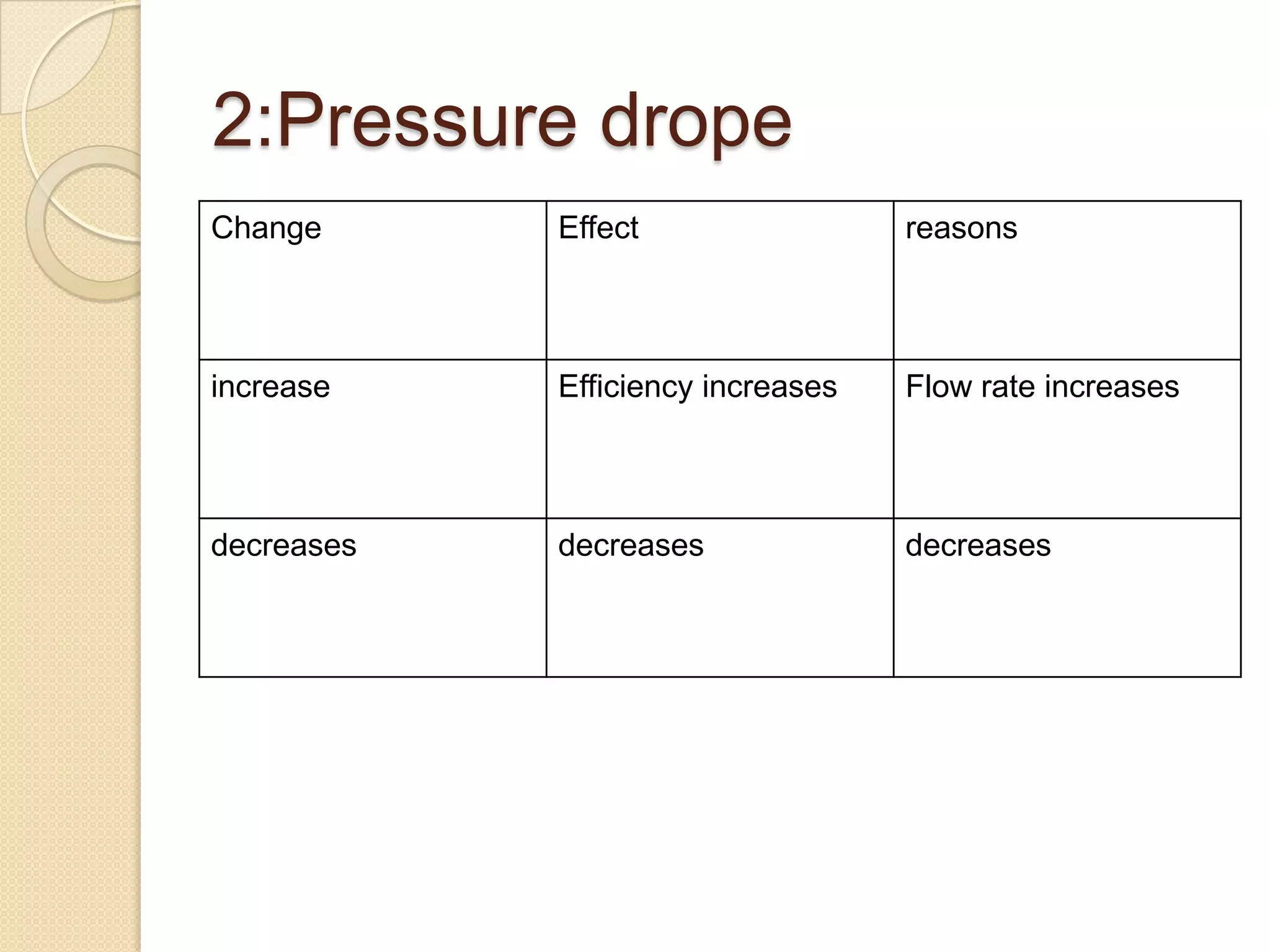
2:Pressure drope
Change      Effect                 reasons


increase    Efficiency increases   Flow rate increases


decreases   decreases              decreases
3:Apex dia
Change      Effect                 Reasons


increases   Decreases efficiency   Large volume of fluids
                                   will loose along with
                                   finer particles


decreases   increases              Large volume of Fluids
                                   will be available for
                                   overflow
4:Feed flow rate
Change      Effects                reasons


increases   Increases efficiency   Increases G.forces


deceases    decreases              Decreases G. forces
5:Cyclone dia
Change      Effects                Reasons


increases   Decreases efficiency   Decreases G.forces


decreases   increases              Increases G.forces
6:Cyclone length
Change      Effects                reasons


increases   Increases efficiency   Residence time
                                   increases


decreases   decreases              decreases
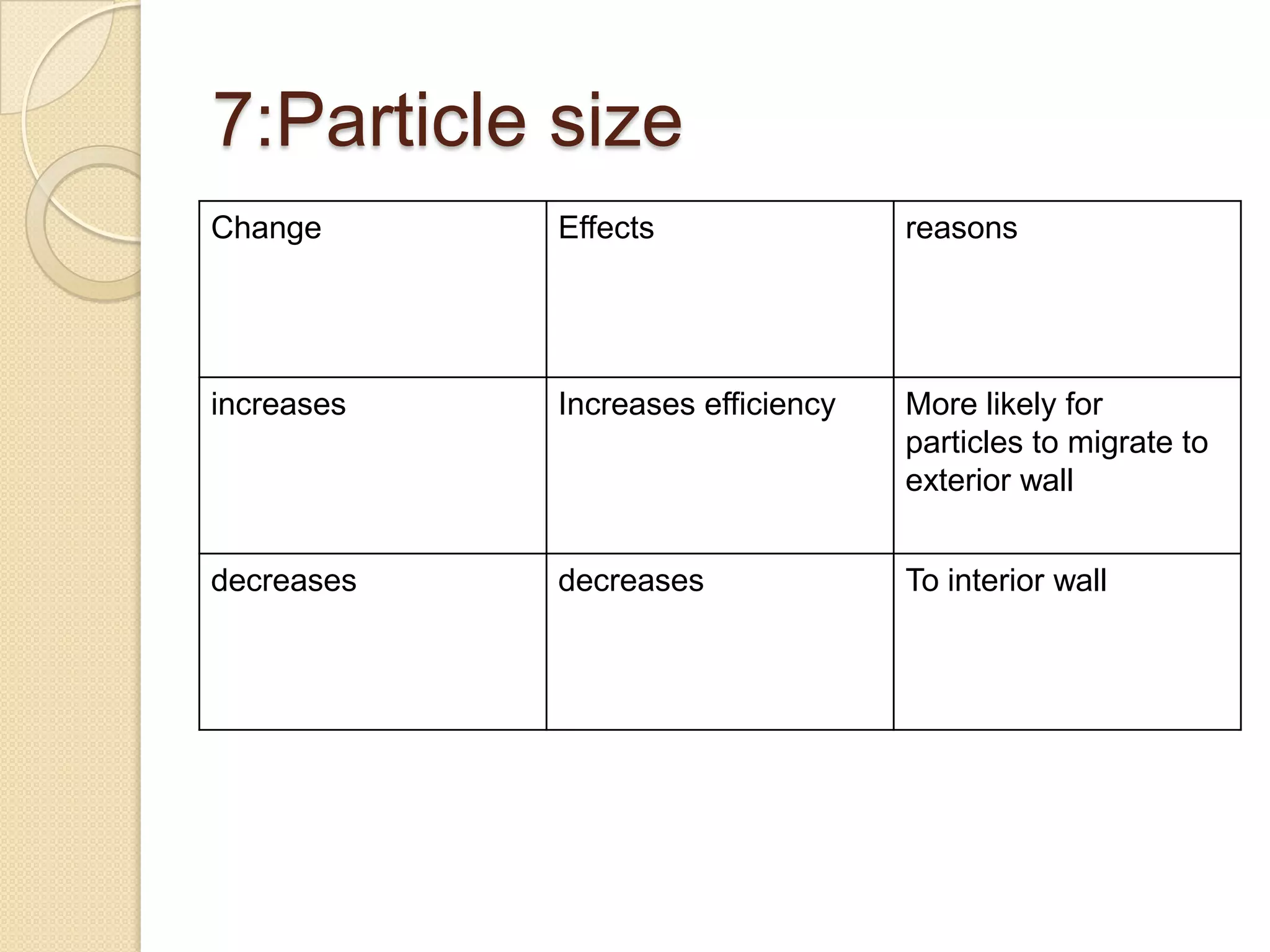
7:Particle size
Change      Effects                reasons


increases   Increases efficiency   More likely for
                                   particles to migrate to
                                   exterior wall


decreases   decreases              To interior wall
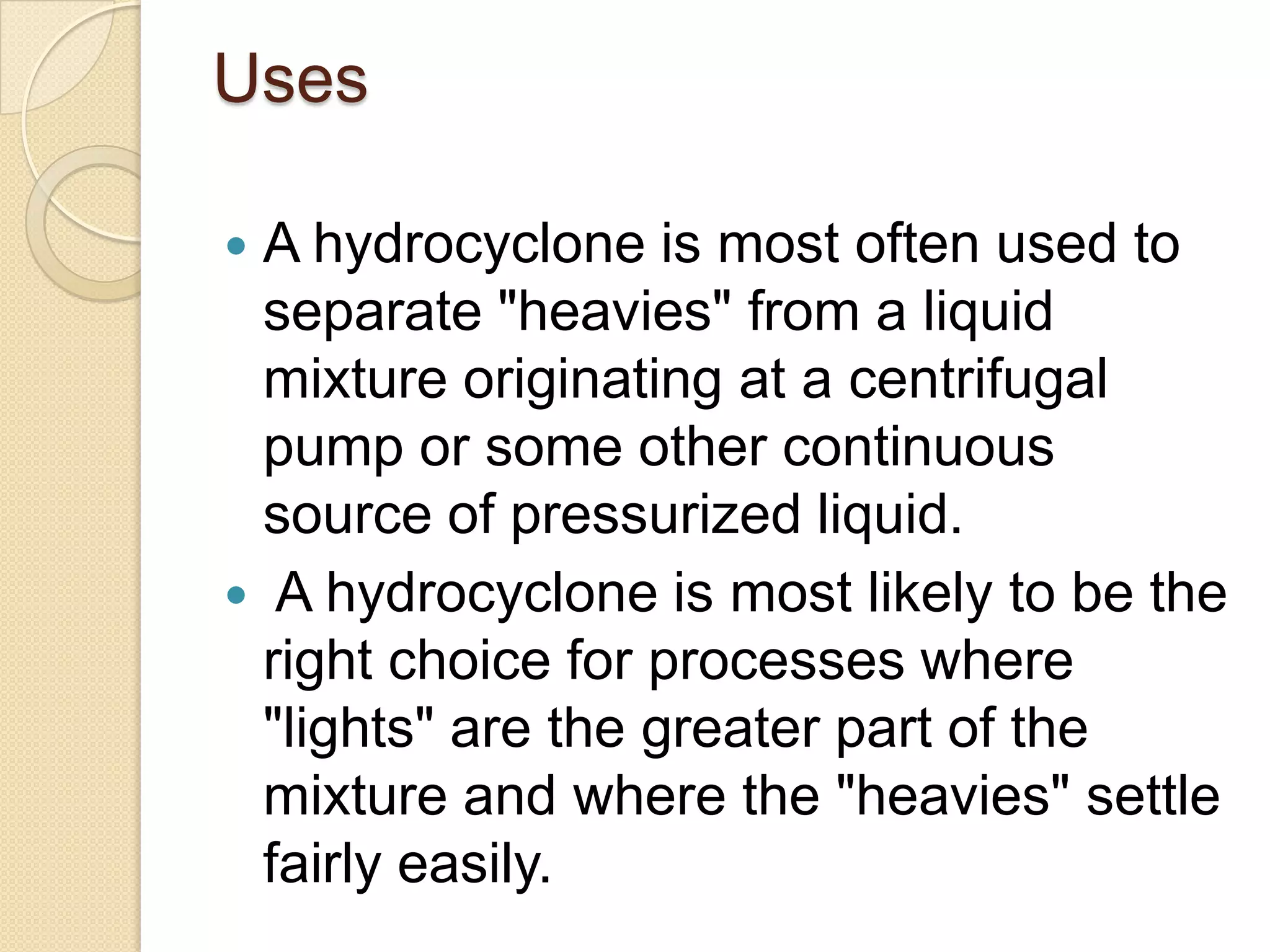
Uses

 A hydrocyclone is most often used to
  separate "heavies" from a liquid
  mixture originating at a centrifugal
  pump or some other continuous
  source of pressurized liquid.
 A hydrocyclone is most likely to be the
  right choice for processes where
  "lights" are the greater part of the
  mixture and where the "heavies" settle
  fairly easily.
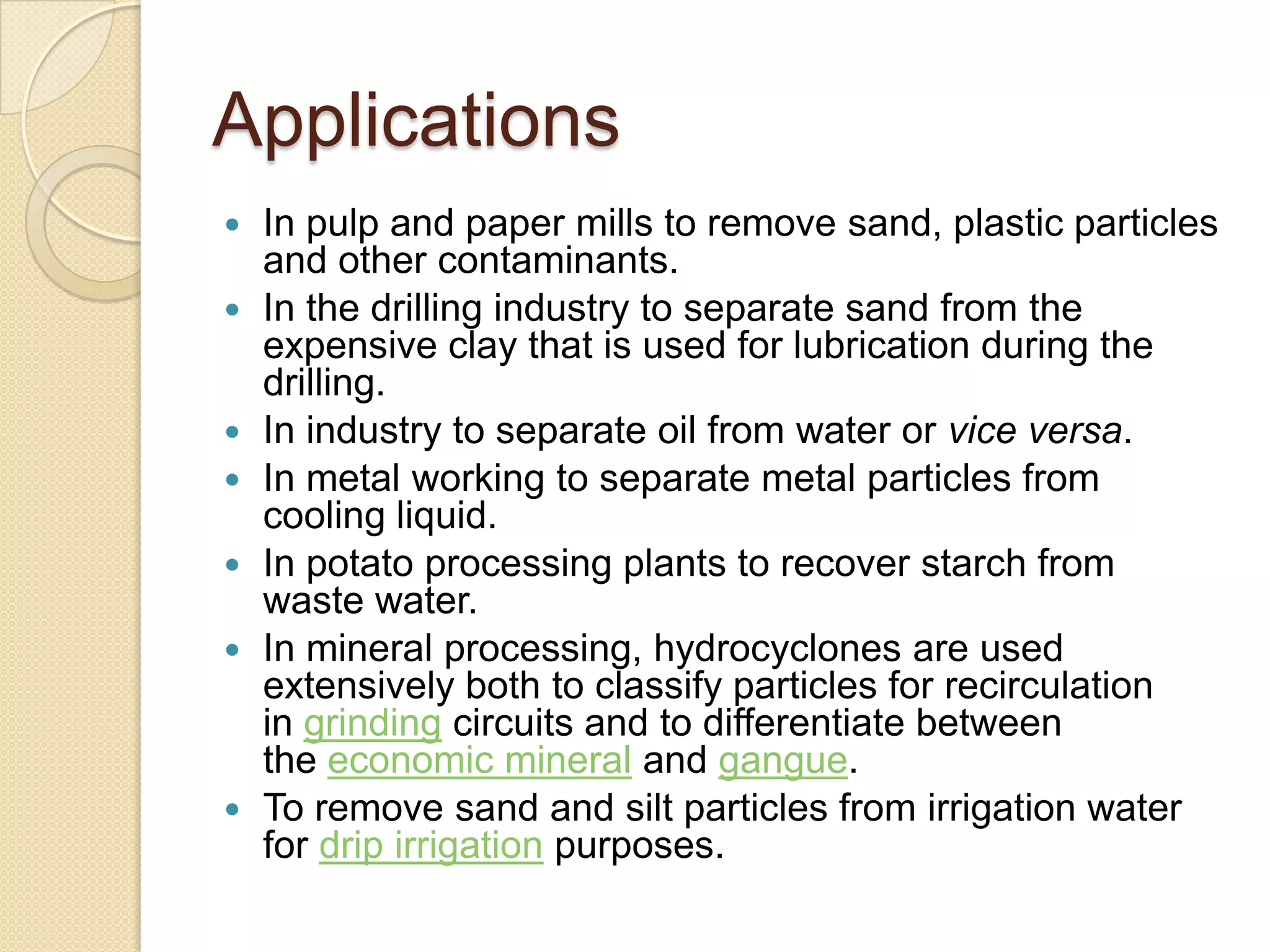
Applications
   In pulp and paper mills to remove sand, plastic particles
    and other contaminants.
   In the drilling industry to separate sand from the
    expensive clay that is used for lubrication during the
    drilling.
   In industry to separate oil from water or vice versa.
   In metal working to separate metal particles from
    cooling liquid.
   In potato processing plants to recover starch from
    waste water.
   In mineral processing, hydrocyclones are used
    extensively both to classify particles for recirculation
    in grinding circuits and to differentiate between
    the economic mineral and gangue.
   To remove sand and silt particles from irrigation water
    for drip irrigation purposes.
End….

 thanks a lot.

An introduction to basic hydrocyclone

  • 1.
    786 Shakib Afzal Reg:09PWMIN0581 Semester#7th Department of mining engineering UET peshawer
  • 2.
    An Introduction toBasic Hydrocyclone • A cyclone is a piece of process equipment capable of handling large volumes of slurry and classifying it based on differences in size and/or specific gravity. • Based on these differences a cyclone will then produce two products – an underflow and an overflow.
  • 3.
  • 4.
    Working principals A cycloneuses centrifugal force that is generated by a slurry entering the feed chamber under pressure to make the separations. This centrifugal force causes the larger particles to be ‘slung’ to the cone wall while the finer material is kept closer to the center. The vortex finder draws the water and fine material to the overflow while the coarser material makes its way out the apex.
  • 5.
    Internal Workings ofa Cyclone Slurry enters through the feed inlet. Cycloning starts to take place in the feed chamber. Heavier particles move to the outer walls and move toward the apex. Lighter particles stay near the center of the cone and are carried away by the vortex finder.
  • 6.
    Factors affecting Hydrocyclone performance 1:vortex finder 2:pressure drope 3:apex dia 4:feed flow rate 5:cyclone dia 6:cyclone length 7:particle size
  • 7.
    1:Vortex finder dia Change Effect Reasons increase Decrease Coarser particles will mix with finer particles s efficiency decrease Increase Only finer particles will flow through the vortex s efficiency finder
  • 8.
    2:Pressure drope Change Effect reasons increase Efficiency increases Flow rate increases decreases decreases decreases
  • 9.
    3:Apex dia Change Effect Reasons increases Decreases efficiency Large volume of fluids will loose along with finer particles decreases increases Large volume of Fluids will be available for overflow
  • 10.
    4:Feed flow rate Change Effects reasons increases Increases efficiency Increases G.forces deceases decreases Decreases G. forces
  • 11.
    5:Cyclone dia Change Effects Reasons increases Decreases efficiency Decreases G.forces decreases increases Increases G.forces
  • 12.
    6:Cyclone length Change Effects reasons increases Increases efficiency Residence time increases decreases decreases decreases
  • 13.
    7:Particle size Change Effects reasons increases Increases efficiency More likely for particles to migrate to exterior wall decreases decreases To interior wall
  • 14.
    Uses  A hydrocycloneis most often used to separate "heavies" from a liquid mixture originating at a centrifugal pump or some other continuous source of pressurized liquid.  A hydrocyclone is most likely to be the right choice for processes where "lights" are the greater part of the mixture and where the "heavies" settle fairly easily.
  • 15.
    Applications  In pulp and paper mills to remove sand, plastic particles and other contaminants.  In the drilling industry to separate sand from the expensive clay that is used for lubrication during the drilling.  In industry to separate oil from water or vice versa.  In metal working to separate metal particles from cooling liquid.  In potato processing plants to recover starch from waste water.  In mineral processing, hydrocyclones are used extensively both to classify particles for recirculation in grinding circuits and to differentiate between the economic mineral and gangue.  To remove sand and silt particles from irrigation water for drip irrigation purposes.
  • 16.

Editor's Notes

  • #2 the hydrocyclone