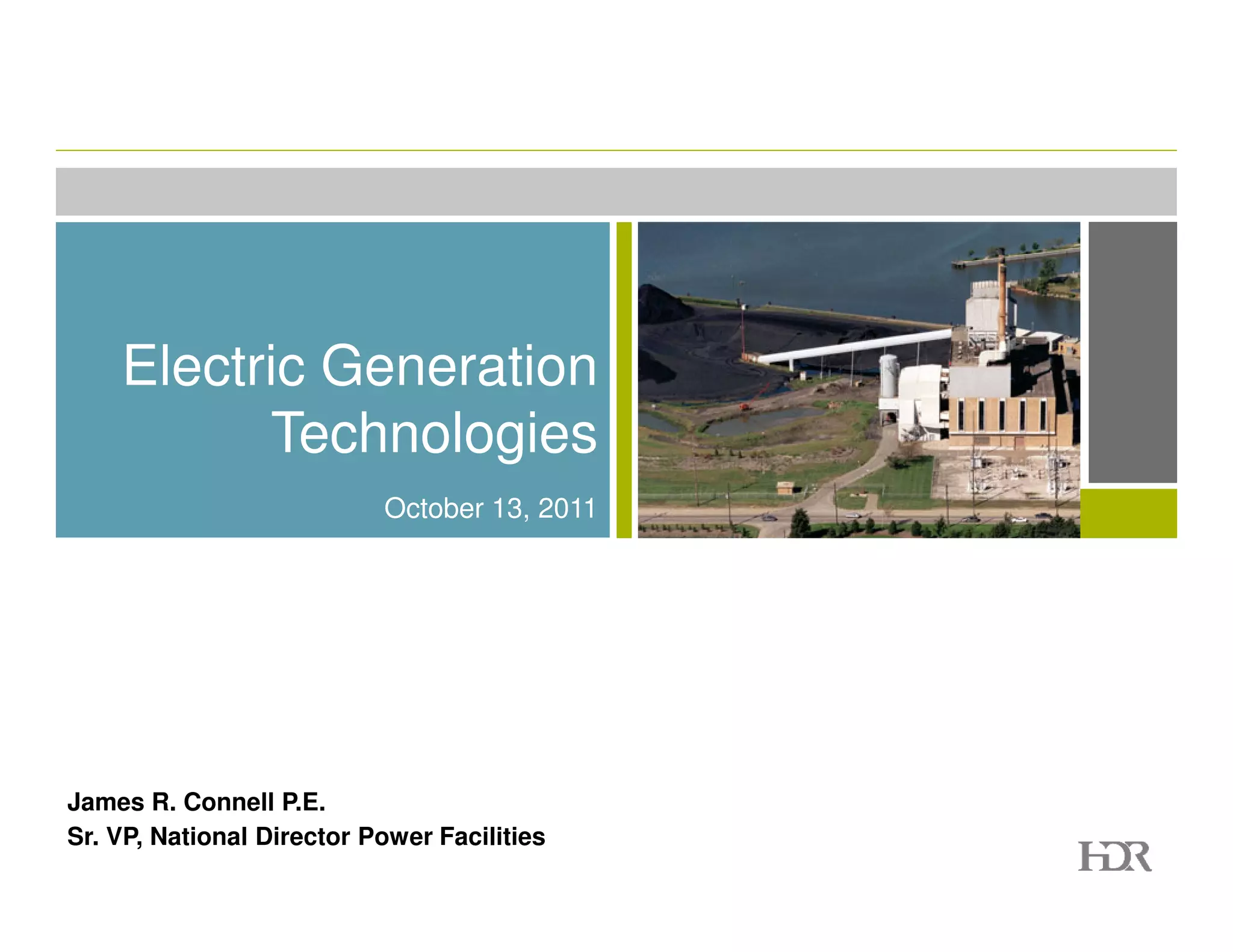

Electric Generation
          Technologies
                           October 13, 2011


James R. Connell P.E.
Sr. VP, National Director Power Facilities
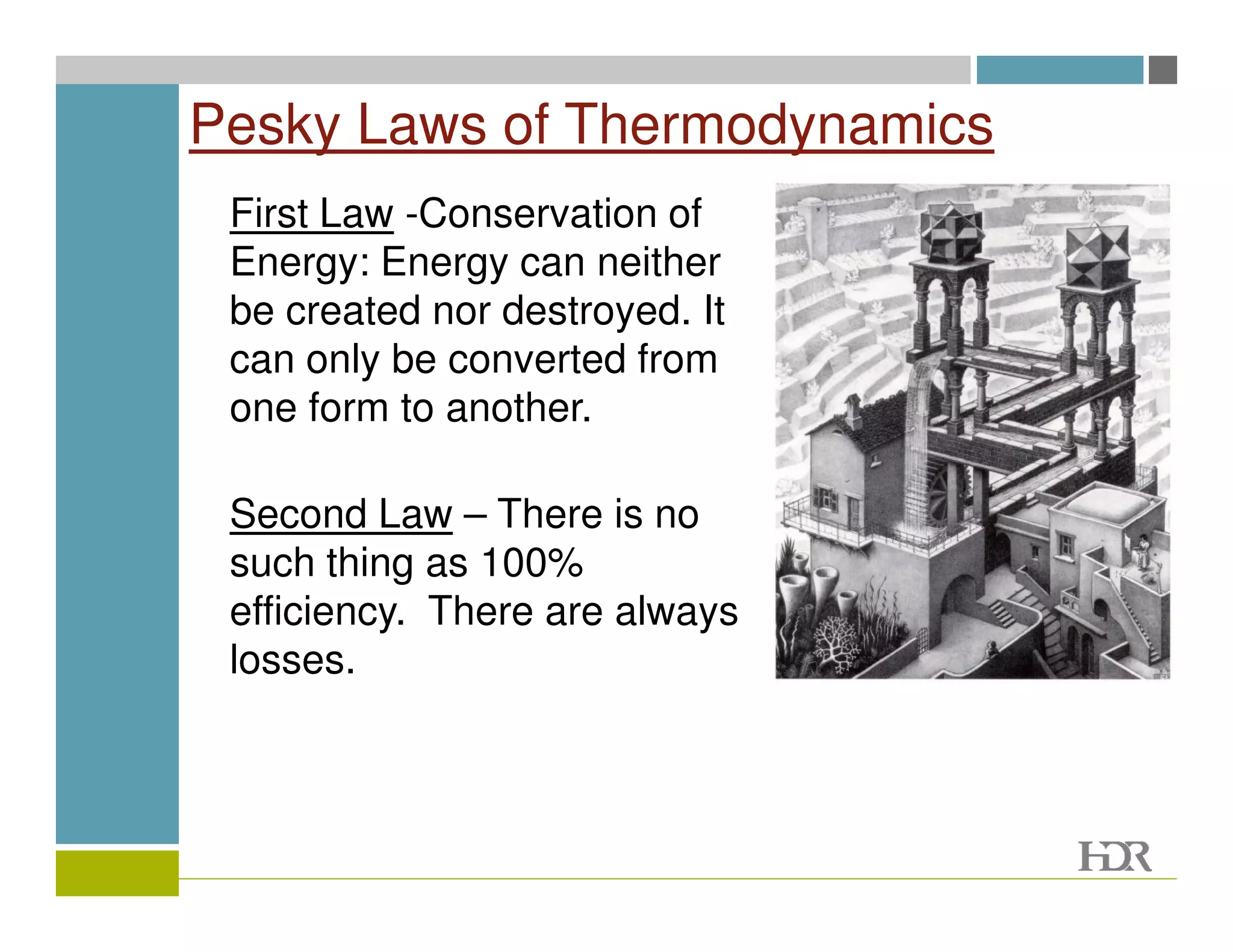
Pesky Laws of Thermodynamics
 First Law -Conservation of
 Energy: Energy can neither
 be created nor destroyed. It
 can only be converted from
 one form to another.

 Second Law – There is no
 such thing as 100%
 efficiency. There are always
 losses.
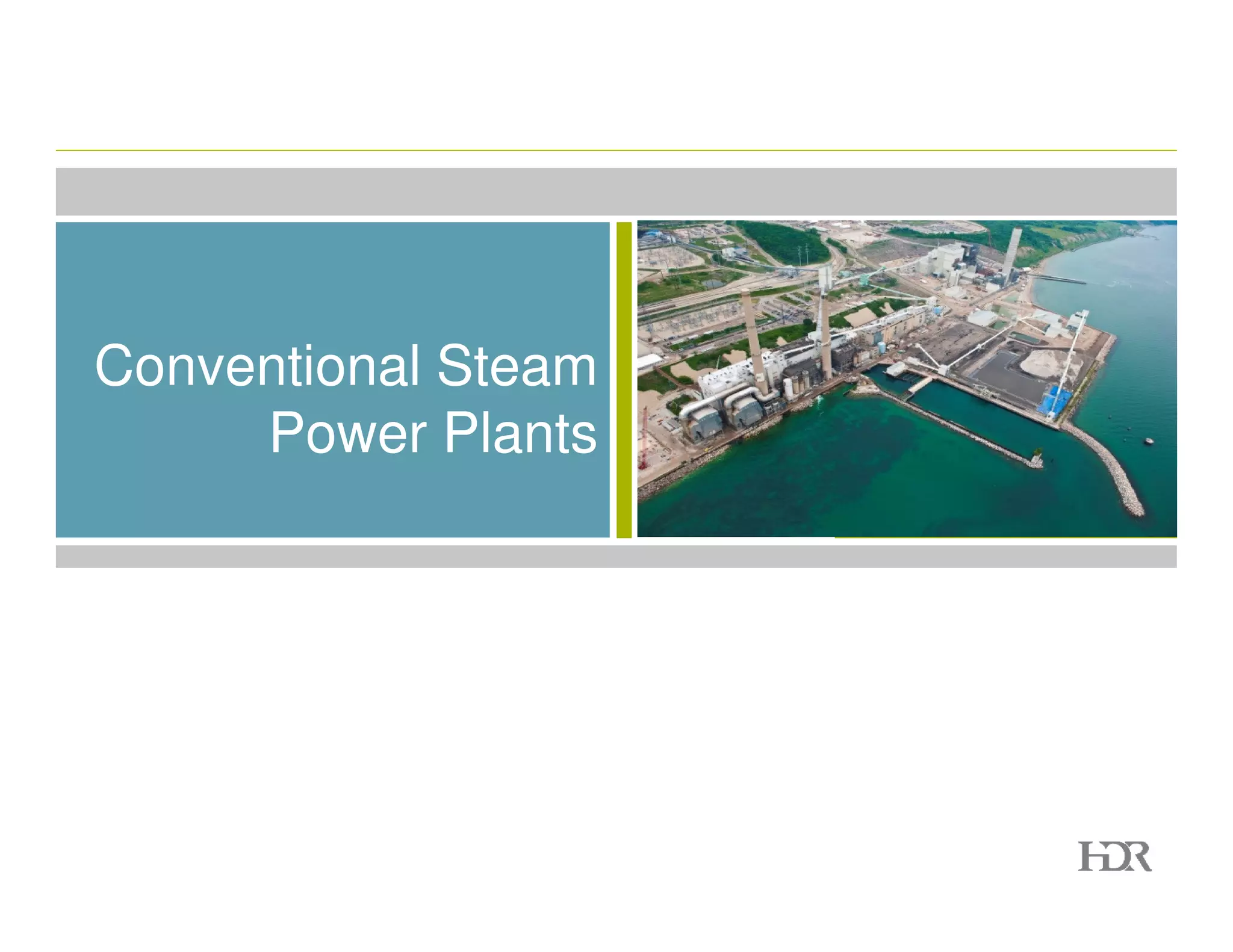
Conventional Steam
     Power Plants
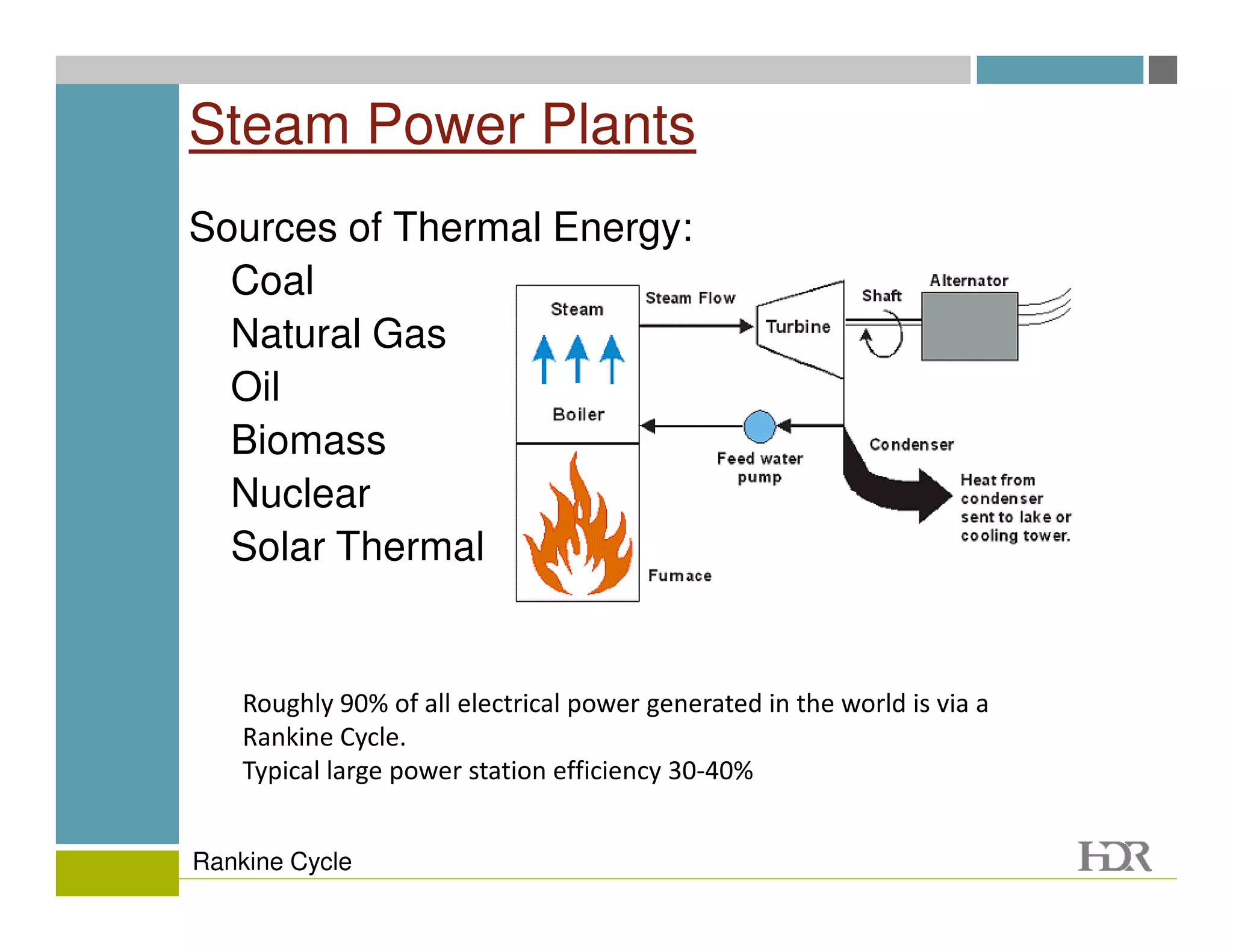
Steam Power Plants
Sources of Thermal Energy:
  Coal
  Natural Gas
  Oil
  Biomass
  Nuclear
  Solar Thermal


    Roughly 90% of all electrical power generated in the world is via a
    Rankine Cycle.
    Typical large power station efficiency 30-40%


Rankine Cycle
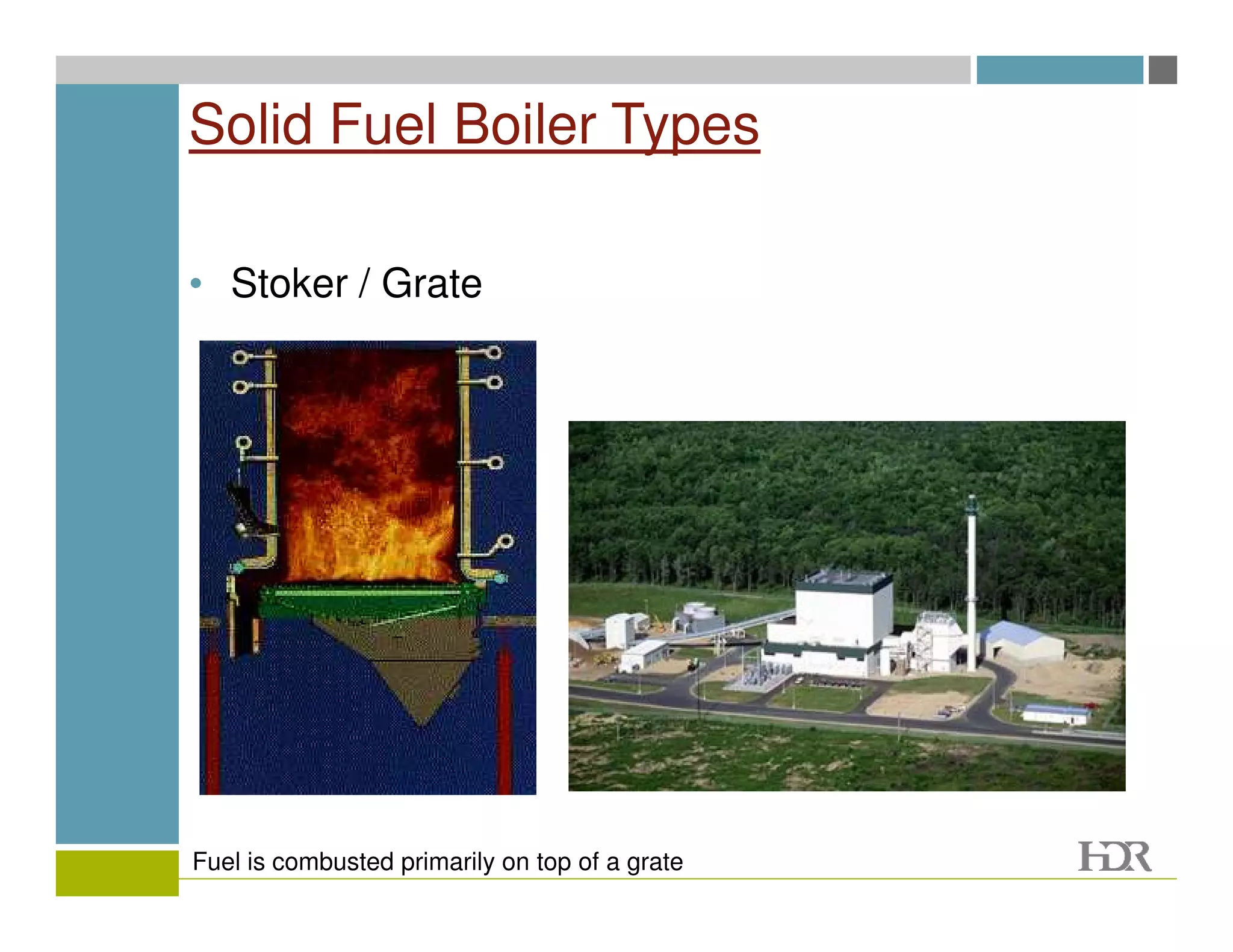
Solid Fuel Boiler Types

• Stoker / Grate


Fuel is combusted primarily on top of a grate
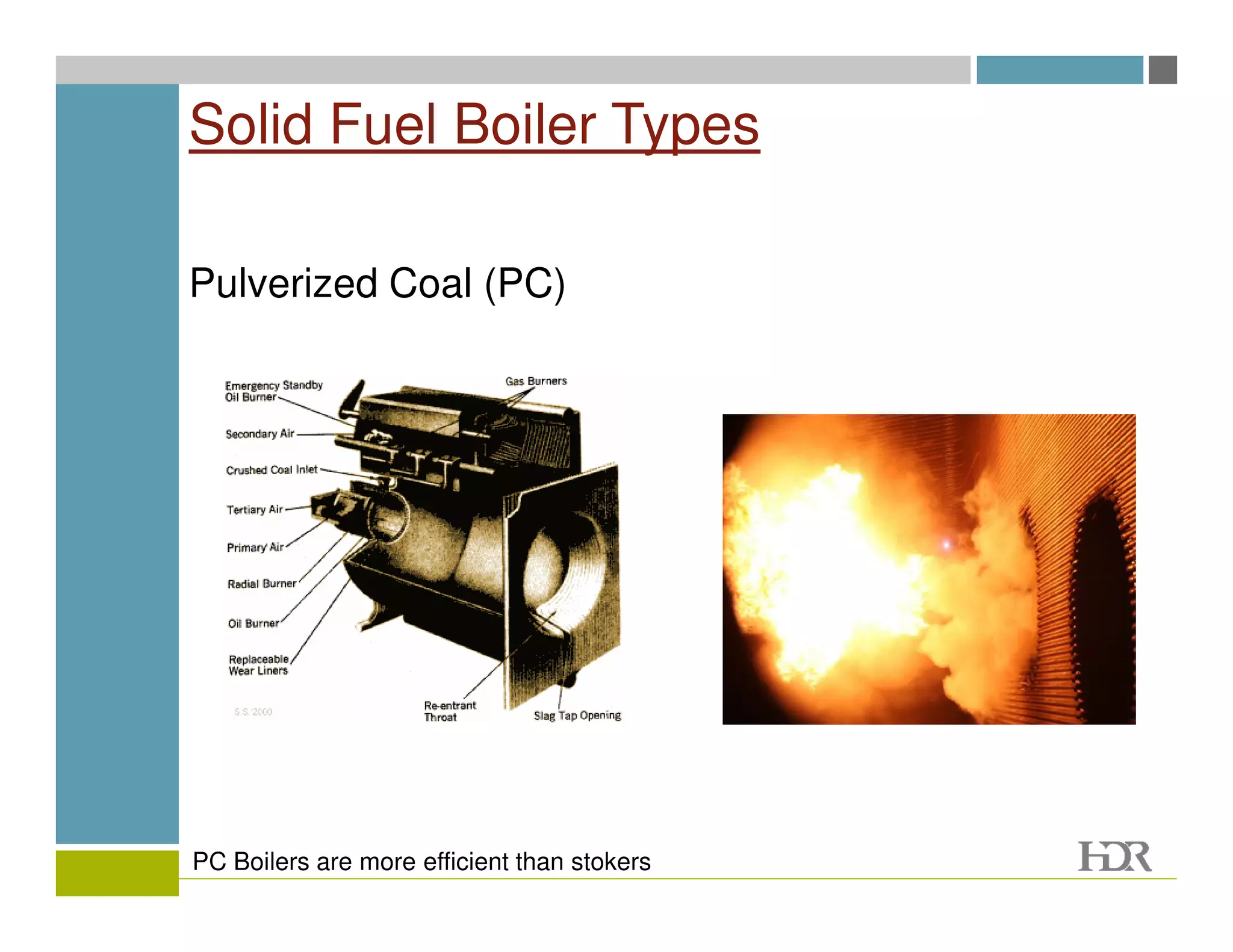
Solid Fuel Boiler Types

Pulverized Coal (PC)


PC Boilers are more efficient than stokers
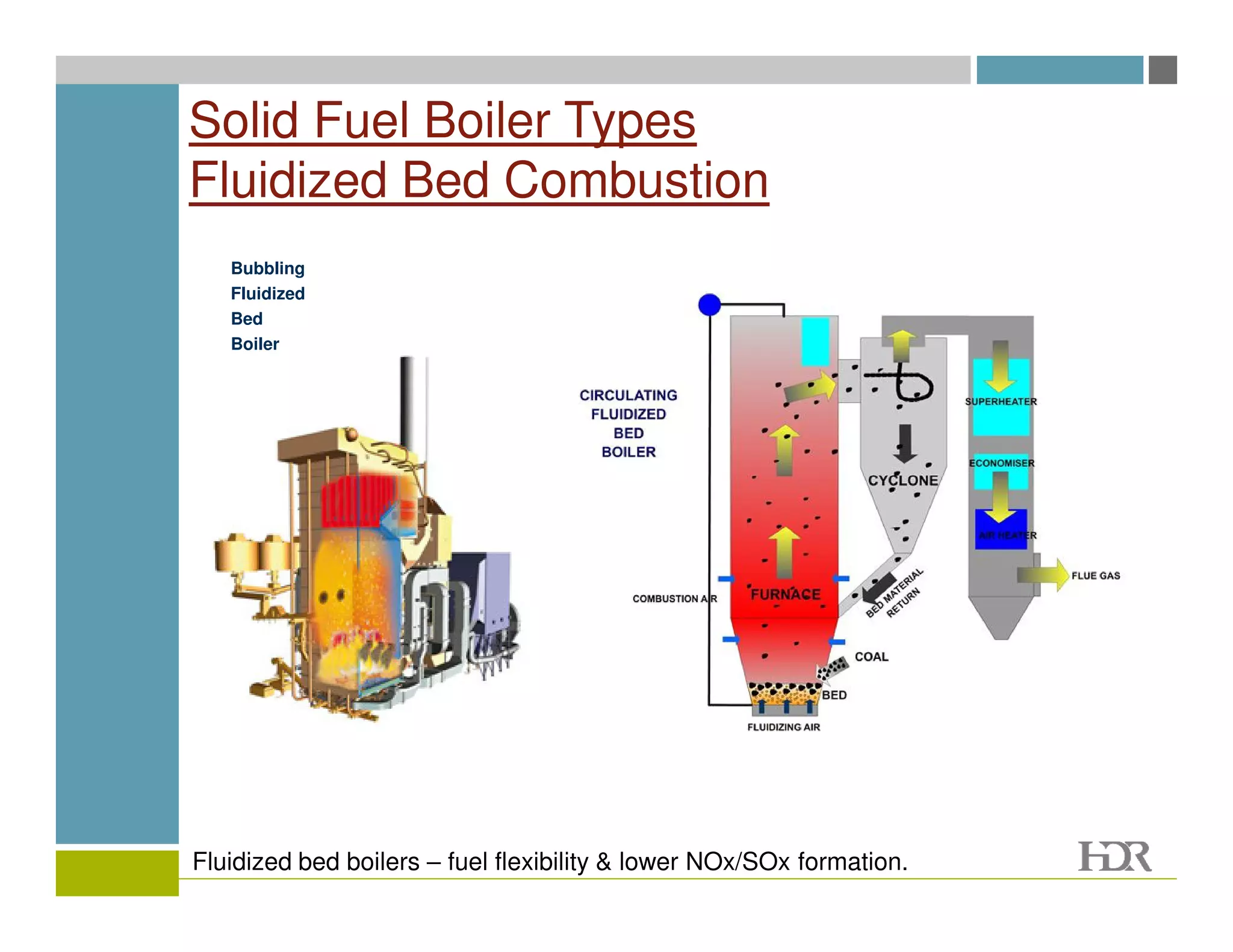
Solid Fuel Boiler Types
Fluidized Bed Combustion
   Bubbling
   Fluidized
   Bed
   Boiler


Fluidized bed boilers – fuel flexibility & lower NOx/SOx formation.
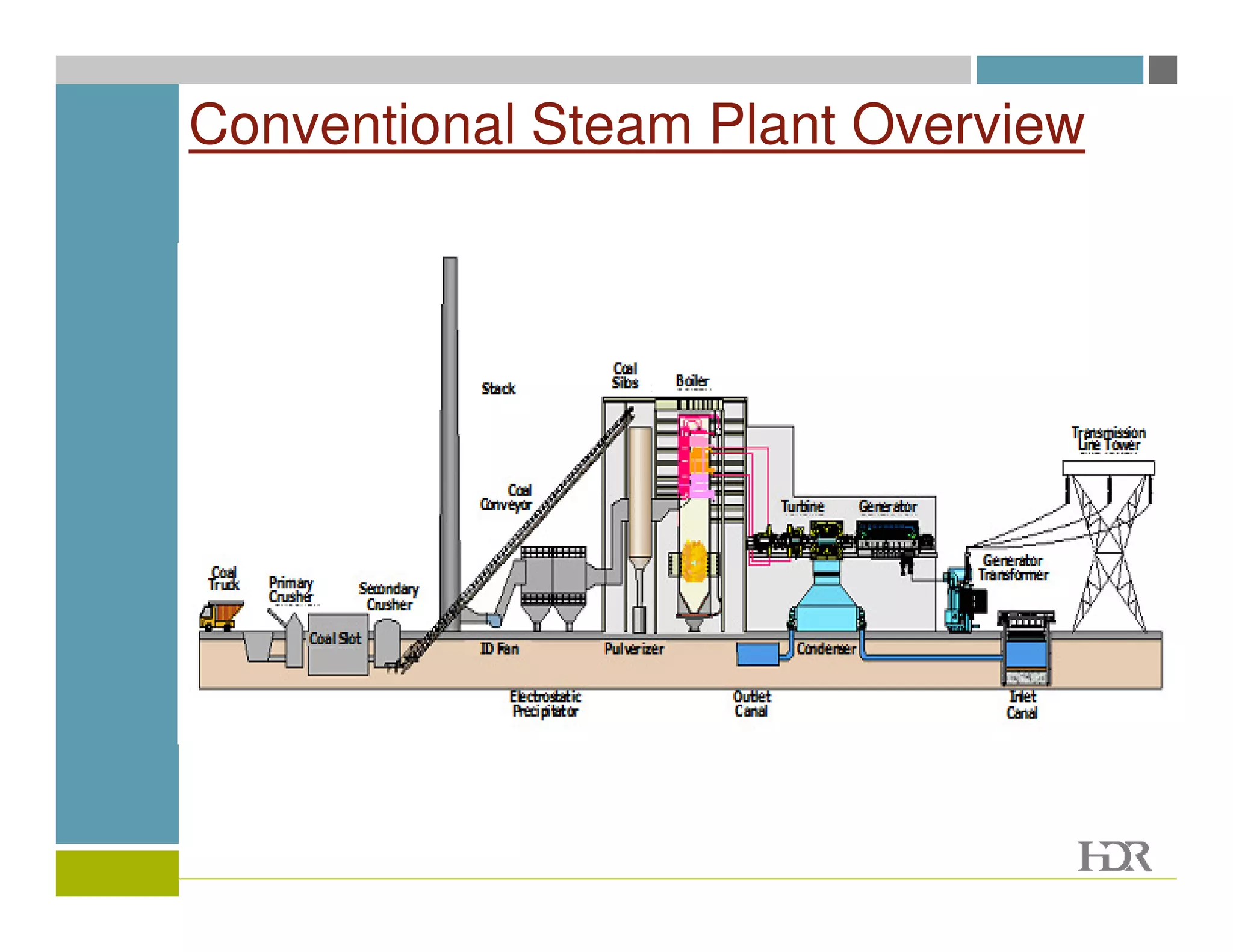
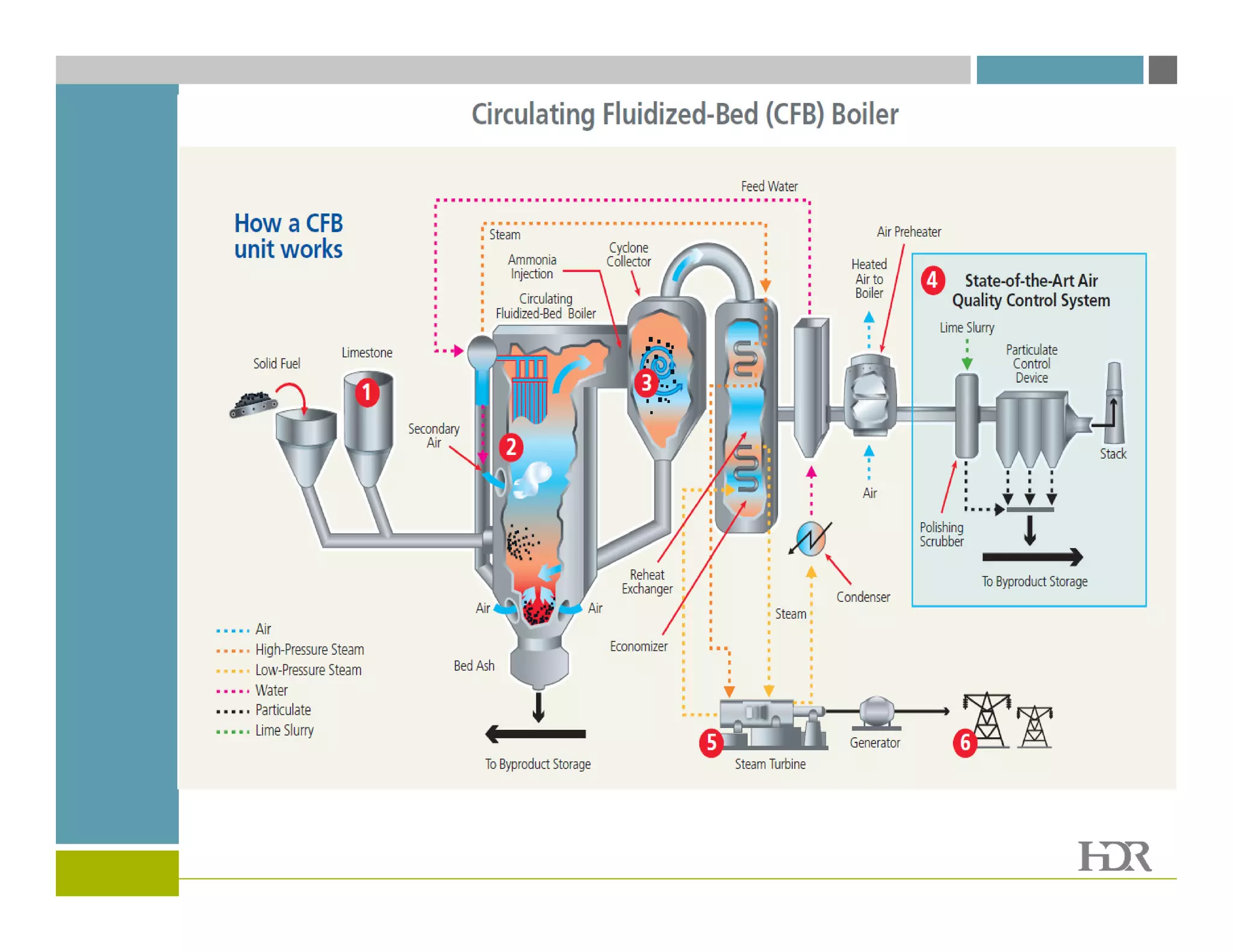
Conventional Steam Plant Overview
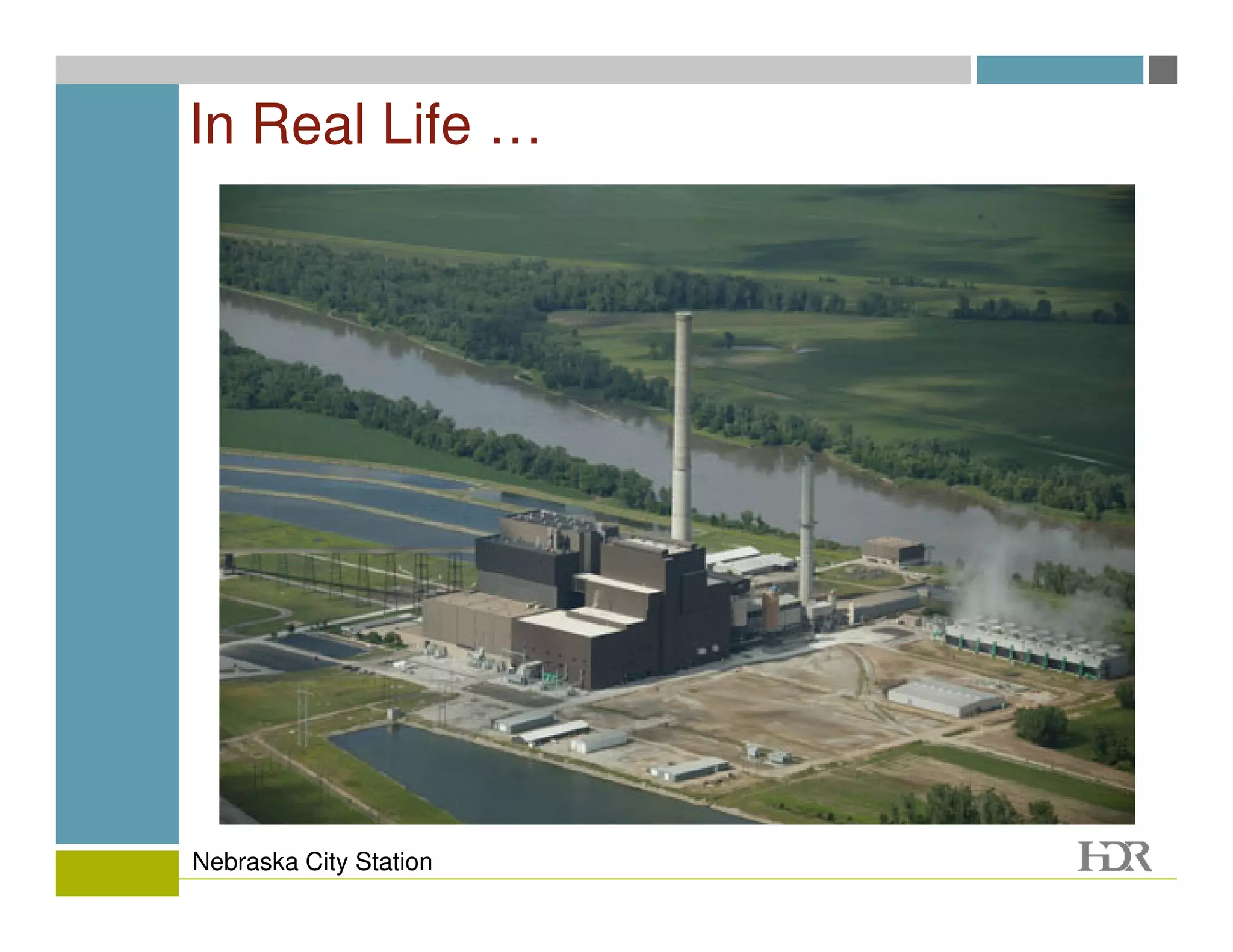
In Real Life …


Nebraska City Station
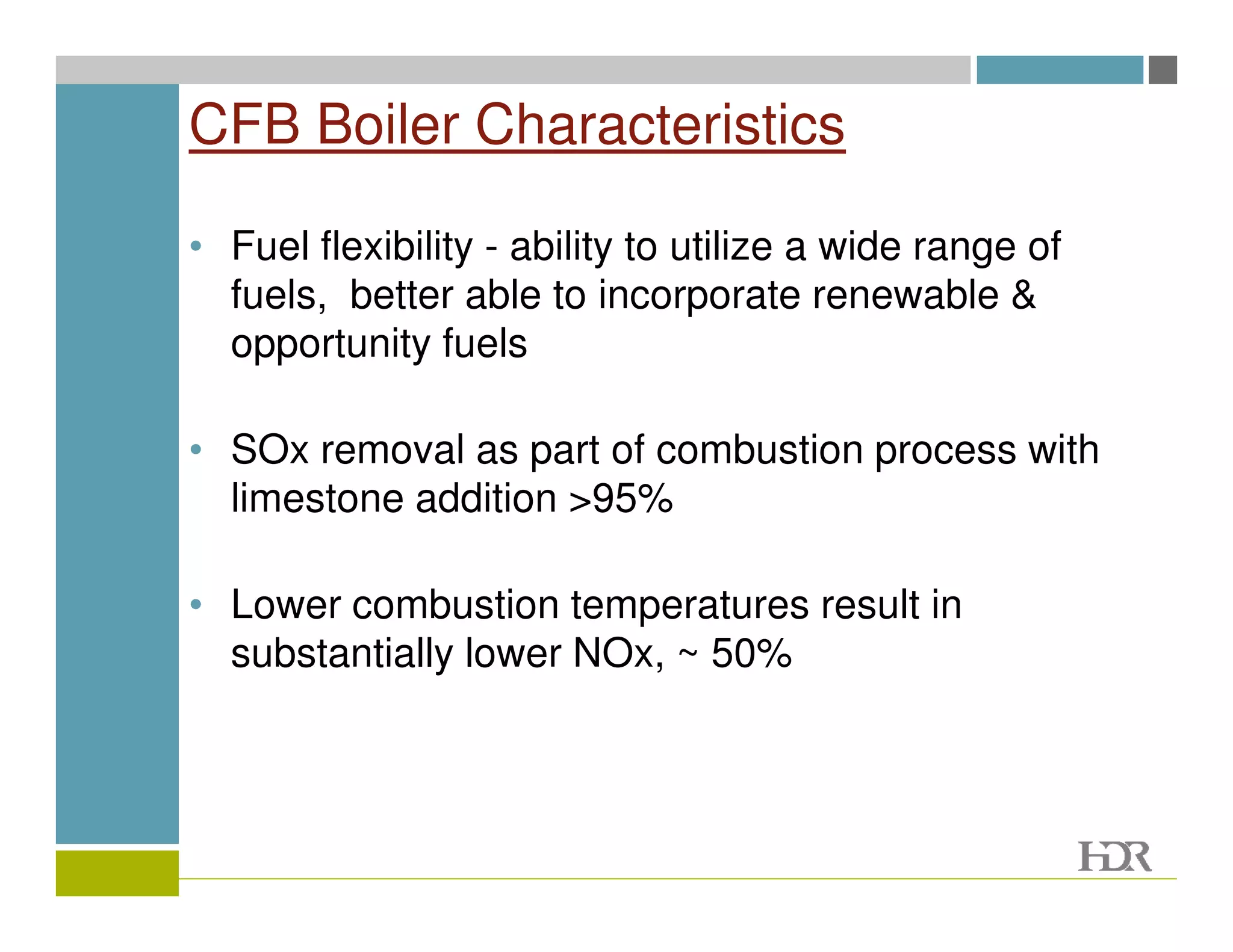
CFB Boiler Characteristics

• Fuel flexibility - ability to utilize a wide range of
  fuels, better able to incorporate renewable &
  opportunity fuels

• SOx removal as part of combustion process with
  limestone addition >95%

• Lower combustion temperatures result in
  substantially lower NOx, ~ 50%
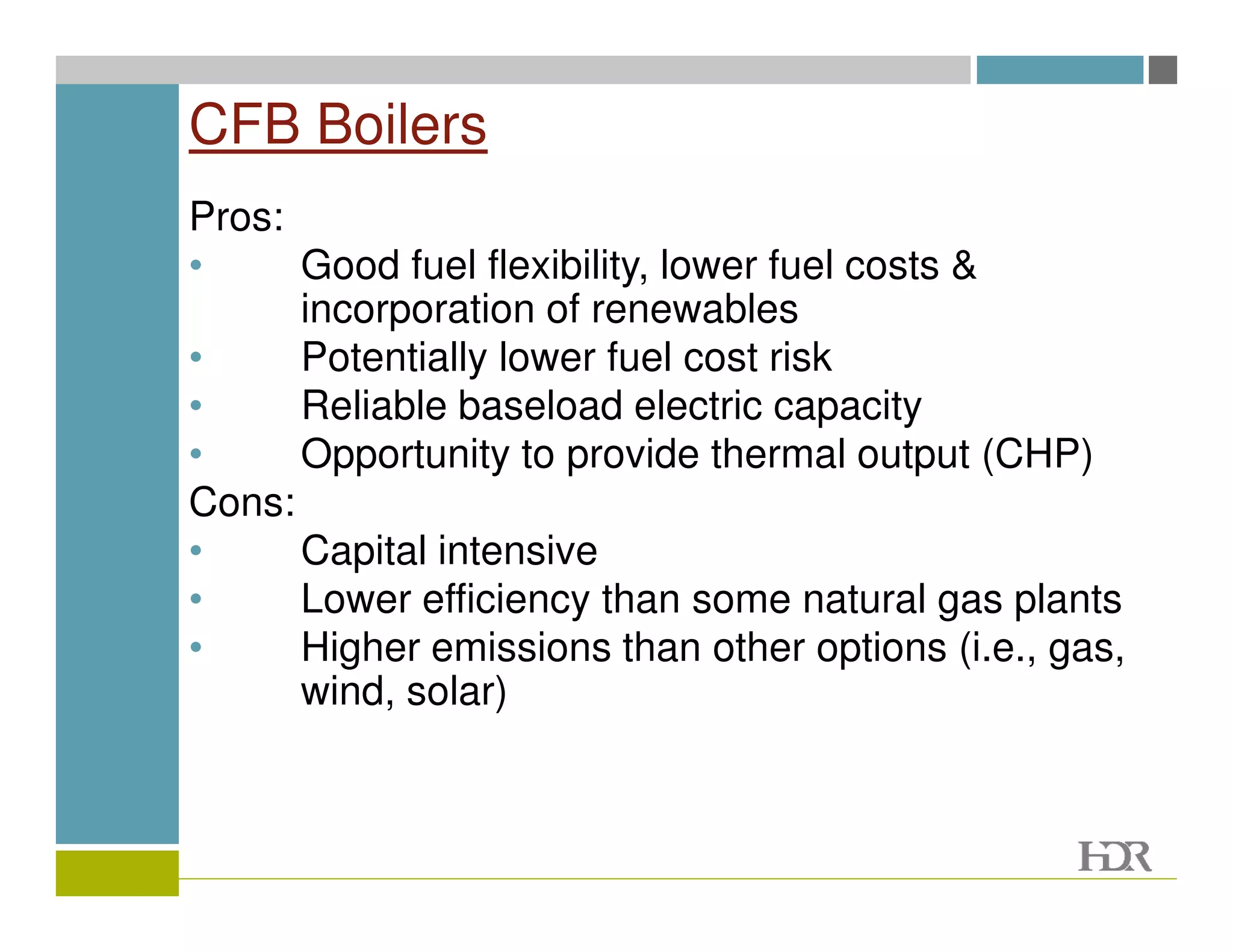
CFB Boilers
Pros:
•     Good fuel flexibility, lower fuel costs &
      incorporation of renewables
•     Potentially lower fuel cost risk
•     Reliable baseload electric capacity
•     Opportunity to provide thermal output (CHP)
Cons:
•     Capital intensive
•     Lower efficiency than some natural gas plants
•     Higher emissions than other options (i.e., gas,
      wind, solar)
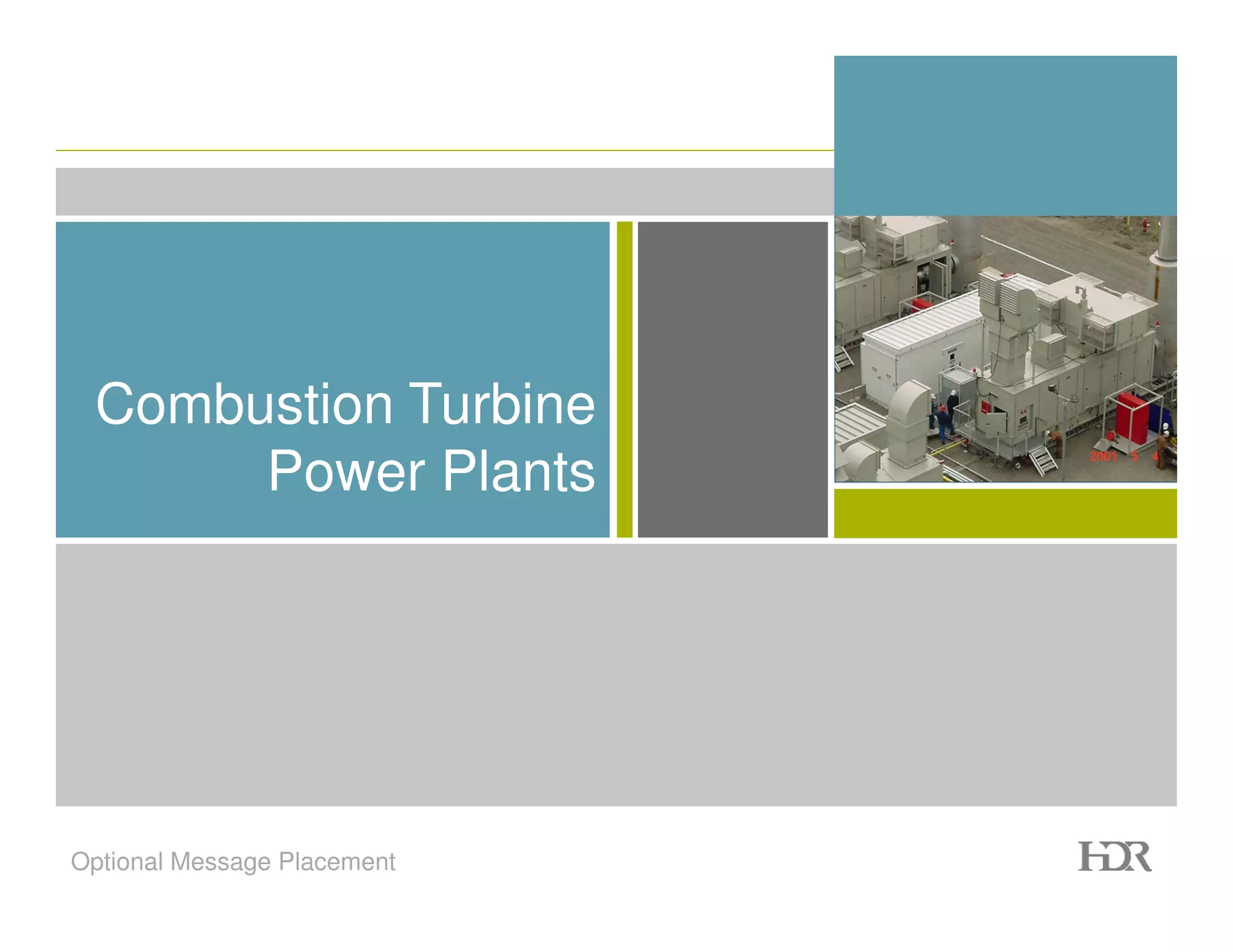
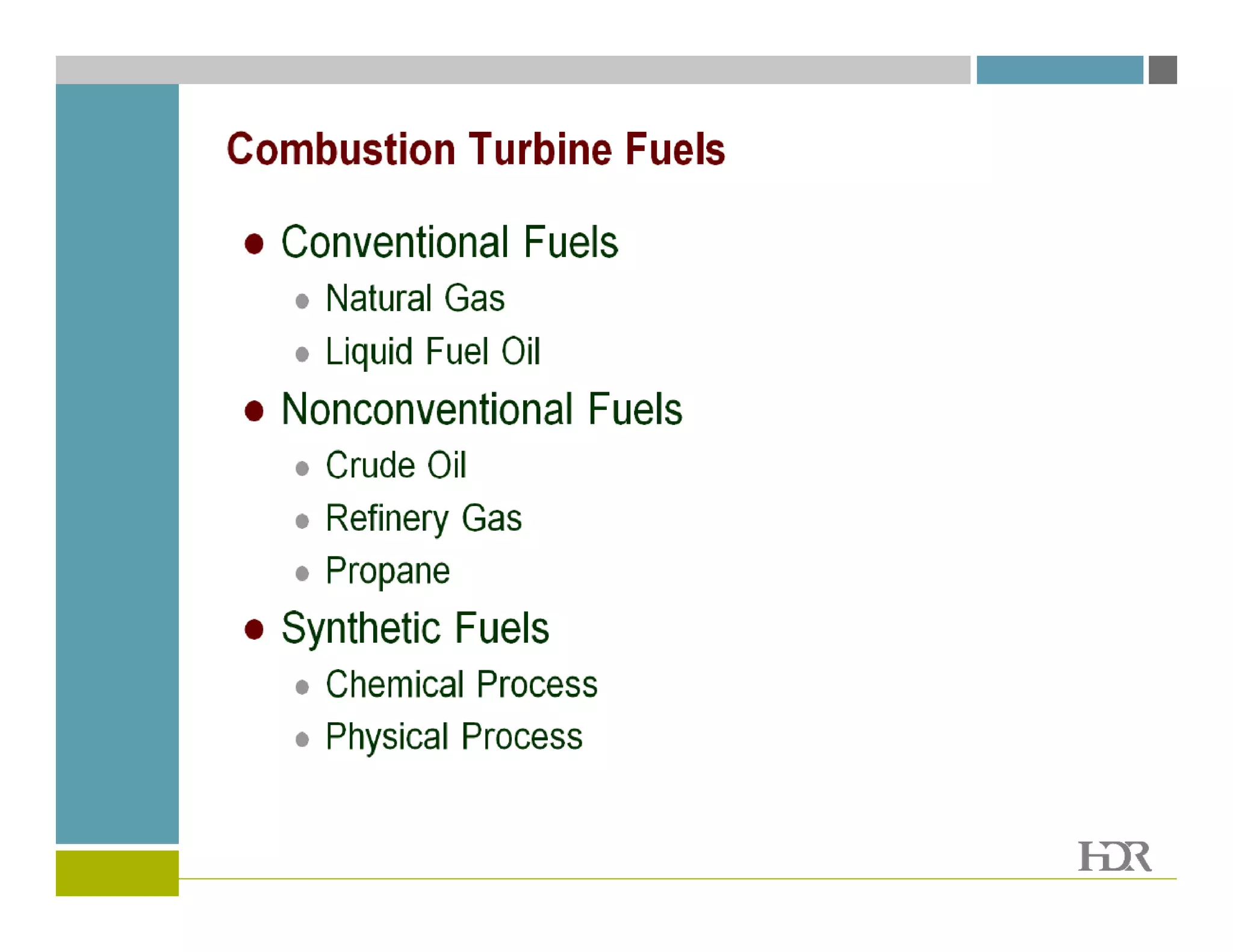
Combustion Turbine
      Power Plants


Optional Message Placement
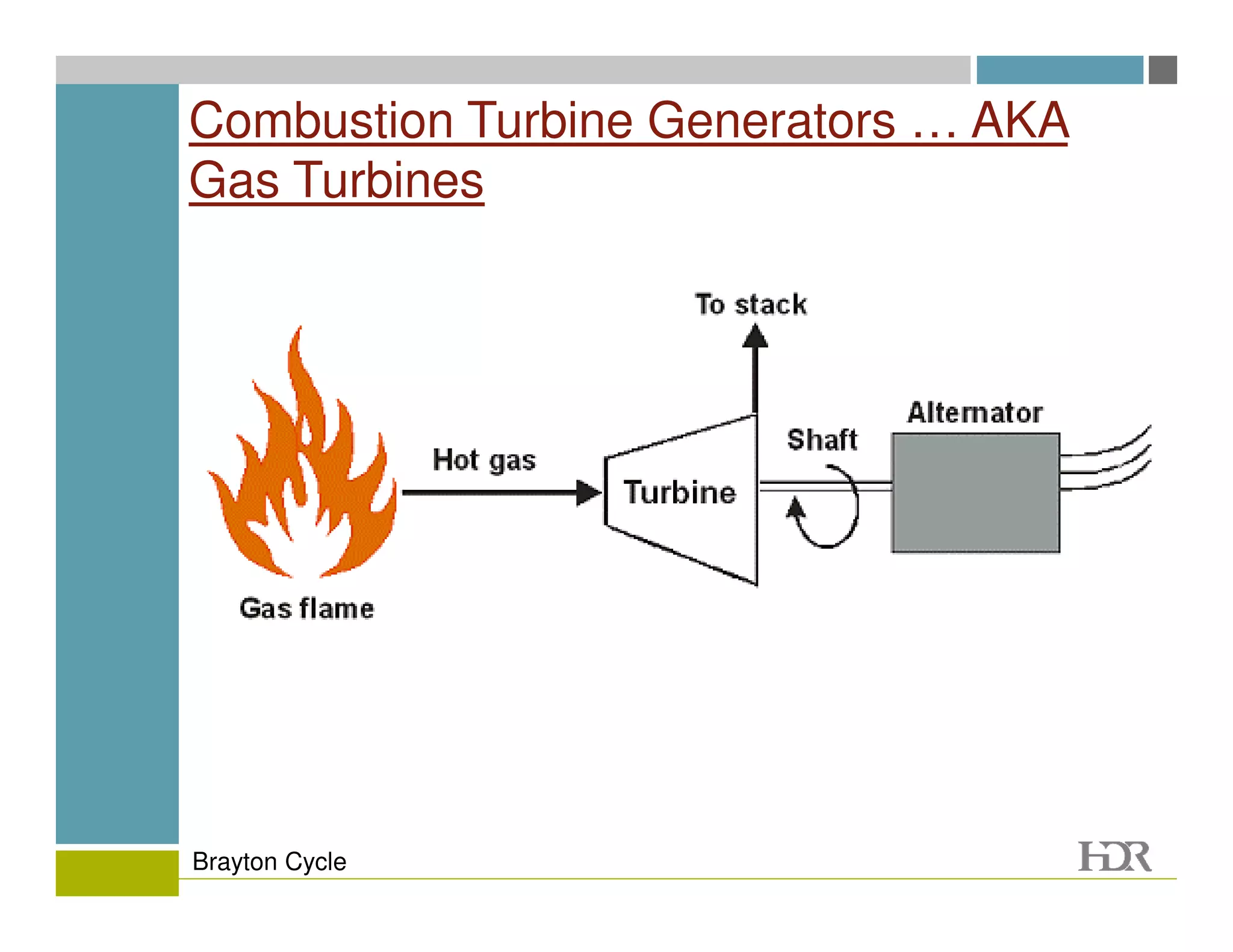
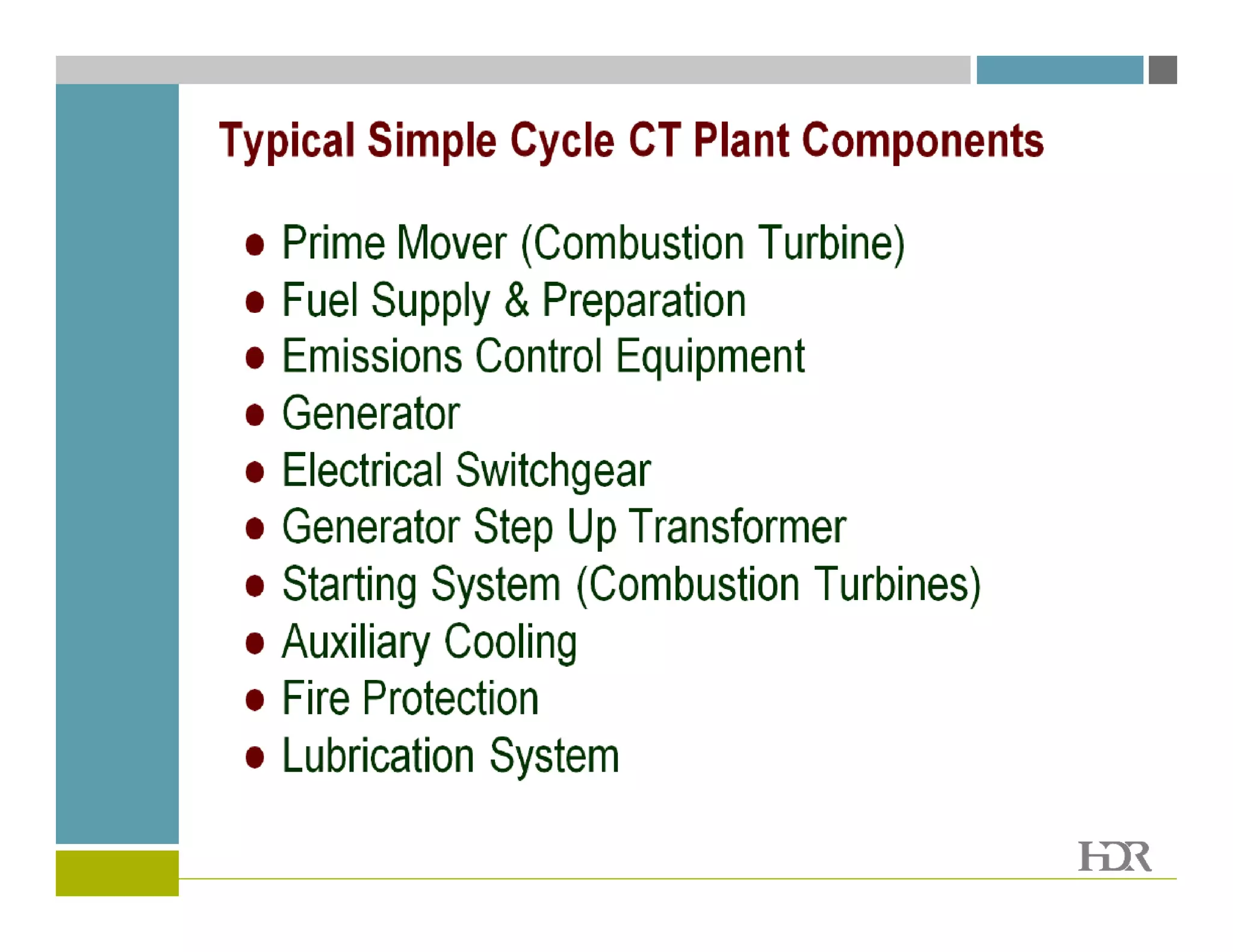
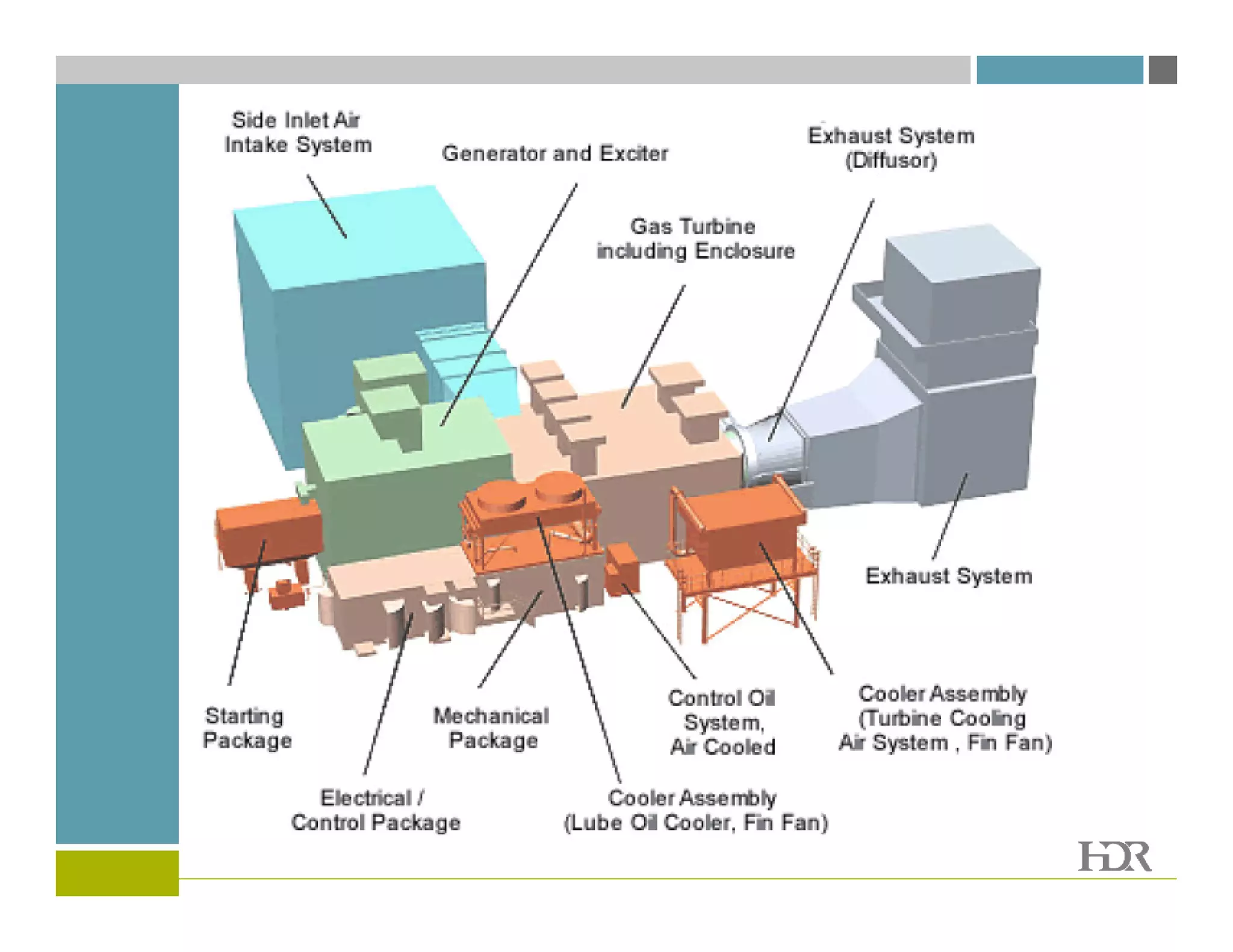
Combustion Turbine Generators … AKA
Gas Turbines


Brayton Cycle
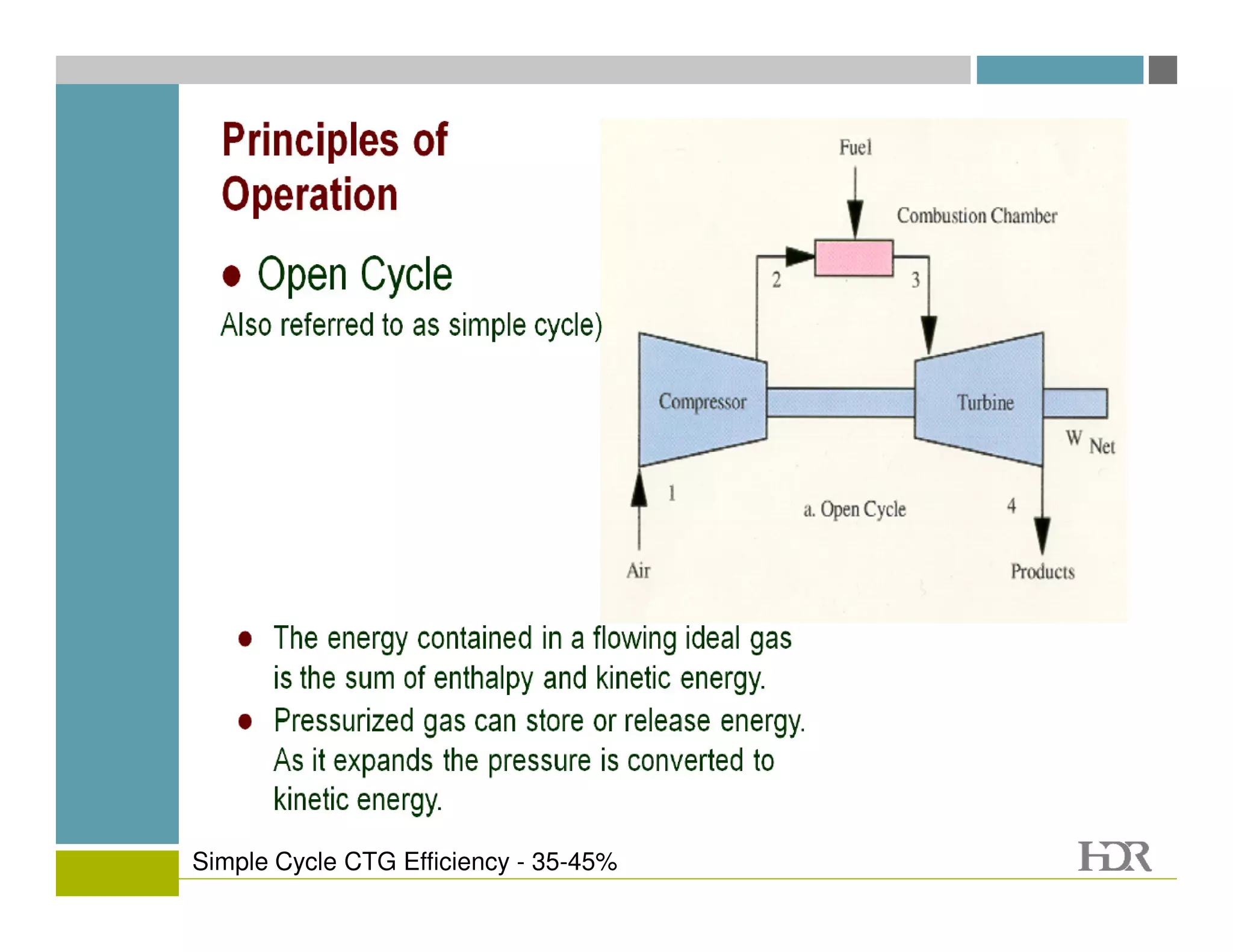
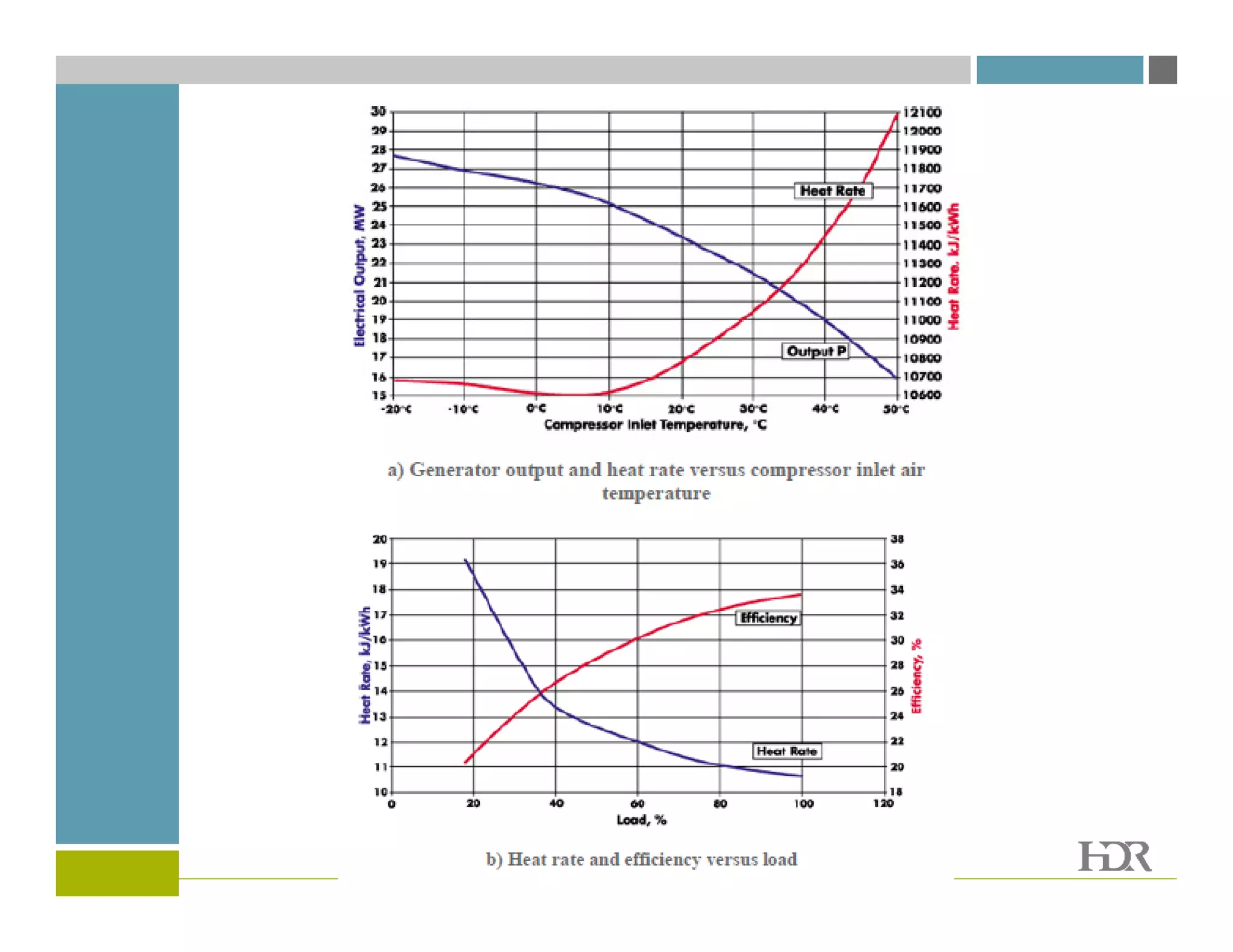
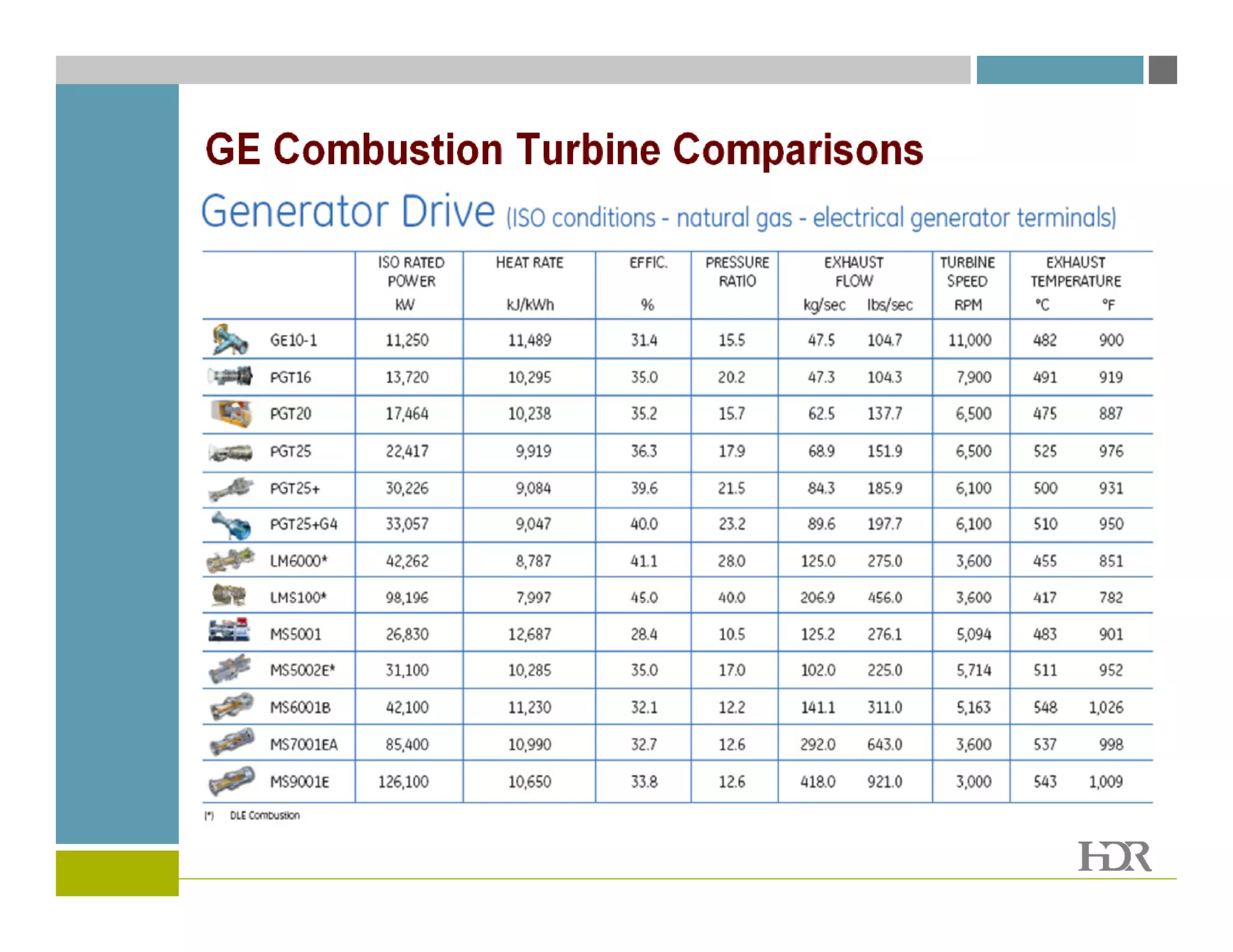
Simple Cycle CTG Efficiency - 35-45%
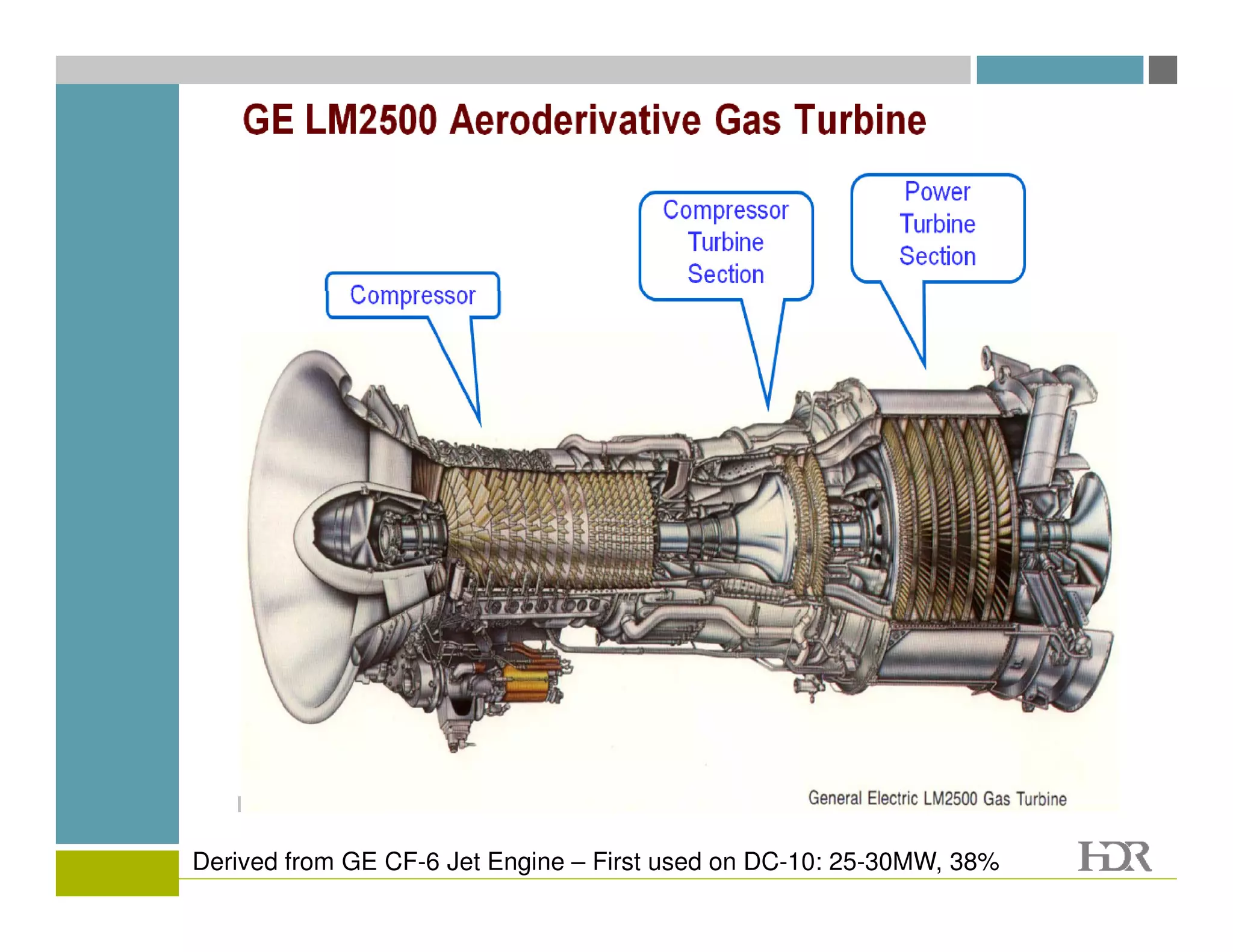
Derived from GE CF-6 Jet Engine – First used on DC-10: 25-30MW, 38%
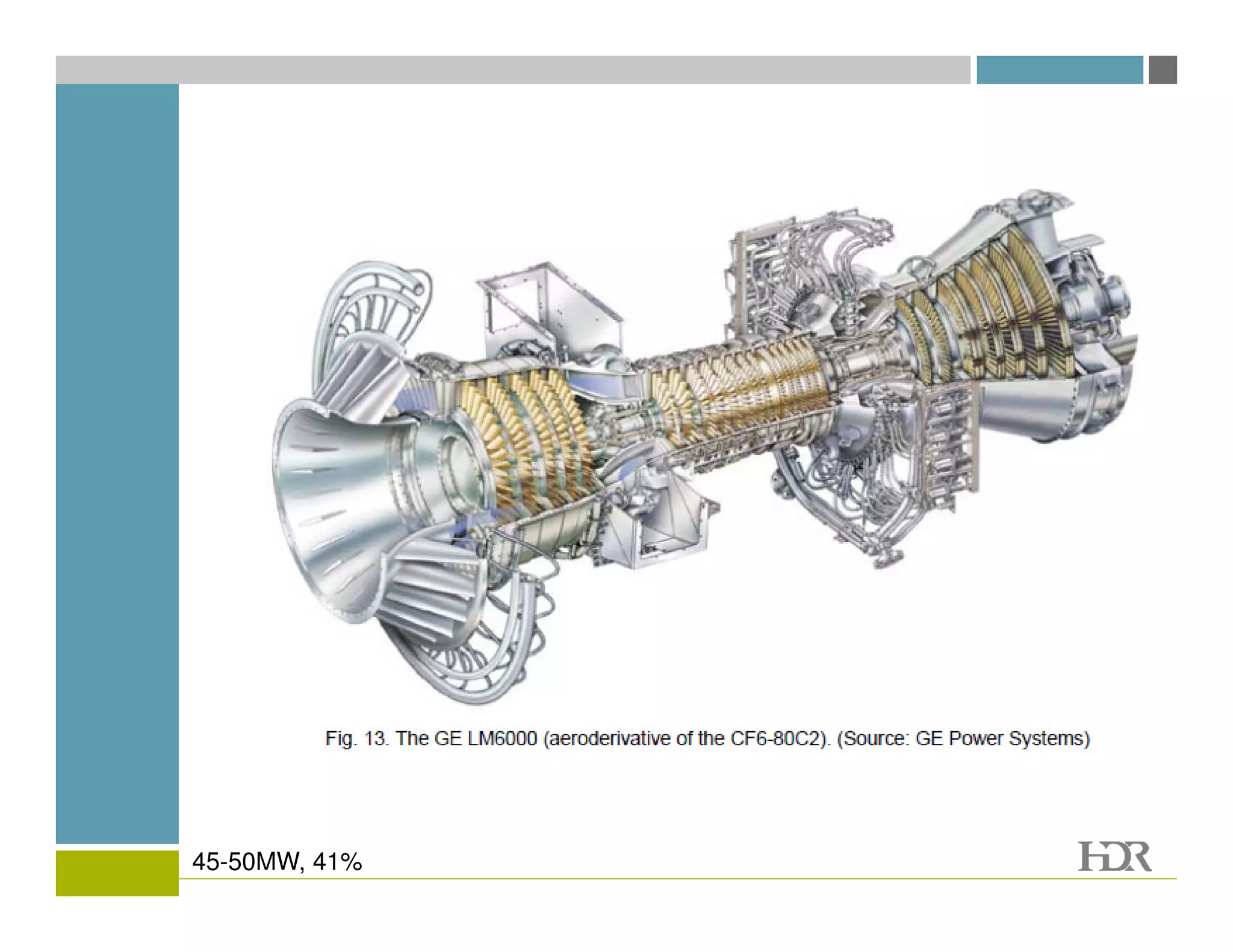
45-50MW, 41%
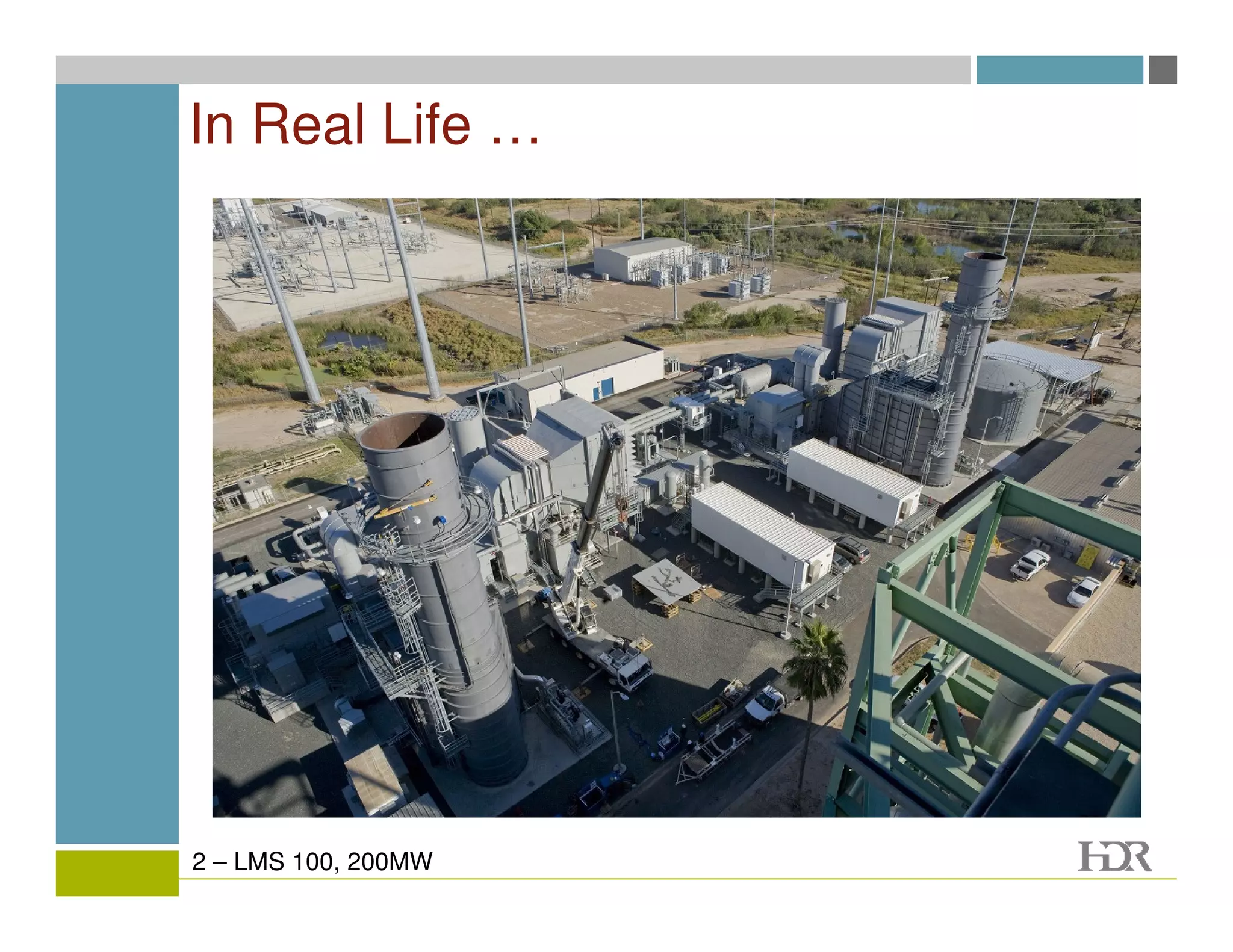
In Real Life …


2 – LMS 100, 200MW
Combined Cycle
           Power Plants


Optional Message Placement
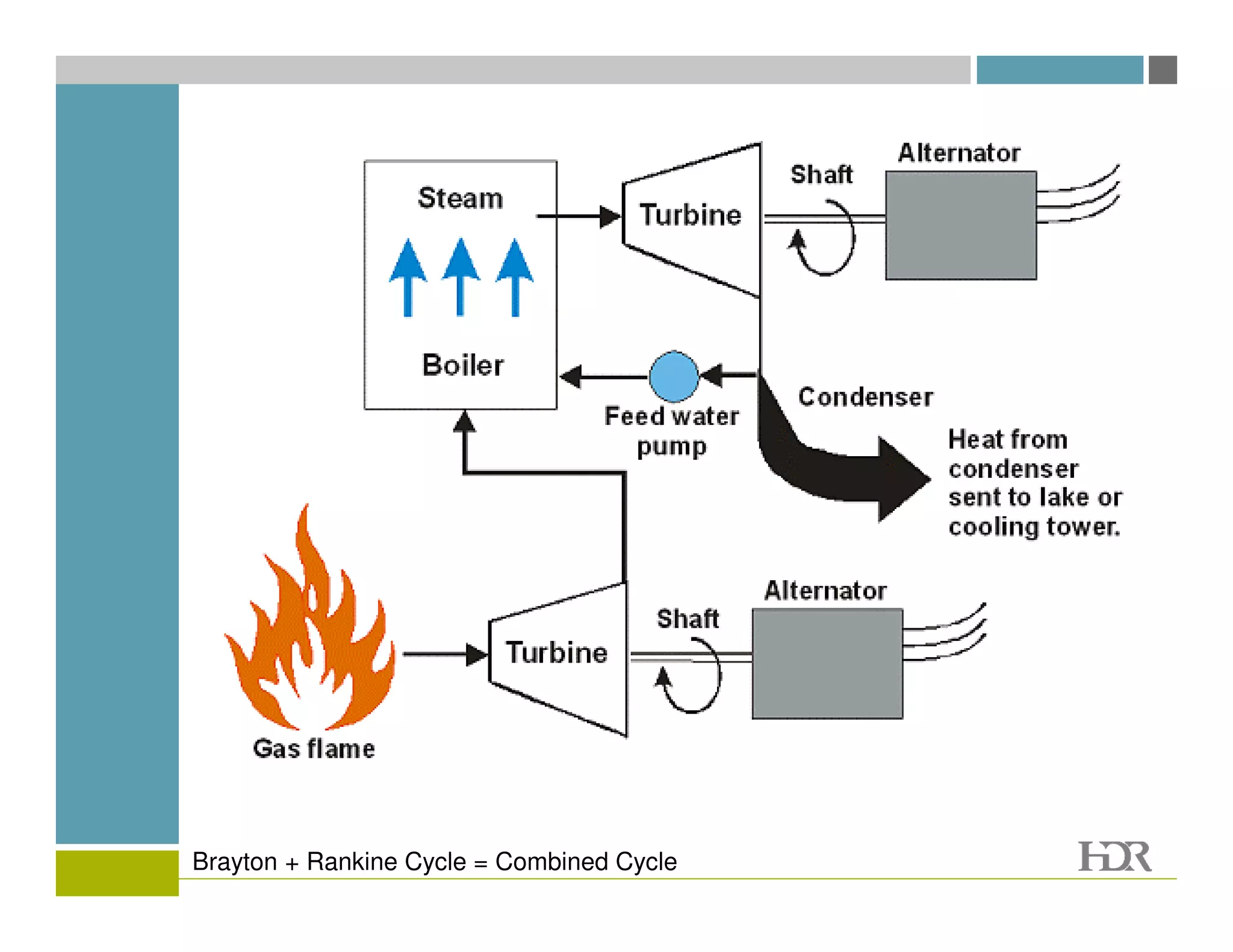
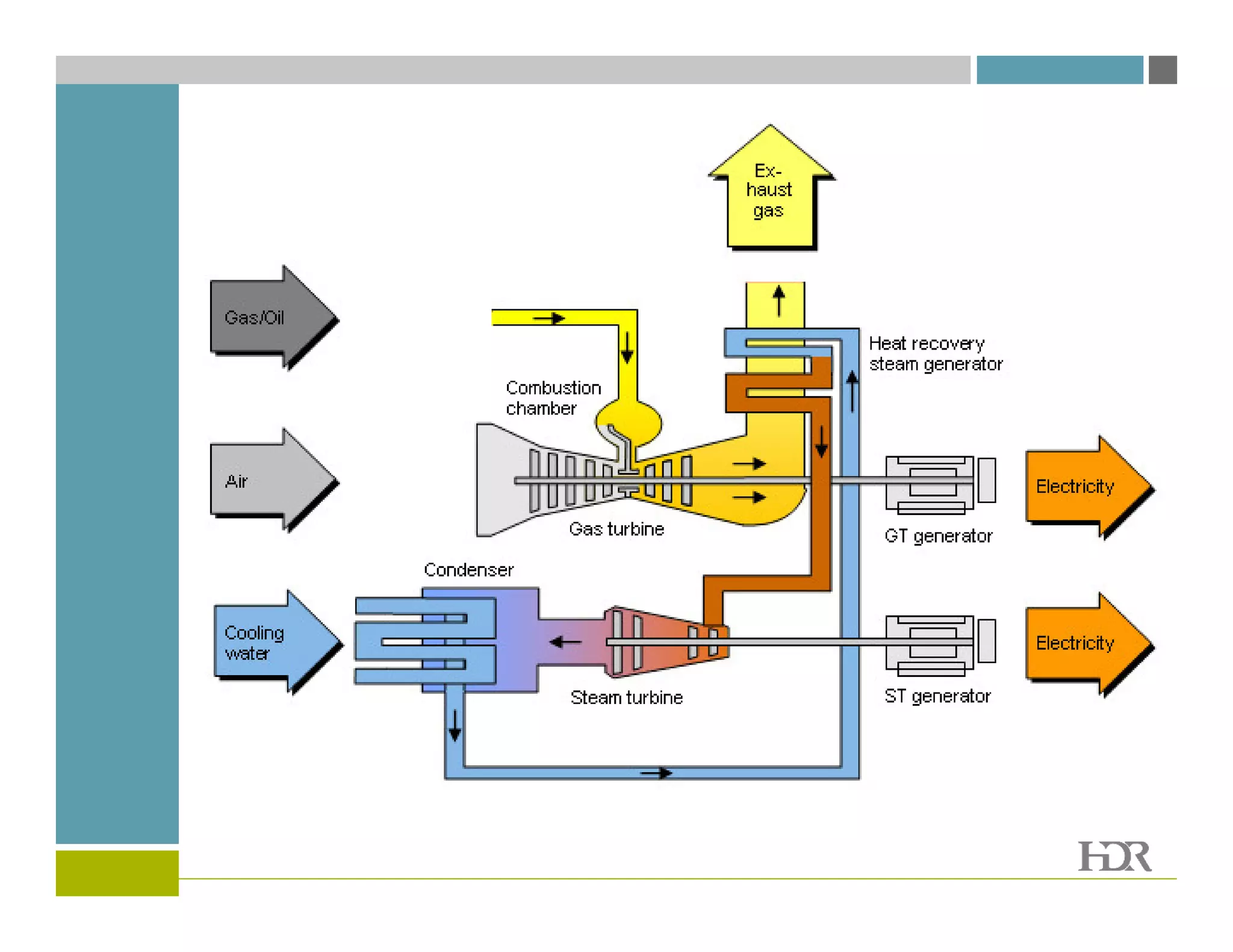
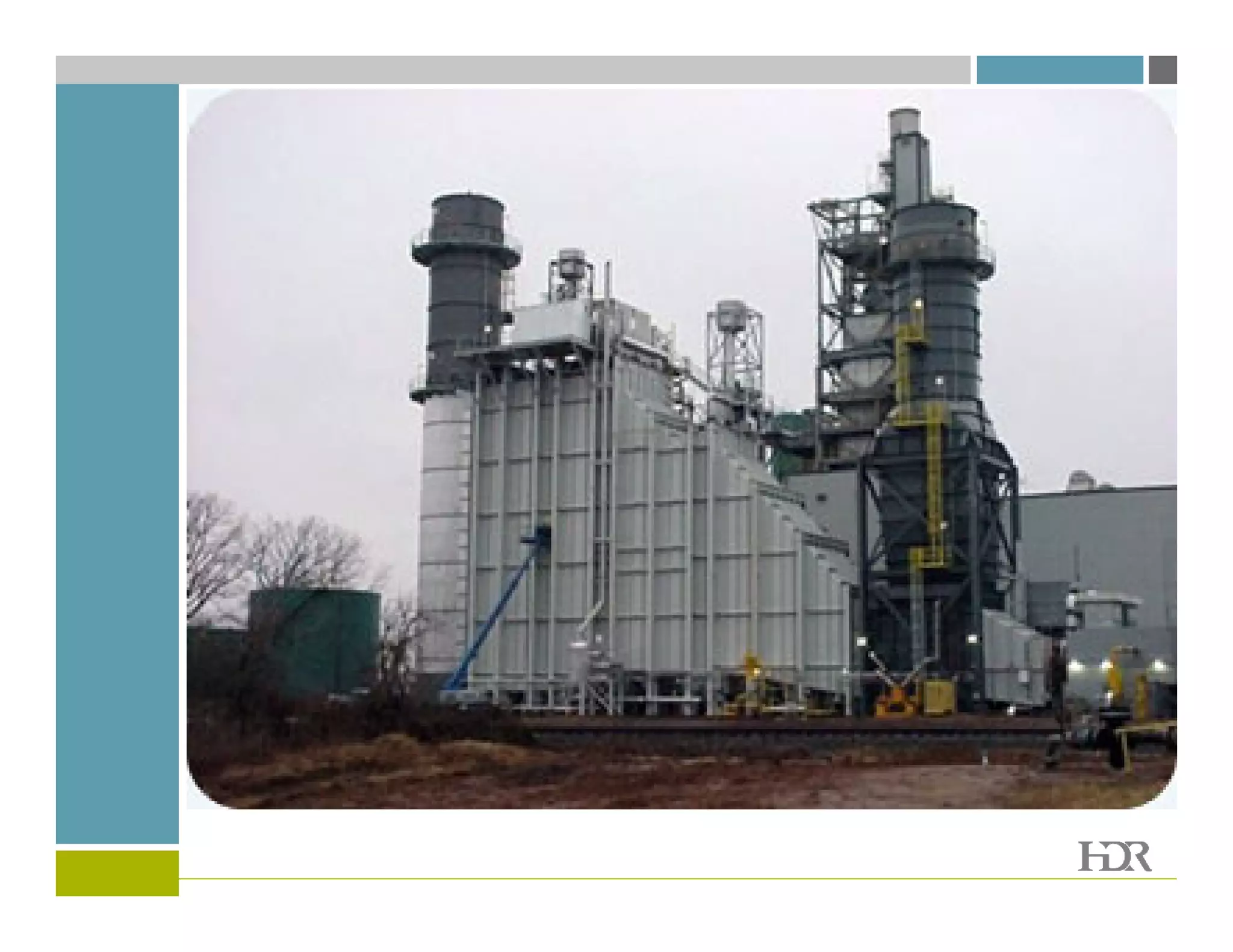
Brayton + Rankine Cycle = Combined Cycle
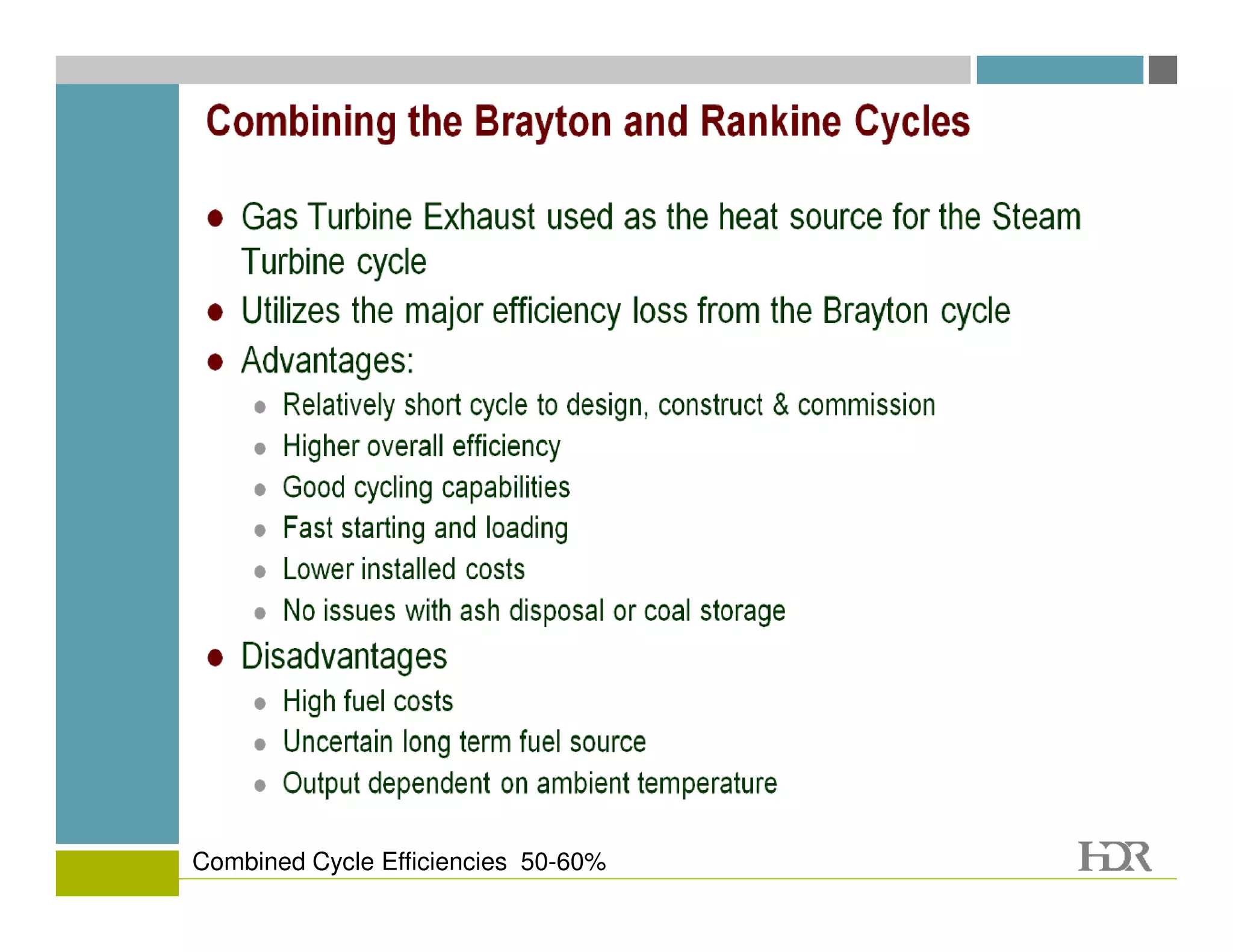
Combined Cycle Efficiencies 50-60%
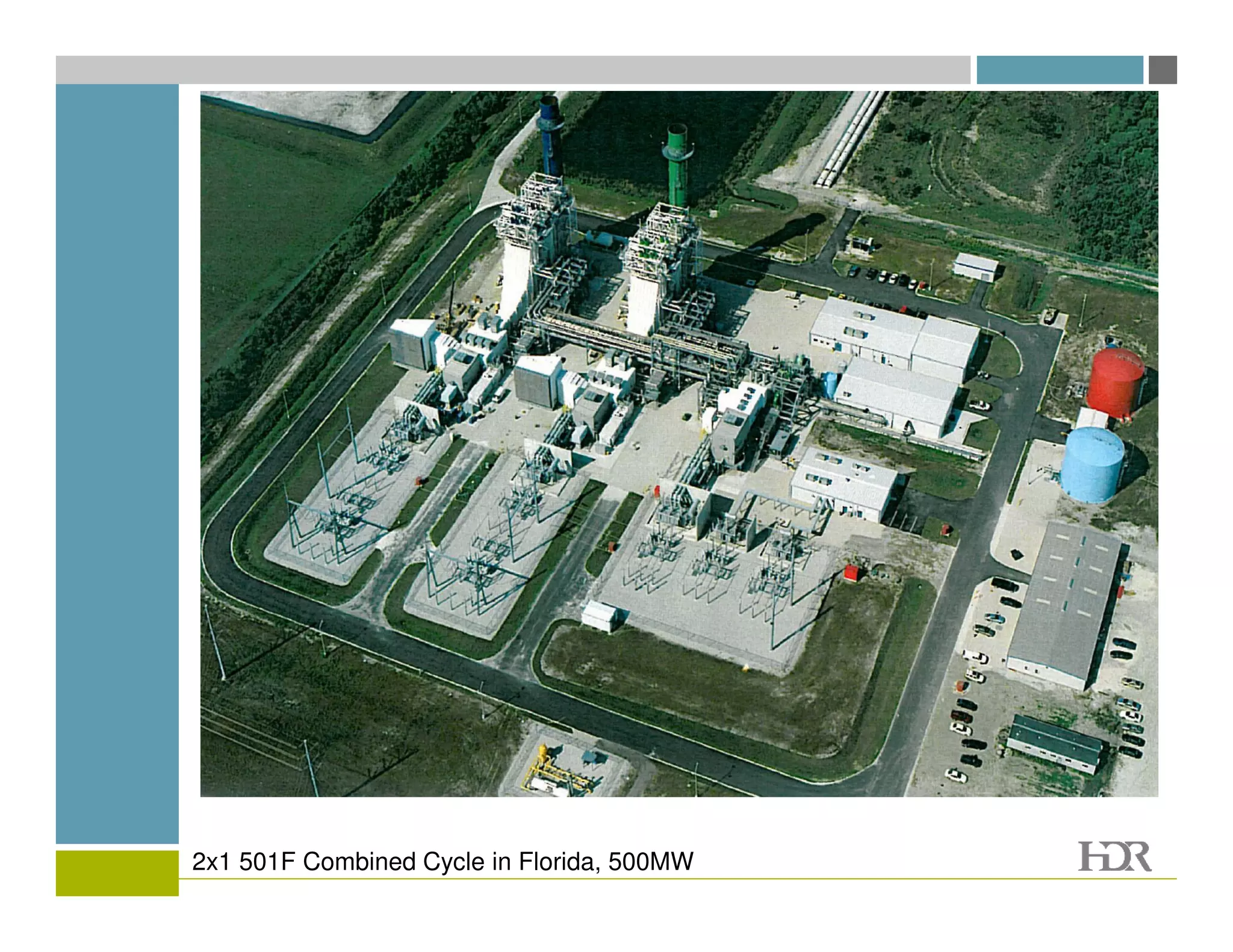
2x1 501F Combined Cycle in Florida, 500MW
Characteristics

   Simple Cycle
    –   Operate to meet Peak Demand
    –   Designed for Quick Start-up
    –   Not as Efficient, but Reliable Peaking Power
    –   Little to no water consumption

    Combined Cycle
    – Reliable - Operate for Intermediate or Base Load
    – Highest Fossil Fuel Efficiency
    – Can be designed to operate in Simple Cycle Mode


Increased Efficiency, but utilize premium fuels
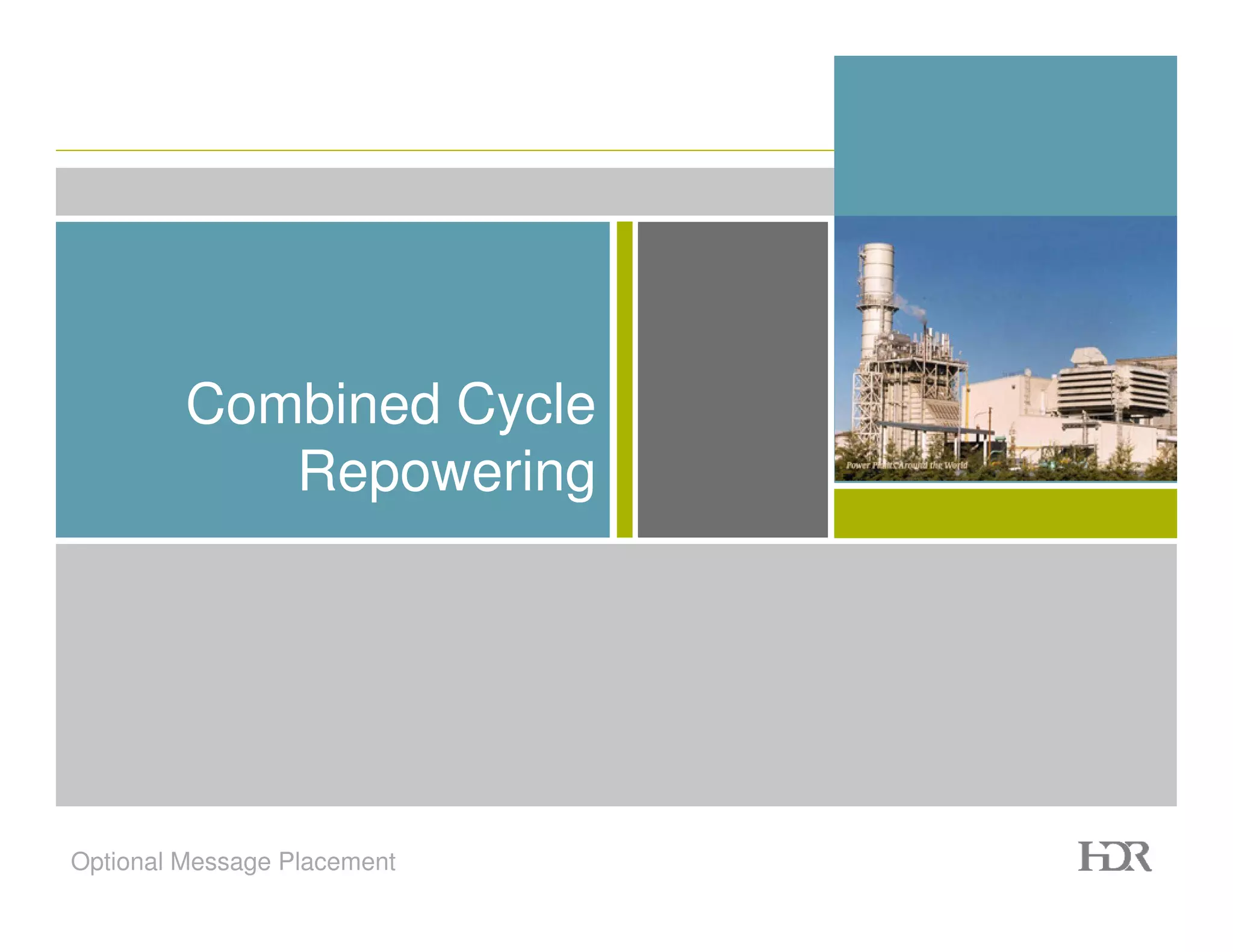
Combined Cycle
            Repowering


Optional Message Placement
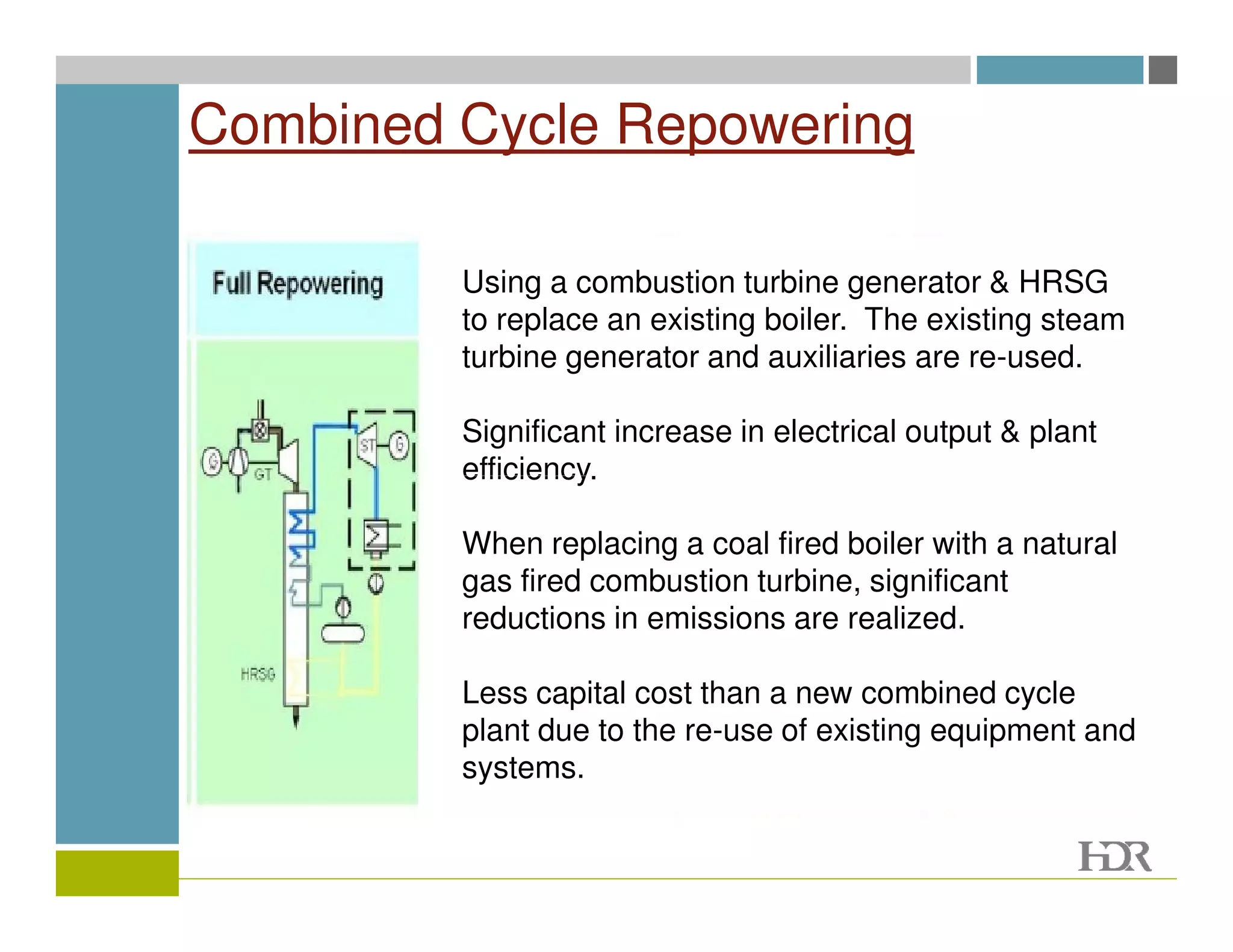
Combined Cycle Repowering

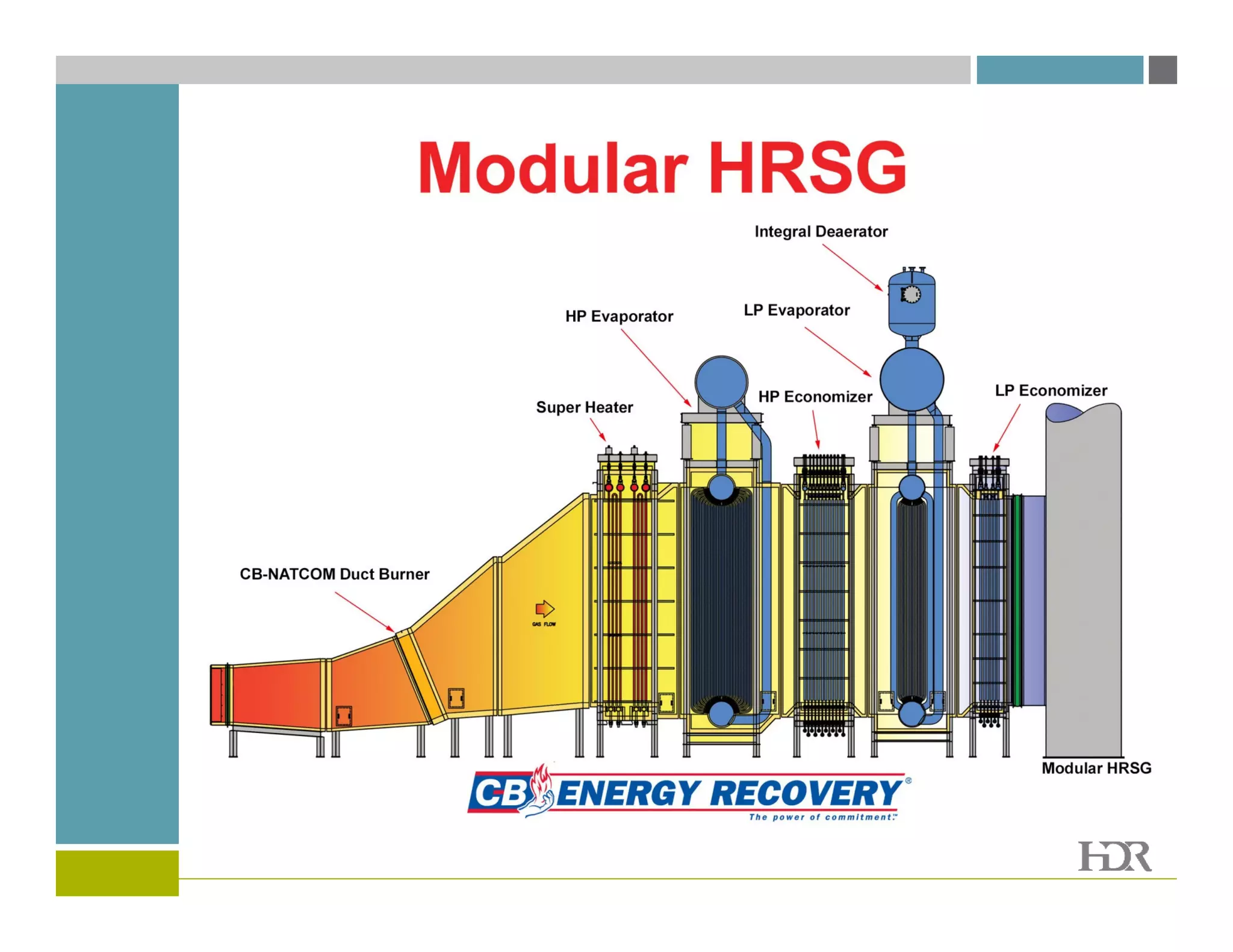
         Using a combustion turbine generator & HRSG
         to replace an existing boiler. The existing steam
         turbine generator and auxiliaries are re-used.

         Significant increase in electrical output & plant
         efficiency.

         When replacing a coal fired boiler with a natural
         gas fired combustion turbine, significant
         reductions in emissions are realized.

         Less capital cost than a new combined cycle
         plant due to the re-use of existing equipment and
         systems.
Cogeneration /
      Combined Heat &
         Power (CHP)


Optional Message Placement
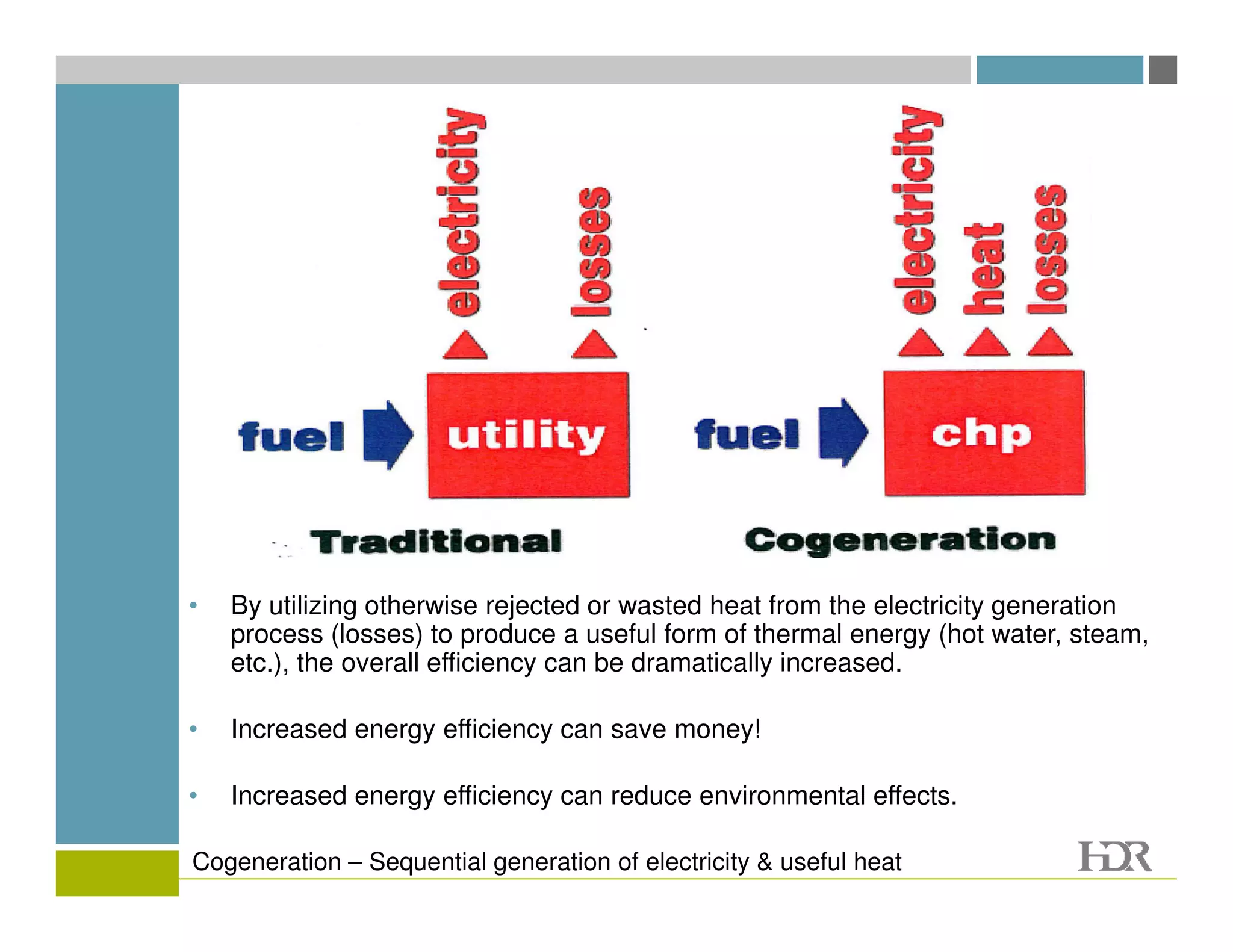
•   By utilizing otherwise rejected or wasted heat from the electricity generation
    process (losses) to produce a useful form of thermal energy (hot water, steam,
    etc.), the overall efficiency can be dramatically increased.

•   Increased energy efficiency can save money!

•   Increased energy efficiency can reduce environmental effects.

Cogeneration – Sequential generation of electricity & useful heat
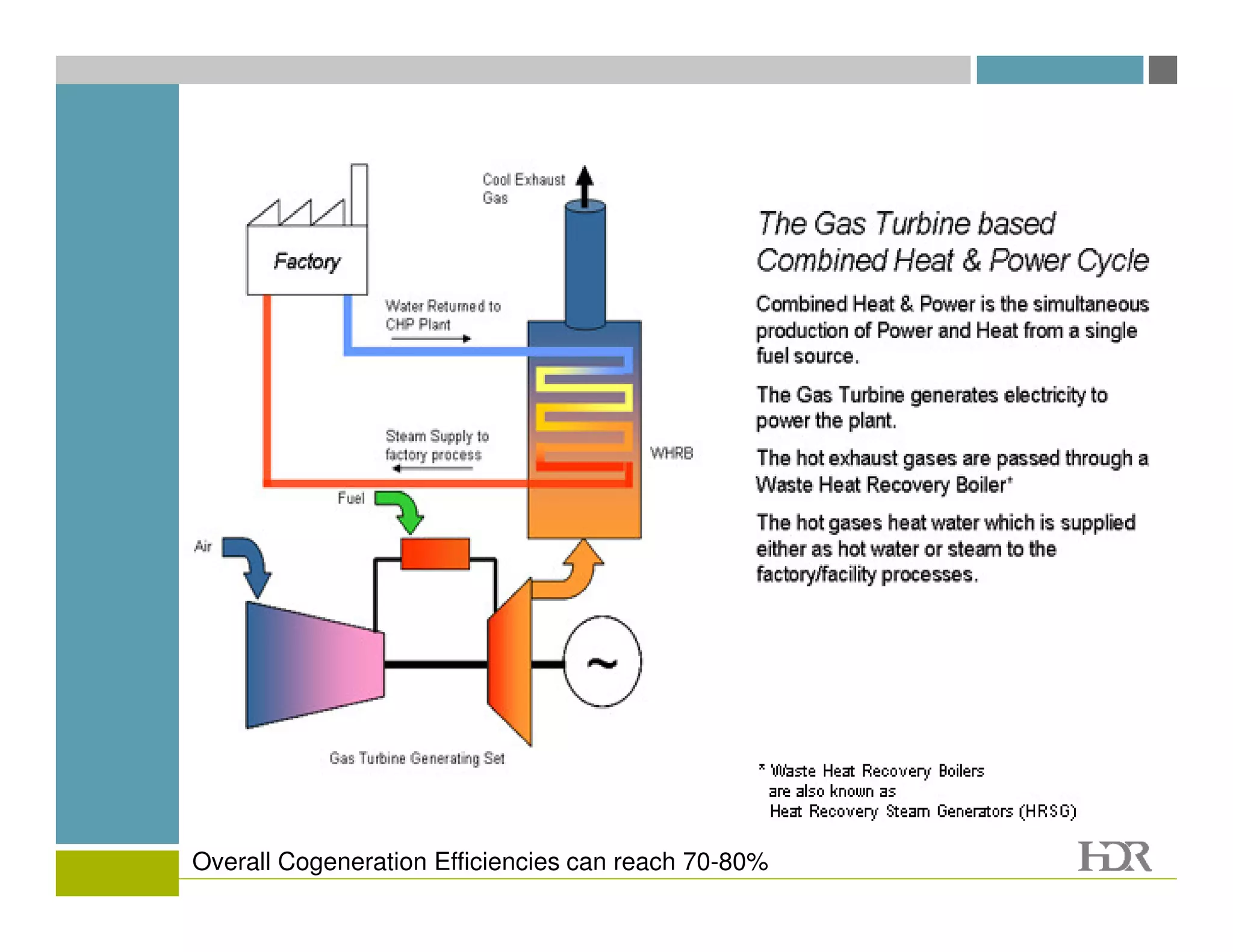
Overall Cogeneration Efficiencies can reach 70-80%
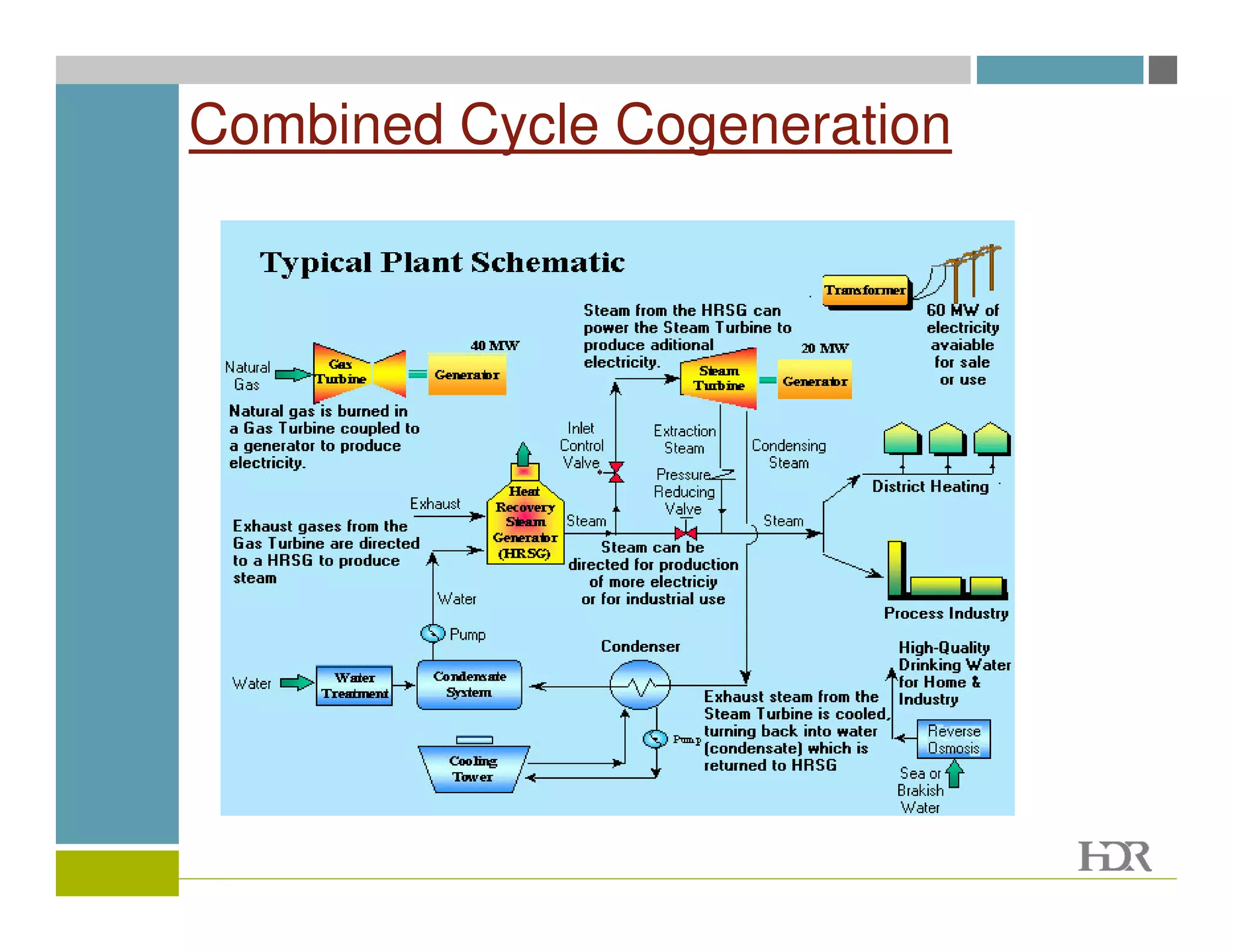
Combined Cycle Cogeneration
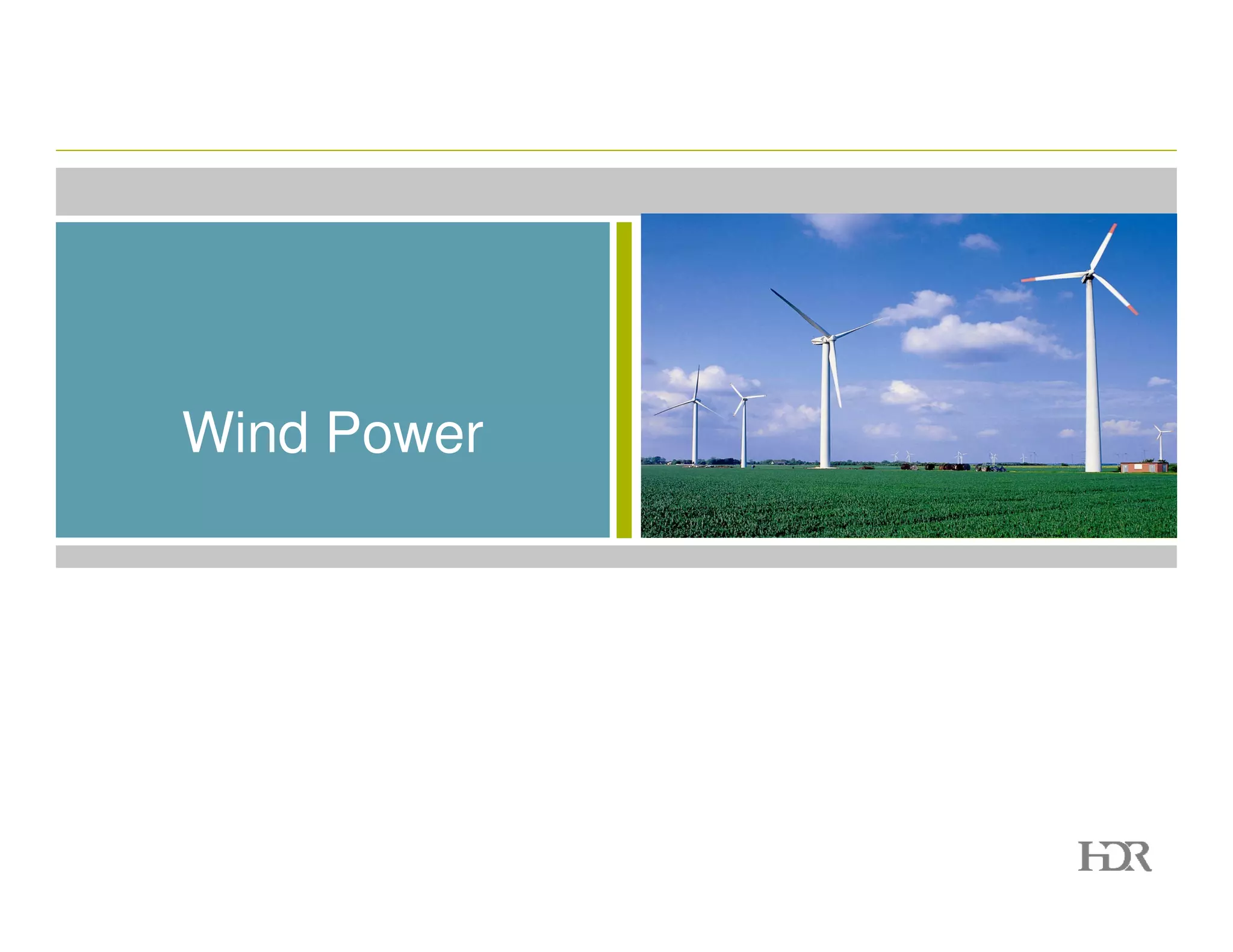
Wind Power
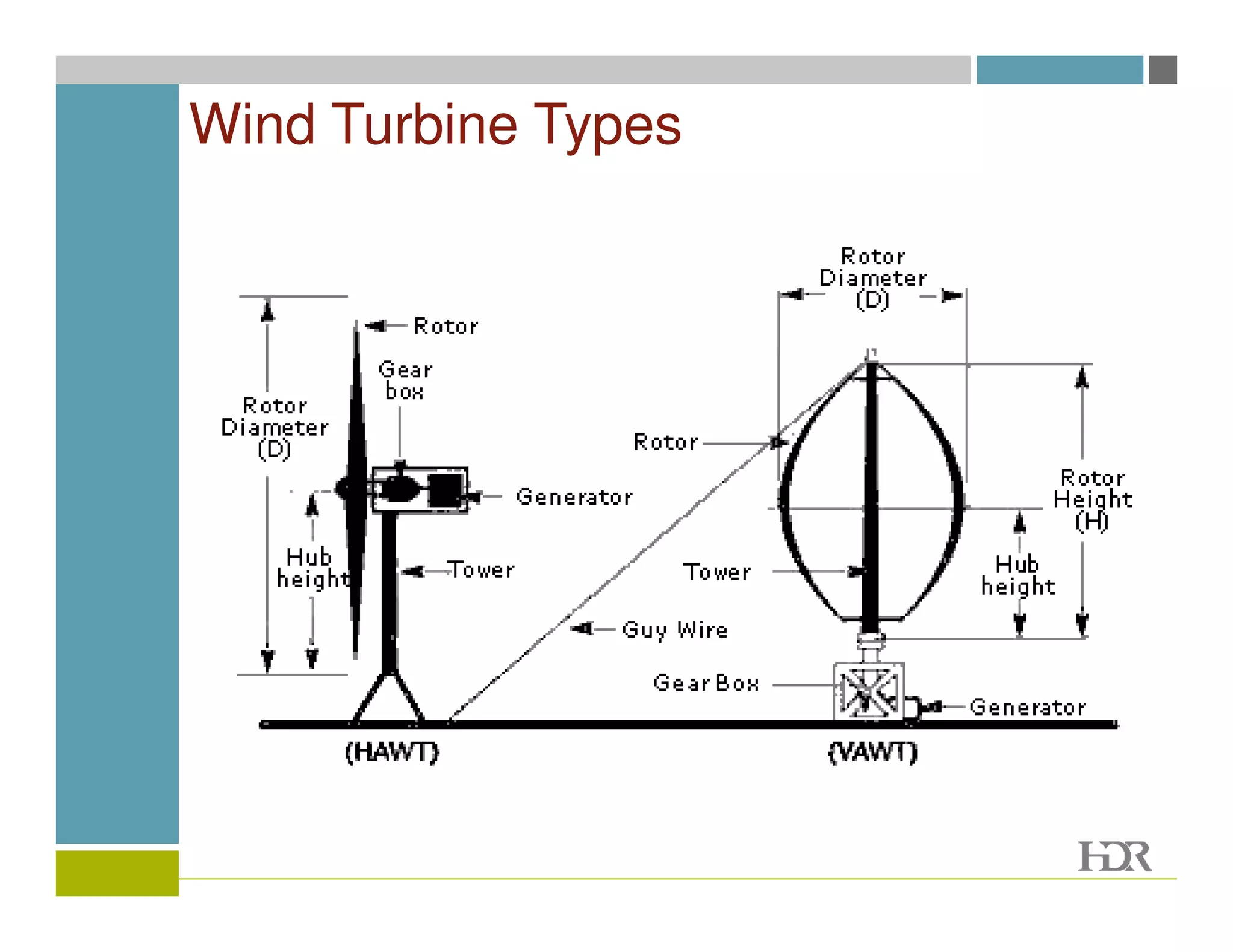
Wind Turbine Types
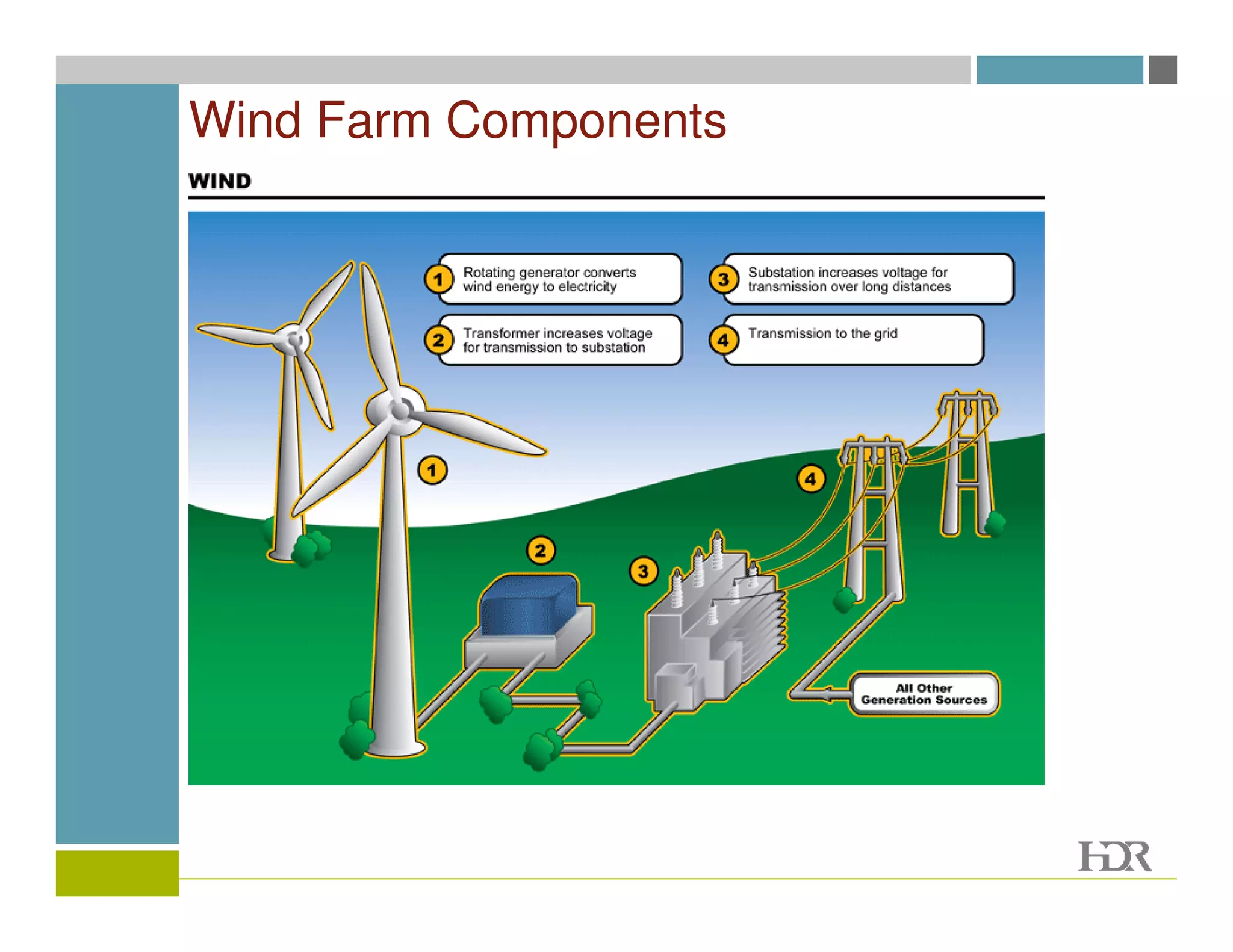
Wind Farm Components
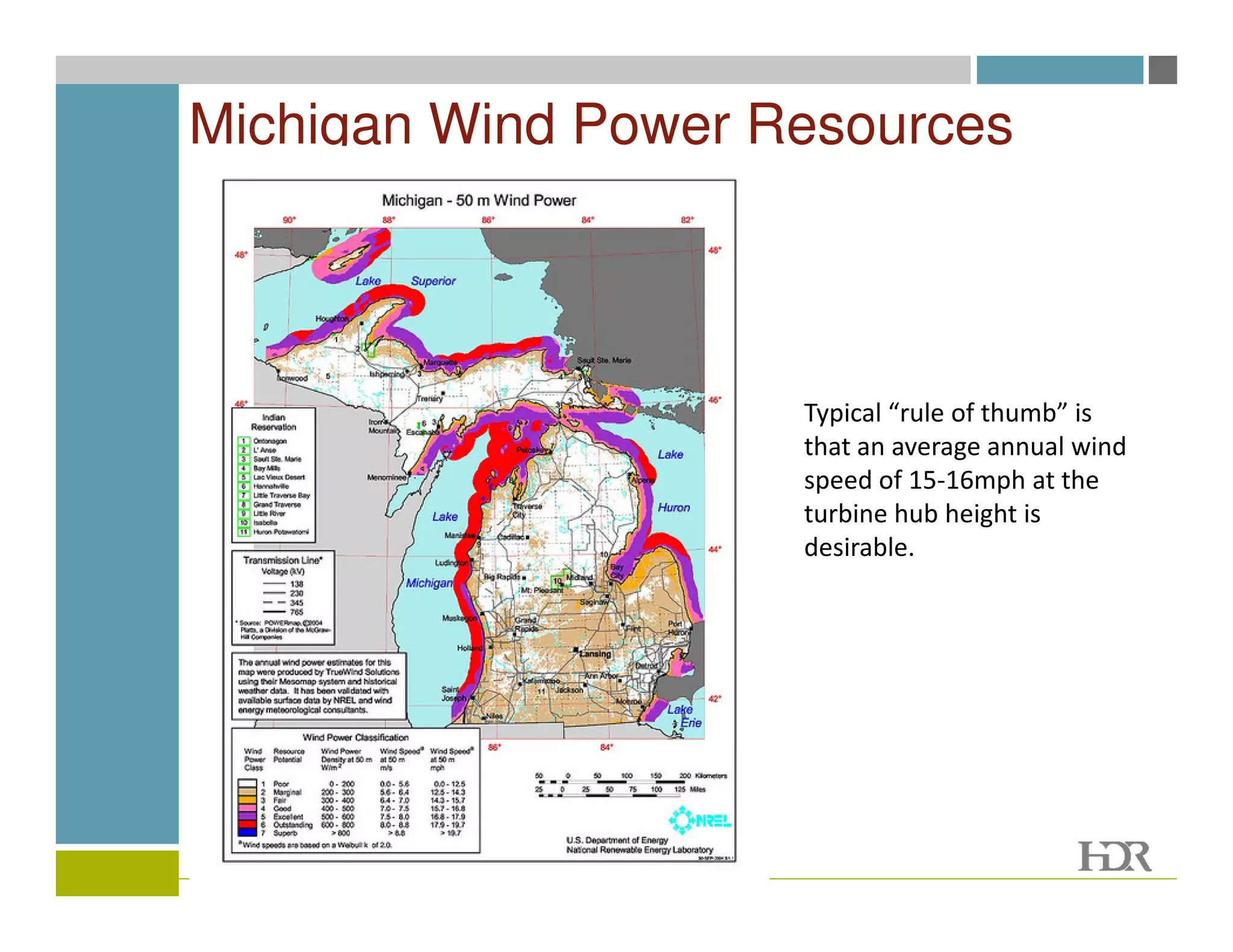
Michigan Wind Power Resources


                     Typical “rule of thumb” is
                     that an average annual wind
                     speed of 15-16mph at the
                     turbine hub height is
                     desirable.
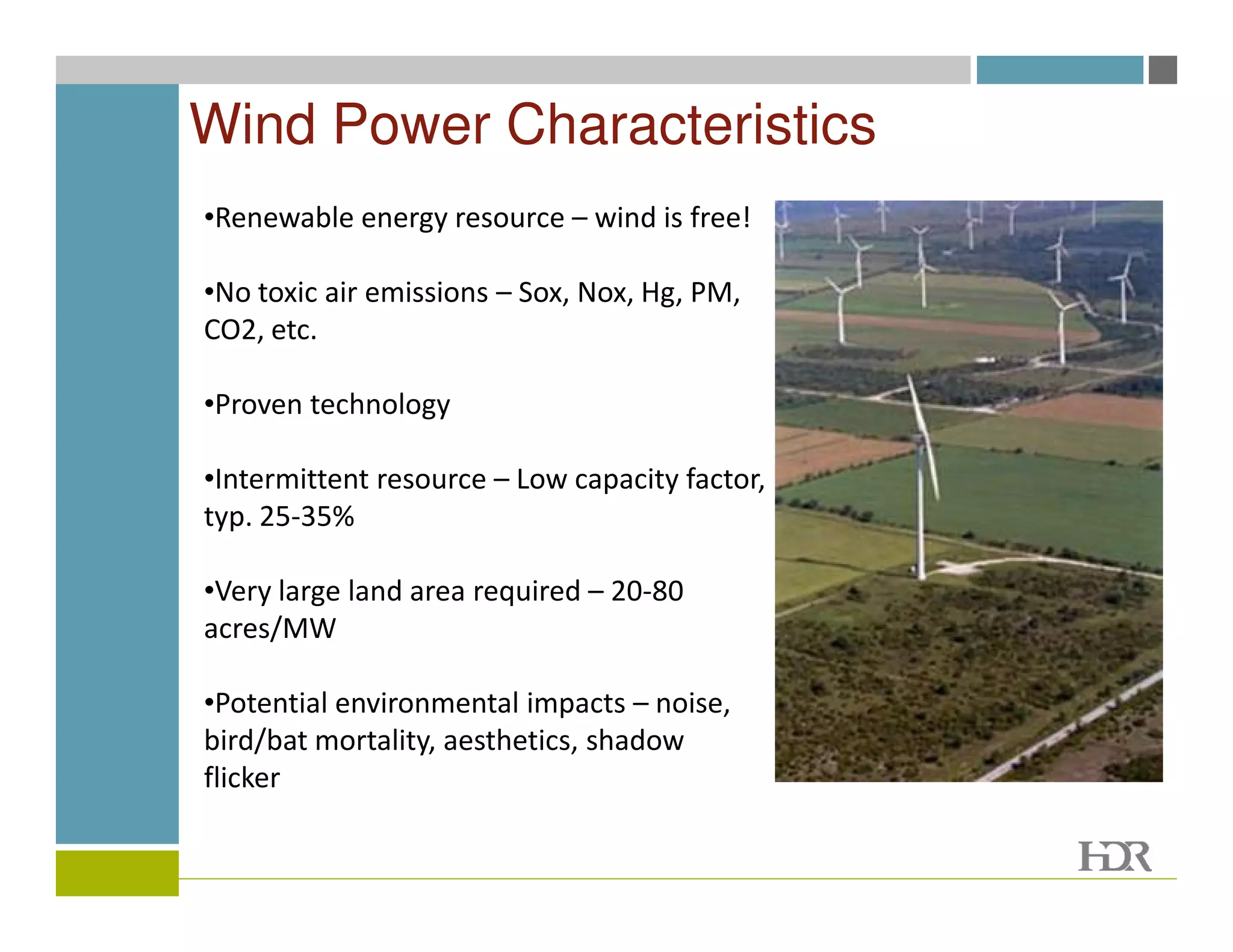
Wind Power Characteristics
•Renewable energy resource – wind is free!

•No toxic air emissions – Sox, Nox, Hg, PM,
CO2, etc.

•Proven technology

•Intermittent resource – Low capacity factor,
typ. 25-35%

•Very large land area required – 20-80
acres/MW

•Potential environmental impacts – noise,
bird/bat mortality, aesthetics, shadow
flicker
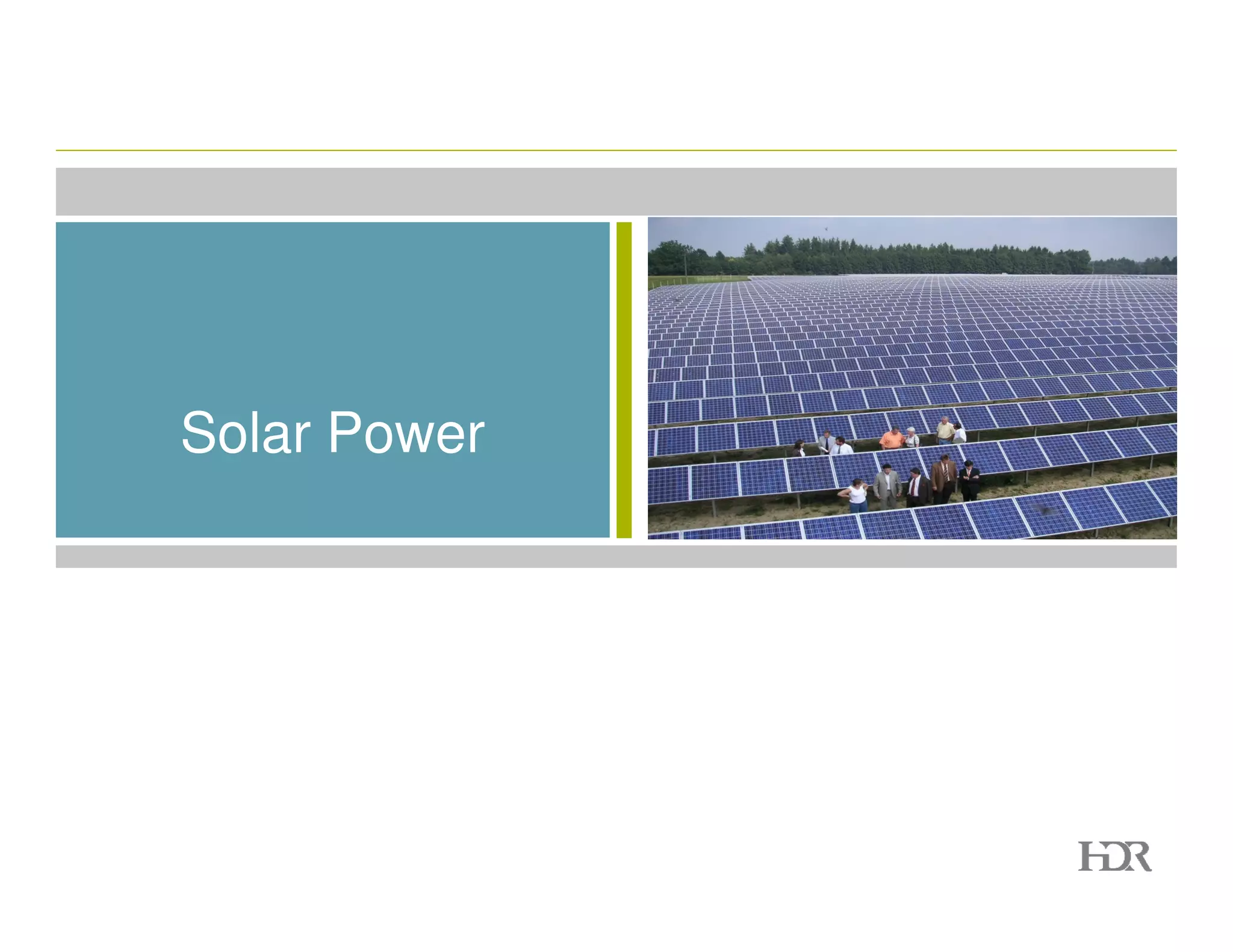
Solar Power
Solar Power

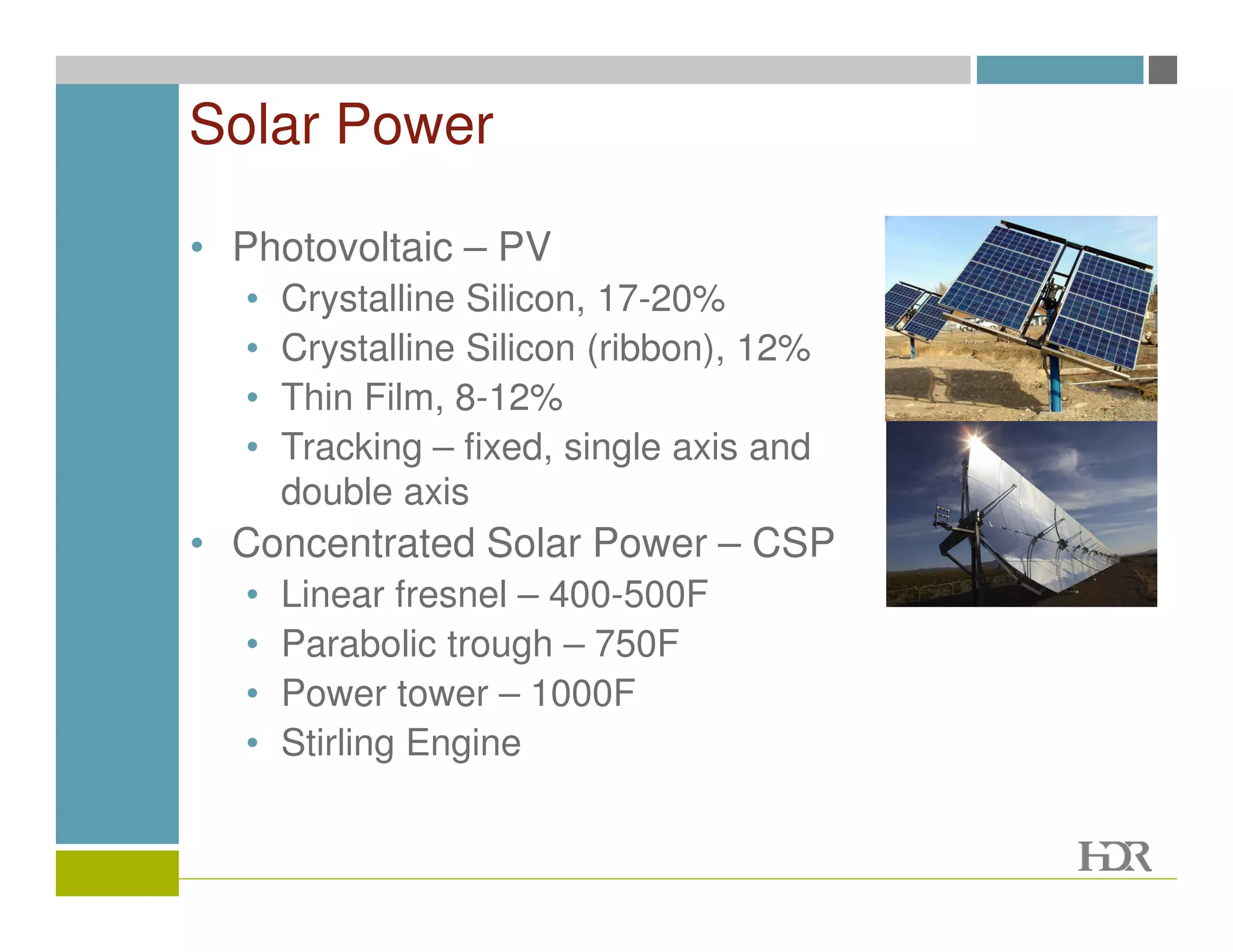
• Photovoltaic – PV
  •   Crystalline Silicon, 17-20%
  •   Crystalline Silicon (ribbon), 12%
  •   Thin Film, 8-12%
  •   Tracking – fixed, single axis and
      double axis
• Concentrated Solar Power – CSP
  •   Linear fresnel – 400-500F
  •   Parabolic trough – 750F
  •   Power tower – 1000F
  •   Stirling Engine
ERROR: stackunderflow
OFFENDING COMMAND: ~
STACK:

James R. Connell P.E. - October 13, 2011

  • 1.
    Electric Generation Technologies October 13, 2011 James R. Connell P.E. Sr. VP, National Director Power Facilities
  • 2.
    Pesky Laws ofThermodynamics First Law -Conservation of Energy: Energy can neither be created nor destroyed. It can only be converted from one form to another. Second Law – There is no such thing as 100% efficiency. There are always losses.
  • 3.
    Conventional Steam Power Plants
  • 4.
    Steam Power Plants Sourcesof Thermal Energy: Coal Natural Gas Oil Biomass Nuclear Solar Thermal Roughly 90% of all electrical power generated in the world is via a Rankine Cycle. Typical large power station efficiency 30-40% Rankine Cycle
  • 5.
    Solid Fuel BoilerTypes • Stoker / Grate Fuel is combusted primarily on top of a grate
  • 6.
    Solid Fuel BoilerTypes Pulverized Coal (PC) PC Boilers are more efficient than stokers
  • 7.
    Solid Fuel BoilerTypes Fluidized Bed Combustion Bubbling Fluidized Bed Boiler Fluidized bed boilers – fuel flexibility & lower NOx/SOx formation.
  • 8.
  • 9.
    In Real Life… Nebraska City Station
  • 11.
    CFB Boiler Characteristics •Fuel flexibility - ability to utilize a wide range of fuels, better able to incorporate renewable & opportunity fuels • SOx removal as part of combustion process with limestone addition >95% • Lower combustion temperatures result in substantially lower NOx, ~ 50%
  • 12.
    CFB Boilers Pros: • Good fuel flexibility, lower fuel costs & incorporation of renewables • Potentially lower fuel cost risk • Reliable baseload electric capacity • Opportunity to provide thermal output (CHP) Cons: • Capital intensive • Lower efficiency than some natural gas plants • Higher emissions than other options (i.e., gas, wind, solar)
  • 13.
    Combustion Turbine Power Plants Optional Message Placement
  • 15.
    Combustion Turbine Generators… AKA Gas Turbines Brayton Cycle
  • 16.
    Simple Cycle CTGEfficiency - 35-45%
  • 18.
    Derived from GECF-6 Jet Engine – First used on DC-10: 25-30MW, 38%
  • 19.
  • 24.
    In Real Life… 2 – LMS 100, 200MW
  • 25.
    Combined Cycle Power Plants Optional Message Placement
  • 26.
    Brayton + RankineCycle = Combined Cycle
  • 28.
  • 32.
    2x1 501F CombinedCycle in Florida, 500MW
  • 33.
    Characteristics Simple Cycle – Operate to meet Peak Demand – Designed for Quick Start-up – Not as Efficient, but Reliable Peaking Power – Little to no water consumption Combined Cycle – Reliable - Operate for Intermediate or Base Load – Highest Fossil Fuel Efficiency – Can be designed to operate in Simple Cycle Mode Increased Efficiency, but utilize premium fuels
  • 34.
    Combined Cycle Repowering Optional Message Placement
  • 35.
    Combined Cycle Repowering Using a combustion turbine generator & HRSG to replace an existing boiler. The existing steam turbine generator and auxiliaries are re-used. Significant increase in electrical output & plant efficiency. When replacing a coal fired boiler with a natural gas fired combustion turbine, significant reductions in emissions are realized. Less capital cost than a new combined cycle plant due to the re-use of existing equipment and systems.
  • 36.
    Cogeneration / Combined Heat & Power (CHP) Optional Message Placement
  • 37.
    By utilizing otherwise rejected or wasted heat from the electricity generation process (losses) to produce a useful form of thermal energy (hot water, steam, etc.), the overall efficiency can be dramatically increased. • Increased energy efficiency can save money! • Increased energy efficiency can reduce environmental effects. Cogeneration – Sequential generation of electricity & useful heat
  • 38.
  • 39.
  • 40.
  • 41.
  • 42.
  • 43.
    Michigan Wind PowerResources Typical “rule of thumb” is that an average annual wind speed of 15-16mph at the turbine hub height is desirable.
  • 44.
    Wind Power Characteristics •Renewableenergy resource – wind is free! •No toxic air emissions – Sox, Nox, Hg, PM, CO2, etc. •Proven technology •Intermittent resource – Low capacity factor, typ. 25-35% •Very large land area required – 20-80 acres/MW •Potential environmental impacts – noise, bird/bat mortality, aesthetics, shadow flicker
  • 45.
  • 46.
    Solar Power • Photovoltaic– PV • Crystalline Silicon, 17-20% • Crystalline Silicon (ribbon), 12% • Thin Film, 8-12% • Tracking – fixed, single axis and double axis • Concentrated Solar Power – CSP • Linear fresnel – 400-500F • Parabolic trough – 750F • Power tower – 1000F • Stirling Engine
  • 47.