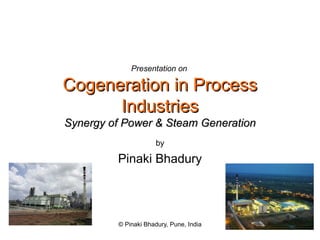
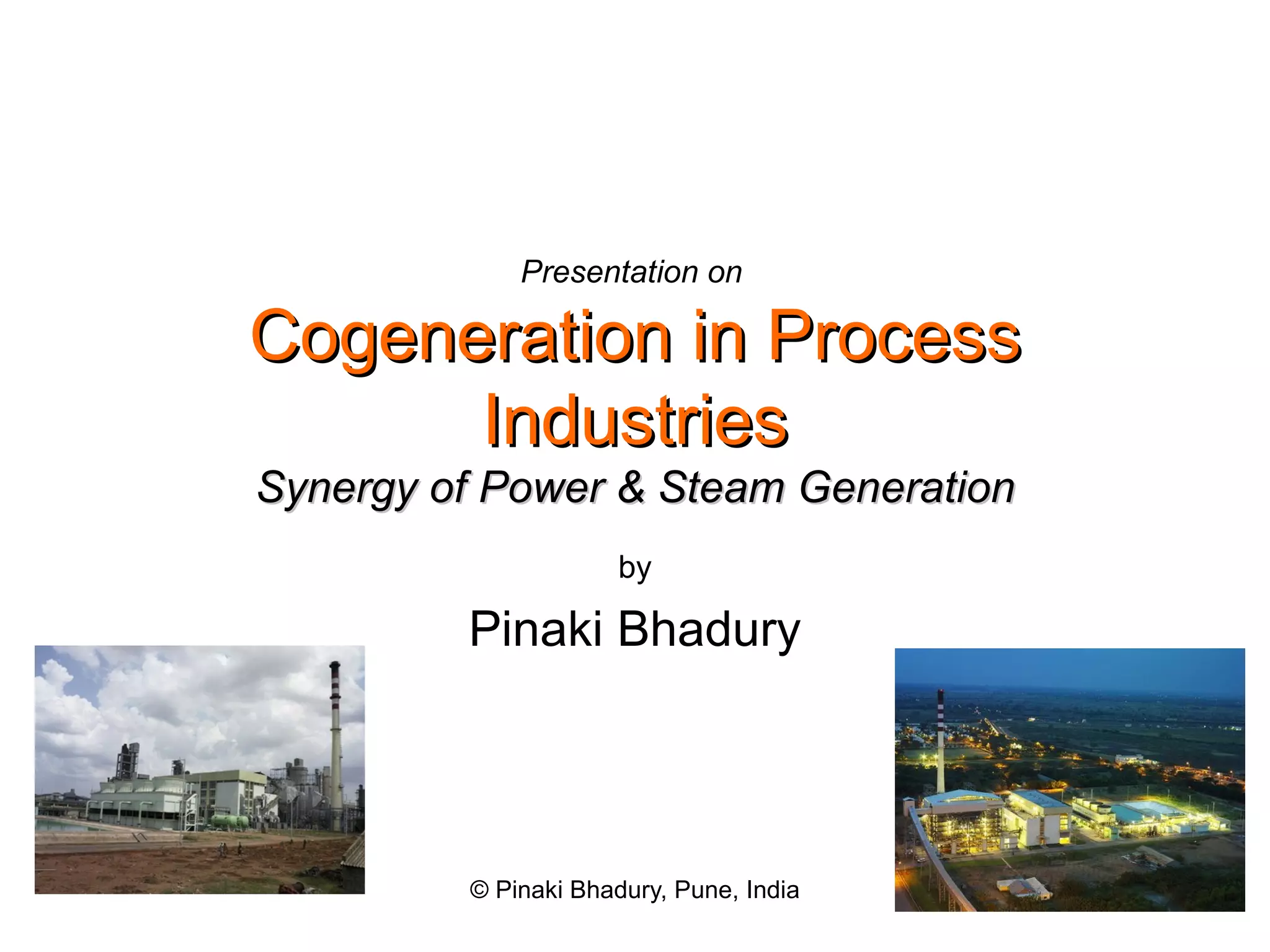
Presentation on   Cogeneration in Process Industries Synergy of Power & Steam Generation by Pinaki Bhadury
Some facts about Electricity Did you know that , For every unit of power consumed 50 to 70% of the energy used in its generation is wasted in to the atmosphere? 1.76 kgs of CO 2  is left in to atmosphere? An average urban household in India vents 6336 kgs of CO 2  (GHG) gases annually in to atmosphere for use of electricity alone! For every ton of steam generated by coal 20% of the input energy is wasted in to atmosphere? 504 kgs/hr of CO 2  is left in to atmosphere?
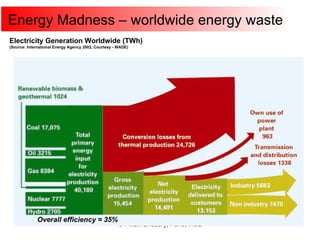
Energy Madness – worldwide energy waste Electricity Generation Worldwide (TWh) (Source: International Energy Agency 2002, Courtesy - WADE) Overall efficiency  ≈ 35%
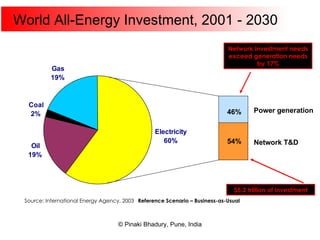
World All-Energy Investment, 2001 - 2030 46% 54% Power generation Network T&D Network investment needs exceed generation needs by 17% $5.2 trillion of investment Source: International Energy Agency, 2003 Reference Scenario – Business-as-Usual
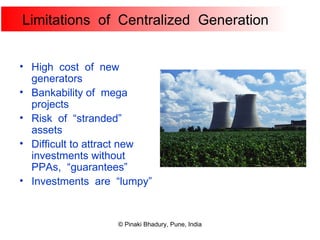
Limitations  of  Centralized  Generation High  cost  of  new  generators Bankability of  mega projects Risk  of  “stranded”  assets Difficult to attract new investments without  PPAs,  “guarantees” Investments  are  “lumpy”
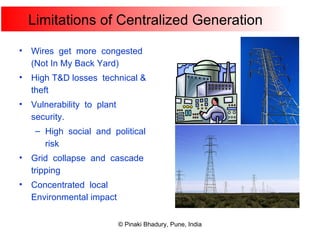
Limitations of Centralized Generation Wires  get  more  congested (Not In My Back Yard) High T&D losses  technical & theft Vulnerability  to  plant  security. High  social  and  political  risk Grid  collapse  and  cascade  tripping Concentrated  local Environmental impact
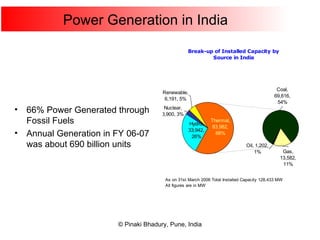
Power Generation in India 66% Power Generated through Fossil Fuels Annual Generation in FY 06-07 was about 690 billion units
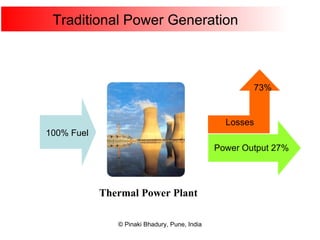
Traditional Power Generation Thermal Power Plant 100% Fuel Power Output 27% 73% Losses
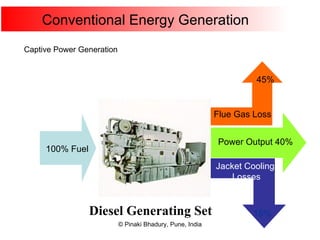
Conventional Energy Generation Diesel Generating Set Captive Power Generation 100% Fuel 45% Flue Gas Loss Power Output 40% 15% Jacket Cooling Losses
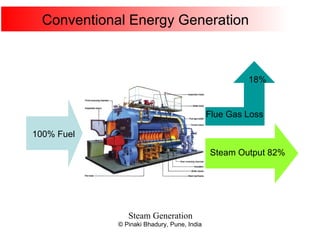
Conventional Energy Generation Steam Generation 100% Fuel Steam Output 82% 18% Flue Gas Loss
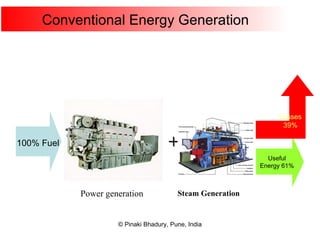
Conventional Energy Generation + Useful Energy 61% Losses 39% 100% Fuel Power generation Steam Generation
What is Cogeneration? “ Generation of Power & Heat from  a  single  fuel source”
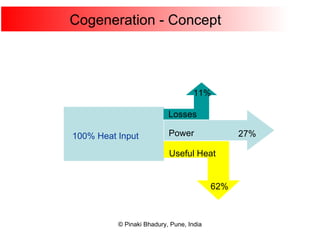
Cogeneration - Concept 100% Heat Input 11% Losses 27% Power 62% Useful Heat
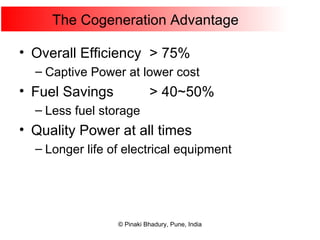
The Cogeneration Advantage Overall Efficiency > 75% Captive Power at lower cost Fuel Savings  > 40~50% Less fuel storage Quality Power at all times Longer life of electrical equipment
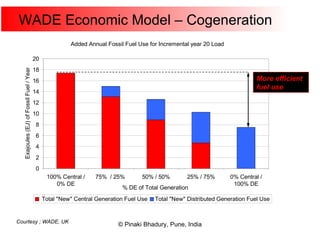
WADE Economic Model – Cogeneration Courtesy ; WADE, UK More efficient fuel use
G8 Summit Declaration at Heiligendamm  “ Adopt instruments and measures to significantly increase the share of combined heat and power (CHP) (Cogeneration) in the generation of electricity” Declaration Report, Page 24 7 th  June 2007
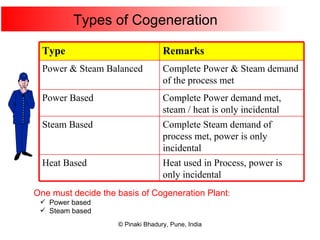
Types of Cogeneration One must decide the basis of Cogeneration Plant : Power based Steam based Heat used in Process, power is only incidental Heat Based Complete Steam demand of process met, power is only incidental Steam Based Complete Power demand met, steam / heat is only incidental Power Based Complete Power & Steam demand of the process met Power & Steam Balanced Remarks Type
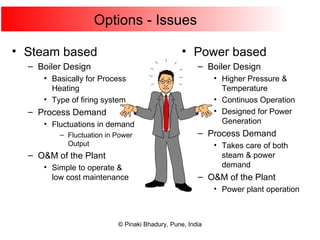
Options - Issues Steam based Boiler Design Basically for Process Heating Type of firing system Process Demand Fluctuations in demand Fluctuation in Power Output O&M of the Plant Simple to operate & low cost maintenance Power based Boiler Design Higher Pressure & Temperature Continuos Operation Designed for Power Generation Process Demand Takes care of both steam & power demand O&M of the Plant Power plant operation
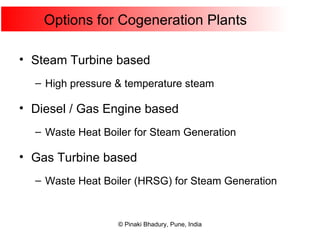
Options for Cogeneration Plants Steam Turbine based High pressure & temperature steam Diesel / Gas Engine based Waste Heat Boiler for Steam Generation Gas Turbine based Waste Heat Boiler (HRSG) for Steam Generation
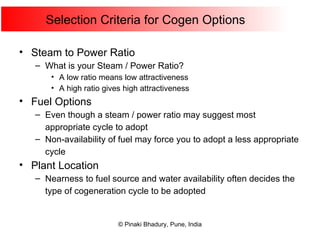
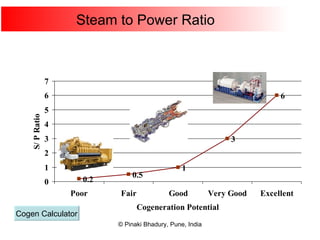
Selection Criteria for Cogen Options Steam to Power Ratio What is your Steam / Power Ratio? A low ratio means low attractiveness A high ratio gives high attractiveness Fuel Options Even though a steam / power ratio may suggest most appropriate cycle to adopt Non-availability of fuel may force you to adopt a less appropriate cycle Plant Location Nearness to fuel source and water availability often decides the type of cogeneration cycle to be adopted
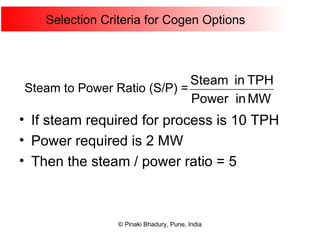
Selection Criteria for Cogen Options If steam required for process is 10 TPH Power required is 2 MW Then the steam / power ratio = 5 Steam to Power Ratio (S/P) =
Steam to Power Ratio Cogen Calculator
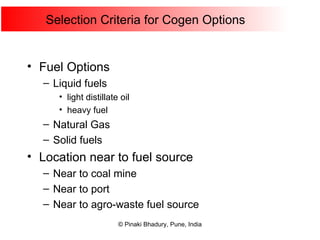
Selection Criteria for Cogen Options Fuel Options Liquid fuels light distillate oil heavy fuel Natural Gas Solid fuels Location near to fuel source Near to coal mine Near to port Near to agro-waste fuel source
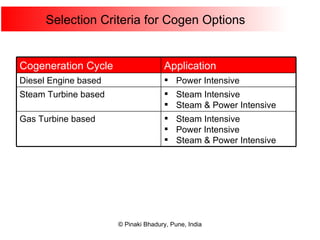
Selection Criteria for Cogen Options Steam Intensive Power Intensive Steam & Power Intensive Gas Turbine based Steam Intensive Steam & Power Intensive Steam Turbine based Power Intensive Diesel Engine based Application Cogeneration Cycle
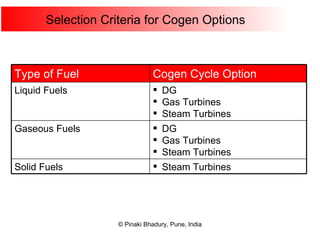
Selection Criteria for Cogen Options Steam Turbines Solid Fuels DG Gas Turbines Steam Turbines Gaseous Fuels DG Gas Turbines Steam Turbines Liquid Fuels Cogen Cycle Option Type of Fuel
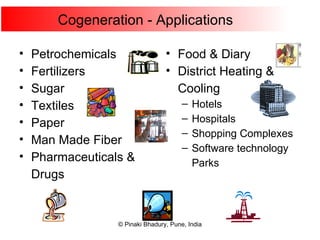
Cogeneration - Applications Petrochemicals Fertilizers Sugar Textiles Paper Man Made Fiber Pharmaceuticals & Drugs Food & Diary District Heating & Cooling Hotels Hospitals Shopping Complexes Software technology Parks
Co-generation Benefits To the Nation: Lower fossil fuel consumption longer availability of these fuels in future lower fuel bill of the nation conservation of precious foreign exchange reserves Environment friendly decreases global warming Power at a lower cost
Benefits to the Nation Fuel Consumption: In April to March 06-07, 69 billion units was generated Of which 38 Billion Units was generated using coal This consumed: 31 Billion tons of coal! Huge Carbon Dioxide Generation This released 62.5 Billion Tons of CO 2   in to the atmosphere!!! In India it is estimated that only 4000 MW is being cogenerated The potential is 15000 MW or even more! This will help reduce GHG gases by 12-15% over present levels
Benefits to the User Overall Efficiency > 75% Captive Power at lower cost Depending upon the type of Cogen Plant configuration & fuel cost Power cost is usually 40-60% that of grid power or even lower Fuel Savings  > 40~50% Less fuel storage Quality Power at all times Longer life of electrical equipment Users of Cogen plant have experienced lower maintenance cost by as much as 20-30% or even higher Cogen plants are eligible for CDM benefits CERs will result in additional revenue generation from the project Higher returns India will be shifting to Annexure A list of countries soon Obligatory on part of these countries for CO 2  reduction Industries will be asked to adhere to Kyoto Protocol norms
Thank You For further details or clarifications, you may contact: Pinaki Bhadury [email_address]

Cogeneration

  • 1.
    Presentation on Cogeneration in Process Industries Synergy of Power & Steam Generation by Pinaki Bhadury
  • 2.
    Some facts aboutElectricity Did you know that , For every unit of power consumed 50 to 70% of the energy used in its generation is wasted in to the atmosphere? 1.76 kgs of CO 2 is left in to atmosphere? An average urban household in India vents 6336 kgs of CO 2 (GHG) gases annually in to atmosphere for use of electricity alone! For every ton of steam generated by coal 20% of the input energy is wasted in to atmosphere? 504 kgs/hr of CO 2 is left in to atmosphere?
  • 3.
    Energy Madness –worldwide energy waste Electricity Generation Worldwide (TWh) (Source: International Energy Agency 2002, Courtesy - WADE) Overall efficiency ≈ 35%
  • 4.
    World All-Energy Investment,2001 - 2030 46% 54% Power generation Network T&D Network investment needs exceed generation needs by 17% $5.2 trillion of investment Source: International Energy Agency, 2003 Reference Scenario – Business-as-Usual
  • 5.
    Limitations of Centralized Generation High cost of new generators Bankability of mega projects Risk of “stranded” assets Difficult to attract new investments without PPAs, “guarantees” Investments are “lumpy”
  • 6.
    Limitations of CentralizedGeneration Wires get more congested (Not In My Back Yard) High T&D losses technical & theft Vulnerability to plant security. High social and political risk Grid collapse and cascade tripping Concentrated local Environmental impact
  • 7.
    Power Generation inIndia 66% Power Generated through Fossil Fuels Annual Generation in FY 06-07 was about 690 billion units
  • 8.
    Traditional Power GenerationThermal Power Plant 100% Fuel Power Output 27% 73% Losses
  • 9.
    Conventional Energy GenerationDiesel Generating Set Captive Power Generation 100% Fuel 45% Flue Gas Loss Power Output 40% 15% Jacket Cooling Losses
  • 10.
    Conventional Energy GenerationSteam Generation 100% Fuel Steam Output 82% 18% Flue Gas Loss
  • 11.
    Conventional Energy Generation+ Useful Energy 61% Losses 39% 100% Fuel Power generation Steam Generation
  • 12.
    What is Cogeneration?“ Generation of Power & Heat from a single fuel source”
  • 13.
    Cogeneration - Concept100% Heat Input 11% Losses 27% Power 62% Useful Heat
  • 14.
    The Cogeneration AdvantageOverall Efficiency > 75% Captive Power at lower cost Fuel Savings > 40~50% Less fuel storage Quality Power at all times Longer life of electrical equipment
  • 15.
    WADE Economic Model– Cogeneration Courtesy ; WADE, UK More efficient fuel use
  • 16.
    G8 Summit Declarationat Heiligendamm “ Adopt instruments and measures to significantly increase the share of combined heat and power (CHP) (Cogeneration) in the generation of electricity” Declaration Report, Page 24 7 th June 2007
  • 17.
    Types of CogenerationOne must decide the basis of Cogeneration Plant : Power based Steam based Heat used in Process, power is only incidental Heat Based Complete Steam demand of process met, power is only incidental Steam Based Complete Power demand met, steam / heat is only incidental Power Based Complete Power & Steam demand of the process met Power & Steam Balanced Remarks Type
  • 18.
    Options - IssuesSteam based Boiler Design Basically for Process Heating Type of firing system Process Demand Fluctuations in demand Fluctuation in Power Output O&M of the Plant Simple to operate & low cost maintenance Power based Boiler Design Higher Pressure & Temperature Continuos Operation Designed for Power Generation Process Demand Takes care of both steam & power demand O&M of the Plant Power plant operation
  • 19.
    Options for CogenerationPlants Steam Turbine based High pressure & temperature steam Diesel / Gas Engine based Waste Heat Boiler for Steam Generation Gas Turbine based Waste Heat Boiler (HRSG) for Steam Generation
  • 20.
    Selection Criteria forCogen Options Steam to Power Ratio What is your Steam / Power Ratio? A low ratio means low attractiveness A high ratio gives high attractiveness Fuel Options Even though a steam / power ratio may suggest most appropriate cycle to adopt Non-availability of fuel may force you to adopt a less appropriate cycle Plant Location Nearness to fuel source and water availability often decides the type of cogeneration cycle to be adopted
  • 21.
    Selection Criteria forCogen Options If steam required for process is 10 TPH Power required is 2 MW Then the steam / power ratio = 5 Steam to Power Ratio (S/P) =
  • 22.
    Steam to PowerRatio Cogen Calculator
  • 23.
    Selection Criteria forCogen Options Fuel Options Liquid fuels light distillate oil heavy fuel Natural Gas Solid fuels Location near to fuel source Near to coal mine Near to port Near to agro-waste fuel source
  • 24.
    Selection Criteria forCogen Options Steam Intensive Power Intensive Steam & Power Intensive Gas Turbine based Steam Intensive Steam & Power Intensive Steam Turbine based Power Intensive Diesel Engine based Application Cogeneration Cycle
  • 25.
    Selection Criteria forCogen Options Steam Turbines Solid Fuels DG Gas Turbines Steam Turbines Gaseous Fuels DG Gas Turbines Steam Turbines Liquid Fuels Cogen Cycle Option Type of Fuel
  • 26.
    Cogeneration - ApplicationsPetrochemicals Fertilizers Sugar Textiles Paper Man Made Fiber Pharmaceuticals & Drugs Food & Diary District Heating & Cooling Hotels Hospitals Shopping Complexes Software technology Parks
  • 27.
    Co-generation Benefits Tothe Nation: Lower fossil fuel consumption longer availability of these fuels in future lower fuel bill of the nation conservation of precious foreign exchange reserves Environment friendly decreases global warming Power at a lower cost
  • 28.
    Benefits to theNation Fuel Consumption: In April to March 06-07, 69 billion units was generated Of which 38 Billion Units was generated using coal This consumed: 31 Billion tons of coal! Huge Carbon Dioxide Generation This released 62.5 Billion Tons of CO 2 in to the atmosphere!!! In India it is estimated that only 4000 MW is being cogenerated The potential is 15000 MW or even more! This will help reduce GHG gases by 12-15% over present levels
  • 29.
    Benefits to theUser Overall Efficiency > 75% Captive Power at lower cost Depending upon the type of Cogen Plant configuration & fuel cost Power cost is usually 40-60% that of grid power or even lower Fuel Savings > 40~50% Less fuel storage Quality Power at all times Longer life of electrical equipment Users of Cogen plant have experienced lower maintenance cost by as much as 20-30% or even higher Cogen plants are eligible for CDM benefits CERs will result in additional revenue generation from the project Higher returns India will be shifting to Annexure A list of countries soon Obligatory on part of these countries for CO 2 reduction Industries will be asked to adhere to Kyoto Protocol norms
  • 30.
    Thank You Forfurther details or clarifications, you may contact: Pinaki Bhadury [email_address]