Paresthesia is an abnormal sensation in the body, often described as tingling, prickling, or burning. It occurs when nerves like the sciatic, peroneal, or ulnar nerves are compressed. Paresthesia can be caused by chronic issues like cancer, diabetes, or multiple sclerosis, or acute issues like panic attacks, migraines, or dehydration. The symptoms should not be ignored as they could indicate underlying medical problems like stroke or nerve damage. Seeing a doctor is important to determine the cause and proper treatment.
Word Origin Pronouncedpar- e s- t he- s ia. Orginates from the Greek word para- meaning abnormal and the word -esthesis meaning a feeling This translates into the English word known today by medical experts as an abnormal feeling. 2
3.
What is Paresthesia?Paresthesia is the medical term used to classify symptoms of abnormal sensations in the body. This feeling can best be described as a sensation that feels like "pins and needles," tingling, prickling, or even burning. Most commonly experienced among individuals as the feeling one has when “a limb is falling asleep”. This feeling occurs when there is compression of the sciatic, common peroneal, or ulnar nerves. 1
4.
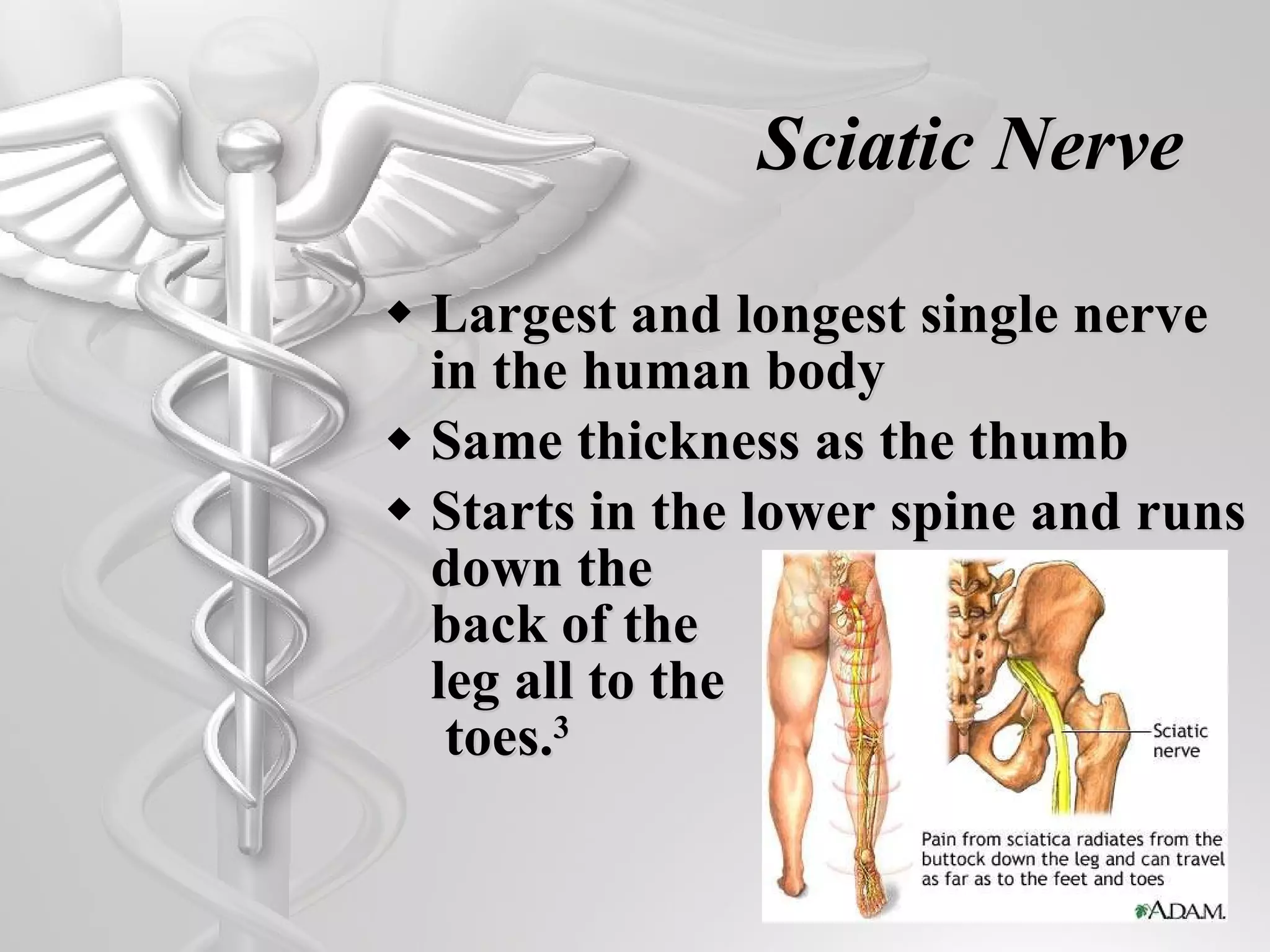
Sciatic Nerve Largestand longest single nerve in the human body Same thickness as the thumb Starts in the lower spine and runs down the back of the leg all to the toes. 3
5.
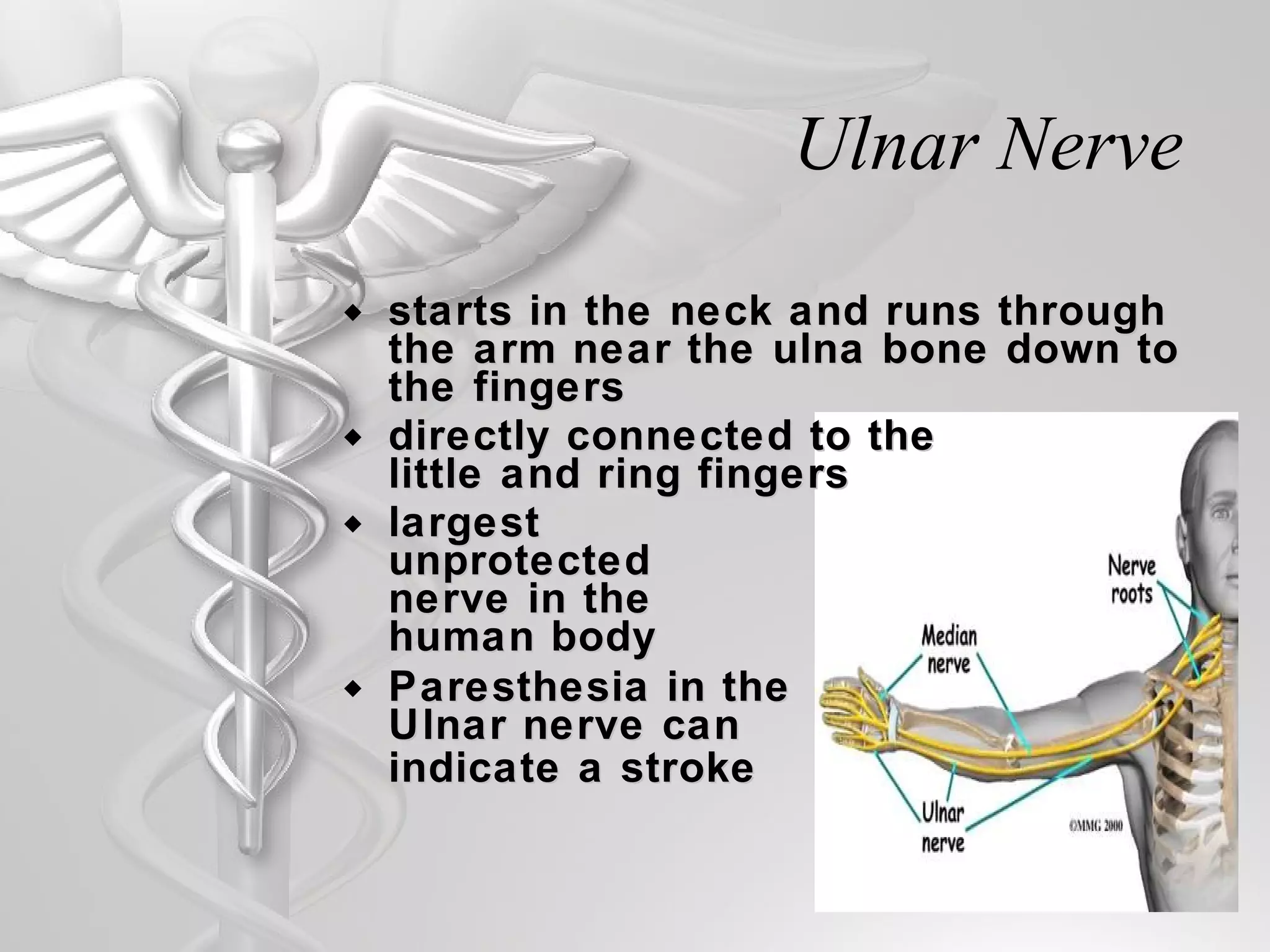
Peroneal Nerve branchof the sciatic nerve wraps around the head of the fibula bone in the leg near the knee a.k.a "funny bone” Stimulates muscles that lift and cause movement in the foot and toes. 4
6.
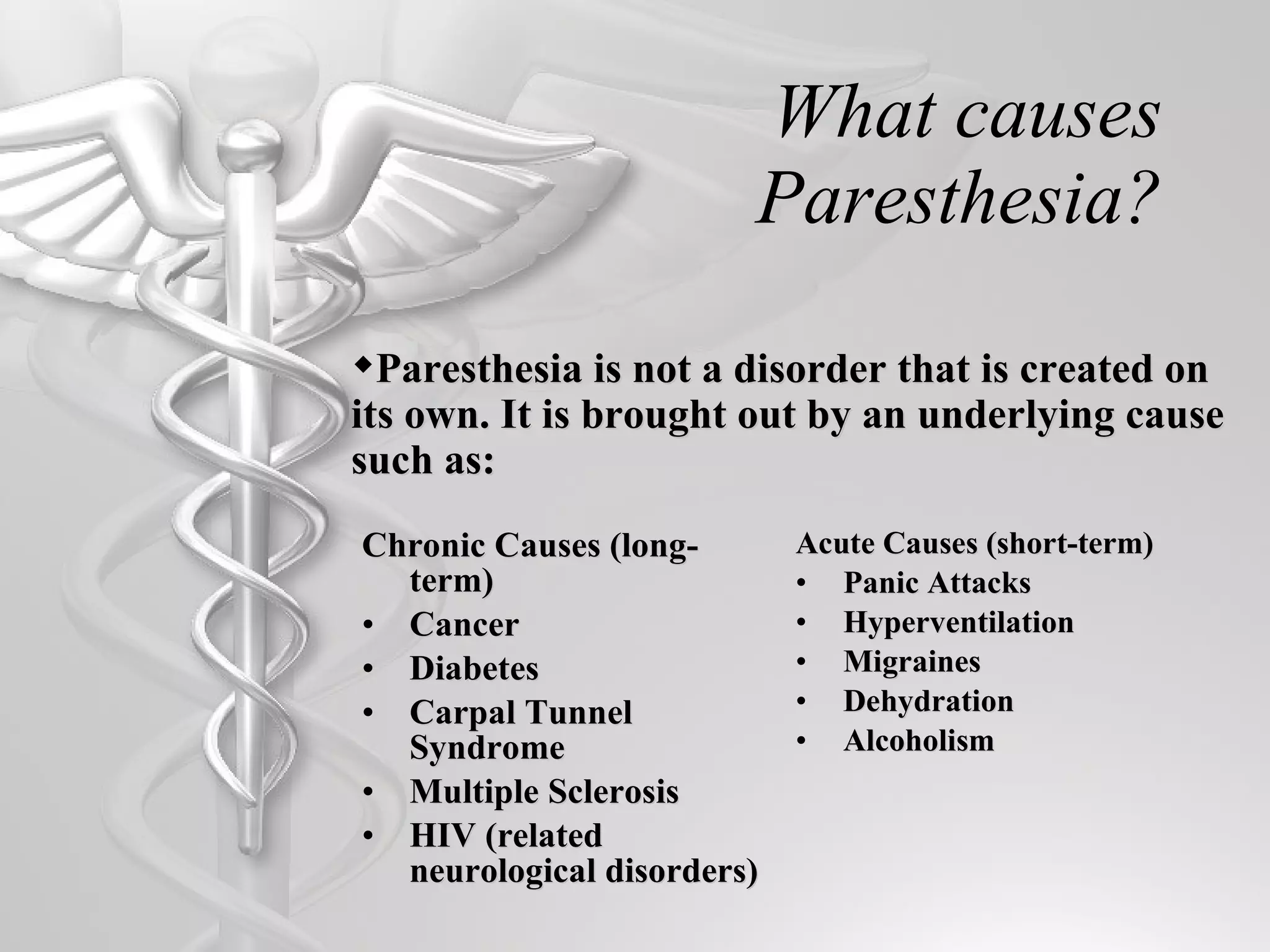
Ulnar Nerve startsin the neck and runs through the arm near the ulna bone down to the fingers directly connected to the little and ring fingers largest unprotected nerve in the human body Paresthesia in the Ulnar nerve can indicate a stroke
7.
What causes Paresthesia?Chronic Causes (long-term) Cancer Diabetes Carpal Tunnel Syndrome Multiple Sclerosis HIV (related neurological disorders) Acute Causes (short-term) Panic Attacks Hyperventilation Migraines Dehydration Alcoholism Paresthesia is not a disorder that is created on its own. It is brought out by an underlying cause such as:
8.
Treating Paresthesia Thebest treatment for Paresthesia is to determine the underlying illness that is the true cause for the sensations.
9.
Don’t ignore thesymptoms! Paresthesia is often the warning signs of severe medical disorders or illnesses. If someone is experiencing a numbing or tingling feeling in the limbs of their body they should seek medical attention immediately. These symptoms could be red flags that are warning the body of potential stroke, heart attack, nerve compression, transient ischemic attack, or other life threatening ailments.