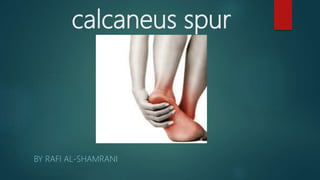
calcaneus spur
BY RAFI AL-SHAMRANI
outline
 Anatomy
 Disorder
 Treatment
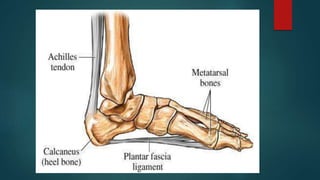
Anatomy
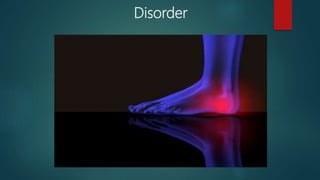
Disorder
Definition
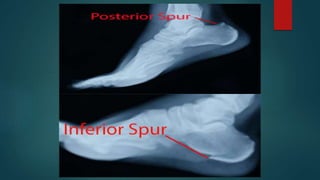
 A heel spur is a bony growth that forms on the heel bone (calcaneus).
 Heel spurs are common and do not always cause pain, Pain caused by contact of the spur
with the surrounding soft tissue.
 It can be located at the back of the heel (dorsal heel spur) or under the sole
(plantar heel spur).
 The dorsal spurs are often associated with Achilles Tendinopathy, while spurs
under the sole are associated with Plantar fasciitis.
Causes
 The cause of heel spurs is not completely understood.
 They may be caused by pressure on the heel.
 In general, the cause of the pain is not the heel spur itself but the soft-tissue injury
associated with it.
Sings and symptoms
 Pain in the bottom of your heel.
 Pain that is worse when you first get out of bed.
 Pain that gets worse after walking or standing.
RISK FACTORS
 older than 40.
 overweight.
 Have wear and tear arthritis (osteoarthritis).
 Have plantar fascia inflammation.
 Walking gait abnormalities, which place excessive stress on the heel bone, ligaments,
and nerves near the heel.
 Running or jogging, especially on hard surfaces.
DIAGNOSIS
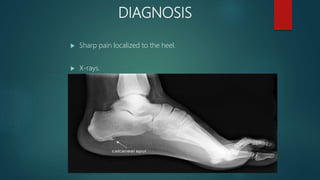
 Sharp pain localized to the heel.
 X-rays.
Examination
 ROM
 Observation
 Palpation
 Compare bilaterally
 Test Sensation
TREATMENT
Medical treatment
Medication such as:
 NSAID(e.g. ibuprofen )
 Cortisone injections
 Botulinum toxin
Surgery:
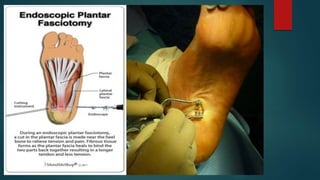
 Endoscopic plantar fasciotomy
 In-step fasciotomy
Physiotherapy
Modalities:
 Cryo-ultrasound therapy
It promises an effective and long-lasting clinical improvement in patients with chronic plantar fasciitis.
 Ultrasound
 Ice massage
 Thermotherapy
useful for reduction of pain during exercises.
 Low level laser therapy
laser therapy with 850nm wavelength was applied for 9 sessions 3 times a week
 Extracorporeal Shock Wave Therapy
 Iontophoresis
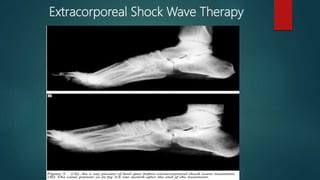
Extracorporeal Shock Wave Therapy
 ECSWT is recommended to be the first choice in treating calcaneal spur.
 ESWT appeared effective in relieving heel pain among patients with calcaneal spur
especially when given within the first 4 months after the start of patient complaint.
 ESWT should be useful when the treatment is given with an amount of at least
3x500 impulses weekly.
Extracorporeal Shock Wave Therapy
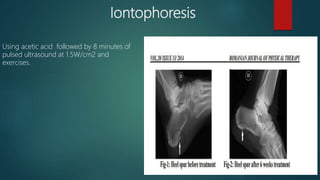
Iontophoresis
Using acetic acid followed by 8 minutes of
pulsed ultrasound at 1.5W/cm2 and
exercises.
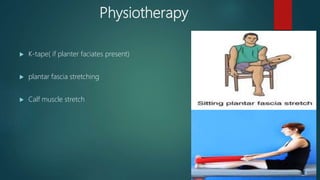
Physiotherapy
 K-tape( if planter faciates present)
 plantar fascia stretching
 Calf muscle stretch
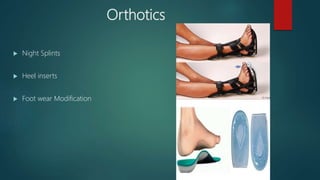
Orthotics
 Night Splints
 Heel inserts
 Foot wear Modification
References
1. https://www.clinicalkey.com/#!/content/patient_handout/5-s2.0-pe_ExitCare_DI_Heel_Spur_en
2. http://www.webmd.com/pain-management/heel-spurs-pain-causes-symptoms-treatments#1
3. http://www.physio-pedia.com/Calcaneal_Spurs
4. https://www.epainassist.com/sports-injuries/foot-and-heel-injuries/heel-or-calcaneal-spur
5. http://ard.bmj.com/content/71/Suppl_3/757.13
6. https://www.ncbi.nlm.nih.gov/pmc/articles/PMC1753417/pdf/v060p01064.pdf
7. https://www.clinicalkey.com/#!/content/journal/1-s2.0-S1067251614005742
8. http://www.sportsinjuryclinic.net/sport-injuries/foot-heel-pain/heel-spur
9. http://www.shockwavetherapy.education/index.php/tutorials/ankle/heel-spurs
10. https://www.clinicalkey.com/#!/content/medline/2-s2.0-24172641
11. www.revrokineto.com/viewart/111/en
12. https://www.clinicalkey.com/#!/content/medline/2-s2.0-28214811

Heel spur

  • 1.
  • 2.
  • 3.
  • 5.
  • 6.
    Definition  A heelspur is a bony growth that forms on the heel bone (calcaneus).  Heel spurs are common and do not always cause pain, Pain caused by contact of the spur with the surrounding soft tissue.  It can be located at the back of the heel (dorsal heel spur) or under the sole (plantar heel spur).  The dorsal spurs are often associated with Achilles Tendinopathy, while spurs under the sole are associated with Plantar fasciitis.
  • 8.
    Causes  The causeof heel spurs is not completely understood.  They may be caused by pressure on the heel.  In general, the cause of the pain is not the heel spur itself but the soft-tissue injury associated with it.
  • 9.
    Sings and symptoms Pain in the bottom of your heel.  Pain that is worse when you first get out of bed.  Pain that gets worse after walking or standing.
  • 10.
    RISK FACTORS  olderthan 40.  overweight.  Have wear and tear arthritis (osteoarthritis).  Have plantar fascia inflammation.  Walking gait abnormalities, which place excessive stress on the heel bone, ligaments, and nerves near the heel.  Running or jogging, especially on hard surfaces.
  • 11.
    DIAGNOSIS  Sharp painlocalized to the heel.  X-rays.
  • 12.
    Examination  ROM  Observation Palpation  Compare bilaterally  Test Sensation
  • 13.
  • 14.
    Medical treatment Medication suchas:  NSAID(e.g. ibuprofen )  Cortisone injections  Botulinum toxin Surgery:  Endoscopic plantar fasciotomy  In-step fasciotomy
  • 16.
    Physiotherapy Modalities:  Cryo-ultrasound therapy Itpromises an effective and long-lasting clinical improvement in patients with chronic plantar fasciitis.  Ultrasound  Ice massage  Thermotherapy useful for reduction of pain during exercises.  Low level laser therapy laser therapy with 850nm wavelength was applied for 9 sessions 3 times a week  Extracorporeal Shock Wave Therapy  Iontophoresis
  • 17.
    Extracorporeal Shock WaveTherapy  ECSWT is recommended to be the first choice in treating calcaneal spur.  ESWT appeared effective in relieving heel pain among patients with calcaneal spur especially when given within the first 4 months after the start of patient complaint.  ESWT should be useful when the treatment is given with an amount of at least 3x500 impulses weekly.
  • 18.
  • 19.
    Iontophoresis Using acetic acidfollowed by 8 minutes of pulsed ultrasound at 1.5W/cm2 and exercises.
  • 20.
    Physiotherapy  K-tape( ifplanter faciates present)  plantar fascia stretching  Calf muscle stretch
  • 21.
    Orthotics  Night Splints Heel inserts  Foot wear Modification
  • 23.
    References 1. https://www.clinicalkey.com/#!/content/patient_handout/5-s2.0-pe_ExitCare_DI_Heel_Spur_en 2. http://www.webmd.com/pain-management/heel-spurs-pain-causes-symptoms-treatments#1 3.http://www.physio-pedia.com/Calcaneal_Spurs 4. https://www.epainassist.com/sports-injuries/foot-and-heel-injuries/heel-or-calcaneal-spur 5. http://ard.bmj.com/content/71/Suppl_3/757.13 6. https://www.ncbi.nlm.nih.gov/pmc/articles/PMC1753417/pdf/v060p01064.pdf 7. https://www.clinicalkey.com/#!/content/journal/1-s2.0-S1067251614005742 8. http://www.sportsinjuryclinic.net/sport-injuries/foot-heel-pain/heel-spur 9. http://www.shockwavetherapy.education/index.php/tutorials/ankle/heel-spurs 10. https://www.clinicalkey.com/#!/content/medline/2-s2.0-24172641 11. www.revrokineto.com/viewart/111/en 12. https://www.clinicalkey.com/#!/content/medline/2-s2.0-28214811