Ocean waves
Wave characteristics
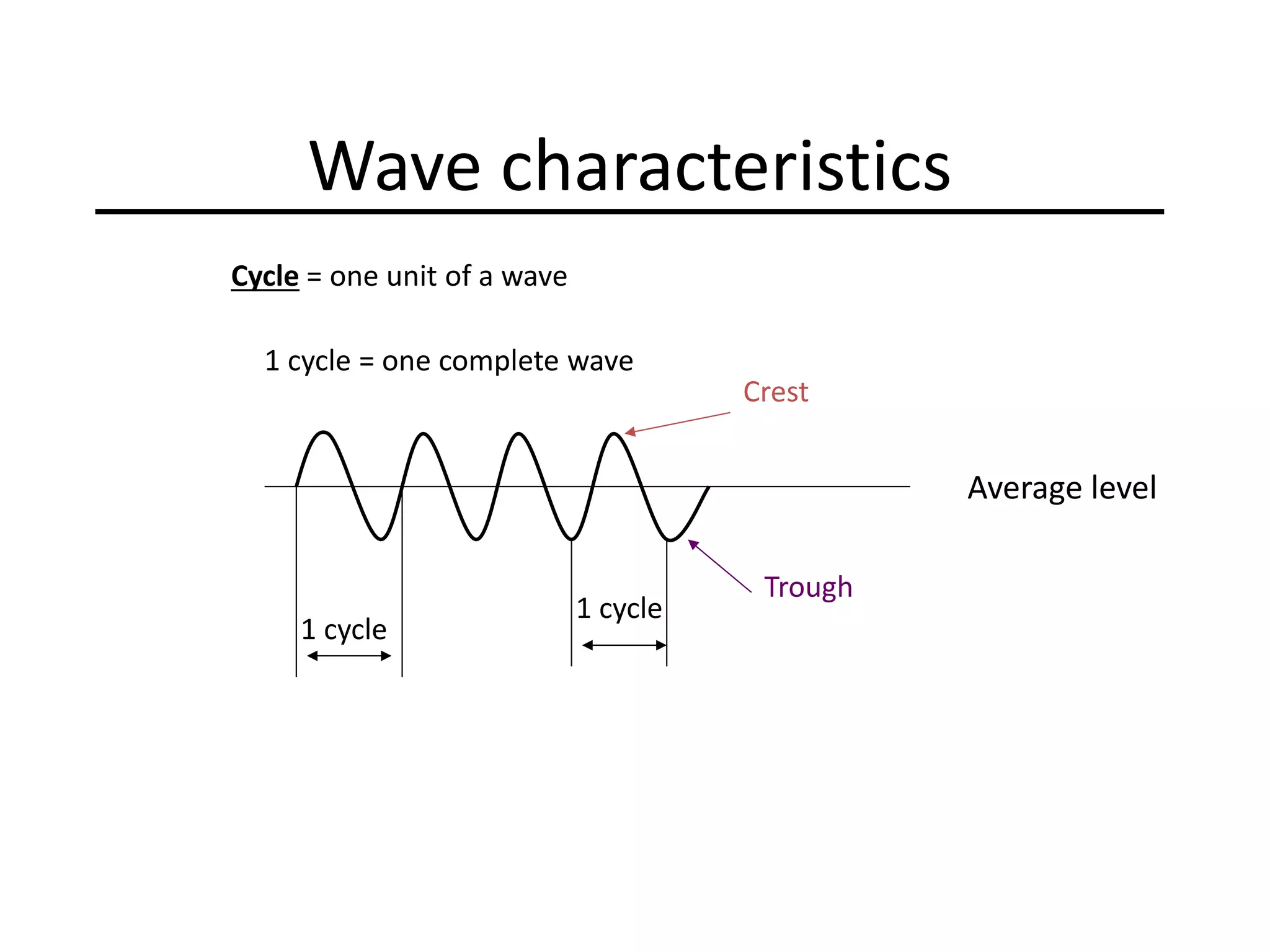
Average level
1 cycle
1 cycle
Cycle = one unit of a wave
1 cycle = one complete wave
Crest
Trough
Wave characteristics
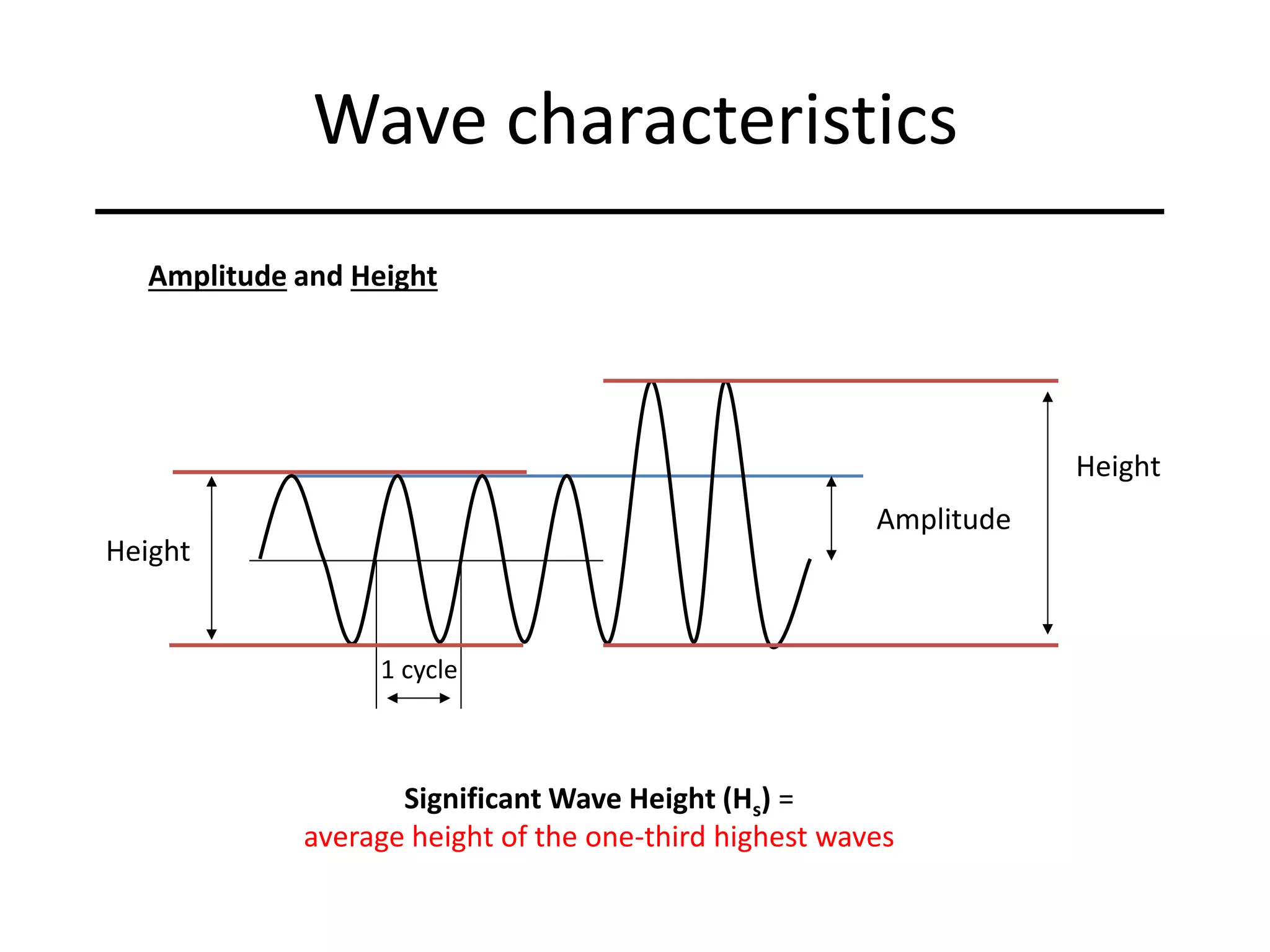
Amplitude and Height
Amplitude
1 cycle
Height
Significant Wave Height (Hs) =
average height of the one-third highest waves
Height
Wave characteristics
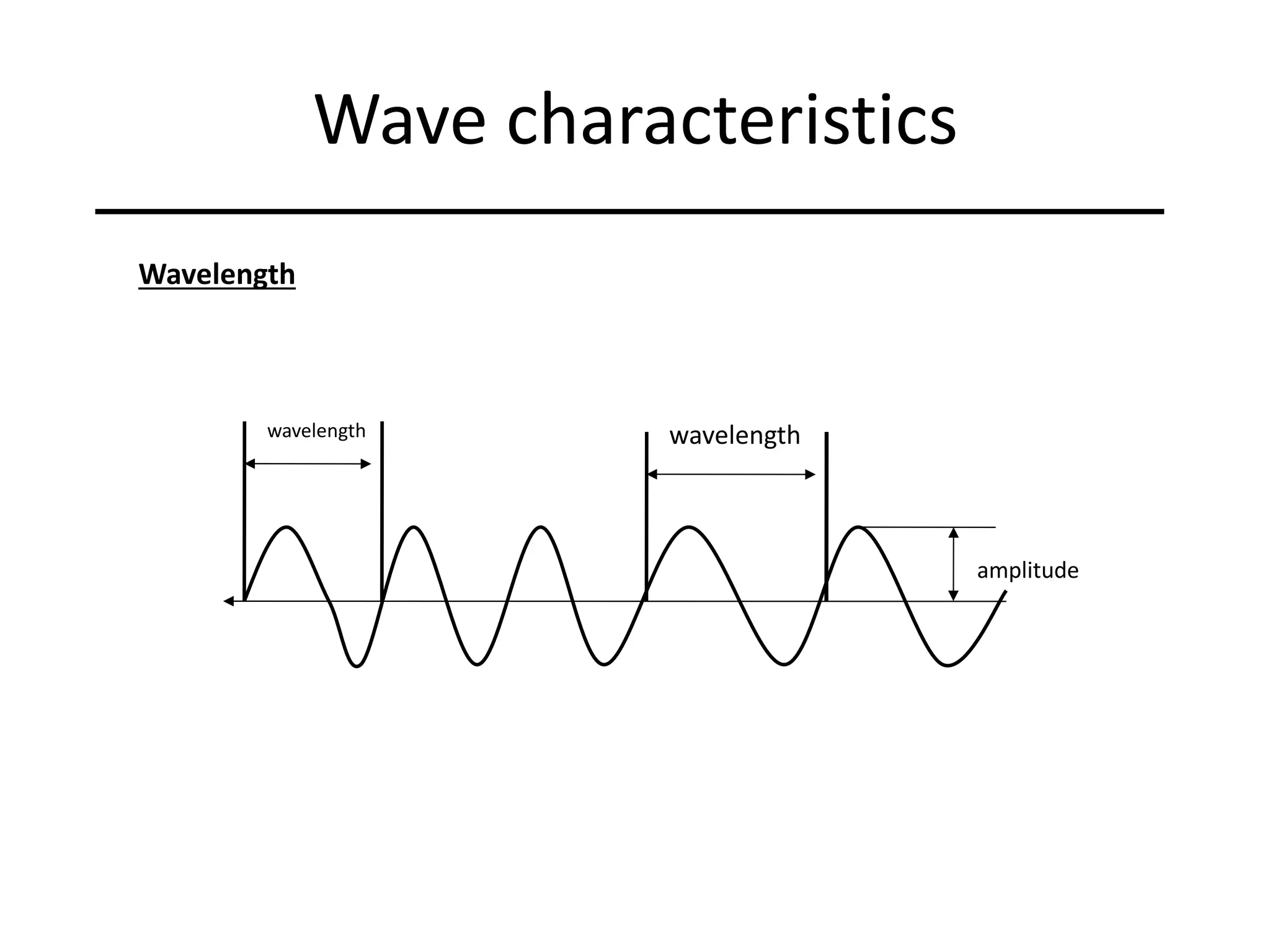
Wavelength
wavelengthwavelength
amplitude
Wave characteristics
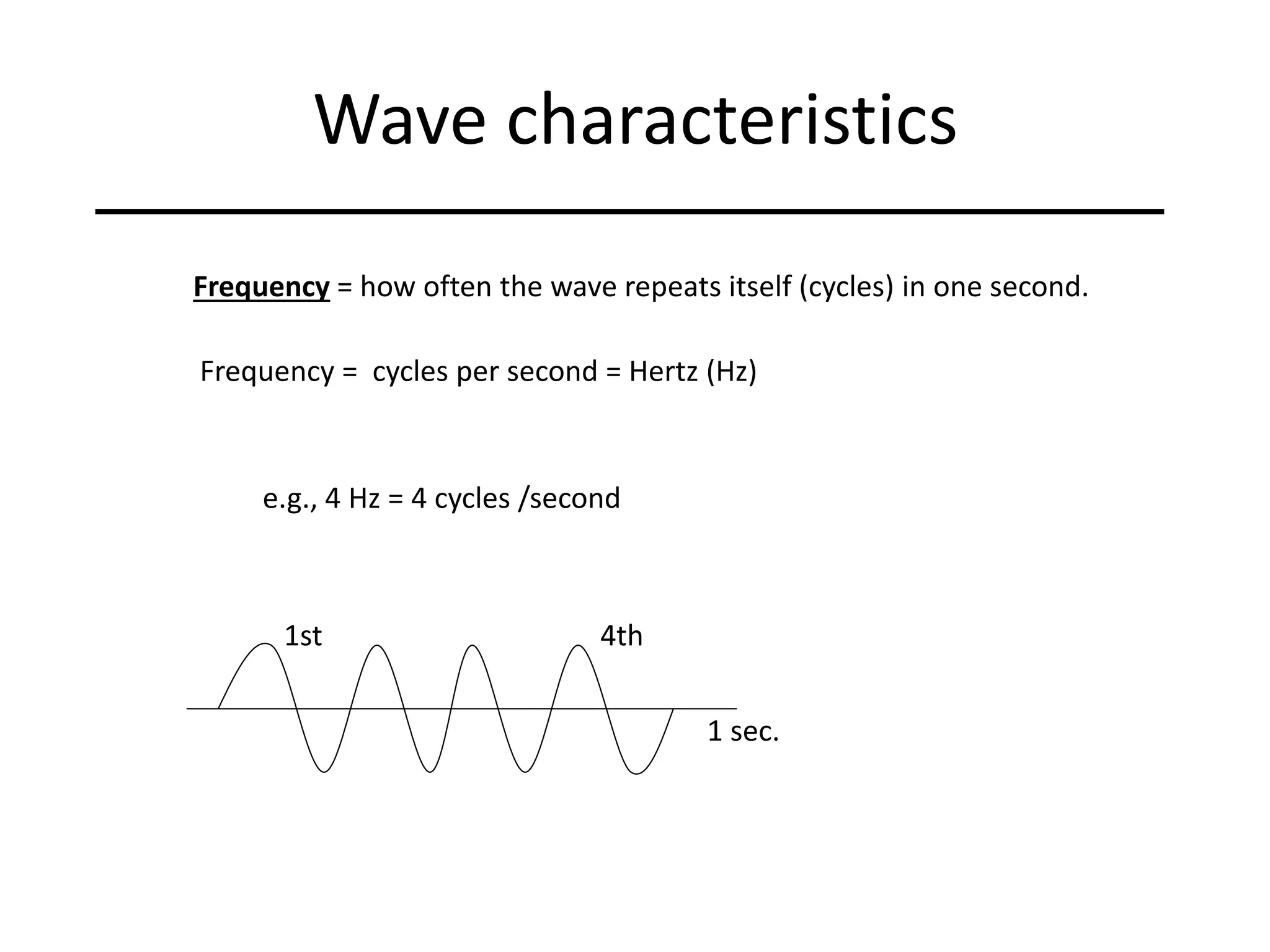
Frequency = how often the wave repeats itself (cycles) in one second.
Frequency = cycles per second = Hertz (Hz)
e.g., 4 Hz = 4 cycles /second
1st
1 sec.
4th
Wave characteristics
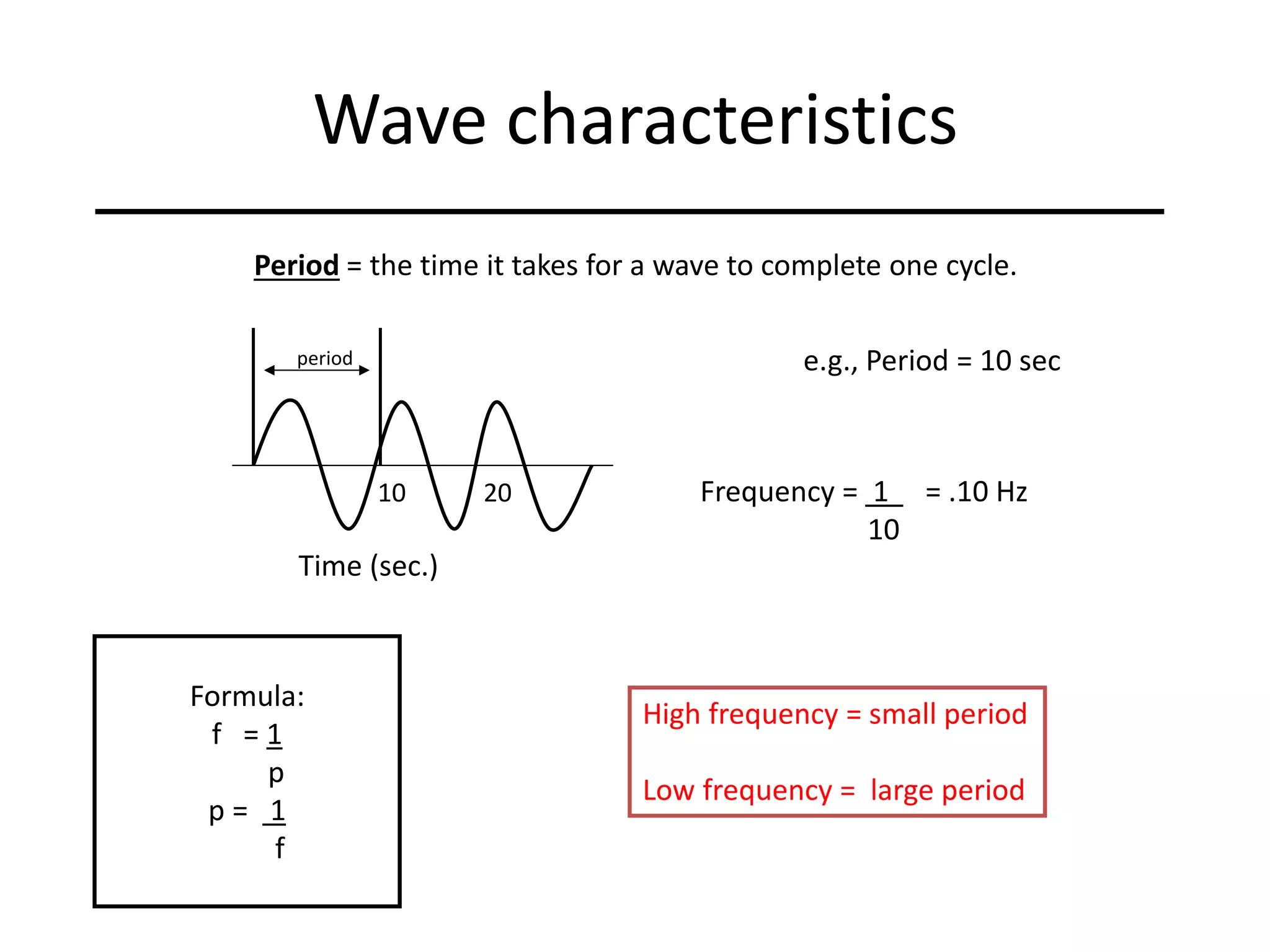
Period = the time it takes for a wave to complete one cycle.
period
.01
Time (sec.)
e.g., Period = 10 sec
Frequency = 1 = .10 Hz
10
Formula:
f = 1
p
p = 1
f
High frequency = small period
Low frequency = large period
10 20
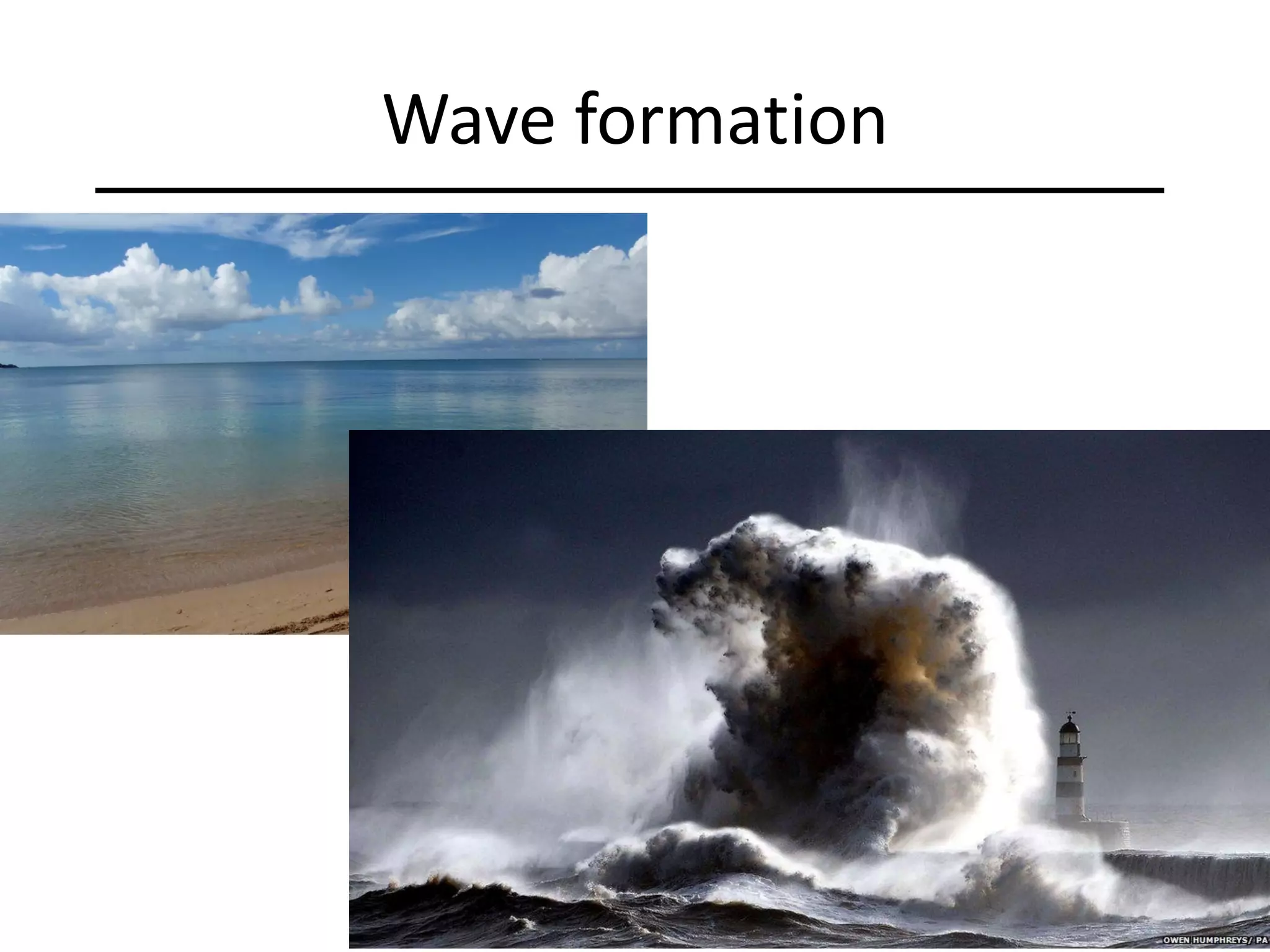
Wave formation
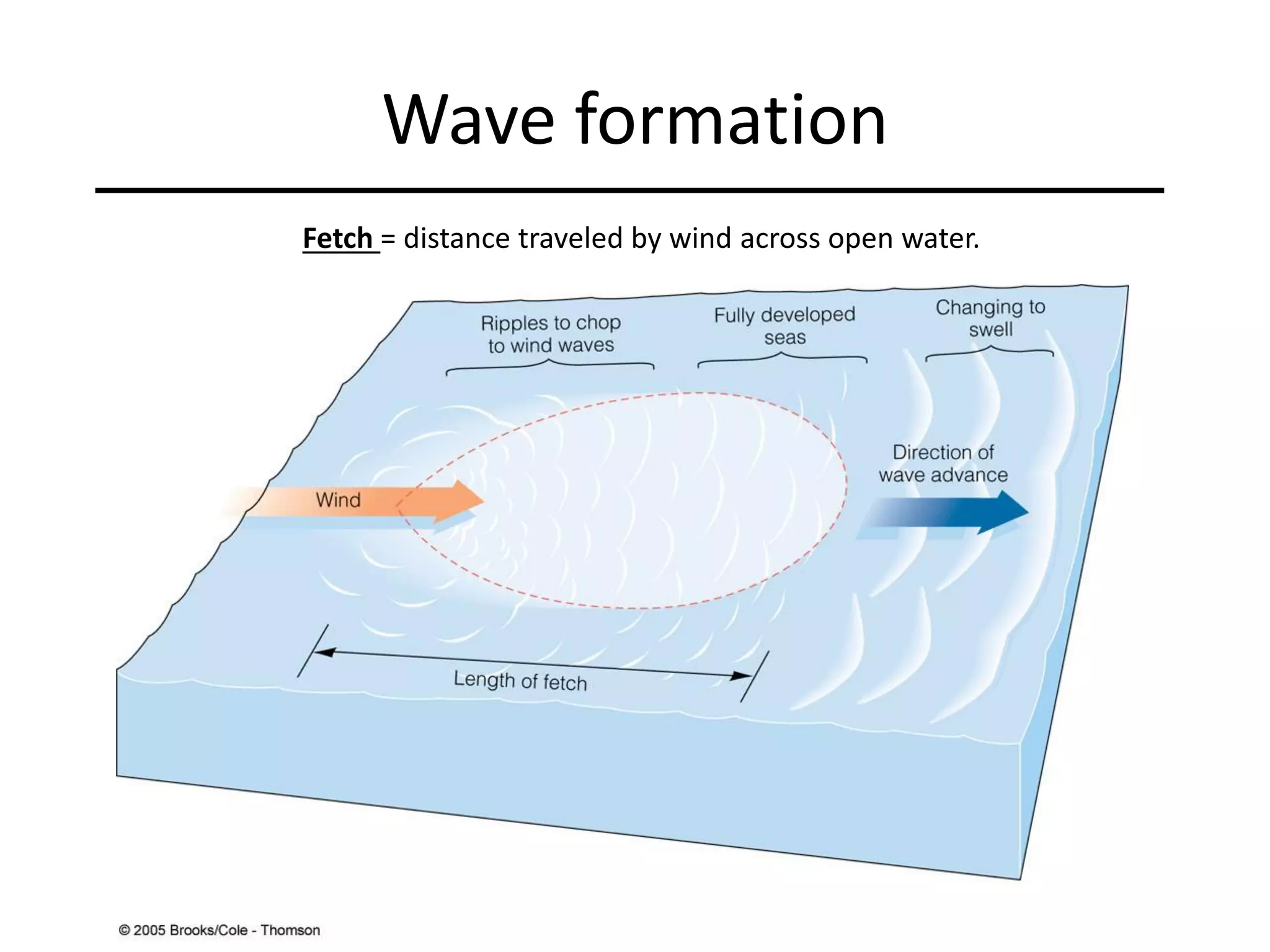
Fetch = distance traveled by wind across open water.
Wave formation
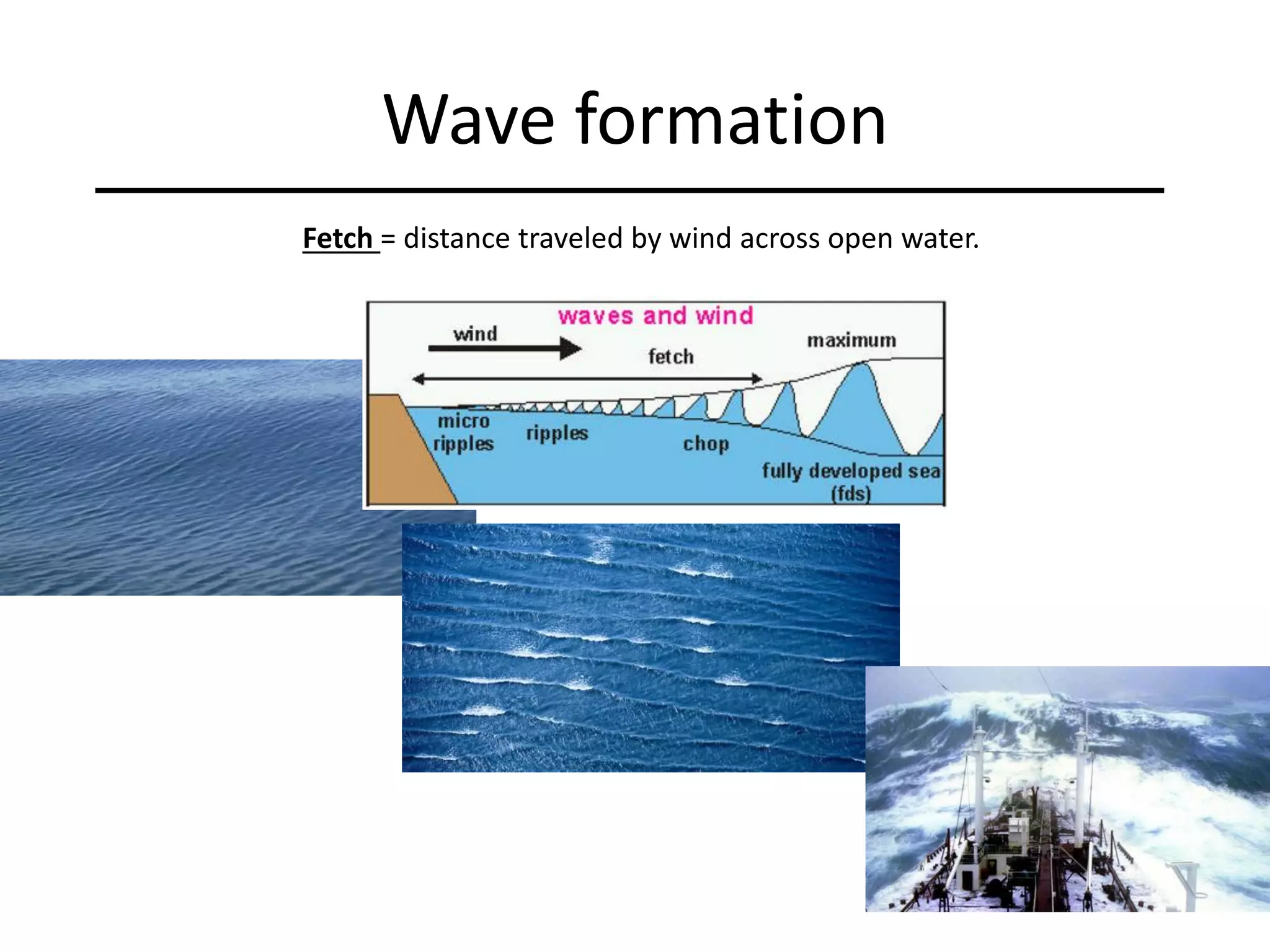
Fetch = distance traveled by wind across open water.
Wave formation
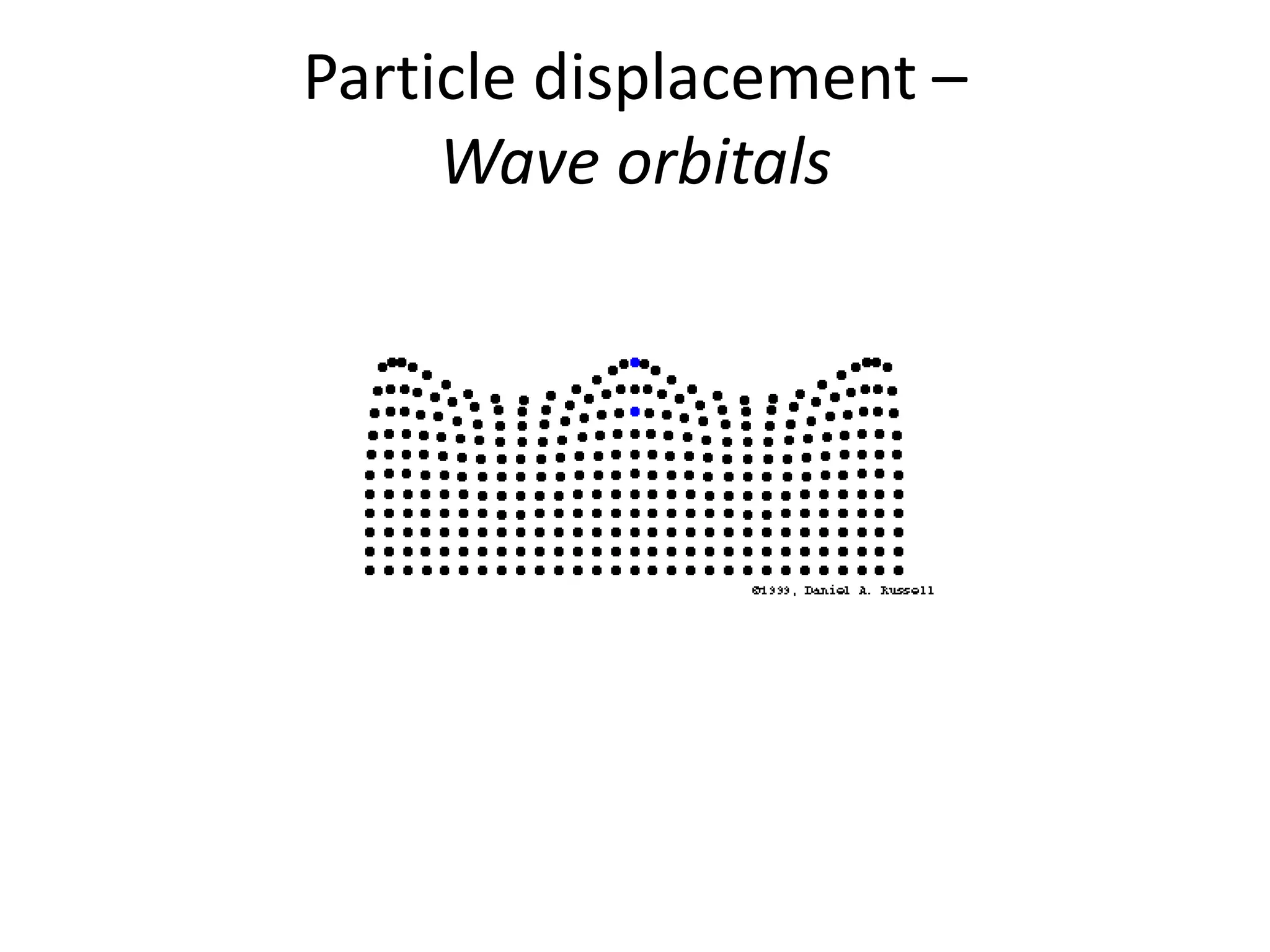
Particle displacement –
Wave orbitals
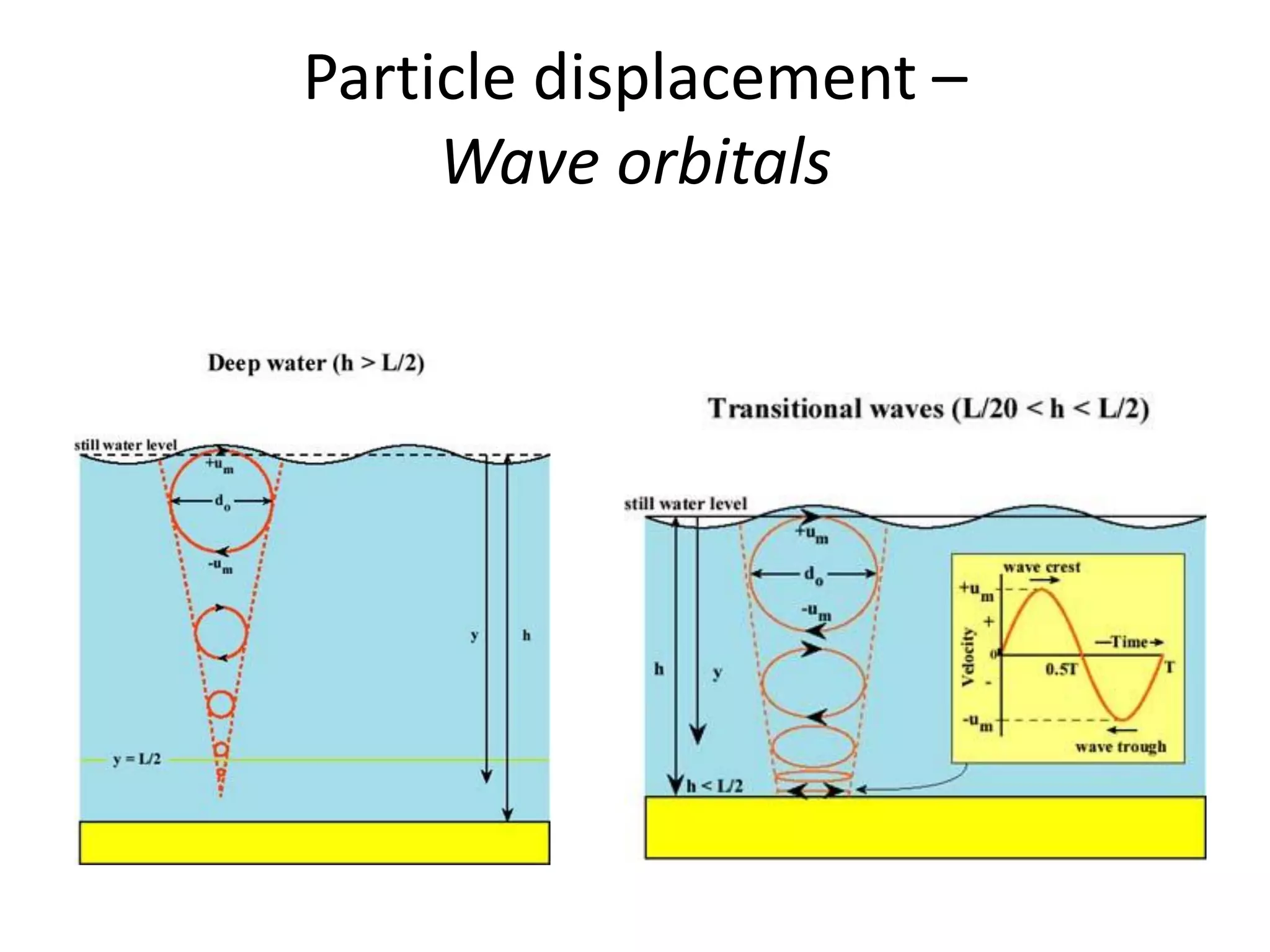
Particle displacement –
Wave orbitals
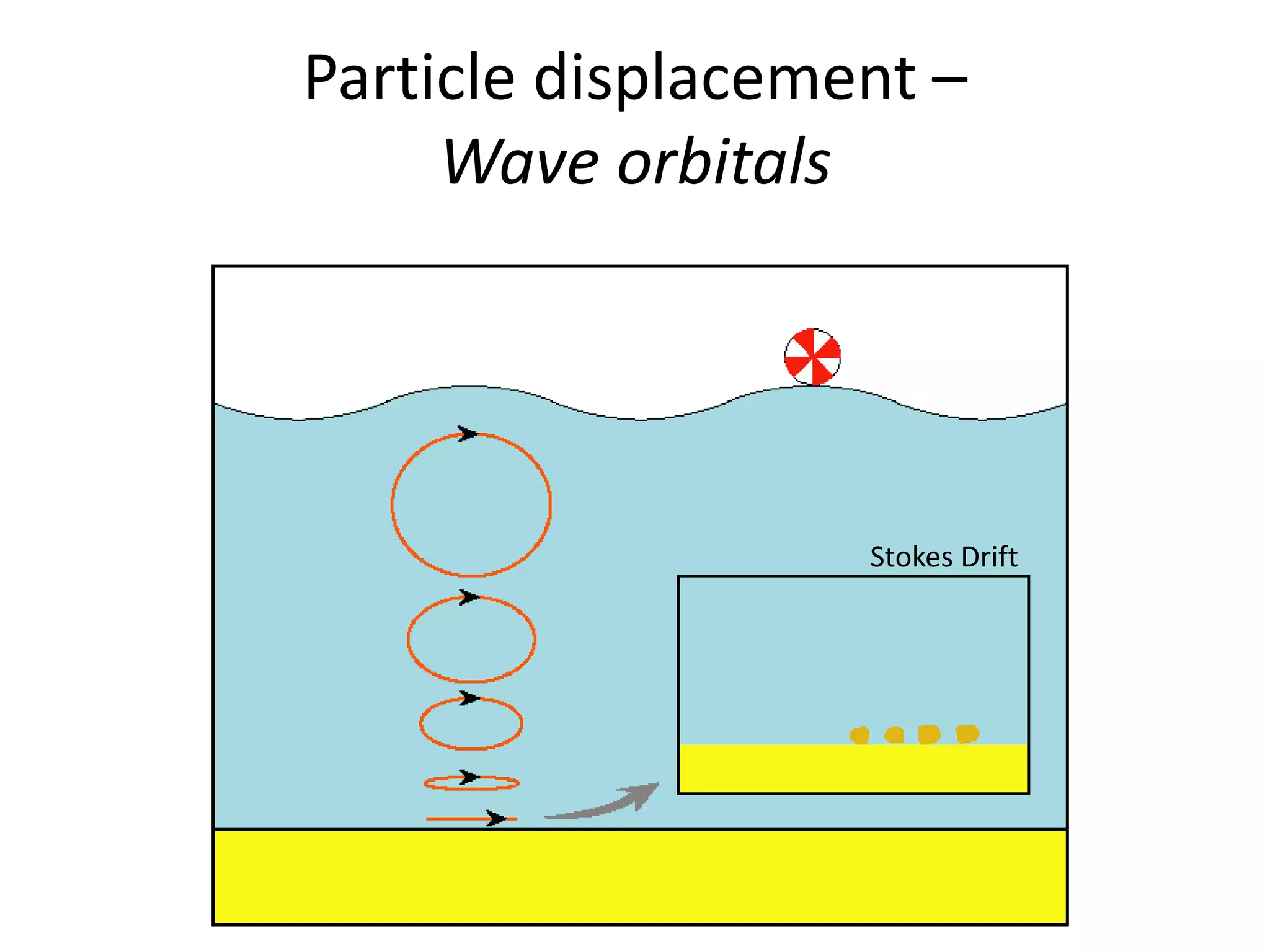
Particle displacement –
Wave orbitals
Stokes Drift
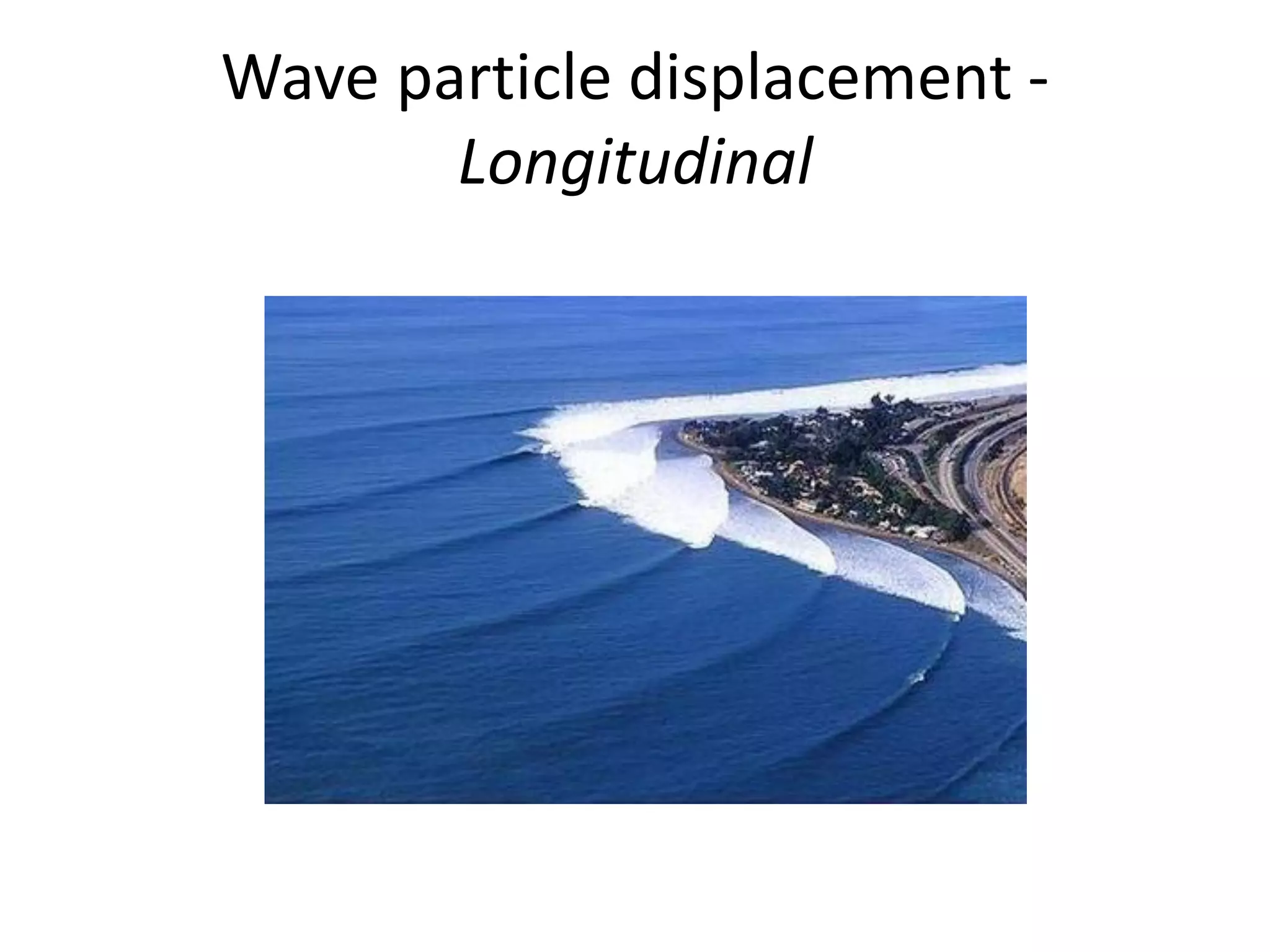
Wave particle displacement -
Longitudinal
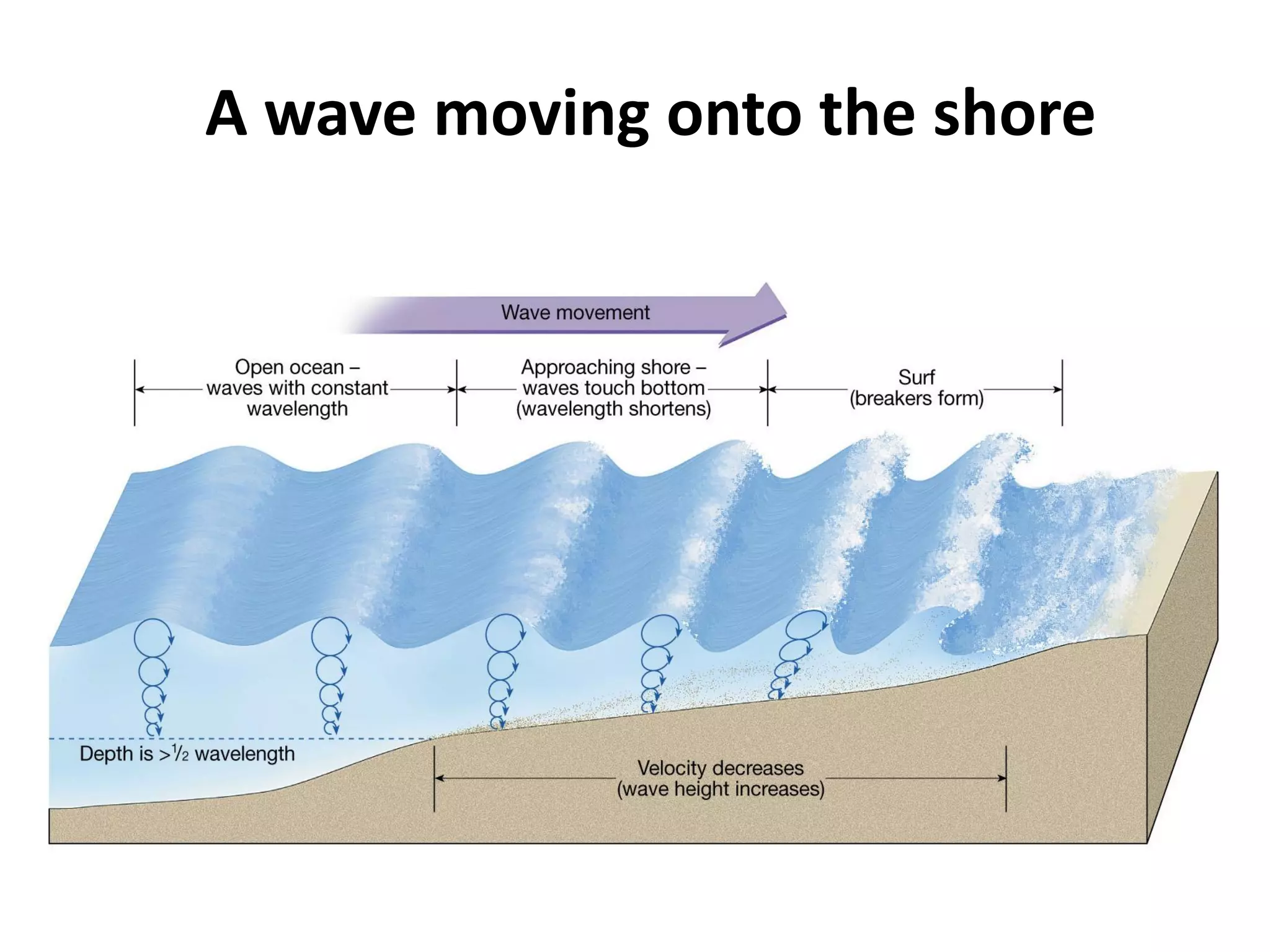
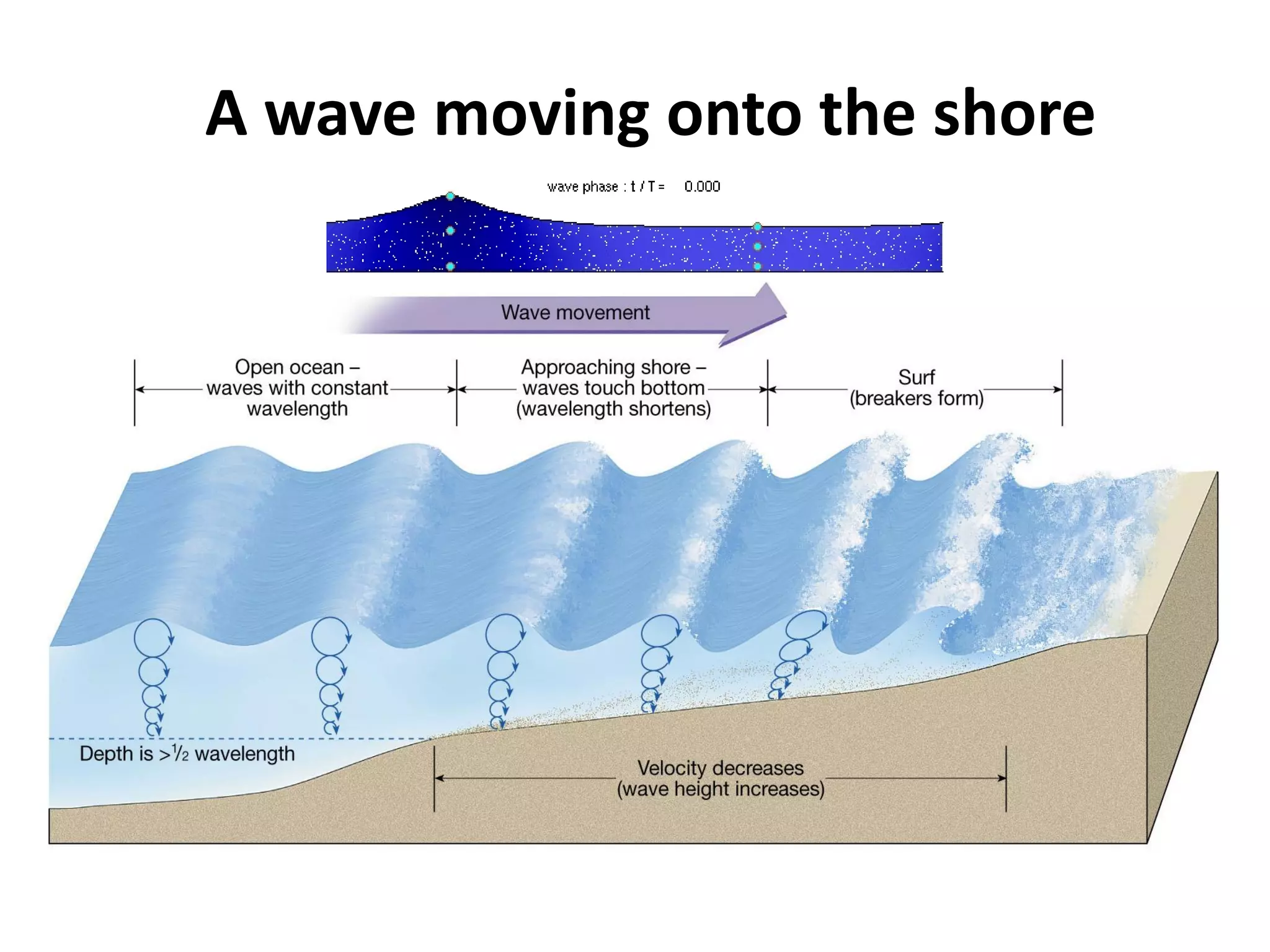
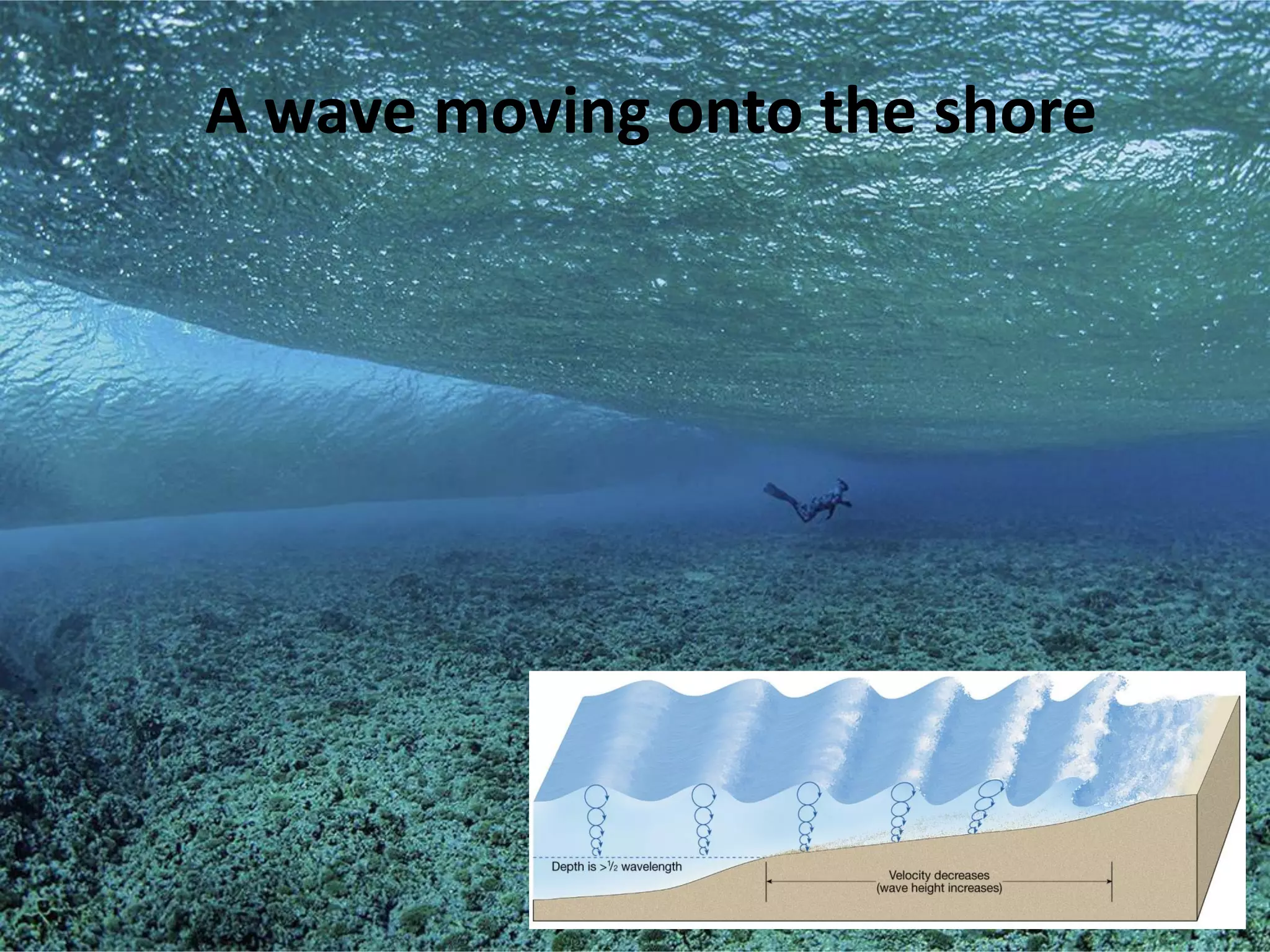
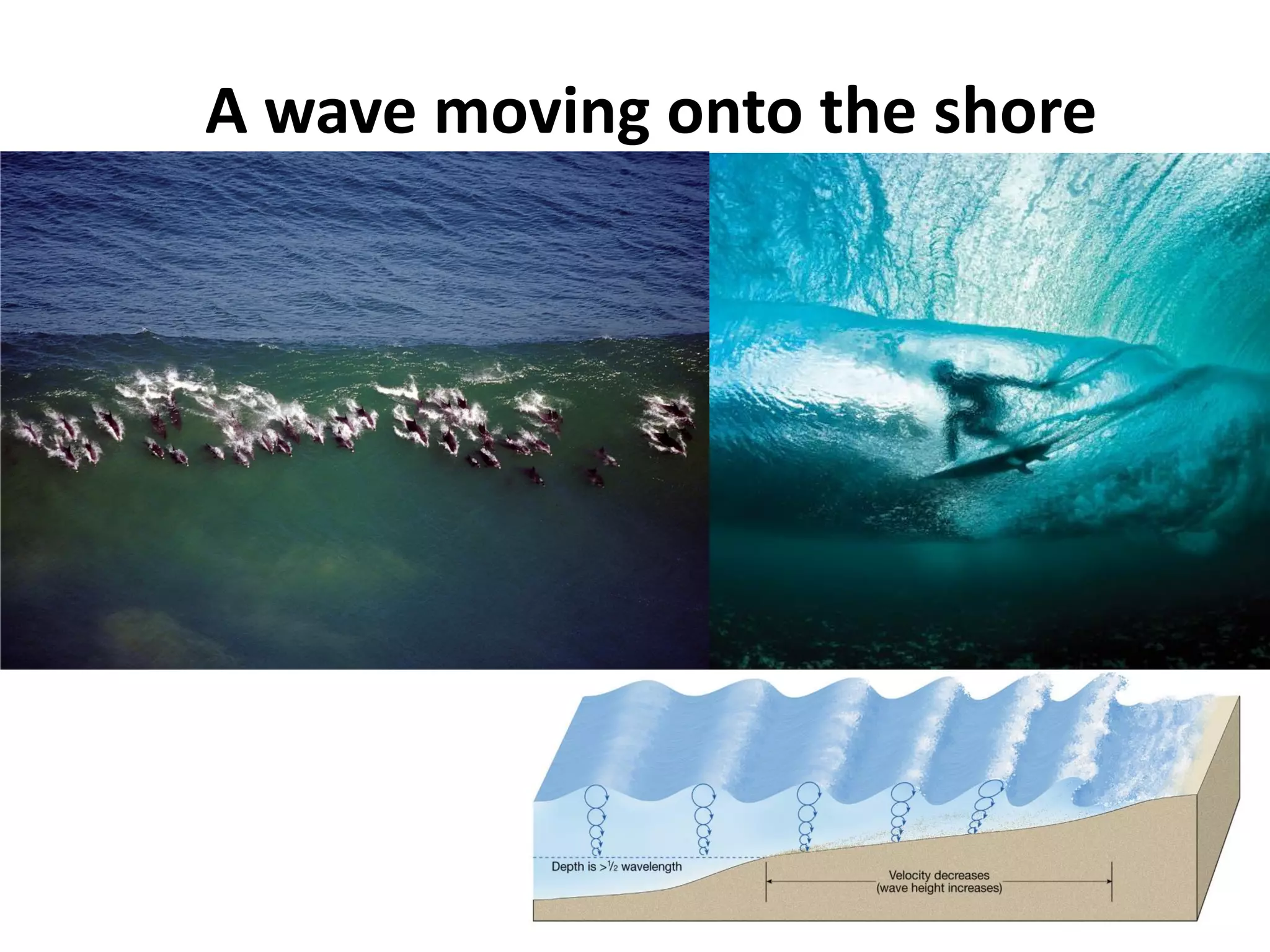
A wave moving onto the shore
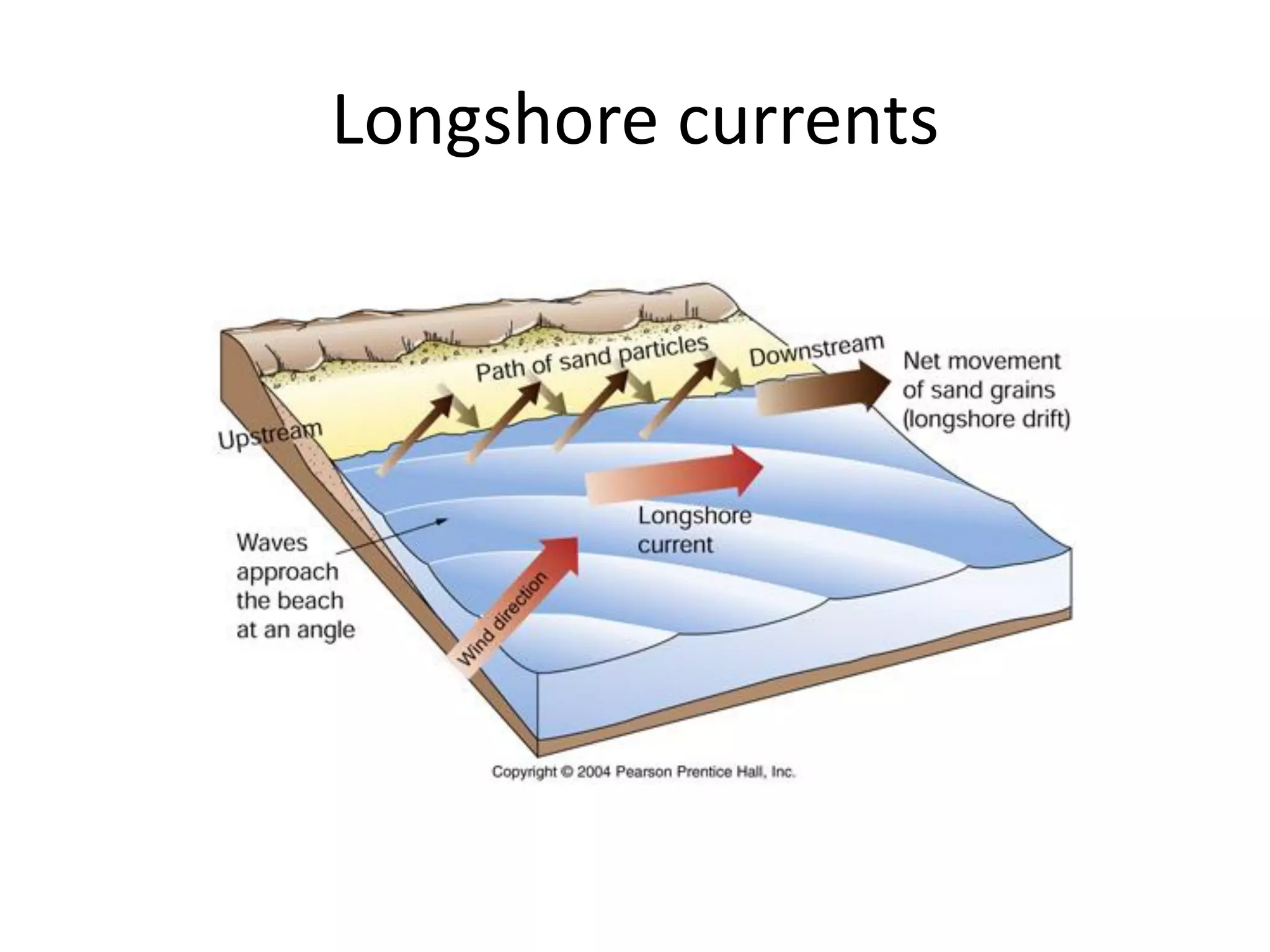
Longshore currents
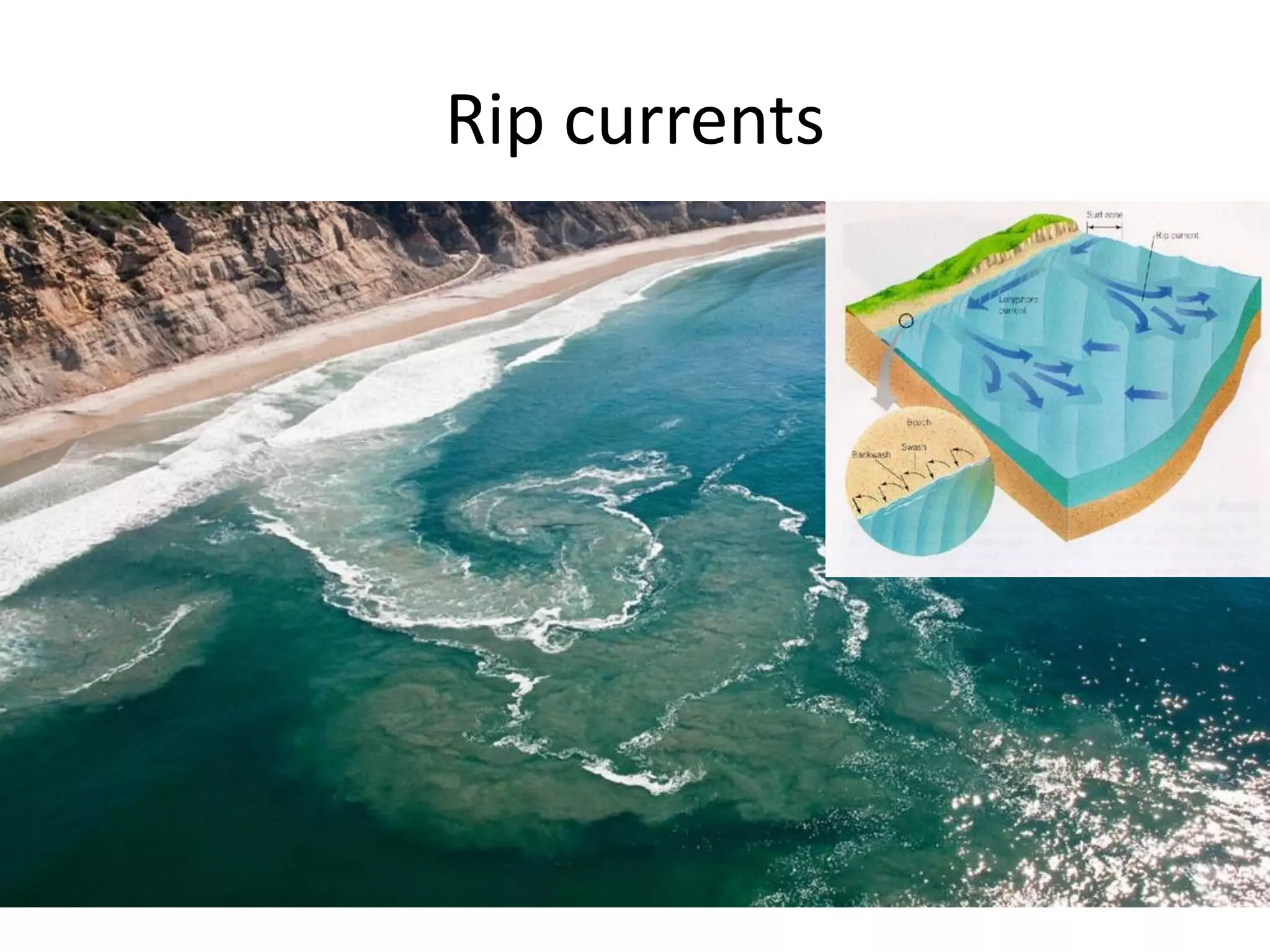
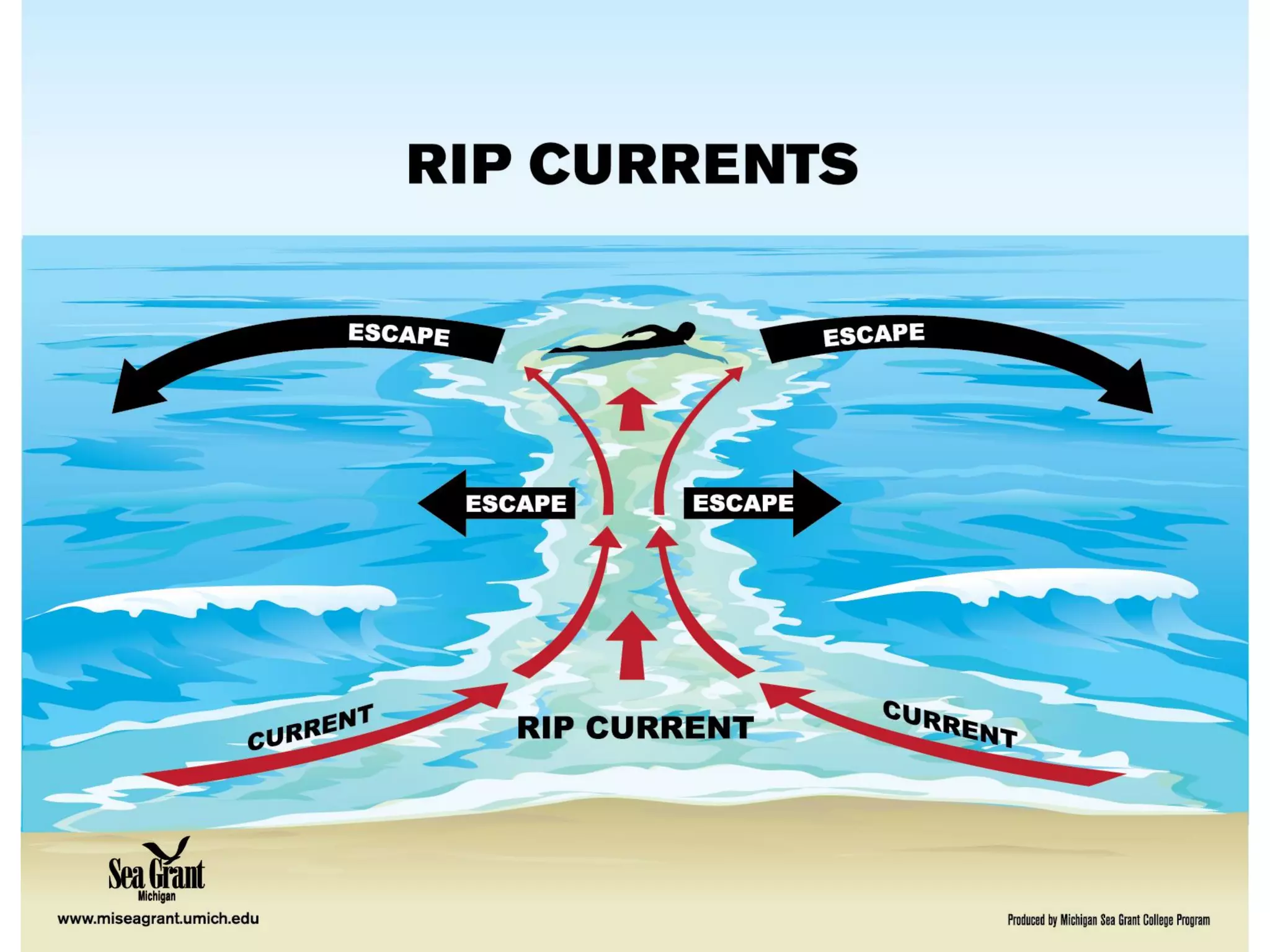
Rip currents
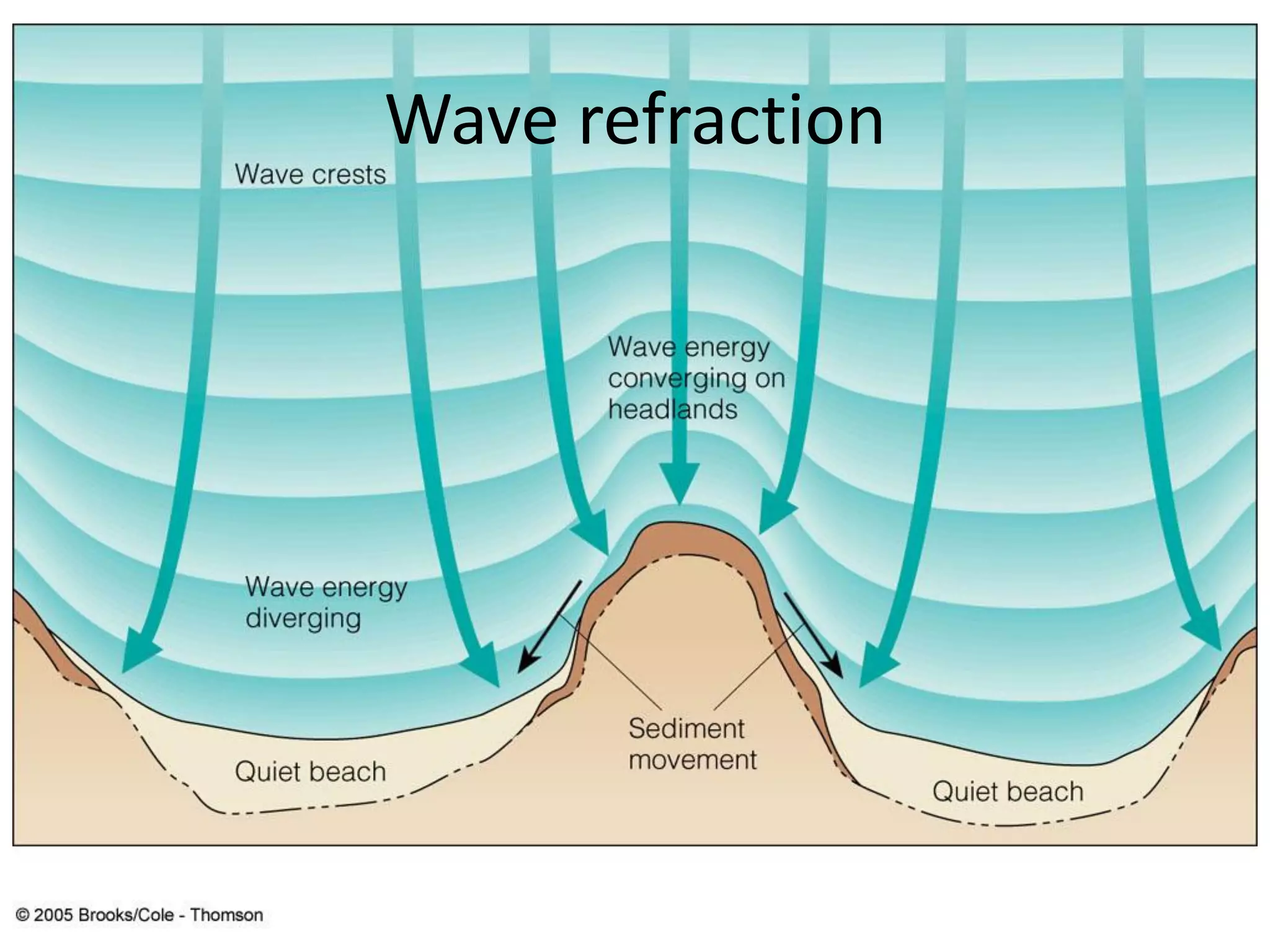
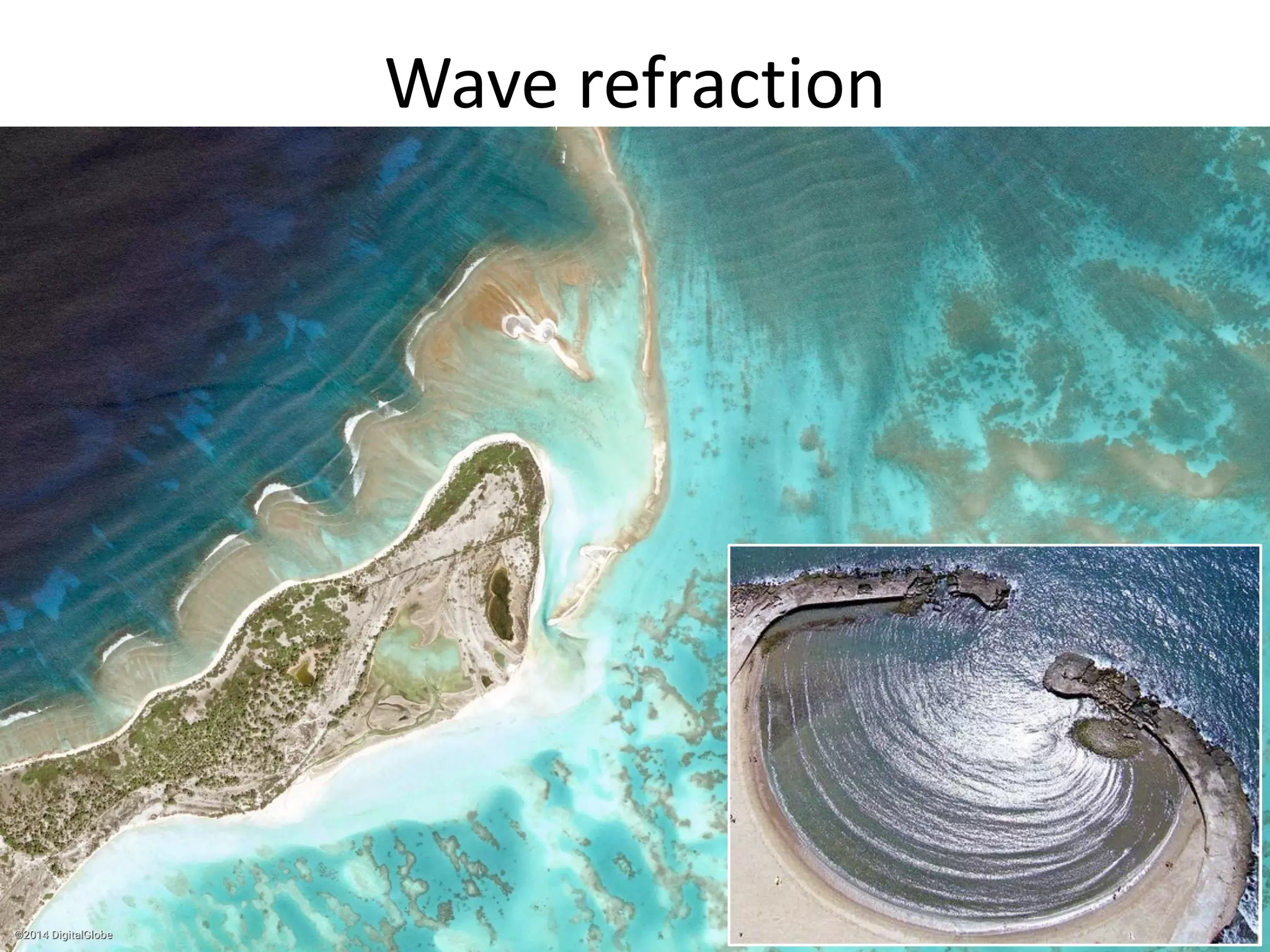
Wave refraction
• Wave refraction
• Bending of a wave
• Causes waves to arrive nearly parallel to
the shore
• Consequences of wave refraction
– Wave energy is concentrated against the
sides and ends of headlands
– Wave energy is spread out in bays and wave
attack is weakened
– Over time, wave erosion straightens an
irregular shoreline
Wave refraction
Wave refraction
When do waves break?
– Limited by ratio between wave height and wave
length (H/L)
– Limiting steepness  1/7
How are they predicted?
– wave forecasting (or hindcasting) depends on
wind velocity, duration, and fetch (WaveWatch III)
– Linear wave theory predicts wave heights
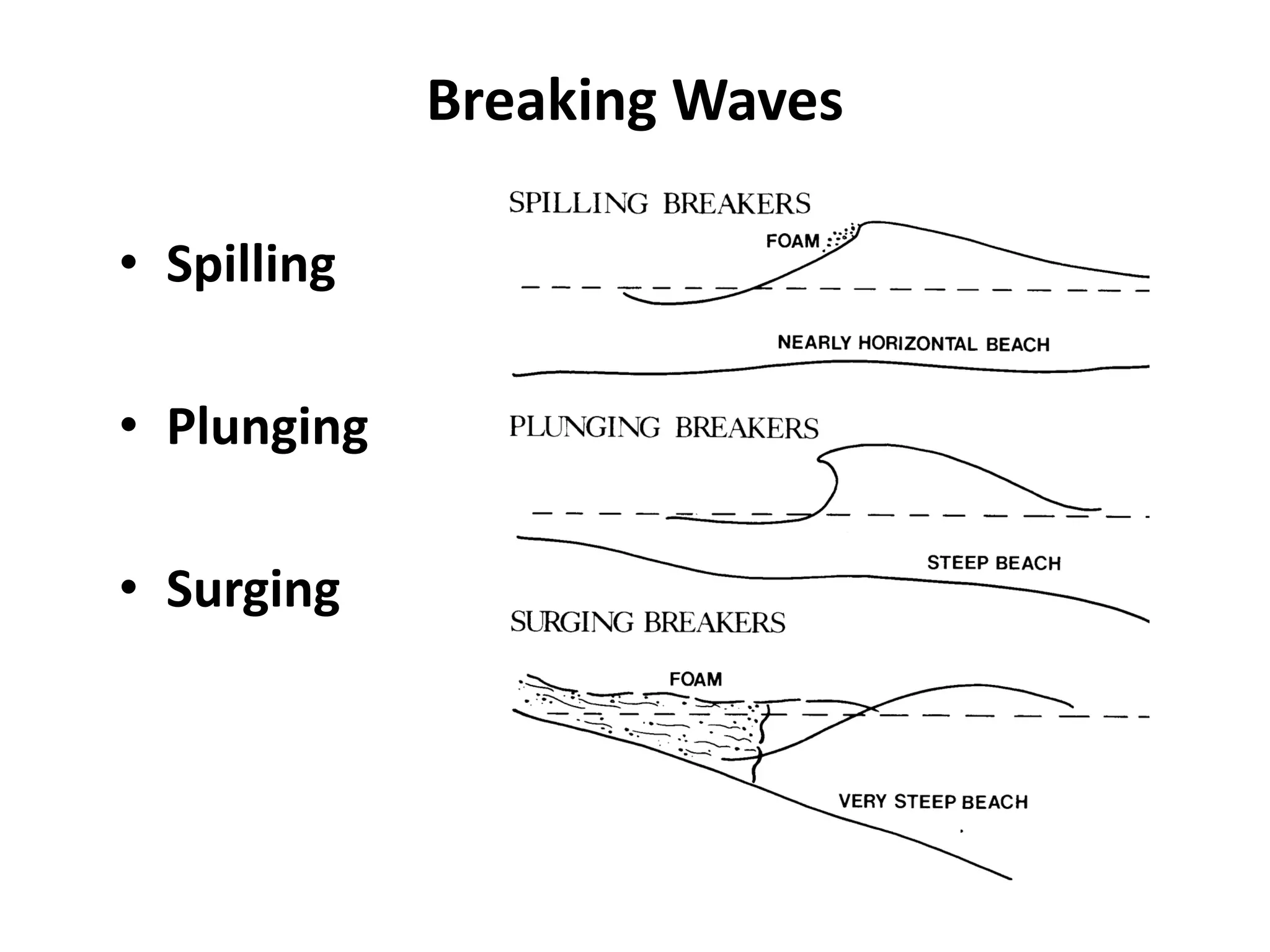
Breaking Waves
http://polar.ncep.noaa.gov/waves/wavewatch/
Breaking Waves
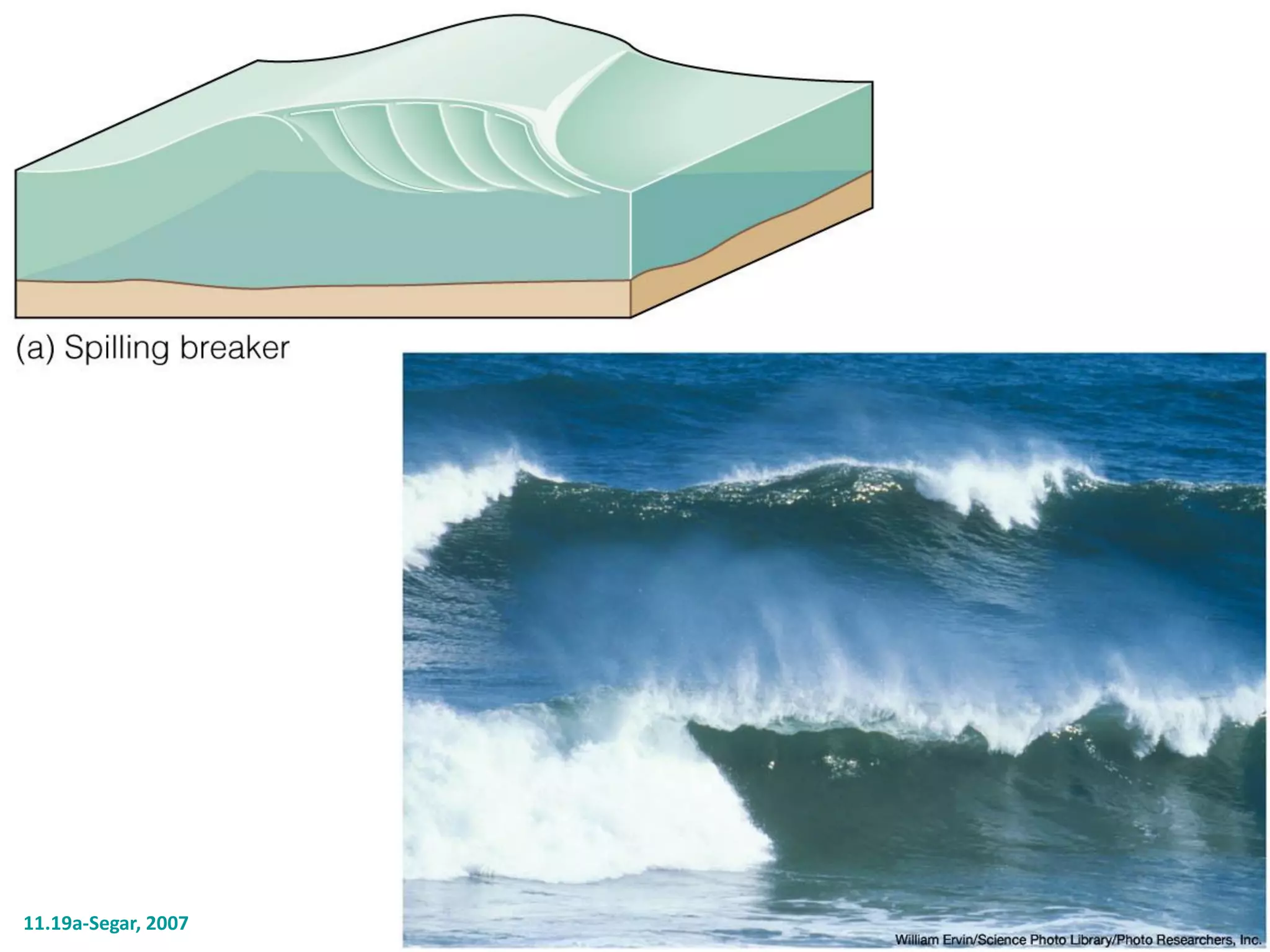
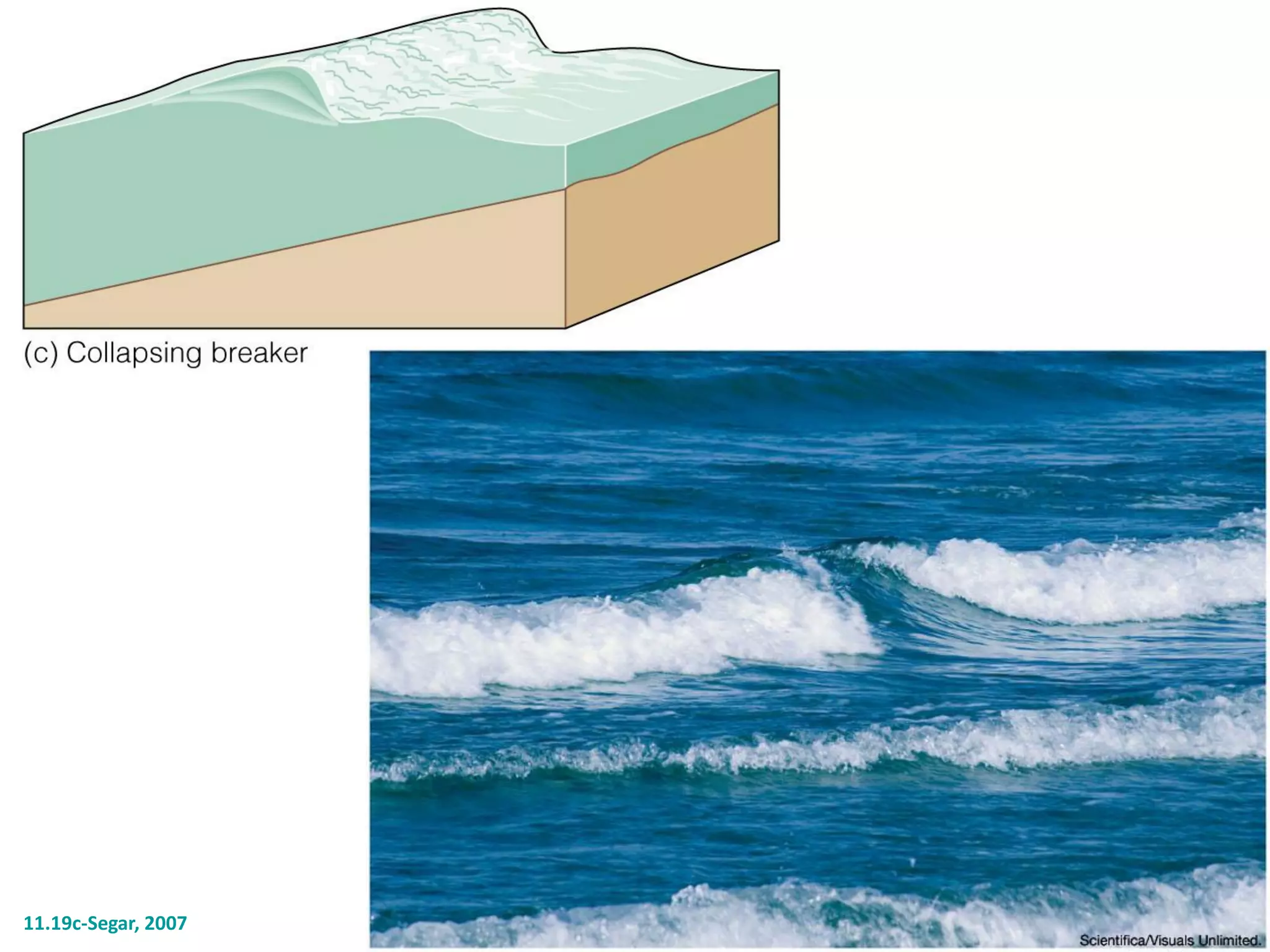
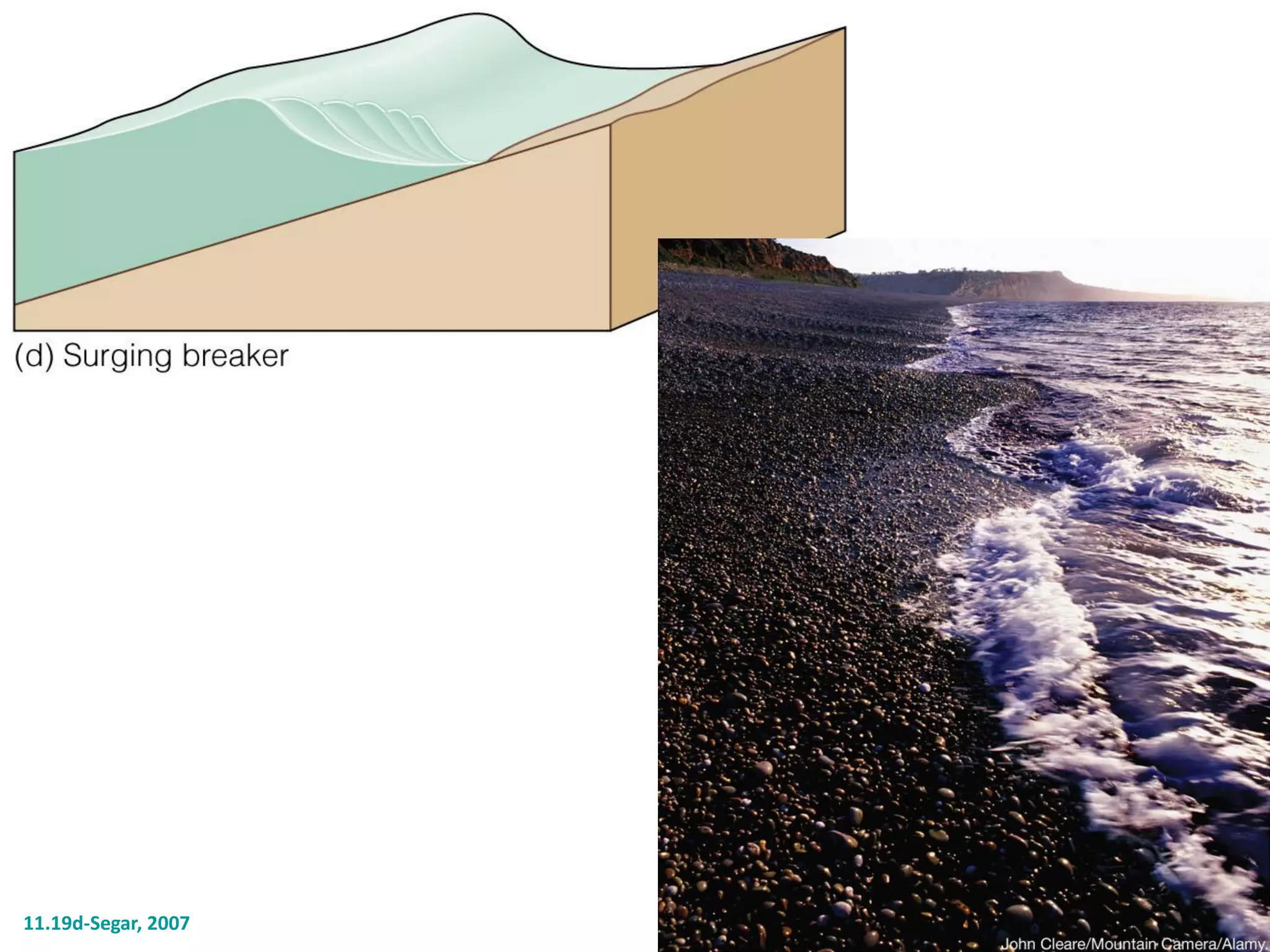
• Spilling
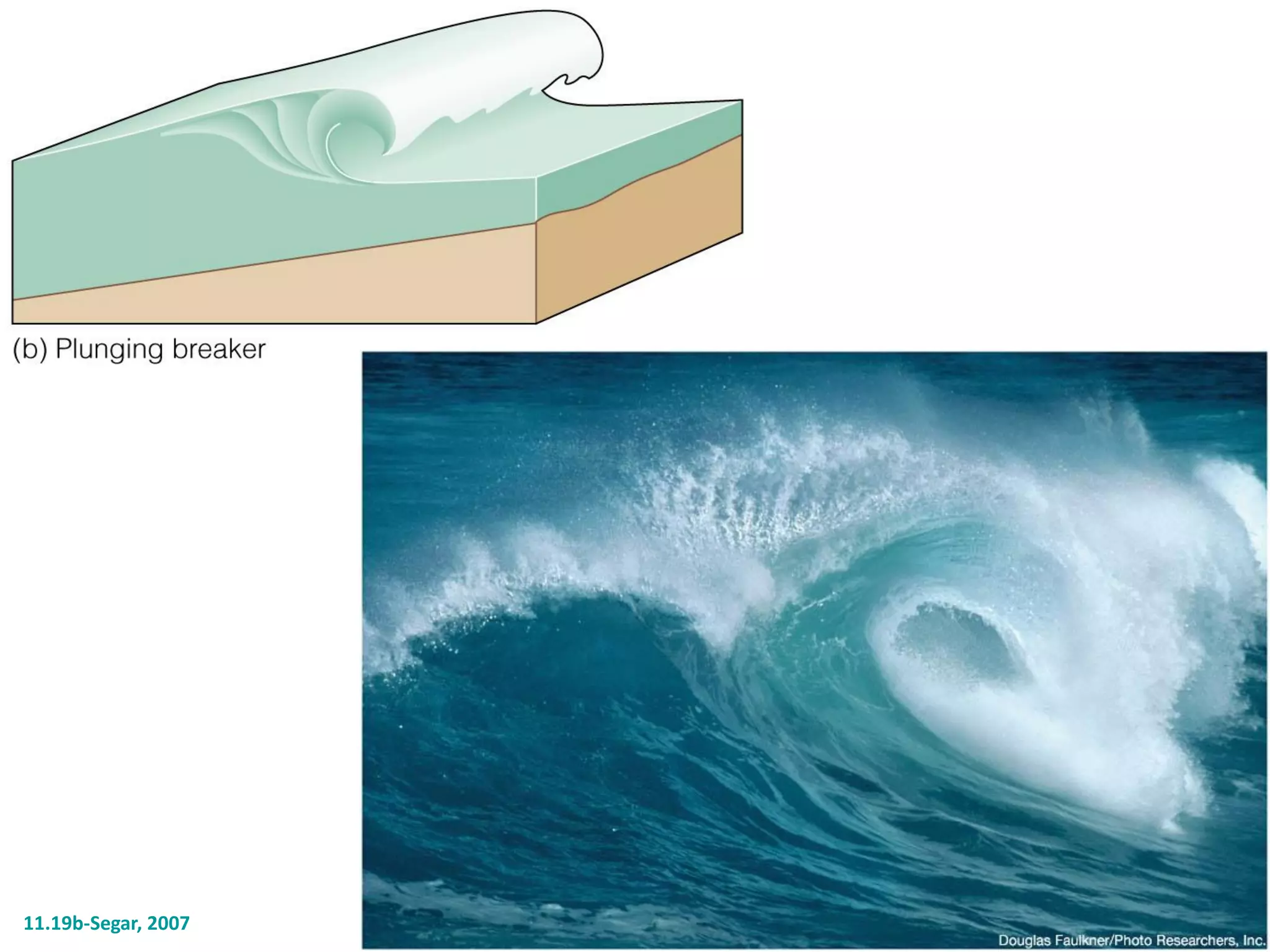
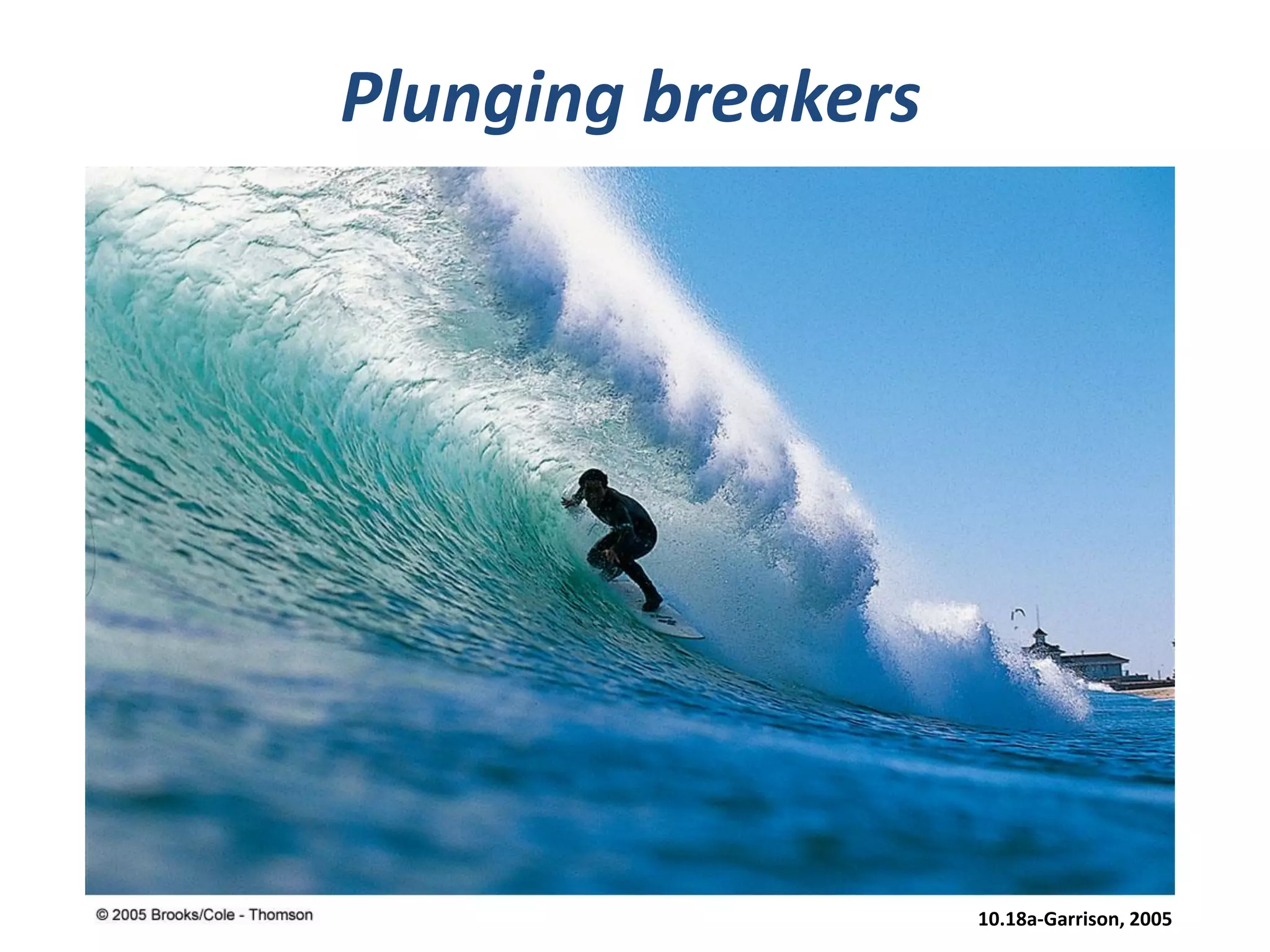
• Plunging
• Surging
11.19a-Segar, 2007
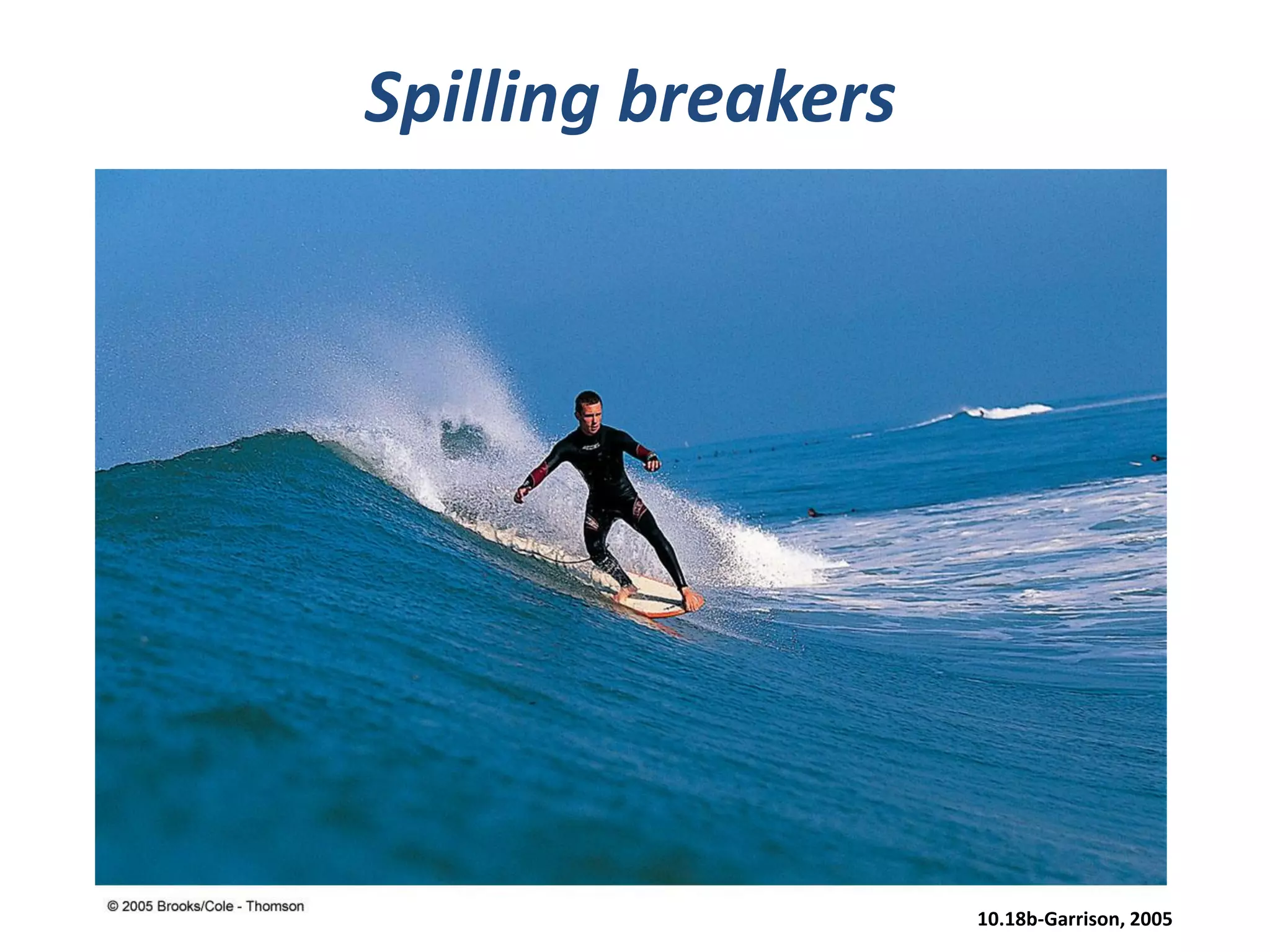
10.18b-Garrison, 2005
Spilling breakers
11.19b-Segar, 2007
10.18a-Garrison, 2005
Plunging breakers
11.19c-Segar, 2007
11.19d-Segar, 2007
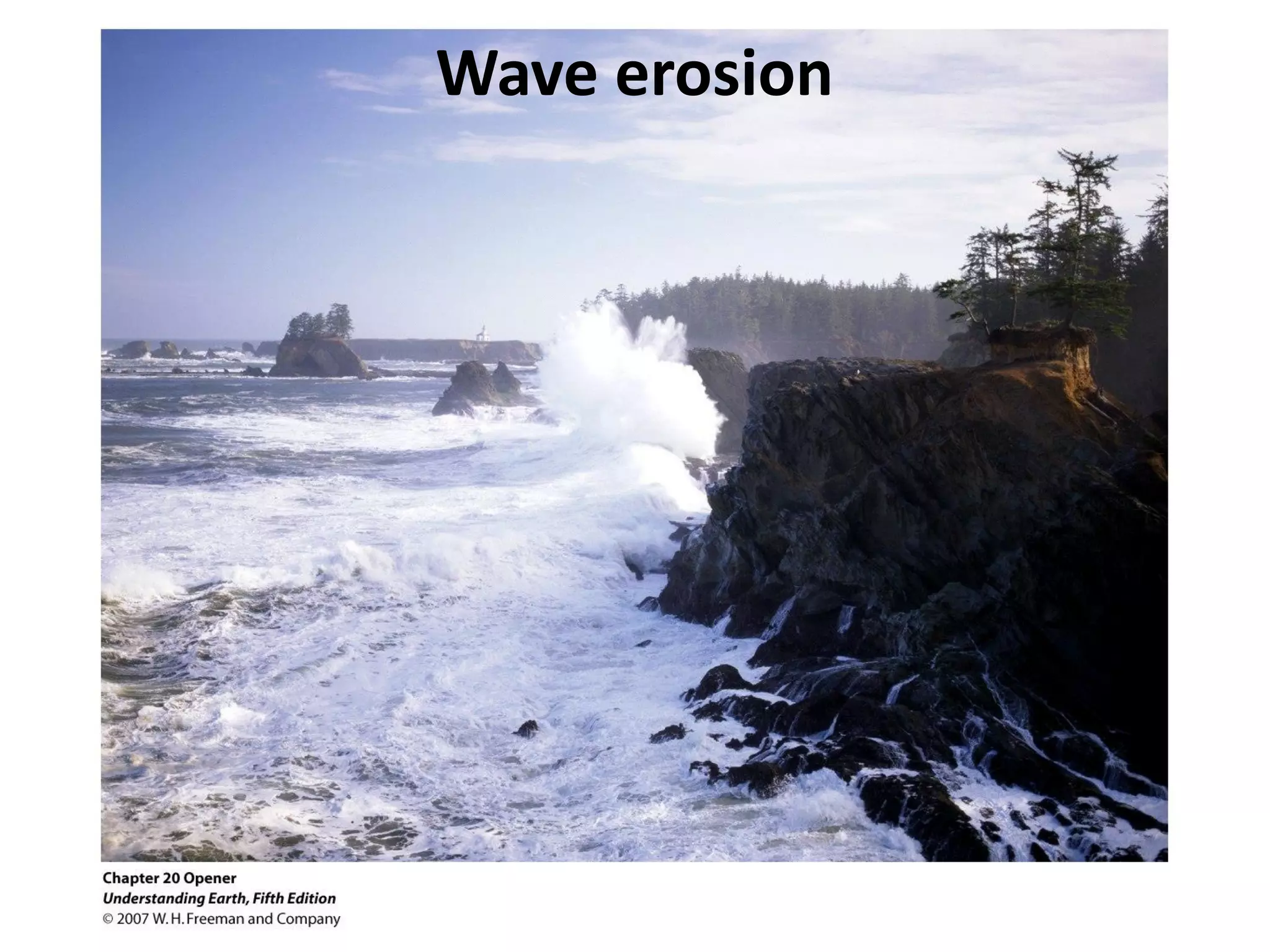
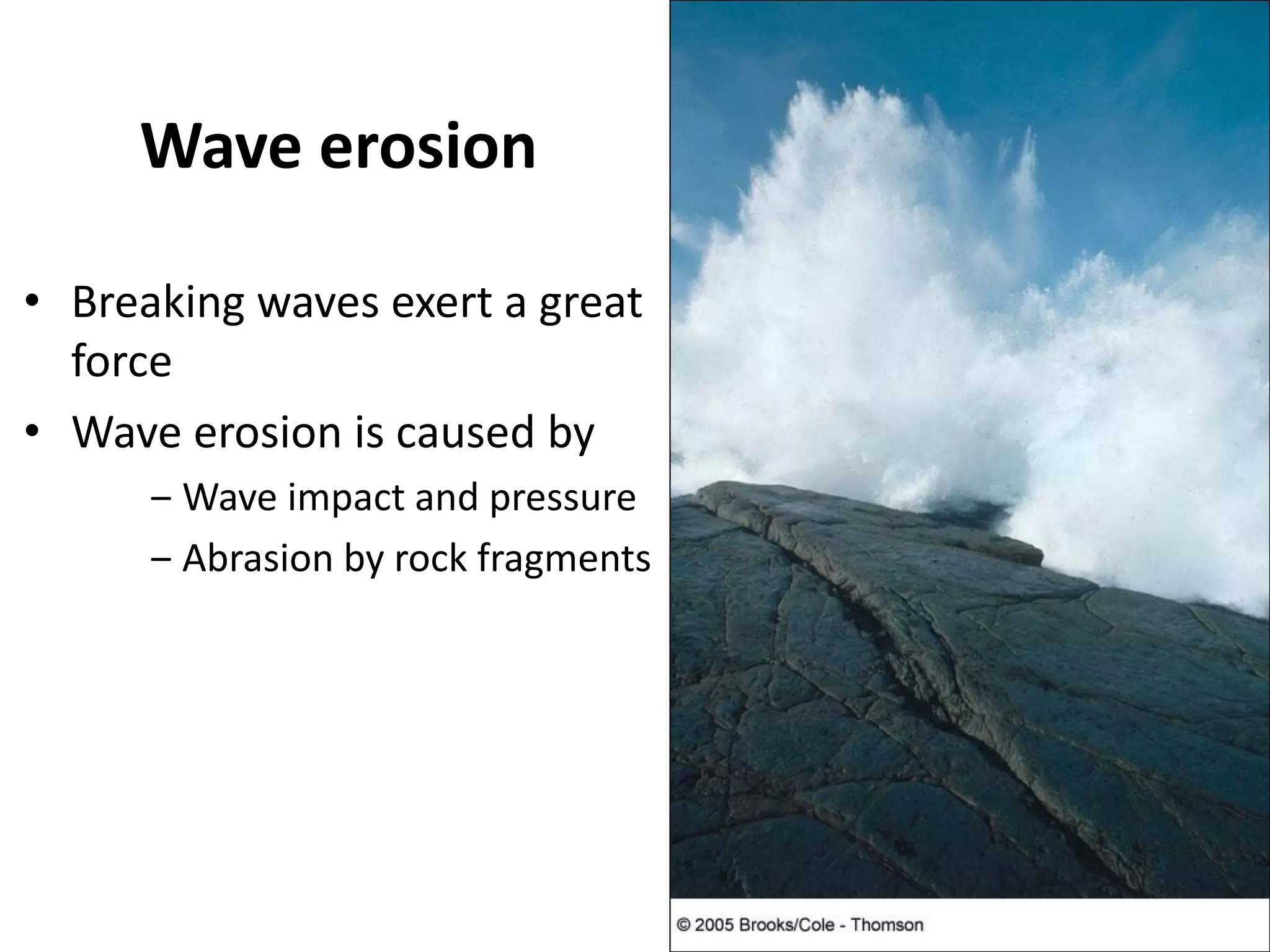
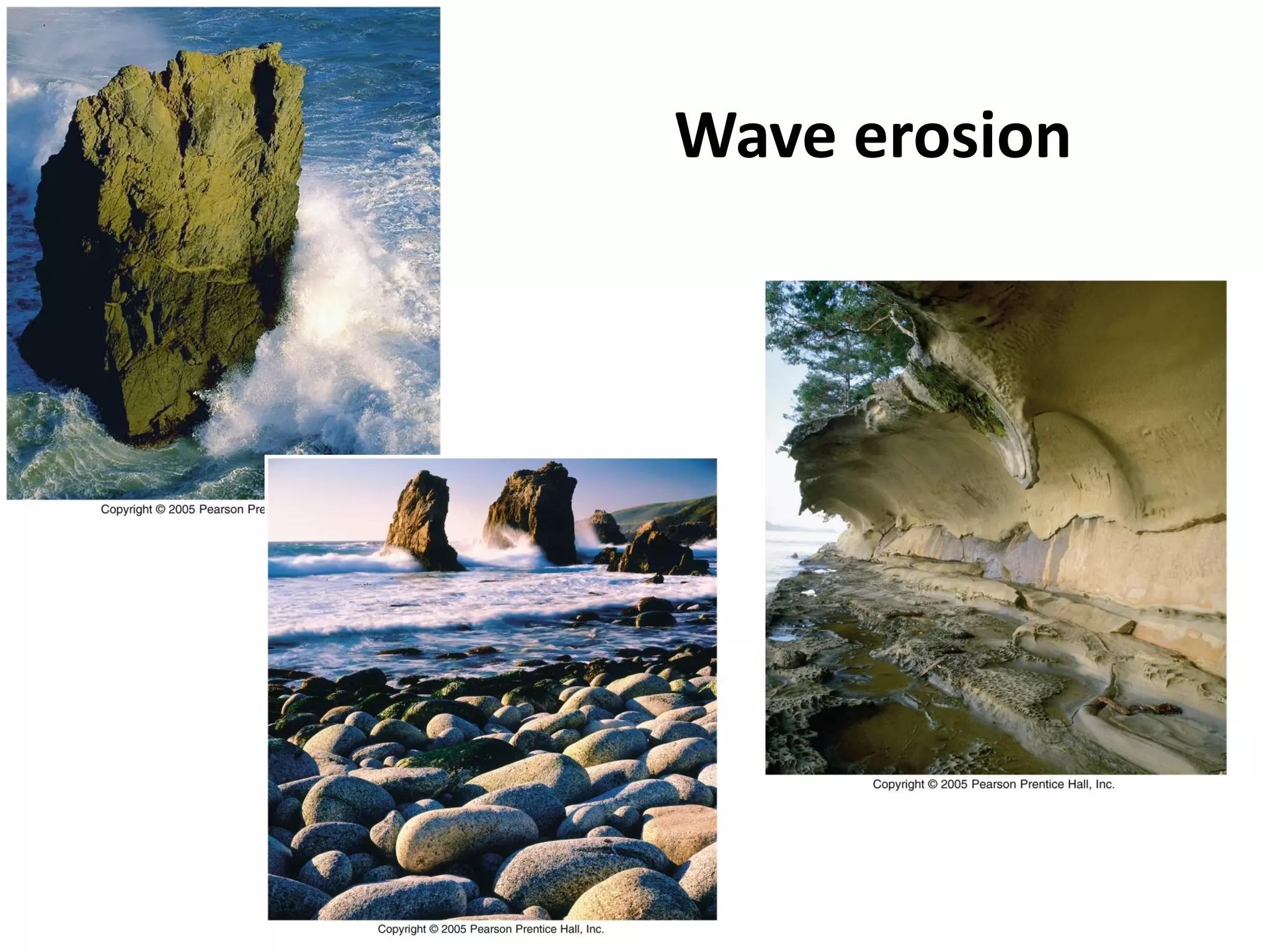
Wave erosion
Wave erosion
• Breaking waves exert a great
force
• Wave erosion is caused by
‒ Wave impact and pressure
‒ Abrasion by rock fragments
Wave erosion
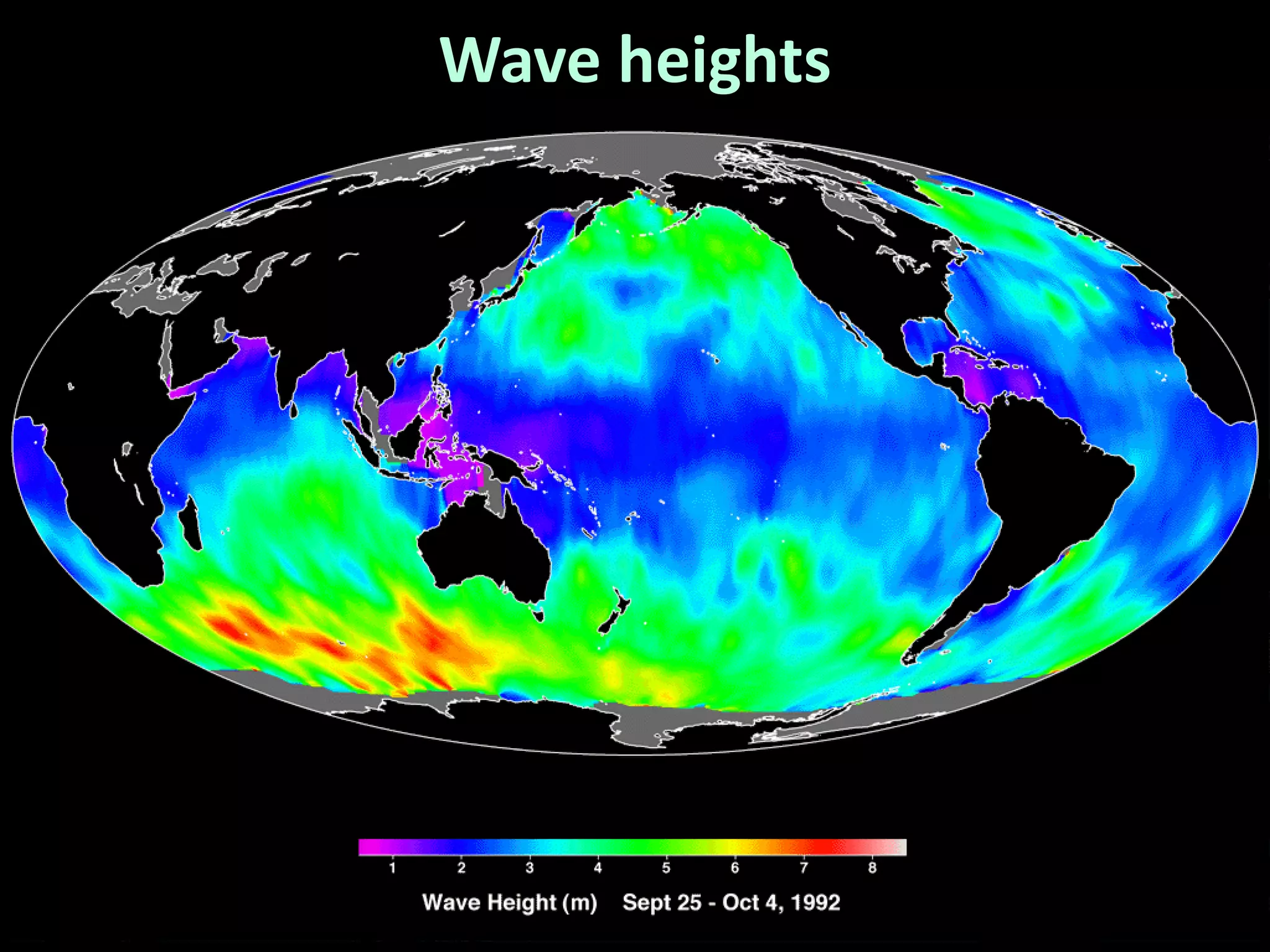
Wave heights
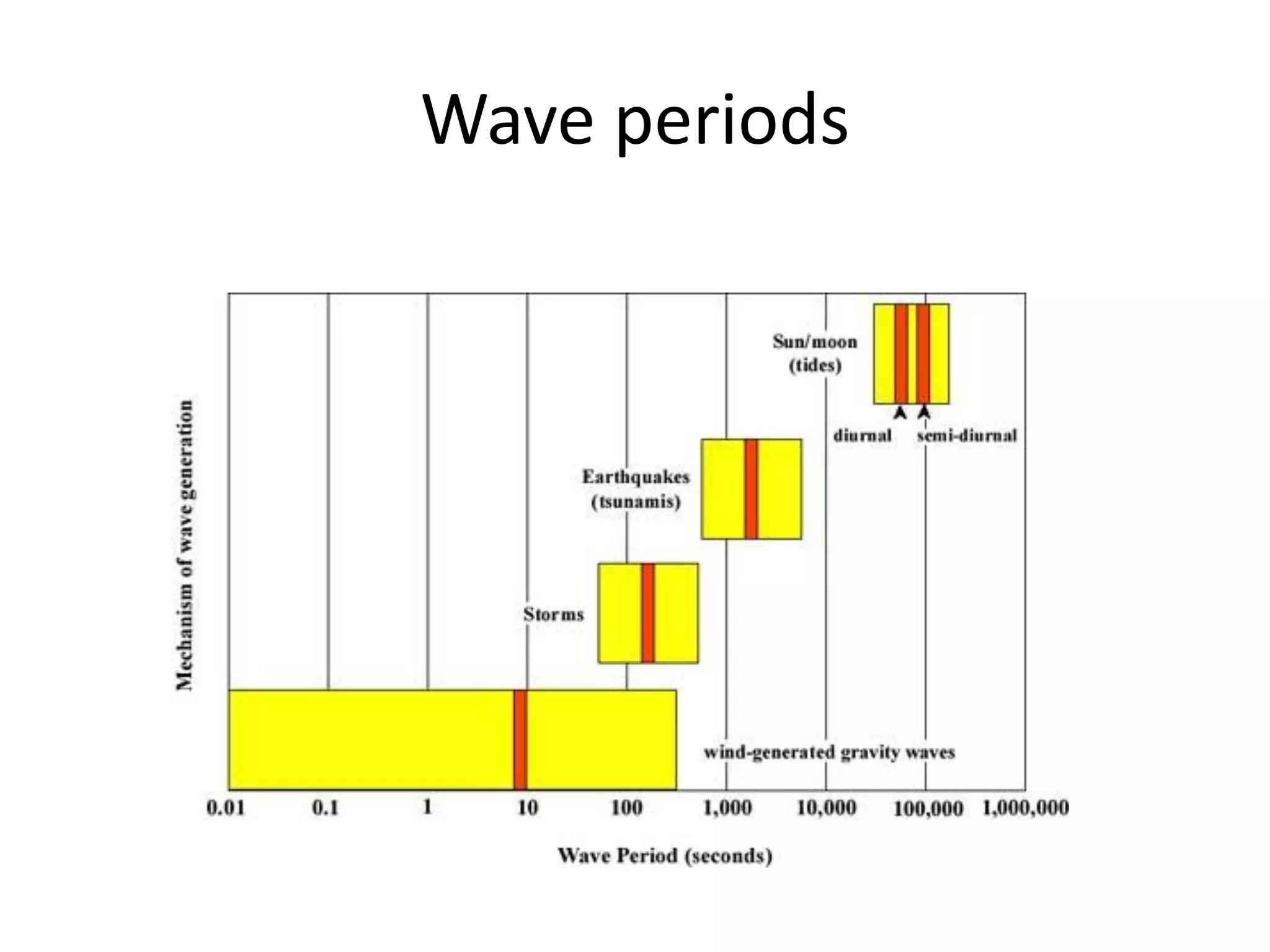
Wave periods
Wave periods
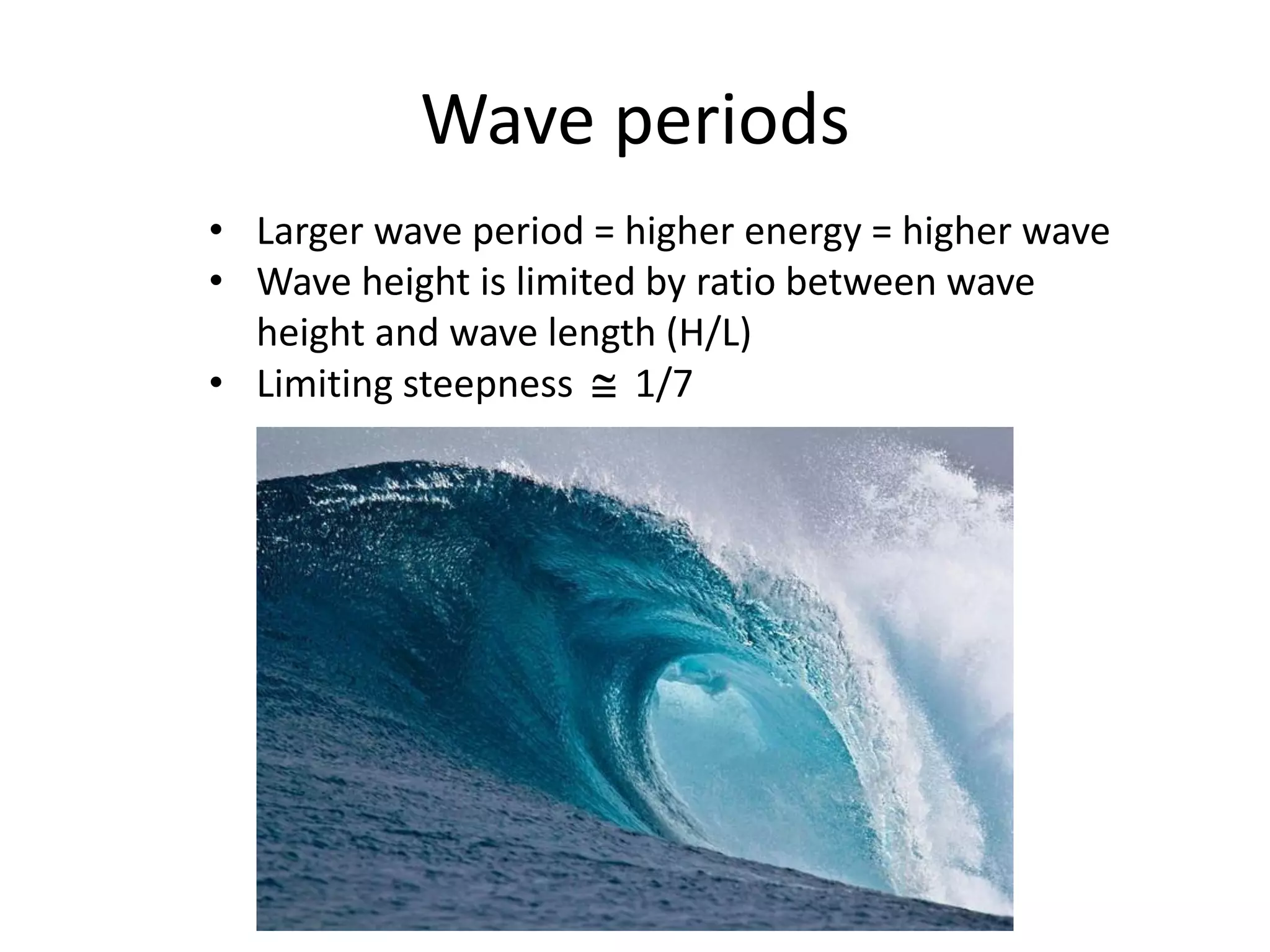
• Larger wave period = higher energy = higher wave
• Wave height is limited by ratio between wave
height and wave length (H/L)
• Limiting steepness  1/7
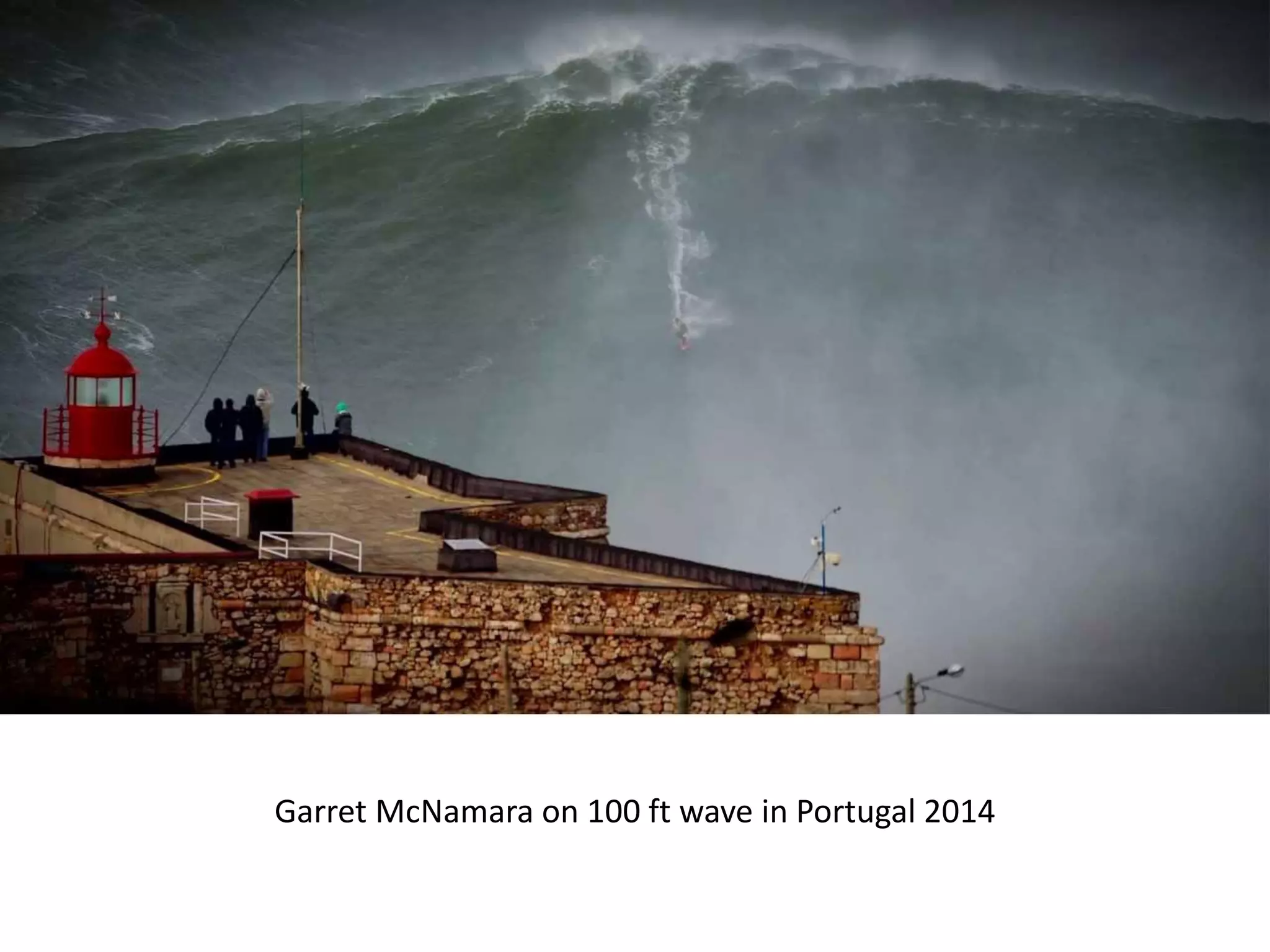
Garret McNamara on 100 ft wave in Portugal 2014
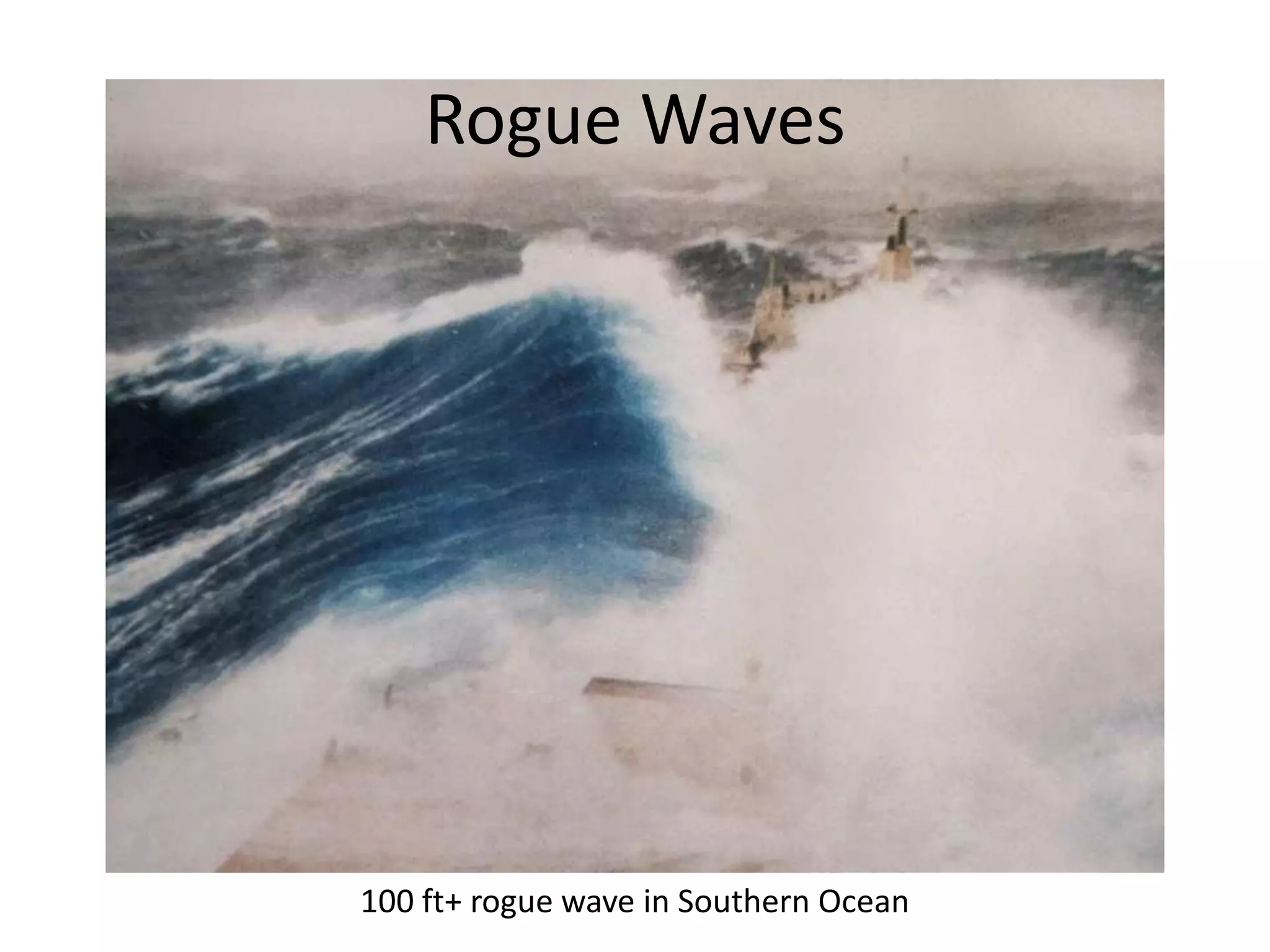
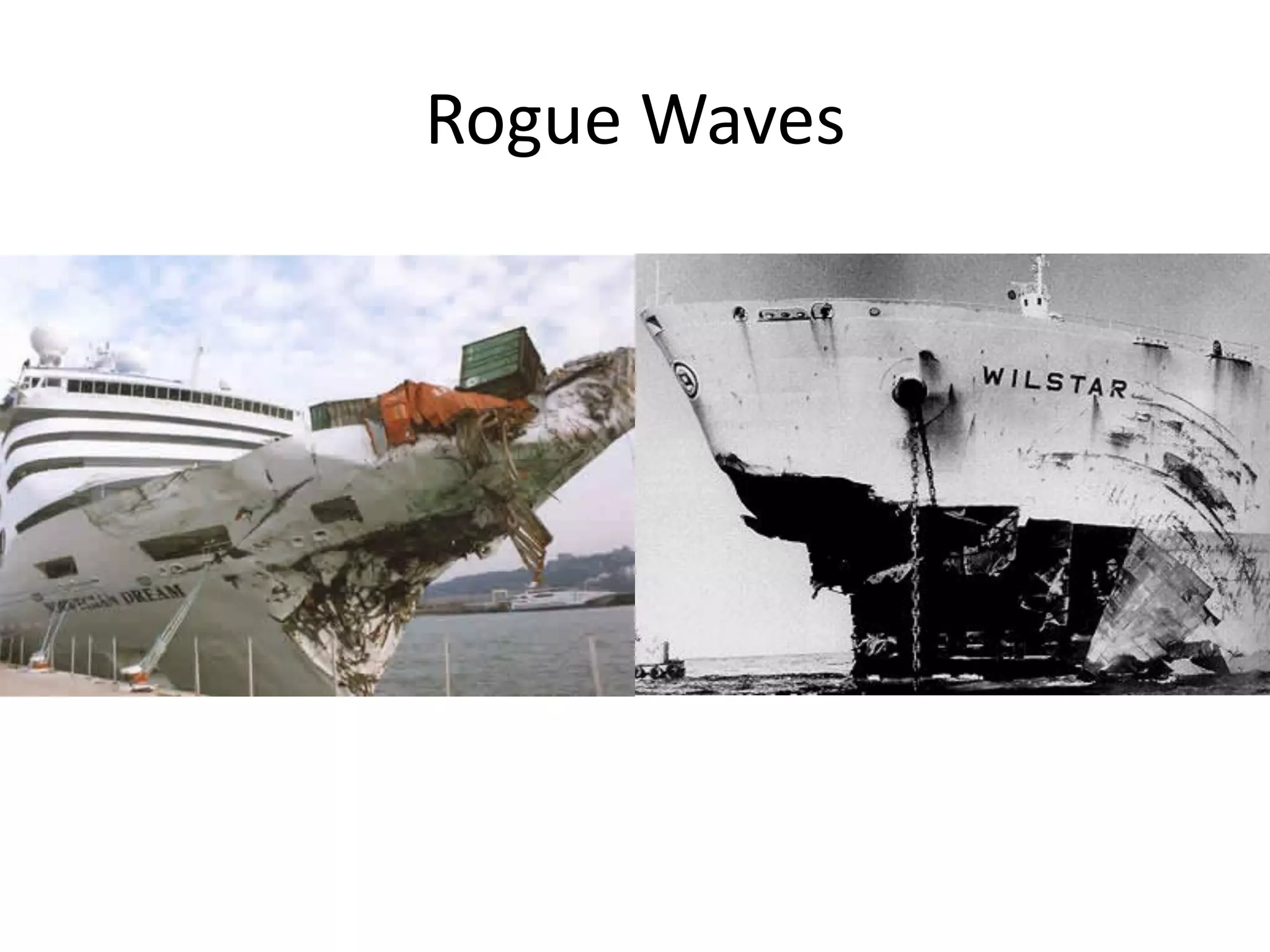
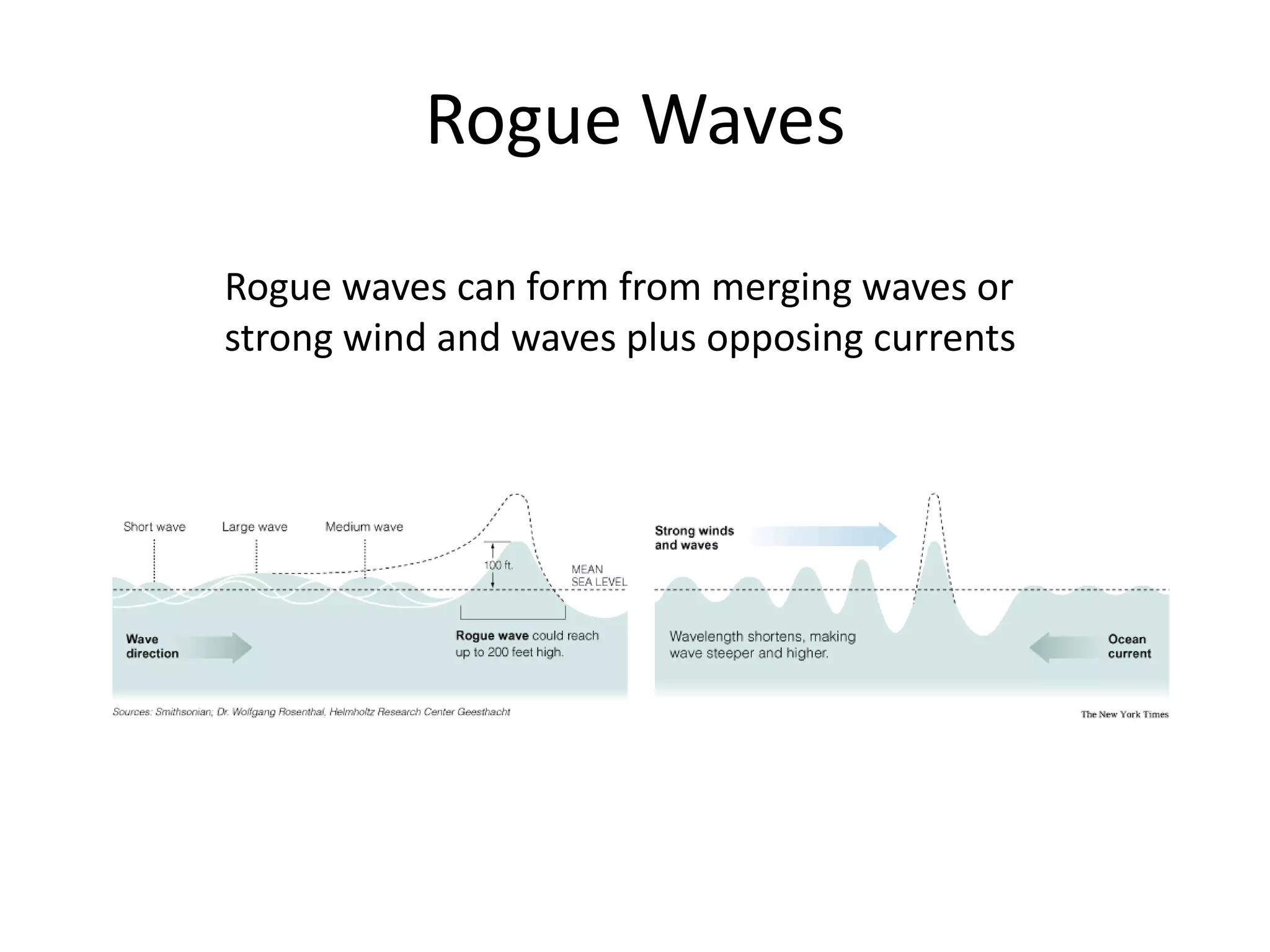
Rogue Waves
Rogue waves can form from merging waves or
strong wind and waves plus opposing currents
100 ft+ rogue wave in Southern Ocean
Rogue Waves
Rogue Waves

Ocean waves lecture