Diary Studies
A primer


                      Boon Yew Chew
The Research Thing
       SapientNitro
25 May 2011
               @boonych
View from 30,000 feet"
"
Intro"
Examples"
Some Practical Tips
A diary study involves participants reporting their
activities over a specific period of time, usually
apart from the researcher and in their normal daily
lives.
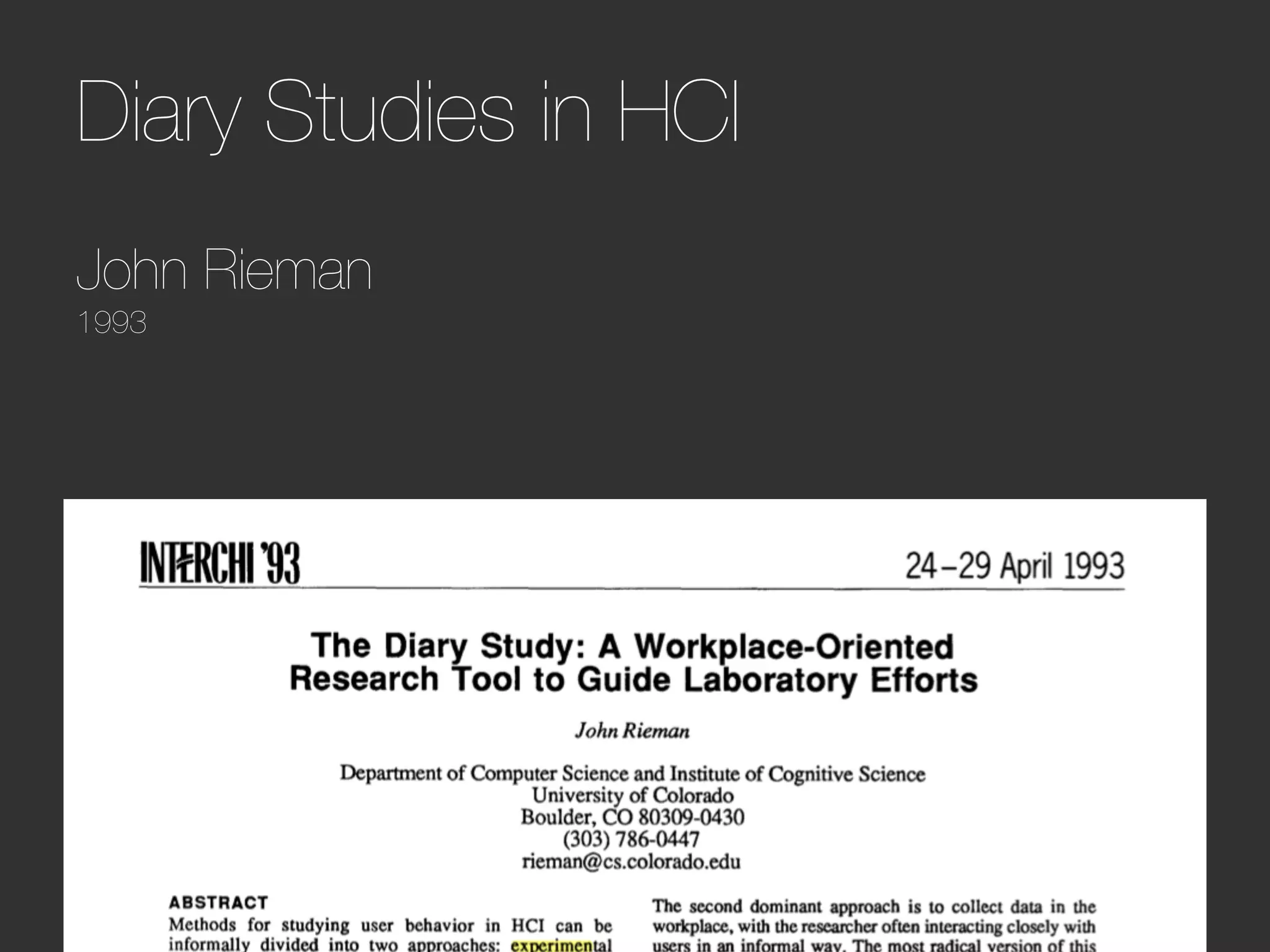
Diary Studies in HCI"
"
John Rieman"
1993
Benefits

Understanding context and environment
Understanding rare / infrequent events
Ecological validity
Remote
Sampling over a duration
Bridges qualitative and quantitative studies
Flexibility
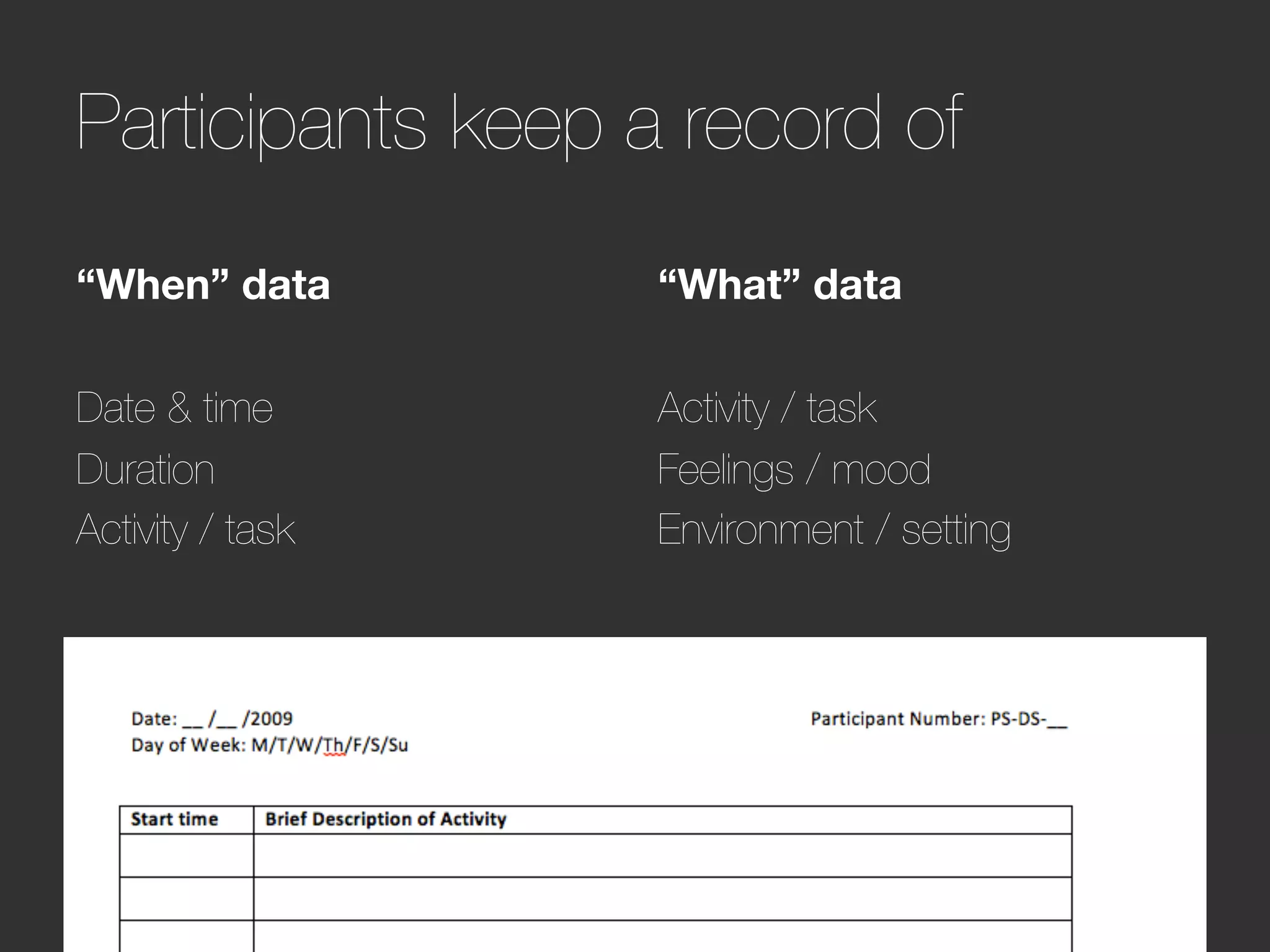
Participants keep a record of
“When” data
       “What” data

                  
Date & time
       Activity / task
Duration
          Feelings / mood
Activity / task
   Environment / setting
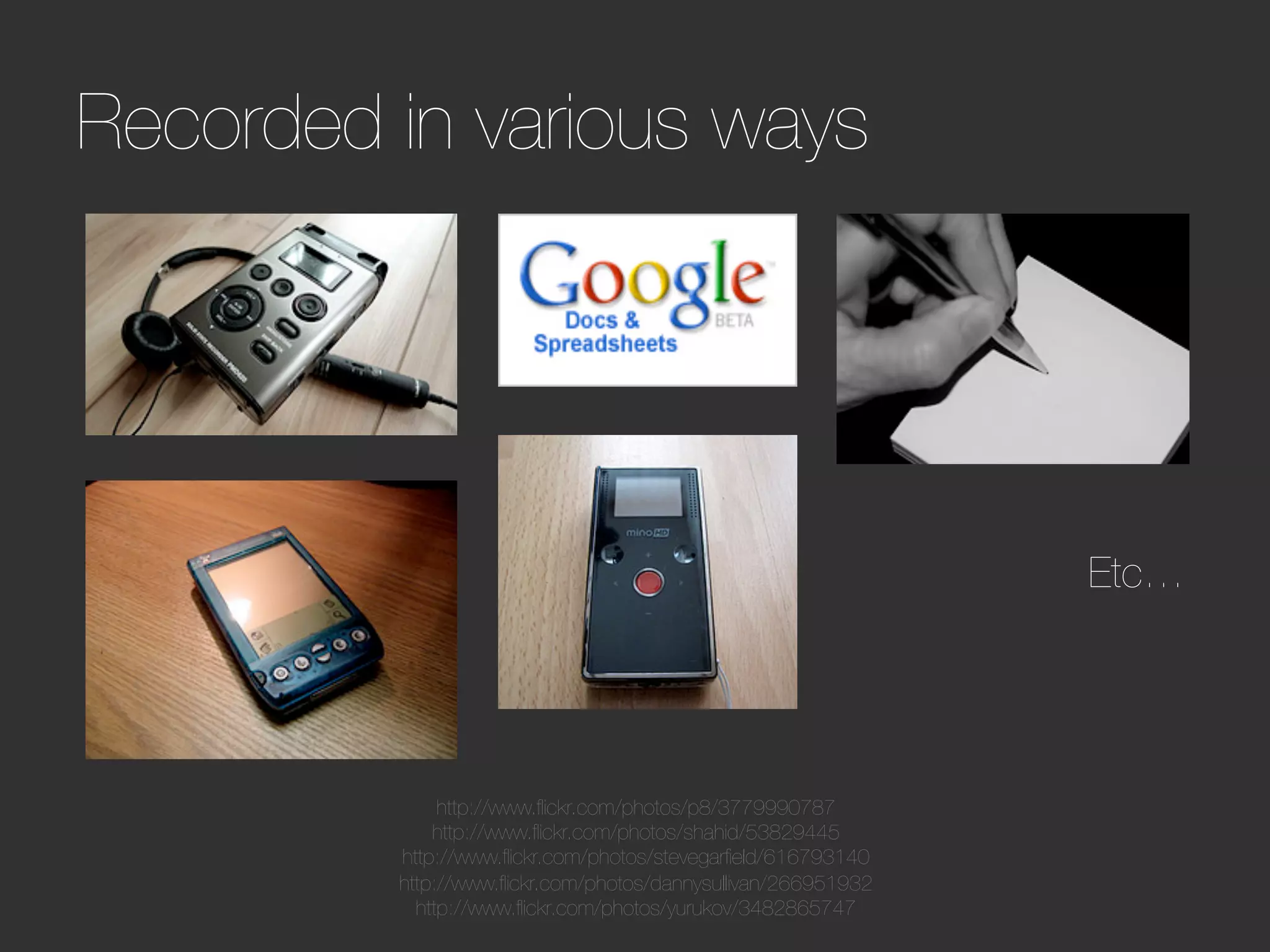
Recorded in various ways


                                                                Etc…


              http://www.flickr.com/photos/p8/3779990787
             http://www.flickr.com/photos/shahid/53829445
         http://www.flickr.com/photos/stevegarfield/616793140
         http://www.flickr.com/photos/dannysullivan/266951932
           http://www.flickr.com/photos/yurukov/3482865747
…at various times

1.  Randomly

2.  At specific intervals

3.  Based on activity
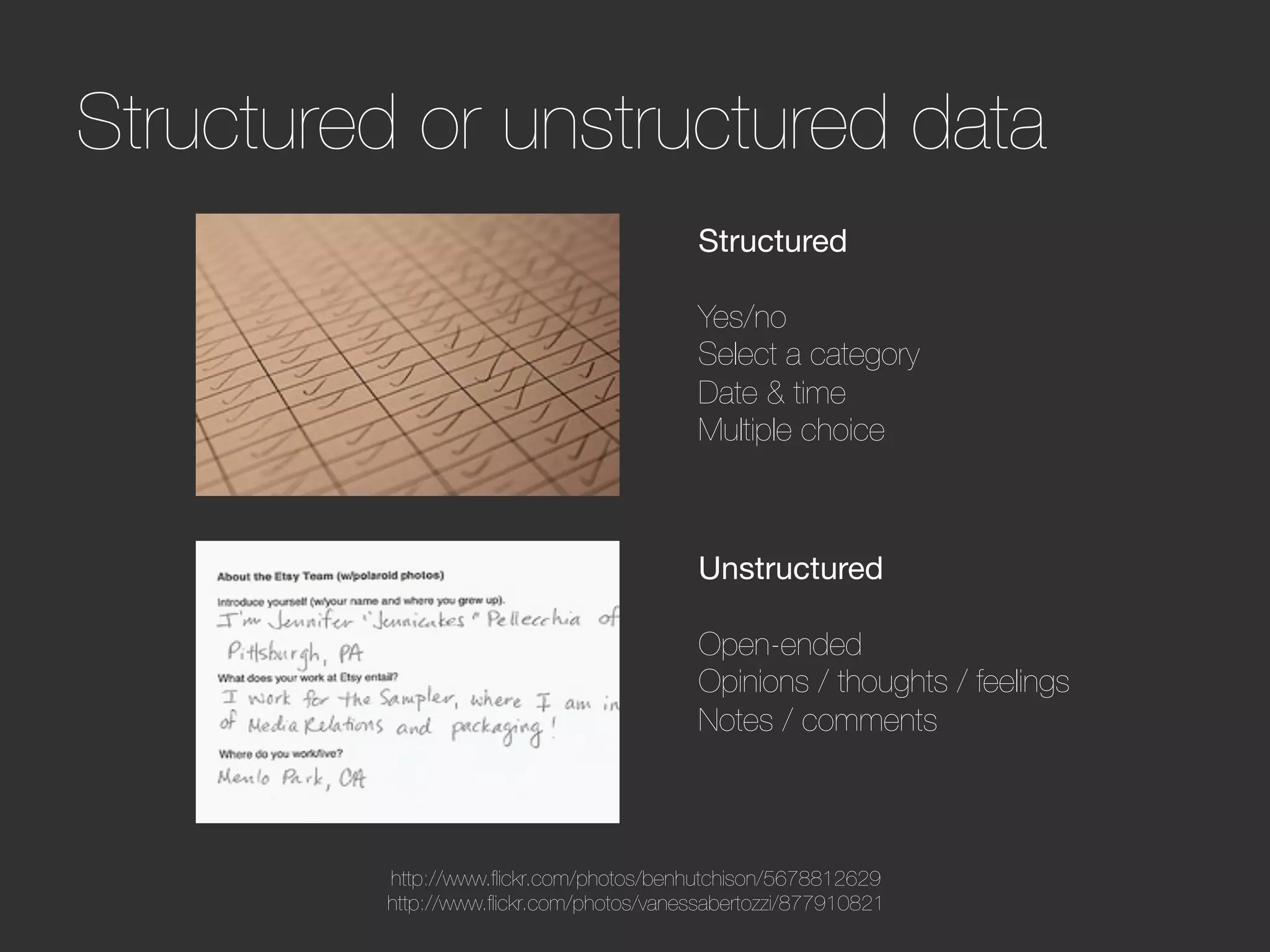
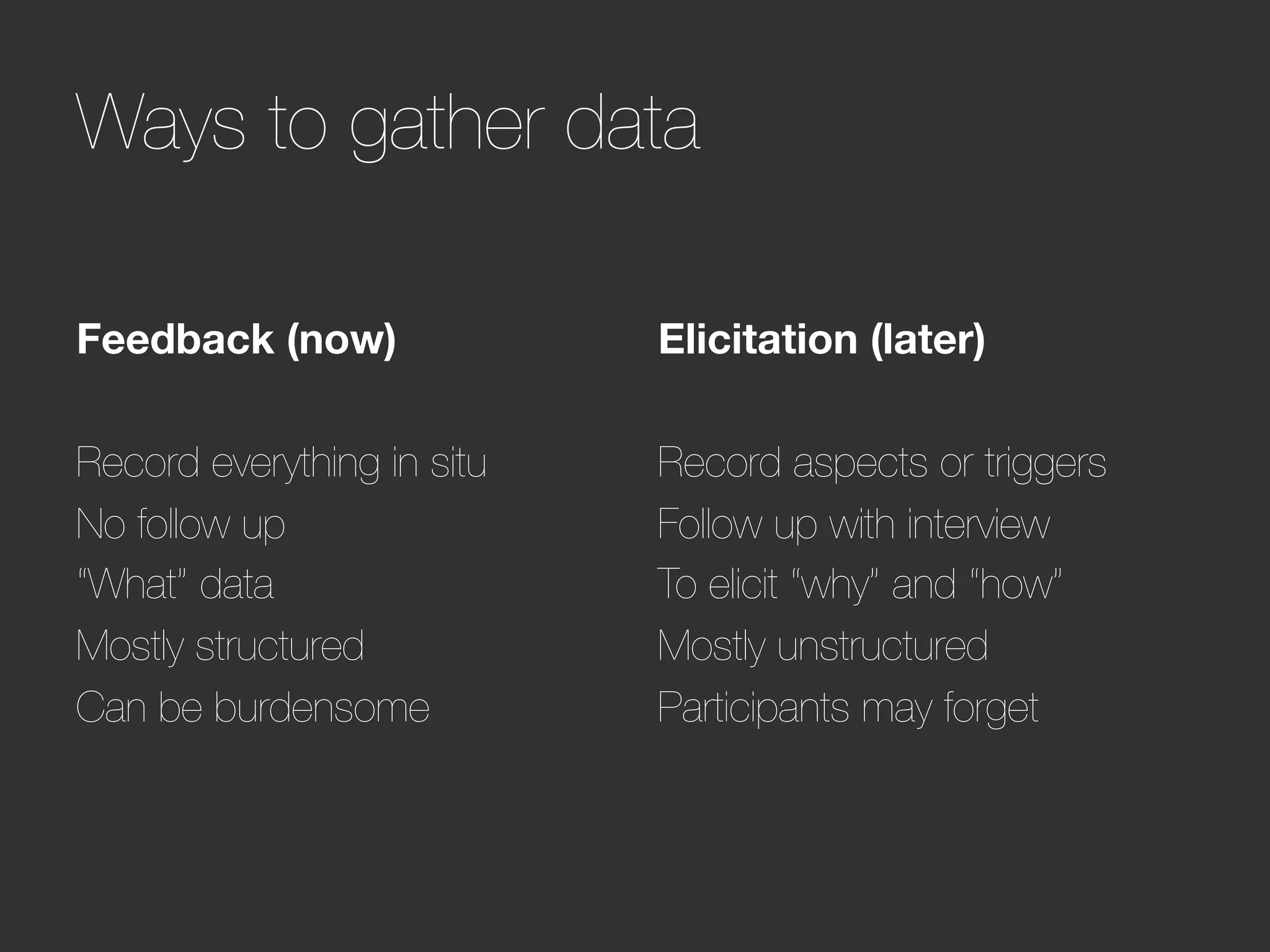
Structured or unstructured data
                                           Structured
                                           
                                           Yes/no
                                           Select a category
                                           Date & time
                                           Multiple choice


                                           Unstructured
                                           
                                           Open-ended
                                           Opinions / thoughts / feelings
                                           Notes / comments


          http://www.flickr.com/photos/benhutchison/5678812629
          http://www.flickr.com/photos/vanessabertozzi/877910821
Ways to gather data

Feedback (now)
              Elicitation (later) 


Record everything in situ
   Record aspects or triggers
No follow up
                Follow up with interview
“What” data
                 To elicit “why” and “how”
Mostly structured
           Mostly unstructured
Can be burdensome
           Participants may forget
“Hygiene” aspects
At the beginning
Introduction / get-to-know-you
Demographics
Instructions / Setting expectations

At the end
Follow-up
Thanks / token gift
Reflection
Thanking your participants

One off vouchers
Spread incentives across longer durations
“Keep the Flip camera” incentive
Pitfalls   


Belief bias
Behaviour adjustment
Ramp-up time
Failure to recall
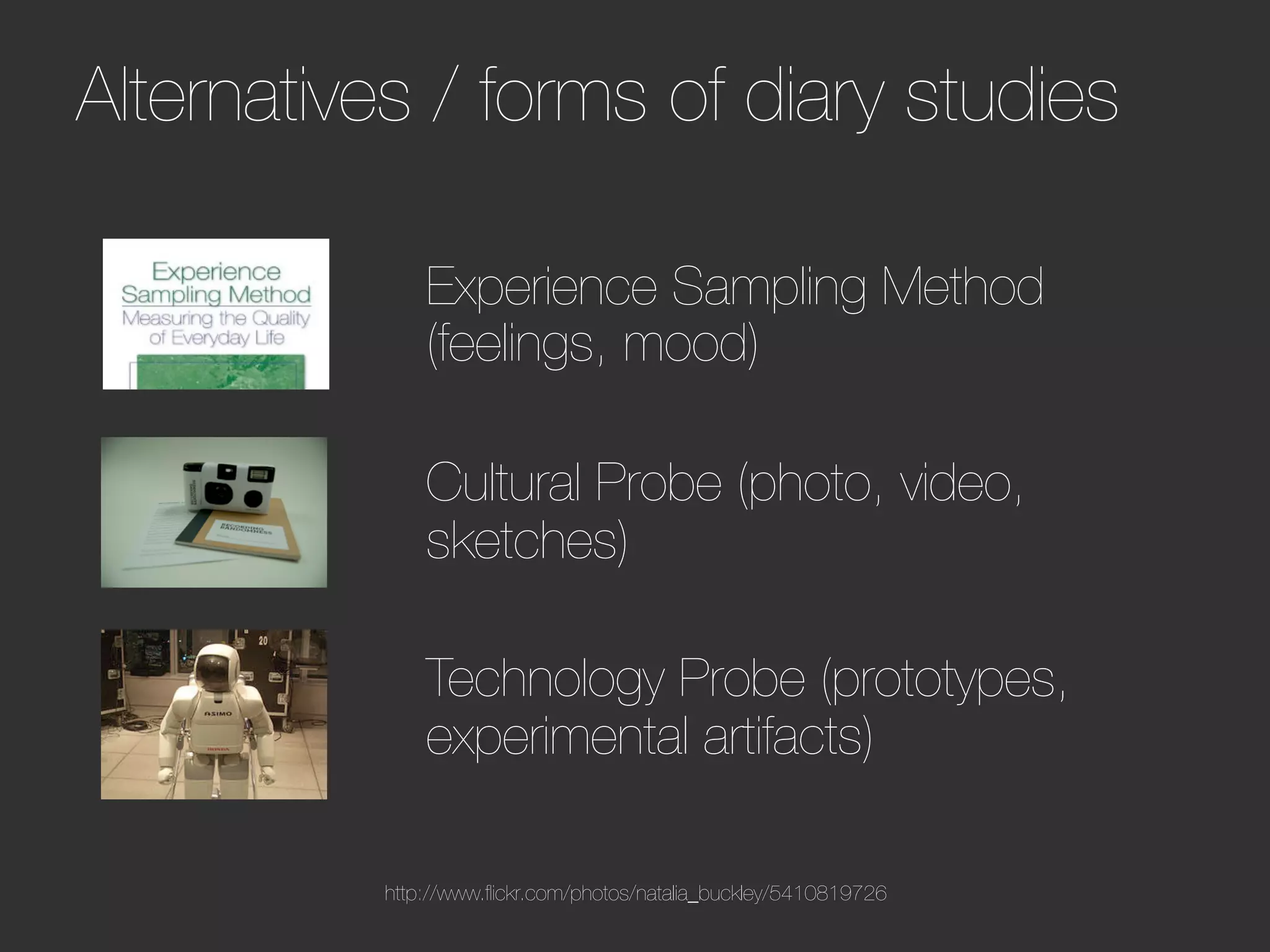
Alternatives / forms of diary studies                               


              Experience Sampling Method
              (feelings, mood)
              
              Cultural Probe (photo, video,
              sketches)
              
              Technology Probe (prototypes,
              experimental artifacts)

          http://www.flickr.com/photos/natalia_buckley/5410819726
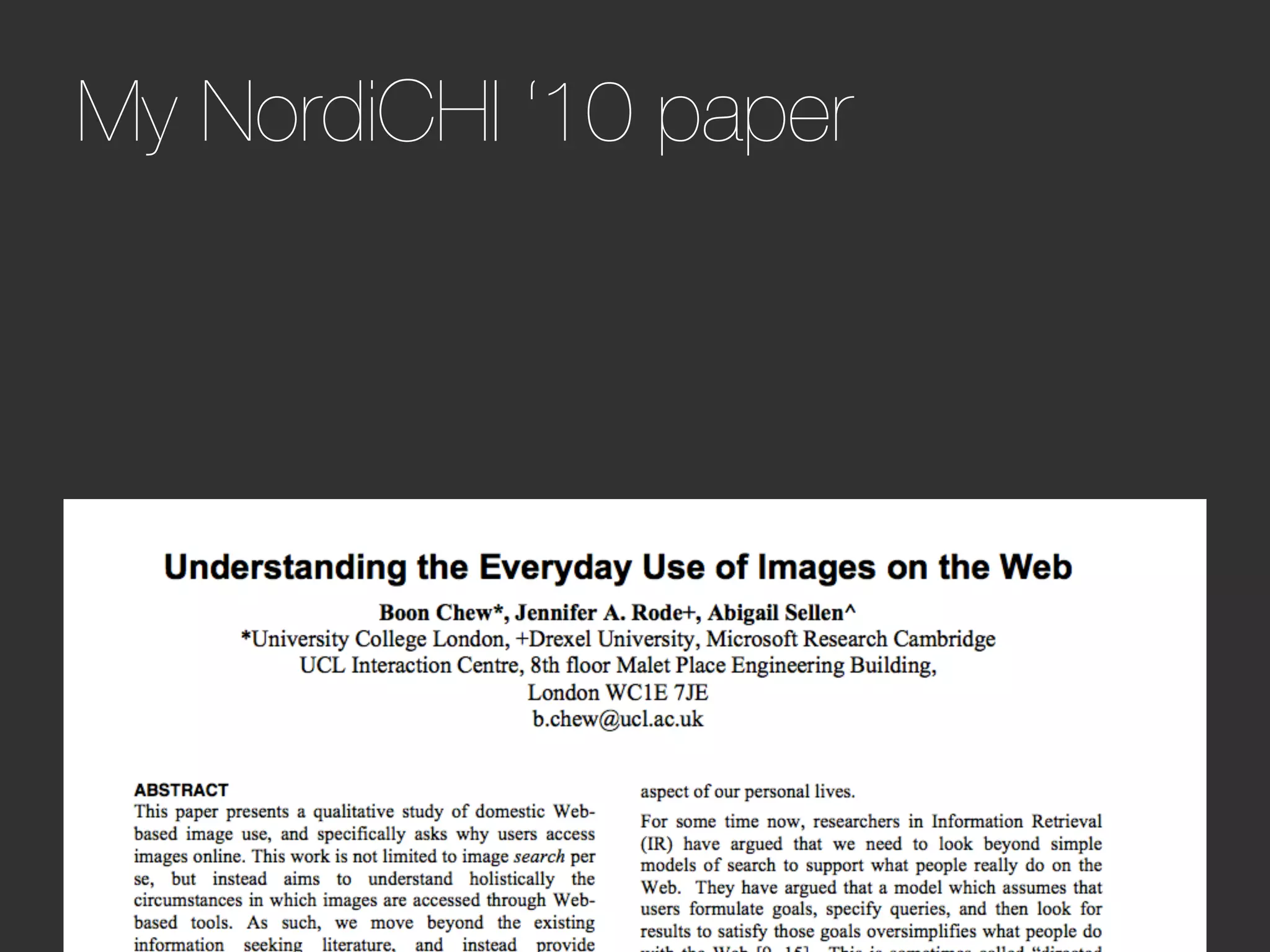
My NordiCHI ‘10 paper
What motivates image use on the
internet?  


•  Goal - understand motivations of image use
•  9 participants (5F / 4M, age 24 – 59)
•  Short note of activity involving an image, photo
   or visual
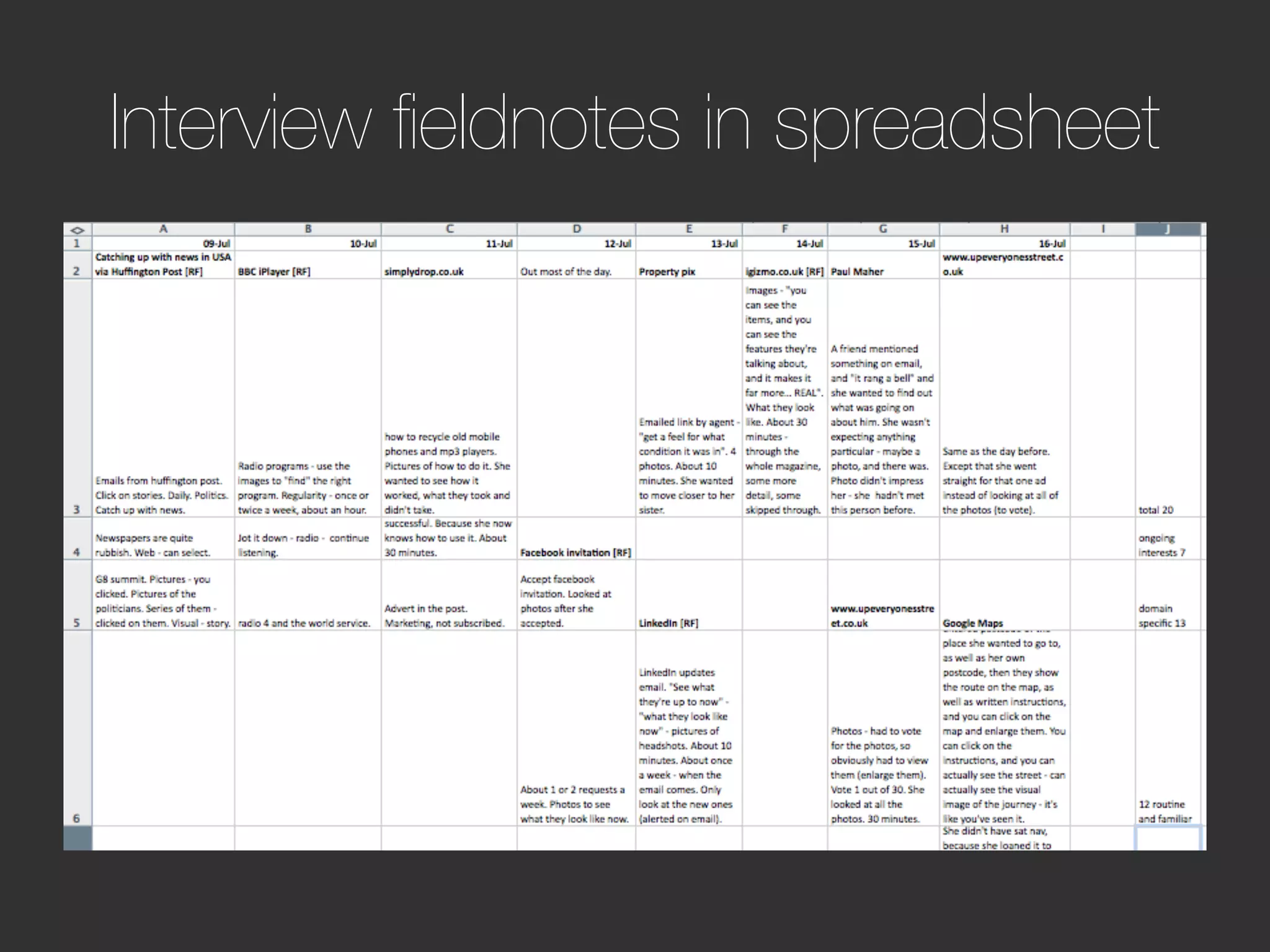
•  Periodic interviews (about once every two days)
•  About 20 activities per person
Interview fieldnotes in spreadsheet
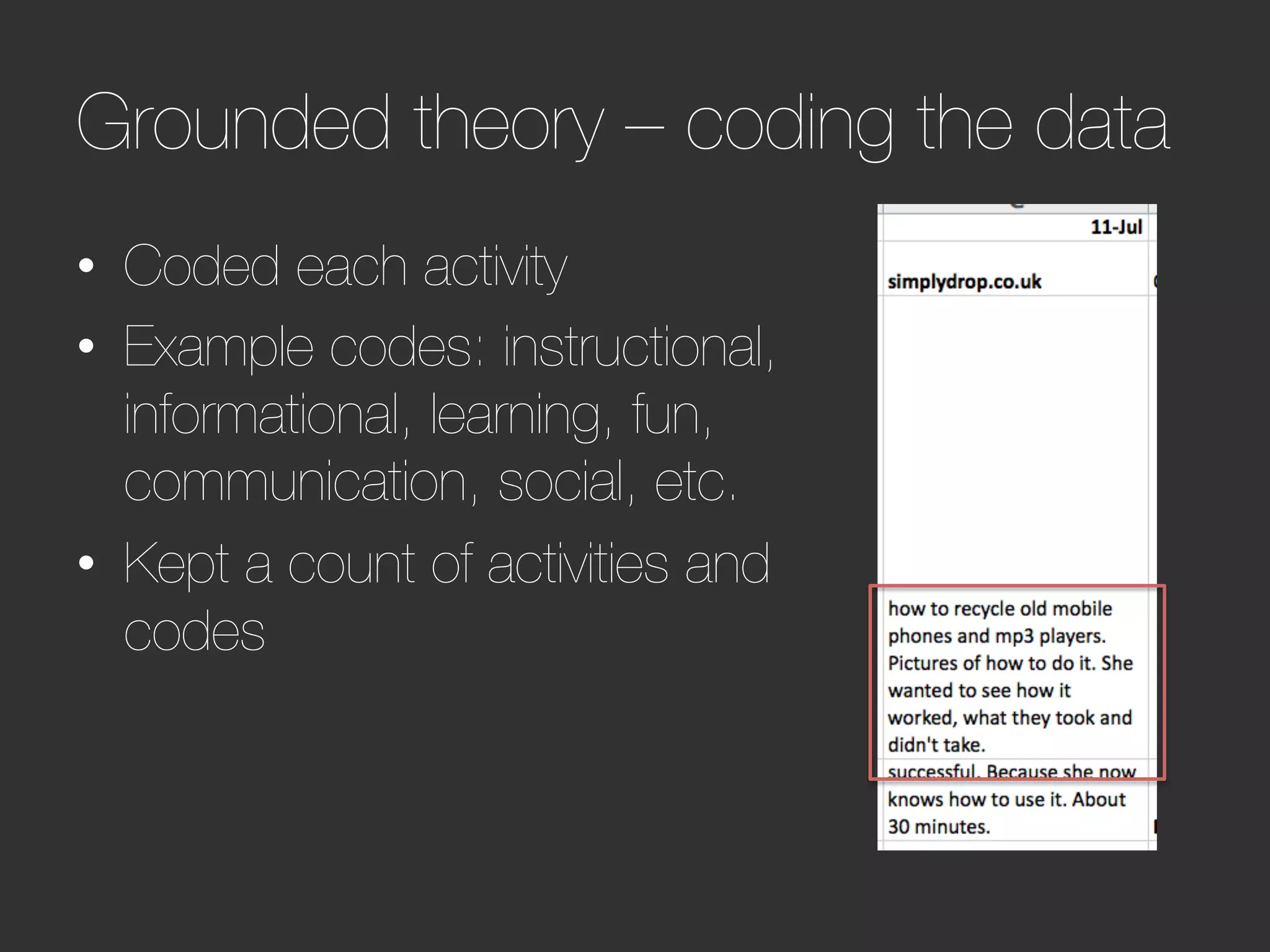
Grounded theory – coding the data
•  Coded each activity
•  Example codes: instructional,
   informational, learning, fun,
   communication, social, etc.
•  Kept a count of activities and
   codes
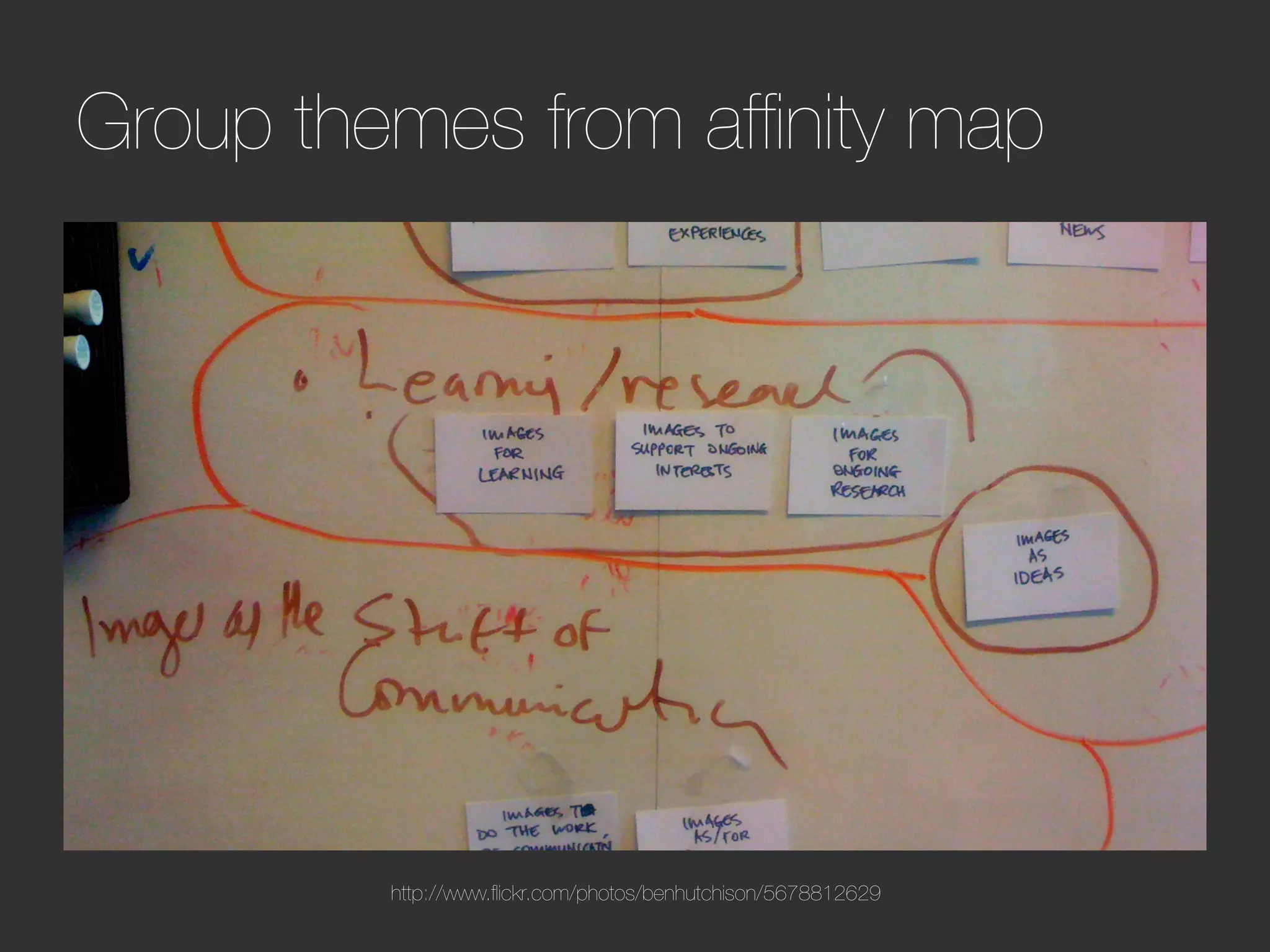
Group themes from affinity map


         http://www.flickr.com/photos/benhutchison/5678812629
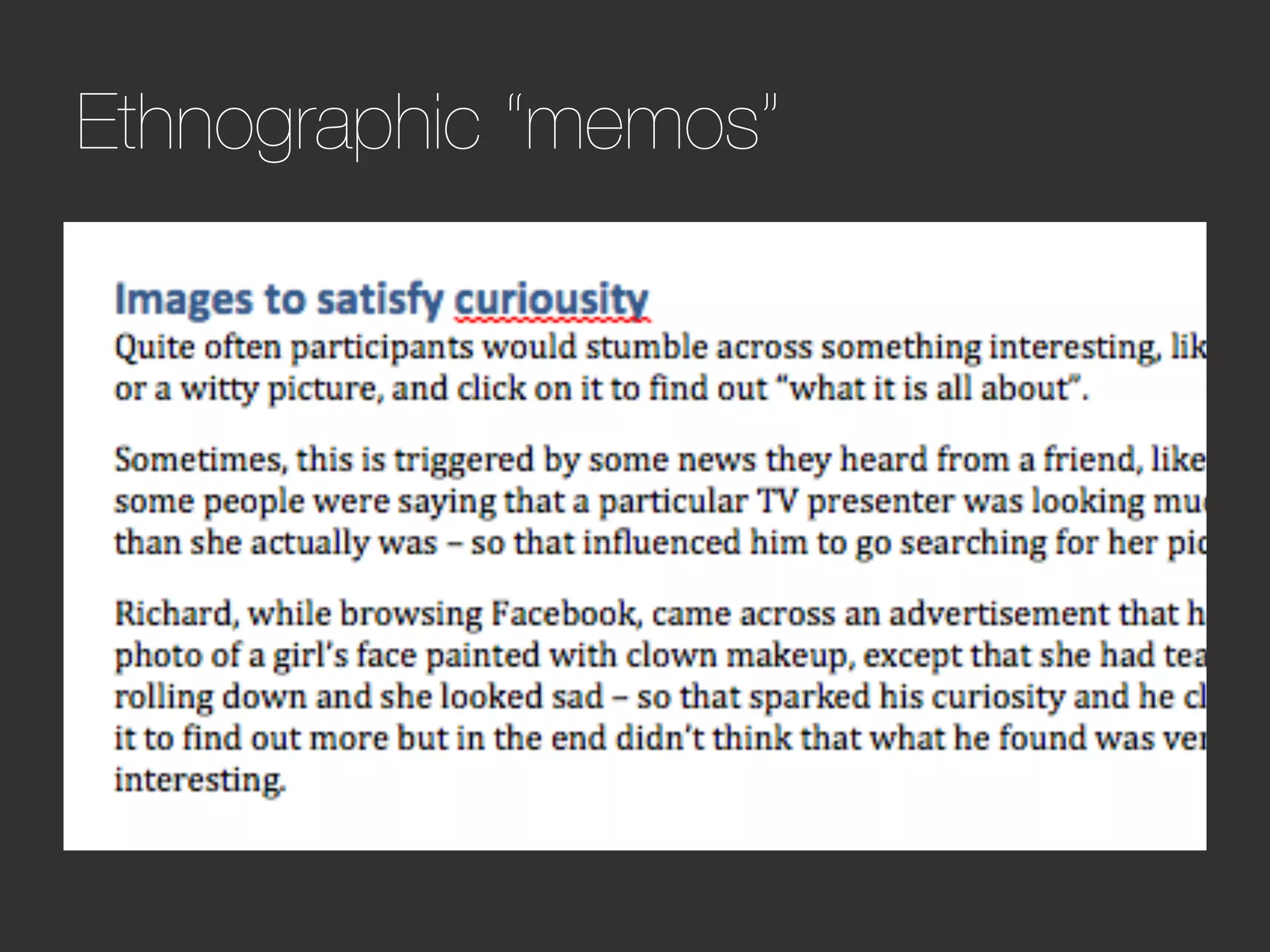
Ethnographic “memos”
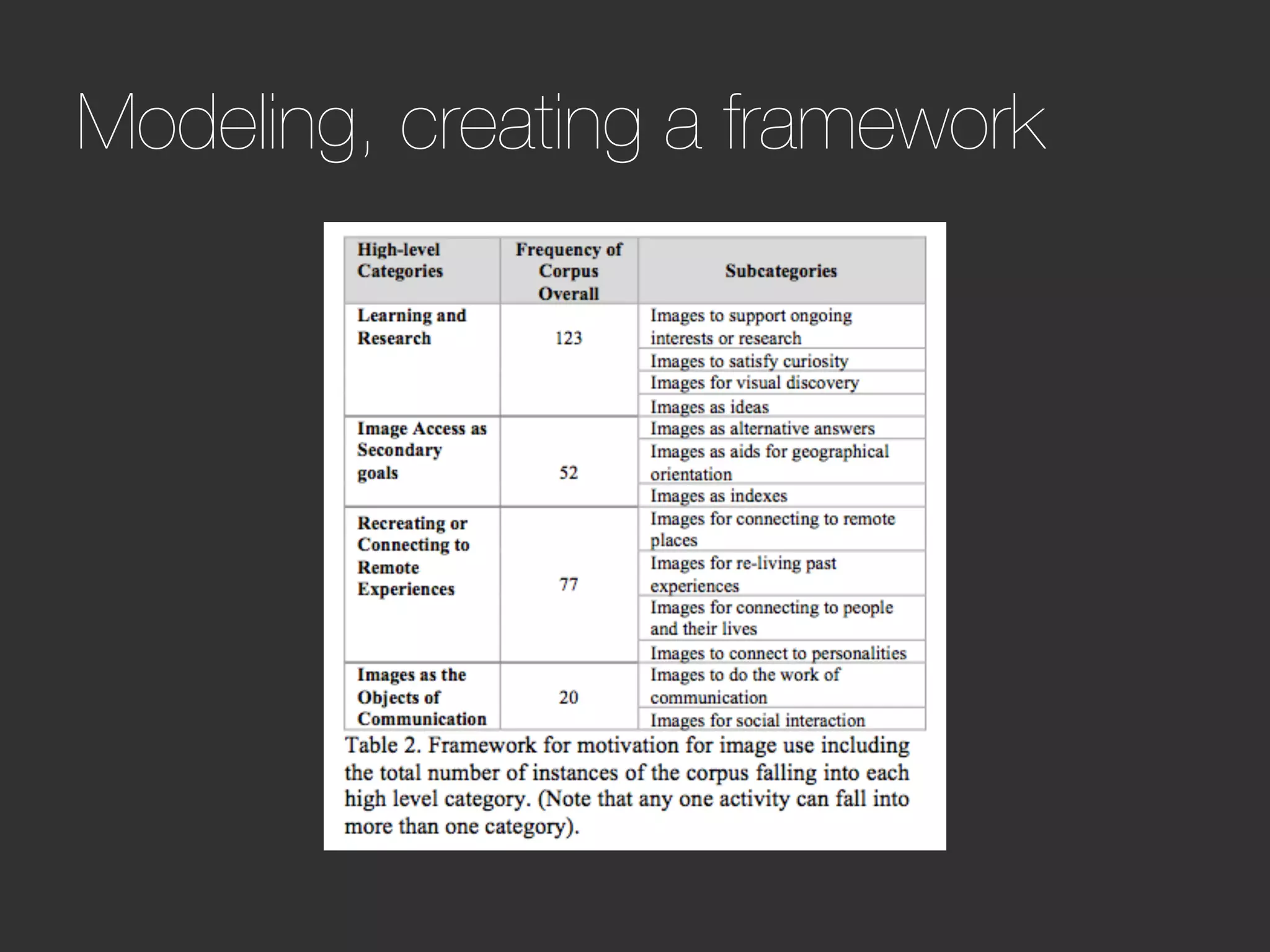
Modeling, creating a framework
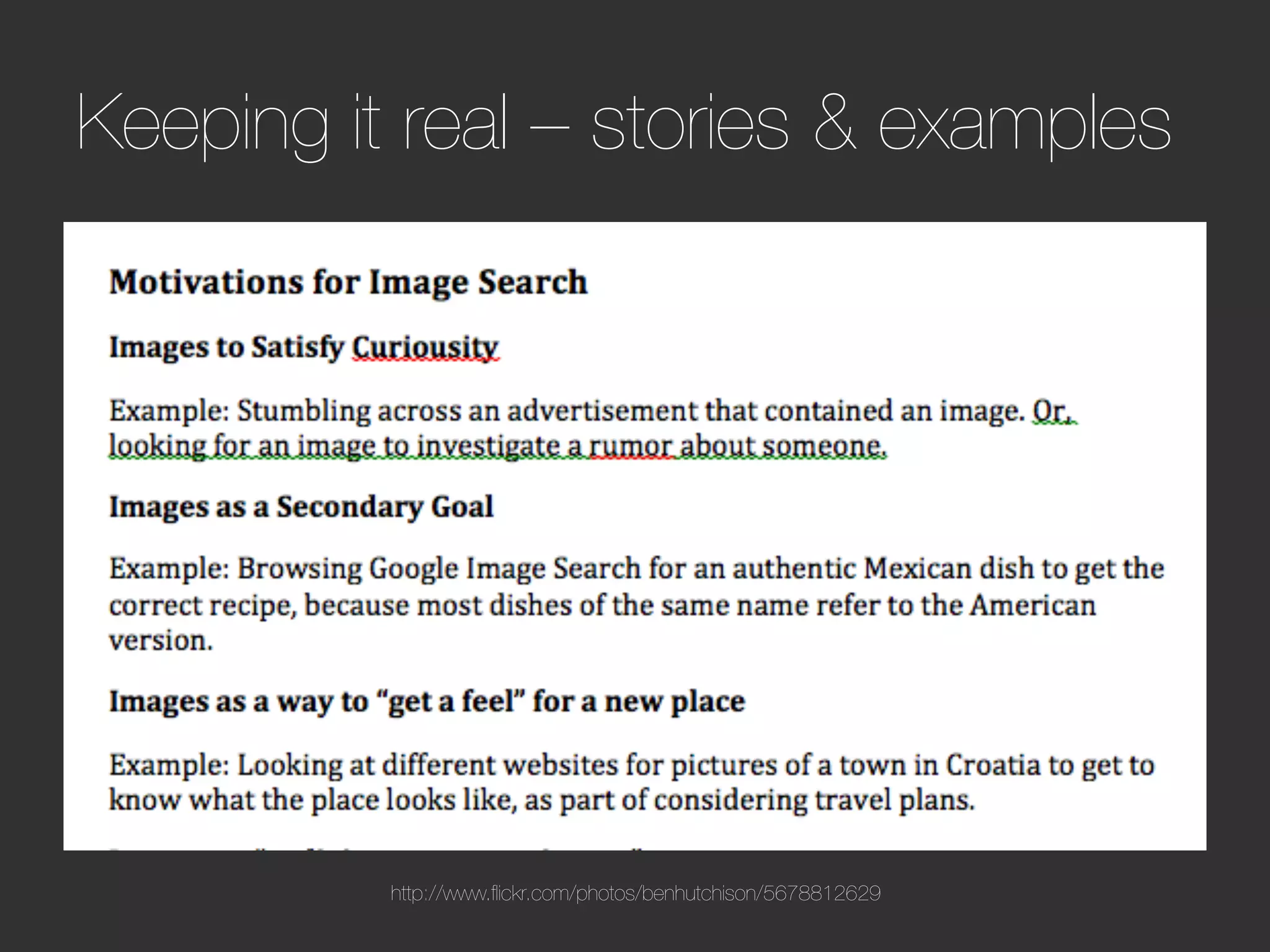
Keeping it real – stories & examples


          http://www.flickr.com/photos/benhutchison/5678812629
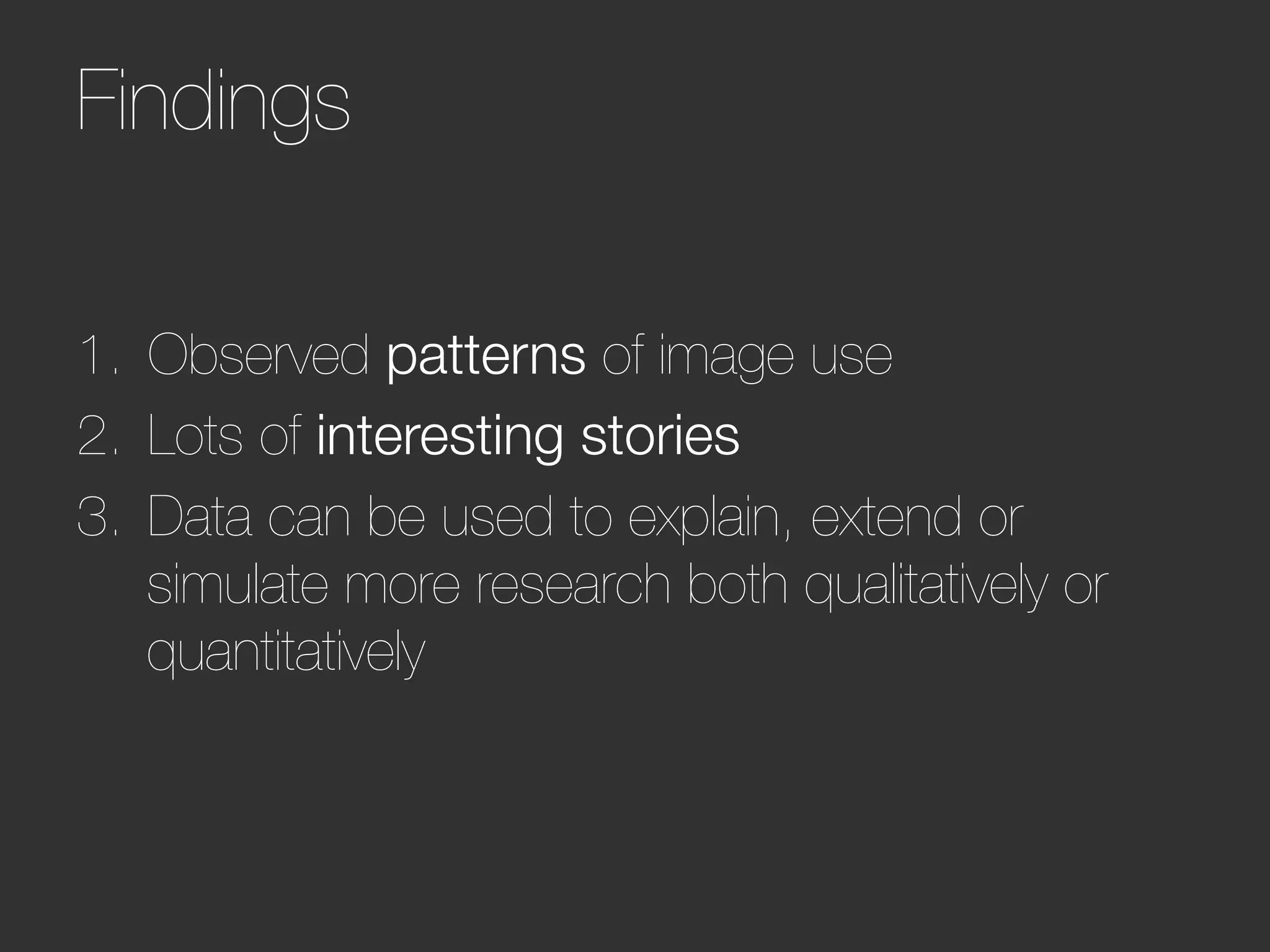
Findings    


1.  Observed patterns of image use
2.  Lots of interesting stories
3.  Data can be used to explain, extend or
    simulate more research both qualitatively or
    quantitatively
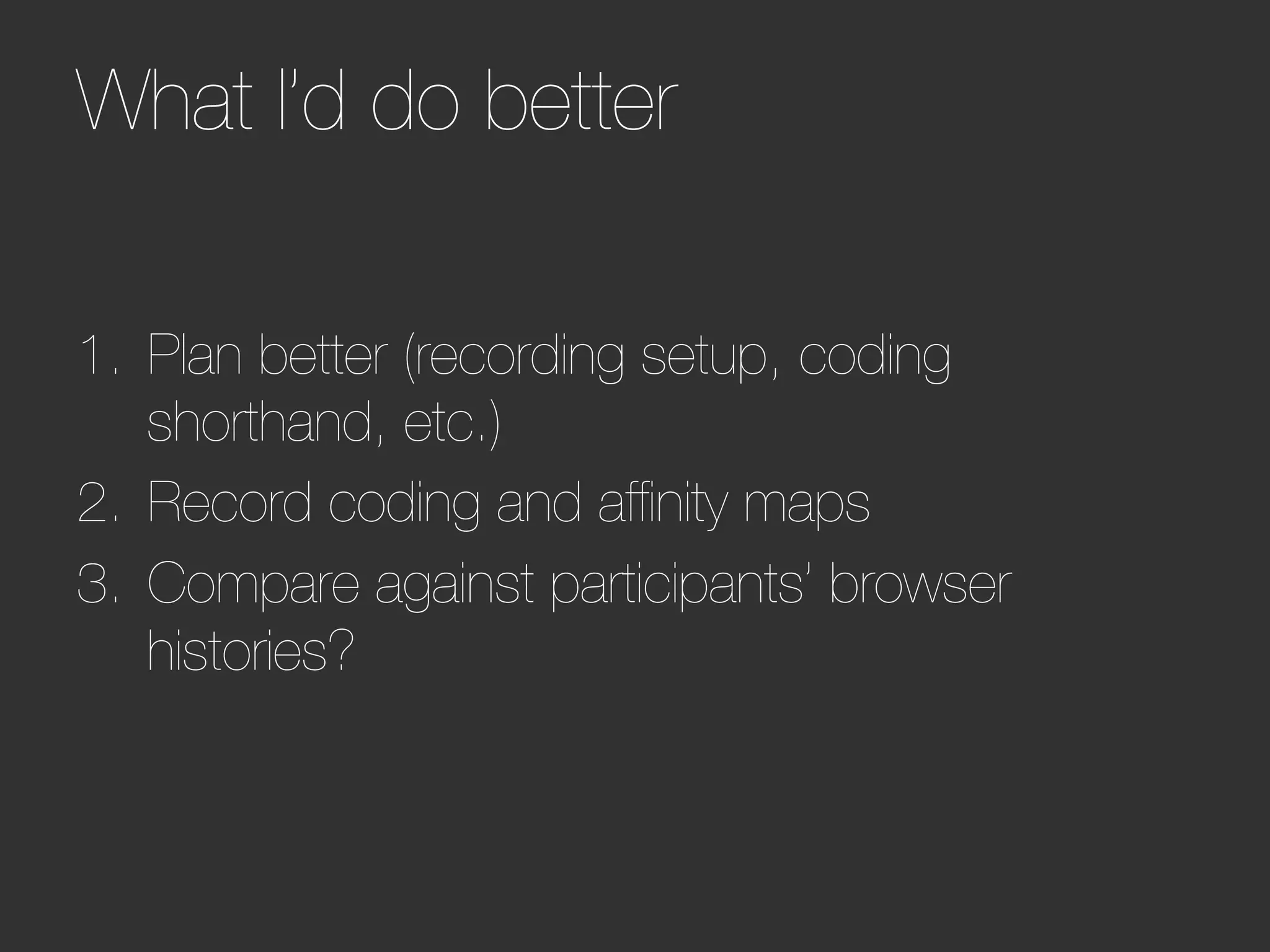
What I’d do better        


1.  Plan better (recording setup, coding
    shorthand, etc.)
2.  Record coding and affinity maps
3.  Compare against participants’ browser
    histories?
thanks
            Boon Yew Chew
               @boonych
           www.gluethink.com
                     
http://pinboard.in/u:jaremfan/t:diarystudy/

Diary studies - A primer

  • 1.
    Diary Studies A primer Boon Yew Chew The Research Thing SapientNitro 25 May 2011 @boonych
  • 2.
    View from 30,000feet" " Intro" Examples" Some Practical Tips
  • 3.
    A diary studyinvolves participants reporting their activities over a specific period of time, usually apart from the researcher and in their normal daily lives.
  • 4.
    Diary Studies inHCI" " John Rieman" 1993
  • 5.
    Benefits Understanding context andenvironment Understanding rare / infrequent events Ecological validity Remote Sampling over a duration Bridges qualitative and quantitative studies Flexibility
  • 6.
    Participants keep arecord of “When” data “What” data Date & time Activity / task Duration Feelings / mood Activity / task Environment / setting
  • 7.
    Recorded in variousways Etc… http://www.flickr.com/photos/p8/3779990787 http://www.flickr.com/photos/shahid/53829445 http://www.flickr.com/photos/stevegarfield/616793140 http://www.flickr.com/photos/dannysullivan/266951932 http://www.flickr.com/photos/yurukov/3482865747
  • 8.
    …at various times 1. Randomly 2.  At specific intervals 3.  Based on activity
  • 9.
    Structured or unstructureddata Structured Yes/no Select a category Date & time Multiple choice Unstructured Open-ended Opinions / thoughts / feelings Notes / comments http://www.flickr.com/photos/benhutchison/5678812629 http://www.flickr.com/photos/vanessabertozzi/877910821
  • 10.
    Ways to gatherdata Feedback (now) Elicitation (later) Record everything in situ Record aspects or triggers No follow up Follow up with interview “What” data To elicit “why” and “how” Mostly structured Mostly unstructured Can be burdensome Participants may forget
  • 11.
    “Hygiene” aspects At thebeginning Introduction / get-to-know-you Demographics Instructions / Setting expectations At the end Follow-up Thanks / token gift Reflection
  • 12.
    Thanking your participants Oneoff vouchers Spread incentives across longer durations “Keep the Flip camera” incentive
  • 13.
    Pitfalls Belief bias Behaviour adjustment Ramp-up time Failure to recall
  • 14.
    Alternatives / formsof diary studies Experience Sampling Method (feelings, mood) Cultural Probe (photo, video, sketches) Technology Probe (prototypes, experimental artifacts) http://www.flickr.com/photos/natalia_buckley/5410819726
  • 15.
  • 16.
    What motivates imageuse on the internet? •  Goal - understand motivations of image use •  9 participants (5F / 4M, age 24 – 59) •  Short note of activity involving an image, photo or visual •  Periodic interviews (about once every two days) •  About 20 activities per person
  • 17.
  • 18.
    Grounded theory –coding the data •  Coded each activity •  Example codes: instructional, informational, learning, fun, communication, social, etc. •  Kept a count of activities and codes
  • 19.
    Group themes fromaffinity map http://www.flickr.com/photos/benhutchison/5678812629
  • 20.
  • 21.
  • 22.
    Keeping it real– stories & examples http://www.flickr.com/photos/benhutchison/5678812629
  • 23.
    Findings 1.  Observed patterns of image use 2.  Lots of interesting stories 3.  Data can be used to explain, extend or simulate more research both qualitatively or quantitatively
  • 24.
    What I’d dobetter 1.  Plan better (recording setup, coding shorthand, etc.) 2.  Record coding and affinity maps 3.  Compare against participants’ browser histories?
  • 25.
    thanks Boon Yew Chew @boonych www.gluethink.com http://pinboard.in/u:jaremfan/t:diarystudy/