Epilepsy
Dr. Asra Hameed
Pharm.D (JUW)
asra_hameed1@hotmail.com
Introduction
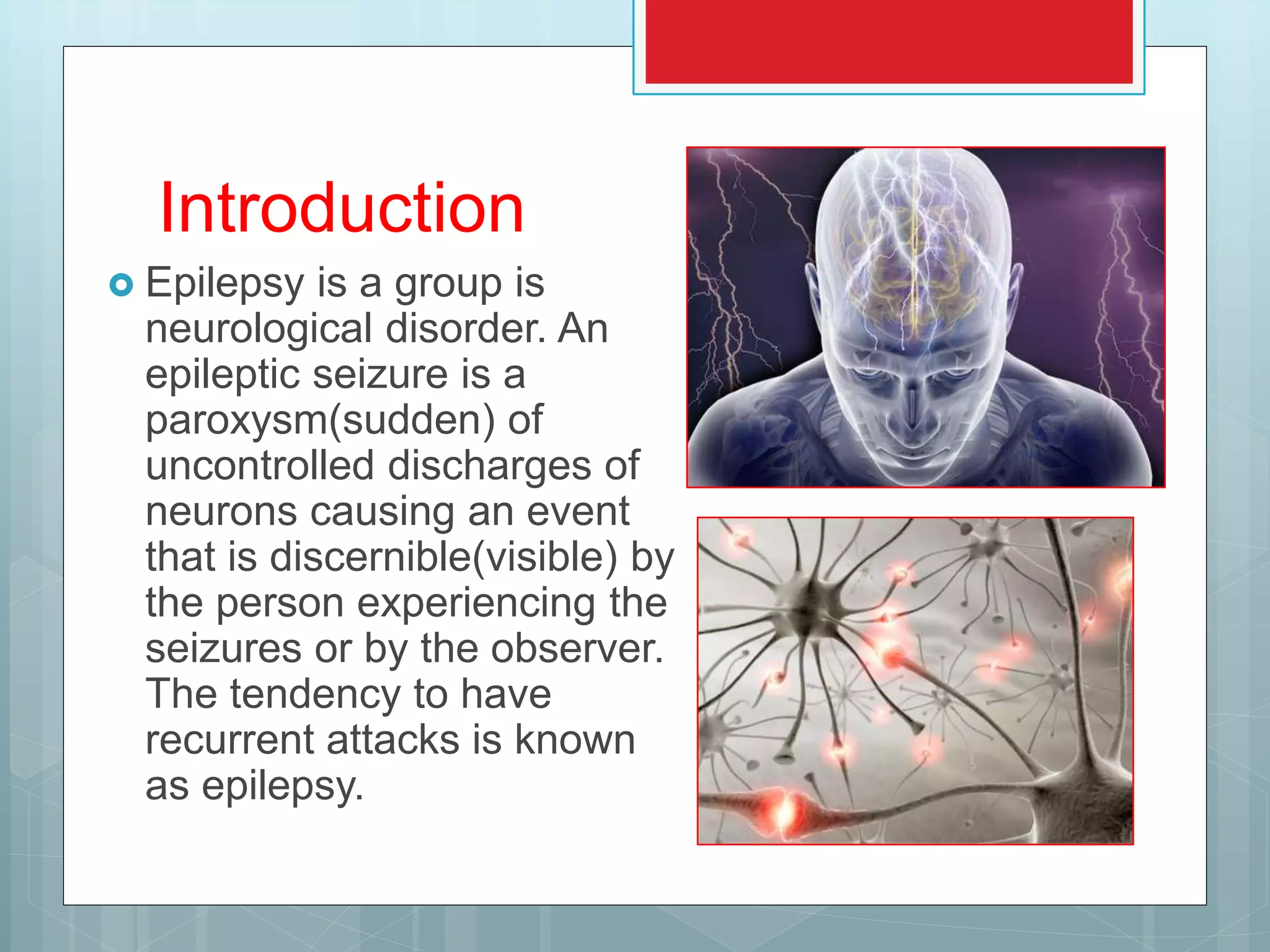
 Epilepsy is a group is
neurological disorder. An
epileptic seizure is a
paroxysm(sudden) of
uncontrolled discharges of
neurons causing an event
that is discernible(visible) by
the person experiencing the
seizures or by the observer.
The tendency to have
recurrent attacks is known
as epilepsy.
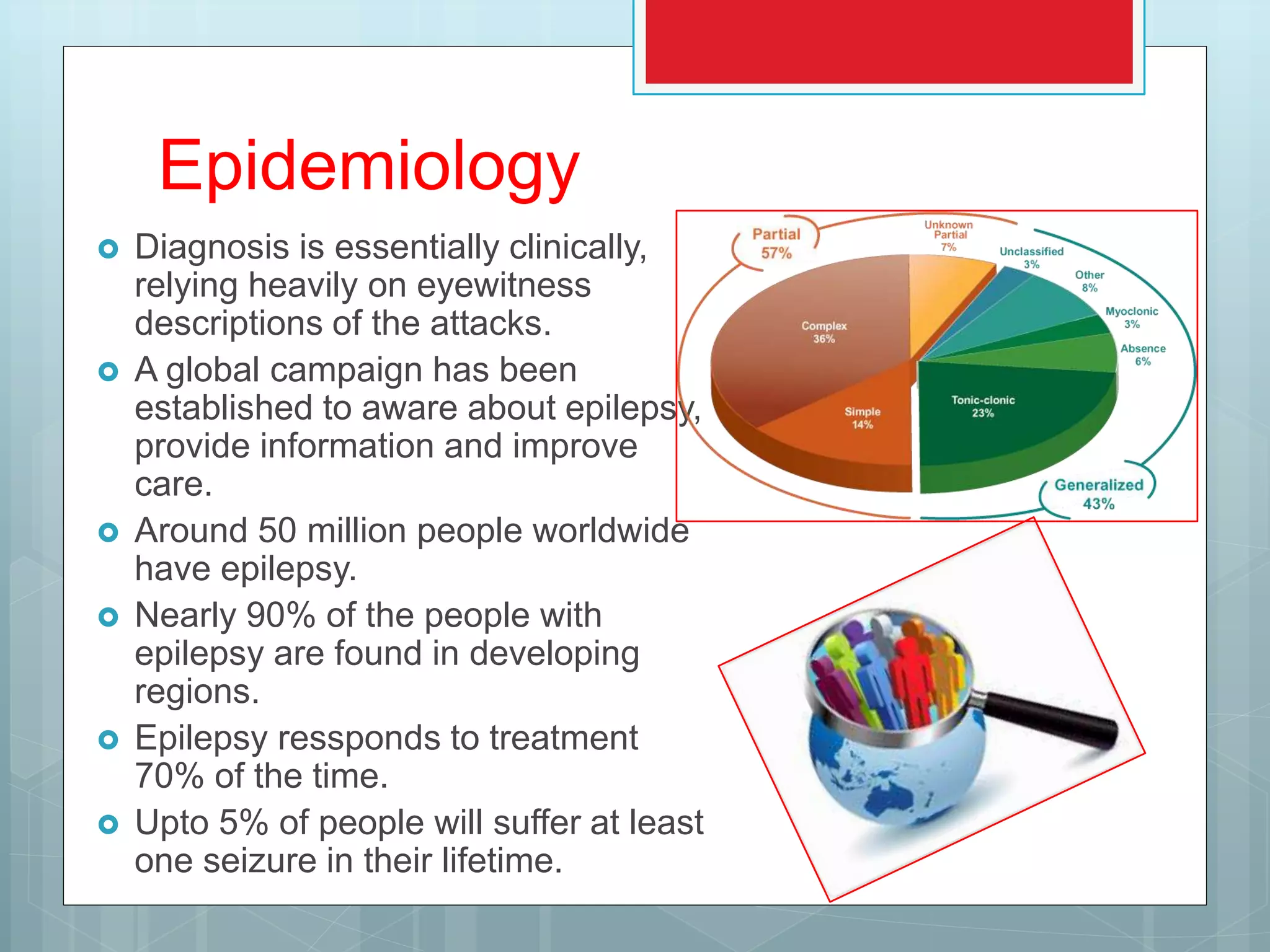
Epidemiology
 Diagnosis is essentially clinically,
relying heavily on eyewitness
descriptions of the attacks.
 A global campaign has been
established to aware about epilepsy,
provide information and improve
care.
 Around 50 million people worldwide
have epilepsy.
 Nearly 90% of the people with
epilepsy are found in developing
regions.
 Epilepsy ressponds to treatment
70% of the time.
 Upto 5% of people will suffer at least
one seizure in their lifetime.
Aetiology
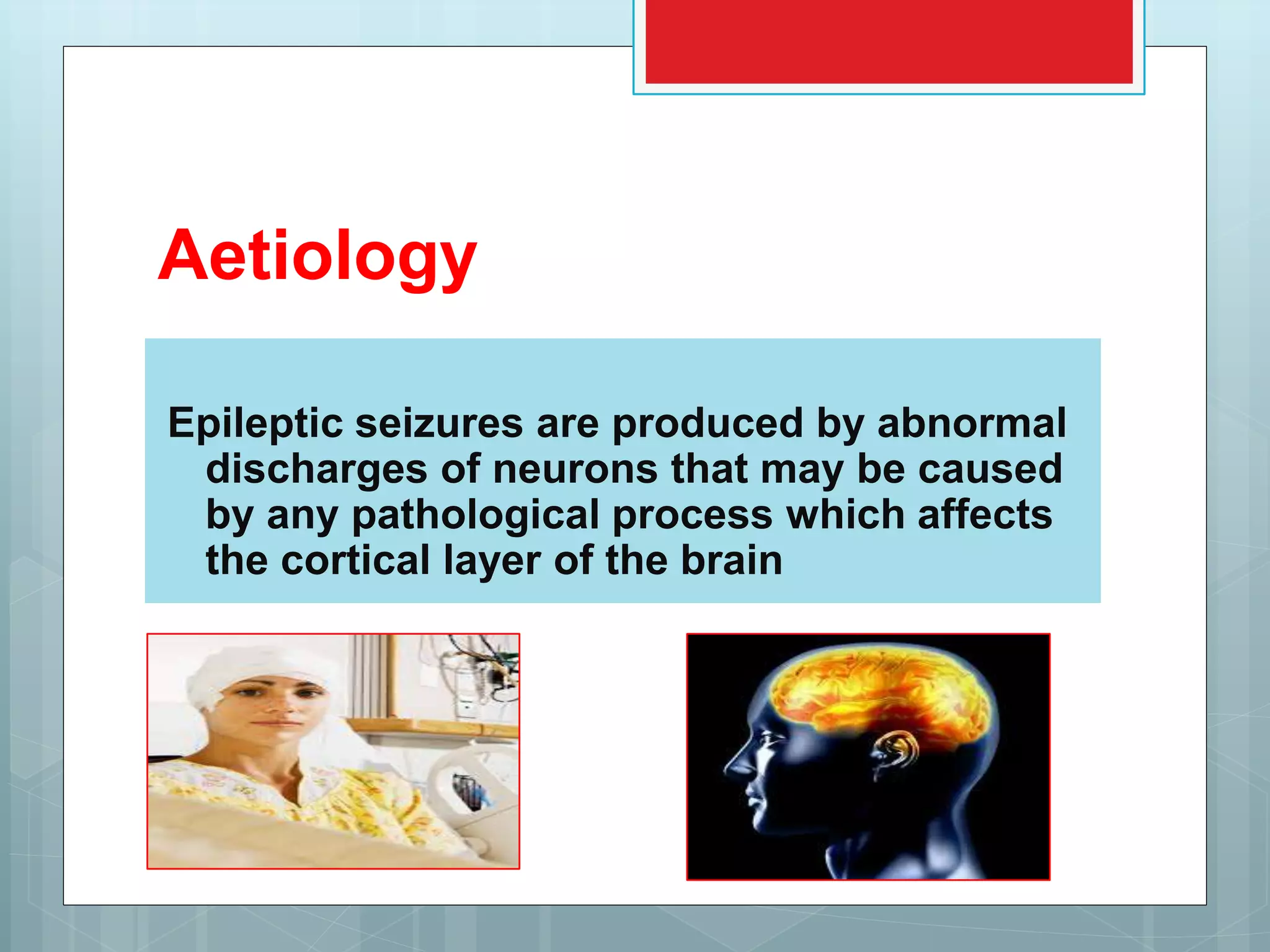
Epileptic seizures are produced by abnormal
discharges of neurons that may be caused
by any pathological process which affects
the cortical layer of the brain
causesof epilepsy
symptomatic
idiopathic
cryptogenic
SYMPTOMATIC EPILEPSY: Epilepsy
is called symptomatic when it has
a known cause.
IDIOPATHIC EPILEPSY: where no
apparent cause for epilepsy can
be found, but there may be a
family history, suggesting that
the condition is inherited
CRYPTOGENIC EPILEPSY: This is
when the cause for a person's
epilepsy has not yet been found,
despite investigations
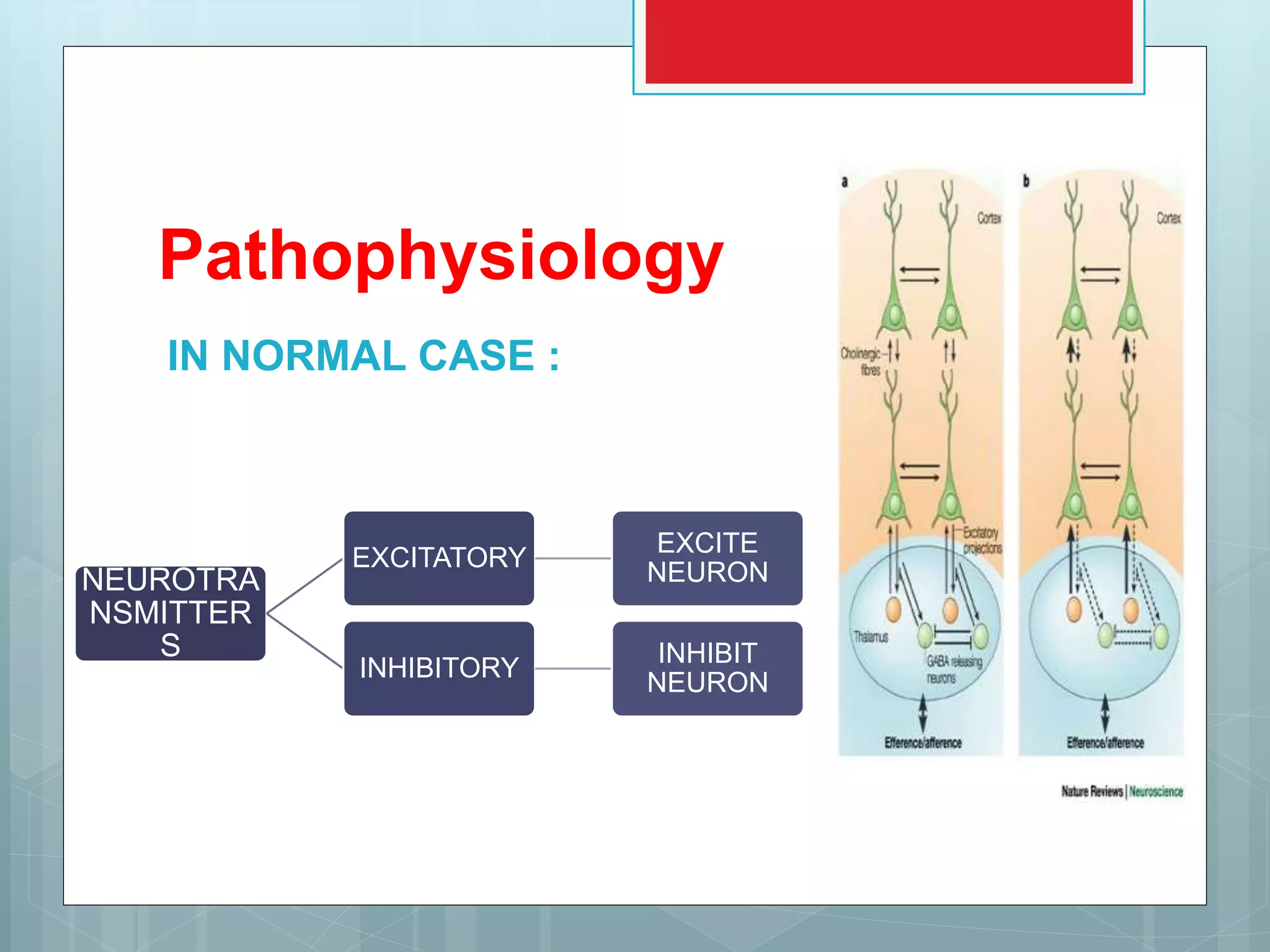
Pathophysiology
IN NORMAL CASE :
NEUROTRA
NSMITTER
S
EXCITATORY
EXCITE
NEURON
INHIBITORY
INHIBIT
NEURON
IN CASE OF EPILEPSY :
DAMAGED
OF NEURON
CHANGES IN
DISCHARGE
PATTERN
PERIOD OF
INACTIVITY
(EPILEPSY)
Generalized seizures
Generalized seizures result in impairment of
consciousness from the on set
 TYPES OF GENERALIZED
SEIZURES:
There are various types of generalized seizures
• Tonic clonic convulsions
• Absence attack
• Myoclonic seizures
• Atonic seizures
MYOCLONIC SEIZURES:
In myoclonic seizures very brief involuntary
shock like jerks which may involve in the
whole body or arms or head usually
Happen in morning they may cause person fall.
ATONIC SEIZURES:
These comprise a sudden loss of muscles tone causing person to
collapse to the ground recovery after ward is quick much
commonin pateint with severe epilepsy starting in infancy
TONIC CLONIC SEIZURES:
Often called “grand mal” attacks with out warning the
patient suddenly goes stiff,fall,tongue bitting
with laboured breathing and salivation
it over come after few minutes
ABSENCE ATTACKS:
Aften called “petit mal” these are much rarer form
it happen in child hood ,
child goes bland and stares fluttering of eyelids and
flopping of head may
occur it last only few seconds and un recognized even
by child experencing
them
PARTIAL OR FOCAL SEIZURES
 SIMPLE PARTIAL SEIZURES:
 Discharge remains localized & consciousness
is fully preserved.
EXAMPLES:
 Localized jerking of a limb or face, stiffness or
twitching of one part of the body, numbness or
abnormal sensations.
COMPLEX PARTIAL
SEIZURES:
 Seizure progresses with impairment
of consciousness.
 Originate in the frontal or temporal
lobes of the brain and can progress
to secondarily generalized seizures.
EXAMPLES:
 Lip smacking , undressing,
performing aimless activities, acting
in a confused manner.
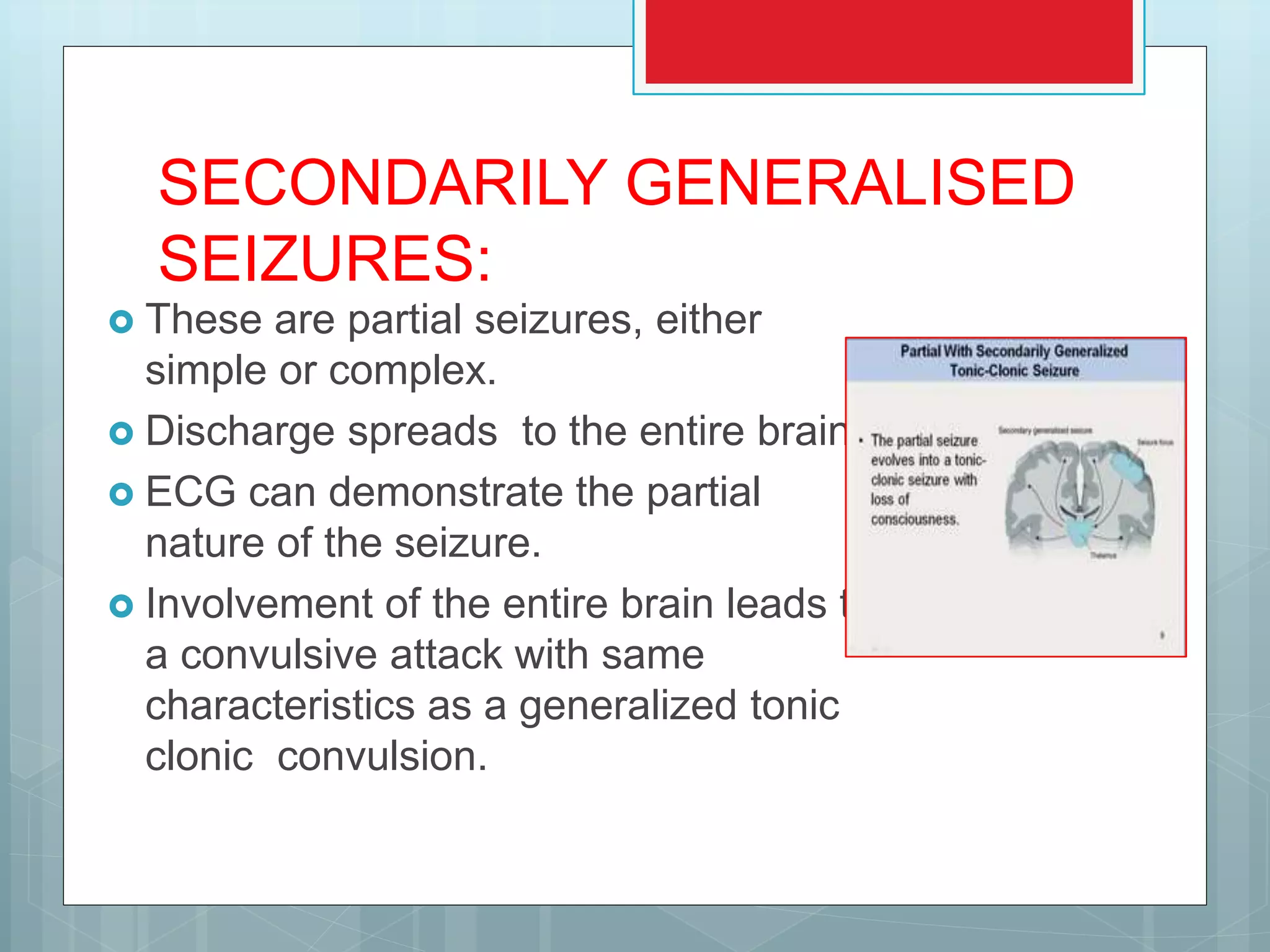
SECONDARILY GENERALISED
SEIZURES:
 These are partial seizures, either
simple or complex.
 Discharge spreads to the entire brain.
 ECG can demonstrate the partial
nature of the seizure.
 Involvement of the entire brain leads to
a convulsive attack with same
characteristics as a generalized tonic
clonic convulsion.
DIAGNOSIS
 Diagnosis of epilepsy is clinical &
depends on a reliable account of
what happened during the
attacks.
 Epilepsy must only be diagnosed
when seizures occur
spontaneously and are recurrent.
 EEG (electroencephalogram) is
the only examination required,
particularly in generalized
epilepsies & aims to record
abnormal neuronal discharges.
 Magnetic resonance imaging (MRI) is the
most valuable investigation when structural
abnormalities such as stroke, tumor,
congenital abnormalities are suspected.
 MRI to be used in people who develop
epilepsy as adults or in whom seizures persist
or when a structural lesion on the brain may
be responsible for seizures.
Treatment
 National Institute for Health and
Clinical Excellence issued guidance
on the treatment of the epilepsies in
adults and children in primary and
secondary care.
 Treatment individualised according
to seizure type, epilepsy syndrome,
co-medication and co-morbidity, the
individual's lifestyle and personal
preference.
Treatment during
seizures
 Made the patient as comfortable as possible ( lying down,
cushioning the head, loosening any tight clothing or
neckwear)
 Should not be moved unless they are in a dangerous
place (road, fire, top of stairs, edge of water)
 No attempt should be made to open a person’s mouth or
don’t force any thing between the teeth
 When seizure stops, turned over to recovery phase and
check air ways for any blockage
 No drinks or extra anti-epileptic drugs required.
 If seizure persist for more than 10min, IV or Rectal
diazepam(10-20mg) in adults can be given.
 Lower doses of diazepam advisable for children.
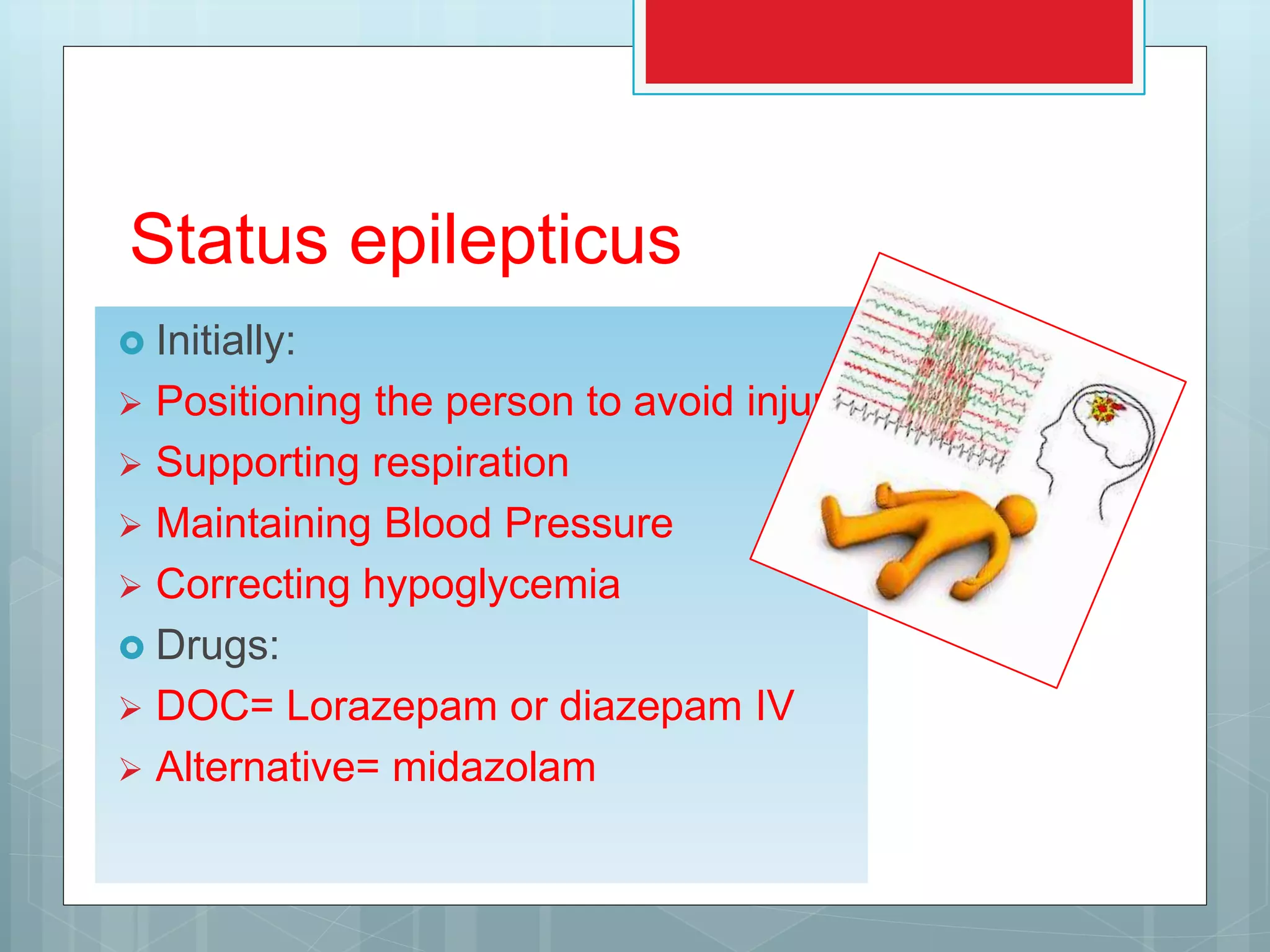
Status epilepticus
 Initially:
 Positioning the person to avoid injury
 Supporting respiration
 Maintaining Blood Pressure
 Correcting hypoglycemia
 Drugs:
 DOC= Lorazepam or diazepam IV
 Alternative= midazolam
Febrile convulsions
 Convulsions associated with fever
 May occur in young
 Aim to reduce the temperature
 Use of paracetamol is usual
 If Prolonged febrile convulsions, DOC is
Diazepam. (IV or PR)
Long term
treatment
 Long term and regular drug therapy of epilepsy usually for
atleast 3 years or for life time
 Objective:
 Suppress epileptic discharges
 Prevent the development of epileptic seizures
 Treatment is initiated by specialist only with consideration of
all relevant factors.
 AED treatment may fails unless the patient fully
understands the importance of regular therapy and the
objectives of treatment.
 Poor adherence is still a major factor lead to hospitalization
and poor seizure control and lead to clinical use of multiple
AED.
General principle of treatment
 Therapy aims to control
seizures using one drug with
the lowest possible dose that
cause the fewest side effects
possible.
 The choice of drugs depends
largely on the seizure type, and
so correct diagnosis and
classification are essential.
Initiation of therapy in newly
diagnosed patients
 The first line AED most suitable for the
person’s seizure type should be introduced
slowly, starting with a small dose.
 This is because too rapid an introduction may
include side-effects that will lose the patient’s
confidence.
Maintenance
dosage
 There is no single optimum dose of AED
 Dose varies from person to person and drug to drug.
 Drug should be introduce slowly and then increased
incrementally to an initial maintenance dosage.
 Seizure control then be assessed and the dose of rug
changed if necessary.
 Most specialists prefer people to remain on the same
brand of medication, and this is also preferred by the
majority of people with epilepsy.
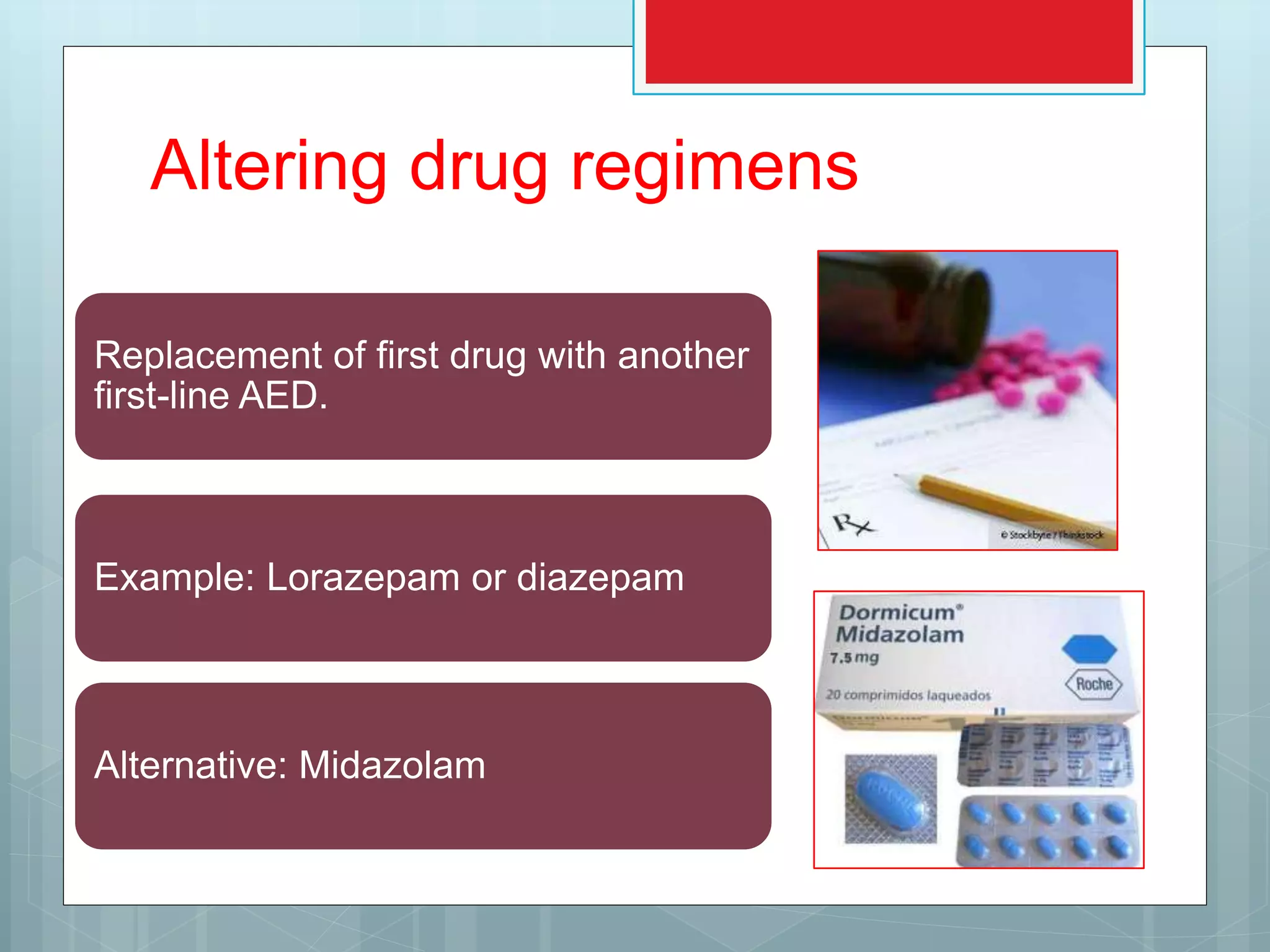
Altering drug regimens
Replacement of first drug with another
first-line AED.
Example: Lorazepam or diazepam
Alternative: Midazolam
Withdrawal of drugs
AEDS shuoldn’t be withdrawn
abruptly
Particularlt with barbiturates &
benzodiazepines rebound seizures
may occur.
Examples: phenobarbital & primidone
clobazam & clonazepam
Withdrawal should be carried out in
slow step-wise fashion
To cover withdrawal phase
benzodiazepine like diazepam can be
used
Example of withdrawal regimens
CARBAMAZEPINE:
100 - 200 mg every 2 weeks
100 - 200 mg every 4 weeks
Newer AEDs
Generally used as second-line agents
Guidance has been issued by National
Institute for Health & Clinical Excellence
for the following:
1 USE OF NEWER AEDS IN ADULTS
2 USE OF NEWER AEDS IN CHILDREN
3 FOR THE DIAGNOSIS & MANAGEMENT OF
EPILEPSIES IN ADULTS & CHILDREN IN
PRIMARY & SECONDARY CARE
Follow-up and monitoring of treatment
 It is essential to follow up patients in whom
AED treatment has been started
 Monitornig the efficacy and side effects of
treatment upon which drug drug dosage will
depend
 This follow up is particularly important in early
stages of treatment
Stopping treatment
 With drawl therapy is an individual one and the
person shouldbe made aware of the risk and
benefits of withdrawl
 Drug withdrawl should be carried out only very
slowly in staged decrements and only one drug at
a time should be withdrawn
 Withdrawn therapy should be considered in
people who have been free seizure free for a
considerable period of time
Monitoring antiepileptic therapy
 TDM involves the measurement of serum drug s
and their pharmacokinetics interpretation .TDM
may be useful to establish adherence with the
treatment
 At the onset of action
 If seizure control is poor or sudden changes in
seizure control occur
 If toxicity is suspected
 When changes AED therapy or making changes
to other aspects of a persons drug regimen that
may interact with the AED
Drug development and action
 Established AEDs such as
phenytoin,phenobarbital,sodium valporate
,carbamazepine,clonazepam and diazepam
 New drugs include
lamotrigine,pregabalin,felbamate,zonisamide
 Unlike most older agents
vigabatrin,zonisamide.lacosamide
1. CARBAMAZAPINE
 Carbamazepine is a dibenzapine derivative with
antiepileptic and anticonvulsant properties.
Pharmacodynamics: Na-Channel Antagonist
Indications:
 Aggression
 Diabetes insipidus
 Epilepsy
 Mood disorder
 Trigeminal neuralgia
 Prophylaxis of bipolar disorder.
Contra-indications:
o Bone marrow depression
o Porphyrias
o Av conduction abnormalities.
Adverse Drug Reaction:
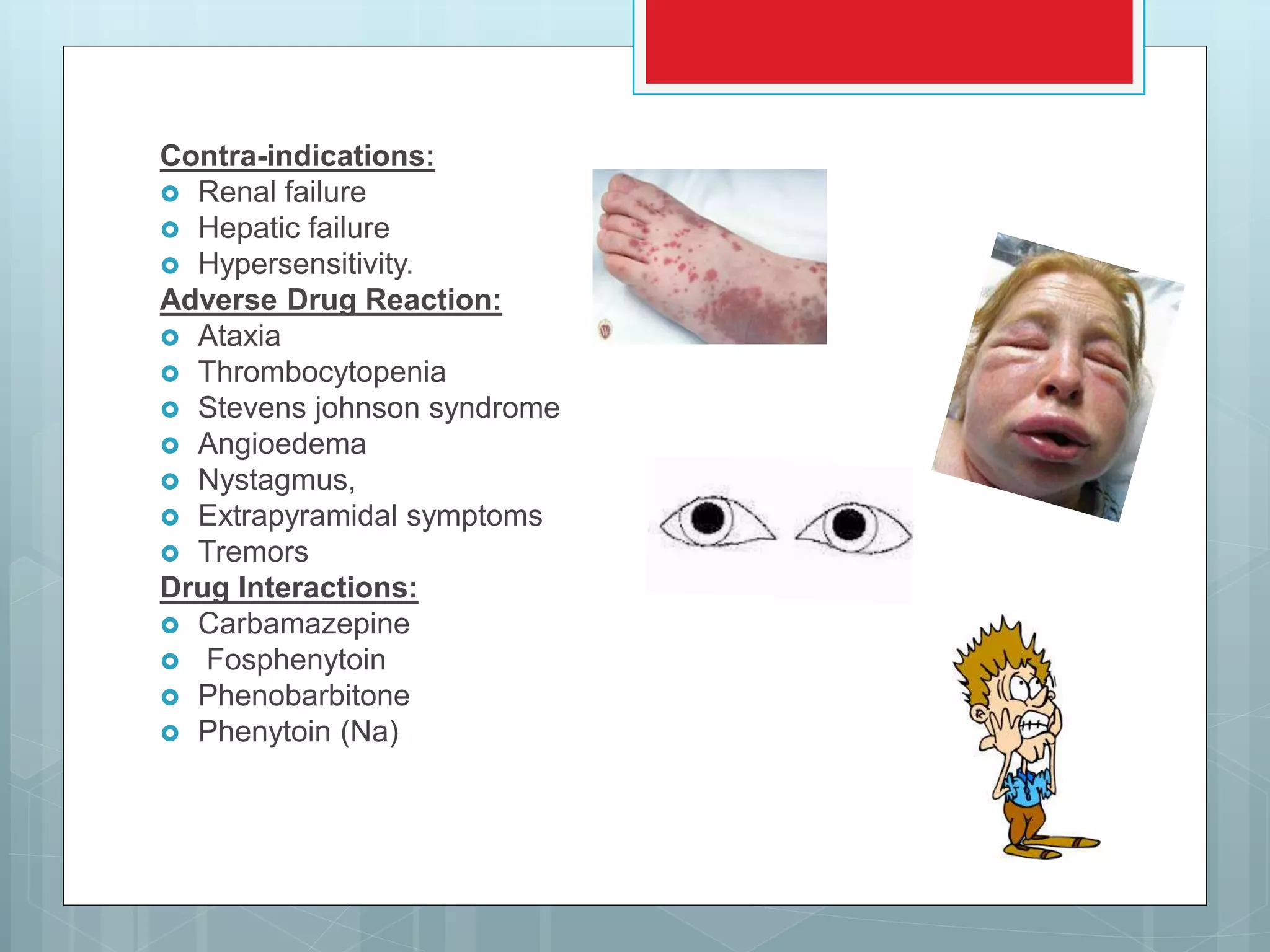
o Proteinuria
o Skin rashes
o Stevens johnson syndrome
o Hyponatremia
o Agranulocytosis
o Hematuria
Drug Interaction:
o Amitriptyline
o Chloroquine
o Bromazepam
o Fluoxetine
o Diltiazem
2. CLONAZEPAM
 Clonazepam is a benzodiazipine.
 Benzdiazipines are the most widely used
anxiolytic drugs.
 Pharmacodynamics: Chloride Channel
Potentiater (GABA operated)
 Indications:
 Atypical absence
 Bipolar affective disorder
 Drug induced dyskinesias
Contra-indications:
 Respiratory depression
 Acute pulmonary insufficiency
 Hypersensitivity
Adverse Drug Reaction:
 Thrombocytopenia
 Blood dyscrasias
 Apnea
 Hypotension, Dizziness, Drowsiness, Fatigue,
Anorexia,
Drug Interactions:
o Alcohol
o Carbamazepine
o Iproniazid Phosphate
o Phenobarbitone
o Valproic Acid
3. ETHOSUXIMIDE
 Ethosuximide is antiepileptic agent.
 its popularity continues, based on its safety
and efficacy.
Pharmacodynamics: Pyrrolidinedione
Indications:
 Generalised epilepsy with absence seizures.
Contra-indications:
 Hypersensitivity to any component of product.
Adverse Drug Reaction:
 Tonic-clonic seizures
 Nausea
 Vomiting
 Anorexia
 GI symptoms,
Drug Interactions:
o Alcohol,
o Carbamazepine
o Isoniazid
o Phenobarbitone
o Phenytoin (Na), Sodium Valproate
4. LAMOTRIGINE
 Lamotrigine is a triazine derivarive.
 Lamotrigine is oral antiepileptic and anticonvulsant
agent.
Pharmacodynamics: Triazine Derivatives
Indications:
o Bipolar disorders
o Epilepsy Partial seizures
o Tonic-clonic seizures
o Generalised epilepsy with absence seizures
Contra-indications:
 Renal failure
 Hepatic failure
 Hypersensitivity.
Adverse Drug Reaction:
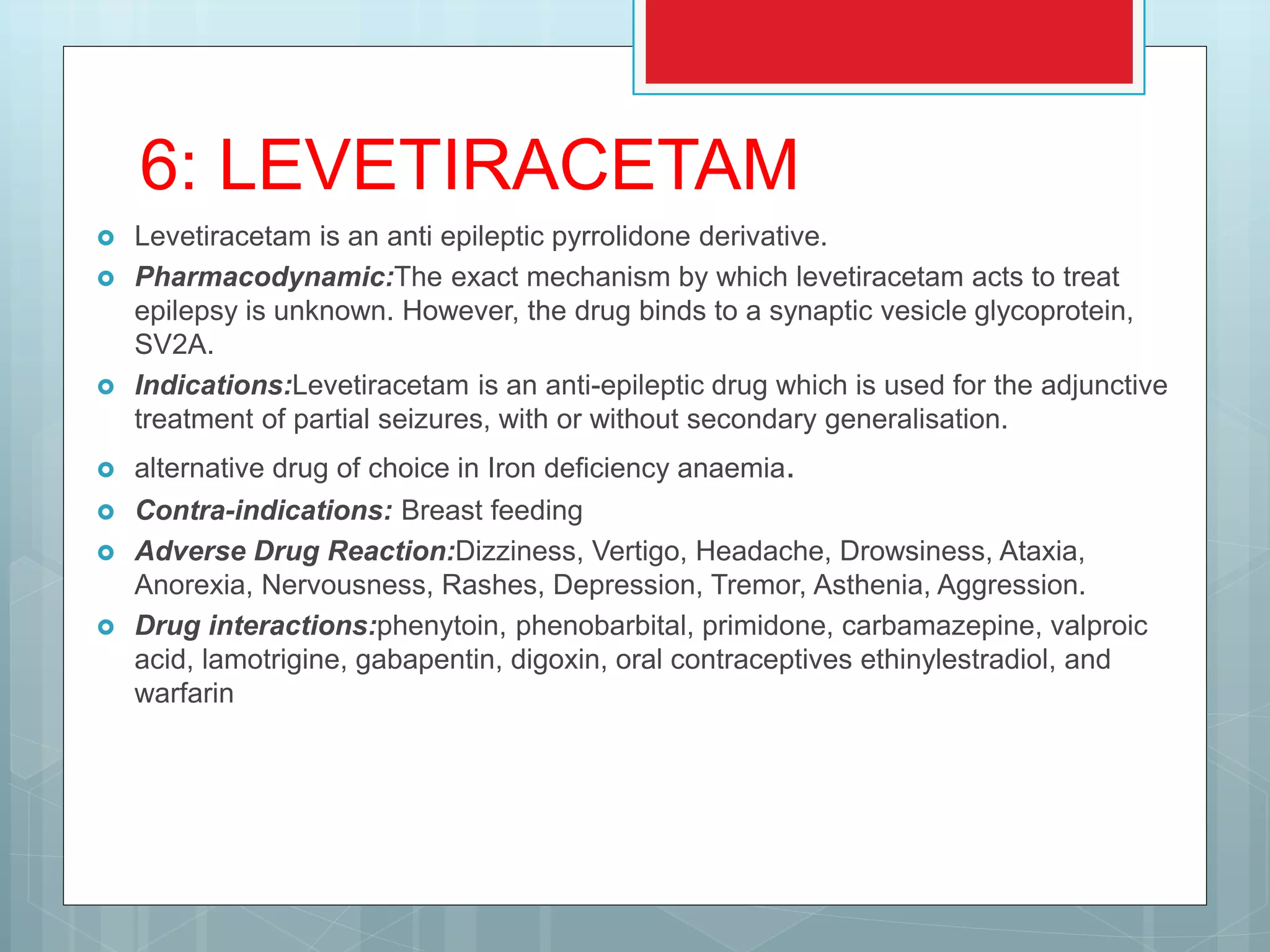
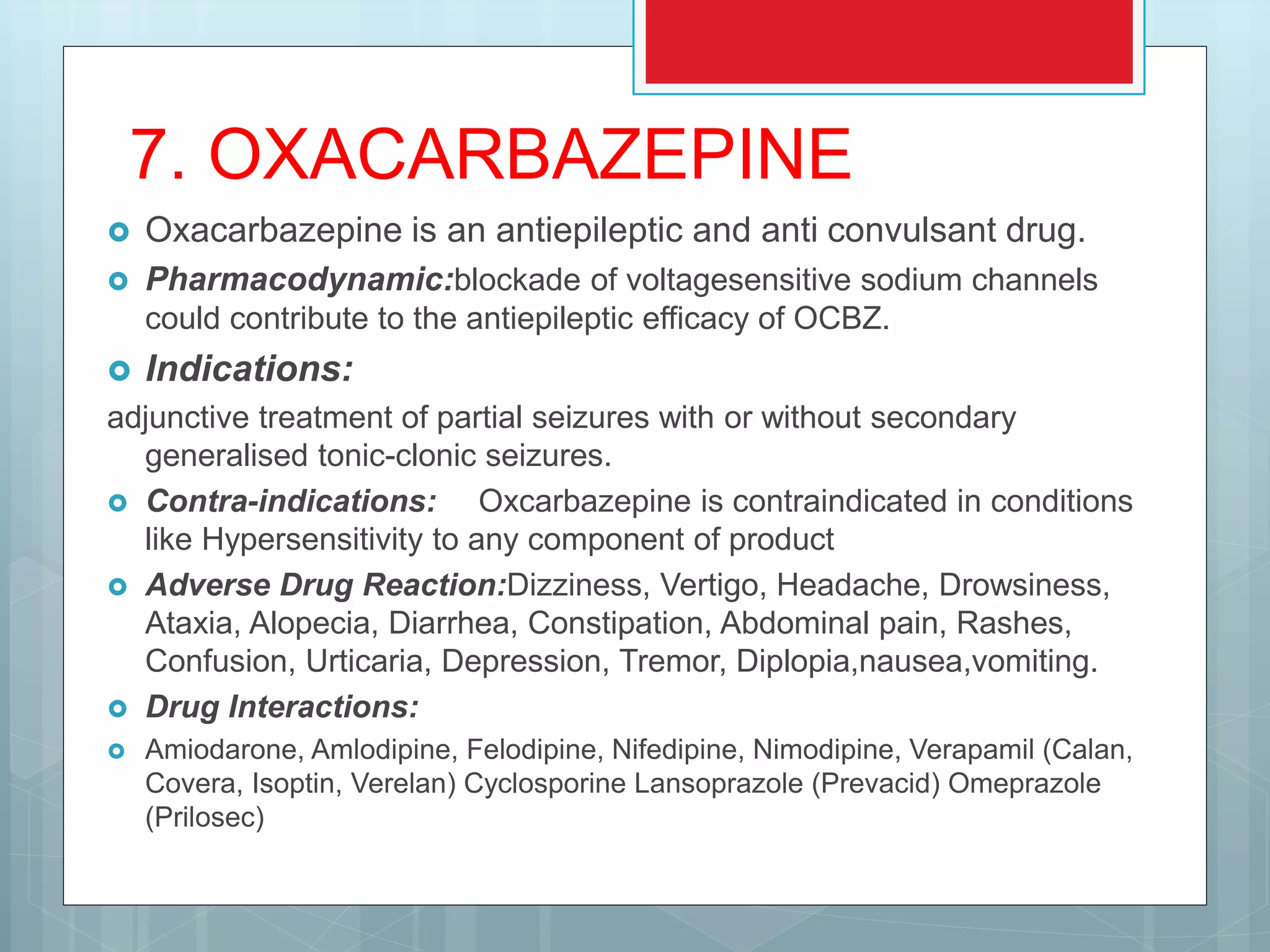
 Ataxia
 Thrombocytopenia
 Stevens johnson syndrome
 Angioedema
 Nystagmus,
 Extrapyramidal symptoms
 Tremors
Drug Interactions:
 Carbamazepine
 Fosphenytoin
 Phenobarbitone
 Phenytoin (Na)
5. Phenobarbitone
 Phenobarbitone is oral and parenteral barbiturate with
anticonvulsant and sedative-hypnotic properties.
 Phenobarbitone is also the longest-acting agent in the
barbiturate group.
 Pharmacodynamics: Chloride Channel opener (Gaba
operated)
 Indications:
 Benign febrile convulsions of infancy
 Seizures
 Short-term treatment of severe congestive heart failure
 Status epilepticus.
Contra-indications:
 Porphyrias
 Hepatic disease.
Adverse Drug Reaction:
 Ataxia
 Confusion
 Irritability
 Mental disturbances
 Aplastic Anemia
 Hepatitis
Drug Interactions:
 Alcohol
 Chlorpropamide
 Clonazepam
 Diltiazem (HCl)
 Ritonavir
 Verapamil (HCl)
 Vitamin K,
 Warfarin (Na
6: LEVETIRACETAM
 Levetiracetam is an anti epileptic pyrrolidone derivative.
 Pharmacodynamic:The exact mechanism by which levetiracetam acts to treat
epilepsy is unknown. However, the drug binds to a synaptic vesicle glycoprotein,
SV2A.
 Indications:Levetiracetam is an anti-epileptic drug which is used for the adjunctive
treatment of partial seizures, with or without secondary generalisation.
 alternative drug of choice in Iron deficiency anaemia.
 Contra-indications: Breast feeding
 Adverse Drug Reaction:Dizziness, Vertigo, Headache, Drowsiness, Ataxia,
Anorexia, Nervousness, Rashes, Depression, Tremor, Asthenia, Aggression.
 Drug interactions:phenytoin, phenobarbital, primidone, carbamazepine, valproic
acid, lamotrigine, gabapentin, digoxin, oral contraceptives ethinylestradiol, and
warfarin
7. OXACARBAZEPINE
 Oxacarbazepine is an antiepileptic and anti convulsant drug.
 Pharmacodynamic:blockade of voltagesensitive sodium channels
could contribute to the antiepileptic efficacy of OCBZ.
 Indications:
adjunctive treatment of partial seizures with or without secondary
generalised tonic-clonic seizures.
 Contra-indications: Oxcarbazepine is contraindicated in conditions
like Hypersensitivity to any component of product
 Adverse Drug Reaction:Dizziness, Vertigo, Headache, Drowsiness,
Ataxia, Alopecia, Diarrhea, Constipation, Abdominal pain, Rashes,
Confusion, Urticaria, Depression, Tremor, Diplopia,nausea,vomiting.
 Drug Interactions:
 Amiodarone, Amlodipine, Felodipine, Nifedipine, Nimodipine, Verapamil (Calan,
Covera, Isoptin, Verelan) Cyclosporine Lansoprazole (Prevacid) Omeprazole
(Prilosec)
8. PHENYTOIN
 Phenytoin exerts its anticonvulsant effect mainly by limiting the
spread of seizure activity and reducing seizure propagation.
 Pharmacodynamics: Na-Channel Antagonist
 Indications:Convulsions, Epilepsy, Migraine prophylaxis, Myotonia,
Prophylaxis of epilepsy, Status epilepticus, Status epilepticus;
seizures in neurosurgery, TIC douloureaux, Ventricular arrhythmias.
 Contra-indications: conditions like Porphyrias.
 Adverse Drug Reaction:Ataxia, Nausea, Vomiting, Hypotension,
Drowsiness, Nystagmus, Coma, Hyperglycemia, Stupor, Blurred
vision.
 Drug Interactions:Alprazolam, Amiodarone (HCl), Amitriptyline
(HCl),Amlodipine, Ciprofloxacin, Clarithromycin,carbamazepine.
9. Sodium Valproate
 Sodium Valproate is anticonvulsant drug
 Pharmacodynamics: Na-Channel Antagonist.
 Indications: Sodium Valproate is primarily indicated in
conditions like All forms of epilepsy, Generalised epilepsy
with absence seizures, Prophylaxis of febrile convulsion,
Prophylaxis of post traumatic epilepsy, Status epilepticus
 Contra-indications: pregnancy.
 Adverse Drug Reaction: Thrombocytopenia, Pancreatitis,
Liver damage, Extrapyrimidal symptoms, Hyperammonemia,
Death, Deepening coma, Weight gain, Tremor, Hair loss, GI
disorders, Hematological disorder, Leucopenia.
 Drug Interactions: Aspirin, Carbamazepine, Erythromycin,
Ethosuximide, Fosphenytoin, Lamotrigine, Mefloquine (HCl),
Meropenem, Methotrexate, Phenobarbitone, Phenytoin.
10. PRIMIDONE
 It resembles phenobarbital in its anticonvulsant activity.
 Primidone is a derivative of barbituric acid.
 Pharmacodynamics: work via interactions with voltage-gated sodium channels
which inhibit high-frequency repetitive firing of action potentials
 Indications: Primidone is primarily indicated in conditions like Epilepsy, Essential
tumor.
 Contra-indications: Primidone is contraindicated in conditions like Porphyrias.
 Adverse Drug Reaction: Vertigo, Ataxia, Nausea, Vomiting, Drowsiness,
Sleepiness, Irritability, Ataxia, Tremors, Impotence, Loss of libido, Loss of
memory,depression.
 Drug Interactions: Acetazolamide (Na), Alcohol, Carbamazepine,
Chloramphenicol, Cortisone (Acetate), Desogestrel, Desonide, Estradiol (Valerate),
Ethynodiol ,Na valporate.
Conclusion

Epilepsy

  • 1.
    Epilepsy Dr. Asra Hameed Pharm.D(JUW) asra_hameed1@hotmail.com
  • 2.
    Introduction  Epilepsy isa group is neurological disorder. An epileptic seizure is a paroxysm(sudden) of uncontrolled discharges of neurons causing an event that is discernible(visible) by the person experiencing the seizures or by the observer. The tendency to have recurrent attacks is known as epilepsy.
  • 3.
    Epidemiology  Diagnosis isessentially clinically, relying heavily on eyewitness descriptions of the attacks.  A global campaign has been established to aware about epilepsy, provide information and improve care.  Around 50 million people worldwide have epilepsy.  Nearly 90% of the people with epilepsy are found in developing regions.  Epilepsy ressponds to treatment 70% of the time.  Upto 5% of people will suffer at least one seizure in their lifetime.
  • 4.
    Aetiology Epileptic seizures areproduced by abnormal discharges of neurons that may be caused by any pathological process which affects the cortical layer of the brain
  • 5.
  • 6.
    SYMPTOMATIC EPILEPSY: Epilepsy iscalled symptomatic when it has a known cause. IDIOPATHIC EPILEPSY: where no apparent cause for epilepsy can be found, but there may be a family history, suggesting that the condition is inherited CRYPTOGENIC EPILEPSY: This is when the cause for a person's epilepsy has not yet been found, despite investigations
  • 7.
    Pathophysiology IN NORMAL CASE: NEUROTRA NSMITTER S EXCITATORY EXCITE NEURON INHIBITORY INHIBIT NEURON
  • 8.
    IN CASE OFEPILEPSY : DAMAGED OF NEURON CHANGES IN DISCHARGE PATTERN PERIOD OF INACTIVITY (EPILEPSY)
  • 9.
    Generalized seizures Generalized seizuresresult in impairment of consciousness from the on set  TYPES OF GENERALIZED SEIZURES: There are various types of generalized seizures • Tonic clonic convulsions • Absence attack • Myoclonic seizures • Atonic seizures
  • 10.
    MYOCLONIC SEIZURES: In myoclonicseizures very brief involuntary shock like jerks which may involve in the whole body or arms or head usually Happen in morning they may cause person fall. ATONIC SEIZURES: These comprise a sudden loss of muscles tone causing person to collapse to the ground recovery after ward is quick much commonin pateint with severe epilepsy starting in infancy
  • 11.
    TONIC CLONIC SEIZURES: Oftencalled “grand mal” attacks with out warning the patient suddenly goes stiff,fall,tongue bitting with laboured breathing and salivation it over come after few minutes ABSENCE ATTACKS: Aften called “petit mal” these are much rarer form it happen in child hood , child goes bland and stares fluttering of eyelids and flopping of head may occur it last only few seconds and un recognized even by child experencing them
  • 12.
    PARTIAL OR FOCALSEIZURES  SIMPLE PARTIAL SEIZURES:  Discharge remains localized & consciousness is fully preserved. EXAMPLES:  Localized jerking of a limb or face, stiffness or twitching of one part of the body, numbness or abnormal sensations.
  • 13.
    COMPLEX PARTIAL SEIZURES:  Seizureprogresses with impairment of consciousness.  Originate in the frontal or temporal lobes of the brain and can progress to secondarily generalized seizures. EXAMPLES:  Lip smacking , undressing, performing aimless activities, acting in a confused manner.
  • 14.
    SECONDARILY GENERALISED SEIZURES:  Theseare partial seizures, either simple or complex.  Discharge spreads to the entire brain.  ECG can demonstrate the partial nature of the seizure.  Involvement of the entire brain leads to a convulsive attack with same characteristics as a generalized tonic clonic convulsion.
  • 15.
    DIAGNOSIS  Diagnosis ofepilepsy is clinical & depends on a reliable account of what happened during the attacks.  Epilepsy must only be diagnosed when seizures occur spontaneously and are recurrent.  EEG (electroencephalogram) is the only examination required, particularly in generalized epilepsies & aims to record abnormal neuronal discharges.
  • 16.
     Magnetic resonanceimaging (MRI) is the most valuable investigation when structural abnormalities such as stroke, tumor, congenital abnormalities are suspected.  MRI to be used in people who develop epilepsy as adults or in whom seizures persist or when a structural lesion on the brain may be responsible for seizures.
  • 17.
    Treatment  National Institutefor Health and Clinical Excellence issued guidance on the treatment of the epilepsies in adults and children in primary and secondary care.  Treatment individualised according to seizure type, epilepsy syndrome, co-medication and co-morbidity, the individual's lifestyle and personal preference.
  • 18.
    Treatment during seizures  Madethe patient as comfortable as possible ( lying down, cushioning the head, loosening any tight clothing or neckwear)  Should not be moved unless they are in a dangerous place (road, fire, top of stairs, edge of water)  No attempt should be made to open a person’s mouth or don’t force any thing between the teeth  When seizure stops, turned over to recovery phase and check air ways for any blockage  No drinks or extra anti-epileptic drugs required.  If seizure persist for more than 10min, IV or Rectal diazepam(10-20mg) in adults can be given.  Lower doses of diazepam advisable for children.
  • 19.
    Status epilepticus  Initially: Positioning the person to avoid injury  Supporting respiration  Maintaining Blood Pressure  Correcting hypoglycemia  Drugs:  DOC= Lorazepam or diazepam IV  Alternative= midazolam
  • 20.
    Febrile convulsions  Convulsionsassociated with fever  May occur in young  Aim to reduce the temperature  Use of paracetamol is usual  If Prolonged febrile convulsions, DOC is Diazepam. (IV or PR)
  • 21.
    Long term treatment  Longterm and regular drug therapy of epilepsy usually for atleast 3 years or for life time  Objective:  Suppress epileptic discharges  Prevent the development of epileptic seizures  Treatment is initiated by specialist only with consideration of all relevant factors.  AED treatment may fails unless the patient fully understands the importance of regular therapy and the objectives of treatment.  Poor adherence is still a major factor lead to hospitalization and poor seizure control and lead to clinical use of multiple AED.
  • 22.
    General principle oftreatment  Therapy aims to control seizures using one drug with the lowest possible dose that cause the fewest side effects possible.  The choice of drugs depends largely on the seizure type, and so correct diagnosis and classification are essential.
  • 23.
    Initiation of therapyin newly diagnosed patients  The first line AED most suitable for the person’s seizure type should be introduced slowly, starting with a small dose.  This is because too rapid an introduction may include side-effects that will lose the patient’s confidence.
  • 24.
    Maintenance dosage  There isno single optimum dose of AED  Dose varies from person to person and drug to drug.  Drug should be introduce slowly and then increased incrementally to an initial maintenance dosage.  Seizure control then be assessed and the dose of rug changed if necessary.  Most specialists prefer people to remain on the same brand of medication, and this is also preferred by the majority of people with epilepsy.
  • 25.
    Altering drug regimens Replacementof first drug with another first-line AED. Example: Lorazepam or diazepam Alternative: Midazolam
  • 26.
    Withdrawal of drugs AEDSshuoldn’t be withdrawn abruptly Particularlt with barbiturates & benzodiazepines rebound seizures may occur. Examples: phenobarbital & primidone clobazam & clonazepam
  • 27.
    Withdrawal should becarried out in slow step-wise fashion To cover withdrawal phase benzodiazepine like diazepam can be used Example of withdrawal regimens CARBAMAZEPINE: 100 - 200 mg every 2 weeks 100 - 200 mg every 4 weeks
  • 28.
    Newer AEDs Generally usedas second-line agents Guidance has been issued by National Institute for Health & Clinical Excellence for the following: 1 USE OF NEWER AEDS IN ADULTS 2 USE OF NEWER AEDS IN CHILDREN 3 FOR THE DIAGNOSIS & MANAGEMENT OF EPILEPSIES IN ADULTS & CHILDREN IN PRIMARY & SECONDARY CARE
  • 29.
    Follow-up and monitoringof treatment  It is essential to follow up patients in whom AED treatment has been started  Monitornig the efficacy and side effects of treatment upon which drug drug dosage will depend  This follow up is particularly important in early stages of treatment
  • 30.
    Stopping treatment  Withdrawl therapy is an individual one and the person shouldbe made aware of the risk and benefits of withdrawl  Drug withdrawl should be carried out only very slowly in staged decrements and only one drug at a time should be withdrawn  Withdrawn therapy should be considered in people who have been free seizure free for a considerable period of time
  • 31.
    Monitoring antiepileptic therapy TDM involves the measurement of serum drug s and their pharmacokinetics interpretation .TDM may be useful to establish adherence with the treatment  At the onset of action  If seizure control is poor or sudden changes in seizure control occur  If toxicity is suspected  When changes AED therapy or making changes to other aspects of a persons drug regimen that may interact with the AED
  • 32.
    Drug development andaction  Established AEDs such as phenytoin,phenobarbital,sodium valporate ,carbamazepine,clonazepam and diazepam  New drugs include lamotrigine,pregabalin,felbamate,zonisamide  Unlike most older agents vigabatrin,zonisamide.lacosamide
  • 33.
    1. CARBAMAZAPINE  Carbamazepineis a dibenzapine derivative with antiepileptic and anticonvulsant properties. Pharmacodynamics: Na-Channel Antagonist Indications:  Aggression  Diabetes insipidus  Epilepsy  Mood disorder  Trigeminal neuralgia  Prophylaxis of bipolar disorder.
  • 34.
    Contra-indications: o Bone marrowdepression o Porphyrias o Av conduction abnormalities. Adverse Drug Reaction: o Proteinuria o Skin rashes o Stevens johnson syndrome o Hyponatremia o Agranulocytosis o Hematuria Drug Interaction: o Amitriptyline o Chloroquine o Bromazepam o Fluoxetine o Diltiazem
  • 35.
    2. CLONAZEPAM  Clonazepamis a benzodiazipine.  Benzdiazipines are the most widely used anxiolytic drugs.  Pharmacodynamics: Chloride Channel Potentiater (GABA operated)  Indications:  Atypical absence  Bipolar affective disorder  Drug induced dyskinesias
  • 36.
    Contra-indications:  Respiratory depression Acute pulmonary insufficiency  Hypersensitivity Adverse Drug Reaction:  Thrombocytopenia  Blood dyscrasias  Apnea  Hypotension, Dizziness, Drowsiness, Fatigue, Anorexia, Drug Interactions: o Alcohol o Carbamazepine o Iproniazid Phosphate o Phenobarbitone o Valproic Acid
  • 37.
    3. ETHOSUXIMIDE  Ethosuximideis antiepileptic agent.  its popularity continues, based on its safety and efficacy. Pharmacodynamics: Pyrrolidinedione Indications:  Generalised epilepsy with absence seizures.
  • 38.
    Contra-indications:  Hypersensitivity toany component of product. Adverse Drug Reaction:  Tonic-clonic seizures  Nausea  Vomiting  Anorexia  GI symptoms, Drug Interactions: o Alcohol, o Carbamazepine o Isoniazid o Phenobarbitone o Phenytoin (Na), Sodium Valproate
  • 39.
    4. LAMOTRIGINE  Lamotrigineis a triazine derivarive.  Lamotrigine is oral antiepileptic and anticonvulsant agent. Pharmacodynamics: Triazine Derivatives Indications: o Bipolar disorders o Epilepsy Partial seizures o Tonic-clonic seizures o Generalised epilepsy with absence seizures
  • 40.
    Contra-indications:  Renal failure Hepatic failure  Hypersensitivity. Adverse Drug Reaction:  Ataxia  Thrombocytopenia  Stevens johnson syndrome  Angioedema  Nystagmus,  Extrapyramidal symptoms  Tremors Drug Interactions:  Carbamazepine  Fosphenytoin  Phenobarbitone  Phenytoin (Na)
  • 41.
    5. Phenobarbitone  Phenobarbitoneis oral and parenteral barbiturate with anticonvulsant and sedative-hypnotic properties.  Phenobarbitone is also the longest-acting agent in the barbiturate group.  Pharmacodynamics: Chloride Channel opener (Gaba operated)  Indications:  Benign febrile convulsions of infancy  Seizures  Short-term treatment of severe congestive heart failure  Status epilepticus.
  • 42.
    Contra-indications:  Porphyrias  Hepaticdisease. Adverse Drug Reaction:  Ataxia  Confusion  Irritability  Mental disturbances  Aplastic Anemia  Hepatitis Drug Interactions:  Alcohol  Chlorpropamide  Clonazepam  Diltiazem (HCl)  Ritonavir  Verapamil (HCl)  Vitamin K,  Warfarin (Na
  • 43.
    6: LEVETIRACETAM  Levetiracetamis an anti epileptic pyrrolidone derivative.  Pharmacodynamic:The exact mechanism by which levetiracetam acts to treat epilepsy is unknown. However, the drug binds to a synaptic vesicle glycoprotein, SV2A.  Indications:Levetiracetam is an anti-epileptic drug which is used for the adjunctive treatment of partial seizures, with or without secondary generalisation.  alternative drug of choice in Iron deficiency anaemia.  Contra-indications: Breast feeding  Adverse Drug Reaction:Dizziness, Vertigo, Headache, Drowsiness, Ataxia, Anorexia, Nervousness, Rashes, Depression, Tremor, Asthenia, Aggression.  Drug interactions:phenytoin, phenobarbital, primidone, carbamazepine, valproic acid, lamotrigine, gabapentin, digoxin, oral contraceptives ethinylestradiol, and warfarin
  • 44.
    7. OXACARBAZEPINE  Oxacarbazepineis an antiepileptic and anti convulsant drug.  Pharmacodynamic:blockade of voltagesensitive sodium channels could contribute to the antiepileptic efficacy of OCBZ.  Indications: adjunctive treatment of partial seizures with or without secondary generalised tonic-clonic seizures.  Contra-indications: Oxcarbazepine is contraindicated in conditions like Hypersensitivity to any component of product  Adverse Drug Reaction:Dizziness, Vertigo, Headache, Drowsiness, Ataxia, Alopecia, Diarrhea, Constipation, Abdominal pain, Rashes, Confusion, Urticaria, Depression, Tremor, Diplopia,nausea,vomiting.  Drug Interactions:  Amiodarone, Amlodipine, Felodipine, Nifedipine, Nimodipine, Verapamil (Calan, Covera, Isoptin, Verelan) Cyclosporine Lansoprazole (Prevacid) Omeprazole (Prilosec)
  • 45.
    8. PHENYTOIN  Phenytoinexerts its anticonvulsant effect mainly by limiting the spread of seizure activity and reducing seizure propagation.  Pharmacodynamics: Na-Channel Antagonist  Indications:Convulsions, Epilepsy, Migraine prophylaxis, Myotonia, Prophylaxis of epilepsy, Status epilepticus, Status epilepticus; seizures in neurosurgery, TIC douloureaux, Ventricular arrhythmias.  Contra-indications: conditions like Porphyrias.  Adverse Drug Reaction:Ataxia, Nausea, Vomiting, Hypotension, Drowsiness, Nystagmus, Coma, Hyperglycemia, Stupor, Blurred vision.  Drug Interactions:Alprazolam, Amiodarone (HCl), Amitriptyline (HCl),Amlodipine, Ciprofloxacin, Clarithromycin,carbamazepine.
  • 46.
    9. Sodium Valproate Sodium Valproate is anticonvulsant drug  Pharmacodynamics: Na-Channel Antagonist.  Indications: Sodium Valproate is primarily indicated in conditions like All forms of epilepsy, Generalised epilepsy with absence seizures, Prophylaxis of febrile convulsion, Prophylaxis of post traumatic epilepsy, Status epilepticus  Contra-indications: pregnancy.  Adverse Drug Reaction: Thrombocytopenia, Pancreatitis, Liver damage, Extrapyrimidal symptoms, Hyperammonemia, Death, Deepening coma, Weight gain, Tremor, Hair loss, GI disorders, Hematological disorder, Leucopenia.  Drug Interactions: Aspirin, Carbamazepine, Erythromycin, Ethosuximide, Fosphenytoin, Lamotrigine, Mefloquine (HCl), Meropenem, Methotrexate, Phenobarbitone, Phenytoin.
  • 47.
    10. PRIMIDONE  Itresembles phenobarbital in its anticonvulsant activity.  Primidone is a derivative of barbituric acid.  Pharmacodynamics: work via interactions with voltage-gated sodium channels which inhibit high-frequency repetitive firing of action potentials  Indications: Primidone is primarily indicated in conditions like Epilepsy, Essential tumor.  Contra-indications: Primidone is contraindicated in conditions like Porphyrias.  Adverse Drug Reaction: Vertigo, Ataxia, Nausea, Vomiting, Drowsiness, Sleepiness, Irritability, Ataxia, Tremors, Impotence, Loss of libido, Loss of memory,depression.  Drug Interactions: Acetazolamide (Na), Alcohol, Carbamazepine, Chloramphenicol, Cortisone (Acetate), Desogestrel, Desonide, Estradiol (Valerate), Ethynodiol ,Na valporate.
  • 48.