Antiseizure Drugs
Ms. K.D.S.V. Karunanayaka (B.Pharm)
Department of Pharmacy
Faculty of Health Sciences
The Open University Sri Lanka
Out line
• Epilepsy
• Anatomy of Brain
• Diagnosis & triggers
• Classification of epilepsy
• Common drugs used to treat epilepsy
Who am I - Famous epileptics
Epilepsy
• One person in 20 will have an epileptic seizure at some time in
their life.
• Epilepsy is diagnosed on the basis of two or more epileptic
seizures.
• Around 450,000 people in the UK have epilepsy (40 million people
worldwide).
• Approximately 1% of the world’s population has epilepsy.
• Second most common neurologic disorder after stroke.
(National Society for Epilepsy UK)
Epilepsy
• Epilepsy is usually controlled, but cannot be cured with
medication, although surgery may be considered in difficult cases.
• However, over 30% of people with epilepsy do not have seizure
control even with the best available medications.
• Not all epilepsy syndromes are lifelong – some forms are confined
to particular stages of childhood.
• Epilepsy should not be understood as a single disorder, but rather
as syndromic with vastly divergent symptoms but all involving
episodic abnormal electrical activity in the brain.
• Underlying causes of seizure should be identified and treated
before starting with anti-seizure drugs.
Convulsion
• A convulsion is a medical condition where body muscles
contract and relax rapidly and repeatedly, resulting in an
uncontrolled shaking of the body.
• Because a convulsion is often a symptom of an epileptic seizure,
the term convulsion is sometimes used as a synonym for seizure.
• However, not all epileptic seizures lead to convulsions, and not
all convulsions are caused by epileptic seizures.
• Convulsions are also consistent with an electric shock.
• Convulsions may also be referred to as "fits" in some instances.
Epilepsy
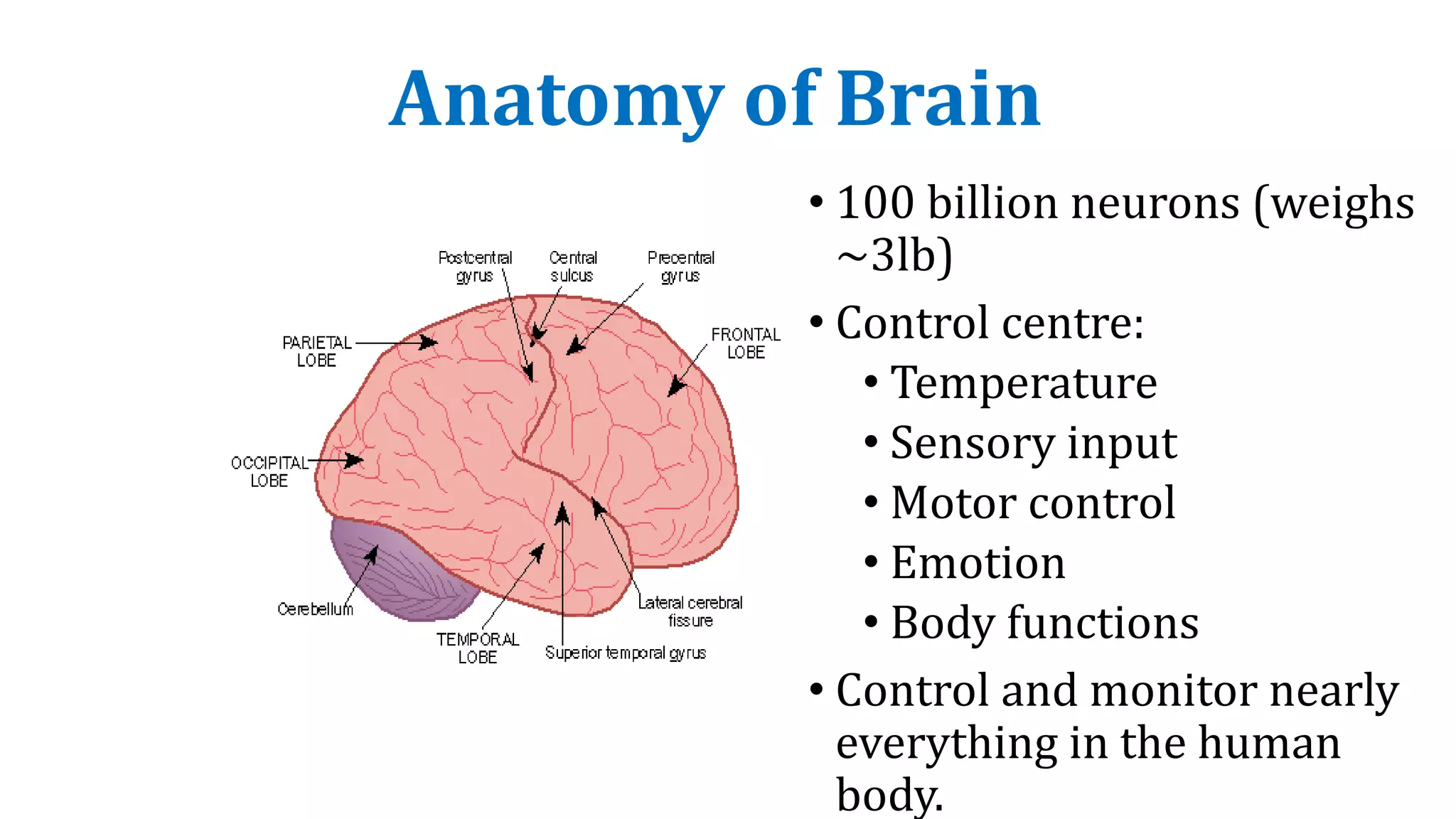
Anatomy of Brain
• 100 billion neurons (weighs
~3lb)
• Control centre:
• Temperature
• Sensory input
• Motor control
• Emotion
• Body functions
• Control and monitor nearly
everything in the human
body.
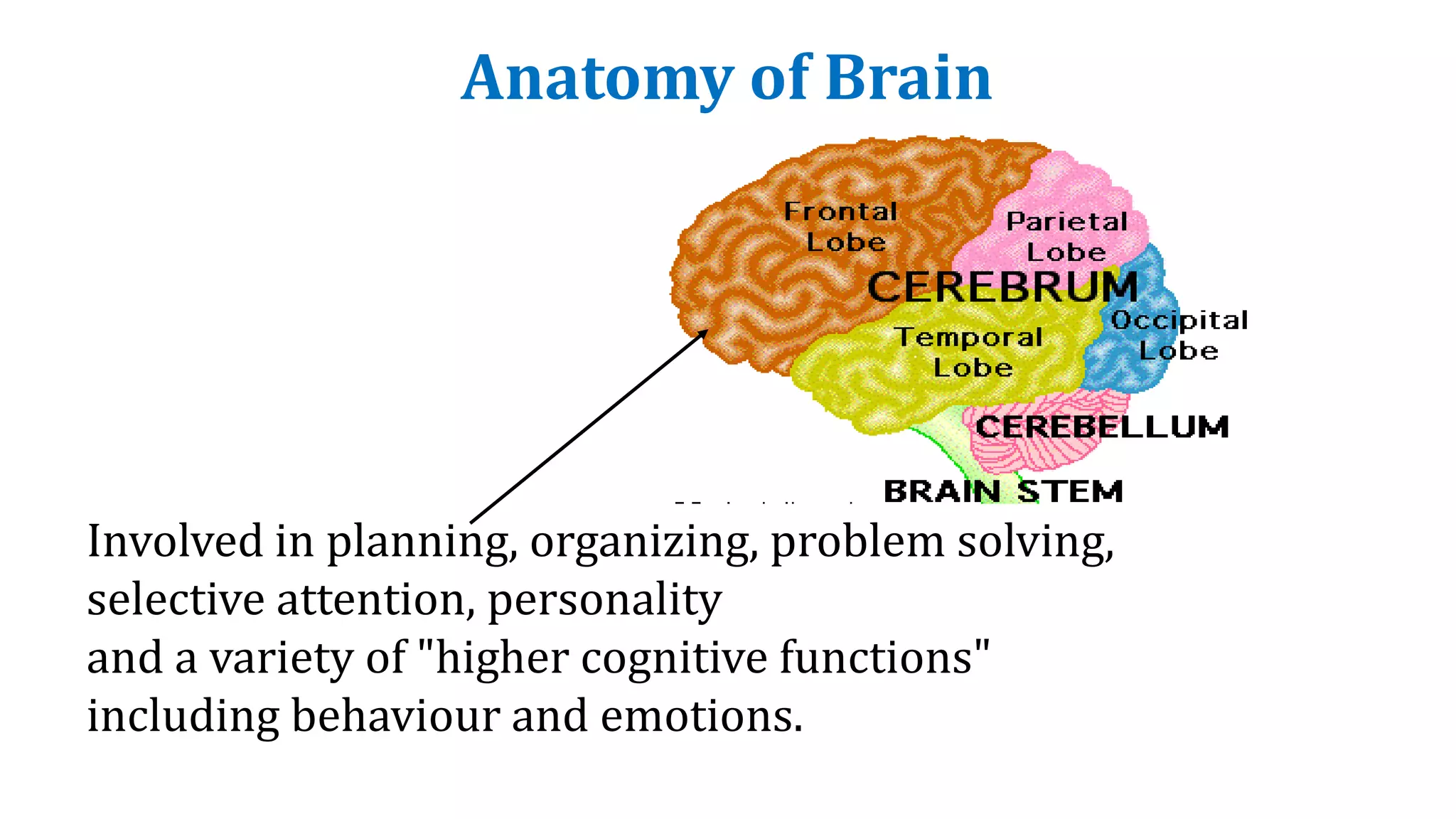
Anatomy of Brain
Involved in planning, organizing, problem solving,
selective attention, personality
and a variety of "higher cognitive functions"
including behaviour and emotions.
Anatomy of Brain
The parietal lobe
contains the primary
sensory cortex which
controls
sensation (touch,
pressure).
Anatomy of Brain
Region in the back of
the
brain which
processes
visual information.
Anatomy of Brain
These lobes allow a person to
distinguish smells and are
believed to be responsible
for short-term memory.
Action Potential of a Signal Conduction
Synapse Activity
Causes of seizure
• Sleep deprivation
• Cavernoma or cavernous malformation
• Arterio-venous malformation (AVM)
• Head injury may cause non-epileptic post-traumatic
seizures or post-traumatic epilepsy, in which the seizures
chronically recur.
• Intoxication with drugs, for example aminophylline or local
anesthetics.
• Normal doses of certain drugs that lower the seizure
threshold, such as tricyclic antidepressants.
Causes of seizure
• Infection, such as encephalitis or meningitis
• Fever leading to febrile convulsions
• Metabolic disturbances
(hypoglycaemia, hyponatremia or hypoxia)
• Withdrawal from drugs (anticonvulsants, antidepressants,
and sedatives such as alcohol, barbiturates, and benzodiazepines,)
• Space-occupying lesions in the brain (abscesses, tumors)
• Seizures during (or shortly after) pregnancy can be a sign
of eclampsia.
• Haemorrhagic stroke
Summary of Triggers of seizures
• Stress
• Exercise
• Alcohol
• Caffeine consumption
• Missed meals
• Sleep deprivation
• Metabolic disturbances
• Allergies
• Infections (fever)
• Menstruation
• Flickering lights, (sunlight,
TV, computers etc)
• Missed doses of
antiepileptic drugs
Disorders that mimic epilepsy
• Gastro-oesophageal reflux
• Breath holding spells
• Migraine
• Sleep disorders
• Cardiovascular events (cardiac arrhythmias)
• Movement disorders (shuddering attacks)
• Psychological disorders (panic or hyperventilation attacks)
Epilepsy - psychosocial issues
• Anxiety
• Impaired sense of independence
• Driving restrictions
• Insurance and employment
• Need to avoid certain activities when alone (swimming)
• Social stigma
• Embarrassment
Diagnosis and Investigation of
Epilepsy
• Clinical features – description of seizure
• Family history
• EEG (electroencephalogram)
• ECG (electrocardiogram)
• Neurological examinations
• Blood count and plasma biochemistry
• Neuroimaging
Rationale for drug treatment with
anti-epileptic medicines
Prevention
• prevent seizures
• prevent injury, brain damage
• prevent psychosocial consequences of recurrent seizures
• maximise the patient's quality of life
Acute Treatment
• Status epilepticus
• Febrile convulsions
Epilepsy – Drug Treatment
• Therapy is symptomatic – medicines inhibit seizures but a cure
for epilepsy not available
• Optimum antiepileptic medicines (AEMs) abolish seizures in up to
70% of patients with epilepsy
• Significant adverse events associated with AEDs contribute to
initial treatment failure in >40% of patients
Epilepsy – Drug Treatment
Start AEDs when impact of further seizures outweighs risks of treatment.
After first seizure
• Only 30–50% of people will have a recurrence
• Factors to consider when deciding to treat include:
• symptomatology (previous seizures may have been unrecognised, eg in complex
partial seizures)
• signs (an abnormal EEG or neurological abnormalities may indicate an increased
risk of recurrence)
• seizure type (certain syndromes are more likely to be recurrent, eg juvenile
myoclonic epilepsy, partial seizures)
• age (elderly people are at higher risk of recurrence)
• patient’s wishes
• Lowest recurrence rates are associated with a normal EEG and no identifiable
cause for seizures or when there is a clear avoidable precipitant (eg sleep
deprivation, drugs).
Epilepsy – Drug Treatment
After second seizure
• Treatment is usually indicated when 2 or more seizures have
occurred within 6–12 months.
• About 80% of people will have recurrent seizures after 2 seizures,
except when there is a clear avoidable precipitant or with some
types of seizures (Ex:- benign childhood epilepsy with
centrotemporal spikes).
Epilepsy – Drug Treatment
Selection of drug treatment,
• Establish type of seizure
• Exclude non-epileptic causes
• Consider side effects
• Interactions with patient’s other drugs
• If patient is female, likelihood of pregnancy?
• Age of patient
• Compliance – need regimen that is manageable for patient
Epilepsy – Drug Treatment
Monotherapy is preferred
• Begin with 1st line agent, increase dose gradually.
• Check compliance(non-compliance is most common cause of
treatment failure).
• Consider therapeutic drug range.
• If treatment failure occurs, swap to another 1st line agent and
gradually withdraw 1st drug.
• Consider 2nd line agent if patient resistant.
• Attempt to withdraw drug(s) slowly if no seizures within 2 to
3 years(over several weeks to months).
Epilepsy – Drug Treatment
Dosing requirement,
• Commence at low dose
• Increase dose to therapeutic doses as tolerated
• Plasma levels are a poor guide to determining therapeutic
dose
• Some patients can have adequate control at low plasma
levels
Choices of Treatment
Seizure type 1st line drug choice 2nd line drug choice
Partial Carbamazepine Phenytoin, Valproate
Gabapentin, Lamotrigine,
Levetiracetam,
Phenobarbitone, valproate
Generalised tonic-clonic Sodium Valproate
Carbamazepine
Phenytoin
Phenobarbitone
Lamotrigine,
Levetiracetam,
Absence Sodium Valproate Clonazepam, Lamotrigine
Myoclonic Sodium Valproate Clonazepam,
Levetiracetam,
Phenobarbitone
Choices of Treatment
Carbamazepine Valproate Phenytoin Levetiracetam
Adult daily dose 400-200mg 20-30mg/kg 200-500mg 1 to 3 g
Initial dose 100-200mg 15mg/kg 4-5mg/kg 250 mg
Dose schedule bd Daily to bd daily bd
Bioavailability(%) 75 to 85 100 85 to 95 100
Time to peak (hr) 4 to 8 2 to 8 4 to 8 1
Volume of
distribution (L/kg)
0.8 to 1.6 0.09 to 0.17 0.5 to 0.7 0.7 L
Protein binding 75 to 78 88 to 92 90 to 93 <10
Half life (hr) 8 to 24 6 to 16 9 to 40 7
Plasma levels mg/L 4 to 12 50 to 150 10 to 20
Types of Epilepsy
• Tonic: Stiffening of the body
• Clonic: Rhythmic jerking movements or convulsions (Clonic
phase)
Types of Epilepsy
Tonic phase:
• The person will quickly lose consciousness, and the skeletal muscles will
suddenly tense, often causing the extremities to be pulled towards the
body or rigidly pushed away from it, which will cause the person to fall if
standing.
• The tonic phase is usually the shortest part of the seizure, usually lasting
only a few seconds.
• The person may also express vocalizations like a loud moan during the
tonic stage, due to air forcefully expelled from the lungs.
Types of Epilepsy
Clonic phase:
• The person's muscles will start to contract and relax rapidly, causing
convulsions.
• These may range from exaggerated twitches of the limbs to violent
shaking or vibrating of the stiffened extremities.
• The person may roll and stretch as the seizure spreads.
• The eyes typically roll back or close and the tongue often suffers bruising
sustained by strong jaw contractions. Incontinence is seen in some cases.
Classification of Seizures
• Partial seizures:
• Here localized onset of the attack can be identified by clinical observation or
EEG
• Simple partial seizures (no loss of consciousness)
• With motor symptoms
• With sensory symptoms
• With autonomic symptoms
• Only involve one hemisphere
• Complex partial seizures (loss of consciousness)
• Simple followed by loss of consciousness
• Involves limbic systems
• los of memory
• Partial seizures secondarily generalized
Dependant on which
area of the brain
Classification of Seizures
• Unclassified:
• Classification not possible to problems with diagnosis –
suspected
• Generalised (affect whole brain with loss of consciousness)-
grand mal seizure (generalized tonic-clonic seizure):
• Clonic, tonic (1min) or tonic-clonic (2-4min): muscle spasm
(extensors), respiration stops, defecation, urinary incontinence,
salivation, violent jerks, tongue or cheek may be bitten
• Two types
1. Primary generalized tonic-clonic seizure
2. Secondary generalized tonic-clonic seizure
Classification of Generalized Seizures
• Myoclonic jerking:
• Seizures of a muscle or group of muscles
• This has been seen in wide variety of seizure
• Absence (petit mal seizures):
• Abrupt loss of awareness of surroundings, little motor
disturbance, mostly children, mild clonic jerking of the eyelid
or extremities
• It may occur 100 times a day
• Onset is 10 seconds (maximum up to 45 seconds)
Classification of Generalized Seizures
• Atonic:
• loss of muscle tone/strength (postural tone), the patient may fall
suddenly to the floor and may be injured
• Many patients with this seizure wear helmet to prevent the head
injury
• Infantile spasm:
• It is an epileptic syndrome
• Characterized by brief, recurrent myoclonic jerks of the body with
sudden flexion or extension of the body and limbs
Pathological Basis of seizure
• Abnormal electrical discharge in the brain.
• Coordinated activity among neurons depends on a
controlled balance between excitation and inhibition.
• Any local imbalance will lead to a seizure.
• Imbalances occur between glutamate-mediated excitatory
neurotransmission and gamma-aminobutyric acid (GABA)
mediated inhibitory neurotransmission.
• Generalised epilepsy is characterised by disruption of large
scale neuro-networks in the higher centres.
Pathological Basis of seizure
• Normal Processes
–Depolarising Na+ and Ca++ ionic current shifts are activated by
glutamate receptors.
–Repolarising K+ currents are mediated by GABA receptors
–Hyperpolarisation is mediated by GABAa receptors creating an
influx of Cl- => inhibition of impulse generation.
• In epilepsy
–Any defect causes the neuron to be closer to the all or none
threshold for an AP = HYPEREXCITABLE STATE.
–Leading to instability between excitation and inhibition =>
Epilepsy.
Basis of Pharmacological Mechanism
• Most anti-epileptic agents act either by blockade of
depolarisation channels (Na+ and Ca++).
• Enhancing the activity of GABA (neurotransmission
inhibition).
• Reduction of excitatory (glutamatergic) transmission.
Categories of Anti-epileptic Drugs
Classification is based upon chemistry:
• Hydantoins
• Succinimides
• Benzodiazepines
• Barbiturates
• Miscellaneous
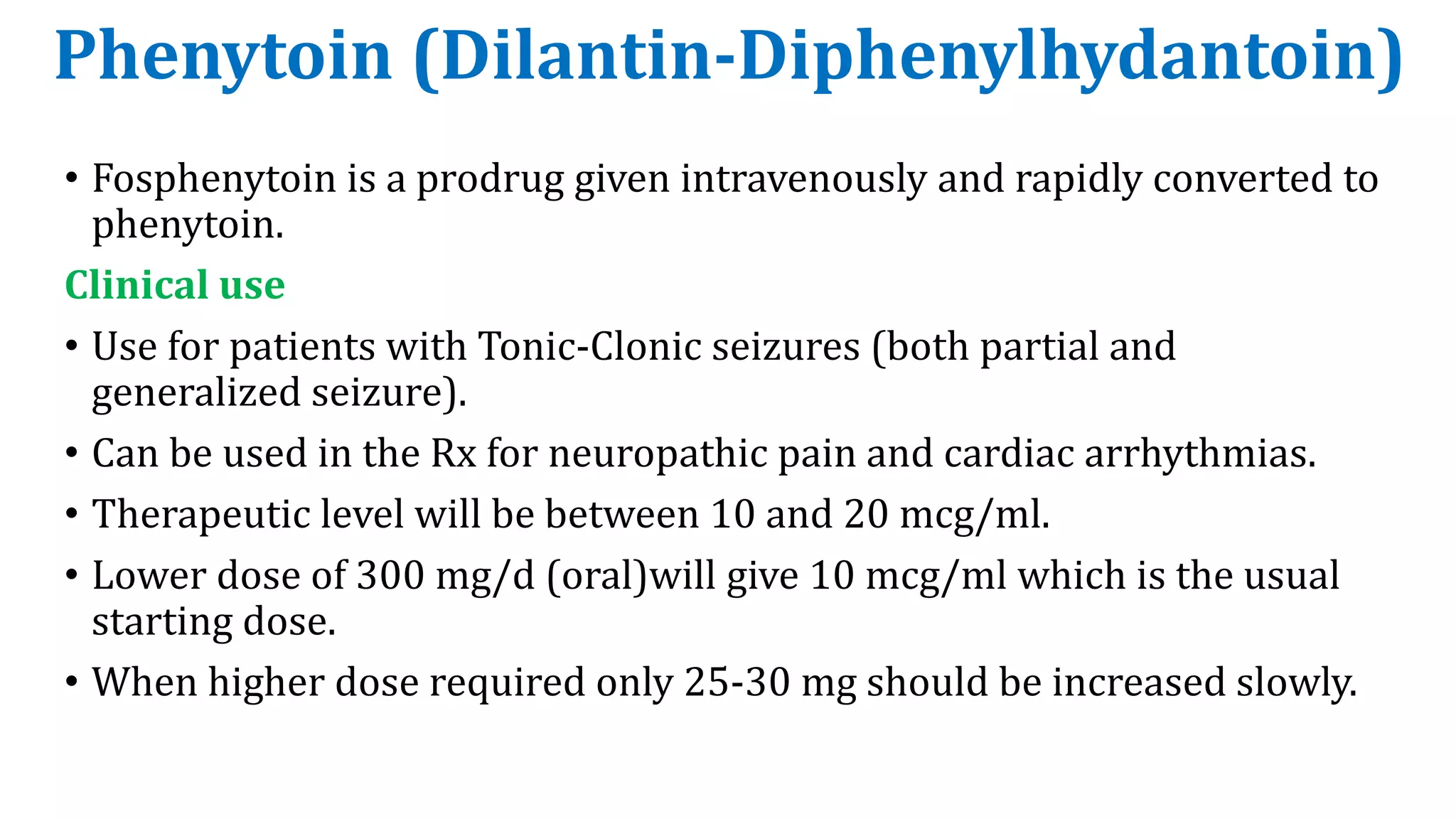
Phenytoin (Dilantin-Diphenylhydantoin)
• Fosphenytoin is a prodrug given intravenously and rapidly converted to
phenytoin.
Clinical use
• Use for patients with Tonic-Clonic seizures (both partial and
generalized seizure).
• Can be used in the Rx for neuropathic pain and cardiac arrhythmias.
• Therapeutic level will be between 10 and 20 mcg/ml.
• Lower dose of 300 mg/d (oral)will give 10 mcg/ml which is the usual
starting dose.
• When higher dose required only 25-30 mg should be increased slowly.
Phenytoin (Dilantin-Diphenylhydantoin)
Mechanism of action
• It blocks sustained-high frequency repetitive firing of action potential.
–Acts to promote intracellular removal of sodium during the
refractory period
–Antagonism (blocking) of Na+ channels to reduce excitability
–Antagonism of Ca++ channels
• This also reduce the calcium dependent release of
neurotransmitters and hormones.
• Potentiation (activation) of GABA receptors to promote the inhibitory
role of GABA.
• Inhibit the action of glutamate.
Phenytoin (Dilantin-Diphenylhydantoin)
Pharmacokinetic
• Slowly absorbed from gut, use a slow IV if rapid action is required
• Depends on formulation (particle size, additives) and dosage form
• Avoid IM – muscle damage
• Phenytoin might precipitate in muscle tissues
• Fosphenytoin is more soluble and can be administered by IM
• Highly bound to the plasma protein (90%)
• Distribute well in to the brain, liver, muscle and fat
• Metabolized by hepatic biotransformation (to inactive metabolite)
• Only small amount excreted unchanged
Phenytoin (Dilantin-Diphenylhydantoin)
Pharmacokinetic
• At lower dose elimination follows first order process but when
dose exceed very high, even with small increase in dose can
causes the accumulation of drug (steady state won’t be achieved).
• Therefore half-life is dose dependent (lower to middle dose 12 to
36 hours & higher dose >2 days.
• Can measure amount of free agent in the saliva.
Phenytoin (Dilantin-Diphenylhydantoin)
• Adverse effects:
–Nystagmus, Impaired brainstem & cerebellar function
(dizziness, tremor, nervousness, blurred vision), ataxia,
diplopia, sedation,
–Chronic congestive tissue defects (gingival hyperplasia, acne,
hirutism)
–Skin rashes, and other hypersensitivity reactions, nausea &
vomiting
–Folic acid and Vit. D deficiency (increase metabolism) which
may leads to megaloblastic anemia and osteomalacia
Phenytoin (Dilantin-Diphenylhydantoin)
• Contraindications and drug interactions:
–Increases metabolism (inducer) of the contraceptive pill, anti-
coagulants, and pethidine.
–INH inhibit the metabolism of phenytoin.
–Carbamazepine and phenobarbital increase the metabolism of
phenytoin.
–Displacement drugs such as phenybutazone and sulfonamides
can displace phenytoin from its binding site.
–Decrease in concentration of plasma protein
(hypoalbuminemia) reduce the total plasma concentration of
phenytoin but not the free drug.
Mephenytoin, Ethotoin, Phenacemide
• They are congeners of phenytoin.
• They have similar actions to phenytoin and share common
pharmacological properties.
• Patients who are allergic to phenytoin can be given ethotoin.
• Mephenytoin is metabolized to 5, 5 ethylphenyl hydantoin
which produce anti-seizure activity.
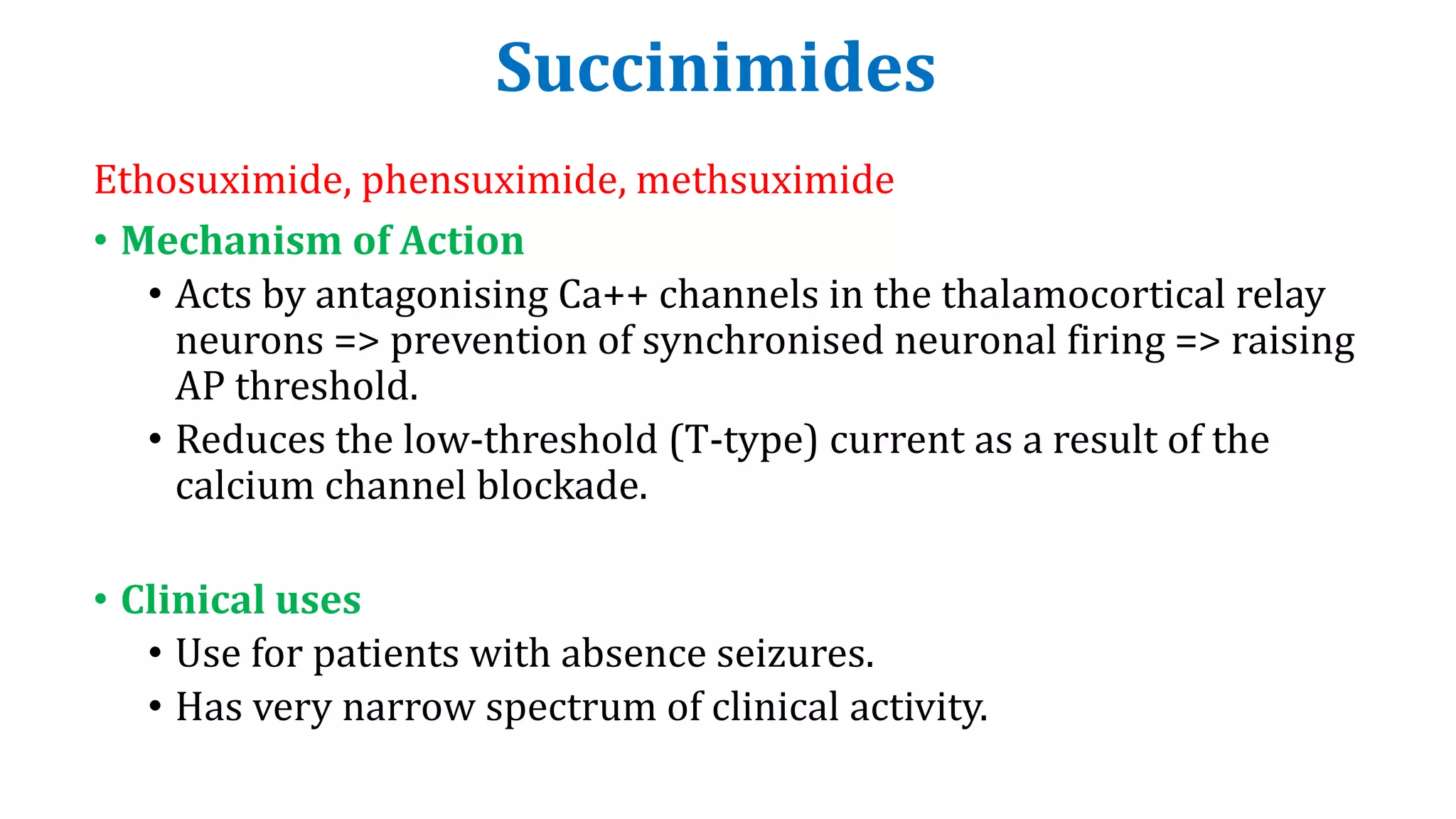
Succinimides
Ethosuximide, phensuximide, methsuximide
• Mechanism of Action
• Acts by antagonising Ca++ channels in the thalamocortical relay
neurons => prevention of synchronised neuronal firing => raising
AP threshold.
• Reduces the low-threshold (T-type) current as a result of the
calcium channel blockade.
• Clinical uses
• Use for patients with absence seizures.
• Has very narrow spectrum of clinical activity.
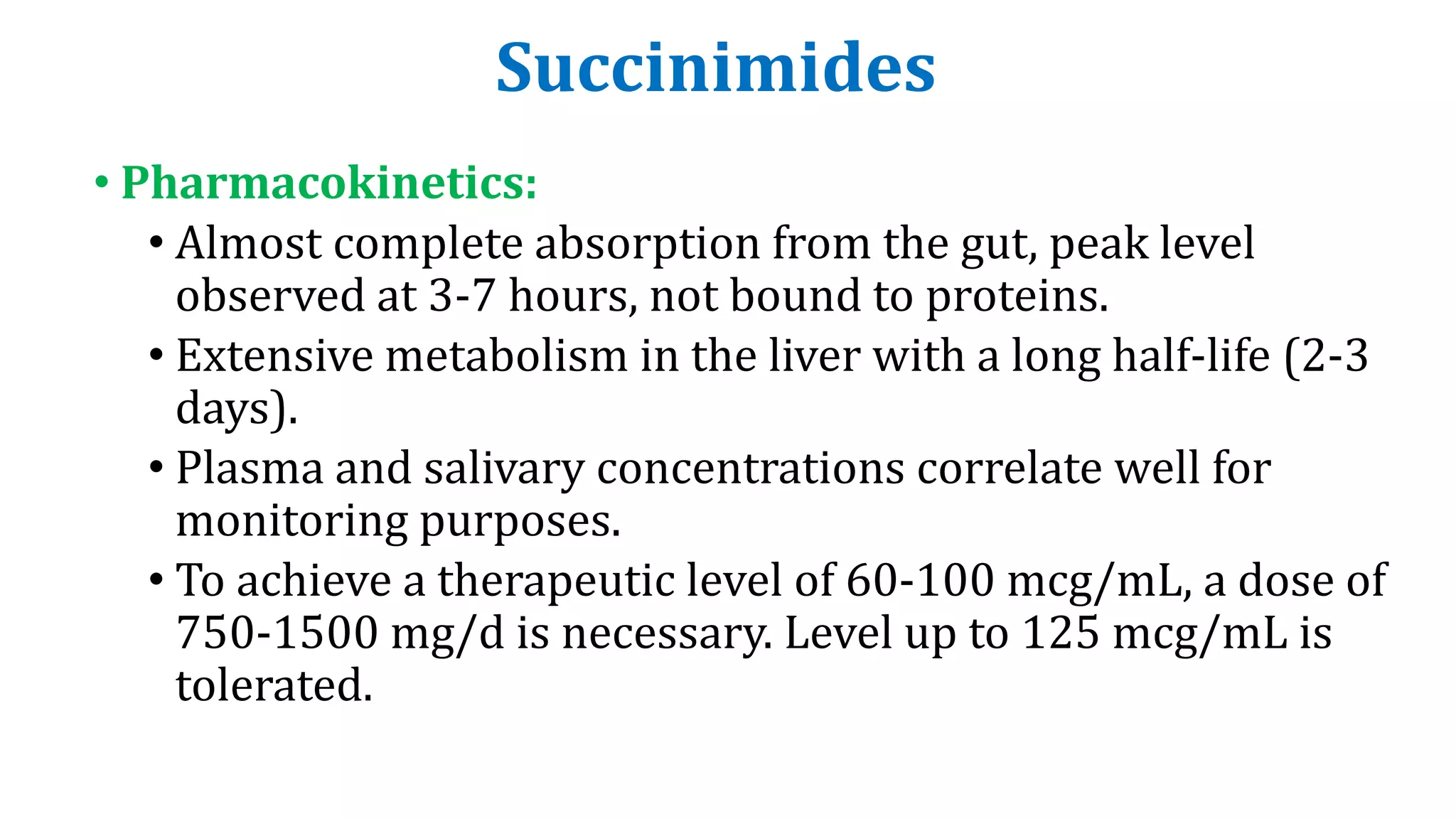
Succinimides
• Pharmacokinetics:
• Almost complete absorption from the gut, peak level
observed at 3-7 hours, not bound to proteins.
• Extensive metabolism in the liver with a long half-life (2-3
days).
• Plasma and salivary concentrations correlate well for
monitoring purposes.
• To achieve a therapeutic level of 60-100 mcg/mL, a dose of
750-1500 mg/d is necessary. Level up to 125 mcg/mL is
tolerated.
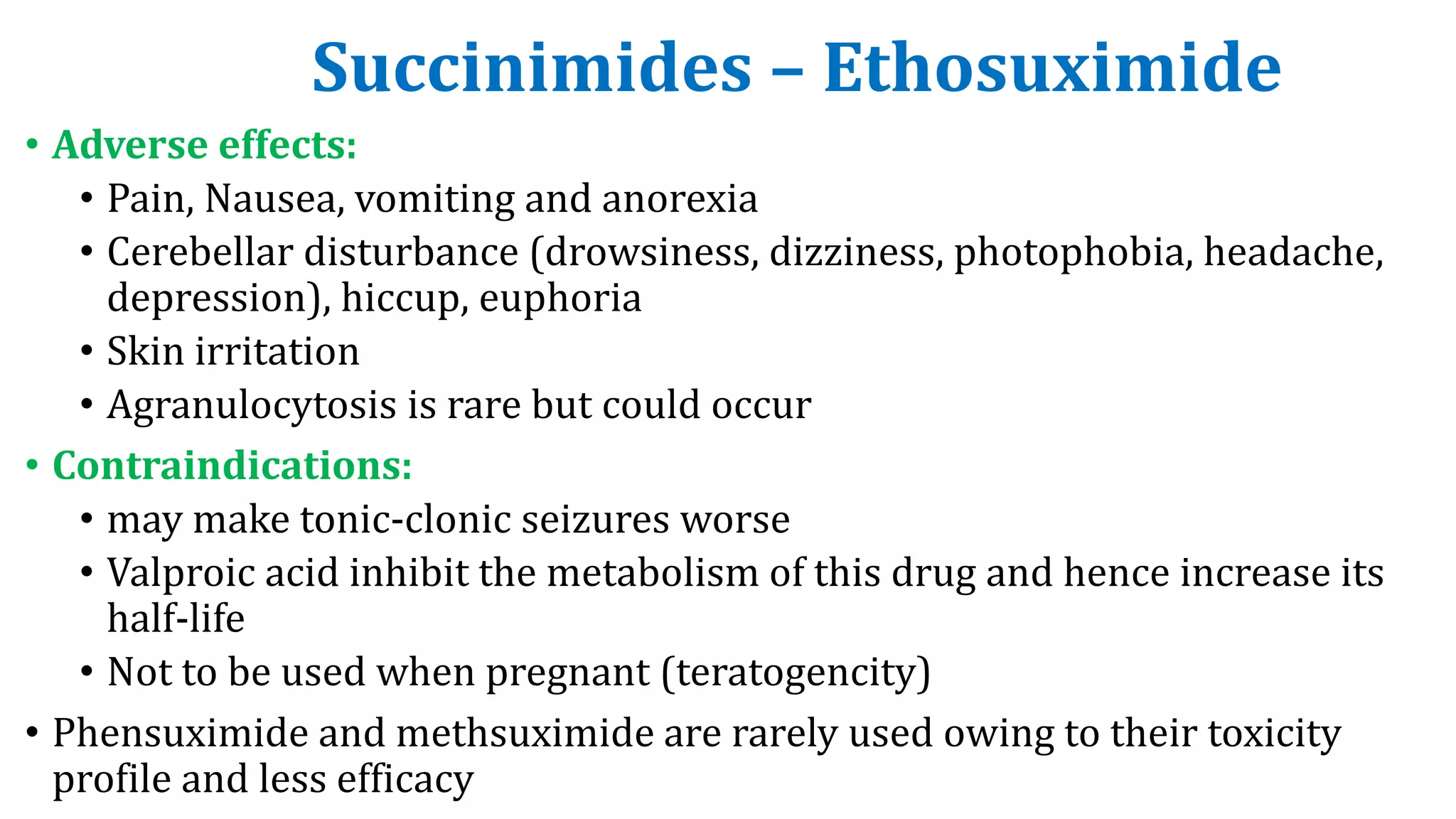
Succinimides – Ethosuximide
• Adverse effects:
• Pain, Nausea, vomiting and anorexia
• Cerebellar disturbance (drowsiness, dizziness, photophobia, headache,
depression), hiccup, euphoria
• Skin irritation
• Agranulocytosis is rare but could occur
• Contraindications:
• may make tonic-clonic seizures worse
• Valproic acid inhibit the metabolism of this drug and hence increase its
half-life
• Not to be used when pregnant (teratogencity)
• Phensuximide and methsuximide are rarely used owing to their toxicity
profile and less efficacy
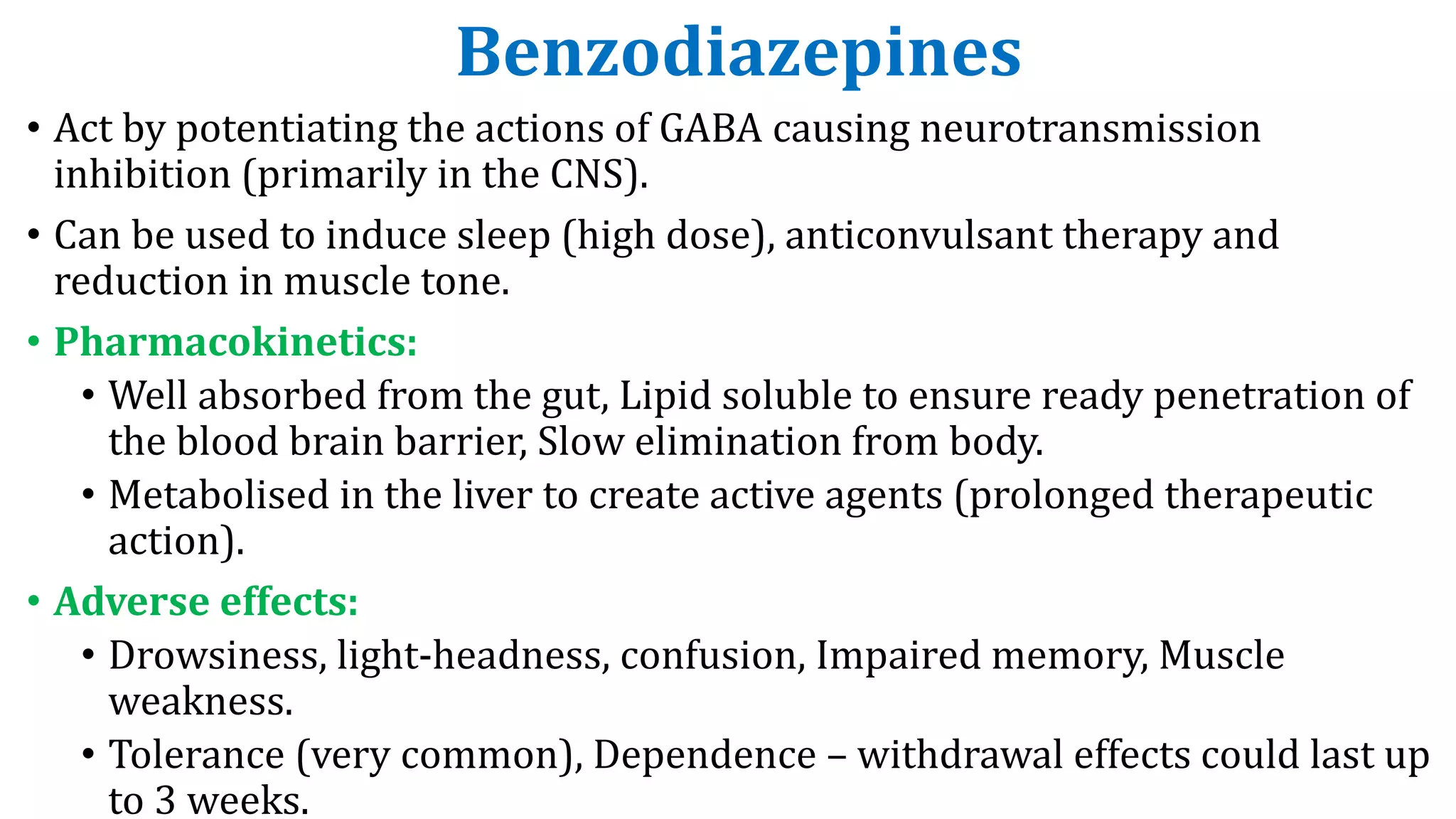
Benzodiazepines
• Act by potentiating the actions of GABA causing neurotransmission
inhibition (primarily in the CNS).
• Can be used to induce sleep (high dose), anticonvulsant therapy and
reduction in muscle tone.
• Pharmacokinetics:
• Well absorbed from the gut, Lipid soluble to ensure ready penetration of
the blood brain barrier, Slow elimination from body.
• Metabolised in the liver to create active agents (prolonged therapeutic
action).
• Adverse effects:
• Drowsiness, light-headness, confusion, Impaired memory, Muscle
weakness.
• Tolerance (very common), Dependence – withdrawal effects could last up
to 3 weeks.
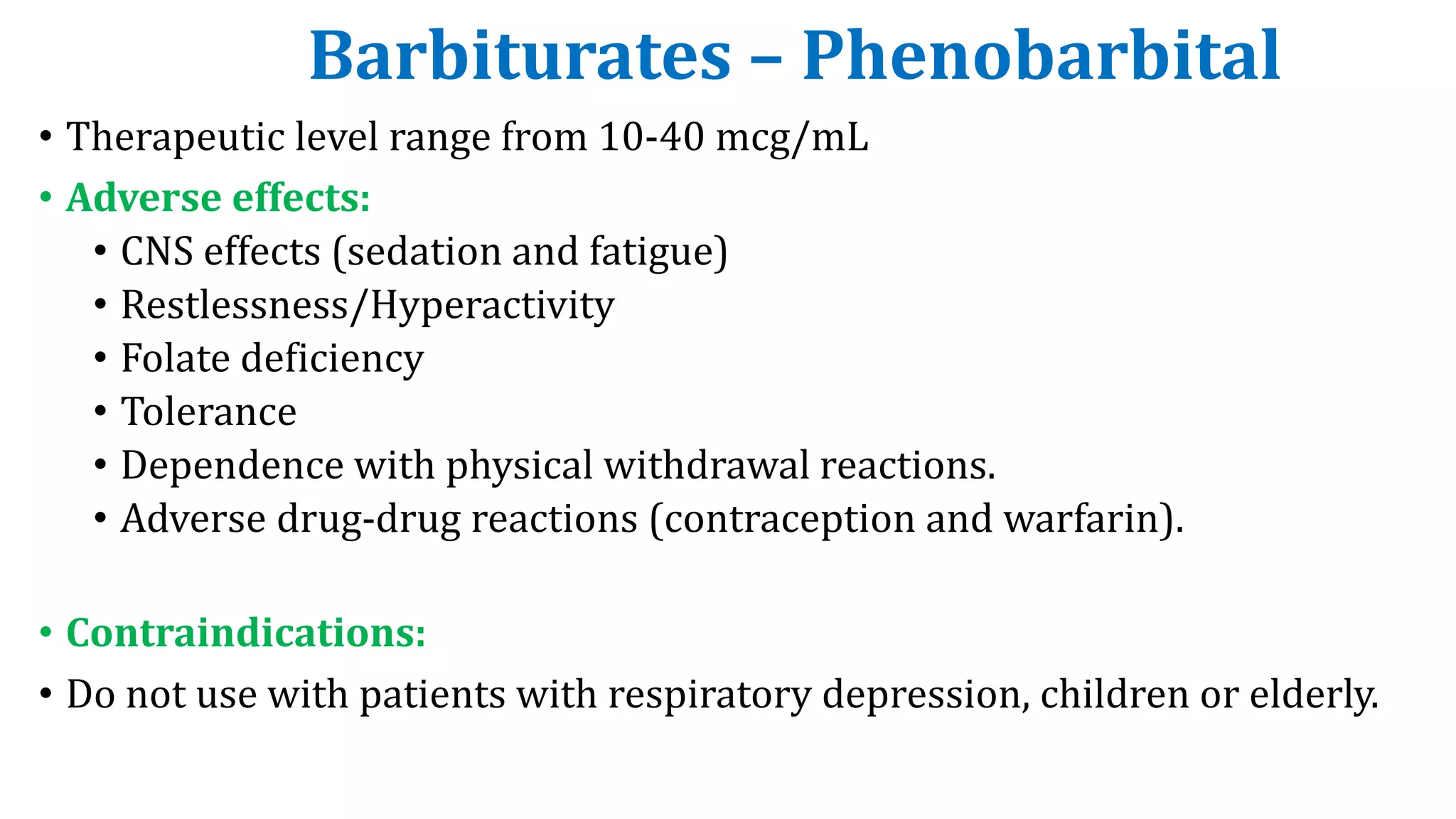
Barbiturates – Phenobarbital
• Used for tonic-clonic seizures (partial and generalized).
• Mechanism of action:
• Act by increasing the duration of Cl- ion channel opening by activating
neuronal GABAa receptors.
• Causing hyperpolarisation of the AP, making it less likely to fire again
• Essentially, acts like GABA and can even potentiate the effects of GABA
when present.
• Pharmacokinetics:
• Almost complete absorption.
• Elimination is by heptic and renal (25% excreted unchanged).
• Biotransformed in the liver into 2 active metabolites.
• Plasma concentrations relate poorly to seizure control, use only for
monitoring of patient compliance.
Barbiturates – Phenobarbital
• Therapeutic level range from 10-40 mcg/mL
• Adverse effects:
• CNS effects (sedation and fatigue)
• Restlessness/Hyperactivity
• Folate deficiency
• Tolerance
• Dependence with physical withdrawal reactions.
• Adverse drug-drug reactions (contraception and warfarin).
• Contraindications:
• Do not use with patients with respiratory depression, children or elderly.
Primidone
• Primidone is metabolized (by oxidation) to phenobarbital and
phenylethylmalonamide (PEMA)-All these are active compounds.
• In infants the drug is slowly metabolized.
• Action is much similar to phenytoin.
• It is effective against partial and generalize seizures.
• Completely absorbed orally, Vd=0.6 L/kg, 70% of the drug unbound to
plasma proteins.
• Half-life 6-8 hours.
• Therapeutic level is 8-12 mcg/mL (dose f 10-20 mg/kg/d is necessary to
achieve this level).
• Adverse effects are dose related and resemble phenobarbital’s adverse
effects.
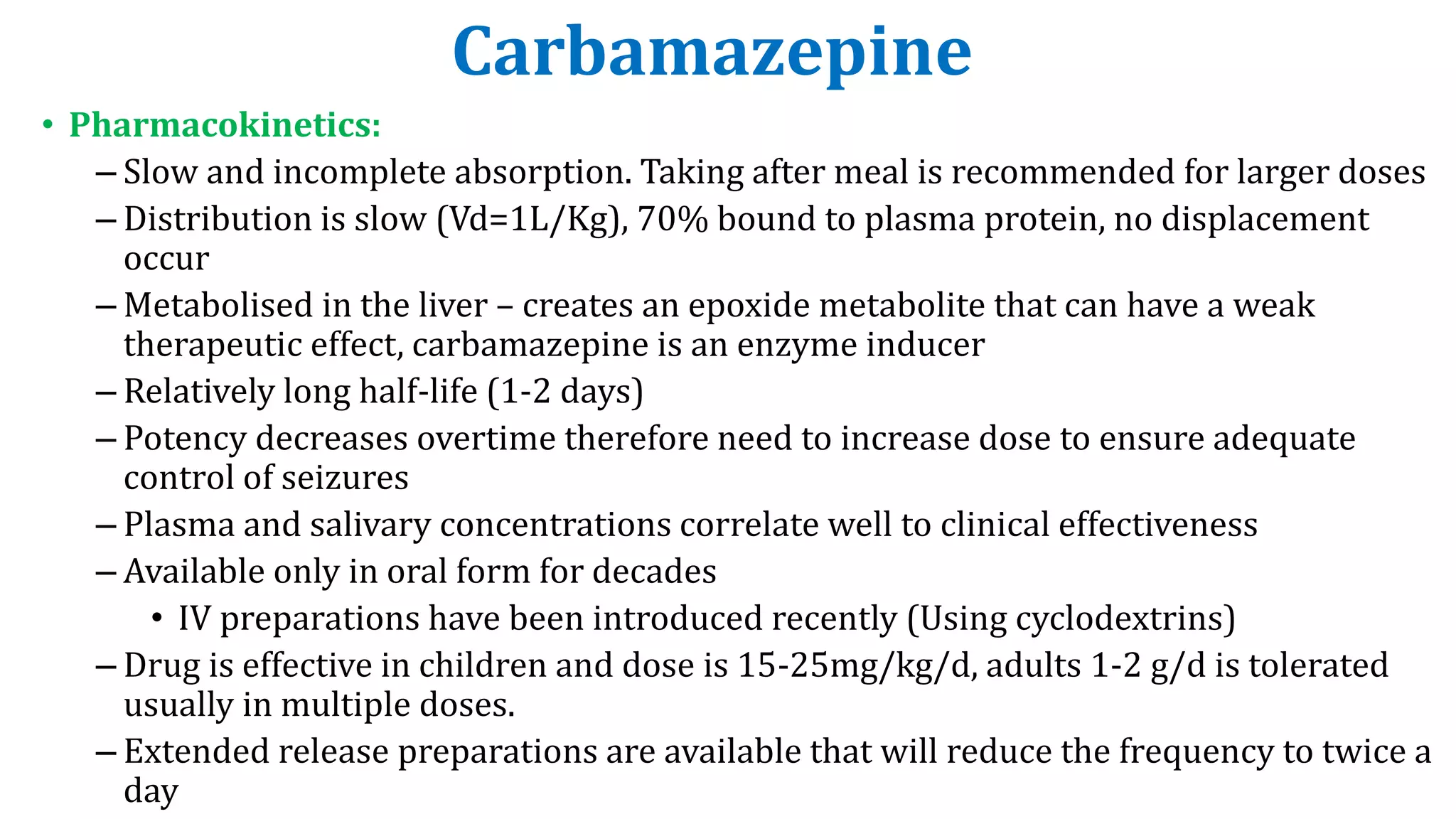
Carbamazepine
• Structurally similar to imipramine (tricyclic antidepressant).
• Effective in treatment of bipolar depression.
• Also used in most epilepsy types.
• Mechanism of Action:
• Not fully understood
• But believed to be related to antagonist action of Na+ channels to
inhibit high frequency repetitive neuronal firing.
• Decreasing the production (or release) of glutamate (excitatory
chemical).
• Clinical uses:
• In partial and generalized tonic-clonic seizure.
• Can also be used in the Rx of neuropathic pain.
• Non-sedative action.
Carbamazepine
• Pharmacokinetics:
– Slow and incomplete absorption. Taking after meal is recommended for larger doses
– Distribution is slow (Vd=1L/Kg), 70% bound to plasma protein, no displacement
occur
– Metabolised in the liver – creates an epoxide metabolite that can have a weak
therapeutic effect, carbamazepine is an enzyme inducer
– Relatively long half-life (1-2 days)
– Potency decreases overtime therefore need to increase dose to ensure adequate
control of seizures
– Plasma and salivary concentrations correlate well to clinical effectiveness
– Available only in oral form for decades
• IV preparations have been introduced recently (Using cyclodextrins)
– Drug is effective in children and dose is 15-25mg/kg/d, adults 1-2 g/d is tolerated
usually in multiple doses.
– Extended release preparations are available that will reduce the frequency to twice a
day
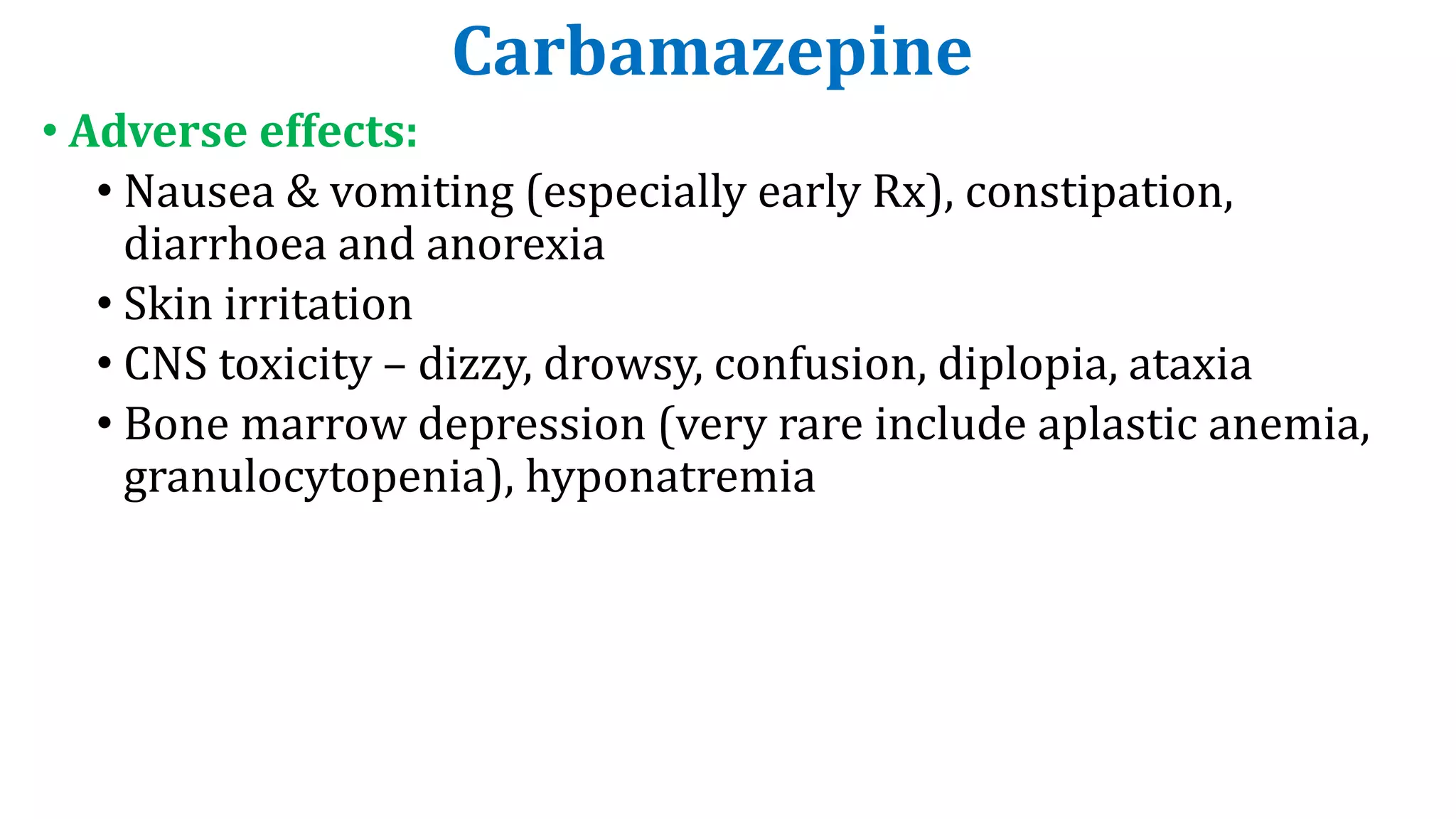
Carbamazepine
• Adverse effects:
• Nausea & vomiting (especially early Rx), constipation,
diarrhoea and anorexia
• Skin irritation
• CNS toxicity – dizzy, drowsy, confusion, diplopia, ataxia
• Bone marrow depression (very rare include aplastic anemia,
granulocytopenia), hyponatremia
Carbamazepine
• Contraindications and drug interactions:
• Enzyme inducer (increase metabolism of primidone, phenytoin,
ethosuximide, valproic acid, clonazepam).
• Drugs that inhibit carbamazepine clearance and metabolism
(propoxyphene, valproic acid).
• Drugs that increases the metabolism of
Carbamazepine(phenytoin, phenobarbital).
Oxcarbazepine
• Similar in actions and pharmacological properties to
carbamazepine but have less toxicity.
• Half life 1-2 hours.
• Hypersensitivity reaction is very rare and no cross-reactivity.
• Less enzyme induction effect.
• Hyponatremia is common than carbamazepine.
• Oxcarbazepine and its active metabolite are excreted in human
breast milk. Because of the potential for serious adverse
reactions to oxcarbazepine in nursing infants, a decision should
be made about whether to discontinue nursing or to discontinue
the drug in nursing women.
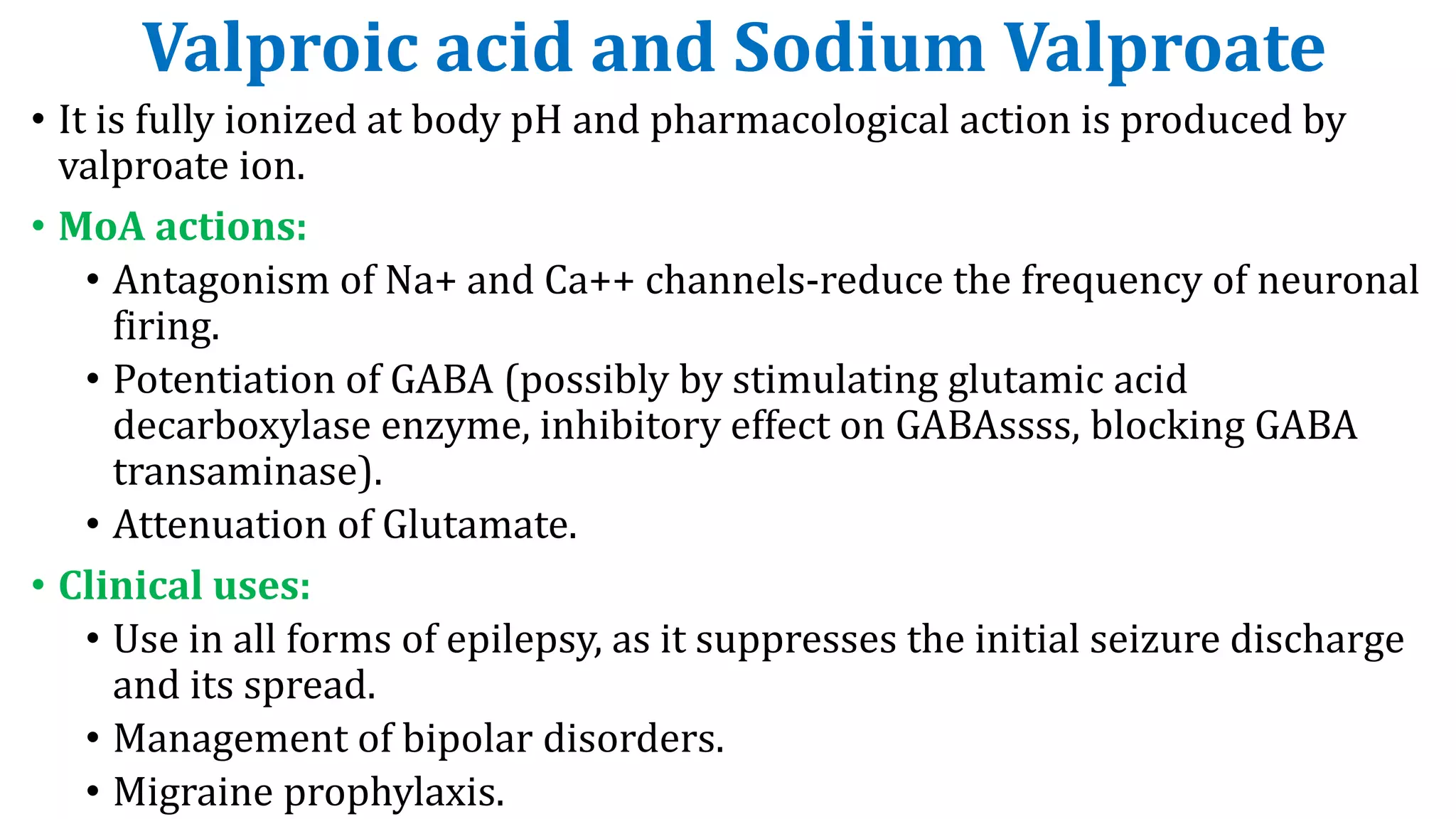
Valproic acid and Sodium Valproate
• It is fully ionized at body pH and pharmacological action is produced by
valproate ion.
• MoA actions:
• Antagonism of Na+ and Ca++ channels-reduce the frequency of neuronal
firing.
• Potentiation of GABA (possibly by stimulating glutamic acid
decarboxylase enzyme, inhibitory effect on GABAssss, blocking GABA
transaminase).
• Attenuation of Glutamate.
• Clinical uses:
• Use in all forms of epilepsy, as it suppresses the initial seizure discharge
and its spread.
• Management of bipolar disorders.
• Migraine prophylaxis.
Valproic acid and Sodium Valproate
• Pharmacokinetics:
• Well absorbed from gut (should be taken with food to counteract gastric irritation),
oral bioavailability is 80%
• Food delays the absorption
• 90% bound to plasma protein, Vd=0.15 L/kg, distribution is only confined to the water
• Extensively metabolised in the liver, clearance is very quick (9-18 hours of half-life)
• The tablet of sodium valproate is hygroscopic but not magnesium salt, sodium salt
preparation also available as syrup for pediatric use, enteric coated preparation also
available
• Rapidly transported across the blood brain barrier
• Monitor plasma concentration for patient compliance only
• Dosage 25-30 mg/kg/d up to or more than 60/mg/kg/d also required in some cases
• Therapeutic level is around 50-100 mcg/mL
Valproic acid and Sodium Valproate
• Adverse effects:
• GI upset (Nausea, vomiting, anorexia, abdominal pain and diarrhoea)
• Weight gain (appetite stimulation)
• Transient hair loss
• Fine tremor at higher dose
• Coma (rare)
• Thrombocytopenia (platelets)
• Oedema
• Severe hepatotoxicity (liver damage)-deaths have been reported
• Some clinicians start oral or IV L-carnitine once they suspect
severe hepatitis.
• Careful monitoring of liver function is necessary.
• Rarely spina bifida in the off-spring.
Valproic acid and Sodium Valproate
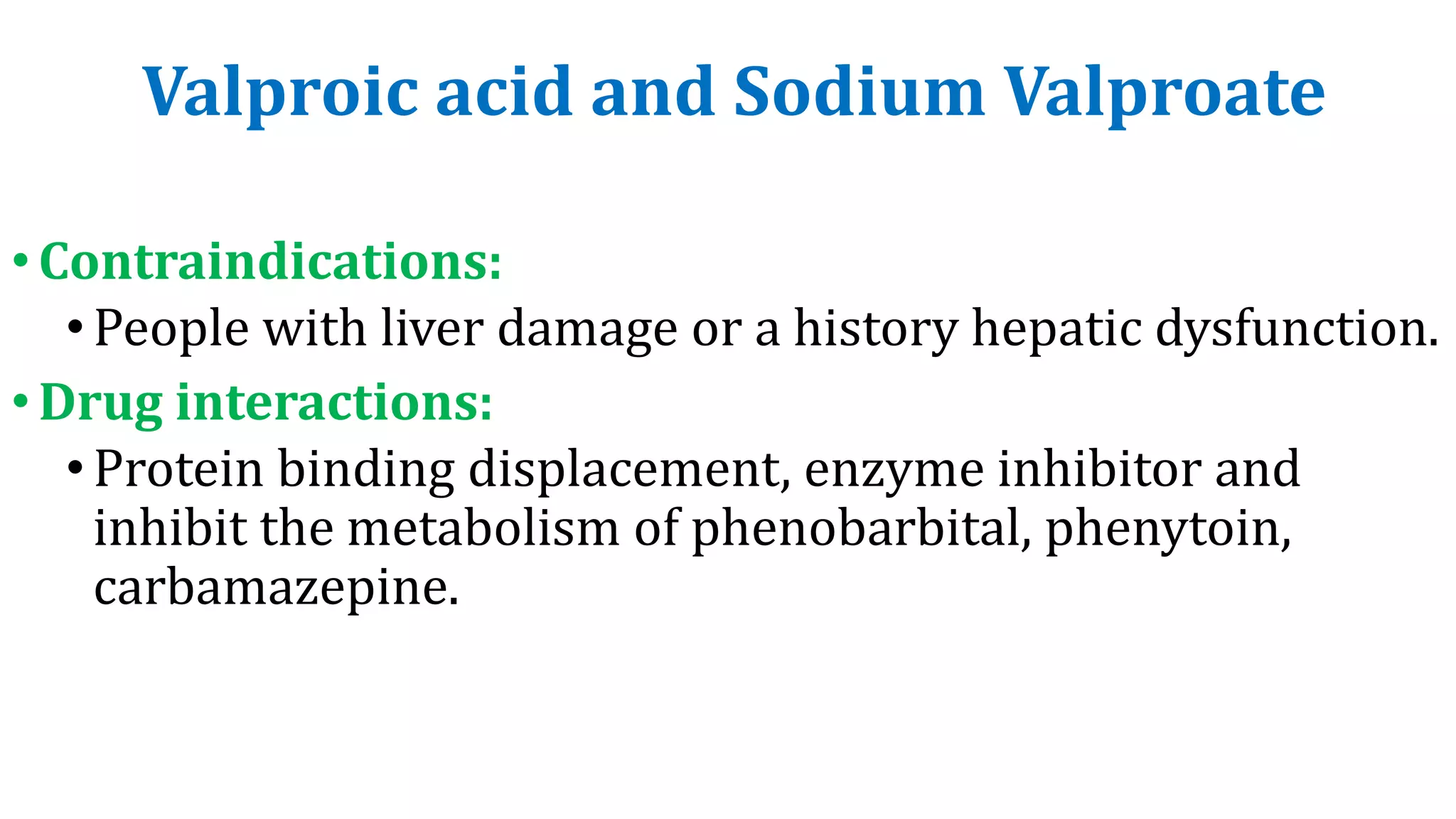
•Contraindications:
•People with liver damage or a history hepatic dysfunction.
•Drug interactions:
•Protein binding displacement, enzyme inhibitor and
inhibit the metabolism of phenobarbital, phenytoin,
carbamazepine.
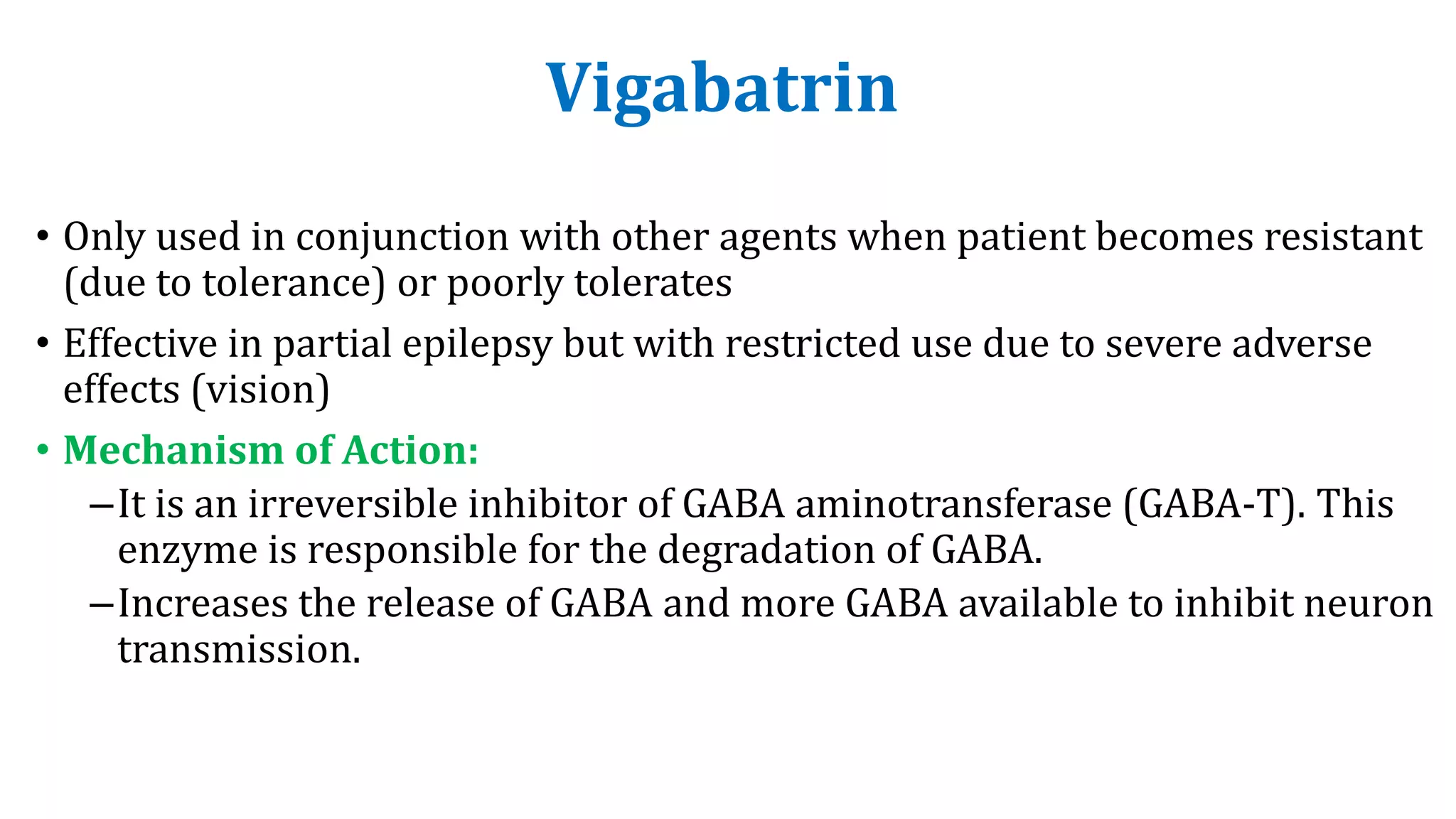
Vigabatrin
• Only used in conjunction with other agents when patient becomes resistant
(due to tolerance) or poorly tolerates
• Effective in partial epilepsy but with restricted use due to severe adverse
effects (vision)
• Mechanism of Action:
–It is an irreversible inhibitor of GABA aminotransferase (GABA-T). This
enzyme is responsible for the degradation of GABA.
–Increases the release of GABA and more GABA available to inhibit neuron
transmission.
Vigabatrin
• Pharmacokinetics:
–Rapidly absorbed from the gut, usual oral dose is 500 mg bd
–Excreted unchanged by renal processes
–Intermediate half-life (6-8 hrs)
–Blood concentrations are of no value.
• Adverse effects:
• Sedation, fatigue, dizziness, nervousness, irritability, depression,
impaired concentration, tremor (CNS effects)
• Psychotic reactions (check patient history)
• Visual defects after prolonged use
• Weight gain and oedema
Lamotrigine
• Used for partial seizures in adults only (focal epilepsy).
• Mechanism of Action:
• Acts by the inhibition (antagonism) of neuronal Na+ channels but is
highly selective (only neurons that synthesise glutamate and
aspartate) and reduce the frequency of voltage firing
• Additionally, decrease glutamate release
• Pharmacokinetics:
• well absorbed, well distributed, protein binding is only about 55%,
extensively metabolised in the liver and has a long half-life.
• Half-life is 24 hours.
Lamotrigine
• Adverse effects:
• Fever, influenza-like symptoms
• Skin irritation
• GI disturbances (vomiting, diarrhoea)
• CNS effects (drowsiness, headache, dizziness, double
vision)
• Contraindications:
• Patients with hepatic impairment
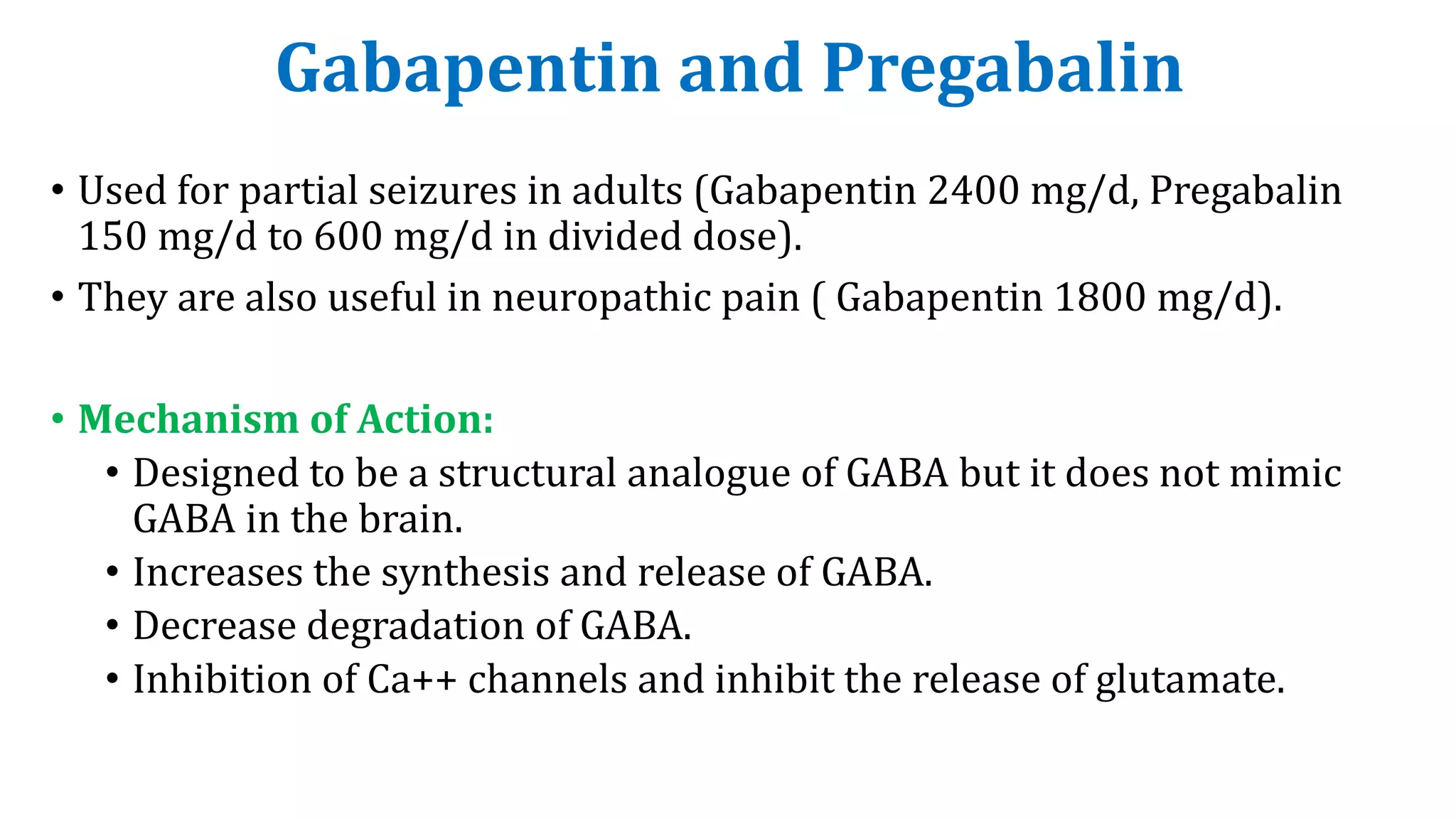
Gabapentin and Pregabalin
• Used for partial seizures in adults (Gabapentin 2400 mg/d, Pregabalin
150 mg/d to 600 mg/d in divided dose).
• They are also useful in neuropathic pain ( Gabapentin 1800 mg/d).
• Mechanism of Action:
• Designed to be a structural analogue of GABA but it does not mimic
GABA in the brain.
• Increases the synthesis and release of GABA.
• Decrease degradation of GABA.
• Inhibition of Ca++ channels and inhibit the release of glutamate.
Gabapentin and Pregabalin
• Pharmacokinetics:
• Incompletely absorbed in the gut, Excreted unchanged via kidney
processes
• Short half-life, Gabapentin dose of up to 4800 mg/d is tolerated
• Adverse effects:
• CNS effects (dizzy, drowsy, fatigue, headache, double visions)
• Nausea and vomiting
• Contraindication:
• Be careful with sudden withdrawal in the elderly due to kidney effects
and alterations in acid-base balance.
Miscellaneous Drugs
• Felbamate:
• It blocks NMDA receptor and potentiate GABA receptor
• Effective in partial seizure
• But it causes aplastic anemia and severe hepatitis
• Levetiracetam:
• It modifies the release of glutamate and GABA by acting on the synaptic
vesicular function
• Used in partial seizure
• Tiagabine:
• It is a GABA reuptake inhibitor
• Adjunctive treatment of partial seizure
Miscellaneous Drugs
• Topiramate:
• Block the sodium channel and reduce the frequency of neuronal
firing
• It also potentiate the GABA action
• It is effective against both partial and generalized tonic-clonic
seizure
• Zonisamide:
• It blocks sodium and calcium channels
• Effective against both partial and generalized seizures
• Trimethadione
• Acetazolamide
FDA Alert
Carbamazepine, Gabapentin, Lamotrigine, Levetiracetam
Now all have FDA Alert :
Suicidal Behaviour and Ideation and Antiepileptic Drugs
The association is controversial and the benefits will often outweigh the
risks in epilepsy; the risk–benefit may be less certain in other conditions.
www.fda.gov/ohrms/dockets/ac/08/briefing/2008-4372b1-01-FDA.
Other risks
Fracture risk
• Patients with epilepsy are at increased risk of fractures as a result of:
• Falls due to seizures.
• Adverse effects of antiepileptics, Ex:- reduced BMD (particularly
with barbiturates, carbamazepine, phenytoin and valproate) and
CNS effects that increase risk of falling.
• Consider fall prevention strategies and BMD monitoring during long-
term treatment; ensure adequate vitamin D and calcium intake.
Special areas for considerations for
AEMs
• Status epilepticus
• Epilepsy in women
Epilepsy in Women
Women of child-bearing age
• Discuss possibility of pregnancy before selecting an AEM.
• Risks of unplanned treatment withdrawal.
Contraception
• Several AEMs (carbamazepine, phenytoin, barbiturates)
induce hepatic enzymes and increase metabolism of OCP
• Use high dose combined oral contraceptive or
medroxyprogesterone depot but still risk of failure.
• Non-hormonal contraception is preferable.
Pregnancy and epilepsy
• Literature reviews indicate that anticonvulsants are associated
with an increase in congenital defects. However the benefits in
preventing maternal seizures with the use of medication are
thought to outweigh the risk to the infant .
• The use of more than one antiepileptic drug carries a higher risk
of birth defects.
• Monitoring anticonvulsant therapy throughout the course of the
pregnancy will be important, and dose adjustments should be
made based on serum concentration, frequency of seizures, and
adverse effects/tolerability.
Cleft lip and/or palate
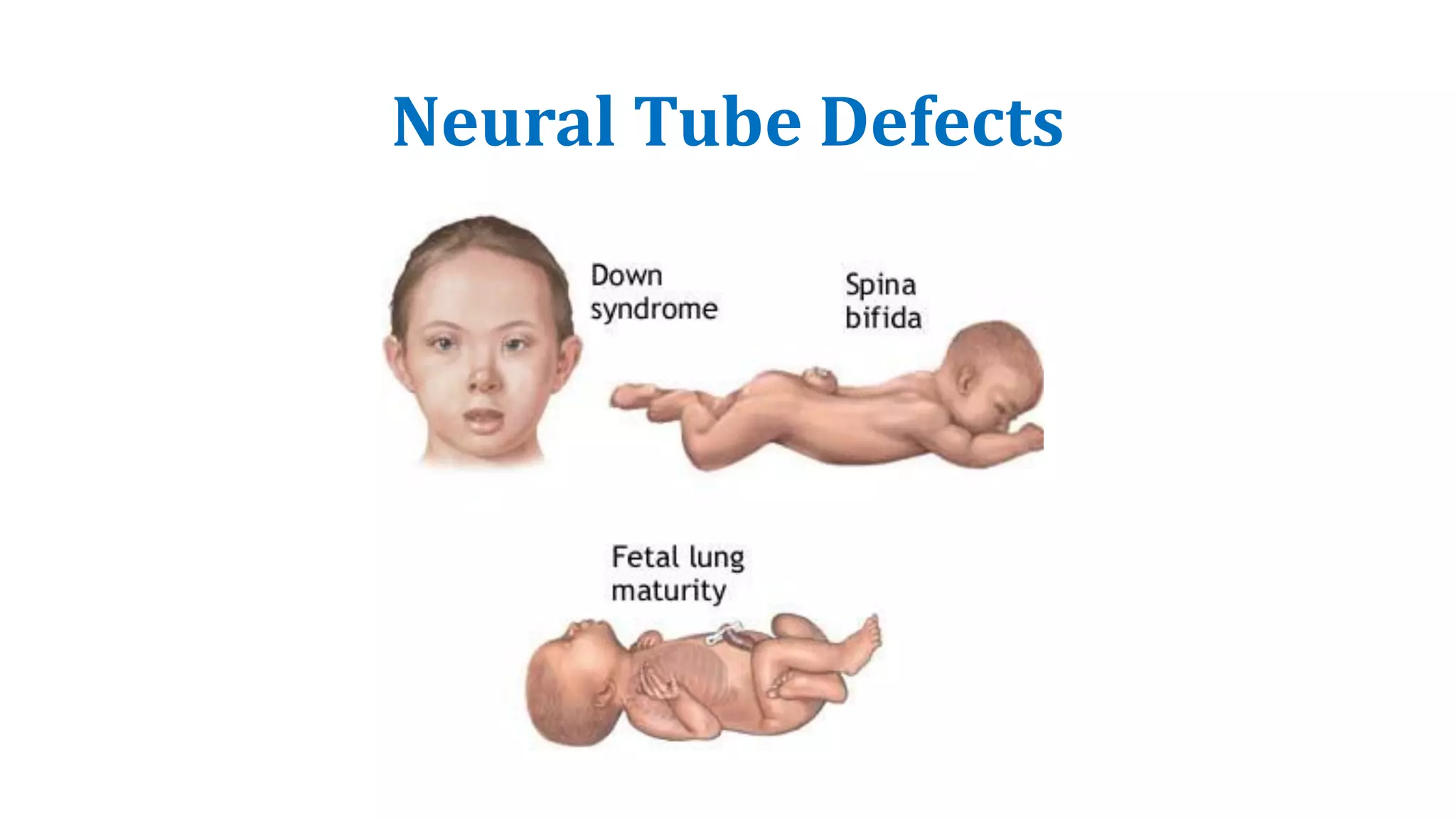
Neural Tube Defects
Pregnancy and epilepsy
Treatment aims,
• Avoid sodium valproate, especially >1200mg/day.
• Best choice of treatment is the drug that best controls the
epilepsy, at the lowest effective dose, in monotherapy if possible.
• Some AEMs interfere with folic acid metabolism, -need to
supplement with folic acid starting at least 1 month before and
for 3 months after conception at 5mg daily.
Role of the Pharmacist
Counselling on:
• Importance of compliance. Emphasise that AEDs should not be stopped abruptly -
increased seizures and status epilepticus may occur
• When withdrawing treatment, reduce the dosage of antiepileptic drugs over several
weeks to months
• Adverse drug reactions
• Monitor outcomes of drug therapy
• Drug interactions
• Monitoring
• Reduce stigmatisation
• Issues with driving
• Seizure. 1998 Aug;7(4):305-8. Driving and epilepsy in Sri Lanka. Seneviratne SL,
Gunatilake SB, Adhikari AA, De Silva HJ. Department of Medicine, Faculty of Medicine,
University of Kelaniya, Ragama, Sri Lanka.
References
• Bennet p.n., Brown M.J & Sharma P., Clinical Pharmacology; 11th
edition; Chapter 21; Page 349-359.
• Katzung B.G., Masters S.B & Trevor A.J., Basic & Clinical
Pharmacology; 12th edition; Chapter 27; Page 399 - 422.
THANK YOU!

Anticonvulsives

  • 1.
    Antiseizure Drugs Ms. K.D.S.V.Karunanayaka (B.Pharm) Department of Pharmacy Faculty of Health Sciences The Open University Sri Lanka
  • 2.
    Out line • Epilepsy •Anatomy of Brain • Diagnosis & triggers • Classification of epilepsy • Common drugs used to treat epilepsy
  • 3.
    Who am I- Famous epileptics
  • 4.
    Epilepsy • One personin 20 will have an epileptic seizure at some time in their life. • Epilepsy is diagnosed on the basis of two or more epileptic seizures. • Around 450,000 people in the UK have epilepsy (40 million people worldwide). • Approximately 1% of the world’s population has epilepsy. • Second most common neurologic disorder after stroke. (National Society for Epilepsy UK)
  • 5.
    Epilepsy • Epilepsy isusually controlled, but cannot be cured with medication, although surgery may be considered in difficult cases. • However, over 30% of people with epilepsy do not have seizure control even with the best available medications. • Not all epilepsy syndromes are lifelong – some forms are confined to particular stages of childhood. • Epilepsy should not be understood as a single disorder, but rather as syndromic with vastly divergent symptoms but all involving episodic abnormal electrical activity in the brain. • Underlying causes of seizure should be identified and treated before starting with anti-seizure drugs.
  • 6.
    Convulsion • A convulsionis a medical condition where body muscles contract and relax rapidly and repeatedly, resulting in an uncontrolled shaking of the body. • Because a convulsion is often a symptom of an epileptic seizure, the term convulsion is sometimes used as a synonym for seizure. • However, not all epileptic seizures lead to convulsions, and not all convulsions are caused by epileptic seizures. • Convulsions are also consistent with an electric shock. • Convulsions may also be referred to as "fits" in some instances.
  • 7.
  • 8.
    Anatomy of Brain •100 billion neurons (weighs ~3lb) • Control centre: • Temperature • Sensory input • Motor control • Emotion • Body functions • Control and monitor nearly everything in the human body.
  • 9.
    Anatomy of Brain Involvedin planning, organizing, problem solving, selective attention, personality and a variety of "higher cognitive functions" including behaviour and emotions.
  • 10.
    Anatomy of Brain Theparietal lobe contains the primary sensory cortex which controls sensation (touch, pressure).
  • 11.
    Anatomy of Brain Regionin the back of the brain which processes visual information.
  • 12.
    Anatomy of Brain Theselobes allow a person to distinguish smells and are believed to be responsible for short-term memory.
  • 13.
    Action Potential ofa Signal Conduction
  • 14.
  • 15.
    Causes of seizure •Sleep deprivation • Cavernoma or cavernous malformation • Arterio-venous malformation (AVM) • Head injury may cause non-epileptic post-traumatic seizures or post-traumatic epilepsy, in which the seizures chronically recur. • Intoxication with drugs, for example aminophylline or local anesthetics. • Normal doses of certain drugs that lower the seizure threshold, such as tricyclic antidepressants.
  • 16.
    Causes of seizure •Infection, such as encephalitis or meningitis • Fever leading to febrile convulsions • Metabolic disturbances (hypoglycaemia, hyponatremia or hypoxia) • Withdrawal from drugs (anticonvulsants, antidepressants, and sedatives such as alcohol, barbiturates, and benzodiazepines,) • Space-occupying lesions in the brain (abscesses, tumors) • Seizures during (or shortly after) pregnancy can be a sign of eclampsia. • Haemorrhagic stroke
  • 17.
    Summary of Triggersof seizures • Stress • Exercise • Alcohol • Caffeine consumption • Missed meals • Sleep deprivation • Metabolic disturbances • Allergies • Infections (fever) • Menstruation • Flickering lights, (sunlight, TV, computers etc) • Missed doses of antiepileptic drugs
  • 18.
    Disorders that mimicepilepsy • Gastro-oesophageal reflux • Breath holding spells • Migraine • Sleep disorders • Cardiovascular events (cardiac arrhythmias) • Movement disorders (shuddering attacks) • Psychological disorders (panic or hyperventilation attacks)
  • 19.
    Epilepsy - psychosocialissues • Anxiety • Impaired sense of independence • Driving restrictions • Insurance and employment • Need to avoid certain activities when alone (swimming) • Social stigma • Embarrassment
  • 20.
    Diagnosis and Investigationof Epilepsy • Clinical features – description of seizure • Family history • EEG (electroencephalogram) • ECG (electrocardiogram) • Neurological examinations • Blood count and plasma biochemistry • Neuroimaging
  • 21.
    Rationale for drugtreatment with anti-epileptic medicines Prevention • prevent seizures • prevent injury, brain damage • prevent psychosocial consequences of recurrent seizures • maximise the patient's quality of life Acute Treatment • Status epilepticus • Febrile convulsions
  • 22.
    Epilepsy – DrugTreatment • Therapy is symptomatic – medicines inhibit seizures but a cure for epilepsy not available • Optimum antiepileptic medicines (AEMs) abolish seizures in up to 70% of patients with epilepsy • Significant adverse events associated with AEDs contribute to initial treatment failure in >40% of patients
  • 23.
    Epilepsy – DrugTreatment Start AEDs when impact of further seizures outweighs risks of treatment. After first seizure • Only 30–50% of people will have a recurrence • Factors to consider when deciding to treat include: • symptomatology (previous seizures may have been unrecognised, eg in complex partial seizures) • signs (an abnormal EEG or neurological abnormalities may indicate an increased risk of recurrence) • seizure type (certain syndromes are more likely to be recurrent, eg juvenile myoclonic epilepsy, partial seizures) • age (elderly people are at higher risk of recurrence) • patient’s wishes • Lowest recurrence rates are associated with a normal EEG and no identifiable cause for seizures or when there is a clear avoidable precipitant (eg sleep deprivation, drugs).
  • 24.
    Epilepsy – DrugTreatment After second seizure • Treatment is usually indicated when 2 or more seizures have occurred within 6–12 months. • About 80% of people will have recurrent seizures after 2 seizures, except when there is a clear avoidable precipitant or with some types of seizures (Ex:- benign childhood epilepsy with centrotemporal spikes).
  • 25.
    Epilepsy – DrugTreatment Selection of drug treatment, • Establish type of seizure • Exclude non-epileptic causes • Consider side effects • Interactions with patient’s other drugs • If patient is female, likelihood of pregnancy? • Age of patient • Compliance – need regimen that is manageable for patient
  • 26.
    Epilepsy – DrugTreatment Monotherapy is preferred • Begin with 1st line agent, increase dose gradually. • Check compliance(non-compliance is most common cause of treatment failure). • Consider therapeutic drug range. • If treatment failure occurs, swap to another 1st line agent and gradually withdraw 1st drug. • Consider 2nd line agent if patient resistant. • Attempt to withdraw drug(s) slowly if no seizures within 2 to 3 years(over several weeks to months).
  • 27.
    Epilepsy – DrugTreatment Dosing requirement, • Commence at low dose • Increase dose to therapeutic doses as tolerated • Plasma levels are a poor guide to determining therapeutic dose • Some patients can have adequate control at low plasma levels
  • 28.
    Choices of Treatment Seizuretype 1st line drug choice 2nd line drug choice Partial Carbamazepine Phenytoin, Valproate Gabapentin, Lamotrigine, Levetiracetam, Phenobarbitone, valproate Generalised tonic-clonic Sodium Valproate Carbamazepine Phenytoin Phenobarbitone Lamotrigine, Levetiracetam, Absence Sodium Valproate Clonazepam, Lamotrigine Myoclonic Sodium Valproate Clonazepam, Levetiracetam, Phenobarbitone
  • 29.
    Choices of Treatment CarbamazepineValproate Phenytoin Levetiracetam Adult daily dose 400-200mg 20-30mg/kg 200-500mg 1 to 3 g Initial dose 100-200mg 15mg/kg 4-5mg/kg 250 mg Dose schedule bd Daily to bd daily bd Bioavailability(%) 75 to 85 100 85 to 95 100 Time to peak (hr) 4 to 8 2 to 8 4 to 8 1 Volume of distribution (L/kg) 0.8 to 1.6 0.09 to 0.17 0.5 to 0.7 0.7 L Protein binding 75 to 78 88 to 92 90 to 93 <10 Half life (hr) 8 to 24 6 to 16 9 to 40 7 Plasma levels mg/L 4 to 12 50 to 150 10 to 20
  • 30.
    Types of Epilepsy •Tonic: Stiffening of the body • Clonic: Rhythmic jerking movements or convulsions (Clonic phase)
  • 31.
    Types of Epilepsy Tonicphase: • The person will quickly lose consciousness, and the skeletal muscles will suddenly tense, often causing the extremities to be pulled towards the body or rigidly pushed away from it, which will cause the person to fall if standing. • The tonic phase is usually the shortest part of the seizure, usually lasting only a few seconds. • The person may also express vocalizations like a loud moan during the tonic stage, due to air forcefully expelled from the lungs.
  • 32.
    Types of Epilepsy Clonicphase: • The person's muscles will start to contract and relax rapidly, causing convulsions. • These may range from exaggerated twitches of the limbs to violent shaking or vibrating of the stiffened extremities. • The person may roll and stretch as the seizure spreads. • The eyes typically roll back or close and the tongue often suffers bruising sustained by strong jaw contractions. Incontinence is seen in some cases.
  • 33.
    Classification of Seizures •Partial seizures: • Here localized onset of the attack can be identified by clinical observation or EEG • Simple partial seizures (no loss of consciousness) • With motor symptoms • With sensory symptoms • With autonomic symptoms • Only involve one hemisphere • Complex partial seizures (loss of consciousness) • Simple followed by loss of consciousness • Involves limbic systems • los of memory • Partial seizures secondarily generalized Dependant on which area of the brain
  • 34.
    Classification of Seizures •Unclassified: • Classification not possible to problems with diagnosis – suspected • Generalised (affect whole brain with loss of consciousness)- grand mal seizure (generalized tonic-clonic seizure): • Clonic, tonic (1min) or tonic-clonic (2-4min): muscle spasm (extensors), respiration stops, defecation, urinary incontinence, salivation, violent jerks, tongue or cheek may be bitten • Two types 1. Primary generalized tonic-clonic seizure 2. Secondary generalized tonic-clonic seizure
  • 35.
    Classification of GeneralizedSeizures • Myoclonic jerking: • Seizures of a muscle or group of muscles • This has been seen in wide variety of seizure • Absence (petit mal seizures): • Abrupt loss of awareness of surroundings, little motor disturbance, mostly children, mild clonic jerking of the eyelid or extremities • It may occur 100 times a day • Onset is 10 seconds (maximum up to 45 seconds)
  • 36.
    Classification of GeneralizedSeizures • Atonic: • loss of muscle tone/strength (postural tone), the patient may fall suddenly to the floor and may be injured • Many patients with this seizure wear helmet to prevent the head injury • Infantile spasm: • It is an epileptic syndrome • Characterized by brief, recurrent myoclonic jerks of the body with sudden flexion or extension of the body and limbs
  • 37.
    Pathological Basis ofseizure • Abnormal electrical discharge in the brain. • Coordinated activity among neurons depends on a controlled balance between excitation and inhibition. • Any local imbalance will lead to a seizure. • Imbalances occur between glutamate-mediated excitatory neurotransmission and gamma-aminobutyric acid (GABA) mediated inhibitory neurotransmission. • Generalised epilepsy is characterised by disruption of large scale neuro-networks in the higher centres.
  • 38.
    Pathological Basis ofseizure • Normal Processes –Depolarising Na+ and Ca++ ionic current shifts are activated by glutamate receptors. –Repolarising K+ currents are mediated by GABA receptors –Hyperpolarisation is mediated by GABAa receptors creating an influx of Cl- => inhibition of impulse generation. • In epilepsy –Any defect causes the neuron to be closer to the all or none threshold for an AP = HYPEREXCITABLE STATE. –Leading to instability between excitation and inhibition => Epilepsy.
  • 39.
    Basis of PharmacologicalMechanism • Most anti-epileptic agents act either by blockade of depolarisation channels (Na+ and Ca++). • Enhancing the activity of GABA (neurotransmission inhibition). • Reduction of excitatory (glutamatergic) transmission.
  • 40.
    Categories of Anti-epilepticDrugs Classification is based upon chemistry: • Hydantoins • Succinimides • Benzodiazepines • Barbiturates • Miscellaneous
  • 41.
    Phenytoin (Dilantin-Diphenylhydantoin) • Fosphenytoinis a prodrug given intravenously and rapidly converted to phenytoin. Clinical use • Use for patients with Tonic-Clonic seizures (both partial and generalized seizure). • Can be used in the Rx for neuropathic pain and cardiac arrhythmias. • Therapeutic level will be between 10 and 20 mcg/ml. • Lower dose of 300 mg/d (oral)will give 10 mcg/ml which is the usual starting dose. • When higher dose required only 25-30 mg should be increased slowly.
  • 42.
    Phenytoin (Dilantin-Diphenylhydantoin) Mechanism ofaction • It blocks sustained-high frequency repetitive firing of action potential. –Acts to promote intracellular removal of sodium during the refractory period –Antagonism (blocking) of Na+ channels to reduce excitability –Antagonism of Ca++ channels • This also reduce the calcium dependent release of neurotransmitters and hormones. • Potentiation (activation) of GABA receptors to promote the inhibitory role of GABA. • Inhibit the action of glutamate.
  • 43.
    Phenytoin (Dilantin-Diphenylhydantoin) Pharmacokinetic • Slowlyabsorbed from gut, use a slow IV if rapid action is required • Depends on formulation (particle size, additives) and dosage form • Avoid IM – muscle damage • Phenytoin might precipitate in muscle tissues • Fosphenytoin is more soluble and can be administered by IM • Highly bound to the plasma protein (90%) • Distribute well in to the brain, liver, muscle and fat • Metabolized by hepatic biotransformation (to inactive metabolite) • Only small amount excreted unchanged
  • 44.
    Phenytoin (Dilantin-Diphenylhydantoin) Pharmacokinetic • Atlower dose elimination follows first order process but when dose exceed very high, even with small increase in dose can causes the accumulation of drug (steady state won’t be achieved). • Therefore half-life is dose dependent (lower to middle dose 12 to 36 hours & higher dose >2 days. • Can measure amount of free agent in the saliva.
  • 45.
    Phenytoin (Dilantin-Diphenylhydantoin) • Adverseeffects: –Nystagmus, Impaired brainstem & cerebellar function (dizziness, tremor, nervousness, blurred vision), ataxia, diplopia, sedation, –Chronic congestive tissue defects (gingival hyperplasia, acne, hirutism) –Skin rashes, and other hypersensitivity reactions, nausea & vomiting –Folic acid and Vit. D deficiency (increase metabolism) which may leads to megaloblastic anemia and osteomalacia
  • 46.
    Phenytoin (Dilantin-Diphenylhydantoin) • Contraindicationsand drug interactions: –Increases metabolism (inducer) of the contraceptive pill, anti- coagulants, and pethidine. –INH inhibit the metabolism of phenytoin. –Carbamazepine and phenobarbital increase the metabolism of phenytoin. –Displacement drugs such as phenybutazone and sulfonamides can displace phenytoin from its binding site. –Decrease in concentration of plasma protein (hypoalbuminemia) reduce the total plasma concentration of phenytoin but not the free drug.
  • 47.
    Mephenytoin, Ethotoin, Phenacemide •They are congeners of phenytoin. • They have similar actions to phenytoin and share common pharmacological properties. • Patients who are allergic to phenytoin can be given ethotoin. • Mephenytoin is metabolized to 5, 5 ethylphenyl hydantoin which produce anti-seizure activity.
  • 48.
    Succinimides Ethosuximide, phensuximide, methsuximide •Mechanism of Action • Acts by antagonising Ca++ channels in the thalamocortical relay neurons => prevention of synchronised neuronal firing => raising AP threshold. • Reduces the low-threshold (T-type) current as a result of the calcium channel blockade. • Clinical uses • Use for patients with absence seizures. • Has very narrow spectrum of clinical activity.
  • 49.
    Succinimides • Pharmacokinetics: • Almostcomplete absorption from the gut, peak level observed at 3-7 hours, not bound to proteins. • Extensive metabolism in the liver with a long half-life (2-3 days). • Plasma and salivary concentrations correlate well for monitoring purposes. • To achieve a therapeutic level of 60-100 mcg/mL, a dose of 750-1500 mg/d is necessary. Level up to 125 mcg/mL is tolerated.
  • 50.
    Succinimides – Ethosuximide •Adverse effects: • Pain, Nausea, vomiting and anorexia • Cerebellar disturbance (drowsiness, dizziness, photophobia, headache, depression), hiccup, euphoria • Skin irritation • Agranulocytosis is rare but could occur • Contraindications: • may make tonic-clonic seizures worse • Valproic acid inhibit the metabolism of this drug and hence increase its half-life • Not to be used when pregnant (teratogencity) • Phensuximide and methsuximide are rarely used owing to their toxicity profile and less efficacy
  • 51.
    Benzodiazepines • Act bypotentiating the actions of GABA causing neurotransmission inhibition (primarily in the CNS). • Can be used to induce sleep (high dose), anticonvulsant therapy and reduction in muscle tone. • Pharmacokinetics: • Well absorbed from the gut, Lipid soluble to ensure ready penetration of the blood brain barrier, Slow elimination from body. • Metabolised in the liver to create active agents (prolonged therapeutic action). • Adverse effects: • Drowsiness, light-headness, confusion, Impaired memory, Muscle weakness. • Tolerance (very common), Dependence – withdrawal effects could last up to 3 weeks.
  • 52.
    Barbiturates – Phenobarbital •Used for tonic-clonic seizures (partial and generalized). • Mechanism of action: • Act by increasing the duration of Cl- ion channel opening by activating neuronal GABAa receptors. • Causing hyperpolarisation of the AP, making it less likely to fire again • Essentially, acts like GABA and can even potentiate the effects of GABA when present. • Pharmacokinetics: • Almost complete absorption. • Elimination is by heptic and renal (25% excreted unchanged). • Biotransformed in the liver into 2 active metabolites. • Plasma concentrations relate poorly to seizure control, use only for monitoring of patient compliance.
  • 53.
    Barbiturates – Phenobarbital •Therapeutic level range from 10-40 mcg/mL • Adverse effects: • CNS effects (sedation and fatigue) • Restlessness/Hyperactivity • Folate deficiency • Tolerance • Dependence with physical withdrawal reactions. • Adverse drug-drug reactions (contraception and warfarin). • Contraindications: • Do not use with patients with respiratory depression, children or elderly.
  • 54.
    Primidone • Primidone ismetabolized (by oxidation) to phenobarbital and phenylethylmalonamide (PEMA)-All these are active compounds. • In infants the drug is slowly metabolized. • Action is much similar to phenytoin. • It is effective against partial and generalize seizures. • Completely absorbed orally, Vd=0.6 L/kg, 70% of the drug unbound to plasma proteins. • Half-life 6-8 hours. • Therapeutic level is 8-12 mcg/mL (dose f 10-20 mg/kg/d is necessary to achieve this level). • Adverse effects are dose related and resemble phenobarbital’s adverse effects.
  • 55.
    Carbamazepine • Structurally similarto imipramine (tricyclic antidepressant). • Effective in treatment of bipolar depression. • Also used in most epilepsy types. • Mechanism of Action: • Not fully understood • But believed to be related to antagonist action of Na+ channels to inhibit high frequency repetitive neuronal firing. • Decreasing the production (or release) of glutamate (excitatory chemical). • Clinical uses: • In partial and generalized tonic-clonic seizure. • Can also be used in the Rx of neuropathic pain. • Non-sedative action.
  • 56.
    Carbamazepine • Pharmacokinetics: – Slowand incomplete absorption. Taking after meal is recommended for larger doses – Distribution is slow (Vd=1L/Kg), 70% bound to plasma protein, no displacement occur – Metabolised in the liver – creates an epoxide metabolite that can have a weak therapeutic effect, carbamazepine is an enzyme inducer – Relatively long half-life (1-2 days) – Potency decreases overtime therefore need to increase dose to ensure adequate control of seizures – Plasma and salivary concentrations correlate well to clinical effectiveness – Available only in oral form for decades • IV preparations have been introduced recently (Using cyclodextrins) – Drug is effective in children and dose is 15-25mg/kg/d, adults 1-2 g/d is tolerated usually in multiple doses. – Extended release preparations are available that will reduce the frequency to twice a day
  • 57.
    Carbamazepine • Adverse effects: •Nausea & vomiting (especially early Rx), constipation, diarrhoea and anorexia • Skin irritation • CNS toxicity – dizzy, drowsy, confusion, diplopia, ataxia • Bone marrow depression (very rare include aplastic anemia, granulocytopenia), hyponatremia
  • 58.
    Carbamazepine • Contraindications anddrug interactions: • Enzyme inducer (increase metabolism of primidone, phenytoin, ethosuximide, valproic acid, clonazepam). • Drugs that inhibit carbamazepine clearance and metabolism (propoxyphene, valproic acid). • Drugs that increases the metabolism of Carbamazepine(phenytoin, phenobarbital).
  • 59.
    Oxcarbazepine • Similar inactions and pharmacological properties to carbamazepine but have less toxicity. • Half life 1-2 hours. • Hypersensitivity reaction is very rare and no cross-reactivity. • Less enzyme induction effect. • Hyponatremia is common than carbamazepine. • Oxcarbazepine and its active metabolite are excreted in human breast milk. Because of the potential for serious adverse reactions to oxcarbazepine in nursing infants, a decision should be made about whether to discontinue nursing or to discontinue the drug in nursing women.
  • 60.
    Valproic acid andSodium Valproate • It is fully ionized at body pH and pharmacological action is produced by valproate ion. • MoA actions: • Antagonism of Na+ and Ca++ channels-reduce the frequency of neuronal firing. • Potentiation of GABA (possibly by stimulating glutamic acid decarboxylase enzyme, inhibitory effect on GABAssss, blocking GABA transaminase). • Attenuation of Glutamate. • Clinical uses: • Use in all forms of epilepsy, as it suppresses the initial seizure discharge and its spread. • Management of bipolar disorders. • Migraine prophylaxis.
  • 61.
    Valproic acid andSodium Valproate • Pharmacokinetics: • Well absorbed from gut (should be taken with food to counteract gastric irritation), oral bioavailability is 80% • Food delays the absorption • 90% bound to plasma protein, Vd=0.15 L/kg, distribution is only confined to the water • Extensively metabolised in the liver, clearance is very quick (9-18 hours of half-life) • The tablet of sodium valproate is hygroscopic but not magnesium salt, sodium salt preparation also available as syrup for pediatric use, enteric coated preparation also available • Rapidly transported across the blood brain barrier • Monitor plasma concentration for patient compliance only • Dosage 25-30 mg/kg/d up to or more than 60/mg/kg/d also required in some cases • Therapeutic level is around 50-100 mcg/mL
  • 62.
    Valproic acid andSodium Valproate • Adverse effects: • GI upset (Nausea, vomiting, anorexia, abdominal pain and diarrhoea) • Weight gain (appetite stimulation) • Transient hair loss • Fine tremor at higher dose • Coma (rare) • Thrombocytopenia (platelets) • Oedema • Severe hepatotoxicity (liver damage)-deaths have been reported • Some clinicians start oral or IV L-carnitine once they suspect severe hepatitis. • Careful monitoring of liver function is necessary. • Rarely spina bifida in the off-spring.
  • 63.
    Valproic acid andSodium Valproate •Contraindications: •People with liver damage or a history hepatic dysfunction. •Drug interactions: •Protein binding displacement, enzyme inhibitor and inhibit the metabolism of phenobarbital, phenytoin, carbamazepine.
  • 64.
    Vigabatrin • Only usedin conjunction with other agents when patient becomes resistant (due to tolerance) or poorly tolerates • Effective in partial epilepsy but with restricted use due to severe adverse effects (vision) • Mechanism of Action: –It is an irreversible inhibitor of GABA aminotransferase (GABA-T). This enzyme is responsible for the degradation of GABA. –Increases the release of GABA and more GABA available to inhibit neuron transmission.
  • 65.
    Vigabatrin • Pharmacokinetics: –Rapidly absorbedfrom the gut, usual oral dose is 500 mg bd –Excreted unchanged by renal processes –Intermediate half-life (6-8 hrs) –Blood concentrations are of no value. • Adverse effects: • Sedation, fatigue, dizziness, nervousness, irritability, depression, impaired concentration, tremor (CNS effects) • Psychotic reactions (check patient history) • Visual defects after prolonged use • Weight gain and oedema
  • 66.
    Lamotrigine • Used forpartial seizures in adults only (focal epilepsy). • Mechanism of Action: • Acts by the inhibition (antagonism) of neuronal Na+ channels but is highly selective (only neurons that synthesise glutamate and aspartate) and reduce the frequency of voltage firing • Additionally, decrease glutamate release • Pharmacokinetics: • well absorbed, well distributed, protein binding is only about 55%, extensively metabolised in the liver and has a long half-life. • Half-life is 24 hours.
  • 67.
    Lamotrigine • Adverse effects: •Fever, influenza-like symptoms • Skin irritation • GI disturbances (vomiting, diarrhoea) • CNS effects (drowsiness, headache, dizziness, double vision) • Contraindications: • Patients with hepatic impairment
  • 68.
    Gabapentin and Pregabalin •Used for partial seizures in adults (Gabapentin 2400 mg/d, Pregabalin 150 mg/d to 600 mg/d in divided dose). • They are also useful in neuropathic pain ( Gabapentin 1800 mg/d). • Mechanism of Action: • Designed to be a structural analogue of GABA but it does not mimic GABA in the brain. • Increases the synthesis and release of GABA. • Decrease degradation of GABA. • Inhibition of Ca++ channels and inhibit the release of glutamate.
  • 69.
    Gabapentin and Pregabalin •Pharmacokinetics: • Incompletely absorbed in the gut, Excreted unchanged via kidney processes • Short half-life, Gabapentin dose of up to 4800 mg/d is tolerated • Adverse effects: • CNS effects (dizzy, drowsy, fatigue, headache, double visions) • Nausea and vomiting • Contraindication: • Be careful with sudden withdrawal in the elderly due to kidney effects and alterations in acid-base balance.
  • 70.
    Miscellaneous Drugs • Felbamate: •It blocks NMDA receptor and potentiate GABA receptor • Effective in partial seizure • But it causes aplastic anemia and severe hepatitis • Levetiracetam: • It modifies the release of glutamate and GABA by acting on the synaptic vesicular function • Used in partial seizure • Tiagabine: • It is a GABA reuptake inhibitor • Adjunctive treatment of partial seizure
  • 71.
    Miscellaneous Drugs • Topiramate: •Block the sodium channel and reduce the frequency of neuronal firing • It also potentiate the GABA action • It is effective against both partial and generalized tonic-clonic seizure • Zonisamide: • It blocks sodium and calcium channels • Effective against both partial and generalized seizures • Trimethadione • Acetazolamide
  • 72.
    FDA Alert Carbamazepine, Gabapentin,Lamotrigine, Levetiracetam Now all have FDA Alert : Suicidal Behaviour and Ideation and Antiepileptic Drugs The association is controversial and the benefits will often outweigh the risks in epilepsy; the risk–benefit may be less certain in other conditions. www.fda.gov/ohrms/dockets/ac/08/briefing/2008-4372b1-01-FDA.
  • 73.
    Other risks Fracture risk •Patients with epilepsy are at increased risk of fractures as a result of: • Falls due to seizures. • Adverse effects of antiepileptics, Ex:- reduced BMD (particularly with barbiturates, carbamazepine, phenytoin and valproate) and CNS effects that increase risk of falling. • Consider fall prevention strategies and BMD monitoring during long- term treatment; ensure adequate vitamin D and calcium intake.
  • 74.
    Special areas forconsiderations for AEMs • Status epilepticus • Epilepsy in women
  • 75.
    Epilepsy in Women Womenof child-bearing age • Discuss possibility of pregnancy before selecting an AEM. • Risks of unplanned treatment withdrawal. Contraception • Several AEMs (carbamazepine, phenytoin, barbiturates) induce hepatic enzymes and increase metabolism of OCP • Use high dose combined oral contraceptive or medroxyprogesterone depot but still risk of failure. • Non-hormonal contraception is preferable.
  • 76.
    Pregnancy and epilepsy •Literature reviews indicate that anticonvulsants are associated with an increase in congenital defects. However the benefits in preventing maternal seizures with the use of medication are thought to outweigh the risk to the infant . • The use of more than one antiepileptic drug carries a higher risk of birth defects. • Monitoring anticonvulsant therapy throughout the course of the pregnancy will be important, and dose adjustments should be made based on serum concentration, frequency of seizures, and adverse effects/tolerability.
  • 77.
  • 78.
  • 79.
    Pregnancy and epilepsy Treatmentaims, • Avoid sodium valproate, especially >1200mg/day. • Best choice of treatment is the drug that best controls the epilepsy, at the lowest effective dose, in monotherapy if possible. • Some AEMs interfere with folic acid metabolism, -need to supplement with folic acid starting at least 1 month before and for 3 months after conception at 5mg daily.
  • 80.
    Role of thePharmacist Counselling on: • Importance of compliance. Emphasise that AEDs should not be stopped abruptly - increased seizures and status epilepticus may occur • When withdrawing treatment, reduce the dosage of antiepileptic drugs over several weeks to months • Adverse drug reactions • Monitor outcomes of drug therapy • Drug interactions • Monitoring • Reduce stigmatisation • Issues with driving • Seizure. 1998 Aug;7(4):305-8. Driving and epilepsy in Sri Lanka. Seneviratne SL, Gunatilake SB, Adhikari AA, De Silva HJ. Department of Medicine, Faculty of Medicine, University of Kelaniya, Ragama, Sri Lanka.
  • 81.
    References • Bennet p.n.,Brown M.J & Sharma P., Clinical Pharmacology; 11th edition; Chapter 21; Page 349-359. • Katzung B.G., Masters S.B & Trevor A.J., Basic & Clinical Pharmacology; 12th edition; Chapter 27; Page 399 - 422.
  • 82.